

Introduction
Climate warming is the greatest non-traditional security challenge to human development, and as the world’s largest carbon emitter, China has made an active commitment to combat climate change. At the 75th session of the UN General Assembly, President Xi Jinping clearly put forward the ambitious goal of striving to peak CO2 emissions by 2030 and achieving carbon neutrality by 2060. The realization of carbon peaking and carbon neutrality goals involves not only the construction of the national economic system and energy system at the macro level, the adjustment and optimization of the energy structure at the medium level, but also the transformation of companies at the micro level, which is a systemic project.
As the practical practitioner of green development, the green-oriented transition of companies is not only an effective starting point for a country to promote the green-oriented transition of its economy, but also an important object of concern for the formulation of green economic policies. Therefore, how to realize the transition of companies towards green direction has become a hot spot for academic research, and the majority of theoreticians have carried out rich research around green development and company transition. Green development is a new economic and social model, which pursues the symbiotic and coordinated progress of economy, society and ecosystem, and reduces total carbon emissions and energy consumption as much as possible through environmental protection, technological innovation and institutional innovation to achieve balanced development of economy, society and ecological environment [1-4]. Company transition is the reconfiguration of various elements of companies in various levels of institutions, organizations, production, and technology, which is essentially a process of change of business strategies [5]. As China’s economy enters the stage of high-quality development, it has become a tendency for companies to choose green-oriented transition. Many scholars have also defined the connotation of company green-oriented transition. On the one hand, company green-oriented transition is an extension of the concept of company transition, which is a dynamic change process covering all aspects of company production and operation guided by the concept of green development, based on the formulation of green development strategies, and with green innovation as the core driving force, prompting companies to achieve multi-win environmental, economic and social benefits [6-7]. On the other hand, company green-oriented transition is essentially a strategic transition of companies, which is a strategic behavior implemented to match the external environment under the pursuit of green development and their own sustainable development goals [8].
The green-oriented transition of companies is a continuous process, which consists of two stages: the formation of willingness and the transition of willingness into behavior. As the decision maker of company, managers play a key role in the transition process [9]. And their willingness and behavior to participate in the green-oriented transition are directly related to the implementation effect of the green-oriented transition decision and the realization of the transition goal. Therefore, the issue of company transition based on managers’ perspective has attracted extensive attention from scholars, and relevant studies have focused on two aspects of transition willingness and behavioral decisions. On the one hand, company transition willingness refers to the extent to which company members, especially managers, recognize the necessity of transition, understand it, and aspire to achieve it successfully, which is mainly influenced by managers’ beliefs, attitudes, ideas, and cognitive ability of transition [10]; on the other hand, company transition behavior as a direct manifestation of the company transformation process, is the shift between behavioral states, that is, the behavioral activities made by company managers in pursuit of higher growth efficiency [11]. Generally speaking, the behavior is a practical action based on a certain will, and is essentially an external expression of the willingness. In other words, willingness is an important factor influencing behavior, but individual’s willingness does not directly determine individual’s behavior, and will present different states such as “high willingness-low behavior” and “low willingness-high behavior”, which is the paradox of willingness and behavior [12]. The current academic research on the paradox of willingness and behavior is mainly related to various fields such as environmental protection, green planting, and land conservation, and mainly focuses on the influencing factors, including personal characteristics (gender, age, education), external environment (policy, market, social factors), and subjective factors (subjective norms, perceived behavioral control, cognitive ability), etc. [13-17].
The above studies provide an important reference for this paper, but the following issues need to be further explored: (1) scholars’ research on green-oriented transition of companies mostly focuses on manufacturing companies, industrial companies and main-board companies, etc., and lacks exploration of energy enterprises characterized by high pollution and high emissions. Oilfield companies are basic energy companies for national economic development, undertaking the important task of ensuring energy security and energy supply. Green development is needed in all aspects of oil and gas resource production, refining and supply to promote ecological civilization and meet social needs. Thus, it is of great practical significance to study the green-oriented transition of oilfield companies. (2) At present, relevant studies on factors influencing transition willingness and behavior are mostly based on regression models, lacking analysis of the intrinsic logical relationships between the factors. (3) Scholars have studied the paradox of green willingness and behavior among individuals, but most of the studies have focused on farmers and residents, and there is a lack of investigation on the paradox of green-oriented transition willingness and behavior of company managers.
Therefore, this study aims to discuss the paradox that exists between the willingness and behavior of oilfield company managers in green-oriented transition, and adopts the combined Logistic-ISM model to measure the degree of influencing factors, explore the correlation and hierarchy among the influencing factors, and analyze the path of each influencing factor to promote the implementation effect of green-oriented transition in oilfield companies.
Material and Methods
Theoretical Analysis
Traditional economics assumes that humans are rational and the ultimate goal of all their actions is the pursuit of maximum benefit [18]. For oilfield managers, if they recognize that green inputs can bring benefits to the company, they have the desire to do so. However, whether managers take further action requires a comprehensive and rational consideration of various factors based on their willingness.
As a classic theoretical framework for studying behavioral individual decision making, the Theory of Planned Behavior (TPB) considers willingness as the most direct factor influencing behavior, and its formation as a process of mental decision making under multiple choices to maximize benefits or utility, which is mainly influenced by three factors: attitude, subjective norms and perceived behavioral control, and they indirectly affect the choice of behavior [19]. With the in-depth application of TPB, many scholars have found that these three factors do not behave as a single dimension in all cases. To better explain behavioral willingness, the relevant dimensions of TPB regarding beliefs were deconstructed by Taylor and Todd and eventually optimized to form the Deconstructive Theory of Planned Behavior (DTPB), which deconstructs the three elements of TPB that affect behavioral willingness, such as attitude, subjective norm, and perceived behavioral control, into more dimensions. Among them, behavioral attitudes are divided into two dimensions of perceived usefulness and perceived ease of use; subjective norms are divided into two dimensions of peer influence and superior influence; and perceived behavioral controls are divided into three dimensions of self-efficacy, resource facilitation conditions, and technological facilitation conditions. In addition, behavioral individual will self-regulate to transform their behaviors according to their own endowments and the characteristics of the organization they are embedded in, therefore, personal characteristics and companies characteristics are also important drivers of willingness and behavior.
Besides, institutional theory argues that incentives and constraints of formal and informal institutional elements within the institutional framework are the key elements influencing the growth of the company and are central to production and technology development, and its concern is how the strategic decisions and behaviors of the organization converge in response to external isomorphic pressures [20]. As a typical state-owned company, the logic of behavior of oilfield companies is not only to comply with the basic rules of market competition, to meet the needs of consumers and social groups as much as possible, but also to accept government control and undertake certain political tasks to gain government support and political recognition. It can be seen that the emergence of green-oriented behavior of oilfield companies is closely related to the institutional environment of the government and the social environment of the public, and the realization of behavior will be influenced by both government regulation and social norms.
Based on the above theoretical analysis, this study focuses on the influence of variables such as attitudes, subjective norms, perceived behavioral control, government regulations, social norms, personal characteristics and company characteristics on the managers’ green-oriented transition willingness and behavior of oilfield companies.
1. Attitudes. Attitudes are the positions and perceptions that individuals take toward specific behaviors, and the more positive the positions and perceptions, the easier it is for willingness to be translated into behavior [21-22]. For the oilfield company, when it anticipates that green-oriented transition will bring long-term economic effects, the managers will make a judgment on the usefulness and ease of use of green transformation based on the company’s own conditions, and thus decide whether to make green-oriented transition [23]. In this study, we measure green-oriented transition attitudes from two perspectives: perceived ease of use and perceived usefulness. Perceived ease of use refers to the perceived ease of engaging in a behavior or using something; perceived usefulness refers to an individual’s perception of how useful a behavior or something is to him or her.
2. Subjective norms. Subjective norms are the predictions made by individuals under social pressure about whether to take specific actions towards the behavior of others, and these individuals or organizations that have influence on the decision of others play a crucial role in the conversion of willingness to behavior [24-26]. The willingness and behavior of oilfield managers to make a green-oriented transition can be influenced by groups such as employees and superiors. Among them, employee expectations are the expectations of the managers’ behavior formed by the employees’ overall analysis of the state of the company; superior expectation is the expectation formed internally by the leaders for the interests and development of their departments.
3. Perceived behavioral control. Perceived behavioral control is an individual’s perception of the degree of difficulty of a behavior that can facilitate the generation of individual willingness and behavior [27- 28]. Perceived behavioral control consists of three main dimensions: self-efficacy, resource facilitation, and technological facilitation. For managers of oilfield companies, self-efficacy refers to the degree of confidence that an individual has in being able to use one’s abilities to complete a job; resource facilitation refers to managers’ perceived attitude toward the resources needed for green-oriented transition in oilfield company; technological facilitation refers to managers’ perceived attitude toward the technology needed for green-oriented transition in oilfield company.
4. Government regulations. The concept of government regulations is the use of legal rights by the government to a certain extent to restrain or motivate the economic activities that exist in society. Government regulations consist of two main dimensions: government constraints and government incentives. On the one hand, the government regulates companies by imposing rules on the behavior of companies. On the other hand, the government promotes the behavior of companies through incentive-based control, including tax incentives and subsidy policies [29-30].
5. Social norms. Social norms are a reflection of social relations and can regulate the behavioral activities of society through guidance when no legal validity occurs, social norms can guide social groups to form common value goals, prescribe the code of conduct for members, and then influence the behavior of members [31].
6. Personal characteristics and company characteristics. Green-oriented transition behavior of managers is variable and uncertain [32]. Both personal and company characteristics are socio-demographic variables that have an impact on the green-oriented transition behavior of oilfield company managers. Drawing on previous research results, this study considers the effects of gender, education, and years of work on the managers’ willingness and behavior of oilfield companies among personal characteristics, and the effects of years of establishment and company size among company characteristics [33-35].
Research Methods
Logistic Regression Model
Logistic models are usually classified into two types: binary and multivariate models, which are widely used by academics because they are used with little requirement for the distribution of independent variables and data, and they have simple and clear statistical results that can reasonably explain the statistical coefficients. In this study, whether there is a paradox between willingness and behavior is taken as the explanatory variable, and the difference between the values of willingness and behavior is taken as the absolute value of the explanatory variable. If there is agreement between willingness and behavior, the difference between willingness and behavior is taken as 0. If there is no agreement between willingness and behavior, the difference between willingness and behavior is taken as 1, and the binary logistic model is used to analyze the influencing factors.
1. Logistic regression model expressions
Assuming that the probability of occurrence of willingness-behavior paradox is P and the indicators of the factors affecting willingness-behavior paradox are Xi, the logistic model constructed is as follows.
From equation 1, it follows that
Specifically, P denotes the probability of occurrence of the explanatory variable Y = 1, and βi denotes the coefficients of each factor Xi, after which logistic regression analysis was performed to obtain the estimates of each coefficient, and the interpretation of the coefficients was used to explain the influence of each factor on the willingness-behavior paradox.
2. Logistic regression model test
A logistic regression model is required to test the data for relevant multicollinearity. Since the logistic regression model is still essentially a generalized multiple regression model, the question of whether multicollinearity exists among the explanatory variables of the study should be taken into account in the process of selecting the explanatory quantities of the model. According to statistical theory, when there are two or more explanatory variables significantly correlated in a multiple linear regression model, the regression results may produce serious confusion and even affect the analysis results. Specifically in this study, the problem of multicollinearity and how to deal with it can be specified as follows: if the variables of a factor change according to the variables of another factor, then this factor loses its significance in the study of willingness-behavior paradox, and its contribution to the study can be completely replaced by another factor that affects it. Therefore, when selecting each factor related to willingness-behavior paradox, we should ensure that factors are independent of each other and avoid those factors that are prone to repeated explanations.
A logistic regression model is also required to test the fit between the data and the model, that is, to test whether the data can explain the model well. A logistic regression model often uses the Hosmer-Lemeshow Goodness-of-Fit to test the fit of the study model. In this section, the original hypothesis of the goodness-of-fit test is to divide the statistical platforms into ten groups, observe the frequency of paradoxes in each group, and calculate the expected value of the theoretical frequency of paradoxes. If the model has a good fit, then the difference between the observed and expected values for each group of platforms is not significant.
ISM Model
Warfield, an American scholar in the field of systems engineering, first proposed the Interpretative Structural Model (ISM model) in 1973, using it to analyze the hierarchical structural problems induced by the constituent elements among complex socioeconomic systems [36]. Since the model can clearly analyze the analysis of systems with many variables and complex structures, the ISM model is very common in various studies of paradox of willingness and behavior, and it has good practical implications for analyzing the hierarchical relationships of influencing factors as well as top-level factors. The ISM model is an effective way to explore the structure and hierarchy within a system and to identify the key factors within the system and explore the hierarchical relationships between them. Based on the support of computer technology, the method analyzes the structure and hierarchy of the whole system by establishing the correlation matrix of the model, which can also represent the interrelationship between the factors and the structural relationship of mutual constraints, and then uses images to visually express the logical relationship between the factors, so as to analyze the hierarchy between the factors in the system and identify the top-level factors. The main steps of the ISM model are as follows.
First, the adjacency matrix R should be determined. Assuming that there are K factors that have a significant effect on the paradox of green-oriented transition behavior and willingness of oilfield companies, if the paradox of willingness and behavior is represented by S0, and Si and Sj are taken as the i-th and j-th influencing factors (i = 1, 2, 3, ..k; j = 1, 2, 3, ..k), from the perspective of the existence of logical relationship perspective, then the elements rij in the adjacency matrix R can be defined as follows.
(3)
Second, the reachable matrix R should be calculated. Based on the adjacency matrix R combined with the Boolean rule of matrix power operation, the reachable matrix M can be obtained by calculating the following formula.
Specifically, I is the unit matrix and 2≤λ≤K.
Thirdly, the elemental hierarchy of each influencing factor needs to be classified. The highest level of influence factor is determined according to the following formula.
Specifically, P(Si) is the reachable set and Q(Si) is the set of antecedents, both of which in the reachable matrix M exhibit the set of all factors that can be reached from the factor Si, that is:
Then, the influencing factors of the second level L2 should be determined. By deleting the rows and columns of the highest level L1 factors present in the reachable matrix M, the reachable matrix M1 can be obtained, and according to Equation 5 and Equation (6), the influencing factors of the second level L2 can be obtained, and so on to obtain the influencing factors present in all levels of the reachable matrix M.
Fourthly, the multi-layer directed graph of the influencing factors should be drawn. Using directed arrows to connect the influencing factors between adjacent levels and the same level, a logical hierarchical relationship map can be obtained from the factors influencing the green-oriented transition willingness and behavior of oilfield companies.
Data Sources
The subject group conducted data collection from June to November 2022 by means of a web-based survey, which mainly included 15 large and medium-sized state-owned oilfield companies, including PetroChina Southwest Oil & Gasfield Company, PetroChina Changqing Oilfield Company, PetroChina Jilin Oilfield Company, PetroChina Huabei Oilfield Company, Daqing Oilfield Limited Company, PetroChina Tarim Oilfield Company, PetroChina Qinghai Oilfield Company, PetroChina Yumen Oilfield Company, Sinopec Northwest Oilfield Branch, Sinopec Shengli Oilfield Company, Sinopec Xinan Oil and Gas Field Branch, Sinopec Jiangsu Oilfield Branch, Sinopec Jianghan Oilfield Branch, Sinopec Henan Oilfield Branch, and Sinopec Zhongyuan Oilfield Branch. The survey method mainly includes two forms: webpage and email, which are interactive, convenient and efficient, and beneficial to survey quality control. The webpage was sent to the managers of science and technology, finance, planning, marketing, engineering and other departments of the identified oilfield companies. At the same time, the email response was used as a supplement to the webpage response, and an electronic version of the questionnaire or webpage was sent to the email address of the relevant department managers. A total of 745 questionnaires were distributed and 629 questionnaires were returned, with a return rate of 84.42%, of which 508 questionnaires were valid, with a valid return rate of 68.19%. The specific questionnaire design is in Appendix.
Variable Selection
1. Dependent variable
The dependent variable of this study is “the paradox of managers’ green-oriented transition willingness and behavior in oilfield companies”, which is a binary decision issue. Taking into account the reality of green-oriented transition in oilfield companies and the pre-survey, this paper measures the managers’ green-oriented transition willingness through the question “Are you willing to participate in green activities?”, and the managers’ green-oriented transition behavior is measured by the question “Have you ever engaged in green behavior?”. The answers to both the willingness and behavior questions are answered by “yes = 1; no = 0”. The paradox of willingness and behavior includes “willingness without behavior” and “no willingness with behavior”, which are assigned the value of 1, while the non-paradox of willingness and behavior includes “willingness with behavior” and “no willingness without behavior”, which are assigned a value of 0.
2. Core variables
The core variables in this study are based on the DTPB and Institutional Theory, combined with the current situation of green development in oilfield companies, and include seven categories, with a total of 15 variables: personal characteristics (gender, education, years of work), company characteristics (years of establishment, company size), attitudes (perceived usefulness, perceived ease of use), subjective norms (employee expectations, superior expectations), perceived behavioral control (self-efficacy, resource facilitation conditions, technology facilitation conditions), government regulations (government constraints, government incentives) and social norms. Personal and company characteristics are collected in the form of single-choice and fill-in-the-blank questions. And for the other variables, each item in the questionnaire is assessed using a 5-point Likert scale, all of which are answered by the value “1 = strongly disagree; 2 = disagree; 3 = uncertain; 4 = agree; 5 = strongly agree”. The results of descriptive statistics for each variable are shown in Table 1.
Results and Discussion
Model Testing
Multicollinearity Test
The covariance of the selected factors was calculated by SPSS25.0, and the results are shown in Table 2.
Generally, according to statistical theory, the larger the variance inflation factor (VIF) value is, the more serious the problem of multicollinearity in the explanatory variables can be considered, defined as when VIF> 10, then there is serious multicollinearity among the explanatory variables. According to the statistical results in Table 2, the VIF values in each explanatory variable do not exceed 3, which is at a low level, so the problem of multicollinearity can be ignored. It is proved that the 15 factors selected in this study are completely independent of each other in explaining the paradox of willingness and behavior, and each independent variable has an independent contribution in predicting the paradox probability P and the overlap of their contributions can be ignored,and there is no situation in which one indicator can replace another indicator.
Goodness-of-fit Test of the Model
Regression analysis of the Logistic regression model was performed using the input method, and the goodness-of-fit was determined by calculating the value of the Hosmer-Lemeshow Goodness-of-Fit test. In general, when the significance value of the Hosmer-Lemeshow Goodness-of-Fit test is less than 0.05, the effect caused by the difference cannot be ignored. Based on the calculation results of SPSS25.0, the significance obtained by the Hosmer-Lemeshow Goodness-of-Fit test is 0.299, which indicates that the error between the selected data and the influence of confounding factors on the model can be ignored, so that the model has a good regression effect.
Analysis of Empirical Results
Analysis of Logistic Regression Model Results
Based on the results of the previous tests, it is clear that the paradox of willingness and behavior model constructed in this study does not have multiple co-linearity problems and has a good fit, and can be tested for significance of the influencing factors. The factors influencing the paradox of willingness and behavior were analyzed using SPSS 25.0 software, and the results are shown in Table 3, which shows only the significant influencing factors.
Firstly, in terms of personal characteristics, the education of managers in oilfield companies is statistically significant at 5%, and shows a positive effect, which is consistent with Li et al. (2021) [37]. Specifically, compared with other academic degrees, individuals with higher levels of education are more likely to have the paradox of willingness and behavior, and those have doctoral degree are 1.222 times more likely to have the paradox of willingness and behavior than other academic degrees.
Secondly, in terms of company characteristics, the impact of the company’s years of establishment shows a significant negative effect on the paradox of willingness and behavior, which is in line with Chen et al. (2020) [38]. Compared to oilfield companies established more than 60 years ago, those with shorter establishment are more likely to have the paradox of willingness and behavior. This may be explained by the fact that companies with shorter establishment require large capital investment to acquire advanced equipment or introduce advanced green and low-carbon technologies, so the paradox of green-oriented transition willingness and behavior is more obviously constrained by their own capital accumulation.
Table 1.
Descriptive statistical analysis of the variables.
Thirdly, in terms of personal psychological factors, perceived usefulness, resource facilitation conditions, and technology facilitation conditions are statistically significant at 1%, 5%, and 5%, and all show negative effects, which is consistent with the expected results and accordant Yue et al. (2022) [39]. The higher the level of managers’ perceived usefulness, the clearer they are about the effectiveness of green-oriented transition, and accordingly the clearer they understand the meaning of green-oriented transition, which not only helps to enhance their willingness, but also strengthens the effect of transforming their willingness into behavior. The stronger the perceived attitude of managers towards the resources and technology required for green-oriented transition indicates that they hold positive judgments about the results of green-oriented transition behaviors, which can effectively reduce the paradox of willingness and behavior.
Table 2.
Results of multicollinearity test.
Table 3.
Estimation results of significant influences on the paradox of willingness and behavior.
Fourthly, in terms of personal situational factors, the impact of government incentives is statistically significant at 5%, and shows a negative effect. As energy companies with high resource consumption and long payback period, oilfield companies need continuous production subsidies from the government through tax relief, direct subsidies, and special funds, etc. The more the government supports the green-oriented transition of oilfield companies, the stronger the managers’ green-oriented transition willingness is, and thus more likely to implement behaviors.
Analysis of ISM Model Results
From the results of the logistic regression model, it can be seen that the factors influencing the paradox of willingness and behavior are education, years of company establishment, perceived usefulness, resource facilitation conditions, technology facilitation conditions and government incentives, denoted by Si (i = 1, 2...6), and S0 is used as the paradox of green-oriented transition willingness and behavior of oilfield companies. In this study, we construct a logical relationship diagram between each factor and make a theoretical analysis to clarify whether there is a “mutual influence” or “mutual premise” relationship between each factor, as shown in Fig. 1. The direct or indirect influence of column factors on row factors is regarded as “A”; the direct or indirect influence of row factors on column factors is regarded as “V”; and each factor has no influence on each other is recorded as “0”.
Then, based on Equation (4), in combination with Matlab software, we can find the reachable matrix M, as shown in Fig. 2.
Finally, based on the method of determining the highest level factor, we can find L1= {S4}, L2= {S2, S5}, L3= {S1, S3, S6}, and measure the reachable matrix M to get the structural matrix R. For the convenience of observation the same level factors are boxed out as shown in Fig. 3.
Based on the structural matrix, the structural model diagram is obtained by connecting the influencing factors with arrows, as shown in Fig. 4, the factors that cause the paradox of green-oriented transition willingness and behavior of oilfield companies can be divided into three layers. The first layer contains the perceived usefulness factor, which is the most direct and important factor. If the managers of oilfield companies perceive that the green-oriented transition can bring efficiency and profitability to the production and operation of the companies, it indicates their recognition of the green-oriented transition behavior, which means that they have a positive attitude towards the carbon reduction effect of the green-oriented transition behavior and believe that the implementation of the green-oriented transition behavior can improve productivity and contribute to the profitability of companies, and this key psychological judgment will make companies reduce the paradox of willingness and behavior.
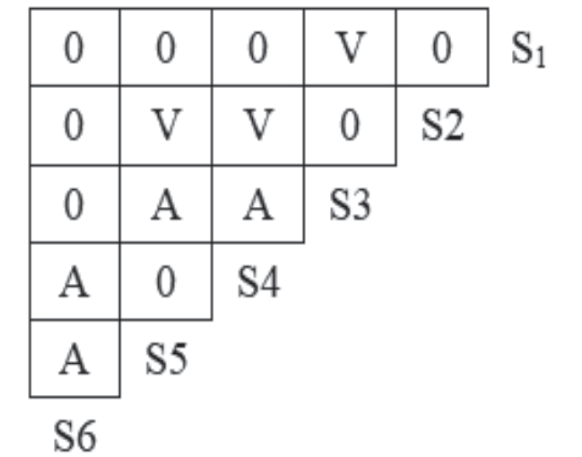
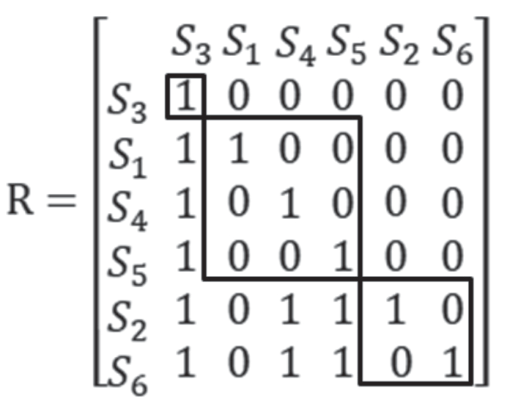
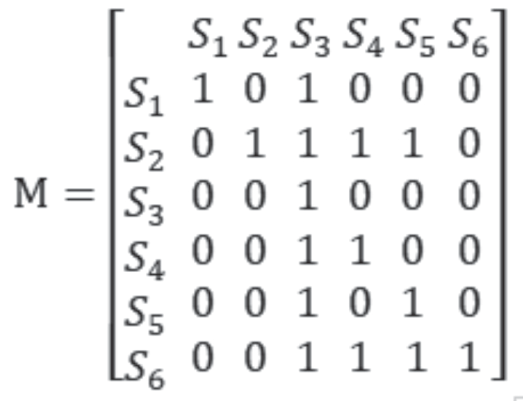
Fig. 4.
Structural model for explaining the factors influencing the paradox of willingness and behavior.
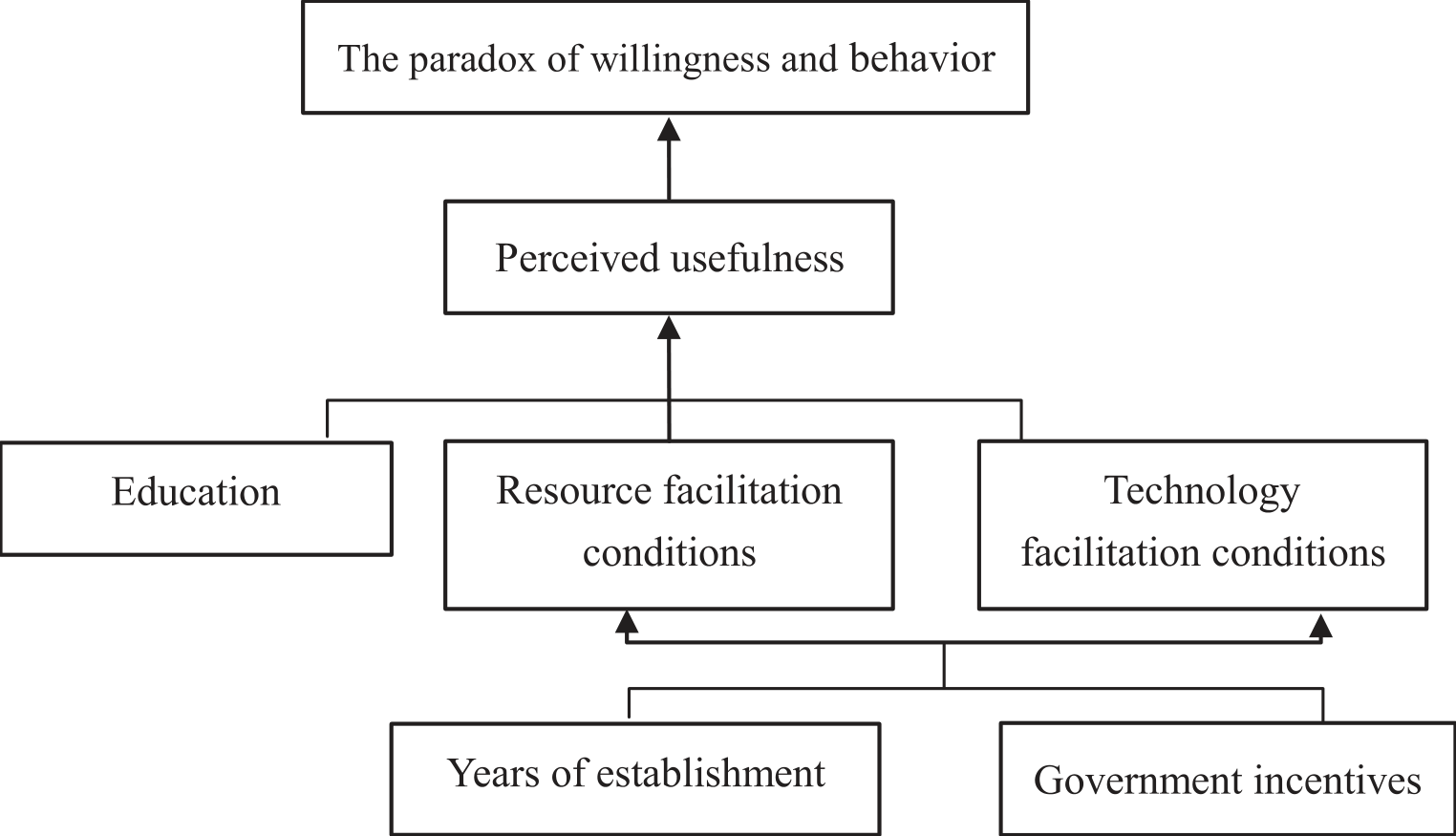
The indirect influence of the middle tier includes three factors, namely, education, resource facilitation conditions and technology facilitation conditions, all of which influence the perceived usefulness of the upper tier and indirectly influence the paradox of willingness and behavior. Managers’ education will affect their value orientation, goal pursuit and judgment of behavioral effects, which will eventually indirectly affect the paradox of willingness and behavior. In addition, if managers have enough time, resources and technology introduction channels, they will have enough control judgment on the implementation of green-oriented transition behavior, and this judgment will influence the transformation of willingness to behavior and prompt the implementation of green-oriented transition behavior of the company.
The deepest root factors include the two factors of years of establishment and government incentives, which are the fundamental reasons affecting the paradox of willingness and behavior. The longer the company is established, the richer the resources and development experience. Faced with the green-oriented transition, oilfield company managers will have many choices and channels to provide options, and can bear higher corresponding input costs, so they can also produce a more positive attitude when judging the effect of the behavior. As oilfield companies have high costs and low returns in the production and operation process, government incentives in terms of capital, technology and land policies will promote the change of environmental protection concepts of company managers and enhance their confidence and ability in green-oriented transition behavior, which will eventually influence the transformation of willingness to behavior.
Conclusions
Based on 508 questionnaire data, this study analyzes the factors influencing the paradox of green-oriented transition willingness and behavior of oilfield companies. The empirical results show that the implementation of green-oriented transition willingness and behavior of oilfield companies do not show a high degree of consistency, there is a “paradox” between “willingness-behavior”,which means that willingness can predict behavior to a certain extent, but it is still difficult to fully transform into behavior. The results show that managers with higher levels of education, shorter years of experience, and strong self-interested values are more likely to have the paradox of green-oriented transition willingness and behavior, and companies that have been established for a shorter period of time are more likely to have the paradox of green-oriented transition willingness and behavior. While the higher the level of perceived usefulness of managers, the stronger their perceived attitudes toward the resources needed for green-oriented transition, which can effectively reduce the paradox of willingness and behavior of oilfield companies. The above influencing factors can be divided into three levels through logical analysis, the most direct factor is perceived usefulness, the middle level indirect factors include education, resource facilitation conditions and technology facilitation conditions, and the most fundamental deep level factors are years of establishment and government incentives.
In response to the above conclusions, this paper proposes the following suggestions. First, it is necessary to strengthen managers' awareness of resource scarcity and enhance their environmental protection consciousness, so that they can clearly understand the effective role of green-oriented transition. Besides, the propaganda of green development should be increased through the media and network, so as to enhance managers' attention and awareness of green-oriented transition.
Second, it is necessary to improve the capability of oilfield companies, including the capability of technological innovation and resource acquisition.
(1) It is essential to enhance the investment of oilfield companies in green technology research and development, encourage them to establish innovation alliances with research institutes, and emphasize the improvement of technological innovation. (2) It is important to increase the efforts to introduce talents, expand the proportion of high-class talents in the production, marketing and R&D departments, further improve the talent guarantee mechanism, and focus on optimizing the efficiency of resource utilization in oilfield companies.
Third, the government should increase financial support, encourage companies to adopt green and low-carbon technologies in the production process, and reduce their financial pressure by formulating scientific policy subsidies. Moreover, the government should take the initiative to decrease the application threshold of policies related to green-oriented transition of oilfield companies, reduce the approval process, streamline the approval procedures, increase the policy explanation and consultation services, and ensure the implementation of beneficial policies for companies.

