

Introduction
Selenium is an essential microelement for human activity. The proper intake of Se can protect myocardial health, act as an antioxidant, prevent senility, enhance human immunity, detoxify heavy metals, and prevent, treat, and fight cancer [1]. Phytogenous selenium is the main pathway for the human intake of Se. As a type of small berry, blueberries are relatively rich in flavonoids, polysaccharide compounds, and anthocyanins, which can enhance memory, slow ageing, and protect eye health; therefore, they are often the first choice for the human consumption of selenium [2]. However, the selenium content in agricultural products mainly depends on the content of Se in soil and the absorbable form of plants, which directly affects the level of Se uptake in the human body [3]. Therefore, the absorption and transformation of Se in ‘soil-plant’ systems have become the focus of the research and development of selenium-rich agricultural products.
It has been shown that the relationship between selenium and heavy metal elements in soil is complex, and its correlation varies depending on the study area and is influenced by both natural factors and anthropogenic disturbances [4-8]. Many studies have shown that Se-rich strata may also be enriched in heavy metal elements, such as As, Cd, Ni, and Zn. Moreover, in soils formed by the weathering of Se-rich strata, there is an obvious inheritance and enrichment of heavy metals in the bedrock, and these heavy metals may enter the crops with Se, resulting in an excessive heavy metal content in the crops [9-11]. A review of the literature on the topic has found that most previous studies on the correlation between selenium and heavy metals have been conducted in individual selenium-rich areas [12-14] or on the effects of adding exogenous selenium on the content of heavy metals in crops [15-17]; however, studies on the correlation between selenium and heavy metal enrichment characteristics and in soil-crop systems in different geological background areas are lacking.
In this paper, the characteristics and correlation of selenium and heavy-metal enrichment in soil-blueberry fruit systems are studied in parks that grow blueberries in the different rock distribution areas of Guizhou Province. Based on this, the planting suitability and production potential of selenium-enriched blueberries in different geological backgrounds are determined to provide a research reference for the brand building of such blueberries in Guizhou and soil environmental quality control in blueberry planting areas.
Materials and Methods
Study Area
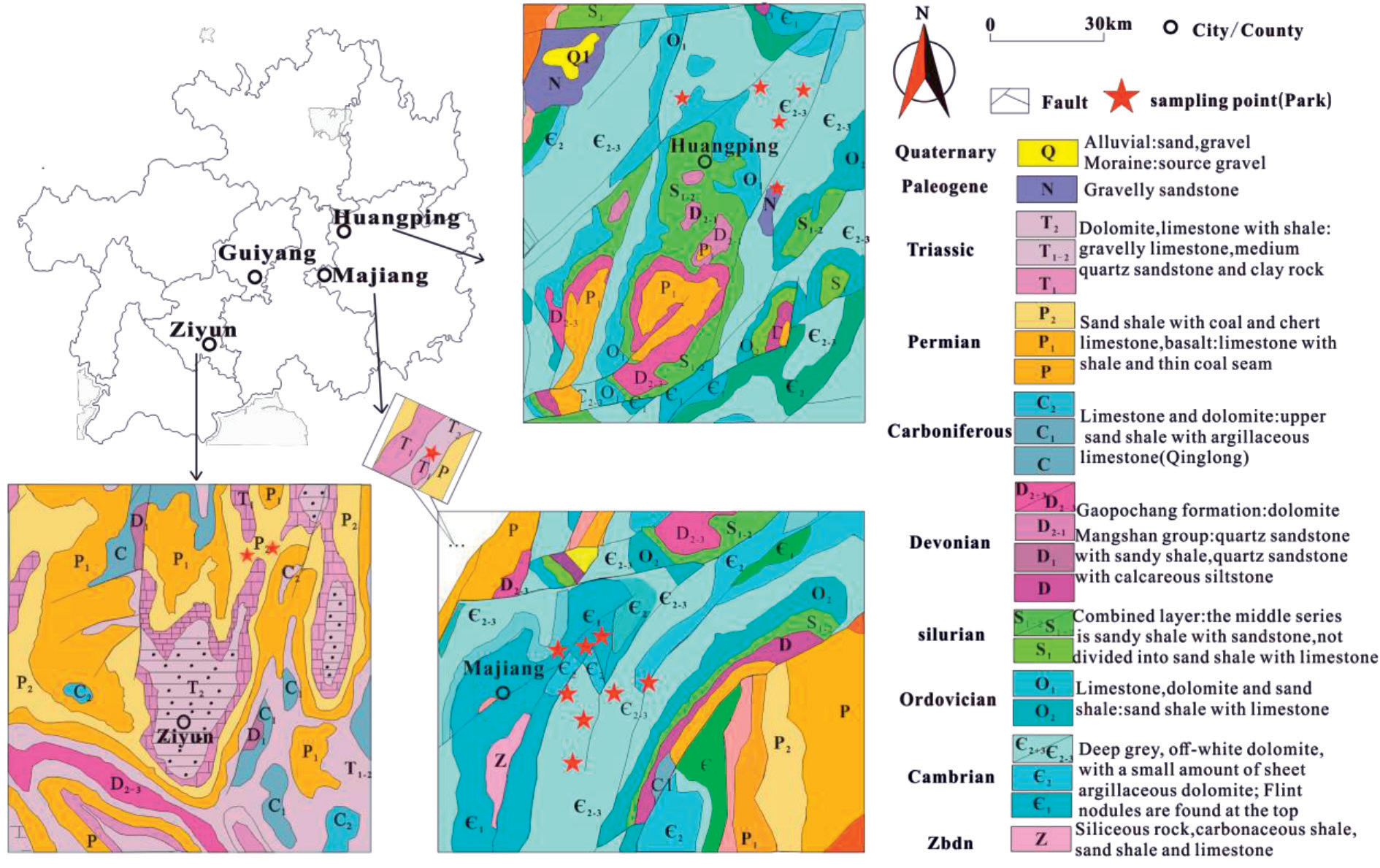
The study area mainly covers the blueberry growing areas of Majiang County, Ziyun County, and Huangping County in Guizhou Province. The three regions experience a subtropical monsoon humid climate, with no severe cold in the winter and no extreme heat in the summer; rain and heat are often experienced simultaneously. The average annual temperature is 14.5ºC-15.3ºC, the average annual rainfall is 1307.1 mm- 1343.8 mm, the soil type includes yellow soil and purple soil, and the soil pH value is between 4.30-5.64. The parent rock of the blueberry growing area in Majiang County is dolomite from the Cambrian Gaotai Formation (Є2g). The parent rock of the blueberry planting area in Ziyun County is the Wujiaping Formation of Permian coal-bearing strata with chert limestone (P2w). The parent rocks in the blueberry growing area of Huangping County include dolomite from the Cambrian Loushanguan Formation (Є2-3ls) and sandstone from the Paleogene Shinao Formation (NEsn).
Sample Collection and Pretreatment
In June 2020 (blueberry maturity stage), 86 soil samples from different parent rock developments and 58 blueberry fruit samples from the same region were collected from the planting areas of three counties. The X-shaped sampling method was used (each endpoint and centre of X was a sub-sampling point), each sub-sampling point was 20-50 m from the centre, 0-20 cm topsoil was taken after removing dead branches and leaves with a stainless steel shovel, each sub-sampling point was mixed with soil samples and about 1kg was taken in clean sample bags using the quartering method, and the sample collection space was evenly distributed. A sample of blueberry fruit of the same variety was collected from each site at the same time, and the fruit was 90% ripe (the fruit was blue and the fruit stem was slightly red). The picked fruits were divided into plastic boxes with holes, stored in a sampling box at 4ºC and brought back to the laboratory. The distribution of sampling points was shown in Fig. 1 (Modified from Li et al. [18]).
The soil samples were naturally air-dried in the shade after the debris such as rocks and plant roots were removed. The soil samples were crushed through a 2mm nylon sieve with wooden sticks, then finely ground through a 0.149mm nylon sieve with an agate mortar, and finally marked and stored for testing. The blueberry fruit samples were washed three times with tap water and then washed three times with deionized water. After the surface moisture was naturally air-dried, the samples were placed in a constant temperature air dryer at 60ºC and dried to a constant weight. The fruits were ground in a 0.075 mm nylon sieve with a high-speed grinder and stored for testing.
Sample Analyses
Selenium and heavy metal elements in soil and blueberry fruit samples were measured by ICP-MS (Visata-MPS, Agilent, CA, USA) and ICP-AES (7900x, Agilent, CA, USA) systems at the ALS Mineral Laboratory in Guangzhou, China. The ICP-AES and ICP-MS procedures applied in this study were described in detail in another study [19]. The specific experimental process was to weigh 0.25 g of the soil sample in a Teflon test tube, then add mixed acid (HClO4:HNO3:HF:HCl = 1:2.5:2:2.5), and digest in the oven at about 190ºC for 48 hours [20], followed by cooling to room temperature. It was then heated on a preheated hot plate (150ºC) to remove excess acid until a crystalline solid was formed and diluted to the specified volume (12.5 ml) with 2% hydrochloric acid. Similarly, 0.20 g of blueberry fruit powder was weighed in Teflon test tubes, mixed with concentrated nitric acid and hydrofluoric acid (v/v = 3:1), digested for 8 h, and then further digested on a hot plate at 50ºC for 1 h, 100ºC for 1.5 h, and 150ºC for 1.5 h. After the soil and blueberry fruit samples had been digested and the solutions to be measured had cooled, they were transferred to volumetric flasks and shaken well with a constant volume of deionised water. Then, plasma emission spectra and mass spectrometer comprehensive analyses were conducted, and the spectral interference between the elements was corrected to obtain the total Se, As, Cd, Cr, Cu, Mn, Ni, Pb, and Zn concentrations in soil and blueberry fruit.
Due to the relative instability of Hg, which was easily lost through volatilisation during sample preparation and analysis [21], the Hg content of the samples was determined by atomic absorption spectrometry (AAS) using an automated Hg analyser AMA 254 (Altec, Prague, Czech Republic), which was specifically designed to determine the total Hg without the need for sample preparation or sample pre-concentration. In this method, the analytical vessel containing the sample was placed directly into the instrument, which performs automatic combustion to determine the total Hg concentration in soil and blueberry fruit. In addition, soil pH was measured using the glass electrode method [22].
Soil-Fruit Element Biological Concentration Factor
The biological concentration factor (BCF) can reflect the ability of crops to absorb enriched elements from soil, and its calculation formula is as follows [23]:
In the formula, Ciplant represents the element i concentration of the blueberry fruit sample, Cisoil represents the element i concentration of the soil sample, and higher BCF values represent a greater enrichment of blueberry fruit for element i.
Statistical Analysis
The original data of the Se, As, Cd, Cr, Cu, Hg, Mn, Ni, Pb, and Zn contents in the soils in the study area were tested for normal distribution, and the data of some indicators that did not pass the normal test were transformed using logarithm and then tested for normality; all indicators passed the normal distribution test and could be analyzed parametrically. The data were then plotted and analyzed using Microsoft Excel 2010, IBM SPSS Statistics 23.0, Origin 2018, and Corel Draw 2018.
Quality Control
This study adopted the technique of inserting monitoring substances into samples. During the testing of each batch of samples, blank samples, duplicate samples, and reference materials (duplicate samples control precision and reference materials control accuracy) were inserted simultaneously, and calibrated instruments with traceability were used. In addition, the functioning of the equipment was checked, the work standards and control charts were used, the same or different methods were used to test the samples repeatedly, and the relevant characteristics of the different results of the samples were analyzed to ensure the accuracy of the results. The relative deviation and relative error of selenium and heavy metals were controlled to below 10%. The reference materials used in the blueberries (SpL03 and GL03) were internal standard materials made from thorn grass leaves and eucalyptus leaves obtained near the ALS Mineral Laboratory in Gulf State, Queensland, Australia. The reference materials used in the soil were GLG908 and MRGeo08, which were self-developed using lateritic soil collected from southern Murchison, Western Australia. The recoveries of the standard samples of blueberry fruits and soil were mostly between 80% and 110%, and the measured values of all selenium and heavy metal elements in blank samples were lower than the detection limits of corresponding elements.
Results
Characteristics of Selenium and Heavy Metal Content in the Soil
The contents of trace elements in the soil of blueberry plantations with different geological backgrounds in the study area were shown in Table 1. The average Se content of dolomite, limestone, and sandstone parent rocks was 0.5 mg/kg, 0.8 mg/kg, and 0.3 mg/kg, respectively. The Se content of limestone-type soil was higher than that of dolomite-type soil and higher than that of sandstone-type soil. According to the 0.4 mg/kg Se-rich soil standard suggested by Guohua Zhou [24], the average values of soil samples developed in dolomite and limestone reached the Se-rich soil standard, and the sample Se-rich rates were 100% and 94%, respectively. The soil samples developed in sandstone did not reach the Se-rich soil standard. The soil with dolomite and limestone in the study area could be classified as selenium-rich soil, which had the basic conditions for developing selenium-rich blueberry agriculture by utilizing selenium-rich land resources.
According to GB 15618-2018 ‘Soil Environmental Quality - Agricultural Land Soil Pollution Risk Control Standard’ (pH value≤5.5) [25], it was found that the average contents of As, Ni, Pb, and Zn in the soil developed in dolomite exceeded the soil risk screening value, and the point exceeding rates were 47%, 16%, 6%, and 9%, respectively. The average contents of As, Cr, Cd, Ni, and Zn in limestone soils exceeded the soil risk screening value, and the over-standard rates were 5%, 37%, 42%, 63%, and 5%, respectively. The contents of 10 elements in the soil developed by sandstone rock did not exceed the standard. The results showed that the selenium-rich soil resources in the study area were not only abundant, but also that the soil developed from dolomite and limestone was enriched with heavy metals, which might lead to soil pollution risks from As, Pb, and Zn. Therefore, attention should be paid to soil environmental quality monitoring and crop safety collaborative monitoring when developing such selenium-rich land resources.
Table 1.
Statistical analysis of elements in soil under different geological backgrounds (mg/kg).
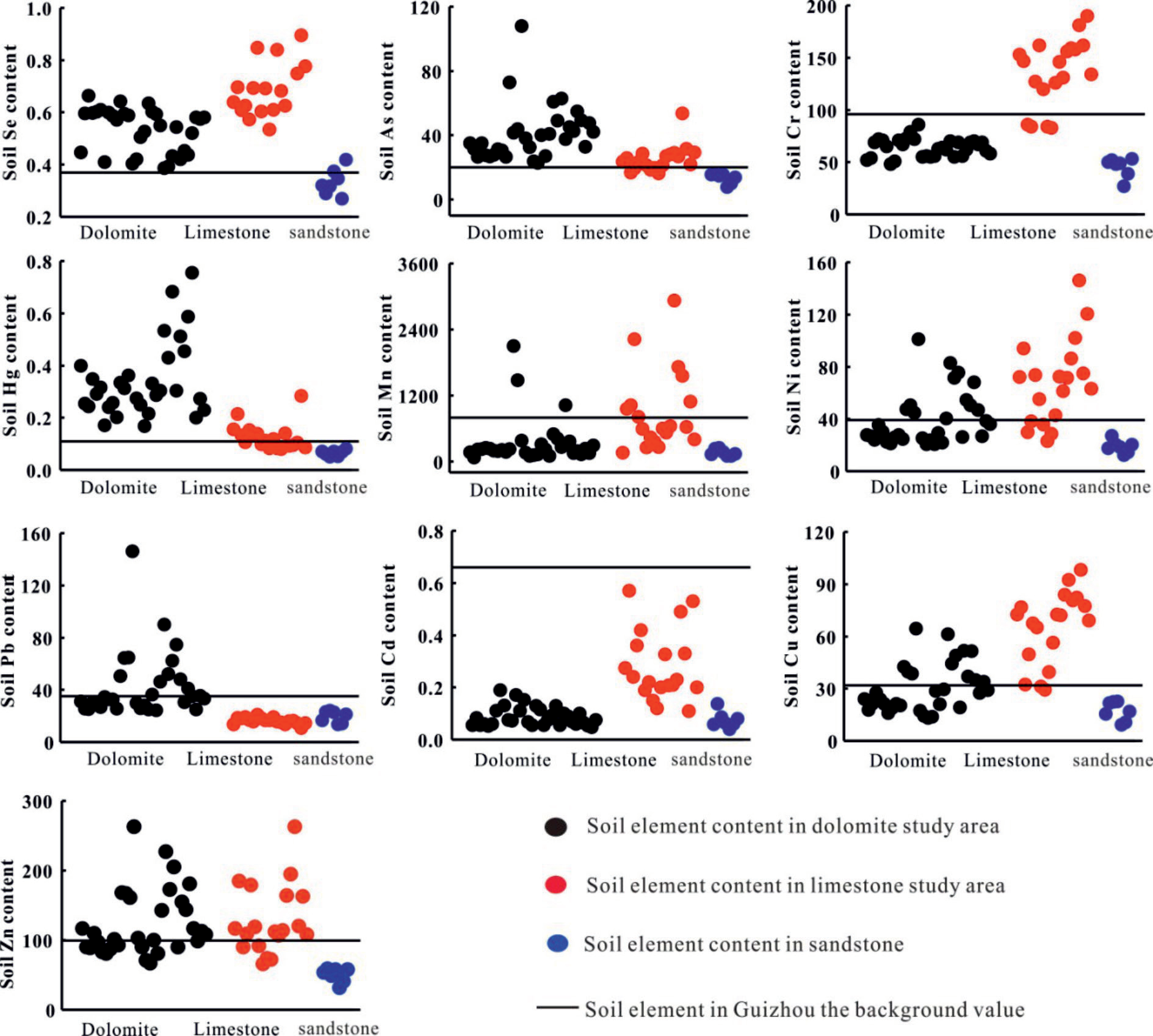
In comparison to the background values of soil elements in Guizhou Province [26], the contents of Se, As, Hg, and Zn in most soil samples developed from dolomite were higher than the background values in Guizhou Province (Fig. 2). The contents of Se, As, Cr, Cu, Hg, Ni, and Zn in most limestone soils were higher than those in Guizhou. The contents of 10 elements in sandstone soil were all lower than the background values of Guizhou topsoil.
Effects of Selenium and Heavy Metal Contents on the Bioenrichment Characteristics of Blueberry Fruit
As shown in Table 2, the mean values of the Se content of blueberry fruits in the dolomite, limestone, and sandstone study areas were 0.039, 0.019, and 0.011 mg/kg, respectively. At present, there is no unified national standard for selenium-enriched agricultural products regarding berries. According to the standards for selenium-rich agricultural products in Chongqing Province, Shanxi Province, and other regions, a selenium content of ≥0.01 mg/kg is usually used as the standard for selenium-rich agricultural products for vegetables and fruits [24]. According to this standard, the average selenium content of blueberry fruits in each planting area reached the selenium-rich blueberry standard overall, with selenium enrichment rates of 75%, 63%, and 29%, respectively. The average values of the heavy metal element contents of blueberry fruits were in the following descending order: Mn, Zn, Cu, Ni, Cr, As, Pb, Cd, and Hg. The average contents of As, Cd, Cr, Cu, Hg, Mn, Ni, Pb, and Zn of blueberry fruits in all planting areas did not exceed the standard limit values for the corresponding elements, which were green and safe fruits; the results of this study showed that the effective state content of heavy metals in soil was low and bioavailability was also low. Previous studies have also confirmed that, in Guizhou, where karst areas are widely distributed, soils generally have high total heavy metal content but low effective state content (activity of heavy metal elements) [27].
Table 2.
Statistical analysis of element contents in blueberry fruits under different geological backgrounds (mg/kg).
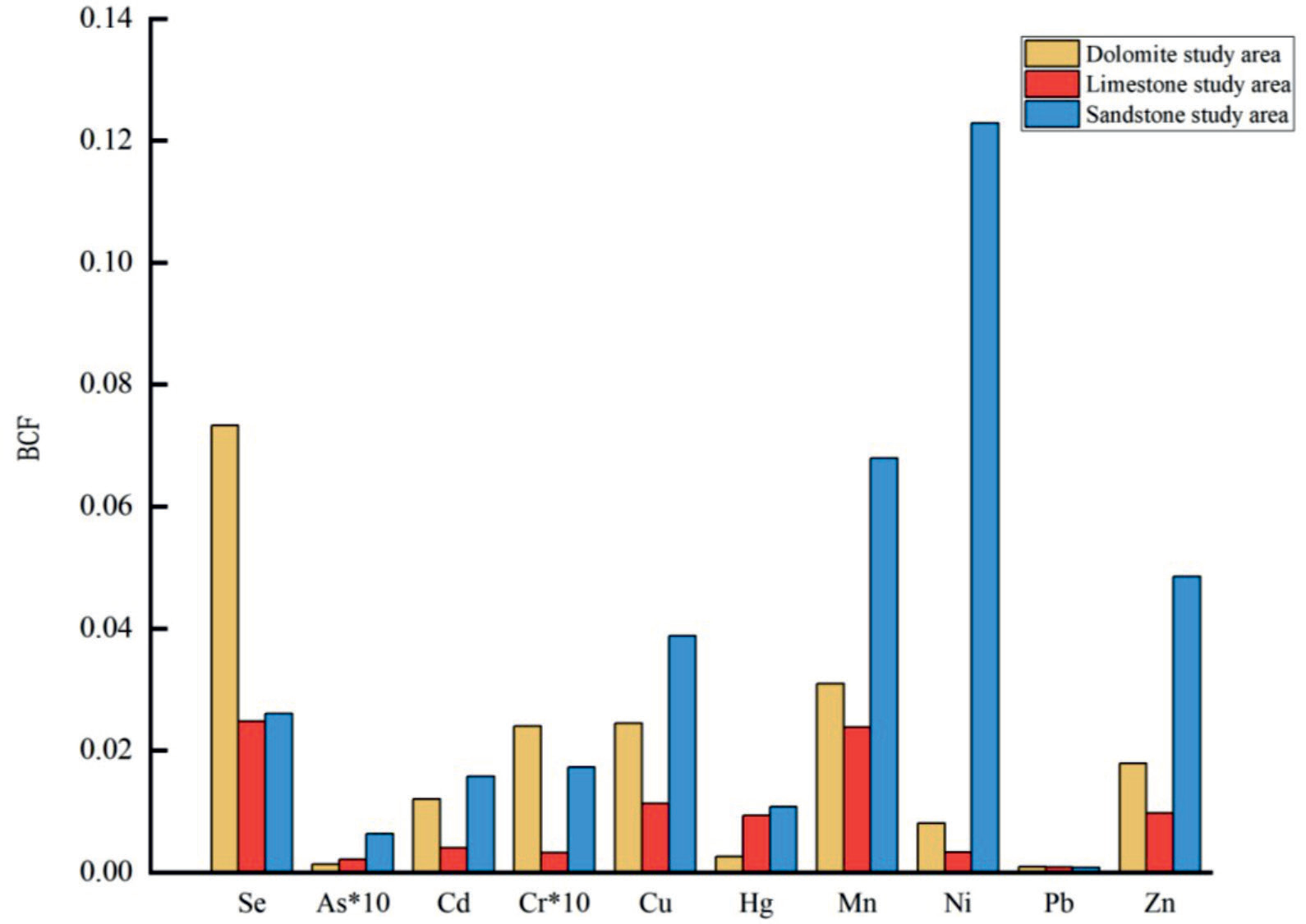
The biological concentration factor reflects the ability of crops to absorb enriched elements from the soil, and the larger the BCF value, the stronger the enrichment ability of blueberry to soil elements. As could be seen from the BFC value in Fig. 3, the enrichment ability of blueberry fruits in all planting areas was strong for Se, Cu, Mn, Ni, and Zn, while the enrichment ability of As, Cd, Cr, Hg, and Pb was relatively weak. The enrichment coefficient characteristics of elements in blueberry fruits in all planting areas showed that the average enrichment coefficient of each element in blueberry fruit was Ni>Se>Mn>Zn>Cd>Cu>Hg>Cr>Pb>As. Studies have shown that Mn, Cu, and Zn are not only heavy metal elements, but also essential nutrient elements for the growth of blueberries, which is the reason for the high enrichment coefficient of Mn, Cu, and Zn in blueberry fruits; further, a suitable acidic soil environment is conducive to the accumulation of Mn in blueberries, which has a Mn absorption mechanism similar to tea trees [28]. Moreover, Mn accumulation in blueberry fruits is beneficial to the accumulation of total phenols, flavonoids, anthocyanin, glucose, and fructose [29].
Correlation Analysis of Selenium and Heavy Metals
The correlation analysis results of soil Se and 9 heavy metal elements in the study area were shown in Fig. 4(a-c). Se and the As, Cu, Hg, Ni, Pb, and Zn in the soil developed in dolomite exhibited a significant negative correlation (P<0.05), and there was a certain antagonism between selenium and heavy metals in soil, which was similar to previous research results [13]. In limestone soils, Se was positively correlated with As, Cr, Ni, and Zn, indicating that these elements exhibit homology, and reflecting the associated relationship between Se and these heavy metals. In contrast, soil Se from sandstone development was not significantly correlated with the nine heavy metals.
Fig. 4.
Correlation analysis of selenium and heavy metals in different geological backgrounds. Note: * means p≤0.05, ** means p≤0.01; (a-c) represents the correlation analysis between selenium and heavy metals in soil, where a) is dolomite study area, b) is limestone study area, and c) is sandstone study area. (d-f) represents the correlation analysis between selenium content in soil and heavy metal content in blueberry fruits, among which d) is dolomite study area, e) is limestone study area, and f) is sandstone study area.
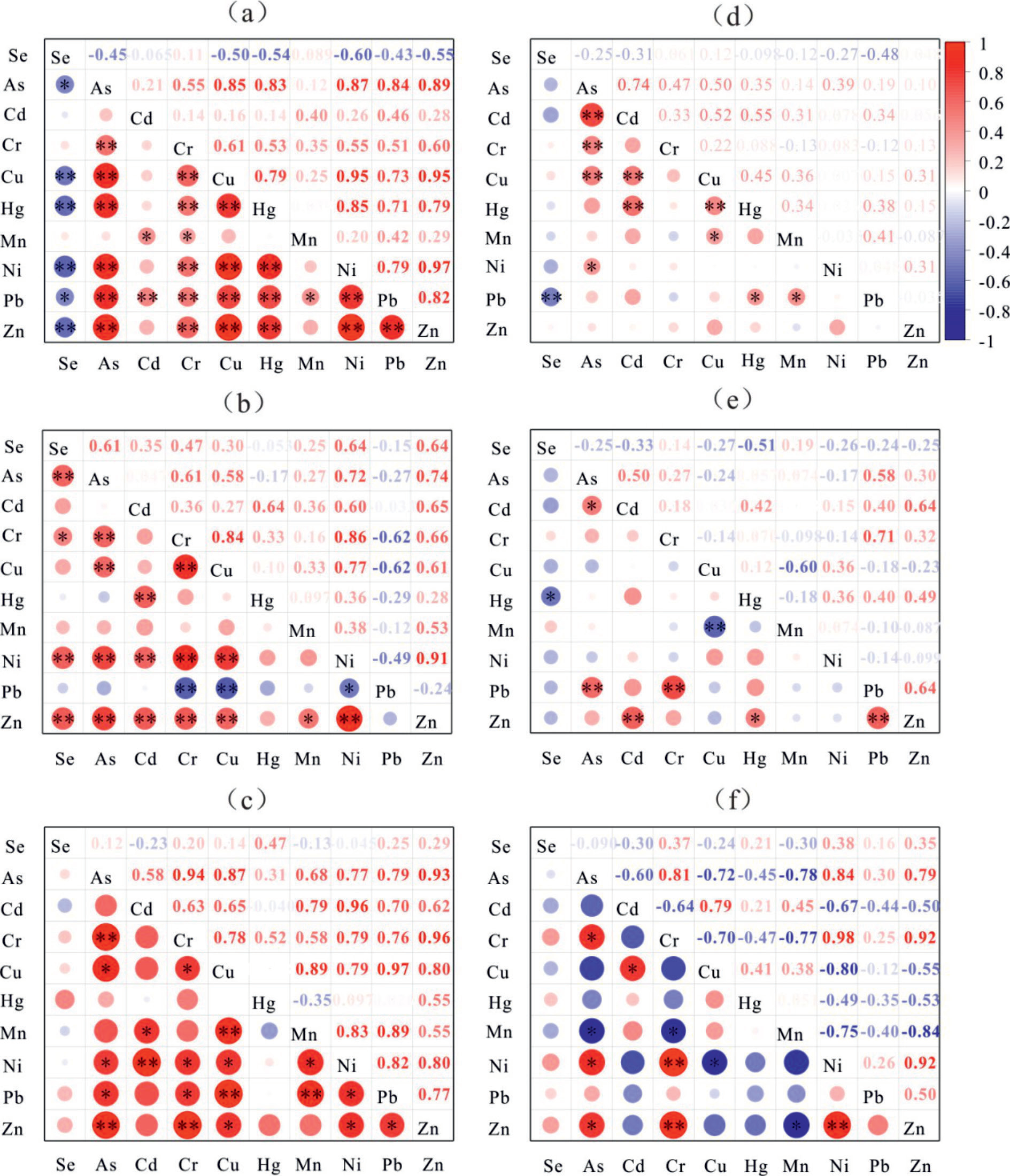
A correlation analysis between selenium in soil and 9 heavy metal elements in blueberry fruits in different planting areas was shown in Fig. 4(d-f). Under the geological background of dolomite and limestone, the Se in the soil was negatively correlated with Hg and Pb in blueberry fruit. There was no significant correlation between Se in soil and 9 heavy metals in blueberry fruit under a sandstone geological background.
Selenium and Heavy Metal Redundancy Analysis in Soil and Blueberry Fruit
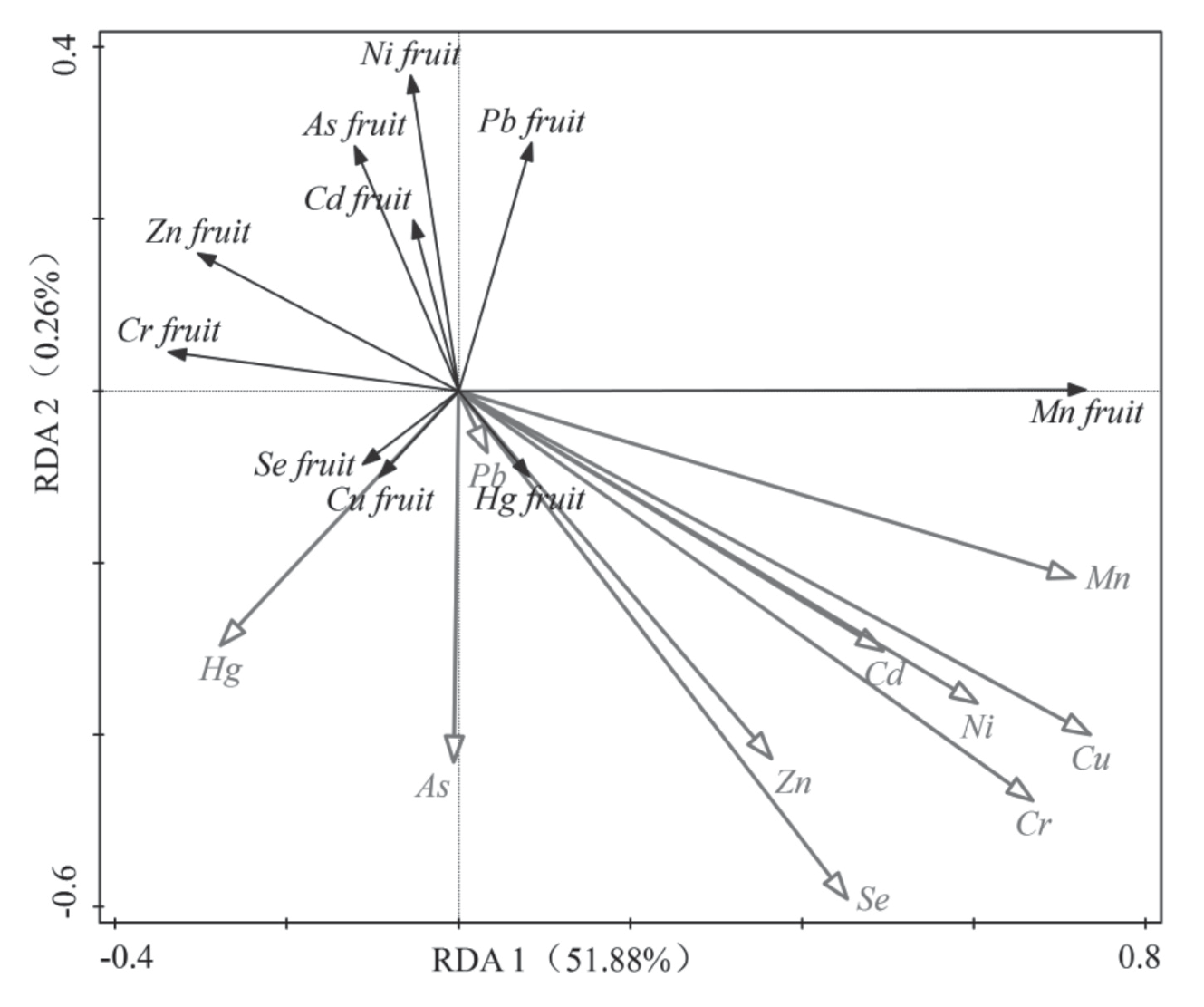
Redundancy analysis (RDA) results showed that ranking axis 1 and axis 2 explained 51.88% and 0.26% of the relationship between soil selenium and heavy metals, and fruit selenium and heavy metals, respectively (Fig. 5). The selenium and heavy metal contents in soil accounted for 42.0% of the selenium and heavy metal contents in blueberry fruits, indicating that soil selenium and heavy metal contents had certain effects on the selenium and heavy metal contents in blueberry fruit. In particular, the amount of Cu in soil was explained by 28.1% and reached a significant level (P<0.01); Se in soil was positively correlated with Se in blueberry fruit, indicating that the accumulation of Se and Cu in blueberry fruit was influenced by the soil Se and Cu content (Table 3).
Discussion
Studies on the Keshan disease zone and low selenium environments have led to the categorization of limit values of the selenium ecological landscape in China: Se deficient soil (≤0.125 mg/kg), marginal Se soil (0.125-0.175 mg/kg), medium Se soil (0.175-0.400 mg/kg), high Se soil (0.400-3.00 mg/kg), and excess Se soil (≥3.00 mg/kg) [30]. In this study, the dolomite and limestone blueberry growing areas belong to high Se soil, while the sandstone blueberry growing areas belong to medium Se soil, which shows that the study area is high in selenium-rich soil resources and has the prospect of developing selenium-rich agriculture; it also indicates that rock weathering is the most important source of Se elements in the soil, and the parent rock exerts a significant influence on the Se content in the soil [31]. Some studies have shown that the Se content in rocks is higher than that in shale and deep-sea carbonate rocks (limestone and dolomite), which is higher than that in sandstone [32]; the Se content in soil changes accordingly due to the inheritance of parent rocks. In this study, the soil Se content exhibited a distribution pattern of limestone>dolomite>sandstone, which was similar to the background value of surface soil in cultivated land with different soil parent rocks in Guizhou province [33], reflecting the control effect of the geological background on the soil Se content.
Table 3.
Explanation of elements in blueberry fruit by soil element content based on canonical correspondence analysis (RDA).
| Soil metal element | Se | As | Cd | Cr | Cu | Hg | Mn | Ni | Pb | Zn | All |
|---|---|---|---|---|---|---|---|---|---|---|---|
| Explains(%) | 0.6 | 0.7 | 1.6 | 0.2 | 28.1 | 2.6 | 7.6 | 1.2 | 8.5 | 1.1 | 42.0 |
| p | 0.45 | 0.43 | 0.21 | 0.76 | <0.01 | 0.12 | <0.05 | 0.26 | 0.006 | 0.29 | 0.31 |
According to the Se enrichment standard for fruits with Se content ≥0.01 mg/kg, the overall Se content of blueberry fruits in the study area reached the Se enrichment standard for blueberries. The Se enrichment of blueberry fruit is not only related to the soil, but also to the enrichment capacity of the blueberry itself. The Se uptake and enrichment capacity of different crops vary. A comparison of the Se enrichment coefficients of blueberry fruit in the study area with the Se enrichment capacity of crops in different regions of Guizhou showed that the Se enrichment coefficients of various crops were, in descending order, as follows: soybean, blueberry, rice, maize, tea, asparagus, and kiwifruit. In general, the Se enrichment capacity of bulk crops – such as rice and soybean – was stronger than that of vegetables and fruits. The Se enrichment capacity of vegetables was generally as follows: roots and tubers>pulses>leafy vegetables [34-35]. The enrichment coefficient of blueberries in the study area was second only to soybean, indicating that blueberry fruits have a strong Se enrichment capacity, and blueberries have the potential to become Se-rich fruits.
The Se and heavy metal contents in soil are obviously affected by the soil’s physical and chemical properties (such as pH, organic matter, and clay) [36], and soil parent rocks are the material basis for soil formation and development; further, there are differences in the soil physicochemical properties formed by different parent rock developments [37-38]. Therefore, based on different geological background conditions, this study found that Se was significantly negatively correlated with As, Cu, Hg, Ni, Pb, and Zn in soil developed in dolomite, while Se was significantly positively correlated with heavy metals in soil developed in limestone. In addition, it was found that the Se in soil was significantly negatively correlated with Pb and Hg in blueberry fruits, which may be because Se increased the superoxide dismutase (SOD) activity and soluble sugar content in blueberry berries [39], thus enhancing the resistance of blueberry to heavy metals.
The contents of Se and heavy metal elements in soil are affected by both natural factors and human disturbances. Se in the parent rock is transformed into oxides after weathering and exists in the soil [40]. Natural activities such as volcanic eruptions and crustal weathering, as well as human activities such as fossil fuel combustion and non-ferrous metal manufacturing, contribute about 1.55-1.57×10⁹ g of Se to the atmosphere each year [36], which is then carried to the soil through atmospheric deposition. The addition of Se to fertilisers and its application to agricultural soils increase the Se content of agricultural soils by an average of 20% over a 20-year period [41]. It can be seen that soil-forming parent rocks, mineral exploitation, chemical fertilizers, and atmospheric deposition are the main sources of Se and heavy metals in soils [42]. The results of the RDA in this study show that the soil Se and heavy metal content explained a total of 42.0% of the Se and heavy metal content of blueberry fruits, indicating that these quantities may be influenced by other factors, such as mineral exploitation and atmospheric deposition, in addition to the natural factors of soil-forming parent rocks.
Conclusions
(1) The average content of Se in dolomite and limestone weathering soil is higher than the background value of Guizhou topsoil, and all reached the standard of Se-rich soil. Therefore, the study area had the basic conditions for the development of Se-rich blueberries.
(2) The Se content in soil was in the order of limestone area>dolomite area>sandstone area, indicating that the geological background had a controlling effect on the Se content in the soil.
(3) Se had synergistic or antagonistic effects with various heavy metal elements. In dolomite soil, Se was negatively correlated with As, Cu, Hg, Ni, Pb, and Zn; in limestone soil, Se was positively correlated with As, Cr, Ni, and Zn. In addition, the Se in dolomite and limestone soil was negatively correlated with Hg and Pb in blueberry fruit. However, there was no significant correlation in the conglomerate area.
(4) The Se enrichment ability of blueberries in all growing regions is strong, reaching the standard of Se-rich blueberries, indicating that blueberries have the potential to create Se-rich fruit.
(5) The soil Se and heavy metal content explained a total of 42.0% of the Se and heavy metal content of blueberry fruits, indicating that – apart from the natural factors of the soil-forming parent rock – the Se and heavy metal content of blueberry fruits may also be influenced by other factors, such as mineral exploitation and atmospheric deposition.Main text paragraph.

