Introduction
Nowadays, the rapid growth of the world population requires more agricultural output. To optimize and maximize agricultural productivity, various strategies have been implemented, including genetic improvement of crops, agronomic management, and fertilizer application [1, 2]. Fertilizer application has been proven to be an economical and effective way to maximize soil productivity. However, the negative effects of fertilization have also emerged. In China, the consumption of quick-acting phosphate fertilizer has increased significantly in the past few decades, of which less than 30% can be utilized [1, 3]. The large amount of phosphorus retained in the soil was either fixed by the soil into insoluble and inert components, infiltrated into groundwater, or flowed into the river, resulting in eutrophication of the water body and deterioration of the ecological environment [4-6]. Thus, it is urgent to improve the agronomic effectiveness of phosphate fertilizer.
Slow-release phosphate fertilizer was proposed to increase agronomic effectiveness by gradually supplying phosphorus to the rhizosphere of plants to match the requirements of plant growth in the growing season [7]. The current types of slow-release phosphate fertilizer included polymer-coated phosphate and P-laden materials with slow-release properties [7- 9], among which the P-laden LDHs (layered double hydroxides) were more attractive due to their potential benefits in phosphorus recycling and environmental protection. LDHs is a type of lamellar anionic clay whose laminate is constructed by an octahedron composed of divalent and trivalent metal ions. The formula for LDHs were [M2+1-xM3+x(OH)2]z+[An-]z/n·mH2O, where An- is the interlayer anion, and X is defined as the molar ratio of M3+/(M2++M3+) [9]. The high affinity of LDHs for phosphorus makes it an excellent dephosphorization agent for wastewater; meanwhile, the adsorbed phosphorus can be released slowly through anion exchange or dissolution in the soil environment [9]. Qiao proved that P-LDH released phosphorus gradually to promote the growth of soybean plants and obtained better fertilizer effectiveness than TSP fertilizer [10]. Wan confirmed that P-loaded biochar-LDHs promoted the growth of lettuce seedlings, leading to a 150% increase in biomass [11]. These results demonstrated the attractivity of phosphorus recovery from sewage. However, most researchers synthesized LDHs with pure chemical reagents, and the preparation was time-consuming, which restricted their further application.
In this work, CLDH was prepared using an efficient multipoint titration method from waste concrete to uptake phosphorus into slow-release phosphate fertilizer. The slow-release effectiveness as well as the fertilization effectiveness of CLDH-P were investigated. The objectives of this study are to (1) seek an efficient and cheap preparation method for slow-release phosphate fertilizer, (2) elucidate the slow release, transformation, and availability of phosphorus from CLDH-P in soil, (3) assess the fertilization effectiveness of CLDH-P on plant growth.
Materials and Methods
Preparation of CLDH-P Fertilizers
Weathered concrete from waste buildings was crushed into powder (<0.1 mm). The main components of concrete powder were O, Ca, Si, Mg, Al, and Fe, which accounted for 36.8%, 28.2%, 11.6%, 5.2%, 4.8%, and 3.4%, respectively. All chemical reagents were purchased from Sinopharm Chemical Reagent Co., Ltd. Solutions were prepared with ultrapure water.
5.0 g concrete powder was leached in 100 mL of 1 M HCl solution for 24 h (180 r/min, 40ºC). The filtrate was added to 2.8 g of AlCl3·6H2O to be a metal solution. It is worth mentioning that multipoint titration was used to replace the traditional single point titration to obtain higher reaction efficiency and homogeneous reaction conditions. Metal solution and 2 M NaOH solution were dropped into the coprecipitation bulk solution by a multi-channel syringe pump. The number of channels for the two solutions was 9 and 1, respectively. Alkali solution was in the center, with metal solution distributed equidistantly around it. The titration outlet of the reaction solution was controlled at 0.1mm to reduce the droplet size. The previous experiments showed that this multipoint titration device replaced the traditional large droplets with small and dispersed droplets, which not only improved the reaction efficiency, but also made the product smaller in size and more uniform in morphology. The bulk solution pH was kept at 11.5 and the temperature was maintained at 40ºC. The slurry was aged for 2 h at 85ºC. The product was washed, then filtered and dried to be CLDH.
CLDH-P was prepared by the adsorption method with CLDH and 300 mg/L KH2PO4 solution in a solid/liquid ratio of 1:100. The adsorption was carried at room temperature for 24 h. The present study has confirmed that a high phosphate content of CLDH-P could be obtained under equilibrium pH 6~9. To decrease the influence of fertilization on soil pH, two kinds of P-loaded samples, named CLDH-P1 and CLDH-P2, were prepared under the equilibrium pH conditions of weak acid (about 6.5) and weak alkali (about 8), and the corresponding initial pH was 3 and 5, respectively.
Column Leaching Test
The column leaching test was designed according to the method described by Tang [12]. The column was 0.35 m high, with an inner diameter of 0.08 m. The column was perforated at the bottom to collect the leachates. 2 kg dry local calcareous soil (bulk density 1.4 g/cm3, pH 8.0) was packed into the column, and the top and bottom of the soil were filled with 2 cm of sea sand. 3.0 g powdered TSP (20.0% wt. P) or 3.7 g CLDH-P1 (16.1% wt. P) or 3.5 g CLDH-P2 (17.2% wt. P), which contained the same phosphorus content, were encapsulated into a mesh bag and buried 5 cm beneath the surface soil. Fine netting was employed at the column bottom to avoid soil loss into the leachates. 750 mL water was added to the column until it reached soil-water saturation. The column was leached with water at a rate of 700 mL/d. The leachates were collected to measure phosphate every 12 h, and the average concentration of two times was the daily concentration. Each fertilizer had three parallel leaching columns, among which one was used for the test of the 30-day cumulative release rate. The other two were operated for 80 days for leaching data collection. Additionally, a controlled column was applied with water influent. The P release rate was investigated according to the method described by Tang et al. [12].
Sequential Extraction of Phosphorus
P fractions in CLDH-P and soil were sequentially extracted from 2.0 g of dried sample according to the literature [13-15]. Four fractions, including weakly bound P (W-P), Fe/Al-associated P (Fe/Al-P), Ca/Mg-associated P (Ca/Mg-P), and P in stable compounds (S-P), were obtained through sequential extraction. The sample was sequentially extracted in 0.5 M NaHCO3, 0.1 M NaOH, and 1 M HCl at room temperature for 16 h (S/L = 1:50). Finally, the residual was extracted in 20 mL of 12 M HCl (80ºC, 1 h) to determine S-P. For the soil sample, W-P and Fe/Al-P were defined as available P for plants [13-16].
Cultivation Experiment of Mung Bean
30 mung bean seeds were first washed with deionized water and then cultivated in a Petri dish. To provide sufficient moisture and fertilizer, 10 mL of deionized water and CLDH-P1 were added to the Petri dish. The seeds and fertilizer were separated by filter paper. A series of samples with different fertilizer dosages were cultured in the dark at 25ºC for 5 days. Each sample was three parallel. After 5 days, the growth indexes were measured.
4 kg of dry calcareous soil was first mixed with 1.15 g of urea and 1.32 g of KCl, and then packed into the pot. CLDH-P1 or TSP were buried as basal fertilizer to amend phosphorus, with a P dose of 0 and 30 mg P/kg soil. The fertilization rate refers to the previous research results on calcareous soil fertilization [7, 17, 18]. Each pot was planted with 5 mung bean seedlings precultured for 5 days, and the seedlings were similar in size. The fertilization groups and control group were cultured in a growth chamber at 20±0.5ºC with a daily photoperiod of 16 h. Each group was in three replicates. After 40 days, the shoots were harvested and the growth indexes measured. Dry weight was analyzed after drying at 60ºC for 48 h [10, 19]. The dry shoots were digested in boiling HNO3 to analyze the characteristic elements by ICP-OES.
Characterization
The morphology of samples was investigated with a scanning electron microscope (SEM, Zeiss-Supra 55 VP), which was equipped with an energy spectrometer (Bruker EDS QUANTAX). X-ray diffraction (XRD) was conducted on a D/MaX-2500PC diffractometer (at 40 kV and 100 mA, Cu/kα). FTIR spectra were collected on IRAffinity-1s FTIR (Shimadzu IRAffinity- 1s, Japan, KBr method). Specific surface area and pore volume were determined by N2 adsorption-desorption isotherms at -196ºC (Micro Active ASAP 2460, USA). The elemental composition of concrete was analyzed by X-ray fluorescence spectroscopy (XRF, PANalytical-Axios).
Results and Discussion
Characteristics of CLDH and CLDH-P
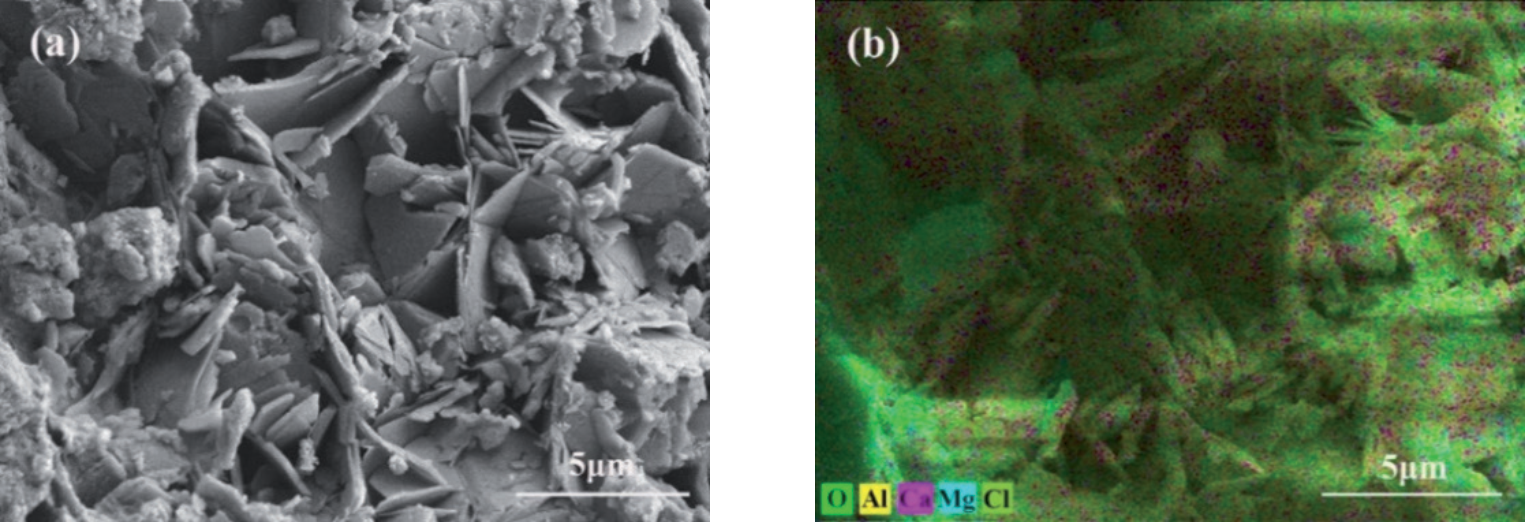
Fig. S1 shows the morphology of CLDH. Abundant pores and submicron-scale laminations were observed, which provided a large specific surface area and more active sites for phosphorus adsorption. As shown in Table 1, CLDH had a large surface area and a positive charge, and the phosphorus holding capacity qm was 172.3 mg/g. Compared with the works with single-point titration method, the preparation time of CLDH for multipoint titration was significantly shortened. This indicated that the multipoint titration method is an efficient and stable way to prepare LDHs.
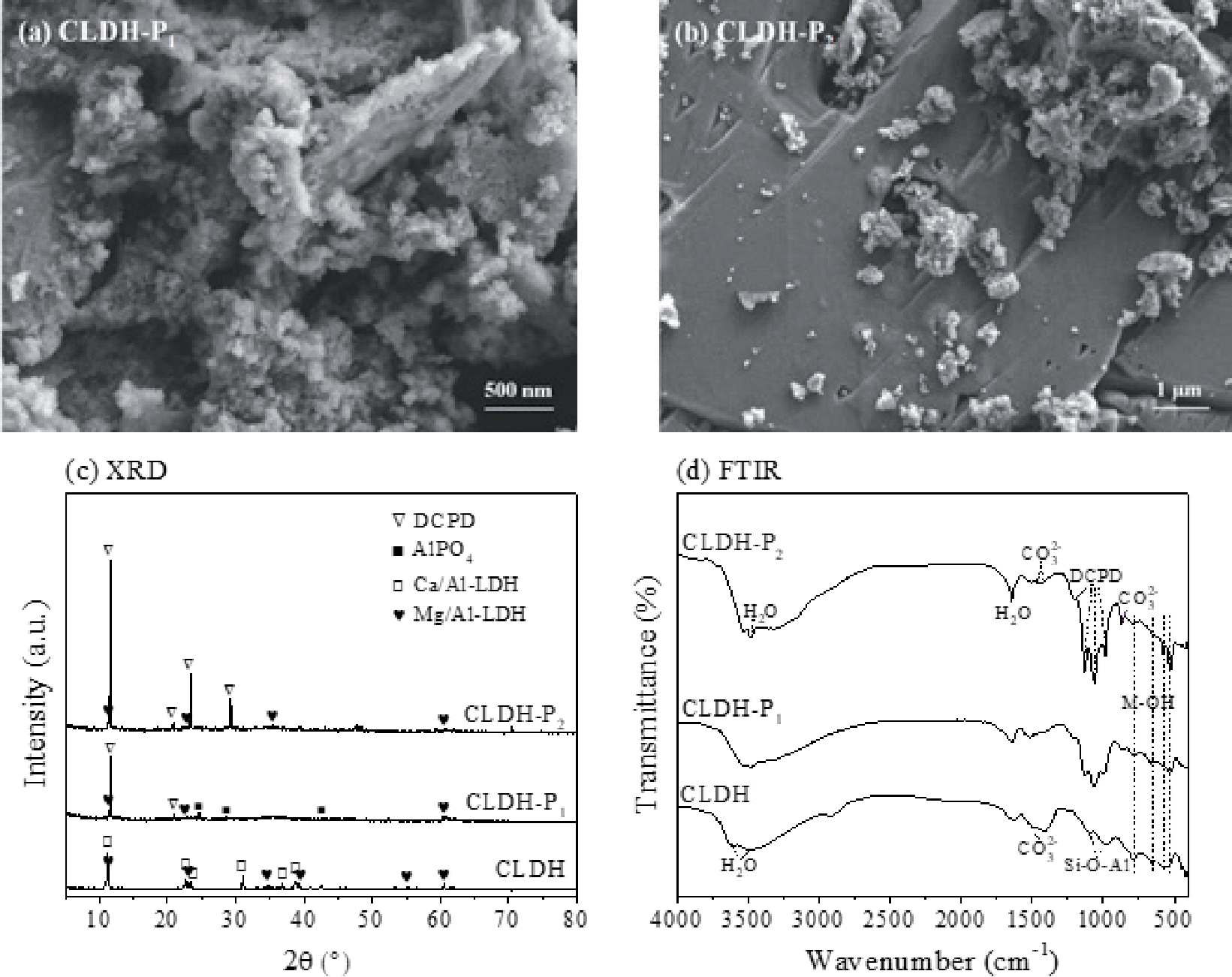
After phosphorus adsorption, flake crystals and flocs rich in phosphorus were observed (Fig. 1), and the CLDH-P2 appeared more compact. In Fig. 1c), the flake crystal in both CLDH-P1 and CLDH-P2 was confirmed to be DCPD (CaHPO4·2H2O, PDF #01-072-0713), and AlPO4 (PDF #00-046-0695) was also detected in CLDH-P1. In addition, Ca/Al-LDH and Mg/Al-LDH (corresponding to PDF# 04-010-4677 and PDF# 00-035-0965, respectively) were detected in CLDH, but Ca/Al-LDH disappeared in CLDH-P. In Fig. 1d), the characteristic peaks of DCPD, namely the water molecule at 3542/3487/1651 cm-1 in CLDH-P1 (or 3538/3485/1647 cm-1 in CLDH-P2), and O-P-O vibration at 996/1064/1133/1206 cm-1, was identified in CLDH-P samples. The absorption bands of M-O/OH (M is Ca, Mg, or Al) were presented in all the samples (530/580, 660, and 781 cm-1). Vibration of CO32- was detected at 1518/1455/1416/1411 cm-1 and 869 cm-1, indicating the participation of atmospheric CO2 during sample preparation.
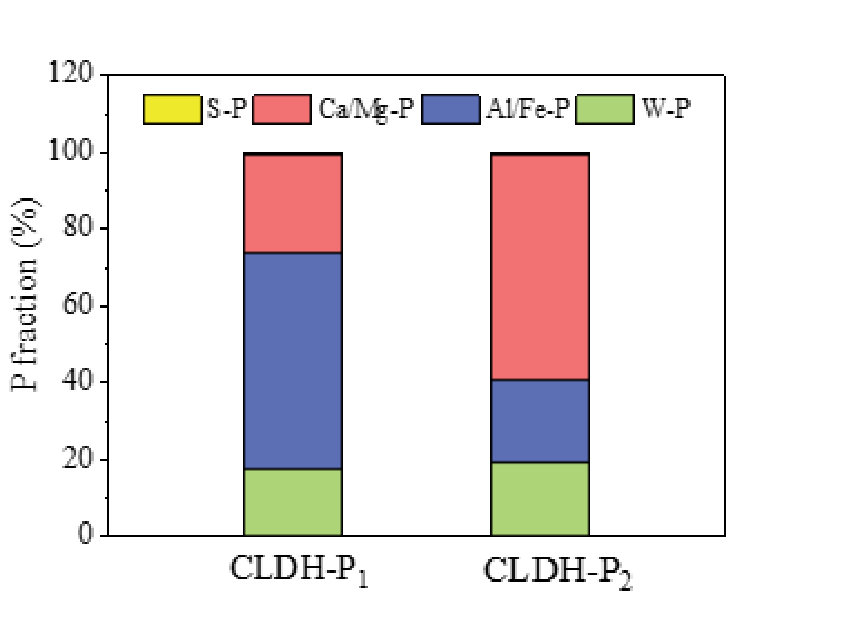
Fig. 2 demonstrates that CLDH-P1 contained more Fe/Al-P (57%), while CLDH-P2 contained more Ca/Mg-P (59%). Considering the lower content of Fe detected in CLDH-P samples, Al-P should be the major component of Fe/Al-P. In addition, W-P accounted for 17%-20% of the two samples, suggesting that weak adsorption played an important role.
The CLDH-P samples contained mainly Al-P, Ca/Mg-P, and weakly adsorbed P, which could be explained as the results of CLDH dissolution, phosphate precipitation, and surface adsorption [23, 24]. Ca/Al-LDH phase in CLDH tended to dissolve in phosphate solution. The released Ca2+ and Al3+ subsequently precipitated PO3- into DCPD and AlPO. Meanwhile, the insoluble Mg/Al-LDH and amorphous Al(OH)3 adsorbed phosphorus through anion exchange or surface adsorption [24]. CLDH-P1 was obtained from a weak acid environment where the precipitation of AlPO4 was dominant. Besides, the protonation of the solid surface in an acidic environment facilitated the exchange and surface adsorption of phosphate anion. For CLDH-P2, the phosphorus precipitation was mainly calcium phosphate as pH increased.
Slow Release of CLDH-P in the Soil Leaching Column
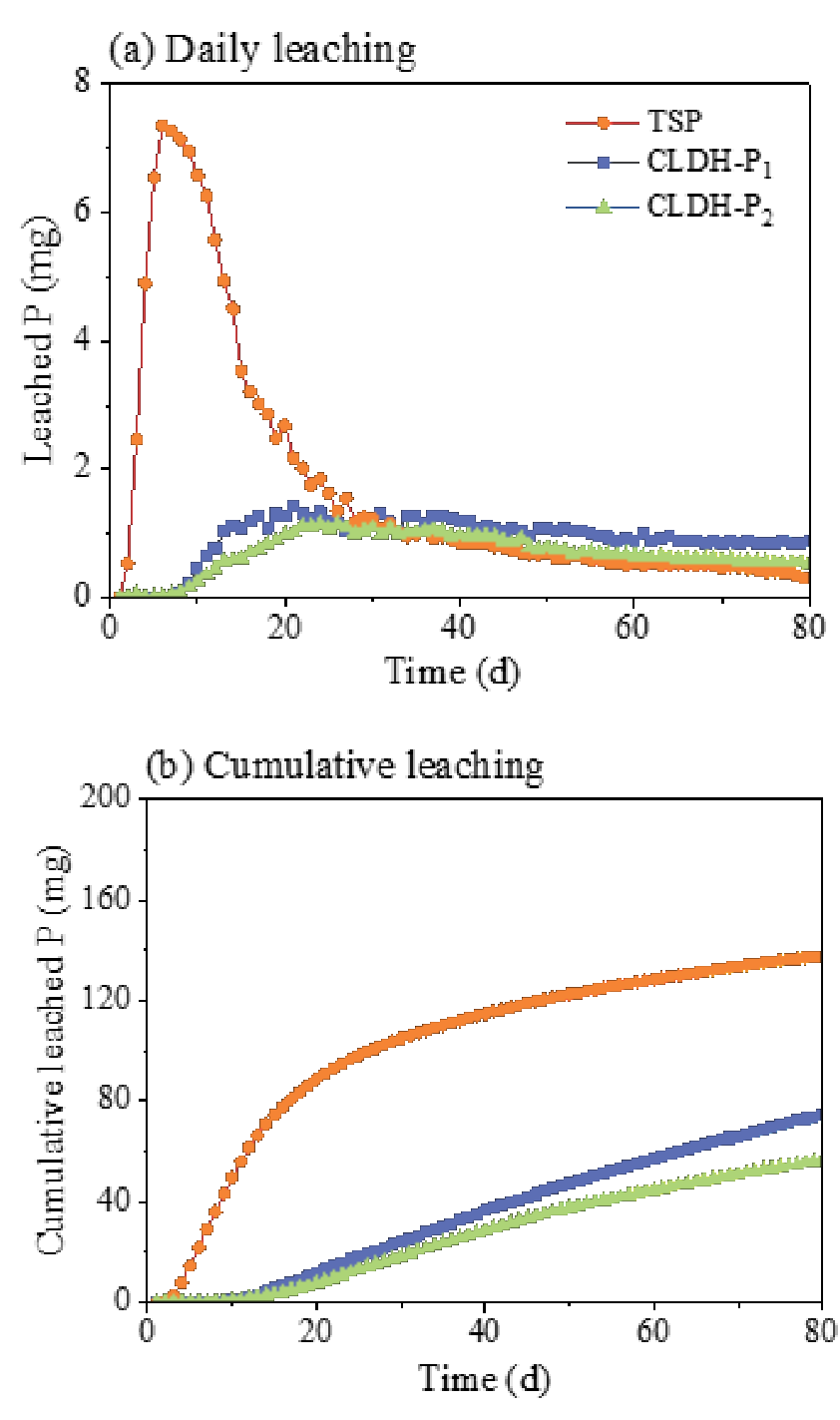
Fig. 3 shows the leaching of P-fertilizer in the calcareous soil column. The peak of leached P from the TSP column appeared on the 6th day (7.36 mg/L), whereas no obvious peak was observed for the CLDH-P1 and CLDH-P2 columns. The P-leaching of CLDH-P samples was slower and more stable than that of TSP. The cumulative P-leaching of CLDH-P1 and CLDH-P2 was 54% and 41% that of TSP in 80 days.
Phosphorus Distribution in Soil
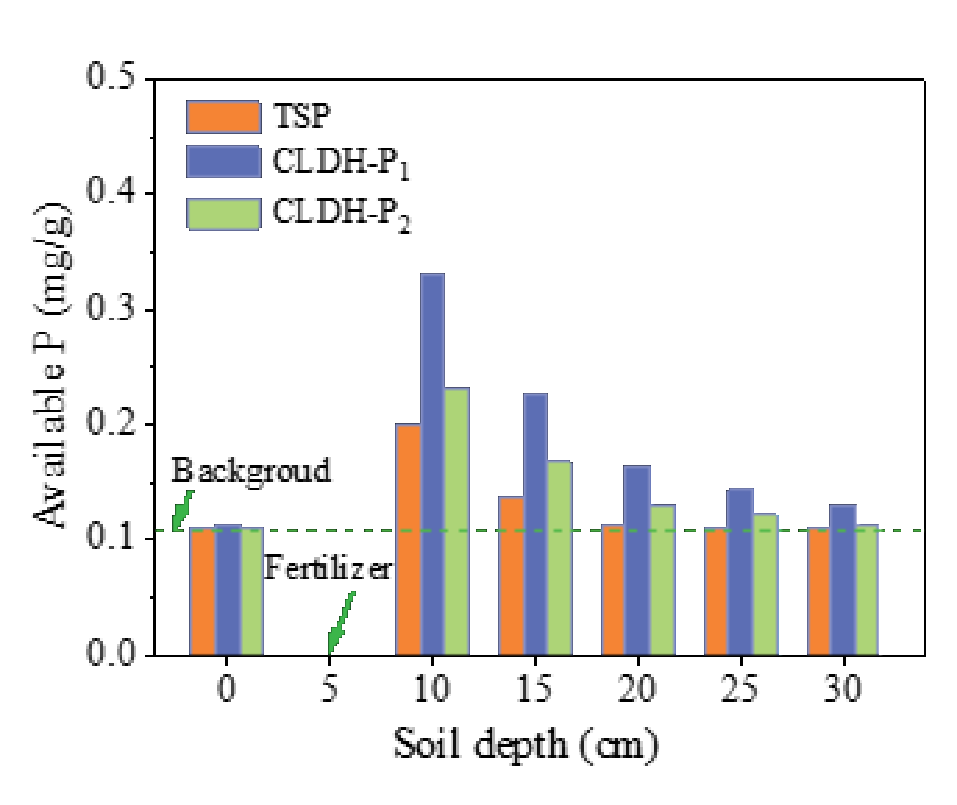
The migration and availability of phosphorus were not as good as those of other nutrients in the soil. Due to the adsorption and fixation of soil, phosphorus released by fertilizer was firstly transformed into available phosphorus easily adsorbed by plants and then gradually passivized into Ca/Mg-P and S-P that were difficult to use [15]. Fig. 4 showed that after 80 days’ leaching, the abundance of available phosphorus in the topsoil of all the columns was close to the soil background value, while the content of available P decreased with the increase in soil depth below the fertilizer burial site. The available P content changed obviously in the range from the fertilizer site to 25 cm soil depth, meaning that the transformation of released P was mostly completed in the soil layer near the fertilizer site. The available P content in the CLDH-P1 soil was higher than the background at all depths below the fertilizer site, indicating that phosphorus transformation was still in progress. Ivan suggested that phosphorus released from fertilizer in calcareous soil would soon be immobilized and become non-bioavailable, but the passivation could be inhibited by slowing down the release rate of phosphorus [25]. This was confirmed by the result of Fig. 4.
Phosphorus is one of the major macronutrients that functions as a promoter of plant growth, root development, flowering, and ripening. As a shallow-rooted plant, mung bean develops 80% of its roots within 30 cm soil depth [26]. The active range of CLDH-P1 in soil could embrace the growth range of mung bean roots under appropriate burial depths. Considering the stable release effectiveness and more available phosphorus content, CLDH-P1 was selected for the planting test.
Fertilization Effect
An appropriate amount of phosphorus fertilizer can promote plant growth; however, overfertilization of phosphorus will not only cause waste, but also lead to smaller leaves, the shrinking of vegetative bodies, and premature plant maturity [27]. Table S1 showed that the application of CLDH-P1 at a certain dose promoted germination and the root and leaf growth of mung bean sprouts. However, overfertilization inhibited the germination and growth of mung bean sprouts (e.g., 0.4 g).
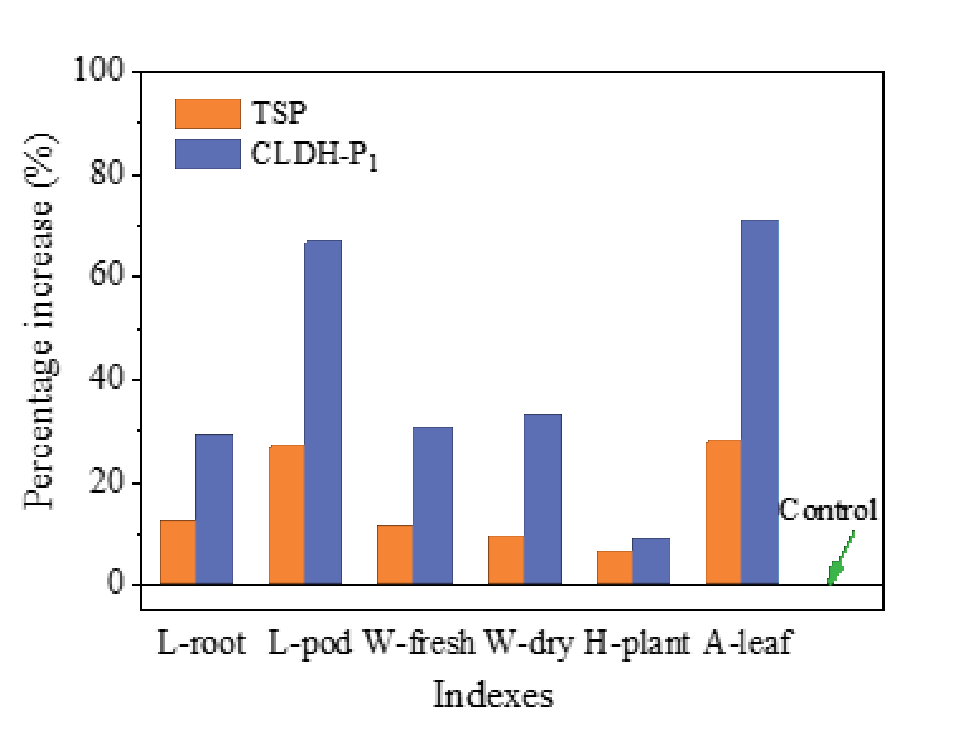
In Fig. 5, the 40-day growth index showed that the fertilization groups increased in their root/pod length (L), fresh/dry weight (W), plant height (H), and leaf area (A). The CLDH-P1 group had sturdy rhizomes and flourishing leaves compared to the control group, and the number of flowers and pods increased significantly. Compared with the control group, the fresh weight, and the dry weight in the CLDH-P1 group increased by 31% and 33%, respectively, which were higher than those of the TSP group. Thus, CLDH-P1 fertilizer could promote the growth of mung beans with higher biomass.
In addition to phosphorus, the Ca and Mg in LDH-P were the essential macronutrients for plants and animals. Ca is the structural component of the cell wall and membrane, serves for charge balance and osmotic regulation, and participates in cell and system signal transduction [28]. Mg is one of the elements that constitute chlorophyll and participates in the physiological processes of animals. Nevertheless, Al in LDH-P might be biologically toxic. Therefore, it is necessary to investigate the enrichment of the above elements in mung bean growth.
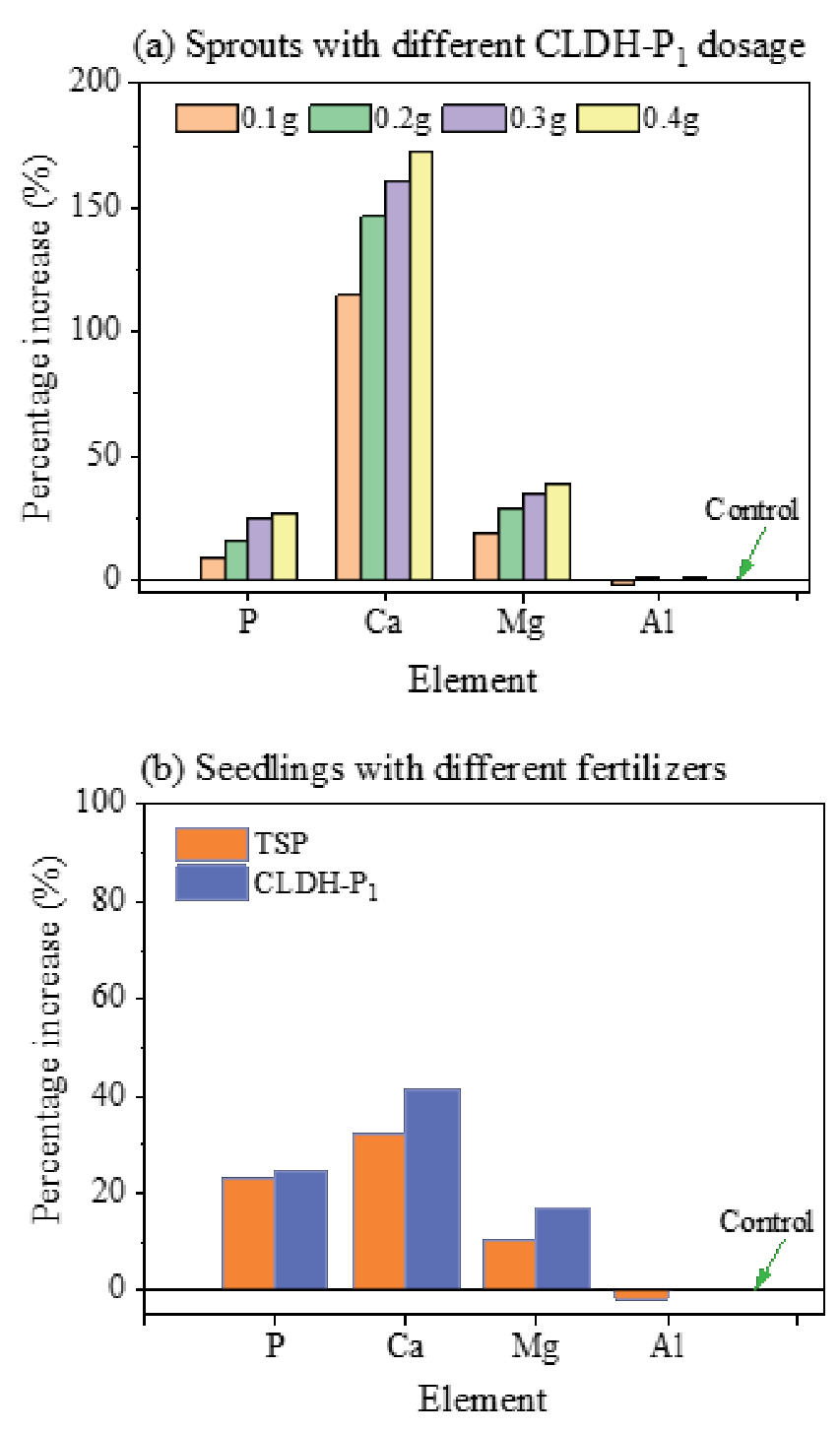
Fig. 6 showed that P, Ca, and Mg were significantly enriched in mung bean sprouts and mung bean seedlings in the P fertilizer groups. The enrichment of the above elements in mung bean sprouts increased with the increase in CLDH-P1 dosage. Moreover, the CLDH-P1 seedling showed better nutrient enrichment than the TSP group. The contents of P, Ca, and Mg in the CLDH-P1 mung bean seedling increased by 25%, 41%, and 17%, respectively, compared with the control group. The Al content was less than 0.05 mg/g in all the samples, and no enrichment was found in the CLDH-P1 mung bean sprout or seedling. This indicated that the dissolved aluminum content in the culture medium or soil was very low. It is known that the Al in the soil will be passivated if the soil pH is higher than 5.7, which is harmless to plants [1]. In other words, even when Al was released from CLDH-P1 into the calcareous soil, it would be quickly fixed by the solid phase.
Table 2 compares CLDH-P1 with other mew slow-release P fertilizers. It can be concluded that CLDH-P1 contained a more active ingredient and a more stable release rate, which indicated that better application effectiveness could be obtained by CLDH-P1. Namely, it can not only ensure sufficient phosphorus fertilizer, but also not cause too fast phosphorus loss due to early rapid release. However, there are many works to be carried out, such as the application effectiveness of different soil types and different plants
Conclusions
CLDH was prepared by a novel multipoint titration method from waste concrete to uptake phosphorus to be a slow-release phosphate fertilizer. CLDH with a large surface area and a large P-uptake capacity was obtained. The cumulative P-leaching of CLDH-P was 41%-54% that of TSP in 80 days. CLDH-P1 proved to release phosphorus stably with more available phosphorus for plants. Further, CLDH-P1 was confirmed to provide mung bean has a higher production of dry matter, a more developed root, and a higher content of beneficial elements (P, Ca, and Mg) when compared to that of TSP. The results of this work assure that CLDH-P has great application potential as a new type of slow-release P fertilizers.
Table 2.
Comparison of slow-release effects of different slow-release phosphate fertilizers.