

Introduction
Forests can provide society with products and services such as carbon sequestration and oxygen release, atmospheric purification, water conservation, soil conservation, and forest nutrient accumulation, which is important for providing products, system regulation, and service support for human beings [1]. However, at present, due to the low awareness of people, there are problems such as low awareness of eco-products and slow development of the industry in forest areas. It affects people’s living standards, restricts local economic development, and has also become a major problem that current environmental protection has to be solved first. For this reason, this paper will launch the research from the perspective of forest eco-product value realization and eco-industry. At the same time, it aims to bring certain inspiration for the development of closing mountain for afforestation areas in karst desertification control.
Ecosystem services mainly refer to the direct or indirect benefits that people obtain from ecosystem functions. Eco-products are the final products or services provided for human well-being through the joint action of ecosystem production and human production, and they are the necessary products to satisfy people’s demand for a better life in new era [2-4]. Currently, the concept of eco-products is mainly used by domestic scholars. However, foreign scholars use ecosystem services instead. The difference between the two is that ecosystem services focus more on human needs, while eco-products are based on ecosystem services, providing sustainable development of product supply and services. Therefore, eco-products can include ecosystem services at a certain level, and in this paper, ecosystem services are also categorized as part of eco-products.
Eco-products and eco-industry are the core carriers and practical basis of eco-economy [5]. As early as 1997, Costanza also provided a systematic description of the concept, content, development history of ecosystem services, and theoretical approaches to value accounting [6]. Arasa-Gisbert et al. [7] emphasized that the provision of ecosystem services is supported by a wide range of forest attributes, proposing appropriate ways of valuing them and improving the accuracy of the results [8]. In terms of market attributes, forest eco-products can be traded and sold. The main accounting methods for their value realization are the market value method [9], the equivalent factor method [10], and the functional price method [11]. Zheng et al. [12] through the above methods, four ecosystem services in the Loess Plateau (soil retention, water retention, water production, and crops) were quantified. For the eco-product value realization path, Wang et al. [13] summarized and proposed three value realization paths, namely, government-led, government+market, and market path, based on practice. Huang Ying et al. [14] and Xu et al. [15], on the other hand, explored the innovative path of eco-product value realization with the help of “forest ecological bank”. In short, the establishment of the eco-product value realization pathway centered on the dominant functions of forests. It is necessary to make preparations for basic research in terms of analyzing property rights, pricing and accounting, market transactions, and supply capacity assessment.
Forest ecological industrialization management is an inevitable manifestation of the realization of the value of eco-products. People can divide the forest production process into three stages: purchase, production and sale, thus constituting a complete eco-industry chain. At present, the forest eco-industry is still in the primary exploration stage, and the industrial structure is still in the pattern of the secondary industry as the main industry, the primary industry as the basis, and the tertiary industry as the supplement, but the structure of the forest industry is constantly being adjusted and tends to be reasonable [16]. It can not only provide eco-products and services, but also transform ecological advantages into economic development advantages and improve the competitiveness of the industry. This is specifically reflected in the rapid growth of forest recreation and tourism and non-timber forest products [17]. Therefore, it is necessary to extend the existing industry chain, transform the traditional industry model into a modern, large-scale and intensive business model, and construct a comprehensive use demonstration base to accelerate industrialization.
Currently, forest restoration is mainly based on two methods: artificial afforestation and closing mountain for afforestation. In this process, Crouzeilles et al. [18] found that the success rate of natural forest sealing and restoration was higher than that of artificial afforestation. Meanwhile the continuous increase of vegetation cover significantly improves the regulating service capacity of the ecosystem [19-20]. It can improve the function of forest ecosystems and provide ecological products for human beings in a stable way. Closing mountain for afforestation refers to the adoption of methods such as closure or semi-closure of mountainous areas to reduce the impact of anthropogenic activities. It also utilizes the self-renewal ability of the forest or man-made disturbance to restore the forest vegetation. The restored forest vegetation not only has a stable structure, but also has a more complex ecosystem. Therefore, the exploration of realizing the value of eco-products and eco-industry in the closing mountain for afforestation areas of rocky desertification control is carried out. Relying on the professional platform, through the organic combination of the government, enterprises and forest farmers, the value of forest eco-products can be accounted for and capitalized. It can not only better promote the process of rocky desertification control, but also promote the sustainable development of local economy.
Therefore, this paper is based on the systematic combing of literature. It aims to (1) sort out the development trend and landmark results of the research on the realization of the value of forest eco-products and eco-industry, so as to facilitate the researchers in the later stage to have a clear understanding of its development process. (2) Refine the key scientific problems that need to be solved, with a view to providing theoretical references for the development of eco-product value realization and eco-industry in closing mountain for afforestation under karst desertification control areas.
Methods
In the literature search process of this paper, Chinese literature based on China National Knowledge Infrastructure (https://www.cnki.net/) database and foreign language literature based on foreign journal resource service system Web of science (https://www. webofscience.com/) and other platforms, in order to “forests, eco-products, ecosystem services and eco-industry were searched from 1980 to 2023, and a total of 1,363 entries were found. A total of 1,363 articles were searched from 1980 to 2023 (Fig. 1.). A total of 1,363 articles were searched. 186 articles were obtained through screening and manual selection. Among them, 112 are English journals and 174 are Chinese journals, including 28 master’s and doctoral theses, 9 conferences and 11 newspapers.
Results and Discussion
Distribution of Literature
Retrieved research on the realization of forest eco-product value and eco-industry mechanism began in the 1980s. The period of 1980-2023 about forest eco-product value realization and eco-industry can be divided into three stages (Fig. 2a). Before 2004, when the research on eco-product value realization and eco-industry just emerged, the number of articles issued each year is very low, both domestically and abroad; followed by 2005- 2016, the number of articles issued is relatively stable, and people have not been very concerned about it; from 2017 to the present day, the research literature on eco-product value realization and eco-industry has grown rapidly, presenting a kind of blowout state. There are 154 articles issued in this period, accounting for 53.85% of this literature search, which shows that scholars at home and abroad have a great deal of research heat on it in this period.
The study scales are mostly at the regional and watershed scales, with fewer studies at the sample scale. Its contents can be classified into five categories: eco-product supply capacity, eco-product value realization mechanism, eco-product value accounting, eco-industry and others (Fig. 2b). Among them, value realization mechanism accounts for a larger proportion, accounting for 29.72% of all literature. The followings are eco-product supply capacity (23.43%), eco-industry (18.88%), eco-product value accounting (17.83%), and others (10.14%). A lot of research has been conducted on the supply capacity of forest eco-products in the past. For the accounting of value, many accounting methods and technical regulations have been made. But it is a pity that there is not yet a universally recognized method. For the path of value realization, the three methods mainly promoted by scholars mainly include ecological benefit compensation, eco-product tenure trading, and eco-industry. How to carry out quality improvement and efficiency, build the corresponding brand value, and then realize the value of eco-products and the development of eco-industry is an important task for the present and the future.
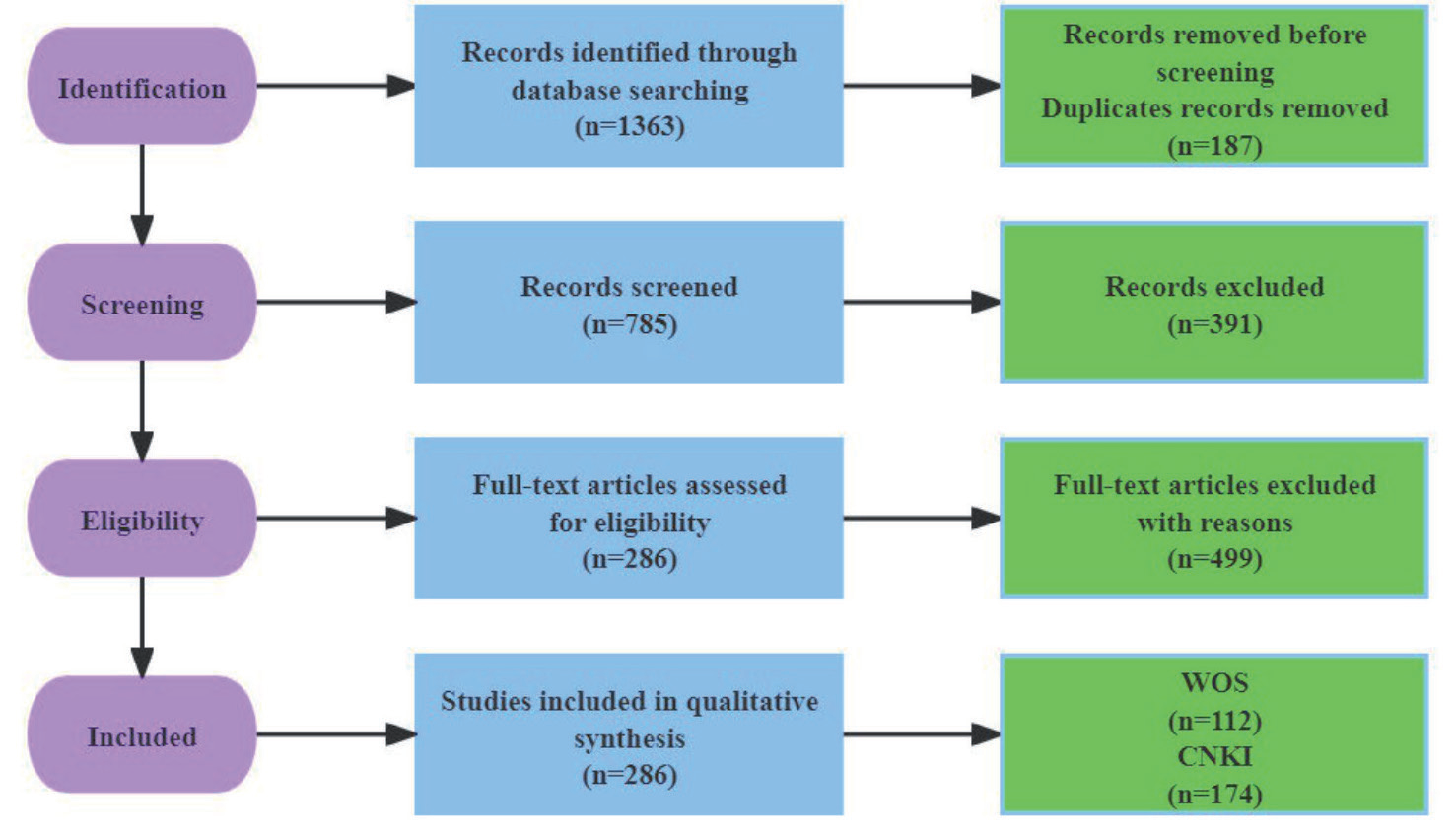
Fig. 2.
Distribution of Literature. a) Publication year b) Content division c. Regional distribution.
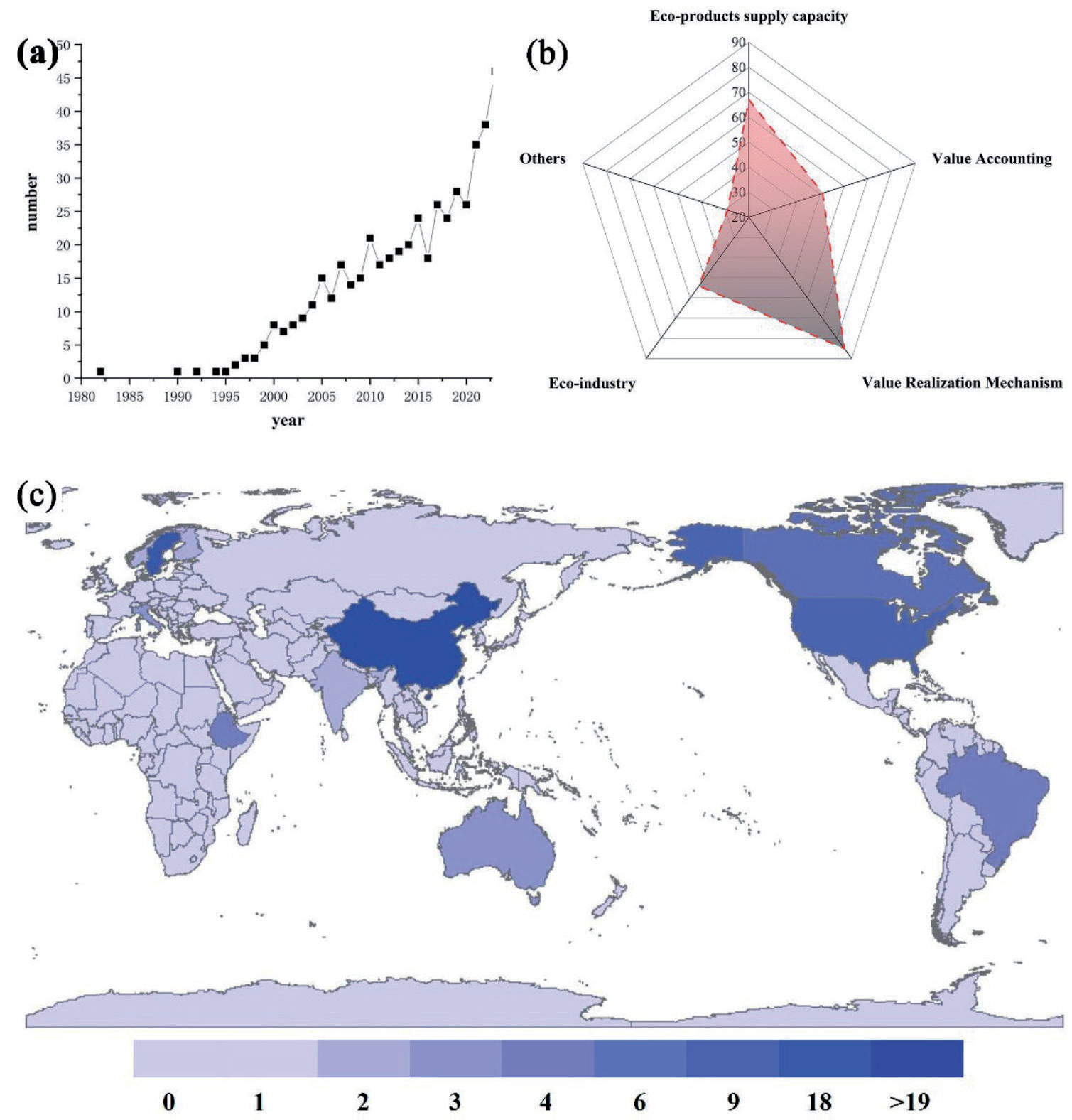
Since the study of forest eco-product value realization and eco-industry has become prevalent in recent years (Fig. 2c). Although the number of research units is high, the number of articles issued by each institution is not very high. Literature is mainly concentrated in some universities and institutions of agriculture and forestry, such as Northeast Forestry University and Beijing Forestry University.
Research Progress
Evaluation of Eco-Product Supply Capacity
Forest ecological restoration mainly relies on the self-recovery ability of vegetation and artificial afforestation. Forestation is the most effective way to increase carbon sinks. It can enhance carbon storage in the arbor layer, rhizosphere, and apomictic layer of the forest [21-22]. Similarly, through anthropogenic disturbance with near-natural regulation. It can optimize forest stand structure and enhance the functional amount of forest water conservation [23-24]. It enriches species diversity and enhances the stability of the ecosystem. It can also effectively improve the ecological environment quality of the region through the implementation of management measures such as returning farmland to forests and agroforestry composite [25]. As an important component of terrestrial ecosystems, forests can provide different types of eco-products and services for different scale regions through the restoration methods of natural sealing and human interference [26].
The thin soil layer in the karst desertification control area leads to weak water retention performance of the soil and easy loss of soil nutrients by leaching. In order to increase the total amount of forest ecological resources, the Qilian Mountain forest area has explored the best ecological restoration method by closing mountain for afforestation to forests [27]. It effectively promotes the diversity of local dominant species with increasing carbon sink capacity [28-29]. From the aspect of forest dominant species, North China larch can significantly increase total soil porosity and capillary porosity, reduce soil bulk weight, and increase water storage capacity compared with oil-bearing cypress [30- 31]. It can provide a suitable habitat for the survival of wild bacteria [32]. Based on this, Wei Yuan et al. found that AM fungi can guarantee the growth of plants in degraded ecosystems, significantly increase the success rate of ecological restoration, shorten the restoration cycle, and ensure the sustainability and stability of restoration effects [33-34].
Accounting for the Value of Eco-Products
Accounting for the value of forest eco-products and clarifying the system of indicators for accounting is a top priority. Chinese scholars have proposed the term ecosystem product and included the gross value of natural ecosystem product into the assessment and accounting system of sustainable development, to establish an assessment and accounting indicator that corresponds to GDP and is able to measure the ecological status, namely Gross Ecosystem Product (GEP). Therefore, Geng and Liang [35] applied the GEP theory to a case study to analyze and explain the natural resource asset value and ecosystem service value of forest resources in Jiaokou County, Shanxi Province, China in 2018. Li et al. [36] established a dynamic ecosystem service valuation model to assess the trend of the value of eco-products. Eigenraam et al. [37] also introduced the term gross ecosystem product (GEP) and defined it as the net flow of ecosystem goods and services between ecosystems. Fourteen of these indicators relate to the functioning of forest ecosystem services, with a detailed classification of their categories. Tikvić et al. [38] for the first time accounted for the value of 28 forest ecosystem services in the forests of the Marjan Park. The system of accounting for GEP is, for the time being, imperfect, and the countries where it is used need to localize and disseminate the corresponding indicators. In addition, Cao et al. [39] added the costs of ecological restoration and protection to the GEP accounting system. Due to the differences in the ecological parameters of the regions where they are located, it is necessary to construct an indicator system for value accounting based on the different functional attributes of forests and the assessment of the benefits and effectiveness of ecological protection as a basis.
In the closing mountain for afforestation areas of karst desertification control, the method of accounting for the value of eco-products is also only at the initial stage. Therefore, there is an urgent need to establish a comprehensive accounting system for the value of forest ecological products. It can provide a basis for the assessment mechanism of the benefits and effectiveness of ecosystem protection and reflect the supporting role of ecosystems to economic and social development. Based on this, Ouyang et al. [40] estimated the value of ecosystem regulation services in Guizhou Province in 2010, and found that the value of forest eco-products was higher than that of other land use types. However, the current use of this method focuses more on areas with better habitat quality such as national forest parks and forested natural scenic spots. A suitable accounting system for the value of forest eco-products needs to be established in accordance with the special characteristics of the environment and based on the principles of data accessibility and practicality of indicators.
Mechanisms for Realizing the Value of Eco-Products
The process of realizing the value of forest eco-products is to convert the use value of products into exchange value. Currently, the existing research has been relatively perfect at the theoretical level, and can be summarized into the following four practice models. First, the “value preservation” model of eco-products. In essence, the government takes the lead in purchasing public eco-products [41-42], and the specific form of expression is ecological protection compensation. For example, in Beijing, three compensation standards have been developed from the different functions and service prices of ecological forests [43]. The second is the “transformation” model of eco-product value. The economic value of eco-products is realized through market-based operations, government policies, and enterprise-led ‘eco-banking’ models [44-45]. For example, the implementation of “forest ecological banking” can accelerate the further development of forest eco-products by centralizing and integrating forest ecological resources and promoting the transfer of ecological resources [14-15]. Third, the “value-added” mode of realizing the value of eco-products. Through product premiums and overall allocation, the originally fragmented ecological resources are integrated into high-quality and efficient assets. The value of eco-products can produce a multiplier effect, thereby adding value [46]. For example, Jayachandran et al. [47] evaluated a Payment for Forest Ecosystem Services (PFES) project in Uganda and encouraged people to protect it. Fourth, the ecological industrialization business model. As a market-led eco-product value realization path, it mainly develops and trades operational eco-products in a sustainable way [48-49]. For example, developing forest tourism is the best way to realize the value of eco-products. In addition, Kuang et al. [50] analyzed the current dilemma of eco-product value realization and proposed a path for big data to boost the development of eco-industry.
In the closing mountain for afforestation area of karst desertification control, the above four models are also applicable to the path of realizing the value of forest eco-products. At present, in closing mountain for afforestation areas, the transformation of the value of eco-products is particularly important. Only when the conversion of value is completed, the subsequent value-added products and development and management will be more favourable [51]. Improving the efficiency of realizing the value of forest eco-products can effectively guarantee the economic growth of mountainous areas and the increase of rural people’s income, thus reducing the income gap between urban and rural areas to a certain extent. For example, forests in closed areas can be used to issue carbon stamps through their carbon sequestration effect, so that enterprises can take out a certain proportion of funds to support the cost of local environmental protection while developing. Secondly, we can also focus on the improvement of air quality by forests. Through the sale of fresh air to urban residents and other means to compensate the local people, to enhance the enthusiasm of the people to follow up the protection work. Different eco-product value realization requirements are classified and elaborated to build a suitable path for eco-product value realization in closing mountain for afforestation areas of karst desertification control.
Eco-Industry
Driven by industrial policies, the decentralized forest industry to achieve integrated development has become the main body and the key to realizing the value of eco-products at present. There are mainly physical ecological economic industries based on timber production and the development of forest economy, as well as recreation industries developed with the help of forest regulation services and cultural services [52-53]. Internationally, the current problems related to the sustainable management of natural forests are pointed out by analyzing the changes in natural forests and timber supply and demand [54]. Swedish forest sector plans to operate under the premise of ensuring that harvesting is lower than growth, making it the largest timber production base in Europe [55-56]. Domestically, due to its late start, more attention has been paid to the development of the forest economy and eco-tourism. In the vicinity of forest areas close to human settlements, people have developed and planted a large number of ecological industries such as traditional Chinese medicinal herbs [57-58] and forest mushrooms [59-60] in the understorey, in the context of not destroying the environment. For areas with less anthropogenic interference, eco-tourism was carried out on a certain scale. Meanwhile, a series of studies in method evaluation [61-63] and model analysis [64- 65] are carried out, which are of great significance for promoting its sustainable development.
Currently, the development of sustainable eco-industry in the area of closing mountain for afforestation for karst desertification control can effectively block the deterioration of ecology. By carrying out a large number of studies, the governance model and technical system for developing speciality forest industry was proposed. Xiao [66] selected suitable medicinal plants for planting in the understorey and found that they not only have better soil and water conservation benefits and economic benefits, but also can consolidate the results of karst desertification control. For the primitive forest top communities to adopt the full sealing mode, Zhang [67] took the world heritage sites of Shibing and Libo-Huanjiang as research objects. The synergistic study of aesthetic value protection and tourism development provides the basis and specific implementable solutions for the value protection of heritage sites in order to achieve the sustainable development of heritage sites. Therefore, in ecologically fragile areas, ecological advantages and resource endowments should be taken as important elements for development. Through reasonable paths and modes, they can be transformed into tangible material wealth in the hands of the people, so that “green mountains” can be converted into “silver mountains”.
Discussion
In response to the lack of awareness of forest ecological products and the imbalance between supply and demand, it is necessary to change the concept of development, strengthen research on forest ecological products and ensure the smooth operation of the products.
From the perspective of soil and water conservation and increasing vegetation cover, countries have invested large sums of money in maintaining forests. However, the lack of attention has resulted in the fact that forest ecological products have not been well developed. Yin [68] suggested in 2007 that eco-products are the most scarce products that need to be developed in China. At present, low forest quality and insufficient supply of high-quality eco-products are still the main problems. At the same time, the limited supply capacity of the government and the relatively single supply mode have led to a serious shortage of the total supply of eco-products, and it is increasingly difficult to meet the people’s demand for eco-products in the new era [69]. Meanwhile the current weakening of state investment in forest management is also a major problem. Therefore, in order to guarantee the stable supply of forest ecological products, research on the supply capacity and market demand of forest ecological products can be strengthened.
In the closing mountain for afforestation areas under karst desertification control, forests are subject to geographical constraints, and anthropogenic degradation has damaged the structure and function of the ecosystem [70]. Since the 1980s, countries are exploring ways of realizing the value of ecological products and promoting the development of special forest industries on the premise of ecological security. Secondly, by artificially promoting the renewal of natural forests, accelerating the rate of sealing into forests, and improving the quality of forests and the productivity of ecological products from forest land [71]. So that it maintains a stable and healthy forest ecosystem, gradually narrowing the gap between the construction of ecological civilization and the people’s demand for a better ecological environment.
In view of the problem of large differences in the accounting results of ecological product values, improve the accounting system of ecological product values, and provide references for the pricing and trading of ecological products.
Currently, forest eco-product value accounting indicators and methods are not harmonized, leading to significant differences in the amount of eco-product value calculated. Research on the use of forests to mitigate climate change has been hampered by the use of different carbon accounting methods [72-73]. Campos et al. [74] used the Standard System of National Accounts System of National Accounts (SNA) and Agroforestry Accounting System (AAS) to account for the value of ecological products, which differed by a factor of nearly three. The cost of ecological restoration and protection is ignored in the process of accounting for the value of forest ecological products, and the value obtained in this way is inaccurate [39]. Therefore, it is necessary to construct a value accounting index system suitable for the current development direction of forest resources and the realization of the value of ecological products in China. With the continuous improvement of the concept of forest ecological products and related policies, the source of accounting basic data is more scientific and accurate, the forest ecological products accounting index system will continue to expand, and the accounting method will continue to develop in the direction of refinement with the application of various new technologies.
In general, the currently more developed approaches are mainly different regional scales [75-76], different methods [77-78], different model parameters [79-80]. At present, the accounting index system of karst region is still not perfect, and the method of obtaining the values of the indexes has not been standardized and processed. As a result, the results of different researchers’ estimation of the supply capacity or value of the same study area are all very different [81]. In order to better realize the value of its eco-products, relying on traditional regional advantages, develop forest products with local characteristics. The corresponding eco-product indicators can be constructed with reference to the Specification for Assessment of Forest Ecosystem Service Function (GB/T 38582-2020). Then, according to the regional differences, the formula parameters are constantly corrected. Ensure the accuracy of the calculated value and improve the value accounting system of eco-products. On the basis of physical accounting, choose appropriate value accounting methods to account for the value of various eco-products. Remote sensing and the establishment of corresponding model parameters can also be used to carry out the value accounting of forest eco-products in the closed area.
In view of the problem of unsound paths for realizing the value of forest eco-products, create paths for the government, the market and the management body, improve the management mechanism, and effectively guarantee that the value of eco-products can be realized.
Currently many forests have high value per unit area, and the basic conditions of eco-product realization pathway are good, but lack of realization mode and pathway. At the same time, the effectiveness of eco-product value realization has large spatial heterogeneity, but the current efficiency of its value transformation is generally low [82]. The current domestic forest right reform has resulted in the fragmentation of forest land and differences in the management ability of different forest households. And it has caused difficulties in improving forest quality and realizing forest resource assets. Thus, it can be seen that small-scale forestry management activities are unable to accomplish the optimal investment in the development of forest land industry. In order to ensure and improve the path of realizing the value of eco-products, it is mainly to link the demand side with the supply side by creating a market and formulating trading rules [83]. In this way, the relationship between regional ecology and economy can be harmonized to promote the sustainable development of the region [84].
In response to the above problems occurring in the closed forest areas after karst desertification control, transactions between the supply side and the demand side of forest ecosystem services in the closed areas have to be conducted according to market rules. It is necessary to improve the current measures that are still dominated by vertical ecological public welfare forest transfer payments from the center to the localities. The complementary relationship between the government and the market should be clarified, and the functions of local governments at all levels should be brought into full play, complemented by market dynamics. Eventually, the organization will build a multi-dimensional supply model with the participation of the government, enterprises and individuals to guarantee the continuous supply of products. In this process, the climatic and developmental differences between regions can be ignored, and the value realization model of special forestry eco-products can be formed in the operation and development mechanism. A market product certification system and a quality traceability system have been established to ensure that the value of forest eco-products from closed areas is realized.
In view of the low degree of development of the forest eco-industry, existing technologies and methods should be fully integrated, new development modes should be proposed, and demonstrations of leading enterprises should be constructed to accelerate the development of industrialization.
Eco-industry is not really understood, and the development of the forest industry is still dominated by the decentralized operation of farmers. It cannot meet the market’s demand for high-volume and standardized production, and has not yet achieved industrialization in the true sense of the word. Secondly, neglecting the protection of forest resources will not only lead the forestry economy to decline, but also cause irreversible damage to the regional ecological environment. Such as deforestation will undoubtedly hinder the development of green economy in the region [85]. Therefore, it is necessary to strengthen the monitoring and prediction of the development of the forest eco-industry through the current more mature technical means [86], and construct a demonstrable eco-industry development path to promote the development of the industry.
The development of eco-industry will also suffer from the above problems for the closed areas of karst desertification control. Although the closed areas have a better ecological environment, they lack financial support. Ecotourism and other industries are still in a relatively early state of development. Therefore, first of all, it is necessary to ensure the sustainability of the forest ecological resources in the closed area, optimize the structure of the forest industry and clarify the relationship between supply and demand. At the same time, we should cultivate and select leading industries, and improve production efficiency and its brand effect through leading enterprises. The implementation of measures such as forest closure and forest management can also be carried out through the use of professional technical means [87-89], All-round monitoring and protection of the forest ecosystem in the closed area. Improve the value of ecological functions, promote the sustainable development of ecological industries in forest areas, and promote the diversification of forest eco-industry development.
In view of the low brand awareness of the forest eco-industry, through the development of branding operation mechanism and marketing strategy, to create a public brand of local characteristics of the eco-industry.
Internationally, many countries are carrying out research and exploration of forest eco-industry, how to quickly create a well-known brand is particularly important for the development of the industry. Huang [90] after analyzing the forest ecology and forestry culture, put forward a proposal for the development of forest eco-industry in the new era. At this stage, the concept of forest city was also put forward, considering urban forest as the “lung” of the city. On this basis, Guangxi consolidated its proprietary ecological brand by accelerating greening and afforestation to create forest cities [91]. Years of planting and cultivation in the Sehamba have transformed the vast wilderness into Asia’s largest artificial forest, cultivating an exclusive forest culture [92].
Most of the eco-products in the closing mountain for afforestation areas of karst desertification control lack their own brand advantages due to the influence of topography and terrain. The products are often sold at low prices, which greatly discourages people. The same eco-products may form commodity values that differ greatly if they are labelled with different brands to attract people’s attention. For the top cluster in the fenced area, declare the world natural heritage site. A series of brands with karst characteristics have been created, such as Libo Xiaoqikong and Shibing Yuntai Mountain [93]. F For areas with serious habitat destruction, it can create forest ecological industries with regional characteristics [94]. Secondly explore, cultivate and develop advantageous eco-industry brands with unique regional characteristics. And through the cultivation of modern eco-industrialization brand image, gradually solidify the reasonable positioning of the public on the price of products. In turn, the value of eco-products will be enhanced, the market competitiveness of eco-products with regional characteristics will be strengthened, and the economic and social development of the region will be driven.
Conclusions
A systematic review of eco-products and eco-industry was conducted through 286 publications in two databases, Web of Science (WOS) and China National Knowledge Infrastructure (CNKI), and the study condensed the current research progress and put forward the key scientific issues to be solved in this field. The main results are as follows: (1) Firstly, the number of annual publications on value realization of forest eco-products and eco-industry shows a significant upward trend, indicating that the current research has a broad prospect. (2) The current research can be mainly divided into four aspects: supply capacity assessment, value accounting, value realization and eco-industry of forest eco-products. (3) The literature on value realization of forest ecological products is more extensive, and there are few studies related to ecological industry, and no research focusing on the intrinsic connection between the two is found. In the future, researchers should continue to explore the relationship between value realization of ecological products and ecological industry in order to improve the forestry research system. The results of the study point out the research direction for the value realization of ecological products and the development of eco-industry in the area of mountain forestation for rocky desertification control. It is also of great significance to promote the local coupled development of rocky desertification control and economy.

