

Introduction
With population growth, urbanization, and socio-economic development, the structure and function of forest ecosystems have changed, and human beings are losing the basic goods and services of forest ecosystems [1-2]. Ecological and environmental problems have also appeared, which affects regional ecological security and sustainable development. In 1981, Ehrlich formally proposed the concept of ‘ecosystem services’, emphasizing the value and significance of natural ecosystem outputs to human society [3]. With an emphasis on ecosystem services, forest ecosystem services are affected by the ecosystem structure, process and human selection preferences, and diversification needs, and the relationship between ecosystem services is exceptionally complex. It has become a hotspot and a difficult point that requires continuous attention in forest management and administration [4]. Research on forest ecosystems has made people pay more attention to protecting the ecological environment.
With the rise of people’s awareness of environmental protection and the study of ecosystem services, the concept of ‘ecological industry’ has arisen along with the idea of ‘industrial ecology’ [5-6]. Eco-industry is a network-type and evolution-type industry based on the carrying capacity of ecosystems, organized according to the principles of ecological economy and the laws of knowledge economy, and with efficient economic processes and harmonious ecological functions. According to the definition of eco-industry, the forest eco-industry (FEI) is a production sector that uses the characteristics of the forest ecosystem to play a protective role based on the carrying capacity of the forest ecosystem. The forest ecological industry is important in rural areas to promote economic development.
About 15 percent of the earth’s ground is covered by karst landscapes, and a quarter of the global population survives [7]. Karst areas are characterized by ecological fragility and their vulnerability to damage. With continuous population growth, the region has been subjected to overloaded human activities, and the contradiction between man and land has become more prominent, with degradation of ecosystems, aggravation of soil and water erosion, and serious karst desertification (KD). KD has become a major ecological and environmental problem limiting the sustainable socio-economic development of the karst region [8], which has aroused extensive concern and attention from the state and society [9]. The KD control (KDC) project has been implemented in the karst region of southern China and takes into account ecological and economic benefits, consolidates the achievements of KDC, develops a highly efficient characteristic forest industry according to local conditions in the process of ecological restoration, and establishes sustainable FEI. This is an important development direction for the restoration and reconstruction of vegetation cover in KD areas (KDA) [10]. Most of the KDA are mountain villages, and China’s ‘14th Five-Year Plan’ clearly puts forward adhering to the priority development of agriculture and rural areas, comprehensively promoting the revitalization of the countryside. After years of efforts, China’s KDC has been effective in achieving results and led the people of poor mountain villages out of poverty to become rich, implementing the national strategy of rural revitalization (RR) and completing a double harvest of ecological and economic benefits.
Research on forest ecosystem services and FEI can help coordinate ecological protection and economic development, optimize ecosystem function, and improve the ecological environment. The research on ecosystem services and eco-industry, as well as RR, is in the stage of rapid development, and extensive research has been conducted on the optimization of forest ecosystem functions, the development of eco-industry, and the level of RR. However, the mechanism and path of forest ecosystem service-based eco-industry-driven RR are yet to be studied in depth, and the driving mechanism and path are unclear. Therefore, this study, based on a systematic combing of literature, aims to (1) clarify the development trend of research on FEI and RR;
(2) summarize the landmark results of research on FEI and RR; and (3) condense the key scientific issues to be solved in the research on FEI and RR. It helps to achieve theoretical reference for FEI to drive the RR mechanism and provide scientific support for the transformation of forest ecosystem service value in KDC.
Methods
Based on the diversity of global languages and the unique geographical characteristics of the research content, two authoritative databases were selected for literature retrieval: the Web of Science (WOS) and the China National Knowledge Infrastructure (CNKI). English is a widely used and understood language in the world. The WOS database collects high-quality academic works in different disciplines and has a large number of readers. Therefore, we choose the WOS database for English literature retrieval. FEI and RR are closely related to China, and KDC is mainly implemented in southern China. CNKI is the largest, most comprehensive, and most important database in China, and it is the best choice to obtain Chinese literature [11]. In this paper, we searched literature with the theme of “forest ecological industry/forest industry” and “rural revitalization/rural development”. The following inclusion criteria were used: (1) search terms should appear in the title, abstract, or keywords;
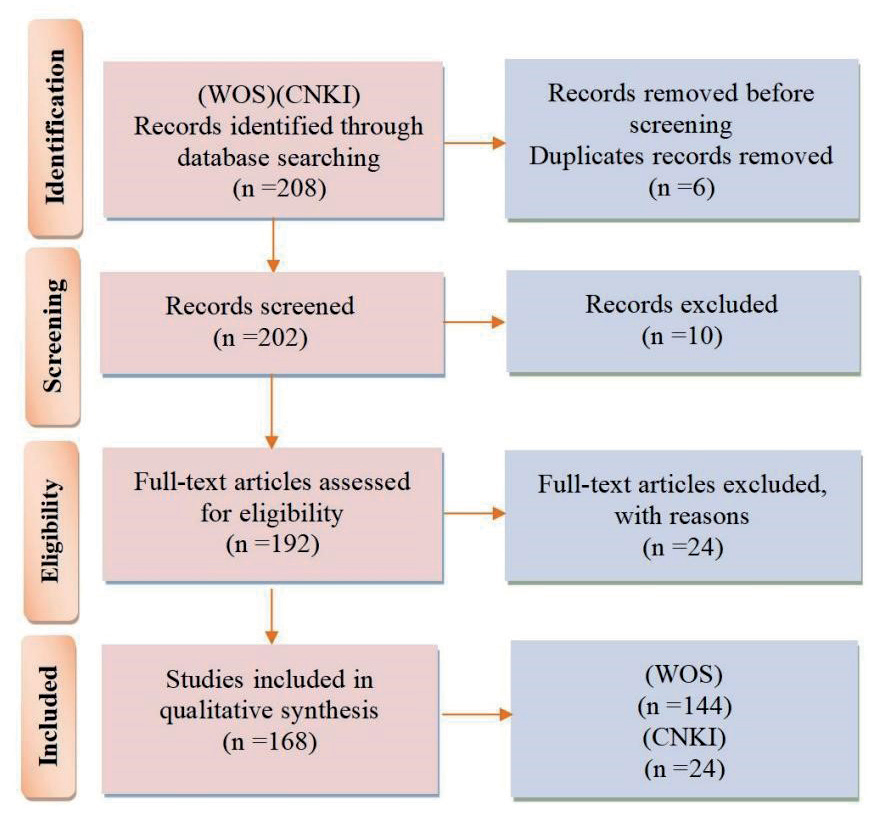
(2) the study should be included in the WOS and CNKI databases; (3) research should be related to FEI and RR; (4) languages should be in English and Chinese. The following exclusion criteria were used: (1) literature repetition; (2) non-FEI and RR studies; (3) unavailable literature. The results of the literature search were as follows. A total of 208 articles were retrieved from both databases. A total of 168 articles were obtained after screening. Fig. 1 shows the process of literature search and screening.
Results and Discussion
Distribution of Literature
We know that the earliest research began in 2009 from searching the relevant literature databases. Between 2009-2024.06, domestic and foreign research on FEI and RR can be roughly divided into three stages: 2009-2015 is the first stage, with 37 articles; 2016-2021 is the second stage, during which articles are constantly published; and 2021-2024.06 is the rapid development stage, where research on the relationship between FEI and RR can be gradually deepened.
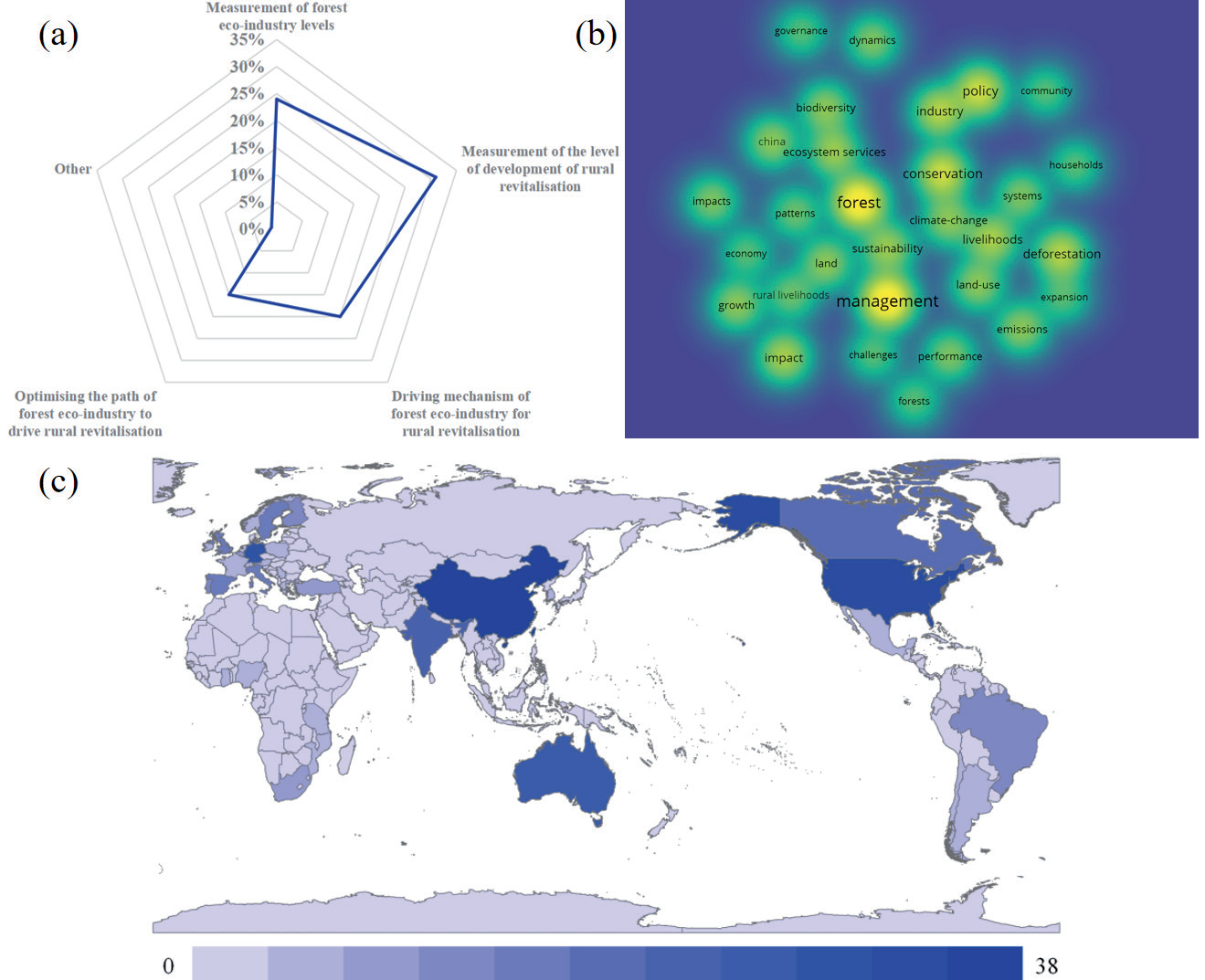
All the literature reviewed was classified and summarized according to the research content by the level measurement of FEI, the level measurement of RR development, the driving mechanism of FEI on RR, and the research related to the optimization of the path of RR driven by the FEI (Fig. 2a). Of which, 40 articles on the level measurement of FEI accounted for 24% of the total number of articles; 52 articles on the level measurement of RR development accounted for 31%; 34 articles on the driving mechanism of FEI on RR accounted for 20%; 25 articles on the optimization of the path of RR driven by FEI accounted for 15%; and 17 articles on other studies accounted for 10%.
Keywords carry the most important and core information, and analyzing the keywords helps to understand the research hotspots in the field. Literature keywords were analyzed by VOSviewer 1.6 software, and the co-occurrence frequency of greater than 5 times was set. Fig. 2b shows the keyword density graph. The color ranges from green to yellow, indicating that the higher the frequency of keyword co-occurrence, the higher the research intensity of the literature. Forest and sustainability are the commonly used keywords, followed by management. In addition, the more common words are China, conservation, policy, rural development, deforestation, livelihoods, etc., which indicates that the sustainable development of FEI issues and factors affecting eco-industry development have attracted people’s attention.
In recent years, research on FEI and rural development has become more and more common, and the collation of the retrieved English literature regions revealed (Fig. 2c) that the research on FEI and RR is mainly concentrated in the countries of Asia, North America, Europe, and Oceania. China has the highest number of articles published at 38, followed by the United States, Germany, Australia, India, and Canada, respectively, with 25 articles (10, 9, 7, and 6, respectively), while other countries have less than 5. This shows that China has paid more attention to the forest industry and rural development in recent years. There are many research units, but the ones with more articles are mainly universities and agricultural and forestry institutions, such as Northeast Forestry University and the Chinese Academy of Sciences.
Research Progress
Measurement of FEI Levels
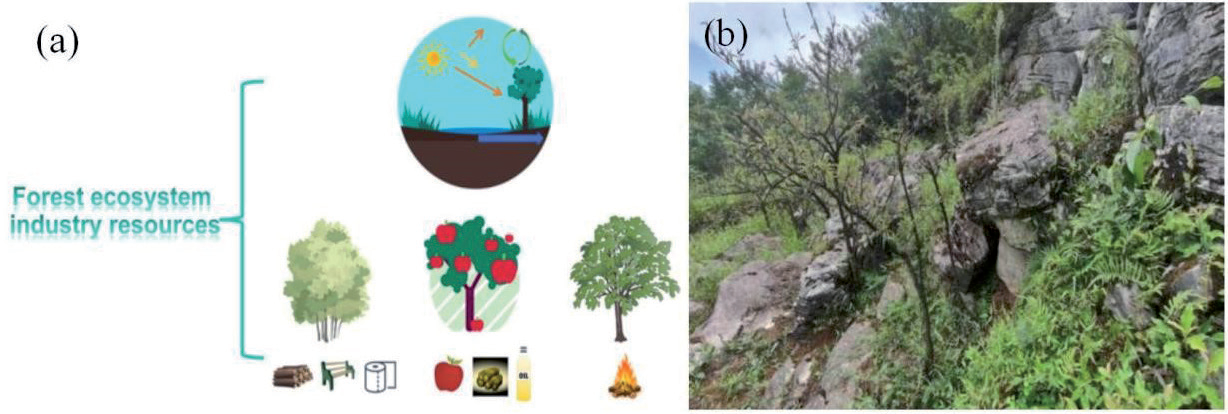
Through the study of the ecological and economic benefits of forest resources, it is proposed that forest ecological resources should be utilized according to local conditions and that forest eco-industries with both ecological and economic benefits should be developed to provide a reference for the development of forest eco-industries in ecologically fragile areas. As an important component of terrestrial ecosystems, forests provide essential benefits and services, both ecological and economic [12]. Management and conservation of forest resources (Fig. 3a) has become one of the major issues of global environmental protection [13]. Forest ecological resources are key environmental resources that are widely valued by society and have an increasing impact on national economies [14-15]. Forest ecological industrial resources are resources for forest management and development built on existing scientific and technological means and social values [16]. Due to the limitations of people’s understanding of forest ecological benefits, they cannot reasonably use forest resources to develop industries, which makes it difficult to establish a balance between protectors and beneficiaries of forest ecology and does not effectively exert its economic benefits. As people’s understanding of the benefits of forest resources continues to deepen, however, different types of forest eco-industries are being developed according to different forest ecological industrial resources, which are divided into understory planting, understory breeding, special economic forests, forest tourism, forest recreation, and the cultivation of precious forest trees. FEI is a multi-dimensional utilization of forest resources, which is of great significance to constructing biodiversity and building complex ecosystems.
Fig. 2.
Distribution of literature a) content division b) hotspot distribution c) regional distribution.
As the ecological environment of KDA is fragile (Fig. 3b) and their economic development is backward, ecological and economic benefits should be weighed in the process of KDC to consolidate the results. Therefore, in the process of KDC, its market demand and market competition should be fully considered, and in the process of ecological restoration, a high-efficiency characteristic forest industry should be developed according to local conditions. The industrial chain and ecological chain should be organically integrated to establish a sustainable local eco-industry [17].
Through research on the relevance of the high-quality development of FEI, an index system is created with five aspects: driven innovation, coordinated development, green resources, openness and stability, and sharing and harmony. This is based on the theoretical foundation of the new development concept. The FEI is one of the pillar industries of China’s economic development and plays an important role in developing China’s national economy [18]. The level of FEI construction has been significantly improved, with China accounting for about 70 percent of the world’s afforestation area, forestry helping to revitalize the countryside with remarkable results, and the main forestry industry driving the employment of more than 52 million people [19]. Taking the new development concept as the theoretical basis, the index system for high-quality development of FEI is constructed based on scientifically defining the connotation of high-quality forestry development. The new development concept of ‘innovation, coordination, greenness, openness, and sharing’ plays an important guiding role in developing a high-quality economy [20]. At the same time, the new development concept is also the basic guideline for China’s economic development in the new era, which is increasingly becoming the judgment criterion for the modern economic system. The exploration of foreign scholars on the indicator system of high-quality economic development mainly includes five dimensions: economic development, innovation efficiency, residents’ livelihoods, ecological services, and environmental impact [21]. Domestic scholars’ exploration of the indicator system of high-quality economic development focuses on the new development concept and the establishment of the evaluation system for high-quality development of the regional economy in the five dimensions of innovation, coordination, greenness, openness, and sharing [22-23]. Therefore, combining the characteristics of the FEI, the evaluation system of high-quality development of the FEI is built around the five dimensions of innovation-driven, coordinated development, green resources, openness and stability, and sharing and harmony, which provides a theoretical reference for promoting the realization of the high-quality development of China’s forestry industry. There are problems, such as insufficient optimization in the structure of the FEI and inadequate scientific and technological support in the KDA. The development of the FEI in the KDA should follow and promote the concept of high-quality development.
Measurement of the Level of Development of RR
The study of the phased development of RR has revealed a regularity in the evolution of RR development, with different main tasks in the early, middle, and late stages of RR development. As industrialization, urbanization, and information technology continue to advance, China’s rural development faces many challenges, such as the loss of rural populations, the hollowing out of villages, and the unbalanced development of urban and rural areas. In the early stage of rural development, the main task is to solve the ‘two main worries and three guarantees’ of farmers and, simultaneously, to ‘clear the obstacles’ for implementing the RR strategy. During this period, the residents’ food, clothing, medical care, housing, and education face serious challenges, and the countryside mainly faces the pressure of survival [24]. In the middle stage of rural development, the main task is not to return to poverty on a large scale and, at the same time, to make preliminary explorations for the implementation of the RR strategy, which pays more attention to the quality of life of the residents as well as the extension of the industrial chain in this period [25]. The late stage of development mainly takes the implementation of the RR strategy as the main task and improves the level of public services and governance in the countryside, stimulates the internal vitality of the countryside, and solves the problems of a low level of public services in the countryside, insufficient cultural vitality, and the lack of village governance capacity using diversified social subject inputs and the construction of digital and networked villages [26]. The implementation of the RR strategy is intended to provide a policy basis for the development of China’s countryside and the Chinese experience for the progress of the world’s countryside.
Through research on the macro-level, meso-level, and micro-level indicators of RR, it is found that there are obvious regional differences in the level of RR in China, and the development of RR is not balanced, with the overall distribution of the ‘east high, west low’ ladder. Many scholars have conducted quantitative research on the evaluation system of RR development, mainly based on the five requirements of the RR strategy as the main basis for constructing the indicator system. Due to the different definitions of the connotation of RR development by different scholars and differences in the level of research, there are variations in the setting of specific indicators. Macro-level research based on the national and provincial levels to build the indicator system, such as that of Jia Jin et al. [27] and Yan Zhoufu et al. [28], measured the level of RR development of China’s provinces in 2015 and 2016 and the results show that the level of RR development in China is generally low. The overall situation is a ladder-like distribution of ‘high in the east and low in the west’, with obvious regional differences. In fact, there are pronounced regional differences. The meso-level research constructs the indicator system for the level of prefecture-level cities and counties, such as Chen Junliang et al. [29], who selected 40 cities and municipalities in the Yangtze River Delta region as the object of research. The results show that the level of RR in Jiangsu and Zhejiang is significantly higher than that in Anhui, and there are regional differences in the level of RR development. Li Tan et al. [30] took 11 provinces and cities in the Yangtze River Economic Belt as the research object and found obvious regional differences in the level of RR in the Yangtze River Economic Belt, with an overall ladder-like distribution. The gap between the eastern region and the central and western regions was obvious. Wu Jiuxing et al. [31] measured the development level of RR in 331 prefecture-level cities across the country and found that the development of RR in China is uneven and proposed that the focus of RR development should be placed in the central, western, and northern regions. Micro-level studies have constructed distinctive village-level RR evaluation index systems based on micro-research data, such as Zhang Ting et al. [32], who extracted micro-data from 35 sample villages in 10 Chinese provinces for four consecutive years, and Zheng Xingming, Cheng Ming et al., and Zhang Xue et al., who respectively extracted evaluation data from part of the village research in Fujian, Anhui, and Liaoning provinces [33-35].
The ecological environment of KDA is fragile; the ground surface is fragmented, surface water is scarce, groundwater is abundant [36], the economy is relatively backward, and the level of RR is low, so we should pay more attention to its rural development, construct a unique evaluation index system, and draw on the development experience of RR of the eastern region to narrow the differences.
The Driving Mechanism of FEI for RR
Through the research on the evaluation of the level of driving RR of the FEI, the driving evaluation system in terms of operation, output, and impact is constructed to provide a reference for the FEI to drive RR. Scholars have constructed an index system to evaluate the RR driven by FEI. The economy, society, and ecology are important factors affecting the development of RR driven by FEI [37-39]. Based on the theory of ‘triple surplus’ [40], Huang Senxin et al. constructed the input indicator system from five aspects: land, capital, manpower, system, and technology. Some scholars have added factors such as sustainable development ability, adaptability, product quality and safety, and learning and innovation ability into the index system [41-42]. At present, the construction of the evaluation index system of FEI mainly considers internal factors such as its own production efficiency and comprehensive performance, and less consideration is given to the efficiency of promoting RR and development, which needs to be strengthened.
The forests in KDA are very different from the normal landscape due to the special nature of the growing environment and the vulnerability of the system. In the development of FEI, due to the vulnerability of its habitat and the interference of human activities, the forest grows slowly. With the limitation of lower productivity [43], the evaluation of the driving level of RR should be more considerate of multiple factors for a worthwhile construction of an evaluation index system suitable for KDA.
By analyzing the path of FEI driving rural revitalization, it was found that the driving path of FEI driving rural industry mainly consists of the behavioral and output paths. The FEI path mainly assesses the output path of forest ecological products in the process of production, supply, and sale [44], as well as its behavioral path. Evaluation methods contain both qualitative and quantitative aspects, and commonly used quantitative evaluation methods include structural equation model analysis, hierarchical analysis, logistic model analysis, prohibit model analysis, data inclusion analysis (DEA), factor analysis, etc. For example, Han Xiao used the structural equation model to explore how forest ecological product supply chain operating strategies affect their paths. With different operation strategies on its path [45], Zhao Jiajia et al. [46] constructed a structural equation model to systematically explain the factors affecting the organizational efficiency in the agricultural super supply chain; qualitative methods are mainly based on relevant theories to construct an analysis framework, based on typical cases, to deeply analyze the effect of factors such as the degree of participation, the amount of investment, and organizational strategies on the RR and development of the FEI [47]. In KDA, through the action path and output path, we can grasp the development direction of FEI to promote RR.
Optimizing the Path for FEI to Drive RR
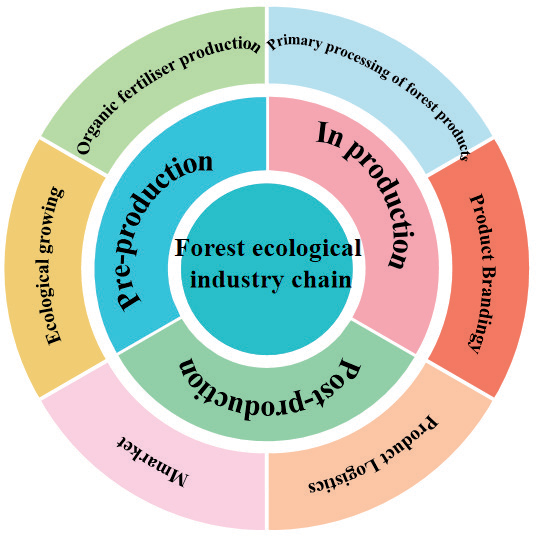
The study of FEI driving rural industry and ecological revitalization proposes that the whole industrial chain of FEI should be constructed to create the added value of forest ecological products, convert production waste into production resources, and improve market competitiveness. The FEI integrates rural planting and raising, production, processing, and marketing and uses a supply and demand relationship as a link to make the upstream, midstream, and downstream of the industry into a whole industrial chain containing pre-production, production, and post-production links [48-49]. This is conducive to the solution of the market-oriented operation of the FEI and the establishment of the forest ecological agriculture management and promotion system (Fig. 4). At present, the development of FEI in the KD area is rough, and most of the forest ecological products are primary products with low technological content, low added value, and a single product structure, and the added value of ecological products has not been effectively transformed into commodity value, which seriously affects the market competitiveness of the forest ecological products [50]. Therefore, the FEI should enhance the value of products, extend the industrial chain, carry out deep processing of forest ecological products, and enhance the conversion rate of ecological value.
In the development of traditional Chinese medicine and fruit and economic forest industries in the ecologically fragile areas of KD, those conducting species screening and the screening of the use of flowers and fruits and perennial species, such as prickly pear, honeysuckle, peppercorns, etc., should consider ecological environment management. This can help reduce land disturbances [51]. For example, the peppercorn industry in the region should be sensitive to the reproduction of the dried and discarded branches of the waste peppercorns, which could be used as grinding teeth sticks, foot wash basins, etc., extending the industrial chain and making full use of the resources.
Through the study of the practical path of FEI driving RR, it was found that in the process of industrial development, the diversified development of FEI should be promoted, the FEI service system should be perfected, and RR should be boosted to truly realize the co-development of economic, social, and ecological benefits in rural areas. RR should promote the diversification of FEI, grow the green industry (such as biomass energy), optimize the regional layout of forestry, and develop the tertiary industry, including cultural tourism and pollution control. This can be combined with rural characteristics, the development of characteristics of agricultural tourism parks, and supporting the economic forest industry. It should also establish and improve the FEI service system, deepen forestry reform, optimize the service system, promote the reform of the collective forest right system, improve the forestry transfer service, and protect the rights and interests of forest land transfer [52]. Then, it can stabilize the family contracting relationship, improve the forest resources insurance mechanism, strengthen forestry science and technology research and demonstration, promote science and technology in the countryside, and enhance productivity and literacy.
Discussion
In order to address the issue of high-quality development of the FEI, technical research should be invested in to increase the scientific and technological content of products and improve the development model of the FEI.
Science and technology support the FEI’s move towards high-quality development [53-54]. The economy of KDA is more backward than in other areas; the cognitive acceptance of managers is limited, independent research and development ability is not very strong, and the level is not high; the scientific and technological services of FEI are not sound, the promotion and application of technology is not in place, the conversion of productivity capacity is not strong and efficient, and the combination of research and industry is not close. The development mode of FEI in KDA is backward, with a short industrial chain and a single structure. Therefore, research on FEI technology should be strengthened, and the change from relying on national policy support to relying on product market competitiveness must be realized [55]. Through management innovation and scientific and technological innovation, it will gradually transform itself into the high end of the industrial chain so that research and actual production can be closely integrated to provide a new model for development.
To address the issue of how to fully exploit the value of FEI resources, a perfect asset assessment system for FEI resources should be constructed to transform resource advantages into economic advantages.
The value of forest resources goes far beyond the trees themselves. In the new period, how to reposition the value of forest resources and balance the relationship between the ecological value of forests and their economic value, the development of the existing forest industry is mostly focused on the forest itself. There is a lack of knowledge and development of the rich value of forest resources, such as under-forest economic development, processing of forest products, carbon sinks, forest recuperation, and forest tourism [13, 56-57]. In recent years, KDC has encouraged afforestation, and gradual artificial afforestation and mountain afforestation have greatly improved the vegetation coverage rate and achieved good ecological benefits. At the same time, it has gradually realized the large-scale, intensive development of the industry and produced more obvious economic benefits. However, the current lack of a forest resource valuation system means that some areas have not yet established forest asset valuation institutions and a sound system for forest asset valuation standards [58]. The transformation of ecological resources is insufficient, and transitioning beautiful countryside into a functional economy still needs improvement, with poor diversity, inadequate use of natural resources, a low ecological recycling rate, low development, and other prevalent problems. A sound forest resource valuation system should be established, resources should be reasonably planned, and the efficiency of forest resource utilization should be improved. The KDA should construct a characteristic forest resource valuation system suitable for the KDA according to their own environment.
In response to the question of how to balance the differences between the eastern and western parts of the countryside in terms of the level of development of RR, a scientific evaluation system should be constructed to analyze the factors affecting the differences in level.
The biggest development imbalance in society is the disproportion between urban and rural development; the biggest underdevelopment is the barrenness of rural areas [29]. The implementation of the RR strategy emphasizes accelerating the modernization of agriculture with rural areas as a priority option, adhering to the high-quality development of agriculture with rural areas as a necessary option, and vigorously developing and constructing vast rural areas. This should be in accordance with the overall requirements of prosperous industries, civilized rural customs, ecological livability, effective governance, and affluent living in order to solve the contradiction between people’s growing needs for a better life and unbalanced and inadequate development. This can help realize the visionary goal of common prosperity.
In the process of implementing the RR strategy, it was found that there are obvious differences between the levels of the East and the West [59]. Under the development pattern of ‘east-west imbalance’, the western region is not only lower than the eastern region due to the differences in the basic development conditions of the geographic environment, human capital, facilities, services, and endogenous development momentum but also shows uneven situations among the provinces and regions in the western region. The uneven level of RR is lower than that of the eastern region but also among provinces and regions in the western region [60]. The ecological carrying capacity of the KD region is low, and it is difficult for the ecosystem to support the production and living needs of the people in the region, which restricts the steady progress of the RR strategy [61].
To address the issue of the evaluation index system for RR in KDA, a scientific index system should be constructed by combining natural and human elements.
For KDA, ecological environmental protection and economic development are intertwined. Unlike general areas, the economic development of KDA should not only aim at improving people’s income but also take the protection of the environment as a prerequisite [62]. Yu Zhanping believes that an evaluation of the development level of RR is a manifestation of the social and economic phenomenon of ‘indexation’, which is the development of our scholars’ research on the evaluation system of foreign social and economic development and quantitatively evaluates social and economic development through the construction of a comprehensive evaluation system [63]. Qin Yan, according to the theory of target evaluation in policy evaluation, evaluates whether RR reaches the expected goal and also points out that due to the early stage of the RR strategy, only target evaluation can be carried out, and the process evaluation and result evaluation should be performed according to the process of RR [64]. It is of great practical significance to construct an evaluation system for the development level of RR and carry out a comprehensive evaluation of the development level at the right time. The current comprehensive evaluation system of the development level of RR mainly starts from the evaluation object, evaluation index, and evaluation method, which have important reference values for the implementation of the RR strategy. As forest ecosystems in KDA have poor ecological benefits, prominent human-land conflicts, and backward economic development, it is all the more important to combine the natural and humanistic characteristics of the region in the evaluation of RR to select indicators and construct an indicator system.
In response to the problem of weak grassroots efforts to drive RR in the forest ecology industry, it was proposed that the government set up a special management department to improve the quality of personnel employed in the forest ecology industry.
The problems faced by the forest ecology industry in its own development, such as the weak workforce in rural areas, the low management efficiency of employed personnel, and the generally poor quality of its staff, have all affected the improvement of the overall level of governance in the countryside to a certain extent, resulting in insufficient fulfillment of the forest ecology industry’s role as an effective driving force for rural governance. Ecological forest rangers in rural areas face problems such as older age, lower education levels, and declining motivation for participation. As the majority of rural laborers in KDA are elderly and have a low level of education, they are restricted from working in the forest ecology industry. With this in mind, the local government should set up a special management department to provide regular and periodic training to workers in the rural forest ecology industry and improve the quality of the employed personnel.
Address the problem of insufficient market adaptability and risk resistance in the FEI, establish a risk-resistant mechanism for the FEI, and improve the market competitiveness of forest ecological products.
Most of the forest eco-industries in KDA are located in rural areas with a general lack of infrastructure construction, poor risk-resistant capacity, and relatively frequent natural disasters. The FEI has large initial inputs and slow results, is enacted over a long period of time, and may experience a shortage of funds. With a lack of development momentum and poor adaptability to the market, industrial development is unable to grasp market supply and demand information in a timely manner. Establishing a risk-resistant mechanism for the FEI will improve the market competitiveness of forest ecological products and promote the employment and enrichment of farmers.
To address the synergistic development of ecological environment management and eco-industry and economy in KDA, carry out research on the value enhancement of forest ecological products, the optimization of the development model of FEI, RR, and the coupling mechanism of KDC.
Eco-industry is the key to reversing the trend of ecological environment deterioration in ecologically fragile areas [65] by combining KDC, forest ecological product value enhancement, FEI development mode optimization, and RR organically to form a mutually reinforcing ring, exploring the mutual influence and coupling and coordination mechanism, and providing theoretical support for the realization of the coupled and coordinated development of the four. The FEI of KD governance can directly drive rural ecological revitalization, industrial revitalization, cultural revitalization, organizational revitalization, and talent revitalization. These ‘five revitalizations’ in RR support each other and synergistically promote the revitalization of the whole countryside [66]. We analyze the development status of FEI in different levels of KDA, consider the conditions of FEI development, and reveal the driving mechanism of FEI in KDA on RR to provide a scientific basis for solving the practical problems of ecological restoration and industry-economy synergistic development in KDA.
To address the issue of optimizing the internal path of FEI-driven RR, establish a perfect compensation mechanism for the FEI and form an effective supervision and incentive mechanism.
The main investment in FEI in KDA has been in afforestation and seedling planting, with little in the way of a safeguard system being constructed or a perfect compensation mechanism and effective supervision and incentive mechanism being formed. At present, the content of the ecological compensation system in KDA lacks scientific policy path design, unified planning, or management and has insufficient consideration of policy integrity, coordination, or stability. This leads to the implementation process still needing work, as the compensation coverage is incomplete, with inadequate coverage of the field, duplication of compensation [67-68], and difficult compensation supervision and assessment methods. Therefore, it is necessary to build and improve the compensation mechanism of FEI and form an effective supervision and incentive mechanism.
Conclusions
A systematic review of FEI and RR was conducted through 168 publications in two databases, WOS and CNKI, and the study condensed the current research progress and put forward the key scientific issues to be solved in this field. The main results are as follows:
(1) In recent years, the research on FEI and RR has been on the rise. (2) The current research mainly includes measuring the FEI level and the RR level, the driving mechanism of FEI to RR, the optimization path of FEI driving RR, and five other aspects. (3) There are fewer studies on the relationship between FEI and RR, and the research results point out the direction of the development of FEI and RR in the KDC area. In the future, based on the special geographical environment of the KDC area, we should deepen the research on the relationship between forest ecological industry and rural revitalization, improve the FEI system in the KDC area, promote the development of RR, and realize the coordinated development of ecological environment and regional economy.

