


Introduction
Growing non-food energy crops on marginal lands is a potential component of an integrated food-energy policy as part of an overall strategy to achieve environmental sustainability.
Among promising energy crops is Silphium perfoliatum, which can be successfully used for various purposes, including energy [1-3]. Scientists note the positive effect of its cultivation on the soil characteristics of cultivation in monoculture, since during long-term germination in one place, it annually forms a large amount of biomass, which, among other things, enriches the soil with organic matter [4-6]. Silphium perfoliatum responds well to fertilization. In the conditions of a constant increase in their cost and an acute shortage of organic fertilizers, it is necessary to search for non-traditional sources of organic matter entering the soil, in particular sewage sludge (SS), the significant fertilizing effect of which has been proven by numerous experimental studies [7- 11]. Due to the high cost of mineral fertilizers and the constant escalation of the price increase, the global trend is the increase in the use of SS as a fertilizer, especially in the conditions of intensive agriculture, which can be a sustainable and economical direction for the correction of mineral nutrition of cultivated plants [12], soil conditioning and environmentally safe disposal of municipal waste in conditions of global urbanization [4-6].
Urban sewage sludge is increasingly used on agricultural soils, but ambiguous results have been found due to variations in the results of research under the conditions of its reuse [13, 14]. It is known that the use of traditional types of organic fertilizers, such as cattle manure, increases organic matter, total N, and total C in soils, reduces N2O emissions and increases CO2 emissions [15], and also causes an increase in the bioavailability of nutrients [16-17]. However, in the case of the introduction of sewage sludge, there are relatively few studies on the dynamics of the content of bioavailable soil macronutrients.
In research conducted on the retisols of Western Lithuania [10], it was established that the introduction of granular SS (45 and 90 t/ha) into the main fertilizer before planting Silphium perfoliatum and the annual additional application of mineral fertilizers in a dose N60P60K60 provided an increase in the dry mass yield from 2.8 t ha‒1 in the control to 13.4 t ha‒1 already in the first year of crop recording. The application of SS significantly prevailed in terms of the efficiency of the application of mineral fertilizers. In the conditions of the experiment, the dose of 45 t ha ‒1 was optimal in all years, which ensured an increase in dry biomass yield by 66% compared to the control, and increasing the rate of SS application to 90 t/ha did not contribute to a reliable increase in biomass yield.
In other studies by the same authors [10, 18], it was noted that the introduction of 45 and 90 t/ha of SS ensures the yield of dry matter up to 45 t/ha, improves the structure, water permeability, and other physical properties of retisol, as well as contributes to the growth of the activity of soil microbiota and the strengthening of the process of carbon sequestration at a depth of up to 30 cm [10, 19].
Soil samples were taken during the growing season of each experimental year and average values were determined. The amount of precipitation for all years of research did not exceed the average long-term indicators, which were within the range of 550-610 mm per year (according to the Ivano-Frankivsk Regional Center of Hydrometeorology). The average long-term temperature for a month during the growing season was from 6ºС to 8.5ºС.
Soil samples were taken annually at the beginning of the growing season in the first decade of May, in the middle of the growing season in the second decade of July, and at the end of the growing season in the second decade of September, and average indicators were determined.
Climatic conditions, according to the Ivano-Frankivsk Regional Center of Hydrometeorology [20, 21], during the years of field research (2019-2022) were characterized by certain features and, in some years, significant differences. For example, in 2019, the average annual temperature was at the level of 8.5ºС, which is 0.23ºС lower than the average long-term indicators (8.73ºС), and the average annual precipitation was also significantly lower (by 83 mm) from the average long-term indicators (627.85 mm) (Table 1).
The duration of the growing season this year was the lowest for all years of research and amounted to 171 days. Such weather conditions caused a certain slowdown in the growth and development of plants in the first growing season, which required regular inter-row cultivation and protection from competing vegetation (weeds). The average annual precipitation in 2020 and 2022 was 20-21 mm higher than the average long-term data and amounted to 648 and 649 mm of precipitation per year, respectively. However, these years had some differences in terms of average annual temperature, as in 2020 the average annual temperature was lower than the long-term average by 0.61ºC, and in 2022 the average annual temperature exceeded the long-term average by 0.57ºC.
Table 1.
Indicator weather conditions.
The difference in temperature between these years was almost 1.2ºС. The difference between these years was also in the duration of the growing season – in 2020-224 days, in 2022-186 days. The weather conditions of 2021 were marked by an increased amount of precipitation, which was the largest in all years of observation – 670 mm and exceeded the long-term indicator by 42 mm, and in terms of temperature, it exceeded the long-term indicators (8.73ºC) by 0.27ºC and amounted to 9,3ºС, which in general contributed to the intensive accumulation of the vegetative mass of energy crops, especially in conditions of an extended growing season (221 days).
It has also been established that there are significant advantages of adding SS to energy crops in terms of increasing the biomass yield of other energy crops, increasing the content and absorption of N, P, K, Ca, Mg, and Na by them. Due to the increase in yield, bioaccumulation, and absorption of macroelements, bioenergy crops are effective in “cleaning” the substrate from excess nutrients that may pose a threat to the environment [3, 22]. The purpose of our research is to determine the impact of applying mineral fertilizers to energy crops (using the example of Silphium perfoliatum), different rates of unprocessed (fresh) SS (20, 30, and 40 t/ha), as well as composts based on SS and straw (20 and 30) t/ha) with a compensatory dose of mineral fertilizers based on the calculation of N90P90K90 according to the scheme of the experiment on changing the main agrochemical indicators of aluvisol, namely the dynamics of the content of bioavailable compounds of nitrogen, phosphorus, and potassium.
The scientific novelty of the performed research consists in the experimental assessment of the change in the regime of mineral nutrition of herbaceous bioenergy crops (in particular Silphia spp. phosphorus, potassium) in Aluvisol.
Materials and Methods
Field experiments were conducted in the Ivano-Frankivsk region of Ukraine on the territory of the village Tsenzhiv of the Yamnytsk United Territorial Community as part of an experiment with various energy crops (Miscanthus giganteus, Switchgrass, Jerusalem artichoke), including Sylphia pronyzanolista, under which various forms of sewage sludge (fresh and composted) were applied with a corrective dose of mineral fertilizers calculated N90P90K90 [23-25].
The scheme of field experiments included the following options: 1. Without fertilizers – control;
2. N60P60K60; 3. N90P90K90; 4. SS–20 t/ha + N50P52K74;
5. SS‒30 t/ha + N30P33K66; 6. SS‒40 t/ha + N10 P14 K58;
7. Compost (SS + straw (3:1)) – 20 t/ha + N50P16K67; 8. Compost (SS + straw (3:1)) – 30 t/ha + N30 K55
The area of the experimental plot is 35 m2, the placement of plots in three repetitions is systematic. The scheme of sowing Silphium perfoliatum L ‒ 0.50 x 0.70 m. To analyze changes in indicators of bioavailable forms of these elements, the concentration coefficient (Kс) was calculated, which was defined as the ratio of the content of the element in soil to its content in the soil of the control area [14, 22, 26-28]. according to the formula:
where Сі – is the content of the element in the soil, mg/kg of soil; Сfі – is the content of the element in the soil of the background area, mg/kg of soil.
The soil of the experimental field was distinguished by the following agrochemical characteristics of the arable horizon (020 cm): saline pH ‒ 4.8; Humus according to Tyurin 2.0; mobile P2O5 and K2O according to Kirsanov, respectively, 64.0 and 41.1 mg/kg of soil; the total nitrogen content is 0.07%. Statistical processing of the research results was carried out using the methods of mathematical statistics using the STATISTICA 6.0 and Excel programs.
Results and Discussion
Research has established that the use of fertilizers significantly influenced the formation of the nitrogen fund of silt (Table 2, Fig. 1) and, in general, the dynamics of the content of bioavailable forms of the key nutrients of cultivated plants.
Application of fertilizers option 2 (N60P60K60) contributed to the growth of the fund of mineral nitrogen compounds to 17-20 mg/kg of soil in the 0-20 cm layer and 16-19 mg/kg of soil in a layer of 20-40 cm (Fig. 1).
The results showed that the highest levels of mineral nitrogen compounds were observed in option 6, where the largest amount of SS (40 t/ha) together with the corresponding amount of mineral fertilizers (N10P14K58). The use of composts from sewage sludge (options 7 and 8) resulted in a level of mineral nitrogen compounds in the range of 18,0-19,0 mg/kg soil. The use of SS significantly contributed to the increase in the nitrogen content of alkaline hydrolyzed nitrogen compounds in turf-podzolic soil compared to the application of an equivalent amount of mineral fertilizers in option 3. This increase was observed in soil layers up to a depth of 40 cm in the experimental variants, where fresh SS was applied at the rate of 30 and 40 t/ha with the corresponding compensatory dose of mineral fertilizers (options 5 and 6). At the same time, the use of composts with SS and straw had a significant advantage compared to a similar rate of application of fresh SS. Within the experimental margin of error, the content of alkaline hydrolyzed nitrogen compounds in the 0-20 cm layer increased with the application of 20 t/ha of SS, compared to the application of a similar rate of mineral fertilizers in option 3.
A similar trend of changes in the content of alkaline hydrolyzed forms of nitrogen was observed in the 20-40 cm soil layer. (Fig. 2).
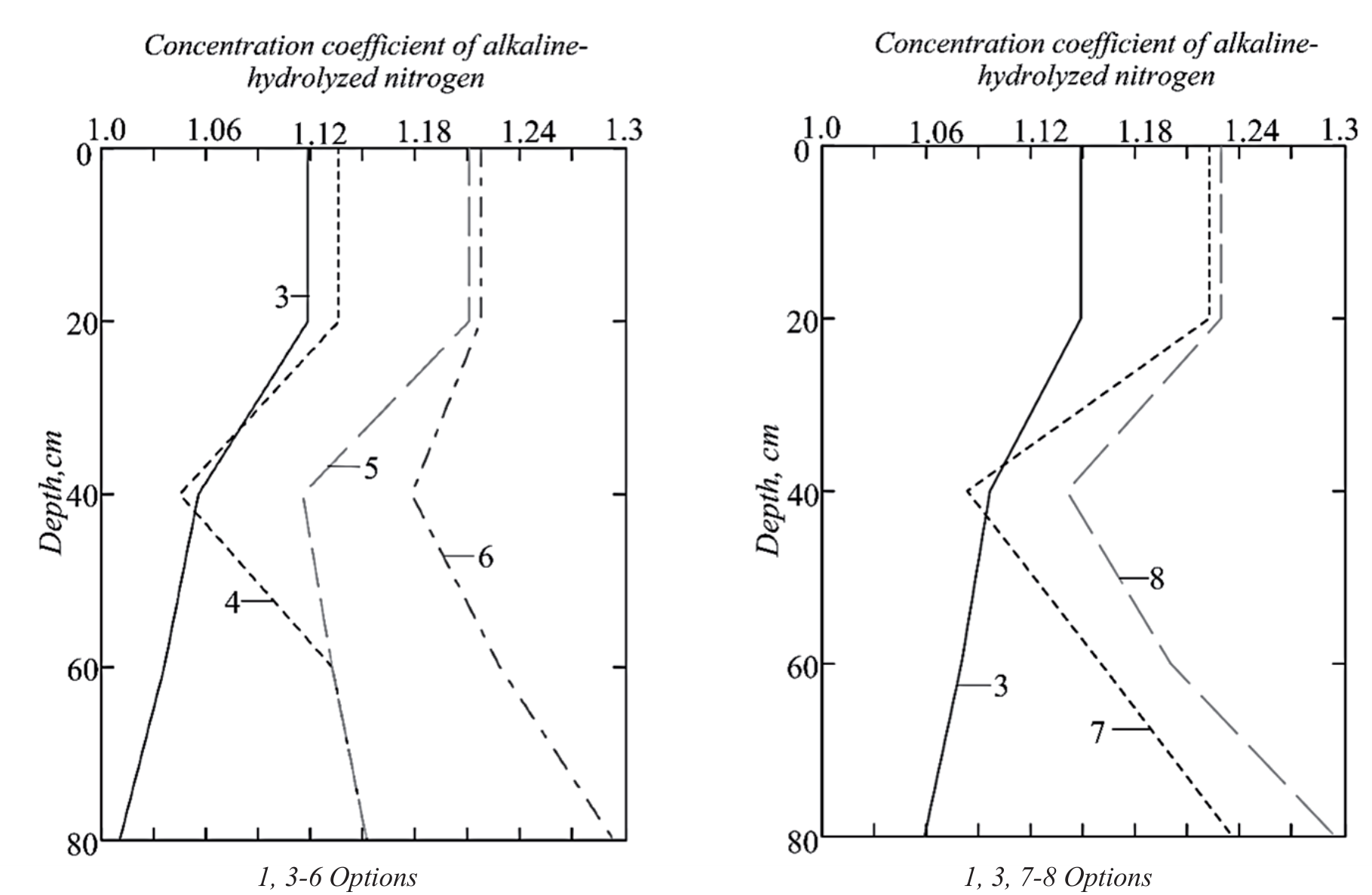
At a depth of 60-80 cm, the lowest values of concentration coefficients of alkali compounds were observed in hydrolyzed forms of nitrogen (Fig. 3).
Deeper than 60 cm, the difference in the experimental variants was less pronounced, and for phosphorus it was almost imperceptible (within statistical error).
The introduction of fresh SS resulted in the highest phosphorus and potassium content. The upper layer (0-20 cm) recorded 93.4 mg/kg of mobile phosphorus and 97.2 mg/kg of exchangeable potassium compounds in option 6, which had the highest SS application rate. (Fig. 4. and 5, Table 3)
Table 2.
Nitrogen compounds present in different fractions of the 0-40 cm soil layer were analyzed after application of SS and composts to Silphia pronysanolist. The collected data were averaged over the years 2016-2022.
Fig. 1.
The research analyzed the levels of mineral nitrogen compounds in the upper 0-40 cm layer of sod-podzolic soil between 2016 and 2022.
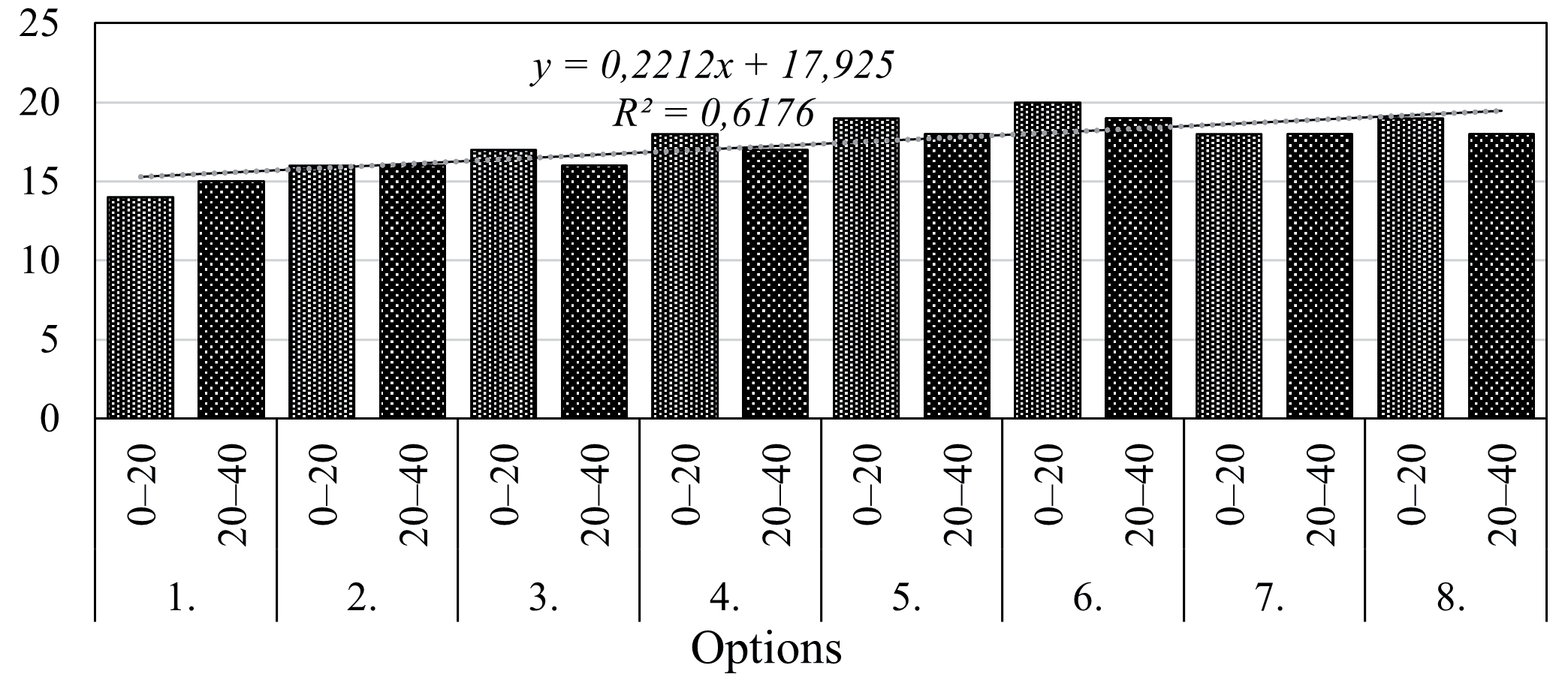
Fig. 2.
The effect of applying sewage sludge and composts based on it on the content of alkaline-hydrolyzed forms of nitrogen at a depth of 0-80 cm in sod-medium-podzolic soil, average for 2016-2022.
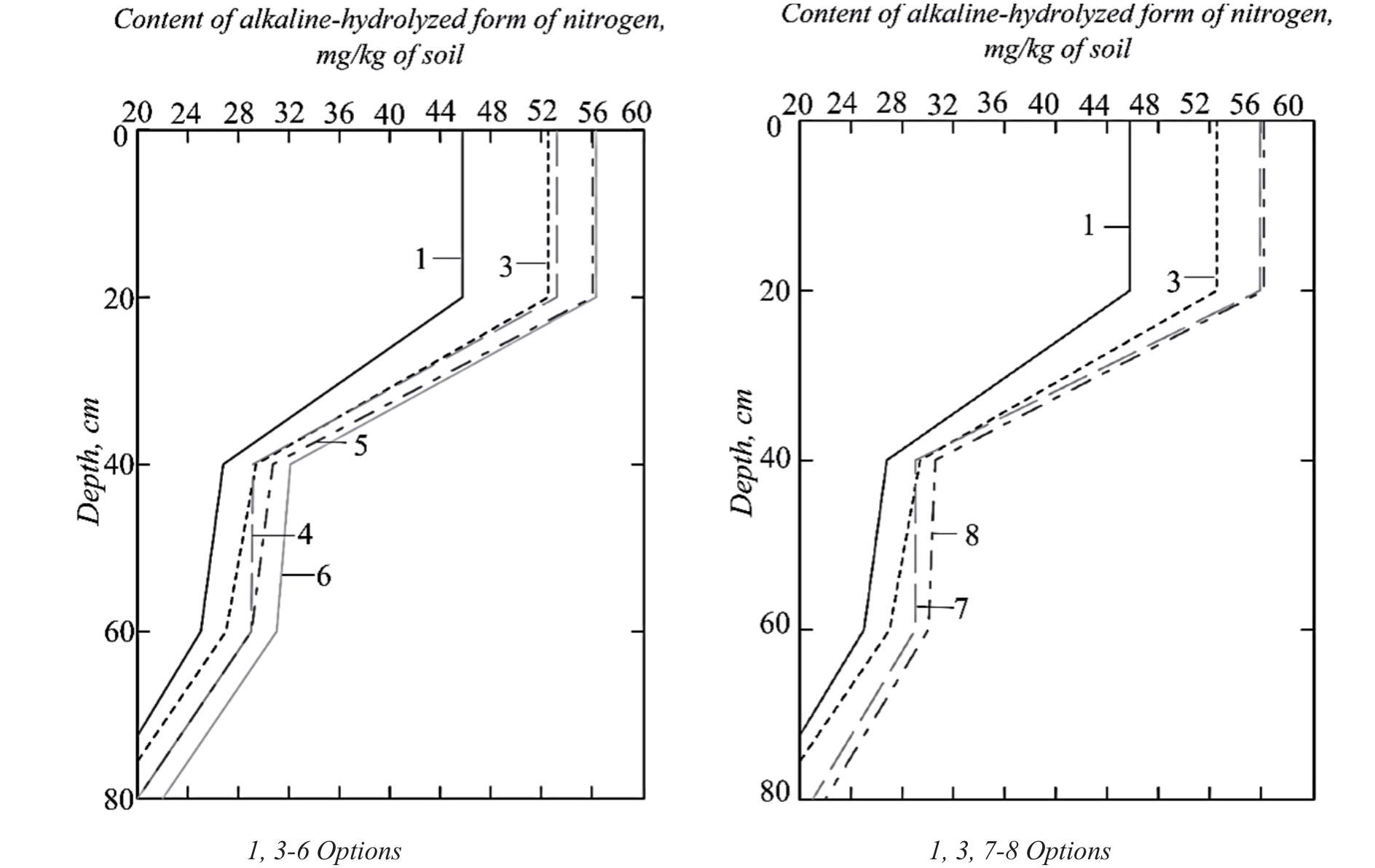
Fig. 3.
Change in indicators of concentration coefficients of alkaline hydrolyzed nitrogen compounds in sod-medium-podzolic soil, average for 2016-2022.
The experimental variants showed a significant difference in the soil layer (20-40 cm) compared to the control. However, the indicators of the potassium content changed more than the indicators of the content of mobile phosphorus compounds.
Fig. 4.
The effect of applying sewage sludge and composts based on it on the content of mobile phosphorus, for 2016-2022.
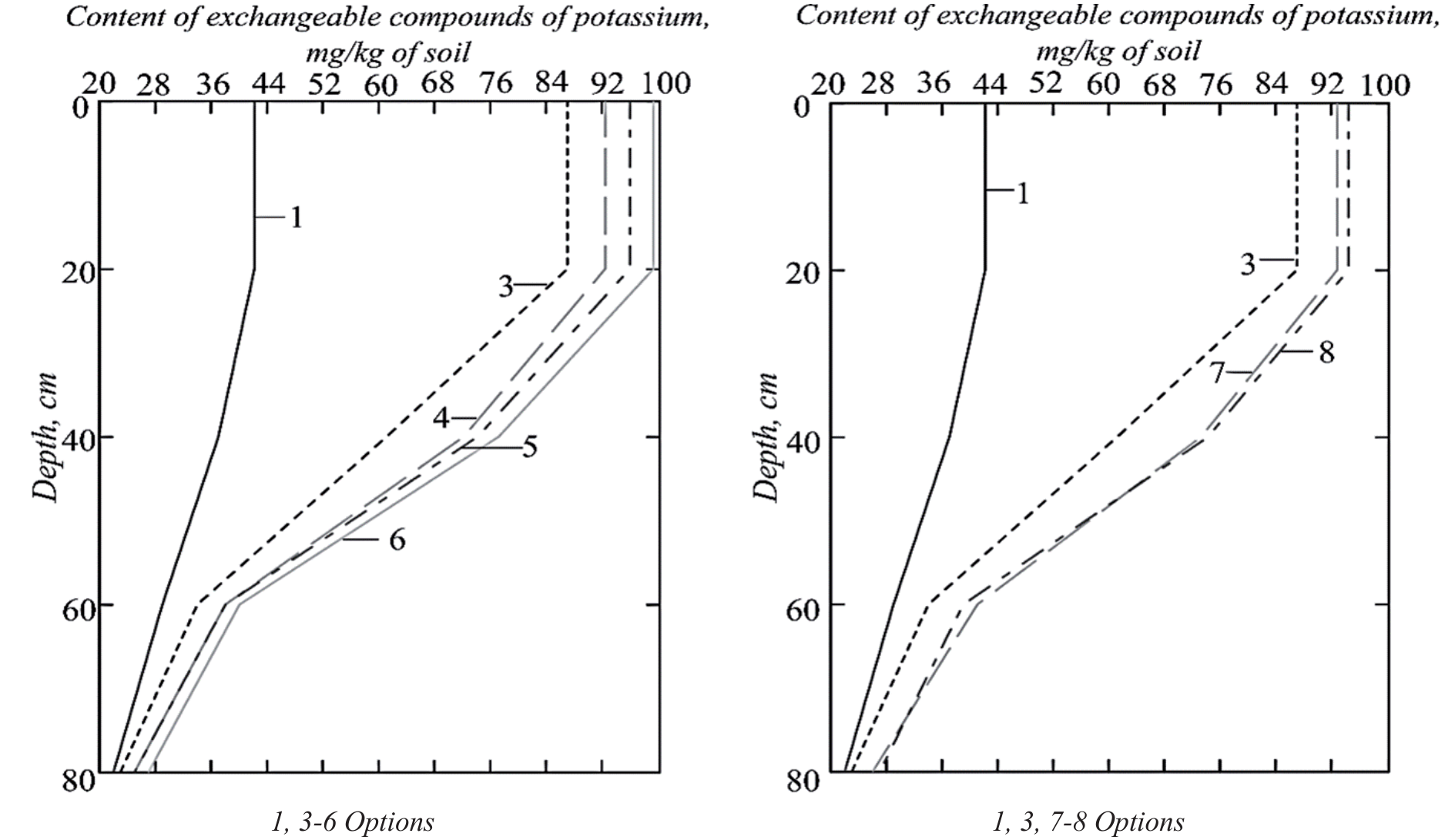
Fig. 5.
The effect of applying sewage sludge and composts based on it on the content of exchangeable potassium compounds, for 2016-2022.
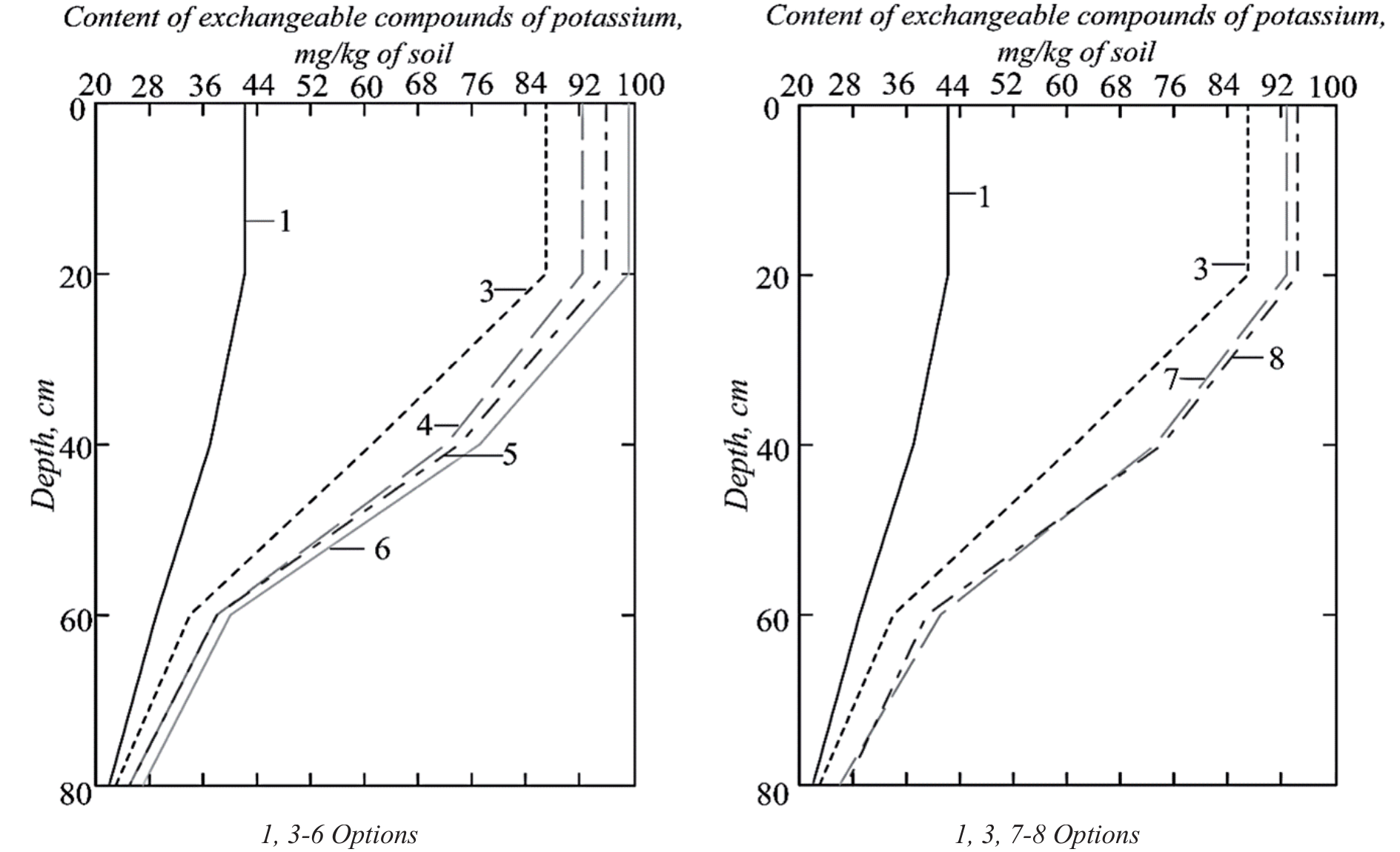
Table 3.
Changes in the coefficient of potassium concentration in sod-medium-podzolic soil, average for 2016-2022.
| Depth, centimeters | Option | ||||||
|---|---|---|---|---|---|---|---|
| 2 | 3 | 4 | 5 | 6 | 7 | 8 | |
| 0 – 20 | 1,23 | 2,06 | 2,18 | 2,27 | 2,35 | 2,21 | 2,23 |
| 20 – 40 | 1,19 | 1,65 | 1,94 | 2,02 | 2,08 | 1,97 | 2,08 |
| 40 – 60 | 1,07 | 1,17 | 1,31 | 1,31 | 1,38 | 1,41 | 1,35 |
| 60 – 80 | 1,04 | 1,04 | 1,14 | 1,14 | 1,23 | 1,35 | 1,23 |
Fig. 6.
Change in indicators of phosphorus concentration coefficient in sod-medium-podzolic soil, average for 2016-2022.
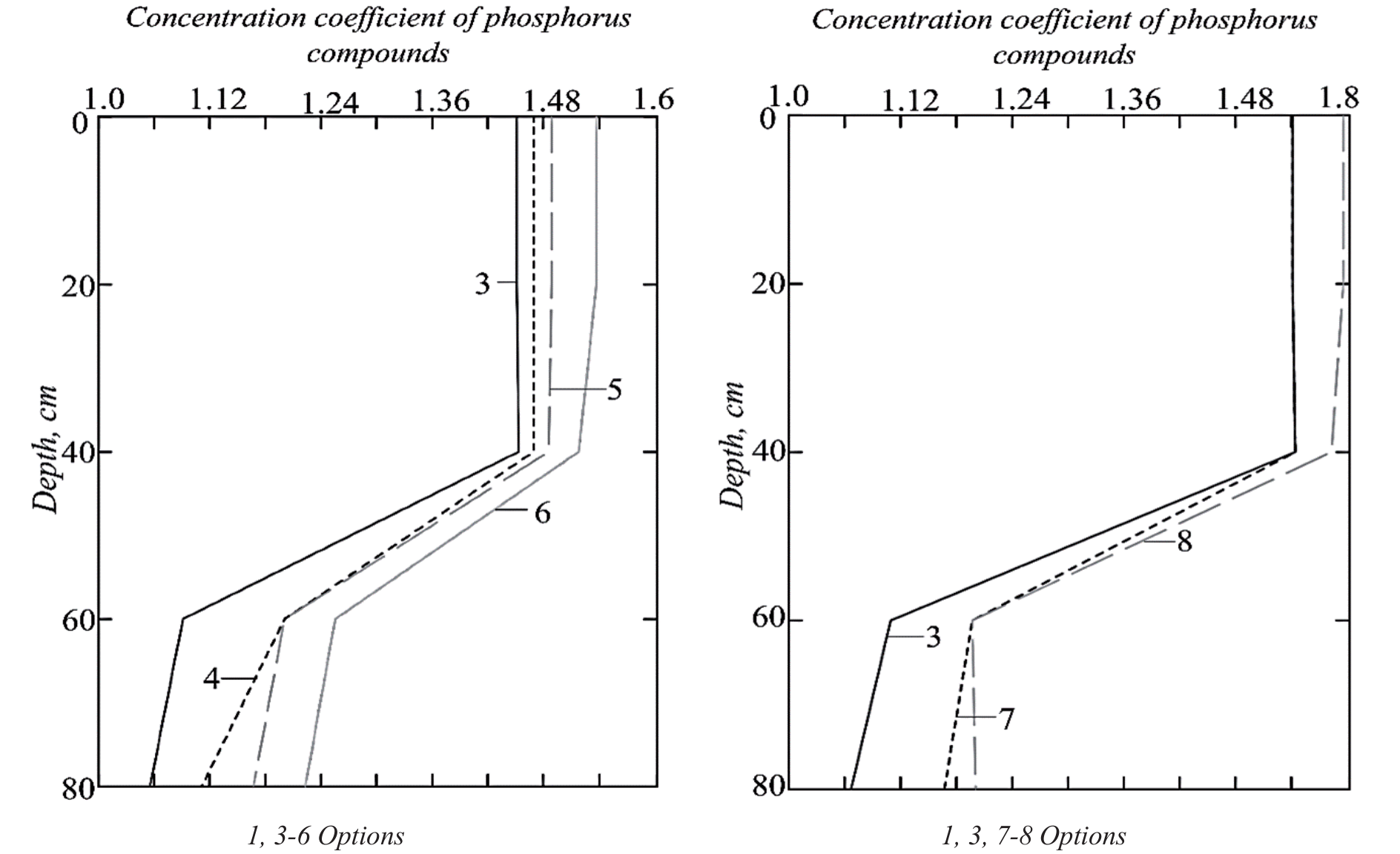
Fig. 7.
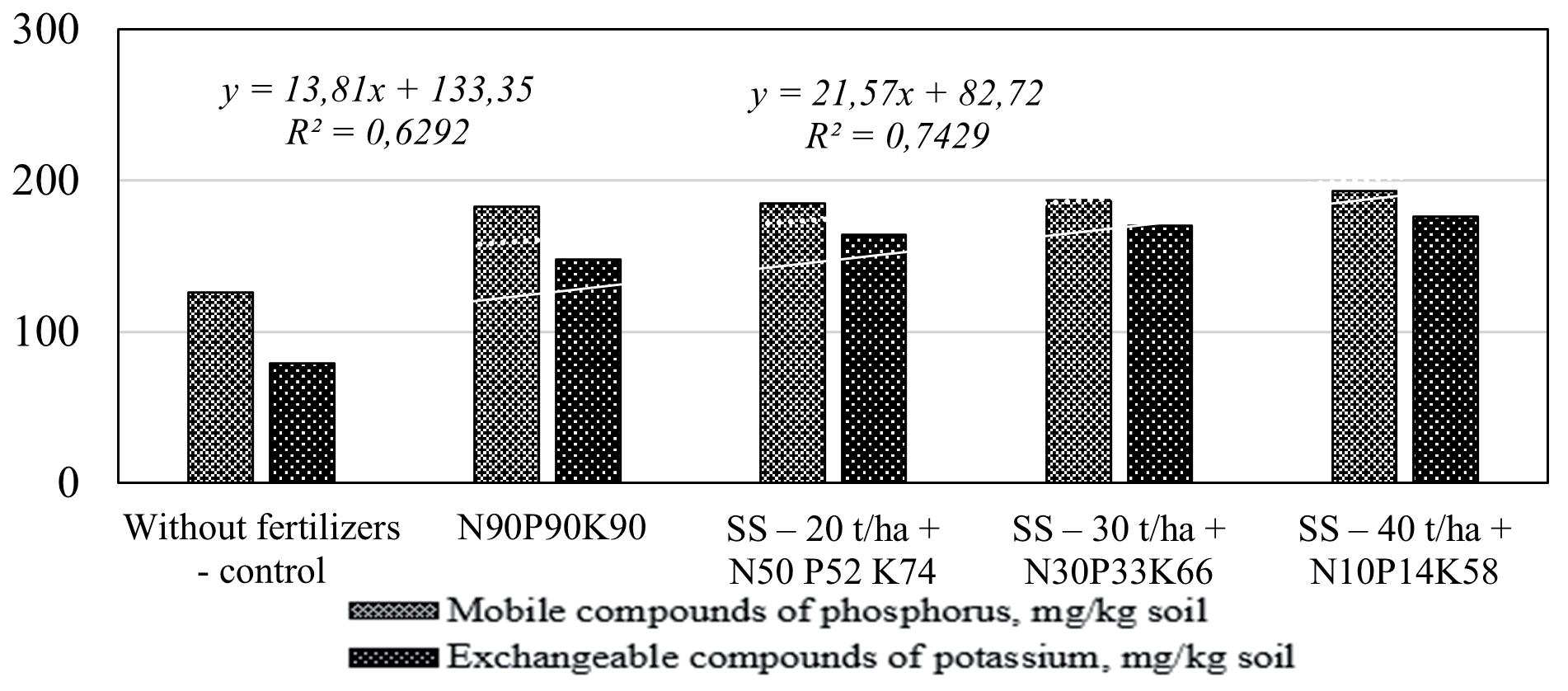
Correlational dependence of the change in the content of bioavailable compounds of phosphorus and potassium from the increase in the dose of application of SS under Silphium pronysanolist.
In option with input of fresh SS, namely option 6, (SS – 40 t/ha + N10P14K58) were 1.26 and 2.34 mg/kg of soil, respectively, in the upper 20 cm layers of the soil (Fig. 6).
In this study, an analysis of the relationship between the content of phosphorus and exchangeable potassium was carried out with an increase in SS norms (options 4, 5, and 6).
The results showed that there is a close relationship between these indicators, in particular, the coefficient of determination R2 was noticeable for phosphorus and high for potassium according to the Chaddock scale (Fig. 7). This can be important information for farmers and agronomists who grow plants and plan to optimize phosphorus and potassium levels in the soil to improve yields.
y1 = 13.81x + 133.35, r = 0.70;
y2 = 21.57x + 82.72, r = 0.84; where, y1 is the content of bioavailable phosphorus in aluvisol, y2 is the content of bioavailable potassium in aluvisol, x is the rate of application of fresh ss, t/ha; r is the Pearson correlation coefficient.
Conclusions
The application of different SS norms under Silphium perfoliatum forms a heterogeneous agrochemical background of alluvium for plant nutrition with the main macronutrients, namely nitrogen, phosphorus and potassium.
The research has established significant differences in the content of mineral and alkaline hydrolyzed nitrogen compounds in the upper layer of 0-40 cm of alluvium. Adding increasing (20-40 t/ha) rates of sewage sludge, as well as their composts with straw, and a compensatory amount of mineral fertilizers, reliably increases the ammonium content compared to the control option and the option with an equivalent dose of mineral fertilizers. The dose of SS application of 20 t/ha and mineral fertilizers determines the content of nitrate and alkaline hydrolyzed nitrogen compounds at the level of the variant with the application of only mineral fertilizers. Increasing the rate of application of SS to 30-40 t/ha and composts from SS and straw of grain crops ensures a reliable increase of these indicators in the soil layer 0-40 cm. However, at a depth of 60-80 cm, the difference between the options in terms of these indicators is significantly reduced. The calculation of the coefficients of nitrogen concentration of alkaline hydrolyzed compounds reflects a proportional decrease in nitrogen concentration in the variant with the introduction of mineral fertilizers, and a significant increase in the variants where SS was applied, compared to the background variant (control).
The content of bioavailable phosphorus and potassium compounds also varies depending on the form of fertilizer application. The highest indicators of the content of these macroelements were recorded in the variants where 40 t/ha of SS and mineral fertilizers and 30 t/ha of compost (SS and straw) + mineral fertilizers were applied, which was confirmed by the corresponding values of the concentration coefficients. Sewage sludge was introduced together with mineral fertilizers only once, before the start of planting energy crops. Accordingly, all the changes that occurred in the soil were observed during all the years of research and average indicators were determined. According to the Ivano-Frankivsk Regional Center of Hydrometeorology, the climatic conditions did not exceed the norms. Thus, the weather conditions during the research years were typical for the research area and did not significantly differ from the multi-year averages.

