

Introduction
Climate change and its main cause, global warming, are urgent global crises that are developing faster than expected. The gradual increase in global temperature, or global warming, is due to the enhancement of the greenhouse effect by the excessive emission of greenhouse gases (GHG) that absorb infrared radiation and trap heat in the atmosphere [1]. According to the European Commission (EC), this phenomenon has led to a number of adverse effects, such as sea level rise, ecosystem disruption, and socioeconomic threats. Rapid industrial growth, urbanization, technological advances, and colonization have led to significant increases in atmospheric carbon dioxide (CO2) through the burning of fossil fuels, especially coal, and deforestation. Urban areas are undoubtedly hotspots for anthropogenic greenhouse gas emissions, mainly caused by urbanization and industrialization [2, 3]. Urban areas are responsible for more than 70% of global GHG emissions, mainly caused by fossil fuel combustion and land use change, while consuming two-thirds of the world’s energy [4]. The impacts of climate change range from infrastructure failure to food and resource shortages, which ultimately lead to death. Failure of a city to develop strategies to adapt to climate change will lead to deterioration in the health of the urban ecosystem, ultimately reducing the city’s viability.
In addition to implementing laws and policies for industry and land development, understanding ecosystem services is critical to climate change adaptation. The term ‘ecosystem service’ is interpreted as ecological attributes, functions, or processes that contribute directly or indirectly to human benefits and are usually beneficial [5]. Ecosystem services are provided by natural biogeochemical cycles, including water, carbon, nitrogen, and phosphorus cycles, but these productions have been reduced by human intervention in the ecosystem. Environmental factors, especially soil properties, have significantly influenced the floristic composition of a given forest ecosystem [6]. The increased CO2 concentration in the atmosphere caused by human activities is evidence of the disruption of the carbon cycle. In the carbon cycle, there is an exchange of CO2 between the atmosphere, plants, animals, and oceans. Plants on land and phytoplankton in the ocean are the main players that absorb CO2 from the atmosphere and convert it through photosynthesis into other forms of carbon compounds such as cellulose and starch. To achieve climate change adaptation and mitigation in urban areas, photosynthetic plants play an important role in providing ecosystem services for carbon sequestration.
The presence of urban forests facilitates human adaptation and mitigation of climate change through the ecosystem services they provide and optimizes the quality of life in urban areas [7]. Urban forest is a special branch of forest that is cultivated and managed in cities for its current and potential contribution to the physiological, sociological, and economic well-being of urban society [8-10]. The ecosystem services provided by urban forests benefit not only urban dwellers but also, to a significant extent, the global population as a whole. Urban forests and trees play an important role in adapting to climate variability and change in cities by regulating temperature (through shade and evaporative cooling) and water (through interception and infiltration of rain) [11]. Cities are prone to flooding due to their impervious surfaces, but urban parks or trees can reduce runoff through infiltration. Hence, without urban forests, the urban ecosystem may deteriorate, leading to a decline in social health, a decrease in environmental quality, and a decrease in economic development [12]. Communities living near urban forests also experience less noise pollution [13] and have better general well-being with less stress [14, 15].
Although urban forests play a critical role in climate change adaptation and mitigation by providing a wide range of ecosystem services, there is a lack of comprehensive literature supporting the implementation of urban forest management strategies to maximize their potential contribution to climate change adaptation and mitigation. In the area of climate change adaptation through ecosystem services, a preliminary literature search of the Scopus database revealed 4044 publications but only 847 articles explicitly addressing urban forests. This discrepancy highlights the existing knowledge gap between ecological researchers and stakeholders, which ultimately hinders effective decision-making and collaboration regarding the sustainable use of urban forests in climate change mitigation efforts. Without sufficient scientific knowledge and comprehensive studies, convincing stakeholders to manage urban forests and engaging them in initiatives is challenging.
To address this issue, a systematic literature review (SLR) was conducted to examine the existing literature and publications related to ecosystem services provided by urban forests in terms of climate change adaptation and mitigation. By systematically reviewing the existing literature, the valuable evidence on this topic can be identified, assessed, and summarized in a methodical and unbiased manner. The objectives of this paper are to (i) identify the prevailing slant on ecosystem services provided by urban forests for climate change adaptation, (ii) explore the research trend on ecosystem services provided by urban forests for climate change adaptation and mitigation, and (iii) suggest future research directions on ecosystem services provided by urban forests for climate change adaptation and mitigation. The results of this SLR not only provide an overview of the importance of ecosystem services provided by urban forests for climate change adaptation, but also provide guidance and a clear vision for stakeholders involved in urban planning and policy making.
Material and Methods
Study Area
The urban forest is a system or network consisting of groups of trees, individual trees, and all forests in suburban and urban areas [16]. Urban forests can also be described as the management and maintenance of trees for their current and potential contribution to the socioeconomic and physiological health of urban residents [10]. The study area is located in the Rimba Ilmu Botanical Garden of Universiti Malaya with coordinates of 3.13 and 101.65 and can be classified as one of the urban forests in Malaysia’s capital city, Kuala Lumpur. The Rimba Ilmu Botanical Garden is not a formal floral garden, but is modeled on the concept of a rainforest garden, consisting of approximately 1600 species that can be divided into 500 genera and 160 families [17].
Data Acquisition
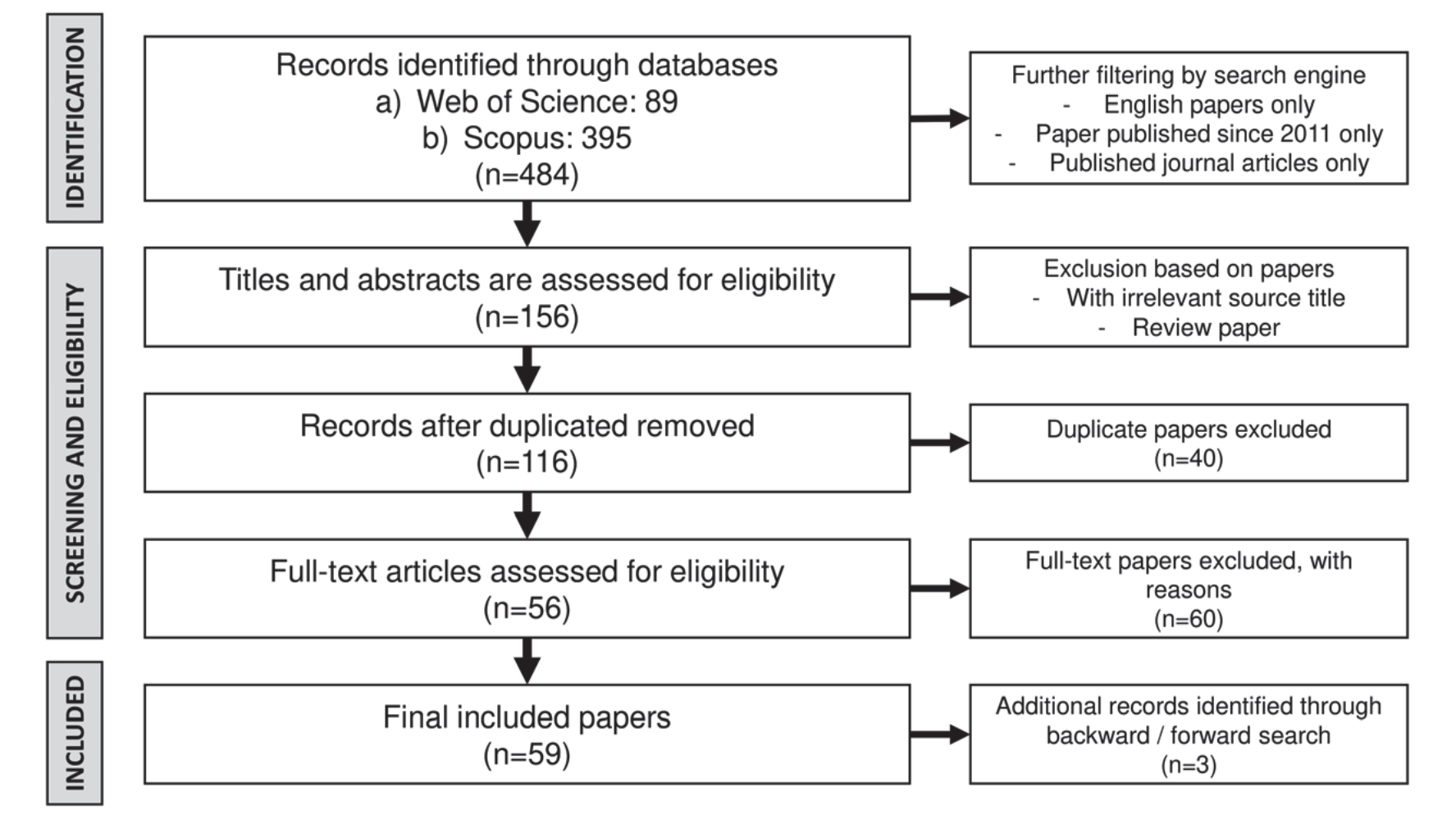
The systematic literature review was based on the PRISMA (Preferred Reporting Items for Systematic Reviews and Meta-Analyses) statement [18], with the latest version, PRISMA 2020, published in 2021, replacing the 2009 statement [19]. The PRISMA statement includes three primary strategies for systematic searches: Identification, Screening, and Suitability, as depicted in Fig. 1. Web of Science (WoS) and Scopus were selected because they are thoroughly edited before publication, thus preserving the impact factor of the journals. The search was conducted in Scopus on September 19, 2021, and in WoS on October 5, 2021, with further filtering to include only published English journal articles from 2011 to 2021. Three keywords and their synonyms, related terms, and variations were used in this study. The keywords were <urban forest>, <ecosystem services>, and <climate change>. The search retrieved a total of 484 compatible articles: 395 from Scopus and 89 from WoS.
All 484 titles and abstracts of retrieved articles were manually reviewed for eligibility. Only articles that indicated the potential impact of research on climate change were included in this review. In contrast, articles without empirical data, such as reviews and articles focusing on other topics such as microclimate regulation by urban forests, ecological impacts of climate change on urban regions, behavioral changes of animals in urban forests due to climate change, and impacts of land use change or urbanization, were excluded from the review. After this filtering process, only 106 and 50 articles remained from the Scopus and WoS databases, respectively. Duplicate entries were removed after screening, resulting in the exclusion of 40 duplicate articles. The remaining 116 articles were read and further filtered for eligibility, leaving 59 articles.
Data Management and Analysis
To achieve the goals of the SLR, information was grouped into variables and recorded. All information of interest, including authors, title, publication year, abstract, author keywords, language, cited references, document types, and research areas, was downloaded in comma-separated value (CSV) files from the WoS and Scopus electronic databases. These data were then managed in Microsoft Excel 365 for processing and analysis. After the appropriate data processing, various tables and figures were generated and created to facilitate data visualization and review. In this SLR, various statistics were generated, including the number of publications per year, the number of publications in different countries, the types of urban forests, and the types of ecosystem services, to provide an overview of the study of urban forest ecosystem services.
In addition, a co-occurrence analysis of author keywords was conducted to identify collective associations of terms based on their co-occurrence within a given text unit. The goal of this analysis was to highlight research priorities within the discipline. Therefore, the VOS Viewer (version 1.6.19), an open-source software for creating and visualizing bibliographic networks or maps, was used to demonstrate the graphical representation of co-occurrence networks of author keywords. For this review, a co-occurrence analysis of author keywords was performed by setting the minimum number of occurrences to 1 and including all discovered keywords.
Results
Spatial and Temporal Analysis of Selected Articles
In this study, a total of 59 articles were analyzed after careful selection. Fig. 2 shows the distribution of these articles among the different countries. The United States of America (USA) has the most published articles with 12 articles. This is followed by China with five articles, while Italy and Germany each published four articles. The remaining 22 countries contributed fewer than four articles each, and based on global data two articles were published.
The dominance of the United States in publishing articles can be attributed to two possible factors. First, because only English-language articles were included in this systematic literature review (SLR), English proficiency and accessibility may have played a role in the divergence observed in this study area. Therefore, there is a possibility that more articles on this topic could be published in other languages, such as Chinese, Spanish, or French. The prevalence of urban forest ecosystem services for climate change adaptation in the U.S. may be closely related to the size of the country, the number of researchers, and the large investment in research and development.
Fig. 2.
a) Research distribution of climate change adaptation ecosystem services in urban forests across various countries, b) The number of studies conducted each year on climate change adaptation ecosystem services in urban forests.
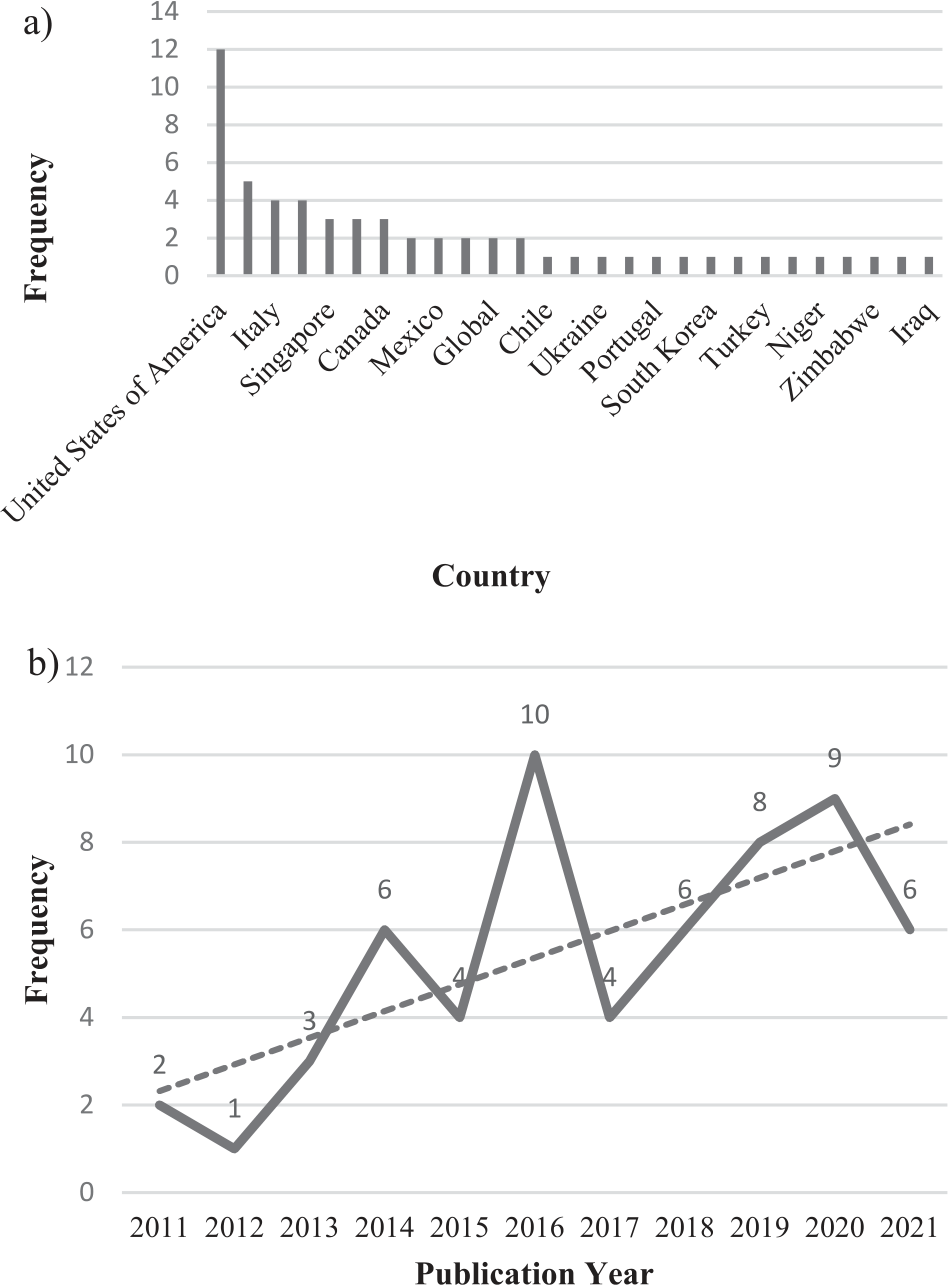
Fig. 3 shows that the number of publications fluctuated from 2011 to 2021, but overall there was an upward trend, with four or more articles published annually since 2014. The number of publications peaked in 2016 with ten articles per year, followed by 2020 with nine articles per year. An interesting phenomenon was the sharp decline in publications in 2017 after the explosive increase in 2016.
The Types of Ecosystem Services in Climate Change Adaptation in Urban Research-Thematic Analysis
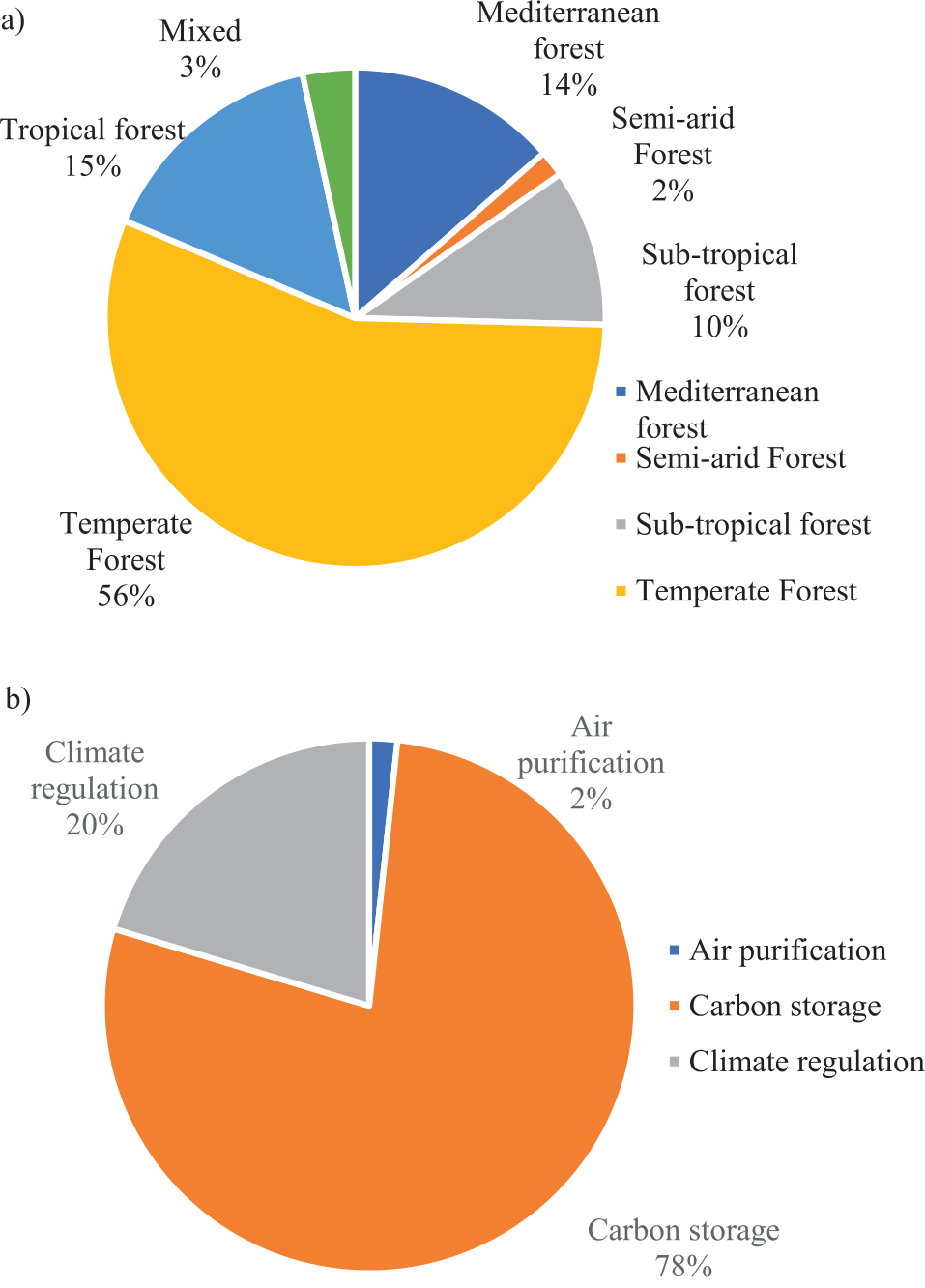
Most research in the last decade has focused on temperate forests, which corresponds well with the results shown in Fig. 2. This figure shows that more research has been conducted in temperate countries such as the United States, China, and Canada. The study of tropical and Mediterranean forests also had a similar proportion, which can be attributed to the comparable number of published articles in these regions. Furthermore, research on mixed types of urban forests pointed to the global data, which included all types of urban forests with no particular focus. From all 59 articles, a total of three themes of ecosystem services for climate change adaptation by urban forests were extracted: Carbon storage, climate regulation, and air purification. Results show that the most frequently studied ecosystem service related to forest adaptation to climate change is carbon storage (77%), followed by climate regulation (21%) and air purification (only 2%). The attention given to carbon storage by researchers may be related to the natural processes of plants, namely photosynthesis. As increasing concern about the effects of climate change is related to excess emissions of greenhouse gases (GHGs), especially atmospheric carbon dioxide (CO2), plants have the potential to convert the excessCO2 into other organic carbon compounds and reduce the heat-trapping effect of CO2.
Co-Occurrence Analysis of Author Keywords
Author keyword analysis has become a widely used approach in content analysis to effectively track developing research trends and identify prominent focus areas, commonly known as hotspots, within the research community. This methodology operates on the basic assumption that these keywords are present in articles and have significant relationships with one another. Therefore, the research hotspots can be visualized or represented by interweaving thematically related publications by creating a coincidence matrix of keywords. In this review study, a total of 206 author keywords were extracted from these 59 articles after they were merged and categorized in the VOS viewer software.
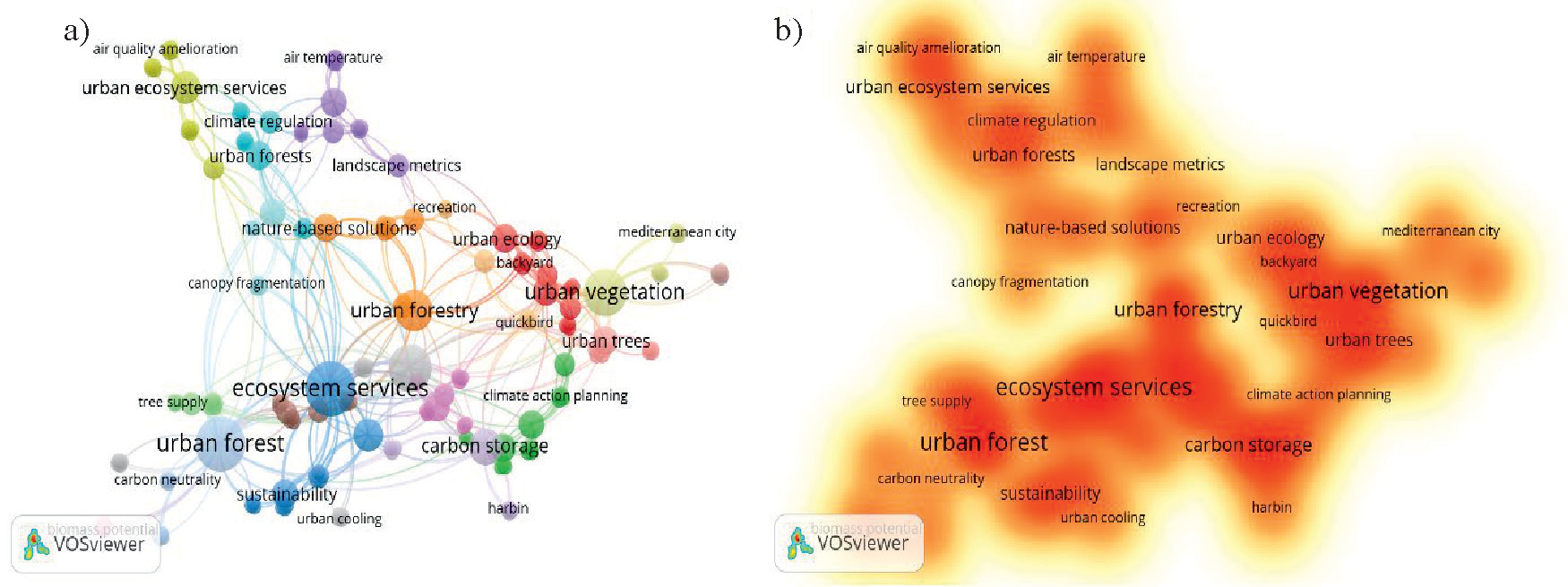
Results state that about 16 keywords were used between 2011 and 2021 related to urban forest ecosystem services and climate change adaptation. The top 3 keywords were the terms used in search engines. In addition, it can be inferred from the result that urban vegetation, carbon storage, and sequestration were frequently associated with the ecosystem services searched. These correlations can be further visualized in Fig. 4.
Fig. 4 illustrates two types of visual representation in the keyword analysis. The keyword co-occurrence matrix highlights the connection between the most important keywords related to the research topic. In contrast, the density plot of keywords highlights the prominent research areas that are closely related to the topic. In Fig. 4a), all keywords were clustered into five main themes and displayed in different colors. These themes were urban ecosystem services, urban forests, nature-based solutions, urban vegetation, and carbon storage. The size of the nodes reflects the frequency of the keywords. Fig. 4b) shows the density of keywords by the intensity of color from yellow to red. Only a few keywords, such as ecosystem services, urban forest, and urban vegetation, were shown in a relatively darker red. However, the diagram did not provide optimal discrimination between the research hotspot keywords and the others. This condition was caused by the small number of published articles, the co-occurrence of keywords, and the relatively even distribution of recurring keywords. Since the topic under study was very specific to ecosystem services provided by urban forests in relation to climate change, there were three main keywords that controlled and limited the inclusion of publications to ensure the data quality of the study. In addition, the number of publications was low because the inclusion of published articles was limited to the ten years from 2011 to 2021. Therefore, the number of publications was reduced, and finally, there was a decrease in the occurrence and co-occurrence of author keywords.
Discussion
Spatial and Temporal Analysis
A review of the study found that the spatial distribution of studies was concentrated in specific geographic areas. The results showed that ecosystem services studies were conducted in northern countries, especially in temperate countries such as the United States of America (USA), China, and European countries. In Europe, the studies were only in a small area around the Mediterranean countries. This result suggests that there is a need to conduct research in other parts of the world, such as Southeast Asia, where there are mainly mega-diverse and developing countries. The biased situation could be caused by factors such as the development of countries and the level of awareness of climate change. Most of the studies are from the US and European countries, as well as Asia, where the studies were led by China and Singapore. On the other hand, the developing countries with low contributions to publications on climate change adaptation could be related to the low funding or investment in the research field, as these countries usually prioritize their socioeconomic development.
Fig. 3 shows an explosion in publications in 2016. The sharp increase in publications in 2016 is likely due to the Sustainable Development Goals (SDGs) formulated by the United Nations General Assembly (UNGA) and the Paris Agreement negotiated at the UN Climate Change Conference (COP21) on December 12, 2015. UNGA developed the SDGs as part of the post- 2015 development agenda. These goals were formulated to replace the Millennium Development Goals (MDGs), which expired the same year. The SDGs consist of 17 interconnected goals intended to serve as a “shared blueprint for peace and prosperity for people and the planet, now and in the future” (UN, 2015). Then, the Paris Agreement was negotiated with the goal of limiting global warming to well below 2ºC above pre-industrial levels and continuing efforts to limit temperature increases to 1.5ºC. This agreement also emphasizes the need for global cooperation to reduce greenhouse gas emissions.
However, the time frame of the publication considered in this study was limited to 10 years due to the restriction of the study period to only six months. Therefore, it may not be sufficient to explain the entire trend of research studies on ecosystem services provided by urban forests for climate change adaptation, as the history of these keywords can be traced back to the 19th or 20th century. However, there were significant difficulties in finding articles published in the early centuries. However, the review study can be further improved by including articles from at least 1990, when the electronic database initially appeared to be the most recent.
Co-Occurrence Analysis of Author Keywords
Urban Ecosystem Service
Urban ecosystem services are defined as the benefits that urban populations derive from local and regional ecosystem functions resulting from human-ecosystem cooperation [20]. Urban ecosystem services are generally derived from green spaces, including urban forests, urban parks and gardens, and campus grounds, as well as blue spaces such as streams, lakes, and storm water retention ponds within the urban area [21]. The physical and mental health of urban citizens can be improved by the cultural services they provide. The walkability of green spaces such as urban parks and forests promotes physical activity, which leads to higher functional status, less cardiovascular disease, and a longer life expectancy [22]. Moreover, spending time in urban green spaces has been found to reduce stress and pressure, as well as anxiety and mood swings [23]. The presence of these urban green spaces also promoted social cohesion and community interaction by providing opportunities for individuals or groups to communicate and interact [24]. Urban ecosystem services contribute to environmental sustainability in several ways. The major concern was climate change and its mitigation, especially the impact on urban heat islands (UHI). According to a study by Marando et al. [25], the Normalized Difference Vegetation Index (NDVI) and tree cover were the most important indicators of urban ecosystem services for climate regulation because they affect evapotranspiration and shading. Vegetation lowers the temperature the tree canopy and ambient air by absorbing heat energy from solar radiation and converting it into a latent heat flux through the evapotranspiration process [25]. The shading effect lowers the temperature by reflecting solar radiation and protecting surfaces such as roads or sidewalks from absorbing heat [24].
Improving air quality by cleaning pollutants from the atmosphere is another ecosystem service that is critical for urban areas characterized by high levels of air pollutants due to industrialization and transportation. Vegetation, including trees, shrubs, and green spaces, can improve air quality by absorbing and filtering pollutants such as carbon monoxide (CO), nitrogen dioxide (NO2), sulfur dioxide (SO2), and particulate matter less than 10 μm (PM10) [24]. This reduction occurred in two pathways: either by deposition on the tree surfaces or by absorption of gases through the stomata [26]. Finally, urban ecosystem services are also important for storm water management because they mitigate runoff. The presence of urban vegetation reduces the amount of surface runoff after rainfall by intercepting and storing water in the leaves and stems [27]. The substrate, or soil, also acts as a sponge and slows infiltration through the pore spaces [24]. By mitigating runoff after rainfall events, urban drainage system loading can reduce and minimize the risk and occurrence of flooding.
Urban Forest
Urban forests refer to the totality of urban trees, shrubs, lawns, and permeable soils within highly modified and complex ecosystems where human influence predominantly determines the species, frequency, and distribution of trees [11]. According to Nowak [28], there are four characteristics that distinguish urban forests from other forest types. These characteristics are that they (1) are located near dense human settlements, (2) have relatively high specific diversity and forest patch structures, (3) include a mixture of public and private ownership, and
(4) employ management practices that ensure the sustainability of tree health and ecosystem services [28].
The presence of urban forests provides a wide range of benefits that fall into three major categories, namely social benefits, economic benefits, and ecological benefits [29]. Urban citizens enjoy social benefits in several ways as part of their daily lives. First, urban forests improve the physical and mental health of inhabitants by serving as recreational facilities that provide space for physical activities such as jogging and picnicking and have a reducing effect on the natural environment as opposed to the urban environment [29-31]. In addition to the benefits to individuals, urban forests also increase community engagement by promoting social interactions [24]. Urban forests also provide opportunities for environmental education and nature-based learning experiences for students and the public [32].
Urban forests have high economic value, contributing to the prosperity and development of urban areas. Products affordable to the market, such as wood, medicinal herbs, berries, and mushrooms, are provided, but in relatively small quantities because growth is limited by pollution, forest fragmentation, and trampling [29]. In contrast, the economic value of urban forests is reflected in their intangible benefits. The most common benefit is increased home land value, which takes into account the valuation of a range of public goods provided by the local environment [30]. Urban forests also contribute to energy savings by reducing the use of air conditioning during hot seasons through their natural cooling effect from evapotranspiration [33]. Urban forests can create jobs by increasing employment opportunities in urban forestry.
Furthermore, the most important benefit of urban forests is the ecological benefit, which is important for mitigating climate change. Since urban areas are hotspots for greenhouse gas emissions and urban forests are carbon sinks in urban areas, urban forests provide regulating services through carbon sequestration and storage [34]. The trees and shrubs absorb atmospheric carbon dioxide and CO2 through photosynthesis and store carbon in other organic compounds within their biomass, including stems, leaves, and roots [24]. The effects of climate change will be mitigated if the flux of heat-storing atmospheric CO2 is reduced. As a result of climate change, the UHI may be mitigated by urban forests through evapotranspiration [25]. The evapotranspiration process not only absorbs thermal radiation but also releases moisture to cool the ambient air and create a more comfortable microclimate [35]. In addition, the air purification ability of forests helps urban citizens adapt to climate change by removing harmful pollutants, led by ozone (O3), followed by PM10, NO2, SO2, and CO [29]. Pollutant removal simultaneously ensures the adaptation of urban citizens’ climate change and their health. In addition to mitigating climate change, urban forests can also protect biodiversity by providing habitats for different types of flora and fauna and promoting pollination, seed dispersal, and pest control. Biodiversity includes all floristic, faunal, and microbial diversity on Earth [36-38].
However, urbanization and disturbance have led to a decrease in the diversity of native plant species due to an increase in exotic species. At the same time, the number of animal species decreased due to the loss and alteration of vegetation that provides food and refuge [30].
Thus, proper urban forest management and planning are crucial to maintaining all benefits or ecosystem services. An effective urban forest management plan (UFMP) typically includes several key components, including a clear vision for the urban forest, conducting comprehensive inventories and assessments to evaluate the current state of the urban forest, formulating a strategic plan that addresses identified needs, and finally, developing an implementation and monitoring plan to track progress and ensure effective implementation [39, 40].
Nature-Based Solution
As defined by the International Union for Conservation of Nature (IUCN), nature-based solutions (NbS) are “actions to protect, sustainably manage, and restore natural and modified ecosystems that address societal challenges in an effective and adaptive manner while benefiting human well-being and biodiversity” [41]. Kabisch et al. [42] have formulated and proposed five principles for nature-based solutions in cities. These principles are: (1) addressing the need for systemic understanding; (2) benefits to people and biodiversity;
(4) addressing contextual conditions; and (5) promoting communication and learning [42].
According to the IUCN, nature-based approaches to solutions fall into five categories: ecosystem restoration approaches, issue-specific ecosystem-based approaches, infrastructure-based approaches, ecosystem-based management approaches, and ecosystem conservation approaches [41]. Common nature-based solutions include green infrastructure, forest reserves, and forest and wetland restoration. Green infrastructure is an interconnected system of green spaces that preserves inherent values and functions while providing various benefits to human communities [43, 44].
NbS (nature-based solutions), such as bioretention systems, green roofs, and constructed wetlands, are effective in managing the urban water balance by capturing and treating stormwater, reducing the frequency of flash flooding, removing pollutants from stormwater, or reducing surface runoff [45]. Furthermore, vegetation in urban areas reduces air pollution by binding air pollutants to their biomass and converting them into harmless forms [45]. The increase in plant diversity and growth due to the construction of green spaces has a positive effect on overall biodiversity, as it supports different types of wildlife [46].
Carbon Storage
The topic of carbon storage usually refers to carbon sequestration with its similar concept, which has led to confusion between these two terms. Carbon sequestration refers to the exact physical location or reservoir where sequestered carbon is stored long-term [47-50]. Biological carbon storage is the storage of sequestered atmospheric CO2 iin vegetation, soils, or aquatic environments. In carbon storage in vegetation, which is primarily found in forests and grasslands, CO2 is taken up by plants during photosynthesis, converted to other organic compounds, and then stored in their biomass [24]. Soil carbon storage involves the transfer of CO2 from the atmosphere to the soil, where it is then stored and retained as part of the soil organic matter [51]. Practices such as stubble retention, crop rotation, and minimum tillage can enhance soil carbon storage. As one of the largest carbon sinks, the ocean acts as a carbon sink by absorbing and regulating atmospheric CO2 through two main mechanisms: the inorganic carbon cycling processes (solubility pump) and the biological carbon pump [52]. In the solubility pump, atmospheric CO2 is dissolved from the sea surface and transported to the ocean interior as dissolved inorganic carbon (DIC). In contrast, the biological carbon pump is driven by phytoplankton photosynthesis and shell formation using calcium carbonate [52].
Carbon sequestration is a critical process for mitigating climate change by removing CO2 from the atmosphere and preventing its accumulation. CO2 is the main greenhouse gas that stores heat in the Earth’s atmosphere and contributes to global warming and climate change [53, 54]. CO2 concentration in the atmosphere can be reduced by natural or artificial carbon sequestration and storage [24, 55, 56].
Conclusions
The study analyzed ecosystem services provided by urban forests in response to climate change from 2011 to 2021 and found that carbon storage, climate regulation, and air purification were the most important services. In terms of spatial distribution, the U.S., China, Italy, and Germany led the publications, with the Northern Hemisphere being the most developed country with more awareness and funding. During these ten years, the research trend fluctuated, but overall, the temporal distribution showed an increasing trend. This phenomenon indicates that interest, awareness, and funding for related research topics are increasing. Based on the analysis of the authors’ co-occurrence of keywords, five research priorities were identified: urban ecosystem services, urban forest, nature-based solutions (NbS), urban vegetation, and carbon storage. Future research should focus on the least-studied countries to improve data availability and address the challenges faced by previously neglected and inadequately studied ecosystem services. Research should also focus on convincing stakeholders, including policymakers and urban planners, to use urban ecosystem services sustainably and improve the quality of life in urban areas.
Future Perspectives of the Study
Researchers have found that carbon storage is the predominant type of ecosystem service studied, while air pollution control is often overlooked. This study highlights the need for more research to understand the ecosystem services that are provided in a variety of locations, including biodiversity hotspots, agricultural-producing countries, and developing countries. Understanding these services is critical for conservation and sustainable management, as they help balance economic development with environmental sustainability. The study also highlights the benefits of urban ecosystem services for climate change adaptation. However, the lack of standardization in the methodology and models used in ecosystem services studies poses a challenge, as highly specific data cannot be compared or analyzed. Therefore, the adoption of standardized procedures in the study of ecosystem services is essential for a more comprehensive understanding of these services.
List of Abbreviations
CCS - Carbon capture and storage, CO- Carbon monoxide, CO2 - Carbon dioxide, COP21 - United Nations Climate Change Conference, CSV - Comma separated values, DIC- Dissolved inorganic carbon, EC - European Commission, FAO- Food and Agriculture Organization, GCS- Geological carbon storage, GHG - Greenhouse gas, IUCN - International Union for Conservation of Nature, MEA - Millennium Ecosystem Assessment, MDGs - Millennium Development Goals, NbS - Nature-based solution, NDVI - Normalized Difference Vegetation Index, NO2- Nitrogen dioxide, O3 - Ozone, PM10 - Particulate matter less than 10μm, PRISMA - Systematic Reviews and Meta-Analyses, SDGs - Sustainable Development Goals, SLR - Systematic literature review, SO- Sulphur dioxide, UF - Urban Forest, UFMP - Urban Forest Management Plan, UHI - Urban heat Island, UN - United Nations, UNGA - United Nations General Assembly, USA- United States of America, VOS - Visualizing bibliometric networks, WoS - Web of Science.

