

Introduction
The Przewalski’s gazelle (P. przewalskii) belongs to the genus Procapra within the subfamily Antilopinae of the family Bovidae in the order Artiodactyla. It has a narrow distribution range and is primarily found in Qinghai, Ningxia, Inner Mongolia, and Gansu [1]. For P. przewalskii, antioxidant function is crucial, and minerals are closely related to this antioxidant capability [2]. A deficiency in minerals can lead to a decline in the animal’s immunity and antioxidant capacity, which further inhibits their reproduction and growth [3]. In the 1990s, it was estimated that only 200-300 individuals survived around Qinghai Lake [4]. After more than 20 years of continuous conservation and research, the population of P. przewalskii has partially recovered but remains below 2,000 individuals [5]. Therefore, the endangered status of P. przewalskii has attracted widespread attention.
Antioxidant substances can help animals resist oxidative stress, a condition caused by excessive free radicals in the body, which may lead to cellular damage and functional impairment [6, 7]. Antioxidants protect the health of cells and tissues by neutralizing free radicals [8]. The antioxidant system consists of enzymatic and non-enzymatic systems. The enzymatic system is composed of antioxidant enzymes, such as superoxide dismutase (SOD), glutathione peroxidase (GSH-PX), and catalase (CAT) [9]. The non-enzymatic system includes elements such as copper (Cu), iron (Fe), zinc (Zn), and glutathione (GSH), which can effectively eliminate excess free radicals in the body. This prevents the chain reaction of lipid peroxidation, thereby reducing the accumulation of malondialdehyde (MDA) [10, 11]. MDA is closely related to antioxidants [12, 13]. Animals with strong antioxidant functions typically exhibit higher immunity, enabling them to resist diseases and infections more effectively [14, 15].
Previous studies have conclusively confirmed that Se plays an important role in improving the antioxidant function of P. przewalskii [16]. Selenium (Se) is an essential component of selenoproteins and various antioxidant enzymes, such as GSH-PX, thioredoxin reductase, and iodothyronine deiodinase. These enzymes protect cells from the harmful effects of free radicals generated during oxidation processes [17].
Organic germanium can promote the synthesis and activity of antioxidant enzymes, such as SOD and GSH-PX, thereby enhancing the antioxidant function of cells [18, 19]. Among various organic germanium compounds, Ge-132 is considered to have the lowest toxicity and plays an important role in maintaining health [20, 21]. Ge-132 has a significant free radical scavenging effect; it can enhance SOD activity and improve the ability to resist lipid peroxidation [22]. In addition, it has been shown to possess various biological activities, including immune stimulation, anti-tumor effects, pain relief, and anti-inflammatory activity [23, 24].
Despite the well-established individual roles of selenium (Se) and germanium (Ge) in antioxidant function, the potential synergistic effects of combining Se with other trace elements such as germanium (Ge) remain unexplored. Critically, despite the individual antioxidant benefits of both elements, no prior studies have investigated their combined use in P. przewalskii or similar endangered species, nor have interactions between Se and Ge and their potential synergistic impacts on antioxidant capacity been examined in this context. Given the limited efficacy of single-element interventions in complex ecological systems and animal health maintenance, this study addresses a critical research gap by evaluating the combined effects of Ge and Se supplementation in P. przewalskii [25]. This innovative approach advances understanding of multi-element synergism in antioxidant defense and establishes a novel strategy for enhancing health management and conservation of this endangered species.
Materials and Methods
Study Location
The study area was located in the region surrounding Qinghai Lake (99°36′-100°16′ E, 36°32′-37°15′ N). The elevation ranges from 3,195 to 3,305 m, characterized by an extended cold season, intense solar radiation, large daily temperature fluctuations, and arid conditions with little rainfall. The annual average temperature ranges from -1°C to -1.5°C, with cool and cloudy summers and cold, dry winters [26]. The main vegetation types include Oxytropis aciphylla Ledeb, Lagotis brachystachya Maxim, Stellera chamaejasme, Iris loczyi, Kobresia littledalei, Kobresia tibetica, Kobresia schoenoides, and Blysmus sinocompressus [27].
Experimental Design
This study was conducted in the Hudong and Bird Island Nature Reserves within the Qinghai Lake region in June 2024. Sixteen P. przewalskii with obvious differences in body size and posture from those in the Hudong area were selected in the Bird Island area as the control group, allowing them to graze freely on local forage in the natural environment. In the Hudong District, a designated enclosed area of 40 hm2 has been established as an experimental zone. Within this area, 16 P. przewalskii of similar age and physical condition, exhibiting symptoms such as emaciation, sluggish movement, and lethargy, were selected. These gazelles were allowed to graze freely on local pasture in their natural environment and were randomly divided into four groups. These gazelles are allowed to graze freely on local pasture in their natural environment. The experimental groups were set as follows: Group I: No treatment. Group II: Administered 5 mg/kg BW·day of Ge-132 orally each day [28-30]. Group III: Administered 1 mg/kg BW·day of Na2SeO3 orally each day [31-35]. Group IV: Administered 5 mg/kg BW·day of Ge-132 and 1 mg/kg BW·day of Na2SeO3 orally each day. The Ge-132 and Na2SeO3 used in this experiment were purchased from Shanghai Aladdin Biochemical Technology Co., Ltd., with a purity of > 99% for both compounds.
Sample Collection
Through systematic observation of the activity areas and foraging behavior of P. przewalskii, 10 sampling plots of 1000 m² each were randomly established along their foraging routes in both regions, with an interval distance of 500 m between plots.
At each sampling site, the S-shaped sampling method was used to select 4 points as soil sampling locations. During soil sample collection, a shovel was used to remove surface vegetation, fallen leaves, and other impurities. Then, approximately 0-30 cm of topsoil was collected, with about 250 g taken from each sampling point. The 4 soil samples from each site were crushed, and impurities such as grass roots were removed. The samples were then thoroughly mixed, and the quartering method was used to retain 100 g. After soil sampling was completed, the samples were labeled in preparation for mixed forage collection. The soil samples were air-dried indoors at 20-25ºC in a cool place, crushed, sieved through a 2 mm mesh, and fine sand was removed using a 0.075 mm sieve. Finally, the samples were bagged, labeled, and stored in a silica gel vacuum desiccator for later use.
Within each sampling plot, mixed forage samples were collected at intervals of more than 500 m (each sample weighed 500 g), resulting in a total of 20 samples (10 from each of the Hudong and Bird Island regions). During sample collection, stainless steel scissors were used to cut the vegetation at a height of 1-2 cm above the ground to avoid soil contamination. The sample processing procedure was as follows: First, the collected mixed forage samples were naturally dried at a constant temperature of 20-25ºC until a constant weight was achieved. Subsequently, the dried samples were crushed using a mortar and sequentially passed through 2 mm and 0.075 mm standard sieves to remove impurities and fine sand. Finally, the processed samples were stored in a vacuum drying oven (Shanghai Boxun Industrial Co., Ltd., BOV series) for subsequent chemical analysis. All sample processing steps were conducted in a clean laboratory environment to ensure sample quality.
Before the experiment began, we selected 16 P. przewalskii from each of the Hudong and Bird Island regions of Qinghai Lake and collected whole blood samples. Blood was collected from experimental animals on days 10, 20, 30, 40, and 50. After the P. przewalskii were manually restrained, whole blood samples were collected from their jugular veins using a blood collection needle (Weigao Group, Shandong, China) and a special vacuum blood collection tube for high-altitude areas without additives (SL-001, Wuhan Sanli Medical Technology Company, Wuhan, China). All the collected samples were numbered and labeled to ensure the accuracy of the data. The whole blood samples were left standing at room temperature for 20 to 30 minutes. After they naturally coagulated, a centrifuge (ZJU-3000, Jinhua Shenzhou Centrifuge Co., Ltd, Zhejiang, China) was used to centrifuge the samples at a low speed (1000 to 3000 rpm) for 10 to 15 minutes to separate the serum for subsequent analysis.
Sample Preparation and Analysis
The soil samples were digested using microwave digestion. Before the experiment, the digestion tubes were rinsed with deionized water. Approximately 0.5 g of soil sample was placed into a digestion tube, followed by the addition of 6 mL of nitric acid (HNO3), 3 mL of hydrochloric acid (HCl), and 2 mL of hydrofluoric acid (HF). The mixture was shaken well and allowed to stand for about 5 minutes. The lid was then tightly screwed on, and the digestion tube was placed into the digestion rack and transferred to the turntable of the microwave oven. After confirming that the pressure and temperature sensors of the digestion instrument were functioning properly, the samples were automatically digested according to the microwave digestion program. After cooling, the lid was loosened, and the solution was transferred to a polytetrafluoroethylene (PTFE) crucible for acid evaporation. Subsequently, the solution was transferred to a 50 mL volumetric flask, diluted to the mark, labeled, and set aside for further use.
Nitric acid (HNO3), hydrofluoric acid (HF), and perchloric acid (HClO4) were mixed in a volume ratio of 5:2:5 and added to the mixed forage samples, followed by thorough shaking. Subsequently, a mixed solution of HNO3 and HClO4 in a 4:1 volume ratio was added to the forage samples and shaken well.
The concentrations of mineral elements in the mixed soil-forage from Hudong and Bird Island, as well as in animal serum, were determined using inductively coupled plasma atomic emission spectroscopy (ICP-AES, HK9600, Huakexing Co., Beijing, China). The analyzed elements included Ge, Se, Cu, Zn, and Fe.
Blood Biochemical Analysis
Antioxidant and immune function indicators in blood samples were tested. The diagnostic kits used were provided by Nanjing Biotechnology Co., Ltd. (Jiangsu, China). The antioxidant capacity indicators included T-AOC, CAT, GSH-PX, SOD, and MDA. The immunological indicators included IgG (Immunoglobulin G), TNF-α (Tumor Necrosis Factor-alpha), IL-2 (Interleukin-2), IgA (Immunoglobulin A), IL-1β (Interleukin-1 beta), IgM (Immunoglobulin M), and IL-6 (Interleukin-6).
Statistical Analysis
Data were processed using SPSS statistical software (SPSS, version 23.0, Inc., Chicago, Illinois, USA). After confirming homogeneity of variances by Levene’s test (p>0.05 for all elements), differences among groups were analyzed by one-way ANOVA followed by Tukey’s post-hoc test for multiple comparisons. Results are expressed as mean±standard error (SE). Significant differences (p<0.05) are denoted in tables by superscript letters (a, b, c) and in figures by asterisks (*).
Results
Antioxidant and Immune-Inflammatory Profiles of P. przewalskii in Qinghai Lake and Bird Island Pre-Experiment
As shown in Fig. 1, a significant difference in antioxidant indicators was observed between the Bird Island group and the Hudong group of P. przewalskii (p<0.05). The serum levels of T-AOC, GSH-PX, SOD, and CAT in the Bird Island group were significantly higher than those in the Hudong group (p<0.05). Additionally, the MDA levels in the Bird Island group were significantly lower compared to the Hudong group (p<0.05).
Fig. 2 illustrates significant differences in multiple immune and inflammatory indicators between the Eastern Qinghai Lake and Bird Island groups of P. przewalskii. The concentrations of IL-1β, IL-6, IL-2, and TNF-α were significantly higher in the Hudong group compared to the Bird Island group (p<0.05). Conversely, the concentrations of IgA, IgG, and IgM were significantly higher in the Bird Island group (p<0.05).
Fig. 1.
The blood antioxidant indexes before the experiment: a) T-AOC, total antioxidant capacity; b) GSH-PX, glutathione peroxidase; c) SOD, superoxide dismutase; d) CAT, catalase; e) MDA, malondialdehyde. Notes: Error bars represent standard error, SE. * indicates great difference at p<0.05.
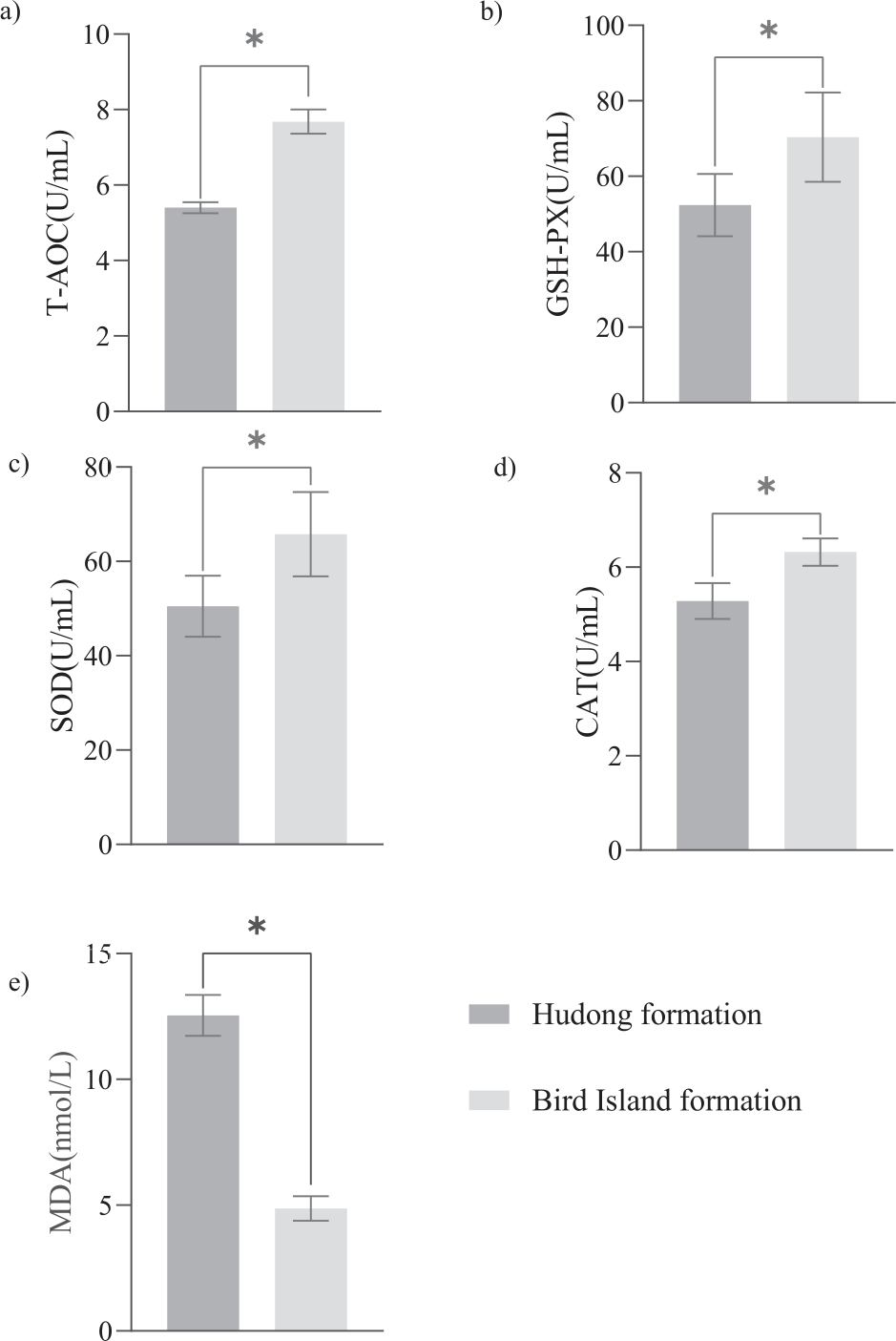
Fig. 2.
The blood immune and anti-inflammatory indexes before the experiment: a) IgA, immunoglobulin A; b) IgG, immunoglobulin G; c) IgM, immunoglobulin; d) IL-1β, interleukin-1β; e) IL-2, interleukin-2; f) IL-6, interleukin-6; g) TNF-α, tumor necrosis factor-alpha. Notes: Error bars represent standard error, SE. * indicates great difference at p<0.05.
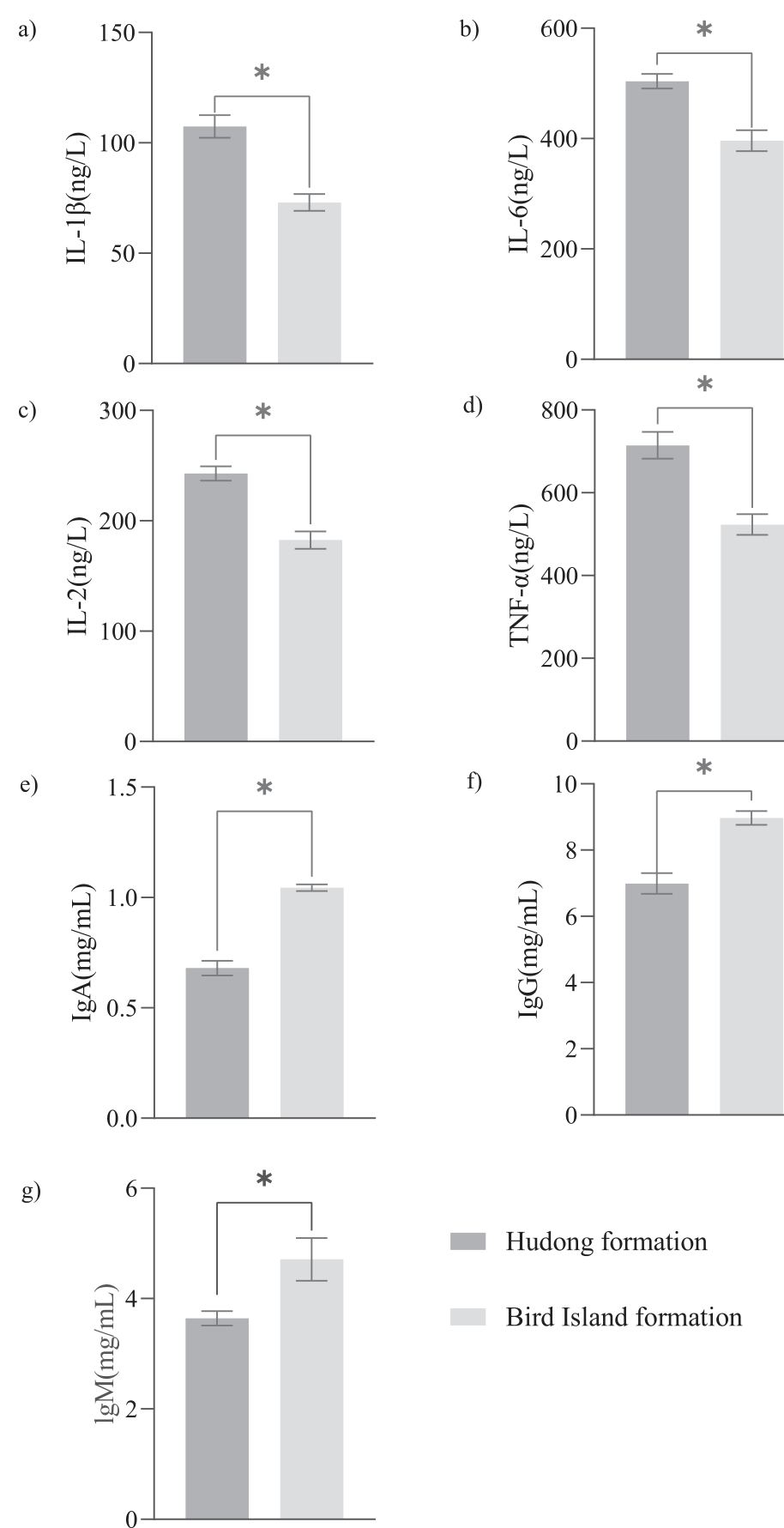
Fig. 3.
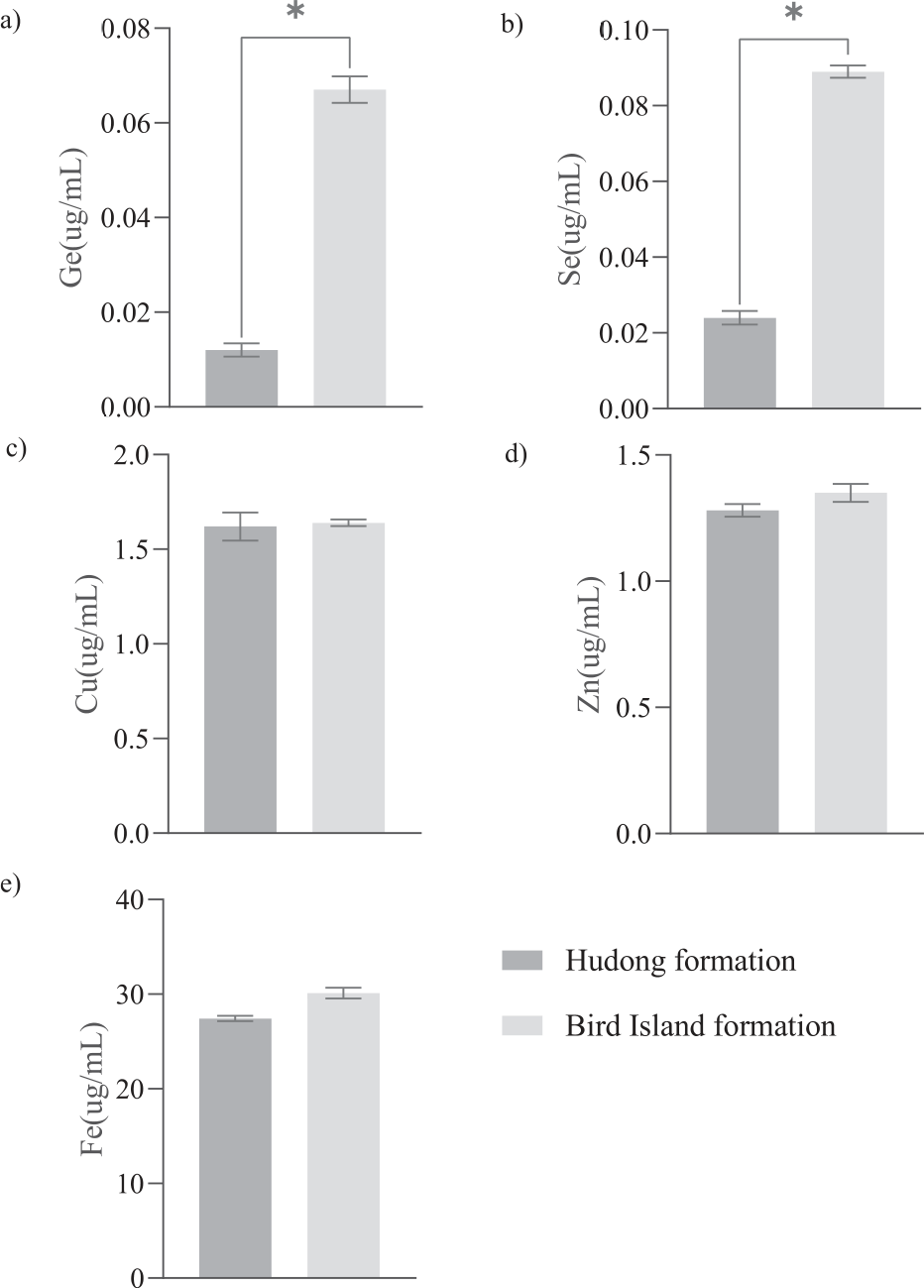
The mineral content in the soil: a) Ge, germanium; b) Se, selenium; c) Cu, copper; d) Zn, zinc; e) Fe, iron. Notes: Error bars represent standard error, SE. * indicates great difference at p<0.05
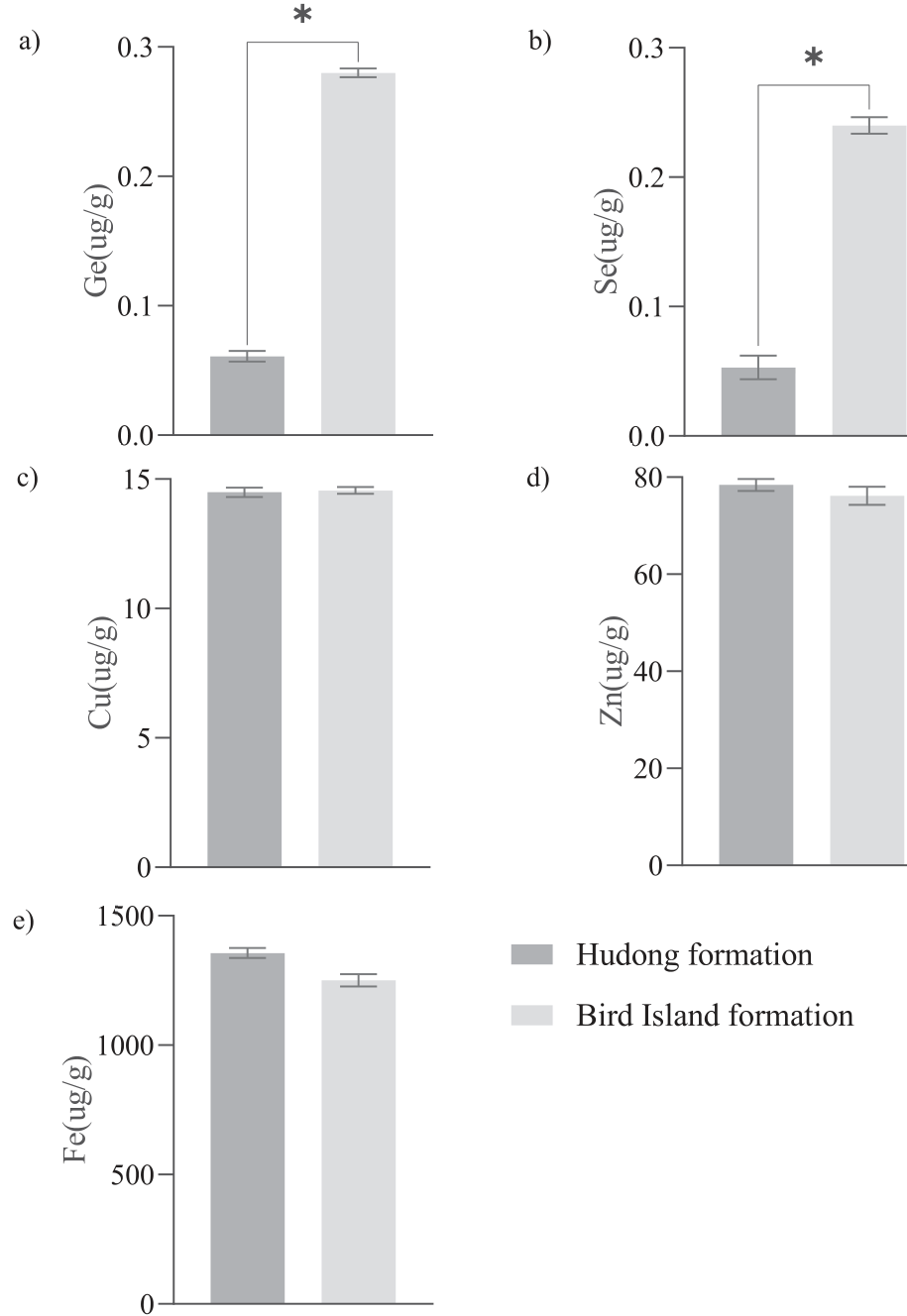
As shown in Fig. 3, the contents of Ge and Se in the soil from the Bird Island area of Qinghai Lake were significantly higher than those in the Hudong Qinghai Lake area (p<0.05). Meanwhile, the contents of other mineral elements, such as Cu, Zn, and Fe, showed no significant differences between the two areas (p>0.05).
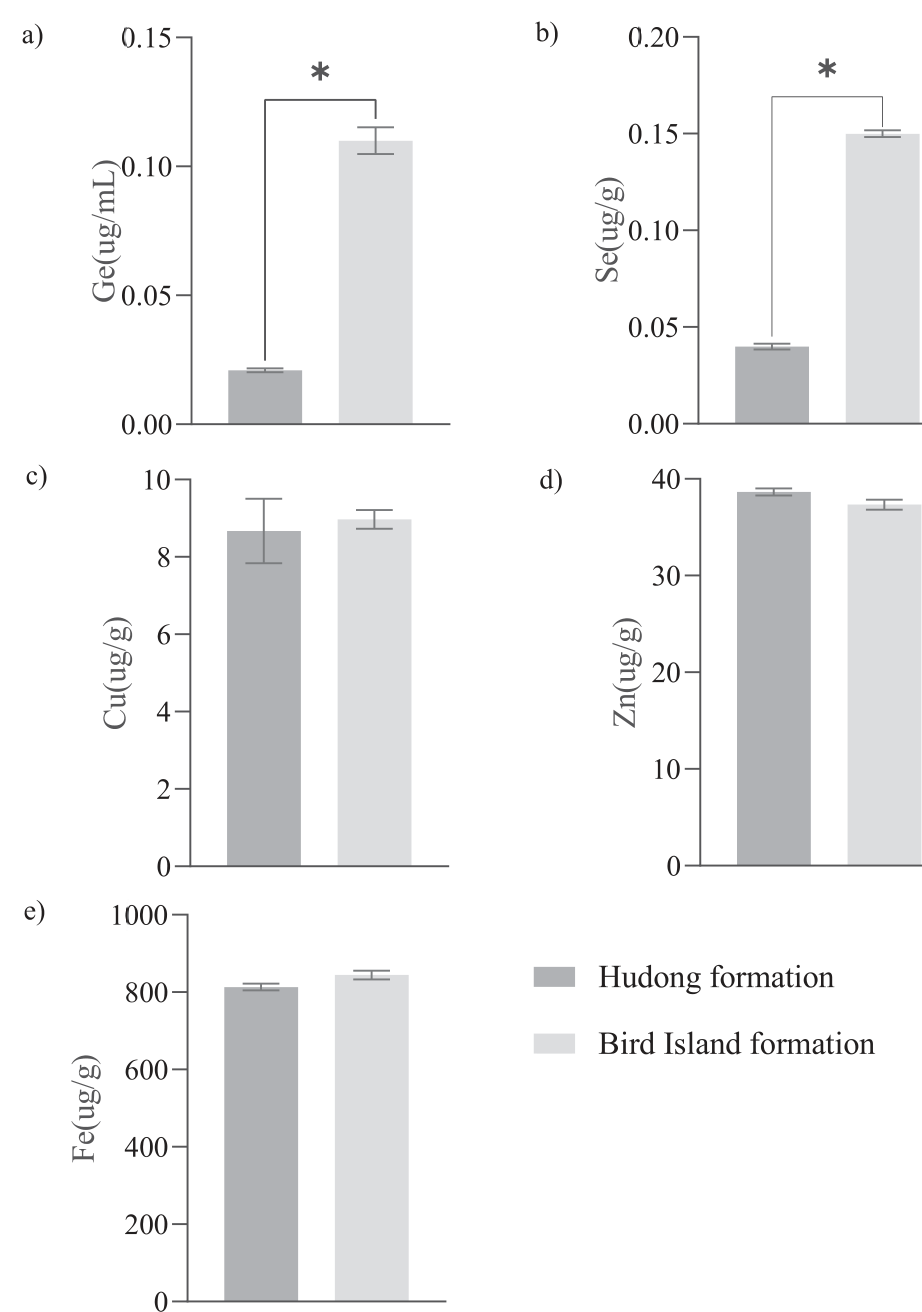
As shown in Fig. 4, the contents of Ge and Se in the mixed forage from the Bird Island area of Qinghai Lake were significantly higher than those in the Hudong Qinghai Lake area (p<0.05). Meanwhile, the contents of other mineral elements, such as Cu, Zn, and Fe, showed no significant differences between the two areas (p>0.05).
As shown in Fig. 5, the serum levels of Ge and Se in P. przewalskii from the Bird Island area of Qinghai Lake were significantly higher than those in the Hudong Qinghai Lake area (p<0.05). However, there were no significant differences in the levels of other mineral elements, such as Cu, Zn, and Fe, between the two regions (p>0.05).
Serum Mineral Content of Experimental Groups of P. przewalskii
As shown in Table 1, there were no significant differences in mineral element levels in Group I (p>0.05). The Ge levels in Groups II and IV increased significantly (p<0.05), while the Se levels in Groups III and IV also showed significant increases (p<0.05). Over the 50 days, there were no significant changes in the levels of Cu, Zn, and Fe (p>0.05).
Serum Antioxidant Parameters of Experimental Groups of P. przewalskii
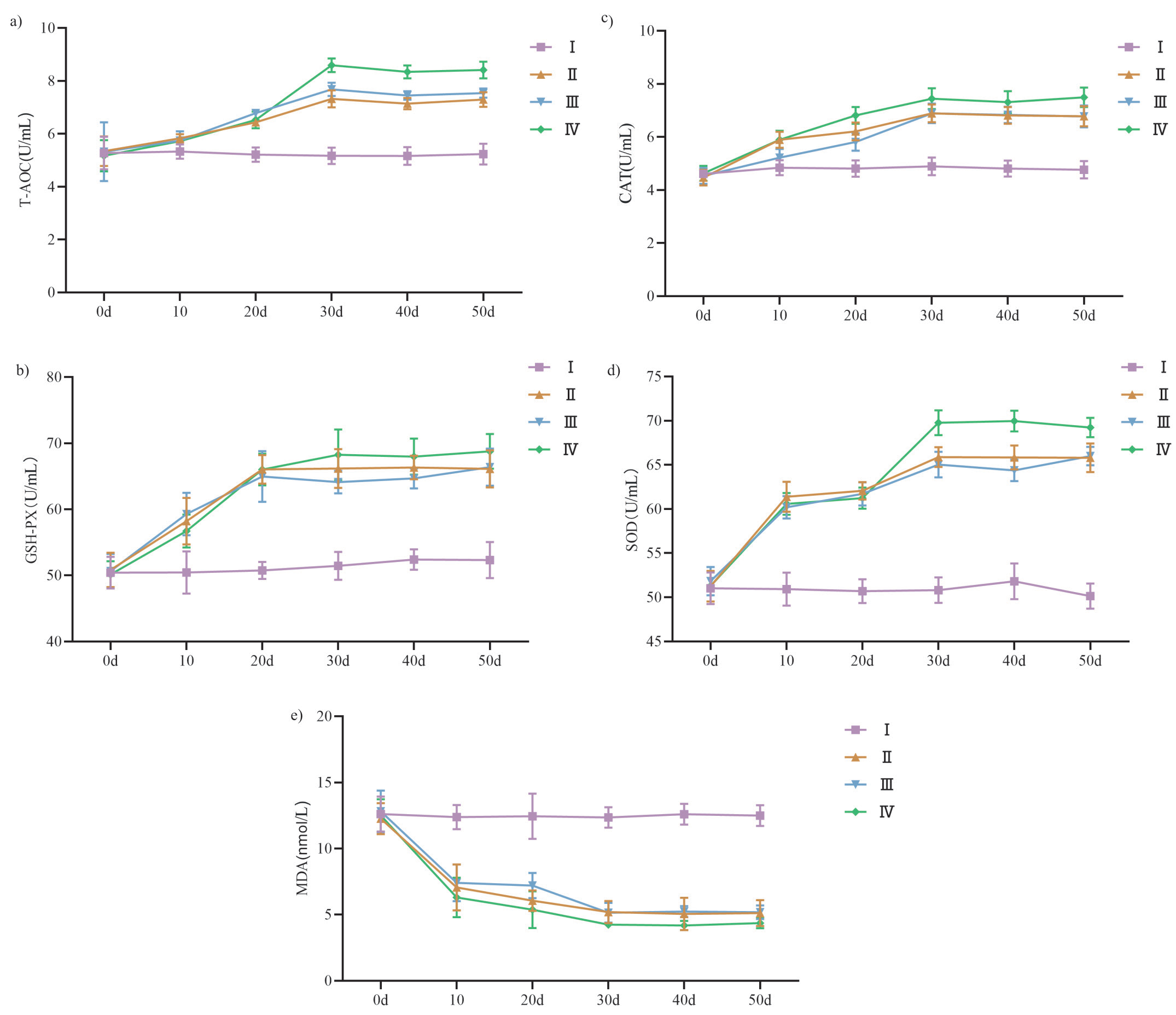
There was no significant difference in T-AOC, GSH-PX, SOD, CAT, and MDA activity in Group I (p>0.05). In Groups II, III, and IV, serum T-AOC, GSH-PX, SOD, and CAT activity increased significantly during the first 0-30 days (p<0.05) but showed no significant difference after 30 days (p>0.05) (Fig. 6(a-d)).
In Groups II, III, and IV, serum MDA activity decreased significantly during the first 0-30 days (p<0.05) but showed no significant difference after 30 days (p>0.05) (Fig. 6e)).
Serum Immune and Inflammatory Indicators of P. przewalskii
Group I received no treatment. Group II was orally administered 5 mg/kg·BW of Ge-132 daily. Group III was orally administered 1 mg/kg·BW of Na₂SeO₃ daily. Group IV was orally administered 5 mg/kg·BW of Ge-132 combined with 1 mg/kg·BW of Na₂SeO₃ daily. As shown in Table 2, the levels of IL-1β, IL-2, TNF-α, IgA, IgG, IL-6, and IgM in Groups II, III, and IV were significantly higher than those in Group I. In Group IV, these levels returned to levels comparable to those of the control group.
Discussion
The desertification of habitats in the Qinghai Lake region has impacted the quality of local soil [36]. Subsequently, this has affected the mineral element content in pasture. Pasture serves as the primary pathway for the transfer of mineral elements from soil to animals, and the levels of Ge and Se in animals are crucial for their antioxidant function [37-39]. This study aimed to enhance the antioxidant function of P. przewalskii through the combined supplementation of Ge and Se, thereby boosting its immune function. This approach holds significant ecological and conservation value for protecting this endangered species.
In this study, we analyzed the mineral element contents of mixed pastures from the Hudong and Bird Island regions, as well as the hematological parameters of P. przewalskii. The results showed that the Ge and Se contents in mixed pasture from the Hudong region were substantially lower than those in the Bird Island region. Similarly, the antioxidant parameters in the serum of P. przewalskii from the Hudong region were significantly lower than those of gazelles from the Bird Island region. This suggests that Ge and Se may play a crucial role in enhancing the antioxidant function of P. przewalskii. To validate this hypothesis, we conducted supplementation experiments with Ge and Se on P. przewalskii in the Hudong region of Qinghai Lake. The antioxidant function of P. przewalskii can be evaluated through trace elements and antioxidant parameters in their serum. In our experiment, Se supplementation significantly improved the antioxidant function of P. przewalskii. This finding further validates the critical role of Se in enhancing the antioxidant capacity of animals. It suggests that appropriate Se supplementation in the management and feeding of P. przewalskii can effectively boost their antioxidant capacity and improve their overall health.
Table 1.
Concentrations of Ge, Se, Cu, Zn, and Fe in the blood of P. przewalskii in the Hudong region.
Fig. 6.
Antioxidant indicators: a) T-AOC, total antioxidant capacity; b) GSH-PX, glutathione peroxidase; c) SOD, superoxide dismutase; d) CAT, catalase; e) MDA, malondialdehyde; Ⅰ: Group Ⅰ; Ⅱ: Group Ⅱ; Ⅲ: Group Ⅲ; Ⅳ: Group Ⅳ. Notes: Error bars represent standard error, SE.
Ge plays a vital role in enhancing the antioxidant function of animals [40, 41]. Ge is a trace element that is typically present in low concentrations in plants, primarily influenced by the Ge content in the soil and the surrounding environment [42, 43]. Although Ge is widely found in various plants, its concentration is relatively low [44]. Ge can be classified into inorganic and organic forms, with inorganic Ge exhibiting lower biological and pharmacological activity compared to organic Ge [45]. Ge can improve insulin sensitivity in animals [46], inhibit damage caused by free radicals, and exert antioxidant effects [18]. Our study results showed that Ge supplementation significantly improved the antioxidant function of P. przewalskii. This finding further validates the critical role of Ge in enhancing the antioxidant capacity of animals. It indicates that appropriate Ge supplementation in the management and feeding of P. przewalskii can effectively boost their antioxidant capacity and improve their overall health.
The Ge and Se content in the serum of P. przewalskii significantly increased after Ge and Se supplementation. Meanwhile, the results of antioxidant parameter analysis indicated that supplementation with Ge-132 and sodium selenite significantly enhanced the T-AOC, GSH-PX, CAT, and SOD activities in the serum. Changes in their activity and levels reflect the antioxidant function and health status of P. przewalskii. Under conditions of disease or environmental stress, the activity of these enzymes increases to counteract the elevated levels of free radicals in the body [47, 48]. Meanwhile, it significantly reduced the content of MDA. MDA levels serve as a marker for the degree of lipid peroxidation, with higher MDA levels indicating an increased extent of lipid peroxidation, which indirectly reflects the severity of cellular damage [49, 50]. The supplementation of Ge and Se, either individually or in combination, had a significant impact on the growth, element accumulation, and ergosterol content of Ganoderma and Pleurotus fruiting bodies. The synergistic effect of Ge and Se plays an important role in the accumulation of these elements in the studied mushroom species [51]. With increasing concentrations of Se or Ge, the free radical scavenging rate was significantly enhanced. Moreover, the combined use of Ge and Se exhibited a superior free radical scavenging effect compared to their individual use [52]. The combined supplementation of Se and Ge enhances glutathione peroxidase (GPX) activity and GSH levels while reducing MDA levels, thereby exerting antioxidant effects and protecting the body from oxidative damage [53].
Table 2.
The differences in the immune inflammation index of P. przewalskii among various groups.
We also measured the immune indicators in the serum of P. przewalskii. The combined use of Ge and Se significantly enhanced the immune capacity of P. przewalskii [54]. When the body’s antioxidant function declines, reactive oxygen species (ROS), such as oxygen free radicals, increase, leading to lipid peroxidation. This, in turn, causes tissue damage, cellular metabolic disorders, and a reduction in immune function [55-59]. Ge-132 has been shown to induce the production of endogenous interferons, enhance natural killer (NK) cell activity, activate macrophages, promote antibody production, and exhibit biological effects such as anti-tumor and anti-aging properties [60]. In addition, Se influences immune and inflammatory responses by regulating macrophage activity, phagocytic capacity, and cytokine secretion [61]. Studies have shown that Se polysaccharides can enhance macrophage immune activity and improve the immune function of immunosuppressed and Se-deficient mice by activating the MAPK signaling pathway and regulating the expression of related proteins and transcription factors [62]. Combined supplementation of Ge and Se significantly improved the antioxidant function of P. przewalskii, with effects superior to those of supplementing either Ge or Se alone. This finding further confirms the synergistic effect of Ge and Se in enhancing antioxidant function, providing strong scientific support for the health management of P. przewalskii. Therefore, Ge and Se can each enhance the antioxidant function of P. przewalskii when used individually, but their combined use demonstrates a more pronounced effect, effectively strengthening the body’s defense against oxidative damage. In addition, during the 50-day period of daily oral administration of 5 mg/kg BW/day Ge-132 and 1 mg/kg BW/day Na2SeO3, the antioxidant parameters of P. przewalskii returned to levels consistent with those of the P. przewalskii from the Bird Island region by the 30th day. From day 30 onwards, all parameters remained stable. In the past, melatonin treatment of Sarda sheep for 35 days significantly improved their reproductive performance [63]. Plasma rich in growth factors shows significant therapeutic effects on grade II muscle injuries in sheep after approximately 30 days of treatment [64]. In addition, to ensure adequate Se intake, Se supplementation was administered approximately 30 days before lambing, significantly increasing Se levels in the ewes [65]. The aforementioned cases all indicate that a 30-day treatment yields significant effects, which aligns with the conclusions of this study. Therefore, for the P. przewalskii gazelles in the Hudong area of Qinghai Lake that exhibit adverse symptoms such as emaciation, sluggish movement, and listlessness due to the deficiency of Ge and Se, a treatment regimen of jointly supplementing germanium and selenium for 30 days can be adopted. In summary, the combined use of Ge and Se in P. przewalskii can significantly improve their antioxidant function. This supplementation not only enhances the stability of antioxidant indicators but also boosts immune function, providing effective support for the health and well-being of P. przewalskii.
Conclusions
This study found that the P. przewalskii living in the Hudong region of Qinghai Lake exhibited significant weight loss and lethargy due to deficiencies in Ge and Se. To address this issue, the combined supplementation of Ge and Se significantly improved the antioxidant and immune-inflammatory indicators of P. przewalskii, positively impacting their antioxidant function. Based on these findings, we recommend a treatment regimen for P. przewalskii showing significant weight loss and lethargy due to Ge and Se deficiencies. The regimen involves a 30-day cycle of daily oral administration of 5 mg/kg·BW·day of Ge-132 and 1 mg/kg·BW·day of Na2SeO3. This dosage ensures optimal antioxidant effects and aids in restoring the overall health of the P. przewalskii. This study not only provides a scientific basis for the health management of P. przewalskii but also offers strong support for their population recovery and ecological conservation. In the future, we recommend further research on the effects of Ge and Se supplementation under different environmental conditions to optimize dosage and administration methods, ensuring effective application in broader wildlife conservation practices.

