

Introduction
Heavy metals have received significant attention because of their high toxicity and difficult degradation [1]. The accumulation of heavy metals in soil mainly comes from two aspects, namely natural pathways and anthropogenic activities. However, anthropogenic activities such as mining, transportation, and metal smelting are the primary sources of soil heavy metal pollution [2, 3]. Heavy metals are usually adsorbed and fixed in the soil, but changes in the external environment can lead to their leaching and release. These environmental factors include pH value, moisture content, electrical conductivity, light exposure, and oxygen [4, 5]. Among them, the leaching of heavy metals caused by liquid flow is the most significant [6]. Various methods have been developed to explore the leaching of heavy metals, which are divided into batch leaching experiments and column leaching experiments. Despite the simple operation and low cost of batch leaching experiments, long-term leaching data for heavy metals cannot be obtained. On the contrary, column leaching experiments are close to the actual on-site conditions and can evaluate the long-term leaching behavior of heavy metals [7]. Therefore, column leaching experiments are widely used.
As a precious resource, rare earth strongly supports technological development [8]. The Ganzhou region of China is rich in rare earth. The rare earth in this region exists as ions in the clay minerals; hence, it is called ion-adsorption rare earth [9]. However, conventional mining processes cannot collect ion-adsorption rare earth, and sulfate leaching agents are used instead [10]. Unfortunately, ion-adsorption rare earth mining is accompanied by heavy metal leaching, causing continuous pollution of the mining area and surrounding environment. Liu et al. [11] indicated significant heavy metal pollution in ion-adsorption rare earth mining areas, especially where the contents of As, Tl, and Pb were 3.48, 3.87, and 5.78 times the background values, respectively. Fan et al. [12] also showed the presence of heavy metal pollution in ion-adsorption rare earth mining areas, with Co, Mn, Ni, Pb, and Zn contents all higher than soil background values, and with the highest being 1.62 times. Meanwhile, many studies have also found that Pb has become a typical heavy metal in ion-adsorption rare earth mining areas [13]. However, as a global pollutant, Pb has seriously threatened human health and environmental safety [14]. For example, Pb exposure can seriously damage the human body’s blood circulation and nervous system [15]. Increased Pb concentration in the blood can lead to delayed puberty and decreased hearing in children [16]. Therefore, it is essential to control Pb pollution.
Although heavy metal pollution in ion-adsorption rare earth mining areas has been evaluated in detail, there is still a lack of understanding of heavy metals’ leaching behavior and mechanisms. Therefore, this study used Pb, a typical heavy metal in the ion-adsorption rare earth mining area, as the research object. The research contents include: (1) analyzing the leaching behavior of Pb in soil under the action of sulfate leaching agents through column experiments; (2) Combining multiple models to explore the leaching kinetics of Pb; And (3) revealing the leaching mechanism of Pb from multiple perspectives. The research results are significant for the environmental protection of ion-adsorption rare earth mining areas.
Material and Methods
Sample Collection
Soil samples were collected from the Zudong mining area (24°49′49″N, 114°52′51″E) in Ganzhou City, China. Based on local conditions, soil representativeness, and sampling convenience, this study selected soil at a depth of 20-40 cm for the experiment. Meanwhile, the three groups of soil samples were evenly mixed to ensure that the samples were representative enough. Subsequently, the soil samples were brought back to the laboratory and air-dried. Soil samples passed through 0.25 mm and 0.15 mm sieves were used for soil property analysis, while soil samples passed through 2.00 mm sieves were used for column experiments.
Simulated Leaching Agent
Different simulated leaching agents were prepared using MgSO4 and (NH4)2SO4, respectively. Lai et al. [17] showed that when the concentration of the leaching agent was 0.2 mol·L-1, the leaching rate of rare earth and other impurities (including Pb) peaked. Therefore, this study set the concentration of all simulated leaching agents at 0.2 mol·L-1. At this concentration, the pH value of the MgSO4 leaching agent is 6.95, while the pH value of the (NH4)2SO4 leaching agent is 5.00. In addition, the pH value of MgSO4 was adjusted to 5.00 using H2SO4 and NaOH to compare the differences of different leaching agents under the same pH condition and marked as MgSO4-ac.
Experimental Design
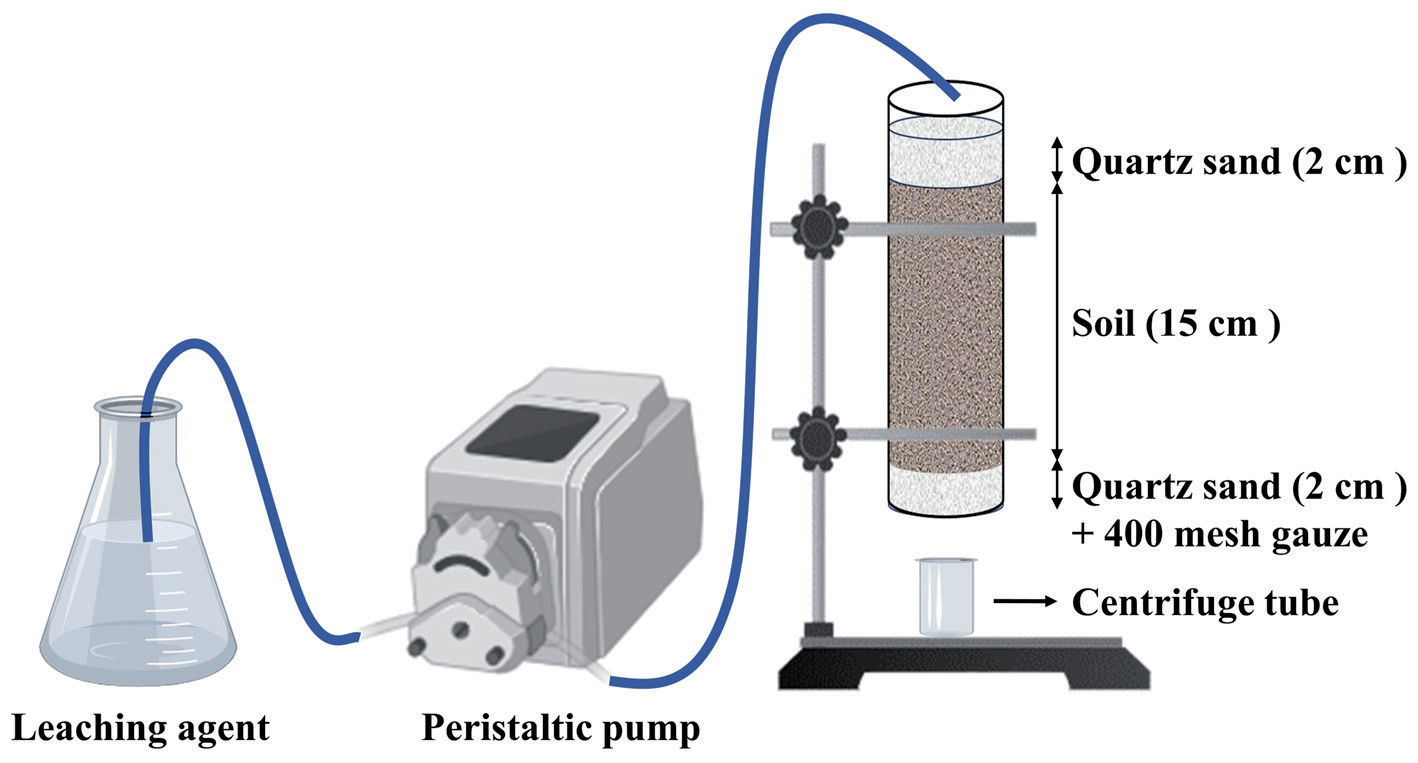
Exploring the leaching behavior of Pb in soil under the action of leaching agents through column experiments (Fig. 1). The height of the plexiglass column was 20 cm, and the inner diameter was 4 cm. 250 g of soil samples were filled into the column and compacted with a glass rod to ensure uniform flow of the leaching agent. In addition, the soil samples in the column were pretreated to analyze the effect of soil pH on Pb leaching. The pretreatment method was to inject deionized water at the top of the column at a flow rate of 0.5 mL·min-1 until the pH of the soil leachate stabilized at 6.5-7.5, and this soil type was labeled as soil-neutral. On the contrary, it was marked as soil-origin. Before the experiment began, all soil columns were soaked with deionized water and left to stand for 24 h to achieve the soil’s natural water-holding capacity [18]. Finally, simulated leaching agents were used to leach soil samples, and the soil leachate was collected every 30 min.
Chemical Analysis
The pH value of soil leachate was measured by the pH meter (Sartorius, PB-10, Germany). The concentration of Pb was measured by the inductively coupled plasma spectrometer (Thermo Fisher, 7400, Germany). The particle size, elemental composition, and mineral composition of soil samples were analyzed by a particle size analyzer (Linkoptik, LT2200, China), an X-ray fluorescence (ZSX, Primus III+, Japan), and an X-ray diffractometer (Rigaku, SmartLab SE, Japan), respectively. The chemical form of Pb in soil was analyzed according to the methods described in previous studies, namely exchangeable (EXC-Pb), Fe/Mn oxide-bound (FMO-Pb), organic-bound (OM-Pb), and residual (RES-Pb) forms [19, 20]. Furthermore, the recovery rate of Pb reached 98.7-105.0%, which met the experimental requirements.
Data Analysis
The leaching process of Pb was analyzed using the First-order kinetics model, the Elovich model, the Double logarithmic model, and the Intraparticle diffusion model [21]. All figures were drawn by Origin 2022.
Results and Discussion
Basic Properties of Soil
As shown in Fig. 2a), the total content of Pb in the soil was as high as 182.07 mg·kg-1, which significantly exceeded the soil background value of Jiangxi Province (32.10 mg·kg-1), indicating that severe Pb pollution existed in the soil [22]. In addition, Pb mainly existed in exchangeable form, Fe/Mn oxide-bound form, and residual form, which account for 16.92%, 51.59%, and 26.24%, respectively. According to the assessment criteria of the risk assessment code [23], Pb pollution in the soil was already at a medium risk level. Overall, the total amount and chemical form results indicated significant Pb pollution in the soil of the mining area, which posed a continuous threat to the surrounding environment.
Fig. 2.
The content and form of Pb in soil a) and the mineral composition of soil b). Note: EXC-Pb (exchangeable form), FMO-Pb (Fe/Mn oxide-bound form), OM-Pb (organic-bound form) and RES-Pb (residual form).
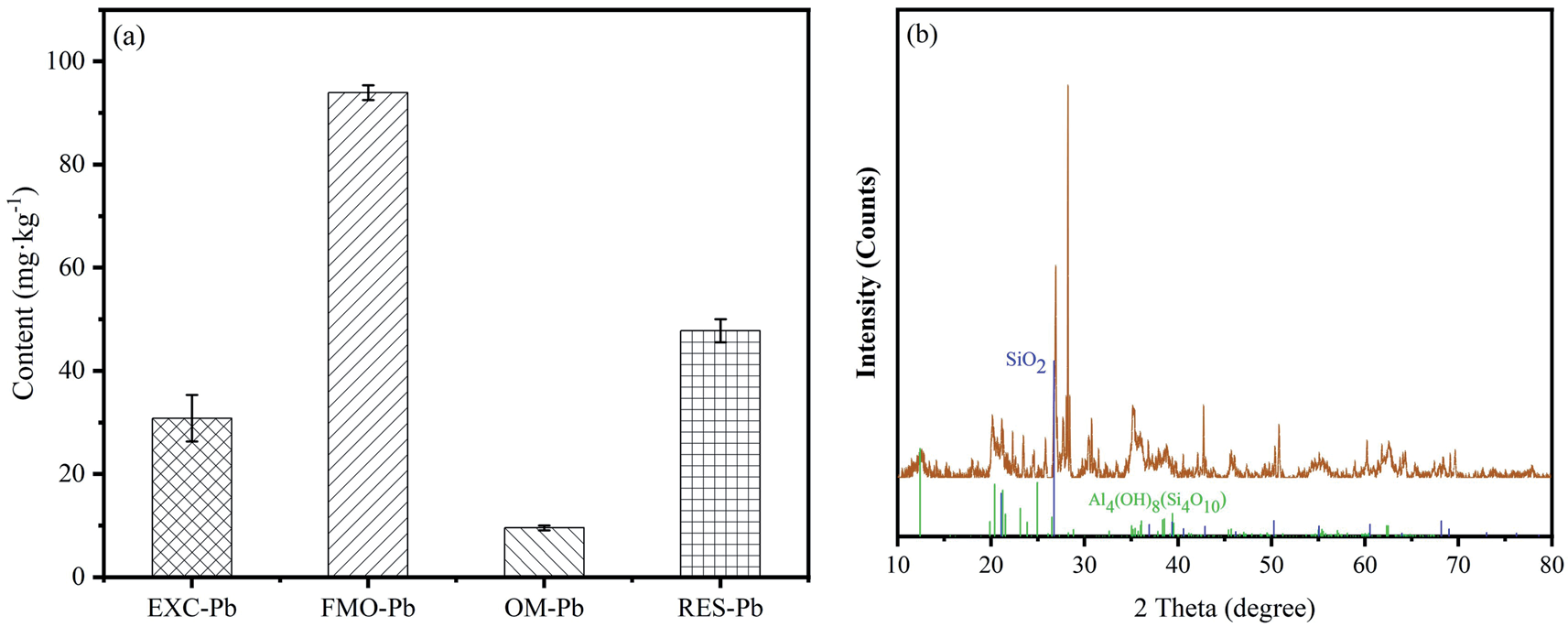
Regarding mineralogy, XRF results showed that the soil was dominated by Si and Al elements, with their proportions reaching 54.221% and 34.443%, respectively (Table 1). It indicated that the soil of the mining area was highly likely to contain abundant aluminosilicate minerals, which was consistent with previous research [24]. Meanwhile, the mining area was associated with various heavy metals, such as Mn and Zn. Pb not only has high migration activity and great harm but also has formed significant pollution in the mining area (Fig. 2a). Therefore, this study only investigated the leaching behavior of Pb. In addition, XRD results showed that the mineral composition of the soil mainly includes quartz (SiO2) and kaolinite (Al4(OH)8(Si4O10)) (Fig. 2b). This was consistent with the high content of Si and Al found in XRF. The particle size analysis results indicated that the soil was dominated by sand particles (fine sand particles, medium sand particles, and coarse sand particles), which accounted for more than 83% (Table 2).
pH Characteristics of Soil Leachate
Fig. 3. shows the variation of pH in soil leachate. In general, under all experimental conditions (including leaching with different leaching agents and whether the soil was pretreated), pH showed a similar pattern of change, with a rapid decrease in pH during the initial leaching stage, followed by a slow increase and stabilization. It indicated that the soil has a specific acid resistance, which is attributed to the rich content of aluminosilicate minerals in the soil [25]. However, at the initial leaching stage, the soil-origin leachate appeared weakly acidic (pH = 4.8-5.3), while the soil-neutral leachate was neutral (pH = 6.5-7.5). It is attributed to pretreatment washing away some of the acidic substances in the original soil, thus giving it more potent acid resistance.
According to the change in pH, the leaching process was divided into three stages. Except for stage I of soil-neutrality, the pH of the soil leachate in other stages was lower than that of the leaching agent. It indicated that the soil’s acidity was higher than that of the leaching agent, and H+ was released under the injection of the leaching agent. In stage I, the pH of the soil leachate was slightly lower than that of the leaching agent. It is because the soil column was saturated with deionized water (pH was neutral) before leaching, and after the leaching agent was injected, the deionized water in the soil void was discharged, resulting in a higher pH of the soil leachate. Nevertheless, the liquid flow still caused a small amount of H+ on the soil surface to be washed down. After entering stage II, the pH of soil leachate significantly decreased. It may be due to the cations (NH4+ and Mg2+) in the leaching agent that stimulated the activity of H+ on the soil surface or replaced H+ on the soil surface. In stage III, the pH of soil leachate increased slowly and tended to stabilize. It is speculated that the release of H+ is influenced by the exchangeable acidity within soil particles after the active H+ on the soil surface has completely precipitated [26]. In addition, comparing (NH4)2SO4 and MgSO4-ac, it was found that the promotion effect of Mg2+ on H+ release was stronger than that of NH4+ and was not affected by soil pH.
Changes in Pb in Soil Leachate
Pb Concentration in Soil Leachate
The change in Pb concentration in soil leachate is shown in Figs. 4a) and 4b) Under all experimental conditions, the Pb concentration showed a similar trend. According to pH, the leaching process for Pb was also divided into three stages. In stage I (soil voids filled with deionized water), the Pb concentration in all soil leachate was close to 0 mg·L-1, indicating that a neutral environment would hardly lead to the release of Pb in soil. It is worth noting that when the leaching amount reached 45-60 mL, the pH of the soil leachate changed dramatically, but the Pb concentration remained unchanged. It suggests that the release of Pb2+ in the soil lagged behind that of H+. With the contact of the leaching agent with soil, the release rate of Pb increased significantly. It is mainly because the leaching agent increased the activity of Pb, resulting in the release of Pb adsorbed on the surface of soil particles, or Pb in the exchangeable form [27]. When the chemically active Pb was consumed, the release of Pb was controlled by the dissolution of lead-containing minerals, thus entering a slow-release stage [28]. Meanwhile, the reaction between SO42– and Pb2+ to generate PbSO4 precipitation and the re-adsorption of the released Pb2+ by organic matter and minerals in the soil may reduce the release of Pb [29]. Unfortunately, during the leaching process, the Pb concentration in the soil leachate exceeded the type V surface water limit (0.1 mg·L-1), resulting in significant environmental pollution [30].
Table 1.
The elemental composition of the soil sample.
| Element | SiO2 | Al2O3 | K2O | Fe2O3 | Na2O | MgO | TiO2 |
|---|---|---|---|---|---|---|---|
| Proportion (%) | 54.221 | 34.443 | 5.429 | 4.081 | 0.681 | 0.344 | 0.161 |
| Element | CaO | MnO | Rb2O | SO3 | Y2O3 | ZnO | PbO |
| Proportion (%) | 0.132 | 0.113 | 0.096 | 0.074 | 0.071 | 0.037 | 0.020 |
Table 2.
The particle size analysis of the soil sample.
Fig. 3.
The variation pattern of pH in soil leachate.a) Soil-origin, b) Soil-neutral. Note: MgSO4-ac (pH = 5.00).
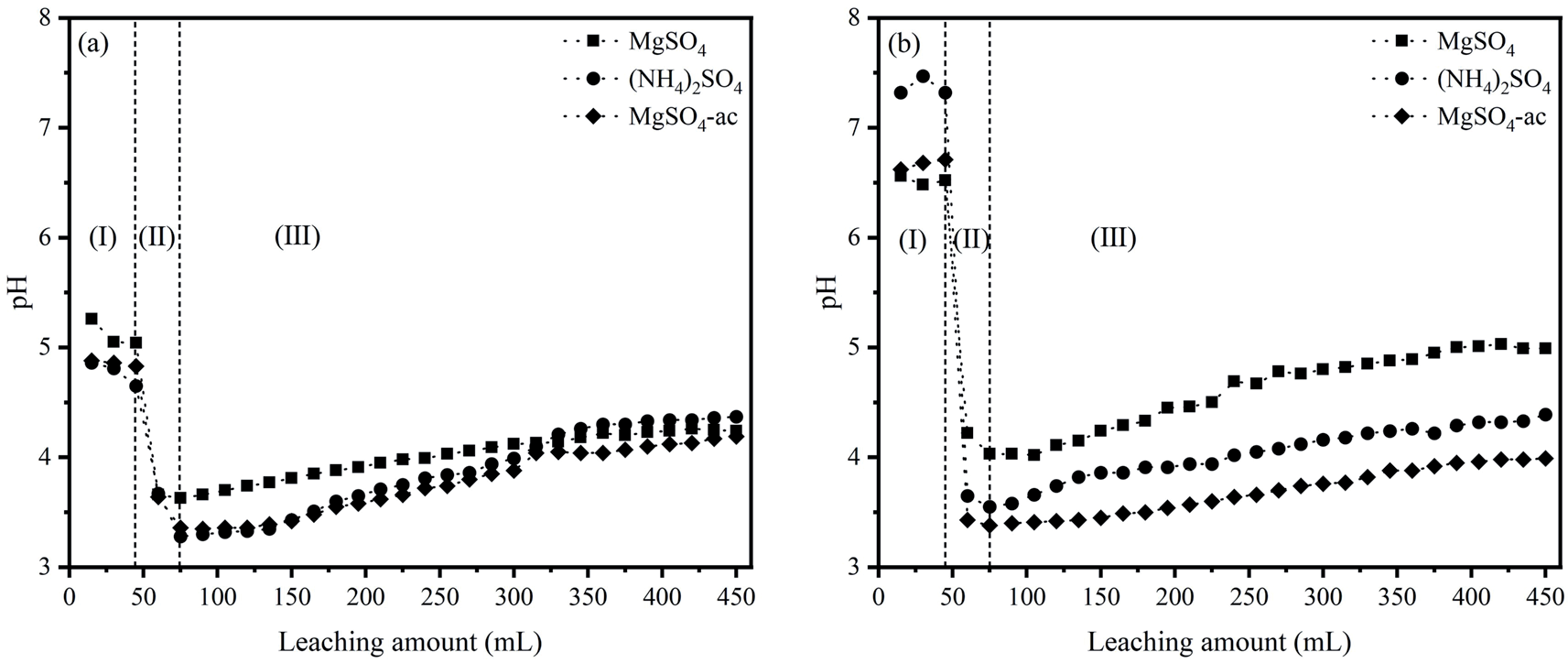
Fig. 4.
The Pb concentration in soil leachate ((a) Soil-origin, (b) Soil-neutral) and cumulative release of Pb ((c) Soil-origin, (d) Soilneutral). Note: MgSO4-ac (pH=5.00).
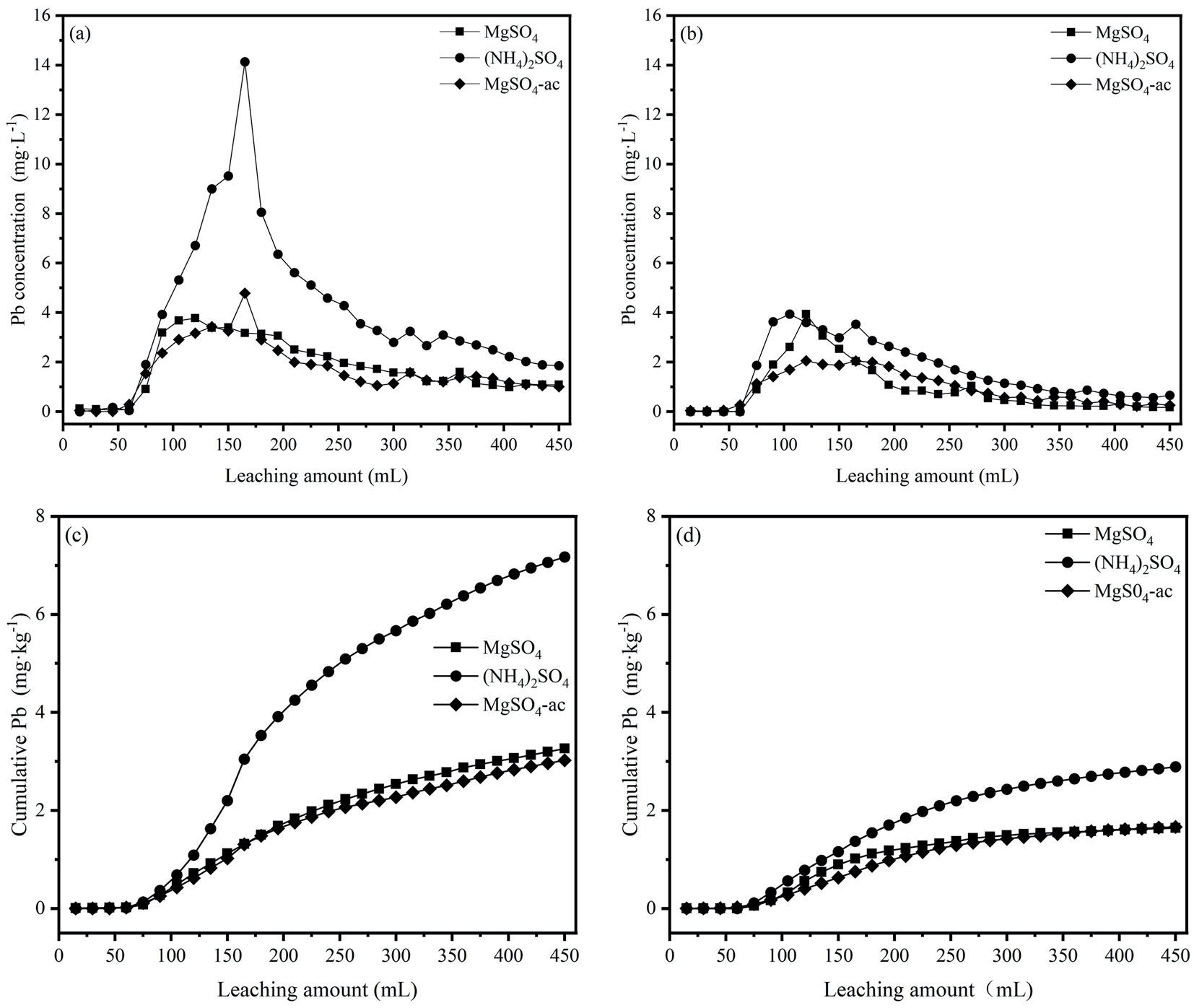
On the other hand, the Pb concentrations in soil leachate under the effects of MgSO4 and MgSO4-ac were similar in both soil-origin and soil-neutral. Meanwhile, compared to soil-origin, the Pb concentrations in soil-neutral were lower. It showed that when the external input pH was higher than the soil pH, the release of Pb was mainly affected by the soil pH. In addition, the effect of (NH4)2SO4 on Pb leaching was significantly higher than that of MgSO4 and MgSO4-ac, indicating that the displacement capacity of NH4+ was better than that of Mg2+. It may be because there were more cations in the (NH4)2SO4 leaching agent at the same leaching agent concentration [31].
Cumulative Release of Pb in Soil
As shown in Figs. 4c) and 4d), there were significant differences in the cumulative release of Pb. In the soil-origin, the cumulative release amount of Pb under the action of (NH4)2SO4, MgSO4, and MgSO4-ac was 7.17 mg·kg-1, 3.26 mg·kg-1, and 3.02 mg·kg-1, respectively. In the soil-neutral, the cumulative release amounts of Pb were 2.89 mg·kg-1, 1.64 mg·kg-1, and 1.66 mg·kg-1, respectively. Under the action of three leaching agents, the cumulative release of Pb in soil-origin was 248.1%, 198.8%, and 181.9% of that in soil-neutral, respectively. It is worth noting that under the same soil conditions, the effect of the leaching agent on Pb leaching was (NH4)2SO4 (pH = 5.00)>MgSO4 (pH = 6.95) ≈ MgSO4-ac (pH = 5.00). It once again indicated that soil pH played an essential role in the leaching process of Pb and NH4+ had a better displacement capacity for Pb2+ than Mg2+.
Kinetic Analysis of Pb Leaching
Different kinetic models were used to describe the leaching process of Pb (Table 3). The results showed that the Elovich model could fit the leaching of Pb in soil well, with correlation coefficients (R2) exceeding 0.85. Meanwhile, according to R2, the First-order kinetics model had the worst fitting effect on Pb leaching. It suggested that multiple factors controlled the leaching of Pb in soil, and the relationship between Pb leaching and various influencing factors was nonlinear [27]. Although there was a phenomenon in the fitting results of the Double logarithmic model where R2 was less than 0.8, the remaining majority of R2 was close to or greater than 0.9. It also showed that the leaching of Pb in soil was a complex reaction process and was influenced by many factors [32]. In addition, parameter b (absolute value) in the Elovich model can reflect the leaching rate of heavy metals in soil [33]. Based on this, it was found that the parameter b corresponding to (NH4)2SO4 was significantly higher than that of MgSO4 and MgSO4- ac under all soil conditions. It indicated that NH4+ had better displacement capacity for Pb2+ than Mg2+, which was consistent with the previous conclusion. Moreover, the parameter b corresponding to soil-origin far exceeded that of soil-neutral, indicating that the release of Pb was significantly affected by soil pH. In addition, the good fitting results of the Intraparticle diffusion model implied that intraparticle diffusion was the rate-limiting step in the Pb leaching process, which was consistent with the release of Pb from the soil at a nearly constant rate in the later stage. In summary, the leaching process of Pb in soil was mainly controlled by NH4+, soil pH, and soil intraparticle diffusion.
Table 3.
The parameters of the kinetic model.
Chemical Form Analysis of Pb in Soil
Fig. 5. shows the form distribution of Pb in soil. For the control group, the Pb in both soil-origin and soil-neutral forms was mainly in the Fe/Mn oxide-bound and residual forms. However, compared with soil-origin, the proportion of EXC-Pb and OM-Pb in soil-neutral decreased by 3% and 2%, respectively. In contrast, FMO-Pb and RES-Pb increased by 1% and 4%, respectively. It indicated that the neutral environment could promote the transformation of Pb in soil into a more stable form. In addition, the content of EXC-Pb in both soil-origin and soil-neutral decreased under different leaching agents. This is because heavy metals in their exchangeable form tend to have the highest activity and are always released preferentially into the environment [34]. Therefore, Pb in soil leachate mainly came from EXC-Pb release. It is worth noting that the decrease of EXC-Pb in soil caused by different leaching agents was different. Among them, the change caused by (NH4)2SO4 was the most significant, with EXC-Pb in soil-origin and soil-neutral decreasing by 9% and 7%, respectively. On the contrary, under the action of MgSO4 and MgSO4-ac, the EXC-Pb in soil-origin and soil-neutral decreased by 3%-7%. In addition to the release of EXC-Pb, the proportion of RES-Pb also decreased under the action of all leaching agents. Heavy metals in their residual form are usually fixed in the mineral lattice and have strong stability [35]. The results showed that leaching agents could also activate Pb in residual form, but this also meant that the potential risk of Pb would be increased. Therefore, continuous attention should be paid to Pb leaching.
Analysis of Pb Leaching Mechanisms in Soil
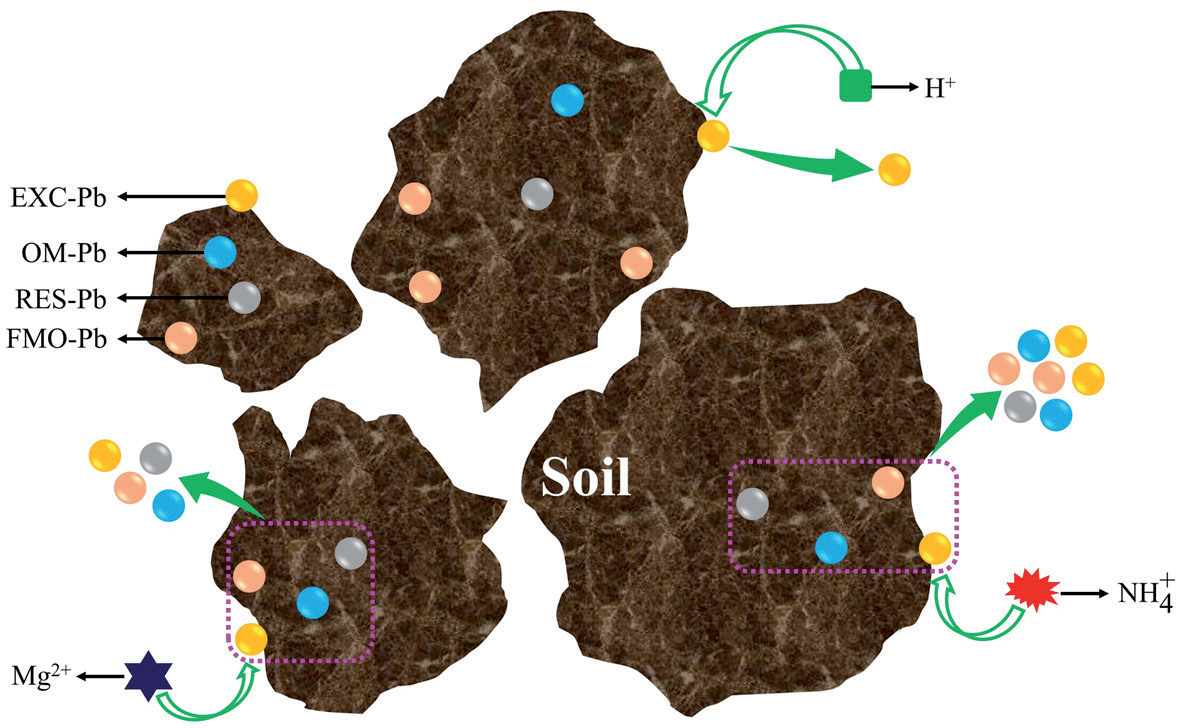
Overall, the leaching mechanism of Pb in soil under the action of a sulfate leaching agent includes the following aspects (Fig. 6). (1) The chemical form of Pb. Heavy metals in exchangeable form have the highest migration activity among the different chemical forms. However, the content of EXC-Pb in soil (including pretreated soil) was as high as 24.84-30.80 mg·kg-1 (Table 4), and its proportion reached 14%-17% (Fig. 5). This indicated that Pb in the soil was already at a medium risk level, and the high content of exchangeable form created the possibility of Pb leaching. (2) Soil pH (when the external input pH was higher than the soil pH). The acidic environment of the soil stimulated the migration activity of Pb, which resulted in the release of Pb along with the liquid flow. However, due to the limited acidity of the soil, it was mainly EXC-Pb that was released into the environment. Nevertheless, the EXC-Pb content determined the rate and amount of Pb released in the soil. (3) Ion exchange. Pb2+ in the soil was replaced by the more chemically active cations NH4+ and Mg2+) in the leaching agent and migrated to the environment through liquid flow. The effect of (NH4)2SO4 on Pb leaching was significantly higher than that of MgSO4. • The Elovich, Double logarithmic, and Intraparticle diffusion models fitted Pb leaching well. •
Fig. 5.
Form distribution of Pb in soil. a) Soil-origin, b) Soil-neutral. Note: EXC-Pb (exchangeable form), FMO-Pb (Fe/Mn oxide-bound form), OM-Pb (organic-bound form), RES-Pb (residual form) and MgSO4-ac (pH = 5.00).
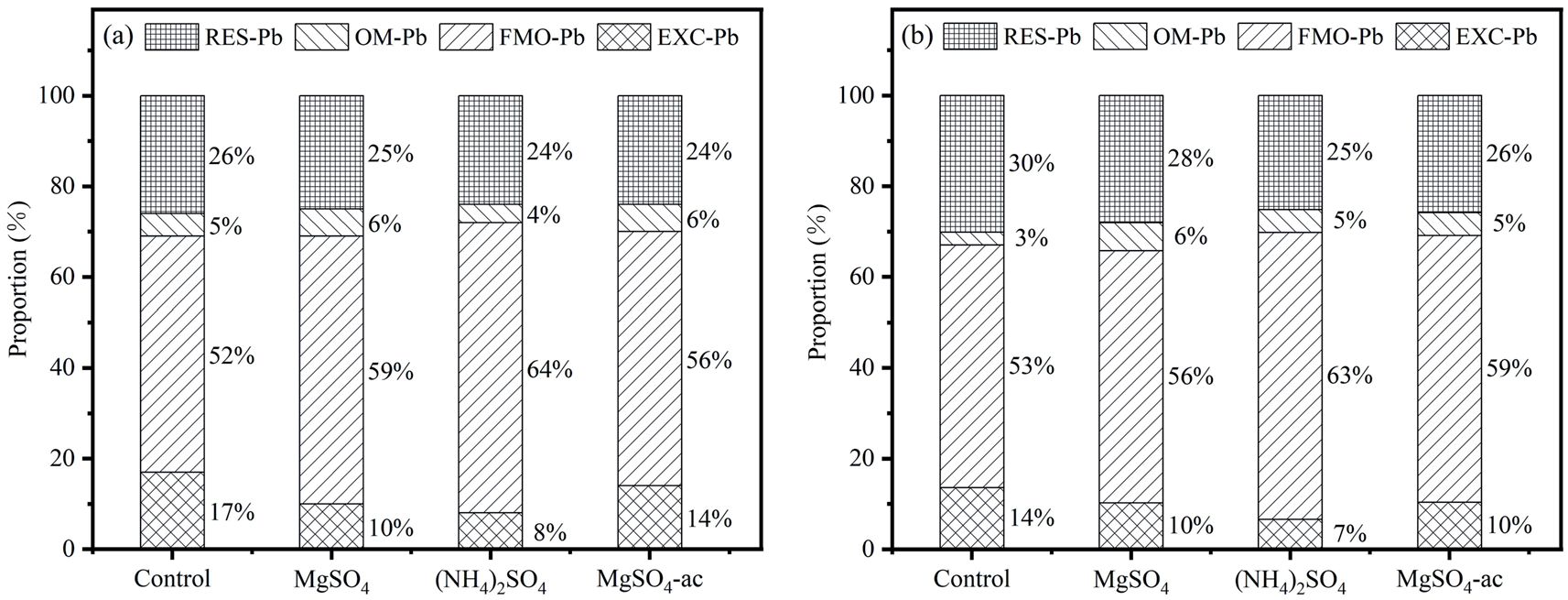
Fig. 6.
Schematic diagram of Pb leaching mechanism. Note: EXC-Pb (exchangeable form), FMO-Pb (Fe/Mn oxide-bound form), OM-Pb (organic-bound form) and RES-Pb (residual form). Highlights • Pb had significant leaching risk. • The effect of (NH4)2SO4 on Pb leaching was significantly higher than that of MgSO4.
• The migration of Pb was mainly in the exchangeable form. Pb leaching was mainly controlled by chemical form, ion exchange, and soil pH. •
Table 4.
Statistics of Pb content in soil.
Conclusions
This study analyzed the leaching behavior and mechanism of Pb in soil under the action of the sulfate leaching agent. The results indicated that there was severe Pb pollution in the mining area. The Pb content was as high as 182.07 mg·kg-1, mainly in the exchangeable, Fe/Mn oxide-bound, and residual forms. The pH in soil leachate showed a similar change, with a rapid decrease in pH during the initial leaching stage, followed by a slow increase and stabilization. Meanwhile, the promotion effect of Mg2+ on H+ release was more substantial than that of NH4+ and was not affected by soil pH. When the external input pH was higher than the soil pH, the release of Pb was mainly affected by the soil pH. In addition, the effect of (NH4)2SO4 on Pb leaching was significantly higher than that of MgSO4 and MgSO4-ac. Under the action of three leaching agents, the cumulative release amount of Pb in soil-origin was 248.1%, 198.8%, and 181.9% of that in soil-neutral, respectively. The Elovich, Double logarithmic, and Intraparticle diffusion models fitted Pb leaching in soil well, indicating that multiple factors controlled Pb leaching and that intraparticle diffusion was the rate-limiting step of Pb leaching. The EXC-Pb content in both soil-origin and soil-neutral decreased under different leaching agents. In addition, leaching agents could also activate Pb in the residual form, thereby increasing the potential risk of Pb. The leaching mechanism of Pb in soil under the action of the sulfate leaching agent included three aspects: chemical form, soil pH, and ion exchange.
The recommendations for practical applications in this study are: (1) Immediately reduce the use of (NH4)2SO4 leaching agents. (2) To better reduce Pb leaching, the soil pH value can be increased first (such as by leaching with water) when mining ion-adsorption rare earth, and then the MgSO4 leaching agent can be added.

