

Introduction
One of the global environmental problems is the presence of various types of waste, which are gradually turning into hotbeds of strong anthropogenic impact on the environment. Some of them are gradually introduced into the biogeochemical cycles of nitrogen, carbon, sulfur, etc.; the other part remains unchanged for a long time. Conventionally, such waste can be divided into two groups: bio-consumable, i.e., potentially biodegradable and difficult to biodegrade. The first group of waste has a composition available for microbiological oxidation, such as, for example, food production waste. The second group of waste is associated with the production of xenobiotics that have a given resistance to various kinds of influences. The use of biotechnological methods using mono or polycultures of microorganisms, due to their high adaptive ability to changing environmental conditions [1], may be one of the most promising ways to dispose of such hard-to-digest waste. Technologies [2, 3] and microorganisms [4, 5] capable of biodegrading petroleum hydrocarbons are already known and widely used. Depending on the location of bioremediation work, it is divided into in situ and ex situ [6], i.e., in the waste storage area and outside this area, respectively. Naturally, in situ technologies are more economical, because there are no costs for preparing an additional site for biorecultivation work and waste transportation [7]. On the other hand, with this technology, it is more difficult to provide optimal conditions for the vital activity of the microorganisms used: pH, t0, humidity, aeration, etc. Therefore, it is very important to assess the feasibility of choosing the technology used.
Wastewater from chemical industry enterprises usually does not meet such requirements because an imbalance in chemical ingredients, often toxic levels of content, critical pH values, lack of oxygen, antagonistic groups of microorganisms, etc. is detected. In addition, wastewater is characterized by the continuous entry of toxic substances into its composition in high and unstable concentrations. The advantages of wastewater as a source of nutrients for hydrobiont organisms include a relatively stable temperature of aqueous solutions and, in the case of wastewater formation at an industrial enterprise, the ability to control the processes of detoxification of their composition through the introduction of various post-treatment technologies.
Wastewater at enterprises is formed from two types of water: wastewater itself, which is used in the technological scheme of production and household purposes; the second type of water is usually formed from stormwater and sedimentary water. This type of water, especially in the case of its formation as a result of seepage through solid waste, would be more appropriate to call residual waters because, in their composition and origin, they differ from the main wastewater. Such residual waters can be observed around solid waste storage sites, including both industrial waste and solid household waste, especially in humid climates or everywhere after seasonal precipitation. The formation of such unaccounted liquid waste has such consequences as the absence of residual water treatment systems and poor knowledge of the processes involved in the impact of such waste on the environment.
The south of Kazakhstan is characterized by the presence of a large number of storage sites for waste from the polymetallic, lead-zinc, phosphorus, and oil refining industries, the volume of which ranges from 2.2 million to more than 150.0 million tons, depending on the type of waste. Due to intensive urbanization processes, waste storage sites were gradually absorbed by the boundaries of settlements and turned into hotbeds of negative impact on the environment and public health. On the other hand, the waste of enterprises contains a large number of valuable components that can be used as raw materials for the cultivation of microorganisms. Of particular interest is phosphorus-containing waste from fertilizer production, stored on the territory of the former plant for the production of phosphorus fertilizers in the open air. Solid waste is represented by slags and slurries, around which a large volume of residual water is formed, probably containing a significant amount of biogenic elements.
The main objective of this study was to attempt to manage this waste, not only by removing it from the environment but also by using it as fertilizer for plants. It seems that the most practical and economically reasonable way to achieve this goal is to use biotechnological methods. We decided to determine which species of microalgae can achieve the greatest increases in biomass and accumulate the most phosphorus from waste water. Such biomass could be collected and later used as biofertilizer
.
Material and Methods
The object of the study was residual water accumulated in various technical tanks after seeping through solid phosphorus-containing waste: slag and sludge stored in the south of Kazakhstan (coordinates of the sampling point: S.D. 42.2703059, V.sh.69.7182539.276) in the free economic zone. To select an algae strain, a collection of algae isolates isolated from small rivers in the Turkestan region was used.
The organoleptic characteristics of the residual waters selected from different sections of the concreted reservoirs of Kainar LLP showed the following: – sample A is a muddy swamp-colored solution with
a sharp chemical odor. After settling, the turbidity
falls into a loose precipitate. When settling for
several days, a white film forms on the surface of the
solution. – sample B is a cloudy solution of light brown color
with a sharp chemical odor. After settling, the
turbidity falls into a loose precipitate. – sample C is a green solution with a faint odor. The
sediment is formed only after many days of settling
in a dark place. If there are available sources of solar
illumination, it retains visual parameters.
Water samples were taken according to methodological guidelines - ST RK GOST R 51592- 2003 Water. General requirements for sampling.
Ion concentration analyses were performed using ion chromatography. Cation analysis was performed using a Metrohm Cation column according to [8], and anion analysis was performed using a Dionex IonPac column according to [9]. The analyses were repeated 5 times.
Cultivation of microalgae on solutions with different contents of slag and slurries was carried out in the following mode: daylight 12 hours, water temperature +23.0±2.0ºC, pH 5.5±0.5, CO2 bubbling for 2 hours a day. As a control, microalgae were cultivated on Pratt’s nutrient medium without the addition of waste of the following composition, g/l: KNO3 - 0.10, MgSO4×7H2O - 0.01, K2HPO4 - 0.01, FeCl3×6H2O - 0.001 agar-agar - 12.0.
Microscopy of the preparations was carried out using a Biomed-5 microscope with a 10×; 40×; 100× lens using immersion oil (GOST 28489-90).
The satistical processing of the obtained results was carried out using the calculation of the arithmetic mean and the value of the standard deviation. All studies were conducted in a 5-fold sequence. The data was processed using a personal computer based on Excel application software packages.
Results and Discussion
In many cases, the processing of phosphorite raw materials into elemental phosphorus produces a large number of by-products and wastes, such as phosphate slag, phosphorus sludge, etc. These wastes are formed due to the heterogeneity of the raw materials and the lack of upgraded equipment for the preparation of raw materials for electrothermal phosphorus distillation. As a result of chemical analysis, the mineralogical composition of phosphorus-containing slags consisting of pseudovollastonite, cuspidine, ferrophosphorus, melilite, akermanite, rankinite, fluorapatite, vitlockite, fluorite, and silicocarnotite was clarified [10]. The results of the X-ray analysis showed that the phosphorus content in the slag composition, depending on the sample, ranges from 0.5±0.01-21.9±2.0; potassium - 0.02±0.00- 0.1±0.01 wt.% (Fig. 1).
The presence of a number of metals necessary for phototrophic organisms as sources of growth factors and trace element nutrition, such as magnesium, manganese, fluorine, iron, etc., and the volume of stored waste occupying more than 16.0±1.5 hectares of land indicate the possibility of using these wastes as sources for industrial cultivation of phototrophs, which is promising for biotechnological purposes.
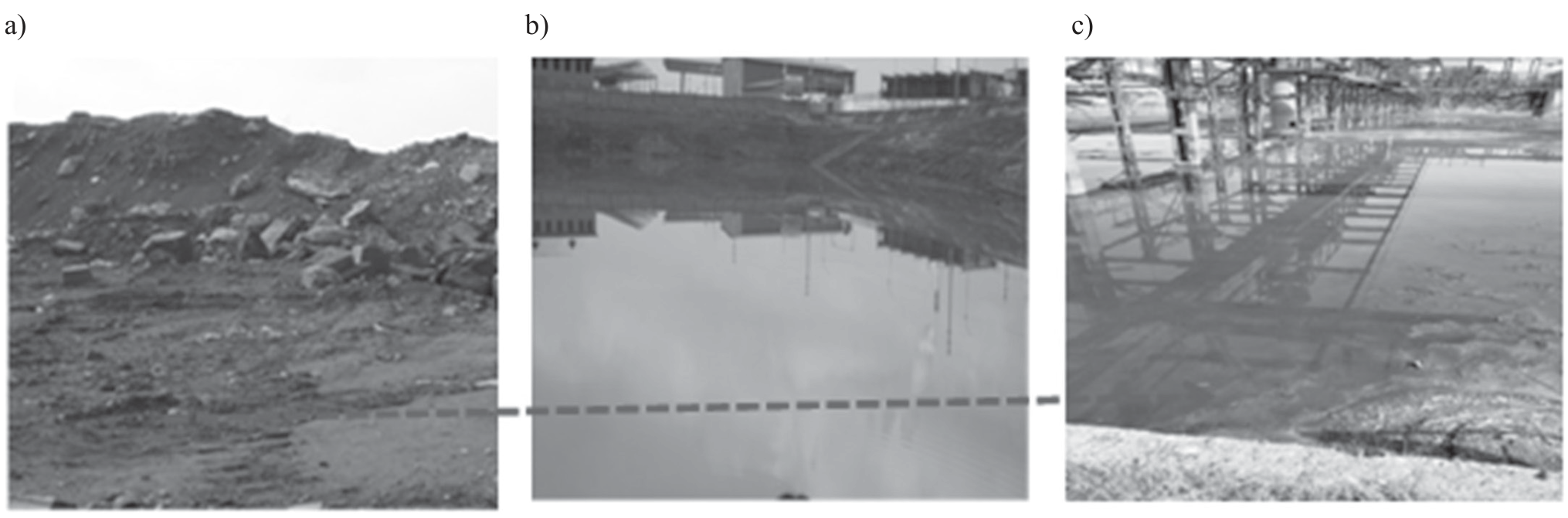
The sludge stored on the territory of Kainar LLP is stored in a wet state due to the high probability of spontaneous combustion in the open air. As a result of the penetration of sedimentary and irrigation liquid through the thickness of slags and sludge around the storage sites of solid phosphorus-containing waste, residual aqueous solutions were formed, accumulating in the lowlands and concreted reservoirs of the technological scheme of the former phosphorus processing plant (Fig. 2). The volume of solutions is constantly maintained at a certain level due to natural precipitation and artificial humidification to prevent the spontaneous combustion of sludge.
To determine the moisture content of sludge at their storage sites, special depressions have been prepared to measure the water level. In spring and summer, at elevated temperatures and insolation, massive biological fouling is observed in these depressions filled with water, represented by the filamentous algae Spirogyra elongata and Ulothrix zonata, in the thickness of which it is inhabited by O.borgei, C. vulgaris, Phacus caudatus, 3 species Euglena, Navicula sp., Meridion circulare, Diatoma sp., and Chlamydomonas sp [11]. The color of the water in such depressions acquires a bright green color with a sharp chemical odor; the pH ranges from 5.25±0.3.
The chemical composition of residual water samples taken from different points is similar and differs only in the quantitative characteristics of the ingredients contained (Table 1).
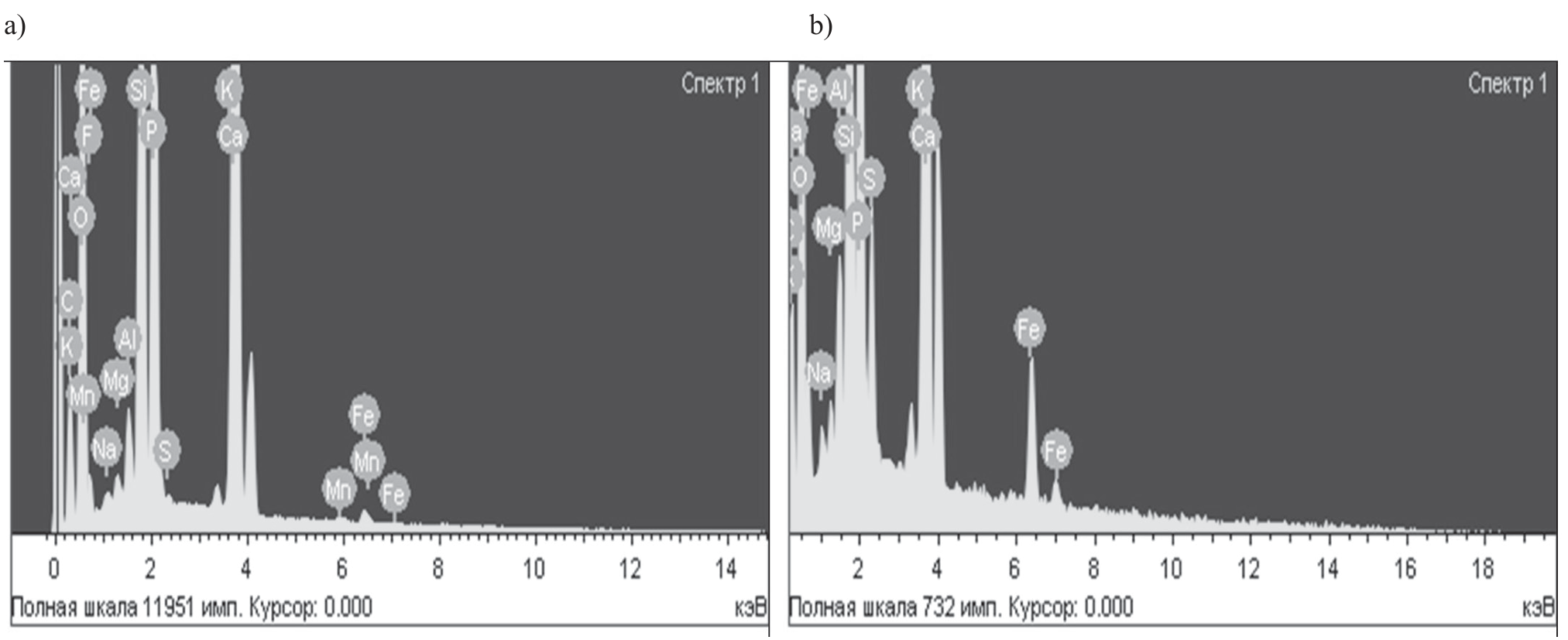
Fig. 2.
Formation of residual water at the storage sites of phosphorus-containing waste. a) Phosphorus-containing slags; b) Collection of stormwater and residual water in lowlands; c) Collection of residual water in concreted reservoirs.
In wastewater and polluted natural waters, special aquatic ecosystems are formed in which phyto-and zooplankton species form various associations that differ in metabolic diversity. A distinctive feature of such associations is the adaptation of aquatic organisms to increased concentrations of toxic substances in the aquatic environment. On the other hand, it can significantly reduce the time for breeding work to obtain resistant organisms for future biotechnological purposes.
The use of ready-made associations of organisms can be useful for solving environmental problems associated with the removal of toxic ingredients from water [12]. Analysis of the taxonomic structure of phytoplankton in small rivers in the Turkestan region showed that algocenosis of reservoirs in the Turkestan region is represented by algae of the Chlorophyta divisions by 47.0±4.5%, Cyanophyta -27.2±2.5%, and Diatomophyta -26.1±2.1%. The main, widespread families of algae are the Naviculaceae, Fragillariaceae, Anabaeaceae, Nitzschiaceae, and Oscillatoriaceae. The greatest range of diversity is characteristic of the genera Cocconeis, Navicula, Nitzschia, Synedra, Scenedesmus, and Tetraedron.
It has been established that the growth and development of microalgal in wastewater is influenced by factors such as turbidity and toxicity of ammonia [13], while the toxicity of high concentrations of ammonia is detected both in aerobic and anaerobic conditions of cultivation of microorganisms [14]. In studies [15], it was found that local microalgal strains adapted faster than industrial strains into wastewater with a high ammonia content. In the conditions of the south of Kazakhstan, the main limiting factor for the development of algoflora is the temperature regime determined by landscape conditions and the chemical composition of the waters. At the same time, sharp fluctuations in the number of algoflora were noted for rivers located in the foothills and mountainous parts. In the plains, due to advanced eutrophication processes, changes in the number of hydrobiont organisms are insignificant. The main changes in the population structure are due to fluctuations in the hydrochemical composition of water that occur during spring floods. There are known studies related to improving the properties of the nutrient medium due to different filtration levels [16]. It was found that, as a result of microfiltration of digestate obtained as a result of anaerobic digestion of food and agricultural waste, up to 92.38% of phosphorus is extracted. The combination of finer filtration levels allows for the extraction of up to 94.35% of nitrogen.
Table 1.
Chemical composition of samples of phosphorus-containing wastewater.
The isolation and study of the properties of new microalgae strains are of considerable interest for the development of biofertilizers. Currently, there are about more than 20 thousand strains of microalgae, mainly belonging to the green algae Chlorophyta. Microalgae have a wide distribution area, which makes it possible to find new strains for certain biotechnological purposes. 68 isolates of green microalgae were isolated from samples of the waters of small rivers in the south of Kazakhstan, from which 20 strains of microalgae were isolated by sequential breeding and screening according to the criterion of the rate of biomass accumulation. Preliminary taxonomic analysis showed their belonging to the genera Chlorella, Botryococcus, Scenedesmus, Desmodesmus, Chlamydomonas, and Oocystis, Parachlorella. For further phototrophic cultivation, Chlorella vulgaris ASLI-1, Chlorella vulgaris ASLI-2, Chlorella vulgaris AsB, and Chlorella vulgaris KAI strains were used, which had the ability to maintain vital activity during multiple passages and phototrophic nutrition.
For mixotrophic cultivation, the strains Oocystis borgei ATP and Oocystis borgei AsK isolated from the phosphorus-containing wastewater of Kainar LLP were additionally used. Light and fluorescence microscopy revealed that of the four studied chlorella strains, the largest number of lipid droplets are formed in the C. vulgaris ASLI-1 and C. vulgaris ASLI-2 strains. The optimal combination of environmental conditions for ammonium nitrogen consumption has been established: temperature 20ºC, pH 7.5, salinity 15% and algae concentration 5.5×10⁸ CFU/ml. It was found that the O.borgei ATP strain consumes phosphorus at a rate of 0.11±0.01 mg/ml per day, while the introduction of ammonium ions into the nutrient medium increases this rate to 0.14±0.01 mg/ml per day.
Studies conducted with the microalgae Oocystis borgei [17] showed that nitrogen concentrations had a significant effect on the rate of absorption of ammonium, nitrates, nitrites and urea by this algae. At the same time, the relative preference index of ammonium was higher than that of other compounds. It has been established that in the habitat conditions on the territory of storage of phosphorus-containing waste at Kainar LLP, cultures of O.borgei acquired a combined preference for phosphate phosphorus in combination with ammonia nitrogen. It was found that the O.borgei ATP strain is more active in the consumption of phosphate phosphorus, which is quite understandable by adaptation to living conditions in phosphorus-containing wastewater. The introduction of an additional amount of ammonia nitrogen into phosphorus-containing wastewater contributed to the rapid growth of algae.
Another study [18] showed that O.borgei has allelopathic properties, which can play a beneficial function in the composition of the fertilizer being developed. Parameters such as growth, cell wall permeability, and esterase activity were analyzed when co-cultured with the toxic algae Microcystis aeruginosa. It was found that oocystis is capable of destroying the cell wall and membrane system of M. aeruginosa at volume ratios of 4:1 and 1:1 in the exponential phase, suppressing the activity of esterase and photorespiration. In a cumulative mixed culture cultivated on phosphorus-containing wastewater from Kainar LLP under laboratory conditions, it was revealed that the O. borgei strain inhibits the growth of euglen algae Euglena viridis, Phacus splendens Pochm, and blue-green algae Oscillatoria sp., abundantly growing in wastewater.
In order for the algae fertilizer to reach its full potential, the cost of growing it should be inexpensive, allowing for the production of economical mass raw materials. In this regard, a cheap source for algae cultivation is industrial or municipal wastewater, a variety of liquid waste rich in nutrients. On the one hand, the problem of their purification is being solved, since polluted waters, either being discharged into open reservoirs or penetrating into underground and groundwater, contribute to their further pollution. Due to the well-known fact that algae successfully grow on wastewater, a possible synergistic solution is the placement and integration of the production of fertilizer with the treatment of nutrient-rich wastewater..
The research results of a number of scientists show different data on the productivity of algae grown on wastewater. A relatively high uptake of nitrogen and phosphorus by algae is usually described, but the total uptake of nitrogen is lower, since organic nitrogen was most likely not absorbed by algae [19]. At the same time, the average yield obtained over the entire cultivation period was 3.3±0.3 g of dry matter for 2 days. In studies [20], the ability of Chlorella vulgaris to remove volatile methylsiloxanes from wastewater was established, while a decrease in nitrogen content by 86% and phosphorus by 80% was revealed.
Other studies [21] were conducted with Chlorella vulgaris grown on untreated wastewater from dairy production report the possibility of obtaining a high growth rate of algae biomass of 63.136±1.040 mg/l−1 day−1. It was revealed that the lipid content also reaches the maximum parameters -1.644 mg ml−1. Studies [22] have shown that microalgae can be used for the post-treatment of primary treated wastewater, which can be used as a substrate for the production of third-generation biofuels. However, in another study [23] it is stated that in open reservoirs a large variability in obtaining the amount of biomass and removing biogenic components is achievable, depending on a range of factors affecting this process: the composition of wastewater, the level of insolation, the nature of the terrain and relief, etc.
In contrast to the cultivation of microalgae in fresh water, in the case of wastewater, the growth rate and accumulation of biomass strongly depend on the composition of the wastewater [24]. In this case, it is important to use those types of algae that are capable of consuming biogenic elements and the absence of toxic qualities, which, in the case of studies conducted, confirms the correctness of choosing strains of microalgae C. vulgaris ASLI-1, C. vulgaris ASLI-2, and O.borgei ATP, which significantly reduce the content of phosphate phosphorus and ammonium nitrogen in wastewater with sequential accumulation of biomass.
Conclusions
Strains of green microalgae C. vulgaris ASLI-1, C. vulgaris ASLI-2, and O. borgei ATP have been isolated from natural reservoirs and wastewater and are capable of consuming phosphate phosphorus and ammonium nitrogen from residual waters in places where solid phosphorus-containing waste is stored, which may be promising for the disposal of liquid waste and the production of fertilizers to increase the fertility of depleted soils in the south Kazakhstan.

