

Introduction
As the Roof of the World, the Qinghai-Tibet Plateau is an important ecological barrier in China [1]. There are massive glaciers here, which are the birthplace of many major rivers in Asia, with well-developed river networks and water systems [2]. The region is less affected by human activities, with a low industrial development scale and urbanization level, The serious pollution problems have not yet been identified, but the ecological environment is extremely fragile and needs to be taken seriously. The pollution problem in the Qinghai-Tibet Plateau mainly comes from the following aspects: One is natural sources: the enrichment and distribution of heavy metals such as Co, Cr, Cu, Fe, Mn, Ni, Zn, and Sc are mainly influenced by the local geological matrix [3], and the high concentrations of F and As in geothermal water are also mainly influenced by the geological substrate values [4]. The second is the impact of industrial structure, where the enrichment, migration, and diffusion of heavy metals such as Cu, Zn, Pb, and Cd may be affected by the mining activities of mineral resources in the Qinghai-Tibet Plateau. The third is the migration and transformation mechanism of pollutants under the influence of climate. It has been found that the concentration of Hg in snow and ice on the Qinghai-Tibet Plateau is influenced by atmospheric particulate matter deposition and monsoon transport [5]. Atmospheric particulate mercury plays an important role in the atmospheric mercury deposition on the Qinghai-Tibet Plateau, and alpine regions are more susceptible to the impact of anthropogenic mercury emissions [6].
Biochar is the product of the pyrolysis of biomass raw materials under oxygen-free or anoxic conditions. Its main component is carbon molecules. Depending on surface functional groups, pore volume and pore size, and specific surface area, it has certain adsorption properties and is an economic and environmentally friendly functional material [7]. The Qinghai Tibet Plateau region has abundant biomass resources. The total amount of various biomass resources in Tibet alone is about 1.28 billion tons [8]. Some organic solid wastes, such as sludge, yak dung, straw, litter, etc., are difficult to rapidly degrade under natural conditions; therefore, the use of Biochar for ecological control in this area has broad prospects for development and utilization.
Targeting the environmental characteristics of the Qinghai-Tibet Plateau region, seek to use the rich local waste biomass resources to prepare Biochar, explore an economic and environmentally friendly method to realize the resource utilization of local waste biomass, and provide a theoretical basis for the prevention and control of pollutants in the Qinghai-Tibet Plateau.
Difficulties in the Application of Environmental Remediation Methods in the Qinghai Tibet Plateau Region
The main methods of environmental remediation currently include biological, physical, and chemical methods (Fig. 1), including plant methods, microbial methods, soil methods, leaching methods, vitrification methods, redox methods, neutralization methods, etc. These methods have their advantages and disadvantages, but each has certain limitations that make application and promotion in the Qinghai-Tibet Plateau region a major challenge.
Limitations of Biological Methods
Phytoremediation technology is a type of biological method that is favored because it can be repaired in situ and has little interference with the environment. According to the statistics of the super-enriched plant database, more than 700 super-enriched plants have been found worldwide [9]. However, due to the cold and hypoxic climate conditions of the Qinghai-Tibet Plateau, the thin soil layer, and the long plant growth cycle, most super-enriched plants grow slowly and have low growth rates. Similarly, microorganisms with the ability to degrade, transform, or chelate various toxic chemicals are also difficult to cultivate and apply on a large scale at high altitudes.
Limitations of Physical Methods
Although physical methods generally have lower pollution risks, the Qinghai-Tibet Plateau has a wide area and many mountainous areas. Xie [10] found that there are many areas in the central and eastern part of the Qinghai-Tibet Plateau where soil is slightly polluted by Cr; the concentration of Fluorine (F) and Arsenic (As) in widely existing geothermal water is generally high; the enrichment of Cu and Ni is in the mountain matrix. If repair methods such as the guest soil method and leaching method are used, the difficulty is relatively high and the cost is expensive.
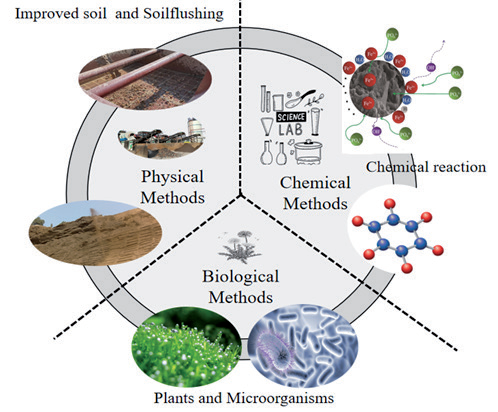
Limitations of Chemical Methods
Chemical remediation refers to the use of reducing agents or other agents to reduce heavy metals or metalloids with high toxicity, strong mobility, and poor stability to valence states or compounds with low toxicity and strong stability. The remediation cycle is short and cost-effective, but the introduction of other agents is likely to cause secondary pollution and instability [11]. The ecological environment of the plateau is fragile, and once polluted, it is difficult to repair, causing ecological deterioration.
All of the above single remediation methods have certain limitations. Biomass charcoal has attracted attention because of its large specific surface area, rich functional groups, high removal efficiency of pollutants, and wide source of prepared materials, which can be used as an ideal material to deal with environmental pollution problems in the Qinghai-Tibetan plateau region.
Feasibility of Biochar Utilization of Plateau Solid Waste
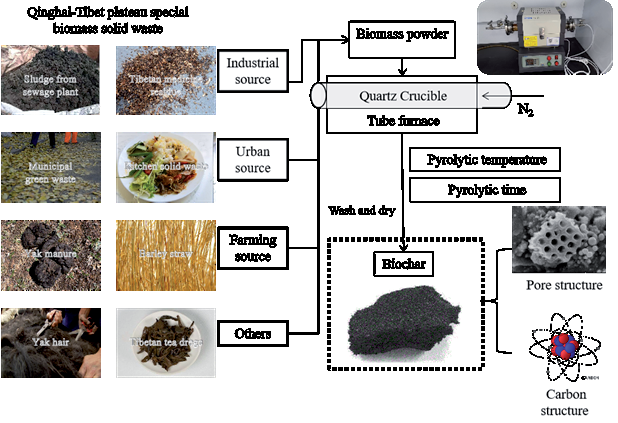
The climate and soil conditions of the plateau have given rise to agricultural and animal husbandry resources. Highland barley is the most common food crop, and yaks are also widely bred. The unique environment has led to the continuous prosperity of local tourism and the expansion of urban scale. Along with the continuous development, the waste generated in the Qinghai-Tibet Plateau region has also increased year by year, not only bringing great pressure to the local waste treatment, but also posing risks to the fragile ecological environment. In addition to cow dung, straw, etc., which can be used as fuel or feed, most of the other solid wastes are stacked, landfilled, and incinerated as garbage [12]. Tibet has only a few large domestic garbage landfills and a domestic incineration power plant, which puts great pressure on garbage treatment [13]. Therefore, it is necessary to treat some biomass solid waste to reduce the pressure on garbage treatment in the region and also to utilize biomass solid waste as a resource. Table 1 and Fig. 2 analyze some of the common biomass waste types and their characteristics in the Qinghai-Tibetan plateau region, as well as show various types of biocarbonization of biomass waste characteristic of the Qinghai-Tibetan plateau.
Municipal Waste
With the acceleration of urbanization in the Qinghai-Tibet Plateau region, plateau cities such as Lhasa, Xining, and Nyingchi continue to develop and expand, and a large number of small and medium-sized towns are also constantly developing, bringing about population growth, improved industrialization and urbanization levels, and a continuous increase in the production of municipal waste in plateau towns. Moreover, due to the short development history of these cities and towns and their limited waste disposal capacity, it is necessary to recycle some municipal waste. Fig. 2 shows the types of characteristic biomass solid wastes in the Qinghai-Tibet Plateau and their bio-carbonization utilization methods.
Sewage Plant Sludge
With the expansion of cities and towns, the increase in population, and the annual increase in water demand for industry and agriculture in the Qinghai-Tibet Plateau, several sewage plants in Lhasa, Nagqu, and Shigatse have been put into operation, and the output of municipal sludge has also increased. In 2017, the amount of municipal sludge in Tibet was about 8.23 × 10⁴ t [14]. The sludge contains a large amount of organic matter, so the resource utilization of sludge has always been a research hotspot. The Biochar, Bio-oil, and Bio-gas produced by pyrolysis has a high utilization value. However, there are a large number of pathogens and microorganisms in sludge, which can easily deposit heavy metals and organic pollutants. Improper treatment and direct application of sludge can easily cause secondary pollution of surface water, groundwater, soil, and vegetation, affecting human health. At present, Biochar prepared by the pyrolysis of sludge has been widely studied for heavy metal remediation. Wang [15] used a co-pyrolysis of mixed sludge and cotton straw to prepare sludge-based Biochar to adsorb copper-contaminated soil. It was found that the addition of Biochar promoted the transformation of Cu in soil from a weak acid extractable state to a reducible state to an oxidation state and residual state, reduced the leaching toxicity of Cu, and improved the immobilization effect of Cu in soil. Wang [16] used the surplus sludge to prepare Biochar to adsorb copper ions in water, with an adsorption capacity of 74.51 mg/g and the highest removal rate of more than 90%. Relevant literature shows (see Table 2) that sludge Biochar has played a good role in the adsorption treatment of various pollutants [15-22].
Table 1.
Common biomass resource species and their characteristics on the Qinghai-Tibet Plateau.
Municipal Greening Waste
In 2013, the green coverage rate in the built-up area of Lhasa City reached 35%, and the per capita public green space area reached 9.82 m2 [23]. Subsequently, a lot of dead branches and fallen leaves were also generated. If this waste were burned using traditional methods, it would pose a serious challenge to the atmospheric environment of the plateau, and the landfill scheme also faces high costs and difficulties in concentration.
Some scholars have conducted experimental studies on biochar and the adsorption of green waste. Dai [24] prepared eucalyptus leaf Biochar under different temperature conditions and found that its maximum adsorption capacity of Cd2+ in solution can reach 50.21 mg/g; Z Derakhshan Nejad prepared maple leaf Biochar, and found that the addition of this Biochar enhanced the immobilization effects of cadmium, copper, lead, and zinc in the soil [25]. Municipal greening waste can be used as the raw material source for Biochar to prepare high-quality environmental functional materials
Kitchen Waste
IIn Xining, Lhasa, Nyingchi, and other tourist cities with unique plateau landscapes, the catering industry is prevalent, and a large amount of kitchen waste has also been generated. In 2011 and 2012, the per capita food loss and waste rate of Lhasa’s catering food was 15.5%, and the ecological footprint efficiency of Lhasa’s catering food consumption was far higher than the average ecological footprint efficiency of Tibet’s GDP [26, 27]. In 2014, the amount of food waste in Lhasa during the peak tourist season was about 81.73 t/d [28]. Kitchen waste has a large output, a complex composition, and is prone to decay, but it is rich in organic matter and has a certain recyclable value. At present, the main treatment methods for kitchen waste are anaerobic digestion and aerobic composting, but their treatment costs are high and the process is complex [29]. Considering the timeliness of the output of urban kitchen waste on the plateau, it is considered that it can be pyrolyzed to prepare Biochar, which can reduce the burden of urban waste treatment on the one hand and can be used as an effective environmental remediation material on the other. Parshetti [30] and others found that the activated carbon obtained at the carbonization temperature of 250ºC had a good adsorption effect on Acridine orange in sewage through hydrothermal carbonization of urban kitchen waste and the preparation of activated carbon.
Table 2.
Preparation and adsorption application of sludge-based biochar.
Agricultural Waste
Highland barley, wheat, and corn are the main food crops in the Qinghai-Tibet Plateau region. Large-scale cultivation has produced a large amount of straw. The Tibet region produces about 7×10⁵ tons of crop straw annually, and the annual yield of barley straw alone in the entire region reaches about 4×10⁵ tons [31]. In the past, crop straw was mainly used as feed or burned back in the field. However, with the popularization of pesticides and feed, the harm to disease and insect eggs caused by straw accumulation, and the requirements for atmospheric environmental protection, crop straw needs to be more reasonably utilized as a resource. At present, the preparation of Biochar from cellulose-rich plant straw by pyrolysis has been extensively studied, especially for the remediation and protection of heavy metals in contaminated soil and sewage [32]. Xu [33] prepared at 700ºC the higher surface area and stronger Pb adsorption capacity of rice straw biochar. The maximum adsorption capacity of biochar was about 222.6 mg/g, and the proportion of residual Pb in soil increased from 39% to 44% after adding biochar. Zhao [34] used corn straw as a raw material and the oxygen-limited pyrolysis method to prepare modified Biochar to effectively improve the stability of Biochar to mercury in soil, reduced the absorption of Hg in spinach, and increased the concentration of residual Hg and carbonate-bound Hg. In addition, some scholars use the rich organic matter content in Biochar to improve soil fertility and study the impact of Biochar on crop growth, yield, and quality [35, 36]. A large number of experimental studies by other scholars have verified the good effect of straw Biochar on heavy metal remediation, which provides a reference for the effective utilization of crop straw resources in the Qinghai Tibet Plateau.
Animal Husbandry Waste
Yak is a unique animal species on the Qinghai Tibet Plateau. According to statistics, the total number of yaks in China is 22 million [37], accounting for over 95% of the world’s total yak population. Raising yaks is also an important source of meat and economy in the Qinghai-Tibet Plateau region. Almost every household in rural areas on the plateau is raising yaks. With the need for industrialization, a batch of large-scale yak and Tibetan sheep farms have also emerged [38]. Yak manure is mainly used as fuel in the local area, and Tibetan livestock and poultry manure account for 52.93% of rural energy consumption [8]. With the development of urbanization and the improvement of people’s living standards, the phenomenon of burning cow manure as fuel is also decreasing. Moreover, yak manure as fuel has been exposed to humans for a long time and is highly susceptible to harmful bacteria, affecting human health. The production of Biochar from manure can realize the harmless, reduced, and resourceful utilization of livestock manure. Liu [39] and others compared the production of Biochar from cow dung and walnut shell and found that cow dung Biochar has a better adsorption effect on Cd2+ and Zn2+ aqueous solution than walnut shell Biochar. Chen and Zhang [40] prepared Biochar from pig dung by oxygen-limited pyrolysis (700ºC) and modified it with “sulfuric acid+ultrasound”. The theoretical maximum adsorption capacity of the prepared pig dung Biochar was 26.045 mg/g. They believed that the modified pig dung Biochar could be used as a water Cr (VI) adsorbent with excellent performance and a low price [39]. Yan [41] prepared chicken manure Biochar under different conditions reduced the proportion of Pb and Cd in the weak acid extraction state, reducible state, and oxidation state to varying degrees, while the proportion of residue states increased, which shows that chicken manure Biochar has a strong passivation effect on the heavy metals Pb and Cd. Yaks have different living habits from other common livestock, but their feces are similar in nature. Some scholars have studied the properties of yak feces and found that FeCl2-modified yak feces Biochar can remove 98.77% and 99.44% of fluorine and arsenic, respectively [8]. The highest specific surface area of yak dung Biochar prepared under carbon dioxide is 60.13 m2/g, which can be used as a soil improvement material. The highest nitrogen content of yak dung Biochar prepared under nitrogen is 25.32 mg/g, which has fertilizer application potential. The cumulative nitrogen dissolution rate of yak dung Biochar prepared by low-temperature hydrothermal hydrolysis is 34.87% [42]. The yak dung Biochar prepared at 450ºC shows good adsorption performance for low-concentration ammonia nitrogen, and the removal rate can be stabilized at more than 50% [43]. The specific surface area of yak dung Biochar is up to 635.2 m2/g, showing excellent adsorption and electrochemical properties, which can be used as an adsorbent for uranium metal and electrode material for supercapacitor applications [44]. Biochar from yak dung has good application potential as an adsorbent of pollutants and a soil conditioner due to its good adsorption performance and high-quality fertility.
Other Biomass Raw Materials
The local residents in the Qinghai-Tibet Plateau region are mostly Tibetan and have their own unique customs and habits. Whether in urban towns or highland villages, most residents have a daily habit of drinking tea. In recent years, the tea industry in the Tibet Autonomous Region has developed rapidly. In 2019, the tea garden area in Tibet Autonomous Region was 2388 hm2, and the tea production was 116 t [45], while the daily average consumption of tea by residents in the Tibet Autonomous Region was 23.19 g, and the per capita annual consumption of tea in Tibet reached 8 kg [46]. However, tea residue in this region is generally treated and disposed of as kitchen waste and has not yet been effectively utilized as a resource. There have been studies on the direct use of tea residue, mainly to make organic fertilizer and use tea residue for composting and fermentation to make manure to improve soil fertility and promote crop growth. Tea residue can also be used for making feed. Qiu [47] used solid-state fermentation of tea residue feed and found that the protein content in this feed is higher, which leads to less methane production and can also inhibit rumen fermentation. Preparation of adsorption materials is also one of the ways to use tea residue. Shaikh WA [48] uses waste tea residue to prepare Biochar at 300 K, and the removal rates of Rhodamine B and Congo red can reach 95.89% and 94.10%, respectively. Altaf AR [49] further pyrolyzed Biochar containing Fe (NO3)3 at 500ºC by using waste tea residue and achieved around ≥95% Hg0 removal rate at 180ºC.
The Tibetan people have a long history and unique plateau vegetation, and they have also formed their own Tibetan medicine and Tibetan medicine culture. There are about 2000 types of Tibetan medicine plants, second only to traditional Chinese medicine, ranking first among the four major ethnic medicines in China. They are an important component of traditional Chinese medicine [50]. Tibetan medicine has been listed as the second-largest pillar industry in Tibet. With the advancement of modern pharmaceutical technology, the Tibetan medicine industry is developing towards industrialization, and the demand for Tibetan medicine is gradually increasing. A group of Tibetan medicine production enterprises has emerged, producing a large amount of Tibetan medicine residue, which contains rich organic matter and has a high potential for resource utilization. Drug residue is mainly cellulose, lignin, fat, polysaccharide, trace elements, etc. [51], which is a high-quality Biochar raw material. Studies have been conducted on the use of Biochar from Western medicine and Chinese medicine residue in environmental remediation, and it has been found that the use of Biochar from drug residue can have a good adsorption effect on heavy metals and organic pollutants. For example, the use of Biochar from Isatis indigotica herb residue can significantly reduce the extractable state of Cu acid in soil (by 9%). By increasing the residual content of Cu (by 10.16%), Cd in the soil will also transform from an acid extractable and reducible state to a residual state, with an increase in residual content of 16.67% [52]. Zhang [53] provides a method to prepare an efficient Biochar microbial complex by using the waste matrix of Chinese medicine residue, which provides a new idea for removing Chlortetracycline from water. The application of traditional Chinese medicine residue charcoal can reduce the effective content of Cr, Pb, Cd, Cu, and Ni in the soil while inhibiting the transport and accumulation of six heavy metals such as As, Cd, Cr, Cu, Ni, and Pb from the soil to plants, with a maximum decrease of 30% [54].
Utilization Methods for Biochar
Environmental adsorbent materials are widely used in the field of environmental remediation. At present, the main adsorbents are metal oxides and hydroxides, zeolites, activated carbon, and Biochar [55]. Biochar has received great attention because of its good adsorption performance, low preparation cost, and simple adsorption process [56, 57]. There are six main action mechanisms of Biochar on heavy metals, namely physical adsorption, surface precipitation, cation exchange interaction, cation-π bond, and electrostatic action, as shown in Fig. 3. Different preparation materials, preparation methods, and application areas will produce different effects for the application of Biochar. The universality of Biochar raw materials makes this method consistent with the rich biomass resources in the Qinghai-Tibet Plateau. According to different pollution situations (Fig. 4), Biochar can be selectively prepared from biomass raw materials, and environmental remediation can be carried out using appropriate methods. The optimization types and characteristics of biomass charcoal are shown in Table 3. In the face of wide remediation areas and low pollution levels, raw Biochar can be used, which is characterized by low preparation costs, wide material sources, and good selectivity. In the face of environmental media with serious pollution, such as abandoned mines, industrial sewage, industrial dust, landfills, etc., various methods can be used to modify Biochar, so that it can have a better remediation effect and meet the remediation requirements of specific areas or specific pollutants. The modification methods of Biochar are mainly physical, including the nanoball milling method [58], hydrothermal steam modification method [59], freeze-thaw modification method [43], ultraviolet modification method [60], and magnetic modification method. Chemical methods, including acid-base modification, metal oxide modification, organic matter modification, etc. [61]; Biological methods, mainly microbial modification methods [62, 63].
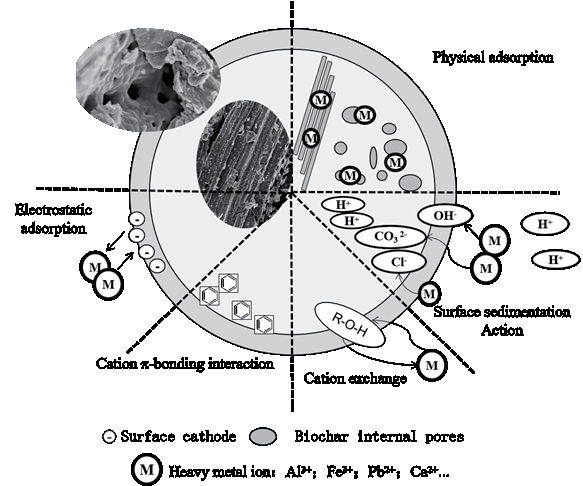
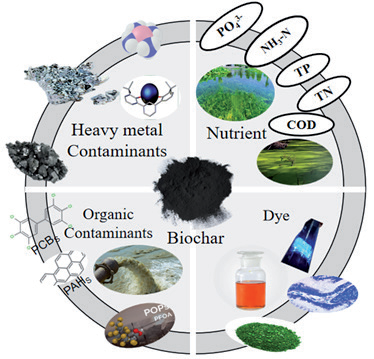
Table 3.
Optimized types and characteristics of biomass charcoal.
| Item | Cost | Craft | Effect | Risk |
|---|---|---|---|---|
| Raw Biochar | low | low | average | low |
| Activated Biochar | Moderate | Moderate | good | lower |
| Modified Biochar | Cost | Cost | well | higher |
Factors such as raw materials, preparation conditions, modified materials, modification methods, and adsorption conditions of Biochar will affect its adsorption performance. It is necessary to conduct research and analysis on the application and promotion of Biochar in the plateau area, seek the best raw materials for the preparation of Biochar, optimize various conditions for the preparation, explore the best conditions for the adsorption process, and purposely use biochar to harness the environmental problems of the Qinghai-Tibet Plateau. For different environmental problems, Biochar utilization methods and processes are also constantly innovating and improving. Biochar composite membrane technology [64], Biochar attapulgite technology [65], and other technical methods are constantly advancing, and Biochar technology and process level are also constantly developing. Xiang W [66] integrated the emerging sewage treatment technology Biochar process with a physicochemical biochemical method and applied it to the high-concentration sewage treatment project. Its treatment effect and process flow have been effectively improved. Experimental studies in farmland found that biochar-based fertilizers can improve soil properties, slow down the release rate of nutrients, and have a positive impact on soil improvement [67].
Prospects of Plateau Characteristic Biochar
Utilization of Solar Radiation Resources
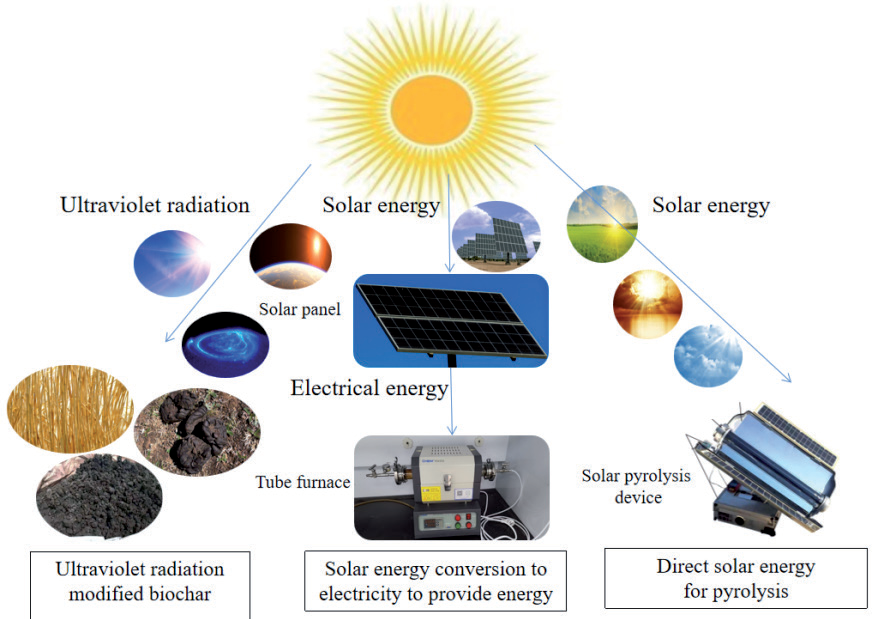
The Qinghai-Tibet Plateau is the region with the highest altitude in the world. The thin air makes it easy for sunlight to penetrate the atmosphere, with strong solar radiation and sufficient sunshine time. Solar energy is extremely abundant. Tibet has abundant solar energy resources. The annual average solar radiant intensity reached 6000-8000MJ/m2, the highest in China, second only to the Sahara [68], and the annual sunshine duration in Lhasa reached 2980h. In the summer of 2019, the solar radiant intensity in Nyingchi City was above 900 W/m2 for 765 hours, or 71.43% of the total observation time, and the maximum intensity reached 1036 W/m2 [69]. The application of Biochar technology in the Qinghai-Tibet Plateau can be based on strong radiation levels and abundant solar energy (see Fig. 5). Li [70] of Chongqing University modified coconut shell Biochar by 365 nm ultraviolet radiation and found that modified Biochar reduced the weak acid extracted Cd of soil by 66.40%, and the modification improved the remediation effect by 3.8 times. The UV modified Biochar prepared by Zhang [71] at 600ºC significantly reduced the Cd content in soil and crop tissues (18.4-51.4%) after application, which proved that the UV radiation modification technology has a good application prospect. Solar energy provides a new energy source for the preparation of Biochar. Solar pyrolysis technology is an energy-saving pyrolysis technology that uses solar energy to conduct high-temperature pyrolysis of biomass raw materials [72]. Chang [73] prepared straw and cow dung Biochar using solar pyrolysis technology and compared it with Biochar prepared by the traditional pyrolysis method. It was found that the specific surface area and micromorphology of Biochar materials prepared by the two processes were basically the same, and their physical and chemical properties were similar. It was considered that solar pyrolysis technology was a new way to prepare Biochar.
Mixed Pyrolysis Technology
Different biomasses have their own unique characteristics, and the complementary advantages of materials can be achieved through joint processing through pyrolysis technology. Straw, fruit peel, fruit shell, and other typical plant-derived biomass have low ash content, high carbon content, high specific surface area and porosity, and generally exhibit strong alkalinity [74]. Sludge is an industrial organic solid waste with rich organic matter but high water content. It may be accompanied by pathogenic microorganisms, heavy metals, and other toxic substances, and it is huge and accompanied by stench [15]. Biochar prepared by sludge pyrolysis alone has problems such as a small surface area, insufficient porosity, and poor adsorption capacity, which limit its promotion and application. However, the Biochar products mixed with straw and other plant-derived biomass have high carbon content, low ash content, and contain alkaline earth metals that can promote the thermal decomposition of organic matter [75], which can make full use of the characteristics and adsorption mechanisms of various organic matter resources, target remediation and treatment of heavy metal pollution, and be applied in the Qinghai-Tibet Plateau region to protect the unique and precious ecological environment of the plateau.
Conclusion
This paper summarizes that the alpine and anoxic climate, thin soil layer, and fragile ecological environment of the Qinghai-Tibetan plateau region have a great influence on the pollution prevention and control of the region, and for the types of pollutants and the current situation of the region, and at the same time introduces the locally available solid waste resources, which will be used as raw materials for biochar, and the use of activation and modification technology to improve the adsorption efficiency of biochar, which will provide certain ideas for the rational use of the resources of the discarded biomass, overcoming the problems of pollutant management in the Qinghai-Tibetan plateau region, as well as the application of the biochar remediation technology in alpine and anoxic regions.

