

Introduction
Wheat has a prominent position among the most crucial and extensively grown crops. There are many environmental factors limiting crop productivity, such as salinity [1–4], heat [5, 6], and water deficit stress [7, 8]. Limited water availability, known as water stress, ranks among the most impactful environmental factors hindering plant growth and development [9, 10]. Further, climate change is a growing threat to agriculture and ecosystems worldwide [11]. Agronomic, physiological, and grain quality changes are caused by water stress in wheat. When water stress occurs, agronomic and morphological characteristics generally decrease [12, 13]. Conversely, proline contents, catalase, and peroxidase activity were found to increase under water stress [14].
The application of biostimulants is a very important new approach in crop fertilization to minimize the harmful effects of chemical fertilizers and keep the environment safe. Biostimulants are important substances that can stimulate the growth and development of plants even when used in small amounts and have been studied for their potential benefits in horticultural and agricultural crops [15]. Future research should prioritize the evaluation of biostimulant effectiveness on cereal crop yields. Seaweed extracts used as biostimulants boast a diverse range of active ingredients, including growth-promoting hormones like cytokinins, polyamines, and brassinosteroids [16]. Studies show that using algal extracts can improve plant growth and increase crop yields [17]. Previous studies indicated that applying active compounds extracted from algae can mitigate the negative effects of water stress [18] and nutrient deficiencies [19] in several crops. Additionally, finely ground limestone, known as Lithovit, is another type of biostimulant. This material is primarily composed of calcium and magnesium carbonates (Ca, Mg-CO3) and contains various essential plant nutrients (Patent DE202006011165 U1). The application of Lithovit to wheat plants has been shown to improve growth and yield. This compound contains Mg, Ca, Fe, and Si, which are thought to increase chlorophyll pigments, resulting in improved water content of plants under stress [20]. Further studies have shown that Lithovit can also enhance photosynthesis by elevating carbon dioxide (CO2) concentrations within the leaf’s internal spaces (intercellular spaces) [21]. Additionally, it has been demonstrated to enhance the chlorophyll content and dry matter of tomatoes under salinity conditions [22]. Ascobin treatment demonstrably promoted the growth and production of active compounds in plants, even under stressful conditions [23]. Moreover, since ascorbic acid has been shown to stimulate antioxidant defense for enhanced drought resistance, this study investigated the potential of Seaweed extract, Lithovit, Ascobin, and Cina green plus biostimulants to improve wheat performance under both normal and water-stressed conditions associated with agronomic, physiological, and quality traits.
Materials and Methods
This study was undertaken at the Faculty of Agriculture’s experimental farm, Kafrelsheikh University, during the 2017/18 and 2018/19 seasons. The location sits at 31o07’ N latitude, 30o57’ E longitude, and approximately 6 m above sea level. In each season, the experiments were separately performed under two water treatments. In the first water treatment (normal), five irrigations were applied, while in the first water treatment (stress), only the planting irrigation was applied. The experiment employed a split-plot design with three replicates under each water treatment. The researchers randomly assigned the studied cultivars to the main plots, while the subplots received the various foliar spray treatments. Each subplot measured 4.2 m2, consisting of six rows spaced 20 cm apart and measuring 3.5 m long. Sowing occurred on November 25th and 27th in both the 2017/2018 and 2018/2019 growing seasons.
Three commercial bread wheat cultivars were used, and their names, pedigree, selection history, and origin are shown in Table 1. In addition, six foliar spray treatments were applied, and their name, composition, and concentration are shown in Table 2. All these compounds were applied three times with the concentration of 1.5 g L-1 as a foliar application at 40, 50, and 60 days after planting.
Standard agricultural practices, excluding irrigation, were applied following recommended guidelines to meet the requirements of the plants. The preceding crops were maize and rice, planted in the first and second seasons, respectively. Table 3 presents the average monthly air temperature (°C) and rainfall (mm/month) experienced during the growing season at the experimental site.
The samples were collected at 65 days from sowing to determine leaf indices and physiological characteristics; however, the plant height and other characteristics in seeds were recorded at the harvest date. The following characteristics were studied: plant height (cm), no. of spikes m-2, weight of 1000 kernels (g), grain yield plant-1 (g), relative water content (%) [24], activity of peroxidase and catalase (μmol min-1 g protein-1) [25], leaf proline content (mg g-1 FW) [26], grain protein content (%) [27], wet gluten content, and germination percentage [28]. A combined analysis was conducted across both water treatments and seasons [29]. Seasons were considered random effects, while water and foliar spray treatments and cultivars were considered fixed effects. Data analysis was conducted via statistical software packages, including Microsoft Excel 2016 and GenStat 18 [30].
Table 1.
The investigated bread wheat genotypes pedigree and selection history.
Table 2.
The names and concentrations of the foliar spray materials.
Table 3.
The average monthly air temperature (°C), RH%, and rainfall (mm/month) experienced during the growing seasons.
Results
Table 4 displays the average values (means) and variations (mean squares) observed for the investigated traits across both seasons, categorized by water treatment and foliar spray treatment. The seasons, water treatments, and foliar spray had substantial differences for the investigated characters, except for protein content due to foliar spray. In addition, the mean squares were significant for relative water content due to seasons×water treatments, no. of spikes, grain yield, catalase activity, and gluten content due to seasons×cultivars, proline, chlorophyll content and gluten contents due water treatments×foliar spray applications, gluten content due to cultivars×foliar spray applications, relative water and gluten contents due to seasons×water treatments×cultivars and gluten content due to water cultivars×cultivars×foliar spray applications. Moreover, water treatments×cultivars interaction means squares significantly impacted all studied characteristics, with the exception of grain yield. Averaged across all studied conditions, the means of the studied traits in 2018/19 (Table 4) were significantly greater than those in 2017/18, except for catalase and peroxidase activity as well as proline contents which were vice versa.
Table 4.
Mean squares and the mean performance of the studied parameters under water treatments, cultivars, and foliar spray application in the 2017/18 and 2018/19 seasons.
[i] Season (S), Water treatments (W), Cultivars (C), and Foliar spray treatments (Sp). * and ** NS indicate P<0.05 and P<0.01, respectively. PH=plant height (cm), SM=no. of spikes m-2, KW=1000-kernel weight, GY=grain yield kg m-2, RWC=relative water content%, CAT=catalase activity (μmol min-1 g protein-1), POX=peroxidase activity (μmol min-1 g protein-1), PROL=Proline (mg g-1 FW), Chl=total chlorophyll, PROT=protein content%, Ger=Germination% and GLU=wet gluten content.
The presented data in Table 4 showed catalase, peroxidase activity, and proline content across both seasons and when considering all cultivars and foliar spray applications. The study found that water stress significantly reduced all the investigated plant characteristics. Across all seasons, water treatments, and foliar spray applications, the Sakha 95 consistently demonstrated superior performance in several key growth and yield parameters. These included plant height, no. of spikes m-2, grain yield, proline content, protein content, and germination percentage. Furthermore, the Giza 171 cultivar excelled in terms of both the weight of 1000 kernels and the relative water content.
Moreover, Misr 1 showed the highest values of catalase content, peroxidase content, chlorophyll content, and gluten content. In contrast, Misr 1 consistently recorded the lowest values in terms of plant height, 1000-kernel weight, grain yield, relative water content, chlorophyll content, protein content, and germination%. Additionally, Giza 171 showed the lowest values of no. of spikes m-2, catalase content, peroxidase content, and proline content. Furthermore, Sakha 95 showed the highest values of chlorophyll content and gluten content.
Compared to the control, Cina green plus treatment differed significantly and showed the highest values of plant height, relative water content, proline content, chlorophyll content, 1000-kernel weight, and gluten content. In addition, Cina green plus and Ascobin applications differed significantly and showed the highest values of no. of spikes m-2. Moreover, Cina green plus and Lithovit with nitrogen application differed significantly and showed the highest values of catalase content. Furthermore, the foliar spray treatments differed significantly from the control and achieved the greatest value of germination%. Conversely, the foliar spray treatments did not differ significantly in protein content.
Interaction Effect
Plant Height (cm)
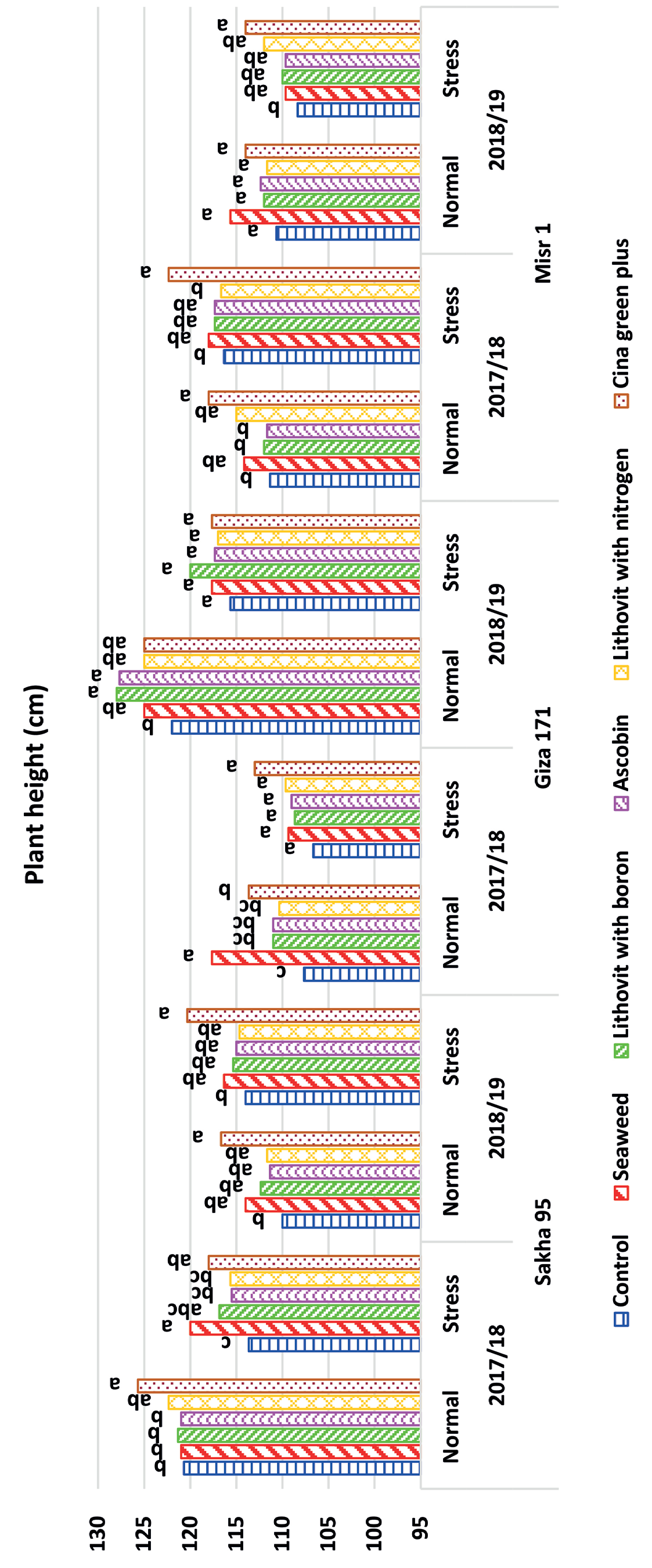
The findings presented in Fig. 1 indicate that Cina green plus generally resulted in the tallest plants across various conditions. Conversely, the control treatment consistently yielded the shortest plants. Additionally, for the Giza 171, applying Lithovit with boron in the 2018/19 season (under both normal and water stress conditions) led to the tallest plants. Furthermore, Seaweed application proved effective in promoting taller plants: for Sakha 95 under water stress, Giza 171 under normal irrigation in 2017/18, and Misr 1 under normal irrigation in 2018/19.
no. of Spikes m-2
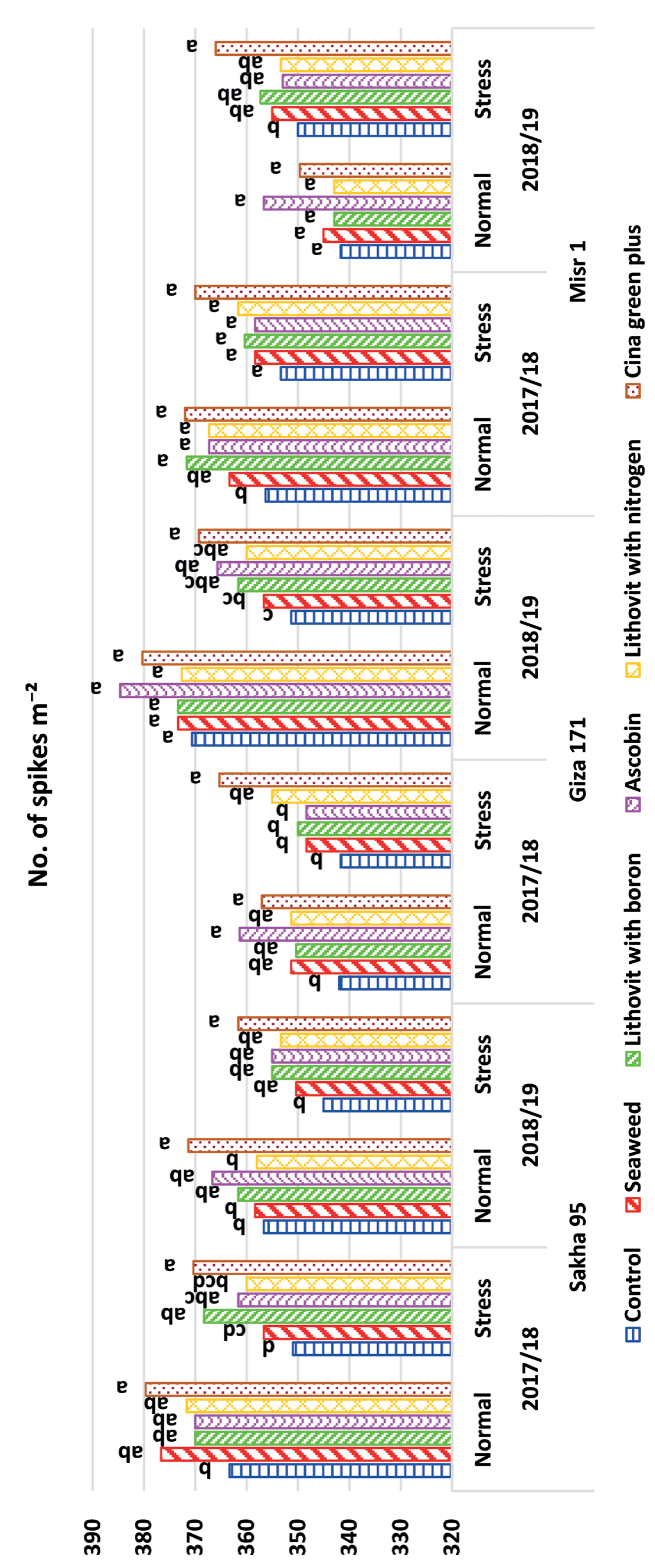
Fig. 2 illustrates that Cina green plus, applied as a foliar spray, yielded the greatest no. of spikes m-2 under most conditions, outperforming the control treatment. In other instances, Ascobin spray proved most effective in increasing the no. of spikes m-2. This was observed under normal conditions for the Giza 171 cultivar in both seasons and for Misr 1 in the second season. Notably, the control treatment consistently resulted in the lowest no. of spikes m-2.
1000-Kernel Weight (g)
The weight of 1000 kernels in Fig. 3 reached its highest value by the foliar application of Cina green plus under most conditions. The control treatment, in contrast, had the lowest values. Similarly, spraying using Lithovit with nitrogen produced the highest values for Sakha 95 under water stress conditions in the 2018/19 season, Giza 171 under normal conditions in the 2018/19 season, and Misr 1 under water stress conditions in the 2017/18 season.
Grain Yield (kg m-2)
According to Fig. 4, applying Cina green plus as a foliar spray consistently led to the highest grain yields across various conditions. Contrary to this, the control scored the lowest estimates. In addition, Lithovit with nitrogen showed the highest values under water stress conditions for Sakha 95 in the 2017/18 season and Giza 171 in the 2018/19 season. Moreover, Lithovit with boron produced the highest estimates for Misr 1 under water stress conditions in the first season.
Relative Water Content (%)
Fig. 5 reveals that the foliar application of Cina green plus resulted in the highest levels of relative water content among the treatments. Conversely, the control value was the lowest. Furthermore, applying ascobin as a foliar spray during normal irrigation resulted in the most favorable results for the Sakha 95 cultivar in the first season and the Giza 171 cultivar in the second season.
Catalase Activity (μ mol min-1 g protein-1)
As illustrated in Fig. 6, Cina green plus applied as a foliar spray consistently yielded the highest catalase activity across various conditions, while the control treatment consistently yielded the lowest. Lithovit with nitrogen, on the other hand, proved most effective in boosting catalase activity for Sakha 95 under normal conditions in the first season and water stress in the second season and for Misr 1 under all irrigation conditions in the first season and water stress in the second season.
Peroxidase Activity (μ mol min-1 g protein-1)
Fig. 7 reveals that Cina green plus, applied as a foliar spray, consistently yielded the highest peroxidase activity across most conditions, while the control treatment consistently yielded the lowest. Among the other treatments, Lithovit nitrogen was most effective for Sakha 95 under water stress in the second season. Additionally with, Lithovit with boron led to the highest activity for Giza 171 under water stress in the first season. Furthermore, applying Seaweed as a foliar spray resulted in the highest values for Sakha 95 under normal irrigation in the second season.
Proline Content of Leaves (mg g-1 FW)
Data as in Fig. 8 displayed that the highest levels of proline were recorded by the foliar application of Cina green plus under most conditions, while the lowest values were obtained by control treatment under all conditions. In addition, spraying using Lithovit with boron showed the highest values under water stress conditions for Sakha 95 in the second season and Misr 1 in the first season.
Total Chlorophyll Content (mg L-1)
The foliar application of Cina green plus in Fig. 9 had the highest estimates of total chlorophyll content under most conditions compared to the control treatment. Moreover, spraying Lithovit with nitrogen had the highest estimates for Sakha 95 under normal conditions in the second season.
Grain Protein Content (%)
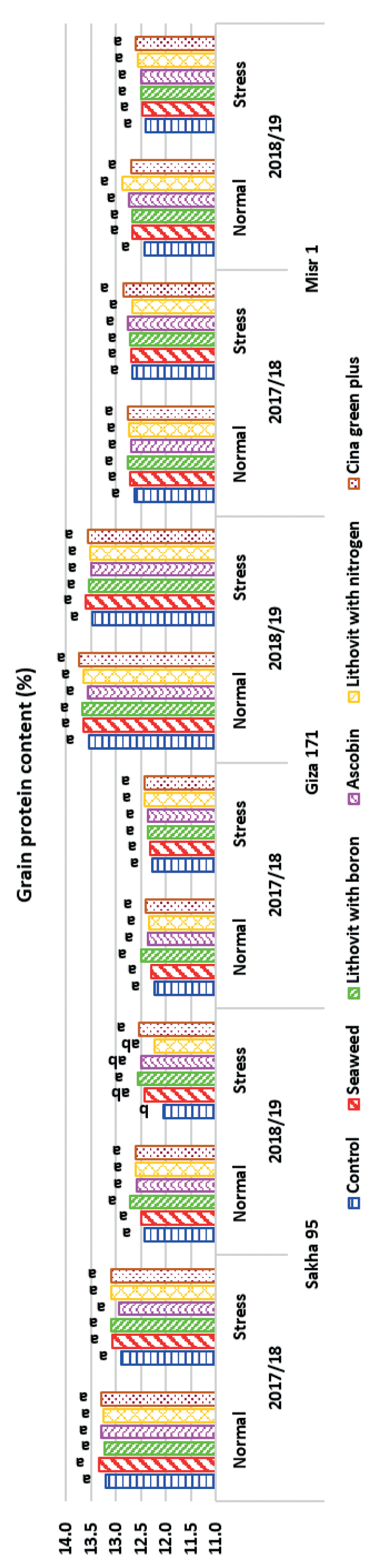
As illustrated in Fig. 10, spraying with Cina green plus generally resulted in the highest grain protein content across various conditions, surpassing the control treatment in all conditions. Additionally, Lithovit with boron application proved most effective in enhancing protein content for Sakha 95 consistently in the second season, for Giza 171 under normal irrigation in the first season, and for Misr 1 under normal irrigation in the first season. Furthermore, foliar application of Lithovit with nitrogen yielded the highest values for Misr 1 under normal irrigation in the second season. Notably, Seaweed application in the second season led to the highest protein content for Sakha 95 under normal irrigation and for Giza 171 under water stress.
Germination (%)
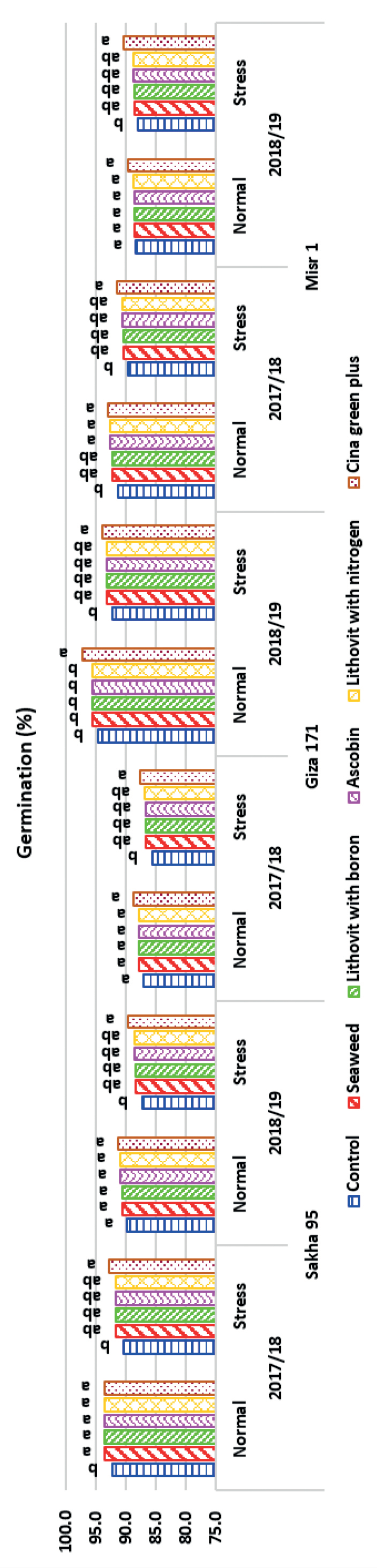
Our results in Fig. 11 show that foliar application of Cina green plus yielded the highest germination percentage for Giza 171 under water stress in the second season and Misr 1 under both water stress in the first season and normal irrigation in the second season. Additionally, Lithovit with boron application proved most effective for Sakha 95 under normal irrigation in the first season and water stress in the second season. Furthermore, spraying with Lithovit with nitrogen resulted in the highest germination rates for Giza 171 under normal irrigation in the second season, and Misr 1 under normal irrigation in the first season and water stress in the second season. Notably, Seaweed application yielded the highest germination percentage for Sakha 95 under normal irrigation in the second season, for Giza 171 under all irrigation treatments in the first season, and for Misr 1 under normal irrigation in the second season.
Fig. 3.
Influence of interaction between seasons, water management, cultivar, and foliar spray treatments on 1000-kernel weight.
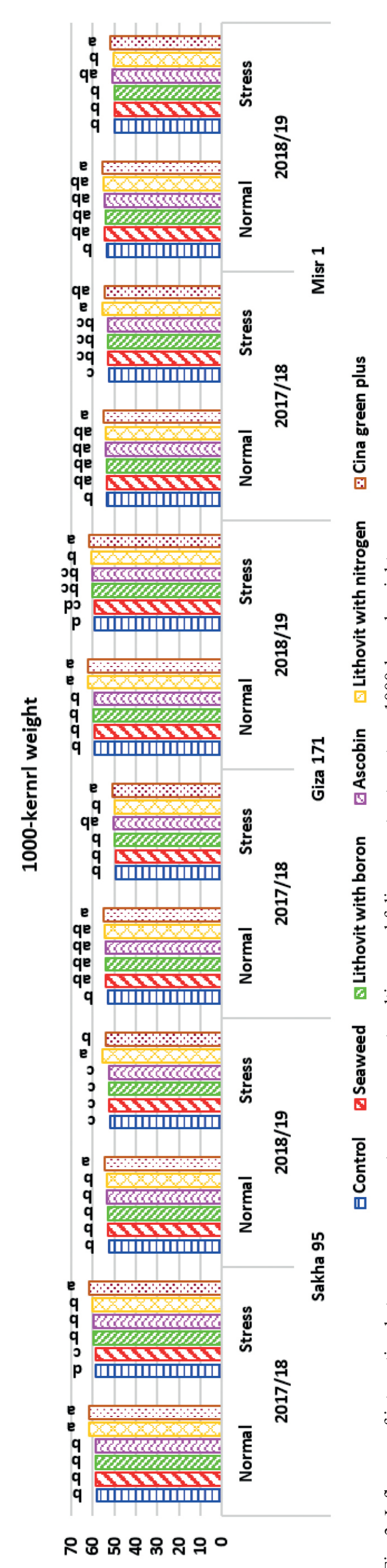
Fig. 4.
Influence of interaction between seasons, water management, cultivar, and foliar spray treatments on grain yield.
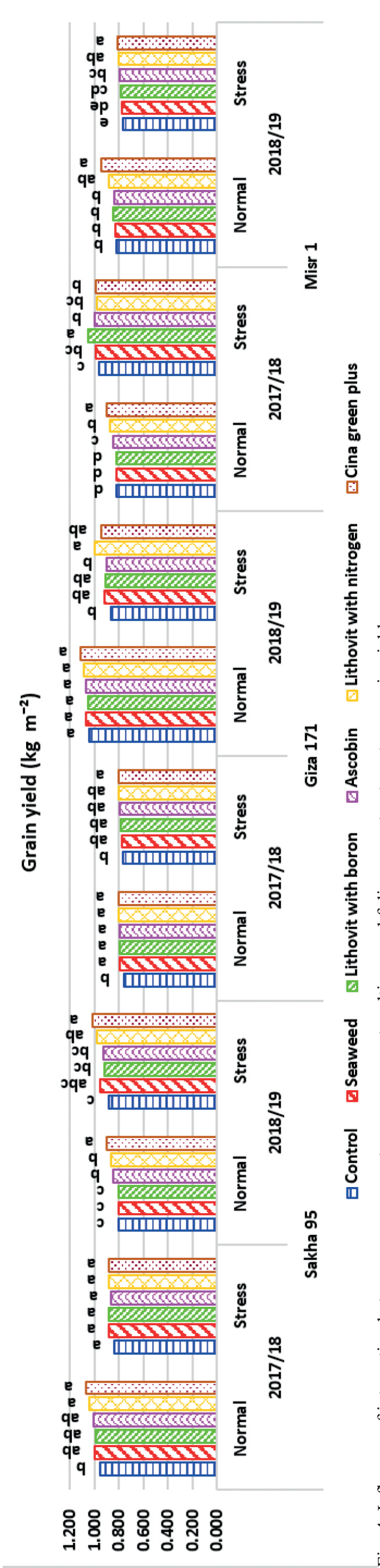
Fig. 5.
Influence of interaction between seasons, water management, cultivar, and foliar spray treatments on relative water content.
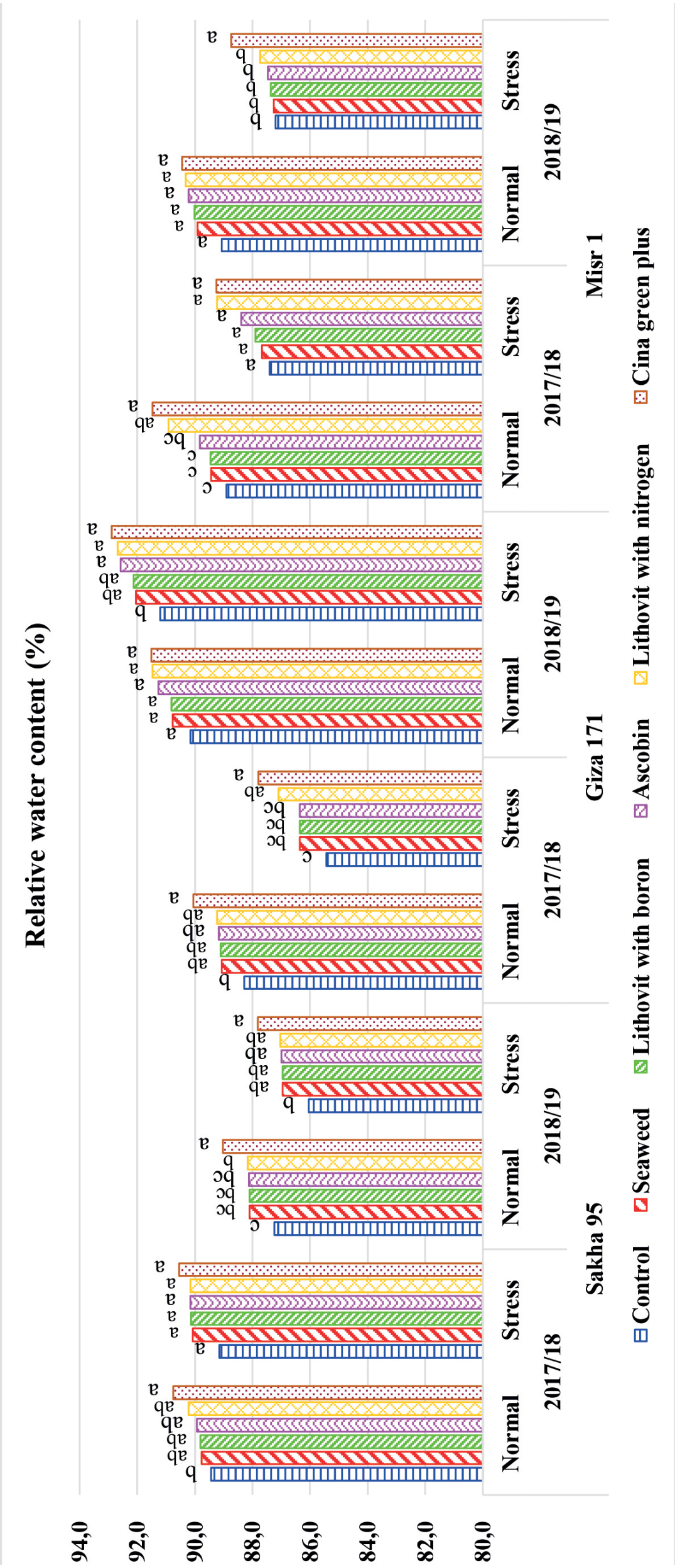
Fig. 6.
Influence of interaction between seasons, water management, cultivar, and foliar spray treatments on catalase activity.
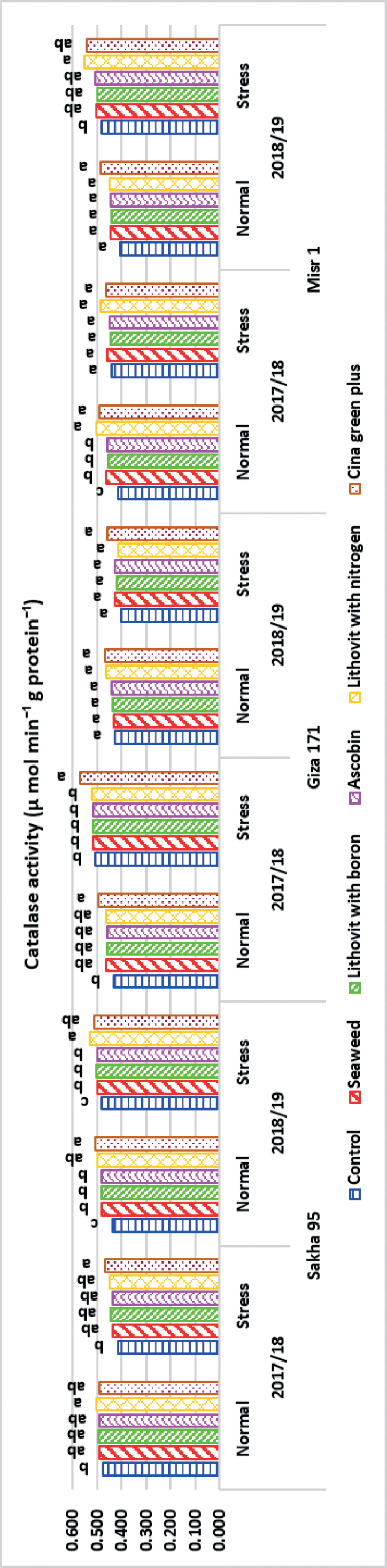
Fig. 7.
Influence of interaction between seasons, water management, cultivar, and foliar spray treatments on peroxidase activity.
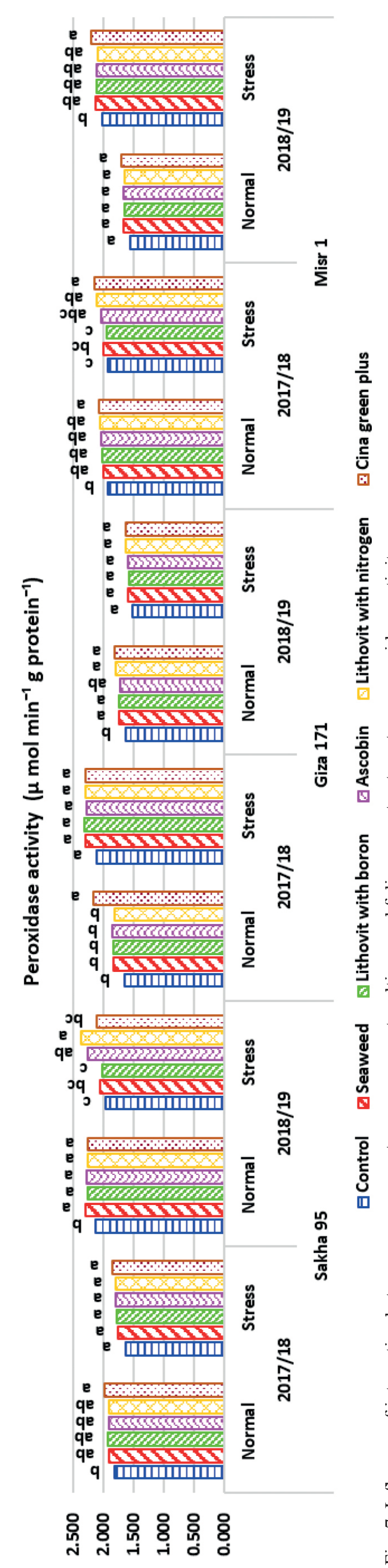
Fig. 8.
Influence of interaction between seasons, water management, cultivar, and foliar spray treatments on proline content of leaves.
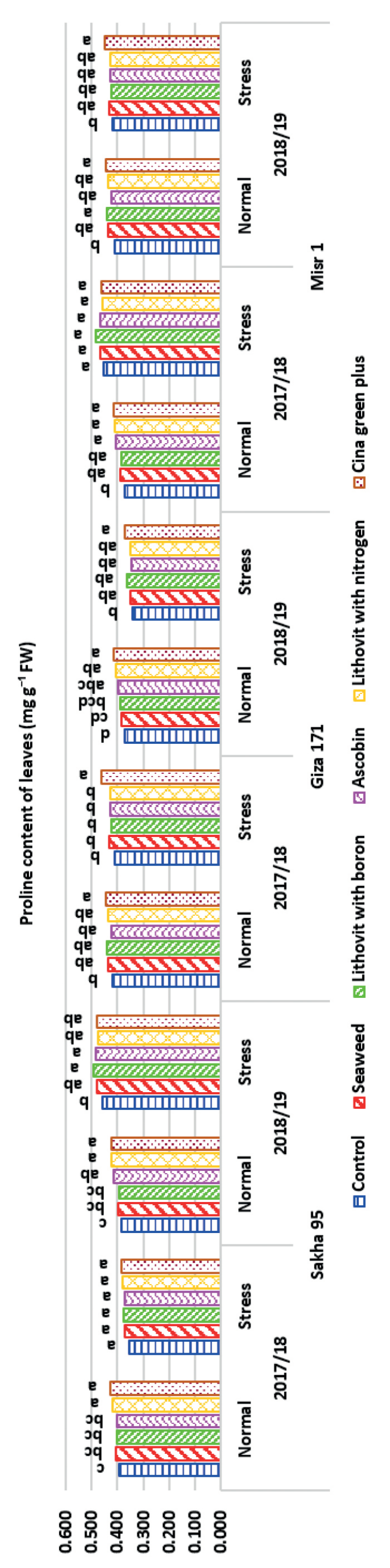
Fig. 9.
Influence of interaction between seasons, water management, cultivar, and foliar spray treatments on total chlorophyll content.
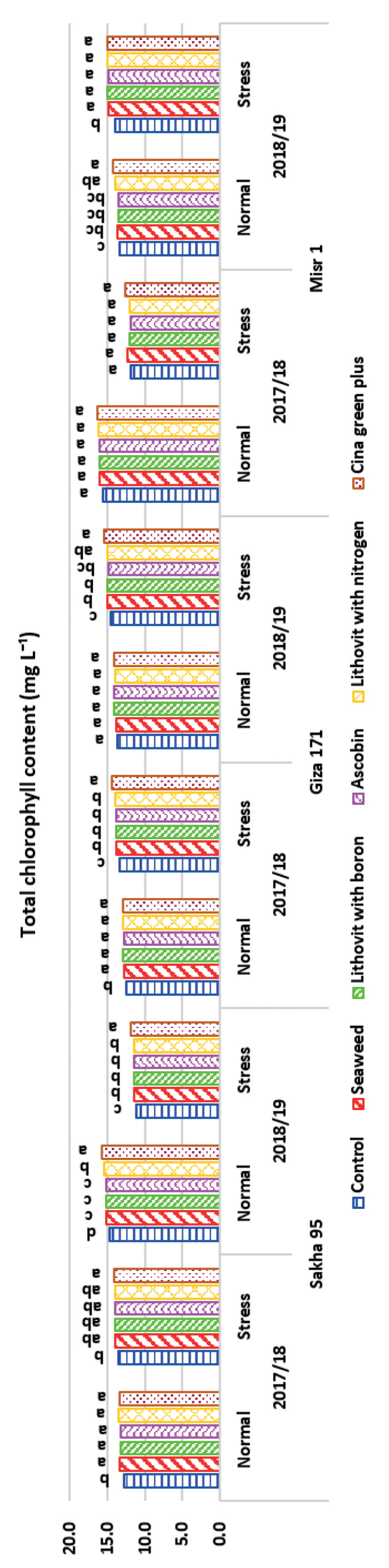
Fig. 10.
Influence of interaction between seasons, water management, cultivar, and foliar spray treatments on grain protein content.
Gluten Content (%)
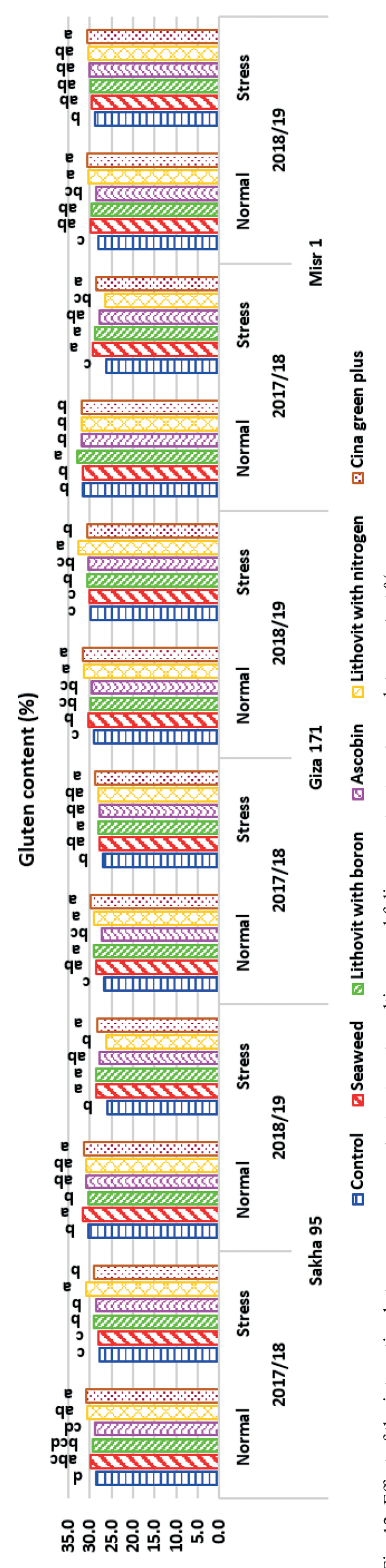
According to Fig. 12, applying Cina green plus as a foliar spray consistently resulted in the highest gluten content across various conditions, while the control treatment consistently yielded the lowest. For the no. of spikes m-2, Cina green plus again showed the most favorable results under most conditions compared to the control treatment. However, Lithovit with boron spray proved most effective for Misr 1 under normal irrigation in the first season. Additionally, spraying with Lithovit with nitrogen yielded the highest values for Sakha 95 under water stress in the first season and Giza 171 in the second season. Furthermore, applying Seaweed as a foliar spray resulted in the highest values for Sakha 95 under all irrigation treatments in the second season and for Misr 1 under water deficit stress in the first season.
Discussion
The error variances were proved to be homogeneous for the two seasons and irrigation treatments for all characters, so the combined analysis was performed across the two seasons and irrigation treatments. The study found statistically significant effects from seasons, water treatments, cultivars, and foliar sprays, indicating that these factors introduced a sufficient variation in the data [13]. The generally higher values observed for most studied traits in the 2018/19 season might be attributed to the low temperatures and high relative humidity compared to the 2017/18 season. Our results are consistent with previous results that reported a reduction in most wheat agronomic traits [31, 32]. When plants experience water stress, their cells face a build-up of osmotic pressure, which ultimately hinders their growth and ability to produce crops [33]. 1000-kernel weight, a key indicator of flour yield, is heavily influenced by post-flowering development stages and environmental factors [34]. Water stress decreases grain weight by shortening the grain filling period [35]. On the contrary, increasing in catalase and peroxidase activity, as well as proline content in wheat under water deficit stress, was confirmed. These results were confirmed by many researchers [36]. The increase in proline has been reported by many researchers during drought, and it helps plants stabilize membranes and cellular redox potential by scavenging ROS [37]. Increased proline can facilitate the maintenance of cellular osmotic potential under stress [38].
A plant’s relative water content (RWC) acts as a reliable indicator of its ability to tolerate drought in many plants [39–41]. Studies show that drought-resistant varieties are capable of maintaining higher RWC even under limited water supply. Water stress negatively impacts a plant’s water balance by increasing transpiration from stressed leaves while reducing its osmotic potential. This phenomenon has been extensively documented by many researchers [42].
Under drought conditions, chlorophyll content was decreased because of the effect of some special enzymes on chlorophyll degradation [43]. Severe drought conditions can significantly hinder nitrogen uptake in plants by limiting the rate at which nitrogen is converted into usable forms in the soil and restricting the movement of ions. Additionally, water stress reduces the water potential gradient between seeds and their surrounding environment, leading to a decrease in germination percentage [44]. These findings align with previous research reporting varying responses of wheat cultivars to germination under diverse stress conditions [45]. Notably, the Masr 1 cultivar consistently exhibited the lowest final germination percentage under stress conditions [45].
Studies have shown that Lithovit can benefit plants in several ways. It has been linked to increased CO2 levels, leading to improved photosynthesis [21]. Additionally, it contains essential nutrients that enhance chlorophyll and carotenoid production while also promoting better water movement within plants under saline conditions [20]. Research suggests similar positive effects with nano-calcium, which has been observed to improve plant growth and dry weight and mitigate the negative impacts of salinity [46, 47]. The application of Lithovit has also been linked to improvements in chlorophyll content, dry matter, and various growth parameters in tomatoes and wheat under salinity stress or natural conditions [22]. Furthermore, studies have demonstrated that the foliar application of Lithovit can enhance potato growth characteristics, tuber number, and overall yield per plant [48].
Catalase, a crucial enzyme, safeguards plant cells from oxidative damage caused by stress [49]. Foliar treatments significantly increased catalase activity compared to the control group, mitigating the harmful effects of ROS on the organelles under stress by converting destructive ROS into harmless compounds. This enzyme specifically converts H2O2 into water (H2O) and oxygen (O2). Previous research suggested that applying nano-nitrogen fertilizer can enhance various aspects of plant growth and yield [50]. This includes increases in total chlorophyll content, number of tillers per m2, number of spikelets per spike, 1000-grain weight, and both straw and grain yields. The study revealed that the Misr 1 cultivar achieved the highest levels of total chlorophyll, spike length, grain yield, and 1000-grain weight when treated with a combination of 120 kg of mineral nitrogen and 14 L of nano-nitrogen per hectare.
Conclusions
Based on the previous findings, it can be concluded that increasing nitrogen availability plays a crucial role in enhancing both nutrient efficiency and yield-related characteristics. Cina green plus foliar application and Lithovit with nitrogen could potentially enhance both the growth and yield of wheat crops, even under water stress conditions. These treatments hold promise as fertilizer options to mitigate the negative effects of water stress on wheat production.

