

Introduction
Rice (Oryza sativa L.) is one of the most widely important cereal crops belongs to Poaceae family. It has the second largest area under production following maize [1]. More than half of the world’s population depends on rice and considered a primary food crop, especially in Egypt and south East Asian countries according to FAO report [2]. The average rice production is estimated to be 500 million metric tons, and due to the increase in population, the demand is expected to rise up to 2 billion metric tons by the year 2030. Meeting current and projected global food demands necessitates a significant improvement in crop productivity, particularly on less favorable rainfed lands [2]. In recent decades, the frequency and severity of disasters in various regions of the world have been increasing due to fluctuations in the climate. The agricultural sector bears the brunt of over 83% of the negative consequences caused by drought, resulting in crop failure and reduced productivity.
Global climate changes have damaging effects on crop growth and production [3]. In this regard, there are many biotic and abiotic stress factors which significantly affect the plant growth and yield such as salinity [4- 7] and drought [8-10]. Drought stress is very harmful abiotic factor affecting agricultural production and reduces planted acreage worldwide [11-13]. Drought stress cause negative effects on all plant characters such as morphological characters [14, 15], physiological and biochemical characters [16] and anatomical characters [17]. Among crops, rice is perhaps more susceptible to water deficient and major limitation to production than other crops [18]. Drought stress has a detrimental impact on rice production, affecting various stages from seed germination to reproductive phases. Egypt relies on the Nile River in the act of essential source of agricultural water, whereas it uses about 55.5 billion cubic meters annually. The discrepancy between the requirements and the available water is about 13.5 billion cubic meters annually, this disparity is offset by formal or informal water recycling approach [19]. Most rice cultivation is located in the Nile Delta region of northern Egypt. Rice fields consume two to three times more fresh water than any other crop. Increasing rice productivity through genetically modified plants (transgenic plants) and exogenous plant growth regulators will be crucial. Exogenous application of plant growth regulators (PGR) is used to overcome water deficit negative effects in rice plants [20]. PGR are used to enhance the growth, yield and physiological traits through modifying the plant’s hormonal balance and enhancing crop tolerance against drought stress [21]. Paclobutrazol [(2RS, 3RS)- 1-(4-chlorophenyl)- 4, 4-dimethyl-2-(1H-1, 2, 4-trizol- 1-yl)-pentan-3-ol)] is a member of triazole family of plant growth regulators known as antigibberellins that impedes sterol and gibberellin biosynthesis [22] by blocking the oxidation of ent-kaurene [23], resulting in reduced amounts of active gibberellins. Triazole compounds have recently been discovered to act multi-stress protectants including drought stress of various plant species by reducing oxidative damage by increasing enzymatic antioxidants [24]. There were few studies conducted to study the effect of paclobutrazol on rice plants for mitigation water deficit stress. Hence, this study aimed to assess paclobutrazol application’s effect on the morpho-physiological, biochemical and anatomical parameters of rice var. Giza 183 under water deficit stress conditions.
Material and Methods
Field Experiment
This study was carried out at research field of Rice Research Department, Sakha Research Station, Agricultural Research Center (ARC), Giza, and laboratories of Agricultural Botany Department, Faculty of Agriculture, Kafrelsheikh University, Egypt during 2023 successive summer growing season on rice variety namely (Giza 183). The experiment was conducted in order to study the effect of paclobutrazol (PBZ) at 90 and 120 mg/L under water deficit stress on morphophysiological, biochemical and histological characters and productivity of rice. Foliar application of PBZ were applied at thirty days after transplanting (maximum tillering stage). Water deficit treatment was applied at 15 days after transplanting, irrigation every 12 days (flush irrigation) without standing water was used till harvest time and compared with normal irrigation as control. The plot was consisted of 10 rows, each row was 5 m long contained 25 hills, with 20 x 20 cm among rows. The nursery seedbed was well ploughed and dry level. Phosphorous fertilizer in the form of single super phosphate (15.5% P2O5) was added at the rate of 240 kg/ha before tillering. Nitrogen in the form of Urea (46% N) at the rate of 144 kg N/ha was applied at the recommended rate and time of application. Zinc sulphate (22% ZnSO4) at the rate of 25 kg/ha was added after puddling and before planting. The permanent field was identified and well prepared. The other usual practices were conducted as recommended in growing rice fields. Experimental design was randomizing complete block design with three replications.
Statistical Analysis
The data were analyzed by the ordinary analysis of variance (ANOVA) to test the significant of difference among irrigated treatments and paclobutrazol applications using randomized complete block design analysis. All statistical analysis was performed using analysis of variance technique by means of “costat” computer software package according to [25]. The treatment means were compared using least significant differences. The means of irrigations and paclobutrazol treatments were compared using Dancan’s letters.
Sampling, Measurements and Determination
During the experimental period, one sample was successfully taken at random for each treatment after three weeks from treatment. The following characters were studied.
Plant Growth Traits
Plant height (cm), root length (cm), number of leaves/ plant, fresh and dry weight (g/plant) of shoot and root systems (dried in an electric oven at 70ºC for 72 h), flag leaf area using leaf area meter.
Relative Water Content (RWC%)
Ten discs of fresh leaves were taken and weighted (FW), then the discs were kept in distilled water for 1 h and the turgid weight (TW) was recorded. After 24 h at 80ºC, the dry weight was recorded in the discs (DW).
RWC% was measured as follows: RWC = (FW − DW)/(TW − DW) × 100. [26]
Photosynthetic Pigments
Chlorophyll pigments (chl. a, b and total chlorophyll) concentration (µg/cm2) were determined in flag leaf using spectrophotometer according to [27].
Proline Concentration
Concentration of proline in fresh leaves was measured using the method described by [28].
Enzymes
For antioxidant enzyme assays, frozen rice leaves were ground to a fine powder with liquid nitrogen and were extracted with ice-cold 0.1M Tris-HCl buffer (pH 7.5) containing 5% (w/v) sucrose and 0.1% 2-mercaptoethanol (3:1 buffer volume/FW). The homogenate was centrifuged at 10 000 g for 20 min, at 4ºC, and the supernatant was used for enzyme activity determinations. Preparations for enzyme extraction and enzyme assay were carried out at 4ºC.
Catalase (CAT) activity was determined by monitoring the disappearance of H2O2 at 240 nm according to [29]. Peroxidase (POD) activity was measured according to the method of [30].
Anatomical Studies
For preparing sections, the leaf specimens were taken from the flag leaf from the tip of plant including the midrib. Stem pieces 4-5 mm in length were taken from 3rd internode from stem tip. The different specimens were cleaned with tap water, killed and fixed for 24 hours in formalin, acetic acid, alcohol (FAA) solution (10 ml formalin, 5 ml. glacial acetic acid, 50 ml ethyl alcohol 70% and 35 ml distilled water). Sections were mounted on slides and deparaffinized. After that, staining was accomplished with safranine, cleared in xylol and mounted in Canada balsam [31]. Analyses of stem and leaf cross-sectional images were performed using the ImageJ software program.
Results and Discussion
This study was conducted to investigate the enhancement of rice (O. sativa L.) vr. Giza 183 tolerance to water deficit stress using two concentrations of paclobutrazol (90 and 120 mg/L) across multiple aspects, including vegetative growth characteristics and yield and yield component traits. The study of plant growth characteristics included morphological, physiological, and anatomical traits.
Vegetative Growth Characteristics
Morphological Response
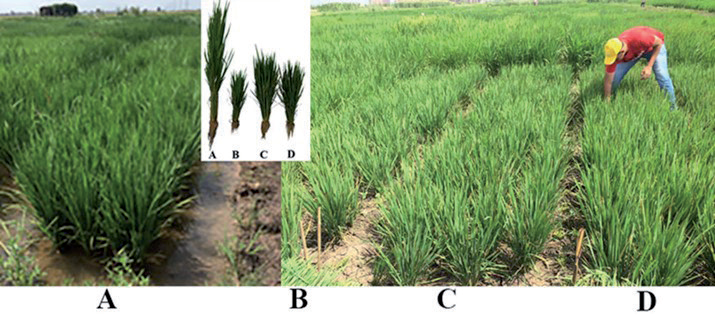
The study of morphological characteristics has been including: shoot system (plant height, flag leaf area, shoot dry weight/plant and number of tillers/plant) and root system parameters (root length, root volume, root number and root dry weight). By comparing rice plant growth under water deficit treatments with the control conditions in rice, water deficit stress significantly affected the morphological characters measured characters (Fig. 1, Tables 1, 2). PBZ concentrations (90 and 120 mg/L) improved significantly all shoot and root growth parameters under water deficit stress in comparing with water deficit treatment alone. The highest values were recorded by PBZ at the lowest concentration (90 mg/L) compared with water deficit and 120 mg/L PBZ in combination with water deficit treatments. The greater concentration of paclobutrazol caused severe dwarfism as indicated in Fig. 1. The reduction in plant growth parameters may be explained by the significant and irreversible enlargement of small daughter cells resulting from meristematic cell divisions. The inhibition of cell expansion is closely associated with the inhibition of growth, and the decreased rates of new cell production may further contribute to the suppression of internode growth. Additionally, this effect can be attributed to a decrease in cellular water content, leading to a reduction in turgor pressure within the cells. As a result, both cell enlargement and division are inhibited, ultimately leading to a decrease in overall plant growth. Water deficit stress (drought) reduce cell growth [11], photosynthesis and biomass production however, reactive oxygen species (ROS) accumulation was increased [32]. The application of paclobutrazol was found to strongly correlate with a decrease in plant height, primarily due to reduced elongation of the internodes, rather than a decrease in the number of internodes. Additionally, the uppermost internodes were observed to be shortened when paclobutrazol was applied [33].
Table 1.
Effect of paclobutrazl (PBZ) at 90 and 120 mg/L on plant height, flag leaf area, shoot dry weight and relative water content (RWC) of rice vr. GIZA 183 under water deficit stress conditions.
Fig. 1.
Effect of paclobutrazol at 90 and 120 mg/L on growth of rice vr. Giza 183. under water deficit conditions. a) control; b) water deficit; c) plants treated with 90 mg/L paclobutrazol; d) 120 mg/L paclobutrazol at weeks after transplanting.
Paclobutrazol is widely recognized as an antigibberellin compound, it acts by inhibiting the conversion of ent-kaurene to ent-kaurenoic acid in the gibberellin biosynthesis pathway through the inhibition of kaurene oxidase [22]. PBZ can reduce the harmful effects of water deficit stress by increasing root activity [34], stabilizes leaf water potential [35, 36], regulating hormones level, enzymatic and non-enzymatic antioxidants and osmoregulators [37]. Reduction in shoot and root dry weight under water deficit stress conditions was due to the decrease in photosynthesis rate which resulted in the loss of leaf area. Traits related to root length were also suggested to be correlated with maintenance of plant water status under water deficit conditions [38]. Berova and Zlatev [39] reported that PBZ treatments accelerated root formation in tomato plants.
Concerning tiller number per plant, PBZ treatments enhanced number of tillers under water deficient stress compared with water deficit treatment. A higher PBZ concentration of 120 mg/L caused further increase in the number of tillers. This increase in the number of tillers of rice with PBZ application is in agreement with the results obtained in the previous study [40]. This might be attributed to the high levels of cytokinins accompanied by low level of Indole acetic acid (IAA) which led to limitation of apical dominance.
Table 2.
Effect of PBZ at 90 and 120mg/L on root length, root volume, root thickness and root dry weight of rice vr. GIZA 183 under water deficit stress conditions
Physiological and Biochemical Responses
Chlorophyll Measurements
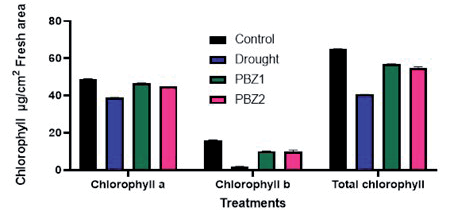
The chlorophyll content has long been recognized as a standard parameter for evaluating the photosynthesis light reaction. Data in Fig. 2 revealed that, water deficit stress treatment reduced chlorophyll contents (chl.a, chl.b and total chlorophyll) compared with control. PBZ treatments reduced the reduction in chlorophyll pigments contents. PBZ at 90 mg/L gave the highest values of chlorophyll pigments under water deficit stress. The reduction of chlorophyll’s mechanism may be due to the enhanced activity of the chlorophyll degrading enzyme (chlorophyllase) and/or disruption of the altra-fine structure of chloroplast and pigment-protein complex instability, which leads to oxidation and decreased the concentration of chlorophyll. Chlorophyll pigments were higher in Camelina sativa L. plants treated with PBZ [34]. The increase in chlorophyll content in the treated rice plants with PBZ might be due to the decrease in reactive oxygen species (RPS) and the changes of carotenoids and ascorbate levels. Plants treated with PBZ synthesized more cytokinin, which in turn enhanced chloroplast differentiation, chlorophyll biosynthesis, and prevented chlorophyll degradation [41]. Also, triazoles led to stimulate cytokinin synthesis and that enhance chloroplast differentiation, chlorophyll biosynthesis and prevent chlorophyll degradation. Enhancing endogenous levels of cytokinins promote chlorophyll formation and delay leaf senescence.
Proline Contents
The average response of proline levels of rice plants variety GIZA 183 to drought stress has a higher score than normal conditions (Fig. 3). PBZ at both concentrations reduced proline contents under water deficit stress conditions compared with water deficit treatment alone (drought). Water deficit stress is a trigger for plants to increase proline accumulation [42]. Proline act as osmotic adjustment (osmoregulators or osmolytes) protecting cell turgor under drought stress. Proline can be useful for maintaining the integrity of cell membranes and also maintaining the stability of enzymes and proteins [43]. Accumulation of proline has a role in reducing the levels of reactive oxygen species (ROS) such as H2O2, the increase in ROS under water deficit stress causes cell death. Moreover, accumulation of proline under water deficit stress can be used in cell walls hardening to maintain cell resistance [13].
Relative Water Content (RWC %)
Relative water content (RWC %) values were reduced under water deficient treatment in compared with control (Table 1). Application of PBZ at both concentrations decreased the reduction in RWC% under water deficit stress. The accumulation of proline could possibly play a protection role apart from osmoregulation during drought stress. Increasing osmotic pressure is due to the highly hygroscopic nature of proline. PBZ increases the survival rate of plants under water deficit stress through many physiological responses. A reduction in the rate of transpiration (due to reduction in leaf area), increased diffusive resistance, alleviating reduction in water potential and increased relative water content [44].
Fig. 3.
Proline leaf contents of rice vr. GIZA 183 as affected by paclobutrazol (PBZ) concentrations (90 and 120 mg/L) treatment under water deficit stress conditions.
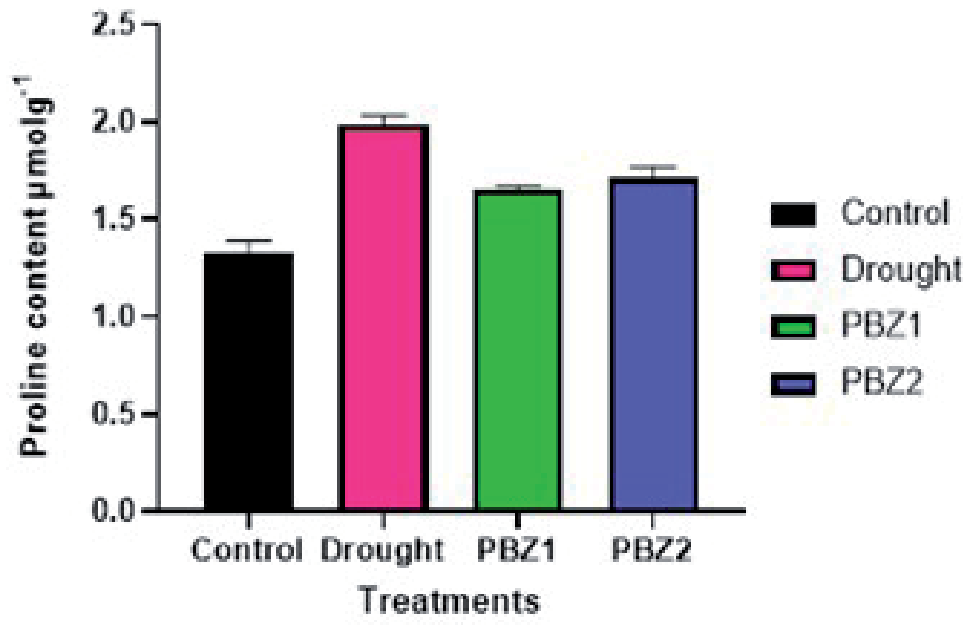
Fig. 4.
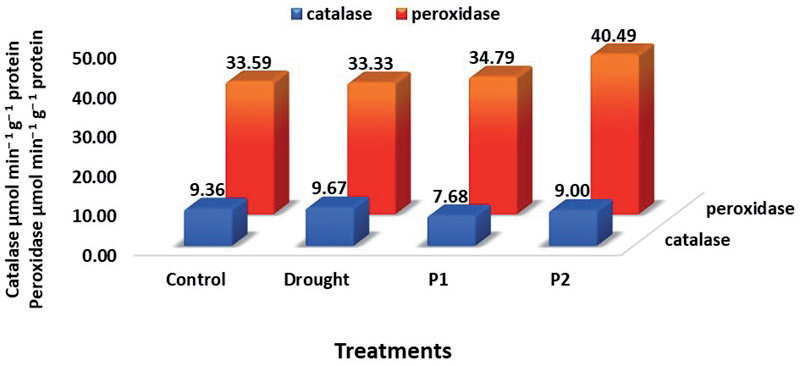
Antioxidant enzymes (CAT and POD) of rice vr. GIZA 183 as affected by paclobutrazol (PBZ) concentrations (90 and 120 mg/L) treatment under water deficit stress conditions.
Antioxidant Enzyme
Data in Fig. 4 cleared that, insignificant differences were detected between water deficit and well-irrigated treatments in catalase (CAT) and peroxidase (POD) activity. PBZ concentrations increased CAT and POD under water deficit stress. The highest values of POD were achieved by application of PBZ at 120 mg/L. Plants possess antioxidant defence system as a protection against oxidative damage [45]. It comprises enzymatic and non-enzymatic antioxidants, the enzymatic antioxidants are catalase (CAT), peroxidase (POD), polyphenol-oxidase (PPO), ect. The enhancement in the expression of antioxidative system can advance tolerance against water deficit stress and it can be a strategy against oxidative stress and increase drought tolerance in rice [46, 47]. CAT directly catalyses the dismutation of H2O2 into H2O and O2 [48]. Under water deficit stress, CAT activity is heterogeneous, and can increase, decrease or remain unchanged [13]. POD is a great scavenger of reactive oxygen species (ROS) and produces related compounds like lignin, guaiacol and payragallol that help as electron donor for scavenging H2O2. Many studies indicated that POD level rises under water deficit conditions in rice plants. Polyphenol-oxidase (PPO) is a one of enzyme related to phenolic compound as potentially protective factors against water deficit stress [12].
Anatomical Responses
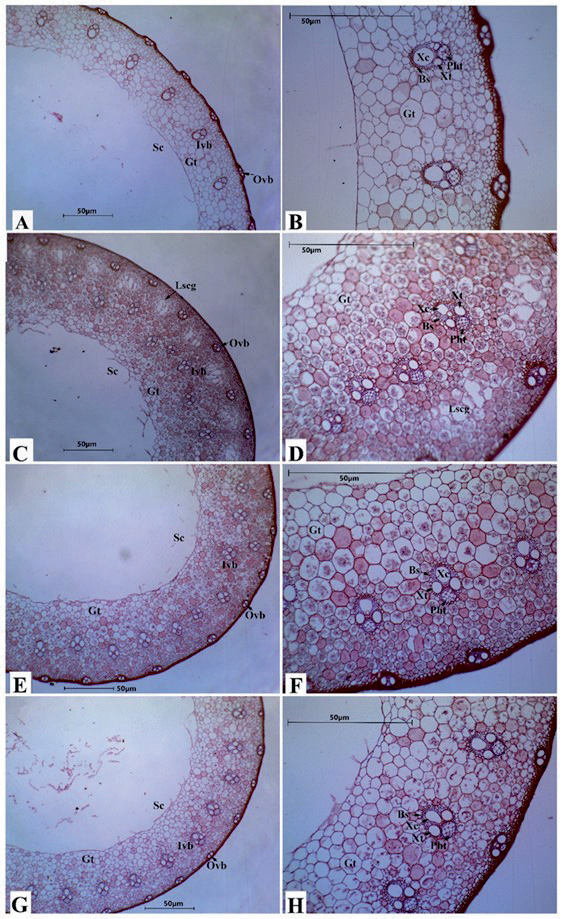
Internal structure of stem and leaf blade of rice are similar to other monocotyledonous plants. The stem structure of rice as seen in transverse sections consists of the epidermis, ground tissue and vascular bundles. Data illustrated in Fig. 5 and presented in Table 3 showed that water deficit stress treatment significantly increased stem ground tissue thickness compared with the control. This modification may be attributed to radial expansion of cells due to reduced endogenous GA activities in response to the treatment. Application of GA limits the extent of radial expansion of plant organs. Cell shape alterations are apparently caused by a more longitudinal orientation of cellulose microfbrils being deposited in the cell walls, preventing expansion parallel to the these microfbrils but allowing expansion perpendicular to them [49]. Under water deficit stress, the stressed rice plants has narrow and smooth external stem surface while stem surface in control plants were wider and undulate external surface. Intensively stained stem ground cells with safranine under water deficit stress condition were noticed. These may be due to the increase in total soluble phenolic compound and other metabolites [50]. Moreover, some local light-stained cell groups (LSCG), which seem to be big and disrupted cells were found in stem ground tissue under water stress (Fig. 6(c,d)). Local light-stained cell groups nearly invisible in PBZ treatments under water deficit condition. Across treatments, water deficit with narrow stem cross-sectional had thicker stem ground tissue, larger metaxylem vessels and phloem tissue thickness. Insignificant reduction of vascular bundle dimensions (thick and wides) was found under water deficit compared with well-irrigated treatment. Under water deficit stress, protoxylem vessels still exists, whereas, they disappear by exposing to well-irrigated plants (control). These may be contributed to water deficit stress alters tissues development.
Data illustrated in Table 3 indicated that, ground tissue thickness values were significantly reduced by PBZ concentrations under water deficit compared with control. Insignificant differences in phloem tissue thickness were noticed by application of PBZ concentrations. Cortical fibers thickness values were significantly increased by PBZ in combination with WD compared with water deficit treatment. Sibounheuang et al. [51] reported that water deficit was associated with greater stem area and larger stem xylem diameter in rice cultivars. Plant tissues responses to water deficit stress depend on physiological characteristics of cell components and anatomical properties, which reduces the adverse effects of water deficit. The leaf structure of rice as seen in transverse sections consists of lower and upper epidermis, mesophyll tissue and vascular bundles (Fig. 5). Data illustrated in Fig. 6 and presented in Table 4 indicated that rice leaves had a higher xylem area and wider midrib cross section under water deficit stress incubation with PBZ concentrations. Significant correlation between midrib cross-sections area and water deficit treatment was observed. Leaf midrib cross sections seem to be dome-shaped under water deficit stress treatments, whereas they are triangle-shaped under full irrigated treatment (control). Mesophyll tissue thickness was defined as leaf blade thickness without midrib, upper and lower epidermis. Mesophyll tissue thickness, wides and thickness of vascular bundles, and diameters of meta-xylem vessels were significantly increased by the interaction between PBZ and water deficit stress. Increasing in mesophyll tissue thickness is attributed to an increase in number and size of chlorenchyma cells in potato plants [49].
Fig. 5.
Light micrographs illustrating rice stem transverse sections as affected by paclobutrazol (PBZ) treatments under water deficit stress, A and B: control, C and D: water deficit stress, E and F: 90 mg/L PBZ, G and H: 120 mg/L PBZ, inner vascular bundle (IVB), outer vascular bundle (OVB), metaxylem (MX), protoxylem (PX), protoxylematic lacuna (PL), phloem (PH), bundle sheath (BS), sclerenchyma (SC), stem cavity (SC), ground tissue (GT), epidermis (E), cortical fibres.
PBZ reduced leaf area and increased leaf thickness and epicuticular wax. Increasing in leaf thickness contributed to wider mesophyll tissues [52]. These may be due to induction of additional layers of palisade parenchyma tissue, although individual cells were shorter with small diameter and more tightly packed in chrysanthemum leaf [52] and in Syzygium campanulatum leaf [53]. These modifications may be attributed to radial expansion of cells due to reduced endogenous GA activities in response to PBZ treatment.
Table 3.
Effect of PBZ at 90 and 120mg/L on stem anatomical parameters of rice vr. GIZA 183 under water deficit stress conditions.
Fig. 6.
Light micrographs illustrating rice leaf transverse sections as affected by paclobutrazol (PBZ) treatments under water deficit stress, A and B: control, C and D: water deficit stress, E and F: 90 mg/L PBZ, G and H: 120 mg/L PBZ, bulliform or motor cells (BF) upper epidermis (UE), lower epidermis (LE), vascular bundle (VB), mesophyll tissue (MT), metaxylem (MX), protoxylem (PX), protoxylematic lacuna (PL), phloem (PH), bundle sheath (BS), collenchyma (CC).
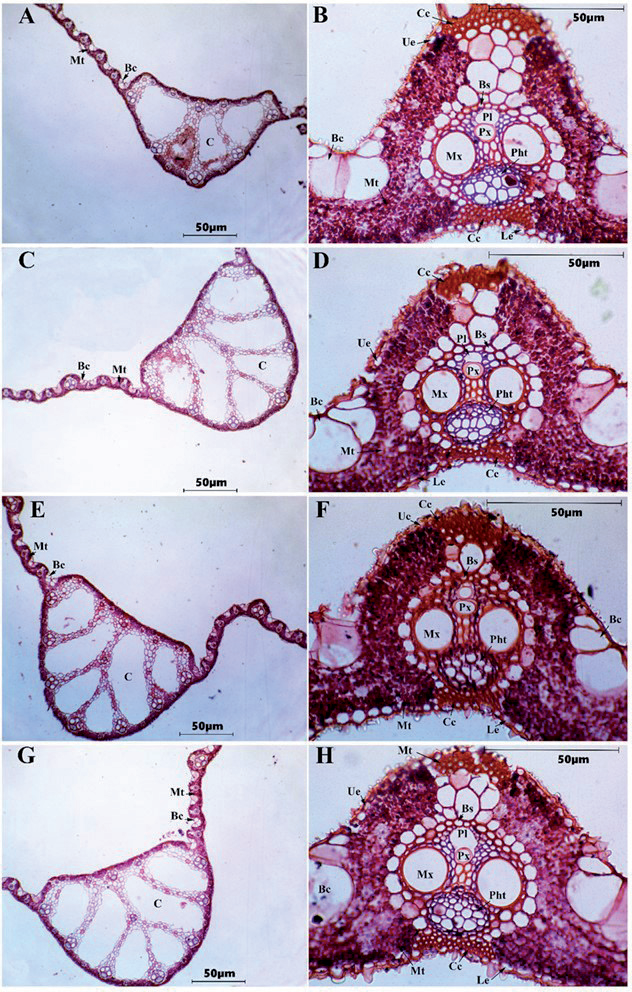
Table 4.
Effect of PBZ at 90 and 120mg/L on leaf anatomical parameters of rice vr. GIZA 183 under water deficit stress conditions.
Yield and Yield Component Characteristics
Data presented in Table 5 revealed that water deficit stress treatment was significantly decreased panicle length, panicle weight, number of filled grains per plant and 1000 grain weight compared with control. On the other hand, number of unfilled grains per plant value was increased under water deficit stress conditions. Higher values of panicle length, panicle weight, number of filled grains per plant and 1000 grain weight were recorded by PBZ concentrations under water deficit stress conditions. The highest values were found by 90 mg/L PBZ. Increasing in yield and yield component by PBZ treatments under water deficit contributed to increase in chlorophyll contents, which led to enhancement of photosynthesis rate. Reduction of yield and yield component contributed to decrease in photosynthesis [54, 55]. Several factors are involved in the reducing of photosynthesis rate, such as stomatal closure, decline of turgor pressure, reduction in gas exchange and decrease in CO2 reduction, ultimately damaging photosynthetic apparatus [56]. Water deficient stress damages the normal functions of photosystem I (PSI) and photosystem II (PSII) [6]. On the other side, rice plants treated with paclobutrazol allocated more photosynthates for seed development compared to control plants [57]. PBZ treatments increase the content of N, P, K, Ca, Mg, B, and Zn in leaves of pear tree [58]. Rice yield and yield component under water deficit stress is strangely related to the process of the dry matter portioning and temporal biomass distribution [59]. The highest values of unfilled grain% were recorded by water deficit stress, which attributed to the diverse effect of pollination and fertilization and causes embryo abortion. This effect might be due to reduce in translocation of assimilates towards reproductive organs [60], moreover, PBZ reduces the toxicity derived from drought stress [61].
PBZ treatments relatively overcome the pad effects of water deficit stress may be due to improve of vegetative growth parameters, chlorophyll pigment content, osmolytes or osmorgulators (proline) and anatomical traits. Moreover, PBZ promote fruit setting in many crops, inhibiting the biosynthesis of gibberellin and early fruit set [62].
Conclusion and Future Prospects
Obtained results indicated that water deficit stress reduced growth and productivity parameters of rice (Oryza sativa L.) vr. GIZA 183. Using paclobutrazol (PBZ) at 90 and 120 mg/L under water deficit stress condition partially mitigate the harmful effects of water stress in rice. PBZ at 90 mg/L gave the highest values of growth, chlorophyll and proline contents, anatomical and productivity parameters. These results recommend spraying paclobutrazol at a concentration of 90 mg/L 30 Days after rice transplanting to improve the growth characteristics and productivity. Mechanism of PBZ effects on chlorophyll content, chloroplast ultra-structure and photosynthetic performance of rice under water deficit stress are not well understood and needs advance research. Moreover, the effects of paclobutrazol in proline content under water deficit stress condition is still unclear. Therefore, the aforementioned gap shows still further study is need to increase our understanding about the effect of paclobutrazol on the mechanism of plant histo-physiology and water deficit stress condition for succeeding crops.
Table 5.
Effect of PBZ at 90 and 120mg/L on panicle length, panicle weight, number of unfilled grain/plants, number of filled grains/plant and 1000 grain weight of rice vr. GIZA 183 on under water deficit stress conditions.

