

Introduction
‘Going Green’ has become a new normal in today’s high industrialization and technological advancement. However, the issues related to the deterioration of ecology have driven the masses to seriously consider environmental degradation and urge to save Mother Earth from further destruction. In the past years, people have realized the need to contribute to the environment’s healing process to save the planet for themselves and future generations. As a result, people have realized the need to shift their preference from products harmful to nature, soil, climate and environment to those that are more organic, not formed using chemicals and do not add to environmental pollution and further degradation.
In the early 1960s and 1970s, western countries realized the urgent need to protect ecology for present and future generations. As a result, numerous research studies were conducted by researchers of developed nations predicting the ecological purchase behavior of customers [1]. Over some time, the environmental awareness of Indian business organizations and corporations has risen, and they have modified their production processes and manufacturing operations to promote sustainability and support eco-friendly practices [2]. Subsequently, the consumers of developing nations also became aware of the need to adopt environmentally friendly policies and use green products to meet routine and other needs [3]. The current study, therefore, aims to forecast Indian consumers’ green buying intentions and behavior. First, it is significant to examine the antecedents predicting the green buying behavior of Indian customers. India is one of the nations approaching growth with incredible speed responsible for the fast industry growth and technology usage, resulting in environmental destruction. Secondly, as per the report published by the World Health Organization in May 2016, thirty of the top 100 polluting cities in the world are located in India. Also, consumers in India have been assessed to be more environmentally conscious than those residing in western nations [4]. Consequently, it has become inevitable to unearth the green attitude, intentions, and actual purchase behavior of Indian consumers concerning green products.
During the pandemic, the awareness of the masses regarding their health and the environment’s well-being has enhanced manifolds. The cultured population sector is believed to have realized the importance of personal and environmental well-being. During the first lockdown in India in March 2020, people were overwhelmed with the clean air and pollution-free environment and realized that during normalcy, they were inhaling the most dangerous air mixed with hazardous pollutants. The high death rate during the second wave in India made people realize that good health and well-being is the most precious asset to invest in. As a result, consumers have shifted their buying preferences towards eco-friendly products which do not harm the environment and are suitable for general well-being.
The researchers have enriched the literature by providing considerable empirical evidence to examine buying intentions of consumers towards green IT products [5], green vehicles [6] and green cosmetic products [7]. However, there are few research studies conducted by researchers examining consumers’ attitudes toward green personal care products [8]. The earlier research outlined the influence of health consciousness and environment-related antecedents on purchase intentions of green textile products [9]. The association between health consciousness and the green purchasing behavior of consumers has been investigated by previous researchers in the organic food industry [10], and previous authors have predicted a connection between concern for the environment and green purchase patterns in available eco-friendly products [11-13] but the studies corroborating the influence of health consciousness and environmental concern on customers’ attitude concerning consumers’ purchasing behavior concerning green personal care products are scarce especially in the emerging economies.
The present study envisages elucidating the sustainability behavior of millennials in the Indian context by adopting the Theory of Planned Behavior (TPB) as a theoretical underpinning. In terms of environmental consciousness, the attitude of millennials is different from a wider population [14], imbibing higher acceptability for going green [15] and readiness to adopt pro-environmental things [16]. Moreover, nearly one-third of India’s working population comprises millennials [17] who are more educated and aware of green products. Therefore, researchers in developed countries have predicted young millennials’ green behavior and attitudes toward buying green products [18]. Similarly, research studies in India have corroborated the attitude of young millennials and predicted their buying behavior towards the general category of green products [1]. As a result, few studies in the literature particularly examine the purchasing intentions and behavior of millennials residing in India concerning green personal care products.
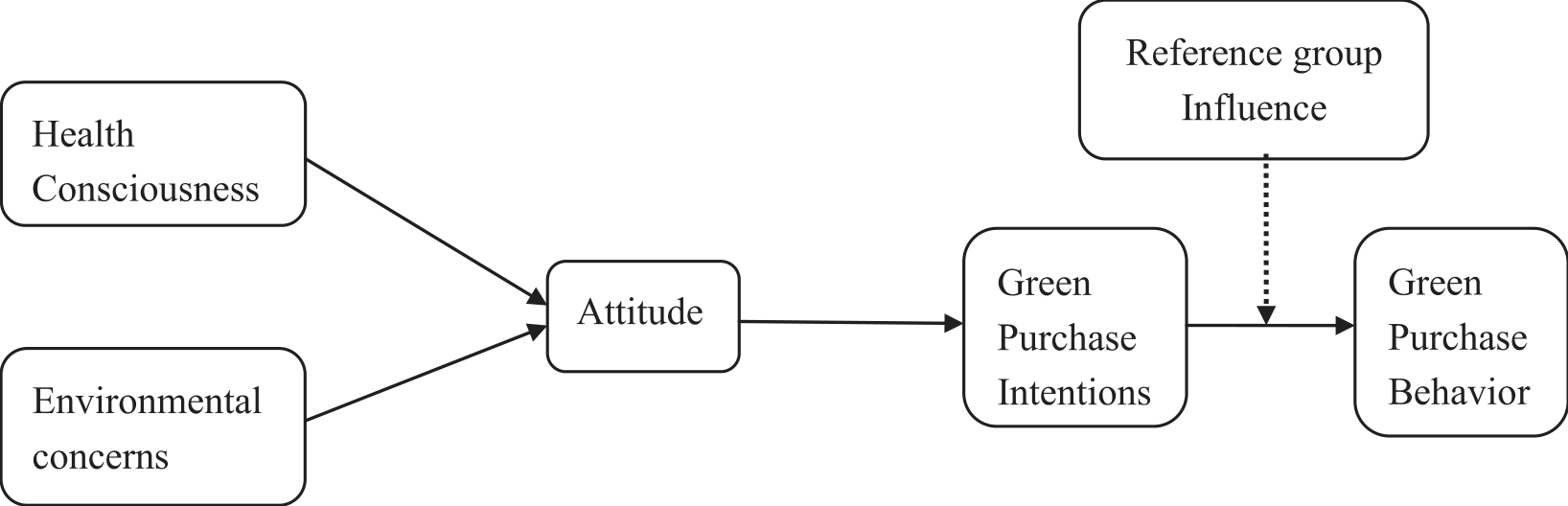
Therefore, our study intends to fill this gap with self-reporting data from Indian millennials and aims to gather evidence, based on TPB and TRA model, by exploring the effect of consumers’ psychographic characteristics (health consciousness and environmental concern) on attitude, thereby determining green purchase behavior and the role of reference group as a moderator between green purchase intentions and behavior of Indian millennial customers.
Therefore, the research objectives are:
1) To investigate the effect of health consciousness on the green purchase behavior of customers (through attitude and intentions).
2) To explore the influence of environmental concern on the green purchase behavior of customers (through attitude and intentions).
3) To find the moderating role of reference group influence between green purchase intentions and green purchase behavior of customers.
The present research paper is structured as follows: Introduction has been described in Section 1, and theoretical grounding, conceptual framework and hypotheses development in Section 2. Section 3 further gives details of the research methodology by giving information about the study population, sample size, method of data collection and construction of research instrument. Then, section 4 shows the data analysis and discussion is presented in Section 5. After that, Section 6 depicts managerial implications, followed by a conclusion in Section 7. At last, directions for future research have been presented in Section 8 and limitations of the study in Section 9.
Literature Review and Hypotheses Development
Health Consciousness and Attitudes
Health consciousness is an individual’s perception, awareness, knowledge, and motivation toward health-related issues. It determines the extent to which health-related factors determine the actions and inactions of an individual. While passing through the deadly covid era, people have realized the importance of being in good health and have started valuing well-being as the essential attribute of an individual’s life. Researchers in the past have outlined the effect of numerous health dimensions on consumers’ buying behavior, such as health benefits, health hazards, health alertness, health involvement, personal health responsibility, physical fitness, healthy eating, health information seeking, health motivation, health value, healthy lifestyle, health actions, health concern, healthy diet, health knowledge and health self-monitoring and thereby, revealed the significant positive influence of health-related characteristics on buying behavior of consumers concerning green products [9, 19-21]. Therefore, those who care about their health are more inclined to buy environmentally friendly goods and services.
H1: Health consciousness significantly impacts consumers’ attitudes toward green personal care products.
Environmental Concerns and Attitudes
An individual’s concern about environmental issues makes him an ecologically conscious consumer. The environmental-related tenets such as environmental concern, knowledge, awareness, consciousness and activism are detected in consumers as a part of their psychographics. These factors make consumers worried for environment and motivate them to contribute to the reduction of environmental deterioration and add to the healing process of the environment. Previous researchers have studied environment related constructs to corroborate their bearings on the green buying behavior of customers. The extant literature related to green consumer behavior of consumers in a global context has evidenced environmental concern as a vital tenet fostering the green attitude concerning green purchase intention and behavior [11-13]. Therefore, it can be proposed that a consumer concerned about improving the environment is likelier to exhibit green buying behavior and indulge in purchasing green products and services.
H2: Environmental concerns significantly impact consumers’ attitudes toward green personal care products.
Theory of Reasoned Action (TRA) and Theory of Planned Behavior (TPB)
TRA and TPB are the two most popular theories, frequently used by researchers, which elucidate and predict human behavior. Initially, TRA [22] states that a person’s attitude and subjective norms determine purchasing intentions, leading to actual purchasing behavior. The author extended this theory by adding one more factor, i.e., perceived behavioral control [23]. Accordingly, three elements- attitude, subjective norms, and perceived behavioral control determine consumers’ intentions of buying and ultimately result in exhibiting actual buying behavior. Furthermore, the available literature covers several research projects by researchers looking at the green purchasing habits of consumers globally by incorporating various additional constructs in TPB and TRA models [24, 25]. Therefore, the present study has worked on TRA and TPB models by adding two constructs, health consciousness and environmental concern, to explore the effect on consumers’ attitudes, which determines buying intentions and actual buying behavior of millennials concerning green personal care products.
Attitude and Green Purchase Intention
Attitude represents the personal views, the way a person feels, think and behave. The specific evaluation by a person concerning the usage of a particular product or enjoyment of a service is reflected by his attitude [26]. The likelihood of exhibiting a particular behavior increases with a favorable attitude about that person’s behavior [27]. Numerous empirical research studies on green buying behavior in a global context have demonstrated how the green buying intention of the consumer is significantly affected by customers’ attitudes regarding various categories of green products [28]. The researcher highlighted the positive impact of attitude on consumers’ visit intention for eco-friendly hotels [29]. In the green cosmetic industry, researchers have corroborated a significant impact of green attitudes on buying intentions of green cosmetic users [30]. Regarding green skin care products, the researchers have found a positive impact of the consumer’s attitude on their buying intentions [31, 32]. Therefore, we propose a positive association between consumers’ attitudes and buying intentions concerning green personal care products.
H3: Attitude significantly impacts consumers’ intentions for purchasing green personal care products.
Green Purchase Intention and Behavior
Ajzen [33] states that an intention to buy is the necessary precursor for actual behavior. Green purchase intention is the customers’ desire to buy eco-friendly products, this intention is converted into green behavior when such products are actually purchased and used by them. Global researchers extensively applied this postulate while conducting their empirical research studies about various green products such as beauty, skincare, cosmetic and make-up products, convenience and personal care products and organic and herbal products. As a result, past researchers have elucidated a worthwhile association between green purchase intentions and the green purchase behavior of consumers [28]. Furthermore, a significant connection has been determined between purchase intentions and purchase behavior concerning green personal care products [31]. Therefore, the authors explore the said association in a developing economy context. Hence, the proposed hypothesis is as follows:
H4: Green purchase intentions significantly impact consumers’ green purchase behavior regarding personal care products.
Reference Group Influence
As per the social influence theory, an individual’s behavior is undoubtedly predicted by the perception and choice criteria of the persons close to him and among whom he spends his maximum time. This group is referred to as a reference group which includes an individual’s social group, peer group, parents, family members, relatives and friends. The tastes, likings and preferences of reference groups largely mold the preferences and attitudes of consumers. This is true in case of consumption of green products also as the customers perceive social and peer pressure to consume green products to meet their everyday needs. The research studies conducted by researchers in the past found that consumers’ reference group [34], social group [35, 36], peer group [37-39] and parents [39] significantly impact their purchase intentions and behavior about green products. However, the researchers attempt to predict the effect of reference group influence on customers’ purchase behavior and to find its influence as a moderating factor between green buying intentions and the behavior of Indian millennials. As the millennials are concerned and aware of the environmental issues and environmental benefits of using green products, the present study endeavors to find whether the influence and pressure of social groups strengthen the association and reduce the gap between intention and behavior and results in actual buying of green products by consumers. Therefore, it is proposed that the reference group influence plays the role of a moderator and is likely to convert the purchase intention of green customers into actual behavior.
H5: Reference group influence moderates the connection between green purchase intentions and the behavior of consumers.
Material and Methods
Data Collection and Sampling Procedure
The authors employed a questionnaire as a research instrument to gather primary data from Indian millennials. The researchers prepared a Google form and distributed it among target respondents using online mode to collect primary data. A pilot survey was carried out by administering the questionnaire to 30 respondents to pre-test the questionnaire before final data collection. A few changes were made to the questionnaire to make it more straightforward from the respondents’ point of view based on their suggestions. The study’s target population is the 24 to 40 years old millennials born between 1981 and 1996. They are more likely to understand the necessity and importance of engaging in pro-environmental consumerism since millennials in India are more educated than prior generations and are more conscious of environmental challenges [40]. As a result, the researchers have limited their focus to millennials in the setting of India. Indian millennials play a huge role in buying decisions [41]. According to Fry [42], millennials influence the buying decisions of households directly and indirectly. Moreover, Cheah and Phau [43] argued that the young sample is always reliable while conducting such research studies. Hence, a purposive-cum-random sampling method was adopted.
According to the SRS (Sample Registration System) Report published on population structure based on Census 2011, 275,149,600 people fall into the 24 to 40 age bracket. Therefore, this has been used as the study population to determine the appropriate sample size. For determining the sample size, the Raosoft sample size calculator, available on the Raosoft website, has been used, with a 5% margin of error and a 95% confidence level, which works out to be 385. However, 402 respondents’ primary data were subjected to empirical analysis.
Measures
The research instrument incorporates two sections, i.e., the questionnaire used to collect first-hand data. Section 1 relates to collecting the demographic profile of respondents. Section 2 consists of 21 statements asking for responses on a 7-point Likert scale. In addition, there are three statements for health consciousness, 4 for environmental concern, 4 for reference group influence, 3 for attitude, 3 for green purchase intentions and 4 for consumers’ green purchase behavior. The constructs, variables, and sources of the statements utilized in the research instrument, which were taken from earlier research studies, are detailed in the table below.
Table 1.
Measures.
Results and Discussion
Descriptive Analysis
The descriptive statistics find exposition in detail in Table 2. It reveals that two-thirds of the surveyed respondents are females, and one-half of respondents are less than 30 years of age. On the other hand, 60% of respondents are graduates or have higher academic qualifications. The millennials who are still students contribute one-third of respondents, busy in service, business and professionals 56%. It highlights that homemakers are still less attracted to using green personal care products, which throws light on this gap that marketers can fill in their future moves.
Moreover, 46% of respondents have a monthly income less than Rs 20000, whereas those with a monthly income higher than Rs 100000 are only 8%. Therefore, it shows that the higher-income Indian millennials are not consuming green personal care products for their routine needs. Also, two-thirds of respondents are unmarried. Therefore, the descriptive statistics corroborate that female, unmarried and working respondents consume more green personal care products. In contrast, homemakers and higher income group respondents still need to be tapped by manufacturers and marketers of green personal care products.
Measurement Model Assessments
This research analyzed the outer model specifications using internal reliability and convergent validity checking for the conceptual framework. The PLS-SEM approach was considered to analyze the same. It was essential to check the reliability of the data. For this, Cronbach’s Alpha and Composite Reliability (CR) have been utilized, where the threshold limit of above 0.70 signifies that the data is reliable [53-55]. The Average Variance Extracted (AVE) score that should be higher than 0.50 for significant constructs of the conceptual framework reveals that the convergent validity of the model has been accepted [56, 57]. The factor loadings of each item, Cronbach’s Alpha and CR values of all constructs have been presented in Table 3.
Table 2.
Demographic statistics of the sampled population.
Table 3.
An Assessment of Measurement Model.
Structural Model Assessment
As suggested, structural model assessments help determine the connections between the endogenous and exogenous factors of the conceptual model [54]. This research study used bootstrapping with 5000 bootstraps with no change to arrive at the p-values for testing the hypothesis [55]. Furthermore, the constructs’ connection and predictive relevance were investigated [54]. This analysis has been executed through 5000 bootstraps without any change in the sign for finding the estimated p-values for the hypothesis [55]. The hypotheses testing was performed, and to determine the p values and relevance of path coefficients, bootstrapping with 5000 subsamples was performed. All the significance values were obtained on p<0.05. For this purpose, the first-order model was checked, as explained in Table 4 and Fig. 2.
Table 4 discusses the path relationships and hypotheses that suggest that green purchase intention (β = 0.171, p<0.05) is the prominent factor that leads to the green buying behavior of consumers. A significant role is played by attitude (β = 0.518, p<0.05) in predicting consumers’ green buying intentions. To develop consumers’ attitudes toward buying the green product, a significant role is played by consumers’ health consciousness (β = 0.115, p<0.05). Environmental concern (β = 0.358, p<0.05) also significantly impacts consumers’ attitudes. Regarding the moderating impact of reference group influence on the association between green buying intention and green buying behavior, the reference group influence negatively affects the said association (β = -0.120, p<0.05). Therefore, it can be stated that the magnitude of the association between green purchase intention and green purchase behavior is dampened by the reference group’s influence.
Each endogenous construct’s variance is measured using the coefficient of determination (R2), which measures the model’s explanatory power [54]. For example, the values of R2 determine that consumers’ attitude is 17.6% explained by health consciousness and environmental concern, and green purchase intention is 26.8% explained by consumers’ attitude. Green purchase behavior is 27.9%, explained by green purchase intention.
Table 4.
Assessment of the Structural Model.
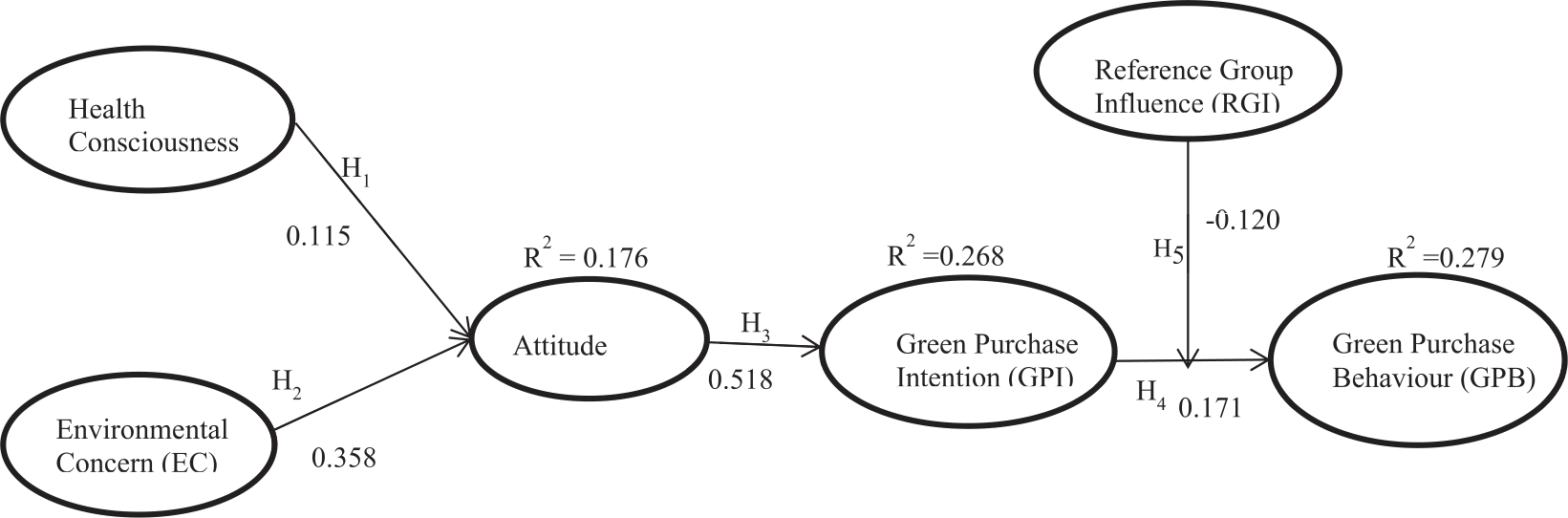
The R2 value should be higher than 0.10 for an adequate variance explanation of a specific endogenous construct [58]. Fig. 3 reveals the moderation effect of reference group influence on the association between green purchase intention and behavior. It highlights that the reference group influence reduces the strength of such a relationship as it negatively affects the association between green purchase intention and behavior.
Discussion
The main reason behind conducting this research study is to explore whether consumers’ psychographic features and social factors are producing any impact on consumers’ buying behavior, and the specific case of Indian millennials as the target audience and the particular product category as green personal care products is discussed. The results were quite clear from the empirical analysis. The coronavirus outbreak has made people realize the importance of good health and a healthy and clean environment to breathe in. This paper aims to determine how far the health consciousness and environmental concern of Indian millennials result in exhibiting green buying behavior and whether the influence of the reference group is strengthening the association between the intentions of green buying and the actual behavior. It has been made transparent by findings of empirical analysis that there is an urgent need on the part of marketers to associate the psychographic characteristics of individuals with the usage of green products by undertaking more effective pro-environmental marketing campaigns.
This study evaluated the antecedents predicting customer buying behavior about green personal care products in a developing country and investigated the moderating influence on the association between the intention of green buying and the actual behavior. The results of empirical analysis via PLS-SEM disclosed that health consciousness affects consumers’ attitudes concerning green personal care products; hence the first hypothesis (H1) is supported. It is inferred from the findings that the higher the consumers’ consciousness of their health, the more likely they will adopt the eco-friendly buying pattern. These findings support those found in earlier investigations [19-21, 59, 60]. Further analysis was performed to find the environmental concern’s effect on customers’ attitudes concerning buying patterns of green personal care products. The results revealed a significant favorable connection between environmental concerns and consumers’ attitudes. Hence H2 was supported. The research work of Kaur, Gangwar and Dash [61, 11-13] also witnessed such a relationship. Therefore, it is corroborated that health consciousness and environmental concern significantly impact consumers’ attitudes toward green personal care products. However, the environmental concern’s influence is more intense than the impact of health consciousness.
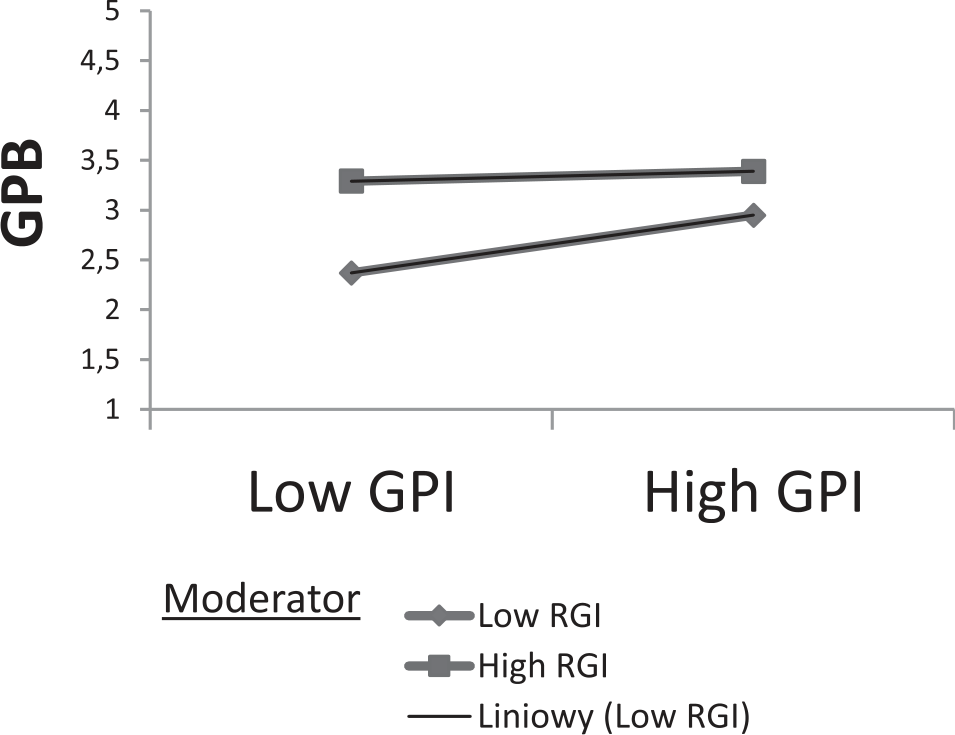
Regarding the association between customers’ attitudes and intentions of green buying, it is found that customers’ favorable attitude concerning green products significantly results in intentions of green buying. Therefore, H3 is also supported. Previous studies reported similar results [62, 63, 27, 28]. Results of PLS-SEM support H4 as customers’ green buying intention is highly significant in determining green buying behavior. This result reflects the findings presented by authors in recent past in their research studies [64, 2, 18]. However, a significant impact is found when examining the moderating effect of reference group influence on the connection between purchasing intention and behavior about green personal care items, as hypothesized in H5. However, this impact is found to be negative. Thus, reference group influence is impactful in weakening the presupposed connections. The reference group influence in the form of social and peer influence reduces the strength of the association between the intention of green buying and actual behavior. Nevertheless, this is a valuable finding as it was not investigated in earlier studies. However, a contrasting result was found by researchers, where it was discovered that peer influence was a significant favorable moderator and predictor in elucidating customers’ purchasing behavior towards green products [37].
Conclusions
The researchers have investigated the influence of health consciousness and environmental concern on buying behavior of the millennial population of Indian concerning green personal care products. The part played by reference group influence as a moderator in the connection between green buying intentions and actual buying behavior has also been investigated.
Theoretical Implications
The literature is far behind in explaining customers’ choices in developing nations like India; therefore, the current study contributes to the body of information on green customer purchasing habits. According to the researcher’s best knowledge, this is the first attempt to use consumer psychographic traits to objectively confirm the purchasing behavior of millennials in an emerging economy and uncover the moderating role of reference group influence. By defining a detailed customer behavior model with crucial characteristics to pinpoint Indian millennials’ green purchasing habits, the current study adds to the body of knowledge. The results of the empirical investigation are crucial in developing a theory about the psychographics and social characteristics of consumers and their purchasing behavior. The conclusions drawn from the present research study will provide food for thought for making new strategies by India’s manufacturers and marketers of green personal care products. The findings highlighted that the customers’ psychographic traits significantly impact purchasing intentions for green products. However, the influence of the reference group reduces the strength of the association between buying intentions and buying behavior. Therefore, it has become essential for marketers to create creative marketing efforts by associating the need for well-being and a clean environment to breathe with consumers’ buying behavior to save the planet from further degradation.
Managerial Implications
The coronavirus outbreak has made people more concerned about their and the environment’s well-being. They have realized the importance of good health and a clean environment. The pollution-free air experienced by people in April and May of 2020 in India has made them realize the utmost need to stop further deterioration of the environment. The empirical analysis suggests that consumers’ buying preferences in India can be shifted from traditional non-green products to contemporary eco-friendly products by enhancing their consciousness for health and concern for the environment. It has also been concluded that the impact of environmental concern on the attitude of consumers is more than the impact of health consciousness. Another exciting conclusion relating to the association of green buying intention and behavior and the moderating role of reference group influence has been derived from the study. The purchase intention of green customers is found to impact green purchase behavior concerning green personal care products significantly. However, the influence of reference groups of consumers dampens the favorable association between green buying intention and behavior. Reference group influence reduces the strength of association between the said constructs of the theoretical underpinnings. Therefore, it is concluded that the psychographic characteristics of Indian millennials significantly impact their attitude in developing intention for purchasing green products, the attitude of consumers significantly impacts buying intentions and buying intentions of consumers impact buying behavior, but the influence of reference group of consumers is dampening or making such association less intense.
Directions for Further Research
As the researchers have constrained the present study to the emerging economy, it allows future researchers to adopt the present conceptual model in other geographical settings to compare consumers’ behavior in developing nations of Asia and developed countries of the West. Future studies can also consider adopting a longitudinal research design to unearth consumer behavioral changes. The researchers are further suggested to elucidate the impact of recycling behavior, energy-saving behavior, and experience of using another category of green products on the attitude of consumers. The researchers are also advised to explore the effect of mistrust towards green claims on the green purchase behavior of customers in their future research endeavors. A clustering approach can be adopted to assess and classify the customers into adopters and non-adopters of green technologies and green marketing strategies [65]. It has also been suggested to find the moderating role of socio-demographic features of consumers, such as income and occupation, by conducting a multi-group analysis. Due to the increasing interests of consumers in organic food items, [66, 67] the future researchers are suggested to replicate the present study with regard to organic food consumption.
Limitations of the Study
Although this study has provided valuable insights into the importance of consumers’ psychographics and the role of reference group influence as moderators, it is not free from constraints. Firstly, the cross-sectional research design has been adopted for collecting first-hand data, which does not account for the behavioral modifications in customers’ preferences in the short run. Secondly, the study has been conducted in an emerging economy, India; therefore, the findings cannot be generalized to the developed countries of the west. The present study deals with only one category of the working population, i.e., millennials and has ignored other categories, such as young adolescents and senior citizens.

