


Introduction
Peat ecosystems have very important functions and roles for human life, the flora and fauna that live in them. The peat ecosystem functions as a direct support for life, for example as a source of food, medicinal plants, fresh water fish, and a habitat for a wide variety of living things. The most important economic benefit of having peatlands for local people is as a source of livelihood.
Peat areas in general have been used for various purposes, especially for agricultural land, logging activities, expansion of plantation areas, places to find freshwater fish, development of plantation forests and other land conversions [1]. Peat has the property of having a strong absorption of water as a dissolved substance (hydro-physical). The water binding capacity of very high peat ranges from 4.5-30 times its dry weight, especially in fibric peat, between 4.5-8.5 times in hemic peat and 3-4.5 times its dry weight in sapric peat [2]. Peat as an ecosystem has unique properties, such as low soil pH, subsidence, and flammability when the hydrological system is disrupted [3]. The use of peat land without paying attention to the unique characteristics of the peat itself causes peatland to be degraded [4].
The peat ecosystem known as the world’s main carbon store with enormous potential [5]. Tropical peat swamp forests are mostly located in Southeast Asia covering an area of 24.8 million ha [6-7]. This area reaches 60% of the total area of tropical peat forests in the world. These peat swamp forests are scattered in Indonesia, Malaysia, Thailand, Brunei and a small part in the Philippines. Indonesia has peatlands spread across Kalimantan, Sumatra, Papua and Sulawesi [8]. The area of peatlands in Indonesia in 2016 is around 15 million ha spread over the islands of Sumatra (6.4 million ha), Kalimantan (4.8 million ha) and Papua (3.7 million ha) [9]. In 2021, there is a decrease in the total area of peat in Indonesia to 13.43 million ha spread over the islands of Sumatra (5.85 million ha), Kalimantan (4.54 million ha) and Papua (3.01 million ha) [10]. South Kalimantan has an area of 47,717 ha of peat ecosystems. Of the 2.6 million hectares of land burned in 2015, 34% of which was peatland. The resulting carbon emissions from these fires are estimated at 1.75 billion metric tons of CO2 equivalent [11]. Financial loss is as a result of the incident has been estimated at IDR 221 trillion [12]. Forest fires continued to recur in the following year, where the burned land in South Kalimantan in 2018 was 98,637.99 ha, in 2019 covering an area of 137,848.00 ha and in 2020 covering an area of 3,971.00 ha [13].
Peat ecosystem fires in 2015 in South Kalimantan damaged 18,665 ha of peatland [14]. One of the peat ecosystem areas in South Kalimantan that experienced fires in 2015 was the Sungai Utar-Sungai Serapat peat ecosystem [14]. Fires cause peat swamp ecosystems to change the composition of vegetation and carbon stores [15]. The area of the Sungai Utar-Sungai Serapat peat ecosystem is 44,956 ha with a peatland area of 15,905 ha or 33% of the peat area in South Kalimantan [14]. Peat ecosystem fires in South Kalimantan also occurred in 2018 covering an area of 2,974.98 ha, in 2019 covering an area of 3,716.95 ha, in 2020 covering an area of 173 ha, and in 2021 covering an area of 2,009.35 ha [16]. The community generally uses the Utar-Sungai Serapat peat ecosystem area as a place to find freshwater fish, collect wood and farm rice fields. The phenomenon that has occurred in the last 10 years is that community businesses in peat ecosystems have begun to decline. The businesses that are still being carried out are fishermen (freshwater fish seekers). The reduction in the debt area and the decreasing quantity of trees due to repeated fires has resulted in reduced logging activities. Agricultural fields have also begun to be abandoned by farmers due to rising water levels or excessive inundation in rice fields for a long time. With high stagnant water, farmers are unable to plant paddy rice.
Climate change as the impact of global warming that affects the production process of paddy rice plants. Paddy fields are excessively flooded for long periods during the rainy season. The decline in production in Indonesia is predicted to reach 90 million tons in 2050 due to climate change [17]. The results of field observations show that the community has begun to divert their business by managing Lepironia articulata Retz plants on peatlands. L. articulata can develop naturally in peat swamp areas, tidal swamps and river areas that are acid sulfate. L. articulata is one of the endemic plants that grows wild naturally in peat areas [18]. The morphology of the L. articulata plant is in the form of a cylindrical stem or stem like a pipe that grows elongated with a tapered end, has thin partitions that fill the inside, the septum is compact at the base and the stem is shiny green. The outer part of the base is white and covered with leaves that are shaped like a reddish brown sheath. The tapered tip of the stem then grows into a compound flower that will contain many seeds in the generative phase. The flower of L. articulata is a compound flower and is located at the tip of the stem. L. articulata are in the form of fibers. L.articula grows on acid sulfate soils with inundation heights that can reach 1-2 meters [19].
The community manages L. articulata as an effort to address the inability to grow rice as the main source of income. The advantage of the L. articulata plant is that it can grow in swamps and does not require a certain season and time [20]. Changes in management patterns in utilizing the biodiversity of peat ecosystems are important to study from various aspects, so that many benefits can be obtained and prevent damage that may occur. Based on the high value of the existence of peat ecosystems, it is important to carry out conservation efforts that can accommodate the ecological, economic and social interests of the community. Conservation efforts made for finding solutions to improve the socioeconomic community and still maintain the ecological characteristics of the peat ecosystem. Saving peatland ecosystems carried out based on a balance between ecological, social and economic values. This study aims to evaluate the management of L. articulata by forest farmers in peat ecosystems from a conservation perspective.
Experimental
Physical and Chemical Soil Characteristics
The measurement of peat water and peat soil was measured from 3 types of land cover (secondary forest, L. articulata land, and open area which no L. articulata). Measurement of the pH of peat water and soil used a pH meter from Hanna Instruments (HI 98107). Measurements were repeated 3 times. The water level is measured in the observation hole by measuring the distance between the peat soil surface and the peat water level.
Research Objects and Locations
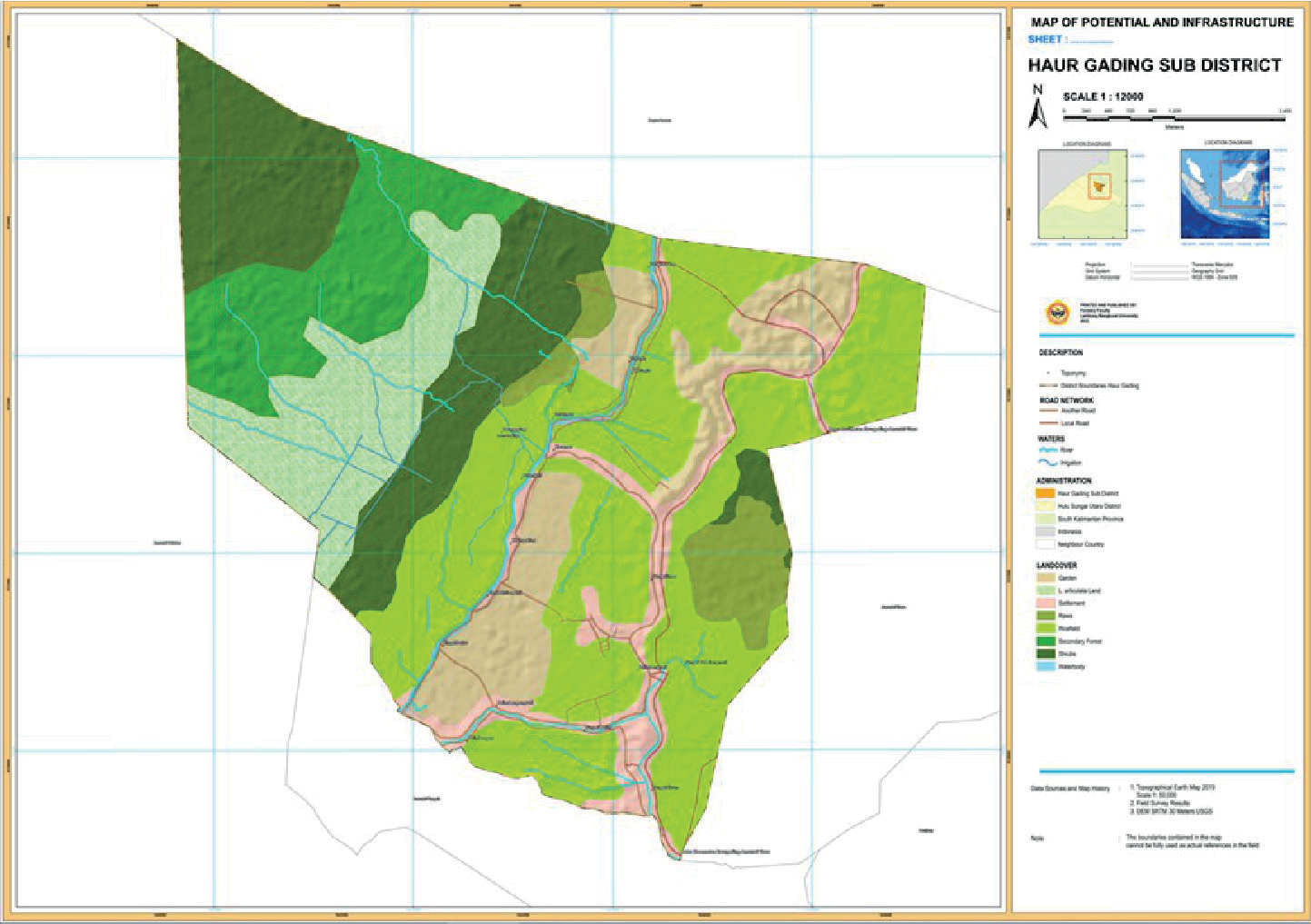
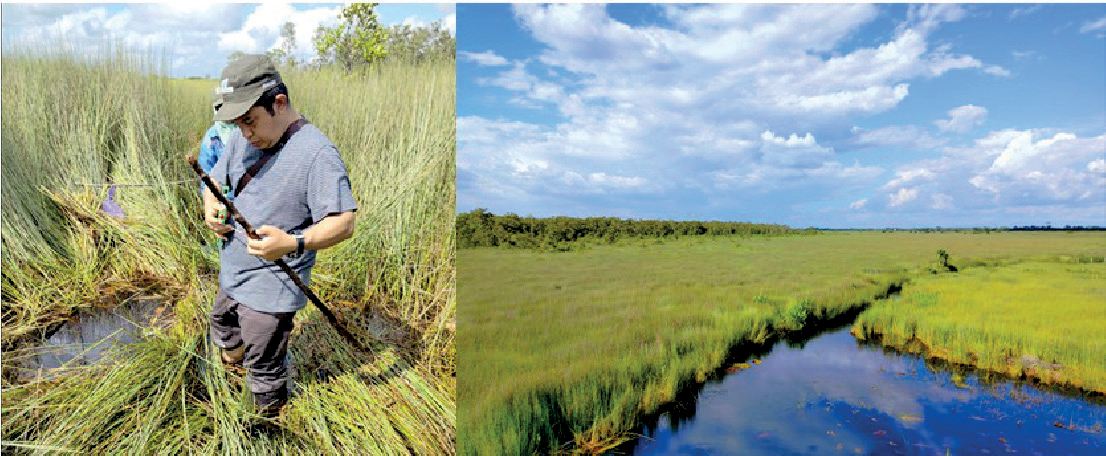
The object of ecological research was the L. articulata plant and its habitat is peatland. The object of the socio-economic research is the community managing L. articulata who live in 5 villages in Haur Gading District, Hulu Sungai Utara Regency, South Kalimantan, Indonesia. Both peatland research location and the L. articulata plant show in Fig. 1 and Fig. 2, respectively.
The equipment used was equipment for interviewing the community in the form of a list of questions, stationery and a camera. The list of questions contain the number of family members working in the management of L. articulata; the age of the respondents involved in the management of L. articulata; gender of the respondent involved in L. articulata management, total income from L. articulata management, period of income from L. articulata management, equipment and materials used in L. articulata management. The equipment used for the terrestrial survey is GPS, camera, pH tools, EC meter, peat drill. The materials used for peat soil analysis in the field are distilled water and H2O2 to detect the presence of pyrite in peatlands. Lokasi penelitian di Haur Gading District is located between 20 1’ 37”– 2 0 35’ 58” South latitude, and 1440 50’ 58” – 1150 50’ 24” East longitude.
Data collection divided into 2 methods, namely collecting ecological data (soil, water and vegetation) and collecting socio-economic data. Terrestrial surveys for collecting ecological data consist of three types of measurements. Firstly, measuring pH and pyrite of soil and peat water. The pH of peat water and peat soil were measured from 3 types of land cover (secondary forest, L. articulata land, and open area which no L. placed articulata). Measurement of the pH of peat water and soil is measured directly using a pH meter (HI 98107). Identification of pyrite is done by dripping liquid hydrogen peroxide (H2O2) on a soil sample. The soil sample is in a container and then dripped with H2O2. The resulting droplets of liquid hydrogen peroxide on the sulfidic material will cause an explosive foam reaction indicating the presence of sulfidic material (pyrite) in a layer of soil [21] pH measurement and pyrite identification were carried out with 3 times of repetition. Secondly, measuring the groundwater level in peatlands. Finally, measuring tree and understorey vegetation, using a measuring plot of 20 m x 20 m for measuring tree level, measuring plot 10 m x 10 m for measuring pole level, measuring plot 5 m x 5 m for measuring sapling level, and measuring plot 2 m x 2 m for measuring seedlings and understoreys. Vegetation measurements were carried out on 3 forms of land cover, namely: secondary forest, purun land and open land. 10 measuring plots were made for each land cover. Placement of measurement plots was done in purposive.
The collection of socio-economic data carried out by interviewing 40 villagers. The interview method used is semi-structured interviews, where questions asked openly while still guided by the list of questions that have been made. The social data collected related to the individual characteristics of the community including age, formal education, non-formal education, length of residence and social status. The economic data collected is in the form of income from purun harvesting and processing of purun crafts. Several socio-economic data collected from village documents and other supporting documents.
Stages of Purun Management by Forest Farmers
The analysis was carried out descriptively by describing the process of land preparation, planting, harvesting, post-harvest processes and woven processing. Management descriptions are presented in a narrative and tabular matrix. Community income data obtained from interviews. The income referred to here is family income [22], which is the total income earned by a family from various activities. The formula approach is as follows:
The income in question is income from businesses based on the management of L. articulata and income from businesses based on non-peat ecosystems. Management of L. articulata includes several activities (stages) including land preparation, planting, protection and maintenance, harvesting, post-harvest, and the process of making woven products. Land clearing was the initial activity in the management of L. articulata. It was done manually using simple tools. Land clearing activities were executed without burning and were generally carried out in April and May. Next activity after land clearing was planting and was done in June and July. Protection and maintenance of plants during research was to prevent fires. Harvesting was generally done after the plants are ≥6 months and it was by the community in stages up to ±3 months. Post-harvest handling was accomplished by drying and pounding the material. Meanwhile, the process of making handicrafts was performed after the woven material had dried and flattened. The process of making woven was carried out as long as the material is available.
Income derived from the management of L. articulata includes income from selling raw materials of L. articulata, wages from pounding L. articulata, and income from selling handicrafts produced from L. articulata.
The analytical method used for ecological characteristics consists of parameters of soil, water and vegetation found in peatlands. Analysis of peat soil and water parameters using a tabulation matrix. The analytical method for vegetation parameters is in the form of species composition, and the Shannon’s Diversity Index [23]. The formula for determining Shannon’s diversity index is as follows:
with: H’ = Diversity Index N = Total Number of Individuals of all species ni = Number of Individuals of the i type In = natural logarithm
The criteria for the parameter of species diversity are classified into several weight criteria and classifications. If the H’ value >3 the species diversity is high, if the H’ value = 2-3 then it indicates moderate species diversity, and if the H’ value <2 the species diversity is low [23].
Management Analysis of L. articulata in Supporting Conservation Activities
The variables used for the analysis of L. articulata management (description process is listed in Table 1) in conservation are a) Ecological value of L. articulata management; b) Social value of L. articulata management; c) Economic value of L. articulata management; Technical aspects related to the use of materials and tools in planting L. articulata;
e) Technical aspects related to the use of materials and tools in harvesting L. articulata; f) Technical aspects in obtaining raw materials for L. articulata; g) Other technical aspects in management L. articulata such as land preparation/ land clearing process, maintenance process, post harvesting process, process of screening material quality. A description of the variables and indicators for the analysis of conservation support from the management of L. articulata is listed in Table 2. Conservation support is analyzed from the indicator values obtained. The level of conservation support used consists of 3 classes, namely: low, medium and high. The value interval equation for determining the level of conservation used the following equation [24] and spreadsheet software version 2016:
Results and Discussion
Description of Purun Plant Management in Peatlands
The L. articulata plant (Fig. 2) managed by the community is the result of community planting on open peatlands. Tree felling was not carried out during land preparation for L. articulata plantations. The planting location is not directly adjacent to settlements and can be reached by boat.
Land clearing is done manually using a “tajak” (a type of traditional machete for wetlands) to remove grass or water weeds. The planting process is carried out simply by digging a 10 cm x 10 cm x 10 cm hole in peat soil and then planting young purun saplings, then allowing them to grow naturally without special maintenance. L. articulata can be harvested when it reaches the age of 6-8 months. L. articulata is a group of perennial plants and takes 7 months to reach its maximum weight. The productivity of this plant biomass can reach 8.2 tons per hectare per year [25].
Harvesting done by selecting strands of plant stems that are mature with the characteristics of sturdy stems, green color and no yellowish spots, stems that are not wilted, and hard skin. After a few strands of stem selected and then removed by hand. Old stems, young stems and roots of purun are not harvested. The production process does not require combustion activities [26]. Harvesting by the community 4-5 days a week with a duration of 5-6 hours per day and its workforce dominated by men. L. articulata harvesting was not carried out during the peak of the dry month (July-August), because the river water in the peat receded, making it impossible for boats to reach the plant location. Harvesting is also not done during the peak of the rainy season (December-January), because inundation can reach 1.5-2 m above the peat surface. The high inundation made it difficult for farmers to harvest L. articulata. The number of harvest months in a year is ±8 months. The drought factor in the dry season and the overflow of water in the rainy season did not kill the L. articulata plant, because this plant is able to adapt to climate fluctuations that occur.
Table 1.
Description of L.articulata Plant Management.
Table 2.
Variables & indicators for analysis of conservation support from L.articulata management.
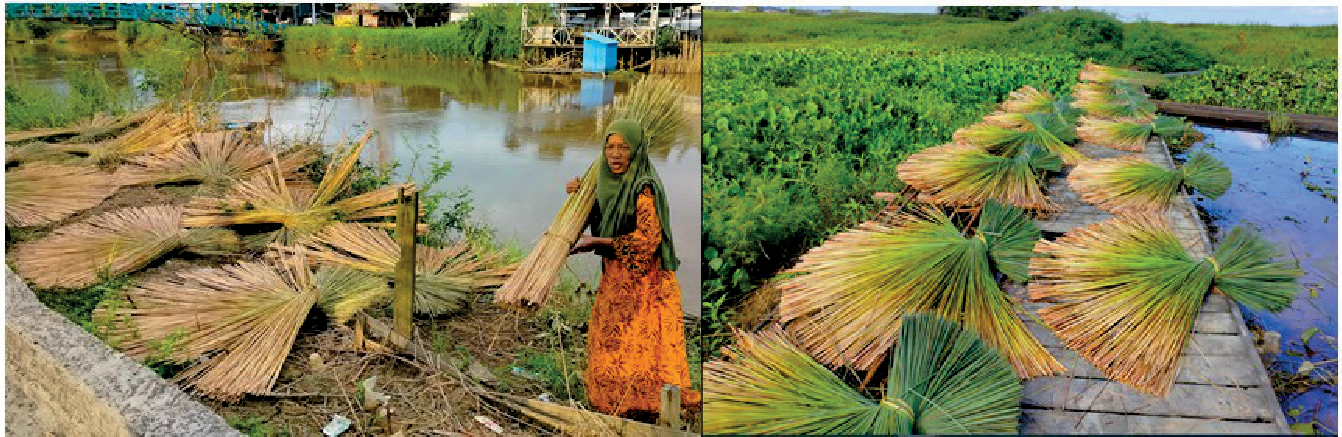
The harvested L. articulata tied into several parts and then put into the boat. After arriving at the settlement location, the stems of L. articulata were dried in a circular pattern in the sun (Fig. 3). Drying is carried out for ±5 days, until the stems dry with the remaining moisture content ≤10%. The dried stems of L. articulata pounded to flatten and soften the hard bark. Crushing done manually using a wooden block or using a crusher. L. articulata stems that pounded can be split or not split before being made into plaits. Splitting is done only for certain woven products. Some forms of handicrafts use synthetic dyes and some other forms of handicrafts without dyes. Until now there has been no innovation made by the community in using dyes from natural materials for purun crafts. The average time used in making purun crafts is around 5-7 hours per day. The number of days in the manufacture of woven under normal conditions is 5-6 days/week. Most of the management activities of L. articulata are indicated to be environmentally friendly on both aspects, materials and equipment as well as the various management processes carried out. The cultivation of L. articulata does not require drainage to regulate water management. L. articulata grows naturally without having to dry out the peat soil [26].
Revenue and Revenue Contribution of L. articulata Management
The population in Haur Gading District reaches 16,379 people in which as many as 8,040 people are male residents and 8,339 people are female residents. The population density reaches 431.00 people/km. As much as 72.41% of the village community, their main job is as rice farmers. Other than farming, he also works as a daily labourer, catches fish and raises local chickens. The farming pattern adopted by the community is paddy farming in producing rice. Community income categories are divided into 4 categories. The results of the identification of the community’s average income/ month are listed in the Table 3.
The income of the dominant community ranges from 1 million to 2 million rupiah, while income >4 million occupies the smallest percentage. The community’s main business of paddy farming often fails due to high water stagnation. Community efforts in managing L. articulata in peat swamp land are quite helpful in overcoming the phenomenon of declining rice yields. As much as 82.76% of village community members are involved in L. articulata management efforts. This phenomenon has an impact on the availability of jobs for the community. The average income from managing L. articulata by the community is IDR 1,721,000/ month or IDR 16,820,000/year. The average income of the community from businesses other than managing L. articulata is IDR 1,065,000/month or IDR 12,780,000/ year. The average total population income per year is IDR 29,600,000.-. So that the contribution of people’s income from L. articulata business is 56.82%.
Ecological Characteristics
Vegetation characteristics found in the peat ecosystem are divided into three, namely secondary forest, L. articulata meadows and non- L. articulata open areas. The secondary forest formed formed a pure stand at the tree and pole level with species control >90%. The dominant vegetation level of trees and poles in the secondary forest is Combretocarpus rotundatus. Other species found in limited quantities are Adina minutiflora, Alstonia pneumatophora, Syzygium sp., Melicope sp., and Pternadra azurea. C.rotundatus was the most dominant species found in peatlands that had been repeatedly burned [27]. Undergrowth found in the secondary forest include Nepenthes mirabilis, Stenochlaena phalustris and L. articulata.
Table 3.
Community income categories (1 USD = IDR 15.000,-).
| Community Income (USD) | Percentage |
|---|---|
| 16,67-133,33 | 56,25% |
| 133,33-200 | 18,75% |
| 200-266,67 | 15,63% |
| >267,67 | 9,37% |
| 100% |
Table 4.
Characteristics of Soil and Water in Peat Ecosystems (0-40 cm).
| Land cover | Water pH | pH of peat | Groundwater level (cm) | Pyrite content |
|---|---|---|---|---|
| Secondary Forest | 3.6 | 3.5 | 22.7 | - |
| Purun Land | 3.4 | 3.5 | 29.3 | - |
| Open land which no L.articulata | 4.5 | 4.8 | 61.7 | + |
Table 5.
Variables and Indicators of Conservation.
Certain spots on the land cover of L. articulata are overgrown with C.rotundatus and Adina minutiflora with a limited number of individuals. Non-L. articulata open areas dominated by aquatic plants such as Pistia stratiotes, Eichhornia crassipes, Ludwigia octovalvis, Scleria laevis, Phragmites karka, and Salvinia molesta. Diversity index values (H’) for all growth stages both in secondary forest, purun grasslands and non-purun open areas <1 (low category). Another ecological characteristic is the nature of the peat soil and water. Some of the physical and chemical properties of peat soil and water can be seen in Table 4.
The pH value of peat soil and water is included in the acid soil category. L. articulata can grow well in soils with acidic pH [28] and acid sulfate soils [19]. L. articulata plants can become indicator vegetation for acid sulfate soils because they are resistant to high acidity (pH 2.5-3.5). Maintaining forests in peat ecosystems is one of the mechanisms for reducing the height of waterlogging. The presence of L. articulata plants showed lower inundation than non- L. articulata open land. The inundation height that occurred in L. articulata land was relatively low and close to the secondary forest inundation height. Indications of the presence of pyrite were not found in L. articulata land and secondary forest, but in non- L. articulata open land there was an indication of pyrite content. L. articulata can absorb toxic compounds such as Fe and SO4 in water [20] L. articulata is able to absorb heavy metals such as Pb, Cd and Zn [19]. Rainfall in Haur Gading District is 2,667.40 mm. It was found that only 1 month was in the dry month category (rainfall intensity <60 mm), 11 months was included in the wet month category (rainfall intensity>100 mm), as a result the peat ecosystem became inundated. L. articulata still grows and develops in flooded soil conditions.
Support for Peat Ecosystem Conservation from L. articulata Management
Support for peat ecosystem conservation from L. articulata management is indicated through 7 variables and 17 indicators. The categories of conservation support in the management of L. articulata are ≤56% (low), >56%-78% (medium), >78% (high). The results of the identification of the role of group business forms on peat conservation can be seen in Table 5.
The results indicate that purun management is included in the category of supporting conservation. The conservation value obtained from the management of L. articulata is the reduction in illegal logging activities in peat forests. This finding is similar to the efforts of the community of Rasau village in West Kalimantan to manage Aloe vera on thin peat (peat depth <50 cm) which can reduce access to illegal logging in peat ecosystems [29]. Management of L. articulata is also carried out without burning and without disturbing the peat water system. Apart from maintaining the management of L. articulata, a revegetation program needs to be carried out using many tree species that are adaptive to growing on peatlands. Revegetation with many types will increase plant diversity in peatlands. S.balangeran is an adaptive species that can grow well in peat ecosystems [30]. Several dominant and fast-growing tree species from peatlands also can be recommended as species of choice for revegetation on peatlands, such as Cratoxylum glaucum, Garcinia rigida, Horsfieldia crassifolia, Camnosperma auriculatum [31]. Classification of ecosystem service from Management of L. articulata such as provisioning, regulating, cultural and supporting services are clearly shown in Table 6.
Table 6.
Classification of Ecosystem Service from Management of L.articulata.
Communities can be encouraged to use natural dyes in making handicrafts, so that the processing of woven materials from L. articulata becomes more environmentally friendly. There are several sources of natural dyes from plants. Communities in Central Kalimantan use rattan sap (Daemonorop sp.) as a natural dye for rattan matting [32]. Other community in Central Kalimantan shows that the farmer community obtained socioeconomic profiting from successful peatland cultivation and management [33]. The bark of Ploiarium alternifolium, Artocarpus odoratissimus is used by the people of West Kalimantan as a natural dye for woven bamboo and rattan crafts [34]. L. articulata woven can be categorized as a green product, because the process of planting, harvesting and processing is environmentally friendly. Increasing consumer awareness and concern for the environment influences their decision to pay higher prices for green products [35]. Increasing demand for various green products will increase income for the community.
L. articulata also has the potential as a natural medicinal ingredient. The ethanolic extract of the rhizome of L. articulata contained alkaloids, flavonoids, tannins, saponins, and anthraquinone compound [36]. The rhizome of L. articulata has antimalaria and antioxidant activity [37]. Traditional medicinal raw materials from plants are often constrained by scientific research in clinical trial research and standardization of these traditional medicinal raw materials [38].
Conclusions
The management of L. articulata is an alternative for community businesses that are developing due to the uncertainties faced in paddy rice farming. Various descriptions in this paper explicitly provide an explanation that the management of L. articulata carried out by the community is included in the category of supporting the conservation of peat ecosystems, such as the reduction of illegal logging activities in peat forests. As a form of biodiversity-based management that supports conservation, improvements need to be made regarding the community’s capacity as L. articulata managers. Revegetation activities in the form of enrichment planting are an option to increase vegetation diversity in peat ecosystems. Conservation based on the utilization of the biodiversity of peat ecosystems by forest farmers can contribute to improving the socioeconomic community and the environment.

