

Introduction
Sorbus L. is a widely distributed genus. It inhibits temperate regions of Asia, North America, and Europe and comprises approximately 250 species when considered in its broadest sense. The highest diversity centers of the Sorbus genus are found in East Asia, particularly the western Himalayan region [1-3]. The morphological information [4] and molecular evidence [5] indicated that Sorbus has a polyphyletic nature. Generally, taxonomists classify them into five genera: Chamaemespilus [6], Aria [7], Micromeles [8], Torminalis, and Sorbus [6]. The Sorbus genus encompasses 80 species, each with distinct characteristics, such as pinnately compound leaves. The mountains of southern China, particularly the Hengduan mountains, along with the surrounding regions of Nepal, Myanmar, and the eastern Himalayas, have the greatest diversity of Sorbus species, with approximately 60 species found in these areas [3, 9-11]. This region is widely acknowledged as a worldwide biodiversity hotspot, and the genus Sorbus also thrives there [12, 13].
Pyrus foliolosa (Wall.) Spach, originally recognized as a Numen nudum by [14] and referred to as “677 Pyrus foliolosa” Wallich in 1824. Pyrus foliolosa, a synonym of Sorbus foliolosa, an endemic species found in the Central and Western Himalayan range, was given the name “Napalia 1821” in the original description [15]. However, Wallich 677 contains samples that were collected from two locations in Nepal, namely Gossain Than and Sheopore. In accordance with Art. 8.2 footnote 2 [16], it consists of two different collections of specimens of P. foliolosa and P. wallichii [17]. Hooker observed that the original description of P. foliolosa is a mixture of the abovementioned collections, which represent two separate taxa. He attempted to lectotypify P. foliolosa Wallich by limiting P. foliolosa to material collected from Gossain Than (lectotype), which has 9–11 pairs of leaflets with rusty brown hairs on the abaxial side of the leaflet, petiole, inflorescence, and also indicated P. ursina (Don, 1834) as its synonym. He named the Sheopore specimens (the remaining syntypes) as P. wallichii Hooker (1878), a new species that differs from P. foliolosa in having seven or eight pairs of leaflets as well as white wool on the petiole, inflorescence, and abaxial side of the leaflet.
Sorbus is one of the most difficult genera to classify in the Rosaceae family, owing to the complexity caused by polyploidy or genome doubling, which is frequently accompanied by gametophytic apomixis and hybridization [18]. The systematic position of related Sorbus species cannot be determined via traditional morphological taxonomy, requiring molecular approaches. Some Sorbus species have been successfully studied using a variety of molecular systematic methods. The Rosaceae family is among the most significant plant families due to its vast diversity. There are 3000 species and 100 genera in the Rosaceae family. Herbaceous species are found in a variety of habitats, including temperate forests, high altitude zones, and roadside. Although woody taxa are less prevalent in mixed deciduous forests, even woody species are pioneers and are important in the early stages of forest succession [13]. Recent studies have reclassified the Rosaceae family based on a variety of features, including shape, structure, and genetic information. Maloideae is now included in the Pyreae tribe and Pyrinae subtribe according to this new classification [19]. The primary causes of the intricate taxonomy of the Maloideae are introgression and hybridization [20]. The subfamily Maloideae comprises the genus Sorbus, which is distinguished by its distinctive, pinnately complex leaves and fragile seed coat. Most Sorbus species have a significant degree of resemblance in floral structure and have inconspicuous floral colors, making it challenging to differentiate between them. Although there are few significant morphological features in the flowers, the majority of non-reproductive organ traits, such as pairs of leaflets, leaflet size, stipule form, serration location, shape and size of buds, fruit color, and indumentum, demonstrate the importance and distinctiveness of the genus Sorbus at the species level, particularly in a specific local region [21, 22].
In the Rosaceae and other angiosperm families, seed and pollen morphology have long been considered essential for taxonomic identification [23, 24]. Seed morphology and coat texture have been demonstrated to be useful traits for identifying Sorbus species [25]. Several palynologists believe that palynomorphological traits are significant for taxonomic classification and delineation within the Rosaceae family [23, 26]. Exine sculpture is extremely important, with prominent characteristics including the size and number of perforations and the variety and length of striae and grooves [27, 28]. Other key features for identifying Rosaceae include polar axis, endoaperture, pollen shape (P/E), and operculum structure [28, 29]. Previous research identified exine ornamentation (e.g. groove width, length, and orientation, as well as perforation number and diameter) and the P and P/E ratio, as well as aperture structure, as distinguishing properties of Sorbus pollen grains [30].
Due to its small restricted habitat niche, small population size, high grazing intensity, and global change impact, it is most vulnerable to extinction for its population at higher elevations. In addition, due to some drawbacks, like inaccessibility due to the remote mountainous region, little is known about the distribution patterns, ecology, and conservation of threatened species. Our main objectives were as follows: 1) to assess the population size and distribution of species across the mountainous region of western Himalaya 2) to provide ecological insight and determine factors influencing the Sorbus foliolosa population, and 3) to update the morphological and anatomical description while suggesting reasonable conservation strategies for Sorbus foliolosa.
Materials and Methods
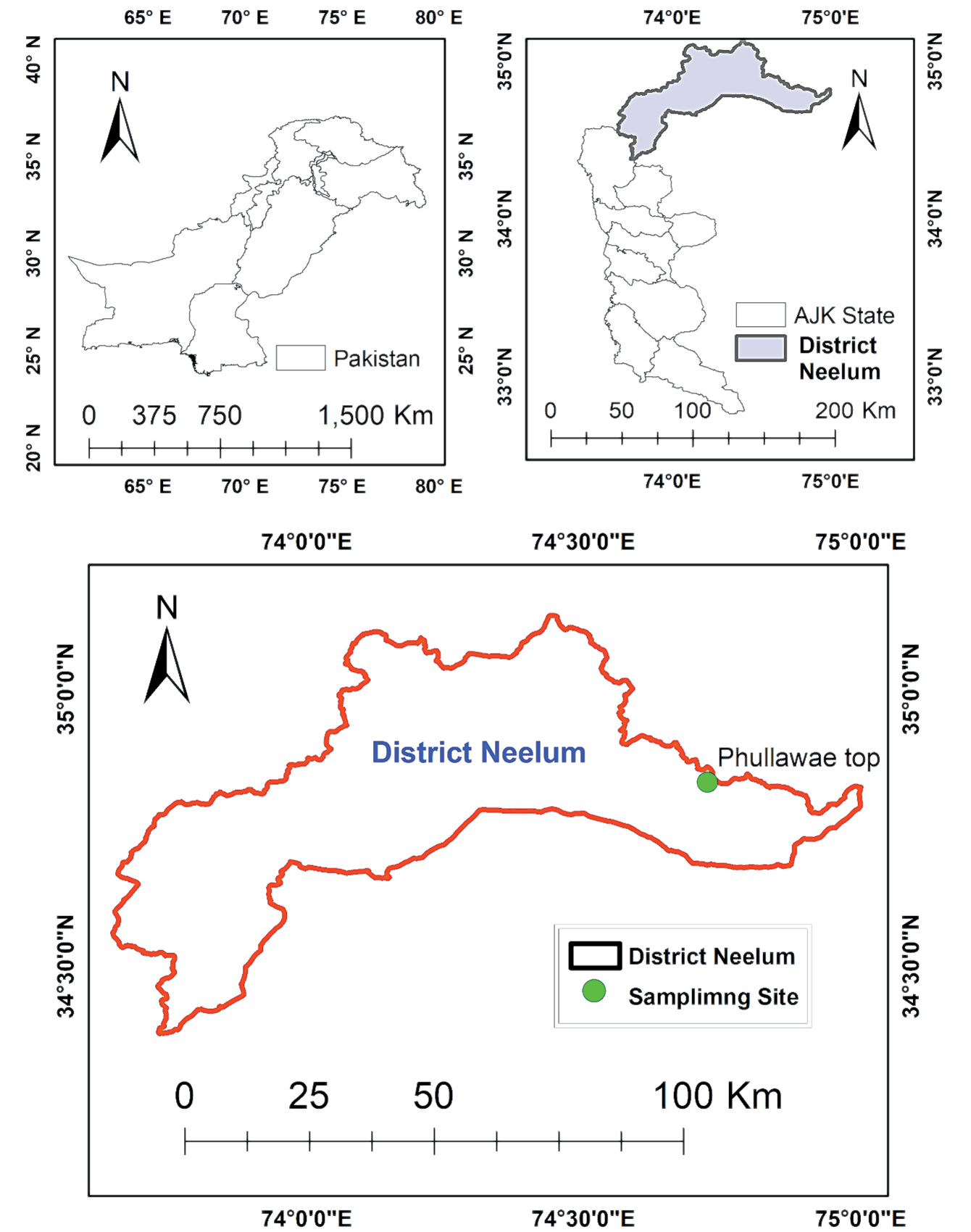
This species grows in rocky and sloppy habitats, with a preference for the northern aspect. The climate of Phullawae Valley is alpine, with mostly hilly terrain and steep natural slopes with gradients of up to 600. The alpine zone experiences extreme cold during the winter season, with heavy snowfall and freezing temperatures dropping as low as -10°C from November to April [31-35]. The average summer temperature, from June to August, is around 10°C, while the summer season is cold and short. The area receives approximately 1000 mm of precipitation annually, most of which falls as snow in winter (Fig. 1) [36, 37].
Specimen Collection
During the floristic exploration in the Western Himalayan region of Kashmir, Phullawae Neelum Valley Hills, fresh plant specimens were collected between June and August 2021 at an altitude of 4250 m. The collected specimens were subsequently dried, pressed, and mounted on the herbarium sheets by following standard protocols [38, 39]. The dried plant sample was then submitted to the Herbarium of Pakistan (ISL) and assigned Accession Number ISL-1333386. The plant name was validated by Plants of the World Online (https://powo.science.kew.org/). After conducting a thorough survey of existing literature, no previous record of Sorbus foliolosa was found in the Kashmir Himalayan region.
Morphological Investigation
The morphological characteristics of the samples were evaluated using a hand lens with 30-40x magnification. Before proceeding with further analysis, fresh leaf samples were sliced and treated with a solution of 70% alcohol and 30% acetic acid in a 1:3 ratio for 48 hours.
Anatomical and SEM Examination
A foliar anatomy slide was prepared using the protocols of Clarke (1960). Small pieces of leaves were placed in the test tube with the addition of one part of lactic acid (25%) and three parts of nitric acid (75%) for the decolorization of the plant material. After heating for 5-10 minutes at 100°C, the solution was placed in a petri dish and given to two water washes for the removal of debris. A prepared piece of leaf was placed on a slide, coated with a cover slip, and observed under LM. The foliar anatomy and pollen slides were examined using an LM (OPTIKA Microscope, Italy), and photographs were taken using the Meiji Affinity DK-5000 digital camera. Before SEM examination, dried seeds and leaves were extracted and washed with ethanol to remove dust. After cleaning, the seeds and leaves were adhered to stubs by using sticky tape, and a thin layer of gold-palladium was applied to the specimens. The SEM analysis was conducted using a model JEOL-5910, and the Polaroid P/N 665 film was used for the photomicrographs. The leaf and seed micromorphological features were investigated using the techniques outlined by [40] and [41]. The fertility of pollens (fertile and sterile pollens) was examined by following the protocols of Ahmad et al. [42].
Map Generation
Russian maps at 1:10,000 scale were utilized to generate the GIS database. and Arc GIS software was used to map the location of the Sorbus foliolosa (Arc-Map, 10.8 Version). The data was exported in Geo-TIFF format and tiled using Arc View GIS software. After developing the species inventory map, the AJK district’s boundaries were digitized using Arc Map software [39, 43]. A digital illustration was created using Adobe Illustrator (Version 2019) (Fig. 2).
Results
Taxonomic Description
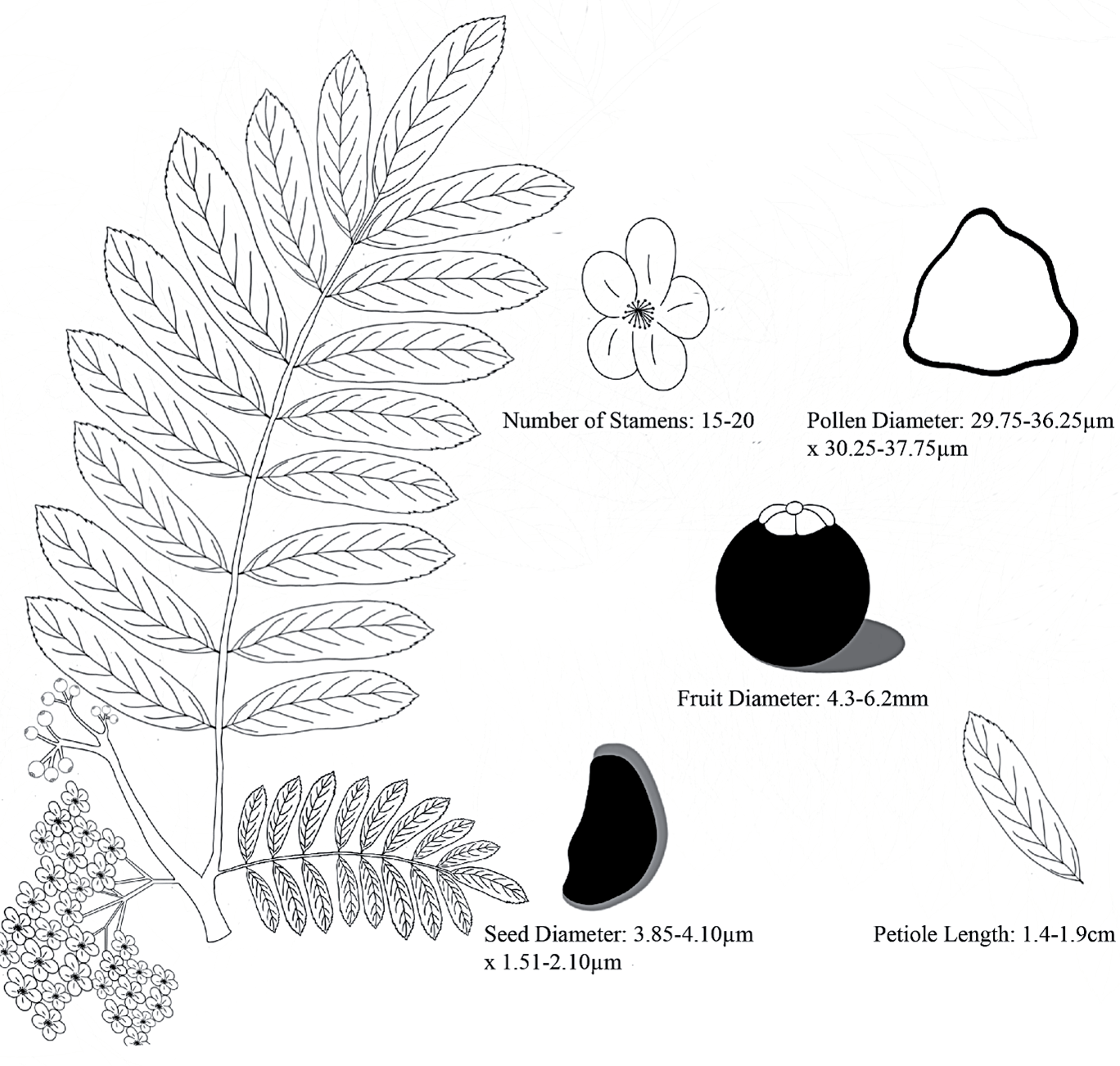
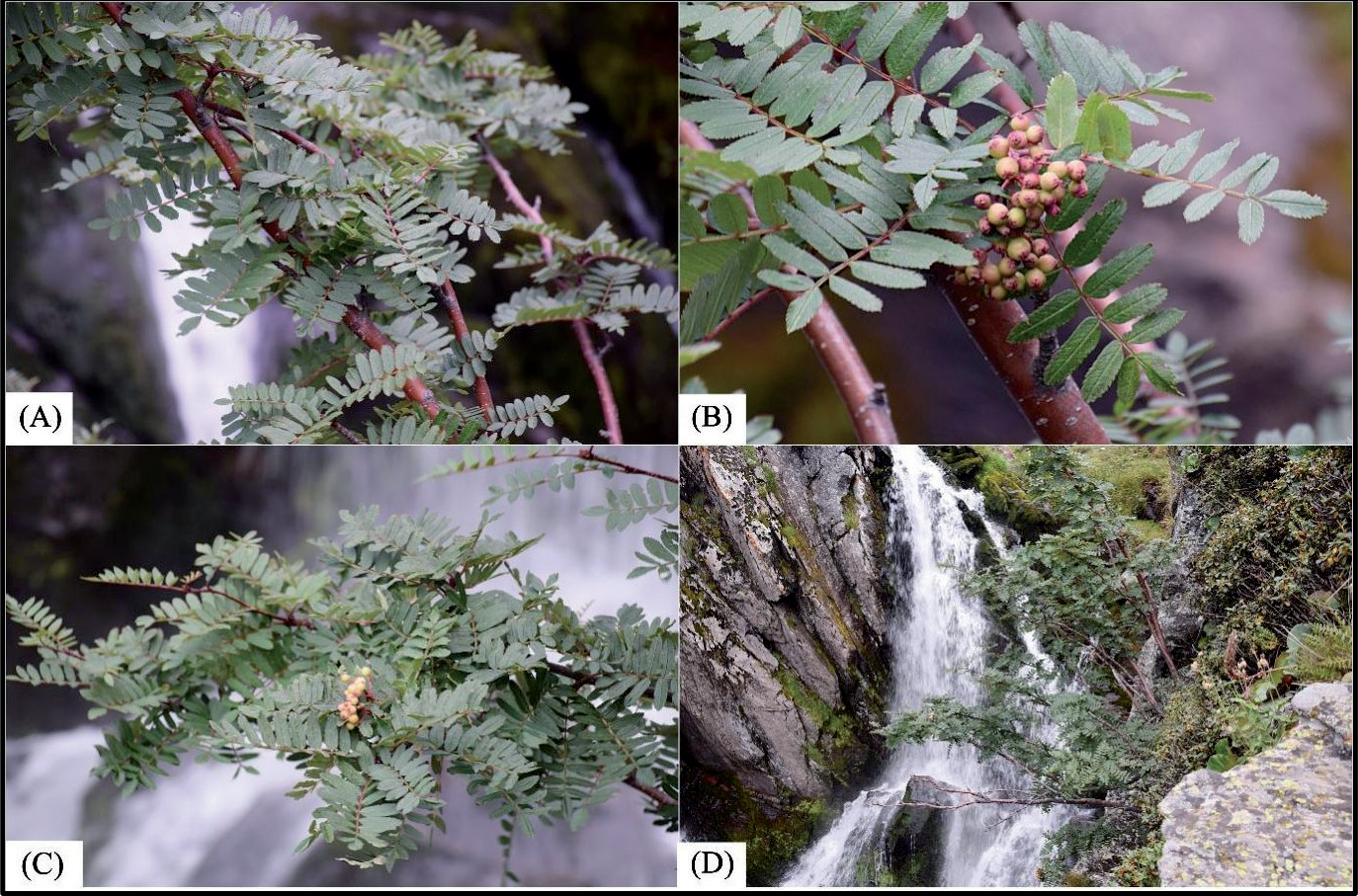
Habit: Shrubs. 1-4.5 m tall. Branchlets are greyish brown to brownish, terete or round. Leaf macro-morphology: Young leaves have densely rusty hairs, sometimes hairless (Fig. 3); lenticels are oblong; buds are ovoid with a blunt apex and a size of (3.7-6.2 = 4.34±1.92) mm; several scales have the color brown and are puberulous apically. Leaves are imparipinnate, joined with rachis (7.2-12.1 = 2.0.3±1.42) cm; petiole (1.4-1.9 = 2.70±0.58) cm; stipules cauducous, linear to lanceolate, (4.4-8 = 1.54±0.21) mm, margin serrate; rachis sulcate, slightly rusty, narrow winged; leaflets blades 5-9 pairs, sub-leathery, at intervals of (0.1-1.3 = 3.01±0.87) cm. Leaf micro-morphology by LM: Adaxial surface is dark green, length of epidermal cells (33.08-47.03 = 39.70±2.37) mm, width of epidermal cells (19.77-25.68 = 22.61±1.07) mm, number of epidermal cells (98-115 = 107.50±3.06), oblong or oblong-elliptic (2.2-3.3 = 1.02±0.03×0.7-1.6 = 2.43±0.68) cm, abaxial surface is slightly hairy, length of epidermal cells (25.57-42.12 = 31.36±2.92) mm, width of epidermal cells (14.62-17.80 = 15.88±0.52) mm, number of epidermal cells (70-93 = 84.50±3.98), anomocytic stomata and rarely actinocytic stomata, elliptic stomata shape, length of guard cells (7.23-7.83 = 7.49±0.13) mm, number of stomata (38-53 = 43.50±2.57), length of stomata (37.00-42.80 = 40.10±1.01) mm, width of stomata (28.08-30.58 = 29.35±0.48) mm, length of subsidiary cells (26.13-36.35 = 31.57±1.74) mm, width of subsidiary cells (9.95-13.13 = 11.02±0.56) mm, ovate stomatal pore shape, length of stomatal pore (24.88-27.03 = 25.77±0.42) mm, width of stomatal pore (12.13-13.63 = 12.68±0.26) mm, Stomatal index (66.52%) mm (Fig. 4).
Inflorescence: Inflorescence are Compound corymbs with diameter of (4.7-9.8 = 5.20±2.01) cm, many flowers; pedicels having rusty hairs; lenticels are oblong; bracts cauducous (1.3-3.1 = 4.64±1.65) mm. Pedicel (1.2-2.3 = 1.47±0.45) mm. The flower’s diameter is (4.7-98 = 32.22±1.79) mm, Hypanthium obconic, slightly pubescent or glabrous. Sepals are obconic, triangular, glabrous, and apex-acute. Petal’s color is white, ovate-broadly obovate (2.1-2.8 = 1.54±0.88) mm, base clawed. Stamens are 15-20 times smaller than petals. Styles 2 or 4, free at base, hairless Fruit color is red, ovoid or spherical, with a diameter of (4.3-6.2 = 3.21±2.01) mm and small lenticels; sepals are persistent.
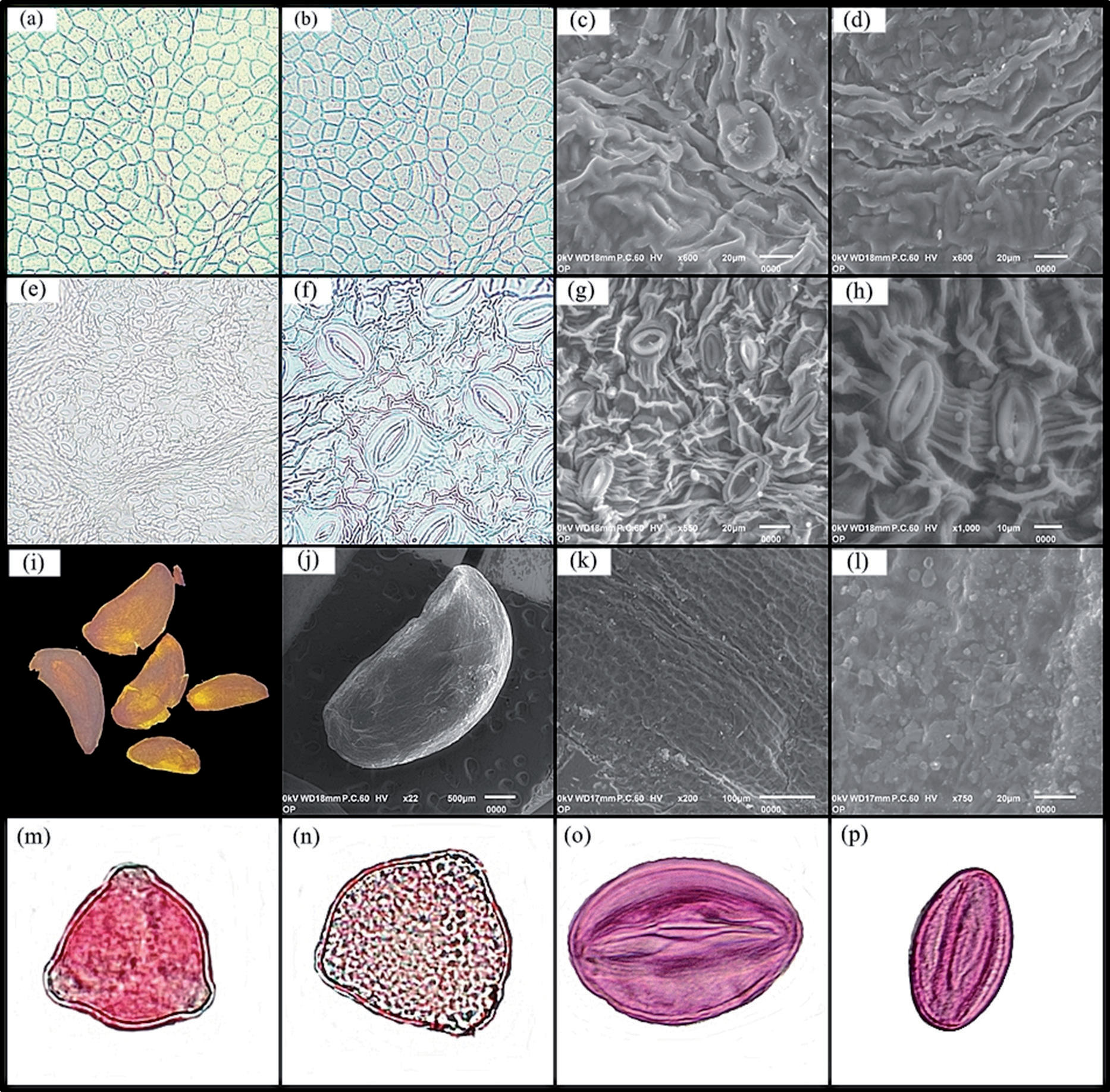
Pollen: Pollen are tricolpate; axis length (29.75- 36.25 = 33.85±1.13) mm, equatorial diameter (30.25- 37.75 = 33.80±1.32) mm, number of colpi 3, length of colpi (6.75-7.75=7.30±0.20) mm, width of colpi (2.5- 3.50 = 3.00±0.18) mm, exine thickness (2.25-3.00 = 2.57±0.14) mm, fertile pollen 116 (fertility 85.92%) and sterile pollen 19 (sterility 14.08%), mesocolpium (32-34.00 = 33.00±0.40) mm (Fig. 4). Seed examination by Stereomicroscope: Seeds are brownish (0.9-2.2 = 2.25±0.14) mm, seed length (3.85-4.10=3.95±0.04) mm, seed width (1.51-2.10 = 1.87±0.11) mm, length/width (1.86-2.72 = 2.15±0.16) mm (Fig. 4). Leaves and seed micromorphology by SEM: Both adaxial and abaxial leaf surfaces were observed through SEM. The adaxial and abaxial leaf surfaces showed noticeable differences, as the adaxial leaf surface has no stomata, while the abaxial leaf surface contains an anomocytic stomatal type. The anticlinal walls of the adaxial surface are straight and thickened, while the periclinal walls are raised and thickened. On the abaxial surface, irregular/ striate can be observed, along with anomocytic stomata that have an elliptic shape and an ovate stomatal pore (Fig. 4). The seed shape of S. foliolosa is obovate, with an obtuse seed base and a light brown color. The seed outline appears smooth, with ribbed-reticulate surface sculpturing. The shape of the epidermal cell is irregular, with an unevenly thickened wall. The anticlinal wall is raised, straight to curved, whereas the periclinal wall is slightly concave. (Fig. 4). Phenology: Flowering time from June to August and fruiting July to September.
Distribution
Sorbus foliolosa is an endemic species found in the Himalayan region. This species was observed and collected at an elevation of 4250 m in the alpine zone of the Phullawae region in the Kashmir Himalayas.
Fig. 4.
(a, b) Light microscopy of the foliar epidermal anatomy of Sorbus foliolosa (40x); (c, d) SEM micrographs of adaxial surface; (e, f) abaxial surface (10x) showing anomocytic stomata with irregular arrangements of cells (40x); (g, h) SEM micrographs of the abaxial surface; (i) Stereomicroscope photographs of seed morphology representing the brownish colors of achenes; (j) showing the general surface of the seed; (k, l) outline is smooth with a ribbed-reticulate surface; the anticlinal wall is straight to curved, and the periclinal wall is straight and depressed; (m, n) light microscopy; (LM) of pollen micrographs with polar view showing tricolpate pollen shape; (o, p) equatorial view of pollen.
Conservation Status
Sorbus foliolosa is confined to the alpine zone of the Phullawae region in the Kashmir Himalayas. According to IUCN guidelines, which classify species with less than 250 individuals in a 100 km2 area as critically endangered, only 3-4 populations of this species have been recorded in the Phullawae region [44].
Associated Flora
Allium victorialis L., Gentiana kurroo Royle, Geranium himalayense Klotzsch, Bergenia stracheyi (Hook.f. & Thomson) Engl., Anaphalis nepalensis (Spreng.) Hand.-Mazz., Artemisia roxburghiana Besser, Rheum webbianum Royle, Melanoseris brunoniana (Wall. ex DC.) N. Kilian & Ze H.Wang, Rhodiola fastigiate (Hook.f. & Thomson) S.H. Fu, Poa bulbosa Steud., Swertia alata (D.Don ex G.Don) Royle ex C.B. Clarke, and Lagotis cashmeriana (Royle ex Benth.) Rupr.
Discussion
Sorbus foliolosa is well distributed in the western Himalayan region of Kashmir, but its previous description was lacking in detail, and field records were incomplete. Furthermore, due to its restricted habitat in the Kashmir Himalayas, only a limited number of individuals have been recorded. The specimen closely resembles the original material in all aspects, which has allowed for a thorough description of the species. The Sorbus genus especially exhibits a higher degree of resemblance in terms of color and structure of inflorescence. Furthermore, there is a significant amount of uniformity among the groups in fruit color and leaflet number [13]. Sorbus fruits exhibit a variety of colors, such as white, pink, red, and orange-red. Additionally, the number of leaflet pairs in the Sorbus genus ranges from 2-21 pairs [3, 22]. The number of reliable floral morphological features for identification is limited. Identification of the species is according to its vegetative leaf morphology, including leaflet pairs, size, serration location, stipule shape, and fruit color. These characteristics have often been utilized to distinguish Sorbus species. Most notably, Sorbus foliolosa can be distinguished from other species of Sorbus by key features, including petiole length of (1.4-1.9 = 2.70±0.58) cm, cauducous stipules, linear-lanceolate leaves with serrate margins, 5-9 pairs of leaflet blades, absence of stomata on the adaxial surface, slightly pubescent abaxial surface with a large number of stomata, Compound corymbs Inflorescence, white petals, persistent sepals, 15-20 stamens, rounded red fruit, and brownish seed color [21, 45]. A valid identification method that can assist with accurate taxonomic identification and authenticity is anatomical characters [46].
Previous research provided some details about the primary morphological characteristics of leaves. Adaxial surfaces lack stomata, whereas abaxial surfaces exhibit anomocytic stomata and rarely actinocytic stomata. The upper surface displays isodiametric epidermal cells, while the lower surface features irregular epidermal cells with a zigzag or wavy cell wall pattern [47]. Variations in epidermal size were also noted among Rosaceae species. Stomata exhibited the anomocytic type; a type of stomata was also reported in the Rosa genus [48], while other types have been found in the Rosaceae family [49-51].
The study demonstrates how seed shape, particularly seed micro sculpture, can be used to identify diverse species within the Sorbus genus. The shape of seeds is important for phylogenetic studies and species identification in the Rosaceae family [52]. Furthermore, several studies have shown that Sorbus exhibits significant variability in seed features such as size, shape, and surface patterns, which provide valuable taxonomic information [53]. Seeds are brownish, (0.9-2.2 = 2.25±0.14) mm, with a seed length of (3.85-4.10 = 3.95±0.04) mm and a seed width of (1.5-2.10 = 1.87±0.11) mm. Sorbus foliolosa seed outline appears smooth, with reticulate surface sculpturing, while other species of Sorbus like S. meliosmifolia and S. megalocarpa have light ribbed-reticulate patterns of seed surface, whereas S. flogneri and S. alnifolia can be distinguished by their seed surfaces having a polygonal to irregular cell pattern. These seed results are strongly supported by [30].
Pollens of Sorbus foliolosa are tricolpate, with an axis diameter (29.75-36.25 = 33.85±1.13) mm and an equatorial diameter (30.25-37.75 = 33.80±1.32) mm. This result is consistent with those of [52]. S. scalaris, S. prattii, S. sargentiana, S. meliosmifolia, S. megalocarpa, S. koehneana, S. folgneri, S. amabilis, and S. alnifolia all show trizonocolporate pollen grains [30]. The pollen size of Chinese Sorbus taxa was found to be medium-sized, with the polar axis diameter ranging from 25.21-40.41 mm [54]. In contrast, some Polish Sorbus taxa had smaller pollen sizes as compared to Sorbus foliolosa, with a polar axis diameter ranging from 22.91-33.2 mm [55]. Sorbus foliolosa was collected from alpine pastures with harsh environmental conditions such as low temperatures, short growing seasons, and heavy snowfall. Due to the aforementioned reasons, the differences observed among various Sorbus species in pollen size can be attributed to increased temperatures and solar radiation in particular environments. According to research, plants that live in areas with higher temperatures and potential evapotranspiration produce fewer but larger pollen grains [56]. Current findings help in understanding the population size and distribution range of Sorbus foliolosa in the western Himalayan region of Kashmir. Since its first report had only a little morphological description, this study offers detailed insights on the macro-morphological features by using LM and SEM. The study also identifies the factors that influence the population size of Sorbus foliolosa, evaluates conservation on a regional scale, and provides insights on future sustainable management and conservation of threatened species in the era of global change.
Future Management
To preserve this species, we suggest creating a nature protection site rather than a nature reserve. Anthropogenic activities have substantially restricted the distribution regions of Sorbus foliolosa, with limited populations in mountainous areas being vulnerable to disturbances [57-61]. To preserve Sorbus foliolosa and its habitat, we urge a complete ban on activities like branch picking, cutting, and habitat trampling where this species is found. Specifically, more rigorous management practices should be implanted in these hotspot areas. Our goal is to reduce human disturbance and safeguard suitable habitats to foster population growth and expand distribution ranges. The government, stakeholders, and forest department should develop public awareness and outreach programs in areas where Sorbus foliolosa populations are present. Involving organizations and local communities is crucial for the long-term conservation of this threatened species and should be encouraged from the outset.
Conclusions
Sorbus foliolosa is well distributed in the alpine zone of the Kashmir Himalayas, but there is limited documentation. In this study, we provide for the first time the micro-morphological features (leaves, pollen) and SEM analysis (leaf surfaces, seeds, pollen) of this species. Furthermore, this study provides diagnostic features for Sorbus foliolosa that facilitate its identification from other Sorbus species. A newly discovered population of Sorbus foliolosa with a small number of individuals needs to be protected by the forest department. In the era of global change and the decline of species, conservation strategies should be implemented to protect habitat as well as genetic diversity. Moreover, seed propagation and tissue culture should be used to support species conservation efforts.

