

Introduction
Acid mine drainage is recognized by the U.S. Environmental Protection Agency (US-EPA) as one of the three major ecological risks [1]. The acid mine drainage continuously generated by abandoned coal mines, if not effectively and properly treated and improved, results in a large amount of acidic wastewater containing heavy metal ions that may directly enter groundwater and surface water, causing irreversible impacts on the ecological environment and even endangering human health [2-4]. Nearly 8780 closed coal mines in Shanxi Province of China, a large number of abandoned mines and tailings in the Witwatersrand Basin of South Africa, and approximately 2260 abandoned mines in Canada have been submerged by acid mine drainage. These continuous generations of acid mine drainage pose a serious threat to the ecological security of watersheds and regions [5-7]. Exploring effective treatment approaches for soil and water environmental pollution caused by acid mine drainage has always been a focal point and global challenge. Scholars have explored various approaches to wastewater treatment. For example, biochar produced through co-hydrothermal carbonization of biomaterials and the nanomaterials synthesized using either inorganic or organic materials [8-12] are among the technologies being explored.
Acid mine drainage is widely generated in coal mining areas in China, particularly in Shanxi Province, a major coal-producing region. The pH of acid mine drainage is generally between 2.0 and 3.0, and it contains pollutants that exceed standards, including Mn²⁺, Fe²⁺, Fe3⁺, Zn²⁺, Cd²⁺, and Cu²⁺ [13, 14]. Mn²⁺ and Cd²⁺, as heavy metal ions with high activity and mobility, have become the focus of this study. Mn²⁺ can harm aquatic and terrestrial ecosystems and lead to iron deficiency in algae, acute toxicity in fish, and embryonic death. In humans, excessive consumption of Mn²⁺ can lead to seizures and potentially permanent neurological disorders and affect respiration, reproduction, and development. Long-term exposure to high concentrations of Mn²⁺ can also result in neurological syndromes characterized by cognitive, mental, and motor abnormalities and increased risk of developing specific forms of Parkinson’s disease [15, 16]. Cd²⁺, which has high mobility and strong accumulation capabilities, is classified as a Class I carcinogen by the International Agency for Research on Cancer. Additionally, Cd²⁺ has toxic effects on the lungs, kidneys, and bones. Excessive exposure to Cd²⁺ may also lead to overflow proteinuria and disruption of potassium metabolism in urine [17-19].
Currently, common methods for treating acid mine drainage globally include ion exchange, adsorption, permeable membrane processes, chemical treatments, microbial remediation, and artificial wetland systems [20-23]. Adsorption has gained widespread application due to its minimal generation of secondary pollution [24- 26]. In recent years, the resource utilization of industrial solid waste has gained favor in the field of heavy metal adsorption [27-29]. In our preliminary research results, the red mud and loess mixture with a mass ratio of 7:3, RM-L73, possesses satisfactory pH buffering ability and adsorption capacity for acidic wastewater containing Mn²⁺ and Cd²⁺ [30, 31]. Adsorption is the process by which target ions are captured and held onto the adsorbent, whereas desorption refers to the release of target ions from the adsorbent that has already bound the pollutant. Desorption is essentially the reverse process of adsorption. The greater the desorption amount, the weaker the ability of the adsorbent to adsorb and retain target ions, making them more likely to be re-released into the liquid phase as ions. This consequence could potentially re-contaminate the water and soil environment [32]. Therefore, the safety and stability of employing RM-L73 to purify acid mine drainage requires further evaluation. The desorption characteristics of target ions on RM-L73 are crucial for assessing the safety of RM-L73 loaded with target ions, as well as for proper disposal and recovery of heavy metals. Additionally, heavy metal ions in actual acid mine drainage coexist with multiple other ions rather than existing in isolation. Therefore, the competitive behavior among multiple heavy metal ions is essential for further evaluating the stability and effectiveness of the adsorbent.
This study investigates the desorption characteristics of RM-L73 loaded with Mn²⁺ and Cd²⁺ in both neutral and acidic environments. Furthermore, the safety and effectiveness of RM-L73 are evaluated. Additionally, the competitive adsorption characteristics of target ions in binary and ternary systems are systematically studied where other heavy metal ions are present. The selective adsorption sequence of RM-L73 for heavy metal ions is obtained, and the intrinsic mechanism of competitive adsorption is explored to provide theoretical guidance for the application of RM-L73.
Materials and Methods
Materials
RM-L73
The Bayer process red mud from the Shanxi Liulin Aluminum Plant was used in this study. The loess belongs to the late Quaternary sediment (Q4), which was collected from approximately 4-5 m underground at a construction site in the Dongshan area of Taiyuan (Shanxi, China). The red mud and loess were mixed in a mass ratio of 7:3 and stored for future use. The main chemical components and contents of red mud and loess are detailed in the following information: red mud (Al2O3: 24.34%; SiO2: 20.17%; CaO: 18.26%; Fe2O3:9.40%; MgO: 1.26%; K2O: 0.64%; Na2O: 9.61%; TiO2: 3.56%; SO3: 0.47%; MnO: 0.03%), loess (Al2O3: 11.75%; SiO2: 58.88%; CaO: 7.98%; Fe2O3: 4.54%; MgO: 2.05%; K2O: 2.18%; Na2O: 1.70%; TiO2: 0.60%; SO3: 0.03%; MnO: 0.07%). The natural pH of red mud is 10.7, which, far below the standard limit of 12.5 for hazardous waste, does not classify it as such. In addition, the toxicity leaching test of red mud showed that it does not exceed any regulatory standards [33]. Based on these findings, red mud, classified as general solid waste, can be directly utilized as a resource.
Acidic Wastewater
To minimize the effect of other factors on the purification efficiency and mechanism of RM-L73 for acid mine drainage containing Mn²⁺ and Cd²⁺, all the acidic wastewater used in the experiment was simulated using analytical-grade reagents. The heavy metal ions in the acidic wastewater, including Mn²⁺, Cd²⁺, Fe²⁺, Cu²⁺, and Zn²⁺, were prepared using the following analytical-grade reagents: MnSO4•H2O, 3CdSO4•8H2O, FeSO4•7H2O, CuSO4•H2O, and ZnSO4•7H2O. The analytical-grade reagents were accurately weighed in appropriate amounts using an analytical balance and dissolved in distilled water. The desired concentration of the wastewater for the experiment was achieved using a volumetric flask. The pH of the wastewater containing the target ion was adjusted to the required value using dilute sulfuric acid to simulate the acidity of actual acid mine drainage. All chemicals and analytical-grade reagents were purchased from Tianli Chemical Reagent Co., Ltd. (Tianjin, China), and their purities ranged from 98% to 101%.
Batch Experiments
The batch experiments were conducted with a shaking frequency of 150 rpm at a contact temperature of 25ºC, using orbital shaking. Firstly, the required contact time for the experiment was set. After shaking, the mixture was centrifuged, and the supernatant was filtered using a sand core filtration device and a 0.45 μm aqueous filter membrane to obtain the sample. The equilibrium pH (pHe) and electric conductivity (EC) of the samples were measured using a pH meter and a conductivity meter, respectively. The concentration of target ions in the filtrate was determined using ICP-OES after adding dilute sulfuric acid dropwise. To minimize experimental errors, all experiments were performed in duplicate, and the average values were taken.
Desorption Test
A continuous desorption test method was employed to assess the effect of ion concentration changes on the desorption capacity of the adsorbent. Distilled water and an acidic solution with an initial pH of 3.0 were utilized to investigate the desorption characteristics of RM-L73 loaded with Mn²⁺ and Cd²⁺ under neutral and acidic environments, respectively. The experimental conditions for the desorption of Mn²⁺ and Cd²⁺ on RM-L73 were as follows: The initial volume was 100 mL. The initial concentration was 100 mg/L. The desorption solutions included distilled water (H2O) and acidic solution (pH0 = 3.0). The dosages of RM-L73 for Mn²⁺ and Cd²⁺ were 16 and 8 g/L, respectively. The specific volume of the supernatant was 50 mL, the number of desorption cycles was 18, and the desorption time involved 720 min of shaking followed by 720 min of stewing.
For RM-L73 and acidic wastewater that had reached adsorption equilibrium, a specific volume (V1) of the supernatant was taken to measure the residual concentration (Ce) of the target ions at equilibrium. Then, a specific volume (V1 ) of desorption solution was added to the original conical flask to ensure that the volume of the solution in the flask was restored to its initial volume (V0). The flask was placed in a water bath shaker for further shaking. After a set period, a specific volume (V1) of supernatant was similarly taken to measure the residual concentration (Ce1) of target ions. This step marked the completion of the first desorption test. Subsequently, more desorption solution was added, and the process was repeated for multiple desorption cycles. The desorption amount of the target ions in the i-th desorption (ΔDsi) was calculated using Equation (1), while the total desorption amount of the target ion caused by the i-th desorption (Dsi) was calculated using Equation (2).
Where, ΔDsi is the desorption amount of the target ion after the completion of the i-th desorption experiment, mg/g; V0 is the initial volume of solution in the desorption test, L; V1 is the volume of the supernatant taken after the desorption test is completed, L; Cei is the concentration of target ions after the i-th desorption test, mg/L; Dsi is the total desorption amount of the target ion after the completion of the i-th desorption test, mg/g.
Competitive Adsorption Test
To prevent preferential adsorption due to differences in initial concentrations of heavy metal ions, the initial concentrations in each multi-component system were standardized in the competitive adsorption test [34]. The experimental conditions for competitive adsorption of Mn²⁺ and Cd²⁺ on RM-L73 were as follows: Mn²⁺ and Cd²⁺ were target ions, and Cu²⁺, Zn²⁺, and Fe²⁺ were competing ions. The initial concentration was 100 mg/L, the dosage of RM-L73 was 12 g/L, the contact time was 600 min, and the pH0 was 3.0.
Adding coexisting ions in binary and ternary systems, which are not the target ions, leads to competition for the limited adsorption sites and effective components on RM-L73. This competition deprives the target ion of the necessary effective adsorption sites and thereby hinders its complete adsorption. Consequently, the removal efficiency and the adsorption capacity of RM-L73 for the target ion decrease, as reported by Putro et al. [35]. The mutual interference effect of coexisting ions on the competitive adsorption of target ions by RM-L73 was investigated using competitive adsorption evaluation parameters [36], which were calculated from Equation (3):
Where, E is the competitive adsorption evaluation parameter for competitive adsorption systems; qe' is the equilibrium adsorption capacity of target ions in a multi-component system with coexisting ions, mg/g; qe is the equilibrium adsorption capacity of target ions in a binary system without coexisting ions, mg/g.
Microscopic Test
XPS
The compressed sample was placed into the sample chamber. The sample was then sent into the analysis chamber when the pressure was less than 2.0×10⁻⁷ mbar with a spot size of 400 μm, a working voltage of 12 kV, and a filament current of 6 mA. The narrow spectrum was scanned with an energy of 50 eV using a step size of 0.1 eV.
Results and Discussion
Desorption Characteristics of Mn²⁺ and Cd²⁺ in a Neutral Environment
Fig. 1 shows the desorption test results of Mn²⁺ and Cd²⁺ on RM-L73 under a neutral environment, respectively. Fig. 1a and Fig. 1c) illustrate the relationship between the pHe and EC of the solution and the desorption cycles. Fig. 1b) and Fig. 1d) depict the relationship between the single desorption amount of target ions and the equilibrium concentration of the target ions after a single desorption with the desorption cycles.
Fig. 1a) and Fig. 1c) show that during the desorption under a neutral environment, the pHe of the solutions containing Mn²⁺ and Cd²⁺ exhibited a decreasing trend with an increase in desorption cycles. This phenomenon was attributed to adding a neutral solution in each desorption test, where distilled water diluted the existing free alkaline substances in the solution. After the 18th desorption cycle, the pHe of the solution containing Mn²⁺ dropped from 8.8 to 7.9, whereas the pHe of the solution containing Cd²⁺ fluctuated between 7.6 and 8.1, which was within the neutral range of 6.5 to 8.5 [37]. This result may be attributed to the fact that the alkaline substances remaining in RM-L73 could continue to be released and maintain the pH of the solution within a stable range. Furthermore, with the increase in desorption cycles, the EC of the solution containing Mn²⁺ and Cd²⁺ initially decreased sharply and then stabilized at a constant value when the desorption test was completed. This phenomenon indicates that the concentration of free ions in the solution was diminishing. When the pHe of the solution was below about 8.2, ions continued to be released from RM-L73 to maintain the pHe and EC of the solution with minimal fluctuations due to the continuous release and reaction of inexhaustible alkaline substances in RM-L73.
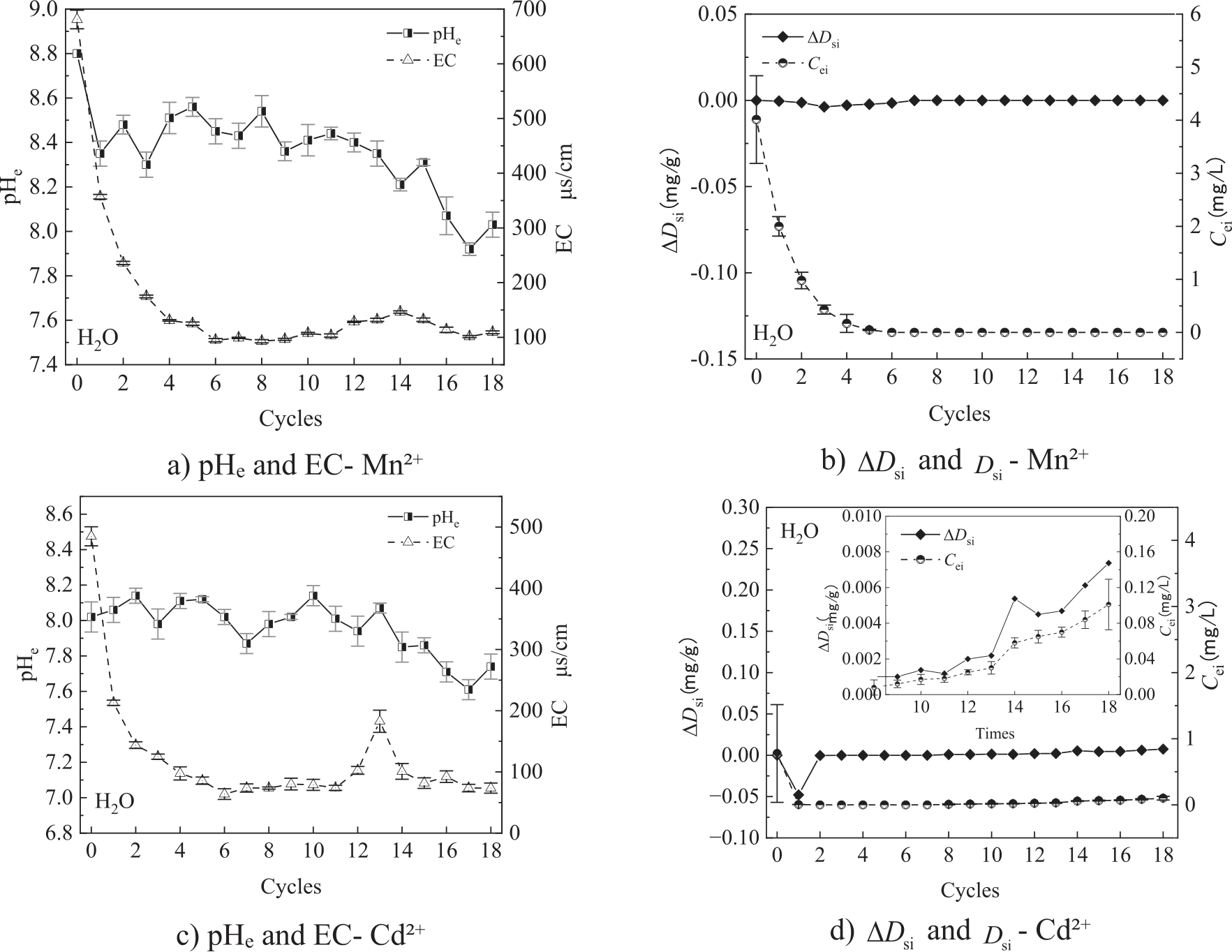
As illustrated in Fig. 1b), with the increase in desorption cycles, the desorption amount of Mn²⁺ in a neutral environment was nearly negligible, and the equilibrium concentration of Mn²⁺ consistently remained below the detection threshold. Mn²⁺ is not readily re-released from RM-L73 in a neutral environment, which minimizes the risk of secondary environmental pollution. Fig. 1d) reveals that during the initial desorption, Cd²⁺ exhibited re-adsorption, potentially due to the relatively low concentration of Cd²⁺ after adsorption (0.8 mg/L) and sufficient unoccupied adsorption sites on RM-L73, which allowed for the adoption of a small amount of Cd²⁺ upon dilution. As the desorption cycles increased, the equilibrium concentration of Cd²⁺ in a neutral environment exhibited a gradually increasing trend. After the 9th desorption cycle was completed, Cd²⁺ began to be desorbed, and when the 18th desorption cycle was completed, the concentration of Cd²⁺ approached 0.1 mg/L. Compared with Mn²⁺, RM-L73 loaded with Cd²⁺ might have lower safety and stability in a neutral environment.
Desorption Characteristics of Mn²⁺ and Cd²⁺ in an Acidic Environment
Fig. 2 shows the desorption test results of Mn²⁺ and Cd²⁺ on RM-L73 under an acidic environment, respectively. Fig. 2a) and Fig. 2c) illustrate the relationship between the pHe and EC of the solution and the desorption cycles. Fig. 2b) and Fig. 2d) depict the relationship between the single desorption amount of target ions and the equilibrium concentration of the target ions after a single desorption with the desorption cycles.
Fig. 2a) and Fig. 2c) show that as the desorption cycles increased, the pHe of the solutions containing Mn²⁺ and Cd²⁺ significantly decreased after the first desorption cycle, followed by a trend of gradual decline. The pHe of the solution containing Mn²⁺, once stabilized, ranged from 7.7 to 8.3, indicating that RM-L73 loaded with Mn²⁺ and Cd²⁺ could still effectively improve and enhance the pH of acidic wastewater. Two reasons explain the decrease in pHe: On the one hand, the free alkaline substances already present in the original solution were neutralized and diluted by the acidic desorption solution. On the other hand, the re-adsorption of Mn²⁺ and Cd²⁺ by RM-L73 during the initial desorption occurred. However, it was observed that the pHe of the solution remained within the neutral to alkaline range after desorption. This result indicates that RM-L73, loaded with Mn²⁺ and Cd²⁺, could still effectively improve and enhance the pH of acidic wastewater. The inexhaustible carbonate minerals, such as calcite in RM-L73, continued interacting with acidic substances in the solution, thereby maintaining their alkalinity [33]. In addition, with the increase of desorption cycles, the EC of solutions containing Mn²⁺ and Cd²⁺ first sharply decreased and then stabilized. However, the EC of the solution was higher than that in neutral desorption environments, potentially owing to the RM-L73 releasing other ions in acidic environments.
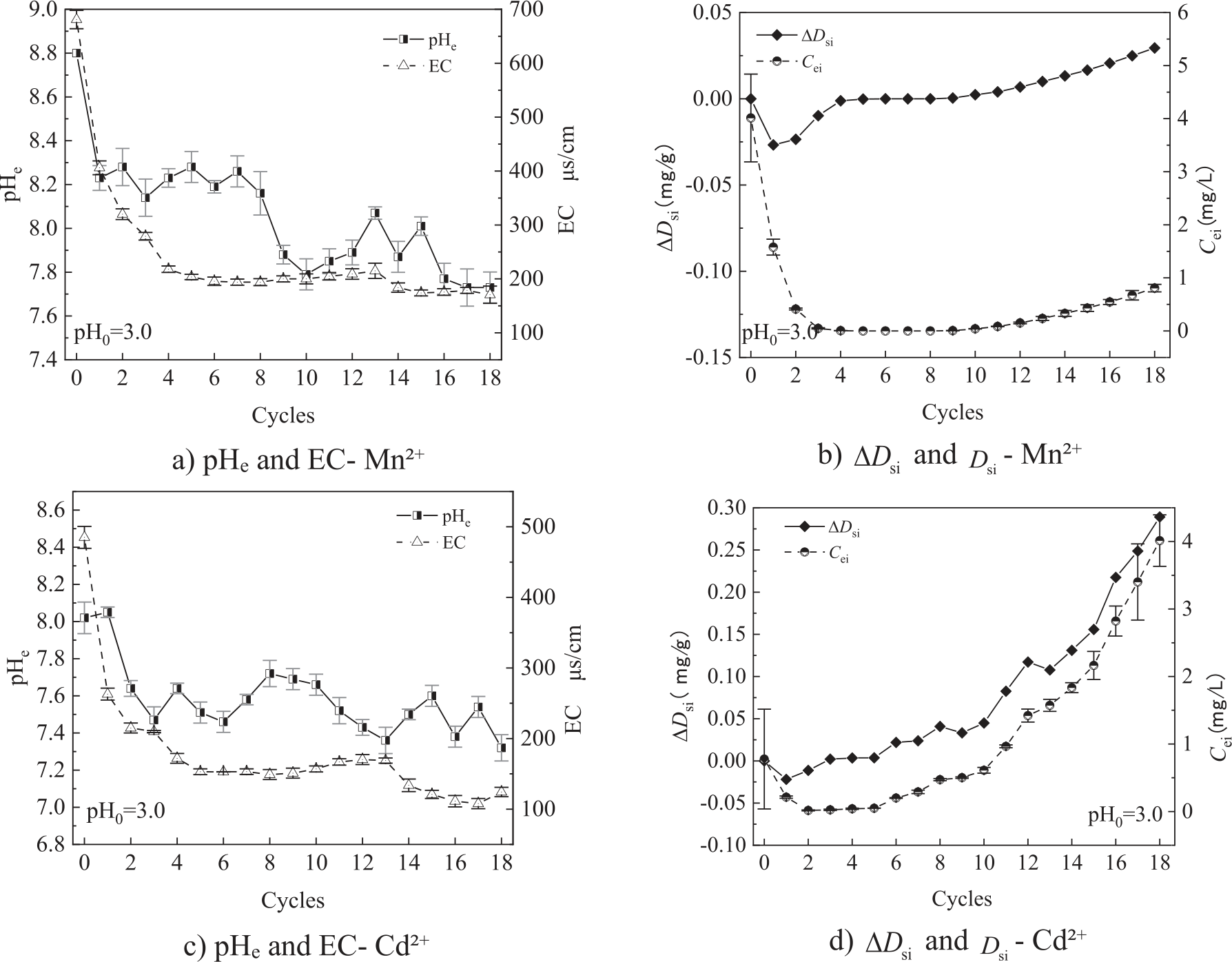
In the previous desorption cycles, Mn²⁺ and Cd²⁺ exhibited varying degrees of re-adsorption on RM-L73, which may have been due to the re-exposure and opening of unoccupied adsorption sites on RM-L73 loaded with Mn²⁺ or the dissolution of surface precipitates on RM-L73 loaded with Cd²⁺ by acidic desorption solution and thereby exposed new adsorption sites. As the desorption cycles increased, the equilibrium concentrations of Mn²⁺ and Cd²⁺ gradually increased. After the 18th desorption cycle, the concentrations of Mn²⁺ and Cd²⁺ in the solution reached 0.8 and 4.0 mg/L, respectively. This result suggests that the application of RM-L73 in acidic environments must consider the environmental risks associated with the desorption of Mn²⁺ and Cd²⁺.
Capture Mechanism of RM-L73
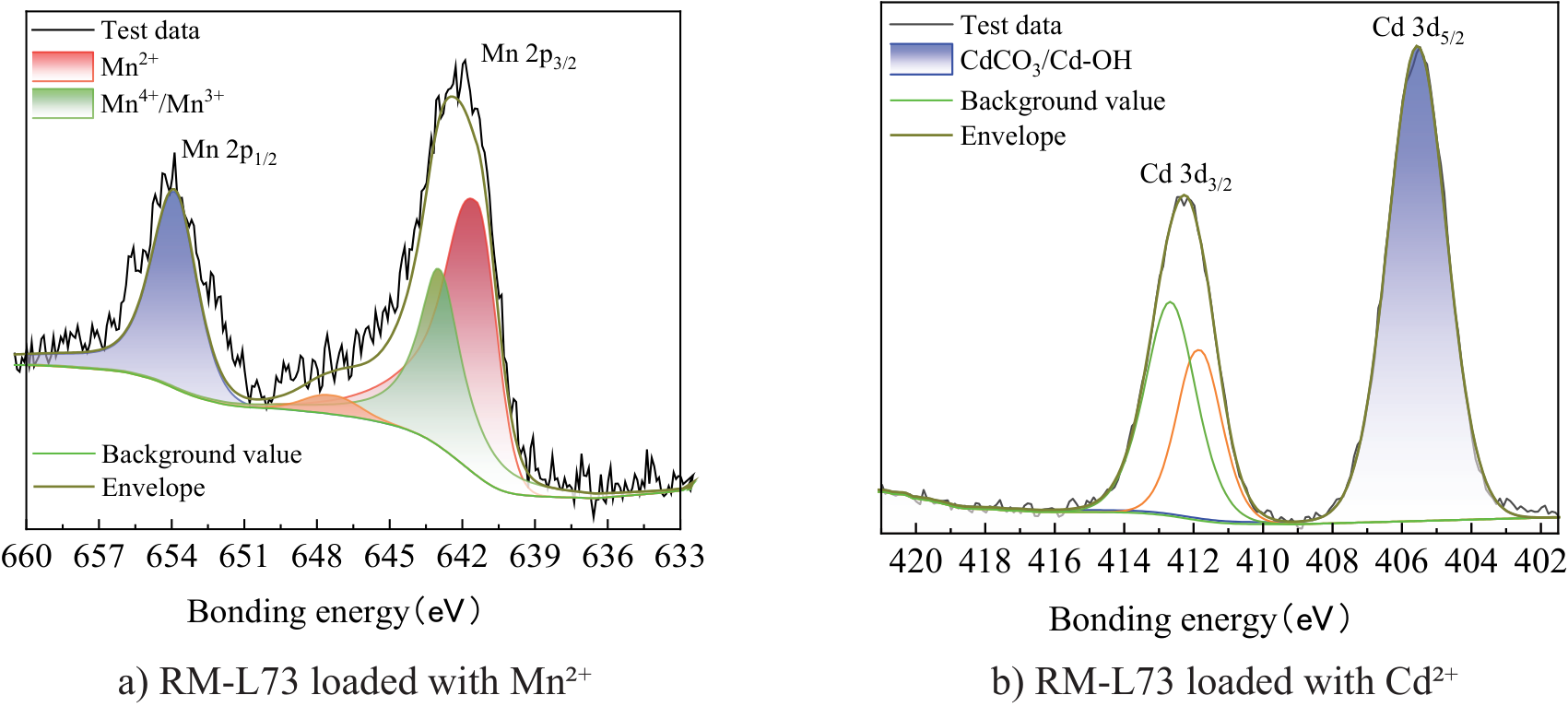
The capture mechanism of Mn²⁺ and Cd²⁺ in acidic wastewater by RM-L73 was further investigated using XPS.
Fig. 3 depicts the XPS spectra of RM-L73 loaded with Mn²⁺ and Cd²⁺. After C1s calibration and peak splitting processing, the peak at Mn 2p3/2 was mainly studied. Mn²⁺ may have been oxidized to higher valence states such as Mn3+ or Mn4+, yet Mn²⁺ remained the predominant valence state adsorbed onto RM-L73. The oxidation of Mn²⁺ may have been facilitated by a catalytic reaction upon contact with O2, which was provided by RM-L73 in an alkaline environment [38]. The adsorption of Mn²⁺ onto RM-L73 was primarily attributed to the forming of new complexes between the non-protonated hydroxyl groups on the surface of RM-L73 and Mn²⁺ [39]. After C1s calibration and peak splitting processing, the peak at Cd 3d3/2 was mainly analyzed. The strong peak detected at a binding energy of 405.56 eV indicated that Cd²⁺ may have undergone complexation reactions with the hydroxyl (-OH) and deprotonated state (O-) on the surface of RM-L73. Furthermore, Cd²⁺ was adsorbed onto RM-L73 in the form of CdCO3 and Cd(OH)2 [40, 41].
Parameterization of Desorption Isotherms
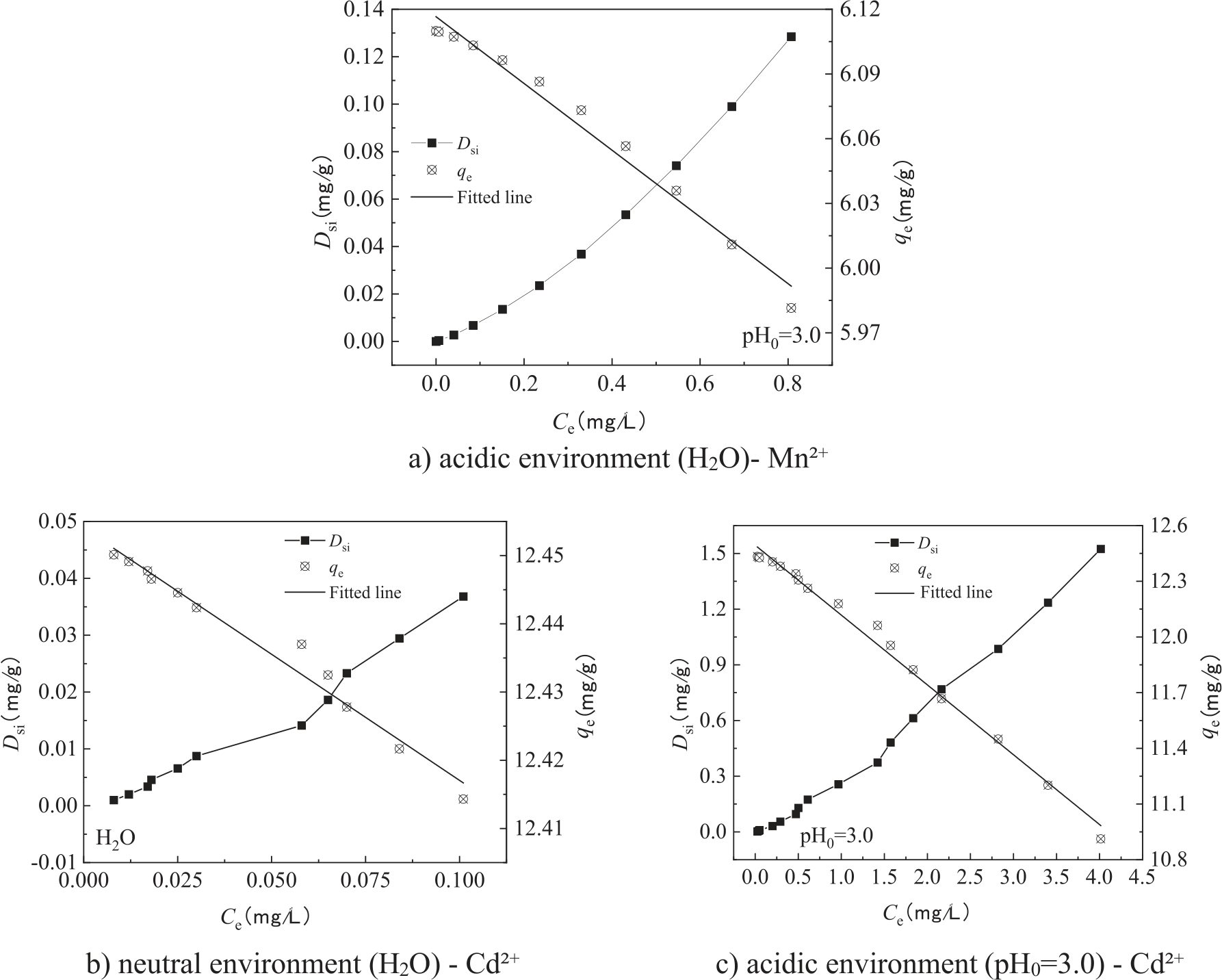
Fig. 4 shows the desorption characteristic curves of RM-L73 loaded with Mn²⁺ and Cd²⁺ in neutral and acidic environments. The desorption isotherms of Mn²⁺ and Cd²⁺ on RM-L73 were analyzed by the Herry adsorption model [42]. The slope of the isotherm, which is the desorption distribution coefficient, a parameter introduced to characterize the ease of desorption of ions, could be used to characterize the adsorption strength of the adsorbent for target ions. Table 1 lists the relevant parameters of the desorption isotherms of Mn²⁺ and Cd²⁺ in neutral and acidic environments.
The desorption distribution coefficients for Mn²⁺ and Cd²⁺ in neutral and acidic environments were negative due to the strong adsorption properties of RM-L73 for Mn²⁺ and Cd²⁺, as well as the low initial adsorption equilibrium concentrations of these ions in the solution. Desorption caused the adsorbed target ions to desorb from RM-L73 and thereby released them back into the solution as free ions. As previously analyzed, the adsorption mechanism of RM-L73 for Mn²⁺ and Cd²⁺ involved strong chemical adsorption of these ions by the mineral components, such as aluminosilicate minerals and calcite in RM-L73.
However, the speciation of heavy metal cations is greatly affected by pH, and the unstable speciation of the target ion in acidic environments is more likely to be re-released into the solution as an ion [43]. The ease of desorption of Mn²⁺ and Cd²⁺ in neutral and acidic environments was evaluated using the desorption distribution coefficient. The larger the coefficient, the more difficult it is for RM-L73 to facilitate the desorption of the target ion. For Cd²⁺, which was successfully adsorbed by RM-L73, desorption was more likely to occur in acidic environments than in neutral ones. Mn²⁺ did not undergo desorption in a neutral environment; however, a slight desorption phenomenon was observed in acidic environments. Based on the desorption distribution coefficient of Mn²⁺ and Cd²⁺ in acidic environments, Mn²⁺ was more difficult to desorb and release after being adsorbed on RM-L73 compared with Cd²⁺.
Competitive Adsorption Characteristics of Mn²⁺ and Cd²⁺ on RM-L73
Competitive Adsorption Parameters of Mn²⁺ and Cd²⁺
Table 2 presents the competitive adsorption evaluation parameters of Mn²⁺ and Cd²⁺ in different initial concentrations of single, binary, and ternary systems.
The E values of Mn²⁺ and Cd²⁺ were generally less than 1 in binary and ternary systems, indicating an antagonistic effect of coexisting ions on their adsorption. For Mn²⁺, the minimum E value was generally observed at an initial concentration of 100 mg/L. As the initial concentration further increased, the E of Mn²⁺ slightly increased. It indicates that in high-concentration competitive adsorption systems, the antagonistic effect of coexisting ions on Mn²⁺ was weak. For Cd²⁺, a gradually decreasing trend was observed as the initial concentration increased. At the lower initial concentration stage, sufficient adsorption sites and active components were available for Cd²⁺ and coexisting ions due to the large dosage of RM-L73, which ensured complete adsorption. Therefore, the antagonistic effect of coexisting ions was not evident and created an illusion of no interaction. However, as the initial concentration increased, coexisting ions competed with the Cd²⁺ for effective adsorption sites on RM-L73, which led to a reduced adsorption capacity and a clear inhibitory effect.
Adsorption Capacity of Mn²⁺ and Cd²⁺ in
a Competitive Adsorption System
The Langmuir isotherm adsorption model was employed to determine the maximum adsorption capacity for Mn²⁺ and Cd²⁺ in the competitive adsorption tests [44, 45]. The variations in the maximum adsorption capacity of RM-L73 for Mn²⁺ and Cd²⁺ in binary and ternary systems, which consist of the target ion and different coexisting ions, are illustrated in Fig. 5. Table 3 presents the basic physicochemical parameters of H⁺, Mn²⁺, Cd²⁺, Cu²⁺, Zn²⁺, and Fe²⁺.
Table 1.
Characteristic parameters of desorption curves of Mn²⁺ and Cd²⁺ on RM-L73.
Table 2.
E of Mn²⁺ and Cd²⁺ in single, binary, and ternary systems.
Fig. 5 shows the Langmuir adsorption capacity of RM-L73 for Mn²⁺ and Cd²⁺ in single, binary, and ternary systems. Compared with the maximum adsorption capacity of RM-L73 for the Mn²⁺ and Cd²⁺ in the single system, the adsorption capacity of Mn²⁺ and Cd²⁺ in the binary system was significantly reduced due to the presence of coexisting ions. The adsorption capacities of Mn²⁺ decreased by 29.9% to 49.5%, whereas Cd²⁺ decreased by 13.3% to 39.9%. The antagonistic effect order of coexisting ions for Mn²⁺ was Cu²⁺>Zn²⁺>Fe²⁺ >Cd²⁺. For Cd²⁺, the antagonistic effect order was Cu²⁺>Fe²⁺>Zn²⁺>Mn²⁺. In the ternary system, with the addition of another coexisting ion, the competition between the Mn²⁺ and the adsorption sites and active ingredients on RM-L73 was further intensified. The adsorption capacities of Mn²⁺ on RM-L73 decreased by 46.6% to 58.3%, and Cd²⁺ decreased by 44.1% to 45.5%. In the ternary system where Mn²⁺ and Cd²⁺ coexist, the antagonistic effect order of the third coexisting ion affecting Mn²⁺ was Cu²⁺>Fe²⁺>Zn²⁺, and for Cd²⁺ was Cu²⁺>Zn²⁺>Fe²⁺. Cu²⁺ exhibited the greatest antagonistic effect on Mn²⁺ and Cd²⁺. Table 3 shows Cu²⁺ had the smallest hydrated ion radius and a large charge size ratio. Smaller hydrated ion radii correspond to lower migration resistance of heavy metal ions, which is characteristic of preferential adsorption. Moreover, the larger the charge size ratio, the stronger the bond energy. Furthermore, a larger charge size ratio indicates stronger bond energy. Therefore, Cu²⁺ significantly influenced and reduced the adsorption effect of RM-L73 on target ions in binary and ternary systems [46].
Table 3.
Basic physicochemical parameters of each ion in the acidic wastewater.
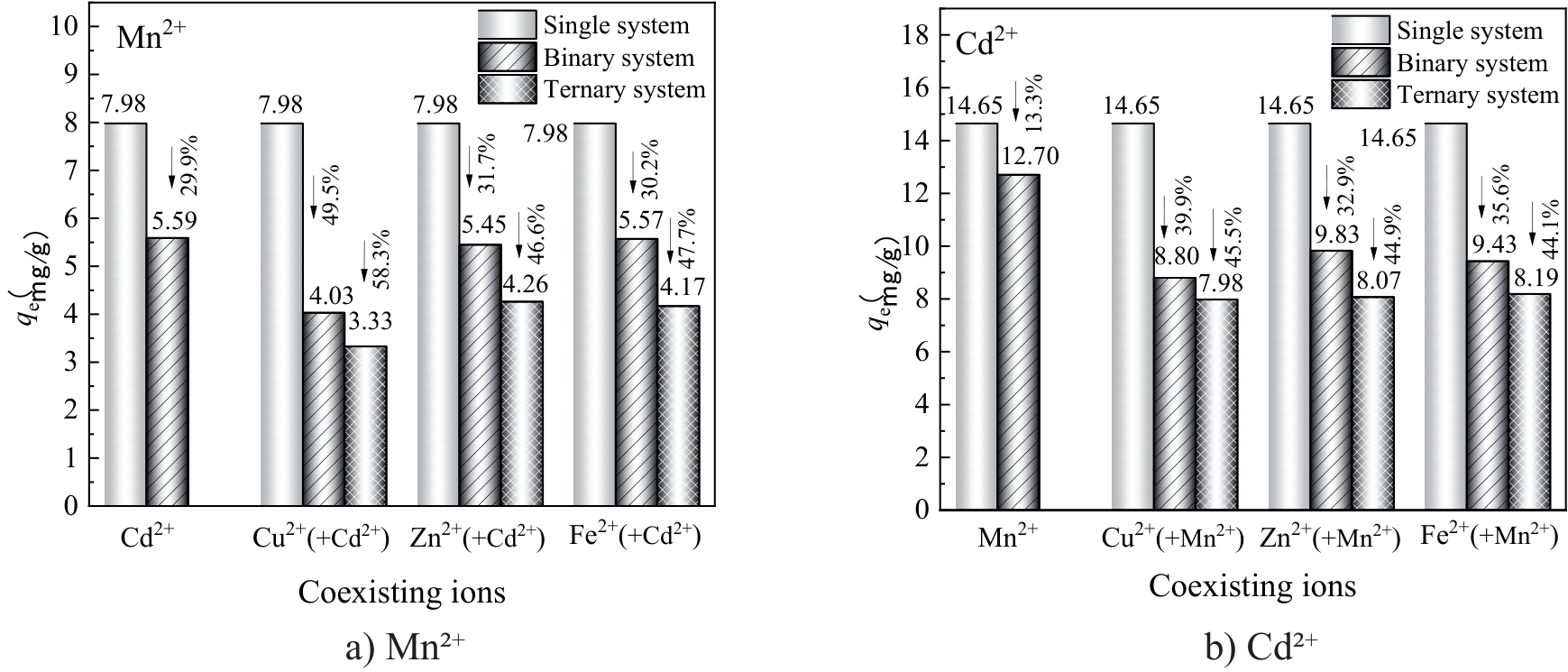
Comparing the decrease in maximum adsorption capacity of Mn²⁺ and Cd²⁺ shows that the coexisting ions Cu²⁺, Zn²⁺, and Fe²⁺ exerted a greater antagonistic effect on Mn²⁺ than Cd²⁺. These coexisting ions possibly severely inhibited the adsorption of Mn²⁺ by RM-L73. This can be attributed to the significantly smaller hydrated ion radius of Cd²⁺ compared with that of Mn²⁺. With a smaller hydrated ion radius, Cd²⁺ is more easily bound to RM-L73 particles than Mn²⁺, which resulted in a weaker antagonistic effect. When RM-L73 is used to purify acidic wastewater containing Mn²⁺, the potential degradation in Mn²⁺ removal efficiency due to coexisting ions must be considered, although desorption experiments revealed that the speciation of Mn²⁺ on RM-L73 after purification is relatively stable compared with Cd²⁺.
Conclusions
In this study, the safety and effectiveness of the RM-L73 were investigated. The desorption characteristics of Mn²⁺ and Cd²⁺ on RM-L73 under neutral and acidic environments were examined through continuous desorption tests. Additionally, the competitive adsorption characteristics of Mn²⁺ and Cd²⁺ on RM-L73 in the presence of coexisting ions in binary and ternary systems were explored. The main conclusions drawn are as follows:
(1) RM-L73 loaded with Mn²⁺ does not exhibit desorption of Mn²⁺ in neutral environments, but it does in acidic environments. Conversely, RM-L73 loaded with Cd²⁺ can undergo desorption of Cd²⁺ in neutral and acidic environments, and the desorption strength of Cd²⁺ is greater in acidic environments than in neutral ones. The desorption behaviors of Mn²⁺ and Cd²⁺ in neutral and acidic environments can be effectively described by the desorption distribution coefficient. In practical applications, considering and monitoring changes in the pH levels of the RM-L73 service environment, as well as replacing the active media in a timely manner, are essential to prevent secondary environmental pollution. Moreover, RM-L73 possesses a great buffering capacity for acidic wastewater.
(2) The antagonistic effect of coexisting ions on the adsorption of Mn²⁺ and Cd²⁺ in binary and ternary systems was determined through competitive adsorption evaluation parameters. As the initial concentration increases, the antagonistic effect of coexisting ions on the adsorption is generally enhanced. The effective adsorption sites and active components on RM-L73 are competed for and occupied by coexisting ions, which hinders the adsorption of the target ions and reduces the adsorption capacity of RM-L73 for them.
(3) In the binary system, the antagonistic effect order of Cd²⁺, Cu²⁺, Zn²⁺, and Fe²⁺ on Mn²⁺ is Cu²⁺>Zn²⁺>Fe²⁺ >Cd²⁺. For the antagonistic effect on Cd²⁺, the order is Cu²⁺>Fe²⁺>Zn²⁺>Mn²⁺. In the ternary system, the antagonistic effect order of Cu²⁺, Zn²⁺, and Fe²⁺ on Mn²⁺ is Cu²⁺>Fe²⁺>Zn²⁺. Similarly, the antagonistic effect order on Cd²⁺ is Cu²⁺>Zn²⁺>Fe²⁺. The antagonistic effect order of coexisting ions on target ions in different adsorption systems correlates with the charge size ratio and the hydrated ion radius of the ions.
(4) The adsorption effectiveness of RM-L73 on Mn²⁺ and Cd²⁺ in binary and ternary systems is significantly affected and reduced by the presence of Cu²⁺, which has the smallest hydrated ion radius and a large charge size ratio. Furthermore, the adsorption of Mn²⁺ is more susceptible to the antagonistic effects of coexisting ions than that of Cd²⁺.

