

Introduction
Globally, millions of tons of plastics are produced annually, facilitating various aspects of people’s lives. Initially, plastic was produced to create a durable material, and thus it became a popular good that is now used globally [1]. According to some estimations, global plastic production in 2016 reached 335 million tons, with an average annual growth rate of 8.6% since the 1950s [2, 3]. In the last two decades, worldwide plastic production has increased by about 248.5 million tons, with a 10% annual growth [4]. Due to the COVID-19 pandemic, there has been a dramatic increase in plastic usage in food containers, personal protective equipment, and hospital waste, and consequently a huge volume of plastic waste [5, 6].
Most plastics are discarded after use, thus affecting soil, water bodies, and oceans, where they can persist for hundreds of years [7, 8]. Ultraviolet light from sunlight degrades plastic materials, causing disintegration into smaller particles. Additionally, mechanical forces (e.g., wind) break down plastics into smaller particles. Microplastics (MPs) are tiny plastic particles in the range of 1 µm-5 mm, often not visible to the naked eye, and thus scientists and policymakers are increasingly focusing on these plastic particles due to their negative effects on wildlife and human health [9-11]. Pollutants/ chemicals can be adsorbed onto the surface of MPs [12, 13]. Plastic products may also transport bacterial pathogens, most of which are related to human diseases and serious pathologies [14]. Moreover, small MPs have high specific surface areas, facilitating the formation of biofilms by adsorbing different chemical substances, and because of their smaller size, they can travel long distances [15]. Annually, 74,000 -121,000 MPs can enter the body of a person through food and breathing [16]. MPs pose a threat to global ecosystems and health [17- 21].
It is estimated that MPs found in terrestrial ecosystems add up to 4 to 23 times the amount of plastics found in the oceans [22]. Urban soils, where the majority of the population resides, constitute the primary source of human exposure to MPs [23]. Recently, urban soils have been increasingly used for food production in urban areas [24]. Even when MPs are first deposited on land [25], particularly in soils [26], their ecological effects on urban environments are not well understood [22, 27]. A significant amount of plastic waste discarded by cities accumulates in urban soils, including a large amount of plastics used in agriculture [28, 29]. Runoff from streets in urban areas that are not trapped by sewage systems can contaminate surrounding soils [30]. Tiny fibers and small fragments of MPs are spread by air currents, and then they are deposited in soil with rain [31]. The presence of MPs in the soil is concerning because they can interact with the soil fauna [32]. Similar to the marine environment, soil pollution by MPs can inevitably lead to the accidental ingestion of plastic particles. For instance, earthworms have been seen ingesting MPs, with ingestion rates increasing significantly with a higher number of MPs available in their surroundings [33]. This fact raises concerns about the potential consequences for human health.
Globally, only a few countries are conducting research on MPs pollution, and most of these are from Europe and Asia [14]. In Latin America, emerging efforts have been made in Chile, Argentina, Brazil, Colombia, and Mexico [10]. Chile is a country of multiple environments, with a wide range of landscapes and climates [34], where almost 18 million people are distributed. In Chile, a study in the Metropolitana Region (the most urbanized area with over 7 million people) showed that MPs were present in soils [35]. However, the information on MPs in urban environments in Chile is scarce. This study fills a knowledge gap regarding MP pollution in terrestrial environments. We hypothesize that diverse amounts of MPs exist in different areas of the city focus of this study, depending on human influence and land use. The results can be valuable for identifying areas in the city with higher MPs concentrations, in order to better understand their health risks, and thus help to design adequate plans to reduce MPs.
Materials and Methods
Study Area and Sampling
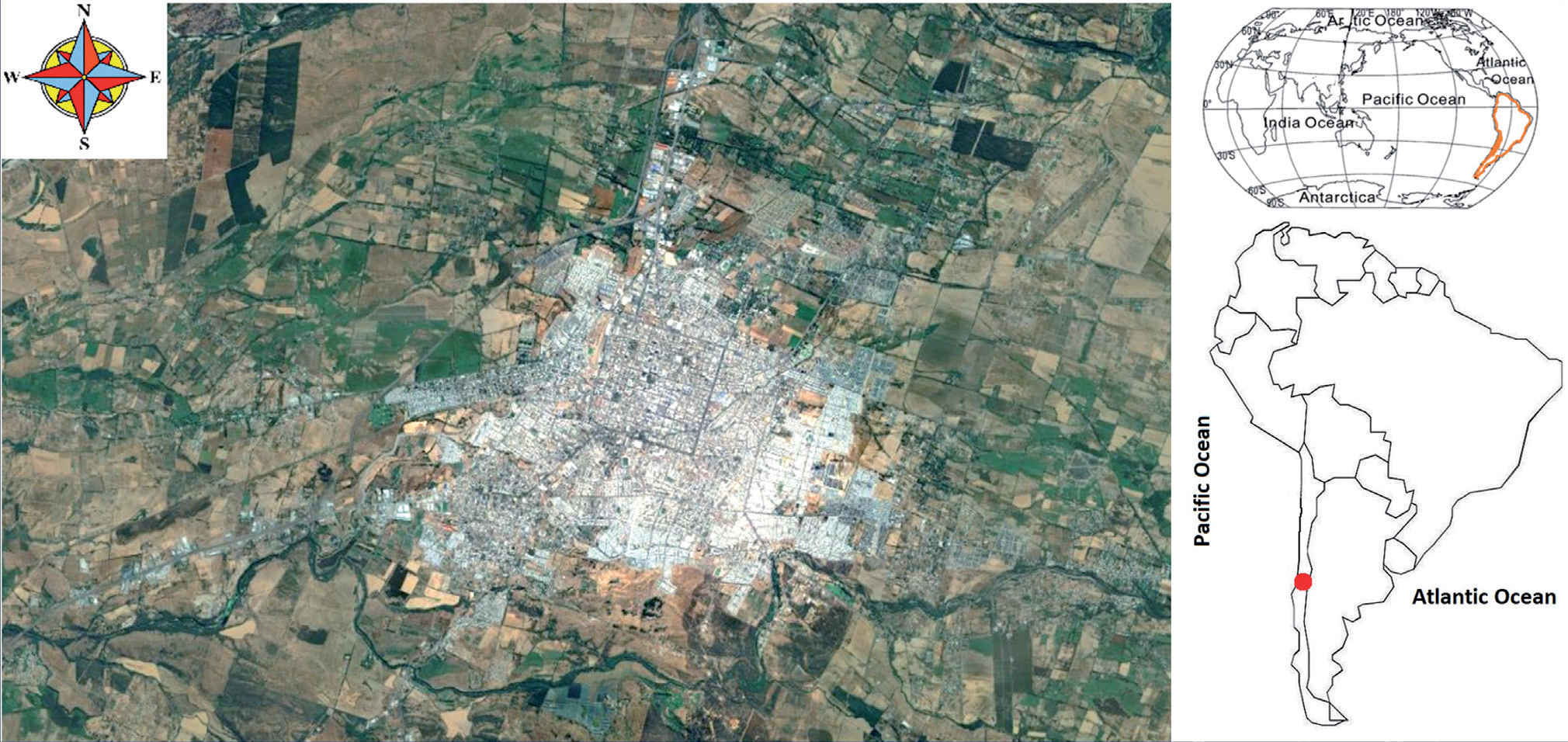
This study was performed in the urban area of the city of Chillán, Chile (Fig. 1), during the summer season of January-February of 2023. It is a semi-industrial city with a population of 184,739, living in an urbanized area of 511 km2 (density of ⁓390 inhabitants/km²). It is located in the central valley of Chile (36°36′24″S, 72°06′12″W), 124 m above sea level, and 400 km south of the capital, Santiago. The city is surrounded by agricultural fields, where all kinds of cereals, vineyards, vegetables, and fruit trees are cultivated during most of the year. The surrounding lands are the result of fluvial and volcanic deposits characterized by a flat topography with smooth slopes. These deposits were transported from the Andes Mountains by the rivers as a result of huge volcanic and torrential events. The region where the city of Chillán is situated is classified as Mediterranean with prolonged dry station (6 months) followed by a humid period and 1,100 mm annual average precipitation [36]. The surface geology of the city under study here was provided by the National Service of Geology and Mining (SERNAGEOMIN) at a local scale of 1: 100,000. It was used to plot the spatial distribution of the MPs using QGIS (3.28 Firenze), an Open-Source Geographic Information System licensed under the GNU - General Public License. Inverse distance weighted (IDW) was used to interpolate the data and improve the visualization of the spatial distribution. IDW interpolation determines cell values using a linearly weighted combination of a set of sample points.
One hundred seventy-four sampling sites were evaluated, considering parking lots, industries, construction areas, natural land use areas, urban parks, pastures, and urban agricultural areas. Topsoil samples (0-10 cm depth) were systematically collected across a 500-m grid, chosen to be representative of the entire urban area within the city of Chillán. At each sampling point, 300 g of soil was collected using a ceramic hand shovel and then carefully placed into Kraft paper bags for storage.
Sample Preparation and Analysis
To quantify the MPs, counting was performed according to the methodology described above [37-40]. Visually, under a microscope, particles were counted according to conventional colors in plastic debris [41]. Sub-samples (20 g) were passed through stainless steel Tyler sieves (5 mm and 50 μm) to separate clay and unwanted particles. After sieving, the collected material was carefully transferred to a glass beaker (250 mL), and then 100 mL of H2O2 (30% w/v, Fisher Scientific) was added to remove all organic matter (oven at 40ºC for 48 h). At the same time, a salt solution was prepared in a glass container (330 g of NaCl x 1 L of distilled water; a magnetic stirrer was used to dissolve the salt, after which it was filtered (Whatman, 1.2 µm) in order to eliminate possible impurities). Following, 100 mL of the saline solution was added to the beakers with the sub-samples, and then the lid was sealed and shaken (2 h) to ensure full contact between the density separation medium and the sample; after, the solution was emptied into a test tube (50 mL), where it was left to decant for 24 h. The overflow layer containing MPs was vacuum filtered onto a glass microfiber filter (Whatman, 1.2 µm). Each filter was placed in Petri dishes, to be subsequently placed in an oven at 40ºC (for 24 h). Three other identical blanks were placed in Petri dishes with milliQ water, using the same procedure to account for background contamination.
Results and Discussion
This is the first report of MPs in the urban environment of Chillán City. The lack of similar studies made it difficult to discuss our findings. Similar to other cities, the urban and suburban soils of Chillán City have evolved based on various human uses following common municipal plans; therefore, they tend to respond differently to MP contamination [42]. Like most cities in the central valley of Chile, Chillán is surrounded by agricultural activities, prompting land use changes for residential, industrial, commercial, and recreational purposes in line with the city’s diverse needs [43].
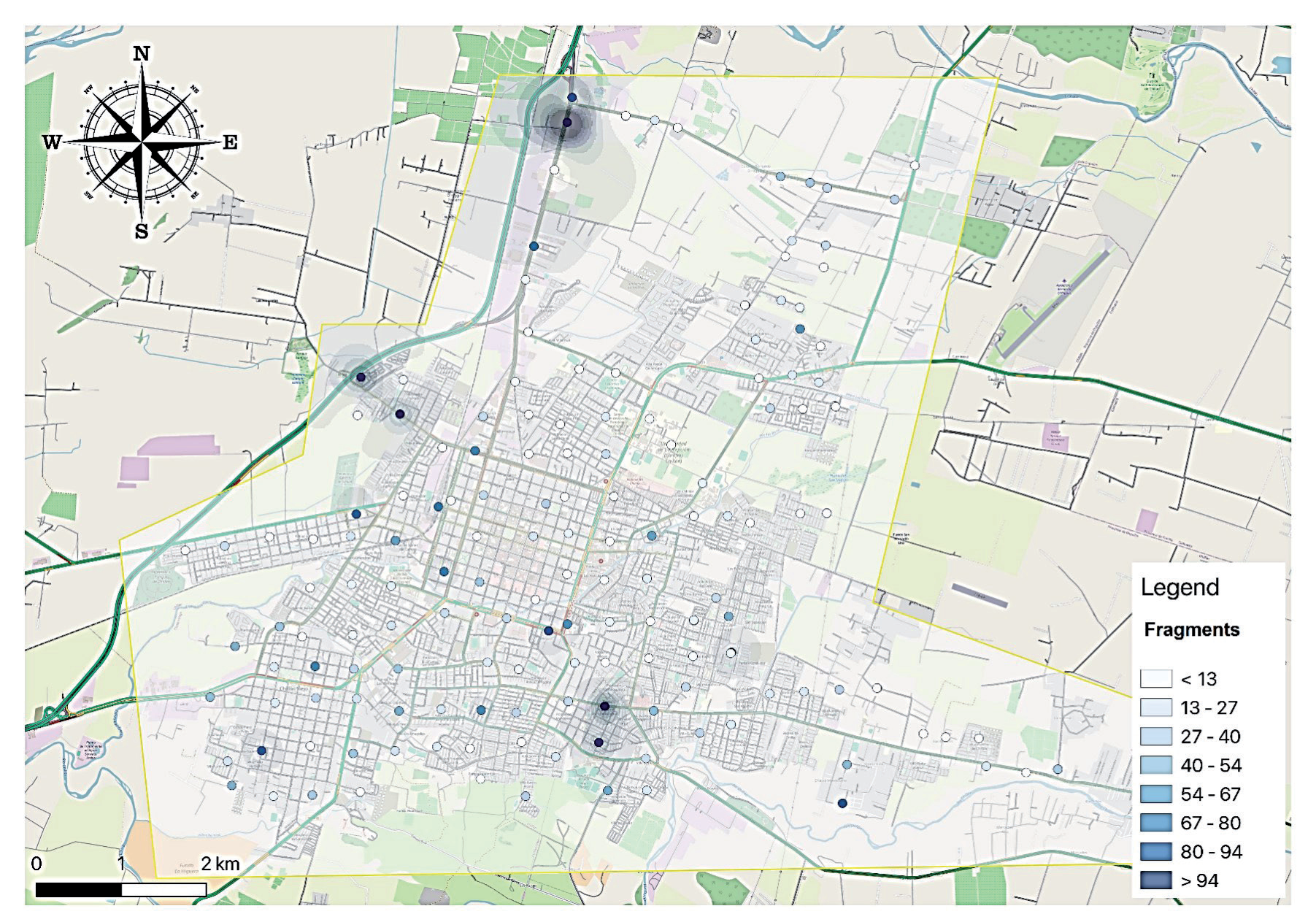
In this report, MP fibers were filamentous in shape, while MP fragments were particles of a more irregular-rounded shape. The analysis of the soil samples collected across the urban area of the city of Chillán revealed that 95.4% of them contained MPs. Most of the MPs found were mainly concentrated in the northern, central, and southeastern areas of the city (Fig. 2). A total of 4,849 particles of MPs were quantified, of which 3,297 (68%) corresponded to fibers and 1,552 (32%) corresponded to fragments. Nine sampling spots (5.2%) showed more than 100 MPs. The occurrence of MP fibers present in the urban area of the city focus of this study is shown in Fig. 3. The highest concentration of MP fibers was found in the central urban area of the city. Regarding the presence of MP fragments (Fig. 4), these plastic particles concentrate the most in the northwest and southeast of the city. The city of Chillán is a regional administrative hub and therefore exerts a strong influence on the urban system and its surrounding agricultural areas, providing support services for productive activities and acting as a focal point for facilities, infrastructure, and population settlement [43]. Even the Chillán is not a heavily industrialized city, most of the industries are concentrated in the northwestern and southwestern areas. The southeast area is highly populated, while the central area of Chillán city is the oldest one, and it is structured in a grid, from which services, various facilities, commerce, and recreational areas have been developed; its periphery takes the form of concentric rings, equidistant from the central area, with suburban sectors of varying sizes and irregular spatial distribution, originating from the city’s growth on agricultural lands [44].
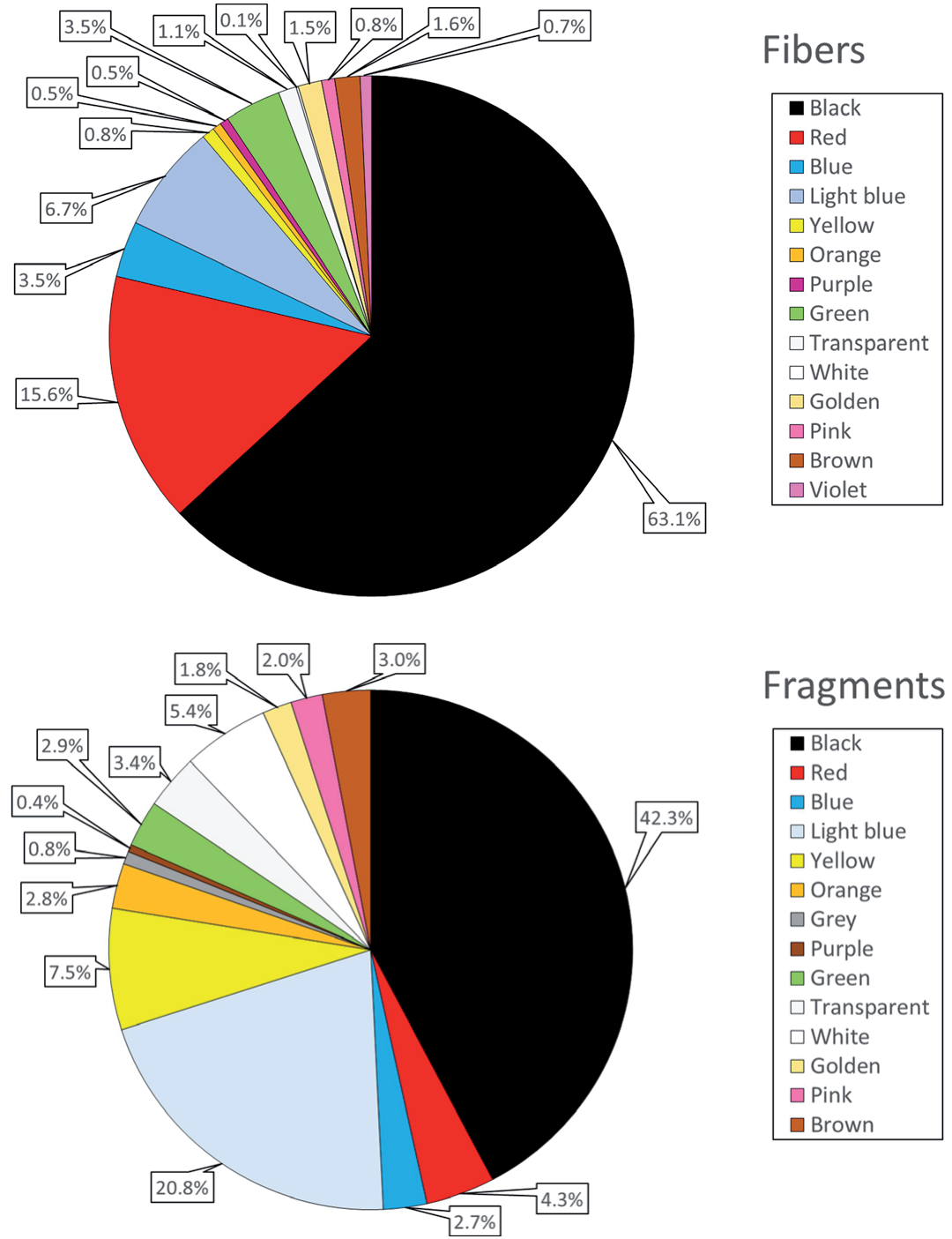
The percentage of plastic color found in the city of Chillán is indicated in Fig. 5. The most common color of plastic found in both MP fibers and fragments is black, with 63.1 and 42.3%, respectively. Nevertheless, red was higher in fibers (15.6%) than in fragments (4.3%), whereas light blue, yellow, orange, and white showed otherwise. The most colored MP particles we found herein probably indicated that plastic polymers are frequently used in commercial goods in the city of Chillán, in contrast with colorless (white/transparent) plastic materials [45, 46]. The transparentcy and green may be due to disposable plastic products commonly used by people (e.g., plastic bags, plastic cups, and bottles), which could be a potential source of MPs in urban environments [46, 47].
Fig. 2.
Total amount of microplastics found per sampling point in the urban area of the city of Chillán, Chile.
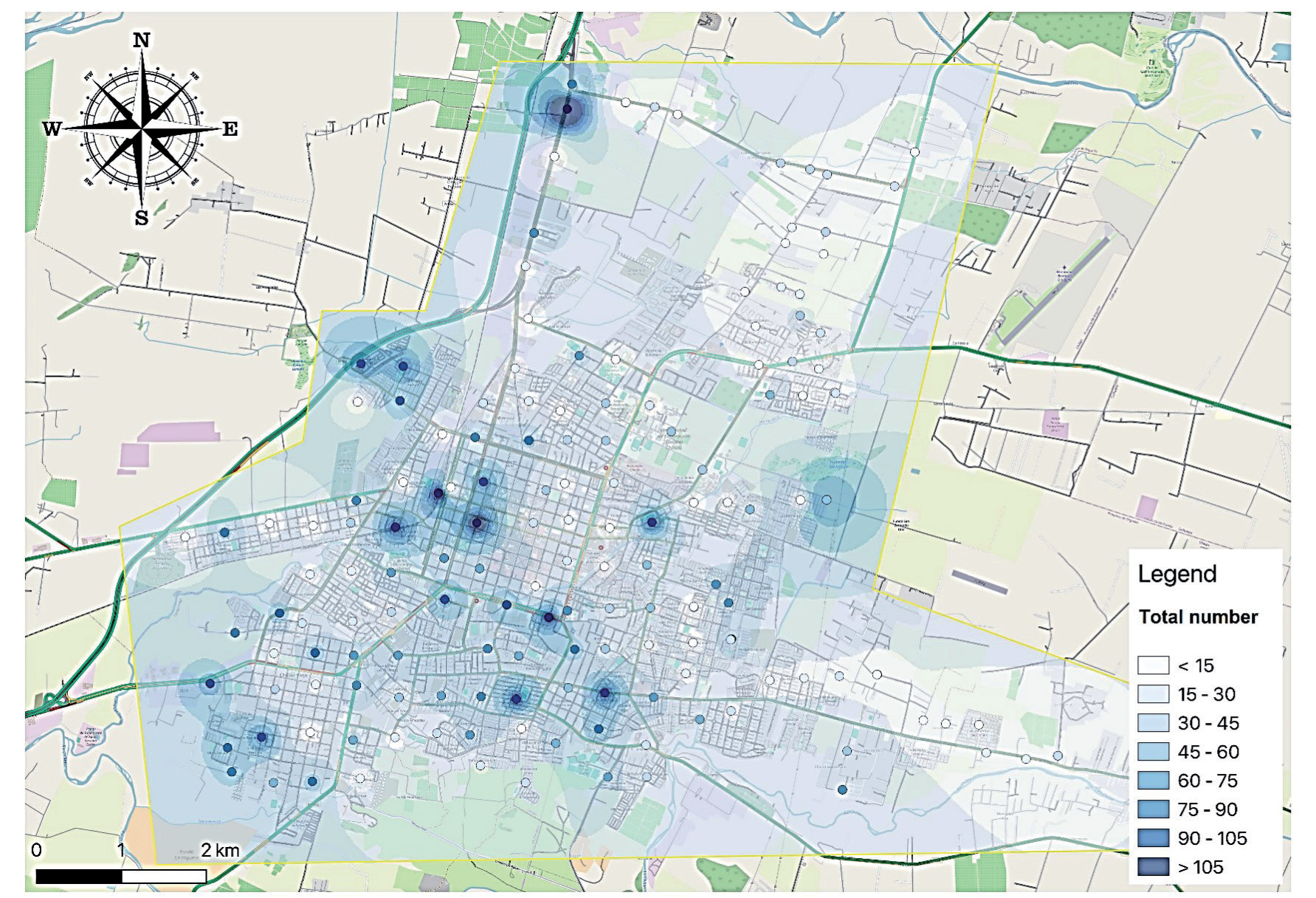
Fig. 3.
Amount of plastic fibers found per sampling point in the urban area of the city of Chillán, Chile.
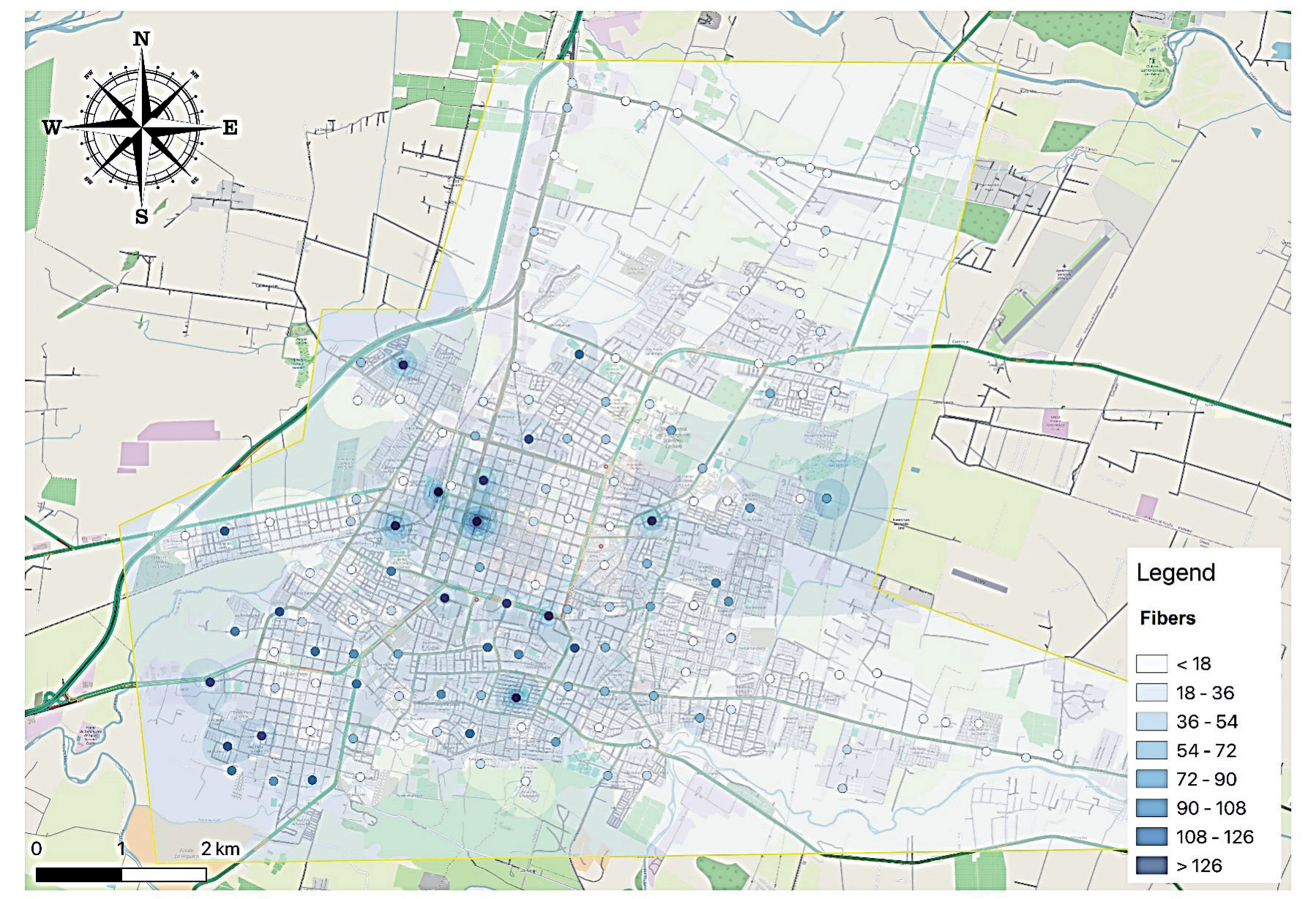
Fig. 4.
Amount of plastic fragments found for each sampling point in the urban area of the city of Chillán, Chile.
Urbanization constitutes one of the main factors contributing to the release of MPs into the environment [8]. With 95.4% of the sampling points indicating the presence of MPs, the extent of plastic pollution in the urban environment of the city of Chillán is evident. The predominance of fibers (68%), and fragments (32%), emphasizes the diversity of MP forms present in the urban environment of the city. This finding differs from the study reported by Zhou et al. (2019) [48] in soils from the suburb of Wuhan City, central China, who found the most prevalent form of MP particles was fragments (53%), followed by fiber (15%). Plastics in the form of fibers, which probably originate from common textiles and synthetic materials usually used by people daily, constitute the most abundant category. Synthetic fibers are used in many applications, such as garments, home textiles, filtration, protective clothing, car tires, fishing gear, and more [49]. China is the largest producer with 66% of synthetic fibers [50]. In Chile, the majority of the synthetic textiles used by people come from China; thus, the high presence of fibers is compressible in the central urban area of Chillán, where most of the commercial stores are located. MPs occur in the form of fragments from the shredding of macroplastic through weathering after disposal [51], and also in the form of fibers from fabrics as a result of everyday usage or cleaning and released from textile factories [52], tire wear, bags, and other commonly used packaging in the central area of Chillán city, as has also been observed in other cities [1]. This result highlights the influence of daily human activities on the release of MPs into the urban environment. Furthermore, the significant presence of fragments indicates the potential degradation of larger plastic items used in industries located in the northwestern area as well as from agricultural activities that surround Chillán city. The identification of 9 sampling points (5.2%) with a concentration of over 100 MPs reflects specific areas with a higher burden of plastic pollution. This finding underscores the importance of precise geolocation to identify and address critical contamination areas.
This study warns about the danger posed by the accumulation of microplastics in the environment. The small particles of microplastics, which are formed from the disintegration of plastics, accumulate in aquatic and terrestrial ecosystems, such as oceans, rivers, lakes, and soils, entering food chains. Microplastics contain toxic substances such as bisphenol A (a chemical compound primarily used in the manufacturing of plastics) and act as carriers of other chemical contaminants (e.g., pesticides, heavy metals) and pathogens (bacteria, viruses), representing an additional health risk due to exposure to microplastics. Ingestion or inhalation of microplastics, and therefore the toxic substances they contain, cause reproductive disorders and negative effects on the development of different species, affecting invertebrates to higher animals. In humans, they increase the risk of miscarriage, obesity, diabetes, cardiovascular diseases, and cancers [53-56].
The analysis of the samples showed that there are clear differences between the selected sites and raised an alert for the presence of microplastics in urban areas of the city under study and other similar cities located in the central valley of Chile. The evidence found in the urban soils of the city indicates that there is a need to understand and address the environmental and human health impacts due to MPs. Colors are added to plastics in the form of pigments to obtain more attractive plastic products, but lighter plastic colors appear to induce a higher photoaging rate and, consequently, the formation of MPs with subsequent ecological risk and toxicity in the environment [57]. This is an issue that requires deeper attention in future studies.
Conclusions
This study confirms the presence of MPs in an urban environment and provides relevant information on the type and size distribution of MPs in urban soils. For the first time, the occurrence of MPs was observed in the urban area of the city of Chillán. Considering that color may serve as a good indicator of plastic degradation and formation of MPs, colors of plastics should be included in future monitoring studies. Also, it is quite required to shift away from single-use plastic products; thus, less plastic will break down into MPs. These findings emphasize the urgency of addressing microplastic pollution in urban environments, particularly continuous monitoring and assessment of microplastics in urban soils. Clearly, the implementation of effective waste management strategies, public awareness campaigns, and robust environmental policies is quite needed to combat this worrisome environmental threat.

