

Introduction
The exponential growth of the digital economy has greatly contributed to the advancement of eco-friendly innovation within enterprises. It holds immense importance to examine the correlation between enterprise digital transformation and green innovation through a supply chain perspective, aiming to enhance the digitization level of both industrial and supply chains. This will ultimately bolster their capacity for innovation and sustainable development.
At present, the majority of studies on the topic of digitalization’s effects on enterprise innovation come from the macro viewpoints of investors, governments, and businesses; little is known about how supply chain digitalization affects enterprise green innovation at the micro level. Government subsidies, in the view of the government, directly encourage businesses to engage in substantive and strategic green innovation efforts. Government innovation subsidies bring more capital input to enterprises and directly reduce the cost pressure of enterprises’ green innovation [1]. The government, as a vital external regulatory body, holds a pivotal position in driving green innovation within enterprises. By intensifying oversight of green innovation initiatives and enforcing compliance through fines and production suspensions, the government effectively incentivizes enterprises to engage in environmentally sustainable innovation practices. From the perspective of investors, the improvement of investors’ attention increases the innovation pressure on enterprises [2]. Individual investors, through voicing their demand and interest in green innovation to enterprises, contribute to the creation of environmental pressure. Simultaneously, investors monitor market dynamics resulting from policy implementations. As green awareness grows, investors amplify the regulatory impact of policies, thereby compelling enterprises to prioritize green innovation initiatives. From the perspective of enterprises, the external environment of enterprises has an impact on corporate green innovation [3], and the internal environment of enterprises can also affect corporate green innovation [4]. Corporate green innovation is heavily influenced by the inventiveness of businesses and the environmental consciousness of leaders.
Due to this, this essay mainly investigates the effects of supply chain digitization on green innovation in manufacturing enterprises, including the direct and indirect effects on manufacturing enterprises of supply chain digitization. The direct impact is obtained through a Differences-in-Differences model empirically investigated. Indirect influence is captured by discussing the mechanisms of digital transformation, customer concentration, and R&D expenses of firms. Mainly discussed are the following questions: Can supply chain digitization help manufacturing companies generate green innovation and foster their growth in the pilot cities under the supply chain innovation and application policy pilot? How does supply chain collaborative innovation development impact green innovation in manufacturing firms through mediating effects? How does the implementation of the policy affect enterprises in different regions, with different property rights and different degrees of marketization? This research conducts a quasi-natural experiment based on the aforementioned questions, using A-share listed manufacturing companies in 55 supply chain innovation and application pilot cities as the experimental group. A-share listed manufacturing enterprises in other cities as the control group, which are established in the Circular on National Supply Chain Innovation and Application Pilot1 issued by 8 departments, including the Ministry of Commerce. Investigating the mechanism of supply chain digitalization on green innovation in Chinese manufacturing firms.
This innovation and marginal contribution may be found in the following areas: first, investigating how supply chain digitization affects manufacturing companies’ green innovation; second, examining the mechanism through which supply chain digitization influences companies’ green innovation; and third, enhancing the body of knowledge regarding the impact of digitization on corporate green innovation. Secondly, by testing the effect mechanism of supply chain digitalization on improving enterprise digitalization level, restraining customer concentration, and driving R&D investment, it provides valuable references for promoting green innovation in enterprises.
Literature Review and Research Hypotheses
Literature Review
Digitalization of the Supply Chain
The digitization of the supply chain is a result of the digital economy’s explosive growth. It has emerged as a prominent topic within contemporary discourse [5]. Current literature predominantly examines the implications of supply chain digitization on various facets, including function, risk, and performance. Regarding function, supply chain digitalization greatly improves supply chain visualization and agility [6]. Through blockchain technology, supply chain digitalization increases traceability, shares visual records, and expands the visibility of the supply chain [7]. It helps companies access relatively high-quality information [8] that can quickly sense and anticipate market turbulence and adapt to changes in the market environment [9]. At the same time, the digital management of the supply chain realizes the transparency of the supply chain, breaks down information silos, promotes supply chain coordination and integrated management, and improves customer satisfaction [10]. In terms of risk, compared with the traditional supply chain, the use of information technology and big data analysis can better deal with the problems of overstock and backorder, reduce the uncertainty in the supply chain, and reduce the risks faced by enterprises [10]. Regarding performance, supply chain efficiency directly influences overall performance. Supply chain digitization harnesses the power of data analytics and digital procurement to streamline operations, enhance procedural efficiency, and consequently boost performance [11]. With the deepening of economic globalization, the supply chain has become a key factor in the core competitiveness of enterprises. To comply with the evolution of the market, supply chain digitization is a must for enterprises to innovate and develop.
Green Innovation of Manufacturing Enterprises
One significant major sector of China’s national economy is the manufacturing industry. At the same time, China’s manufacturing sector accounts for nearly one-third of the world’s energy consumption. Encouraging green innovation in China’s industrial sector is crucial for reducing emissions, conserving energy, and achieving global sustainable development [12, 13]. Currently, the goal of manufacturing firms’ green innovation is to further integrate digitalization and green business innovation while also fostering the growth of manufacturing firms’ green innovation. Literature shows that manufacturing firms can positively impact their financial performance [14], environmental performance, and sustainable performance through green innovation. Firstly, as environmental awareness is paid more and more attention by consumers, customers are more willing to choose green products. Customer preference affects market demand and then affects the manufacturing cost and green innovation direction of enterprises. In this scenario, corporate green innovation can effectively enhance corporate value and reputation, gain more customers’ trust, stimulate their green purchase behavior, increase corporate revenue, and improve corporate financial performance [15]. Secondly, in the face of market challenges and environmental pressure, green innovation has emerged as a critical driver of competitive advantage. Manufacturing enterprises explore new green technologies and products through differentiation strategies to improve their green commercial advantages [16] and environmental efficiency [17], reduce production costs, and enhance their corporate image. Green innovation increases market share, enhances corporate environmental performance [18], and improves the environmental performance of enterprises. At the same time, green innovation in manufacturing enterprises can realize the inclusive growth of the environment and economy; green supply chain integration promotes management innovation [19] and optimizes resource allocation and resource use efficiency [20]. Enhanced the manufacturing sector’s capacity for green innovation, assisted businesses in seizing possibilities in the dynamic market, and encouraged businesses’ performance in sustainable development [21]. Green innovation plays a significant role in propelling manufacturing companies’ sustainable development [22]. Through green innovation, enterprises may develop into major participants in the global market and create new development opportunities and core competitiveness in the increasingly competitive market environment.
Research Hypothesis
Supply Chain Digitalization and Green Innovation of Manufacturing Enterprises
Supply chain digitization applies big data, blockchain, artificial intelligence, and cloud computing to enterprise production practice through the rapid mining and identification of production data information by technology, to help enterprises analyze the reasons for green innovation failure, improve information transparency, reduce the behavior of innovation failure due to information asymmetry, and enhance their green innovation capability [23]. Manufacturing companies may enhance their competitive edge through supply chain digitization. Digitization has improved the efficiency of supply chain operations to a certain extent. Digital technology facilitates the sharing of data among supply chain members, breaking down information barriers between links, and timely detection of business process problems [24]. Meanwhile, compared with the traditional supply chain, the digital resource allocation ability of the supply chain is stronger. Enterprise green innovation has high risks and uncertainties, while supply chain digitalization can dynamically identify and deal with risks, which can strengthen the risk control of supply chain disruption, improve the elasticity of the supply chain, and better deal with the risks faced by manufacturing enterprises’ green innovation [25]. It is obvious that supply chain digitalization promotes businesses to grow sustainably and dramatically raises the bar for green innovation in China’s industrial sector [26]. It improves the level of green innovation [27] and supply chain sustainability [28], can promote enterprise innovation, and plays a critical role in green innovation development [29]. Accordingly, hypothesis 1 is put out:
Hypothesis 1: The digitalization of the supply chain has considerably enhanced green innovation among manufacturing businesses in pilot cities.
Supply Chain Digitization and Digitization Level of Manufacturing Enterprises
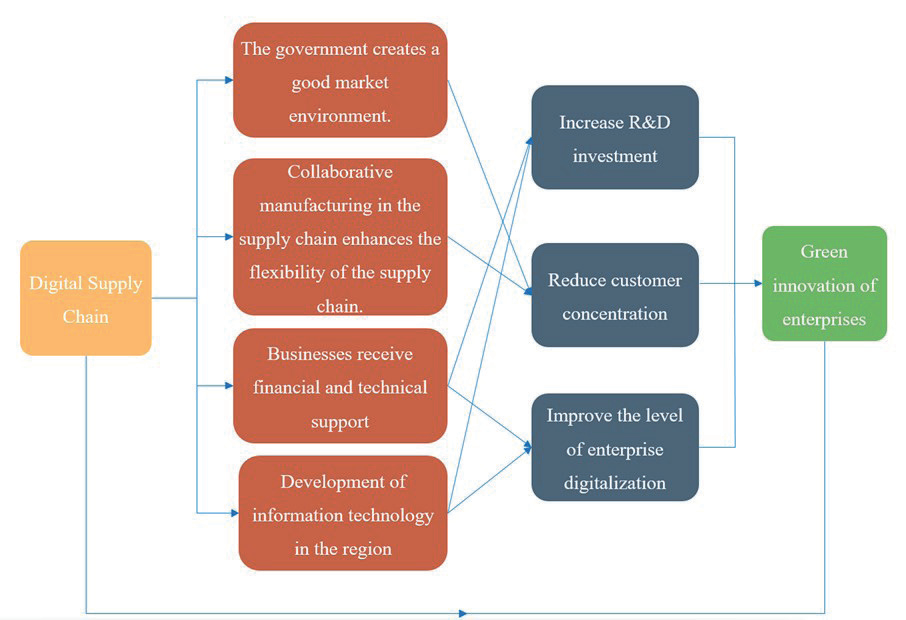
By enhancing the digitalization of manufacturing companies in pilot cities, the Supply Chain Digital Innovation and Application Pilot Policy encourages green innovation in businesses. Enterprise digital transformation refers to the application of the new generation of information technology, improving the ability of enterprise information processing and analysis, and innovation of enterprise business models and organizational structures. The following two aspects show how the pilot policy has affected businesses’ digital transformations. On the one hand, pilot policy implementation contributes to the development of information technology in the region and generates a positive capital market response [30], helping enterprises obtain financial and technological support and increasing enterprise digitization transition input. On the other hand, the digitalization of the supply chain can help enterprises improve the level of technological innovation by using technology and information sharing [31]. Enterprises can improve their green innovation with the help of the digital development of the supply chain, while the implementation of government policies is more conducive to regulating the problem of “market failure” and playing the role of government guidance and regulation. Digital transformation helps enterprises use big data analysis to quickly capture recorded information, improve the production and operation efficiency and strategic potential of enterprises [32], promote the development of innovative technologies, increase revenue, and thus improve competitive advantage [33]. Digitalization can improve the utilization and exchange of enterprise resources and information, break information barriers, promote commodity trading through information exchange, reduce resource asymmetry and cost, improve factor allocation efficiency, and increase sustainability [18]. Businesses’ digital transformation can assist them in overcoming the innovation conundrum and enhancing their capacity for innovation [34]. Accordingly, hypothesis 2 is put out:
Hypothesis 2: Supply chain digitization significantly improves the digitization degree of manufacturing enterprises in pilot cities.
Supply Chain Digitalization, Customer Concentration, and Enterprise Green Innovation
Enterprise green innovation projects are easily affected by the enterprise’s inherent resources; with the development of the economy, the customer in the transaction occupies a dominant position, the bargaining power of large customers gradually increases, and customer concentration can reflect the closeness of the large customers and the enterprise, and thus has an important impact on the enterprise resource allocation [35]. Higher customer concentration can inhibit or hinder the green innovation of enterprises [36]. Over-dependence on customers will increase the operational risk, financial risk [37], and innovation risk of enterprises [38]. Additionally, businesses undergoing a digital transformation can increase their competitiveness by leveraging the information effect [39]. Enhance the risk prevention ability and resource allocation ability of enterprises, weaken the dependence on customer relationships, and significantly reduce the degree [40]. Consequently, supply chain innovation and application rules that are put into place help to foster collaborative manufacturing within the supply chain. Promote enterprises to build an intelligent, shared, and smart supply chain structure supported by big data and improve supply chain security levels. Accordingly, hypothesis 3 is put out:
Hypothesis 3: Supply chain digitalization promotes green innovation in manufacturing enterprises by inhibiting customer concentration.
Supply Chain Digitalization, R&D Investment, and Enterprise Green Innovation
Supply chain innovation and application pilot policy encourages manufacturing enterprises to build a supply chain digital platform from R&D and design, production, and manufacturing to after-sales service and optimizes the supply chain management technology and digital level of manufacturing enterprises, which creates a good supply chain digital environment for manufacturing enterprises. Green innovation in business is the exploitation of new technologies and techniques, and the development of new technologies requires significant financial support [41]. Manufacturing enterprises’ green innovation outputs are significantly enhanced by their green innovation inputs [42]. As enterprises face a series of risks and uncertainty in carrying out green innovation activities, enterprises have to invest a large amount of capital, which may weaken some enterprises’ willingness to engage in green innovation. Therefore, the government’s increased policy support for enterprise R&D and innovation can effectively mitigate the financial risks confronting enterprises and fill in the interferences of the market environment on enterprise green innovation. It can effectively influence enterprises’ green technology innovation [43], and so strengthen the ability of companies for green innovation [44]. Micro-level supply chain resilience and disruptions have a favorable correlation with enterprise innovation [45]. Investing more in research and development lowers the chance of supply chain interruptions and increases the resilience and risk-taking capacity of the chain [46]. Accordingly, hypothesis 4 is put out:
Hypothesis 4: Supply chain digitalization promotes green innovation in manufacturing enterprises by increasing R&D investment.
To illustrate more clearly the impact of supply chain digitalization on enterprise green innovation, a chart of mechanisms is drawn in this paper (see Fig. 1).
Research Design
Model Design and Variable Selection
The A-share-listed manufacturing enterprises in supply chain innovation and application pilot cities serve as the experimental group, while the A-share-listed manufacturing enterprises in other cities serve as the control group. This paper builds the difference-in-differences model using this data. The present study examines the causal relationship between supply chain digitalization and enterprise green innovation, with a particular focus on the following model:
In model (1), i and t represent enterprise and year, respectively; LnGTotalit represents the green innovation level of enterprise i in year t; the interaction item of Treati×Postt indicates whether it is a dummy variable of supply chain innovation and application of pilot city policy; Controlsit is used as other control variables to affect the green innovation of manufacturing enterprises; εit is the random disturbance term. Manufacturing businesses can foster green innovation through application pilot policies and supply chain innovation, as demonstrated by a significantly positive α1 value.
a. Explained variable: corporate green innovation, which represents the extent of green innovation within corporations. Drawing from previous studies conducted by Wenjing and Manni (2016) [47], who utilized the number of green patent applications as a measure of enterprises’ green innovation capacity, and considering insights from Jiang Jun (2020) [48] and other prior research findings, this study calculates the natural logarithm of one plus the number of patents filed for green applications to provide a more comprehensive assessment of businesses’ green innovation efforts.
b. Core explanatory variable: Supply chain innovation and application pilot policy variable (Treat*Post), which represents supply chain digitization. The variable Treat indicates whether an enterprise belongs to a treatment or control group. It takes a value of either 1 or 0 depending on whether its location falls within a pilot city for supply chain innovation and application. Similarly, Post serves as an indicator for policy implementation with a value of either 1 or 0 based on whether data was collected after implementing policies (from year 2018 onwards). By examining Treat*Post, we can assess how implementing supply chain innovation and application policies affects green innovation in manufacturing enterprises. Specifically, there were a total of 55 cities chosen as demonstration sites for piloting these policies in 2018. For this research, we selected manufacturing enterprises exclusively from these pilot cities as our experimental group while using other manufacturing enterprises as our control group.
c. Control variables: To avoid other factors that may affect the green innovation of manufacturing enterprises, six control variables are set, including asset-liability ratio, enterprise size, return on assets, management expense ratio, total asset turnover ratio, and fixed asset ratio. It is measured by the ratio of total liabilities to total assets, the natural logarithm of total assets, the ratio of net profits to total assets, the ratio of administrative expenses to total assets, the ratio of operating income to total assets, and the ratio of net fixed assets to total assets. At the same time, the enterprise individual fixed effect and year fixed effect are also controlled.
Sample Selection and Data Sources
The research sample for this study includes all listed A-share manufacturing businesses from 2013 to 2022, and the data are handled as follows: (1) excluding special treatment, delisted businesses from the sample period, and businesses that are listed this year;
(3) after winsorizing every continuous variable by 1% and 99%, 1120 enterprise-year observations are produced in the end. The information regarding green innovation patents of publicly traded companies is sourced from the Chinese Research Data Services Platform, while the corresponding financial data is obtained from the China Stock Market and Accounting Research (CSMAR). Table 1 presents a descriptive statistical analysis of the primary variables.
Table 1.
Descriptive statistics of main variables.
Results and Discussion
Baseline Regression Analysis
The benchmark results of applying supply chain innovation and the application pilot on enterprise green innovation are shown in Table 2’s regression results. The regression results show that after adding control variables and controlling enterprise individual fixed effects and year fixed effects, the coefficient estimates of core explanatory variables are significantly positive, at least at a 5% confidence level. Therefore, these outcomes provide evidence supporting hypothesis 1 proposed in this study, indicating that supply chain innovation and application pilot policies focused on digital transformation have a favorable impact on enterprise green innovation.
Robustness Test
Parallel Trend Test
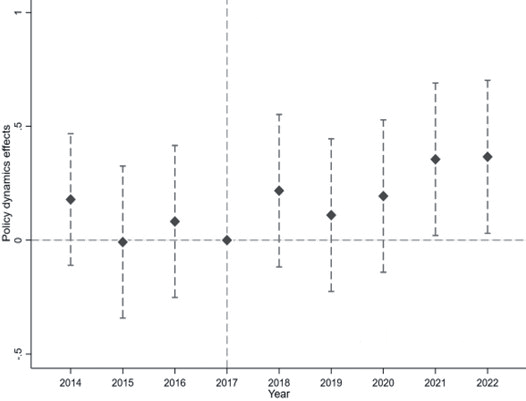
The parallel trend test hypothesis is an important precondition for the difference-in-differences policy evaluation paradigm. Taking cues from Beck et al. (2009) [49], who conducted parallel trend assessment using the event study technique. Before the implementation of the policy, all coefficient estimates for the experimental and control groups were not statistically significant, as demonstrated by the regression findings (Fig. 2). It implies that there was no discernible distinction in the green innovation levels of the firms in the experimental and control groups before the policy’s implementation, and the parallel pattern check is successful. The pilot program has a lag impact, as seen by the considerably beneficial coefficients of post-3 and post-4 after the policy’s introduction. Supply chain innovation and application of the pilot work need a certain amount of time to improve the supply chain governance system, and the impact of the green innovation of manufacturing enterprises’ slow fluctuations increases. The policy needs to be implemented for about two periods after the effect gradually appears.
Table 2.
Benchmark regression results of the impact of supply chain digitalization on the green innovation of Chinese manufacturing enterprises.
Placebo Test
In this paper, the sample enterprises are randomly selected as the manufacturing enterprises in the cities where the supply chain innovation and application pilot are located, and the other enterprises are the control enterprises for the self-sampling method of the placebo test. Equation (1) is used to estimate the impact of supply chain digitization, and the regression coefficient of 500 times of self-sampling is observed to be significant. The test results are shown in Fig. 3, and the p-values of the regression coefficients are all greater than 0.1. It shows that green innovation of manufacturing enterprises is indeed related to supply chain innovation and application pilot policy implementation.
Difference in Differences Propensity Score Matching
The propensity score matching approach is used to solve the endogeneity issue that might occur from sample self-selection and further assess the results’ robustness. The samples were screened, and the control factors were utilized as covariates for matching variables. The control group for the treatment group was matched using the nearest neighbor matching method and the 1:2 matching approach to determine which individuals had similar features. The matched samples were then subjected to the difference in differences propensity score matching test. The matched coefficient estimates are consistent with the baseline regression findings, as seen by the results in Table 3’s columns (1) and (2), demonstrating the continued validity of the conclusions.
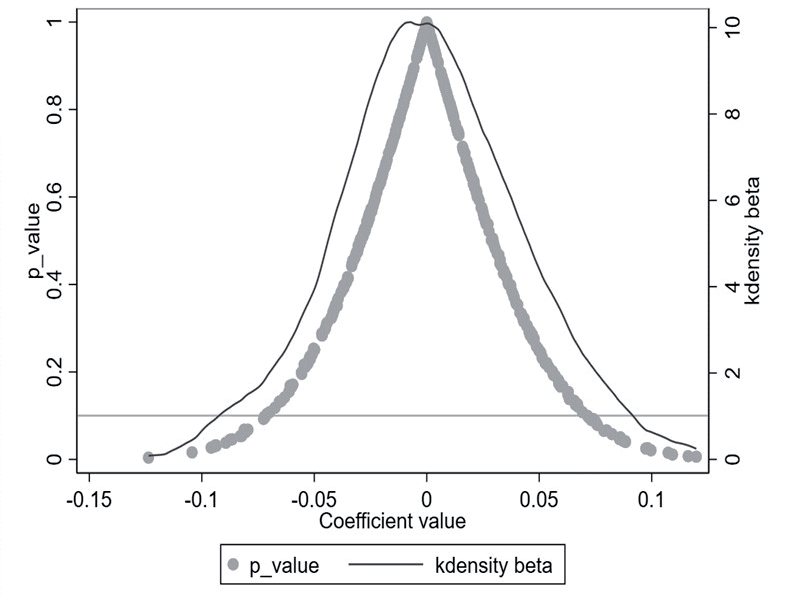
Table 3.
Robustness test results of the effect of supply chain digitalization on green innovation in China’s manufacturing industry.
Exclusion of Some Samples
Major public emergencies have a huge impact on the economy in the short term. The outbreak of Coronavirus Disease 2019 has brought survival risks and financial pressure to enterprises, which has reduced the willingness of enterprises to carry out high-risk innovation activities and affected the green innovation development of manufacturing enterprises. After the outbreak of Coronavirus Disease 2019, the government has taken a series of measures to ensure the economic development of enterprises, and enterprises have made changes in innovation preference in the face of emergencies to relieve the pressure of enterprise innovation. During the sample period, the Coronavirus Disease 2019 pandemic in 2020 was the main fatal blow to corporate green innovation, and this paper excludes the sample observations in 2020. After excluding the influence of the novel coronavirus pneumonia in 2020, Table 3’s column (3) demonstrates that the coefficient estimates of the fundamental explanatory factors are considerably positive at the 5% confidence level.
Changing the Sample Interval
To exclude the influence of different sample intervals on the regression results, the sample intervals are set as 2015-2021. At the 5% confidence level, the data in Table 3’s column (4) show that the key explanatory variables’ coefficient estimates are considerably positive. Demonstrates that even when the sample interval is changed, the results are still strong.
Mechanisms and Heterogeneity Analysis
Mechanism Test
Utilizing customer concentration and R&D costs, this study applies a mediation test method to investigate supply chain digitalization’s effects on manufacturing companies’ green innovation. Referring to the research of Jiang Ting (2022) [50], the following model is constructed:
In Equation (2), Mit is the mediating variable, including the level of enterprise digitalization, customer concentration, and research and development expenses. The measurement standard and definition of the core explanatory variable and control variable are consistent with Equation (1).
Digital Level of Enterprises
This article refers to relevant literature, the digital transformation degree, and the yearly filings of listed firms linked to the “corporate transformation” digital word frequency to calculate the total. Five categories – blockchain, cloud computing, big data, artificial intelligence, and digital technology applications – are chosen for statistical analysis in this article. The data is log-processed and represented in Digital. As shown in Table 4, the coefficient estimates of the core explanatory variables are all significantly positive at the 5% level, indicating the presence of mediating effects. Hypothesis 2 is established.
Customer Concentration
This paper’s theoretical study demonstrates that supply chain innovation and the implementation of urban pilot regulations can minimize consumer concentration, hence fostering corporate green innovation. As shown in Table 4, the coefficient estimates of column (4) are significantly negative at a 1% confidence level, indicating that supply chain digitization effectively suppresses customer concentration and thus promotes green innovation. Hypothesis 3 is valid.
Table 4.
Mechanism test results on digitization degree, customer concentration, and R&D investment of Chinese manufacturing firms.
R&D Investment
In this study, the RD ratio is utilized as a conventional measurement technique to evaluate the level of R&D expenditure by firms. The results in columns (5) and (6) of Table 4 show that the coefficient estimates of the core explanatory variables are all significantly positive at the 5% level, indicating that R&D investment is effective in promoting green innovation in firms. Hypothesis 4 is established.
Heterogeneity Analysis
Nature of Property Rights
Following the policy’s adoption, the effects of the pilot supply chain innovation and application policy may differ amongst businesses with various ownership structures. Manufacturing enterprises are classified as either state-owned or non-state-owned based on the kind of ownership differences to investigate the causal relationship. Examine if the pilot policy’s application and implementation impact on supply chain innovation varies in any way when the types of enterprise property rights are different. The findings presented in Table 5’s columns (1) and (2) demonstrate that, in the sample of non-state-owned businesses, the interaction term’s coefficient estimate is not significant at the 1% confidence level, but in the sample of state-owned businesses, it is. It shows that the pilot policy of supply chain innovation and application has a more obvious effect on state-owned enterprises. The possible explanations are that state-owned enterprises have certain advantages for policy perception, are more strongly associated with politics, and that state-owned enterprises have a higher capacity for resource allocation and supply chain synergy. After the policy, state-owned enterprises are better able to fully mobilize their economic and technological strengths to enhance their green innovation capabilities.
Analysis of Regional Heterogeneity
The level of economic development varies in each location, and the effect of policy implementation is slightly different. Consequently, the sample cities in this paper are divided into three sections for group regression: east, central, and west. Table 5’s columns (3) and (5) demonstrate how the Supply Chain Innovation and Application City Pilot Policy falls short of the East and Center’s significance test. Whereas for the West, the Treat*Post coefficient estimate is significantly positive at the 1% confidence level. It implies that the Western region benefits more greatly from supply chain digitization. One plausible explanation could be that the economies of the eastern and central areas are more advanced than those of the Western region and that there is a greater degree of digitization in the supply chain and resource allocation in these regions. The construction of supply chain digitization for the east and central regions of green manufacturing firms serves as a finishing touch and is less visible than the effect of promotion in the West. Compared to the western area, which is underdeveloped and has poor infrastructure development. It may make full use of supply chain innovation and the application of pilot policies to promote supply chain digitalization and enhance the green innovation of manufacturing firms.
Degree of Marketing
The degree of marketization can indicate the level of regional financialization and the development of capital market factors. The region includes an elevated degree of marketization, near-perfect legal supervisory surroundings, and minimal government engagement. Hence, it is hypothesized in this study that the impact of supply chain innovation and application pilot policies on manufacturing enterprises is more pronounced in regions with a lower level of marketization. The findings presented in Table 5 indicate that the coefficient value lacks significance in highly marketized areas, whereas it exhibits a significantly positive association in regions with minimal marketization. One plausible explanation for this pattern could be attributed to the presence of an imperfect political system often observed in less marketized regions. By implementing pilot policies, these regions can guide their development towards a more market-oriented approach, creating a favorable environment for digital advancements and encouraging green innovation among enterprises. Additionally, the low level of economic development in such regions makes them receptive to external signals brought about by the implementation of pilot policies, which further facilitates enterprise digital transformation and overall economic growth. Consequently, the digital progress made by enterprises effectively enhances their capacity for green innovation.
Table 5.
Heterogeneity test of supply chain innovation and application policy effects.
Conclusions, Countermeasures, and Limitations
Conclusions
To examine, as a quasi-natural experiment, how supply chain digitalization affects application policy, supply chain innovation, and green innovation in the industrial sector. This study builds the difference-in-differences model to examine the effect of supply chain digitalization on the green innovation of manufacturing organizations and its heterogeneity. According to panel data from 2013 to 2022 of manufacturing listed A-share corporations in China. The mediating impact approach is utilized to examine the possible mediating effect of supply chain digitalization on manufacturing firms’ green innovation. The following are the primary conclusions:
Supply Chain Digitalization Directly Promotes Green Innovation in Manufacturing Enterprises
Pilot cities have a beneficial effect on manufacturing businesses’ green innovation via supply chain digitalization. The empirical results show that supply chain digitalization has a significant promotion effect on manufacturing enterprises, and there is a lag in the implementation effect of the policy. At the same time, to test the reliability of the results, endogeneity and other robustness tests are carried out on the sample enterprises, and the results are still significant. The implementation of pilot policies can significantly improve the level of green innovation of manufacturing enterprises.
Supply Chain Digitization Promotes Manufacturing Companies to Innovate More Sustainably by Raising Their Level of Digitalization, Preventing Customer Concentration, and Investing More in R&D Investment
The promotion of green innovation in manufacturing companies can be facilitated by supply chain digitalization, which can do so in a significant way by raising R&D investments, preventing customer concentration, and raising the digitalization level of enterprises. The test results of the influence mechanism indicate that the policy implementation fosters a favorable digital development environment for the pilot cities while also enhancing enterprises’ capital investment in green innovation technology.
Supply Chain Digitalization Heterogeneity Plays a Significant Role
Is there a variation in the impact of policy execution on firms of different ownership structures and regions? According to the regression analysis, state-owned businesses are more likely to benefit from the policy’s promotion effect. State-owned businesses react to policy more swiftly than non-state-owned businesses, maybe because they have more complete facilities. Moreover, the impact of the policy implementation on the western region is more significant, perhaps because the rapid development of the region has a higher digital foundation compared with the western region, which has less room for progress. The policy has a greater impact on regions with a lower degree of marketization. Due to the relatively imperfect political system and low level of economic development in these regions, policy implementation guides their development direction, creates a better market environment, and helps enterprises to develop green innovation.
Countermeasures
The government ought to focus on establishing and refining the implementation mechanism for the supply chain digitization policy. There are certain variations in the degree of regional economic development and the development of institutional infrastructure because of the nature of company ownership, the degree of regional marketization, and geographic location. Increase subsidies to companies’ digital supply chain transformation, secure the implementation effect of supply chain innovation and application pilots, and fully capitalize on the role of supply chain digitalization in supporting green manufacturing innovation.
Managers should implement a diversified supply chain development strategy and continuously strengthen the construction of digital infrastructure. Formulating clear strategic goals and allocating resources effectively are essential to ensuring sustainable progress in green innovation. Collaboration with suppliers is crucial to enhance investment in enterprise green innovation and ensure that purchased materials adhere to environmental protection standards. Moreover, increasing R&D investment in supply chain digitalization can elevate the enterprise’s digitalization level, thereby providing technical support for the development of green innovation initiatives.
Businesses should exploit chances for growth based on policy advantages, respond promptly to market and environmental changes, expedite enterprise digitization, and encourage the development of green innovation. Raise the bar for supply chain management while encouraging green innovation and the growth of industrial companies. The implementation of pilot policies to attract industrial agglomeration must pay more attention to the strategic cooperation of the supply chain between enterprises, promote cooperation between enterprises, and accelerate the digital transformation of the enterprise supply chain. Meanwhile, pay attention to the integration of the supply chain with big data and cloud computing, increase the training of technical personnel, and make full use of supply chain digitalization to promote enterprise green innovation.
Limitations
This research primarily examines green innovation in manufacturing businesses via the lens of supply chain digitalization, but there are still some limitations. The investigation uses listed production companies as examples and does not account for the industry’s heterogeneity. Similar studies in other industries may produce different results on the consequences of supply chain digitalization on business green innovation. Furthermore, it is worth noting that the study’s sample size is limited. Therefore, expanding the sample size would be beneficial to enhance the generalizability of the findings. Additionally, it should be acknowledged that this research solely focuses on green innovation patent applications as a measure of enterprise green innovation. Consequently, there exists a dearth of comprehensive investigation into other forms of green innovations, which necessitates further analysis. These concerns will be addressed in future studies.

