

Introduction
With the increasing prominence of global environmental problems and the continuous advancement of technological innovation, the manufacturing industry, especially the heavily polluting enterprises, is facing great pressure for transformation while pursuing sustainable development, and environmental protection policy has gradually become an important force shaping the behavior of enterprises. After more than 40 years of reform and opening up, the strength of China’s manufacturing industry has greatly improved, but in the process of high-quality economic development, the manufacturing industry is also faced with the phenomenon of “big but not strong” being prominent, where international competition ability is weak. There is a lack of independent innovation and other issues. Intelligent transformation and upgrading of the manufacturing industry have been listed as important tasks of China’s economic development in the “14th Five-Year Plan” period, and accelerating the construction of manufacturing power is a major decision-making deployment made by the Party Central Committee and an important way to promote the high-quality development of the manufacturing industry. The report of the 20th Party Congress puts forward “promoting the high-end, intelligent, and green development of the manufacturing industry”, which provides a guideline for accelerating the high-quality development of the manufacturing industry and promoting the transformation and upgrading of China’s manufacturing industry to “China’s Intellectual Property” and “China’s Creation”. This provides a guideline for accelerating the high-quality development of the manufacturing industry and promoting the transformation and upgrading of Chinese manufacturing to “Made in China” and “Created in China”.
In this context, the green credit policy, as a policy tool aimed at promoting the development of heavily polluting enterprises in a more environmentally friendly and sustainable direction, has attracted a great deal of attention from both academia and industry. However, although the green credit policy encourages heavy polluters to increase their investment in environmentally friendly technologies in the short term, the specific mechanism of its impact on the long-term technological innovation of enterprises, especially smart transformation, remains a challenging and unanswered area. Intelligent transformation, as a core strategy for manufacturing in the digital era, requires companies to straddle a number of cutting-edge technology fields, including artificial intelligence, big data, and the Internet of Things. This comprehensive transformation requires not only extensive technological expertise but also huge research input and technology investments. At the same time, the implementation of the green credit policy has had a dual impact on the technological innovation of enterprises. On the one hand, the policy encourages heavily polluting enterprises to increase their research input and application of environmental technologies through financing incentives from financial institutions, which promotes their environmental efforts in the short term. On the other hand, it is important to gain a deeper understanding of whether this environmental protection orientation may have a certain inhibitory effect on heavily polluting enterprises in terms of intelligent transformation to some extent.
Manufacturing intelligence refers to the process of realizing intelligent manufacturing by transforming the whole manufacturing process (design, production, management, service, etc.) and life cycle with technologies such as artificial intelligence and new-generation information and communication technologies to adapt to changing environments and generate social and economic benefits [1]. Currently, academics have conducted a lot of research on the intelligent transformation of the manufacturing industry. First of all, intelligent transformation has a positive role in high-quality development, such as the green low-carbon transformation of the manufacturing industry. Intelligent transformation positively regulates green technological innovation and enhances the environmental performance of manufacturing enterprises [2], and industrial intelligence can significantly promote low-carbon economic transformation [3]. At the same time, intelligent transformation can not only significantly enhance the organizational resilience of manufacturing enterprises and drive the enhancement of total factor productivity of enterprises to realize the high-quality development of manufacturing enterprises [4], but it can also promote the high-quality development of manufacturing enterprises by promoting the upgrading of the human capital structure, improving the absorptive capacity, and strengthening service-oriented manufacturing [5]. Some scholars believe that innovation ability and national policies are important factors affecting the intelligence of the manufacturing industry [6]. Green credit policy, as a key initiative to guide the green allocation of credit resources, plays an important role in promoting the green and low-carbon development of the economy and assisting the intelligent transformation and upgrading of enterprises [7].
The introduction of the Green Credit Guidelines in 2012 marked the official implementation of green credit policy, which is the core of China’s green credit policy system and an important perspective for many scholars to study green credit policy [8]. At present, most studies show that the implementation effect of green credit policies is not satisfactory [9]. First of all, from the theoretical basis: at present, bank credit has become an important source of funds for enterprise innovation activities [10], and green credit policy will inhibit bank loans and long-term financing of heavy polluting enterprises through financing constraint theory and financing cost theory [11], which significantly reduces long-term bank loans of heavy polluting enterprises [12]. At the same time, green credit policy will have a crowding out effect on the innovation investment of heavy polluting enterprises through the crowding out effect theory [13], resulting in a significant reduction in their research input intensity and research input investment [14, 15]. Secondly, from the perspective of research methodology, most of the current academics use a combination of theoretical analysis and empirical analysis to study green credit policy. In the theoretical analysis, most studies are based on the cost hypothesis, which explores the financing constraints, financing costs, and research input investment of heavy polluters from the green credit policy [11-13]. In the empirical analysis, most of the studies adopt the double-difference method to assess the effect of the green credit policy. Finally, from the conclusion of the study, the green credit policy represented by the Guidelines will lead to a decrease in the level of technological innovation and corporate innovation of heavily polluting enterprises [16, 17], which has a significant negative impact on the total factor productivity, corporate performance, and environmental performance of Chinese manufacturing enterprises [18-20].
In summary, the current academic community has conducted extensive research on both the intelligent transformation of the manufacturing industry and green credit policy. On the one hand, intelligent transformation has a positive effect on green and low-carbon transformation, high-quality development, innovation, and human capital upgrading in the manufacturing industry, which can promote the improvement of enterprise environmental performance and total factor productivity. In addition, intelligent transformation also has a positive impact on enterprise innovation performance, stimulating enterprise innovation and improving innovation efficiency. Industrial intelligence can also enhance urban economic resilience. Future research directions should focus on disruptive technological innovation, emphasize intelligent transformation based on key core technologies, technological cross-fertilization, and scenario innovation applications, and provide new ideas and paths for the manufacturing industry. On the other hand, the current academic community on the implementation of the green credit policy effect is in a certain controversy. It has been argued that it may inhibit the long-term financing and innovation investments of heavy polluters, thus affecting their research input intensity. Green credit policy seems to lead to a decline in the innovation level of heavy polluting enterprises, which has a negative impact on enterprise performance and environmental performance. However, some scholars hold the opposite view, arguing that it may have an incentive effect on encouraging types of enterprises and promoting their green transformation.
All in all, despite the fact that many current scholars have conducted a large number of studies on the intelligent transformation of manufacturing and green credit policy, however, few studies have addressed the relationship between green credit policy and the intelligent transformation of manufacturing. This paper presents the following three innovations: Firstly, the marginal contribution may be that it provides an in-depth study of the relationship between manufacturing intelligent transformation and green credit policy, providing a new perspective to further deepen the understanding of these two key areas. Secondly, it also contributes to a deeper understanding of the mechanism of action by which green credit policy affects the smart transformation of manufacturing. Therefore, the research in this paper enriches the empirical evidence of green credit policy on the intelligent transformation of heavy polluting enterprises, which has certain reference value for the manufacturing industry to achieve a balance between intelligent transformation and green development and is expected to provide constructive reference suggestions for the promotion of China’s subsequent green credit policy and the intelligent transformation of the manufacturing industry.
Material and Methods
Theoretical Analysis and Research Hypotheses
Green credit policy, as an environmental policy tool, aims to guide enterprises in a more environmentally friendly and sustainable direction, which is achieved by influencing the financing decisions of banks and other financial institutions. Specifically, the Guidelines may have influenced the strategic decisions of enterprises by incentivizing banks and other financial institutions to engage in prudent financing and to provide financing conditions that are more favorable to environmentally friendly projects. This policy orientation usually produces positive environmental effects in the short term, as firms may be more inclined to invest in environmentally friendly technologies in order to comply with policy requirements. However, this policy orientation may create some challenges in terms of long-term, high-risk smart transformation. Smart transformation, as a comprehensive strategic initiative, involves a wide range of complex technology areas, including but not limited to artificial intelligence, big data analytics, and Internet of Things (IoT) technologies. This process requires companies to not only possess a deep understanding of various emerging technologies, but also to invest huge amounts of research and technology investments in these areas. In the field of artificial intelligence, companies need to master advanced machine learning and deep learning technologies to achieve intelligent analysis and pattern recognition of complex data. Big data technology, on the other hand, requires enterprises to have effective data collection, storage, and processing capabilities to cope with the demand for mining and analyzing massive amounts of data. The application of Internet of Things (IoT) technology, on the other hand, involves connectivity and data exchange between devices, requiring enterprises to establish an efficient and secure IoT architecture. Crossing over into these multiple technology areas not only requires companies to have a wide range of technical expertise, but also the strength and resources to invest in research input and technology. The cultivation and introduction of research input talents, efficient project management, and advanced laboratory facilities are all indispensable conditions to support intelligent transformation.
In addition, due to the rapid development and innovation in these technological fields, enterprises also need to maintain sensitivity to the cutting-edge dynamics of the industry as well as the ability to respond quickly to technological changes. In the short term, enterprises may prefer to quickly realize environmental effects due to policy orientation and may be cautious about the complexity and long-term returns of intelligent transformation. This may lead to trade-offs in the direction of technological innovation, with companies prioritizing environmental technologies that are easier to implement and deliver quick results and investing less in smart projects that involve more uncertainty and risk. At the same time, enterprises may tend to choose relatively mature and controllable environmental protection technologies and cut down their investment in intelligentization for the sake of risk avoidance. Therefore, while promoting enterprises to achieve environmental protection goals in the short term, the green credit policy may, to some extent, impose some constraints on their long-term intelligent transformation. Accordingly, this paper proposes research hypothesis 1.
Hypothesis 1: The introduction of the Green Credit Guidelines has significantly inhibited the smart transformation of heavy polluters.
The implementation of green credit policies usually leads banks and other financial institutions to pay more attention to the environmental protection and sustainable operation standards of enterprises in their financing decisions. As a result, banks and other financial institutions may emphasize the environmental performance of enterprises when approving financing applications and take a more prudent attitude towards enterprises that do not meet environmental requirements. Such prudent financing decisions make heavily polluting enterprises, which originally faced a high demand for capital, encounter greater resistance in obtaining financing [21], thus increasing their financing costs and difficulties. Specifically, from the “principal-agent cost theory”, it can be seen that banks are usually reluctant to provide credit support to heavy polluters out of cost and benefit considerations. Modern contract theory can also explain this phenomenon; the bank as a creditor and the entrusted agency cost between the enterprise will increase with the increase of project risk [7], such as identification, monitoring, management, audit, and other aspects of the cost increases, which will prompt the bank in the process of cooperation with the heavy pollution enterprise to take a more conservative strategy, resulting in heavy pollution enterprise financing constraints strengthening. At the same time, from the “risk compensation theory”, it can be seen that due to the strong environmental risk and operational risk of heavy pollution enterprises, in order to compensate for the possible future default risk, banks will require heavy pollution enterprises to pay a higher credit interest rate [22], in order to get price compensation for the risk borne, which will make the financing cost of heavy pollution enterprises increase [23, 24]. However, intelligent transformation usually involves highly complex technologies and system integration, which requires enterprises to make huge capital investments in terms of talents, equipment, and research input, including artificial intelligence, big data analytics, Internet of Things, etc., which means that enterprises need to invest in a wide range of technology areas. The adequacy of financing is directly related to whether an enterprise can keep pace with technological innovation, which in turn affects its position in the market and its sustainable development in the future. If financing is restricted, enterprises may be forced to make trade-offs between different technological fields and will not be able to fully promote intelligent transformation. Accordingly, this paper proposes hypothesis 2.
Hypothesis 2: The Green Credit Guidelines inhibit the smart transformation of heavily polluting firms by increasing their financing constraints and thus inhibiting their smart transformation.
The implementation of the green credit policy has triggered a reorientation of firms towards environmental protection, and its impact is not only limited to the fulfillment of policy criteria, but also relates to the overall research input and innovation strategies of firms. First, considering that the emphasis of the green credit policy is on the fulfillment of environmental standards, firms may shift the funds used for research input and innovation activities to end-of-pipe pollution control [16] and may be more inclined to invest in activities that can directly reduce emissions and pollution in terms of resource allocation. This trend may lead firms to take a wait-and-see attitude towards long-term, high-risk smart technology innovations, as smart transformations often require more time and investment to achieve commercially significant results. Second, the green credit policy’s adjustments to firms’ financing conditions may limit firms’ autonomy in research input. Firms may be more reliant on external funding to support their end-of-pipe projects, while research input investment in the area of smartization may be constrained. This flow of funds may affect the long-term technological innovation strategy of enterprises, making it more difficult for them to maintain their competitive advantage in the field of intelligentization. At the same time, according to the “crowding out effect theory”, the regulatory effect brought by the Green Credit Guidelines will increase the efforts of heavy polluting enterprises to rectify their pollution reduction and emission control, which will have a certain degree of crowding out effect on their product production and technological innovation [25], thus affecting their research input investment and innovation output [26]. In addition, the green credit policy may lead to an increase in the reputation risk of enterprises in the financing market. If enterprises fail to meet the requirements of financial institutions on environmental protection standards, they may face a gradual contraction of financing channels and an increase in financing costs. This increased reputational risk may cause enterprises to choose financing projects more cautiously, giving priority to meeting policy-oriented requirements, while investment in intelligent transformation may take a back seat. Taken together, green credit policies may allow heavily polluting firms to succeed in environmental technology improvements in the short term, but may face challenges in long-term development in the area of intelligence. This trade-off between short-term and long-term goals may lead to insufficient research input by firms in smart transformation, thus inhibiting their innovation and transformation in the field of smartness. Accordingly, this paper proposes Hypothesis 3.
Hypothesis 3: The Green Credit Guidelines inhibit the smart transformation of heavily polluting firms by reducing their research input, hence their smart transformation.
Data, Model, and Variable Description
In this paper, we select the “Listed Companies Environmental Verification Industry Classification and Management Directory” issued by the Ministry of Environmental Protection (MEP) in 2008 to determine the heavy polluters, and if a company belongs to the heavy pollutant industry mentioned in the MEP’s notice of 2008 [27], then it is defined as heavy polluters.1 We draw on the data published by MarkData.com [28], select the keywords of “intelligent manufacturing” based on the annual reports of listed companies in China’s manufacturing industry, and construct the indicators of intelligent transformation of the manufacturing industry by text mining method. In order to improve the data quality and ensure the validity of the empirical analysis, the initial sample was screened according to the following criteria [29]:
Table 1.
Description of variables.
(1) exclude companies with financial anomalies during the sample period, such as ST, ﹡ST, and PT; (2) exclude companies changing industries during the sample period; (3) exclude companies with missing key data. Through the above screening, the final sample consists of 382 companies, with a total of 4,966 observations; the control group consists of 236 companies, with a total of 3,068 observations; and the control group consists of 3,068 companies, with a total of 3,068 observations. 236 companies with a total of 3,068 observations, and the treatment group contains 146 companies with a total of 1,898 observations. The data used in the study comes from the CSMAR database, the iFind database, the Wind database, the National Bureau of Statistics, and MarkData.com.
The explanatory variables in this paper are the level of intelligent transformation of the manufacturing industry; the explanatory variables are the dummy variable of policy enactment time and the dummy variable of heavy polluting enterprises; the control variables are the company size, gearing ratio, profitability, cash flow ratio, independent directors, age of the enterprise, number of invention patents jointly filed in the year, and number of green invention patents jointly filed in the year; and the mechanism variables are financing constraints, financing costs, research input intensity, and policy subsidies. The descriptions of the variables are shown in Table 1, and the descriptive statistics of each variable are shown in Table 2.
The explained variable is the intelligent transformation of the manufacturing industry. Since none of the listed companies in China has issued a separate or detailed report to disclose the status of intelligent transformation and upgrading at present. Therefore, this paper draws on the data published by MarkData.com and refers to the research [28], adopts the text mining method based on the annual reports of listed Chinese manufacturing companies, and selects the keywords “intelligent manufacturing” as the indicators of intelligent transformation of the manufacturing industry (Intel), as shown in Table 3.
Table 2.
Results of descriptive statistics.
Table 3.
Keywords for the theme “Smart Manufacturing.
Based on the principle of double difference modeling, the explanatory variables consist of two dummy variables, the time dummy variable (Post) and the policy dummy variable (Post), and the interaction term between the two (Post*Treat). Since the policy of the Green Credit Guidelines came into effect on February 24, 2012, this paper takes 2012 as the time dummy variable, and Post is equal to 1 for the years after 2012; otherwise, it is equal to 0. Treat is the grouping dummy variable, and it is 1 for heavily polluting firms and 0 for non-heavily polluting firms.
In this paper, with reference to Wang et al. (2019) and Hu et al. (2021) [30], in order to avoid the estimation bias caused by omitted variables, this paper selects the following variables as the control variables in the empirical process:(1) firm size (Size), (2) gearing ratio (Debt), (3) profitability (Roa), (4) cash flow ratio (Cash), (5) independent directors (Board), (6) Age of the firm (Age), (7) Number of jointly filed invention patents in the year (fmzl).
The influence mechanisms proposed here include financing constraints (WW) and research inputs (Research). The WW index is selected to represent the financing constraints of firms [31].
The Green Credit Guidelines issued in 2012 provide a good natural experiment to study the impact of green credit policy on the smart transformation of the manufacturing sector. According to the characteristics of this policy, heavy polluting enterprises should be affected first because they face higher environmental risks. In this paper, heavy polluting enterprises are included in the treatment group and non-heavy polluting enterprises are included in the control group, and the following double difference (Differences-in-Differences, DID) model is constructed.
Where i represents the firm and t represents time. Lnteli,t refers to the level of intelligence of firm i in year t. Treati,t refers to the treatment group equal to 1 and 0 otherwise. Postt refers to the implementation of the Green Credit Guidelines policy, equal to 1 in 2012 and after and 0 otherwise. Controli,t refers to a set of control variables. ∑year is year fixed effects, ∑code is individual fixed effects, and εi,t is the residual term.
Results and Discussion
Benchmark Regression
Table 4 shows the empirical results of the impact of the green credit policy on the intelligent transformation of heavy polluters. Columns (1) and (2) are the cases of regression alone, adding control variables, and fixing the year and individual, respectively. The double difference coefficient of column (1) is -0.0400 and the double difference coefficient of column (2) is -0.0411, and both of them are significant at the 1% level, and Hypothesis 1 is verified, which indicates that the implementation of the green credit policy significantly inhibits the level of intelligent transformation of heavy polluting enterprises. The possible explanations are: First, the implementation of a green credit policy may increase the constraints on enterprises in financing and limit their capital investment in the field of intelligentization. Since intelligent transformation usually requires large investments in research input and technology, the lack of financing may make it difficult for enterprises to support the advancement of intelligent projects. Second, the policy orientation may cause enterprises to focus more on achieving environmental goals in the short term and place relatively little value on long-term, high-risk strategies such as intelligent transformation. This short-term orientation may make enterprises more inclined to choose technological innovations that can quickly achieve environmental protection results while being more cautious about investing in intelligent transformation. In addition, intelligent transformation is accompanied by technological uncertainty and market risks, and enterprises may prefer to avoid these risks by choosing relatively mature and controllable environmental technologies. Finally, the emphasis on green credit policy may cause firms to shift their technological direction, focusing more on meeting policy-oriented requirements and investing less in intelligent technologies. Overall, the results of this main regression test provide us with a preliminary understanding of the inhibitory effect of green credit policy on firms’ intelligent transformation, and subsequent mechanistic tests will contribute to a more in-depth understanding of the mechanisms behind this phenomenon.
Robustness Tests
Parallel Trend Test
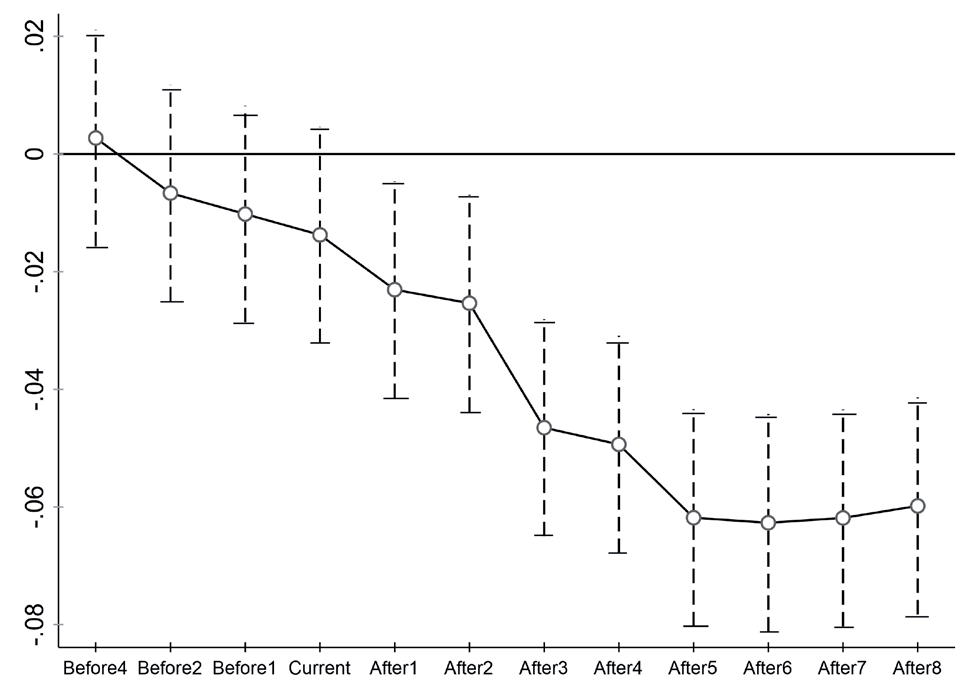
To ensure that the results of this paper are not affected by other policies and events, referring to the study [32], the event study method is used to introduce several time dummy variables to construct early and lagged policy variables, and regressions are added while keeping the control variables constant. The results, as shown in Fig. 1, show that the coefficients of the double-difference interaction terms Before 4, Before 3, Before2, and Before1 are not significant for periods 1-4 ahead of the policy, while the coefficient estimates of the double-difference interaction terms After 1-After 8 are significantly negative after the policy is enacted, and the results are in line with those of the baseline regression. Therefore, the experimental and control groups were comparable before the policy was implemented in 2012, and the double-difference regression model in this paper meets the parallel trend assumption, indicating that the original regression results are robust.
Table 4.
Benchmark regression results.
| Variant | (1) Intel | (2) Intel |
|---|---|---|
| Post×Treat | -0.0400*** (-10.5378) | -0.0411*** (-10.1585) |
| Size | 0.0327*** (11.4529) | |
| Debt | -0.0031 (-0.2677) | |
| Roa | -0.0317 (-1.1706) | |
| Cash | 0.0099 (0.5269) | |
| Board | -0.0093*** (-3.5604) | |
| Age | -0.0009 (-0.7628) | |
| Fmzl | -0.0003* (-1.9339) | |
| Constant term (math.) | 0.0954*** (48.8690) | -0.6391*** (-9.8706) |
| Year fixed effects | No | Yes |
| Individual fixed effect | No | Yes |
| Observed value | 4966 | 4966 |
| R2 | 0.0219 | 0.7410 |
Placebo Test
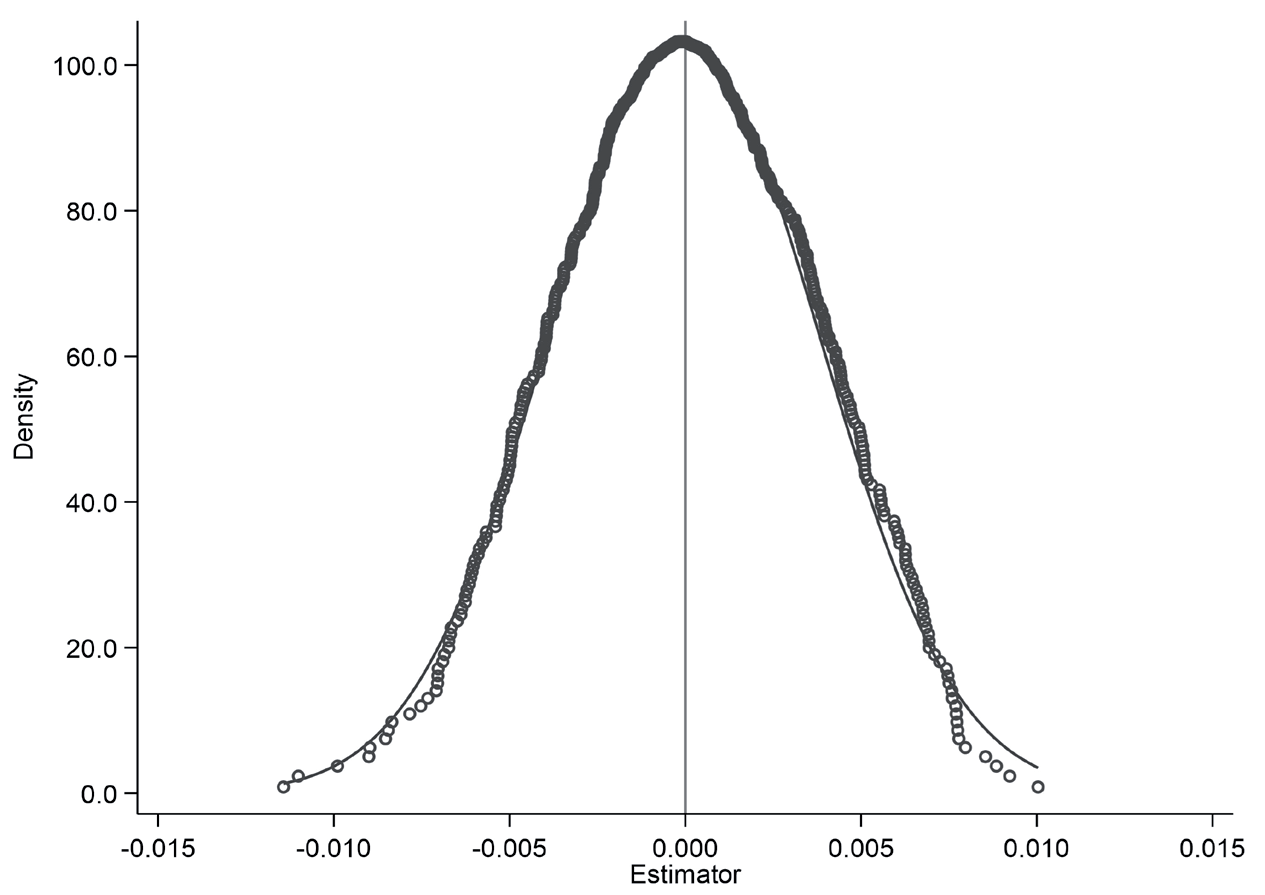
In order to ensure that the impact of the Guidelines on the intelligent transformation of heavily polluting enterprises is not interfered with by other factors and that there is no significant difference between enterprises in the experimental group and the control group before the occurrence of the policy, the samples are subjected to a placebo test [33]. Fig. 3 plots the probability density distribution of the coefficient estimates and the scatter plot of the corresponding P-values, and it can be found that the coefficient estimates of the placebo test are centrally distributed around 0, and the vast majority of the estimates are not significant at the 10% confidence level, which indicates that the original regression results are robust.
Propensity Score Matching
In order to eliminate the endogeneity problem caused by potential selection bias, to ensure the robustness of the research results, and to improve the comparability of the treatment and control groups in terms of intelligent transformation, the propensity score matching method was used to conduct the robustness test [34]. All control variables in model (1) are selected as matching indicators in the propensity score matching model, and the Logit model is selected to estimate the propensity score, and then the nearest-neighbor matching, radius matching, and kernel matching methods are used to re-match the treatment group and control group to ensure that there is no significant difference between the matched treatment group and control group, in which the density function plots before and after nearest-neighbor matching are shown in Fig. 3 and Fig. 4, and Fig. 3 shows that there is a significant difference between the experimental and control groups before matching, while Fig. 4 shows the same trend after matching2. The model (1) was subsequently re-estimated to obtain the propensity score matching results, which were then compared with the original regression results, and the results obtained are shown in Table 5. Regardless of which propensity score matching method is chosen, the coefficient of Post × Treat is significantly negative at the 1% level, which further validates the reliability of the paper’s conclusions and suggests that the research findings are robust.
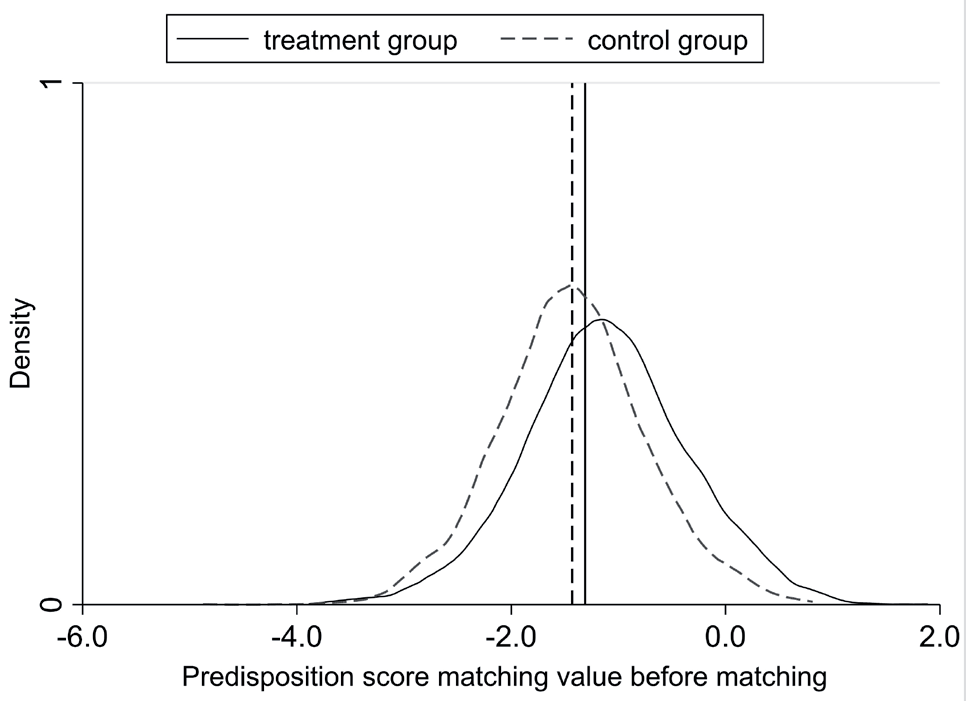
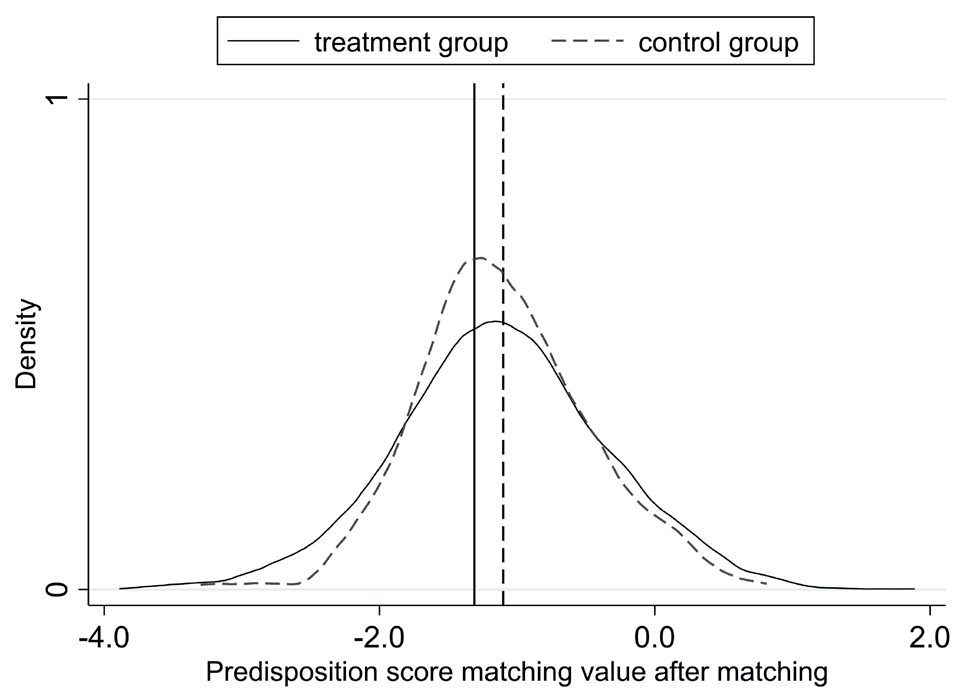
Table 5.
Propensity score matching robustness test.
Change of Observation Period
In order to avoid the potential sample bias caused by a single observation period [35], this paper adopts 2009-2018 and 2008-2019 to replace the research period of this paper to re-examine the impact of green credit policy on the intelligent transformation of heavy polluting enterprises. As shown in columns (1) and (2) of Table 6, the regression coefficients of Post × Treat are significantly negative at the 1% level, indicating that the findings of this paper are robust to different sample observation periods.
Mechanism Analysis
In order to further test the transmission mechanism of green credit policies on the intelligent transformation of heavily polluting enterprises, the author overcomes the estimation bias caused by the endogeneity of the stepwise regression test method of the traditional mediating effect model and draws on the suggestions of Zhou et al. (2023) [36] to construct the following mediating effect model on the basis of model (1).
Where Xi,t represents intermediary variables, including financing constraints and R&D intensity, i represents the firm and t represents time. Treati,t refers to the treatment group equal to 1 and 0 otherwise. Postt refers to the implementation of the Green Credit Guidelines policy, equal to 1 in 2012 and after and 0 otherwise. Controli,t refers to a set of control variables. ∑year is year fixed effects, ∑code is individual fixed effects, and εi,t is the residual term.
Financing Constraints
From the above mechanism analysis, it can be seen that the green credit policy will strengthen the financing constraints of heavily polluting enterprises, and the new financing constraints will have an inhibiting effect on their intelligent transformation. In order to verify this transmission mechanism, the authors take financing constraints as an intermediary variable to test the mechanism of green credit policy on the intelligent transformation of heavily polluting enterprises, and the empirical results are shown in column (1) of Table 7. The coefficient of financing constraint is significantly positive, which indicates that green credit, represented by the Guidelines, significantly increases the financing constraints of heavy polluters. This finding reveals a potential mechanism by which the green credit policy imposes significant constraints on the access to finance of heavy polluters by altering the financing environment, thereby constraining their investment and progress in smart transformation. Hypothesis 3 is tested.
Table 6.
Robustness test.
Research Input
Under the environmental protection orientation of the green credit policy, banks and other financial institutions are more cautious in approving financing for heavy polluters, and heavy polluters may face higher environmental protection standards, which will lead heavy polluters to invest a large amount of capital and energy in environmental governance, thus weakening their research input in the field of intelligent transformation. In order to verify this mechanism, this paper replaces the explanatory variable with the research input of heavy polluting enterprises. As shown in column (2) of Table 7, the coefficient of research input investment is significantly negative, which indicates that the green credit represented by the Guidelines significantly inhibits the research input of heavy polluting enterprises, thus inhibiting their intelligent transformation development, and Hypothesis 4 is verified.
Heterogeneity Analysis
Different Levels of Environmental Regulation
In this paper, we use the entropy method to calculate the environmental regulation indexes of different regions based on the emissions of industrial wastewater, industrial soot, and industrial sulfur dioxide [37]. Enterprises with index values higher than the median value of the environmental regulation index of the province where they are located in 2011 are defined as "strict environmental regulation areas", and enterprises with values lower than the median value are defined as "loose environmental regulation areas". The regression results are shown in columns (1) and (2) of Table 8, which indicate that the guidelines can significantly inhibit the smart transformation of heavy polluters in areas with stringent environmental regulation, but have no significant effect on those in areas with lax environmental regulation. The possible explanation is that heavy polluting firms located in regions with strict environmental regulation face higher environmental requirements and stricter lending standards due to high environmental concerns and stronger enforcement of regulations, leading to increased difficulty in financing for heavy polluting firms in regions with strict environmental regulation. On the contrary, in areas with lax environmental regulations, environmental requirements may be relatively less stringent, and firms in this area may find it easier to obtain credit support.
Differences in Enterprise Size
There is a big difference between enterprises of different sizes in terms of operational efficiency, internal control, and financing ability [38], which may make the green credit policy produce different effects between them. According to the median size of the sample enterprises in 2011, the sample is divided into large-scale enterprises and small-scale enterprises. The regression results are shown in columns (3) and (4) of Table 8. Both large-scale enterprises and small-scale enterprises pass the significance test, but it is obvious that the regression coefficients of large-scale enterprises are significantly smaller than those of small-scale enterprises, which indicates that the inhibitory effect of the guidelines on the intelligent transformation of large-scale enterprises is significantly smaller than that of small-scale enterprises. The possible explanation is that large-scale enterprises usually have stronger advantages over small-scale enterprises in terms of operational efficiency, internal control, and financing ability. Due to economies of scale and better internal management systems, large-scale enterprises are able to cope with the financing pressure and regulatory effects that may be brought about by green credit policies with relative ease. In addition, large-scale enterprises are more flexible in terms of internal management and technological innovation, which makes it easier for them to adapt to the requirements of green credit policies. Small-scale enterprises, on the other hand, may be relatively weak in terms of operational efficiency and internal control and have limited access to financing, making it more difficult for them to cope with the challenges posed by green credit policies.
Table 7.
Analysis of impact mechanisms.
Table 8.
Heterogeneity analysis.
Conclusions
Based on the cost hypothesis, this paper, through the theories of principal-agent cost, risk compensation effect, crowding-out effect, and information asymmetry, takes the 2012 Green Credit Guidelines as a quasi-natural experiment, with a total of 4,966 research samples from 382 listed companies in China’s manufacturing industry from 2008 to 2020, and with reference to the basis of the existing researches, by aggregating the overall index of intelligent transformation of the manufacturing industry, and by applying the double difference method to examine and assess the impact of green credit policy on the intelligent transformation of heavy polluting enterprises, to explore in depth the mechanism of the impact of green credit policy on the intelligent transformation of heavy polluting enterprises, and to analyze the heterogeneity of the effect of policy implementation in enterprises with different characteristics, and to draw the following three conclusions.
Firstly, the green credit policy represented by the guidelines has a significant inhibiting effect on the intelligent transformation of heavy polluting enterprises.
Secondly, the green credit policy represented by the guidelines mainly inhibits the intelligent transformation of heavily polluting enterprises by increasing their financing constraints and reducing their research input.
Thirdly, the green credit policy represented by the guidelines has a significant inhibitory effect on the intelligent transformation of heavy polluters in areas with strict environmental regulation, while it has a positive but insignificant effect on the intelligent transformation of heavy polluters in areas with lax environmental regulation. The guidelines have a stronger inhibitory effect on the intelligent transformation of small-scale enterprises than that of large-scale enterprises.
Accordingly, the following policy recommendations are put forward in this paper:
Firstly, it suggests that relevant government agencies actively explore the establishment of a special intelligence transformation fund to focus on supporting heavily polluting enterprises affected by the guidelines. The fund can help heavily polluting enterprises reduce their problem of insufficient investment in intelligence due to financing constraints by means of subsidized loans, direct investment, or technology vouchers.
Secondly, the government can set up green technology research and development centers to provide technical support and consulting services to assist enterprises in the rapid implementation of intelligent transformation. In order to encourage enterprises to invest more actively in research and development, consideration can be given to the establishment of green technology tax incentives to provide moderate tax reductions or incentives to enterprises investing in green and smart technology research and development.
Thirdly, the government can encourage the formation of cross-industry alliances to promote the sharing of intelligent experience and resources among enterprises and to promote technological innovation. Finally, it is necessary to establish a sound monitoring system to regularly assess the effects of policy implementation, adjust and improve policies in a timely manner, and ensure that they have a positive effect on enterprises.
Fourthly, the government may consider adjusting the implementation of the green credit policy by adopting differentiated policy tools. First, for heavily polluting enterprises located in areas with strict environmental regulation, it encourages them to adopt more environmentally friendly and intelligent production methods and supports their investment in the area of intelligence by providing low-interest loans and tax breaks. Second, for heavily polluting enterprises in areas with lax environmental regulations, the government can increase policy support for their intelligent transformation. Providing financial subsidies, technical training, and other means can help these enterprises better understand and apply intelligent technologies, thus improving their competitiveness in the field of intelligentization. At the same time, an experience-sharing platform has been set up to prompt these enterprises to learn from advanced intelligent management experience and push them to realize transformation more quickly.
Finally, given that small-scale enterprises are subject to greater disincentives, the government can include more differentiated terms in its green credit policy. By setting more lenient intelligent transformation policies and more favorable financing conditions, small-scale enterprises are encouraged to actively participate in intelligent transformation and improve their position in industrial upgrading.

