

Introduction
In 2015, the Fifth Plenary Session of the 18th CPC Central Committee proposed to adhere to the concept of green development and adhere to the path of sustainable development. Ensuring a stable energy supply is crucial for maintaining social stability and driving economic and social progress, while also encouraging the growth of sustainable green industries. Renewable energy, such as wind, solar, water, biomass, geothermal, and ocean energy, plays a crucial role in the energy sector. Renewable energy, in contrast to conventional energy sources, is both clean and environmentally friendly, as well as safe and sustainable. This type of energy can greatly reduce emissions of pollutants and help to significantly slow down the progression of global warming. At the same time, renewable energy is also conducive to solving the problem of insufficient fossil energy in China and accelerating the realization of sustainable development in China. Therefore, renewable energy has become a hot issue of social concern. The global competition in the green sector, focusing on renewable energy, is intense. Many nations have boosted financial and policy backing for the growth of the renewable energy sector, viewing the advancement and use of renewable energy as a crucial method to drive the growth of sustainable economies. Since the 12th Five-Year Plan, China has seen a steady increase in the use of renewable energy, leading to significant growth in the renewable energy sector and making it a key aspect of the country's energy transition on a national level. A total of 1 billion kilowatts of renewable energy was installed in China by 2021, with wind power and photovoltaic power both exceeding 300 million kW. Global offshore wind power capacity has taken the lead, marking a significant advancement in the renewable energy sector. As renewable energy gains more prominence, the industry has entered a new phase of growth. Despite promising market prospects, challenges like high financing costs and inadequate investments persist. This is primarily attributed to the substantial initial investments, lengthy payback periods, and revenue instability of renewable energy projects. These factors constrain the repayment capacity of renewable energy firms, leading to reduced competitiveness in securing funds, limited financing opportunities, and increased costs. This, in turn, impacts the investment capacity of renewable energy enterprises from a financing and investment standpoint.
In the 1990s, China promulgated the Notice on Implementing Credit Policies and Strengthening Environmental Protection, which emphasized that financial institutions should take pollution prevention and control and ecological resource protection as one of the considerations in the process of credit, representing that China began to explore the field of green finance. The issuance of the Green Credit Guidelines in 2012 mandated that financial institutions, including banks, prioritize green credit and adopt principles of conservation, environmental protection, and sustainable development. The 2015 General Plan for Ecological Civilization System Reform suggested following both incentives and restrictions, backing green progress while also rigorously preventing pollution at its source, imposing effective limitations on various market participants, introducing the idea of a green financial system for the first time, and boosting the provision of environmentally-friendly loans. The 2016 Guiding Opinions on Establishing a Sustainable Financial System, released by the People's Bank of China and other organizations, emphasized the importance of promoting eco-friendly lending, increasing investments in green sectors by private investors, and restricting loans to industries that have high pollution, energy consumption, and excess production. The G20 Green Finance Comprehensive Report in that year suggested that clear policy signals are necessary for the advancement of green finance. In 2020, the State Council's Guiding Opinions emphasized the importance of expanding and enhancing the green, low-carbon, and circular economic system to address China's resource and environmental challenges, highlighting it as the fundamental solution for the country's sustainable development. At present, China is in a leading position in the development of global green finance. In recent years, the balance of green credit in Chinese and foreign currencies has been steadily increasing. In 2021, the balance of green credit in Chinese and foreign currencies was 15.9 trillion yuan, ranking first in the world, and in the first quarter of 2022, the balance of green credit in China exceeded 18 trillion yuan.
The rise of sustainable finance has led to increased focus from governments and financial institutions on both environmental and economic advantages, prompting Chinese enterprises to enhance their awareness of environmental and social responsibilities. This shift has not only diversified financial services, but also expanded the funding opportunities for green industries, influencing the investment and financing strategies of renewable energy companies. Therefore, promoting the growth of sustainable finance, particularly green credit, is crucial in addressing the funding challenges and limited investments faced by renewable energy enterprises.
The research on green credit policy mainly focuses on the impact of green credit on enterprises. Environmental pollution can be availably dealt with by a financial technical innovation [1]. When companies encounter credit restrictions due to green credit policies, they may either reduce capital investment passively or enhance total factor productivity actively by implementing technological innovation or upgrading. Various approaches yield varying outcomes for the sustained growth of businesses. According to the Porter Hypothesis, appropriate environmental regulations can drive technological advancements within companies and foster long-term economic expansion through the 'innovation compensation effect' [2, 3]. Research has produced conflicting findings regarding the presence of the Porter effect on a company level, with some suggesting that environmental regulations impede enterprise productivity enhancement. According to [4], environmental regulations can raise costs and create uncertainty for businesses, ultimately lowering productivity. [5] argue that these regulations can actually enhance overall productivity. [6] suggest that the impact of environmental regulations on productivity depends on factors such as intensity, approach, and timing of implementation.
For polluting enterprises, [7] believed that green finance did not impose obvious financing constraints on polluting enterprises, but green fiscal policies and green regulatory policies had different effects on the allocation efficiency of green finance. [8] found that long-term borrowings of polluting enterprises declined significantly after the introduction of green credit policies. According to [9], green financial policies are believed by some scholars to pose a significant obstacle to the investment and financing of heavily polluting companies. In their 2018 study, they examined the impact of green credit on heavily polluting companies using the DID model. The findings indicate that the green credit policy has a notable impact on restricting the investment and financing activities of major polluting companies, particularly affecting the investment behavior of large state-owned heavy polluting enterprises more than small non-state-owned enterprises. [10] found through the DID model that green financial policies suppressed debt financing and alternative financing of heavy-polluting enterprises to a large extent. In addition, implementing eco-friendly financial strategies can greatly decrease the non-liquid debts of major government-owned highly polluting companies and efficiently lower the liquid debts and business credit of small privately owned highly polluting companies. Some heavy-polluting enterprises have strong policy sensitivity, actively fulfill their social responsibilities, and convey their "greenwashing" signals to society through good environmental, social, and governance performance (ESG). Social responsibility reports can create a beneficial cycle of communication between investors and stakeholders, enhancing transparency in disclosing social, environmental, and governance practices. This demonstrates a commitment to sustainability and also strengthens internal controls, legal compliance, and report reliability. Ultimately, this can reduce information disparities between companies and ease financing restrictions for enterprises.
For green environmental protection enterprises, the existing research generally believes that green credit plays a significant positive role in alleviating the problems of corporate financing difficulties, financing costs, and insufficient investment. [11] studied the financial data of 29 listed environmental protection companies from 2010 to 2014. The findings indicated a notable rise in the long-term debt of environmental companies following the implementation of the Green Credit Guidelines. Non-state-owned enterprises showed a more notable enhancement in their financing practices compared to state-owned enterprises. As environmental protection businesses expanded, the cost of financing for companies decreased markedly, leading to a substantial increase in the amount of financing. [12] analyzed the financial information of publicly traded companies on the A-share market between 2012 and 2017. The findings indicated that implementing green financial measures significantly boosted the growth of green enterprises’ investments, with a more pronounced effect compared to state-owned enterprises. Many academics argue that green loans have eased the challenges and costs associated with funding for small and medium-sized businesses. Green financing offers financial assistance to small and medium-sized businesses that adhere to environmentally friendly criteria through reduced interest rates and subsidies, encouraging their sustainable growth [13]. Despite the slow pace, carbon taxes and funding for research can still promote the development and advancement of clean technologies [14].
For renewable energy enterprises, most studies tend to focus on the influencing factors of renewable energy investment and financing. Most scholars believe that the influencing factors of renewable energy are multiple rather than single, including internal and external factors. [15] examined 116 renewable energy companies and discovered that the percentage of shares held by legal entities and the size of the companies can boost investments in renewable energy. Conversely, the level of international involvement and government ownership can hinder investment in these enterprises. At the same time, entrepreneurship is also a key factor affecting energy enterprises. Skilled business owners have the ability to select the best investment plan and seize investment chances, leading to the swift growth of companies [16]. From the external factors, including market and environmental factors and policy factors. [17] analyzed the willingness of South Asian consumers to consume renewable energy through structural equation modeling technology. The results showed that young and educated consumers have higher support for renewable energy. The public's consciousness about the environment is a crucial element that influences the progress of renewable energy. Being the provider in the market, the market demander also plays a crucial role in influencing the financial choices of renewable energy firms. The government may actively guide consumers to generate more market demand and drive the sustainable development of renewable energy enterprises [18]. Furthermore, according to [19], the ambiguity surrounding the global carbon trading system greatly influences the investment decisions made by renewable energy companies. Simultaneously, environmental unpredictability heightens the level of information disparity and business uncertainty for companies, consequently raising the financial burden for renewable energy firms, causing a depletion in company funds, and exacerbating the issue of inadequate corporate investments [20]. Policy elements play a crucial role in influencing the growth of renewable energy sources [21]. Many academics argue that frequent changes in policies for renewable energy companies can erode investor confidence in renewable energy projects, hindering investment in the sector. Investors will wait for stable and clear policies before investing [22, 23]. At the same time, [24] believes that the poor stability and continuity of policies, especially the lack of incentive policies, has greatly affected the enthusiasm of renewable energy investors. In the low-carbon economy, scholars examined the influences on energy companies' investments. The analysis found that energy policies can provide policy and tax support for energy enterprises, significantly reduce the financing costs of energy enterprises, improve their economic benefits, and promote the rapid development of energy enterprises. Furthermore, clean energy funds and government subsidies can also positively influence the investment decisions of renewable energy companies.
Technological innovations are funded by government subsidies, which allow enterprises to escape capital shortages [25, 26]. Upon receiving government subsidies, entrepreneurial companies were granted official legal status, which entitled them to more resources to improve TIE [27, 28]. The empirical results from [29] showed that in terms of trend and performance, government R&D subsidies can promote green innovation in energy-intensive enterprises.
Our work makes the following contributions to the literature: First, the existing literature on green credit mainly focuses on heavy-polluting enterprises, or ‘two highs and one surplus’ enterprises. We focus on renewable energy companies. Second, scholars both domestically and internationally primarily concentrate on the external and internal factors that impact the investment and financing of renewable energy companies. There is a lack of research on how green credit affects the investment and financing of renewable energy companies. We take the renewable energy companies as the test group and non-renewable energy companies as the comparison group, utilizing the DID approach to analyze how green credit influences the investment and financing practices of renewable energy companies. Third, publicly traded companies are categorized as either state-owned or privately owned based on ownership structure and are further classified as either large or small enterprises based on size in order to examine the variations in the impact of green credit on the 'financing promotion effect' and 'investment incentive effect' across different categories of renewable energy firms. Moreover, we empirically test the impact of green credit policy on the growth of renewable energy companies.
As for the remainder of the paper, it is divided into four sections: Section 2 presents our main hypotheses, while Section 3 discusses our methodology and data. Section 4 presents the main empirical results, investigates the potential mechanisms, and summarizes our robustness tests. Section 5 concludes.
Hypothesis Development
Green Credit and Financing Behavior of Renewable Energy Enterprises
The “Guidance” defines green finance as financial services offered for the investment and funding of projects, as well as their operation and management in areas such as environmental protection, energy efficiency, renewable energy, eco-friendly construction, and sustainable transportation. The opinions clearly state the importance of promoting green credit, encouraging increased investment in the green industry by mobilizing social capital, facilitating investment and financing in the green sector, and restricting funding for polluting industries. This will create incentives for the green industry and limitations for industries with excessive production, high energy consumption, and high emissions. Banks must assess projects or companies based on national environmental and economic policies when approving loans and offer financial assistance and special interest rates for environmentally friendly businesses and projects under the green credit policy. Simultaneously, it is recommended to increase the loan requirements, restrict the loan amount, and raise the interest rate for businesses and projects that have a high level of pollution and energy consumption in order to deter their financing activities. Following the introduction of green credit policies, the cost of debt financing for environmentally friendly businesses decreased notably, while the cost of debt financing for polluting businesses increased significantly [30]. According to [31], green credit plays a role in directing social capital towards the renewable energy sector, thereby supporting the growth of renewable energy companies. The analysis above leads to the formulation of the following hypothesis.
Hypothesis 1a. After the promulgation of the opinions in 2016, compared with other enterprises, green credit promoted the financing cost reduction of renewable energy enterprises.
Hypothesis 1b. After the promulgation of the opinions in 2016, compared with other enterprises, green credit promoted the financing scale increase of renewable energy enterprises.
Small and medium-sized enterprises are frequently unable to secure loans from large enterprises because they lack valuable collateral, have limited core technology, and lack a clear strategic development plan, resulting in increased operational risk. Small and medium-sized enterprises often face challenges in obtaining financing from commercial banks, leading to difficulties and high costs in securing funding. The continuous development of green finance can not only alleviate the plight of SMEs in green financing, but also guide SMEs to achieve green transformation [32]. Simultaneously, China is home to two types of businesses with varying ownership rights as seen by owners: state-owned enterprises and non-state-owned enterprises. Many academics have discovered that state-owned enterprises can frequently secure financial assistance more easily and at a lower cost compared to non-state-owned enterprises, allowing them to maintain a strong foothold in financing over an extended period. Nevertheless, private businesses often encounter more significant obstacles in obtaining financing and experience severe credit bias. State-owned enterprises and banks have less information asymmetry compared to non-state-owned enterprises, which is the primary reason. State-owned enterprises have a higher chance of securing bank loans due to banks' better comprehension of their information. Additionally, the main commercial banks in China are typically government-controlled; state-owned enterprises have connections to the government. State-owned enterprises are more prone to receiving implicit guarantees compared to non-state-owned enterprises, resulting in credit resources being more inclined towards the state-owned economy. However, non-state-owned enterprises and banks have a higher degree of information asymmetry, and they will face relatively high financing constraints and credit discrimination. Overall, private renewable energy companies face more limitations in obtaining external funding compared to government-owned renewable energy companies, leading to their financing expenses and funding sizes being more responsive to shifts in external regulations. State-owned renewable energy companies have been given greater assistance in terms of policies and funding, meaning that the implementation of green finance policies will not greatly affect their financing decisions. According to the above analysis, the hypothesis is as follows:
Hypothesis 2. Following the publication of the opinions, small private renewable energy companies are more likely to receive financing support compared to large state-owned enterprises.
Green Credit and Investment Behavior of Renewable Energy Enterprises
Despite China's significant potential for growth in renewable energy, the technology of renewable energy companies is not yet fully developed, resulting in high production costs and long payback periods. This has dampened investor enthusiasm, making renewable energy companies heavily reliant on government policy support. In comparison to traditional energy sources, investing in renewable energy carries higher risks, particularly in terms of policy changes, which can significantly impact the investment decisions of renewable energy companies.
Green financing strategies play a crucial part in steering the growth of sustainable energy, facilitating capital flow into eco-friendly sectors, mitigating risks efficiently, and influencing the investment choices of small-scale economic actors. By mid-2022, the worldwide investment in renewable energy hit a new high of 226 billion US dollars. China has expanded its investment in renewable energy, especially in solar energy and wind energy. During the initial six months of 2022, the combined funding for solar power and wind energy amounted to $41 billion and $58 billion, showing a 173% and 107% increase compared to the previous year. Eco-friendly financing has been essential to the growth of investments in sustainable energy sources. [33] showed that green credit can redirect funds from highly polluting companies to those focused on environmental protection, leading to a substantial increase in research and development investments by environmental protection firms. This, in turn, helps drive technological advancements in the environmental protection sector. In a study conducted by [34], 80 companies in the environmental protection sector were analyzed using the GMM model. The research revealed that green finance is capable of providing sustainable funding for project investments in environmental protection enterprises. Additionally, environmental regulations were found to play a crucial role in supporting and regulating the investment provided by green finance to these enterprises. The size of investments in environmental protection companies is directly related to the investments made by the government and financial institutions in these companies. [35] used the data of A-share listed firms from 2012 to 2017 to reveal that green finance policies had a substantial impact on boosting the investment size of green businesses and alleviating investment deficits, particularly for non-government-owned green enterprises. An examination by [36] was conducted on how the growth of eco-friendly finance is linked to the funding of environmentally conscious businesses through both direct and indirect investments. The research indicated that the growth of sustainable finance motivated the investment practices of environmentally friendly businesses from various angles. The hypothesis presented is based on the analysis provided above.
Hypothesis 3. After the promulgation of the opinions, compared with other enterprises, the green credit policy promoted the increase of the investment scale of renewable energy enterprises.
Before the national introduction of green finance policies and the development of green credit, the allocation of credit resources by financial institutions to renewable energy enterprises was very limited. State-owned renewable energy companies with large scale, financial advantages, and low information asymmetry were more likely to secure loan support. Credit resources were harder to access for small renewable energy companies that were not state-owned, as they faced significant information asymmetry and operational risks. China's promotion of eco-friendly financial policies and robust development of green credit will greatly enhance the credit support capacity and scale of financial institutions for renewable energy companies. This will not only address the funding requirements of major state-owned renewable energy firms but also boost credit access for smaller, non-state-owned enterprises in the sector, effectively easing their financing challenges. Simultaneously, the ongoing implementation of eco-friendly financial regulations in China can enhance public consciousness regarding environmental conservation and sustainable investments, leading to a notable enhancement in private capital funding for renewable energy companies. Private capital faces challenges in entering state-owned enterprises, leading to increased investment in non-state-owned renewable energy companies. This will help address the issue of capital shortages and inadequate investments in small, non-state-owned renewable energy firms, ultimately boosting their investment levels significantly. Overall, state-owned renewable energy companies benefit from their financial resources and policy support, and the introduction of green financial policies does not greatly affect their initial investments. Yet, independent renewable energy companies of smaller size have notably expanded their investment scope as a result of the robust backing from environmentally friendly financial measures. The analysis above leads to the formulation of the following hypothesis.
Table 1.
Definition of variables.
Hypothesis 4. Following the release of the opinions, small, private renewable energy companies have a stronger impact on investment promotion compared to large state-owned enterprises.
Material and Methods
Equation Construction
This paper utilizes a fixed-effect DID model to examine how green credit influences the investment and financing decisions of renewable energy companies, with renewable energy enterprises as the control group according to the theoretical framework.
Yit denotes the investment and financing behavior, which includes FC, FA, and INV. treatit denotes the group dummy variable, which is set to 1 for the experimental group and 0 for the control group; postt denotes the event dummy variable, which is set to 1 in 2016 and later, or 0 otherwise; treati×postt denotes the DID variable; Xit includes a series of control variables at the enterprise level; β0 denotes constant term, β1, β2, β3,γdenote estimated coefficients of dummy variable, DID variable, and control variables. δi denotes the individual fixed effect; λt denotes the time fixed effect; εit denotes the random disturbance term; and i and t denote listed enterprises and periods, respectively.
Nomenclature
FC refers to the financing cost, which is the ratio of financial expenses to total liabilities. FA refers to the financing available, which is the ratio of the sum of short-term liabilities and long-term liabilities to total assets at the beginning of the period. INV refers to enterprise investment, which is the cash paid for the purchase and construction of fixed assets, intangible assets, and other long-term assets divided by total assets at the beginning of the period [37]. We control for firm and year-fixed effects in the model. We also control for firm size (Size), return on assets (ROA), years of listing (Age), Tobin Q (TBQ), leverage (Lev), firm’s growth (Growth), and ownership of firms (Owner). We also set robustness test variables, financial market (FM) and macro economy (MD). We define these variables in Table 1.
In this paper, the impact of extreme values on empirical results is reduced by shrinking the tail of variables. For variables with a quantile less than 1%, they are set to be equal to 1%; for variables with a quantile greater than 99%, they are set to be equal to 99%. Simultaneously, to address the issue of endogeneity, lagged control variables are included in the investment and financing equation in the regression analysis, with the exception of enterprise age and ownership.
Table 2.
Definition of variables.
Table 3.
The impact of green credit policy on FC.
Data Sources
The study uses Chinese A-share listed companies from 2010 to 2020 as the initial sample, dividing them into an experimental group and a control group based on their primary business focus. Companies involved in solar energy, wind energy, water energy, biomass energy, geothermal energy, and marine energy are categorized as renewable energy firms (experimental group), while the remaining companies are classified as non-renewable energy firms (control group). Our sample selection process involves excluding firms identified as ST, PT, or *ST companies facing delisting, as well as companies with insufficient financial data and asset-liability ratios exceeding 1. Following the aforementioned procedure, the ultimate sample consists of 796 companies, with 72 belonging to the experimental group and 724 to the control group. We winsorzie the data at the 1% and 99% levels to account for the influence of outliers.
Descriptive Statistics
Table 2 displays the statistical data. It shows that the average values for FC, FA, and INV are 0.0134, 0.208, and 0.058, respectively, with standard deviations of 0.0274, 0.184, and 0.0576. The data indicates that there are notable differences in the investment and financing patterns within our sample.
Results and Discussion
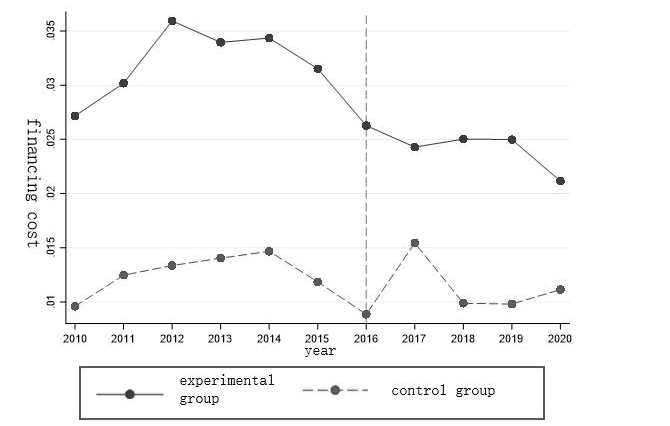
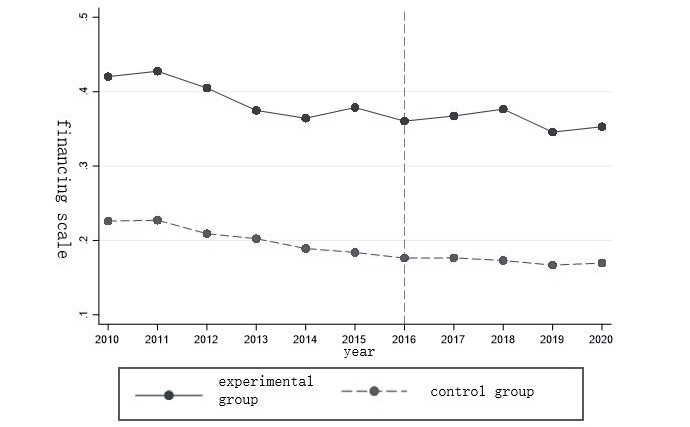
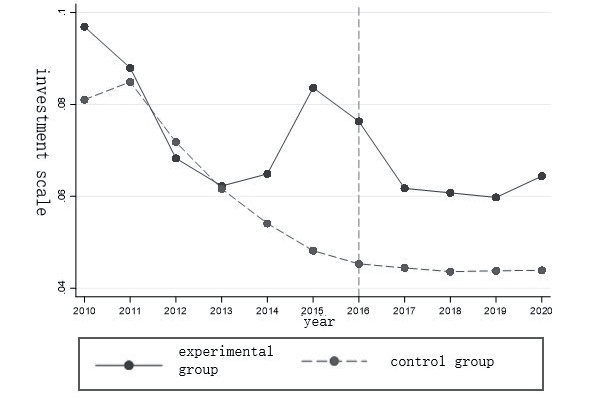
Before estimating the model, this study performs a parallel trend test on the outcome variables of the experimental group (renewable energy companies) and the control group (non-renewable energy companies) to accurately utilize the DID method in assessing the impact of green credit on the investment and financing behavior of enterprises. The experimental group is represented by the blue line in the figure, while the control group is shown by the red line. Fig. 1 illustrates that the financing cost curves of the experimental and control groups were similar before 2016, suggesting a consistent trend. Since 2016, it can be observed that there has been a noticeable divergence in the financing cost curves between the two groups, with the experimental group showing lower costs than the control group. Fig. 2 illustrates that prior to 2016, the financing scale curves of the experimental and control groups were similar, suggesting a consistent trend. Since 2016, it can be observed that there has been a noticeable divergence in the financing scale curves of the two groups. The financing cost of the experimental group shows a downward trend compared with the control group. This indicates that Hypothesis 1 may be true. Fig. 3 illustrates significant fluctuations in the size of investments. The investment size of the experimental group was smaller than the control group in 2012, but surpassed it after 2013, with both groups remaining relatively equal until 2016. In summary, the three figures verify the parallel trend hypothesis required by the DID model.
Table 4.
The impact of green credit policy on FA.
Table 5.
The impact of green credit policy on INV.
Verification of Hypotheses 1a, 1b, and 2
Table 3 displays the outcomes of the regression analysis. Group (1) demonstrates that the estimated coefficient for the interaction term treat×post is -0.00406, indicating a significant negative relationship between treat×post and financing expenses at the 1% level of significance. The opinions have resulted in a notable decrease in the financing expenses for renewable energy companies compared to non-renewable energy companies. The experimental findings confirmed the accuracy of hypothesis 1a. Furthermore, the regression results for Groups (2) and (3) pertain to the two subsets of state-owned and non-state-owned companies. The coefficient for the interaction term of state-owned enterprises is -0.000358, while for non-state-owned enterprises it is -0.0125, both statistically significant at the 1% level. This indicates that green credit has a notable positive impact on financing for non-state-owned renewable energy firms, but does not significantly affect state-owned renewable energy enterprises. Regression results for groups (4) and (5) show estimated coefficients of -0.00318 and -0.0150 for the interaction term in large and small enterprise sub-samples, respectively. These coefficients are statistically significant at the 1% level, indicating a significant decrease in financing costs for both large and small renewable energy enterprises after implementing the opinions, with a greater impact on small enterprises. The experimental findings confirmed the validity of hypothesis 2.
The fixed effect regression results in Table 4 analyze the impact of green credit on the financing scale of renewable energy enterprises, controlling for individual and time-fixed effects. Group (1) findings reveal that the interaction term treat×post has a positive but not significant estimated coefficient, suggesting that green credit does not significantly enhance the financing scale of renewable energy enterprises. Furthermore, the sub-sample results indicate that the majority of estimated coefficients for the interaction term are insignificant, with green credit only positively affecting the financing scale of small renewable energy enterprises. Maybe because green credit still has a certain time lag and limitations, green credit has not effectively improved the financing scale of renewable energy enterprises at present. The empirical result didn’t verify the correctness of hypothesis 1b.
Verification of Hypotheses 3 and 4
The results of the fixed effect regression analysis on investment, controlling for individual and time-fixed effects, are presented in Table 5. In Group (1), the findings reveal that the estimated coefficient for the interaction term treat×post is 0.00808, showing a statistically significant positive effect at the 5% level. This suggests that the size of investment in renewable energy companies is notably larger compared to non-renewable energy companies following the Opinions' enforcement. The empirical result verifies the correctness of hypothesis 3. Furthermore, Groups (2) and (3) represent the regression outcomes of the two subsets of state-owned and non-state-owned businesses, with interaction term coefficients estimated at 0.00804 and 0.00247, respectively. The former is statistically significant at the 5% level, indicating that green credit can notably encourage investment by state-owned renewable energy companies while showing no significant effect on non-state-owned renewable energy companies. Groups (4) and (5) present the regression outcomes for the subsets of big and small businesses, with interaction term coefficients estimated at 0.00521 and 0.0410, respectively. The latter is deemed statistically significant at the 1% level, suggesting that the impact of green credit incentives on investment is only observed in small renewable energy firms while having no notable effect on their larger counterparts. While green credit has a notable impact on the investment size of small renewable energy businesses, it does not have a significant effect on the investment size of non-government-owned renewable energy companies. In conclusion, the experimental findings confirmed the accuracy of hypothesis 4.
Table 6.
Add financial market and macroeconomic control variables.
Table 7.
Shorten the time window.
Robust Checks
Placebo Tests
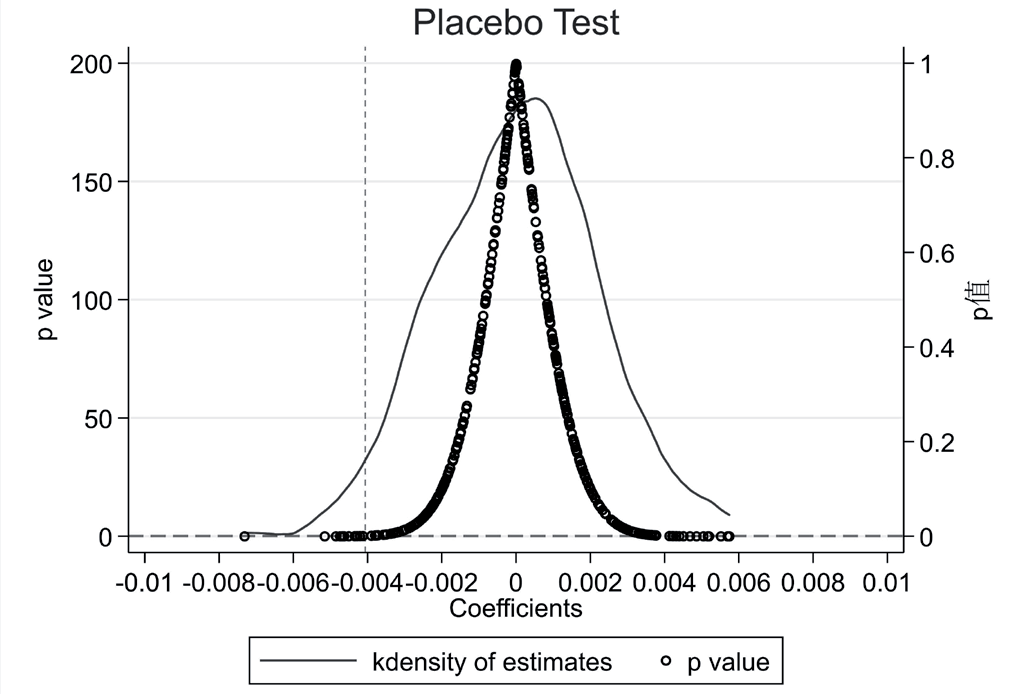
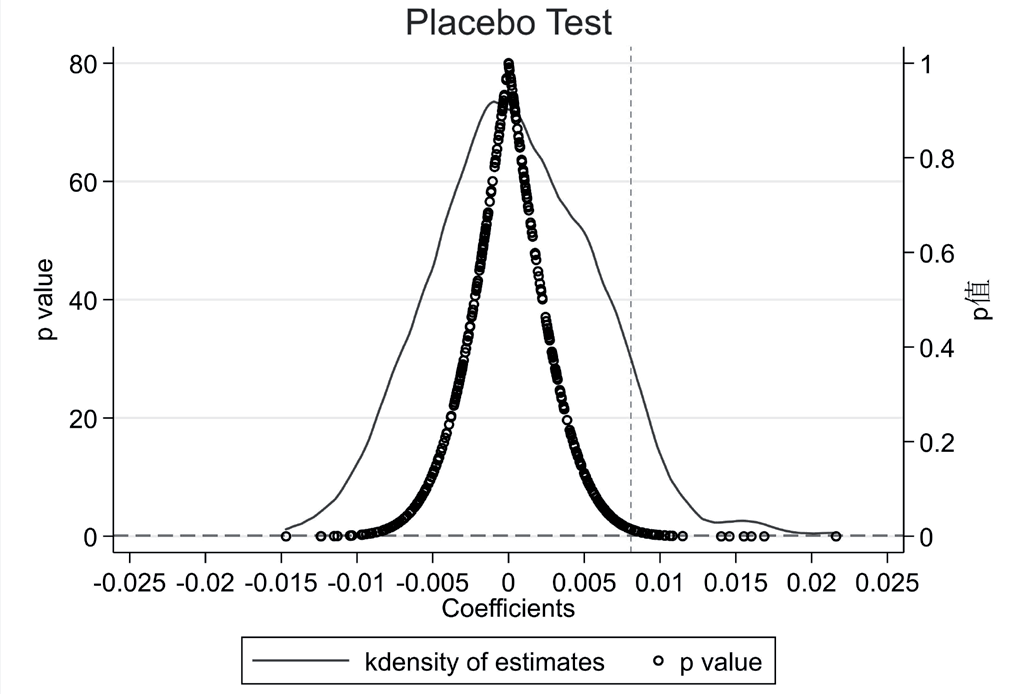
In this study, placebo tests were conducted by randomly choosing 400 enterprises to determine if the findings were influenced by hidden variables. The process involved selecting 72 enterprises out of 796 as the experimental group and the remaining 724 as the control group. This paper conducts 400 random samples and conducts basic regression in accordance with Equation (1) above. The significant coefficient of the interaction term in the regression indicates the presence of unobservable factors influencing the empirical findings, leading to deviations in the regression results presented in this study.
Fig. 4 and 5 below, respectively, draw the coefficient distributions and corresponding p values of the regression results of financing cost and investment scale after 400 random samples. Fig. 4 shows that the regression coefficients are primarily clustered around 0, with p values for most estimates exceeding 0.1. In Fig. 4, the dotted line on the left represents the true estimates in the benchmark regression of financing cost mentioned above, which shows that the true estimates are obviously different from the estimates in the placebo test. Fig. 5 below illustrates that the regression coefficients are predominantly centered around 0, with the majority of estimates having p values exceeding 0.1. The dashed line to the right illustrates the accurate projections in the baseline investment regression discussed earlier, revealing discrepancies with the projections in the control test. Overall, the findings of this study remain unchanged by factors that cannot be observed.
Adding Financial Market and Macroeconomic Control Variables
The maturity of the financial market can significantly impact the investment and financing decisions of energy companies [38]. Compared with the underdeveloped financial market, the high level of financial market in the region can provide more financial resources and exit mechanisms for energy enterprises, so that enterprises can quickly achieve their investment and financing goals. [39] took China's listed companies as samples and analyzed the impact of the development level of the financial market in various regions of China on the financing constraints of listed companies. The research revealed that regions with advanced financial markets experienced more intense competition among commercial banks, resulting in increased lending to businesses and ultimately alleviating external financing constraints.
Table 8.
The impact of green credit on growth.
China's market economy system has seen gradual enhancements in recent years, with the macroeconomic influence on the investment and financing decisions of small economic entities becoming increasingly important, particularly in relation to the financial expenses of businesses. Generally speaking, in a period of macroeconomic prosperity, there is sufficient working capital in society, and banks will relax loan conditions and lower loan interest rates to provide more financial support to enterprises. During an economic downturn, banks will typically raise the requirements for loans to businesses and also increase the interest rates, which can make it harder for companies to secure funding from outside sources.
To assess how financial market and macroeconomic factors affect the investment and financing of renewable energy companies, this study includes financial market and macroeconomic conditions as control variables (financial market = balance of deposits and loans from banking institutions/gross regional product; macroeconomic conditions = natural logarithm of per capita gross regional product) in order to recalibrate the model. The findings in Table 6 show that the practical outcome of green financial policies impacting the investment and financing actions of renewable energy companies aligns with the regression results from the sample mentioned earlier.
Shortening the Time Window
Between 2010 and 2020, the green financial policy significantly influenced the investment and financing practices of renewable energy companies, although other local policy developments may also affect the variables being analyzed. In 2020, China announced the 'dual carbon' goal to the world, signaling a focus on the advancement of eco-friendly and sustainable energy sources, particularly renewable energy, as well as enhancing the green transition of industries with high pollution and energy consumption. Green businesses will receive increased support from the government and financial institutions through funding and policies, while efforts will be made to restrict the growth of highly polluting companies. To mitigate the influence of these policies on the empirical findings, the study narrows the time frame to analyze data solely from 2012 to 2019 and recalculates the empirical model. Table 7 displays the findings, confirming the stability of the benchmark regression results as discussed in the preceding paragraphs.
Further Analysis
Additionally, we investigate how green loans affect the development of renewable energy companies. Groups (1) and (2) in Table 8 utilize the main revenue growth rate as a metric for the growth of enterprises. The coefficient estimates of the interaction terms are notably positive at the 1% level, suggesting that following the official adoption of the opinions, the performance of renewable energy companies in production and operation has been consistently improving, with a promising outlook for development.
Conclusions
Using financial information from A-share listed companies between 2010 and 2020, this study creates models to analyze how green credit affects the financing costs, financing scale, and investment levels of renewable energy firms. Further research examines how green credit affects the investment and financing decisions of renewable energy companies with varying sizes and ownership structures. The empirical analysis draws the following conclusions: Green credit has a significant financing promotion effect on renewable energy enterprises. At the same time, the study finds that, compared with large state-owned enterprises, green credit significantly promotes the financing behavior of small non-state-owned renewable energy enterprises. Furthermore, green credit has a significant incentive effect on the investment of renewable energy enterprises. At the same time, through heterogeneity analysis, this paper finds that green credit has a significant incentive effect on the investment scale of small and state-owned renewable energy enterprises. In addition, green finance significantly improves the growth of renewable energy enterprises. This paper uses the growth rate of main revenue to measure the growth of enterprises. The empirical results show that after the “Guidance”, compared with non-renewable energy, the production and operation performance of renewable energy enterprises continues to improve, and the development prospect is good.
However, this study still has some limitations. First, this paper has not deeply studied the conduction mechanism and intermediary mechanisms. In addition, green credit policy is also an environmental regulation tool to stimulate the market. According to Porter's hypothesis, carefully designed environmental regulations can encourage enterprises to innovate and gain a competitive advantage. Since the data was not available, this study has not investigated whether green credit will affect enterprise technological innovation and thereby affect their investment and financing behavior. Therefore, the impact of green credit policy on technological innovation needs further research.
Several proposals can be drawn for the above conclusion:
First, the government should balance administrative means and market mechanisms. to promote the healthy and orderly development of renewable energy enterprises. In order to guide more social capital to renewable energy enterprises and promote the healthy and orderly development of the renewable energy industry, China should pay more attention to the policy support for renewable energy enterprises and further expand the financing promotion effect and investment incentive effect. At the same time, for renewable energy enterprises of different scales and property rights, the government should further deepen the reform of the economic system, introduce more precise green financial policies, try to narrow the differences between different types of enterprises in policy thresholds and resource allocation, promote the effective integration of external policies and microeconomic subjects, and promote the healthy and orderly development of renewable energy enterprises.
Second, financial institutions should improve their risk identification ability and financial product diversity and increase their support for the renewable energy industry. At present, there are still some financial institutions in China whose risk identification and risk assessment systems are not perfect, and some enterprises in need of funds do not disclose environmental information in detail, which makes the information asymmetry between enterprises and financial institutions, resulting in the inability of financial institutions' funds to flow into green enterprises in a timely and effective manner. So in order to effectively flow into renewable energy enterprises, China's environmental protection law, which was implemented at the beginning of 2015, requires enterprises, especially heavy polluting enterprises, to disclose environmental information in detail. This measure greatly improves the requirements for environmental information disclosure. In 2017, China continued to revise and improve the environmental information disclosure system for listed companies, supervise listed companies to disclose environmental information in detail, implement environmental protection responsibilities, and upgrade policy supervision to rules and regulations, which is more conducive to environmental protection. Financial institutions can use the environmental information disclosed by enterprises for risk analysis and increase financial support for renewable energy enterprises while avoiding risks. On this basis, China should also continue to deepen international cooperation in green finance and accelerate the process of integrating renewable energy projects with international standards. At the same time, financial institutions should also actively launch green financial products, such as carbon-neutral bonds, to alleviate the financing difficulties and insufficient investment faced by renewable energy enterprises, so as to expand the scale of renewable energy enterprises, improve the economic benefits of enterprises, and achieve green and sustainable development.
Third, renewable energy enterprises should increase the promotion of stock projects and the reserve of incremental projects to achieve sustainable development. Renewable energy enterprises should firmly grasp the new policy situation, fully seize the policy window period, take the project as guidance, and increase the project development efforts. On the one hand, accelerate the progress of stock projects, strengthen project management, and complete the grid connection of stock projects as soon as possible. On the other hand, give full play to their own resource advantages and further enhance the scale of renewable energy assets. In addition, give full play to the characteristics of the current international and domestic double circular economy and rely on the resources of countries along the "Belt and Road" and other countries to achieve renewable energy "going global". Furthermore, make full use of capital platforms and green finance innovation means and seek opportunities for high-quality photovoltaic, wind power, biomass energy, and other renewable energy projects on the basis of controlling risks and ensuring benefits.

