

Introduction
As the economy experiences rapid expansion, the connections between cities are becoming increasingly closer. Road construction is one of the necessary conditions for the modern development of cities [1, 2]. Countries around the world are actively engaged in road construction to meet the demands of the economy, transportation, and population [3]. The total length of roads worldwide has steadily increased over the past few decades. As of the end of 2021, China's total road mileage has exceeded 5 million kilometers, making it one of the longest road networks in the world. In addition, nations like India, the USA, Brazil, and Russia also have large road networks. Throughout the road construction process, substantial embankments and cut slopes result from earthwork excavation [4]. The exposed surface can destroy the original soil structure and vegetation, leading to serious soil erosion and land desertification. Many of these artificially excavated slopes have large slope angles and heights, and the excavation can damage the surface vegetation system. This can easily cause safety hazards such as landslides, rockfalls, mudslides, and other hazards, thereby causing environmental issues such as soil erosion, local climate deterioration, and disruption of the food chain, which seriously damage the harmony of the ecology. Therefore, strengthening the protection of slopes becomes particularly important.
Traditional slope protection mainly adopts rigid masonry structures, especially methods such as plastering, spraying concrete, anchoring, and masonry stone walls. Generally, these masonry structures have good protection effects in the early stages of construction, but over time, the slope structure will gradually weather and rust, and the strength of concrete and steel bars will also decrease, leading to a decrease in the overall rigidity of the protective system [5]. In addition, the soil under the rigid protection is easily washed away by rainwater, causing erosion of the slope and hollowing out the surface rigid protection structure, which can easily cause tensile fractures and other damage, resulting in slope instability [6]. In recent times, there has been significant advancement in the development of biological protection technology. The establishment of ecological protection systems proves to be an effective remedy for addressing the limitations associated with conventional rigid masonry protection methods. Its function is not only to fix and protect the soil slope but also to reduce costs, reduce soil erosion, and improve the ecological environment [7]. Plant root systems play an essential role in ecological slope protection and are an important factor in improving soil mechanical performance. The mechanical characteristics of a single root are an important factor in enhancing the soil's shear strength [8]. However, the spatial evolution trend of the mechanical characteristics of herbaceous roots still needs to be continuously studied in order to analyze their soil reinforcement capabilities [9]. Scholars have conducted extensive research to explore the mechanical reinforcement effect of roots on soil, gradually forming the reinforcement theory in the root soil reinforcement mechanism. When the shallow surface soil of the slope is subjected to sliding force, the roots convert the internal shear stress of the soil into the tensile stress they receive through interface frictional force to jointly resist the deformation of the slope [10]. Researchers have explored the reinforcement effects of roots on shallow slopes from various perspectives, yielding substantial and productive outcomes. Gray and Leiser have proved that vertical roots can improve the stability of shallow slopes under sliding surfaces, while Schwarz advocates considering the failure process of lateral roots in slope sliding and proposes a root bundle reinforcement model (RBM model). Roots can not only improve the stress field of shallow slope soil but also their reinforcement effect is particularly significant in heavy rain environments. Roots can also extend the time for slope failure and strengthen their role as the plants grow. However, further research is required to study the reinforcement effects of roots in their original state on slope stability [11].
To conclude, the investigation into the soil reinforcement effect of roots has been validated through two key approaches: macroscopic mechanical testing and theoretical calculation models [12-14]. However, the quantitative description of the influence of plant root content on soil shear strength and strength parameters is not sufficient, which may lead to differences in the values of correction coefficients in designing green flexible protection systems [15]. Addressing the identified insufficiencies in quantifying the relationship between plant root content and soil shear strength, this paper endeavors to employ a meticulous methodological approach, encompassing both experimental and computational models. Ensuring the precision of strength parameters and their subsequent influence on correction coefficients is paramount, thereby facilitating the development of a more scientifically substantiated framework for designing green flexible protection systems and ensuring the reliability and sustainability of such infrastructures in varied environmental contexts.
Materials and Methods
Materials
Physical and Mechanical Properties of Soil Samples
The research site is located in Suzhou, Jiangsu Province, China, characterized by a subtropical humid monsoon climate. Historically, this area served as a quarry and later as a construction and demolition waste landfill. The specific location and regional distribution of the study area are depicted in Fig. 1. Following its renovation in 2021, the site now features a terrain that increases in elevation towards the north and decreases towards the south, with a relative height difference of 20–30 m and slope angles ranging from 35°–45°. The soil overlay varies in thickness from 20 cm to 60 cm. The sampling points are located on both the northern and southern slopes of Fenghuangshan Mountain, with coordinates approximately at N:31°13'34.26” and E:120°32'29.94”. The specific elevations and slope directions of these points have been carefully selected to represent the varied environmental conditions present across the site.
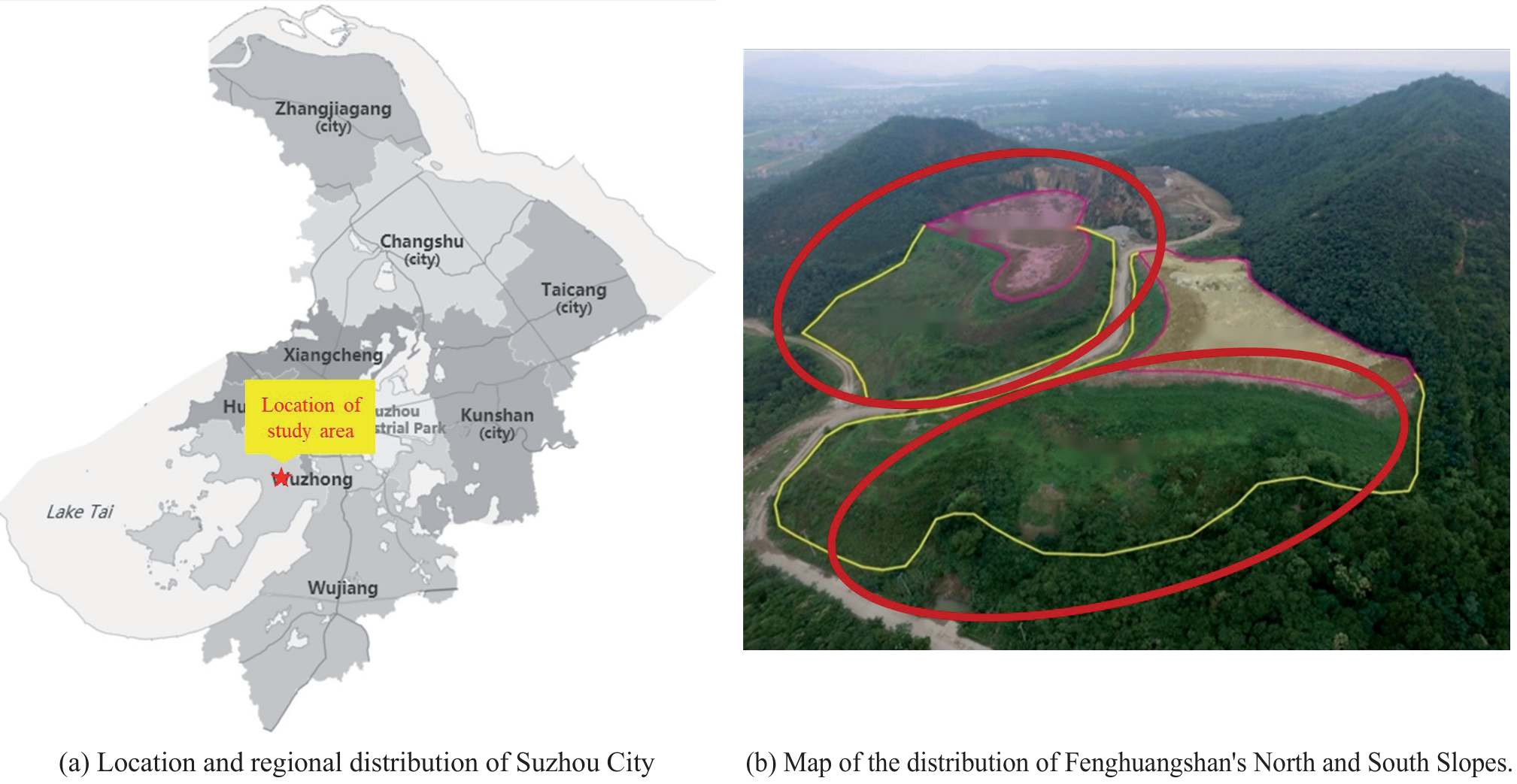
The soil was prepared in situ with roots intact after removing other irrelevant substances, such as biological and impurities, from the soil. When sampling, the whole plant was dug out and sealed with plastic wrap to prevent changes in the water content of the roots. Afterward, the whole plants were taken back to the laboratory for experimentation. Three independent samples were taken of the in situ soil containing Pennisetum alopecuroides. When measuring the soil moisture content, an appropriate amount of soil was placed in a weighing box, weighed, and then placed in an oven with the weighing box for 12 hours at 105°C. After that, the weighing box with the dried soil was cooled in a dryer to room temperature, and the dry soil was weighed to calculate the soil moisture content based on the weight before and after drying. The moisture content of the three in situ root soils was 13.1%, 15.6%, and 21.3%, respectively. Table 1 provides a comprehensive presentation of the primary physical and mechanical attributes of the soil sample collected from the field during a single instance.
Plant Specimens
Pennisetum alopecuroides is a perennial herbaceous plant widely distributed in Asia, Africa, Australia, and other regions. It belongs to the Poaceae family and is commonly utilized for soil and slope protection [16]. This plant's root system is particularly effective in soil retention and stability, helping to reduce water and soil loss and prevent slope collapse. The roots of Pennisetum alopecuroides are dense and can penetrate deep into soil layers, thereby enhancing the soil's shear strength and anti-erosion capacity.
To better understand the role of Pennisetum alopecuroides in different seasons, it is important to note that the sampling for our study was conducted across various times of the year, reflecting the plant's seasonal growth habits. Pennisetum alopecuroides exhibits robust growth during the warmer months, with its root system becoming more extensive and dense. This seasonal variation contributes significantly to its effectiveness in soil stabilization and erosion control throughout the year. During the cooler months, while above-ground growth slows down, the root system still maintains a considerable degree of functionality in soil retention.
Moreover, the plant's stems and leaves form a uniform vegetation cover, shading the bare soil on slopes and further reducing erosion. In addition to slope stabilization, Pennisetum alopecuroides has significant bioremediation capabilities. It can absorb harmful substances from the soil, thereby reducing soil pollution, and it also plays a role in carbon sequestration and oxygen release, contributing to improved air quality [17].
Table 1.
Physical and Mechanical Properties of Soil.
| Property | Standard | Value |
|---|---|---|
| Natural density (g/cm3) | JGS 0191 | 1.67 |
| Dry density (g/cm3) | JGS 0191 | 1.31 |
| Liquid limit | JGS 0142 | 28.5 |
| Plastic limit | ASTM D4318 | 18.6 |
| Plasticity index | ASTM D4318 | 9.9 |
In summary, the importance of Pennisetum alopecuroides in soil and slope protection is evident. Its fast growth, strong resilience, and easy maintenance make it an ideal choice for preventing slope degradation and protecting the ecological environment. The inclusion of its seasonal growth habits in this study provides a more comprehensive understanding of its role and reinforces the need for further research and application.
Methods
Tensile Test of the Root System
To assess the mechanical characteristics of root systems in Pennisetum alopecuroides, a series of tensile tests were conducted. The test samples were prepared by carefully selecting healthy and undamaged roots, which were then cleaned, measured, and documented prior to testing.
The samples were mounted in the electronic universal testing machine, taking meticulous measures to ensure that the root was aligned correctly and that clamping at the ends did not induce pre-test damage. The machine then applied a uniaxial tension force at a controlled rate, recording the applied force and corresponding displacement continuously until the root sample failed [18, 19].
For the root samples, the tensile test was deemed successful if the root rupture occurred at the midpoint of the sample [20]. A test was classified as a failure, and its results were disregarded if slippage occurred at both ends or if a fracture was observed at the root end [21]. The stress-deformation curve, representative of plant root tension, was derived by converting the force-displacement relationship captured by the electronic universal testing machine [22].
where σ denotes the tensile stress of the root system (MPa), F denotes the tensile force (N) output by the universal testing machine, and d denotes the diameter (mm) of the root system.
where ε denotes the tensile strain of the root system, ∆L denotes the elongation caused by tensile deformation (mm), and L denotes the original length of the root sample (mm).
Shear Test of Soil-Root Composites
To investigate the shear strength of soil-root composites, direct shear tests have been extensively adopted owing to the simplicity of the testing equipment and ease of operation. The procedure for obtaining the direct shear specimen involves vertical sampling using a ring knife with an internal diameter of 61.8 mm and a height of 20 mm [23, 24].
The direct shear tests were conducted under three distinct water content levels: 13.1%, 15.6%, and 21.3%. These levels were specifically chosen to represent soil conditions under dry, normal, and rainy environmental conditions, respectively, thus reflecting a range of environmental scenarios. Additionally, each test was performed under three different vertical loads of 100kPa, 200kPa, and 400kPa. This varied loading was intended to provide insights into the behavior of soil-root composites under different degrees of stress and moisture content. As a result, this approach offered a comprehensive understanding of their shear characteristics in response to the diverse environmental conditions typically encountered.
Simulation Analysis Based on the Finite Element Method
Previous finite element analyses did not facilitate the direct evaluation of slope stability [25]. Typically, the assessment was indirect, relying on factors such as the plastic zone, displacement field, and stress field, or by deriving stress distribution through the finite element method before merging it with the limit equilibrium method to determine a safety factor [26]. The advent of the strength reduction method ameliorates this constraint, enabling the direct derivation of a safety factor through finite element analysis [27]. This approach encapsulates clear concepts, offers intuitive results, and retains the finite element method's merits in modeling and scrutinizing complex problems [28]. Drawing on these benefits, the current research will implement the strength reduction finite element method.
Results
Tension Stress-Strain Relationship of Root Systems
The enhancing effect of root systems on slope stability has been recognized by the public. One of the important reasons is that roots have good tensile characteristics and deformation resistance [29, 30]. Under normal circumstances, the soil-root composites mainly play a role in tensile strength rather than shear strength when subjected to external forces [31]. This is because, in the event of slope instability of the soil-root composites, the shape of the single root gradually straightens under the shear force, which transforms the root's shear strength into tensile strength [32]. The shear strength increment value caused by the existence of roots is closely related to the tensile strength of the roots. The tensile strength of plant roots is much greater than that of soil. Therefore, when the soil-root composites reach shear failure, the stress of the composite is converted into the tensile force of the plant roots through the friction between the roots and soil. In other words, the plant roots enhance the soil’s shear strength by exerting their tensile strength. Therefore, when designing an eco-slope protection system, the tensile strength of the selected plant roots must be determined first so that the contribution of root existence to slope stabilization can be calculated. Therefore, studying the stress-strain relationship of shrub roots is the basis for studying the stress situation of the soil-root composites. The results were classified and processed based on the diameter of the root system. The stress-strain curves of Pennisetum alopecuroides root systems at different diameters are shown in Fig. 2.
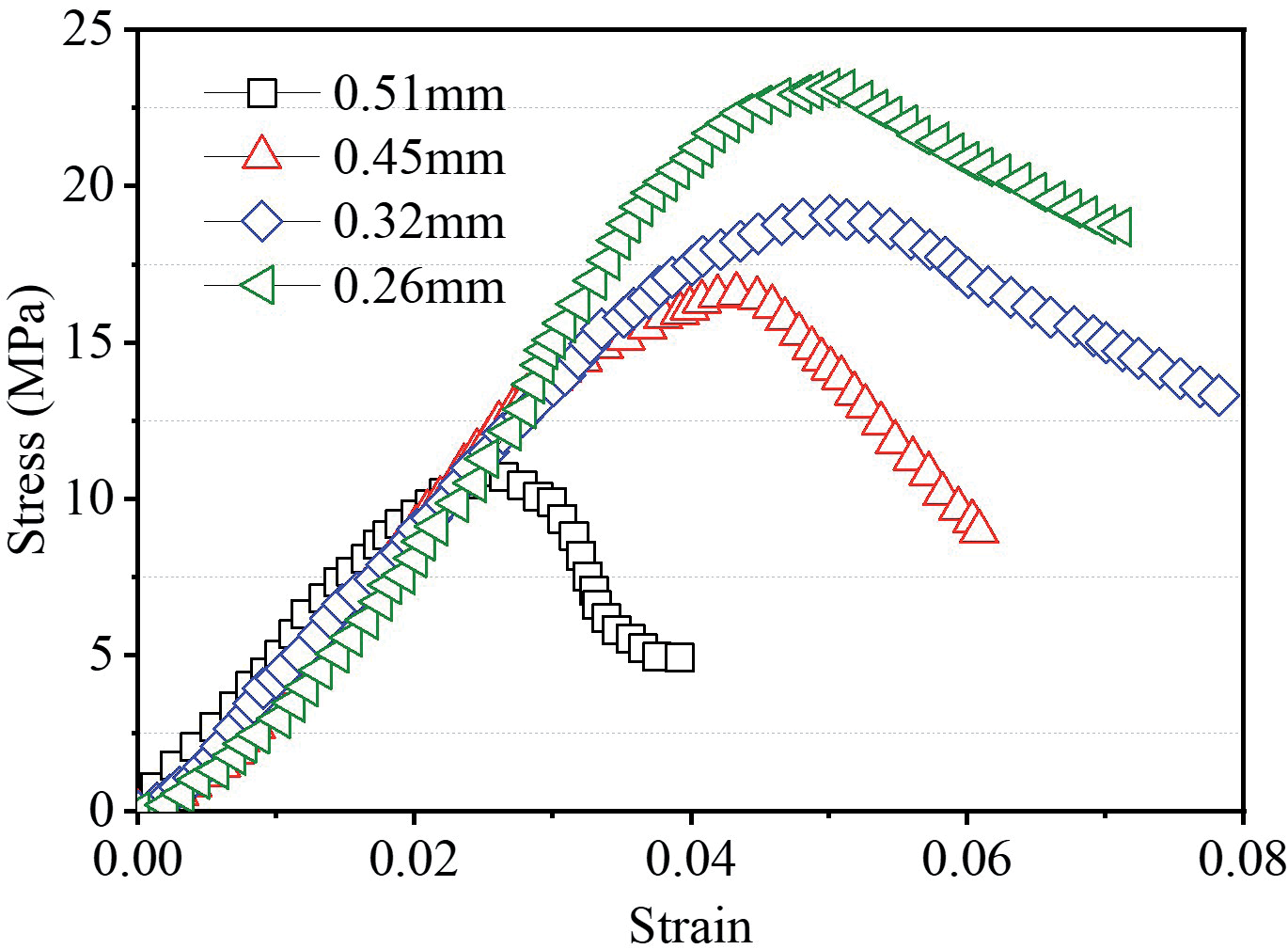
The experimental findings indicate that the root system of Pennisetum alopecuroides exhibits favorable tensile mechanical characteristics and possesses a notable tensile strength. Under four different diameters, the stress-strain curves of the Pennisetum alopecuroides root system show the same shape, with a single peak and no obvious necking phenomenon. This indicates that the single root has a strong ability to resist tension when subjected to axial tensile force due to the characteristics of the root tissue structure. This characteristic of root tissue structure may explain one of the reasons why plant roots can play a role in soil consolidation and slope protection. The stress-strain relationship curves all show the characteristics of elastic-plastic materials. In the first stage of axial tension in a single root, the applied load and resulting deformation, as well as stress and strain, increase in proportion. The stress-strain relationship curve shows a linear correlation, and the mechanical properties of the single root show the characteristics of elastic materials. As a natural material, one of the key indicators for measuring its material deformation performance is elastic modulus. In the case of an individual root, its stiffness escalates proportionally with the rise in elastic modulus. Furthermore, the stiffness of the root plays a role in influencing the deformation of the individual root when subjected to tension. After the early linear deformation reaches the peak strength, the stress gradually decreases until failure occurs. According to the theory of material mechanics, after the tensile stress in the elastic strain stage decreases, the strain will also decrease, but the plastic deformation is irreversible. When the soil of the slope is subjected to external forces and landslides and other disasters occur, if the roots in the soil are subject to stress, the root strain reaction is rapid, causing significant deformation of the root itself. This property is advantageous for buffering the external forces acting on the soil and is the reason why the root-containing soil can effectively stabilize the slope.
Shear Mechanical Properties of Soil-Root Composites
Shear Strength Parameters of Soil-Root Composites
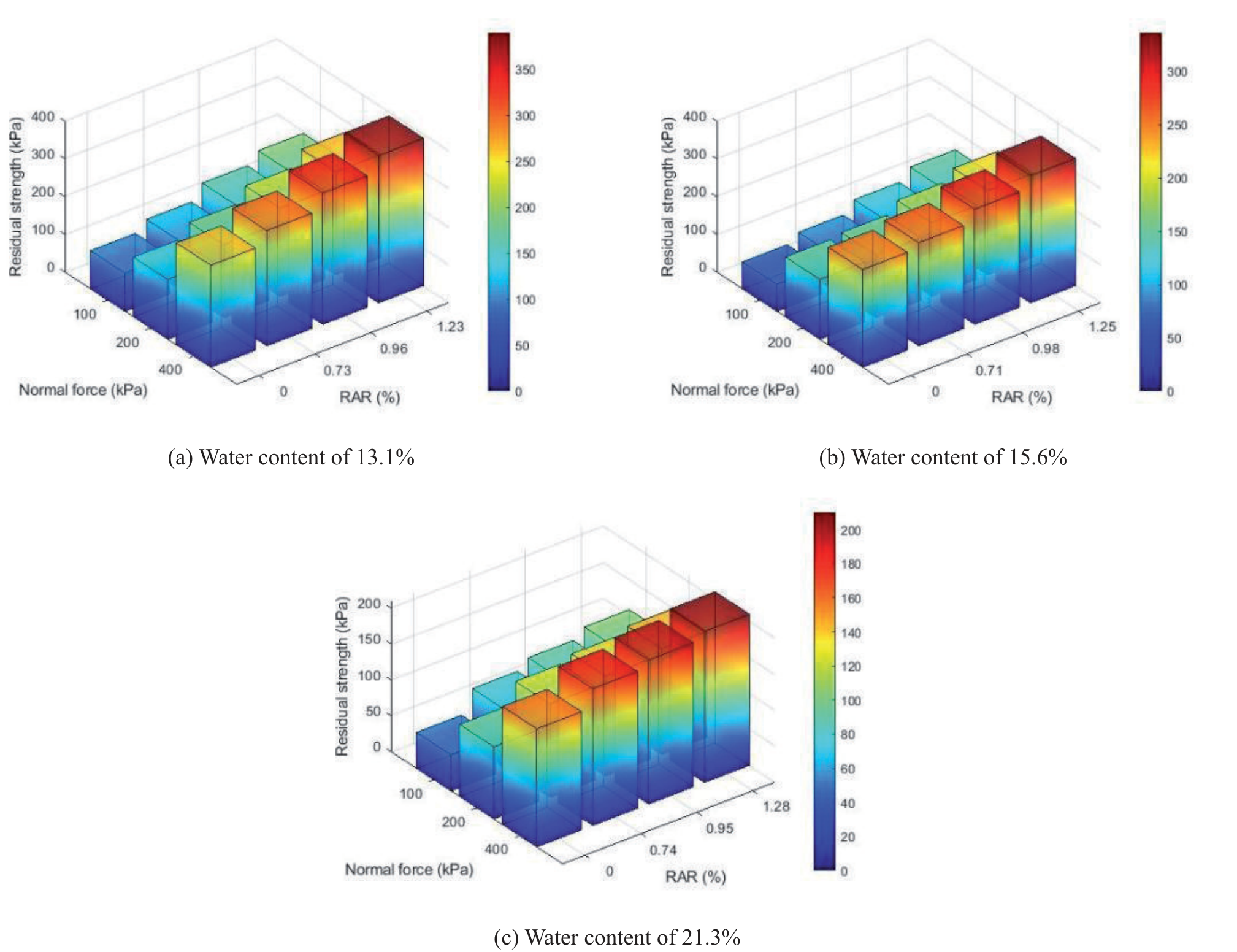
One of the main characteristics of the unstable state of the plant soil-root composites in shallow soil is the shear failure of the soil-root composites [33]. The soil-root composite is a special soil system formed by the interaction between roots and surrounding soil [34]. In this system, there are complex interaction and mechanical coupling relationships between roots and soil [35]. These coupling relationships not only depend on the morphology and mechanical effects of the roots themselves but also on the interaction between the complex stress environment and factors such as water content, thus jointly changing the shear mechanical behavior characteristics of the soil [36]. Fig. 3 illustrates the outcomes of the shear strength analysis.
It can be found from Fig. 3 that the shear strength of the root-containing soil is higher than that of the soil without roots. Moreover, with the increase in root content, the shear strength of the soil-root composites also increases. Changes in water content and vertical load will change the interaction between roots and soil, thereby affecting the shear displacement characteristics of the composite. Analyzing the relationship between the friction angle of the root soil system and the cross-sectional area ratio of the roots in different water contents in Fig. 3, it can be seen that the average friction angle of the root soil at a water content of 15.6% is 30.96º, which is approximate to the friction angle of 31.38º of the rootless soil at the same water content. At the same time, it can be found that the friction angles at different root contents are stable at around 30.96º, indicating that the root system has almost no influence on the friction angle. Similarly, the average friction angles of the root soil at a water content of 13.1% and 21.3% are 31.37º and 19.12º, respectively, and the friction angle of the soil remains stable near the average value with the change of root content. The changes in the friction angle under the three different water contents all show that the presence of roots has almost no effect on the soil friction angle. This is because the soil friction angle is mainly determined by the soil's own state, namely, the particle size distribution, porosity, water content, and other factors related to the soil itself. The existence of roots has no obvious effect on the soil's own structural state, so the friction angle of the root soil has no obvious relationship with the root content. That is, the friction angle of the soil with different root contents at the same water content is approximately equal, which is consistent with the study of Operstein and Frydman [37]. It can be considered that the incremental shear strength of the root soil is equal to the incremental cohesion value. The reason for this result may be that the influencing factors of the shear strength index are different. Cohesion is mainly affected by the connection ability between soil particles. Roots can increase the connection ability between soil particles from both physical and chemical aspects. One is that roots can adsorb and connect soil particles, and the other is that the secretions of roots have a strong bonding ability. The internal friction angle is mainly affected by soil pressure and soil particle size and is less affected by shrub roots. In addition, the small increase in soil shear strength caused by friction can be easily offset by the significant increase in soil shear strength caused by the stickiness of shrub roots.
where ∆c denotes the increment value of cohesive force obtained from the direct shear test of soil-root composites, c denotes the cohesive force of soil-root composites, and c0 denotes the cohesive force of soil without roots.
As water content increases, the soil's friction angle experiences a reduction. At equivalent water content levels, the friction angle remains relatively consistent, suggesting a general decrease in internal soil friction angle with rising water content. However, the impact of the root system on the soil's friction angle value is relatively modest. Similarly, the soil's cohesive force diminishes with increasing water content, yet the presence of the root system proves effective in augmenting the cohesive force parameters of the soil.
Analysis of the Factors Influencing the Enhancement Effect on Root Systems
The reinforcing effect of roots on the peak strength of soil is jointly influenced by multiple factors, including axial pressure σ, water content ω, root area ratio (RAR), etc. Based on the simple analysis in the previous section, the degree of influence of each factor is not clear. Therefore, Design-Expert software is used to conduct a multi-factor quadratic fit of each factor through response surface methodology, analyzing the response generated by each factor and its interaction. The experimental factors and level settings are shown in Table 2. The analysis is shown in Table 3 as follows:
As can be seen from the table, the F-value of the IE predictive model is 69.56, with a P-value of <0.0001, indicating that the model is extremely significant. All related coefficients meet the standard and have reliable predictive ability, sufficient accuracy, and generality. According to the analysis of F-values, the influence of the three factors RAR, ω, and σ on the peak intensity is in the following order: σ>RAR>ω. Based on the predictive model, a response surface diagram as shown in Fig. 4 was produced. The degree of interaction between different factors on Is is as follows: RAR+ω>RAR+σ>ω+σ. Therefore, when exploring the optimal mechanical effect of root solidification, it is important to focus on the combined effect of RAR and ω.
The Impact of Root Systems on Slope Stability
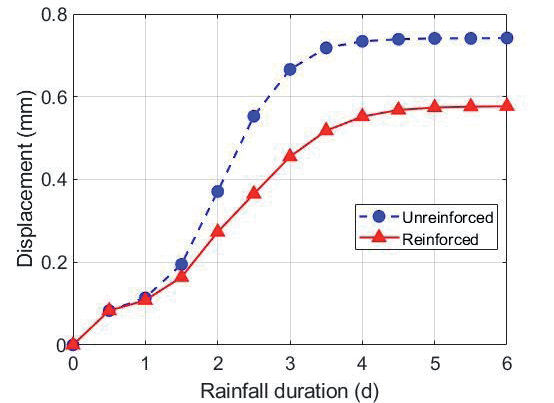
Indoor experiments have found that plants can reinforce soil in normal environments. In order to explore the enhancing effect of plant roots on slopes in extreme environments, this study divided the soil layers into shallow layers, middle layers, gravel soil, construction waste landfill soil, and clay using finite element software based on the reinforcing effect. The soil layer characteristics are detailed in Table 4. The rainfall intensity was 4mm/h, lasting for 6 days, simulating a severe rainstorm. The comparison of slope displacement before and after reinforcement over time is shown in Fig. 5.
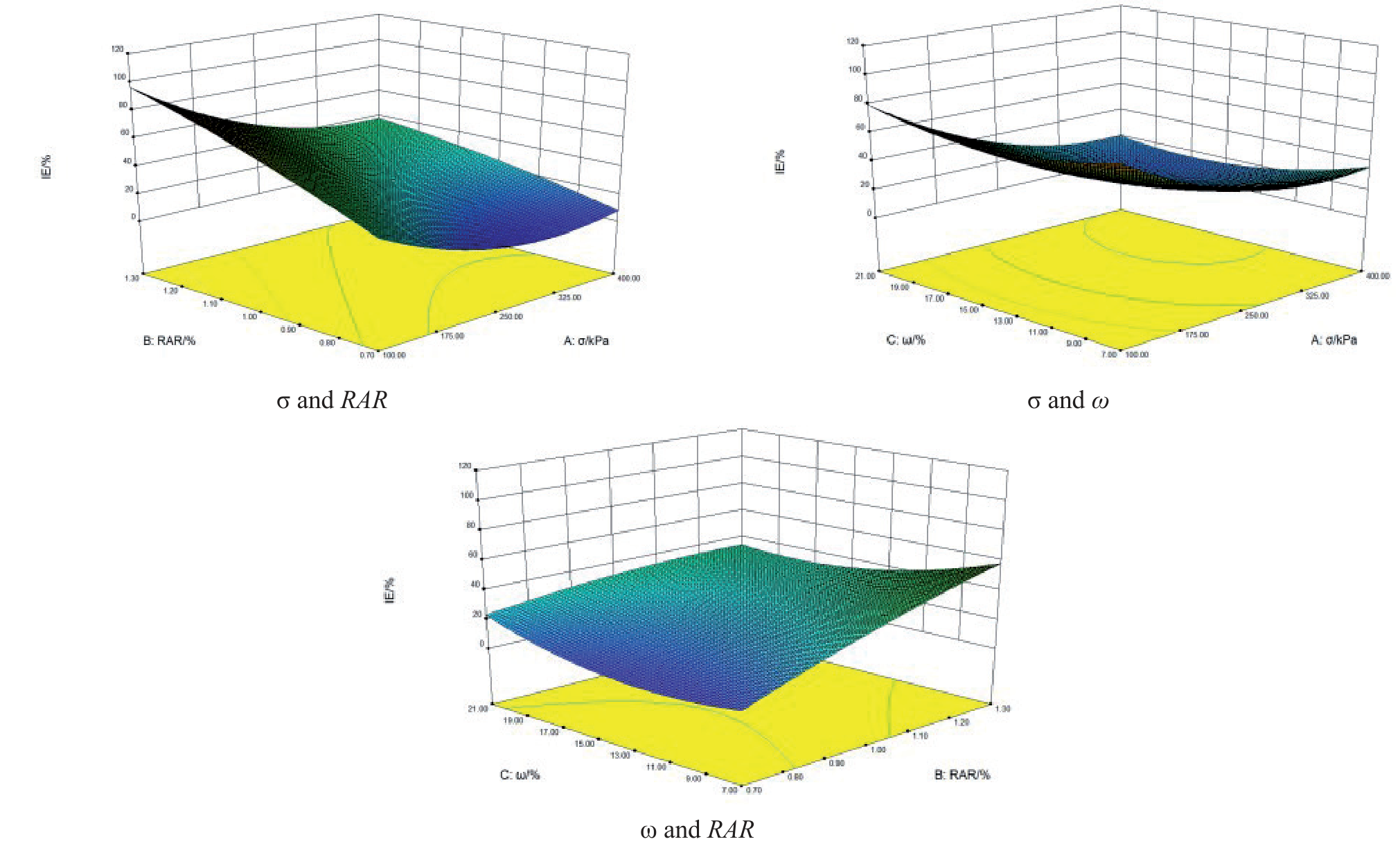
Table 2.
Experimental factors.
| Influencing factors | σ (A) | RAR (B) | ω (C) |
|---|---|---|---|
| a | 100 kPa | 13.1% | 13.1% |
| b | 200 kPa | 15.6% | 15.6% |
| c | 400 kPa | 21.3% | 21.3% |
Table 3.
Analysis of response surface experimental design.
| Sources of variation | F-test value | P-test value |
|---|---|---|
| Model | 69.56 | < 0.0001 |
| A | 201.09 | < 0.0001 |
| B | 169.16 | < 0.0001 |
| C | 22.11 | 0.0022 |
| AB | 17.85 | 0.0039 |
| AC | 5.91 | 0.0454 |
| BC | 32.90 | 0.0007 |
| A2 | 64.98 | < 0.0001 |
| B2 | 3.12 | 0.1205 |
| C2 | 19.39 | 0.0031 |
Table 4.
Soil parameters of slope.
By referring to Fig. 5, it can be observed that over time, the displacements of the reinforced slopes are smaller than those of the unreinforced slopes. This is because, under conditions of heavy rainfall, the root system of plants can enhance the cohesion and shear strength of the soil by restraining it, thereby reducing soil deformation and displacement. From a mechanical perspective, the restraining effect of the root system on the soil can be considered a form of internal cohesion, which enhances the stiffness and stability of the soil, thus reducing soil deformation and displacement.
Discussions
Relationship between Tensile Strength and Diameter of Root Systems
The tensile strength of plant roots is typically defined as the maximum tensile force per unit area that the roots can withstand before failure occurs. It can be calculated using the following formula.
where Tr denotes the tensile strength of plant roots (MPa), Fmax denotes the maximum tensile force at which root failure occurs (N), and d denotes the diameter of the root (mm).
The relationship between the tensile strength of Pennisetum alopecuroides roots and their diameter under different diameters is shown in the following figure.
As shown in Fig. 6, the diameter of the root system of Pennisetum alopecuroides ranges from 0.09 mm to 0.51 mm, with a tensile strength of 36.33 MPa for a root with a diameter of 0.09 mm and 8.59 MPa for a root with a diameter of 0.51 mm. Roots with smaller diameters exhibit better performance in terms of single root tensile strength. Roots with smaller diameters have stronger tensile properties compared to larger ones to resist tension stresses. This may be due to the fact that when the root diameter is smaller, the tensile strength exhibited on the unit root cross section is more prominent. From the perspective of materials mechanics, the larger the single root tensile strength, the stronger the role of the root as a filling material in the soil. In the soil-root composites, fine roots can often form a large root system network around the soil, forming a soil-root composite plant root system network, enhancing the shear strength and anti-erosion performance of the soil, and forming a reinforced effect of roots in the soil structure to stabilize slopes. In terms of material deformation, fine roots have a greater range of strain, stronger toughness, experience more deformation, and therefore have stronger resistance to tensile failure. This also explains why fine roots have a greater tensile strength than coarse roots and further reveals the mechanism of root system soil stabilization. From a botanical perspective, the microscopic structure of plant roots is composed of many cells with different functions, and the wood cell walls in their ultra-microcells can be seen as multilevel composites with microfibers as reinforcement phase and hemicellulose and lignin as matrix. The lifting angles of microfibers in each layer are different, which plays a decisive role in the mechanical properties of wood. Genet et al. [38]. confirmed that the smaller the diameter of the plant root, the more unit cellulose it contains, and the greater the tensile strength. The relationship between tensile strength and root diameter of plant roots can be fitted with a power function, and the result is as follows:
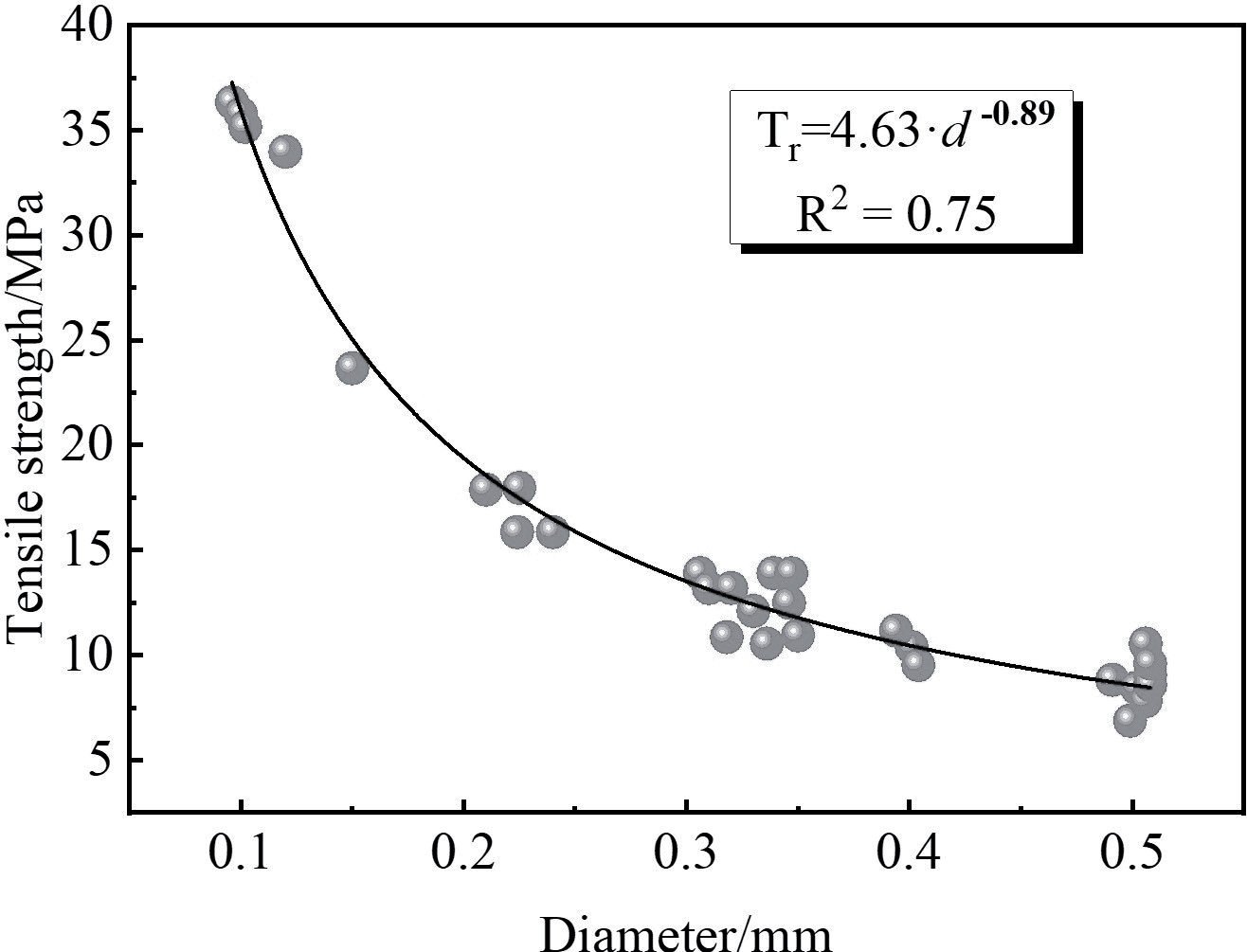
where d denotes the diameter of the root (mm).
De Baets, Bischetti, Pollen, and others conducted single-root tension tests on different trees, shrubs, and herbaceous plants and obtained consistent research results [39-41]. They believed that the root tensile strength is negatively correlated with the diameter of the root, which can be described by a universal expression as follows:
where α and β are curve fitting coefficients.
According to the basic knowledge of power functions, if we take the common logarithm of both sides of Eq. 6, the power function fitting curve in Fig. 6 will become a straight line when the horizontal and vertical coordinates are both in common logarithm. The slope of the straight line is equal to -β, and the intercept of the straight line and the vertical axis is lgα. This also shows that the fitting coefficient β reflects the rate of attenuation of root tensile strength with the increase of diameter, and the larger the value of β, the faster the attenuation, and vice versa. The fitting coefficient α, as a proportional coefficient, can be used to approximate the magnitude of root tensile strength.
Modification of the WWM Model
The vertical root soil reinforcement model (WWM model) was first proposed by Wu et al. [42]. Due to the simplicity of the WWM model parameters and its strong applicability, it has been widely used to quantify the shear strength increment of soil-root composites. The root soil interaction model is as follows:
where ∆τ denotes the shear strength increment caused by root reinforcement, where Ar and As are the cross-sectional areas of the roots and soil, respectively. θ denotes the shear deformation angle, and φ denotes the internal friction angle of the soil.
By appropriately modifying the above formula, the calculation formula for the shear strength increment of soil due to vertical root reinforcement in the WWM model can be obtained:
where K denotes the correction factor recommended to be 1.2 in the WWM model. RAR denotes the ratio of the cross-sectional areas of roots.
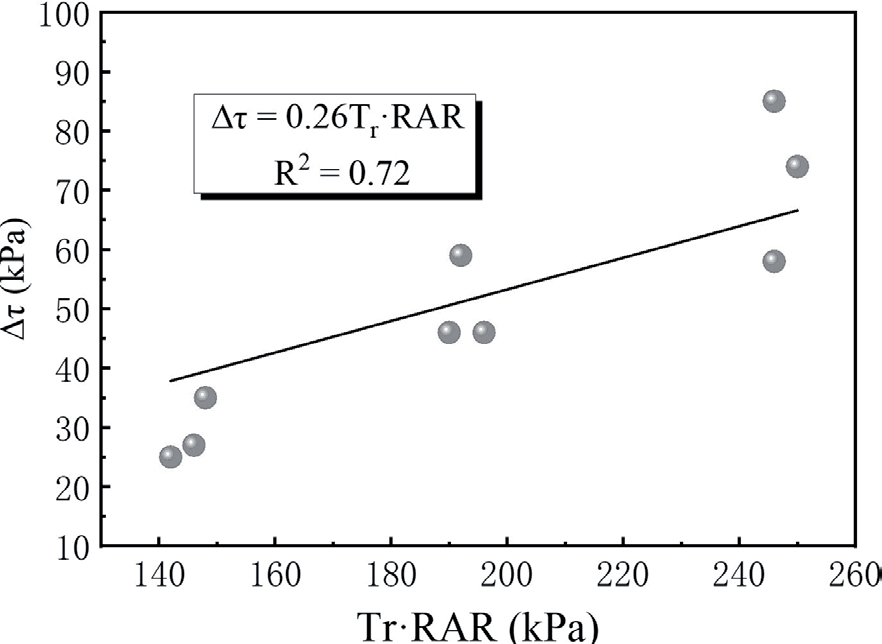
The summary fitting of the experimental shear strength increment value ∆τ is shown in Fig. 7.
The slope of the fitted line is about 0.26, which differs greatly from the coefficient of 1.2 recommended in the WWM model. This is because the original model assumes that all roots can fully exert their own tensile strength when the soil fails. Therefore, the root reinforcement effect is overestimated, resulting in larger results. Pollen proposed a correction factor of 0.56 for tree roots in 2007. According to Fan and Chen [43], a lesser correction value is appropriate for herbaceous plants or smaller trees. Consequently, in this research, the coefficient k in the WWM model was adjusted to 0.26 specifically for the root system of Pennisetum alopecuroides.
Conclusions
Following the fundamental principles of root reinforcement, this investigation focused on Pennisetum alopecuroides as the subject of study. We examined alterations in soil shear strength resulting from root incorporation and conducted an analysis of how root tensile strength and root content impact soil shear strength. This research elucidated the fundamental patterns related to the tensile strength of individual roots, root soil shear strength, and shear strength parameters. Simultaneously, we investigated how composite stress conditions and moisture content affect soil shear resistance under consistent plant conditions. From this inquiry, we derived the subsequent conclusions:
(1) With an increase in root diameter, there is a corresponding decrease in the tensile strength for individual roots, indicating that roots with smaller diameters exhibit greater tensile strength per unit diameter. The stress-strain curve for the root system of Pennisetum alopecuroides is characterized by a singular peak without any noticeable necking effect. Additionally, the tensile strength of the root system exhibits a negative correlation with the diameter, following a power function relationship.
(2) Undisturbed samples of root soil were collected and subjected to direct shear tests at three distinct moisture levels. Results indicated that the shear resistance of soil containing roots surpassed that of soil without roots, suggesting that roots contribute to enhanced soil shear strength and stability. It was observed that with increasing moisture content, both the friction angle and cohesion in rootless soil diminished. Notably, the cohesion component of the shear strength index for soil with roots was significantly higher compared to rootless soil. The presence of roots predominantly influenced the cohesion, whereas the internal friction angle was less impacted. The order of influence on the soil's peak strength was determined as σ>RAR>ω. When comparing the direct shear test outcomes with the theoretical estimations from the WWM model, the model was found to significantly overestimate the root contribution to the composite soil's shear strength. For practical applications in slope engineering design, a correction of the K value to 0.26 is recommended to enhance safety.
(3) Plant root systems play a pivotal role in augmenting soil cohesion and shear strength, especially under conditions of substantial rainfall. From a mechanical standpoint, the restraining effect of the root system can be conceptualized as a form of internal cohesion, enhancing not only the stiffness and stability of the soil but also significantly reducing soil deformation and displacement. Therefore, employing plant root systems as a natural and efficacious method of soil reinforcement reveals considerable potential in mitigating soil deformation and displacement.

