

Introduction
Expansive soil contains a large amount of hydrophilic minerals and is considered a problematic soil that is highly susceptible to the influence of moisture [1]. Expansive soil exhibits significant expansion and shrinkage under periodic changes in moisture content [2-4]. According to statistics, expansive soil is distributed on five continents worldwide, with most of it distributed in tropical and temperate climate regions [5]. In the hot and rainy climate environment, the dry-wet cycle of soil tends to be induced; that is, the water content of expansive soil increases during the rainfall period, and the water content of expansive soil decreases during the hot period. Due to the low permeability and thermal insulation of expansive soil, the dry-wet cycle generally occurs only in the shallow soil layer [6]. Shallow expansive soil inevitably undergoes repeated expansion and shrinkage under dry-wet cycle conditions, resulting in a large number of cracks and deteriorating its engineering properties [7]. Therefore, engineering problems related to expansive soil are frequent under the influence of the atmospheric environment, with slope instability being the most severe [8, 9]. Slope failure is a typical geological environmental problem that not only affects soil erosion and the ecological environment, but also leads to the destruction of engineering facilities, thereby threatening human safety [10]. Therefore, it is of practical significance to study the influence of the atmospheric environment on the stability of expansive soil slopes, which can provide valuable enlightenment for the protection of expansive soil slopes.
The dry-wet cycle has a significant effect on the engineering properties of expansive soil. Ma et al. (2020) [11] investigated the structural evolution mechanism of expansive soil under dry-wet cycle conditions, indicating that the dry-wet cycle has an irreversible effect on the structure of expansive soil. Wang and Wei (2015) [12] investigated the expansion and shrinkage behavior of expansive soil under the dry-wet cycle. Slope failure is usually caused by shear failure of soil along the sliding surface, which is closely related to the strength characteristics of soil [13]. Therefore, it is necessary to study the strength characteristics of expansive soil before analyzing the influence of the atmospheric environment on slope stability. Khemissa et al. (2018) [14] investigated the shear strength characteristics of expansive soil and considered the effects of saturation and shear rate. Chang et al. (2023) [15] studied the effect of acid rain climate on the shear strength parameters of expansive soil, and specifically investigated the effects of acid rain and dry-wet cycle. It was found that both acid rain and dry-wet cycles have a significant impact on the strength parameters of expansive soil. Due to the special engineering properties of expansive soil, the failure mode of expansive soil slopes is different from that of ordinary clay slopes. The failure modes of expansive soil slope include surface expansion failure, shallow failure, and deep failure [16]. The surface expansion failure is closely related to the effect of expansion pressure. The shallow failure mode is mainly affected by the shallow cracks in the expansive soil, while the deep failure is due to the presence of deeply distributed natural cracks in the expansive soil. In fact, the shallow failure of the slope is closely related to the influence of the atmospheric environment. However, the results of deep sliding of clay slopes are often obtained by conventional slope stability analysis methods, and the shallow instability characteristics of the slope are difficult to reflect well, which is essentially a lack of consideration of the effect of the dry-wet cycle. In addition, the instability of expansive soil slope also occurs in the case of a very slow slope, which is inconsistent with the results obtained by the conventional slope stability calculation methods. Therefore, some researchers advocate that the atmospheric influence layer [17] and the dry-wet cycle [18] should be fully considered in the stability analysis of expansive soil slopes. Wang et al. (2024) [19] investigated the stability characteristics of expansive soil slopes under a dry-wet cycle by the discrete element method and fully considered the influence of cracks on slope failure. However, the experimental investigation on the shear strength attenuation of expansive soil under a dry-wet cycle is lacking in their research. Zhai and Cai (2018) [20] tested the shear strength characteristics of expansive soil under dry-wet cycle conditions and analyzed the influence of the dry-wet cycle on the stability of expansive soil slope by the Swedish slice method. However, the Swedish method belongs to the classical limit equilibrium method, which cannot accurately obtain the stress-strain field and stability characteristics of the slope. It is more practical to analyze the stability of expansive soil slopes under the influence of the dry-wet cycle induced by the atmospheric environment by numerical methods such as the finite element method. The advantages of the numerical method include the ability to accurately calculate the stress and strain distribution in the slope and the potential sliding zone. The expansive soil slopes are affected by the atmospheric environment and have a more complex geological structure. Therefore, the more suitable method for analyzing the stability of expansive soil slope should be the numerical method.
In this study, the dry-wet cycle direct shear test was carried out on the expansive soil of a highway-cutting slope project, and the evolution of the strength parameters of expansive soil under a dry-wet cycle was investigated. Based on the test results, the stability characteristics of expansive soil slopes were calculated by the finite element method, and the influence of the dry-wet cycle induced by the atmospheric environment on the stability of expansive soil slopes was fully discussed. This study can provide engineering guidance for expansive soil slope protection.
Material and Methods
Material
The test soil samples were collected from Henan Province, China, where expansive soil is considered to be one of the most typical expansive soils in China. Due to various projects being constructed in the expansive soil area, including channel engineering and highway engineering, the engineering problem of instability of the expansive soil slope in the area is prominent. The sampling depth of the expansive soil is about 0.5 m below the slope surface. The test results show that the free expansion rate of the expansive soil is within the range of 50% to 55%, indicating that the soil is weak expansive soil. The expansive soil sampled on-site was carefully dispersed and dried, and large particles were removed from the soil through a 2 mm sieve. A certain amount of water was mixed into the soil sample to prepare the sample with the same water content (24%) as the on-site expansive soil. The prepared sample was maintained in a constant temperature and humidity environment for more than 48 h to ensure the uniform distribution of water in the soil sample. According to the natural density (1.95 g/cm3), the soil sample was statically compacted into a ring knife-shaped sample with a size of Φ 61.8 mm×20 mm for the direct shear test.
Methods
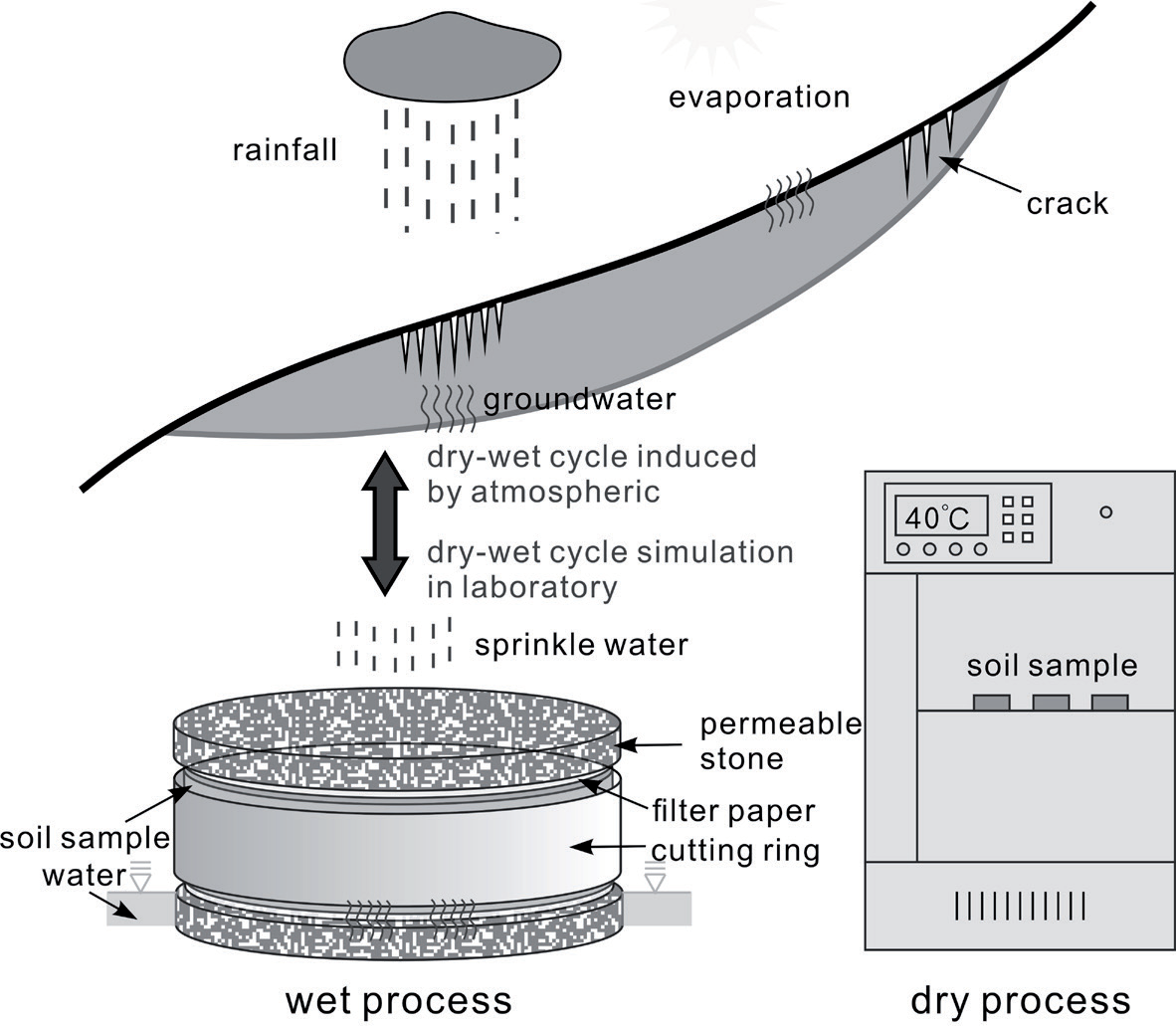
The convenient and widely used direct shear test was adopted to study the attenuation law of the strength parameters of expansive soil under a dry-wet cycle. The sample wrapped by the ring knife can ensure that the side of the sample is restricted, allowing the dry-wet cycle to first occur from the surface of the sample and then develop laterally along existing cracks, thus simulating the real dry-wet cycle conditions well. The expansive soil slope undergoes dry-wet cycles in the atmospheric environment. The wetting effect is mainly derived from atmospheric rainfall and groundwater capillary action, and the drying effect is mainly caused by evaporation induced by rising temperatures. Therefore, in order to simulate the real dry-wet cycle in the laboratory as much as possible, a set of dry-wet cycle simulation methods was designed independently. During the wetting process, the filter paper and the permeable stone were successively placed on the soil sample, and the lower permeable stone of the soil sample was submerged in water to simulate the capillary action of groundwater. The permeable stone on the upper surface of the soil sample was sprinkled with water until it no longer absorbs water, so as to simulate the rainfall effect. Then the sample was soaked in water for 12 h to simulate the surface runoff caused by long-term rainfall. The drying process is carried out in a constant temperature and humidity incubator, with a temperature of 40ºC set to simulate the highest local temperature. The soil sample is dried for 2 days until its weight no longer changes. The above is a dry-wet cycle, and the dry-wet cycle test scheme is shown in Fig. 1.
To fully investigate the evolution of strength parameters of expansive soil under dry-wet cycle conditions, a dry-wet cycle test group and a control group (equivalent to zero dry-wet cycle times) were set up. According to previous studies, the mechanical properties of expansive soil are constant and no longer decay after 5 dry-wet cycles [21]. Therefore, the number of dry-wet cycles (n) in the test was set to 0, 1, 3, and 5, respectively. In addition, considering that the atmospheric influence layer of expansive soil is generally within the range of 4 m [17], which belongs to the low stress range, the consolidation stress was set to 12.5 kPa, 25 kPa, 50 kPa, and 100 kPa, respectively. The sample after wetting is basically saturated. In order to simulate the rapid deformation of the slope, the direct shear test adopted the consolidated fast shear method, and the shear rate was set to 0.8 mm/min. The soil sample after wetting was first placed on the direct shear test device for consolidation, and the consolidation period was generally more than 12 h. When the monitored vertical displacement change per hour did not exceed 0.005 mm, the consolidation process of the soil sample was considered to be completed. Then, the consolidation stress was maintained constant and the soil sample was sheared until the displacement reached about 7~8 mm, indicating the failure of the soil sample. The shear stress and displacement of the soil sample during the shearing process were recorded in real-time.
Results
The results of the dry-wet cycle direct shear test are shown in Fig. 2. Fig. 2 shows that the shear stress of expansive soil gradually increases with the increase of normal stress, which conforms to the general law of soil compression hardening. Expansive soil that is not subject to a dry-wet cycle is considered ordinary cohesive soil, and the shear stress of the soil gradually decreases with the increase of shear displacement, exhibiting softening behavior. The reason is that the structure of cohesive soil is damaged when it is sheared, resulting in a gradual decrease in the shear strength of the soil [22]. After a dry-wet cycle (n = 1), the shear strength of expansive soil decreases significantly, and the soil also exhibits weak hardening characteristics; that is, the shear stress increases with the increase of shear displacement. The dry-wet cycle significantly damages the structure of the soil, and the cohesive properties between soil particles are basically lost, with friction characteristics dominating. Therefore, the shear stress of the soil will not continue to significantly decrease with the increase of shear displacement. After the soil is subjected to multiple dry-wet cycles (n = 3 and n = 5), the soil structure is basically completely destroyed, so its shear strength is significantly reduced, and the soil has hardening characteristics. Therefore, it can be concluded that the dry-wet cycle has a significant effect on the shear mechanical properties of expansive soil, and only about 3 times of the dry-wet cycle is required to deteriorate to the worst mechanical properties.
Furthermore, the relationship between the shear strength (maximum shear stress) and the normal stress of the soil with various dry-wet cycles is obtained in Fig. 2, as shown in Fig. 3. Fig. 3a) shows that there is a good linear correlation between shear strength and normal stress, so the Coulomb Equation can be used to describe this relationship [23], which can be expressed as follows:
where τ is shear stress, σn is normal stress, c is cohesion, and φ is internal friction angle. In this study, all stresses refer to the total stress, and the strength parameters, including cohesion and internal friction angle, are also calculated based on the total stress, so the pore water pressure is not monitored. The direct shear test is consolidated fast shear to simulate the rapid deformation of the slope, and the total stress analysis method is actually reliable.
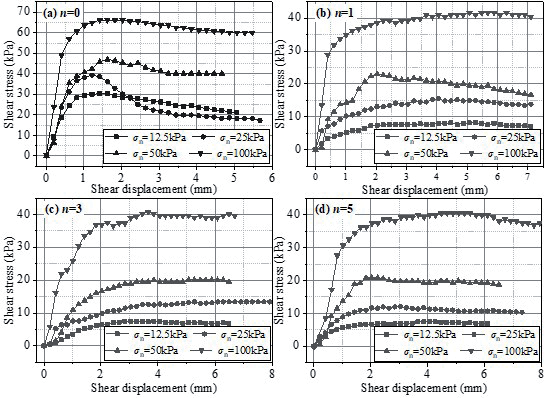
Fig. 3.
Evolution of shear mechanical properties of expansive soil under dry-wet cycle conditions. a) Shear strength vs. number of dry-wet cycles; b) Strength parameters vs. number of dry-wet cycles.
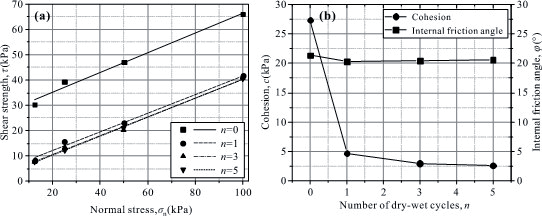
In addition, Fig. 3 clearly shows that the shear strength of the soil decreases significantly with the increase in the number of dry-wet cycles, and the influence of the number of dry-wet cycles on the shear strength is gradually weakened. According to Fig. 3a), the shear strength parameters of expansive soil, namely cohesion (c) and internal friction angle (φ), can be calculated, as shown in Fig. 3b). Fig. 3b) shows that the dry-wet cycle only affects the cohesion of expansive soil, but has little effect on the internal friction angle of the soil. The results are similar to the results of the triaxial test carried out by Zhou et al. (2022) [21]. In addition, the significant decrease in cohesion of expansive soil is mainly reflected after the first dry-wet cycle. As the number of dry-wet cycles continues to increase, the cohesion does not continue to decrease significantly.
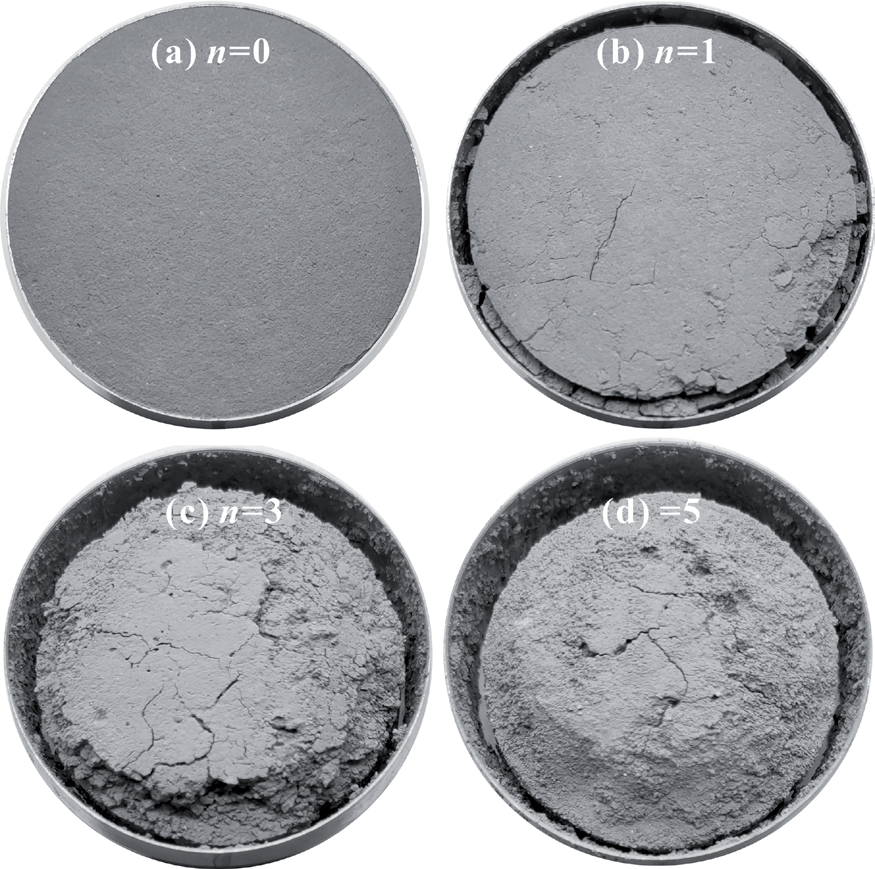
Fig. 4 shows the macroscopic characteristics of expansive soil samples after different dry-wet cycles, indicating that the soil shrinkage cracks are quite developed. The soil mainly exhibits radial shrinkage, accompanied by macroscopic cracks. The development of cracks significantly damages the structure of expansive soil, resulting in a significant decrease in soil shear strength. Specifically, the presence of cracks causes soil fragmentation, resulting in a significant decrease in soil cohesion. However, the friction characteristics of soil are mainly reflected between soil particles, and macroscopic cracks do not significantly affect the friction characteristics between the particles. Therefore, the presence of cracks does not lead to a significant reduction in the internal friction angle of expansive soil. In addition, Fig. 4 shows that expansive soil exhibits a similar poor structure after being subjected to 3 and 5 dry-wet cycles, which leads to the soil having similar shear mechanical properties. The cracks caused by the dry-wet cycle are the internal reason for the deterioration of the shear mechanical properties of expansive soil.
Discussion
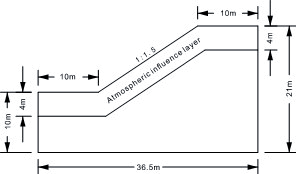
Using the finite element method to analyze the stability of expansive soil slope. Compared with the conventional limit equilibrium slice method to analyze the stability of the slope, the finite element method has the advantage of accurately analyzing the stress and strain distribution of the slope and automatically calculating the sliding surface. Previous studies have shown that the influence depth of the atmospheric environment is generally in the range of 2-4 m [17]. Therefore, the atmospheric influence layer should be considered in the establishment of an expansive soil slope model. According to a cutting-edge slope engineering example, the slope calculation model is summarized as shown in Fig. 5. The slope height is 11 m, and the slope ratio is 1:1.5. In order to minimize the influence of boundary conditions, the slope toe and slope top are extended to 10 m. In addition, in order to consider the harsh atmospheric environment, the atmospheric influence layer depth is 4 m. In the finite element model, the Mohr-Coulomb constitutive model is applied, and both the atmospheric influence layer and the natural soil layer are considered Mohr-Coulomb plastic materials. The influence of the atmospheric environment on expansive soil is only reflected in the difference in strength parameters, which is closely related to the stability of the slope. The strength parameters of the slope are based on the results of the direct shear test. The soil parameters in the atmospheric influence layer were set to the strength parameters of the soil under the corresponding dry-wet cycle, while the strength parameters of natural expansive soil were set to the strength parameters of the soil that are not subject to the dry-wet cycle (n = 0). The deformation parameters include an elastic modulus of 20 MPa and Poisson’s ratio of 0.3. In the finite element calculation model, commonly used boundary conditions for slope stability analysis were used, that is, the horizontal and vertical displacement at the bottom of the slope was fixed, and the horizontal displacement was fixed on both sides of the slope. The model is generalized as a plane strain problem, and the finite element analysis element is the four node plane strain element.
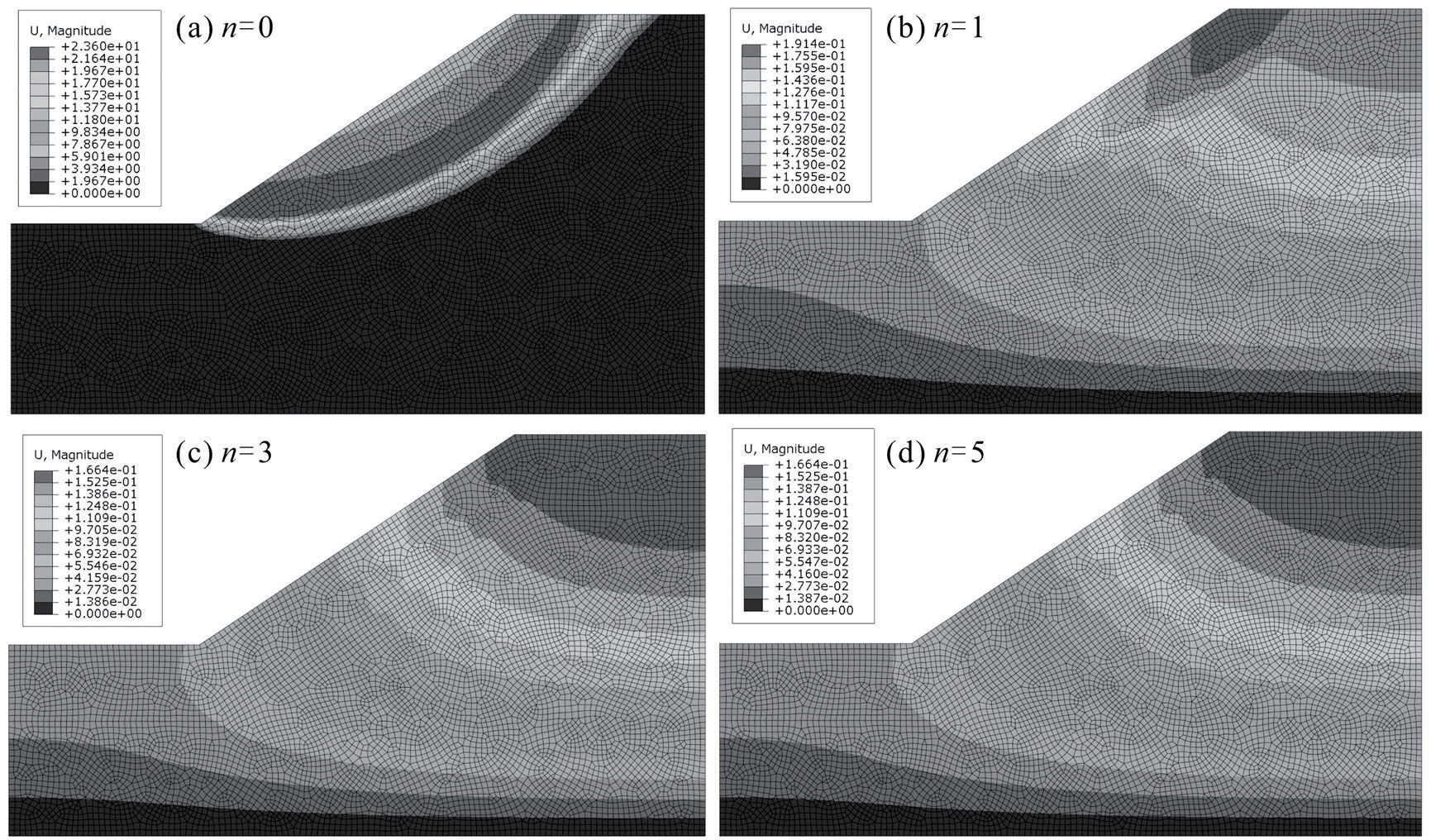
Through the finite element analysis, the displacement distribution of expansive soil slopes under different dry-wet cycle conditions is shown in Fig. 6. It can be observed that the deformation characteristics of expansive soil slope are that the soil near the slope surface deforms along a circular sliding surface, which is consistent with the general characteristics of soil slope deformation and failure. Interestingly, the slope deformation mode changes significantly under the influence of the dry-wet cycle. Under the condition that the slope does not undergo a dry-wet cycle, the expansive soil is not different from the general clay. Due to the high cohesion of the expansive soil, the sliding surface of the slope is deeper. The sliding surface of expansive soil slopes is significantly shallower under the influence of the dry-wet cycle, and the displacement characteristics of the slope change significantly after the soil undergoes the first dry-wet cycle. With the increase in the number of dry-wet cycles, the displacement characteristics and failure modes of the slope no longer change significantly. The calculation results show that the dry-wet cycle has a significant effect on the deformation behavior of the slope, and this effect is mainly reflected in the first dry-wet cycle. It should be noted that Fig. 6 shows the displacement of the slope in the limit equilibrium state, which does not indicate that the real displacement of the slope is smaller under dry-wet cycle conditions. The reasons for the formation of a shallow sliding surface of expansive soil mainly include the following two aspects: (1) The dry-wet cycle causes the strength of expansive soil to decrease significantly, especially the decrease of cohesion, which leads to the shallow failure of soil. (2) The natural expansive soil has high strength, so the deformation of expansive soil mainly occurs in the atmospheric influence layer with low strength, and the depth of the atmospheric influence layer is shallow.
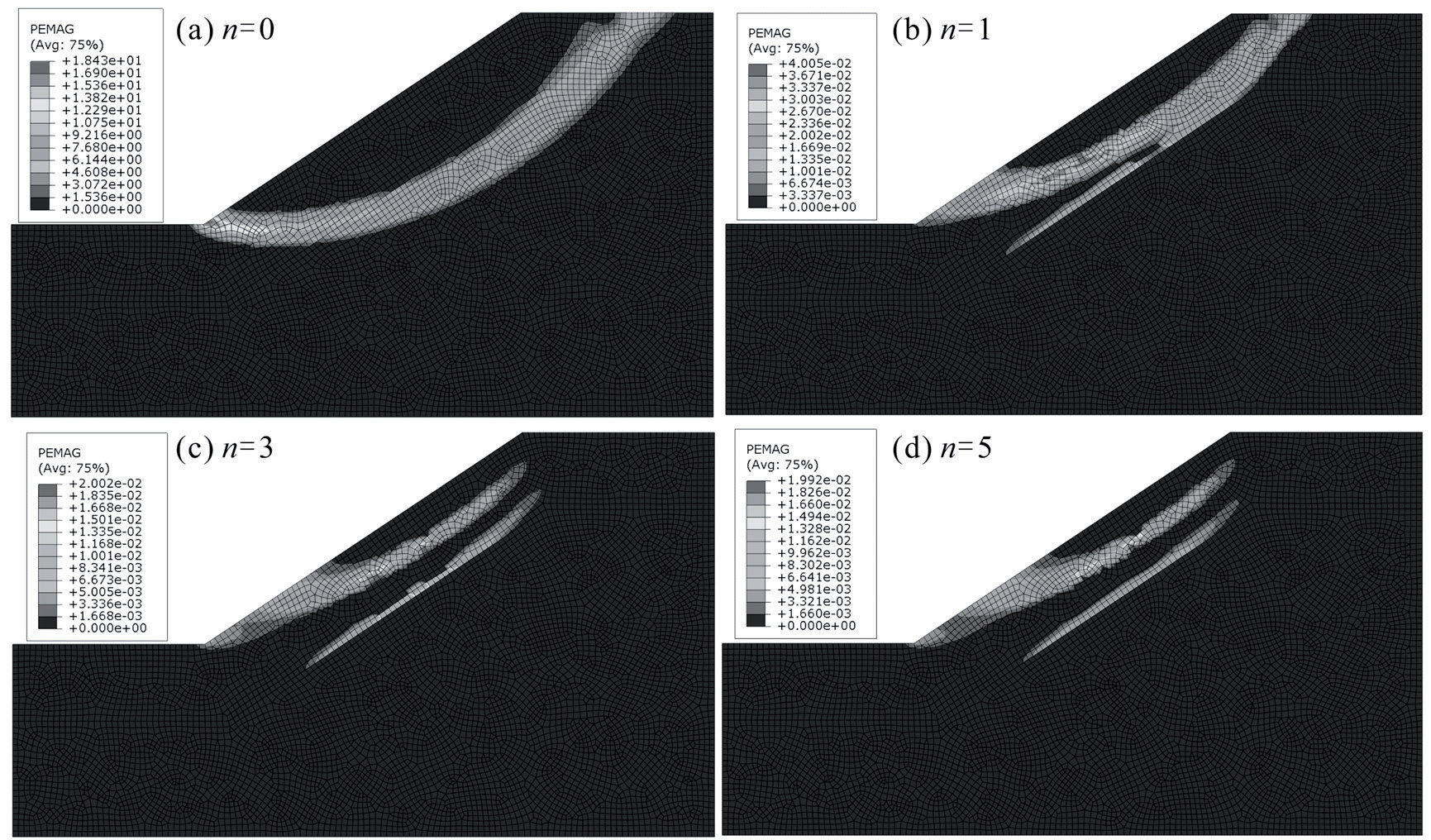
Through the finite element analysis, the plastic strain distribution of the slope can also be obtained, as shown in Fig. 7. The failure of the slope is essentially caused by plastic deformation of the sliding zone soil, so the distribution of plastic strain can be regarded as the sliding surface of the slope. Therefore, compared to the displacement field, Fig. 7 can provide a more intuitive analysis of the sliding surface of expansive soil slopes under a dry-wet cycle. Fig. 7 shows that the sliding surface of expansive soil slopes under the influence of dry-wet cycles is shallow, and the sliding surface of the slope does not change significantly after the expansive soil is subject to a certain number of dry-wet cycles (n=3). In addition, there is a slight plastic deformation at the interface between the atmospheric influence layer and the natural soil layer, mainly due to a significant decrease in soil strength parameters at the interface. The distribution of plastic strain indicates that the deformation and failure of expansive soil slopes are significantly affected by the atmospheric environment, mainly exhibiting shallow failure modes.
The most intuitive parameter to evaluate the stability of the slope is the stability factor. The stability factors of the expansive soil slope under different dry-wet cycles are obtained by the strength reduction method. The principle of the strength reduction method is that the shear strength is continuously reduced to cause the slope to be in a critical stable state, and the strength reduction factor in the critical stable state is considered as the stability factor of the slope. The strength reduction method can be expressed as follows:
where SRF is the strength reduction factor, and cr and φr are the reduced cohesion and internal friction angle, respectively.
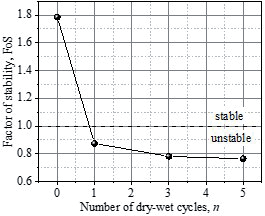
Fig. 8 shows that the expansive soil slope has a large stability factor without experiencing the dry-wet cycle, and the slope will not fail. After the expansive soil undergoes a dry-wet cycle, the slope stability factor is reduced to less than 1, showing an unstable state. With the increase in the number of dry-wet cycles, although the slope stability factor continues to decrease, the decrease is not significant. The decrease in stability factors is closely related to the significant decrease in strength parameters. For expansive soil, the strength parameters are significantly affected by the dry-wet cycle. Therefore, in order to protect the expansive soil slope from failure, the dry-wet cycle induced by the atmosphere should be fully avoided. Some optional engineering measures can be used to lay a cushion layer and plant grass on the slope surface to prevent significant changes in the moisture content of the soil under the influence of the atmospheric environment.
Conclusions
In this study, the influence of the atmospheric environment induced dry-wet cycle on the shear strength of expansive soil was first investigated. Based on the test results, the deformation failure mode and stability characteristics of the expansive soil slope were analyzed by the finite element method, and the influence of the dry-wet cycle on the stability of the expansive soil slope was discussed. The main conclusions are as follows:
(1) The shear strength of expansive soil gradually decreases with the increase in dry-wet cycles. Among them, the cohesion decreases significantly, and the internal friction angle does not change much. The development of cracks caused by dry-wet cycles is the main reason for the attenuation of shear strength parameters.
(2) The dry-wet cycle significantly affects the stability of expansive soil slopes. The failure mode of expansive soil slopes under the influence of dry-wet cycles is mainly characterized by shallow failure, and as the number of dry-wet cycles increases, the stability factor of the slope first sharply decreases and then tends to remain constant. The essence of the influence of the dry-wet cycle on the stability of expansive soil slopes mainly lies in the shallow depth of the atmospheric influence layer and the decrease of soil strength parameters.
(3) The protection of expansive soil slopes should focus on avoiding the effect of the dry-wet cycle. The available engineering measures include laying cushions and planting grass on the slope surface.

