

Introduction
Rock, a very common geological material in nature, is based on solid mineral crystal particles and contains a large number of connected fractures that can transport fluids. [1] Therefore, it is also a naturally defective material. The interaction of rock and fracture fluid water would cause rock failure. The Water Rock Interaction (WRI) was proposed in the 1950s [2, 3]. It was the continuous interaction between water and rock that had an impact on the state of the geotechnical medium, as shown in Fig. 1 [4]. The deterioration effect of rock caused by water-rock interaction led to its failure of rock [5-8].
The underground engineering is affected by water rock interaction, which could deteriorate the surrounding rock and increase the pressure of the support structure, resulting in failure. In the meantime, groundwater also has two effects on underground engineering, which include increasing infiltration, a larger buried depth, and corrosion and destructive effects. In the construction of tunnel engineering, the interaction between groundwater and the surrounding rock will deteriorate the tunnel lining structure. Water will enter the lining through the cracks and cause damage by forming a dominant channel. When the tunnel was built in different hydrogeologies during the construction process, the redistribution of geostress increased the permeability coefficient of the surrounding rock and changed the natural seepage field. When the tunnel passes through the water rich fractured surrounding rock, disasters such as water inrush occur due to the destruction of the original groundwater seepage conditions. Therefore, a great risk existed in the tunnel construction process when the water environment changed [9, 10]. How to ensure the construction safety of the tunnel in the surrounding rock seepage is the primary problem. It is highly significant to research the principle of Water Rock Interaction and its impact on the stability of tunnel engineering.
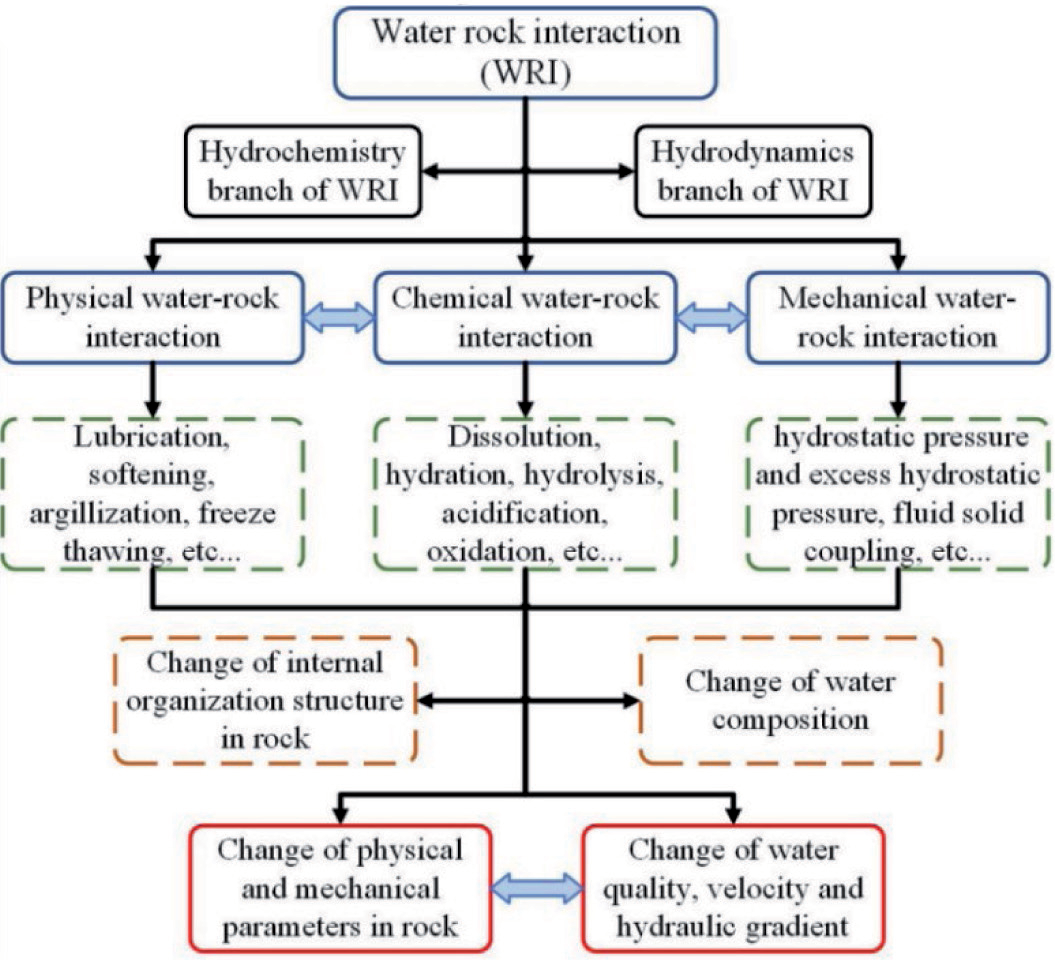
In this paper, the impact of Water Rock Interaction on rock mechanical properties and tunnel engineering is summarized. Firstly, the Principle of Water Rock Interaction is summarized through the classification. Secondly, the external influencing factors of Water Rock Interaction are explored, and the law of rock deterioration is summarized from a macroscopic and microscopic aspect. Thirdly, the influence of Water Rock Interaction on the stability of the tunnel is further systematically summarized, combined with the classification of the water damage in the tunnel. Finally, the shortcomings of the current research and the future research direction were pointed out.
Material and Methods
The Principle of Water Rock Interaction
Physical Interaction
The water rock physical interaction mainly refers to the degradation process of the mechanical properties of rock by softening, argillization, and lubrication, etc. Among them, rock softening refers to the decrease in strength of a rock after immersion in water. Rock argillization is the weakening effect of rock containing filled materials, such as a mud interlayer, that change from a solid state to a liquid state after encountering water. Rock lubrication is the weakening process of the connecting force between mineral particles and the reduction of friction force due to the soluble salts that dissolve and the colloids that hydrolyze after encountering water. Dry-wet process and freeze-thaw process of rock are the experiences of external humidity and temperature change, respectively. There has been much research on the water rock physical interaction [11, 12]. It has finally been concluded that the impact of physical interaction on rock mechanical properties is mainly related to temperature and humidity. Part of the damage effect on rock is reversible, such as when the strength of sand and mudstone gradually increases after the drying process [13, 14]. The other damage effect is irreversible, which includes the disintegration of shale and mudstone in water, etc.
Some research generally concluded that the forms of water in rocks may include water vapor, solid water, molecular bound water, adsorbed water, capillary water, and free water [15]. When encountering water, most rocks will soften. Yang et al. divided the softening mechanism into three processes by researching the mudstone microstructure [16]. Firstly, the microcracks formed by the historical diagenesis process provided the initial channel for water molecules to invade mudstone. Then, the invading water molecules led to the volume expansion of clay minerals and the dissolution of soluble carbonate in mudstone through physical and chemical interaction. Finally, the mechanical interaction derived from the volume expansion and the dissolution led to the propagation and interconnection of cracks.
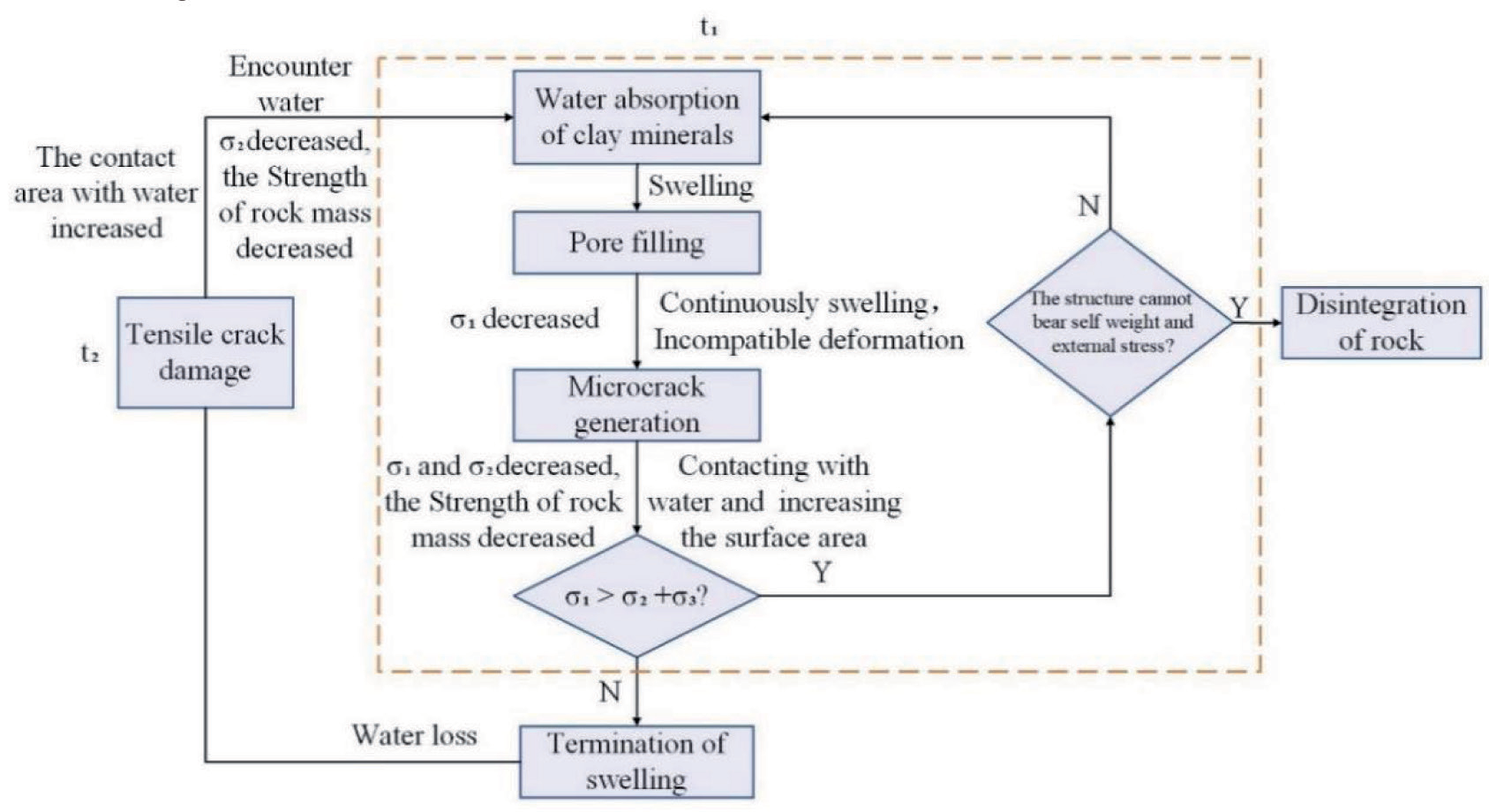
In addition, Wang et al. conducted mineral composition analysis and mechanical property tests on calcareous mudstone [17]. It found that the sample experienced three stages after encountering water; clay mineral expansion, pore filling, and uncoordinated deformation. When the rock deformation became larger, the swelling decreased, and the internal structure was continuously damaged. The cracks appeared in rock particles, and the cementation stress decreased, which eventually tended to be stable. The stability conditions can be described as follows: When the rock sample met water, if the expansion stress was greater than the binding around the mineral particles (
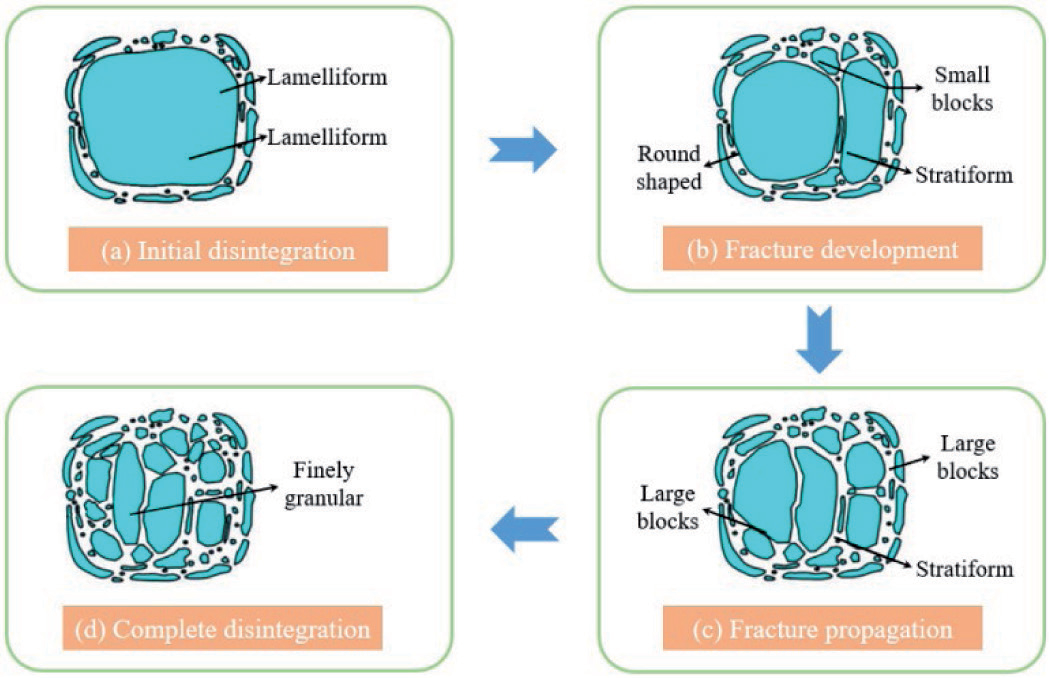
In the meantime, some rocks will collapse when encountering water. Pan et al. found that the disintegration of red-bed soft rock was due to the loss of clay particles at the water rock interface [18]. It resulted in the reduction of the argillaceous cementation zone and the decrease of cohesion. Zuo et al. found that the disintegration failure modes of sandstone included surface spalling failure and structural plane fracture failure, as shown in Fig. 3 [19]. The main manifestation was surface spalling failure in the early stage, in which the disintegrated material was mainly in the form of flakes, small pieces, and fine particles (Fig. 3a). When the cracks develop along the weak structural plane under hydration, the sample fractures, and the larger residual material gradually disintegrates into layers, blocks, and flakes (Fig. 3b). After the cracks further expanded, the large disintegration gradually disintegrated (Fig. 3c). The number of disintegration particles increased, and the contact surface with water increased, making it more prone to softening and disintegration. As the size of the disintegrating material decreases, the disintegrating material ultimately becomes flake, small block, and fine particles. (Fig. 3d).
In conclusion, the volume of mineral particles in the rock will expand after water molecules enter the crack, and the cementation will become looser, so as to reduce the bonding force. Macroscopically, it manifested as physical phenomena such as rock softening, argillization, and lubrication. When cohesion between fragments sharply decreases, rock disintegration may also occur. Therefore, the characteristics of water rock physical interaction were closely related to the mineral composition, internal structure, and environment. The cracks and clay mineral content were the main factors affecting the reduction of rock strength after encountering water.
Chemical Interaction
The water rock chemical interaction often has a greater impact on the mechanical properties of rock [20]. It mainly includes ion exchange between groundwater and rock, dissolution, hydration, hydrolysis, dissolution, oxidation-reduction, sedimentation, infiltration, etc. It could change the composition and structure of rock, thus affecting its mechanical properties. Dissolution refers to the process by which the strength of the rock is reduced by the soluble substances dissolving. Ion exchange is the process by which ions or molecules that were adsorbed to the surface of mineral particles are exchanged with groundwater. Hydration is a process in which water penetrates into the mineral crystal framework or water molecules attach to the ions of soluble rock, resulting in microscopic and macroscopic changes in rock structure. Hydrolysis is a chemical reaction between water and anions in rock. If cations react with water, the environment of rock will be acidified. If anions react with water, the rock’s environment will be alkalized. Compared with the water rock physical interaction, the water rock chemical interaction is generally irreversible, and it is often accompanied by the production of new minerals, which is the basis for changes in the mechanical properties of rock.
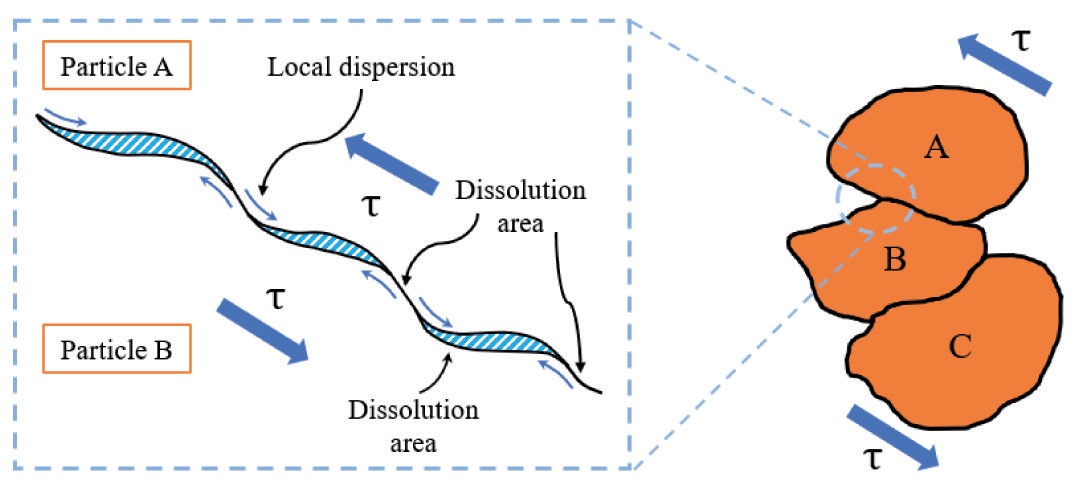
In the principle of water rock chemistry interaction, Raj and Ashby (1971) established a theoretical model on the boundary sliding of rock particles, including the migration of diffusive materials, as shown in Fig. 4 [21]. Before the rock was destroyed or staggered along the edge of particles, the water permeated through voids and chemically interacted with rock particles. Water rock chemical interaction made the strength of the edge between particles decrease. Then, the particles of serrated or irregular shape tended to become smooth to reduce the cohesion and internal friction angle of the rock, which was manifested in the reduction of rock strength macroscopically.
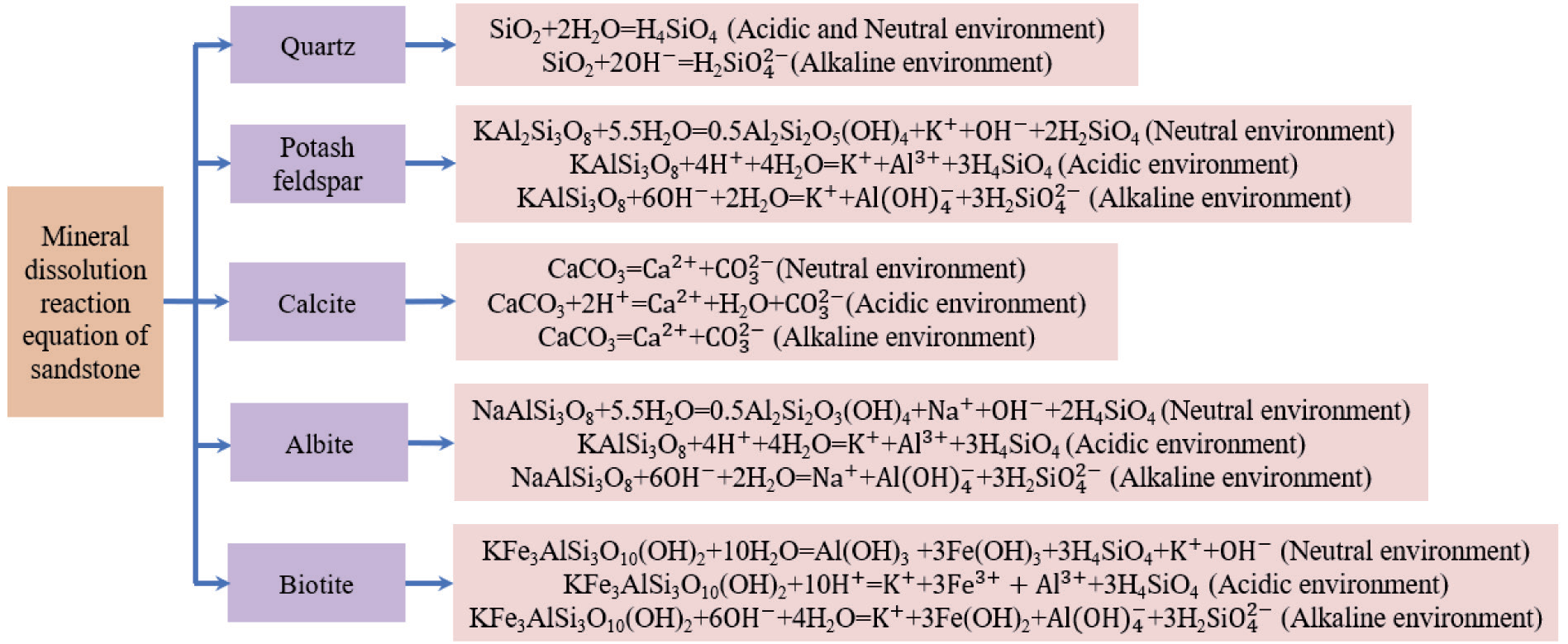
In the research on water rock dissolution, the mechanical properties mainly depended on the composition of cement and the connection between particles [22]. Gypsum and other soluble minerals were easily dissolved under the water, which increased the porosity of the rock. Clay minerals would expand with water, reducing the strength of the rock. In sandstone, the main minerals with the largest content, such as quartz, feldspar, calcite, and biotite, were chosen to research the chemical reaction equation of dissolution in neutral, acidic, and alkaline environments, as shown in Fig. 5 [23].
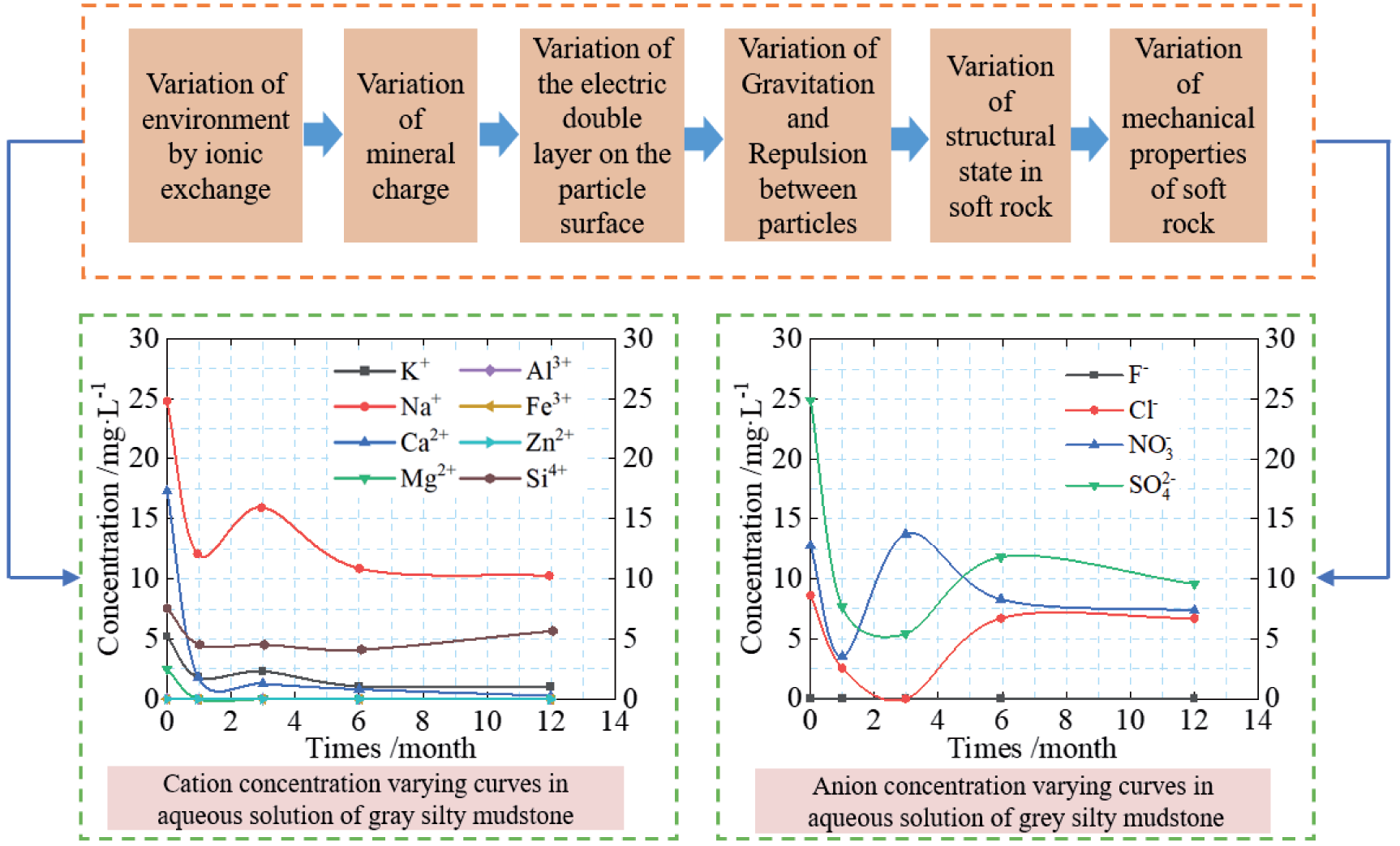
In the research of water rock oxidation, reduction, and ion exchange, clay minerals will produce negative charges caused by isomorphic replacement. The unsaturated negative charges between the crystal layers of clay particles could change the repulsion and gravity between particles such as Ca2+ and K+ ion. It resulted in a change in the electric double layer as well as the structure of the rock. Finally, the physical and mechanical properties of rock have changed. There were lots of factors affecting the ion exchange, such as the chemical and rock composition, structure, pH value, etc. The greater the exchangeable ion concentration, the faster the exchange reaction was. Ling et al. found that black shale contained pyrite and organic matter, which was easily oxidized to form acidic water [24]. It changed shale mineral composition and reduced the connection of mineral particles, even though it accelerated shale mass loss and increased porosity. Organic matter after oxidation can adsorb Al3+, Ca2+. K+ ion, etc. In the meantime, clay minerals had different ion exchange capacities. After chemical interaction, the contents of montmorillonite and chlorite in black shale increased significantly, which enhanced the ion exchange capacity of clay minerals. It could promote the ion exchange between minerals and water. Zhou et al. found that the pH value of an aqueous solution gradually decreased and transitioned from weak alkalinity to acidity in the process of water saturation, as shown in Fig. 6 [25]. The softening of soft rock was mainly caused by many factors, such as the comprehensive action of water absorption expansion, the disintegration of clay minerals, ion exchange, the dissolution and mineral formation of soluble minerals, etc.
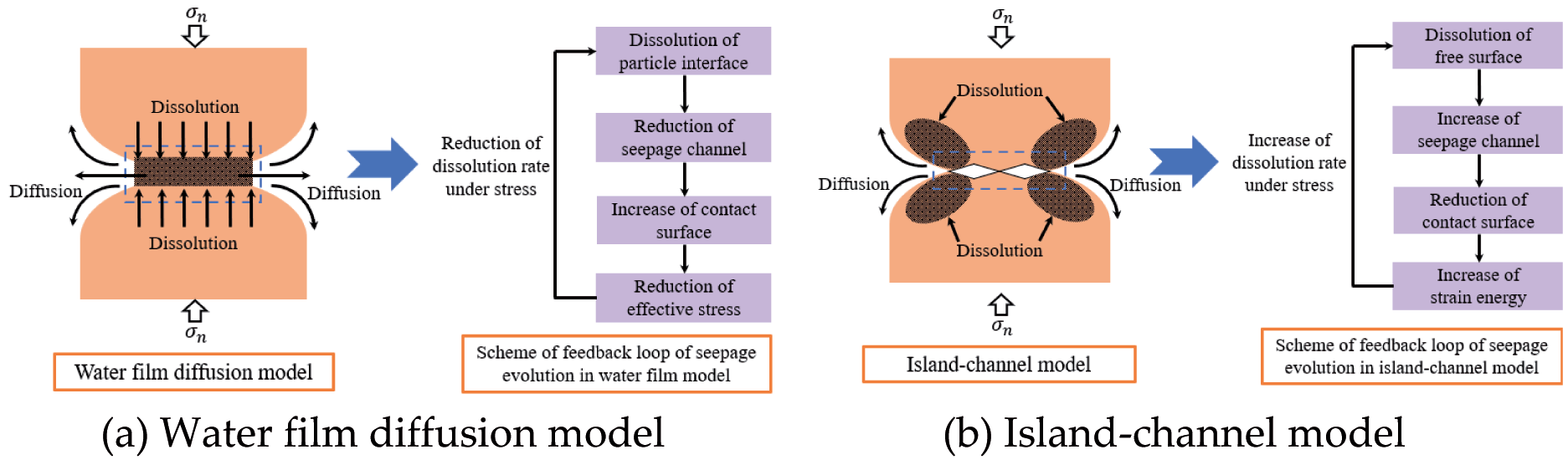
On this basis, Shen et al. established the dissolution kinetics model of rock under stress, as shown in Fig. 7 [26]. The results showed that the chemical potential difference generated by the stress difference between the rock and the surrounding fluid pressure was the driving force of dissolution. The application of stress significantly increased the activity of solid matter in rock, which sped up the kinetic rate of mineral dissolution. The microscopic dissolution mechanism of rock under stress can be described by a water film diffusion model or an island-channel model according to the stress distribution. There were three field coupling problems: stress, chemistry, and seepage in water rock interaction under stress. Stress promoted the occurrence of chemical reactions, and chemical action changed the microscopic morphology of the rock surface, which resulted in a change in local stress distribution. It not only affected the location and process of chemical reactions, but also changed the evolution of the seepage channel.
Mechanical Interaction
The water rock mechanical interaction mainly focused on the coupling relationship between the seepage field and the stress field [27]. On the one hand, the stress field changed the void structure of rock and the migration channel of groundwater. It affected the permeability coefficient in rock to change the seepage field. On the other hand, the seepage field influenced the stress distribution of rock by applying surface force and volume force. A lot of different rock seepage stress coupling models have been established to theoretically predict the rock seepage stress coupling behavior, which included the equivalent continuous medium model, the discrete fracture network model, and the dual medium model [28].
The equivalent continuum model assumed the rock with fractures was an anisotropic continuum. Based on the permeability tensor, the classical Biot porous medium seepage analysis method was used to describe the mathematical model of rock seepage. The advantage of this model was that it had a wide range of applications. If the Representative Elemental Volume (REV) of rock existed and the scale was not too large (generally less than 1/20 ~ 1/50 of the study area), the equivalent continuous medium model can be better used for analysis [29]. However, the model was usually only applicable to describe the macroscopic change trend of seepage field and stress field without failure or large deformation of rock, but it cannot describe the evolution of specific parts.
In the discrete fracture network model, when the permeability of rock blocks in rock mass is much less than that in fracture, the influence of rock block permeability can be ignored. It was assumed that rock seepage only occurred in fractures, which was based on the water cube principle of single fracture. According to the equal flow of the intersection in each fracture, the flow balance equation was established to solve the water pressure and water volume in each fracture. The linear element model proposed by Wittkel in 1966 and 1968 was the basis of the fracture network seepage model [30]. Since then, a lot of work around the fracture network model has been carried out, such as when Dershowitz et al. proposed the three-dimensional polygonal fracture network model and Wang et al. established two-dimensional and three-dimensional fracture network seepage models [31, 32]. The discrete fracture network model considered the seepage in each fracture in the real rock, so it was closer to the actual situation. However, it was very difficult to accurately establish the real discrete fracture network system. So, the model was still difficult to widely use in actual engineering.
The dual medium model assumed that the rock was a continuous medium composed of pore systems and fracture systems, which were regarded as continuums and had their own porosity and permeability. There were fracture fluid pressure and velocity and pore fluid pressure and velocity at every point in the system. The model was first proposed by Barenblat [33], and then further developed and improved by Warren and Root [34]. To avoid the huge amount of calculation caused by the fracture network, the generalized dual medium model was proposed. It divided the secondary fractures and pores with a large number and density into the pore system, while the main fractures with a small number but dominant seepage belonged to the fracture system. In addition, Aifantis et al. established the coupling equation between deformation and fluid flow dual porous media based on mixture theory [35]. Zhao and Chen established an anisotropic dual medium coupling model [36]. The dual medium model can better describe the seepage in complex media in some cases, and it has been widely used in oil and gas engineering. However, the model cannot consider the heterogeneity and fluid anisotropy of the fracture system, and it is difficult to explain the two fluid pressures and velocities in the same location.
External Influencing Factors
Humidity Condition
The change in humidity conditions is an important factor affecting rock deterioration, which is closely related to the dry-wet process. Under the interaction of the dry-wet cycle, the mechanical properties of rock will be obviously reduced. The strength and deformation parameters of rock gradually decreased with the number of dry-wet cycles, which was different from the rock softening effect caused by water. Water softening was generally reversible, but the dry-wet cycle process had an irreversible effect. Therefore, the dry-wet cycle has a direct impact on the stability and safety of the rock.
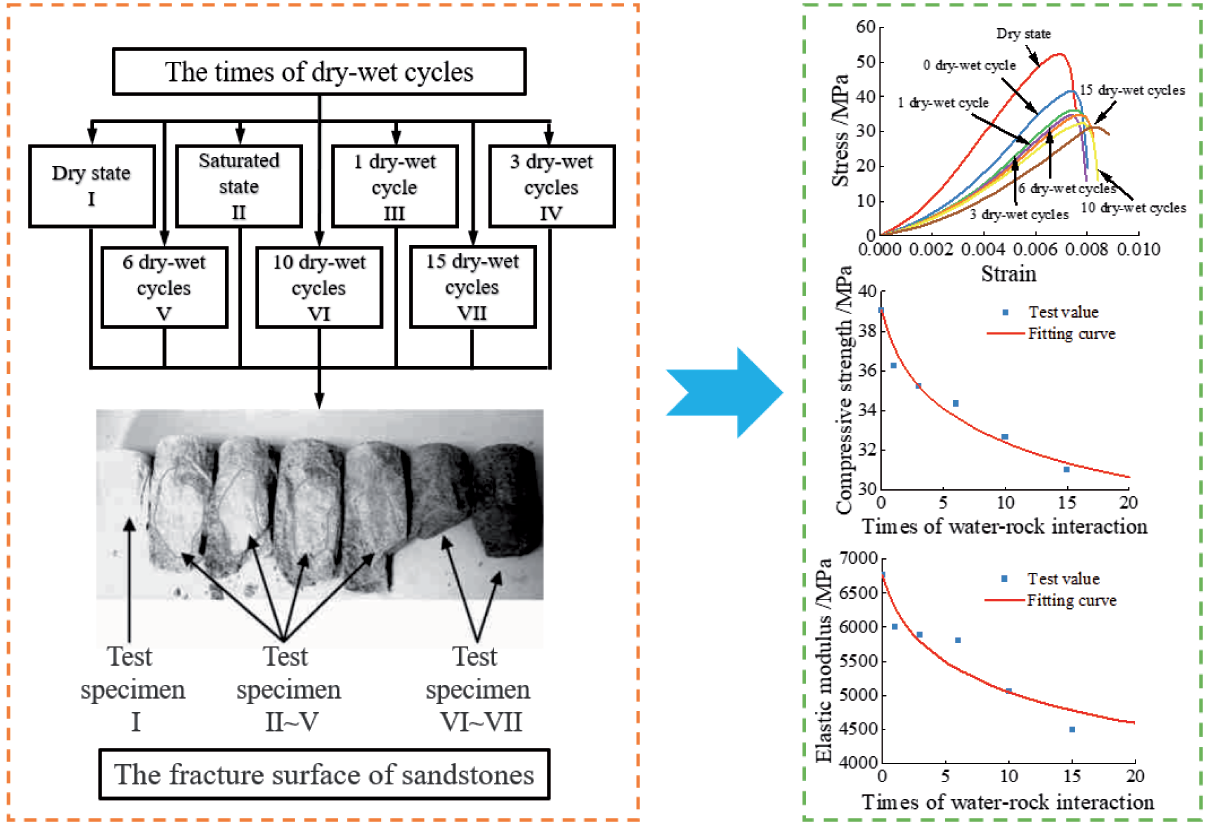
Macroscopically, the dry-wet cycle will reduce the strength and elastic modulus of rock due to water evaporation and crack propagation. Yao et al. found that the elastic modulus of sandstone decreased with the increasing number of dry-wet cycles, and the ductility of rock increased based on the uniaxial and triaxial compression tests on red sandstone under dry-wet cycles [37]. Fu et al. found that the uniaxial compressive strength and elastic modulus of sandstone decreased and tended to be constant with the increasing number of water rock interactions, which was a logarithmic relationship between the number of water rock interactions, as shown in Fig. 8 [38]. Liu and Fu et al. concluded that the dry-wet cycle process had the greatest impact on rock tensile strength, which decreased greatly in the early stage and gradually slowed down in the later stage [39, 40]. With the number of dry-wet cycles increasing, the gradual increase in the opening porosity in the rock enhanced the water erosion until the rock was completely saturated, which finally resulted in a significant reduction in mechanical properties.
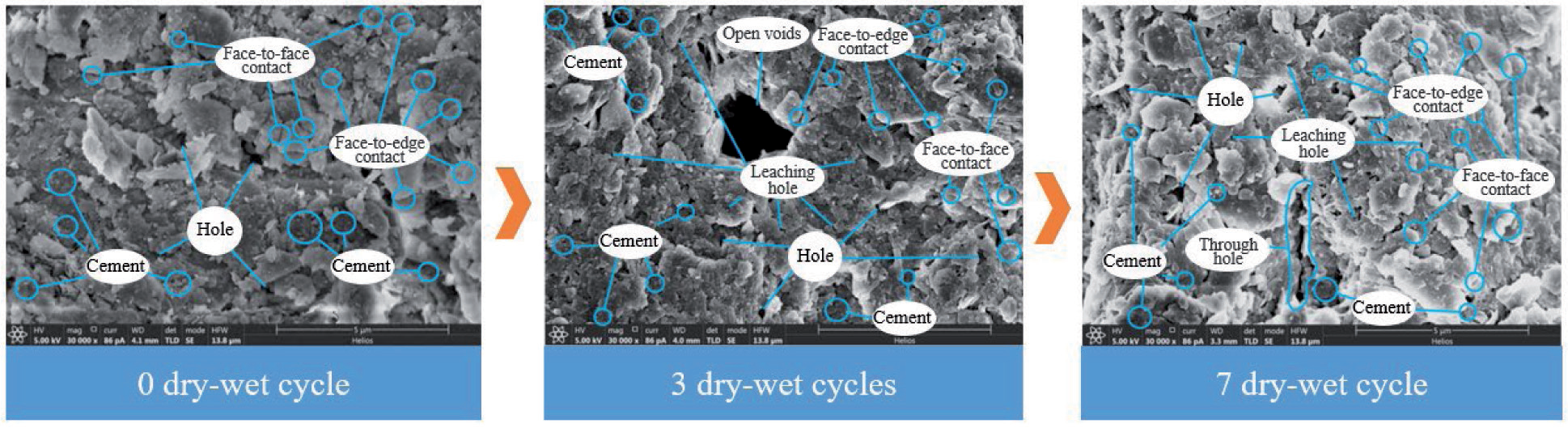
In addition, research in rock microscopic properties under dry-wet cycle conditions was also conducted. Liu et al. found that the microscopic structure changes of argillaceous sandstone can be summarized in three stages with an increasing number of dry-wet cycles, such as the neat and dense stage, the porous flocculent stage, and the cracking turbulent stage, as shown in Fig. 9 [41]. Yuan et al. found that the microscopic fracture evolution of remolded laterite experienced a humidification stage, a development stage, and a stable stage under a dry-wet cycle [42]. The development of fracture rate and fracture width was concentrated in the first five dry-wet cycles and tended to be stable.
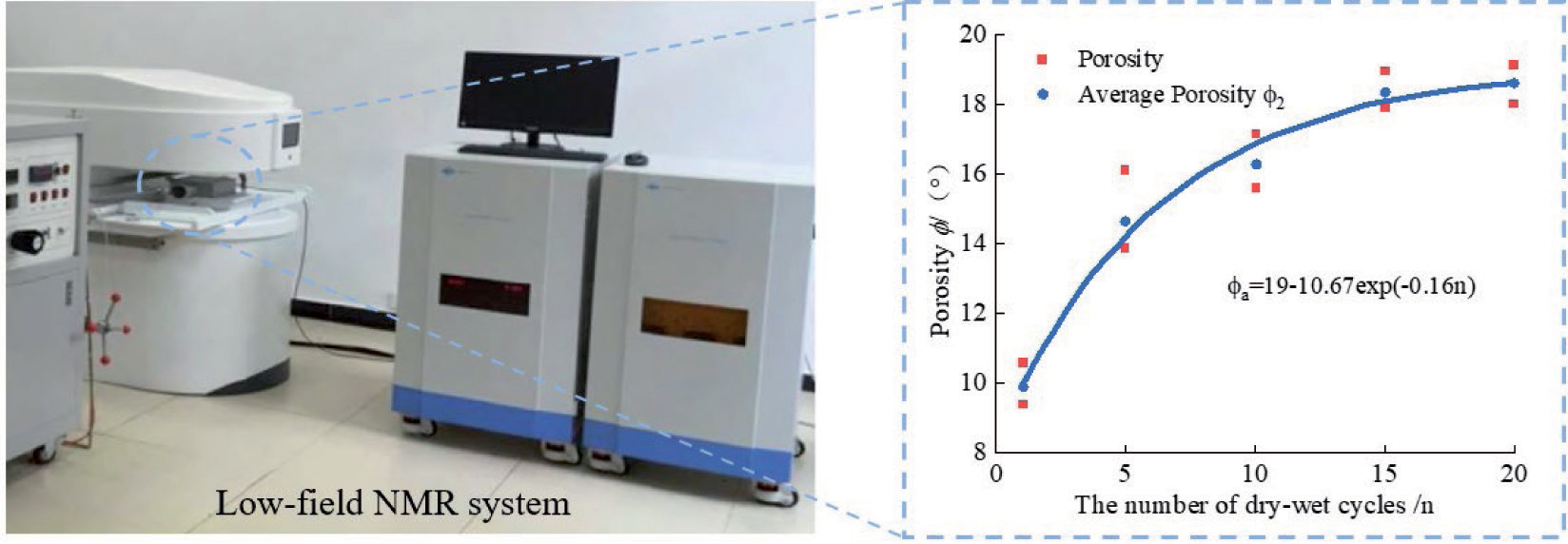
In terms of porosity evolution, Xie et al. concluded that the pores in the rock gradually increased and the size increased, then they expanded gradually under the dry-wet cycle using nuclear magnetic resonance technology (MRI), as shown in Fig. 10 [43]. With the increasing number of cycles, the mechanical properties gradually decreased. In addition, the decrease in peak stress was positively correlated with the increase in porosity. Song et al. analyzed the quantitative relationship between porosity and rock damage degree and established the functional relationship between different numbers of dry-wet cycles and damage degree [44]. In terms of permeability, Qin et al. found that the permeability of marble gradually increased with the increasing number of dry-wet cycles under the same confining pressure [45]. Under the same number of dry-wet cycles, the permeability of marble decreased with the increasing confining pressure.
Temperature Condition
The change in temperature is an important factor affecting rock deterioration, which has the greatest impact on rock strength. When the temperature changes, the rock structure will be damaged due to the uneven expansion and contraction of minerals. In the meantime, the water in the rock pores will freeze as the volume increases, resulting in damage to the rock [46]. The research of A. Prick showed that the freeze-thaw process has a much greater impact on rock degradation than the dry-wet process [47].
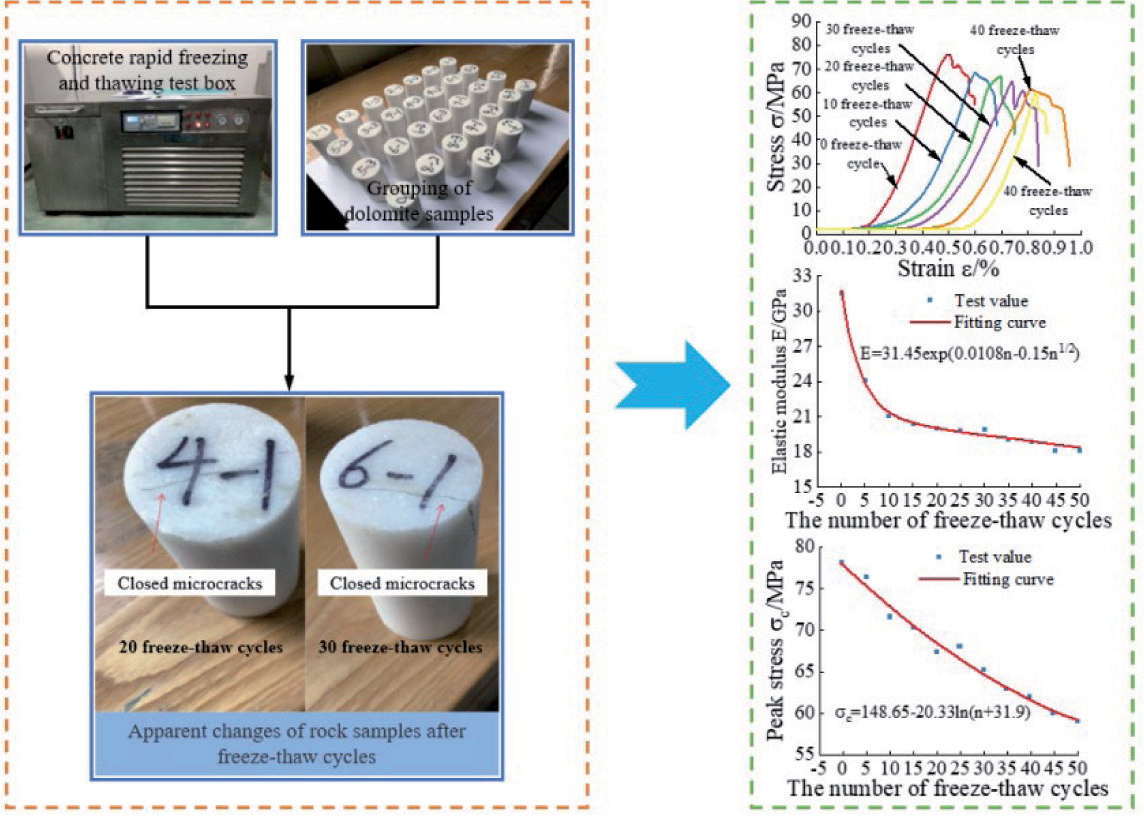
At present, a lot of research has been conducted to study the effects of temperature and porosity on the mechanical properties of rock [48, 49]. Chen et al. Conducted a uniaxial compression test under a freeze-thaw cycle with a saturation of 0% ~ 95% to explore the critical saturation of tuff [50]. J. Kodama et al. researched the effect of water content on the mechanical strength of rock in a cold area under a freeze-thaw cycle [51]. Yan et al. established the relationship between the elastic modulus of rock and the number of freeze-thaw cycles based on the Mori Tanaka method [52]. It found that the greater the frost heaving stress, the faster the attenuation of elastic modulus was. With the increasing permeability coefficient in fractured rock, the volume expansion of water decreased and the attenuation of the elastic modulus slowed down. Zhao et al. found that the whole deformation process of the sample in uniaxial compression under a freeze-thaw cycle was in four stages, such as the pore and fissure compaction stage, crack opening stage, fracture expansion stage, and fracture failure stage [53]. After freezing and thawing, the sample was much more broken, which was accompanied by a large number of mineral particles. In the meantime, Li et al. concluded that the elastic modulus and uniaxial compressive strength decreased exponentially during the freeze-thaw cycle, as shown in Fig. 11 [54]. The brittleness of the rock sample decreased and the ductility increased, which was characterized by pre-peak plastic hardening. Lu et al. found that the mass density, longitudinal wave velocity change rate, porosity, and peak strain were directly proportional to the number of freeze-thaw cycles in mudstone by laboratory tests. The compressive strength and elastic modulus were inversely proportional to the number of freeze-thaw cycles [55].
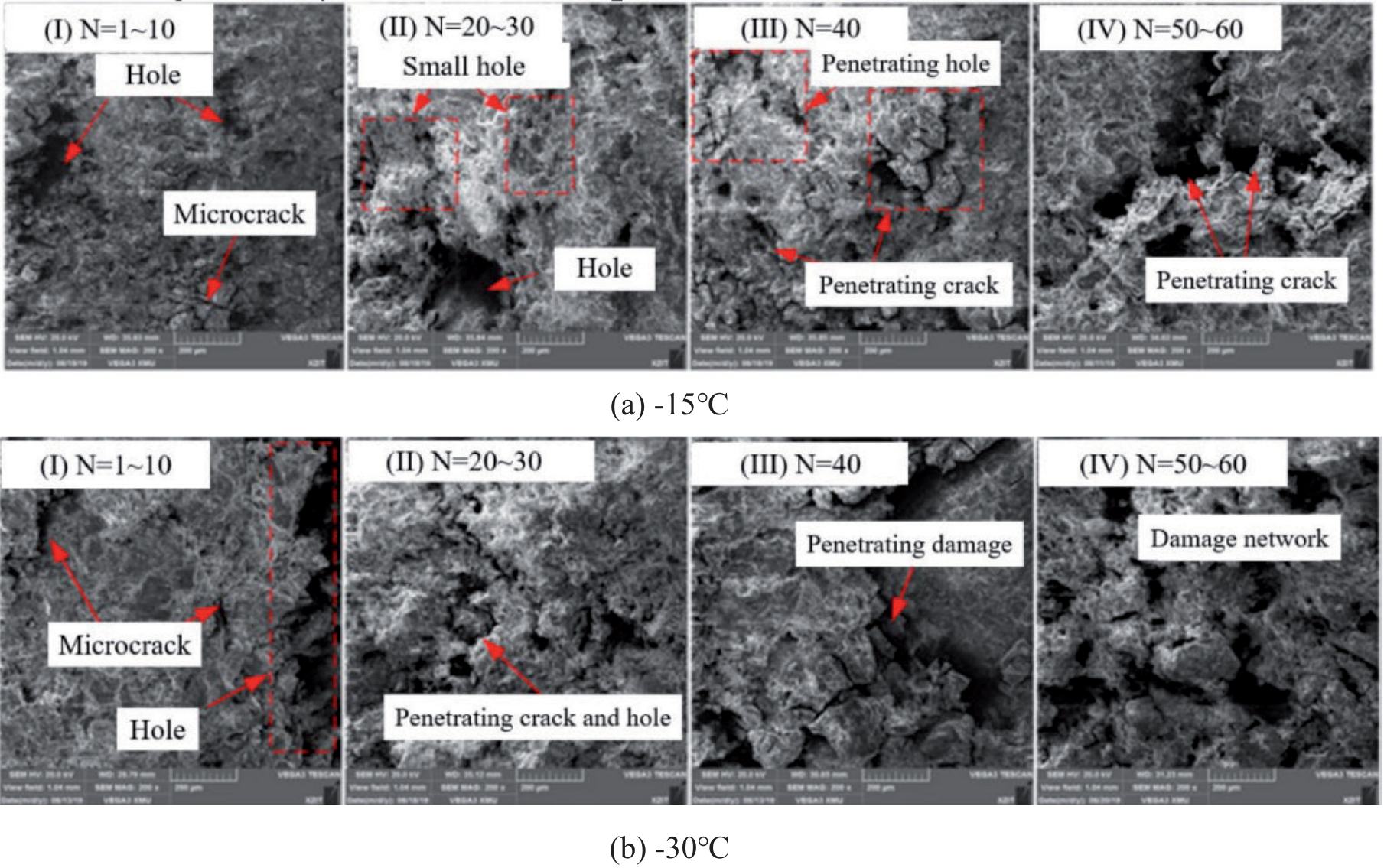
In their research on the microscopic properties of rock, Wang et al. revealed the fracture characteristics of granite rock caused by freeze-thaw and uniaxial deformation through a CT test [56]. Liu et al. used CT technology to research the mesoscopic structure damage of sandstone caused by the freeze-thaw cycle [57]. Zhang et al. realized the quantitative analysis of freeze-thaw damage and failure modes of red sandstone macroscopically combined with CT reconstruction [58]. The above research has studied the mesoscopic structure of freeze-thaw rocks, but the effects of different saturations are not considered. Wang et al. researched the difference in damage propagation of red sandstone with different initial saturations under a freeze-thaw cycle by CT scanning [59]. M. Deprez et al. explored the critical saturation and damage propagation mechanisms of limestone [60]. Lu et al. found that the mudstone not only had brittle failure characteristics after the peak under low freeze-thaw cycles, but also had significant brittle softening characteristics after the peak under high cycles, as shown in Fig. 12 [61]. With the increase in freeze-thaw cycles, the mudstone showed shear and tensile failure characteristics. Song et al. concluded that the porosity showed a fast and then slow growth trend as the number of freeze-thaw cycles increased [62]. When the saturation was greater than 70%, the porosity increased rapidly. Under low saturation, the mineral particles of the rock sample were closely bonded, and there were few pores with the unobvious particle boundary. As saturation increased, the dissolution of cement gradually accelerated. In the meantime, the average fracture length and average pore area gradually increased. It was in shear failure, and the failure surface gradually increased and penetrated the entire rock [63]. Tunnel Stability Is Influenced by Water Rock Interaction
Tunnel Leakage Damage
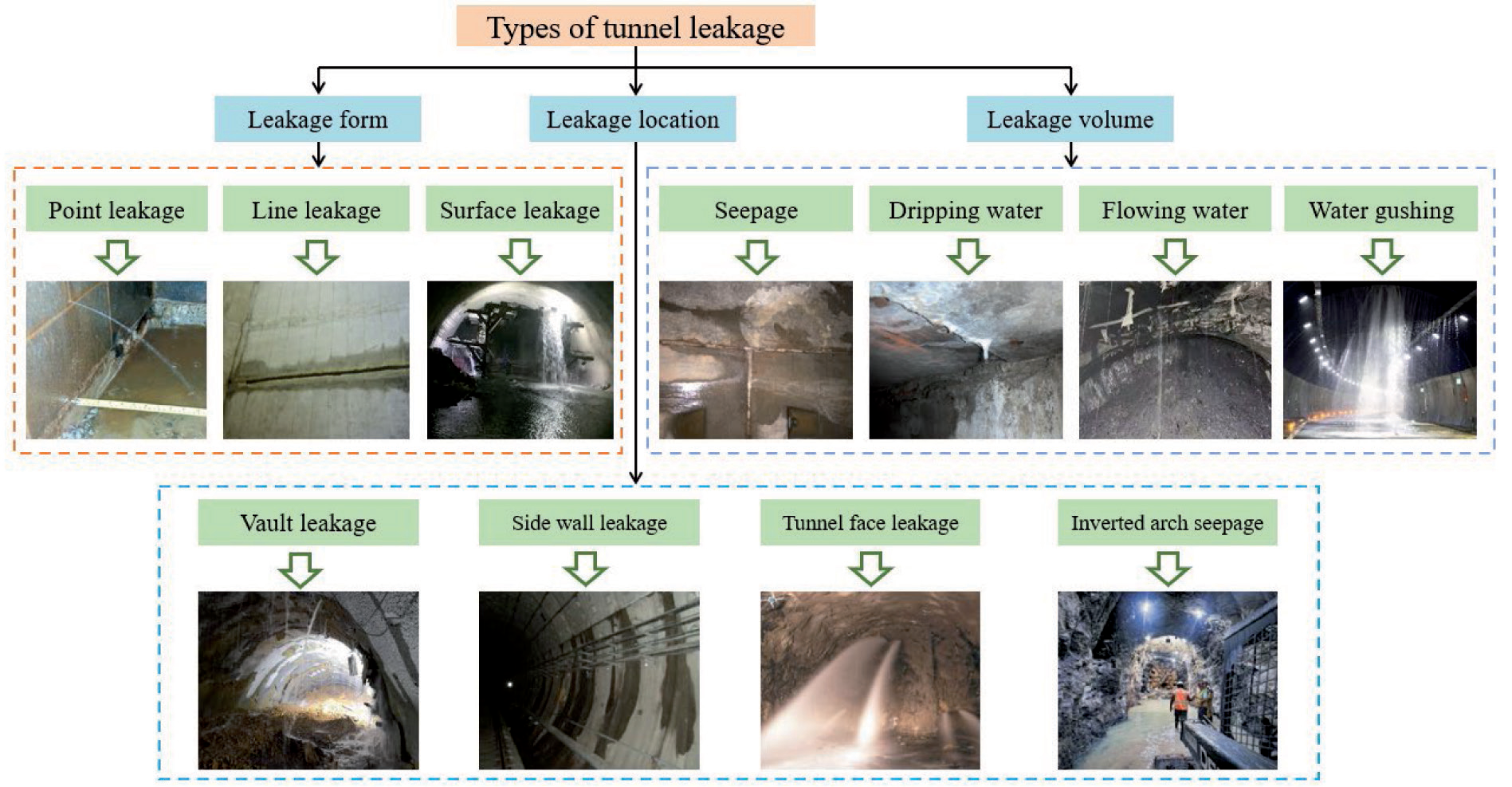
With the development of infrastructure, more and more damage occurred in water rich environments [64- 66]. Harmful chemical components in groundwater can cause corrosive damage to concrete through crystallization, dissolution, and composite reactions with concrete. The dissolved media, such as O2 and metal salts in groundwater, can react chemically with steel bars through concrete cracks, further reducing the mechanical properties of concrete and causing tunnel leakage damage. According to the leakage form, it can be divided into point leakage, line leakage, and surface leakage. Point leakage is formed with a local point as the center of seepage. Line leakage is mainly in strip shape, while surface leakage is a large area of continuous wetting on the lining surface. According to the leakage volume, it can be divided into seepage, dripping water, flowing water, and gushing water. The seepage is mainly caused by surface wetting, and the dripping water is mainly in a discontinuous droplet shape. The flowing water is in a stream shape, and the water gushing is sprayed out under pressure. According to the leakage location, it can be divided into vault leakage, sidewall leakage, tunnel face leakage, and inverted arch leakage, as shown in Fig. 13 [67, 68]. The causes of tunnel leakage damage are usually divided into internal factors and external factors. The internal factors mainly include tunnel materials and construction disturbance, such as the selection of waterproof material that is not applicable to the hydrogeological conditions and surrounding rock cracking by tunnel excavation, etc. The external factors mainly include the hydrogeological environment and temperature conditions, such as the increasing water pressure in the primary lining caused by rainstorms and the weakening of structural properties caused by the large temperature difference between day and night, etc.
Tunnel Freezing Damage
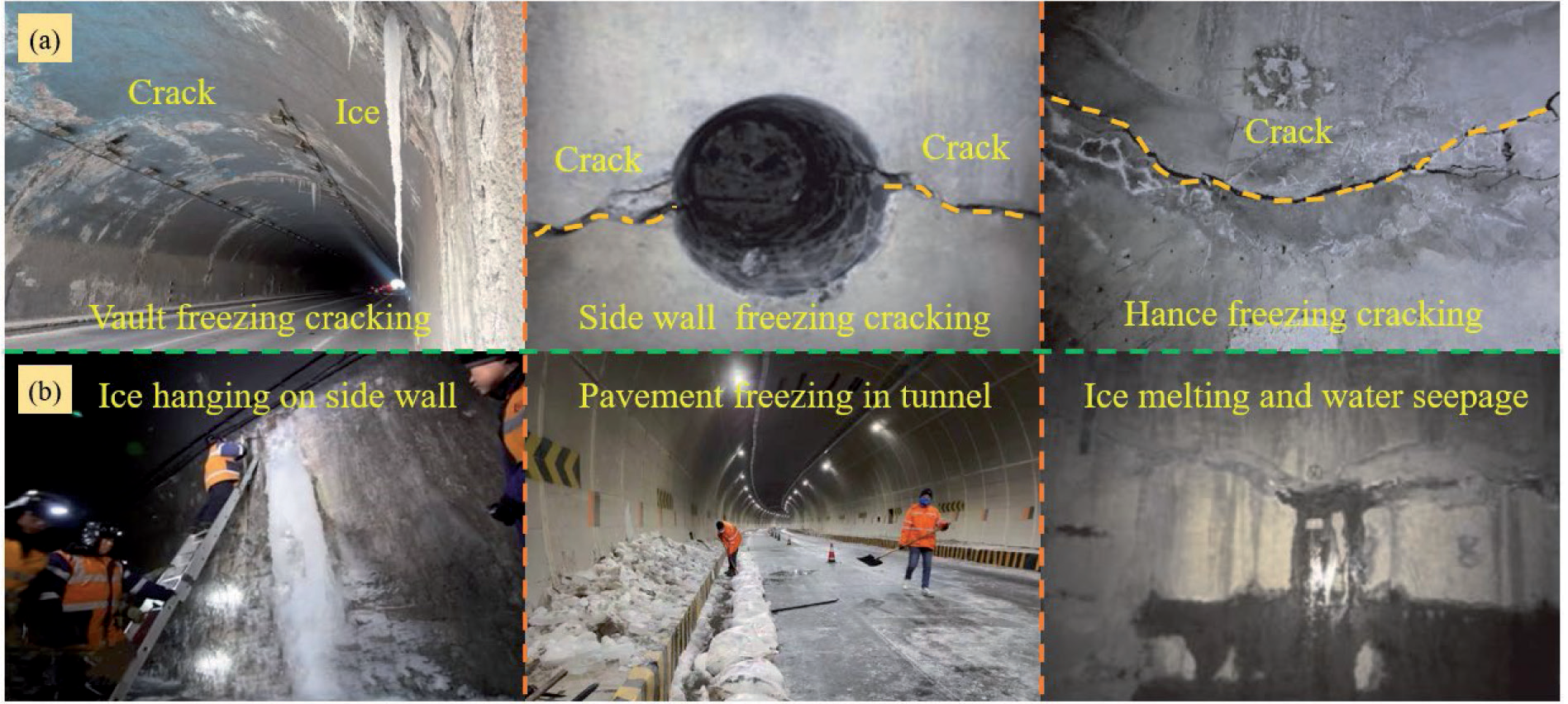
In low temperature environments, freezing damage occurs in tunnels, such as lining structures, pavement icing, etc. It can be divided into structural freezing damage and internal freezing damage, as shown in Fig. 14 [69] The structural freezing damage includes the lining freezing cracking, lining peeling, and the wing wall structural damage in the tunnel entrance, etc., which belong to frost heaving damage. It would have a significant impact on the safety and stability of tunnels, thereby reducing service life. The internal freezing damage includes tunnel lining leakage and icing, tunnel foundation freezing, pavement icing, drainage ditch freezing, etc., which belong to the tunnel leakage freezing inside the tunnel influenced by temperature. It would directly affect the safety of driving, leading to the inability of the tunnel to function properly. The mechanism of tunnel freezing damage is determined by the weathered layer frost heave theory, the frost heave lithosphere theory, and the local frost heave theory. In general, the main distribution area of freezing damage is at the tunnel entrance, because the temperature is most obviously affected by the low temperature, which is the main factor. It also depends on the groundwater, the surrounding rock properties, and other factors. [70] The basic conditions for tunnel freezing damage include the freeze-thaw cycle, a sufficient water supplement, and the gap between the lining and the surrounding rock.
Tunnel Waterproof and Drainage System
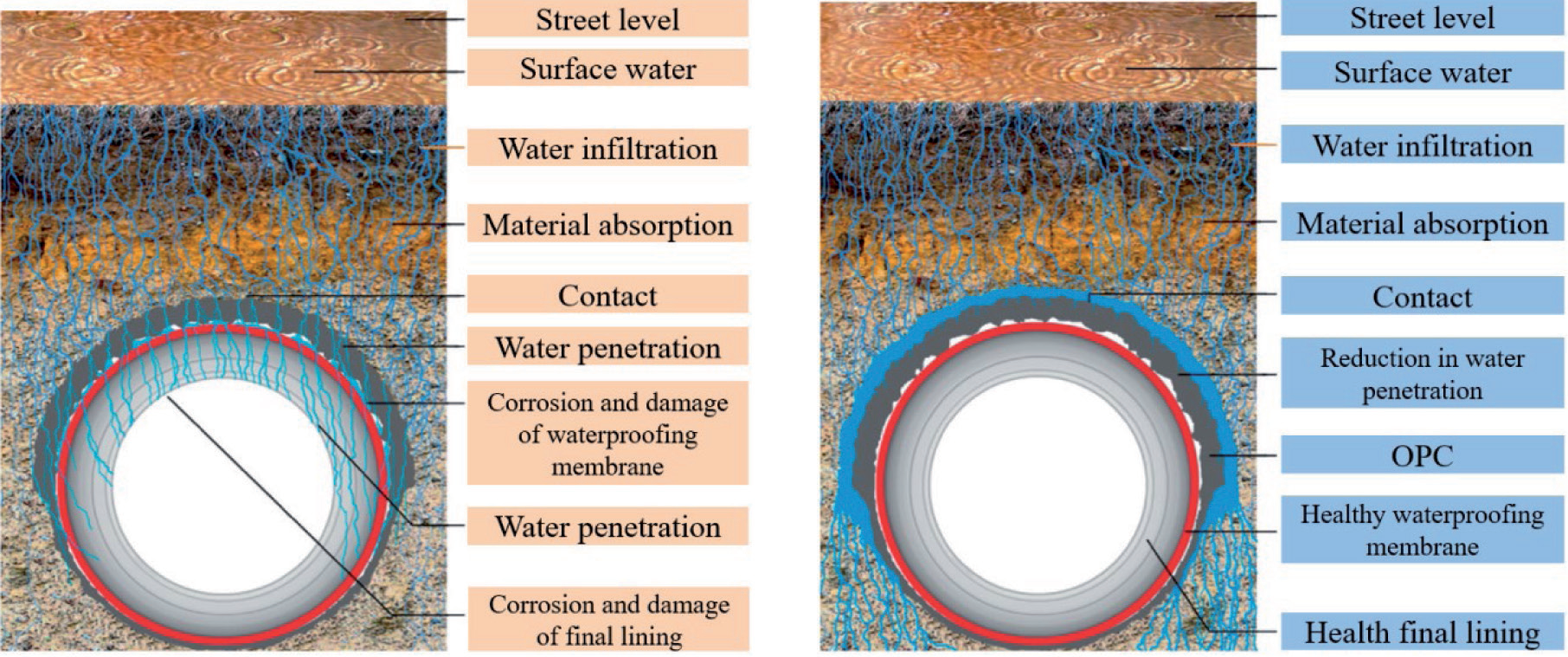
In the treatment measures for water damage in tunnels, the main methods include adopting waterproof materials and grouting reinforcement. There are many kinds of waterproof materials used in tunnel and underground engineering with different properties, which can be divided into flexible waterproof materials and rigid waterproof materials. In addition, waterproof roll-roofing material, waterproof spray film, and waterproof concrete have been widely used in recent years. In tunnel engineering, the waterproof roll-roofing material system is generally composed of a drainage layer, an adjustment layer, and a waterproof layer. The drainage layer is directly connected with the surrounding rock or initial support, which could provide a water flow channel. The adjustment layer can protect the drainage layer from the adverse effects of irregular geometry surrounding the rock or initial support surface. The waterproof layer is located in the innermost layer and is the core of the waterproof roll-roofing material system [71]. Waterproof spray film is a relatively new type of waterproof material. The matrix materials mainly include ethylene vinyl acetate copolymer (EVA), methyl acrylate reactive resin (MRR), and styrene butadiene rubber polymer (SBR) [72]. In construction, the waterproof spray film is sprayed on the tunnel anchor shotcrete support surface manually or mechanically. The thickness is generally 2-4 mm, and then the secondary lining is sprayed or molded into the surface of the spray film. The waterproof capacity of waterproof concrete comes from the compactness of the concrete. The impermeability grade of waterproof concrete can be improved by adjusting the concrete mix proportion or adding admixtures. Waterproof concrete can be divided into ordinary waterproof concrete, admixture waterproof concrete, polymer cement concrete, etc. What’s more, shrinkage compensating concrete with the functions of anti-seepage and crack resistance is the most excellent structural waterproof material and has broad application prospects [73, 74]. Moreover, replacing ordinary concrete with organic polymer concrete in the initial support of the tunnel can significantly improve the durability of the waterproof roll-roofing material and secondary lining, as shown in Fig. 15 [75]. Liu et al. found that adding a certain amount of polypropylene fiber can effectively improve the waterproof performance and chloride ion resistance of high-performance concrete [76].
Results and Discussion
Limitations
(1) At present, there have been a large number of tunnel engineers encountering water disasters, but the research on the influence of tunnel structure under different Water Rock Interaction failure modes is mostly limited to the analysis of actual engineering cases.
(2) The theoretical analysis of water-rock-tunnel structure coupling focuses on the rock-tunnel coupling effect and fails to fully consider the change of rock plastic characteristics in the dynamic water environment. The applicability is poor in the case of complex geological conditions.
Future Research
The failure of Water Rock Interaction in tunnels created a complex fluid seepage coupling problem that existed in both construction and operation. Therefore, the future research on Water Rock Interaction on tunnel damage is as follows:
(1) The research on the coupling mechanism of Water Rock Interaction and the constitutive relationship model of surrounding rock immersion should be further strengthened, especially the engineering characteristics and failure mechanism of surrounding rock under the high hydraulic gradient seepage condition.
(2) The microscopic failure mechanism of the surrounding rock particle in the tunnel should be clarified by considering the Water Rock Interaction. The water-rock-tunnel coupling theoretical analysis model should be built, which can realize accurate prediction of tunnel structural deformation.
Conclusions
(1) Water Rock Interaction can be divided into physical interaction, chemical interaction, and mechanical interaction, all of which promote the deterioration of rocks. Water rock physical interaction was divided into reversible interaction and irreversible interaction, while chemical interaction was often irreversible. In engineering construction, it also led to changes in the mechanical properties of rock combined with mechanical interaction.
(2) The dry-wet cycle and freeze-thaw cycle were mainly external influencing factors in Water Rock Interaction. Macroscopically, the mechanical properties of different rocks would deteriorate with different decreasing trends. Microscopically, it could lead to the expansion of cracks and porosity increasing, resulting in the failure of rock.
(3) The influence of Water Rock Interaction on tunnel engineering is mainly reflected in the deterioration of the stress condition caused by the dynamic change in groundwater. In tunnel construction, the reduction of surrounding rock strength after immersion is related to the pore water pressure, which would lead to geological disasters such as tunnel leakage damage and tunnel freezing damage.
(4) The effect of Water Rock Interaction on rock degradation is the comprehensive process of multi field coupling. How to introduce relevant theories such as damage mechanics to quantitatively analyze the effect of rock degradation. The constitutive relationship under multi field coupling is very important, and the numerical simulation method needs to be improved.

