

Introduction
How to reduce greenhouse gases and slow down climate warming has become a hot issue of global concern [1-2]. Carbon dioxide emissions account for about three-quarters of the greenhouse effect and have a great impact on climate warming. As a major carbon emitter, China has become particularly important on a global scale. Thus, studying China’s carbon emissions reduction issues and figuring out how to effectively control carbon emissions, curb global warming, and achieve sustainable economic and ecosystem development are important tasks. According to the IPCC Fifth Assessment Report, if carbon emissions are not controlled, then the global carbon dioxide equivalent concentration will exceed 450 ppm by 2030 and will exceed 750 ppm by the end of this century. Moreover, extreme weather events will become more frequent, resulting in unpredictable and disastrous consequences. According to the Paris Agreement, with 2005 as the base period, China’s carbon dioxide emissions per unit of GDP need to drop by 60%–65% within 25 years. In this context, China has made efforts to achieve the “3060” carbon target. However, China’s carbon emissions are still on the rise. The “Carbon Dioxide Emissions Report 2022”, published by the International Energy Agency, disclosed that the country’s carbon dioxide emissions will be 11.477 billion tons in 2022, which is still among the highest in the world. Therefore, controlling carbon emissions in China is urgent.
Green financial policies, energy policies, and the establishment of carbon emissions trading markets have been piloted to effectively control carbon emissions and achieve carbon neutrality as soon as possible. Environmental governance measures for carbon emission reduction mainly rely on government and market instruments. Measures such as the energy policy and the carbon emission trading market pilot have achieved certain results by relying on market means. However, the market has limitations in guiding the allocation of financial resources to green industries because green industry projects have a long payback period, high uncertainty, and investment risks [3-4]. Therefore, the government needs to intervene as a regulating and controlling entity. Government methods have more advantages over market means in solving carbon emission reduction via financial support. The establishment of a green financial system guided by the government is conducive to providing targeted funds for carbon emission reduction and alleviating financing constraints [5-7], thus providing a reliable guarantee for promoting a low-carbon green economy and achieving high-quality development. In view of this situation, the Chinese government has made strategic arrangements for the reform of the green financial system. In June 2017, the executive meeting of the State Council decided to build green financial reform and innovation pilot zones in Zhejiang, Jiangxi, Guangdong, Guizhou, and Xinjiang provinces and explore an effective way for green financial services to serve the low-carbon economy and high-quality development with the mode of “pilot first, promotion after.” The purpose of the policy is to implement the new development concept, speed up the innovation of the green financial system and mechanism, increase financial support for improving the ecological environment, utilize resources efficiently, adjust the structure and changing methods, and promote the green transformation and upgrading of the economy. An accurate and timely grasp of the carbon emission reduction effects of green financial reform policies plays a vital role in the government’s environmental governance. The question of whether the implementation of the green finance reform and innovation pilot policy (GFRIPP) has promoted carbon emission reductions needs to be answered urgently.
Extensive research has been conducted on the impact of financial development on carbon emissions. Some scholars took 11 EU countries represented by Bulgaria as examples to explore the impact of financial development on carbon emissions. The research results showed that financial development has a positive impact on carbon emissions in the long run [8]. Some studies used Asian countries as samples to empirically test the impact of financial policies on carbon emissions [9-10]. For example, Soundarrajan and Vivek [11] used Asia as a sample to discuss the development trend of green finance in India and its impact on the environment and economic growth, arguing that green finance can help improve the ecological environment and promote economic growth. Some studies used China as an example to discuss the impact of green finance policies on carbon emission intensity [12-14]. The deficiency of existing research is that institutional factors are not included in the analysis framework when evaluating the impact of financial development on carbon emission performance. For example, the influence of Chinese-style financial decentralization is not considered [15]. China has a specific institutional background of centralized political centralization and local economic decentralization [16]. Financial decentralization is an informal system rooted in this situation, that is, the localization of financial management, which is a process of gradual transition from centralization to decentralization [15, 17-18]. China has experienced three financial decentralization reforms, which have enhanced the independence of local governments and at the same time weakened the revenue of local governments. As a result, local governments bear greater expenditure responsibilities and compete for financial resources from the financial sector as supplements, thus promoting financial decentralization. The financial decentralization rooted in China’s reality has a particularity, and its direct economic consequence is to reduce the efficiency of financial resource allocation. Local governments engage in intense competition for financial resources. The financial resources received by individual local governments are unevenly distributed because of differences in factor endowments. This situation may be detrimental to the effectiveness of GFIPP implementation and thus hinder sustainable development. While financial decentralization does play a role in promoting economic progress, it may be accompanied by undesirable outcomes such as energy inefficiency and environmental degradation. Ignoring its particularity, accurately assessing the impact of green financial policies on carbon emission performance will be difficult. Therefore, this paper incorporates financial decentralization into the analytical framework and examines its impact on the implementation of carbon emission reduction policies. As an emerging market, China is in a period of economic transformation. How to establish a practical and effective green financial system to support carbon emission reduction has far-reaching theoretical and practical significance for China to achieve carbon peaking and carbon neutrality goals as scheduled.
In view of this situation, on the basis of dynamic panel data from 2012 to 2018, this paper intends to take GFIPP as the research object, analyze the carbon emission reduction effect of China’s GFIPP, and explore the effect of financial decentralization on the implementation of carbon emission reduction policies. The contributions of this paper are mainly reflected in three aspects. First, the existing literature has not considered the influence of the Chinese-style decentralization system. To bridge this gap, this paper explores the impact of green financial policies on carbon abatement from the perspective of financial decentralization, which has theoretical and practical significance. At the same time, this paper attempts to explore this issue from the perspective of theoretical and empirical analysis, enriching related research. Second, this paper further explores the regional heterogeneity of carbon emission reduction performance of GFIPP and provides differentiated evidence for the impact of regional development differences on the effect of policy implementation. Third, this paper puts forward specific policy suggestions for social planners in using green financial policy means to promote carbon abatement to ensure high-quality economic development. These findings have a certain reference significance for local governments to effectively implement GFIPP to achieve carbon peaking and carbon neutrality goals at an early date.
This paper is structured as follows: Section 2 is the literature review. Section 3 presents the theoretical analysis and research hypotheses. Section 4 describes the status of carbon reduction. Section 5 provides the methodology, and Section 6 presents the results. Section 7 offers further discussion, and Section 8 presents the conclusion.
Literature Review
Research on the influencing factors of carbon emission reduction has become the focus of relevant literature in the field of ecological economics. Most previous studies believed that the financial environment, institutional policies, and industrial technology innovation are the main factors of carbon emission reduction. Some scholars indicate that an inverted U-shaped relationship exists between financial development and carbon dioxide intensity [19-22]. Environmental regulation has an inhibitory effect on air pollution, such as carbon emissions [23]. The vertical fiscal imbalance brought by the existing financial system will lead to an increase in carbon emissions [24-25]. Carbon tax or subsidy program policies can promote carbon emission reduction [26-27]. The establishment of a carbon trading market is conducive to promoting carbon emission reduction on a global scale [28], and China’s carbon trading pilot policy has the same effect on carbon emission reduction [29]. Technological innovation will also curb carbon emissions [30-32]. Industrial agglomeration inhibits environmental pollution, such as carbon emissions, by promoting technological innovation and market competition [33].
Some scholars have conducted related studies on GFIPP. Wang et al. [34] used the synthetic control method to explore the positive effects of GFIPP on green technology innovation in pilot provinces. Similar conclusions were obtained by Zhou et al. [35] However, unlike Wang et al., Zhou et al. used data at the county level in China and applied the differences-in-differences (DID) method, and Irfan et al.’s study was more in-depth [36], delving into the important roles of industrial structure, economic growth, and R&D investment in the impact of GFIPP on green innovation. At the micro level, GFIPP also has a positive effect on the long-term value of firms [37].
As the financial sector becomes increasingly important, scholars have begun to pay attention to the impact of green finance on carbon emission reduction. Financial system support is a decisive factor in a country’s environmental quality [13,19-20]. In the financial system, green finance urges financial institutions to bring environmental protection and governance into the decision-making category when making investment and financing decisions. It should not only ensure the fund supply of green environmental protection projects but also curb the capital input of polluting projects and guide the greening of capital allocation, which is an important factor affecting carbon emission reduction [38]. Meo and Abd Karim [39] discussed the relationship between green finance and carbon emissions by taking 10 economies that support green finance as research objects. The study finds that green finance is the best financial strategy for reducing carbon emissions. On the basis of a large sample analysis of 46 countries, Al Mamun et al. [40] found that green finance has a significant inhibitory effect on carbon emissions in both the long and short terms. Ren et al. [12] used data from 2000 to 2018 in China to construct the green finance development index from four dimensions of green credit, green securities, green insurance, and green investment; explored the impact of green finance on carbon emission intensity; and found that the development of green finance in China promoted the reduction of carbon emission intensity. Zhou et al. [13] used panel data from 30 provinces and cities in China from 2010 to 2017 to explore the impact of green finance on economic growth and environmental quality and verified the inhibitory effect of green finance on carbon emissions. Wang et al. [14] studied the impact of green finance on carbon emissions from the perspective of environmental regulation based on the panel data of 126 county-level cities in China from 2005 to 2017. They found that green finance can play a role in inhibiting carbon emissions under different environmental regulations, and both have a synergistic promoting effect on carbon emission reduction.
In sum, the above studies have conducted thorough research in the related fields of green finance and carbon emission reduction. Yet some limitations remain. First, although the above studies discuss the relationship between green finance and carbon emission reduction, they have not evaluated the implementation effect of GFRIPP in China. Second, previous studies neglected the important role of financial decentralization. However, differences in financial institutions rooted in the extended institutional framework will affect environmental performance [20]. This paper bridges this gap. Finally, this paper further analyzes the regional heterogeneity of the influences of financial decentralization, which effectively compensates for the shortcomings of existing studies. On the basis of this background, this paper takes the establishment of green finance reform and innovation pilot zone as the policy event time point and builds a DID model based on the characteristics of dynamic panel data to empirically test the effect of GFRIPP on carbon emission reduction from the perspective of financial decentralization.
Theoretical Basis and Research Hypothesis
In terms of the carbon emission reduction agreement, emission reduction and financing are the core issues for reaching an agreement [41]. Practice has proven that green financial policy reduces harmful gas emissions and industrial wastewater discharge, effectively inhibiting environmental pollution [3, 13]. In promoting carbon emission reduction, green financial policies are targeted to improve resource utilization efficiency and help realize sustainable development [30, 42]. Therefore, the GFRIPP implemented in 2017 is expected to affect carbon emission reduction through mechanisms such as optimizing investment and financing allocation, as well as promoting technological innovation, industrial structure transformation, and information transfer.
The first mechanism is the optimization effect of investment and financing allocation. Five green tasks are outlined in the GFRIPP, including encouraging green credit and exploring an environmental rights and interests trading market, a green industry channel, and a mechanism to prevent green finance risks. Green finance policies have an investment and financing promotion effect on controlling carbon emissions [43, 44]. They affect industrial development by regulating the supply of funds [38, 45]. They impose financing penalties and investment restraints on heavily polluting industries [46, 47], thus preventing the continued expansion of heavily polluting projects. They also realize low-carbon environmental governance investment in environmental protection enterprises [48] to promote the development of low-carbon industries, which is conducive to carbon emission reduction [49].
The second mechanism is the effect of technological innovation. Green finance helps promote green technological innovation [50], which helps curb carbon emissions [30-32]. The related industries of environmental protection will receive excessive policy dividends and vigorously develop clean technology innovation projects [51]. Financial stability helps these industries grasp development opportunities and improve carbon emission reduction effects [52]. Under differentiated policies, heavily polluting industries will also adjust their development plans to meet the policy orientation to gain dividends. They will tend to enhance low-carbon technological innovations, thereby contributing to carbon reduction.
The third mechanism is the industrial structure transformation and upgrading effect. Green finance plays a driving role in promoting the transformation and upgrading of industrial structure and realizing sustainable development [42]. Industrial structure transformation and upgrading are inseparable from energy innovation. Energy consumption is positively correlated with carbon dioxide emissions [53], and energy innovation is an important mechanism to promote carbon emission reduction [52]. GFRIPP is conducive to the iterative upgrading of energy, and energy substitution is conducive to promoting carbon emission reduction [54].
The fourth mechanism is the information transmission effect. GRIPP will significantly enhance the impact of green finance development [55]. The promulgation of a policy releases information about the great development potential of the green industry to the market, which has a significant information transmission effect. Social capital is profit-oriented and will flow into green industries with high prospects and expected returns. On the basis of the above analysis, this paper proposes the first hypothesis. H1: Green financial policies have a significant positive carbon emission reduction effect.
Chinese financial decentralization is the product of the development of China’s real society and the changes in its political, economic, and cultural institutions. The main influencing factor of financial decentralization is the decentralization between the central and local governments, which is from the perspective of long-term economic growth. An explicit and implicit institutional arrangement of financial resource allocation rights and control rights between the central and local governments is established to stimulate the development of the local economy [15], which may affect the implementation effect of GFRIPP.
Financial decentralization gives local governments more allocation rights and control over financial resources [17]. On the basis of information asymmetry theory, local governments in the financial decentralization scenario have more information than the central government does. At the same time, the local government has more autonomy so that GFRIPP can implement targeted measures according to the local natural resource conditions to realize the effective allocation of financial resources. This approach promotes the development of green industry and carbon emission reduction. Therefore, with other control conditions unchanged, a high degree of financial decentralization corresponds to a greater significance of the carbon emission reduction effect of green finance policy.
On the basis of the vertical information gap or development demand, local governments have excess control over the allocation of green financial resources. Local officials can extensively intervene in credit decision-making and control capital projects. To meet the needs of political performance and promotion, actual actions may deviate from the expected policy goals of the central government, resulting the in weak implementation and poor effect of GFRIPP. Under the decentralized governance system of central and local governments, areas with higher centralization have a better implementation effect or regulation intensity of central vertical policies, which is more conducive to the implementation of GFRIPP, and the impact on carbon emission reduction is more visible. Therefore, with other control conditions unchanged, a high degree of financial centralization corresponds to greater significance in the carbon emission reduction effect of green financial policies. On the basis of the above analysis, this paper proposes the second hypothesis. H2a: With other control conditions unchanged, financial decentralization will weaken the carbon emission reduction effect of GFRIPP. H2b: When other control conditions remain unchanged, financial decentralization will strengthen the carbon emission reduction effect of GFRIPP.
Status of Carbon Emissions in China Before and After GFRIPP
Global carbon emissions showed an increasing trend from 2013 to 2019, peaking in 2019, as shown in Fig. 1. Global carbon emissions in 2020 were approximately 32.28 billion tons, which indicates a decrease of 2.08 billion tons from 2019 but is still a large overall volume. The global trend of carbon emissions is starting to decline, which is a positive sign. China accounts for a large share of global carbon emissions. Since the signing of the Kyoto Protocol, China’s carbon emissions have risen from 3,026.039 million tons in 1997 to 10,071.637 million tons in 2018, far surpassing those of the United States. To achieve green and low-carbon economic development, China has developed a series of green financial policies, such as green credit guidelines. In 2017, China started a pilot green financial reform and innovation zone. The impact of the pilot policy implementation on China’s carbon emissions was verified initially by obtaining data on China’s carbon emissions from 2012 to 2018 and calculating the carbon emission intensity and carbon emission reduction intensity based on the calendar year GDP. Fig. 2 shows the trend of China’s carbon emissions. China’s carbon emissions reached their highest point in 2013, and then declined year by year to the lowest point in 2016 before a subsequent increase year by year. This condition may be due to the launch of China’s carbon emission trading market in 2013, which covers enterprises in key emission industries such as petrochemicals, chemicals, building materials, iron and steel, non-ferrous metals, paper making, electricity, and aviation, as well as guidance on upgrading and transforming high-carbon-emission industries such as petrochemicals and coal power, which has achieved better results.
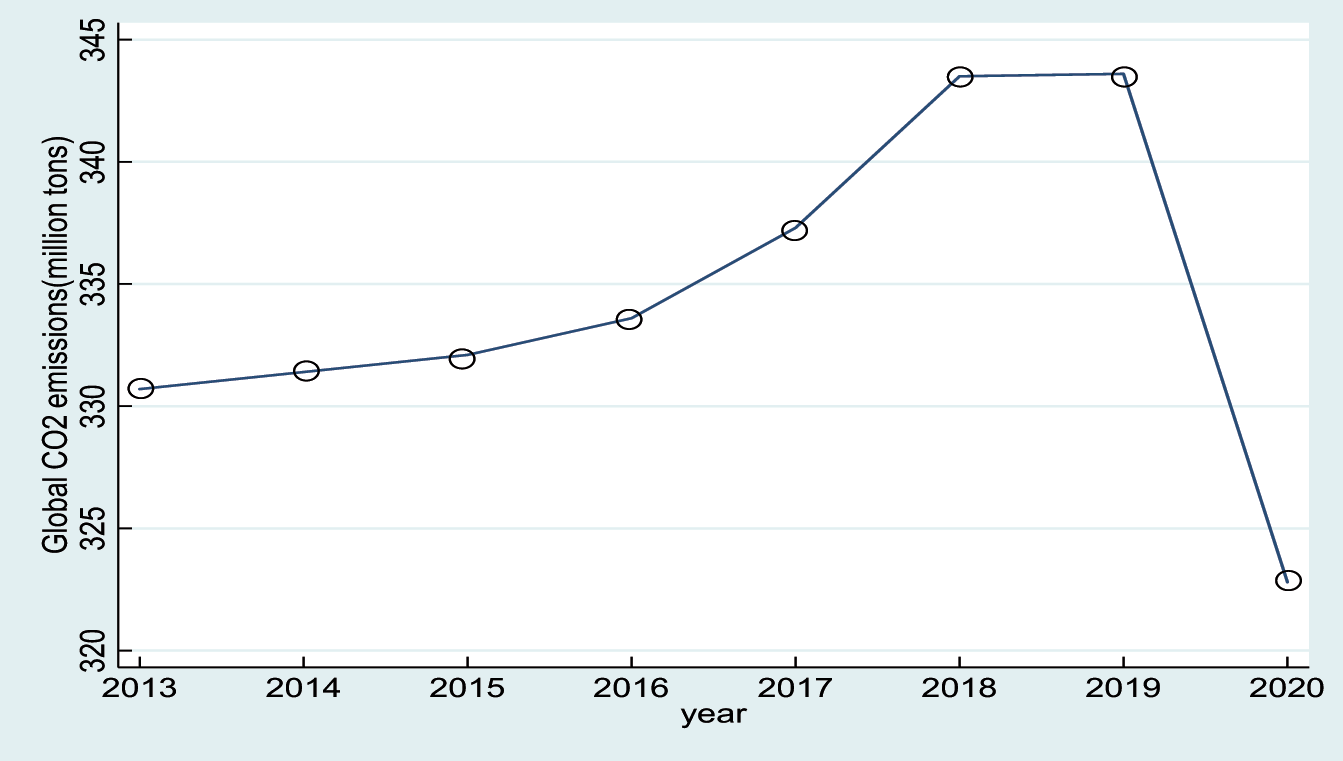
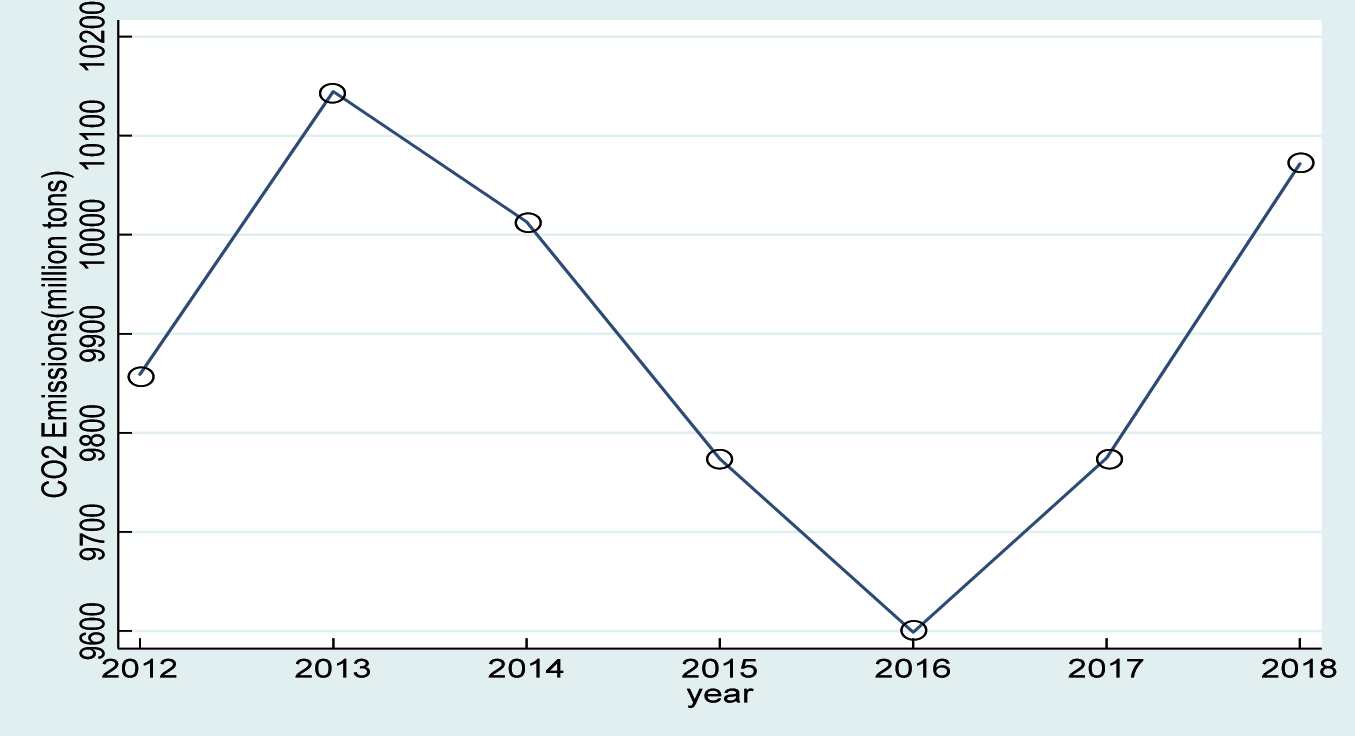
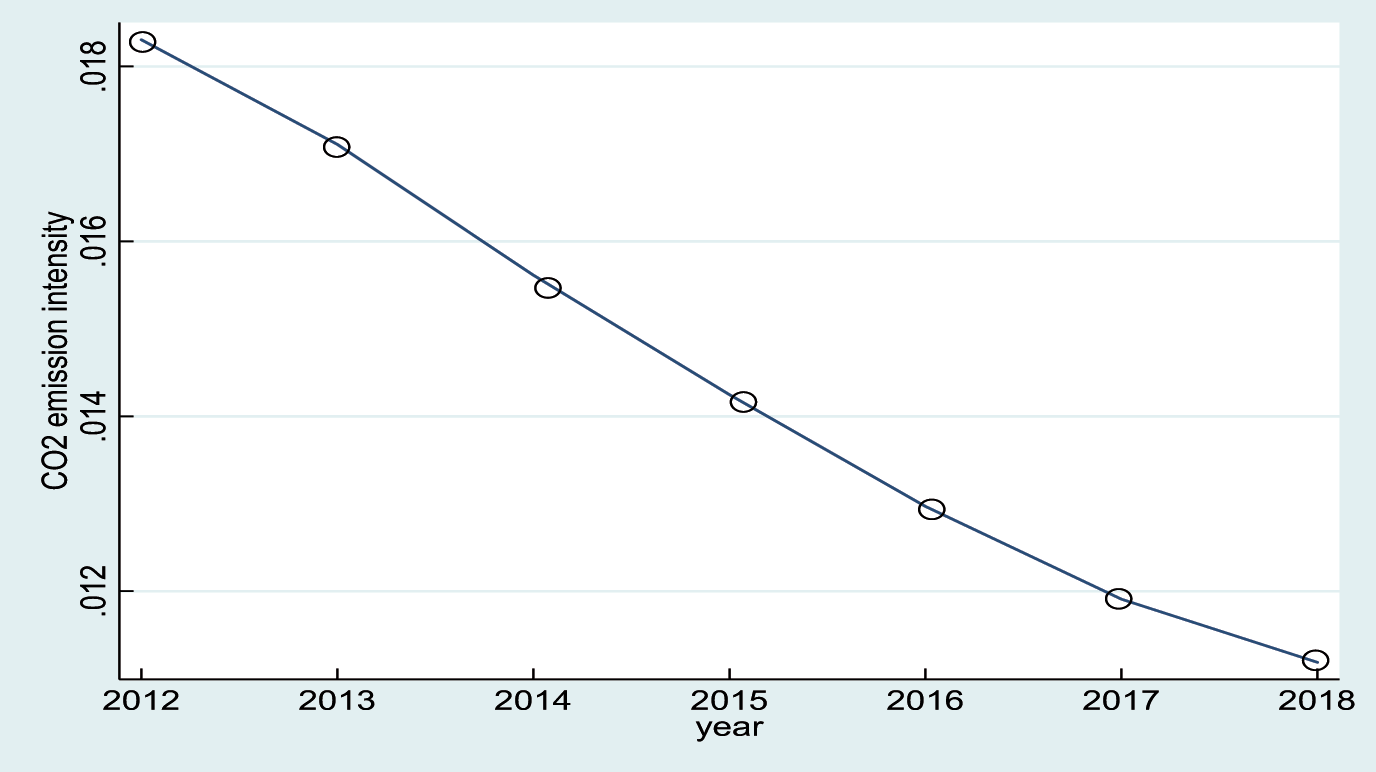
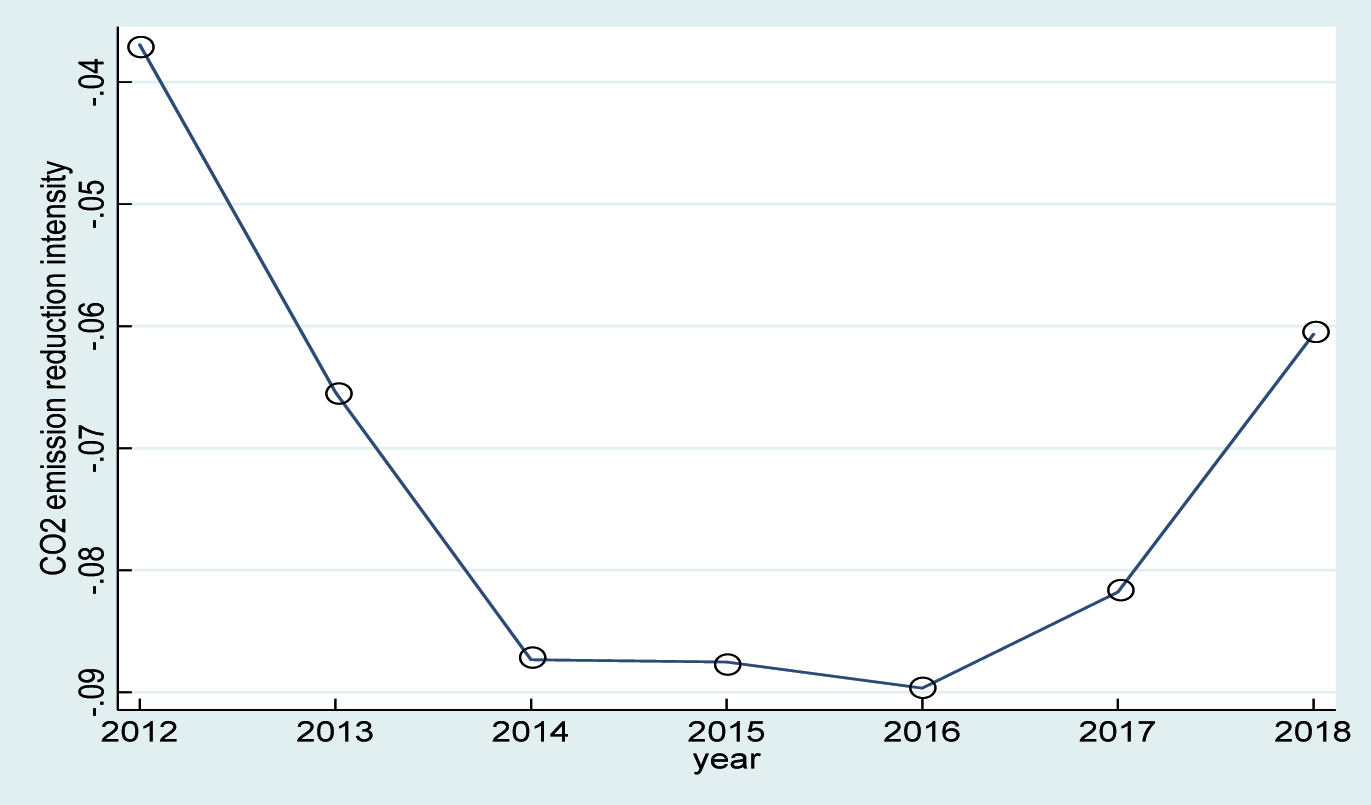
Fig. 3 shows the trend of carbon emission intensity in China. The carbon emission intensity has been decreasing year by year, but the decreasing trend tends to slow down. Combined with Fig. 4 about the carbon emission reduction intensity trend in China, the carbon emission reduction intensity as a whole started to rise after 2016. The possible reason for this situation is that the establishment of the carbon emissions trading market and the implementation of policies targeting some high carbon-emitting industries have been effective, but the marginal effect starts to diminish over time, which means that additional impetus is needed to cover a wider range of industries. Encouraging the development of green finance to promote carbon emission reduction seems to be a better choice. However, with Figs. 3 and 4 combined, the preliminary judgment that the carbon emission reduction effect of green finance pilot policies does not seem to be obvious is one of the issues we are concerned about. The status quo contradicts our expectations, which provides a good opportunity for the development of this study.
Methodology
Model Setting
Considering the mode of “pilot first, promotion after” of China’s GFRIPP, only Zhejiang, Jiangxi, Guangdong, Guizhou, Xinjiang, and other provinces are used as pilots; the rest of the provinces have not implemented this policy. Thus, the policy constitutes a quasi-natural experiment. To evaluate the performance of GFRIPP, with reference to Zhou et al. and Irfan et al. [35-36], this paper adopts the multi-period DID method to empirically test whether Hypothesis 1 holds, and the model is set as follows:
where
To test Hypothesis 2, this paper considers the impact of financial decentralization (
(4)
where
Table 1 reports the results of descriptive statistical analysis of all variables. The results show that the carbon emission reduction intensity is relatively high, and a carbon emission reduction effect occurs in general. In addition, the sample proportion of pilot provinces is relatively low, and the degree of financial decentralization varies between provinces.
Data Resources
Considering the availability of various data, this paper takes the panel data of 30 provinces (excluding Tibet, Hong Kong, Macao, and Taiwan) from 2012 to 2018 as the research object for empirical research, and the main data sources are the Wind database, the China Statistical Yearbook, the China Financial Yearbook, and the China Population and Employment Statistical Yearbook. Missing values in some years of data are filled up by linear interpolation, and data processing is performed using Stata 15.1 software.
Table 1.
Descriptive statistics of variables.
Results
Benchmark Regression Results
To ensure the reliability of the model regression results, this paper performs the variance inflation factor test (VIF) to test whether a multicollinearity problem exists between variables. The test results showed that the maximum VIF value was 6.98 and the average VIF value was 3.25, which means that the data used in this paper did not have multicollinearity.
Table 2.
Multicollinearity test results.
| Variable | VIF |
|---|---|
| Greenfinance | 1.22 |
| FinancialD*Greenfinance | 1.19 |
| Urban | 6.98 |
| Open | 3.93 |
| Structure | 2.00 |
| Income | 5.29 |
| Fdi | 3.50 |
| Rd | 3.11 |
Table 3 shows the test results of the carbon emission reduction effect of GFRIPP from the perspective of financial decentralization. As shown in Table 3, column [1] shows the regression results of fixed effects between uncontrolled years and provinces, and column [2] is the regression result of the fixed effect between the control year and the province. The test results show a significant negative relationship between the pilot policy of green finance reform and innovation and carbon emission reduction at the 5% level. Compared with the provinces that did not implement the pilot policy, the provinces that implemented the green finance reform and innovation pilot policy experienced a 0.053 decrease in the carbon emission intensity growth rate, which indicated that the pilot policy of green financial reform and innovation has a significant carbon emission reduction effect; that is, compared with other provinces, the provinces that served as the pilot area of green financial reform and innovation have a greater degree of carbon emission reduction. Therefore, Hypothesis 1 is supported.
The results in [3] show that the interaction between the pilot policy of green financial reform and innovation and financial decentralization (FinancialD*Greenfinance) and carbon emission reduction has a significant positive relationship with carbon emission reduction at the 5% level, which means that financial decentralization will weaken the carbon emission reduction effect of the pilot policy of green financial reform and innovation; that is, under the same control of other conditions, a high degree of financial centralization corresponds to a significant carbon emission reduction effect of the pilot policy of green financial reform and innovation. Thus, Hypothesis 2b is verified. The pilot policy of green finance reform and innovation has a significant negative relationship with carbon emission reduction above 5%, which further supports H1.
Table 3.
Benchmark regression results.
Parallel Trend Test
This paper uses the DID method to design the econometric model. The following parallel trend test is carried out to ensure the unbiasedness of the estimated results of this method. Table 4 shows the results of the parallel trend examination. The trend variable before the implementation of the GFRIPP is not significant, and the performance is negatively significant one year after implementation. This finding supports the parallel trend assumption and the validity of the DID method.
Placebo Test
To exclude the influence of the inherent differences between the provinces in the processing group and the provinces in the control group, this paper advances the implementation year of the pilot policy of green financial reform and innovation by one year (in 2016) and by two years (in 2015), respectively. A dummy policy implementation time is selected as a placebo for examination and validation. If the basic conclusion of this paper is the result of inherent differences among provinces, then results that are consistent with the basic conclusion can be obtained even in the case of policy virtual implementation.
Table 5 shows the results of the placebo test. Whether the test results are advanced for one or two years, the relationship between GFRIPP and carbon emission reduction is not significant, and the coefficient level is also significantly decreased. All in all, when the virtual GFRIPP is implemented, the basic conclusions of this paper no longer hold. This finding indicates that the property differences between the provinces in the processing group and the control group will not affect the basic study conclusions of this paper until the GFRIPP is formally implemented.
Robustness Check
To ensure that the results are robust, this paper tests the results of robustness from three aspects. First, the carbon emission data sources are replaced. This paper adopts the carbon emission data published on the CEADs website to recalculate explanatory variables and finds a significant negative relationship between GFRIPP and carbon emission reduction at the 5% level. At the 10% level, the interaction term between GFRIPP and financial decentralization and carbon emission reduction has a significant positive relationship with carbon emission reduction, which is consistent with the regression results above. Second, adjacent provinces are retained for regression checkout. To reduce the impact of differences in factor endowments or cultural customs caused by different spatial locations, this study excludes the samples that are not adjacent to the provinces of the processing group and reruns the regression. The results show a significant negative relationship between GFRIPP and carbon emission reduction at the 5% level, and the interaction term between GFRIPP and financial decentralization has a significant positive relationship with carbon emission reduction at the 10% level, which indicates that the results of this paper are robust. Third, the measurement method of financial implicit decentralization variables is replaced. This paper selects the proportion of the number of employees of local financial institutions among the number of employees of financial institutions in all provinces to replace the indicator of financial implicit decentralization and renews the regression test. The basic conclusion is robust. Finally, winsorization is performed. In this paper, all continuous variables were retested after winsorization, at the 1% statistical level. The results still support the hypothesis.
Regional Heterogeneity Analysis
On the basis of formula (2), this paper further captures the heterogeneity in the area. Table 7 shows the test results of the heterogeneity analysis. The F-test shows that the following model results are generally significant.
Table 5.
Placebo test results.
Table 6.
Robustness test results.
Table 7.
Regional heterogeneity test results.
At this stage, part of China’s production capacity is gradually transferred from the eastern region to the central and western regions. The implementation of the GFRIPP in the central and western regions can help local governments avoid secondary environmental pollution and effectively promote carbon emission reduction. In addition, compared with the eastern region, the central and western regions are at a disadvantage in natural endowment, and the scarcity of resources may lead to financial decentralization, which has a more significant impact on the effect of policy implementation. Therefore, this paper further explores the impact of regional heterogeneity. Columns [1] and [2] in Table 7 are the regression results divided by the eastern, central, and western regions, respectively. The GFRIPP in column [1] has no significant impact on carbon emission reduction, and the interaction between the GFRIPP and financial decentralization has no significant impact on carbon emission reduction. The GFRIPP in column [2] has a significant negative relationship with carbon emission reduction at the 5% level. The interaction between the GFRIPP and financial decentralization has a significant positive relationship with carbon emission reduction at the 5% level, which means that the GFRIPP in the central and western regions has a more significant carbon emission reduction effect than that in the eastern region, and this effect is more significantly affected by the weakening of financial decentralization.
Discussion
Controlling carbon dioxide emissions is an effective means to alleviate the problem of global warming. Green finance policy, energy policy, and carbon emission trading market pilot policy have reached a global consensus on this matter. Studying China’s carbon emissions and achieving sustainable development are of great practical significance, given that China is a major carbon emitter. The Chinese government has always been committed to exploring effective ways to reduce carbon emissions and has issued a series of related policies. The Guiding Opinions on Building a Green Financial System were promulgated in 2016, aiming to support the green transition of the economy through the development of financial products and services. In 2017, the Energy Production and Consumption Revolution Strategy (2016–2030) and the National Carbon Emission Trading Market Construction Plan (Power Generation Industry) were promulgated to promote the energy consumption revolution and build a standardized and reasonable carbon trading market. Promulgated in 2020 by the Central Committee of the Communist Party of China on Formulating the 14th and 5th Five-Year Plan for National Economic and Social Development and the 2035 Vision, the government proposed to adhere to the principle of green and low-carbon development, promote the research and development of green and low-carbon technologies, and contribute to carbon reduction. In 2021, China issued a total of 31 policy documents at the national level and 15 policy documents at the industry level to reduce its carbon dioxide emissions and improve environmental quality. In general, the core issue of carbon emission reduction is whether financing is sufficient [41] or if the implementation of GFRIPP can solve the financing problem. China has set up a GFRIPP to explore the feasibility of green finance to support sustainable development. The research status indicates that the status quo of China’s carbon emissions after the implementation of the pilot policy has not changed considerably. However, empirical results of the DID method confirm that China’s establishment of green finance reform and innovation pilots has a significant carbon reduction effect. The research status and the empirical results differ considerably, which may be due to several reasons. First, the policy implementation has a certain lag. It may take some time for the central government to announce policies until local governments formulate measures to promote green finance reforms, which may delay the realization of policy effects. Second, the policy adopted the mode of “pilot first, promotion after,” which failed to have an impact nationwide. This result was proven by empirical results; that is, the implementation of GFRIPP in pilot provinces has a significant carbon emission reduction effect. Third, the research status is mainly analyzed at the national level, the empirical results are analyzed at the provincial level, and the research is more in-depth. The empirical results can better reflect the real situation.
This paper further discusses the direct impact of the Chinese-style financial decentralization system on the carbon emission reduction effect of green financial policies. This institutional background in reality provides a new opportunity for us to empirically study the carbon emission reduction effect of China’s green financial policy from the perspective of financial decentralization because a vertical information gap and differences in interest demands have existed between the central government and local governments for a long time [17, 57]. With the conflict of interests and the division of power, good policies have failed to be implemented smoothly. Clearly, financial decentralization is likely to undermine the effectiveness of green finance policies. The empirical results of this paper also confirm this point, indicating that financial decentralization will weaken the carbon emission reduction effect of green financial policies to a certain extent.
Finally, this paper considers the impact of spatial heterogeneity because differences in regional development levels are an important factor. Areas with higher regional development levels have a more reasonable industrial structure and higher flexibility of financial resources, which can provide a good financial environment for regional economic development [58]. Therefore, compared with the more developed eastern region, the central and western regions have relatively poorer resource element endowment conditions and financial environments, and a greater shortage of financial resources. Weak systems such as market and legal protection in the central and western regions have also led to more intense competition between local governments for limited financial resources [15]. Therefore, the effective implementation of green finance policies in the central and western regions is more susceptible to financial decentralization. The empirical results show that the carbon reduction effect of financial decentralization weakening the green financial policy is more significant in the central and western regions than in the eastern region, which is consistent with our expectations.
Conclusions
On the basis of panel data from 30 provinces from 2012 to 2018 as the research object, this paper examines the carbon emission reduction effect of the GFRIPP from the perspective of financial decentralization. The results show the following: First, China’s GFRIPP has a significant carbon emission reduction effect. The regression results show that after the implementation of the GFRIPP in the pilot provinces, the growth rate of carbon emission reduction intensity is significantly reduced. Second, financial decentralization weakens the carbon emission reduction effect of the policy. Under the influence of financial decentralization, the carbon emission reduction effect of the policy is significantly reduced. Parallel trend, placebo, and robustness tests all support the above research results. Finally, the research results show significant regional heterogeneity. The carbon emission reduction effect of the GFRIPP in the central and western regions is more significant than in the eastern region and is more vulnerable to the weakening of financial decentralization.
On the basis of the above conclusions, this paper proposes the following policy implications: First, given that GFRIPP has a significant carbon reduction effect, the government should summarize its experience and promote it in a timely manner. The central government can solicit excellent cases from the pilot provinces and select learning demonstration sites. Regionally, pilot provinces exist in the eastern, central, and western regions, and their advanced experiences can be learned by neighboring provinces. Non-pilot provinces should actively learn from the practical experience of GFRIPP and design a green financial system with local characteristics to facilitate green and low-carbon development.
Second, the central government should pay attention to the impact of informal systems such as financial decentralization. Effective communication mechanisms should be established between upper and lower levels of government to jointly deploy financial resources and achieve optimal resource allocation efficiency because of the importance of financial resources for high-quality economic development. However, economic growth should not be the only standard for local government assessment. The assessment system should incorporate green and low-carbon indicators, such as carbon dioxide emissions.
Finally, the government can try GFRIPP to form an innovative strategy for synergizing carbon reduction between regions. The existence of endowment differences between regions is an established fact. Inter-regional cooperation can be strengthened to synergistically reduce the negative impacts of financial decentralization in the central and western regions. One-to-one, one-to-many, or many-to-many regional sharing models can also be established to improve the carbon reduction effect of GFRIPP.
This study provides a new perspective and empirical evidence for the study of the relationship between green finance and carbon emissions, but some limitations remain. First, this study analyzes the provincial level only because of the difficulty of obtaining some data and fails to go deep into the prefecture- and county-level city levels. Second, if we can further consider the impact of green finance policy on microenterprise carbon emission reduction, then it may be a better extension of the existing research. Finally, this study cannot be extended for a longer term, because of limited access to some data.

