

Introduction
Addressing the complex challenge of feeding our growing population requires agri-food organizations to navigate a web of political, social, and environmental factors while adapting to rapid technological advancements [1]. These changes have significant effects on business stakeholders, compelling them to enhance their livelihoods [2]. To achieve this, supply chain management incorporates various elements to produce and deliver products efficiently [3]. In this dynamic landscape, technological innovation plays a crucial role, enabling the adoption of new technologies for selling and purchasing products through e-commerce [4]. The impact of e-commerce adoption on sustainable business practices is intricate and multifaceted [5]. On the one hand, e-commerce expands market access and boosts profits. It introduces challenges and risks, such as heightened competition and price volatility [6]. Amidst these transformations, agri-food businesses are not exempt from the effects of rapid e-commerce adoption [7]. The integration of e-commerce into their operations requires careful consideration of the evolving market dynamics and the need to balance increased market access with potential challenges. The agri-food businesses are also being positively influenced by rapid e-commerce adoption, which has caused carbon emission reductions on green supply chain performance in sustainable agri-food businesses [7-11].
E-commerce adoption has influenced the agricultural sector through online sales and online purchases and increased popularity among small-scale enterprises that are often marginalized from traditional supply chains [4]. Although e-commerce adoption enables enterprises to sell their agri-food items directly to consumers, they also face challenges and risks [12]. With this, e-commerce adoption increases market access and becomes the cause of carbon emission reduction through online sales and online purchases [4, 13, 14]. Institutional theory explains that external pressures and institutional forces influence the e-commerce adoption of sustainable practices, including carbon emission reduction, within the agri-food industry [15, 16]. Current research aims to explore the impact of e-commerce adoption on carbon emission reduction and green supply chain management in sustainable agri-food businesses [4, 17].
Carbon emission reduction serves as a critical factor in preventing climate change, adhering to regulatory standards, and creating economic opportunities in sustainable agri-food businesses [8]. The agri-food sector is a significant contributor to global carbon emissions, primarily through land use change, enteric fermentation in livestock, and energy-intensive farming practices [8, 18]. However, the sector also holds potential for implementing carbon emission reduction strategies such as e-commerce adoption, which can potentially lead to green supply chain performance [19]. Therefore, our study explored the influence of e-commerce adoption on carbon emission reduction, which ultimately led to green supply chain performance in sustainable agri-food businesses.
Green supply chain management integrates environmentally friendly practices throughout the value chain, from sourcing raw materials to delivering end products [9-11]. A key aspect of green supply chain performance is the reduction of carbon emissions [20]. Similarly, agri-food businesses can enhance their green supply chain performance by adopting technological innovations such as e-commerce adoption [21]. This holistic approach aims to minimize the environmental impacts associated with agricultural production and food distribution [22]. Thus, we measured the connection between e-commerce adoption, carbon emission reduction, and green supply chain performance in the context of sustainable agri-food businesses [9-11].
The literature shows an increasing trend in studies focusing on the impact of e-commerce adoption on green supply chain performance in sustainable agri-businesses [9-11], despite the evidence that e-commerce adoption provides increased carbon emission reduction and fosters green supply chain performance [23]. Researchers paid insufficient attention to investigating the adoption of e-commerce, carbon emission reduction, and green supply chain performance in the agri-business sector. The mediating roles of carbon emission reduction were also unexplored [24]. The present study examines the impact of e-commerce adoption on carbon emission reduction and green supply chain performance in the emerging nation of China. Likewise, this research also explored the mediating effects of carbon emission reduction in the relationship between e-commerce adoption and green supply chain performance in agri-food businesses.
This study significantly contributes to the existing literature by exploring the dual impact of e-commerce adoption and carbon emission reduction on green supply chain performance within the agri-food business sector. Utilizing a robust research framework grounded in resource-based view theory, our study uniquely positions carbon emission reduction as a mediator in the relationship between e-commerce adoption and green supply chain performance. By analyzing data collected from 634 representatives of agri-food businesses across various Chinese cities, this research provides empirical evidence on how technological innovations can drive sustainability in supply chains. The findings offer valuable insights for policymakers and strategic management, emphasizing the role of e-commerce in enhancing environmental sustainability and operational efficiency in agri-food supply chains.
The study examines how e-commerce adoption and carbon emission reduction influence green supply chain performance, using carbon emission reduction as a mediator between e-commerce adoption and green supply chain performance. We also developed a synthesized research framework based on resource-based view theory and existing literature. The 634 participants' data on e-commerce adoption, carbon emission reduction, and green supply chain performance were collected from the representatives of the target population using a 22-item survey questionnaire. Partial least square structural equation modeling (PLS-SEM) was used to measure the direct and indirect effects. Our results revealed that e-commerce adoption and carbon emission reduction have positive and significant effects on green supply chain performance. Results also proved that carbon emission reduction has a positive and significant mediating role in the relationship between e-commerce adoption and green supply chain performance. Furthermore, it was concluded that e-commerce adoption and carbon emission reduction amplified green supply chain performance, and mediation clarified its role in strengthening the relationship between e-commerce adoption and green supply chain performance in sustainable agri-food businesses. Findings provide valuable implications for policymakers and strategic management to promote e-commerce adoption in agri-food business firms.
This study has a significant gap in providing an understanding of the dynamics of e-commerce adoption, carbon emission reduction, and their impacts on the green supply chain performance in sustainable agri-food businesses. The crucial insights about the connection between these variables would remain unexplored, hindering efforts to develop effective strategies for enhancing sustainability within the agri-food sector. It would provide understanding of e-commerce adoption’s influence on carbon emission reduction and its subsequent mediation of the relationship with green supply chain performance, which is essential for informing business practices, policymaking, and resource allocation in the agricultural industry. By providing clarity about these relationships, this study contributes valuable knowledge that can guide organizations, policymakers, and stakeholders in formulating informed decisions and implementing initiatives aimed at promoting environmental sustainability and improving supply chain efficiency within the agri-food sector. The following research questions were formulated to measure these relationships:
Research Question 1: How do e-commerce adoption and carbon emission reduction influence green supply chain performance in sustainable agri-food businesses?
Research Question 2: How does carbon emission reduction mediate the relationship between e-commerce adoption and green supply chain performance?
Literature Review and Hypothesis
Conceptual Framework: We developed a comprehensive research framework examining the impact of e-commerce adoption on green supply chain performance while considering the mediating roles of carbon emission reduction by applying the resource-based view (RBV) theory. The RBV suggests that firms achieve competitive advantage by capitalizing on unique resources and capabilities [25]. In this context, e-commerce adoption can be seen as a valuable resource that enables agri-food businesses to enhance their green supply chain performance [21]. By adopting e-commerce, businesses can improve efficiency, reduce waste, and optimize logistics, leading to carbon emission reductions and improved sustainability practices [26]. Similarly, technological innovation plays a crucial role in enabling businesses to achieve environmental and sustainability goals [27]. E-commerce adoption represents a significant technological innovation that can transform the way agri-food businesses operate and improve their overall sustainability performance practices [26]. Previous studies primarily focused on the direct influence of e-commerce adoption on green supply chain performance [28, 29], without exploring the mediation of these business factors. Additionally, existing research has highlighted e-commerce adoption and carbon emission reduction as predictors of green supply chain performance in agri-business [30, 31].
The Resource-Based View (RBV) theory posits that a firm's sustainable competitive advantage is derived from its ability to acquire, develop, and deploy valuable, rare, inimitable, and non-substitutable resources and capabilities. According to RBV, resources are defined broadly to include all assets, capabilities, organizational processes, firm attributes, information, and knowledge controlled by a firm that enables it to implement strategies that improve its efficiency and effectiveness. In the context of our research, e-commerce adoption is viewed as a critical organizational capability that can enhance a firm's operational efficiency and market reach. The integration of e-commerce into agri-food businesses allows these firms to optimize their supply chain operations, improve inventory management, and reduce transaction costs, thereby enhancing their overall green supply chain performance.
Our research model is designed to examine the impact of e-commerce adoption on green supply chain performance, with carbon emission reduction serving as a mediator, the size of the enterprise as a moderator, and the age of the enterprise as a control variable. From an RBV perspective, e-commerce adoption represents a valuable and unique capability that can provide agri-food businesses with a competitive advantage. This technological innovation allows firms to streamline operations, enhance market access, and improve customer interactions, which are critical resources for achieving superior green supply chain performance. Green supply chain performance refers to the implementation of environmentally friendly practices throughout the supply chain, aimed at minimizing environmental impact while maximizing efficiency [26]. By leveraging the capabilities provided by e-commerce adoption, firms can enhance their green supply chain performance, aligning with the RBV's emphasis on utilizing firm-specific resources to achieve strategic goals.
Carbon emission reduction is a key intermediary outcome that links e-commerce adoption to green supply chain performance. E-commerce technologies can lead to more efficient logistics and inventory management, reducing the need for physical stores and minimizing transportation emissions. As a valuable resource, carbon emission reduction efforts contribute to improved environmental performance and sustainability, reinforcing the competitive advantage highlighted by RBV theory. The size of the enterprise is considered a moderating variable that can influence the strength and direction of the relationships between e-commerce adoption, carbon emission reduction, and green supply chain performance. Larger enterprises may have more resources to invest in advanced e-commerce technologies and sustainability initiatives, whereas smaller firms might benefit differently from these capabilities. Understanding how enterprise size moderates these relationships helps to contextualize the application of RBV in different organizational settings [28, 29]. Additionally, controlling for the age of the enterprise helps to isolate the effects of these strategic capabilities and resources, providing a clearer understanding of their contributions to competitive advantage and sustainability [30, 31]. By incorporating these variables, our research integrates RBV theory into the examination of how e-commerce adoption influences green supply chain performance, offering a nuanced perspective on the interplay between digital transformation and sustainability in the agri-food sector. Our study explores the mediating roles of carbon emission reduction in the relationship between e-commerce adoption and green supply chain performance, particularly in the context of agri-food businesses in China. Fig. 1 proposes the research model.
Relationship of E-Commerce Adoption with Green Supply Chain Performance
Many studies show significant attention given by scholars to explore the e-commerce adoption and green supply chain performance in sustainable agri-food businesses [23, 32]. Similarly, [33] discussed the e-commerce adoption relationship with green supply chain performance. Moreover, e-commerce platforms have become the cause of carbon emission reduction in agri-food businesses in various ways. E-commerce platforms enable real-time data sharing and automation, facilitating more efficient inventory management, demand forecasting, and route optimization. These efficiencies can be interpreted as reduced energy usage and lower carbon emissions [34, 35]. Additionally, e-commerce allows for digital documentation, reducing the need for paper-based systems and thereby contributing to waste minimization [23, 32]. Moreover, the online sale and online purchase features of e-commerce systems can be leveraged to promote sustainable sourcing by providing consumers with information about their environmental or social impacts. These perspectives show the connections of e-commerce adoption with green supply chain performance in sustainable agri-food businesses. Therefore, the following hypotheses were formulated to measure this relationship:
H1: E-commerce adoption has a positive and significant relationship with green supply chain performance.
Relationship between E-Commerce Adoption and Carbon Emission Reduction
The relationship between e-commerce adoption and carbon emission reduction in the agri-food business is a subject of growing scholarly interest, given the rise of digital platforms and increasing environmental concerns [36]. Research suggests that e-commerce adoption can lead to efficiencies such as optimized inventory management and reduced food waste, thereby contributing to lower carbon emissions [37, 38]. Additionally, e-commerce can facilitate the direct-to-consumer model, cutting down on intermediary steps and potentially reducing transportation emissions [39, 40]. However, the literature also highlights potential setbacks, such as increased packaging waste and the carbon footprint associated with "last-mile" delivery services [37, 38]. Hence, e-commerce adoption presents opportunities for carbon emission reduction in the agri-food sector. It was required to explore the connection between e-commerce adoption and carbon emission reduction. Therefore, the following hypothesis was formulated to measure this relationship:
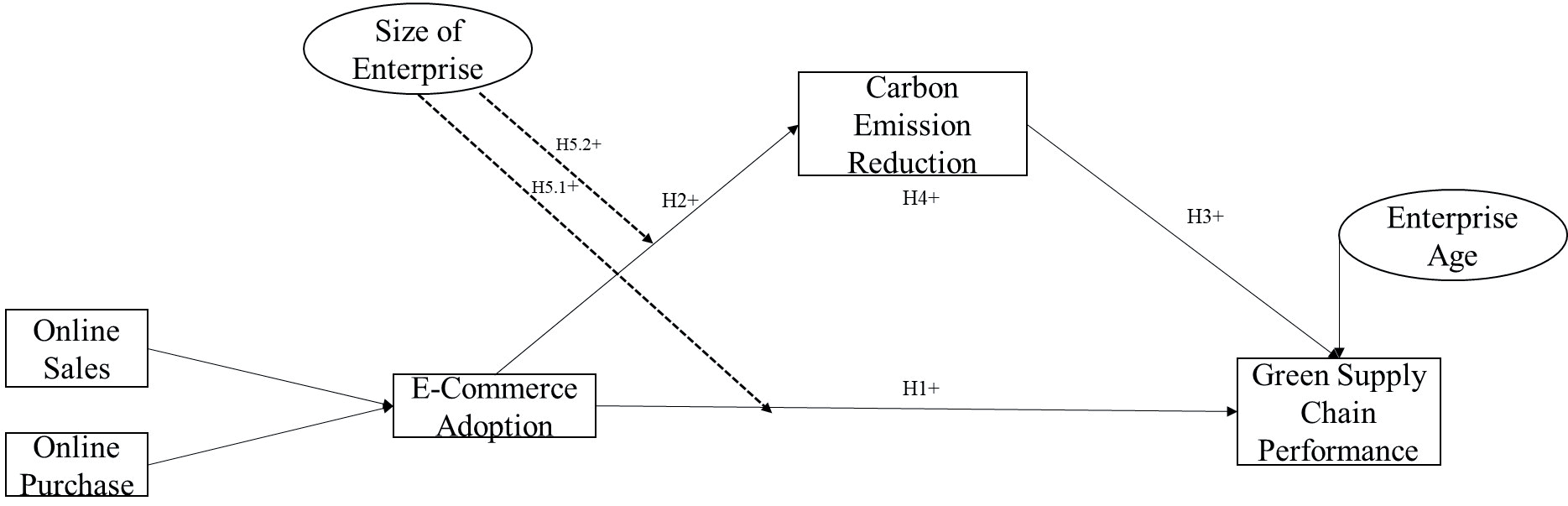
H2: E-commerce adoption has a positive and significant relationship with carbon emission reduction.
Relationship between Carbon Emission Reduction and Green Supply Chain Performance
Various researchers have discussed the significance of carbon emission reduction and green supply chain performance in the agri-food business [33, 41]. Carbon emission reduction plays a pivotal role in enhancing the green supply chain performance of businesses [8, 36]. The relationship between carbon emission reduction and green supply chain performance in the agri-food sector has been a focal area of academic research [41]. Studies have shown that implementing green supply chain practices such as sustainable sourcing, energy-efficient transportation, and waste management can lead to significant reductions in carbon emissions [36]. For example, the use of renewable energy in storage and distribution centers is found to be effective in lowering the carbon footprint. On the other hand, carbon emission reduction initiatives can also feed into improving green supply chain performance metrics, such as increased efficiency and reduced costs, thereby creating a virtuous cycle [33, 41]. Furthermore, regulatory pressures and consumer demand for sustainable products have accelerated the integration of carbon emission reduction strategies into green supply chain management in agri-food [8, 36]. Therefore, the literature suggests that carbon emission reduction and green supply chain performance are linked with each other, especially in the sustainability of the agri-food sector. Thus, we formulated the following hypothesis to measure this connection:
H3: Carbon emission reduction has a positive and significant connection with green supply chain performance.
The Mediating Role of Carbon Emission Reduction in the Relationship between E-Commerce Adoption and Green Supply Chain Performance
The mediating role of carbon emission reduction in the relationship between e-commerce adoption and green supply chain performance in the agri-food sector is a relatively emerging area in scholarly discourse [28, 31, 38, 41]. Preliminary research suggests that e-commerce adoption can positively influence green supply chain performance by enabling better inventory management, optimized routing, and waste minimization [41]. However, carbon emission reduction acts as a critical mediating variable in this relationship [42]. Literature indicates that the proficiencies gained through e-commerce can directly contribute to reducing carbon emissions by optimizing transportation and reducing waste [43]. These reductions, in turn, improve the green supply chain performance metrics, such as lower energy consumption and waste generation [43, 44]. Thus, carbon emission reduction serves as a mediating factor that enhances the positive impacts of e-commerce adoption on green supply chain performance in the sustainable agri-food business. Therefore, the following hypothesis was formulated to measure this relationship:
H4: Carbon Emission Reduction has a positive and significant mediating role in the relationship between e-commerce adoption and Green Supply Chain Performance.
Methodology
Research Desing
The study involved data collection from employees at agri-food business firms, selected based on their integration of e-commerce to enhance the green supply chain performance in the context of China. Our sample selection from large- and small-scale manufacturing firms was due to their business nature, such as agricultural food production, processing, and distribution. The study's respondent firms were from Guangzhou, Shenzhen, Shanghai (first-tier cities), Xian, Chengdu (second-tier cities), Hefei, and Fuzhou (third-tier cities). Moreover, these cities are major cities in the regions of China. These regions were chosen due to their significance as major hubs for agri-food businesses and e-commerce activities in the country, thereby ensuring the relevance and representativeness of the study sample. Furthermore, detailing the characteristics and demographics of these regions, such as their economic importance and industrial landscapes, can provide further insights into the context in which the research was conducted. Additionally, outlining the baseline datasets utilized in the study, including any relevant industry benchmarks or historical data on e-commerce adoption and green supply chain performance, would offer transparency regarding the analytical framework employed. We gathered the data through the survey method. The employee responses were gathered on e-commerce adoption, carbon emission reduction, and green supply chain performance in sustainable agri-food businesses. To recruit employees for survey data collection, we obtained permission from each firm's HRM department and acquired the employees' details working in the production departments of the conveniently selected firms. Convenient sampling was chosen for data collection due to its accessibility, ease, and efficiency in gathering information from selected agri-food businesses. This method streamlined the process by reaching out to readily available and willing firms, enhancing timeliness and efficiency. Its flexibility in selecting firms from diverse geographic locations contributed to the study's representativeness and generalizability. Moreover, convenient sampling proved cost-effective, minimizing resources and logistics, and making it viable for researchers with limited budgets or time constraints. Its advantages include time efficiency, cost-effectiveness, flexibility, accessibility, and a pragmatic approach, enabling quick access to participants, reducing expenses, enhancing sample diversity, reaching participants in various settings, and providing a practical solution for data collection when other methods are impractical. Additionally, we explicitly stated while conducting the survey that their responses would not be shared with their department or management. This assurance was critical to eliciting honest and impartial opinions from participants. We used a 7-point Likert scale instrument to collect data.
Instrument Development
In the current investigation, the research focused on examining the relationship between e-commerce adoption as the independent variable and green supply chain performance as the dependent variable. Carbon emission reduction was considered a potential mediator in this relationship. To assess these constructs, a comprehensive 22-item questionnaire was developed, comprising three distinct sections. The questionnaire was adapted. We ensured the reliability and validity of each scale used in the model before the start of the final data collection. A panel of five experts in the field reviewed the questionnaire and provided valuable feedback to enhance content and face validity. Subsequently, changes were made to the questionnaire items based on their suggestions. The first section of the questionnaire provided details about the aims of the study assured respondent anonymity and privacy, and clear instructions for participants. The second section collected demographic details, including the size of the enterprise, site, and enterprise age. The third section collected data on latent variables such as e-commerce adoption (7-item online sales and 6-item online purchases), carbon emission reduction (5 items), and green supply chain performance (4 items) through a 7-point Likert-type scale. The response range was between 1-7, from strongly disagree to strongly agree. In order to ensure the questionnaire's reliability and validity, a pilot test involving 30 participants was carried out prior to the final data collection process. The pilot study sample kept similar demographic characteristics to the final sample, enabling a trial run of the data analysis. Additionally, the pilot study's participants provided valuable feedback on the questionnaire, leading to further refinements. The revised version of the questionnaire was employed for the final data collection process (see Appendix 1).
Measures
Online sales: This scale has two subscales, online sales and online purchases, and is adapted from the work of [38, 41]. Example items included "The proficiency of our business in handling online transactions" and "The effectiveness of online sales in reaching our target customers." We measured reliability using Cronbach's alpha indexed (0.842) (see Table 1).
Online purchase: This scale has two subscales, online sales and online purchases, and is adapted from the work of [38, 41]. Example items included "The effectiveness of online platforms for purchasing goods and services" and "The extent to which online purchases have enhanced accessibility for our business." We measured reliability using Cronbach's alpha indexed (0.808) (see Table 1).
Carbon Emission Reduction: The carbon emission reduction scale was adapted and developed based on the work of [35]. Example items included "Our agri-food business has a comprehensive plan to reduce carbon emissions across all operations" and "Our agri-food business has a clear and measurable carbon emission reduction goal." We measured reliability using Cronbach's alpha indexed (0.794) (see Table 1).
Green supply chain performance: The green supply chain performance scale was adapted and developed based on the work of [44]. Example items included "Our agri-food business selects suppliers based on their environmental sustainability practices." and "Our agri-food business has established environmental sustainability standards for its suppliers and monitors their compliance." We measured reliability using Cronbach's alpha indexed (0.722) (see Table 1).
Control Variables
To ensure the robustness of our findings, we included the age of the enterprise as a control variable. The age of the enterprise was measured by the number of years the firm has been in operation. This variable is crucial, as older enterprises may have more established supply chain practices and greater resources for implementing green initiatives compared to newer firms.
Moderating Variable
The size of the enterprise was determined by the number of employees, categorizing firms into small, medium, and large. We investigated the moderating effect of the size of the enterprise on the relationship between e-commerce adoption and green supply chain performance, as well as between e-commerce adoption, carbon emission reduction, and green supply chain performance. This approach allowed us to understand how the impact of e-commerce adoption and carbon emission reduction on green supply chain performance might differ based on the size of the enterprise.
Table 1.
Reliability and Convergent Validity.
Sampling and Data Collection
The study involved employees working in enterprises in Guangdong Province, China. To ensure accuracy and balanced representation, convenient sampling was employed to collect the data. Participants were provided with a cover letter that detailed the privacy and confidentiality of their responses, assuring them that the collected information would solely be used for educational research purposes. Researchers reached out to employees of agri-food business organizations through an online questionnaire, asking them to complete it. We sent out 400 questionnaires via WeChat QR to participants working at various levels, such as in agri-food business enterprises. Ultimately, 634 completed questionnaires were received, resulting in a response rate of 91%. Data analysis commenced after the collection of sampling phases ended.
Data Analysis Procedure
The present study analyzed the data from a total of 634 survey responses collected in three months, approximately. The data collected using an online questionnaire was carefully screened in computer software for analysis. The partial least square structural equation modeling (PLS-SEM) was applied, using SmartPLS version 4, to measure the direct and indirect relationships between e-commerce adoption, carbon emission reduction, and green supply chain performance. First, we applied measurement modeling to measure the reliability and validity of the scales, including factor loading, Cronbach Alpha, roh_a, and roh_c, as well as measured convergent and discriminant validity. Subsequently, structural equation modeling was employed to analyze the direct and indirect relationships between these variables. For demographic analysis, we applied descriptive statistics. We also used bootstrapping with a large number of samples (5,000 subsamples) to check the stability and significance of our path coefficients. This helps in assessing the robustness of the results. Moreover, Q²predict was used in the context of PLS-SEM (Partial Least Squares Structural Equation Modeling) to assess the predictive relevance of a model.
Common Bais Method
To address the potential bias from common method variance (CMV), we applied Harman's one-factor test [45]. This process entailed conducting an exploratory factor analysis in SPSS with all model items. Findings indicated that the primary factor accounted for just 23.62% of the overall variance, which is below the advised 50% benchmark. As a result, additional statistical techniques were utilized to verify that CMV did not significantly affect the students' responses.
Demographics
Table 2 indicates participant demographics like 66.41% represented small-sized enterprises, with the remaining 33.59% from larger counterparts. Regarding location, 74.44% were in urban areas, while 25.56% operated in rural settings. In terms of enterprise age, 55.84% were less than 5 years old, 31.23% were aged 5-15 years, and 12.93% exceeded 15 years. This diverse participant background, encompassing enterprise size, location, and age, will likely impact the study's outcomes significantly (see Table 2).
Results and Discussion
Results
In Table 1, we measured the values for Cronbach's alpha (CA), composite reliability (rho_a), composite reliability (rho_c), and average variance extracted (AVE) for three constructs: e-commerce adoption (online sales and online purchases), carbon emission reduction, and green supply chain performance. All variables surpass the recommended threshold of 0.70, signifying strong construct reliability (CA, rho_A, and rho_C). The average variance extracted (AVE), a measure of convergent validity, also exceeds the suggested threshold of 0.5 for all constructs, indicating robust convergent validity. Indicator loading was above the threshold value of 0.60. In summary, Table 1 demonstrates the favorable reliability, construct reliability, and convergent validity of all four constructs.
Table 3 provides an assessment of discriminant validity using the heterotrait-monotrait ratio of correlations (HTMT). The diagonal values in the table represent the square roots of the average variance extracted (AVE) for each construct, while the off-diagonal values represent the correlations between different constructs [46-48]. This provides insights into the distinctiveness of each construct and their relationships with one another. Discriminant validity is confirmed when HTMT values for each pair of constructs are under 0.85. In this table, all HTMT values for construct pairs are below 0.85, affirming discriminant validity. Thus, it is established that the constructs of e-commerce adoption, carbon emission reduction, and green supply chain performance are distinct and measure different underlying concepts.
Table 3.
Discriminant Validity HTMT.
Table 2.
Demographics of the Participants.
Table 4.
Collinearity Problems.
Table 4 shows variance inflation factor (VIF) values for various items in the dataset. VIF measures collinearity, indicating how predictor variables in a regression model are correlated. A VIF of 1 implies no collinearity; values above 5 raise concern. Here, all VIF values are below 2, indicating no significant collinearity. Thus, no variables need to be removed from the model due to collinearity issues.
The saturated model exhibits a favorable fit as indicated by SRMR (0.074), d_ULS (0.502), d_G (0.162), Chi-square (317.494), and NFI (0.743) values. These metrics suggest a strong alignment between the model and the observed data (see Table 5).
The R-square values provide insights into the variance explained by the model for each construct. In this context, carbon emission reduction and green supply chain performance account for 18.8% and 38.1% of their respective variations. This indicates that the model has appropriate explanatory power for green supply chain performance, while carbon emission reduction has comparatively lower explanatory power (see Table 6).
Table 5.
Model Fit.
| Model Fit | Saturated model | Estimated model |
|---|---|---|
| SRMR | 0.074 | 0.075 |
| d_ULS | 0.502 | 0.506 |
| d_G | 0.162 | 0.162 |
| Chi-square | 317.484 | 616.502 |
| NFI | 0.743 | 0.742 |
Table 7 is an f-square table that measures the effect size of each variable on the dependent variable. The f-square value for carbon emission reduction is 0.336, which means that it accounts for 37.1% of the variance in green supply chain performance. The f-square value for e-commerce adoption is 0.226, which means that it accounts for 22.6% of the variance in green supply chain performance. These findings suggest that both carbon emission reduction and e-commerce adoption have a significant impact on green supply chain performance.
Table 8 indicates the direct relations that e-commerce adoption has a positive, significant, and direct impact on green supply chain performance (β= 0.198, p < 0.05), which approved H1. Similarly, e-commerce adoption has a positive, significant, and direct impact on carbon emission reduction (β= 0.429, p < 0.05), which accepted H2. Additionally, carbon emission reduction has a positive, significant, and direct impact on green supply chain performance (β= 0.506, p < 0.05), which accepted H3.
Moreover, we measured two control variables: enterprise age and enterprise size, to assess their impact on green supply chain performance. The results indicate that neither variable has a significant impact on green supply chain performance, with coefficients of β= -0.011 (p > 0.05) and β= 0.069 (p > 0.05) respectively.
We also measured the indirect relationship between e-commerce adoption and green supply chain performance through its carbon emission reduction (β = 0.217, c). The outcomes shed light on the positive mediating role of carbon emission reduction in the relationship between e-commerce adoption and green supply chain performance, which approved H4. Moreover, partial mediation is observed in the model, where e-commerce adoption exerts both direct and indirect effects on green supply chain performance through carbon emission reduction (see Table 8 and Fig. 2). Furthermore, we investigate the moderating effect size of the enterprise on the relationship between e-commerce adoption and green supply chain performance. The results indicated that the effect size of the enterprise has no significant moderating effect on the relationship between e-commerce adoption and green supply chain performance (β = 0.50, p > 0.05), which does not support our hypothesis H5.1. Additionally, we measured the moderating effect of the size of the enterprise on the relationship between e-commerce adoption, carbon emission reduction, and green supply chain performance. The outcomes indicated that the size of the enterprise also does not moderate the relationship between e-commerce adoption, carbon emission reduction, and green supply chain performance (β = -0.52, p > 0.05), which does not support our hypothesis H5.2.
Table 6.
R-Square.
| Variables | R-square | R-square adjusted |
|---|---|---|
| Carbon Emission Reduction | 0.188 | 0.184 |
| Green Supply Chain Performance | 0.381 | 0.374 |
Table 7.
F-Square.
Table 8.
Direct and Indirect Relations.
Table 9 presents the results of a predictive validity assessment for the lower order components related to Carbon Emission Reduction (CER) and Green Supply Chain Performance (GSCP) using Q²predict, PLS-SEM RMSE, LM RMSE, and their differences. Q²predict values, which indicate predictive relevance, range from 0.033 to 0.159 for CER indicators and 0.082 to 0.114 for GSCP indicators, suggesting varying levels of predictive relevance. The PLS-SEM RMSE values are generally close to the LM RMSE values, with differences ranging from -0.009 to 0.003 for CER indicators and -0.028 to 0.001 for GSCP indicators. These small differences indicate similar predictive accuracies for PLS-SEM and linear models across most indicators, with PLS-SEM showing slightly better accuracy for GSCP4. Overall, the Q²predict values affirm the model's predictive relevance, and the small RMSE differences suggest robustness and consistency of the model's predictive power, validating that the findings are not highly sensitive to the choice between PLS-SEM and linear modeling approaches.
Discussion
E-commerce adoption has emerged as a transformative factor in the business landscape, offering a multitude of benefits that extend beyond economic gains to encompass environmental sustainability. Our study contributes to the theoretical understanding by integrating the RBV theory to explain how e-commerce adoption enhances green supply chain performance in agri-food businesses. E-commerce adoption, viewed as a valuable organizational capability, optimizes supply chain operations, improves inventory management, and reduces transaction costs, thus providing a competitive advantage. The study highlights carbon emission reduction as a critical mediator that links e-commerce adoption to improved green supply chain performance by enhancing logistics efficiency and reducing emissions. Additionally, the moderating role of enterprise size indicates that larger firms may benefit more from e-commerce technologies and sustainability initiatives. By controlling for enterprise age, we ensure the observed effects are attributable to the strategic capabilities of e-commerce adoption and carbon emission reduction, offering a nuanced understanding of their contributions to competitive advantage and sustainability in the agri-food sector. This integration of RBV theory provides a comprehensive framework for examining the interplay between digital transformation and environmental sustainability.
Our results indicated that e-commerce adoption has a significant, positive, and direct connection with green supply chain performance, thus confirming Hypothesis 1. This finding aligns with the results reported by [33], where e-commerce adoption was shown to enhance green supply chain performance. E-commerce has notably transformed agribusiness operations by expanding market reach, facilitating informed strategic decisions, achieving operational excellence, increasing profitability, and promoting green purchasing and packaging practices [44]. Similarly, the work of [23] supports a connection between e-commerce adoption and green supply chain performance, demonstrating that electronic procurement adoption positively impacts green procurement, thereby advancing sustainable supply chain performance among Malaysian ISO-certified organizations. Further supporting this perspective, [26] identified similar factors influencing the sustainable supply chain performance of agri-food products based on cross-border live-streaming e-commerce in China. Building on these findings, it is imperative to consider the mechanisms through which e-commerce facilitates improvements in green supply chain practices. One possible mechanism is through the integration of advanced analytics and big data, which can enhance forecasting accuracy, optimize inventory management, and reduce waste. Additionally, e-commerce platforms can promote transparency and traceability across the supply chain, which is critical for implementing environmental and social governance standards.
Similarly, our results indicated that e-commerce adoption has a significant, positive, and direct relationship with carbon emission reduction, thus supporting Hypothesis 2. This outcome aligns with a growing body of research, including a recent study by [26], which reported that e-commerce adoption leads to reductions in carbon emissions from transportation, energy consumption, and waste generation. Additionally, the findings of [49] corroborate our results, illustrating a positive connection between e-commerce adoption and carbon emission reduction. Furthermore, Liang et al. highlighted that e-commerce positively impacts environmental sustainability targets in selected European countries, while [36] observed similar reductions in carbon emissions due to e-commerce in China. One plausible explanation for this beneficial relationship is that e-commerce can consolidate shipments and minimize the frequency of delivery trips, consequently reducing transportation emissions. Additionally, e-commerce platforms often optimize delivery routes and schedules, which further diminishes fuel consumption and associated emissions. Moreover, the shift towards digital platforms reduces the need for physical store operations, leading to lower energy usage in commercial spaces.
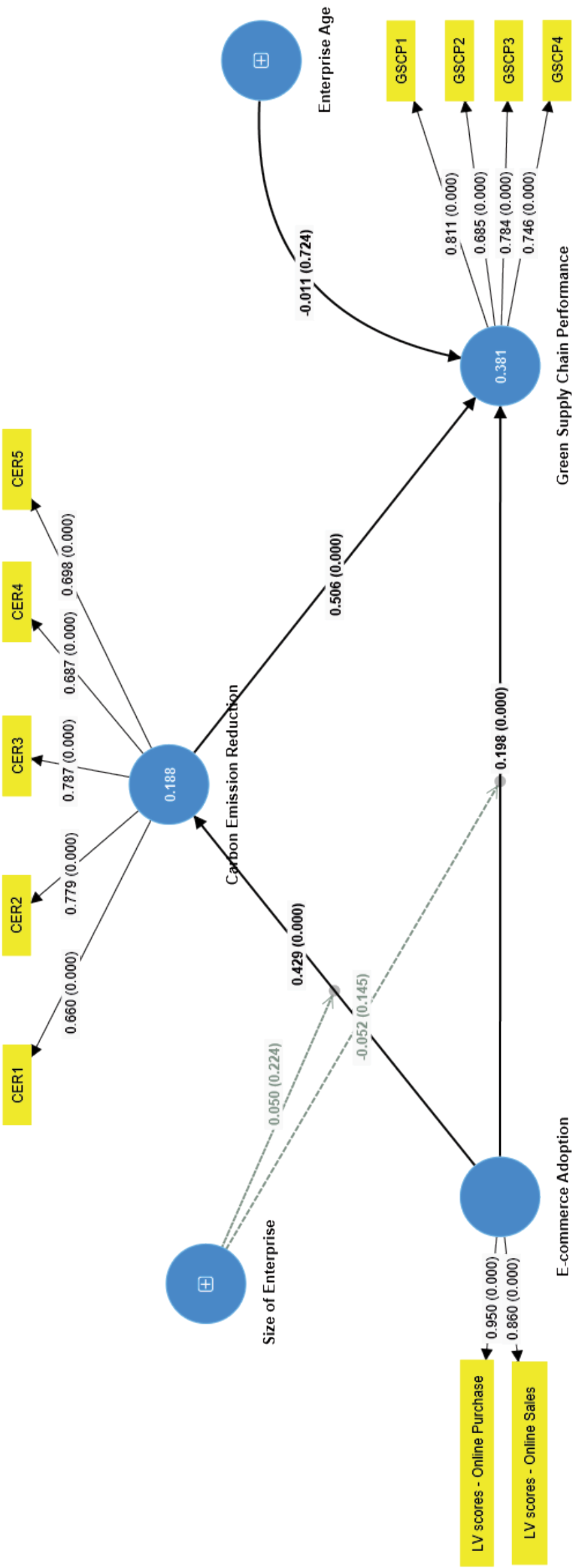
Table 9.
Model Predictive Power.
Our results further explained that e-commerce adoption significantly and positively impacts green supply chain performance, thereby supporting Hypothesis 3. These findings align with the broader research trend that associates improvements in logistics performance and reductions in carbon emissions with enhanced e-commerce logistics [50]. Specifically, it was demonstrated that reductions in energy consumption, waste production, and pollution emissions are pivotal to advancing green supply chain management practices [51]. Moreover, a causative link between reduction in carbon emissions and green innovation was established [52], indicating that environmentally sustainable innovations are both a driver and an outcome of reduced carbon emissions. Additionally, the work of [34] reveals that green supply chain management practices not only benefit the environment but also enhance the economic performance of organizations. Their study indicated that companies with robust green supply chain management systems experienced higher returns on assets and equity. This suggests a dual benefit of green practices, marrying financial performance with environmental responsibility.
Our findings elucidated that carbon emission reduction plays a significant mediating role in the relationship between e-commerce adoption and green supply chain performance, thus substantiating Hypothesis 4. These results align with those reported by [33], who noted that e-commerce sales contributed to reductions in retail energy consumption, enhancements in green supply chain management, and improvements in sustainable e-commerce performance. Similarly, the research conducted by [53] highlighted that blockchain technologies could foster environmentally sustainable development goals in manufacturing firms through the potential mediation of green supply chain management practices. Additionally, [54] observed that e-commerce adoption led to carbon emissions reduction, which in turn enhanced green supply chain performance in China. These findings collectively suggest that e-commerce adoption not only directly reduces carbon emissions but also indirectly boosts green supply chain management initiatives through these reductions.
In addition, this study has elucidated the significant role e-commerce adoption plays in enhancing green supply chain performance and reducing carbon emissions in sustainable agri-food businesses. Our findings align with previous research, confirming that e-commerce not only directly contributes to environmental sustainability but also offers substantial economic benefits by improving operational efficiencies and financial returns. Furthermore, the mediating role of carbon emission reduction underscores the interconnected benefits of integrating e-commerce innovations into green supply chain practices. Overall, embracing e-commerce is indispensable for businesses aiming to achieve sustainable growth and meet environmental targets in the modern economy.
Conclusions
The results indicated that e-commerce adoption is the predictor of green supply chain performance. Similarly, our study provides compelling evidence that e-commerce adoption fosters a positive and significant impact on green supply chain performance in sustainable agri-food businesses. The results indicate that e-commerce adoption increased carbon emission reduction, which in turn serves as a crucial mediator in enhancing green supply chain performance. Our results provide potential evidence that environmental sustainability goals can be achieved through e-commerce adoption within the supply chain domain. Organizations should strategically integrate e-commerce practices into their operations to reap the dual benefits of improved green supply chain performance and reduced carbon emissions.
Our study primarily explores the Chinese context: it is imperative to acknowledge the need for broader theoretical research to comprehend the global impact of e-commerce adoption on carbon emissions and labor force participation in agriculture. As we explore the sustainability dynamics within the agri-food sector, it becomes apparent that a deeper understanding of these issues on a worldwide scale is essential. Additionally, a focus on local and contextual factors unique to agricultural firms in China can contribute significantly to raising awareness of the country's distinct challenges and opportunities in achieving green and low-carbon development. Therefore, our research findings explored the necessity for further investigation into the broader implications of e-commerce adoption on sustainability metrics globally, including carbon emissions and labor dynamics, while also emphasizing the importance of considering local contexts in shaping sustainable practices. This comprehensive approach will facilitate the development of targeted strategies to enhance sustainability in the agri-food sector on a global scale.
Despite the focus of our study on the Chinese context, it is evident that broader theoretical research is essential to grasping the global impact of e-commerce adoption on carbon emissions and labor force participation in agriculture. As we explore the sustainability dynamics within the agri-food sector, it becomes apparent that a deeper understanding of these issues on a worldwide scale is imperative. Additionally, while our study highlights the increasing focus on e-commerce adoption and remote work, it is important to clearly indicate our specific contributions to the existing literature. Our research provides compelling evidence that e-commerce adoption significantly enhances green supply chain performance in sustainable agri-food businesses. We found that e-commerce adoption serves as a predictor of green supply chain performance, and our results demonstrate a positive and significant impact of e-commerce adoption on reducing carbon emissions. Moreover, our study reveals that e-commerce adoption facilitates carbon emission reduction, thus acting as a crucial mediator in enhancing green supply chain performance. These findings highlight the potential for achieving environmental sustainability goals through strategic e-commerce adoption within the supply chain domain. Furthermore, our study supports previous understandings, particularly in the context of agribusiness and e-commerce adoption. By elucidating the dual benefits of improved green supply chain performance and reduced carbon emissions through e-commerce adoption, our research contributes to advancing knowledge in this field. A more detailed explanation of these contributions could provide a theoretical foundation that is accessible to students with varying academic backgrounds, particularly those in the field of continuing education.
This study sheds light on the growing significance of e-commerce adoption and remote work within the agricultural sector, but it is crucial to articulate our specific contributions to existing literature. By meticulously examining the impact of e-commerce adoption on agri-food business sustainability, our research adds depth to the understanding of this evolving landscape. Furthermore, our findings not only corroborate but also build upon previous understandings, particularly in the intersection of agribusiness and e-commerce adoption. However, to enhance the accessibility of our theoretical contributions, a more detailed explanation is warranted. This will ensure that students, especially those with limited academic backgrounds in continuing education, can grasp the theoretical underpinnings of our research more effectively. Thus, while our title emphasizes the pursuit of green and low-carbon development in agriculture, our study also aims to elucidate the transformative role of e-commerce adoption in achieving sustainability within the agri-food sector.
Theoretical Contribution
This study makes significant theoretical contributions by integrating resource-based view theory with empirical evidence to elucidate the impact of e-commerce adoption on green supply chain performance in the agri-food business sector. By positioning carbon emission reduction as a mediating variable, our research advances the understanding of how technological innovations can foster sustainability within supply chains. Previous studies have primarily focused on direct relationships, but our work highlights the importance of intermediary factors that enhance the overall impact of e-commerce adoption. This nuanced perspective not only broadens the application of resource-based view theory in the context of environmental sustainability but also offers a novel framework for future research exploring the interconnectedness of digital transformation and sustainable practices. Additionally, our findings underscore the relevance of institutional theory by demonstrating how external pressures and institutional forces shape e-commerce adoption and its subsequent effects on carbon emissions and supply chain performance. These insights provide a deeper theoretical foundation for developing strategies aimed at achieving sustainable development goals in the agri-food sector.
Practical Implications
Moreover, our results provide valuable practical implications for agri-food businesses in the current dynamic market. Firstly, e-commerce adoption is vital to enhance green supply chain performance and carbon emission reduction in sustainable agri-food businesses. This tech-driven approach expands reach, aids decision-making, and boosts efficiency for increased profitability. Secondly, carbon emission reduction increases green supply chain performance and contributes to long-term sustainability. In conclusion, agri-food businesses that leverage e-commerce, carbon emission reduction, and sustainability strategically are poised to thrive and sustain growth in an evolving industry. Organizations should strategically integrate e-commerce adoption into their operations to reap the dual benefits of improved green supply chain performance and reduced carbon emissions. Governments can also play a pivotal role in promoting sustainable e-commerce adoption by implementing financial incentives and developing policies that mitigate the environmental impact of e-commerce operations. By embracing e-commerce adoption and fostering a sustainable e-commerce ecosystem, organizations and governments can collectively contribute to a greener and more environmentally conscious business landscape. Our study provides significant theoretical contributions to the connection between e-commerce adoption, carbon emission reduction, and green supply chain performance within the agri-food sector. It developed a robust framework highlighting the positive and direct relationships between these key factors, supported by previous research. Additionally, it introduces the mediating roles of carbon emission reduction, shedding light on their vital functions in enhancing agri-food business green supply chain performance. This nuanced understanding deepens our grasp of how these elements collectively fortify agri-food operations against disruptions, particularly in the context of an evolving digital environment. The findings expand existing knowledge and provide valuable insights for both academic discourse and practical applications in the agri-business domain.
The significant improvements in green supply chain performance observed in our study can be attributed to several factors. Firstly, e-commerce adoption facilitates more efficient communication and coordination among supply chain partners, leading to streamlined processes and reduced environmental impact. Additionally, the increased transparency provided by e-commerce platforms enables better monitoring and management of environmental practices throughout the supply chain. Our research findings highlight the pivotal role of e-commerce adoption in driving positive outcomes for sustainable agri-food businesses. By elucidating the significant impact of e-commerce on green supply chain performance and carbon emission reduction, our study underscores the importance of incorporating e-commerce practices into organizational strategies. Specifically, organizations in the agricultural sector can leverage e-commerce platforms to enhance their supply chain efficiency, reduce their environmental footprint, and achieve sustainability goals. Furthermore, our results offer valuable insights for policymakers regarding the active support of e-commerce initiatives within the agricultural sector. Governments can play a crucial role in facilitating the adoption of e-commerce by providing incentives, promoting digital literacy, and fostering a conducive regulatory environment. By aligning policies with the findings of our research, governments can empower agri-food businesses to embrace e-commerce practices and contribute to sustainable development.
Limitations and Future Research Directions
E-commerce adoption can reduce the environmental impact of physical storefronts, but it may also contribute to other negative environmental and social impacts, such as electronic waste and labor exploitation in the big economy. Future research directions could include investigating the impact of e-commerce on sustainable business practices in different industries and regions, as well as examining the effectiveness of various sustainability labels and certifications in promoting eco-friendly consumer behavior. Moreover, for a deeper understanding, future research should explore negative factors such as increased market risk and price volatility associated with e-commerce adoption and their impact on green supply chain performance. Our study primarily investigated the Chinese context: we recognize the importance of extending our analysis to a worldwide scale to provide a more comprehensive understanding of these phenomena. Future research endeavors should aim to explore the implications of e-commerce adoption on carbon emissions and labor force dynamics across diverse geographical and cultural contexts. Moreover, we acknowledge the significance of focusing on local and contextual factors unique to agricultural firms in China. Incorporating such factors into our analysis can offer valuable insights into the country's distinct challenges and opportunities in achieving sustainable development in the agri-food sector. By considering these suggestions, future research can contribute to a more nuanced understanding of the connections between e-commerce adoption, environmental sustainability, and labor dynamics on a global scale. This study serves as a pioneering analysis of the impact of e-commerce adoption on sustainable supply chain performance in the context of China's agricultural sector. However, to enhance the comprehensiveness of our findings, future research should aim to establish connections with other studies in related fields. By comparing our results with existing research in agriculture and green supply chains, a more holistic understanding of the implications of e-commerce adoption can be achieved.

