

Introduction
Energy has an important place in the social and economic development of countries. Factors such as increasing human population, industrialization, and urbanization greatly increase the demand for energy sources. Energy resources need to be diversified for developing countries to reach the level of developed countries and to have sustainable development. If the current environmental problems emerging as a result of climate change and global warming are to be considered, it is of great importance to have energy resources that are cheap and sustainable, as well as clean and reliable [1].
Hydroelectric energy, solar energy, wind and biomass, and geothermal form renewable energy sources. These energy sources are both domestic and inexhaustible and clean and primary resources. The world’s most important sources in electricity production are Hydroelectric Power Plants. The technically viable hydroelectric potential in the world is almost equal to today’s global electricity demand [2]. 20% of the total energy in the world electricity is provided by hydroelectric power plants [3].
Solar and Hydroelectric Power Plants are used for a long time, but separately, for the purpose of electricity generation. Solar energy depends only on solar radiation. Therefore, it has limited production possibilities. They can not produce at night and when the weather is cloudy. Hydro energy can similarly provide energy provided there is sufficient water potential depending on seasonal conditions.
Compared to fossil fuel-based facilities, renewable energy-based power plants confront a variety of difficulties because of their instability and intermittent nature [4].
They are expected to act as conventional energy generation plants to increase the production and profitability of their renewable resources, that is, to have similar capabilities with them in terms of capacity value, transmitted energy, sustainability, and security. Renewable energy plants the loss of power in the future and the production of less than full capacity, only providing energy at certain times, are disadvantages for a country’s energy system. That is why manufacturers and investors are designing “hybrid power plants” that bring together renewable technologies to increase their profitability from a single source. These plants have multiple energy generation modules. These plants can be used for many productions. A hybrid power plant is a system that combines hydro, solar, wind, and other forms of renewable production. Hydro-Solar hybrid power plant systems are an example of this.
In countries with irregular flow regimes, hydroelectric plants can only operate at full capacity during the rainy season. However, due to the decrease in river flow in summer and dry periods, they operate far below their capacity. In these countries, the amount of energy produced in summer and dry times can be significantly increased by adding solar power plants to hydroelectric power plants. Furthermore, according to a World Bank report [5], the combined operation of hydroelectric and solar power plants results in lower construction [6] and transmission costs [7, 8] as they use the same transmission infrastructure.
Coupling hybrid energy plants with hydropower is a stable, cost-effective choice for supplying sustainable energy to urban areas with favorable topographical characteristics and high potential for renewable energy sources [9].
Hybrid power plants are a product of strategies and designs developed for predictable and sustainable energy supply. These plants stand out for increasing plant profitability, especially in markets where it is important to provide auxiliary services. However, it is mandatory to do studies on whether the construction of hybrid power plants is economically reasonable. Many researchers have done studies on this subject. Some of them; are renewable power plants, which have been used even more in recent years, produced in the form of hydroelectric, solar, and hybrid. These systems have many advantages [10, 11].
Scientists are working on hybrid projects by combining solar energy with other types of energy for electricity generation [12-14]. But these systems are mostly unstable. Because solar and wind energy systems are highly affected by weather conditions. Energy storage has been used in most applications as a solution to this situation. Thus, the risks will decrease and profit rates will increase [15, 16].
Due to governments’ low-carbon regulations and rising energy demand, the use of hybrid renewable energy systems (HRES) has increased recently [17]. Research on the integration of a small-scale solar system into an Indian hydroelectric system was presented by Shyam and Kanakasabapathy [18]. According to Chowdhury et al., photovoltaic (PV) would be effective along important rivers and along coastal areas. Quantities such as panel position, solar panel performance, usable surface area, economic benefits, and environmental benefits were found in this study [19].
According to Sanchez et al., solar power plant on hydro reservoirs makes use of Africa’s sun resources and offers a number of benefits. A study on the stability and effectiveness performance of pumped hydro energy storage systems was provided by Zhao et al [20, 21]. The optimization of grid-purchased power in a grid-connected pumped hydro/photovoltaic storage system taking into account a demand response program was presented by Bakhshaei et al [22].
In solar-hydro hybrid systems, a multipurpose and long-term optimization prototype should usually be created. This is due both to ensuring system stability and maximizing electrical energy production and warranty [23, 24].
In some studies, a technical economic model is created. This is due to analyzing the economic and technical feasibility of multi-energy complementarity [25, 26].
Due to this worldwide interest in hybrid power plants, a regulation was published by the Turkish Energy Market Regulatory Authority. This law allows existing renewable energy facilities to be hybrid with additional renewable energy facilities. The most important purpose of this arrangement is to increase the energy produced. Thus, the profitability of power plants will increase.
In this study, a real case study on the hybridization of an operating hydroelectric power plant in Turkey with a solar power plant was conducted. The utilization concept of the hybrid system (hydro-solar) and the contribution of solar energy supplementation to an existing hydroelectric power plant to the total system profitability were determined. In addition, economic parameters such as the amount of increase in the total annual energy of the plant, the amount of investment financing required for hybridization, and the payback period of this investment were determined. In conclusion, this study has shown that hybridization would be economically viable and profitable in areas where it is topographically feasible.
Material and Methods
Study Area Solar Energy Potential and Project Parameters
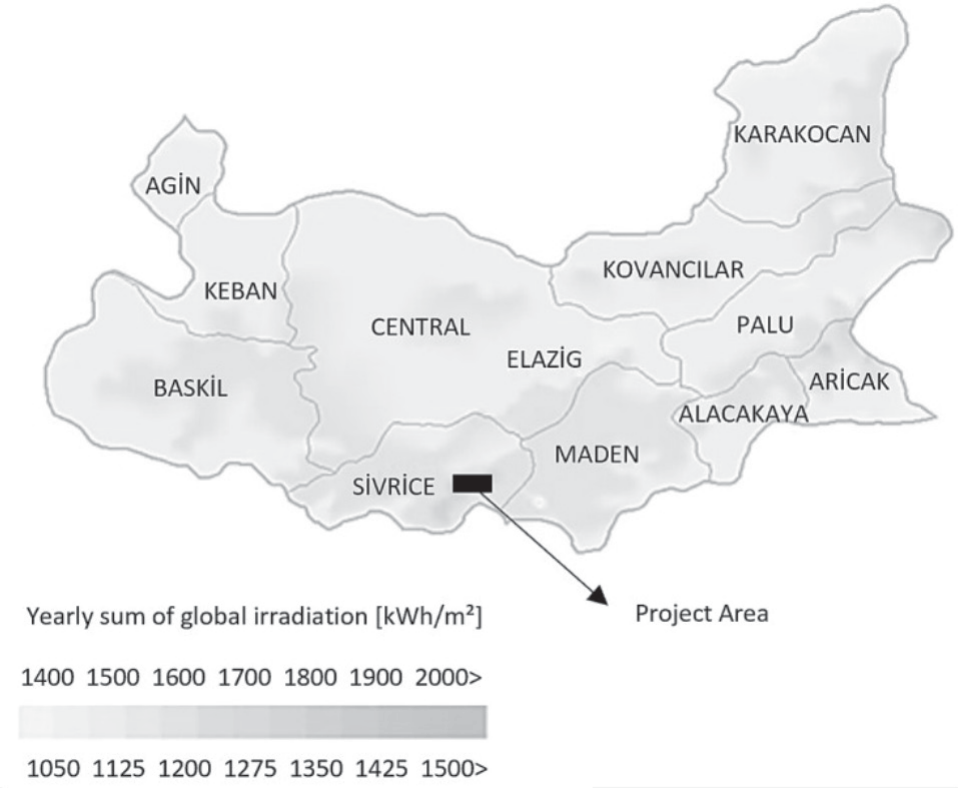
Solar energy systems are geographical structures, and the intensity of solar radiation is very important. These factors affect both heat and electrical energy efficiency. The study area is located on the borderline of Eastern Anatolia and Central Anatolia Region. This region is located on the belt where the sun’s radiation is highest, as seen in Turkey’s solar energy atlas. More than 1650 kWh/kWp of energy is produced per year in regions in Elazig (Fig. 1.).
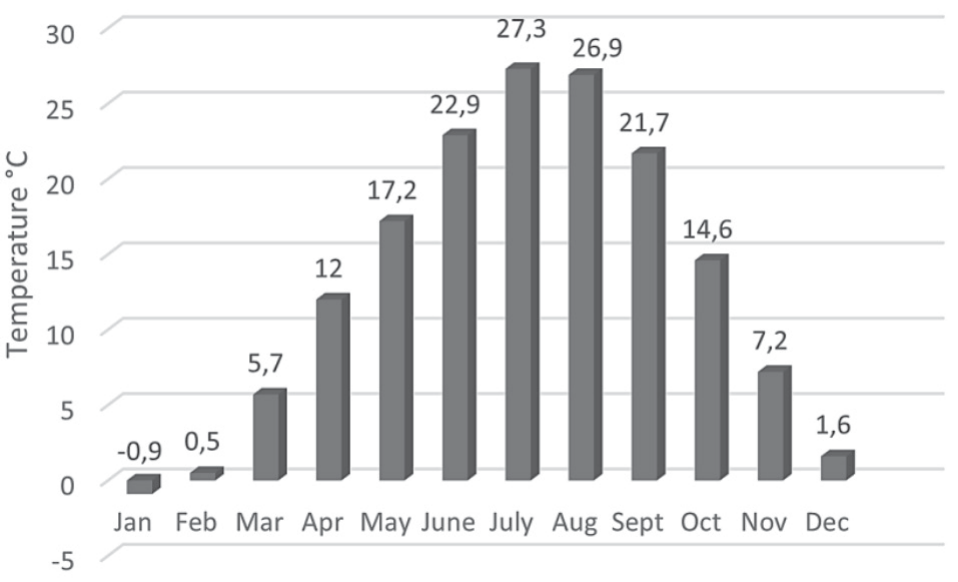
The change in temperature values according to the months at which 40-year data averages are taken is seen in Fig. 2. The highest average temperature was in July at 27.3ºC. It is predicted that a photovoltaic-based solar energy plant will work at maximum operating points at this highest temperature value, which is below the nominal temperature value. If the efficiency of solar batteries decreases, the efficiency of the solar power plant will decrease. One of the many factors affecting this efficiency is the high-temperature module according to the outdoor temperature. The relationship of system efficiency with module temperature is very important in the design of PV systems. There is a linear relationship between system efficiency and module temperature. System efficiency decreases with increased module temperature values. The 1ºC increase in module temperature leads to reductions in nominal system efficiency between 0.3% and 0.6% percent. It is predicted that a solar power plant will reach maximum performance at temperature values below the nominal temperature value.
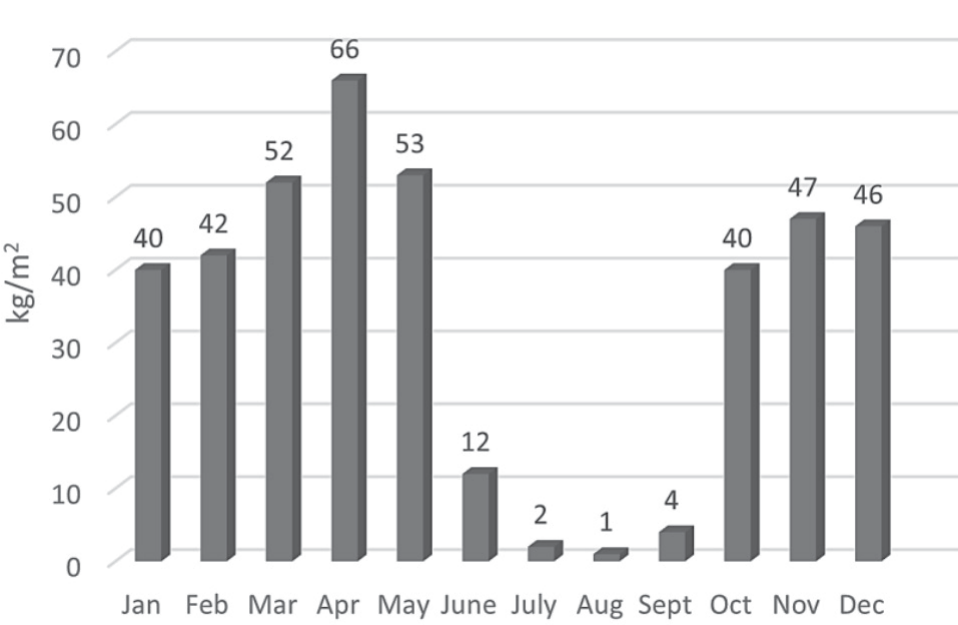
The amount of precipitation varies seasonally. There is an inverse relationship between precipitation and photovoltaic energy. As the amount of precipitation increases according to the months, the amount of solar energy production decreases. Fig. 3 shows the average monthly precipitation values for the study area.
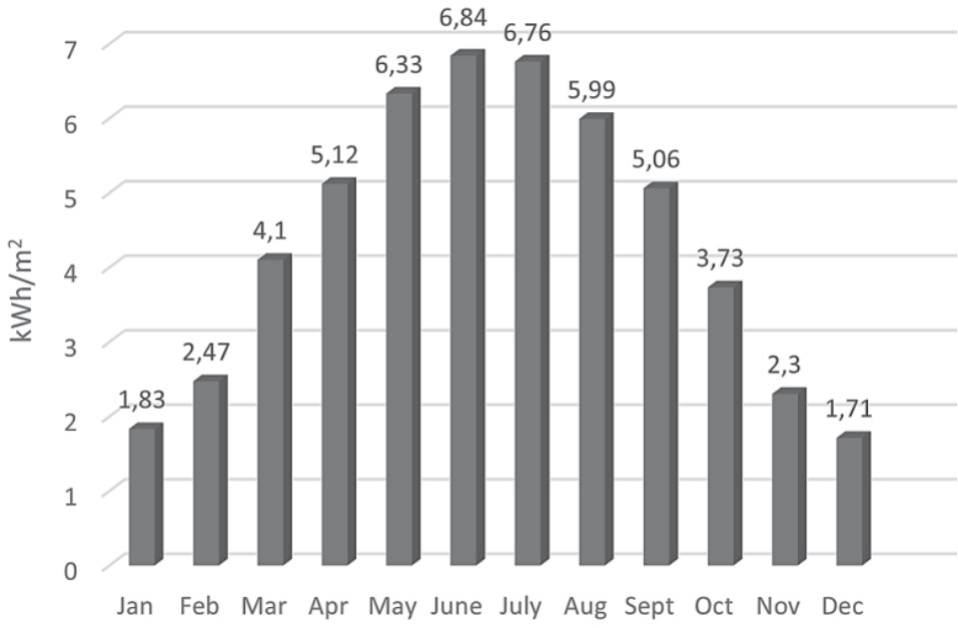
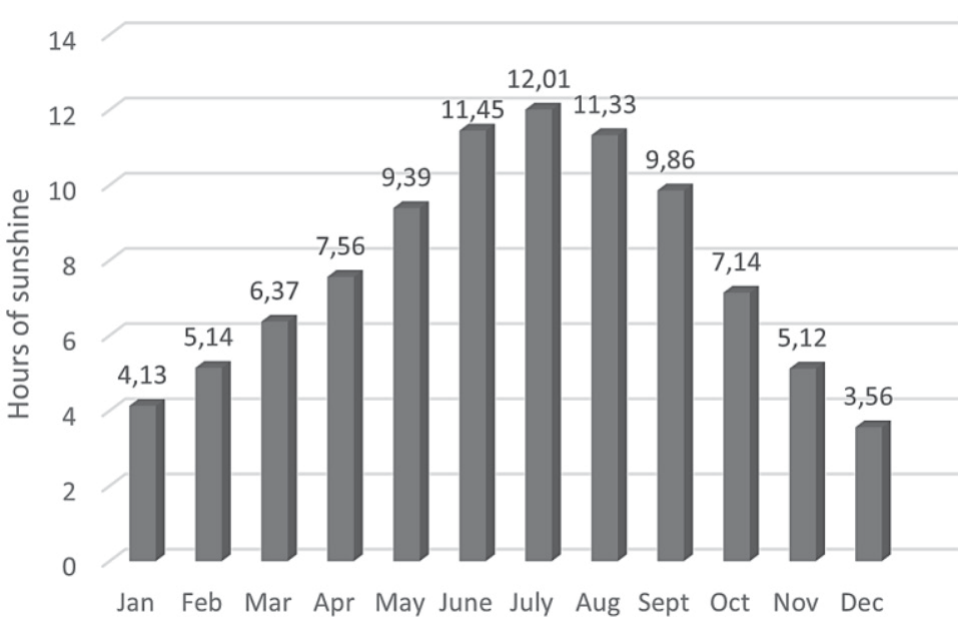
According to the radiation intensity data provided by the Joint Research Center Photovoltaic Geographic Information System (PVGIS) conducted by the European Commission, solar energy values falling into the unit area were shared on the horizontal plane in the selected position. The highest value was realized 6.84 kWh/m2 in June. In December, this value is 1.71 kWh/m2 (Fig. 4.) The average annual value was calculated as 4.35 kWh/m2-day. Average sunbathing times per day in Elazig are given in Fig. 5.
Results and Discussion
Hydropower Plant Energy Production
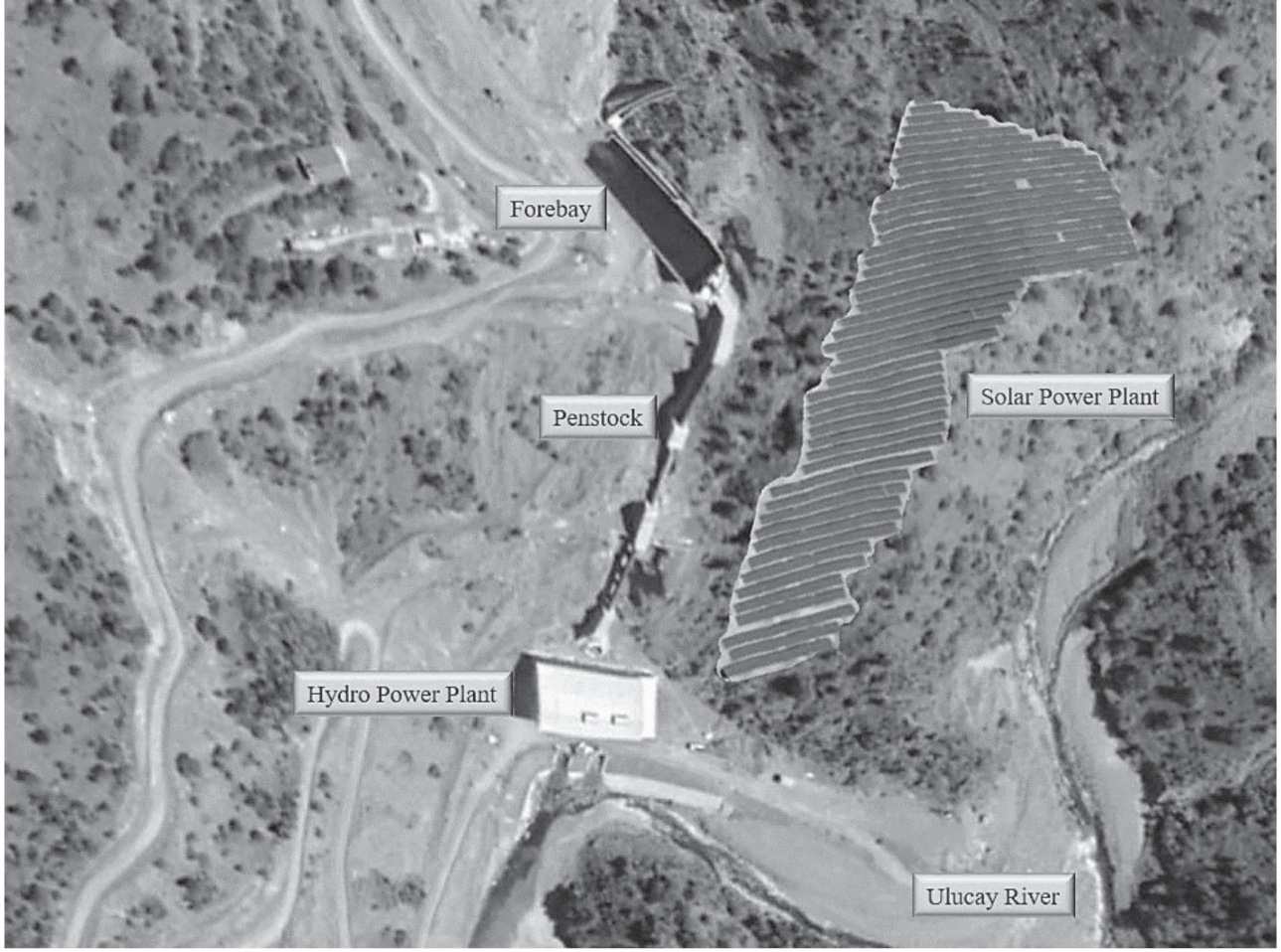
Cardakli hydro power plant is a project aimed only at energy production. The project has a transmission structure consisting of Cardakli Regulator at 860.00 m crest elevation on Ulucay River, Energy Water Intake Structure, 2650.00 m long Transmission Channel, and a 1480 m long transmission tunnel. At the end of the transmission structure, there are facilities consisting of a forebay and 375.00 m long Penstock and Powerhouse Units. The base elevation of the Cardakli Regulator made on the Ulucay River is 850 m. The power plant has a rectangular shaft with a single suction tube to be placed at a base of 695 m at an 11.02 MW power turbine. The generated electricity is connected to the Karakaya substation with a 14 km long 3/0 AWG (Piegon) conductive cross-section power transmission line. Thus, the use of electricity that has entered the interconnected system is provided [28].
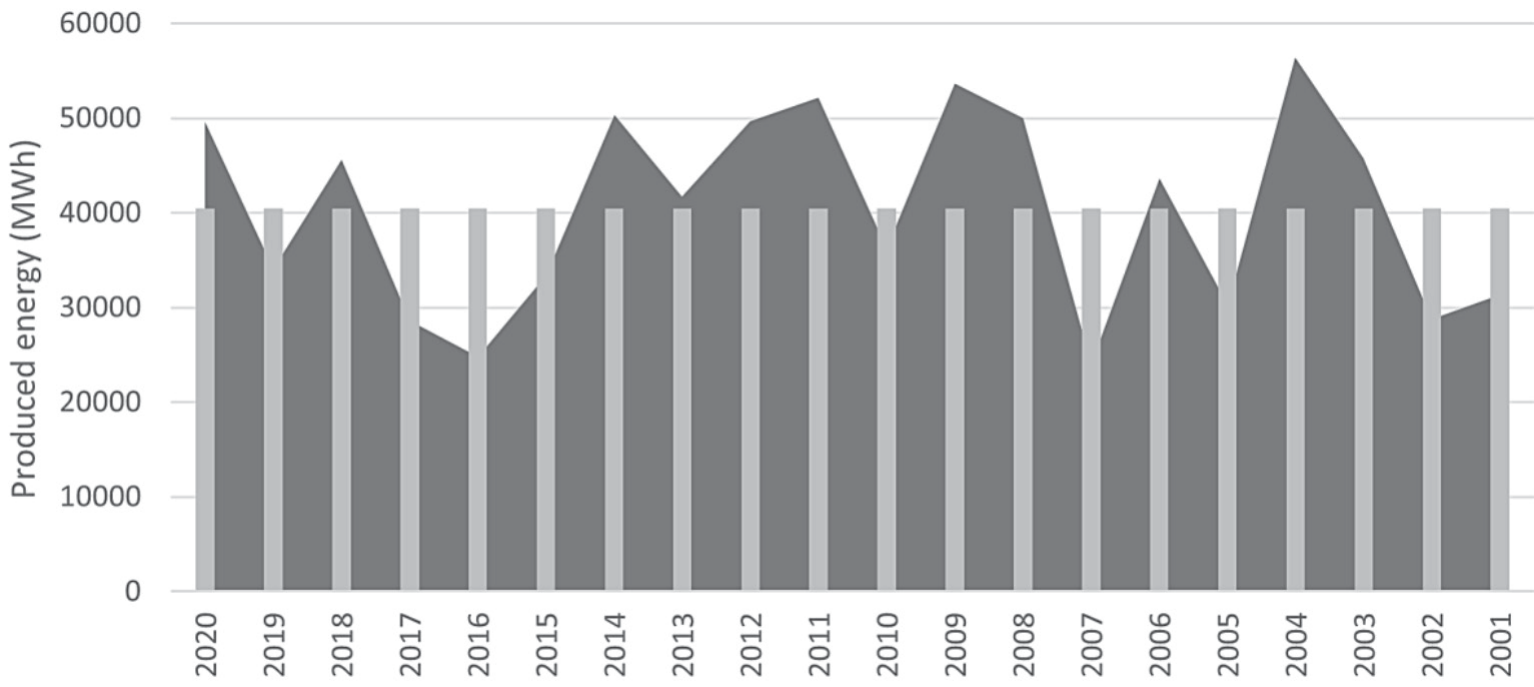
The HEPP produces an average of 40 million kWh of electrical energy per year with an installed power of 11.02 MW. The energy production curve of the hydropower plant is shown in Fig. 6.
Solar Plant Energy Production
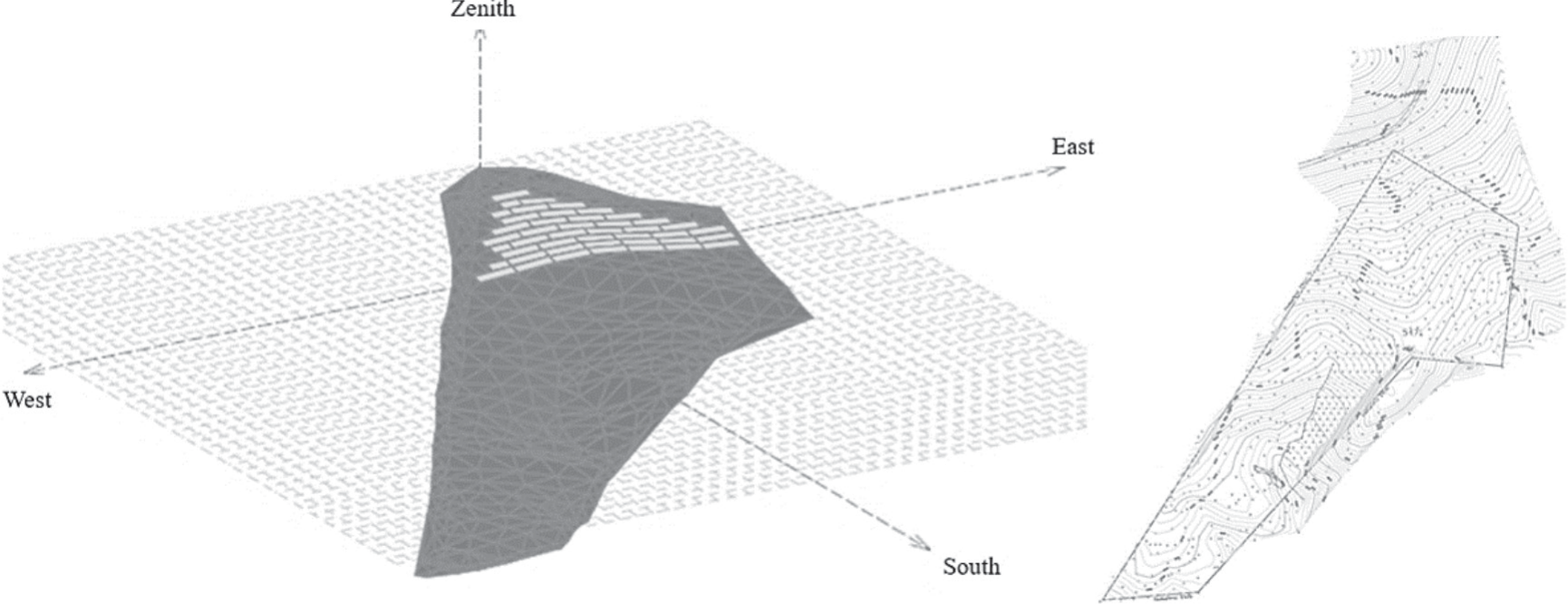
The solar power plant will be installed on 50.000 m2 of land near the Cardakli hydroelectric power plant forebay. In the project area, vegetation and ground shapes are very suitable for solar energy. Because there are no woodlands and mountainous areas in the region that have a shading effect. In general, it is possible to avoid shading in photovoltaic systems. Because this situation causes power loss. However, limited phenomena are be permitted where they adequately assessed. In addition, its proximity to the transformer and power transmission line will reduce the transmission costs and losses of the energy produced. The layout of the panels by direction and the PV izohips map is given in Fig. 7.
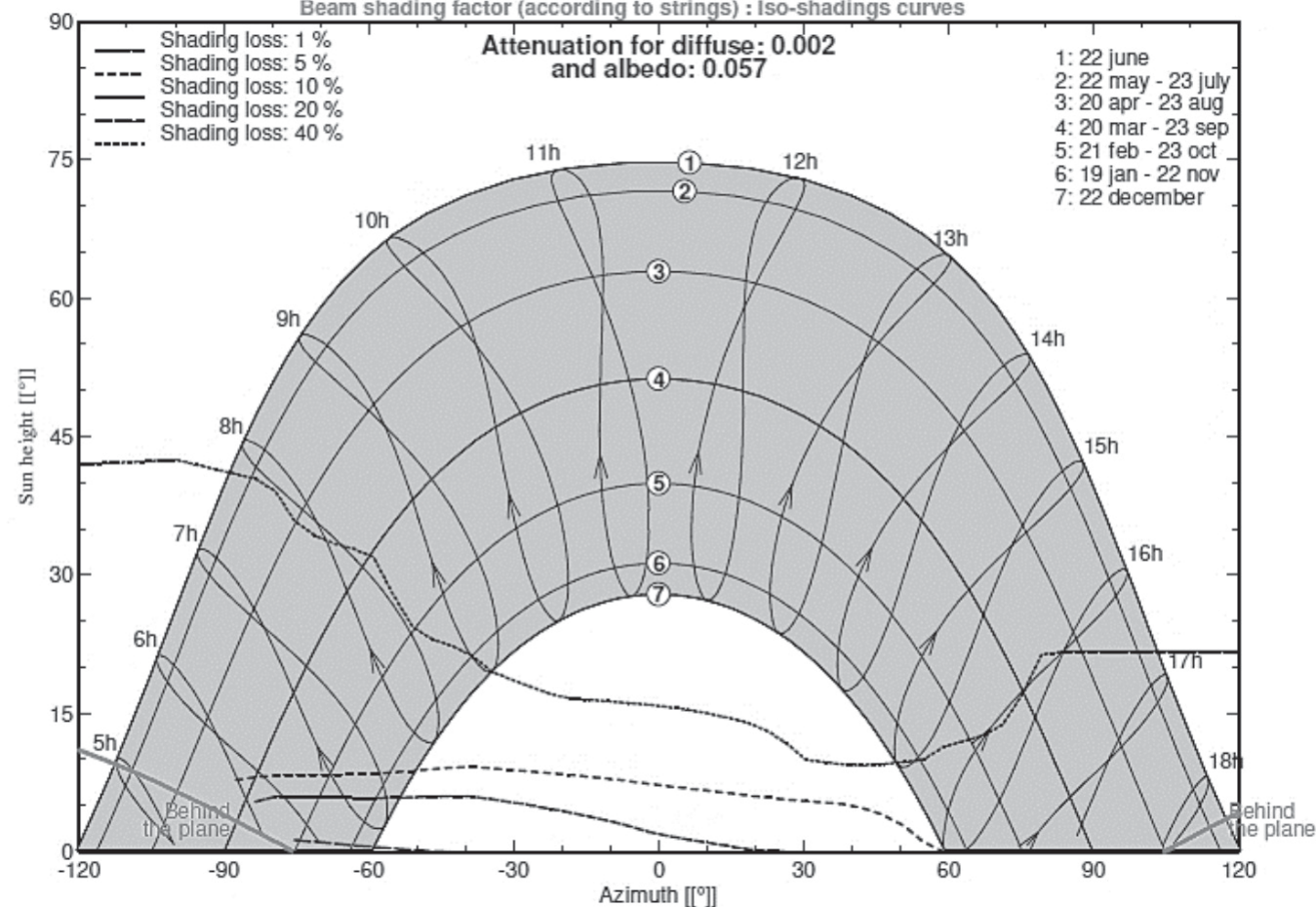
The shading diagram for the area is given in Fig. 8. This diagram is a graphical expression of the shading factor table. Blue lines indicate tangent boundaries when the sun’s Rays are parallel to the plane. This diagram is also a simulation of the shading distribution. In this simulation, shading distributions were used according to seasons and times of day over a year. The transaction is taken into account in the energy account. The most suitable PV module angle for the region is calculated as 31°.
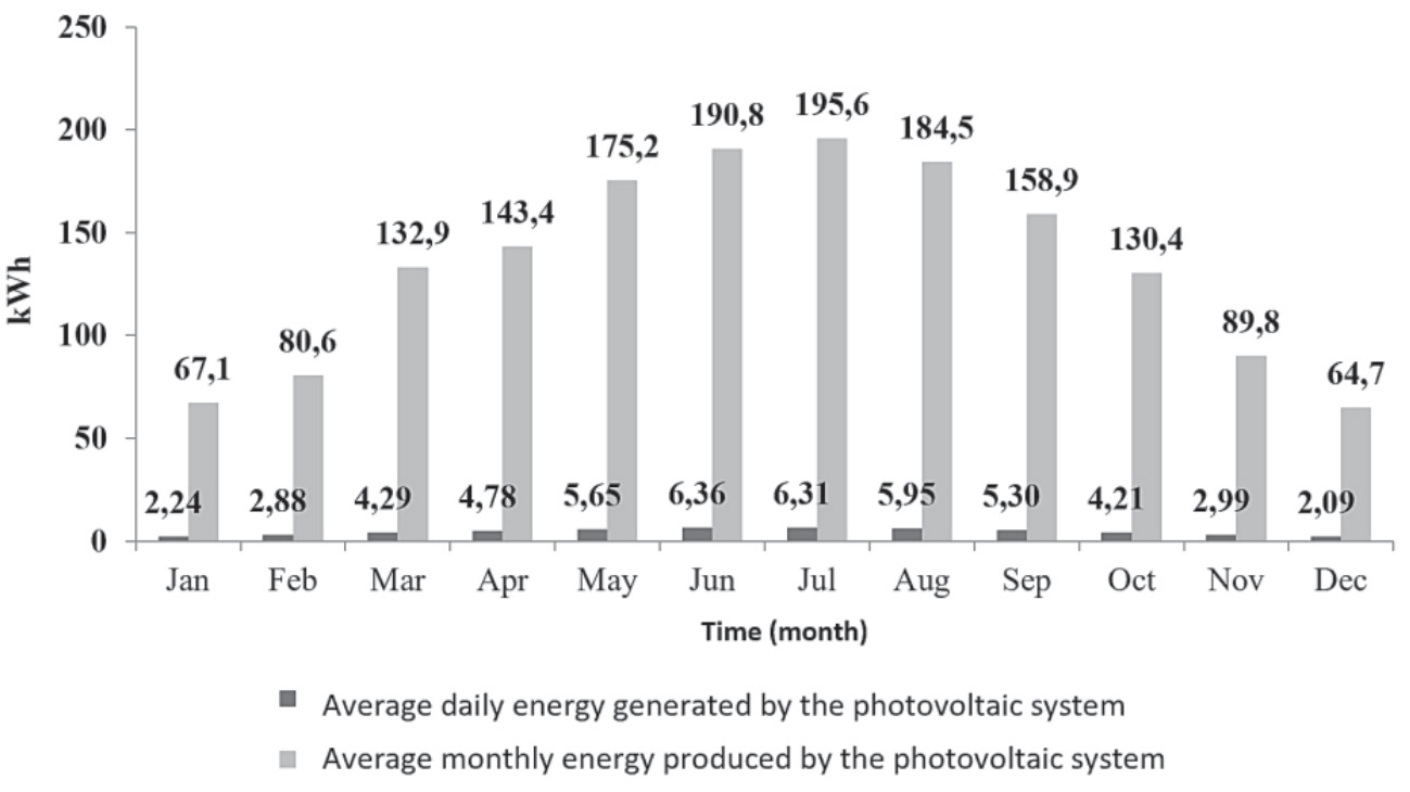
Using the obtained solar energy data, the energy production of an average of 4.09 kWh/day per year occurs when the energy values produced by a 1kWp photovoltaic system to be installed in the proposed region are evaluated daily by month. By giving a value of 1kWp here, the energy value that can be produced is revealed based on the total capacities of the photovoltaic systems that can be installed here. These assessments were calculated by including system losses of 14% and single crystalline silicaium solar cells. Fig. 9 provides values for the system with 1kWp installed power in the proposed region. These values are the average daily solar energy and energy values obtained from the photovoltaic system according to the months. In addition, evaluations were made with PV solexpert software depending on different module types. Accordingly, an annual electric power generation potential of approximately 1663-1750 kWh/kWp emerges from a system with an installed power value of 1 kWp.
The simulation of the system was calculated based on field data and average monthly solar radiation. Nasa-SSE climate data were used in this calculation.
In the calculation of the energy produced by the system, nominal power (970.92 kW), slope, and azimuth angle (15°, 0°) were accepted. Inverter losses and efficiency and the ground reflection coefficient (20%) in which the modules are located (albedo). Thus, the energy generated by the system per year (Epy) is calculated as follows (Eq. 1): Epy = (1-Losses). Pnom. Irr = 1.613.065,93 kWh (1)
Where; Irr = Annual irradiation on the surface of the modules, Losses = Power losses: and Pnom = Nominal power of the System.
The P50-P90 assessment is a probable approach to interpreting simulation results within a few years. Some acceptances have been made in this approach. The P50-P90 expresses different levels of efficiency, where the probability of any year’s power generation being above this value is 50%, and 90%, respectively. Variations of annual meteo data are around 3-4%. Therefore, the year-over-year variability of monthly data will be much higher. Therefore, defining a probability profile for each month will lead us to achieve irregular results. This is one of the acceptances; during the study period (several years), it is the assumption that their annual earnings will follow the Gauss distribution. Therefore, the P50-P90 estimate for monthly values does not make sense.
Fig. 9.
Distribution of daily average values of energy obtained from the photovoltaic system with 1 kWp installed power by month.
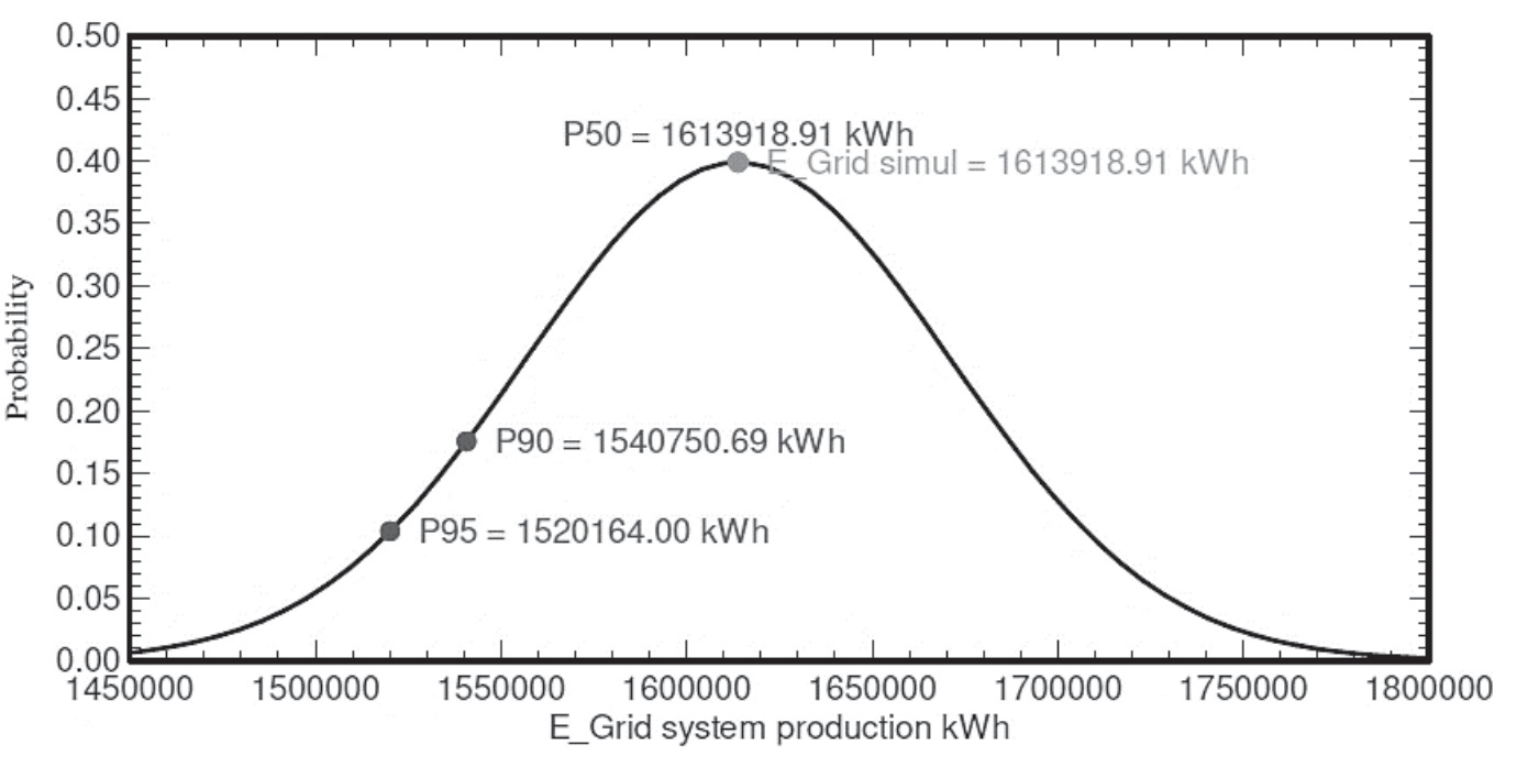
The P90 is calculated as follows: It is a value found as a result of the statistical calculation that should be based on reliable meteo data (minimum 20 years). The energy production probability distribution of the region is given in the way. The energy production probability distribution of the region is given in this Fig. 10. According to Fig 10, the P50 is calculated as 1614 MWh, P90 1541 MWh, and P95 1520 MWh.
Hybrid Energy Production.
A hybrid energy simulation was carried out on a Hydroelectric Power Plant in Turkey. The hydroelectric power plant is located in Eastern Anatolia Region with its typical terrestrial climate (Fig. 11).
The first input data used to calculate the total energy in the hybrid power plant belongs to the Cardakli hydro power plant. This data consists of the total monthly power generation of the plant. Solar plant productions, which will be installed at 4.5 MW power, have been added to the energy produced according to the months in a 20-year period.
The calculation of hybrid power plant power generation is as follows: The hydroelectric power plant is constantly working. The solar plant was activated when the production capacity of the hydroelectric power plant decreased. The solar plant was disabled when the power plant reached its maximum production capacity because the amount of energy to be given to the grid per day could not exceed a certain value. With this method, the production of hybrid power plants for the last 20 years was calculated. The average annual power generation of the hybrid power plant is 48 GWh. Thus, the hybrid power plant increased the power generation of the hydroelectric power plant by about 20%. The Cardakli Hydroelectric Power Plant alone produces 40 GWh of energy, while the hybrid power plant produces 48 GWh of energy.
Economic Analysis
The cost (LCOE) brought to energy value is a unit of measure used to compare electrical energy from renewable energy sources with other fossil-source electrical energy-producing systems (Eq. 2). This cost calculation covers the cost of installation of the system, maintenance and operating costs, financial rates applied by country. LCOE is also called the ratio of the solar power plant cost that occurs during the system life to the electrical energy obtained during this period.
The cost of system life consists of 4 main parts: initial project costs, depreciation, annual operating costs, and residue value. In total system life costs, system maintenance, and operating costs vary from $15-$18 per kW per year, depending on system size. The cost of in-house insulers in power plants is approximately 9.5% of the initial investment cost and costs between 10-13 years on average. In addition to all these cost factors, when depreciation and financial parts are evaluated, the average system life cost is calculated by multiplying the initial installation cost of the system by 1.4. The losses occurring within the system are determined as 20%. The module efficiency loss rate specified by photovoltaic module manufacturers was evaluated as 10% over 25 years.
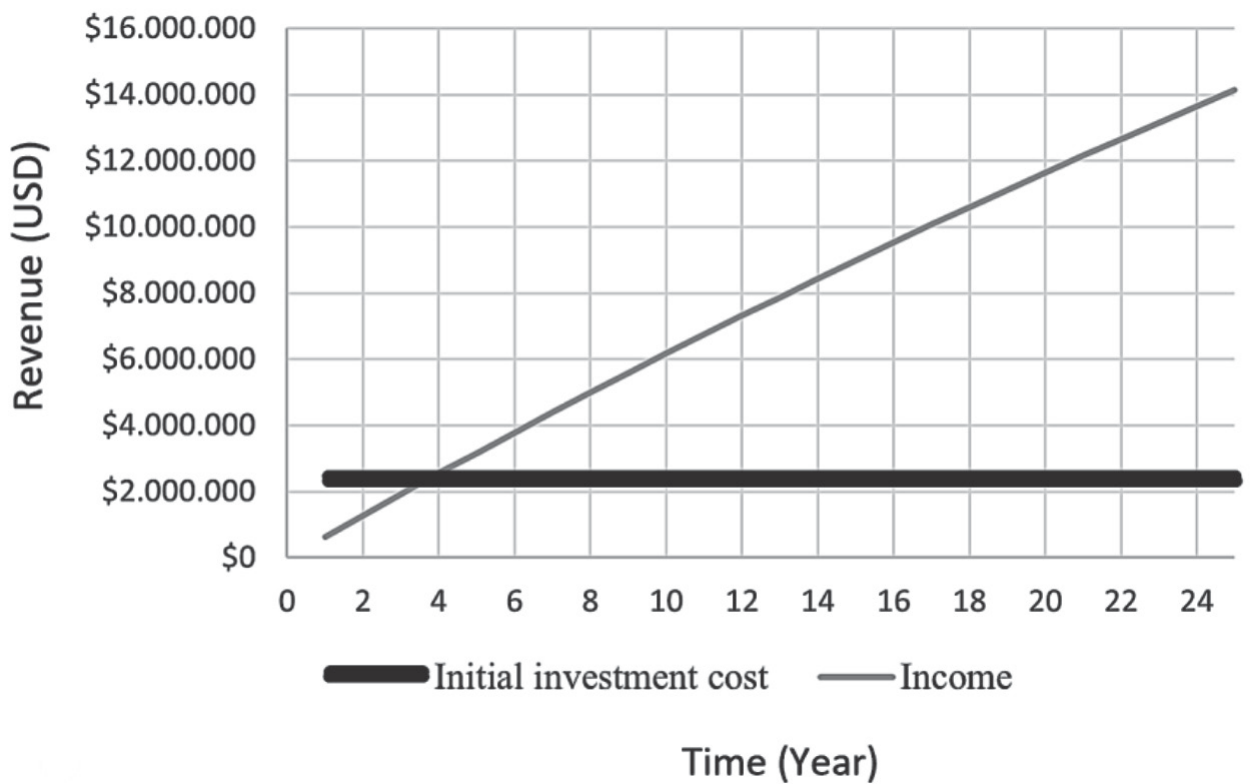
In 2023, the average sales value in the Turkish market, $0.073/kWh, was accepted for the calculation of energy revenue. As a result of the calculations, an average annual production of 48 GWh of electrical energy is expected in the hybrid power plant. 8 GWh of total energy will be produced by the solar plant. The initial investment cost of the solar plant to be installed is USD 2.500.000. Consequently, the total energy revenue of the hybrid plant was calculated as USD 3.500.400 and the annual solar energy gain was $584.000. When calculating annual expense; factors such as depreciation, operating and maintenance costs, and interest are taken into account. With the annual return on the retail electric power sales price, the depreciation period of the system is 3.9 years with calculations made according to the initial installation price. Here are the values found by modeling according to system losses and the amount of energy produced per year. The depreciation graph is given in Fig. 12.
Conclusion
This study aims to demonstrate the feasibility of the regulation for hybridization of renewable energy plants in Turkey. A case study was conducted to determine the feasibility of hybridization of existing power plants in Turkey, a country with large renewable energy resources. The results of the study show that solar-hydro hybrid power plant is technically and commercially feasible in the current conditions of the Turkish market. –– The increasing proliferation of solar power plants
and the use of electricity generation times during
the hours when people need electricity the most will
play a critical role in determining the energy price
after the first decade, which is the state’s guarantee
of purchase. –– Uncertainty in water resources due to climate
change has changed the perspective and approach of
hydroelectric power plants in countries around the
world. In particular, the decrease in flow rates carried
by rivers has reduced confidence in hydroelectric
power plants. Therefore, hydroelectric power plants
have lost their reliable renewable energy properties.
Contrary to this situation, the decrease in rainfall
and the increase in the number of sunny days will
make solar power plants more strategic in the near
future. –– In the study, the solar plant to be added to the
hydroelectric power plant increased the total energy
of the hybrid plant by 8 million kWh. –– The cost of hybridizing the existing hydroelectric
power plant is approximately USD 2.5 million,
while the annual solar revenue only is USD 584.000.
Therefore, the facilities to be built depreciated in 4
years. –– After the depreciation period, the revenue of the
hybrid plant will increase by 20% year on year.
This increase without additional operating costs will
increase the profit rate of the plant. –– The minimum effect of solar energy and hydropower
on the environs in a place where conditions are
appropriate will be widely used in the near future
due to their ability to complement each other in
terms of resource limitation and to respond abruptly
to countries’ energy demands.

