

Introduction
Since the reform and opening-up, China has made great progress in the economic field, but this has also brought undeniable pressure on the environment [1]. On the one hand, China surpassed the United States as the largest carbon emitter in 2007 [2] and contributed more than 30 percent of global carbon emissions in 2021 [3]. On the other hand, despite the significant role of China’s clean air policies in improving air quality as well as human health [4, 5], due to the decreasing benefits of end-of-pipe pollution control measures and the lack of cooperation amongst governmental agencies, the challenge of sustained improvement of Air quality still faced serious challenges [6, 7]. In other words, China is facing the dual challenge of reducing air pollutants and carbon dioxide emissions. With the in-depth promotion of low-carbon economic transformation and air pollution control, the role of synergetic control of CO2 and air pollutants emissions has begun to stand out. From a theoretical perspective, air pollutants and carbon dioxide emissions have similar sources [8]. From a practical perspective, a growing number of studies have shown that in developing countries, low-carbon policies could generate synergistic gains in reducing air pollution [9], while air pollution control measures could also bring synergistic gains in reducing carbon dioxide emissions [10]. Therefore, it is feasible and necessary to promote synergetic control of CO2 and air pollutants emissions.
Global carbon dioxide emissions were slashed by more than 8 percent during the coronavirus pandemic due to a significant reduction in economic activity [11]. However, the program that limits economic activity to mitigate climate change is clearly unsustainable [12]. As a result, it has also revitalized a classic topic: how to achieve synergistic growth between the economy and the environment. Currently, scholars are more concerned with the role that command-based and market-based environmental regulations have played in balancing economic development and environmental quality [13- 15]. But there is another important factor that is often overlooked: human capital. If environmental regulation is complementary to market failures in the allocation of public resources, strategies to improve human capital and thus environmental quality can be complementary to environmental regulation [16]. As the world’s largest developing country, China’s human capital still has a huge space for development, and if it can be proved that human capital can promote the synergetic control of CO2 and air pollutant emissions, then it will provide a strong empirical basis for the formulation and improvement of environmental policies in China and even in all developing countries.
The rest of this study is structured as follows. The second part is the literature review and theoretical framework. The third part discusses in detail the methodology of calculating CCD, the steps of model setting, the variable selection process, and its data sources. The fourth part then presents the results of the panel model and its discussion, revealing the direct effect of human capital on CCD, the heterogeneous effect, and the threshold effect of R&D intensity. The fifth part presents the conclusion and policy implications.
Literature Review and Theoretical Framework
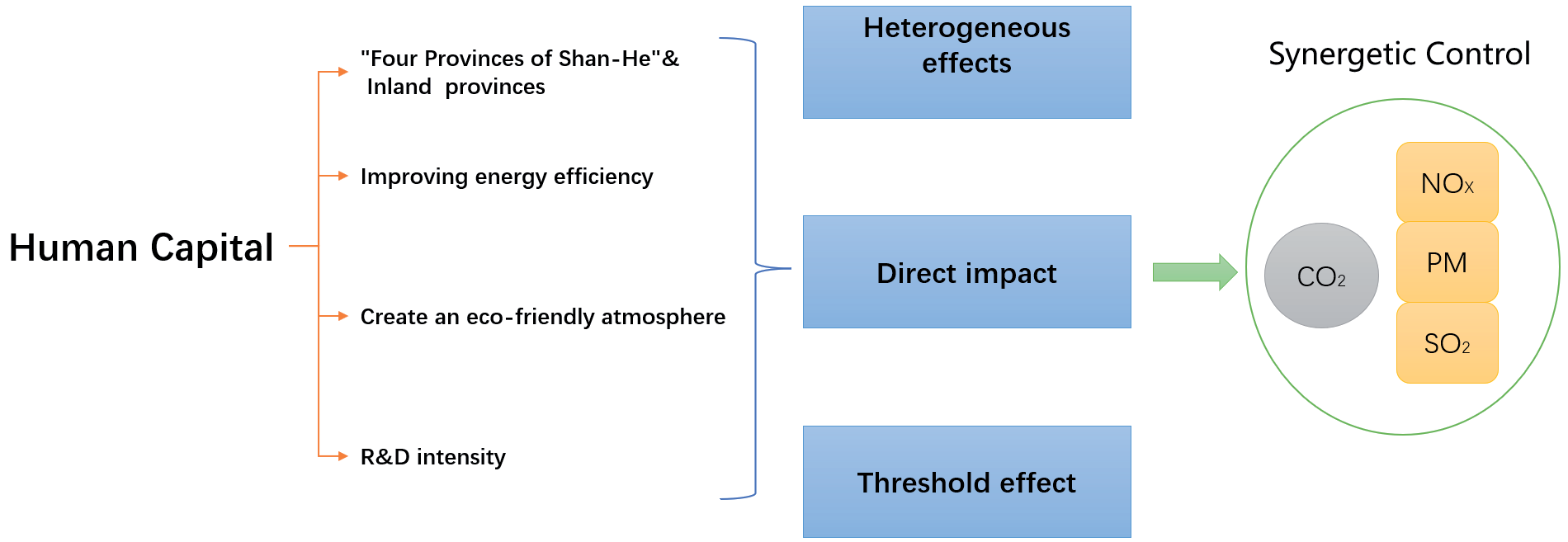
On the one hand, human capital can make a direct impact on the synergetic control of CO2 and air pollutants emissions by improving energy efficiency. For instance, Prokop et al. [17] found that there is an impact relationship between specific human capital and energy efficiency based on firm-level data. Blackman and Kildegaard [18] pointed out that Mexican firms with higher levels of human capital are more inclined to use cleaner technologies, and in such a case, the increase in the level of human capital can drive the increase in green energy consumption [19]. Studies based on data at the regional level in developing countries reached similar conclusions. Wang [20] stated that human capital can significantly improve energy efficiency, which in turn is one of the most effective ways to reduce carbon emissions. Yang et al. [21] also showed that the consumption of fossil energy in the production process can be reduced by increasing investment in human capital. As fossil fuel combustion and use is a common source of CO2 and air pollutants [8], energy efficiency gains from human capital are more conducive to achieving synergetic control of CO2 and air pollutants emissions.
On the other hand, human capital can also make a direct impact on the synergetic control of CO2 and air pollutants emissions by creating an eco-friendly atmosphere. It has been argued that individuals with higher levels of human capital are generally more aware of the impact of lifestyle on health and are more likely to realize that environmental degradation is detrimental to their own health [16, 22]. In other words, a higher level of human capital means that the likelihood of an individual having an eco-friendly consciousness is also higher, and this eco-friendly consciousness will also drive eco-friendly behavior. For instance, based on data from OECD countries, Mehrara et al. [23] found that human capital as measured by the proportion of higher education was an important factor contributing to the consumption of renewable energy. Dasgupta et al. [24] also pointed out that workers with higher education are usually better at environmental management and environmental compliance. The study of Ponce et al. [25] also showed that human capital had a positive impact on household environmentally friendly behavior. As a key element of environmental governance, public participation behaviors can contribute to the effectiveness of environmental governance [26], and eco-friendly awareness will undoubtedly promote more effective public participation behaviors. Thus, in addition to the technological dimension, human capital contributes to the social dimension of synergetic control of CO2 and air pollutants emissions.
Due to spatial differences in population, technology, and economic development, there were regional differences in carbon emission intensity in China [27], and such differences also existed in the synergetic control of CO2 and air pollutants emissions. Recent work by Lin and Zhang [28] yielded two new findings: firstly, the green total factor productivity (GTFP) of energy-intensive industries was lower in inland areas of China compared to coastal areas, and secondly, the main factor driving the growth of green GTFP in China’s energy-intensive industries was technological progress. In addition, China had a new Internet buzzword in 2023 – “Four Provinces of Shan-He”. “Shan” refers to Shanxi and Shandong provinces, while “He” refers to Hebei and Henan provinces. While Shanxi and Hebei are rich in energy resources as well as Shandong and Henan are rich in population resources, the four provinces also share a common characteristic, which is the lack of resources for higher education. Therefore, it is reasonable to assume that the positive effect of human capital on the synergetic control of CO2 and air pollutants emissions may be stronger in the “Four Provinces of Shan-He”, where higher education resources are scarce but energy production is high, as well as in the Inland provinces, where energy-intensive industries are being taken over from the coastal region but energy-saving technologies are low.
In endogenous growth theory, Lucas [29] considered human capital accumulation as an endogenous driver of economic growth, while Romer [30] argued that technological progress is the source of economic growth. There is a growing body of research discussing the relationship between human capital and technological progress and the impact of their interactive mechanism on environmental-economic phenomena. The accumulation of human capital generates agglomeration effects, and the positive externalities arising from agglomeration are conducive to the enhancement of regional innovation capacity, which in turn promotes technological progress and growth [12]. The interactive mechanism between human capital and technological progress is also beneficial to the environment. Increasing the level of human capital promotes cleaner production, stimulates research and development of renewable energy, and encourages the adoption of energy-efficient technologies [31, 32]. Generally speaking, green technology progress cannot be separated from R&D investment, and the more R&D investment, the better the effect of technology promotion [33]. When R&D intensity is average or low, the technological effects of human capital may not be significant, thereby limiting synergetic control of CO2 and air pollutants emissions. In other words, R&D intensity may play a threshold role in the positive effect of human capital on the synergetic control of CO2 and air pollutants emissions.
By reviewing the existing literature, it can be found that, firstly, human capital can directly affect regional carbon emissions and air pollution by improving energy efficiency and creating an eco-friendly atmosphere, but most of the previous studies focus on only one of regional carbon emissions or air pollution, and lack of empirical tests under the perspective of coupled coordination. Second, “Four Provinces of Shan-He” is a hot topic for China in 2023, but there is no study that identifies the heterogeneous impact of human capital based on this characteristic. Finally, whether human capital can generate different environmental benefits under different R&D intensities needs to be further explored.
Given the above, this study analyzed the relationship between human capital and CCD. The innovations of this study are as follows: first, it answered the question of whether human capital can significantly affect CCD as well as explained how human capital directly affects CCD from the theoretical dimension. Second, it creatively used “Four Provinces of Shan-He” as the basis for grouping heterogeneity analyses, and the results based on it are an important guide for the formulation of differentiated environmental policies. Third, we found that human capital has a non-linear positive effect on CCD when R&D intensity is used as the threshold variable, and we proposed the concept of a “medium-term trap” based on this finding.
Data and Methodology
The Measurements of CCD
We estimated the regional CO2 emissions from the final consumption of coal, coke, crude oil, petrol, paraffin, diesel, fuel oil, natural gas, and liquefied petroleum gas with the emission factors provided by IPCC. Specifically, the emission factor CEFi is firstly obtained through Equation (1), and then the regional CO2 emission M is obtained by combining Equation (2) with the energy consumption Ai.
Second, in order to comprehensively examine the air pollution situation in different provinces, we quantified the air pollutant indicators based on the study of Mao et al. [34] as well as the air pollution equivalent conversion factors provided in the Environmental Protection Tax Law of the People’s Republic of China. The specific calculation method is shown in Equation (3), where ESO2, ENOx, EPM are the regional emissions of SO2, NOx, and particulate matter, α, β, γ are the conversion coefficients, and E denotes the regional emission equivalence of air pollution.
However, C and E can only represent the regional CO2 emissions and air pollution emissions, while what we want to understand is the regional emission reduction effect. Therefore, we calculate the specific emission reductions by drawing on the study of Huang et al. [35], using the method of Equation (4) and Equation (5). Where RM,i,j and RE,i,j represent the CO2 emissions and air pollution emission equivalence in year J of the region I. Taking 2011 as the base period, ΔRM,i,j and ΔRE,i,j reflect the emission reductions in year J of the region I compared to the base period. Based on this, the normalization process was carried out using Equation (6) to achieve the acquisition of the emission reduction index. At the same time, considering the existence of 0 values in the normalized data, we also performed a non-negative shift of 0.01 units.
After pre-processing the data, the coupling coordination degree model was used to evaluate the synergistic effect of the two abatement subsystems, CO2 and air pollutants, as shown in Equation (7). In Equation (7), U1 and U2 represent the emission reduction indexes of CO2 and air pollutants, respectively, C is the coupling degree of subsystems, while T is the comprehensive coordination index. a and b are the coefficients to be estimated, and we consider that CO2 emission reduction is as important as air pollutant control, so we took a = b = 0.5. D is the coupling and coordination degree of CO2 and air pollutants emissions control (CCD) that we want to obtain, and the value is in the range of [0,1]. The closer the value of D is to 1, the better the coupling coordination is.
Model Settings
Based on the previous analyses, we first constructed a two-way fixed effects (TWFE) model to test the effect of human capital on CCD:
In Equation (8), δ0 is the intercept term, δ1 and δ2 denote the coefficients to be estimated for human capital and control variables, respectively, μi, λt and εi,t are the province fixed effects, year fixed effects, and random error terms.
Meanwhile, in order to test whether R&D intensity played a threshold role in the effect of human capital on CCD, we used the panel threshold model proposed by Hansen [36], which is set up as follows.
In Equation (9), I(∙) is the characteristic function, which takes the value of 0 or 1, θ is the threshold to be estimated, and the significance of the rest of the variables is kept consistent with Equation (8).
Variable Selection and Data Sources
Considering the availability of data, 30 provinces in China (excluding Tibet, Taiwan, Hong Kong, and Macao) were selected as the sample for analysis, with data spanning the period 2012-2020, based on this, the effect of human capital on CCD was estimated. Firstly, the dependent variable is CCD, the calculation of which has been detailed above. It should be noted that the data used to calculate CO2 emissions were taken from the China Energy Statistical Yearbook and the data used to calculate air pollutant equivalents were taken from the China Statistical Yearbook on Environmental. Second, the core explanatory variable is human capital. Currently, scholars mostly used stock to measure human capital, which is represented by education enrolment rate, the share of higher education degree holders, and average years of schooling [37, 38]. However, this measure may not be applicable to this study. As mentioned before, the direct impact of human capital on the synergistic control of pollution and carbon reduction is mainly based on the dual path of technology and society. On the one hand, the increase in the number of students in higher education indicates that more and more people are pursuing higher education, which also means that the pool of talents in the field of cleaner production and new energy technologies is gradually expanding. On the other hand, individuals will be exposed to more environmental protection knowledge and activities while receiving higher education, and these knowledge and activities will be spread by individuals, which in turn will lead to an increase in the awareness and importance of environmental issues in the whole society. Therefore, we chose to use human capital increment rather than stock as the core explanatory variable, measured by the number of people enrolled in higher education as a proportion of the total population. At the same time, in order to reduce as much as possible, the interference of confounding factors on the estimation results of the synergistic effect of air pollutants reduction and carbon reduction of human capital, we select R&D intensity, energy structure, fiscal environmental expenditure, innovation capacity, and environmental regulation as the control variables to be put into the model on the basis of drawing on the relevant studies. The original data of human capital and control variables are obtained from the National Bureau of Statistics of China. The basic information and descriptive statistics of each variable are shown in Table 1 and Table 2.
Table 1.
Description of the variables.
Table 2.
Descriptive statistics. Table 2. Descriptive statistics.
Result and Discussion
Spatial-Temporal Differentiation of Synergetic Control of CO2 and Air Pollutant Emissions in China
In order to better clarify the coupling coordination level between CO2 and the synergistic control subsystem of atmospheric pollutants, we drew on the study of Xing et al. [39] and categorized the CCD into four levels ranging from seriously unbalanced to with superior balance. On this basis, we present a visualization of the spatial-temporal differentiation of the CCD.
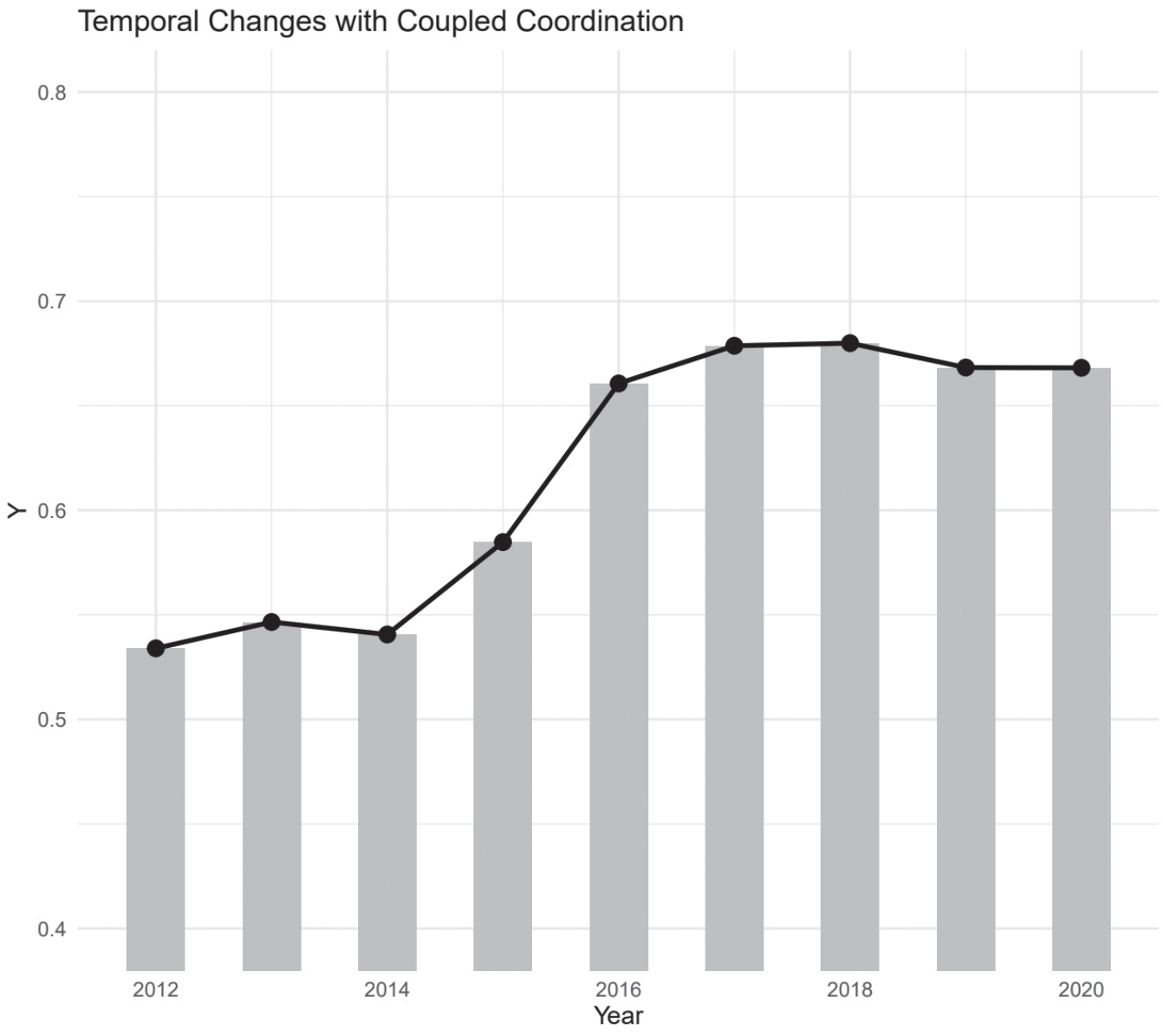
In view of the temporal dimension, the average value of CCD in China from 2012 to 2020 showed a stepped-up trend, increasing from 0.534 in 2012 to 0.668 in 2020. Among them, the growth trend of CCD during 2014-2016 is the most obvious, which may be attributed to the Air Pollution Prevention and Control Action Plan (APPCAP) and Carbon Emissions Trading Scheme (ETS), which have been implemented since 2013, respectively have played a leading policy role in improving air quality and promoting carbon emission reduction [40, 41]. It should be noted that the overall CCD is still at a barely balanced level, and the synergistic governance path of CO2 and air pollutants emissions still needs to be further explored.
In view of the spatial dimension, since we set 2011 as the base year, China’s CCD in 2012 is not regionally differentiated and mostly belongs to the barely balanced state, with only Xinjiang facing slightly unbalanced. However, China’s CCD in 2020 already showed significant regional heterogeneity, with the provinces with larger energy production, represented by Shanxi, Xinjiang, and Inner Mongolia, still facing greater pressure to reduce air pollutants and carbon emissions. Among them, the synergistic control system of CO2 and air pollutants in Shanxi province is seriously unbalanced. Of course, there are some provinces that have achieved remarkable results in the synergistic control of CO2 and air pollutants, for instance, Hebei, Henan, Jiangsu, Sichuan, Guizhou, Hunan, and Guangdong have entered the with superior balance stage.
Baseline Regression Analysis
Before analyzing the impact of human capital on CCD, we tested for multicollinearity between the variables. The results of the test showed that the maximum value of VIF was 3.24 and the mean value was 2.06, indicating that the possibility of multicollinearity among the selected explanatory variables is not high. Meanwhile, the results of the Hausman test rejected the original hypothesis that the random term is uncorrelated with the explanatory variables, so we chose to use the two-way fixed effects model (TWFE) as the benchmark model, and the regression results were shown in Table 3. Column (1) is an OLS model, column (2) added year-fixed effects and province-fixed effects to column (1), and column (3) further added control variables such as environmental regulation, fiscal and environmental protection expenditures, and R&D intensity. The results showed that human capital significantly and positively affects CCD with or without the inclusion of fixed effects and control variables.
At the control variable level, the coefficient of R&D intensity is positive and passes the 5% significance level test, this result extended Churchill et al. [42], where previous scholars have suggested that R&D intensity can achieve carbon emission reductions by facilitating technological progress and energy efficiency, our findings further demonstrated that R&D intensity has a CCD amelioration effect. It is worth noting that the coefficient on the number of patents granted is negative at the 10 percent level of significance, which may be because there is a double effect of patenting intellectual achievements such as inventions, utility models, and designs. On the one hand, the granting of patents reflects the importance that society attaches to intellectual property rights, and can motivate intellectuals to engage in innovative activities. On the other hand, the larger the number of patents granted, the greater the probability of generating technological monopolies and technical barriers, which ultimately leads to a reality that is contrary to the original intention.
Robustness Test
Although we weakened the estimation error due to confounding factors by including control variables when analyzing the impact of human capital on CCD. However, research on the influencing factors of CCD is still in its infancy, so it is difficult to achieve perfection in the choice of control variables. With this in mind, we used the number of internet broadband access as an instrumental variable in a two-stage least squares regression (2SLS) as a way of mitigating the endogeneity problem associated with omitted variables. Internet broadband access brings more opportunities for education and training, which is conducive to the incremental increase in human capital over a period, so the instrumental variable satisfies the correlation assumption. At the same time, Internet broadband access does not have a direct effect on CCD, so the instrumental variable also satisfies the exogeneity assumption. Columns (1) and (2) of Table 4 report the estimation results of the 2SLS. In particular, the first-stage regression results showed that internet broadband access is positively correlated with human capital at the 5 percent significance level and the F statistic is greater than 10, again validating the feasibility of using Internet broadband access as an instrumental variable. The results of the second-stage regression showed that the model passed the Wald test, indicating that the CCD improvement effect of human capital does have an endogeneity problem and that the use of 2SLS is necessary. After correcting for estimation bias due to endogeneity issues, human capital still has a significant positive effect on CCD.
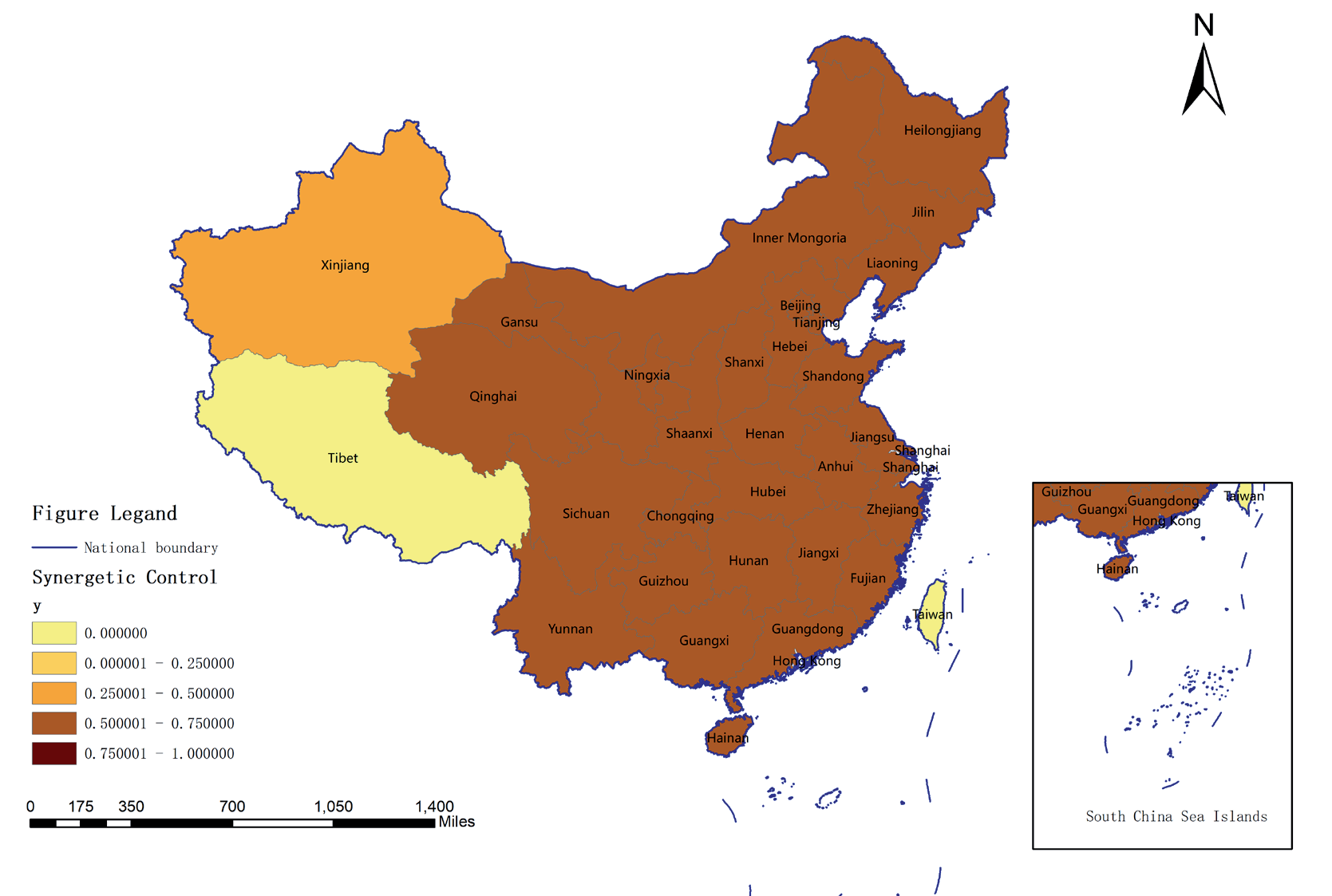
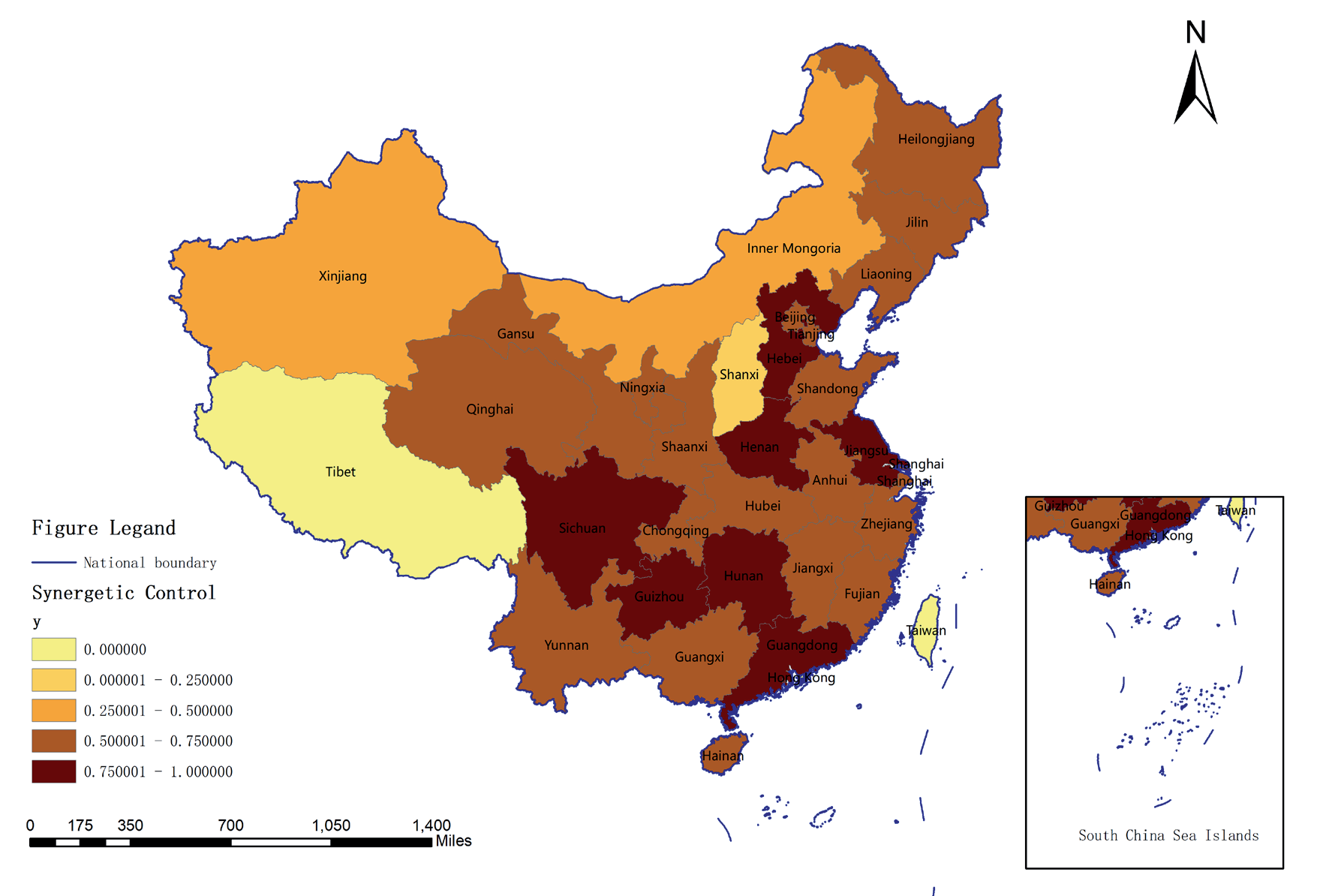
Table 3.
The impact of human capital on the synergetic control of CO2 and air pollutants emissions.
Because the measured CCD lies between 0 and 1, if analyzed directly using ordinary least squares, it may produce estimated coefficients that tend to zero [43]. Therefore, a panel Tobit model was used to further verify the robustness of the results. Considering that the fixed effects Tobit model is unable to find an adequate estimator of individual heterogeneity [44], we chose a random effects model for the test, and the regression results are shown in column (3). Secondly, due to the different levels of development among Chinese provinces, especially the four municipalities of Beijing, Tianjin, Shanghai, and Chongqing, which have large differences in population and economy from other provincial administrative regions, we chose to exclude the samples of these municipalities and test the CCD improvement effect of human capital again, and the regression results are shown in Column (4). In summary, the conclusion that human capital promotes CCD remains valid after robustness tests using a variety of approaches.
Table 4.
Robustness test.
Heterogeneity Analysis
Overall, there are significant regional differences in the distribution of higher education resources in China, and a common feature of the “Four Provinces of Shan-He” is the lack of higher education resources, which seriously hampers the accumulation of local human capital. At the same time, “Four Provinces of Shan-He” are important energy producers, of which Shanxi is the largest coal producer in China. For this reason, we analyzed the heterogeneity based on whether they belonged to the “Four Provinces of Shan-He”. Columns (1) and (2) showed that although the positive effect of human capital on CCD is significant in both “Four Provinces of Shan-He” and “Non-Four Provinces of Shan-He”, the regression coefficient of human capital in column (1) is much larger than that in column (2). This suggests that in energy producers such as the “Four Provinces of Shan-He”, where higher education resources are scarce, the technological progress and energy efficiency gains from human capital are greater, ultimately contributing to the synergetic control of CO2 and air pollutants emissions. Second, the imbalance in economic development between China’s coastal and inland provinces also drives the agglomeration of human capital and low-energy industries to the coastal provinces, and thus whether one is inland was similarly used in the heterogeneity analysis. Columns (3) and (4) showed that while the CCD improvement effect of human capital in the coastal provinces was not significant, the effect of human capital in the inland provinces on CCD was positive at the 5 percent significance level while the coefficient was larger than the one estimated in the benchmark regression. This suggests that human capital is scarce in the inland provinces, and its function of promoting energy efficiency and creating an eco-friendly atmosphere is stronger than that of the coastal provinces.
Table 5.
Heterogeneity of “Four Provinces of Shan-He” and Inland provinces.
Threshold Effect Analysis
In order to further test whether R&D intensity plays a threshold role in the process of human capital’s impact on CCD, we first tested the threshold effect on the sample data using the bootstrap method with 300 repeated samples. As can be seen in Table 6 and Fig. 5, R&D intensity exhibited a double threshold effect, with thresholds of 0.0119 and 0.0122, respectively. In addition, Table 7 showed that there is a “medium-term trap” in the threshold effect of R&D intensity and that the impact of human capital on CCD varies at different R&D intensity intervals. Human capital has a significant positive effect on CCD only when R&D intensity is not greater than the first threshold or greater than the second threshold, and this effect is stronger when the second threshold was crossed. Generally speaking, green technologies and products can bring relatively large returns in the early and late stages of R&D, while in the middle stage of R&D, they tend to be weak, and need to rely on the expected benefits of incentives and financial support to smooth out the awkward period.
Conclusion and Policy Implications
Based on the panel data of 30 provinces in China from 2012 to 2020, we calculated the CCD indicators using the coupling coordination degree model and verified the direct effect of human capital on CCD, the heterogeneous effect, and the threshold effect of R&D intensity using the panel regression model. The main conclusions are as follows.
(1) In view of the temporal dimension, China’s CCD has shown a stepped-up trend from 2012 to 2020 but is still in the barely balanced stage. In view of the spatial dimension, China’s CCD has shown obvious regional heterogeneity, and the energy producers represented by Shanxi, Xinjiang, and Inner Mongolia are still facing greater pressure to reduce pollution and carbon emissions.
(2) Human capital has a significant positive effect on CCD, and this finding still holds after a series of robustness tests. Meanwhile, this positive effect is stronger in the “Four Provinces of Shan-He” and Inland provinces.
(3) R&D intensity plays a significant threshold role in the impact of human capital on CCD, but there is a “medium-term trap”. Only when R&D intensity is not greater than the first threshold or greater than the second threshold does human capital have a significant positive effect on CCD, and this effect is stronger when the second threshold was crossed.
Based on the above research findings and the actual situation, we propose the following policy implications.
(1) Focus on institutional design and develop a differentiated strategy to reduce air pollutants and carbon emissions. As different provinces have different demographic, energy and industrial structures, local governments should gradually explore governance paths adapted to local realities and further strengthen cooperation among local governments. In addition, the major energy producers need to pay more attention to the synergistic governance of air pollutants reduction and carbon reduction, and actively carry out related pilot work.
Table 6.
Threshold effect test.
| Variables | Type of threshold | F statistics | P statistics | 10% | 5% | 1% |
|---|---|---|---|---|---|---|
| RD | Double | 27.66 | 0.0667 | 24.6502 | 29.2458 | 45.8271 |
(2) The investment in human capital should be increased, thus enhancing the environmental benefits of human capital. On the one hand, the layout structure of higher education resources should be further optimized, to solve the phenomenon that “Four Provinces of Shan-He” lacks higher education resources but has a large gap of talents in the energy industry. On the other hand, we should actively promote the transformation of intangible human capital into tangible technologies and products, to improve the level of energy-saving technologies in inland provinces.
(3) Differentiated R&D subsidy policies should be implemented and environmental regulation should be further strengthened. On the one hand, by increasing financial subsidies for R&D activities, we can help regions with medium levels of R&D intensity to smoothly cross the “medium-term trap”. On the other hand, environmental regulation should be used to force regions with low R&D intensity to increase their R&D investment, and in this way strengthen the synergistic effect of human capital in reducing air pollutants and carbon emissions.
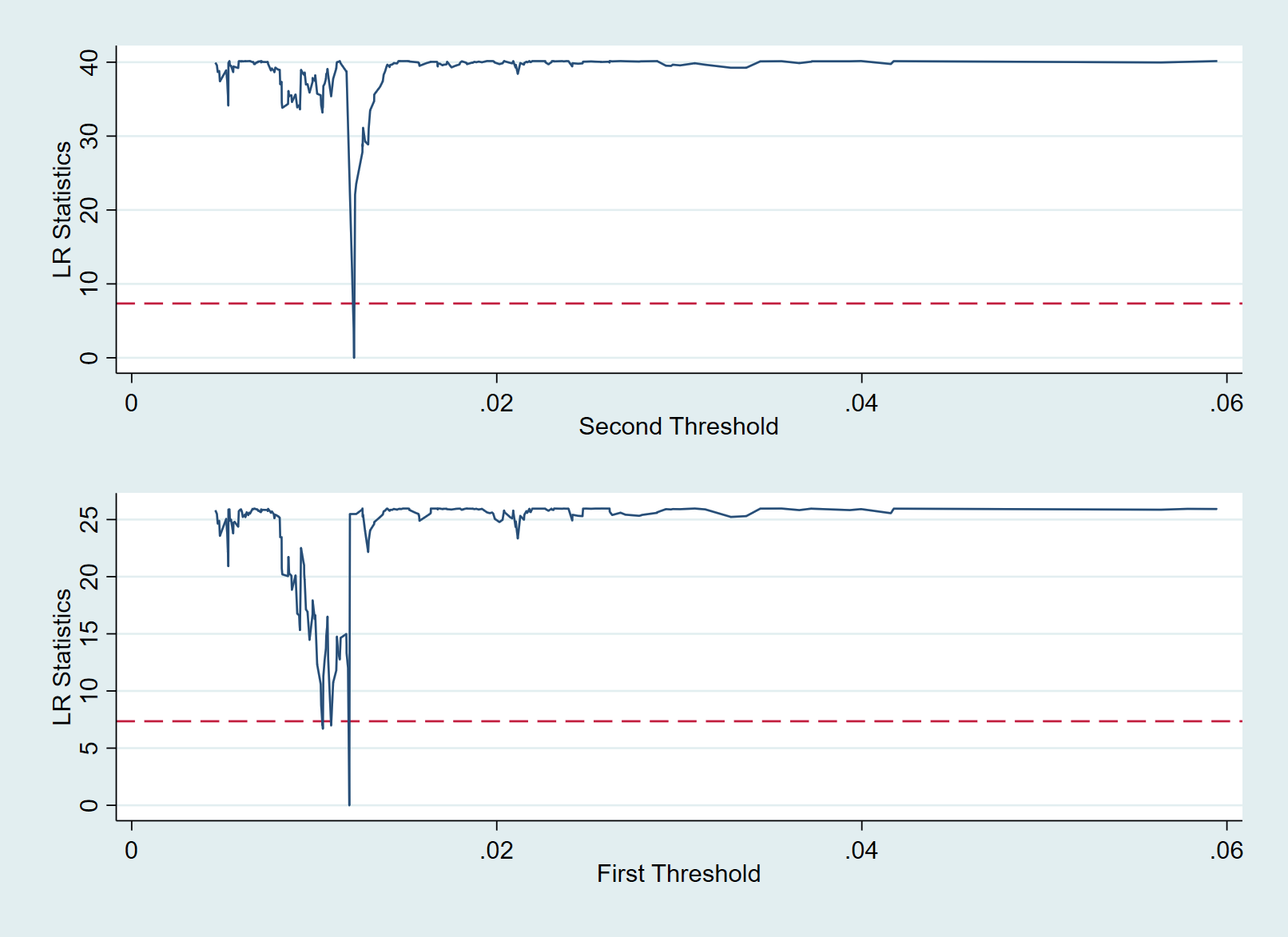
Table 7.
The threshold effect of R&D intensity.
| Variables | Threshold effect |
|---|---|
| HC (RD≤0.0119) | 10.16** |
| (4.162) | |
| HC (0.0119<RD≤0.0122) | 2.903 |
| (8.323) | |
| HC (RD>0.0122) | 12.63** |
| (4.621) | |
| Constant | 0.781*** |
| (0.236) | |
| Observations | 270 |
| R-squared | 0.640 |
| Controls | YES |
| Year | YES |
| Province | YES |
This study also has some limitations. Firstly, the impact of human capital on CCD may have spatial spillover effects and other transmission mechanisms. Future research can delve into the positive influence of human capital on CCD by adopting spatial econometric models and mediating effect models. Secondly, heterogeneous human capital might bring different environmental benefits. Hence, scholars could consider categorizing human capital into primary, intermediate, and advanced types and further explore the diverse impacts of these different types of human capital. Moreover, although provincial panel data can aptly reflect the macro influence of human capital on CCD, it also makes it harder to capture regional disparities. Therefore, future studies should extend the data to the prefectural city level and based on this data, produce more accurate estimates. This will help policymakers better formulate and adjust policies.

