

Introduction
Nowadays, in this fast and modern world, plastics have become a material that is simply impossible to avoid. They are used in a wide spectrum ranging from the medical industry to the food industry [1-3]. The most common application of plastics is in the automotive industry. From this fact, it is necessary to start a discussion on how to improve the sustainability of plastic products throughout their life cycle and how to reduce the impact of plastic waste on the environment [4-6].
The efficiency of businesses is critical, as most companies are fighting high competition with a large range of similar products on an oversaturated market. Currently, no company can afford not to participate in continuous improvement. This happens in products, production processes, services, PR, marketing, economy, or management. In manufacturing companies, efficiency is characterized by shortened innovation cycles, high level of functionality, and wide range of product modifications [7-9]. Further facts to be considered contain the application of scientific and technical knowledge in the construction of products, the use of new materials, and high level of services, high reliability, and short delivery times. Reduction of production of costs is oriented on savings in material, energy, personnel, maintenance, and wage costs. There are also savings on production information security [10, 11]. Optimization of production investments is there to ensure the implementation of the most advanced technologies with appropriate investment costs. Optimization of storage aims at minimum stock levels in warehouses and timely material flows [12, 13].
The most essential part in handling plastic waste is the need for proper sorting of plastic waste. Plastics are divided into recyclable and non-recyclable so-called “the others” [14, 15]. Recyclable plastics are valued depending on the needs of the customer who will handle them. Non-recyclable so-called “other mixed plastics” are first crushed if necessary and then recovered in the construction industry or they are liquidated in other ways. Another essential condition is that recyclable plastics can no longer be used for products that come into contact with food. This is due to hygienic reasons [16, 17].
An important fact is that the danger of plastic waste to the environment is related to how it is handled. The volume of plastic waste suitable for processing or recovery depends on how much material is recovered and how much of the total amount of plastic is unusable waste [18]. Unusable waste is polluted to a large extent. It is degraded in such a way that there is no technology to process it, for example: pollution with oils - lubricants, mix with foreign materials such as glass, textiles, or presence of combustibles. From this point of view, we can declare that it is up to the human community to contribute to the material recovery of plastic waste by their actions, thereby helping to reduce the amount of unusable plastic waste [19].
Recovery of Plastic Waste
Today, around 10 million tons of waste, mainly plastic, end up in the world’s oceans and seas every year. Under favourable circumstances, this waste can remain there for several decades or even hundreds of years [20]. Oceanic and marine areas are becoming the largest landfills of plastic waste in the world. Plastic waste damages not only the marine and oceanic environment, but globally threatens the entire environment. That is why the processing of plastic waste is of the greatest importance from a global point of view [21-23].
There are regulations for the recovery of plastic waste, “Legislation of recovery”. It should be remembered that the activity code R3 can be granted by the Regional Environmental.
Mechanical Recycling
Mechanical recycling can be described as the processing of plastic waste into secondary raw materials or products without any significant change in the chemical structure of the material. The mechanical recycling version is usually characterized by the following sequences of individual steps. They are carried out as part of the recyclate preparation and production process, some of which may be carried out simultaneously [24]:
Collection → identification → crushing →-washing
→ drying → sorting → agglomeration → extrusion
or preparation of mixtures → granulation
In this form of recycling, it is necessary to divide plastics into three groups: – Soft plastics (LDPE, LLDPE, HDPE, PP, PET, PVC,
etc.); – Hard plastics (ABS - acrylic-butadiene-styrene, PS,
PA, etc.); – Reinforced plastics (epoxy EP with reinforcing filler,
PP with reinforcing filler, polyurethane PU with
reinforcing filler, etc.).
Raw Material - Chemical Recycling
The principle of this form of recycling is the conversion to monomer or the production of new raw materials, which is carried out by changing the chemical structure of plastic waste by cracking, gasification or depolymerisation without energy recovery and burning [25].
Various processes known from the petrochemical industry are used to convert some plastics into basic monomer chemical components or carbohydrate fractions. This allows chemicals to be used either as a raw material for polymerization or in other chemical processes, for example for catalytic depolymerisation. [26]. This is a unique technology based on the catalytic transformation of the material without the presence of air. Under the influence of high temperature and atmospheric pressure, plastic material based on PE and PP, for example, is decomposed based on polymer degradation. It means that the result is a completely new product, synthetic oil.
Biological - Organic Recycling
This method of recycling is based on aerobic treatment, i.e. composting or on anaerobic treatment, i.e. digestion of biodegradable plastic waste. Biological recycling must take place under controlled conditions using microorganisms that produce stabilized organic residues, carbon dioxide and water in the presence of oxygen or stabilized organic residues, methane, carbon dioxide and water in the absence of oxygen. Biodegradation is a viable way of processing plastics, but not all types of plastic waste are recycled in this way. Biodegradable waste is referred to as BDP and is divided into three basic types, namely [18, 22]: – BDP on a synthetic basis (oil, natural gas, etc.); – BDP based on renewable resources (starch, cellulose,
polyhydroxyalkanoates, etc.); – GDP combined.
Analysis of the Technological Procedures of Valorisation and Finalization of the Product from the Recycling of Plastic Waste
The recovery of plastic waste in a specific company is carried out on recycling lines. The description of plastic waste recycling can be summarized in the following points:
1. Supply of material - plastic waste to the compactor - is carried out using a conveyor belt after sorting according to the types (LDPE, LLDPE, HDPE, BOPP, PS, ABS, etc.), colour and purity of the plastic waste.
2. In the compactor, the feed material is crushed, mixed, heated, dried and pre-compacted.
3. The cutting tools are located on the rotating plate at the bottom of the compactor. They are in addition to the crushing effect a source of centrifugal force necessary for continuous filling of the tangentially located extruder through the variable outlet hole in the compactor shell and through the outlet hole on the cylindrical body of the extruder chamber.
4. In the extruder, the material is plasticized, homogenized and degassed.
5. In a filter located coaxially to the extruder chamber, insoluble foreign impurities - impurities - are filtered from the melt.
6. The granulation device at the end of the extruder with rotating knives is used for the production of a re-granulate in a lenticular shape. Its size is regulated with the revolutions and number of knives on the rotor of the cutting unit. The hot re-granulate from approx. 180-210ºC is cooled to 70-80ºC. Its subsequently washed out of the granulation unit into a drainage using circulated cooling water at a temperature of approx. 18-25ºC.
7. The vibrating drainage screen performs the following functions:
– reduce the surface residual moisture of the re-
granulate by vibrating; – as a vibrating feeder, it serves to transport the re-
granulate to the centrifuge, which is mainly used
for the second stage of dewatering the re-granulate
and for feeding it to the injector, through which it
is pneumatically transported to the cyclone with the
help of a fan, from where the cooled re-granulate is
discharged at a temperature of 20-30ºC at certain
time intervals into big bags or sacks and then stored.
8. The extruder is heated electrically in several zones and cooled automatically using a regulator based on a present temperature depending on the processed waste.
9. Circulating water is used to cool the oil, which is cooled to the required temperature through the compressor and atmospheric cooler, during the summer season (in winter, only the atmospheric cooler is used).
10. In addition to its purpose in point 9, the water also serves to reduce the temperature of the plastic waste against overheating in the compactor by occasional injection. Circulating water also serves as a sealing medium to the vacuum pump for extracting gases from the melt to prevent the production of blown re-granulates and subsequently such re-granulates become unworkable when used for film production or injection moulding.
The dependence of selected indicators during recycling on the quality of plastic waste achieved in two different types of recycling lines during 24 hours on selected days is shown in the following tables (Table 1 and Table 2).
The values in Table 3 show the indirect proportionality between the data on the poor quality of recycled waste with a high waste rate as well as the performance of the line and downtimes.
For faster orientation in the values of Table 3 and for the purpose of transparency and emphasis on direct proportionality, several indicators are selected to describe the relationship mentioned earlier.
Table 1.
Control of selected indicators during recycling depending on the cavity rec. waste line E90.
Table 2.
Control of selected indicators during recycling depending on the quality of rec. waste line E70.
Table 3.
Performance evaluation of recycling line 90.
Table 4.
Selected indicators of the company.
| Date | Output. Kg/hour | Waste level % | Downtime in hrs per day | Electricity consumption in kW/h per kg |
|---|---|---|---|---|
| 25.2.2022 | 186 | 1.91 | 3 | 0.867 |
| 26.2.2022 | 117 | 3.2 | 2 | 1.17 |
| 27.2.2022 | 343 | 0.62 | 1 | 0.51 |
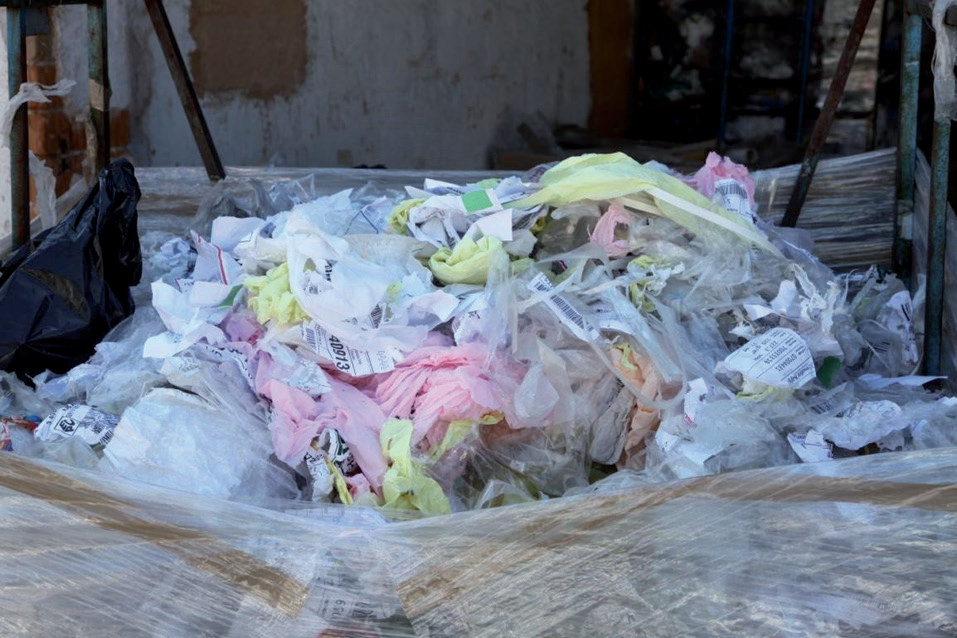
In addition to the selected indicators described in the previous tables, low-quality plastic waste (Fig. 5) has a significant negative impact on the most important indicator, namely the economic result.
The mentioned impact is shown in Table 5. It’s based on the results in 2022, and at the same time, in the calculations in columns 2 and 3 with lower and higher performance, we also pointed out the immediate development of the management action depending on the deteriorated quality of the waste.
Technological Procedure and Analysis of the Finalisation of Re-Granulates as a Final Product from the Recovery of Plastic Waste - Film Production
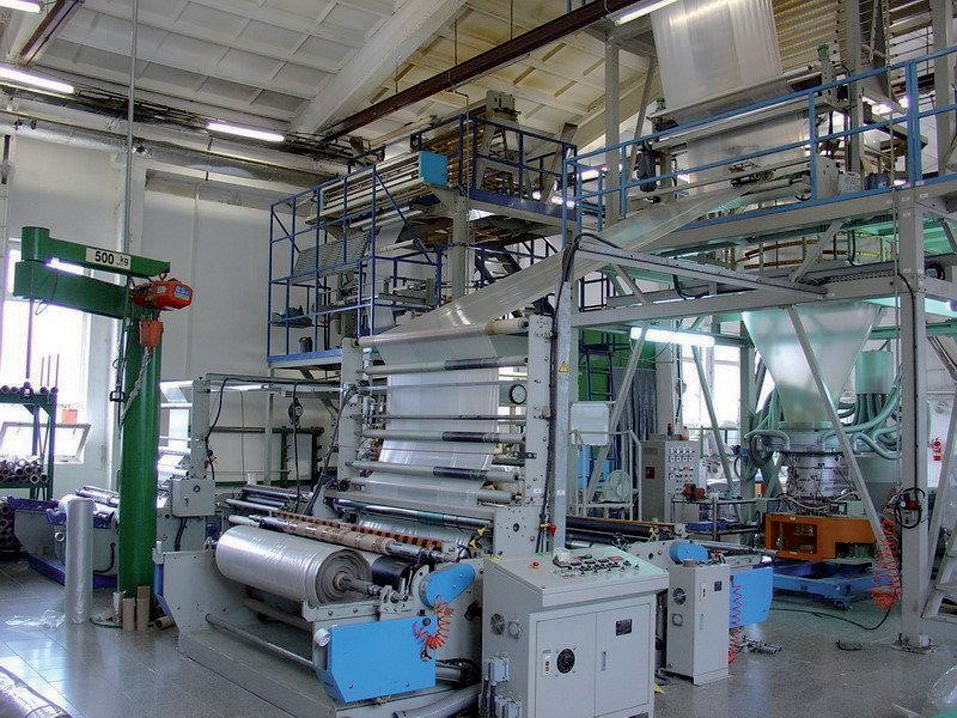
The company ensures the finalization of its own as well as purchased re-granulate or original primary granulate on four blowing lines (Fig. 6) with extruders with a diameter of 55, 65 and 80 mm, based on LDPE, LLDPE polymers and a small proportion of HDPE.
The technological process of production consists in the preparation of the necessary deposit of input re-granulate or granules depending on the ratio of the prescribed components such as: – Re-granulate by type (LD, LLDPE); – Dyes; – Additives (antistat, roughening agent, UV stabilizer,
etc.).
Following the previous step, the prepared mixture is filled into the hopper before entering the extruder. After heating the individual parts of the extruder and the blow mould to the required operating temperature (180-200 ºC) and then turning on the drive of the extruder screw, the melt is extruded through the moulding head and the following main parts of the machine (Fig. 7) are gradually included in the production process to create the final product: – Guide basket; – Support plates - guide cylinder; – Filer; – Pick-up cylinders; – Guide rollers; – Ionizer; – Towing cylinders; – Paring knives or carving knives; – Winding unit.
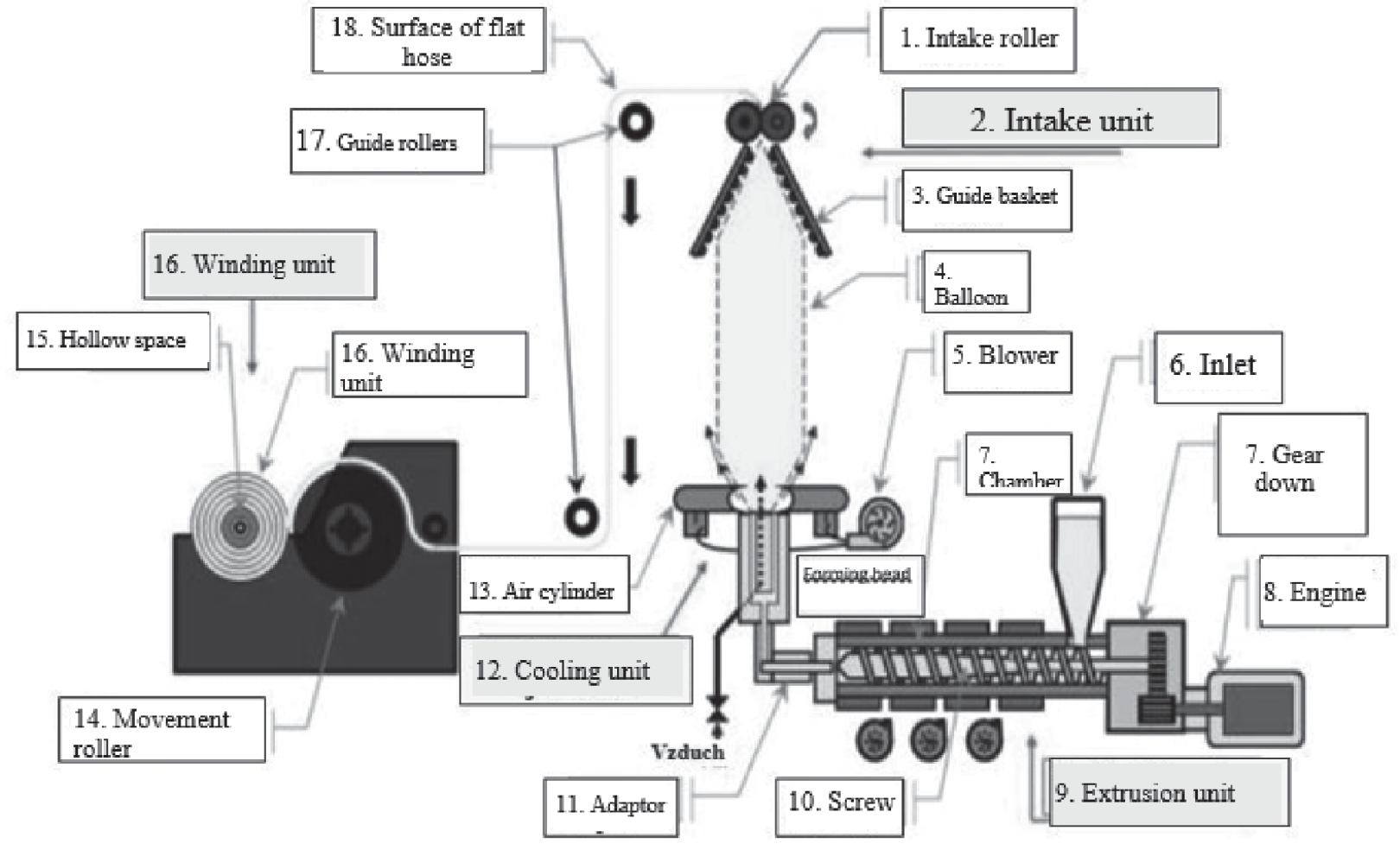
Table 5.
Benefits of the integrated management system based on newly revised ISO standards.
Table 6.
Method of setting the individual dimensions of the film for extruders.
The melt in the extruder is heated, depending on the size of the machine, in five or seven zones by electric resistance band heaters with a power of 15-31 kW. The temperature in the individual zones is maintained using automatic regulation, while 1 kW fans are used for cooling in each zone, so that the melt does not overheat or that the cooling time is as short as possible.
Device performance, i.e. the amount of blown film in kg/h is regulated by the speed of the extruder and the thickness of the film in the endless hose using the air supplied from the blower with an adjustable amount on the suction side or with the speed of the blower as well as by regulating the speed between the take-off roller and the take-off rollers.
The method of setting the geometric parameters of the foil and hose is shown in Table 6 depending on the regulation of individual aggregates on the blowing line.
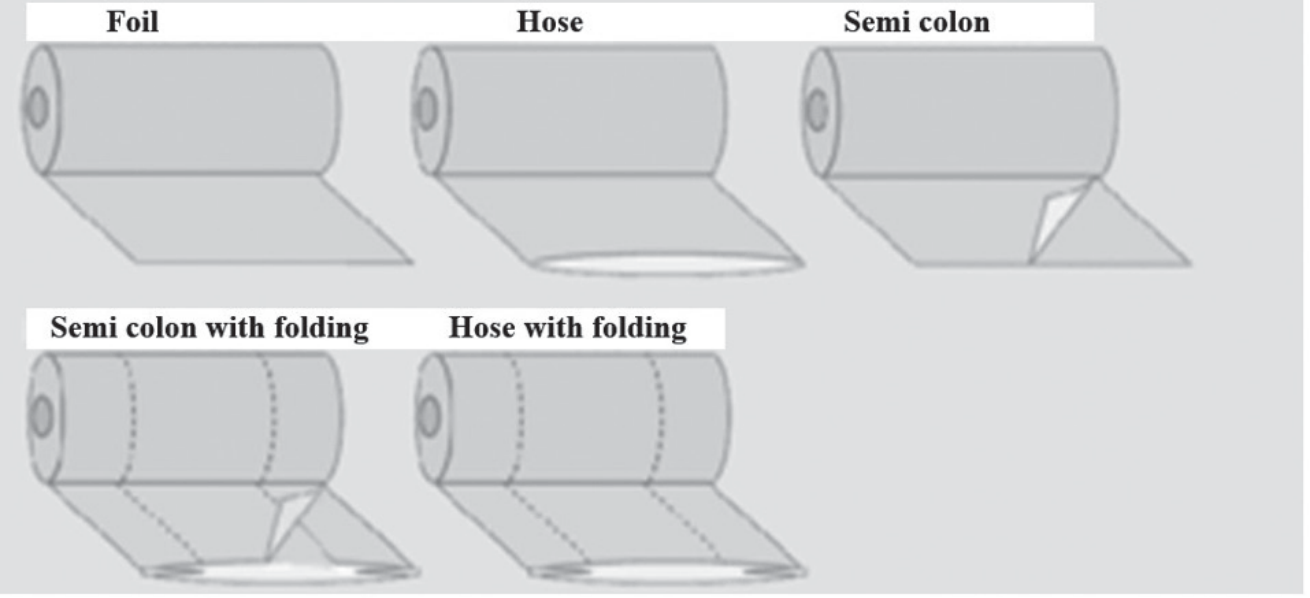
From the endless hose, by cutting one or both ends of the fleece before winding it into a roll, we distinguish the resulting product according to types as follows (Fig. 8): – Hose; – Semicolon; – Flat film, one or two layers.
The company uses approx. 65% of re-granulate from its own recycling of plastic waste in the production of films. The remaining 35% consists of 20% from the primary polymer and 10% from external re-granulates, respectively 5% from additives (paints, additives, etc.). occurring non-meltable foreign admixtures such as: paper, wood, metal, foreign polymer (BOPP, PP, etc.), which cause a high waste rate of up to 12%. Technological downtime at the expense of deterioration of the time utilization of the machine is below 90%. Line performance, product quality and, the deterioration of production efficiency is as shown in the numbers according to the results achieved.
The multi-species nature of plastic waste and the subsequent imperfect sorting and re-sorting before recycling in order to guarantee the required productivity of the recycling line causes that, due to the inhomogeneity and non-uniformity of the polymers, the produced re-granulate in one batch has different quality parameters, for example MFI - the value of the flow index, which causes uneven strength parameters of the manufactured film, which is manifested by a paper effect in the tangential direction in an endless hose.
Technological Procedure and Analysis of the Finalization of Re-Granulates as a Final Product from the Recovery of Plastic Waste - Production of Bags
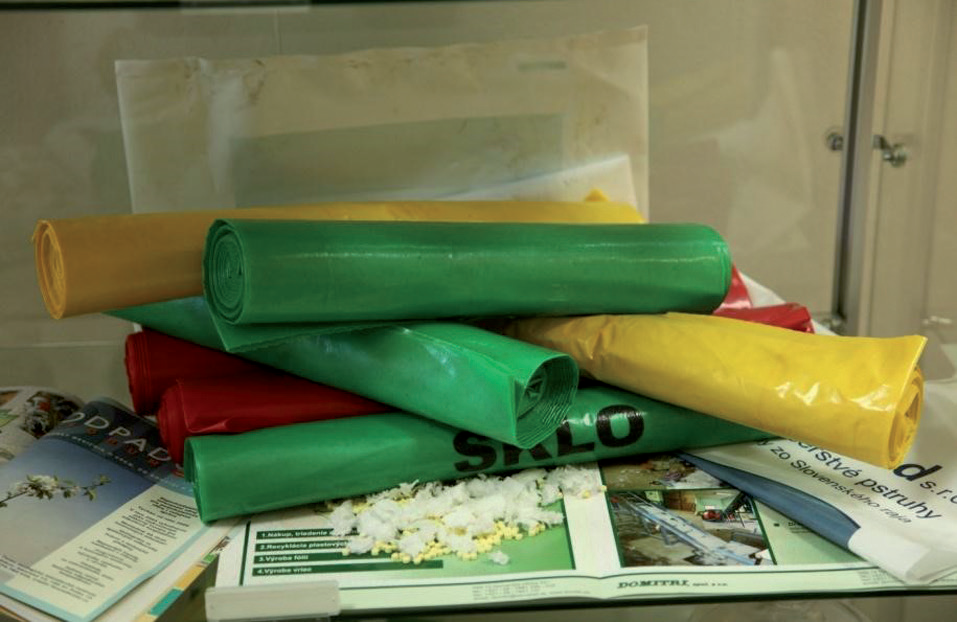
Film from our own production is used as part of further recovery with a share of 66% for sale and 34% for our own consumption in the production of the following types of bags (Fig. 9):
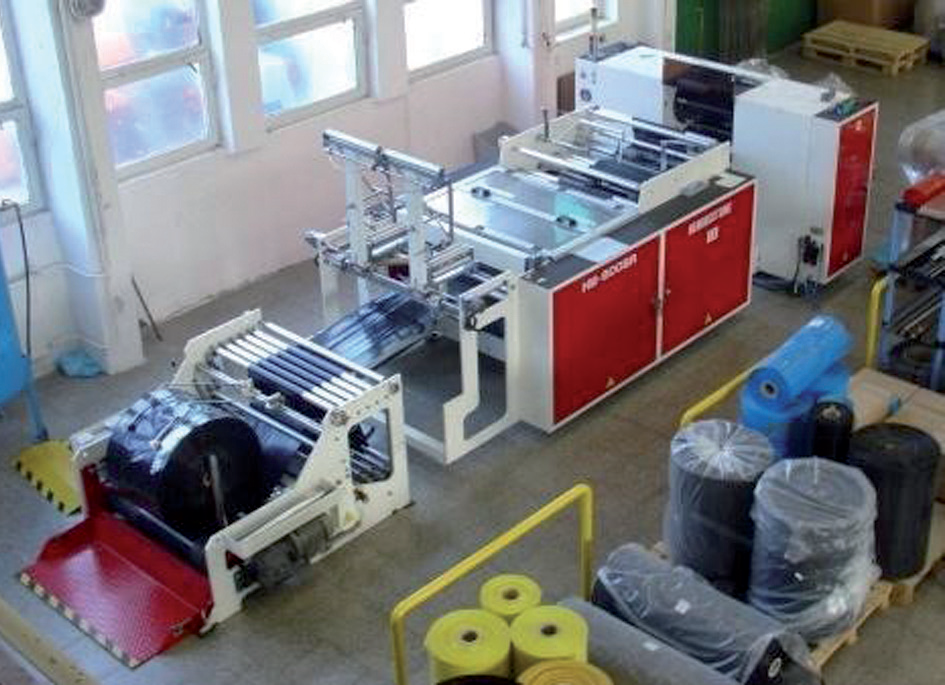
1. Rolled bags 60% i.e. 268 t/r (ton/year), hemingstone line (Fig. 10).
2. Stacked/folded bags 40% i.e. 179 t/R, Arvor line.
The same characteristic steps in the production process for both types of bags are: – Unwinding the film from the roll; – Sealing the hose in the transverse direction in order
to close the lower part of the bottom of the bags
according to the set length of the bags.
In the case of rolled bags, compared to the production into bundles, the hose when unrolling from the roll is folded in the direction of production to the maximum width of the turret head of the magazine up to 800 mm, and the number of bags in the roll as well as the spacing of the perforations are adjusted depending on the set length of the bags, facilitating tear-off for individual bags from rolls when used by customers.
The difference in stacked - folded bags compared to bags in rolls is that in stacked - folded bags, after setting the length of the bags (instead of perforation) after sealing the bottom of the bags, they are separated automatically by cutting the hose behind the sealed weld.
Conclusions
The search for measures to increase the efficiency of two related business activities, from the recycling of plastic waste to the finalisation of the product from recycling, was carried out on the basis of existing problems represent all groups of production activities. The proposed measures according to individual production processes should be a guarantee for achieving the set goal, i.e. increase the efficiency of the recovery and finalisation of plastic waste. Based on the focus of individual measures on increasing efficiency, it is be possible to achieve this as a combination of savings and increased work productivity in the range of the following indicators: increased performance of production lines in the available production time and by reducing the number of customer claims.
The search for measures to increase the efficiency of two related business activities from the recycling of plastic waste to the finalization of the product from recycling was carried out based on existing problems in the four areas, which mostly represent all three groups of the company´s production activities.
The results of the analysis point to existing reserves in the area of human potential as well as the production and technical activities of the company, starting with preparation and ending with the realization of production.
Based on the included focus of the individual measures, an increase in efficiency will be possible as a result of savings and an increase in work productivity in the range of the following indicators: increase in line performance by reducing the available time fund during production, reduction of non-productive costs by reducing the number and volume of complaints.