

Introduction
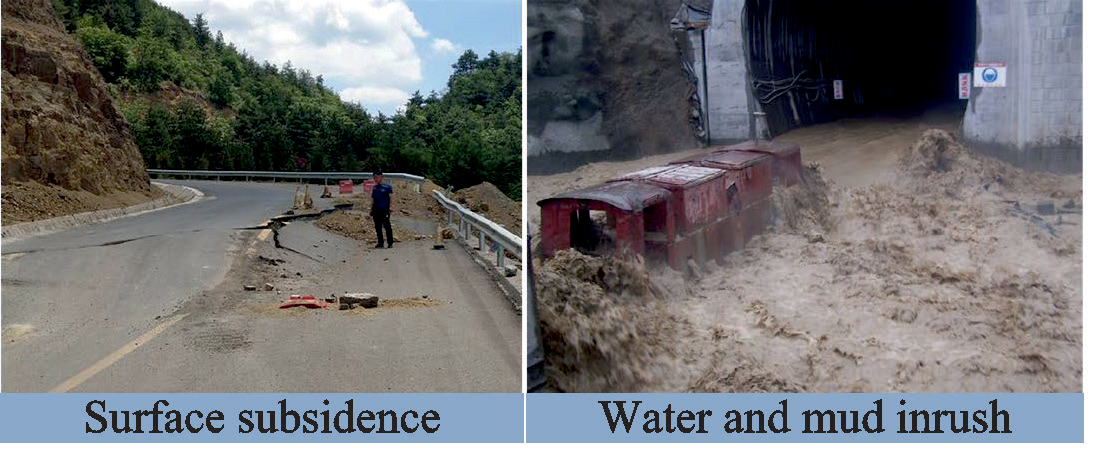
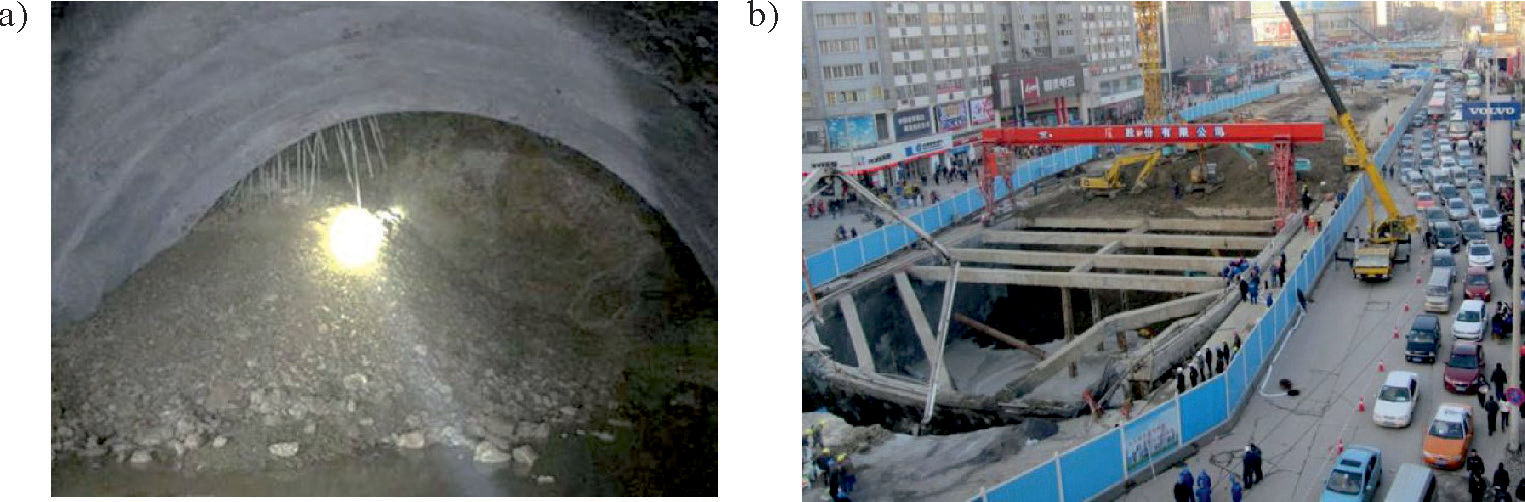
China’s transportation engineering, underground comprehensive pipe gallery, and other infrastructure construction are developing rapidly. As of the end of 2022, the total length of highways is 5.35 million kilometers, including 177000 km of expressways, ranking first in the world, and 17236.1 km of highway tunnels. The operating mileage of China’s railways is 155000 km, with 42000 km of high-speed railways, accounting for more than two-thirds of the world’s total mileage, and railway tunnels reaching 18041 km. There are a total of 61 cities (including Hong Kong, Macao, and Taiwan) where rail transit has been opened, with an operating line length of 10857.17 km, including 10291.96 km [1] in mainland China. When these basic engineering projects encounter complex weak rock and soil layers, many problems will arise during the construction or operation period. For example, when tunnel engineering or underground comprehensive pipe gallery engineering uses shallow buried excavation method to pass through soft rock and soil layers, there are often soft ground subsidence, surface collapses, collapses or structural deformations [2-5], and even disasters such as water and mud inrush [6, 7] (see Fig. 1); During the long-term operation of highways and high-speed railways, most soft soil roadbed sections experience a certain degree of settlement, which poses safety hazards to the operation of vehicles and high-speed railways.
The development of grouting technology has a history of over 200 years. The French pioneered grouting construction. In 1864, the French used cement-based materials for the first time to reinforce the wellbore by grouting and blocking water at the Arinpurebe mine [8]. This effectively solved the problem of wellbore drainage and invented cement slurry, which became the main material for grouting. Subsequently, chemical slurry was invented. In the early 1950s, the research and application of grouting technology began in China. In the 1980s, taking the opportunity of No. 9 fault encountered in the construction of Dayao Mountains Tunnel of Hengguang Railway, after more than 40 years of research, the tunnel grouting technology has been developing rapidly, especially the research achievements in grouting materials, process methods, equipment and effect monitoring methods of river crossing and sea crossing tunnels. At the time, China's water rich and high-pressure tunnels have been among the world’s most advanced ranks, and the field of grouting application has rapidly expanded to municipal areas. The complex geological reinforcement and water blocking of highway and railway tunnels [9, 10].
As the main technical means for controlling geological disasters such as water inrush, mud gushing, and subsidence in complex and weak strata, grouting is, widely used in basic engineering construction industries, such as hydraulic engineering [11], land transportation [12], construction [13], energy [14], and mining [15]. Based on the existing research conclusions of domestic and foreign scholars, when the slurry is injected into weak rock and soil under a certain pressure, and the pore water pressure exceeds the sum of initial stress and expansion stress increment, tensile stress occurs in the injected rock and soil medium. When the tensile stress exceeds the tensile strength of the injected rock and soil medium, the slurry will form a slurry channel perpendicular to the small principal stress at the weakest position [16, 17]. At this point, the grouting pressure is the starting pressure of splitting grouting [18, 19]. Splitting the grout vein forms a framework within the injected rock and soil along the splitting path, and compresses the soil on both sides of the grout vein, thereby enhancing the overall structural strength of the injected rock and soil [20, 21]. The good application prospects of split grouting make it the main method for solving weak rock and soil reinforcement projects such as railway and highway weak roadbed reinforcement, tunnel weak surrounding rock reinforcement, embankment reinforcement, grouting uplift [22-24].
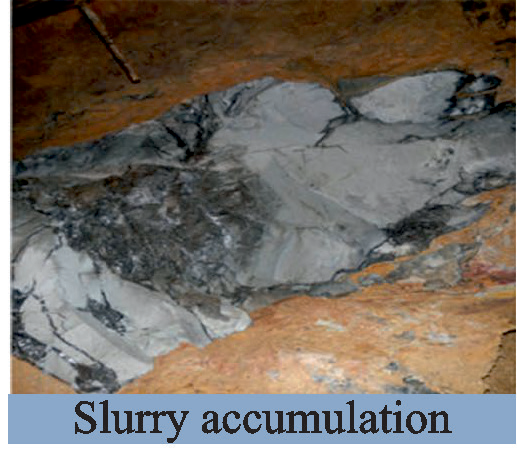
Reasonable control of grouting flow and pressure is the key to effectively strengthening weak rock and soil layers. The existing grouting control methods mainly include controlling the end standard, using grouting volume or grouting pressure as the end standard for grouting [25, 26]. The method of using the grouting completion standard as the control method is easy to operate, but the grouting splitting process is a black box operation, and the splitting path of the slurry cannot be effectively monitored during the grouting process. Continuous blind grouting will have hidden dangers, such as a large amount of slurry accumulation in weak areas (see Fig. 2), disordered diffusion paths, and unidirectional loss of slurry, resulting in low engineering efficiency, a large amount of slurry waste, environmental pollution, and damage to public facilities. Moreover, relying on the grouting final pressure monitoring methods of construction personnel often leads to periodic high starting pressure or sudden pressure drop, resulting in risks such as adjacent pipe grouting, cracking of the face, and slurry loss along karst channels [27, 28]. The key to achieving directional control of split grouting is to clarify the rheological characteristics of the slurry during the split grouting process, the coupling effect between the slurry and soil, the main controlling factors for the expansion of the slurry veins, and the cross boundary splitting mechanism of the slurry veins.
In summary, studying the control mechanism of directional splitting grouting in soft soil layers is currently a hot and difficult topic. Currently, using comprehensive research methods, based on the restoration of complex rock and soil stress environments, the formation mode of the slurry network for fracturing the slurry veins is obtained, and the control method for directional fracturing of the slurry veins is studied. Finally, an evaluation method for the effectiveness of directional fracturing grouting is proposed, which has become one of the effective methods for studying this problem. The research results can provide theoretical support for grouting reinforcement of complex weak rock and soil layers, ensure the smooth progress of basic engineering construction and long-term operation safety and stability, respond to the urgent needs of national transportation infrastructure construction, and also have significant scientific significance in promoting the theoretical development and technological progress of disaster prevention and reduction in China.
Research Status and Development Trends at Home and Abroad
Basic Theory of Split Grouting
Domestic and foreign scholars in the field of grouting utilized primarily theoretical deduction, numerical simulation, and model test methods to study the diffusion of slurry, its reinforcement mechanism, and evaluation methods. To reveal the directional control method of complex and weak rock splitting grouting, the research content involved includes grouting molding mechanism [29-39], splitting grouting control method [40-49], and effect evaluation method [50-59], and related scholars have carried out a series of researches.
The forming Mechanism of Splitting Grouting Veins
The research on the formation mechanism of splitting mainly involves the starting conditions and splitting pressure [60-62]. The theoretical calculation model of splitting grouting vein can be divided into tensile failure (linear elastic material and non-linear elastic material) [63], shear failure [64], and other failure criteria [65]. The rock and soil mass is assumed to be a uniform medium, as shown in Fig. 3, and isotropic. The vertical direction around the grouting outlet is the minimum principal stress σ3, the horizontal stress is the maximum principal stress σ3, the grouting pressure is p, the radius of the grouting hole is r0, and the tensile stress is negative and the compressive stress is positive. Then, the stress state of any point A around the grouting bubble with an Angle θ to the coordinate system X axis and a distance r from the center of the grouting bubble is:
(1)
Where radial stress is σr, tangential stress σθ, and shear stress τrθ. With the increase of radius r, the slurry pressure gradually decreases, and the stress state at r = r0 is:
It can be seen from equation (2) that when the grouting pressure is large enough, it is negative, and when θ = kπ (k = 0, 1, 2...), cos2θ =1, then the absolute value of tensile stress |σ0| is the largest, and the stress state at this position is:
When θ = kπ, that is, the tensile stress in the horizontal direction reaches its maximum value 3σ3 – σ1 – p. If the absolute value of the horizontal tensile stress σθ is greater than the maximum tensile strength σm of the medium in the region, the rock and soil body will be split in the horizontal direction. That is, when the grouting pressure p increases to 3σ3 – σ1 + σm, the split slurry veins will be produced.
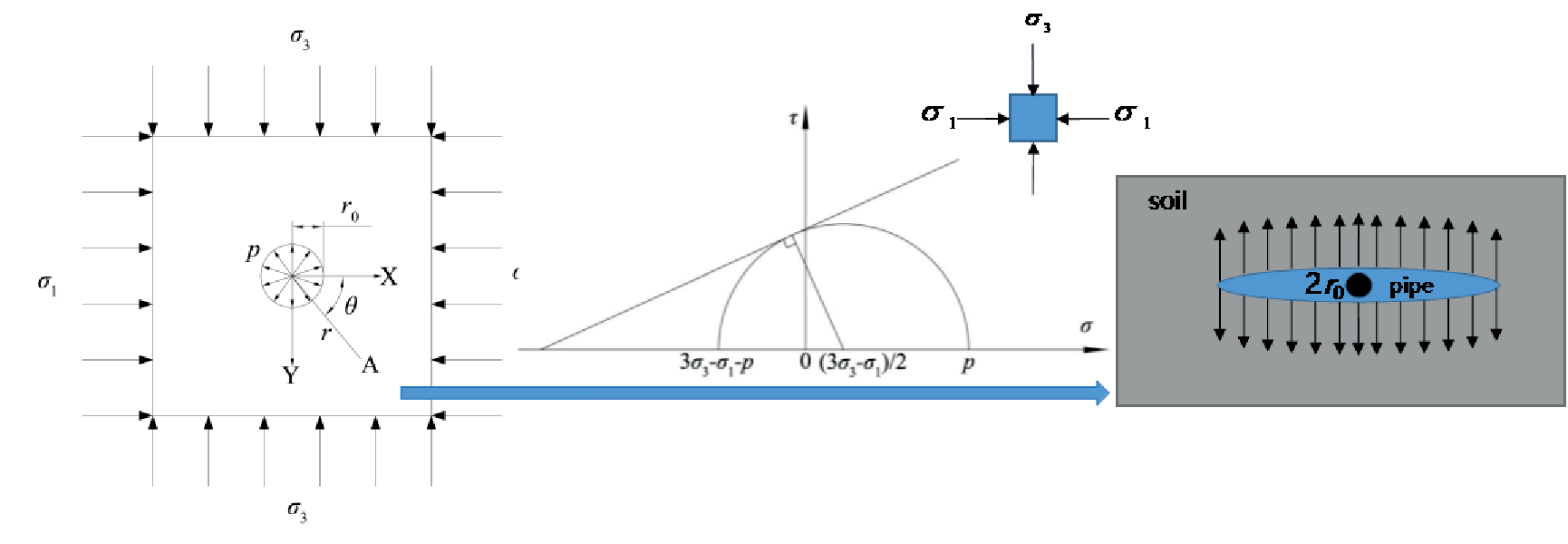
According to the Mohr Coulomb criterion, the tensile strength of the rock and soil body is:
Where τ is the shear stress, c is the cohesive force of the rock and soil material, σ is the normal stress acting on the plane, and φ is the internal friction Angle of the rock and soil material. The position of the stress Mohr circle at the grouting entrance is tangent to the tensile strength line, and the radial stress σr and tangential stress σθ are the maximum and minimum principal stresses, respectively. Any point on the Mohr circle is the inclined plane α parallel to the minimum principal stress, the horizontal coordinate is the normal stress on the inclined plane, and the vertical coordinate is the shear stress on the inclined plane. The center of a Mohr circle is
Combined lines (3), (4), (5) can be obtained:
The grouting pressure
Bezuijen et al. [66] conducted field tests in tunnels, and obtained the sum of splitting pressure into two parts: pore water pressure and two to three times vertical effective stress. Decker et al. [67] selected soft clay as the injected medium to conduct simulation tests, and the test results showed that the splitting pressure is twice the small principal stress of the injected medium and the undrained cohesion. Yun et al. [68] carried out a sand splitting grouting simulation test and obtained a mathematical model of sand splitting pressure.
In uniform rock and soil media, when the grouting pressure reaches the splitting pressure, the slurry will split the rock and soil body along the surface perpendicular to the minimum principal stress at the grouting outlet, and the splitting pressure is related to the cohesion of the rock and soil body, the internal friction Angle and the magnitude and direction of the major and minor principal stress. When the grout begins to split the rock mass, the concentrated grouting pressure is released, and the grout rushes into the split fissure rapidly, usually the grout pressure drops instantaneously. With the further expansion of the fissure, the resistance of the slurry diffusion is increasing, the grouting pressure fluctuates constantly, and the opening of the fissure increases gradually. In order to study the optimal diffusion control method of the split plasma vein, the splitting diffusion process of the slurry is studied. The rock and soil layer is composed of medium particles and air or water in the particle gap. In the process of compression, the particle gap will be reduced, and the air or water in the gap will be squeezed out. The compression properties of different rock and soil masses can be expressed by the compression curves e – p or ε – p, where e is the porosity ratio, p is the pressure, and ε is the compressive strain. The soil compression curves with e as the vertical coordinate and p or lg p as the horizontal coordinate can be obtained through the consolidation test under the condition of full measurement limit. After obtaining the e – p curve through the experimental results, many scholars used different function models to fit the compression curve, as shown in Table 1.
The forming process of split grout includes the expansion along the splitting direction after splitting and the generation of secondary grout veins. Bezuijen et al. [66] put forward the expansion model of split grout veins, and obtained the corresponding relationship between the size characteristics of the grout veins and the characteristics of the grout, the characteristics of the injected medium and the control parameters of grouting. Zhang [75] carried out split-grouting model tests with clay as the injected medium, and obtained the law of the generation and expansion of split-grouting veins. Wang et al. [76] conducted a splitting grouting simulation test with loess as the injected medium, studied the causes, mechanism, stages of formation of splitting grouting veins, the displacement of subgrade soil mass after grouting under different pressures, and the trend of grouting veins, obtained the fitting formula, and verified the theoretical analysis through an indoor soil grouting test device.
Split Grouting Control Methods
The geological environment of soft soil is complicated, the grouting project is highly concealed, and the grout diffusion is complicated and changeable due to the characteristics of the geological environment, grouting parameters, slurry phase changes, and other factors, which make the soil difficult to control accurately. Many scholars have simplified the single horizontal split grout pulse into the horizontal circular cake pulse morphology for research. Zou [77], Sun [78], Zhang [79] and other scholars have considered the flow of viscous time-varying grout as three constitutive models, namely Newton fluid, Benham fluid, and Power-law fluid, respectively, and proposed the corresponding relationship between the splitting expansion radius of round cake grout pulse and control parameters such as grouting pressure. Yang et al. [80] established prediction formulas for grouting amount, grouting diffusion radius, and compressive strength of rock mass in sandy gravel soil, and verified them through simulation tests. Yuan et al. [81] based on the particle flow method of the granular medium theory, used PFC2D software to conduct mesomechanical simulation of the grouting process in weak strata, and studied the influence of grouting pressure, grouting time, permeability properties, and particle bonding strength on the diffusion radius of grout and grouting type.
In terms of the direction control of splitting slurry veins, prefabrication fissure and horizontal directional drilling are used to assist directional splitting at present. Prefabricated crack splitting grouting is mainly used for anti-seepage processing of dyke. Shi et al. [82] arranged directional splitting holes with self-made directional splitting drill tools and injected high polymer slurry to split soil along the prefabricated cracks. Yang et al. [83] found that the clay core wall of the dam was located on the axis of the dam, and the top of the clay core wall had a low elevation and was covered with a sand and gravel layer. The seepage channel of the dam was cut off by using the polymer directional splitting grouting anti-seepage technology. In addition to directional grouting of prefabricated cracks, horizontal directional drilling can also be used to control the splitting direction of slurry. In order to solve the problem of the earth pressure balanced shield easily causing surface settlement and damage of buildings (structures) during the process of sensitive soft soil layer passing through dense housing groups, Fu et al. [84] proposed horizontal directional grouting reinforcement technology and used special steel valve tubes to drill holes. Horizontal directional grouting is carried out through the valve tube to the area to be strengthened. Yuan et al. [85] adopted horizontal directional drilling and grouting technology to strengthen the soft soil sand layer under the building at a distance, and successfully drilled the horizontal grouting hole along the direction of the shield tunnel by using inclination-measurement and directional technology. The grouting valve tube combined with the grouting stopper could realize positioning and repeated grouting.
Table 1.
Mathematical model of e-p curve.
Based on the horizontal cake diffusion model, the relationship between the grout diffusion radius and the grouting pressure is studied, and the diffusion range of the single horizontal diffused grout pulse is controlled. The method of prefabrication of crack with drill tool and horizontal directional drilling is to use special tools to intervene the direction of split grouting and realize local grouting control.
Evaluation Method of Reinforcement Effect of Split Grouting
The purpose of splitting grouting is to form a splitting grout network skeleton system and improve the basic physical and mechanical parameters of complex and weak soil [86]. Wang et al. [87] took saturated soft clay as the research object, discussed the design method and key points of soft clay split grouting, and studied the reinforcement effect of soft soil split grouting through scanning electron microscopy and physical parameters of soft soil before and after reinforcement. Cheng et al. [88] obtained the distribution and diffusion law of grout in alluvium, the splitting mechanism of grout, and the reinforcement characteristics of soil through the field grouting model test, and pointed out that grout in alluvium is generally filled and split along the soil-rock interface first, and the horizontal splitting is the main method, and repeated grouting should be adopted in the process of grouting to improve the reinforcement effect. Yang et al. [89] studied the reinforcement effect by comparing the improvement degree of key physical and mechanical parameters such as permeability, internal friction Angle, cohesion, and uniaxial compressive strength of the injected medium before and after grouting. Qian and Guo et al. [90, 91] studied the reinforcement mechanism of split grouting by means of numerical simulation. For example, based on PFC software, the reinforcement mechanism was indirectly revealed by analyzing the change of porosity of the injected medium before and after grouting, however, the application is sparce, and the measurement index is relatively single, and the promotion and application value is limited.
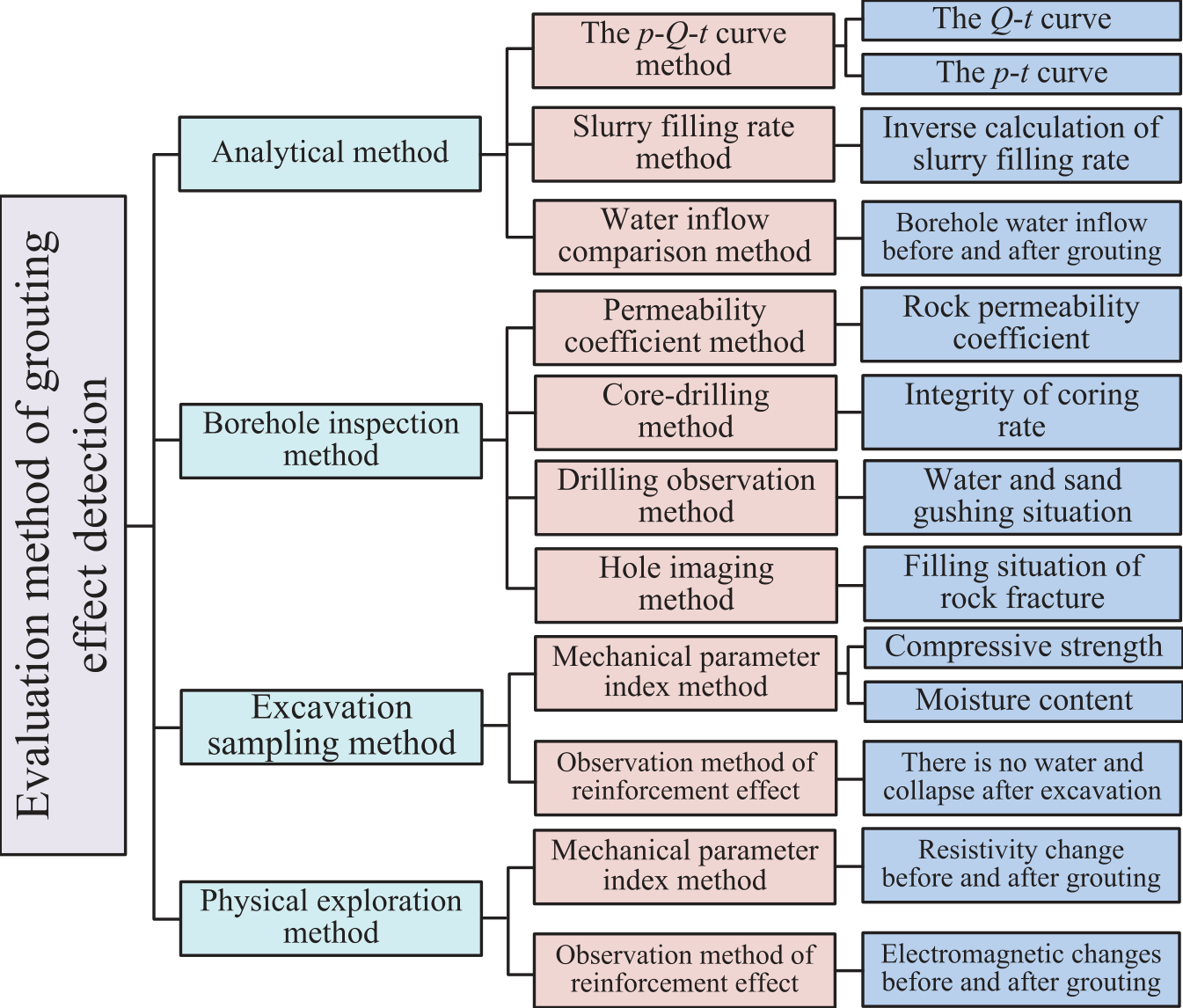
Grouting engineering usually carries out effect analysis through grouting quantity analysis, P-Q-t method, point detection method, and plane detection method, among which grouting quantity analysis method and P-Q-t method are used as on-site preliminary evaluation means, and point detection method adopts drilling inspection method for effect evaluation. The surface detection method uses geological radar detection, high-density electrical method, seismic method, and other geophysical exploration methods to evaluate the grouting effect in the grouting range. In combination with a large number of engineering practices, Zhang et al. [92] systematically classified 4 types of 11 kinds of inspection methods for grouting effects according to analysis method, inspection hole method, excavation sampling method, and geophysical method, as shown in Fig. 4, and provided technical descriptions for each inspection method. Wu et al. [93] simulated the process of slurry diffusion, soil compaction, and splitting effect in porous state. They believe that there is a reasonable grouting pressure for soil modification. The slurry squeezes the soil and produces splitting cracks in the soil. It penetrates and crosses between the pores to form a mesh slurry vein, and the soil is modified as a whole. Wang et al. [87] directly tested and evaluated the microscopic structure characteristics of soft clay before and after splitting grouting reinforcement by mercury injection, and obtained the characteristics of pore distribution change, total pore area, porosity, and the proportion of pores in various radii.
To sum up, a lot of studies have been carried out on splitting and unidirectional expansion of pulp veins, and the splitting pressure and cake diffusion radius under different conditions have been obtained. The existing splitting grouting direction control technology mainly studies the corresponding relationship between the grout diffusion radius and the grouting pressure on the basis of the horizontal circle diffusion model of the grouting pulse, and realizes the intervention of the splitting grouting direction by preforming cracks with drill tools or horizontal directional drilling. The existing grouting effect evaluation mainly considers the reinforcement and anti-seepage effect.
Distribution and Hot Spots of Relevant Academic Papers
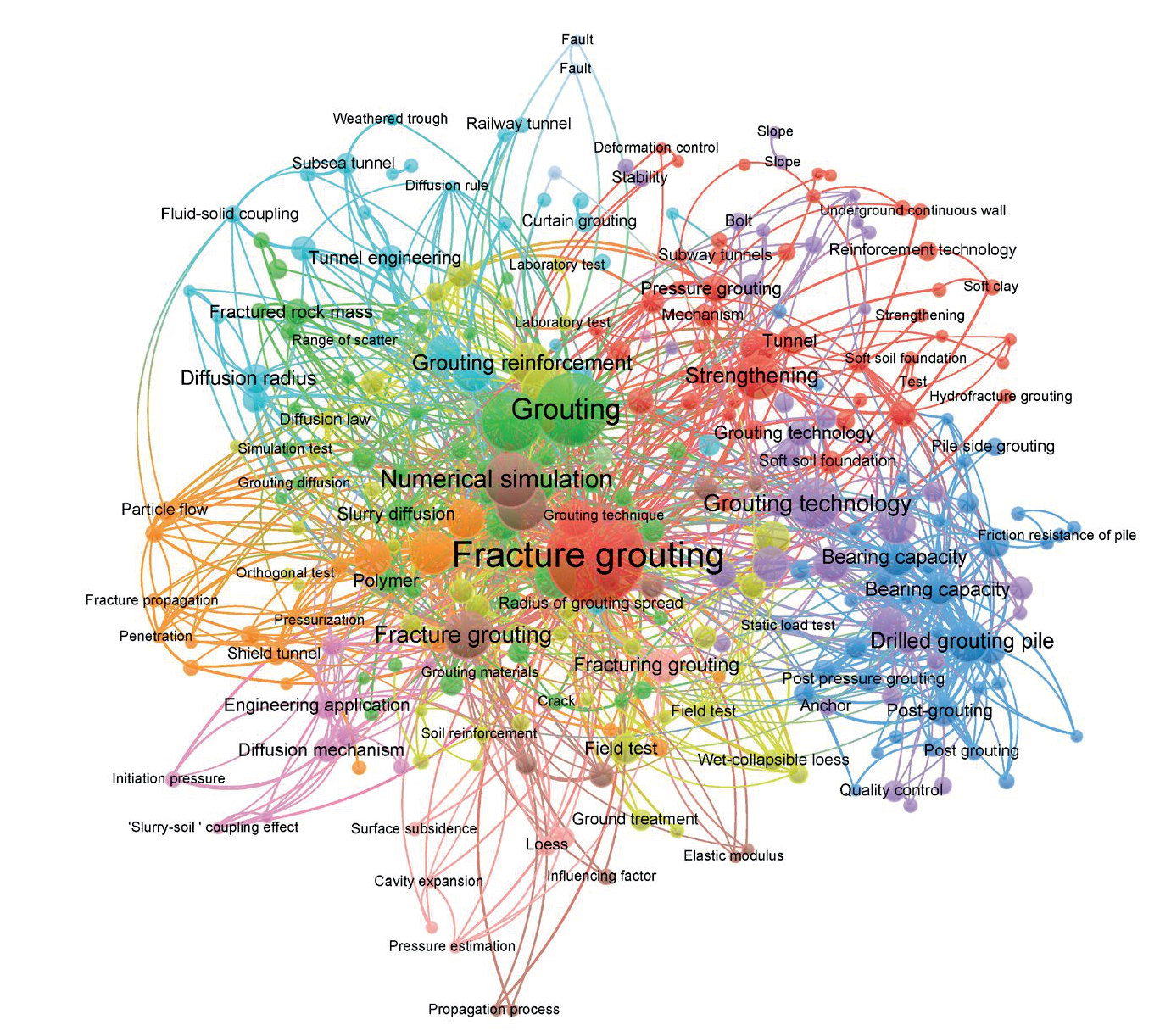
The engineering application of splitting grouting technology has promoted the exploration of this technology in the field of academic research. There are 1924 published papers (up to the end of March 2023) on the theme of “splitting grouting” in CNKI. The research focus of these published papers is mainly distributed in grouting and splitting grouting, as shown in Fig. 5. The results of the above literature retrieval correspond to the current application of splitting grouting technology in the engineering field. In recent years, with the continuous advancement of infrastructure construction such as transportation engineering and underground comprehensive pipe gallery in China, the splitting grouting technology widely used in the fields of large buried depth tunnel engineering in the west and subsea tunnel engineering in coastal areas has become one of the research hotspots.
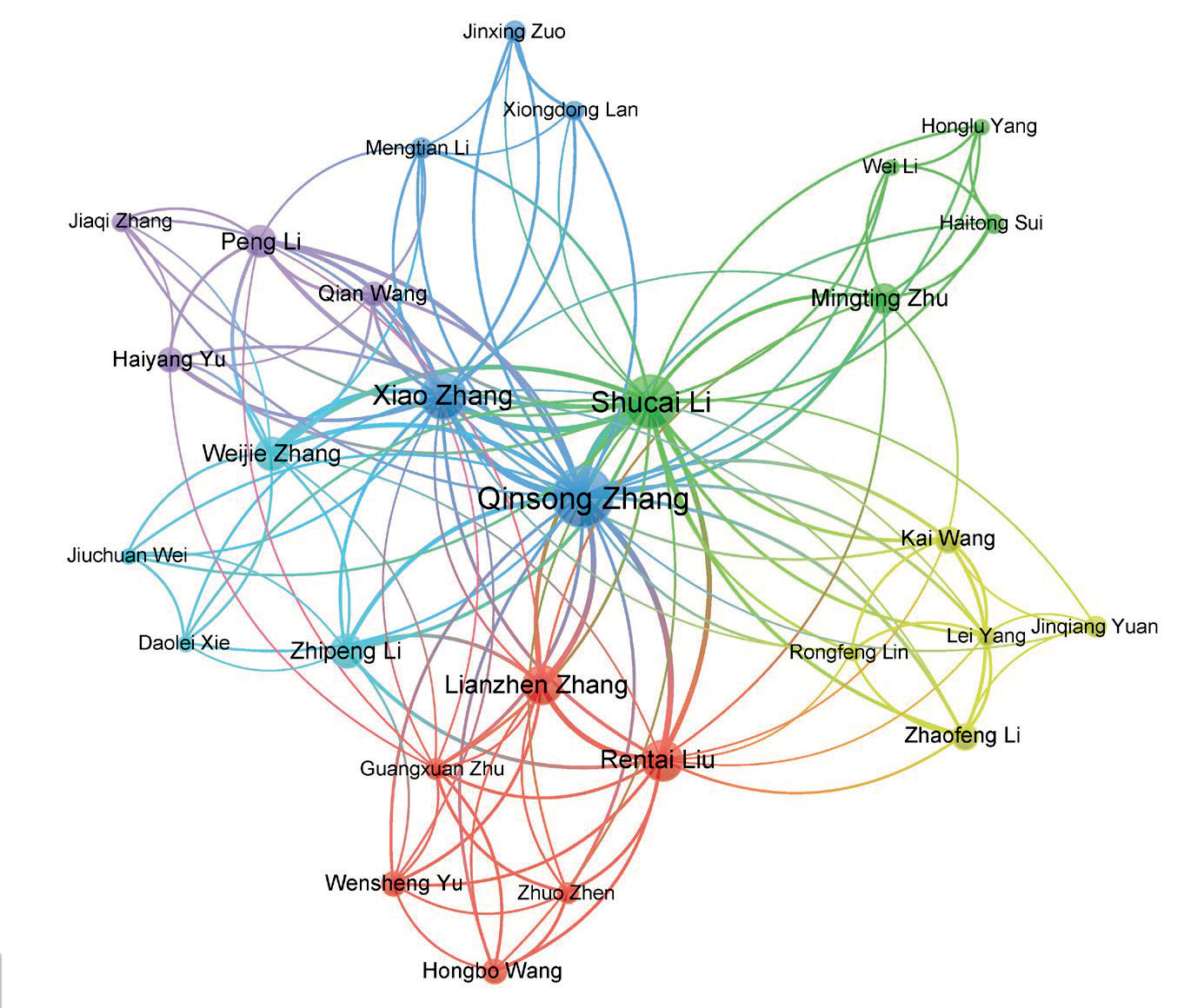
As shown in Fig. 6, in these published papers, Zhang [94], Li [95] et al. from Shandong University described the key technologies and research achievements in the field of split grouting. Relevant research shows that split grouting technology has been applied and developed effectively in the construction fields of water gushing treatment, formation reinforcement, collapse treatment, deformation control, gas overflow prevention, and engineering rescue.
Surrounding Rock Environment During Split Grouting Construction
Split Grouting Technology for Urban Underground Space
Highway and railway tunnels often pass through various types of water rich and weak strata, such as fault fracture zones. More than 90% of urban subways and building foundation pits are constructed in the water rich Quaternary topsoil layer, and the water rich and weak strata have become the most common unfavorable geological body in the construction process of underground engineering. Rich water and weak strata have significant characteristics such as rich water content, low bonding strength, and poor self-stability. They are prone to inducing tunnel collapses [96, 97], water and mud inrushes [98], and foundation pit collapses [99], which in turn lead to subsequent environmental disasters such as surface collapses, traffic interruptions, pipeline ruptures, house damages, and ecological damages, as shown in Fig. 7.
Grouting [100, 101] is an effective method for treating water rich and weak strata. Through grouting, the mechanical and impermeable properties of the injected strata can be effectively improved, thereby ensuring the stability of surrounding rock and water inflow during the excavation and operation periods of underground engineering to meet design requirements. However, the characteristics of geotechnical engineering grouting, such as concealment and complexity of the strata, have led to the current grouting engineering being in the stage of “experience and blindness” for a long time. In order to achieve the transformation of underground engineering grouting from blind experience to scientific quantification, domestic and foreign scholars have conducted a large amount of research on the theory of underground engineering grouting control.
In terms of research on splitting grouting, Li et al. [102] studied the splitting diffusion process of different flow types of slurries (Newtonian fluid, Bingham fluid, and power-law fluid) based on a flat narrow slit model. On this basis, Zhang et al. [103-105] considered the compaction effect of slurry on the strata on both sides of the grouting vein during the splitting grouting process, and established a more practical calculation model for the splitting grouting diffusion process, which preliminarily solved the problem of how to calculate the diffusion range of splitting compaction grouting and the thickness of the grouting vein in weak strata. In terms of the research on the mechanism of splitting compaction grouting reinforcement, experimental research methods are currently mainly used. Li et al. [106, 107] conducted indoor experiments on the splitting grouting reinforcement of fault mud media, and obtained the growth patterns of mechanical properties before and after a single sample splitting grouting. However, the research did not involve the relationship between the sample performance and the properties of the grouting vein, and the compacted formation. Zhang et al. [108] conducted a three-dimensional model test of curtain grouting in weak strata to study the overall stability of grouting and solid under excavation and water pressure overload conditions.
Split Grouting Technology for Mountain Tunnels
The construction of highway traffic in China is in full swing. As a mountainous country, about 2/3 of the land belongs to the mountainous area. Therefore, the large-scale construction of highways will inevitably greatly promote the construction of tunnel projects. Tunnels will play an increasingly important role in transportation projects. The geological conditions encountered in the construction of mountain tunnels are very complicated, and the geological structure activities are strong. These adverse geological conditions often cause disasters such as water and mud inrush in the tunnel during the construction process, which seriously threaten the progress and safety of tunnel construction, and even cause casualties and major economic losses. Crossing water-rich karst geology during tunnel construction is one of the main geological factors leading to water and mud inrush disasters in tunnels, as shown in Fig. 8.
Pan et al. [109] simplified the sand layer grouting formula based on the flow characteristics of slurry in gravel, combined with the influence of slurry viscosity on the sand layer, and obtained the grouting theory of spherical diffusion. Zhang et al. [110] obtained a step-by-step algorithm for the grouting diffusion process based on the Bingham fluid slurry constitutive model and introduced a two-stage crack deformation control equation. Wei et al. [111] conducted in-depth analysis of the effects of grouting materials, geological conditions of surrounding rock, and slurry flow performance on the crack grouting process. They obtained an improved grouting algorithm, simplified the crack grouting formula, and verified it using actual engineering objects. Zhang and Zhan et al. [112] conducted indoor model tests and simulations on the diffusion law of grout and the reinforcement effect of crack grouting under different water flow rates to obtain the optimal grouting effect under dynamic water conditions. It was found that the layout of grouting holes in the surrounding rock should be adjusted accordingly based on the water flow rate inside the crack, and the spacing of holes should be reduced in locations with high flow rates.
Subsea Tunnel Construction Environment Grouting Technology
A large number of engineering practices have shown that when a tunnel passes through the surrounding rock of a fault fracture zone, disasters such as water inrush, mud inrush, and collapse caused by the fault fracture zone, can cause significant loss of life and property, and delay the construction period. In the construction of underwater tunnels, due to the unlimited supply of seawater, accidents such as water inrush, mud inrush, and collapse caused by fault fracture zones are more serious and cause greater losses. In addition, improper handling of fault fracture zones can affect the normal operation of subsea tunnels, making them unable to reach their designed service life. Therefore, it is of great significance to study the mechanical characteristics and stability of tunnel-surrounding rocks in fault fracture zones.
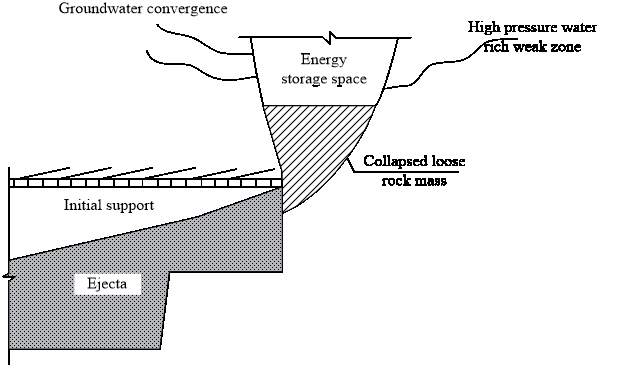
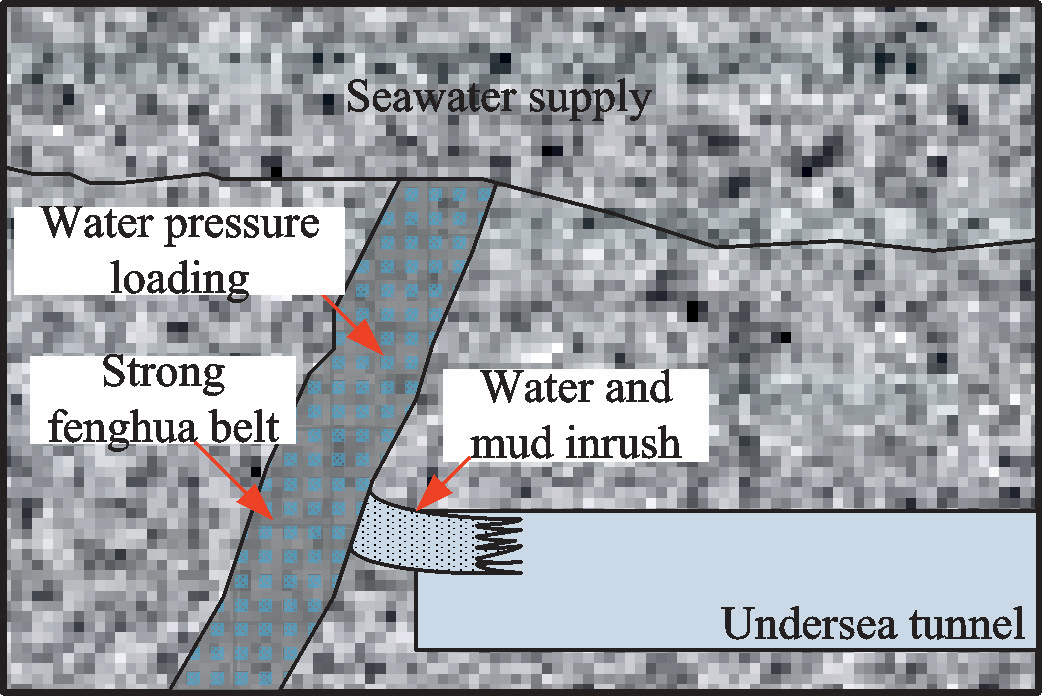
The strongly weathered zone has the characteristics of broken filling material, complex lithological composition, poor bearing capacity, and easy softening and collapsing when encountering water. It is one of the most common geological structures causing water and mud inrush disasters in subsea tunnel engineering due to the combined action of overlying seawater pressure and excavation disturbances [113-116] (see Fig. 9). Due to its unique properties and sustained high water pressure, the highly permeable seabed weathered zone not only needs to prevent sudden water inrush accidents caused by unstable strata during construction, but also needs to reliably block water to reduce tunnel drainage. The adaptability of grouting design to the strata and the grouting mechanism have become the key to the grouting construction of underwater tunnels.
Taking the construction task of Xiamen Metro’s cross sea tunnel crossing multiple weathered zones undertaken by China Railway Tunnel Survey and Design Research Institute as an example, the weathered zone has strong connectivity with seawater, high water pressure, and a single borehole water jet distance of up to 20 m, with a water volume of up to 250 m3/h. To ensure the safety and smoothness of the underwater tunnel, the following innovative technologies have been adopted for construction: 1) A grouting method combining full section curtain grouting and peripheral radial supplementary grouting has been developed for the weathered zone, and the principle of “dynamic design for water blocking reinforcement” and the “25 m - 20 m - 5 m” reinforcement excavation plan have been determined. The reinforcement section is 25 m long in each cycle, the excavation is 20 m long, and the lower cycle overlap length is 5 m, and a large pipe shed support plan without a studio has been provided. The compaction and reinforcement of the strata have achieved the goal of “focusing on blocking and combining blocking and drainage”. 2) During grouting, thin slurry is injected first and then thick slurry is injected. Ordinary cement is injected into the holes with large water output, and ultrafine cement is injected into the holes with small water output. Ultrafine cement-water glass double liquid slurry is used for sealing the holes, and multiple types and ratios of slurry are tested for organic and inorganic materials. A new material with high water blocking and anti-permeability for underwater tunnel grouting is proposed, which effectively solves the problems of high density, high water pressure, and strong seawater corrosion in weathered zone strata.
3) By combining the construction of grouting holes using a multi arm trolley with the construction of pipe shed holes using a large tracked drilling rig, and matching the step method construction, the upper half section is reinforced with holes, and the forward grouting ensures quality, avoiding repeated changes in the grouting platform, improving grouting construction efficiency, and ensuring the balance between grouting quality and surrounding environmental safety. Achieving a balance between ensuring grouting quality and meeting the safety of the surrounding environment.
Materials and Equipment for Splitting Grouting
Splitting Grouting Material
Grouting materials are a key link and primary task in the implementation of grouting engineering, generally composed of main agents, solvents, and additives (curing agents, catalysts, etc.). The commonly used grouting materials are named after the main agent. The grouting materials for underground engineering can be traced back to clay and quicklime in 1802, with a history of over 200 years to this day. The grouting theory originated from the classic theory of infiltration grouting in 1938 and has been developed for over 80 years. In the development process of grouting materials for over two centuries, based on the engineering needs, technological levels, and material research and development of different periods, clay, quicklime, cement, gypsum, bentonite, water glass, pentahydrate water glass, water glass cement, asphalt, epoxy resin, acrylamide, furan resin, methyl methacrylate, furfuryl acetone modified epoxy resin, lignin, polyurethane, aldehyde resin, acrylate Dozens of “single grouting materials”, “modified grouting materials”, and “composite grouting materials” represented by epoxy resin, acrylic strength, ultrafine cement, special cement (TGRM sulphoaluminate Cement), fly ash cement, silicon powder cement, tannin slurry, alkali activated carbonate slag material, Marisan, high water material, etc.
Grouting material is one of the key factors related to the success or failure of grouting, which directly affects a series of issues such as grouting cost, grouting process, and grouting effect. There are various types of modern grouting materials, and commonly used grouting materials in tunnels can be divided into three categories: cementitious materials, chemical materials, and composite materials [24-25, 117, 118]. Cementitious slurry materials include unstable granular slurry materials (cement) and stable granular slurry materials (cement clay, etc.), while chemical slurry materials include inorganic slurry materials (water glass) and organic slurry materials (epoxy resin, polyurethane, etc.). The characteristics and applications of common grouting materials are shown in Table 2.
At present, it is difficult to find a grouting material that can simultaneously meet various needs. The selection of grouting materials should consider geological conditions, grouting objectives, engineering object characteristics, etc., and choose a more reasonable combination of one or more grouting materials to make grouting both effective and economically reasonable.
Table 2.
Characteristics and application of conventional grouting materials.
Integrated Equipment and Process for Splitting Grouting, Drilling, and Injection
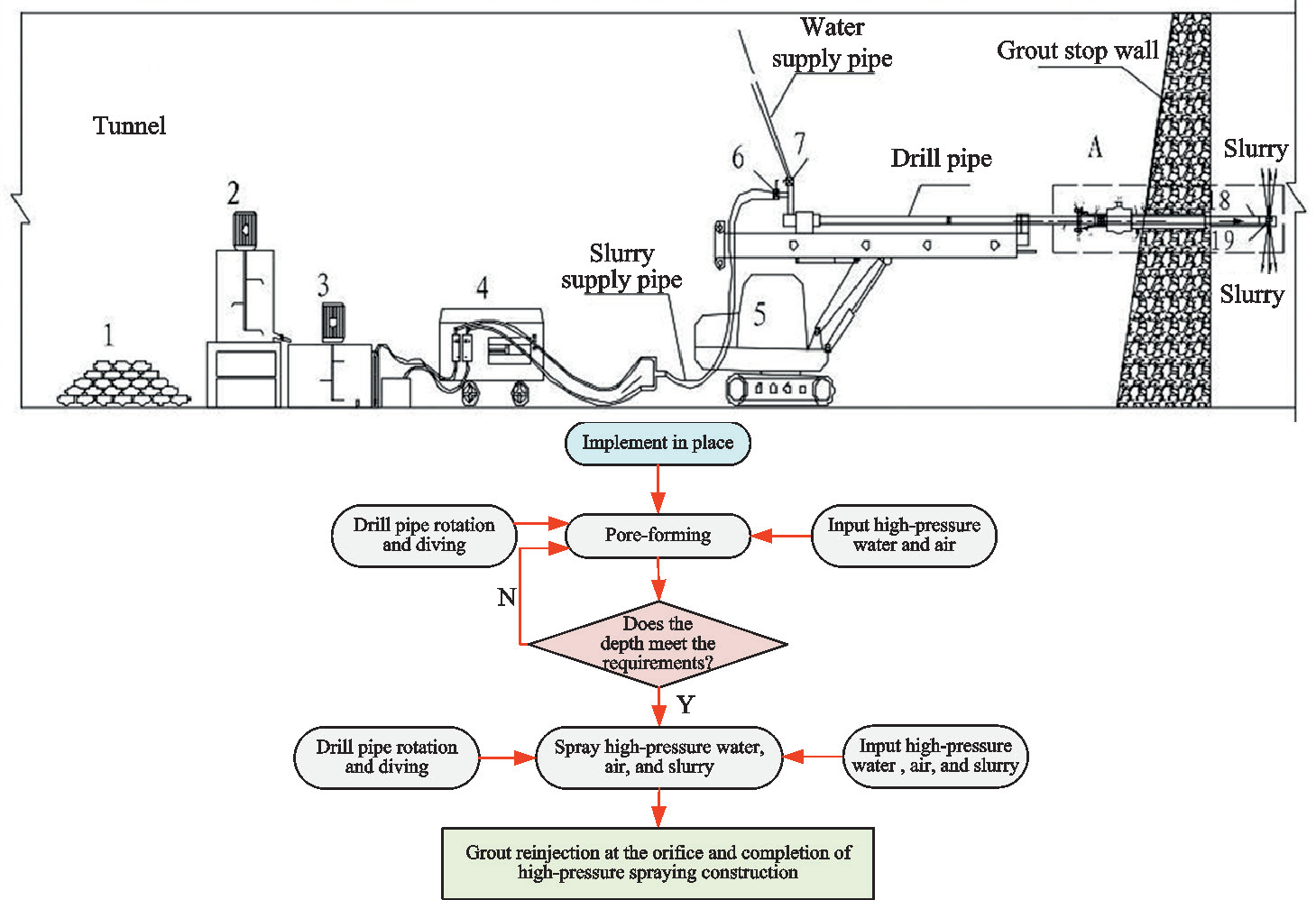
The integrated drilling and injection grouting process refers to the use of an orifice sealing device to complete the grouting through the drill pipe after drilling to the design depth. During the grouting process, the drill pipe is continuously rotated, segmented and retreated, and each section of the drill pipe is sequentially removed until the final grouting is completed. It can achieve rapid and continuous drilling and grouting operations, achieve integration of drilling and grouting, improve work efficiency, improve results, and reduce costs. The principle and process of integrated drilling and injection construction are shown in Fig. 10.
Due to the involvement of site preparation and process conversion in tunnel grouting construction, the comprehensive grouting efficiency has become a key factor affecting tunnel excavation. Therefore, it is necessary to select suitable drilling, grouting, and mixing equipment, and provide supporting facilities to improve the efficiency of drilling and grouting operations.
In the past 20 years, tunnel drilling and grouting equipment has developed rapidly, with drilling rigs transitioning from small separated tunnel drilling rigs to large high-power tracked fully hydraulic multifunctional drilling rigs. For tunnel drilling equipment, due to the limited working space of the tunnel, large and medium-sized tracked drilling machines are the mainstream of drilling equipment. Compared with traditional desktop drilling machines, they have the advantages of convenient spatial positioning and high drilling efficiency. Their torque can reach 8000 N·m, rotational speed can reach 80 r/min, impact force 450 kN, and impact number 2200 bpm, such as CasagrandeC6 drilling machine from Italy, XMZ120 drilling machine from XCMG, RPD-180CBR drilling machine from Japan, and MC15 drilling machine from Germany. The power system has evolved from electric hydraulic or pneumatic to single power (electric/internal combustion) hydraulic drilling rigs, and then to dual power (Electric + internal combustion) hydraulic drilling rigs, equipped with a series of automated auxiliary equipment and devices, such as drilling protrusion prevention, rope coring device, automatic control recording, and a borehole camera system.
With the vigorous development of China’s equipment manufacturing industry, drilling equipment manufacturing technology will continue to progress towards greater torque, higher rotational speed, and more stable hydraulic systems. At the same time, automated loading and unloading of drill pipes, intelligent variable speed drilling, and environmentally friendly dust collection and noise reduction are also among the new era grouting drilling technologies, which are currently being continuously explored and verified in practice.
The continuous development of grouting equipment has formed a platform integration of related equipment, reducing pipeline connections, accelerating entry and exit speed, improving work efficiency, and achieving reduced weight, miniaturization, serialization, specialization, and automation of grouting equipment. Integrating drilling, grouting and other equipment, we produce light and small grouting units, develop specialized grouting units, and configure automatic control and monitoring systems in the grouting units to achieve centralized control, automatic recording, and large-scale grouting construction with multiple pumps for a complete set of automatic grouting systems.
Numerical Simulation Calculation
In recent years, with the development of high-performance computer technology, numerical simulation has been more and more widely used in geotechnical engineering fields such as grouting. Computer numerical simulation technology has the characteristics of low operation cost, powerful function, and high efficiency. It can realize the transformation of the grouting process from “invisible” to “visible”. It has unique advantages for deeply revealing the law of slurry diffusion and the change of stress and displacement in the dynamic coupling process of slurry. Computer numerical simulation technology has gradually become the mainstream method to solve problems in the engineering field, and has become the three pillars of scientific research such as grouting along with theoretical analysis and experimental research.
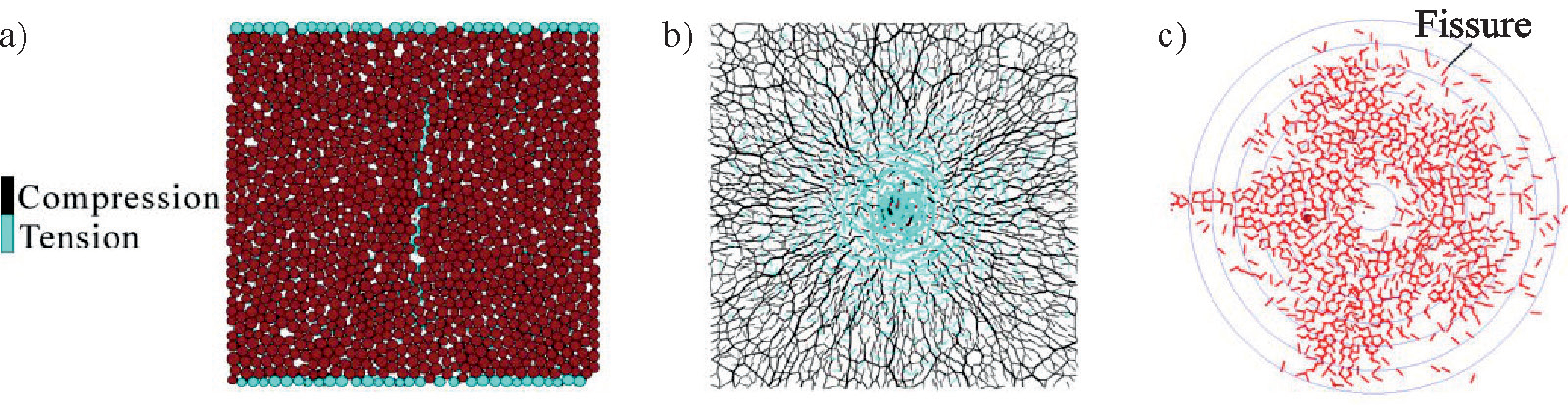
Zheng et al. [119] found that grouting pressure is the decisive factor in the grouting process, and it has a significant impact on the diffusion radius of the slurry, the porosity of the soil, and the stress state through PFC 2D numerical experiments. The numerical experiment shows that the diffusion radius of the slurry first increases, and then decreases with the increase of grouting pressure, and there is an optimal grouting pressure. The record of the measurement circle shows that the closer to the grouting hole, the more complex the changes in mechanical parameters such as porosity and principal stress of the soil (Fig. 11).
Zhu et al. [120] simulated the generation and development of splitting cracks based on the dispersion crack model, and used the fluid volume function method (VOF) to perform finite element analysis on the splitting grouting process. The results show that the buried depth of the grouting hole has an obvious influence on the diffusion form of the slurry and the number and width of the slurry vein. When the buried depth is shallow, it is easy to produce a secondary slurry vein, and the number and branches of slurry veins are higher. When the buried depth is large, the length of the slurry vein decreases and the width increases. Under the condition of the same grouting amount, the larger the grouting rate, the larger the grouting vein width, and the better the grouting effect. The results of numerical analysis are basically consistent with the model test results, and have high engineering application value.
Wang et al. [121] pointed out that there is a fluid-solid coupling effect between slurry and rock wall in the process of splitting grouting of single fractured rock mass. This fluid-solid coupling effect increases with the increase of grouting pressure and decreases with the increase of fracture width, but basically does not change with the variation of the fracture dip angle.
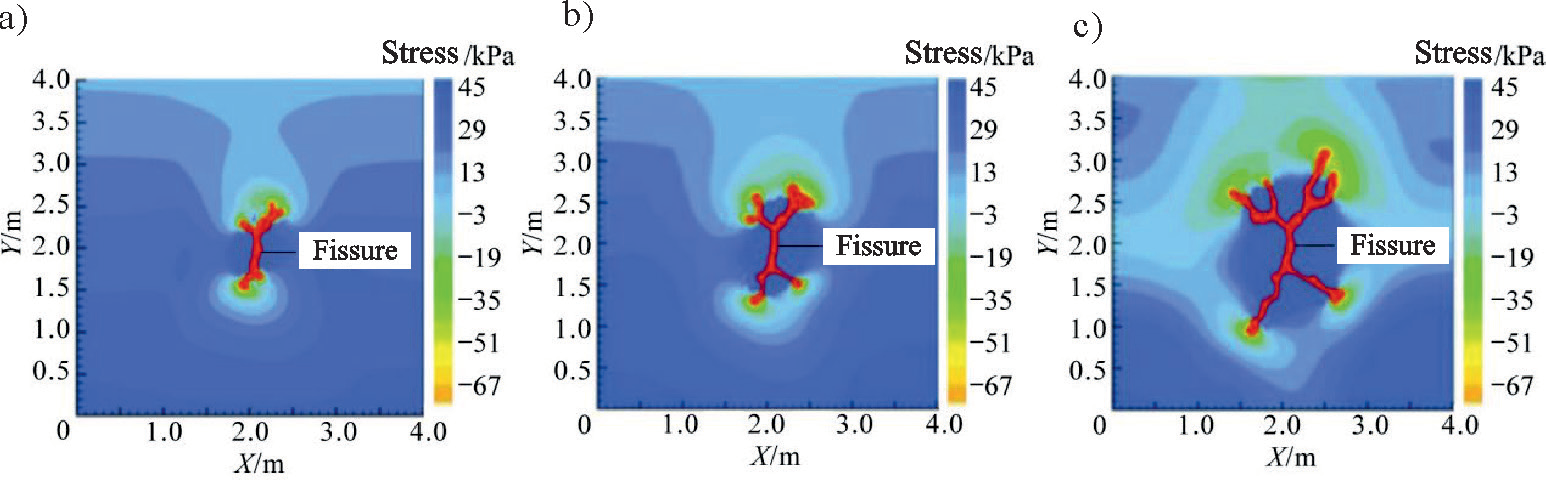
Based on the finite element method (FEM) and the fluid volume function method (VOF), Cheng et al. [122] conducted a deep exploration of the law of splitting grouting. The research shows that the integrity and structural changes of the stratum in the first splitting stage are small, and the oblique veins are rapidly generated and expanded after the second splitting, which has a large structural change in the soil, and the vertical displacement of the stratum increases with it (Fig. 12); the depth of grouting hole and the compression modulus of soil have a significant effect on the width of grouting veins and the expansion form of splitting cracks. The effect of splitting grouting becomes worse with the increase of grouting depth and the increase of compression modulus of soil.
Key Technologies that Urgently Need Breakthroughs
Intelligent Perception Technology for the Entire Grouting Process
For a long time, there has been a lack of intelligent perception technology for grouting equipment in the field of tunnel construction in China, resulting in a series of “blind grouting” phenomena such as insufficient grouting, inadequate supervision of the grouting process, and unclear grouting effect. This has caused a series of problems such as roof fall and collapse during excavation of the tunnel face, and the surrounding rock lacks better self-stability, directly affecting the construction period and operational safety.
Most of the existing research work is based on model tests, and the test conditions are ideal, which is very different from the actual working conditions. In the aspect of intelligent perception technology in the whole process of grouting, there are few related researches. It is urgent to carry out the research on the inversion of cavity, fault, fracture, rock interface, and other rock mass structures with the injection parameters, and develop the injection parameters acquisition system suitable for engineering grouting. Based on the actual working conditions, the research on the matching relationship between the injection parameters and the geological information is carried out, and the research on the intelligent perception technology of the whole process of grouting combined with the inversion of process parameters and the injection technology is carried out to expand the data source and realize the injection perception of multi-data fusion.
Directional Splitting Grouting Control Technology
The directional control of split grouting is influenced by multiple factors, such as the coupling mechanism between grout and soil, the formation mechanism of grout veins, and the direction of main stress in the formation. Currently, there is relatively little research on the formation mechanism of directional split grouting, and there is a lack of clear understanding of its mechanisms, such as the grout vein diffusion mechanism, the cross-border splitting law, and directional control methods. It is urgent to study its directional split grouting control mechanism and grout vein formation mechanism to achieve the expansion of split grout veins towards the target reinforcement area. Finally, a dynamic control method for targeted splitting grouting based on pressure gradient control technology was proposed.
Automatic Control Technology for the Entire Grouting Process
The automation control technology for the entire grouting process covers grouting, grouting equipment, and information control systems. By establishing a feedback channel between the grouting control system and underground grouting information, the information control system is used to detect, perceive, and transmit real-time data on the grouting process. Through the feedback data, further intelligent analysis and decision-making are carried out, and execution commands are issued to the grouting equipment to achieve intelligent control of the grouting process. The automation control technology for the entire grouting process is an important part of achieving intelligent grouting integration. Therefore, focusing on technologies such as big data, Internet of Things, deep learning, and machine vision, efficient analysis and interpretation of massive data during the grouting process, improving human-machine interaction and decision-making capabilities, and reducing construction costs will be an important research direction in the future.
Ultra Long Distance Grouting Control Technology
The existing grouting technology has insufficient consideration in the technical measures of ultra-long-distance drilling. In view of the water diversion project in central Yunnan facing the problems of deep-buried high-stress tunnels and high-pressure and large-flow water gushing, it is necessary to fully consider the guarantee measures of borehole grouting and the technical requirements of long-distance borehole drilling, which need to be determined in combination with specific geological conditions. In addition, the traditional process still has defects in the detection of grouting effect and monitoring measurement. The traditional ground geophysical exploration has obvious technical deficiencies in the detection of large buried depth tunnels. For example, the transient electromagnetic method has a buried depth of 1000 m, and the accuracy is greater than 50 m. Obviously, it cannot guide the grouting detection, while the traditional sweeping water injection detection has poor applicability in ultra-long distance grouting, and cannot effectively characterize the grouting area governance effect. Therefore, it is necessary to integrate ground geophysical prospecting methods, underground engineering tunnel detection, and grouting process data analysis and detection.
High Retention Rate Intelligent Grouting Material
The purpose of tunnel grouting is waterproofing and consolidation. Therefore, the development of flexible grouting materials with both permeability and toughness is the development trend of tunnel grouting materials. The development of organic-inorganic mixed grouting materials composed of polyurethane and water glass is expected to combine the advantages of water glass and polyurethane, avoid their respective shortcomings, obtain flexible grouting materials with low permeability and toughness, and improve the flammability of single polyurethane grouting materials. In addition, the development of the biochemical field has promoted the innovative research and development of new grouting materials. Once the new materials are applied, they will bring great breakthroughs to the grouting technology. Non-aqueous reactive polymers, CW epoxy resins, MICP, inorganic-organic composites, etc., all need to be improved and innovated. In addition, the research on grouting materials is currently focused on its macroscopic properties such as mix ratio and physical properties, and lacks the research on the microstructure of the stone body and the theory of slurry diffusion. The corresponding basic theoretical research will play an important role in improving the grouting effect.
Visualization Technology of the Entire Grouting Process
Grouting construction process is often hindered due to the lack of advanced grouting information real-time monitoring technology, delaying the actual grouting construction significantly, often caused by the reinforcement of rock and soil mass which is too large and causes settlement, offset or instantaneous arch, material waste, cost increase, construction period delay, etc. It is urgent to establish an advanced and high-precision real-time monitoring and information processing system for rock and soil reinforcement in the grouting process, so as to realize real-time monitoring and visual control of the grouting reinforcement process.
Rapid Evaluation Technology of Grouting Effect
For the grouting effect evaluation technology, there are many means at the present, but most of them are judged qualitatively, and there is no unified standard for quantification. In the future, the evaluation of grouting effect should be based on different injection media, different mechanics, joints and other parameters of the same medium, and different engineering requirements, and different quantitative standards should be put forward respectively. In particular, geophysical prospecting methods should be used to evaluate the quantitative effect by establishing a large database. Aiming at the splitting grouting vein, its network skeleton is very important to the overall permeability and reinforcement strength of weak rock and soil. The splitting series (the bifurcation grade of the splitting grouting vein), the distribution range coefficient (the ratio of the distribution domain of the splitting grouting vein to the target area), and the diffusion rate (the amount of slurry in the target area) can be introduced as the evaluation parameters, and the splitting grouting effect can be evaluated based on the distribution form of the splitting grouting vein.
Conclusion
The research and application of key technologies and grouting equipment for complex rock and soil mass splitting grouting provide a new means for rapid safety management of underground engineering disasters and pre-grouting treatment of unfavorable geology, and provide a new opportunity for the development of underground engineering disaster prevention and control. This paper systematically summarizes the key technologies and equipment of underground engineering using splitting grouting to control sudden disasters and pre-grouting in strata, and puts forward the integrated platform of drilling and grouting, the idea of grouting materials and the key technologies to be broken through. The main conclusions are as follows :
(1) The existing theory of splitting grouting is mainly studied and developed in three aspects: the forming mechanism of slurry vein, the control method of directional splitting grouting, and the evaluation method of reinforcement effect of splitting grouting. However, there is still a lack of research on the formation principle of secondary slurry vein and the law of cross-border diffusion of slurry vein, the analysis of the splitting direction of multi-sequence grouting, and the lack of comprehensive evaluation method combining reinforcement effect, impermeability effect, and slurry vein diffusion effect. It is urgent to further study and promote the development of splitting grouting theory on the existing basic theory.
(2) Due to the differences in the development level and application needs of underground engineering in different geological environments, as well as the asymmetry of information on the development of split grouting technology, there are still repeated investments in grouting technology and equipment research and application in different geological environments, such as urban underground spaces, mountain tunnels, and underwater tunnels. This has led to slow start-up of some grouting equipment projects with high technical difficulties, and requires strengthening macro guidance from the national level. Overall planning, further integrating advantageous resources, strengthening communication between equipment research and application units, and conducting in-depth research on the integrated equipment technology system for underground engineering fracturing and grouting is recommended, in order to achieve efficient and reliable equipment operation.
(3) With the start-up and advancement of strategic projects in many countries, tunnel construction has continued to deepen the previous engineering geological restricted areas. Grouting technology, as the most direct means to improve geology, will further deepen grouting theory, further develop grouting materials, further optimize grouting technology, further upgrade grouting equipment, and improve grouting effect tests in engineering practice. With better grouting quality and faster grouting speed, we can bear new responsibilities. Meet new challenges.

