

Introduction
The degradation of global ecosystems is increasingly severe, with many ecosystems experiencing declines in biodiversity, habitat loss, and a decline in ecological functions. Akram et al. and Bentsill and Bulekley argued that the impact of mass production and overconsumption on the environment has exceeded its capacity for absorption and recovery [1, 2]. Global greenhouse gas emissions have significantly increased, and although some countries have made progress in reducing emissions, the overall trend continues to rise, exacerbating global warming. The key to the future is global cooperation and effort, addressing ecological challenges through technological innovation and policy implementation.
The United Nations, as a national forum for building consensus and negotiating agreements to address global issues such as climate change, forest and species loss, and air and water pollution, adopted the Global Sustainable Development Goals (SDGs) in 2015 to guide its organizational functioning and integration of global development for the period 2015-2030. Bennich et al. argued that the development of the SDGs is a positive attempt by the global community to address complex challenges and the current global need to collectively address pressing issues relevant to the future survival of humanity and species [3]. In particular, Goal 13, Goal 14, and Goal 15 focus on climate change and the conservation and utilization of marine and terrestrial resources. Akram et al. examined natural resource dependence, eco-innovation, and green energy to promote sustainable development and curb biodiversity loss [1]. Through the realization of these goals, global economic, social, and environmental sustainability will be promoted to create a peaceful and prosperous future.
The Chinese government has introduced a system of relevant laws and regulations covering forests, wetlands, deserts, oceans, aquatic biological resources, terrestrial wildlife resources, and other important ecological and environmental elements, as well as key functional ecological zones, nature reserves, and other areas. Eco-protection policies include eco-protection compensation mechanisms, regional cooperation mechanisms, etc., and comprehensively implement the development concept of “green mountains are golden mountains”. These measures aim to improve ecosystem quality and stability, modernize ecological governance, adjust industrial and energy structures, and support carbon peaking and neutrality goals. Additionally, they enhance the capacity to adapt to and mitigate climate change, ensuring ecological security.
The Guangdong-Hong Kong-Macao Greater Bay Area (GBA), comprising Hong Kong, Macao, and nine cities in Guangdong Province, stands as one of China’s most open and economically dynamic regions and plays a significant role in the nation’s overall development strategy. The GBA covers an area of about 5.47 km2 on land, with an additional 20,100 km2 of sea area and 942 km2 of reclaimed land. Currently, 128,000 hm2 of afforestation and ecological restoration have been completed, and 693 hm2 of mine re-greening have been realized. The rate of good water quality exceeds 70%, the air quality index meets standards more than 90% of the time, and wetlands account for 17.6% of the total area. In recent years, the natural and agricultural ecosystems of the GBA have been increasingly transforming into urban ecosystems, resulting in a reduction of forests, water bodies, and cultivated lands and an increase in grasslands, developed lands, and barren lands [4]. Leung et al. indicate that in the GBA, the habitat areas for birds primarily residing in forests and farmlands have decreased, while the distribution areas for urban-associated birds and various waterfowl have increased [5]. The collaborative governance of the ecological environment in the GBA still faces structural challenges, such as fragmented management mechanisms across the entire governance chain and significant regional differences in governance systems. Due to rapid development, the GBA has accumulated numerous ecological and environmental issues, particularly severe ecological overdrafts and a scarcity of resources and energy, which have increased ecological and environmental pressures [6].
The “Outline Development Plan for the Guangdong-Hong Kong-Macao Greater Bay Area” advocates for strengthened ecological and environmental protection cooperation among Guangdong, Hong Kong, and Macao to collectively enhance the ecological environment system [7]. To further deepen environmental protection cooperation in the GBA, the plan encourages learning from both domestic and international experiences in coordinated ecological governance. It proposes the establishment of specialized agencies and gradually creating a policy framework for environmental protection in the area. The plan calls for formulating and implementing stringent ecological and environmental protection regulations, improving the systematization of cooperative governance mechanisms, bridging regional disparities in environmental governance, and continuously enhancing the level of coordinated environmental governance in the GBA.
The GBA is a highly interconnected regional complex where strengthened regional cooperation, comprehensive policy and regulation frameworks, technology innovation, and the establishment of a sustainable development system can better balance economic development with environmental protection. This approach enables policy formation and legal regulations that significantly enhance the regional ecological environment, thus promoting green transformation and high-quality development [8]. This paper will provide a comprehensive analysis based on the current state of ecological environment protection and relevant GB policies that are aligned with the United Nations SDG goals. It will discuss the challenges faced by ecosystem protection and the prospects for future efforts, offering insights into enhancement and breakthroughs in subsequent ecological protection and sustainable development policies in this region.
Literature Review
Ecological Environment Protection of GBA
At present, the ecological and environmental protection situation in the GBA is dire. The region faces a series of environmental challenges that have profound negative impacts on human health and the region’s sustainable development. Firstly, water resources, which are indispensable to human production and life, are severely polluted. Core cities have low per capita water resources, high water resource development and utilization levels, and significant supply and demand pressures. This suggests strengthening the construction of sponge cities to achieve sustainable management and protection of water resources in the area. Additionally, the wetland ecosystems in the GBA are experiencing functional degradation and shrinkage in size. Developing targeted ecosystem service assessment systems and establishing wetland resource valuation systems can help address the dual pressures of climate change and human activities [10]. Taking advantage of its coastal location, the Greater Bay Area has a wealth of land and sea resources. However, the ecological quality of its coastal zones remains a concern. Consequently, it is particularly crucial to establish a coordinated terrestrial and marine ecological security barrier to protect these vulnerable areas [11].
Furthermore, climate change is closely linked with many SDGs. Global warming poses serious challenges to the stability of energy supplies and the balance of ecosystems [12]. Li assessed the emission reduction effects of stringent energy-related clean air measures implemented in the GBA during the “13th Five-Year Plan” [13]. They proposed energy-environment policy scenarios for energy structure development and air quality benefits up to 2025, recommending the establishment of comprehensive regional air quality improvement targets and issuing regional energy-environment policies to create a “demonstration zone for air quality improvement”. Additionally, the GBA is committed to low-carbon development. Zhou et al. identified economic growth and energy intensity as the main drivers and inhibitors, respectively, of increased CO2 emissions in the GBA, suggesting that green, low-carbon development in the region could be promoted by developing new energy technologies, optimizing energy structures, and implementing industrial emission reduction strategies [14]. Most studies have analyzed the current environmental governance needs of different environmental areas in the GBA and have put forward certain feasible recommendations. Still, the methodology lacked the integrated use of multiple methods and was limited by the lack of consideration of the implementation effects.
Sustainable Development
The United Nations first systematically introduced the concept of “sustainable development as the harmonious integration of economic growth, social issue resolution, and environmental protection” in its 1987 report “Our Common Future”. In 2015, the UN officially adopted the “2030 Agenda for Sustainable Development” to address the increasingly severe global socio-economic and environmental challenges [15, 16]. As a significant participant and practitioner of the UN 2030 Sustainable Development Goals, China has consistently focused on global sustainable development principles as the core target for its ecological civilization construction [17]. Islam and Wang argued that achieving sustainable development goals critically depends on the actions taken by both national and local governments [18]. According to Li, the GBA has adopted a series of policy measures on various fronts within the framework of the SDGs [13]. Few existing studies have suggested ways to improve the integration and cooperation for sustainable development at the policy level based on the regional differences in the GBA.
The relationship between ecological and environmental protection and sustainable development is closely linked. After the United Nations Conference on Environment and Development in 1992, important documents such as the “Convention on Biological Diversity” were promulgated, emphasizing that ecological and environmental protection and sustainable development have reached a global consensus [19]. The use of policy instruments to implement sustainable development goals can be seen as the government facilitating these goals through a variety of guiding methods across legal, political, economic, and other sectors [17].
Ecological and Environmental Policies and Regional Cooperation
Ecological and environmental protection policies ensure the sustainable use of resources and drive the green transformation of economies, serving as vital tools in addressing global environmental governance issues. For example, Bevilacqua, through a detailed analysis of the Paris Agreement and related EU regulations, proposes that climate change mitigation efforts should be managed through multilevel coordination between global and local governments [20]. Murphy and Gouldson connect environmental policy with industrial innovation, emphasizing the legitimacy of regulatory interventions in the innovation process [21]. They advocate integrating organizational transformations with technological advancements to achieve ecological modernization, harmonizing environmental and economic objectives. Hasan et al. use specific indicators to assess the extent to which Bangladesh has mitigated climate change following the implementation of climate policies, analyzing their synergy with national development goals and their impact on sustainability [22]. Internationally, research on ecological and environmental policies has pointed out the importance of environmental policies combined with technology applications for environmentally sustainable development but fails to provide concrete and effective measures that can be implemented. Big data analysis can provide coordinated and targeted environmental governance direction with policy innovation.
As one of China’s most economically developed regions, the GBA is also a key area for ecological protection and has a unique policy implementation environment. Current research on ecological and environmental protection policies in the GBA mainly focuses on specific ecological issues and regional collaborative governance mechanisms. For instance, Gu et al. found differences in air quality standards among the three regions within the GBA, highlighting the need to promote a coordination mechanism for aligning air quality standards to build a high-quality living circle [23]. Ge et al. proposed that the GBA actively explores cross-border ecological protection mechanisms [24]. Regional policy coordination is achieved through multilevel government collaboration. Liu et al. developed a tripartite system coupling coordination evaluation index from the perspective of economic agglomeration, industrial structure upgrading, and green economic efficiency [25]. Liao et al. analyzed air pollution experienced during the development of the world’s three major bay areas – San Francisco, New York, and Tokyo – and found that the formulation of relevant policies, regulations, and standards helped significantly reduce emissions of O3 precursors (NOx and VOCs), effectively addressing pollution issues [26]. This provides valuable insights for air quality management in the GBA, where O3 pollution is severe. To sum up, most existing studies have concentrated on individual aspects of ecological issues or the effectiveness of specific regional cooperative mechanisms. However, there is a noticeable lack of comprehensive analyses that utilize big data to gain a holistic understanding of ecological and environmental dynamics across the GBA. This integrated approach is essential for developing more effective and adaptive policies to address the unique challenges and opportunities within this economically vibrant and ecologically sensitive region.
Materials and Methods
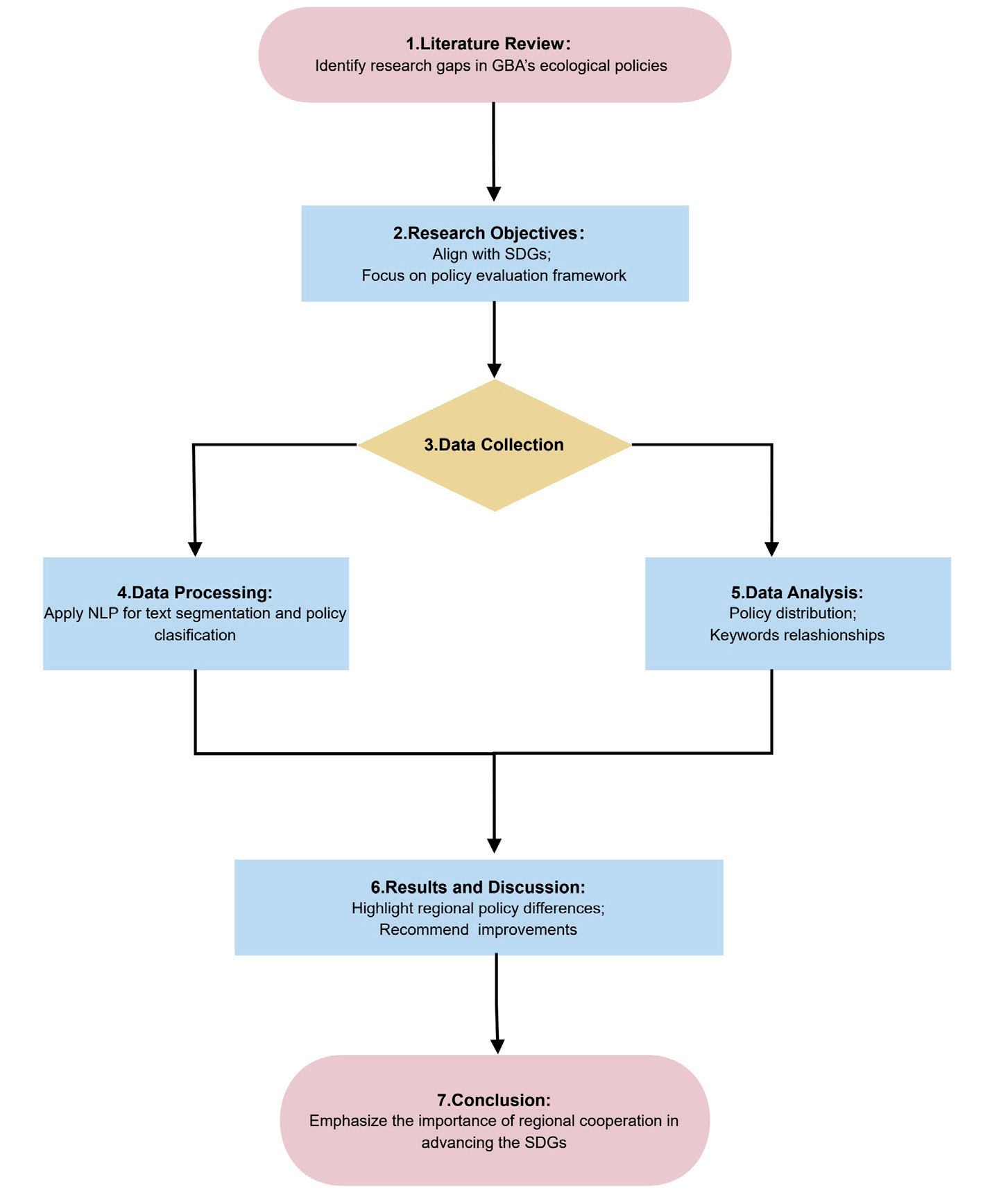
Fig. 1 presents an overview of the study, including key stages such as literature review, data collection, processing, and analysis. This study utilizes policy texts related to environmental protection in the Guangdong-Hong Kong-Macao Greater Bay Area as the primary data source, processed using large language models and natural language processing techniques for further analysis.
Data Collection and Cleaning
The study focused on policies published after 2019, aligning with the release of the Outline Development Plan for the Guangdong-Hong Kong-Macao Greater Bay Area. This document prioritized both comprehensive regional development policies and specialized environmental governance initiatives, covering a range of topics, including pollution control, ecological restoration, and sustainable resource management. Policy texts were gathered using keywords such as “ecology”, “environmental protection”, and “resource conservation”. Searches were conducted on government websites and the Peking University Law Database, resulting in 120 documents. After removing 38 duplicates, 82 valid policy texts remained, as shown in the first and second columns of Table 1.
Data Processing
Text Classification Using a Fine-Tuned Large Language Model
In the first part, the study employs the xlm-roberta-large-xnli model, developed and fine-tuned by Facebook AI, for text classification in preparation for subsequent analysis [27]. Traditionally, natural language processing (NLP) involves using tools like NLTK to tokenize data into individual words, followed by word frequency analysis, which is limited to the word level [28]. However, with the advent of large language models, NLP can now handle sentence-level data. Given the formal structure of the policy documents, sentences were segmented using periods and line breaks. The number of segmented sentences for each region is shown in the third column of Table 1.
Data Classification Based on Two Levels
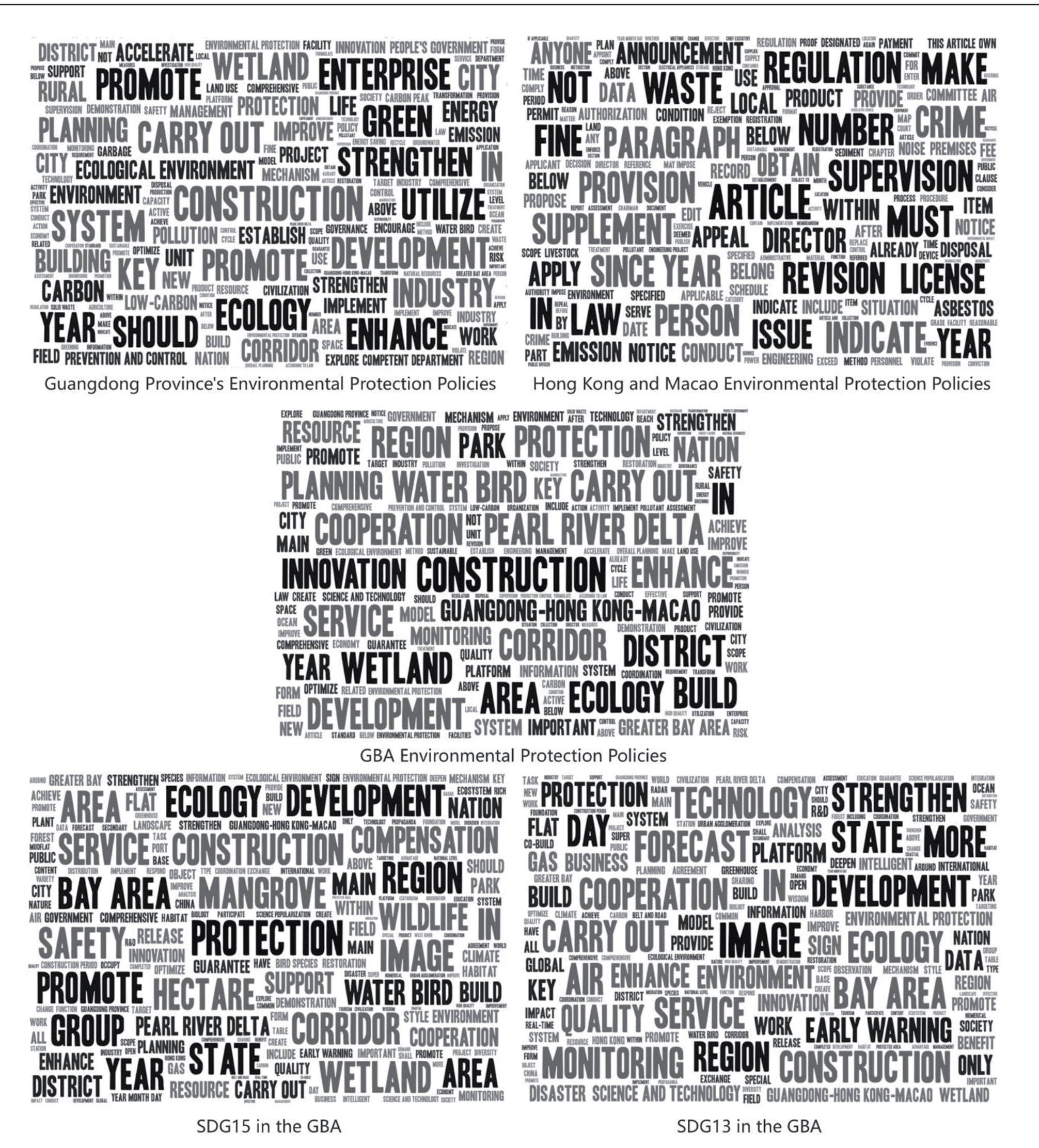
The second part of the study involves classification on two levels based on the codebook shown in Table 2. The data were manually classified at the policy level according to the “Environmental Protection Activities Classification Table” released by the National Bureau of Statistics of China [29]. On the sentence level, the study used the Natural Language Inference (NLI) capabilities of the xlm-roberta-large-xnli model to perform text classification based on the United Nations Sustainable Development Goals (SDGs) related to environmental protection [29, 30]. Then, all classifications were analyzed using the word cloud, some of which were displayed in Fig. 2.
Network Analysis Framework
In the third part, the study focuses on word co-occurrence and keyword inclusion relationships to analyze the network of ecological environmental protection policies in the Guangdong-Hong Kong-Macao region from the perspective of industry-university-research collaboration [31]. In this social network analysis, three types of node relationships are defined:
1. Keyword Inclusion Relationships: This relationship explores regional connections by including specific keywords in policy texts. Specifically, the study examines the occurrence of terms like “Guangdong Province”, “Hong Kong”, “Macao”, and “Greater Bay Area” in the policy documents of each region. The frequency of these terms in the respective documents forms the “edges” in the social network.
2. Keyword Frequency in the Context of the Triple Helix Framework: Under the Triple Helix theory, the study counts the occurrences of industry-university-research-related keywords in the policy texts from each region. This analysis aims to explore how each region’s policies align with the themes of industry, academia, and research collaboration.
Table 1.
Number of Valid Data and Processed Policy Sentences.
| Policy Scope | Number of Policies | Number of Policy Sentences |
|---|---|---|
| Guangdong Province | 53 | 13285 |
| Hong Kong | 6 | 5796 |
| Macao | 5 | 226 |
| Greater Bay Area (GBA) | 18 | 812 |
Table 2.
The codebook of this study.
3. Word Co-occurrence Relationships: The study further examines the co-occurrence of keywords related to industry, academia, and research to assess the relationships among these three aspects.
Based on the relationships defined above, as well as the inclusion of four regions (Guangdong, Hong Kong, Macao, Greater Bay Area) and the three domains (industry, academia, and research), a network diagram is constructed with seven nodes representing the regions and the three key sectors. This network aims to visually demonstrate the interconnections between regions and their respective focus on industry-university-research collaboration within the context of ecological and environmental protection policies (Fig. 3).
Results and Discussion
Ecological Policy Integration and Regional Differences in the GBA
In recent years, the GBA has taken proactive steps to address regional environmental issues by implementing a series of ecological protection policies. This study categorizes these policies based on China’s environmental classification standards. The findings reveal that while there are both similarities and differences in the environmental protection policies across regions, these variations are closely linked to the overall policy environment and each area’s institutional and cultural backgrounds.
Fig. 3.
Network Diagram of Industry-University-Research Relations in Ecological and Environmental Policy in the Greater Bay Area.
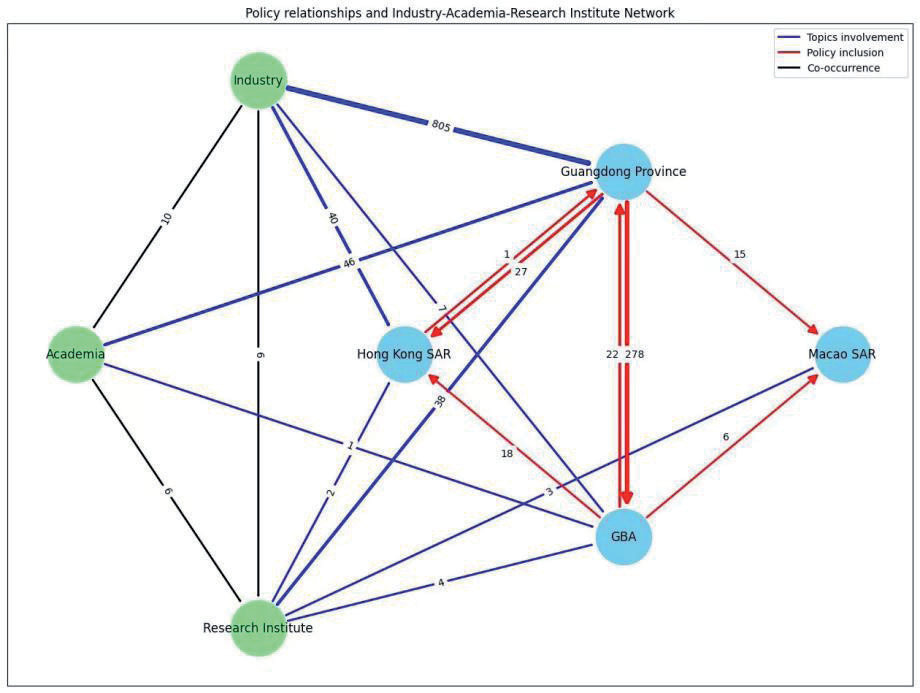
Fig. 4.
Environmental Policy Distribution in the GBA by China’s Environmental Classification Standards.
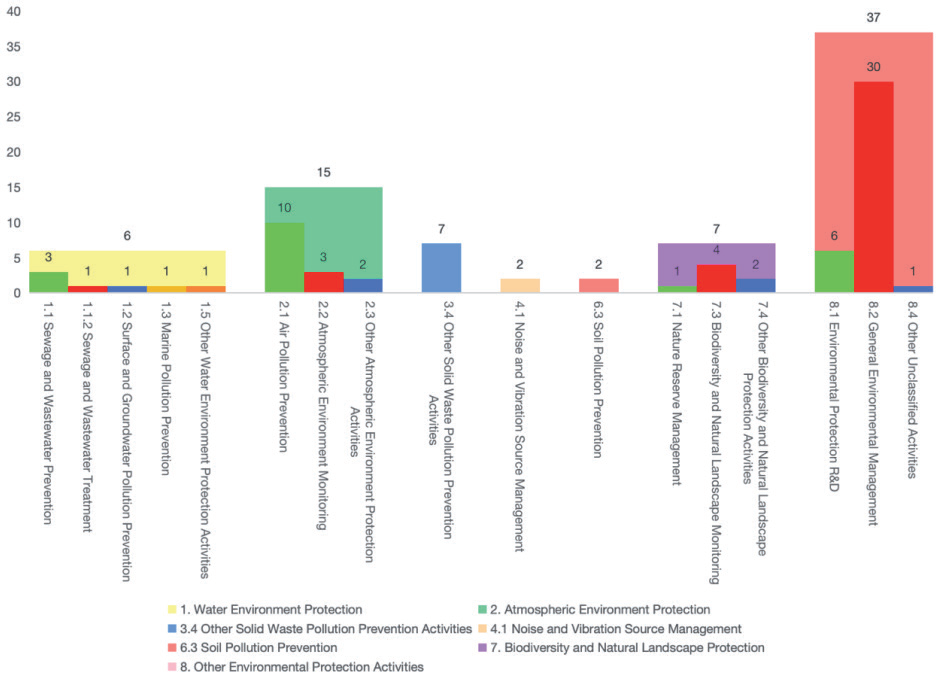
As shown in Fig. 4, environmental policies in the GBA significantly emphasize air quality protection and general environmental management, with a particular focus on air pollution control. This aligns with research on the current state of ecosystem protection and restoration in the GBA, underscoring the urgent need for policies targeting air quality and related ecological issues [32]. However, there is a notable absence of policies addressing radiation pollution control in the region, marking a gap in the current ecological policy framework.
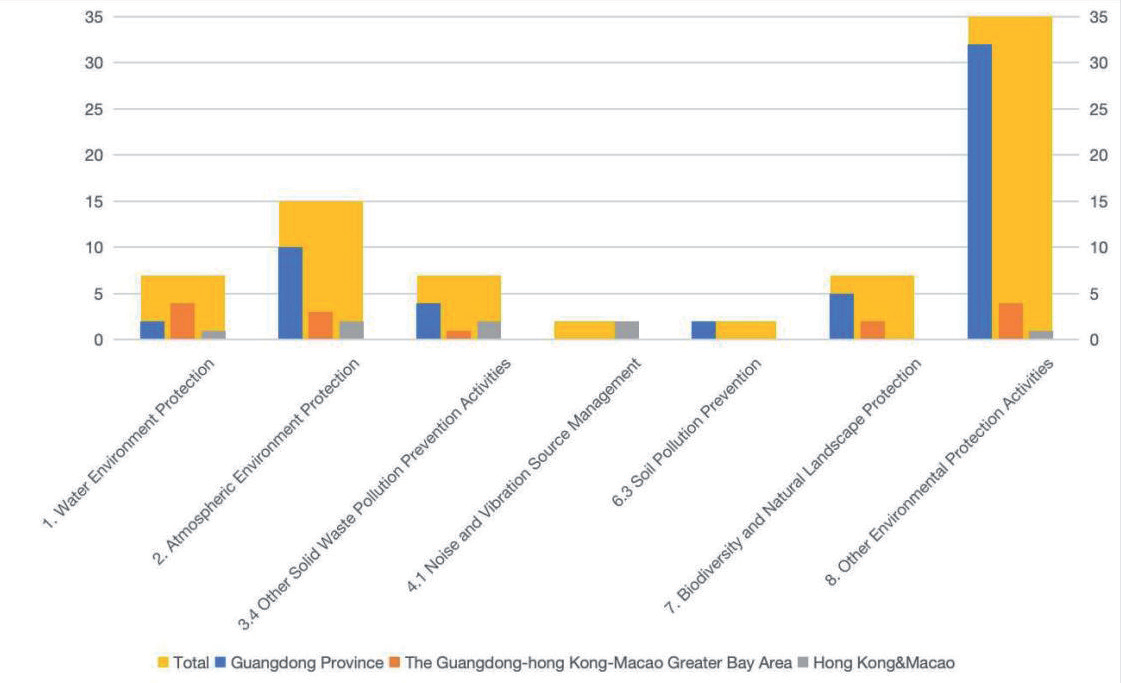
As environmental protection cooperation deepens across the GBA, the scope of attention on environmental issues expands. Given the serious challenges of cross-boundary pollution in rivers, seawater, and air, protecting and managing water and air environments remain a key focus of collaborative governance efforts in the Greater Bay Area [33].
From a regional perspective, the focus of ecological and environmental policies varies across different areas within the GBA. For instance, Guangdong Province emphasizes sustainable and coordinated development of the overall environment, with its environmental protection policies spanning multiple levels and sectors. Key areas of concern include air quality protection and other environmental protection activities, which account for 20% and 50% of the total policies, respectively (Fig. 5). However, Guangdong Province lacks regulations for noise pollution control, and regulatory agencies face challenges in terms of insufficient awareness and inadequate precision in enforcement. In contrast, with their dense populations and limited land resources, Hong Kong and Macao place greater emphasis on noise pollution and solid waste management policies [34]. Due to their coastal location and relatively small land borders, policies concerning soil protection are limited or even absent in these regions.
Additionally, the word cloud analysis reveals that Guangdong Province’s ecological and environmental protection policies are primarily based on national and provincial laws and regulations. The word “construction” appears with the highest frequency, followed by “carry out”, “development”, “enhance”, and “strengthen” (‘Guangdong Province's Environmental Protection Policies’ in Fig. 2). This indicates that Guangdong Province adopts a broad, macro-level policy approach, utilizing various energy-saving governance tools to achieve environmental protection [35].
Hong Kong and Macao’s environmental policy management frameworks differ significantly from those of Guangdong Province. In the environmental protection regulations of Hong Kong and Macao, the terms “regulation”, “supervision”, “crime”, “must”, and “fine” frequently appear (‘Hong Kong and Macao Environmental Protection Policies’ in Fig. 2). These regions rely heavily on restrictive legal provisions to curb illegal environmental activities, with stringent enforcement measures in place. This is closely linked to the high level of urbanization in these regions, where environmental regulations governing citizen behavior, public services, and imports/exports are more comprehensive and detailed, and the regulatory standards are relatively strict.
The word cloud analysis of the current environmental protection policies in the GBA (‘GBA Environmental Protection Policies’ in Fig. 2) reveals that the terms “construction” and “science popularization” are prominently featured, indicating a strong focus on collaborative governance and public education regarding environmental protection. The appearance of “Waterbirds” and “Wetlands” suggests that the policies are detailed and targeted, reflecting the specific ecological conditions of the region [36]. Additionally, terms such as “cooperation”, “innovation”, and “sharing” underscore the GBA’s goal of further deepening cooperation between Guangdong, Hong Kong, and Macao, leveraging the comprehensive strengths of the three regions to foster coordinated economic development and achieve high-level ecological civilization across the area.
Overall, it is natural that the ecological policies in the Greater Bay Area show both similarities and differences. Despite the geographic proximity and ecological similarities between the three regions, the unique “one country, two systems, three jurisdictions” structure means each region operates under different social systems and legal frameworks. Furthermore, the environmental governance systems are independently managed, with each region’s environmental authorities responsible for their own regulations and enforcement standards. Differences also exist in the stages of economic development and environmental demands [33]. However, by establishing the GBA and strengthening regional cooperation in ecological protection, especially in addressing current policy gaps, the future will likely see higher-quality and more integrated environmental governance across the three regions.
Alignment and Focus of Environmental Policies with SDGs in the GBA
This study analyzed the frequency of mentions of different SDGs in policy texts and extracted key terms using word cloud analysis, finding a certain degree of alignment between the Greater Bay Area’s environmental policies and the SDG agenda. Fig. 6 ranks the focus areas of SDGs in the ecological and environmental policies of the GBA, Guangdong Province, Hong Kong, and Macao. It was found that among the collected policies, the GBA prioritizes SDG 15 (Life on Land) the most, followed by SDG 12 (Responsible Consumption and Production), SDG 13 (Climate Action), and SDG 14 (Life Below Water). In contrast, SDG 6 (Clean Water and Sanitation) and SDG 7 (Affordable and Clean Energy) receive the least attention.
This indicates that the GBA exhibits varying levels of investment and effectiveness across different SDG goals, with a particular focus on biodiversity protection and responsible production and consumption. The alignment of the Greater Bay Area’s environmental policies with the global SDG agenda, especially in terms of biodiversity conservation, is evident. The relatively low focus on clean energy and sanitation facilities may be due to resource allocation and policy prioritization. This difference in policy attention is consistent with the findings of Li, who pointed out that sustainable development policies in different regions vary based on local economic conditions, political support, and environmental needs [37].
This study generated word clouds for the two most frequently mentioned SDG targets in the Greater Bay Area policy formation, corresponding to SDG 15 (Life on Land) and SDG 13 (Climate Action). The results showed that in the word cloud for SDG 15, terms such as “wildlife”, “mangroves”, “protection”, “Bay Area”, “water bird”, and “corridor” frequently appeared, indicating a direct focus on biodiversity conservation and emphasizing the importance of protecting specific species and ecosystems (“SDG15” in Fig. 2).
In the word cloud corresponding to SDG 13 (“SDG13” in Fig. 2), prominent keywords included “environment”, “air”, and “monitoring”, which are closely related to reducing greenhouse gas emissions and promoting low-carbon development. The policies likely focus on promoting renewable energy and implementing carbon emission trading systems.
Notably, both word clouds feature common terms such as “protection”, “ecology”, and “wetlands”, reflecting the core focus areas of ecological protection policies in the GBA. These keywords suggest that the region’s environmental planning emphasizes the protection of entire ecosystems [38]. This indicates that the future of ecological policy in the Greater Bay Area could prioritize protecting and restoring systems like nature reserves, wetlands, mangroves, and coastlines, thereby advancing sustainable development goals.
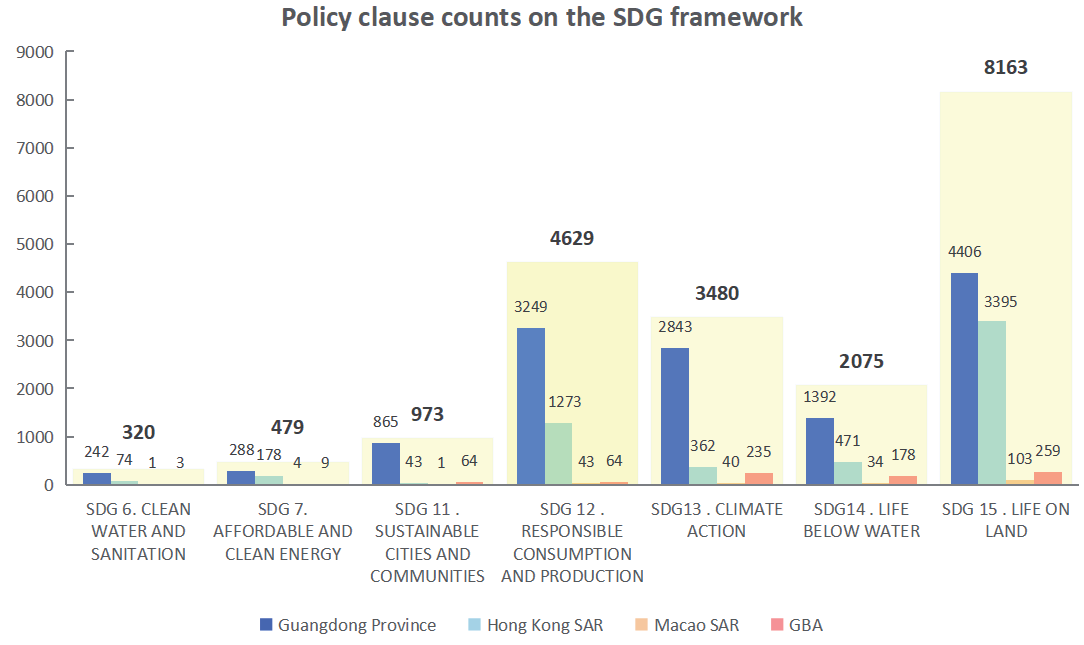
In the sustainable development policy framework of the GBA, there is a close interrelationship and interaction between different SDGs. For example, SDG 7 (Affordable and Clean Energy) and SDG 13 (Climate Action) have a significant positive correlation. The primary anthropogenic factor influencing climate change is greenhouse gas emissions resulting from fossil fuel use in human survival and development [39]. Additionally, climate issues directly impact other environment-related SDGs. For instance, global warming leads to rising sea levels, affecting marine life, coastal environments, and terrestrial ecosystems. SDG 13 (Climate Action) is also closely linked to SDG 14 (Life Below Water) and SDG 15 (Life on Land), as these three goals constitute key parts of the global life support system. Their synergy is crucial for achieving overall sustainable development.
In conclusion, SDG 15 and SDG 13 are the most heavily emphasized areas in the Greater Bay Area’s ecological and environmental protection efforts. There is a clear alignment between the region’s policy formulation and the SDG goals. Quantitative analysis of these policies provides a scientific basis for advancing ecological protection and achieving sustainable development, further supporting informed decision-making [40, 41]. Despite the progress in advancing the SDGs within the GBA, some shortcomings remain. First, certain SDG goals, such as SDG 6 (Clean Water and Sanitation) and SDG 7, receive insufficient policy support, which could hinder their effective implementation. Moreover, a lack of synergy between policies leads to an ineffective integrated promotion mechanism.
The Core Role of Guangdong Province and the Policy Dynamics of Industry-University-Research Collaboration
In this section, keywords such as “Hong Kong”, “Macao”, and “Greater Bay Area”. “Guangdong Province”, “industry”, “universities”, and “research institutions” were extracted from the collected policy documents related to ecological and environmental protection in the Guangdong-Hong Kong-Macao Greater Bay Area. A network diagram (Fig. 3) was generated, leading to the following conclusions:
Firstly, the Guangdong Province demonstrates a clear central role in regional cooperation. Based on the frequency of regional keywords mentioned in existing ecological and environmental protection policies, Guangdong’s government refers to the Greater Bay Area, as well as Hong Kong and Macao, with the highest efficiency. This indicates that Guangdong promotes the GBA’s integration and regional coordinated development, which is proven in the policy text. Establishing the GBA has fostered increasing interaction among Guangdong, Hong Kong, and Macao, forming relatively close policy ties [7].
The coordination mechanism in regional environmental governance can be shaped by three elements: policy institutions, policy actors, and policy issues [42]. Guangdong’s policy institutions and actors tend to implement policies that address environmental issues with greater strength. Due to their high degree of autonomy and unique legal systems, Hong Kong and Macao maintain judicial independence, making their policies relatively independent. However, in terms of ecological governance, the regional development of Hong Kong and Macao is highly dependent on Guangdong [43]. This dependency leads to coordination challenges and policy implementation inconsistencies when interacting with Guangdong. This analysis highlights that Guangdong Province is a critical driver when navigating Hong Kong and Macao’s unique legal and governance structures.
Secondly, from the perspective of industry-university-research collaboration, Guangdong Province’s policies mention enterprises 805 times, indicating the province’s significant emphasis on fostering business growth and innovation. In recent years, Guangdong has introduced policies to accelerate the deep integration of industry, academia, and research to improve the collaborative innovation mechanism. These policies have not only promoted enterprise development but also laid a solid foundation for industry-university-research cooperation. However, challenges remain in achieving coordinated industrial innovation across the GBA, such as institutional differences increasing the cost of resource flow and the lack of independent innovation capabilities among small and medium-sized enterprises (SMEs) [44].
Overall, the ecological and environmental policies across the GBA tend to focus more on industrial development, with industry-university-research cooperation, particularly involving universities, primarily mentioned in policies from Guangdong Province and the broader Greater Bay Area framework. There is a noticeable lack of such collaboration in Hong Kong and Macao, highlighting differences in regional cooperation efforts. This disparity suggests that while Guangdong leads in fostering industry-academic collaboration, there is still a need for stronger cross-regional integration to fully realize the potential of collaborative innovation in the Greater Bay Area.
This paper suggests several measures to promote coordinated regional development and strengthen the connection between industry-university-research collaboration and ecological protection policies in the GBA. First, Hong Kong and Macao should enhance policy coordination with Guangdong by establishing a joint regional protection mechanism to balance environmental governance and economic growth, focusing on holistic ecological protection. Second, they should draw on Guangdong’s success in industry-university-research collaboration to foster deeper integration. Finally, the GBA should establish a more robust policy coordination mechanism to reduce institutional differences, promote resource sharing, and drive regional policy harmonization, ensuring sustainable development and collaborative innovation.
Conclusions
The research on the Guangdong-Hong Kong-Macao Greater Bay Area’s ecological protection policies reveals significant advancements when aligning with global sustainability objectives, particularly SDG 13, SDG 14, and SDG 15. However, limited data coverage, insufficient inter-policy synergy and assessment of implementation effects, and the lack of regional coordination mechanisms limit the effectiveness of overall integration. In the future, a system for assessing the effectiveness of policy implementation should be constructed; policy synergies should be strengthened, a strong and comprehensive cross-regional policy cooperation framework should be established, and resource allocation should be optimized in order to achieve a high degree of integration of regional ecological governance and sustainable development. This study contributes to the broader discourse on sustainable development by demonstrating the critical role of policy coherence and regional collaboration in advancing ecological and environmental protection objectives in one of China’s most dynamic regions.

