

Introduction
China has experienced significant economic growth in recent years and now boasts the world’s second highest GDP. However, this progress has come at a cost: rising environmental pollution and energy consumption issues. According to the 2020 Global Environmental Performance Index report, released jointly by the Yale Center for Environmental Law and Policy and Columbia University Center for International Earth Science Information Network, China ranked 120th out of 180 countries with an environmental performance index of 37.3, indicating unfavorable environmental quality. China’s development model, marked by high levels of investment, emissions, and pollution, has resulted in severe environmental problems and unsustainable development [1-3]. Green innovation has emerged as a potential solution. It provides an effective approach to creating a win–win scenario for environmental protection and technological innovation that benefits both the environment and the economy [4, 5]. Therefore, promoting green innovation has become a critical issue that China must urgently address to achieve high-quality economic development.
Thus far, scholars have investigated the factors that drive green innovation at three main levels: (1) the market level, which includes market demand and market competition [6, 7]; (2) the institutional level, which comprises environmental regulation and government subsidies [8, 9]; and (3) the technological level, which includes R&D investment [10]. Despite the valuable insights gained, two gaps remain in the literature. First, a review of these studies reveals notable inconsistencies in their findings [11]. For instance, widely varying results on the nature of the relationship between environmental regulation and green innovation, such as positive, negative, U-shaped, and inverted U shaped associations [4, 12-14], have been found. Although scholars have attempted to resolve the debate by distinguishing the effects of various environmental regulatory instruments on green innovation [15-17], the results remain inconsistent. Similarly, findings regarding the connection between market competition and green innovation also differ significantly, with some studies indicating a positive correlation between these two variables [18], while others report a negative or nonsignificant relationship [11]. In addition, most research has concentrated on analyzing the isolated effects of a single factor on green innovation through traditional regression techniques. However, the conditions surrounding the development of green innovation in China are complex. According to asymmetric innovation theory, posited by the Chinese scholars Wei Jiang et al. [19], this complexity stems from China’s distinctive market, institutional, and technological contexts. Specifically, the factors that influence green innovation are diverse, and their interactions create environmental complexity. Thus, to fully understand the reality of green innovation development in the Chinese context, using qualitative comparative analysis (QCA) to examine the effects of configurations of multiple factors [20] is more appropriate than using traditional regression techniques. However, few QCA studies have analyzed the paths that drive green innovation from a configurational perspective. Most QCA studies have been at the enterprise or city level [21-23], without much consideration of green innovation at the province level. As China’s provinces are the fundamental administrative units through which the majority of its economic policies are formulated and economic activities are organized and managed [24], exploring paths for green innovation at the province level enriches research in this field and provides a valuable reference for policymaking and planning.
To address these gaps, this study uses asymmetric innovation theory and the fuzzy-set QCA (fsQCA) method to explore how five key factors at the market, institutional, and technological levels-market competition, market demand, environmental regulation, government subsidies, and R&D investment-interact to influence green innovation in 30 provincial regions of China, excluding Hong Kong, Taiwan, Macau, and Tibet. The main objective is to reveal the complex causal mechanism behind green innovation by answering the following questions: Are market competition, market demand, environmental regulation, government subsidies, and R&D investment each necessary conditions for high- or low-level green innovation? What configurations generate high-level green innovation? What configurations generate low-level green innovation? What is the relationship between the two types of configuration?
This paper makes three primary contributions. First, it enhances the green innovation literature by applying asymmetric innovation theory to comprehensively explore the correlation between external environmental factors and green innovation. Research has primarily focused on examining the effects on green innovation of individual factors at various levels, including market-level factors such as market demand and competition, institutional factors such as environmental regulation and government subsidies, and technological factors such as R&D investment [6-10]. Using asymmetric innovation theory and the fsQCA method, this paper investigates the synergistic impact of these factors at the market, institutional, and technological levels, providing a comprehensive understanding of the development of green innovation in complex contexts. By utilizing data from Chinese provinces, this paper also enriches the literature on the qualitative comparative analysis of green innovation. Second, this paper contributes to asymmetric innovation theory by extending its application to a situation with causal complexity. By doing so, it reveals the diverse pathways that drive green innovation in China’s complex environment. While asymmetric innovation theory has its origins in China, it is crucial to note that the development of innovation in many other developing countries involves similar environmental complexity because of underdeveloped institutions, immature markets, and a lack of technologies [25-28]. Consequently, this paper’s results offer valuable insights for shaping policy decisions in China and will provide a significant point of reference for policymakers in a wide range of developing countries. Third, this study provides new explanations for many of the conflicting findings in the literature. Studies have demonstrated different effects of the same factor on green innovation. This paper shows that green innovation results from the combined effects of multiple factors, offering a new perspective that can explain differences and resolve disparities in the literature.
Material and Methods
Literature Review
Green innovation involves the enhancement of products and manufacturing processes with the intention of decreasing environmental burdens, such as energy consumption and waste emissions [29]. It is a crucial tool for achieving sustainable development that allows firms to increase their economic benefits while undertaking environmental social responsibility [30]. However, engaging in green innovation involves greater risk [31] than traditional innovation activities because of its greater demands for knowledge, capabilities [32], and financial resources [33]. Consequently, numerous scholars have investigated the driving factors behind green innovation. According to systematic literature reviews [11, 34], these factors are at three main levels: market, institutional, and technological. Next, this paper explains in detail the key influencing factors at each level.
Market Level
Market demand, customers’ desire to purchase environmentally friendly products [35], serves as a driving force for green innovation, acting as a market pull. Firms respond to market demand and adjust their supply of green products and services accordingly. When disposable income per capita is high, consumers tend to emphasize environmental protection [36], making green innovation more attractive to firms. They perceive it as a value-added proposition for which consumers are willing to pay a premium. Consequently, firms boost their investment in green innovation to capitalize on potential profits, advancing the growth of green innovation. Empirical studies have offered further support for this view. For instance, Zailani and Govindan [37] surveyed 153 companies in the automotive supply chain industry and discovered that market demand enhanced the green innovation activities of local firms.
Market competition is the level of competition between firms in a region, and its effect on green innovation has garnered significant attention from scholars. However, views on this relationship differ [11]. One perspective is that weak market competition facilitates green innovation. Monopolies, which face less market uncertainty, typically possess abundant internal resources, such as technology, capital, and talent. This enables them to undertake green innovation and foster regional green innovation growth. In contrast, others argue that strong market competition is more favorable to fostering green innovation. In markets with weak competition, firms may adopt comparable business strategies to sustain production, leading to a lack of motivation to change due to organizational inertia [38]. Only in the context of intense market competition are firms motivated to seek strategic changes [18], such as engaging in green innovation activities, to enhance their social image, unlock new business opportunities, and improve their competitive advantages [39].
Institutional Level
government policies, laws, and regulations intended to promote sustainable development and preserve the environment. These policies often involve strict emission standards and environmental taxes [35]. Although there is consensus that environmental regulation is a critical factor that influences green innovation [40, 41], there are divergent views on its effects. Chakraborty and Chatterjee [12] argued that environmental regulation leads to a rise in firms’ spending on green R&D activities due to legal pressure, compelling them to enhance their technologies and create cleaner and more cost-effective alternatives to reduce pollution. However, environmental regulations might also create compliance costs. Greenstone and List [14] contended that environmental regulations increase firms’ production costs, such as the direct costs of purchasing pollution treatment equipment and the opportunity costs of the investment activities they are forced to undertake to comply with environmental regulations. This crowding-out effect on green innovation investment can discourage environmentally friendly R&D activities. Therefore, environmental regulation may have both positive and negative effects on green innovation, with potential trade-offs to consider.
Government subsidies represent financial incentives that the government provides to encourage firms to innovate. The role of subsidies as an institutional influence on green innovation has been extensively discussed by scholars [11]. Most scholars have argued that government subsidies not only alleviate the financial burden of R&D investment in green innovation but also compensate for the positive externalities of knowledge spillover, thereby promoting green innovation [42-44]. However, recent studies have found a U-shaped association between government subsidies and green innovation in China’s new energy vehicle sector [45]. As a result, there is no consensus on whether government subsidies exhibit a one-way effect on green innovation.
Technological Level
R&D investment is crucial for driving green innovation, often serving as a technology push [46]. Unlike traditional innovation, green innovation requires enterprises to consider economic, environmental, and social benefits and demands higher levels of knowledge and competence [32]. Increasing R&D investment can generate a favorable regional innovation environment and enhance firms’ technological capabilities, enabling them to identify and leverage green innovation opportunities [11]. Such efforts can boost green innovation from the supply side. For example, Fujii and Managi [47] found that China’s overall increase in R&D investment effectively contributed to the rise in the number of green patents.
Overall, these studies have provided a foundation for understanding the mechanisms that drive green innovation. However, their findings are inconclusive. Most research has used regression analysis and treated market, institutional, or technological factors as isolated or only partially related, making it difficult to identify the effects of interactions between the factors at different levels on green innovation. Therefore, these studies, which have primarily focused on the net effect, have not provided a sufficiently nuanced approach to promoting green innovation in complex environments in which various factors tend to co-occur. Consequently, recent research has used the QCA approach to analyze the configuration effect of multiple factors on green innovation. For instance, Zhao, Wu, and Zhang [22] developed a configurational framework anchored in organizational ecology theory to explore the combined effect of the institutional environment, spatial agglomeration, and digital economy on green innovation in resource-based cities. Yin [23] examined the link between corporate green innovation and digital transformation using the technology–organization– environment framework. However, these QCA studies have concentrated primarily on enterprises or cities, with limited attention given to provincial-level green innovation. This limitation restricts the practical applicability of their findings, because provinces are the basic administrative unit for formulating most economic policies in China [24]. To gain more nuanced insights and to better inform practice, this study uses the fsQCA method and data from Chinese provinces to explore how to drive green innovation in complex regional contexts from a configurational perspective.
Theoretical Framework
Theoretical Basis: Asymmetric Innovation Theory
Asymmetric innovation theory, posited by Chinese scholars [19], elucidates the process and logic behind the technological innovation catch-up of Chinese enterprises. The originators of this theory contended that China’s technological innovation catch-up conditions are distinct from those of newly industrialized countries such as South Korea, which is the root cause of the asymmetry in technological innovation catch-up. To deconstruct the context of China’s technological innovation catch-up, they proposed an MIT framework that focuses on market, institutional, and technological environments. First, China’s market is vast, with a population of 1.4 billion. However, it is also unevenly developed, highly volatile, and unstable, presenting challenges such as significant differences in customer demand and purchasing power, rapidly changing market demand, intense market competition, and unstable market mechanisms. Second, China’s institutional environment is characterized by a powerful government, institutional voids, and complexity. The government controls significant resources, including capital, technology, and land, and guides the direction of innovation through its control and allocation of these resources. Moreover, institutional gaps encourage firms to pursue resources for innovation by engaging in institutional entrepreneurship. Third, China’s technology system is weaker than those of developed countries. This affects the emphasis that firms place on investing in technology, which has created the critical bottleneck that China is currently focusing on overcoming. China’s regional asymmetry in technological catch-up reflects its unique national conditions for innovation development, which should be considered when exploring the pathways that drive green innovation. Moreover, similar asymmetry is found in the technological innovation catch-up of most other developing countries, given their distinct market, institutional, and technological contexts [25]. These countries typically have a substantial customer base at the bottom of the economic pyramid, alongside strong dysfunctional competition [28, 48], and they are frequently characterized by weak institutional frameworks and a lack of world-leading technology [26]. Therefore, it is equally important to consider such asymmetry when examining the pathways that drive green innovation in these countries.
Configurational Framework
Insights from asymmetric innovation theory and its extensions suggest that green innovation in China and most other developing countries is embedded in complex environments shaped by distinct market, institutional, and technological contexts. This underscores that the factors influencing green innovation are diverse and that their interactions contribute to environmental complexity. Thus, market, institutional, and technological factors should be integrated into the configurational analysis framework. However, including all conceivable factors would be both impractical and unnecessary. Drawing on the literature and the aforementioned MIT framework, while considering the issue of “limited diversity,” which suggests that the observed cases are significantly fewer than the potential scenarios outlined by the conditional combination [49], this study ultimately focused on five pivotal environmental factors: market demand, market competition, environmental regulation, government subsidies, and R&D investment. Specifically, market demand and market competition pertain to the market context, while environmental regulation and government subsidies denote the institutional context. Furthermore, R&D investment exemplifies the technological dimension. The configurational analysis framework for green innovation within complex contexts is shown in Fig. 1.
Research Method: fsQCA
The QCA method is appropriate for asymmetric and configurational analysis [49]. It treats cases as combinations of various conditions and outcomes. Through in-depth case comparisons, it identifies which combinations of conditions are sufficient for achieving the expected outcome. This method amalgamates the advantages of both qualitative and quantitative research [50]. It addresses the challenge of generalizability that often occurs in qualitative analyses with limited numbers of cases and partially compensates for the lack of qualitative change and phenomenon analysis in purely quantitative analyses with large sample sizes. The fsQCA approach integrates fuzzy-set theory with the QCA method [51]. This enhances the applicability of the QCA method by expanding the categorization of case conditions and outcomes beyond simple binary classifications [52]. Because of its advantages, the fsQCA approach has been extensively applied in the business and social science domains [53, 54].
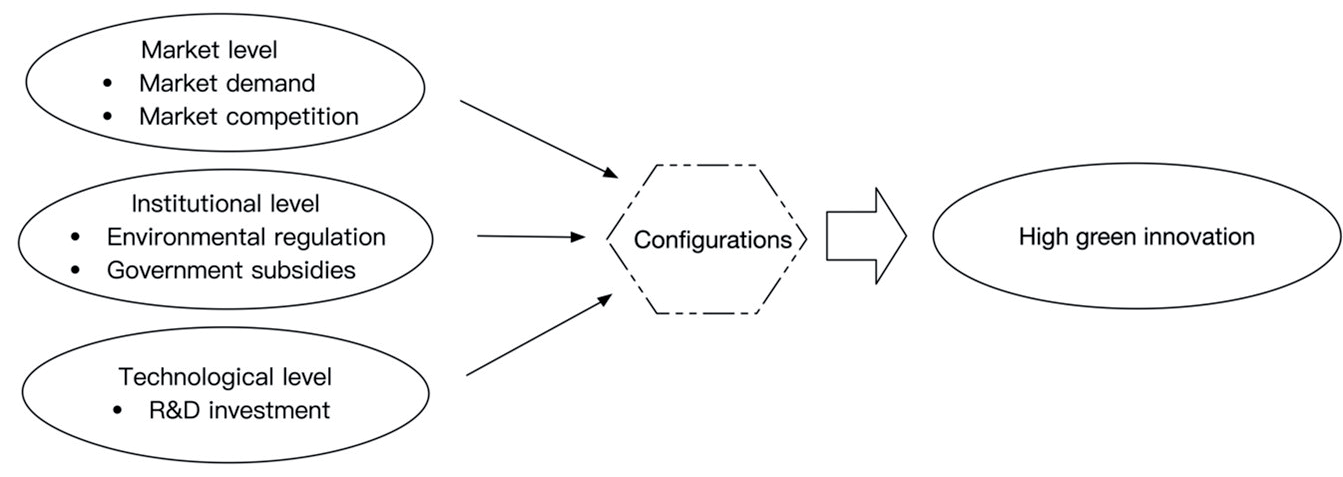
This paper used the fsQCA method to investigate the mechanisms driving green innovation in complex environments for several reasons. First, unlike traditional regression analysis, this approach allows for the analysis of the configurational effect of combinations of conditions on green innovation from a holistic perspective instead of the net effect of individual factors, consistent with the purpose of this study. Second, the method can not only effectively reveal multiple paths that drive high-level green innovation but also investigate the combinations of conditions that lead to low-level green innovation, furthering understanding of the causal complexity of green innovation. Third, this method is suited to dealing with continuous data and has lower sample size requirements, which aligned with the data and sample characteristics of this paper.
Sample and Data Collection
Given the availability of data, 30 Chinese provinces were selected as research cases, with Hong Kong, Macau, Taiwan, and Tibet excluded. The data on green innovation were collected from the State Intellectual Property Office and the World Intellectual Property Organization, while data for the other variables were sourced from the China Statistical Yearbook, China Industry Statistical Yearbook, China Statistical Yearbook on Environment, and China Statistical Yearbook on Science and Technology. All of the variables were analyzed using three-year mean values from 2016 to 2018. Table 1 presents the definitions and data sources for the variables used in this study.
Measurement and Calibration
Outcome Variables
Green innovation (GI). Following previous research [55], green innovation was measured as the number of green patent applications in each province. The data collection process involved three steps: first, identifying the green patent classification codes from the list of green patents published by the World Intellectual Property Organization; second, screening the green patent application data from the patent application information made available by the State Intellectual Property Office using the identified classification codes; and third, aggregating the data on green patent applications, which comprised both green invention and green utility patents, for each province to determine the number of green patent applications in that province.
Conditional Variables
Market demand (D). Affluent citizens generally have higher expectations for environmental protection and exhibit more pro-environmental behavior [36]. As a result, they have higher green demand. Therefore, the per capita disposable income of residents in each province was used to measure domestic green market demand [56]. The data were collected from the China Statistical Yearbook.
Market competition (C). According to the literature, the number of players can be an appropriate metric of market competition [57]. An increase in regional enterprises leads to stronger market competition. Therefore, regional market competition was measured as the number of industrial enterprises above the state-designated scale in each province. The data were sourced from the China Industry Statistical Yearbook.
Table 1.
Variable descriptions and data sources.
Environmental regulation (ER). Environmental regulation can be evaluated according to its outcomes. Thus, in line with previous studies, pollution emissions were used as a proxy to assess the stringency of environmental regulation [58]. Given the availability of data, wastewater emission intensity, sulfur dioxide emission intensity, and soot emission intensity were selected as indicators. The data were collected from the China Statistical Yearbook and the China Statistical Yearbook on Environment. Following previous studies [59, 60], the entropy approach was utilized to develop a comprehensive index to assess environmental regulation. Specifically, the emission intensity of the three pollutants was first computed by dividing their emission levels by the regional industrial output values. These values were then standardized to a range of 0–1, as follows:
where DEij denotes the emission intensity of pollutant j in region i, while min(DEj) and max(DEj) represent the minimum and maximum emission intensities of pollutant j among all regions. Next, the weight of each pollutant was calculated as follows:
where
Government subsidies (S). R&D subsidies are a crucial component of government subsidies. In line with Han and Zhang [61], government subsidies were measured as the ratio of government-provided R&D subsidies to each province’s internal R&D expenditure. The data were gathered from the China Statistical Yearbook on Science and Technology.
R&D investment (T). Following previous studies [62], R&D investment was measured as each province’s internal R&D expenditure, which was sourced from the China Statistical Yearbook on Science and Technology.
Data Calibration
Calibration involves assigning membership scores to cases [63]. To avoid and reduce subjective bias (or result-oriented bias), a direct calibration method was used in which the 90%, 50%, and 10% quantiles of the sample data were set as the respective thresholds for full membership, crossover, and full non-membership, respectively, of each condition and outcome variable. In addition, as a higher value of the environmental regulation indicator implies weaker environmental regulation intensity, the thresholds for full membership, crossover, and full non-membership of this variable were adjusted to the 10%, 50%, and 90% quantiles, respectively. Table 2 presents the calibration thresholds and descriptive statistics for each variable.
Results and Discussion
Necessary Condition Analysis
Necessity analysis examines whether each condition is necessary for a specific outcome. Table 3 provides the results of the necessity analysis for high and low levels of green innovation, in which a consistency score greater than 0.9 indicates that the condition is necessary [64]. The consistency scores indicate that R&D investment is a necessary condition for high-level green innovation (consistency = 0.924 > 0.9), and the absence of R&D investment is a necessary condition for low-level green innovation (consistency = 0.976 > 0.9). This suggests that R&D investment is a bottleneck to the growth of regional green innovation.
Table 2.
Fuzzy-set membership calibrations and descriptive statistics.
Table 3.
The necessity of conditions for high and low levels of green innovation.
Configuration Analysis
In contrast with analyzing a single necessary condition, configurational analysis identifies combinations of conditions that result in an outcome. The consistency threshold was set to 0.8, the proportional reduction of inconsistency (PRI) consistency threshold to 0.75, and the frequency threshold to one case per configuration. For the three categories of results (parsimonious solution, intermediate solution, and complex solution) provided by the fsQCA software, the mainstream practice of reporting the intermediate solution while further distinguishing the core and peripheral conditions using the parsimonious solution was followed. Specifically, conditions present in both the intermediate and parsimonious solutions were considered core conditions, while conditions present only in the intermediate solution were considered peripheral conditions [65]. Table 4 presents three configurations (H1, H2a, and H2b) that produce high-level green innovation, in which H2a and H2b share the same core conditions and result in second-order equifinality. The overall solution for high-level green innovation had a coverage score of 0.872, indicating that the three configurations (H1, H2a, and H2b) explained nearly 90% of the outcome. For low-level green innovation, four configurations were identified (NH1a, NH1b, NH2, NH3), with NH1a and NH1b demonstrating second-order equifinality. The overall solution for low-level green innovation had a coverage score of 0.745, meaning that the identified configurations accounted for a significant portion of the variation in this outcome. To provide a better understanding of each configuration, more detailed explanations are provided through the discussion of typical cases in the following subsections.
Table 4.
Configurations sufficient for high and low levels of green innovation
Configurations Sufficient for High-Level Green Innovation
The H1 configuration, with market demand, government subsidies, and R&D investment as core conditions and environmental regulation as a peripheral condition, leads to high-level green innovation. This may be because market demand amplifies the profitability of green innovation for firms, and environmental regulations increase the environmental pressure that firms face. These dual effects provide firms with strong motivation to pursue green innovation. Furthermore, government subsidies help mitigate the financial burden of R&D investments in green innovation and simultaneously reduce the adverse effects of compliance costs arising from environmental regulations on enterprises’ green innovation. A high level of R&D investment indicates a favorable regional innovation environment, appropriate technological capabilities for enterprises, and that green innovation is feasible. Consequently, high levels of green innovation are achieved. Notably, market competition becomes inconsequential for high-level green innovation when environmental regulation, government subsidies, market demand, and R&D investment are present. A typical example of this configuration is Beijing. As the country’s capital, Beijing serves unique functions. To mitigate the pressure of resource scarcity and environmental pollution caused by rapid population and economic growth, President Xi Jinping introduced the “decentralization of non-capital functions.” This led to many industrial polluting enterprises relocating out of Beijing, leaving only about 3,000 industrial enterprises over the state-designated scale in the region. Although market competition is lacking, these enterprises face strict environmental regulations, and the high per capita disposable income and strong green demand in Beijing make them more inclined to pursue green innovation. Moreover, Beijing has prioritized the construction of a national science and technology innovation center to strengthen innovation-led development, investing more than 160 billion yuan in R&D, with a government subsidy ratio of over 50%. In this environment, local enterprises actively participate in green innovation to adhere to environmental regulations and secure profits, resulting in significantly more green patent applications than in other regions.
Configuration H2 (including H2a and H2b), in which market competition and R&D investment are core conditions, can produce a high level of green innovation. Specifically, the H2a configuration demonstrates that high-level green innovation can be achieved in the absence of government subsidies (peripheral condition) as long as market competition (core condition) and R&D investment (core condition) are present. Market competition creates pressure for survival, leading to the elimination of weaker competitors by forcing some enterprises to exit the market. Concurrently, the production processes of the remaining industrial enterprises generate an increasing amount of pollutants, exacerbating environmental pollution problems. In the face of these challenges, enterprises prioritize green innovation even in the absence of government subsidies to enhance energy efficiency, reduce environmental pollution, improve their corporate social image, foster positive relationships with government and other stakeholders, secure corresponding policy support, and overcome competitive obstacles. Furthermore, R&D investment fosters a conducive innovation environment, strengthening enterprises’ technical capabilities and enabling them to identify and exploit green innovation opportunities. This enhances the feasibility of green innovation, thereby promoting high-level green innovation. Guangdong is a typical example of this configuration. The province’s average R&D investment during the sample period exceeded 200 billion RMB, the highest among all of the regions, and it has an exceptional innovation environment and technological capabilities. Moreover, the province’s economic openness and favorable location have contributed to increasingly severe competition among its 40,000 industrial enterprises above the state-designated scale, resulting in high pollution loads and ecological constraints. To combat this issue, the provincial government issued a “Three-Year Action Plan for Fighting the Battle of Pollution Prevention and Control in Guangdong Province (2018-2020).” Although government subsidies account for only 10% of R&D expenditure, local enterprises are driven by survival pressure to undertake green innovation to win the government and public’s favor, leading to Guangdong having one of the highest numbers of green patent applications. Notably, when faced with increasing environmental pollution, local firms facing intense competitive pressure have stronger motivation to participate in green innovation. In this context, the presence or absence of environmental regulation and market demand are not relevant in generating high-level green innovation. This configuration exhibits the highest raw coverage and is, therefore, the most likely to produce high-level green innovation.
Configuration H2b demonstrates that high-level green innovation can be achieved in the absence of environmental regulation (peripheral condition) and market demand (peripheral condition) as long as market competition (core condition) and R&D investment (core condition) are present. Although the absence of market demand might harm green innovation in isolation, high-level green innovation can be achieved when it is combined with other conditions. A potential explanation for this is that market competition creates survival pressure and causes environmental problems, and the absence of environmental regulation leads to increased ecological degradation, which in turn attracts greater attention to environmental issues from all sectors of society. This stimulates firms’ interest in green innovation, even in the absence of market demand, as they strive to signal their commitment to environmental protection, gain a first-mover advantage, and enhance their competitiveness by obtaining government support. Moreover, R&D investment increases local firms’ technological capabilities and makes green innovation more feasible, as they can better identify and develop green innovation opportunities, which promotes high-level green innovation. A typical example of this configuration is Hebei, a province adjacent to Beijing and Tianjin and an important member of the Beijing–Tianjin–Hebei collaborative development strategy. Guided by a policy of collaborative innovation development, Hebei increased its R&D investment to an average of 44.5 billion yuan annually during the sample period, and it has established moderate technological capabilities. The number of industrial enterprises above the state-designated scale has reached 14,000, with many being absorbed from Beijing, resulting in fierce market competition and high pollutant emissions. With weak environmental regulations and the ongoing degradation of the environment, environmental issues are increasingly attracting the public’s attention. Although the per capita disposable income in Hebei is only 21,000 yuan and despite weak green demand in the market, many industrial enterprises are pursuing green innovation in response to competitive pressure. This not only enhances production efficiency and cuts energy costs but also, and more importantly, shapes their green image and differentiates them from their regional competitors, thereby enhancing their competitiveness. Notably, the absence of environmental regulation prevents local firms from incurring compliance costs. In such circumstances, the presence or absence of government subsidies has no effect on the generation of high-level green innovation. This finding extends the literature [e.g., 9, 45, 66, 67] by demonstrating that government subsidies do not always positively influence green innovation.
Considering both types of driving paths, it becomes apparent that although R&D investment is a crucial requirement for generating a high level of green innovation, it cannot stimulate it independently. A high level of green innovation can be achieved only with specific combinations of factors. Specifically, in the demand–regulation–subsidy–technology-driven path (H1), high-level green innovation is generated when R&D investment is combined with government subsidies, market demand, and environmental regulation. In the competition–technology-driven path (H2a, H2b), R&D investment and market competition are the core drivers of green innovation. Therefore, market competition plays a critical role in promoting green innovation, confirming the previous finding that market competition positively influences green innovation [e.g., 68, 69].
Configurations Sufficient for Low-Level Green Innovation
Configuration NH1a demonstrates that without market competition and R&D investment (core conditions), the absence of environmental regulation and market demand (peripheral conditions) generates low-level green innovation. A lack of market competition means that firms face minimal survival pressure and environmental challenges, while the lack of environmental regulation means there is no legal pressure for firms to pursue green innovation. These conditions combined with a lack of market demand means that firms lack any substantial incentive to pursue green innovation. Moreover, the absence of R&D investment creates a weak innovation climate, provides fewer technological capabilities for enterprises, and makes green innovation less feasible. Consequently, low levels of green innovation result. Configuration NH1b, with a lack of market competition and R&D investment as core conditions and the absence of environmental regulation and government subsidies as peripheral conditions, also generates low-level green innovation. The absence of market competition and environmental regulation weakens firms’ incentives to engage in green innovation. Furthermore, the lack of government subsidies and R&D investment deprives firms of the financial support and capacity guarantees required to undertake green innovation, diminishing the feasibility of doing so. Consequently, low-level green innovation is generated. Shanxi is a typical example of these two configurations, in which all of the factors related to the market, institutional environment, and technological level are below average, resulting in few green patent applications.
Configuration NH2, with government subsidies and a lack of R&D investment as core conditions and market demand, a lack of environmental regulation, and market competition as peripheral conditions, also results in low-level green innovation. Market demand amplifies the profit margins associated with green innovation, while market competition triggers survival pressures and creates environmental issues. The absence of environmental regulation exacerbates ecological degradation, and the public’s environmental awareness gradually increases. In this situation, firms are compelled to participate in green innovation to obtain a competitive advantage. However, even with the aid of government subsidies that reduce financial pressure, the lack of R&D investment leaves local businesses with inadequate technical capacities to identify and pursue green innovation opportunities. This dramatically reduces the feasibility of green innovation, resulting in low-level green innovation. Liaoning is a typical example of this configuration, in which the absence of R&D investment has led to weak technological capacity, which is the primary cause of the region’s low level of green innovation.
Configuration NH3, with government subsidies and the lack of both market competition and R&D investment as core conditions and environmental regulation as a peripheral condition, results in low-level green innovation. Without market competition, survival pressure and environmental issues are less pressing, and thus firms are less motivated to adopt green innovation to gain a competitive advantage. Additionally, the absence of R&D investment creates a weak innovation environment, and firms lack the technological capabilities to engage in feasible green innovation. In this scenario, even if environmental regulation and government subsidies are both present, low-level green innovation is generated. This configuration is exemplified by Hainan, where environmental regulation and government subsidy indicators are above average, but market competition and R&D investment indicators are below average. As a result, the region has a low level of green innovation. This clearly illustrates that merely improving institutional-level factors, such as environmental regulation and government subsidies, is insufficient to promote green innovation, especially if competitive pressure is weak and technological capabilities are lacking.
A comparison of the seven configurations that drive green innovation reveals that they have asymmetric characteristics. That is, the configurations for low-level green innovation (NH1a, NH1b, NH2, and NH3) do not completely oppose the configurations for high-level green innovation (H1, H2a, and H2b).
Conclusions
This paper utilizes asymmetric innovation theory and the fsQCA method to investigate the multiple concurrent causal relationships and driving paths of green innovation in 30 Chinese provinces, municipalities, and autonomous regions. The findings can be summarized as follows. (1) R&D investment is a necessary condition for generating high-level green innovation, whereas the absence of R&D investment is a necessary condition for generating low-level green innovation. (2) Three configurations lead to high-level green innovation, and they can be categorized into two pathways: demand–regulation–subsidy–technology-driven and competition–technology-driven. (3) Four configurations lead to low-level green innovation, and an asymmetric relationship exists between the antecedent configurations for low- and high-level green innovation.
Policy Implications
This paper provides three major recommendations for policymakers in China and most other developing countries. First, the findings suggest that R&D investment is a necessary condition for achieving high-level green innovation. Therefore, policymakers should prioritize the implementation of tax incentives, such as income tax exemptions for high-tech companies and extra deductions for R&D expenses, to stimulate enterprises to augment their R&D investments. Additionally, a diversified, multichannel R&D investment system should be constructed to create a conducive innovation environment and enhance the technological capabilities of enterprises. It is important to note that although R&D investment is necessary for promoting green innovation, it cannot independently trigger high-level green innovation. The synergistic effects of factors such as environmental regulation, government subsidies, market demand, market competition, and R&D investment are required. Thus, governments should focus on creating links and cooperation between these factors to facilitate the development of green innovation.
Second, this paper identifies two paths that drive high-level green innovation, and the findings suggest that policymakers should develop policies from a holistic perspective in accordance with local conditions. Only by doing so can regions effectively promote green innovation under the constraints of their complex regional environments. Specifically, for regions facing difficulties in promoting market competition, green innovation can be enhanced by increasing R&D investment, improving environmental regulations and government subsidies, and stimulating market demand (H1). Regions that lack government subsidies and those with insufficient environmental regulations and market demand should boost their R&D investment and promote market competition to stimulate green innovation (H2a, H2b).
Third, if forming configurations to achieve high-level green innovation proves difficult in the short-term owing to particular circumstances, taking reasonable measures to circumvent the pathways to low-level green innovation is crucial to avoid falling into a development trap. For instance, in regions characterized by low levels of market competition, inadequate R&D investment, weak environmental regulations, and limited government subsidies, low-level green innovation may occur. To avoid this development trap, the government could consider adjusting environmental regulatory policies or increasing subsidies to motivate firms to embrace innovation..
Limitations and Future Directions
Naturally, this paper has several limitations that provide avenues for future research. First, although the MIT configuration analysis framework based on asymmetric innovation theory is relatively comprehensive and systematic, it does not consider other environmental factors that can influence the growth of green innovation, such as GDP [55], domestic or foreign investment [70], and the level of digital technology development [71]. Therefore, future studies could enrich the framework by incorporating such factors. Second, although the fsQCA method used in this study identified multiple pathways that drive green innovation, future studies could benefit from incorporating additional quantitative research methods to offer a more detailed understanding of the potential differential effects of each path on green innovation. Third, this paper only investigates the static relationship between the five factors and green innovation without considering the effects of the dynamic evolution of each factor on green innovation. Future research could delve into this aspect to offer a more complete understanding.

