

Introduction
Energy, as the driving force behind economic growth and social progress, is also fundamental for human survival and development [1]. However, the exploitation and consumption of traditional fossil fuels such as coal and oil have led to global warming, posing a significant threat to human existence and biodiversity. Therefore, it is imperative for all nations worldwide to take proactive measures in order to mitigate greenhouse gas emissions. In this pursuit of alternative energy sources that facilitate a transition towards cleaner energy structures, solar power generation has garnered significant attention from various countries owing to its inherent advantages such as cleanliness, lack of pollution, and renewability [2]. Simultaneously, within the context of global warming, extreme weather events have intensified their impact on desertification and land degradation. The Sahara Desert has witnessed a substantial increase in sand particles compared to previous times due to global warming-induced changes while experiencing rising temperatures that exacerbate desertification. Desertification represents an overt manifestation of global environmental and climate challenges that significantly jeopardizes the living environment for humans.
Land desertification not only results in reduced land resources, leading to land degradation, soil structure damage, and soil nutrient loss that decrease land productivity and threaten agricultural production but also exacerbates ecological deterioration and intensifies natural disasters. Therefore, urgent measures such as mitigating global warming, adopting clean energy sources like photovoltaic power generation, reducing greenhouse gas emissions, and implementing effective desert control strategies are closely intertwined with the future of humanity and subsequent generations. Against the backdrop of accelerating clean energy development while combating land desertification, there is a growing interest across various sectors in designing desertification control programs leveraging the unique characteristics of photovoltaic modules. Photovoltaic sand control mode refers to the integration of photovoltaic power stations, desert management, and water-saving agriculture. Specifically, it involves establishing a shelter forest system around the periphery of photovoltaic power stations, cultivating crops beneath photovoltaic panels, and implementing water-efficient drip irrigation systems. By leveraging the natural conditions in desert areas and harnessing the characteristics of photovoltaic modules, this approach achieves the dual benefits of electricity generation and sand control. Desert regions are characterized by low rainfall and high solar irradiance, which favor photovoltaic power generation. The installation of photovoltaic module panels not only shields direct sunlight but also effectively reduces surface water evaporation while mitigating wind speed to enhance plant growth conditions. Given the energy scarcity in deserts, solar-powered water-saving irrigation equipment is essential for sustainable agricultural practices. Therefore, the implementation of the photovoltaic sand control model can yield synergistic effects that surpass individual contributions; simultaneously generating economic benefits while improving soil quality through ecological enhancement further enhancing solar power generation efficiency as vegetation cover minimizes dust accumulation on photovoltaic modules. It is evident that photovoltaic sand control, as an innovative approach to combat desertification, involves the construction of photovoltaic power stations in desert areas for electricity generation using solar energy. Simultaneously, it employs methods such as planting drought-tolerant plants and setting up sand barriers to mitigate wind erosion and gradually restore the desert ecology. This achieves the dual benefits of clean energy and ecological preservation [3-7]. Among them, the photovoltaic sand control project provides 120 million KWH of green electricity annually, saving 45,000 tons of standard coal and reducing 120,000 tons of carbon dioxide. It also controls 2,400 mu of sandy land and reduces dust weather by 10% [8, 9]. Therefore, in the context of “double carbon,” photovoltaic desertification control is not only conducive to improving the ecological environment but also promoting the development of the new energy industry to achieve multiple win-win economic, social, and ecological benefits. Gradually becoming a new force for combating desertification in China [10, 11].
China has accumulated extensive experience and achieved remarkable outcomes in the field of photovoltaic desertification control. As of 2019, China’s land desertification area measured 2,573,700 square kilometers, exhibiting a reduction of 37,900 square kilometers compared to 2014 [12]. Notably, the photovoltaic power generation industry has played a pivotal role in effectively combating and mitigating land desertification. Among various photovoltaic desertification control projects, the most representative is the Kubuqi Photovoltaic Desertification Control Demonstration Project in Inner Mongolia [13], which has been internationally recognized as a “Global Desert Ecological and Economic Demonstration Zone” by the United Nations. Although the photovoltaic sand control project brings double economic and environmental benefits, there are many difficulties in the actual promotion process. These include:
1) The photovoltaic sand control project requires significant capital investment, including the construction of the photovoltaic power station, equipment procurement, and maintenance costs; 2) Photovoltaic power plants require a large amount of land, which is limited in desert areas; 3) The construction of photovoltaic power stations in desert environments presents various technical challenges, such as ensuring equipment operates normally under harsh conditions like high temperatures and dust storms [14] 4) The photovoltaic sand control project relies on government policy support and the formulation of related supporting policies; 5) The photovoltaic sand control project is a new type of project model that may face questioning and resistance from local residents, relevant stakeholders, or even the public [15]. Therefore, to reduce restrictions on promoting photovoltaic sand control projects, it is necessary to gradually overcome these challenges by strengthening technology research and development efforts, formulating supportive policies, and enhancing publicity and education initiatives to promote the healthy and sustainable development of photovoltaic sand control projects.
However, unfortunately, the existing studies primarily focus on risk management in general photovoltaic power generation projects and offshore wind power projects (e.g., Li et al. [16]), employing gray correlation degree and TOPSIS method for assessing the risks associated with photovoltaic power generation projects. Luo et al. [17] analyzed the financing risks involved in China’s distributed photovoltaic power generation projects and proposed specific strategies to mitigate these risks. Kim et al. [18] developed evaluation indicators for financial factors of photovoltaic power generation investments and quantified the relative importance of each indicator. These studies predominantly evaluate risks in general photovoltaic power generation projects, leaving a significant gap in risk assessment for photovoltaic sand control projects as well as an absence of investment risk assessment specifically tailored to such projects, thereby presenting an opportunity to make a novel contribution within this research.
Given the distinctive characteristics of photovoltaic desertification control projects, it is imperative to establish a targeted risk assessment framework. In this context, based on the existing PV project risk studies and feasibility study reports, this paper constructs four primary indicators, including policy risk, economic risk, technical risk, and environmental risk, along with corresponding 12 secondary indicators. The weight of each factor was determined using the analytic network process (ANP) method. Subsequently, the gray fuzzy comprehensive evaluation method was employed to assess the risks of the photovoltaic sand control project from multiple dimensions. Additionally, apart from considering the probability of risk occurrence (P) and its severity (S), factors such as the uncontrollability of risk (U) and urgency in dealing with it after occurrence (E) were also considered. Finally, this paper proposes appropriate strategies for managing each identified risk factor.
The remaining sections of the study are organized as follows: Section 2 comprises the literature review, which critically examines existing research on risk management in new energy investment and photovoltaic power generation projects. Section 3 examines the risk factors impacting China’s photovoltaic sand control projects and establishes a corresponding evaluation index system. Section 4 develops a risk assessment model for photovoltaic desertification control projects. Section 5 presents the empirical study results. Section 6 provides strategies to address each identified risk, while Section 7 concludes with a summary of this paper.
Literature Review
Identification of Risk Factors
The identification of investment risk factors constitutes the fundamental task of project investment risk assessment and serves as a prerequisite for subsequent targeted investment risk management. Concerning the identification of risk factors in new energy projects, Yang et al. [19] conducted an evaluation on the impact of uncertain Clean Development Mechanisms on the net present value of wind power projects. Li et al. [20] posit that project operation cost, grid connectivity, and feed-in price introduce certain investment risks to wind power projects. Liu and Zeng [21] discussed three major risks associated with renewable energy investments: technical risk, policy risk, and market risk. Numerical examples demonstrate that policy risk is the most influential factor affecting early-stage investments; however, as the new energy market matures, market risk supersedes policy risk. Esmaieli and Ahmadian [22] emphasize how government incentive policies influence returns on renewable energy investments. Based on preference surveys and policy-risk analyses among European PV project developers, Luethi and Wuestenhagen [23] argue that adequate compensation for policy risks is necessary to maintain efficiency in PV project investments. In terms of economic risks, Tomosk et al.’s study [24] estimates economic uncertainties in operating costs, future system prices, revenue based on energy production levels, irradiance levels, and electricity prices when assessing PV project investments’ economic risks. Kayser’s [25] survey-based investigation, which involved participants from China’s renewable energy industry, identified cash flow uncertainty, reliable supply chain issues, and a weak regulatory environment as prominent hindrances to sustainable development within the new energy market.
Research Progress of the Photovoltaic Desertification Control Project
The photovoltaic desertification control project has garnered increasing attention from scholars due to its dual benefits for the economy and ecology. In desert regions, sand and dust accumulation significantly impairs the performance of photovoltaic modules. Consequently, numerous scholars have conducted experimental analyses under varying environmental conditions to provide recommendations on solar panel installation and cleaning for project decision-makers [26-30]. Moreover, some researchers have proposed employing unmanned robots, intelligent systems, and other technologies to clean photovoltaic panels in desert areas [31, 32]. However, only a few scholars have undertaken evaluations of the photovoltaic desertification control model. Wang et al. [33] employed data envelope analysis to compare the benefits of the ecological feed processing model, eco-tourism model, and photovoltaic industry model in Kubuqi Desert. The results indicated that the ecological photovoltaic industry and eco-tourism models yielded superior benefits. Wang [14] explored the mode of controlling desertification through photovoltaics (PV), attributing its success primarily to reduced PV costs. This study analyzed energy conservation, emission reduction effects, as well as poverty alleviation measures brought about by this mode along with sand control and pollution mitigation efforts. Social benefits were calculated using a specific project as an example while comparing them with wind power generation benefits. Yan and Feng [34] quantitatively examined the comprehensive benefits of various photovoltaic desertification control models using the Energy Return on Investment (EROI) methodology.
Risk Assessment of Photovoltaic Power Generation Projects
Currently, the academic community has made significant advancements in the field of risk management evaluation for photovoltaic projects. Wu et al. [18] identified 16 risk factors that affect China’s offshore photovoltaic power generation projects and categorized them into four categories. Yin et al. [35] used a constructed five-dimensional risk analysis model to identify 18 key risk factors for “PV + energy storage” projects. Wu et al. [36] employed an improved fuzzy comprehensive evaluation method based on a cloud model, collected 72 factors from three dimensions (economic risk, environmental risk, and security risk), and conducted a risk assessment of a wind power-photovoltaic hydrogen storage project. However, it is worth noting that current research on photovoltaic sand control projects mainly focuses on the technical issues related to installing photovoltaic panels in deserts [37-39].
According to the aforementioned research results, there have been more studies on the risk assessment of photovoltaic projects, but fewer studies on the risk assessment considering factors related to desertification control [14]. The development of photovoltaic sand control projects can effectively utilize resources in desert areas and further improve the energy supply and ecological environment. Building upon existing research basis and methodology, this paper designs a risk assessment index system for photovoltaic sand control projects from four dimensions: policy, economy, technology, and environment. It takes into account 12 risk assessment factors while considering the uncontrollability of risks and the urgency of addressing them after occurrence.
The potential contributions of this research are twofold: firstly, it fills a significant gap in the existing literature on risk assessment for photovoltaic projects focused on desertification control, thus serving as an important supplement and expansion; secondly, by employing the Analytic Network Process (ANP) method to depict indicator interactions and determine their weights, coupled with multi-dimensional evaluation using the gray fuzzy comprehensive evaluation method, this paper enables policymakers and investors to develop a clear understanding of the risks involved in photovoltaic sand control projects while helping them mitigate potential risk factors.
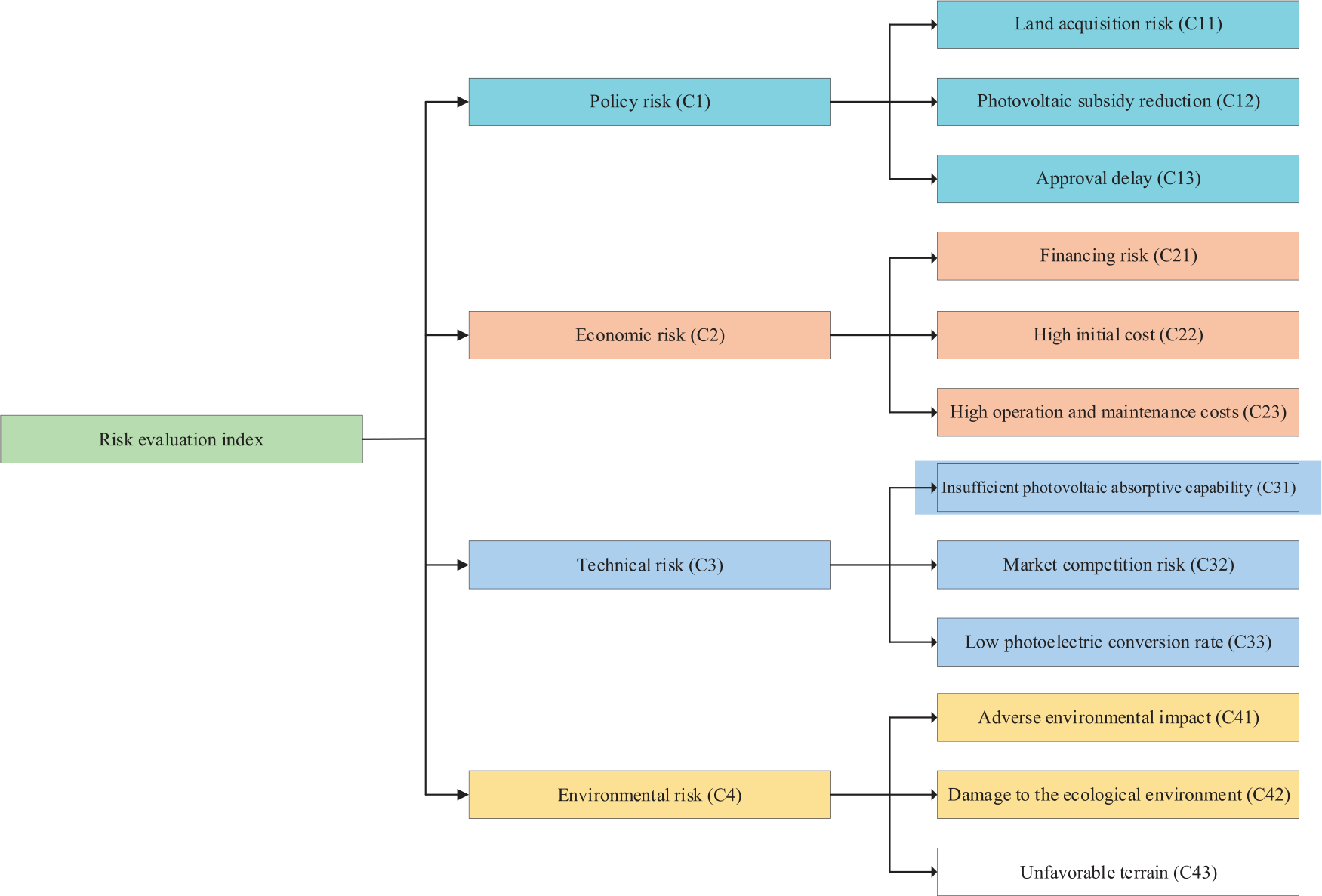
Criteria System of Risk Assessment on China’s Photovoltaic Sand Control Projects
The risk indicators for photovoltaic sand control projects are categorized into political, economic, technical, and environmental risks, as shown in Fig. 1.
Policy Risk (C1)
Land Acquisition Risk (C11)
For the permanent land of photovoltaic installations and the temporary land during construction, it is essential to engage in negotiations with local residents regarding temporary requisition or long-term lease of farmland in order to reach an agreement [40]. Failure to address compensation and other related issues adequately may impede project progress and escalate investment costs.
Photovoltaic Subsidy Reduction (C12)
With the advancement of photovoltaic projects and the maturation of photovoltaic module production technology, government subsidies are expected to decrease. This, coupled with long-term defaults in renewable resource subsidies, may impact project revenue expectations and dampen investment enthusiasm [41, 42].
Approval Delay (C13)
The approval process for photovoltaic sand control projects is excessively intricate, involving multiple departments and requiring extensive application materials, which may result in an extended capital allocation cycle, thereby augmenting the financial costs associated with the project [43].
Economic Risk (C2)
Financing Risk (C21)
The photovoltaic sand control project requires robust financial support; however, due to its nascent stage in China, the future benefits of the project remain uncertain. Consequently, financial institutions are reluctant to provide funds for its construction, posing significant obstacles in the financing process. Moreover, domestic photovoltaic enterprises in China face relatively high financing costs, typically around 8%, compared to overseas financing costs ranging from 3% to 5% [14]. As a result, this leads to elevated capital expenditure for the project.
High Initial Cost (C22)
During the initial stage of project implementation, challenges arise from a complex design and manufacturing process for photovoltaic modules, as well as high purchase and installation costs, which exert the greatest impact on the overall investment [44]. Furthermore, insufficient infrastructure development in desert areas has led to increased construction and transportation expenses.
High Operation and Maintenance Costs (C23)
Timely and effective operation and maintenance management are crucial for ensuring uninterrupted power generation in photovoltaic projects, as any obstruction by vegetation, sand, or dust can significantly impact the overall output. However, the current level of intelligence in operating and maintaining photovoltaic power stations is inadequate, particularly in desert areas where there is a shortage of skilled personnel. This deficiency often leads to issues such as power supply failures and suboptimal performance, resulting in prolonged maintenance periods and increased operational costs [45].
Technical Risk (C3)
Insufficient Photovoltaic Absorptive Capability (C31)
Most desert regions in China are situated in the northwestern part of the country, characterized by low economic development and limited electricity demand, thereby resulting in constrained local consumption capacity. Furthermore, the power grid infrastructure in these desert areas is relatively underdeveloped, posing challenges to the efficient transmission of photovoltaic-generated electricity and hindering its full conversion into income [46].
Market Competition Risk (C32)
Currently, the issue of “abandoning light and limiting power” in China’s photovoltaic industry is a grave concern, posing challenges to the effective implementation of minimum guaranteed acquisition and increasing pressure on enterprises engaging in power market transactions [47]. On one hand, the transaction price for photovoltaic power participating in the electricity market remains significantly low; on the other hand, delays in clearance may result in substantial penalty assessments.
Low Photoelectric Conversion Rate (C33)
The power generation capacity of photovoltaic power stations is largely determined by the specific parameters of the panels employed. In desert regions, however, factors such as high temperatures, dust and dirt accumulation, component aging, and other environmental influences can significantly reduce photoelectric conversion rates [48, 49].
Environmental Risk (C4)
Adverse Environmental Impact (C41)
Desert regions are characterized by windy and sandy weather conditions, where the presence of sand dust on photovoltaic modules can adversely impact their power output and conversion efficiency; and even lead to thermal spot effects [15]. This ultimately affects the lifespan of the modules and may result in a deviation from expected power generation levels, thereby influencing project benefits.
Damage to the Ecological Environment (C42)
In the process of project construction, it is inevitable to cause some ecological damage in the construction area. For instance, the presence of photovoltaic facilities can disrupt near-surface flow patterns and aeolian sand processes, leading to severe secondary hazards such as intense surface erosion and accumulation between photovoltaic panels that jeopardize the safe operation of solar power plants [50]. Furthermore, the typical lifespan of solar power plants ranges from 20 to 30 years; hence, improper disposal of decommissioned photovoltaic equipment may result in secondary pollution to the ecological environment.
Unfavorable Terrain (C43)
The siting of photovoltaic power stations typically demands a high standard of the geographical environment, and the adverse traffic and terrain conditions in desert regions not only increase the difficulty of project construction but also escalate the cost burden of the entire project [51].
Constructing the Risk Assessment Model of the Photovoltaic Sand Control Project
Determining Indicator Weights Through the Analytic Network Process (ANP)
The Analytic Network Process (ANP) is an analytical method developed based on the Analytic Hierarchy Process (AHP), specifically designed to address complex engineering decision problems with multiple objectives and criteria. The general control layer consists of decision objectives and criteria, while the network layer comprises decision indicators and their correlation relationships, which together form the network structure [52].
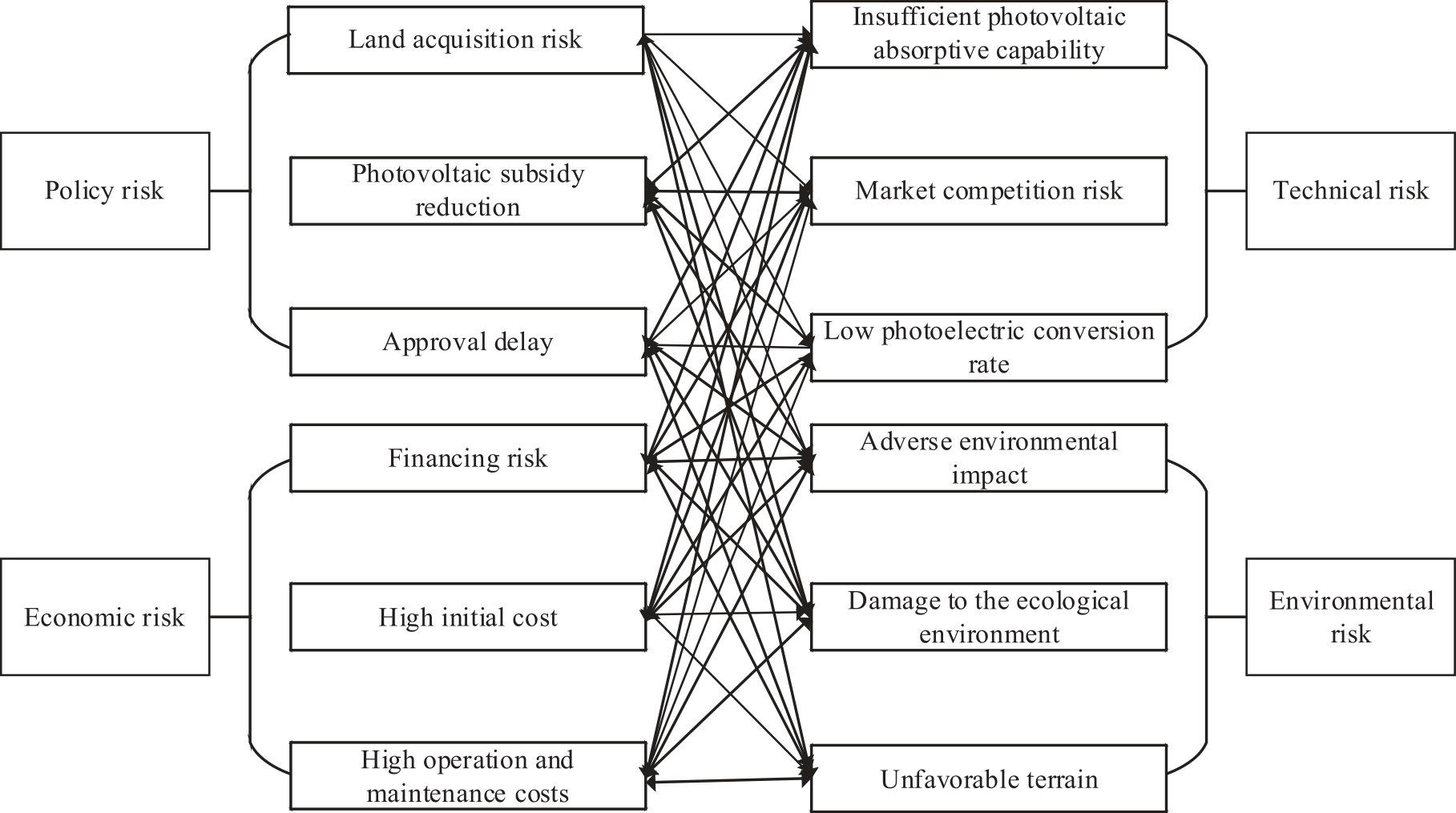
(1) Establishing the index network structure relationship
The ANP network structure was constructed based on the influence relationship among the risk assessment indicators of photovoltaic sand control, as depicted in Fig. 2.
(2) Constructing judgment matrix.
The 1-9 scale method was used to score the relative importance of each risk index in the network structure relationship of photovoltaic sand control projects, and the judgment matrix was obtained as follows:
(3) Constructing the unweighted hypermatrix.
Comparing the internal and external relations among the elements, the unweighted hypermatrix Ws formed by the ranking vectors of the elements of the network layer is obtained:
Where each element represents a small matrix whose columns sum to one. After that, it is standardized.
(4) Calculating the weighted hypermatrix.
By comparing the importance of Ci and Cj, a ranking vector can be obtained, denoted as IIj = [h1j, h2j, ..., hNj], then the weight matrix is:
Multiplying H with W yields the weighted hypermatrix, denoted as W̅ . After that, the limit solution is carried out to obtain the index weight.
Grey-Fuzzy Comprehensive Evaluation
The fuzzy comprehensive evaluation method, based on the principles of fuzzy mathematics theory, quantifies each qualitative index using mathematical methods and determines the judgment matrix for each index. Subsequently, a comprehensive evaluation value is calculated from the matrix. This approach yields objective, scientific, reliable results that are suitable for addressing diverse qualitative problems. By combining the Analytic Network Process (ANP) with the fuzzy comprehensive evaluation method, we can overcome the subjectivity associated with quantifying ANP indices while also avoiding any neglect of index weight in the fuzzy comprehensive evaluation method. This integration represents a significant application of a comprehensive methodology.
(1) Determining evaluation criteria.
The risk assessment of photovoltaic desertification control projects is divided into five levels, shown in Table 1.
Among them, the values between the two levels are 8, 6, 4, and 2.
(2) Constructing the fuzzy evaluation sample matrix.
Suppose that a total of K experts is invited to evaluate the risk indicators based on four dimensions: probability of occurrence (P), uncontrollability (U), damage degree after occurrence (S), and emergency degree (E). The fuzzy evaluation sample matrix is denoted as D.
(3) Establishing the gray evaluation matrix.
Combined with the risk evaluation level of the photovoltaic desertification control project, the gray and bleaching weight function, i.e., f1(x) ~ f5(x), is determined as follows:
The gray fuzzy evaluation weight vector can be obtained from Equation (12).
Therefore, the gray fuzzy comprehensive evaluation matrix R can be obtained, where R can be expressed as:
(4) Calculating the comprehensive evaluation matrix and evaluation results.
After establishing the matrix, the fuzzy comprehensive evaluation method is used for the subsequent evaluation. Firstly, the comprehensive evaluation matrix B of the first-level indicators can be calculated by the following equation:
On this basis, the total evaluation matrix M can be formed:
The comprehensive value at risk is obtained through Equation (16).
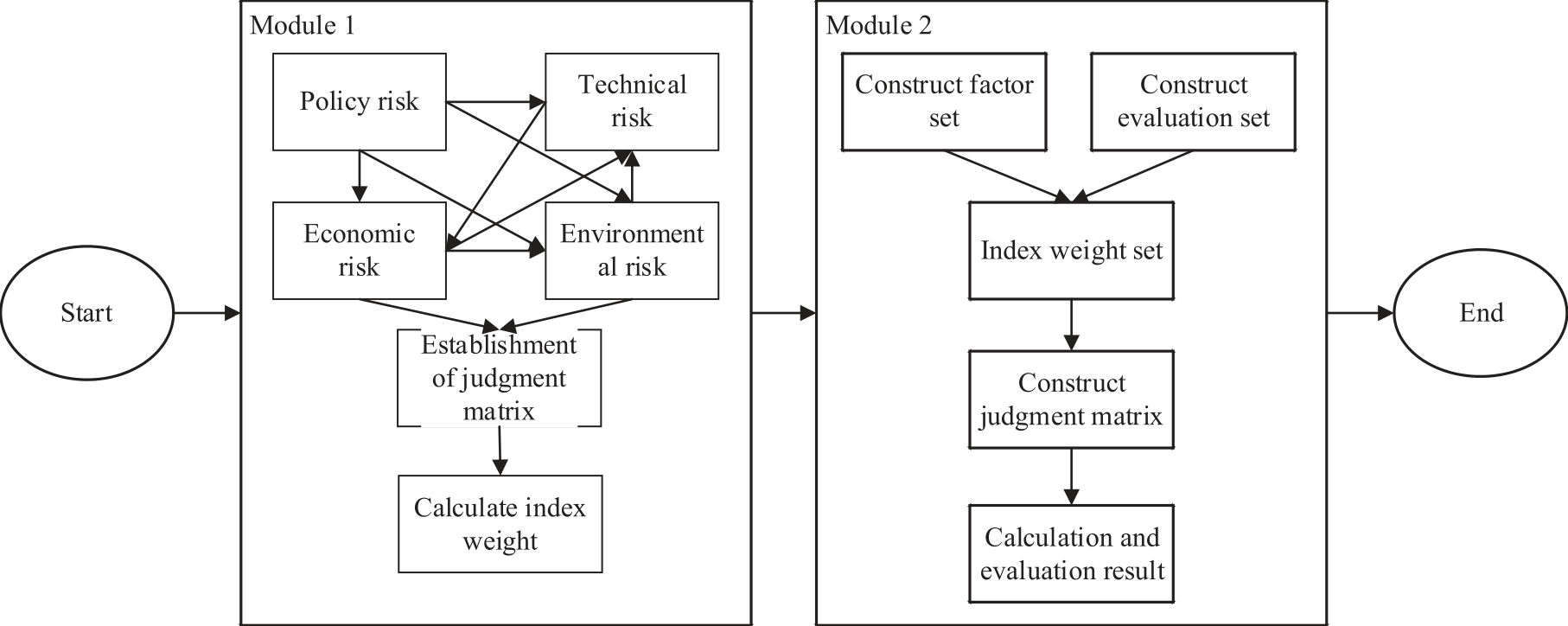
ANP-Calculation Flow Chart of Gray Fuzzy Evaluation Model
Based on the identification of risk evaluation indicators for photovoltaic sand control projects, this paper proposes a comprehensive evaluation method that combines network hierarchy technology and gray fuzzy logic. The specific calculation process is shown in Fig. 3.
As shown in Fig. 3, there is a strict dependence between the four risk assessment indicators considered by the photovoltaic sand control project.
Empirical Study
To verify the scientificity and rationality of the risk evaluation index and evaluation method for controlling photovoltaic desertification, a typical demonstration project was selected for empirical analysis.
Basic Information
The western region of China has abundant light resources, a flat terrain, a dry climate, and long sunshine hours, making it an ideal location for building photovoltaic power stations. However, the region also faces serious sandstorms and land desertification, which have caused significant difficulties and losses to the local people’s production and daily lives. Located in Gansu Province in northwest China, the demonstration project was officially launched in December 2019 with a total installed capacity of 320 MW and an annual generating capacity of approximately 400 million KWH.
The demonstration project utilizes solar power to generate electricity, which is a clean, renewable, and pollution-free energy source. It is estimated that it can save approximately 120,000 tons of standard coal annually, reduce carbon dioxide emissions by about 300,000 tons, sulfur dioxide emissions by about 12,000 tons, and nitrogen oxide emissions by about 6,000 tons. This not only achieves the utilization of renewable energy but also promotes the growth of desert vegetation.
Furthermore, to enhance the accuracy of risk assessment for photovoltaic sand control projects, this paper enlisted the participation of 12 experts in the field who assigned values to the indicators used for risk assessment.
The results of risk evaluation are discussed and analyzed.
Determining the Weight of Risk Indicators
The ANP and gray fuzzy comprehensive evaluation methods proposed in this paper were used to calculate the weight of each evaluation index for photovoltaic sand control projects, as shown in Fig. 4.
Analysis of Risk Assessment Results
By combining the weights of each risk assessment index for the photovoltaic sand control project, we obtained the weights for four dimensions: policy (ZP = 6.164), economy (ZS = 5.917), technology (ZP = 5.543), and environment (ZE = 5.198). Subsequently, we obtained the risk assessment results for the demonstration project as follows:
Z = 5.693
The evaluation of the demonstration project was between medium and high risk. It is evident that economic risk poses the greatest threat to photovoltaic desertification control projects in China, accounting for 32.7% of the total weight of four secondary indicators. This highlights that high costs and financing difficulties are major sources of risk for such projects. Technical risk closely follows at 25.1%, indicating that photovoltaic enterprises still face numerous technical challenges in desert areas that require improvement. Furthermore, environmental risk has the lowest proportion, suggesting that environmental impact does not significantly influence project risks.
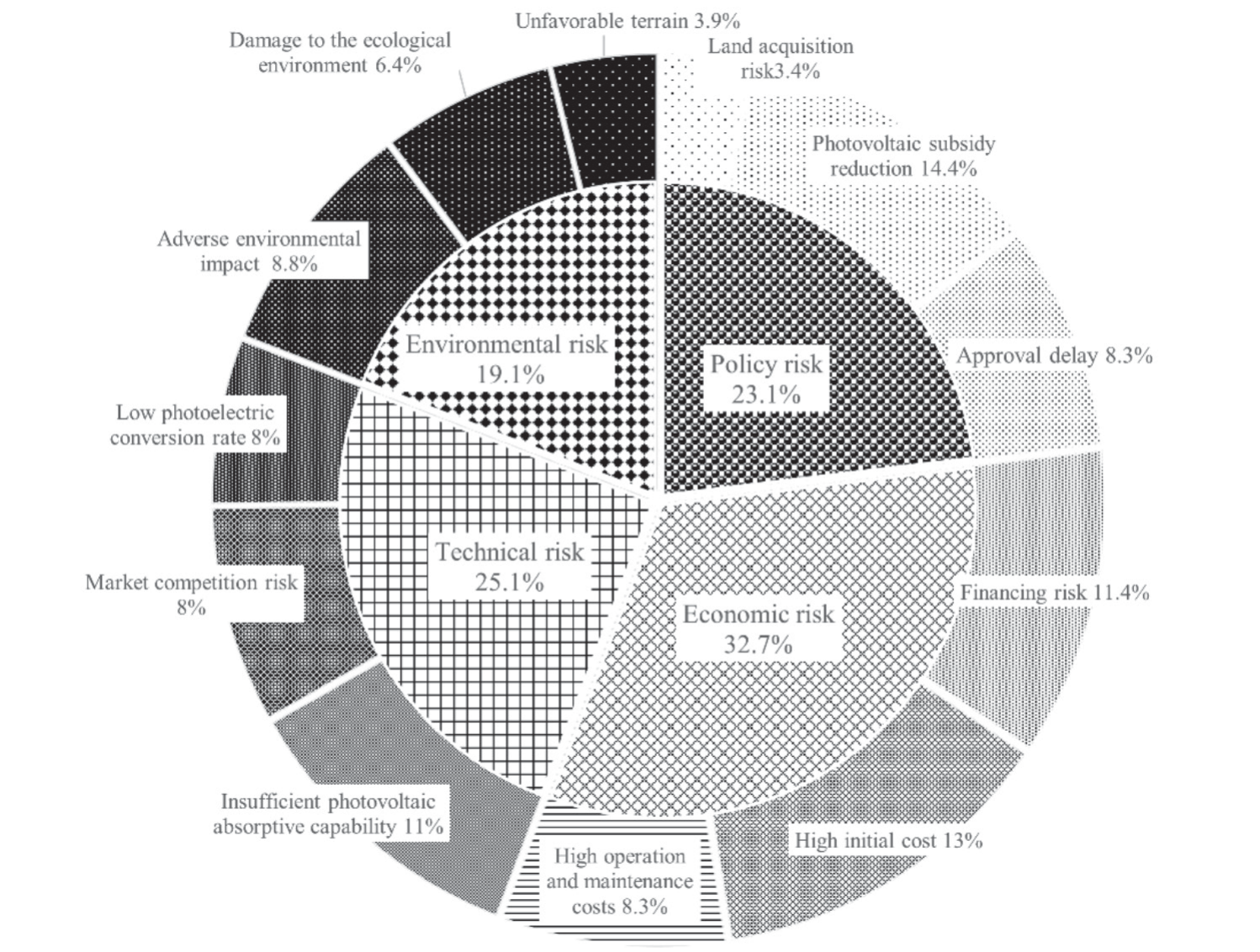
From the perspective of secondary indicators, the reduction in photovoltaic subsidies (C12) and financing difficulties (C21) are the two pivotal factors determining the risk level of photovoltaic sand control projects. On one hand, a decrease in photovoltaic subsidies can directly impact project expected income and diminish investor interest. On the other hand, enterprise financing challenges hinder access to sufficient funds for project implementation, resulting in sluggish progress and impeding project scale and revenue generation. Moreover, high financing costs escalate operational expenses while reducing project profitability. Additionally, financing difficulties may lead to delayed debt repayment by enterprises, amplifying financial risks that jeopardize the stability and sustainable development of photovoltaic sand control projects. The third major risk factor is high initial cost (C22), which may include land costs, construction expenses, equipment acquisition expenditures, and human resources costs, among others; notably, equipment acquisition costs constitute significant outlays. Furthermore, the weight of photovoltaic absorption limitation (C31) also exceeds 10%, indicating that the power absorption capacity of desert areas also constitutes an important part of the risk of photovoltaic sand control projects.
Risk Management Guidance
Although the photovoltaic sand control project has obvious advantages, it not only faces the risk factors discussed in this paper, but also suffers from high costs, financing difficulties, and other problems, resulting in the risk level of the photovoltaic sand control project being still very high. Based on the calculation results of this paper, some guidance opinions on risk management are proposed as follows:
Policy Risk (C1)
Land Acquisition Risk (C11)
Conduct a comprehensive risk assessment during the project initiation phase, encompassing factors such as timely land acquisition, cost implications, social impact considerations, and more. Simultaneously, formulate a robust contingency plan to address potential risks and challenges that may arise throughout the land acquisition process. Engage in negotiations with landowners and stakeholders to ensure compliance with local laws and regulations pertaining to photovoltaic project land acquisitions while also providing appropriate economic compensation or other forms of benefit sharing (e.g., employment opportunities) for local residents.
Photovoltaic Subsidy Reduction (C12)
The analysis reveals that the reduction of photovoltaic subsidies plays a pivotal role in determining the risk level of photovoltaic sand control projects. To mitigate project risks, several measures can be implemented: Firstly, project managers should enhance market research efforts to identify potential investors and reduce reliance on subsidies. Secondly, diversifying project design by integrating other energy projects and enhancing project sustainability can help minimize the impact of photovoltaic subsidies on projects.
For governmental entities, it is recommended to establish research and development funds aimed at promoting innovation in photovoltaic production technology as well as power generation and transmission technology. Additionally, reducing tax rates, loan interest rates, and grid connection fees would effectively lower project costs.
Approval Delay (C13)
Optimizing the approval process and establishing an inter-departmental coordination mechanism are crucial steps toward enhancing administrative efficiency [37]. Firstly, it is imperative for the government to delve deeper into the administrative examination and approval system by streamlining processes, reducing unnecessary items, and simplifying procedures. Secondly, a dedicated “green” channel should be established specifically for photovoltaic sand control projects. Additionally, all departments must strengthen timely and effective communication channels to minimize information transmission delays and foster close collaboration.
Economic Risk (C2)
Financing Risk (C21)
In response to the challenges faced in financing the photovoltaic industry, it is imperative for the government to collaborate with financial institutions and third-party information technology development platforms in order to establish a comprehensive financing information sharing platform. This will effectively address the financing barriers arising from information asymmetry. Additionally, financial institutions can play a pivotal role by introducing innovative financial products and developing unique guarantee methods that offer greater flexibility and distinctiveness in providing financial support to the photovoltaic industry. Qualified enterprises should be offered flexible funding assistance. Furthermore, regulatory authorities such as the central bank can enhance green credit granting guidelines for the banking sector by explicitly incorporating the photovoltaic industry as a key area of credit support. Emphasizing credit scale priority, establishing a dedicated green financing channel specifically tailored for small and medium-sized enterprises would be highly beneficial.
High Initial Cost (C22)
Existing studies have demonstrated that the procurement and installation expenses of photovoltaic modules constitute the largest proportion of the initial investment in photovoltaic sand control projects. To address this issue, photovoltaic companies can establish enduring partnerships with suppliers and engage directly with manufacturers to mitigate procurement costs. Furthermore, implementing more efficient construction planning and project management practices, along with providing comprehensive education and training programs for installers, can enhance their professional expertise and work efficiency, thereby minimizing resource wastage and shortening construction duration.
High Operation and Maintenance Costs (C23)
Implementing a resident contract system can effectively address the daily maintenance challenges associated with photovoltaic panels. The primary issue in operation and maintenance lies in panel cleaning, which can be addressed through collaboration with local residents. By adopting the resident contract system, residents are allowed to cultivate crops beneath the photovoltaic panels, benefiting from free access to water and electricity while retaining full ownership of their harvests. However, it is required that they utilize water sourced from the photovoltaic panels for crop irrigation and undertake regular panel cleaning tasks. This approach significantly reduces the costs associated with daily operation and maintenance.
Technical Risk (C3)
Insufficient Photovoltaic Absorptive Capability (C31)
Firstly, it is essential to accurately determine the installed capacity of photovoltaic power generation based on regional characteristics and grid capacity. Secondly, the government should prioritize the development of power grids in desert areas, enhance their construction standards, and invest in transmission lines and substations. This will enhance the grid’s absorption capacity to accommodate the rapid growth of photovoltaic power generation. Additionally, exploring flexible approaches for new energy consumption, such as integrating photovoltaic power generation with energy storage technology, can enhance the flexibility of photovoltaic power utilization and ensure economic benefits from photovoltaic desertification control projects.
Market Competition Risk (C32)
On one hand, it is imperative to actively address the issue of light abandonment and power rationing by expanding trans-regional transmission channels and enhancing both trans-regional power transmission capacity and allocation capability. On the other hand, there is a need to further advance market-oriented reforms in power trading while improving transparency and liquidity within the power trading market.
Low Photoelectric Conversion Rate (C33)
In the selection of photovoltaic modules, advanced materials and technologies should be employed to enhance their durability. Additionally, a resident contract system can be implemented to collaborate with local residents for timely solar panel cleaning. Moreover, specialized dustproof anti-reflection coatings can be developed and applied to minimize dust adhesion and optimize sunlight transmittance, thereby augmenting photoelectric conversion efficiency.
Environmental Risk (C4)
Adverse Environmental Impact (C41)
On one hand, climate speculation enables the calculation of annual variations and long-term trends in solar energy resources while also facilitating the monitoring and recording of extreme weather events such as dust storms [53]. On the other hand, the protection of surface materials should be enhanced in areas prone to frequent sand and dust, such as the installation of wind-proof sand barriers, aiming to mitigate the contact and erosion caused by sand and dust on the panels.
Damage to the Ecological Environment (C42)
Prior to project commencement, a comprehensive environmental impact assessment should be conducted to identify potential ecological damage and develop measures for avoidance, mitigation, and remediation. The construction process should prioritize ecological protection by adhering to relevant environmental regulations and standards while ensuring the implementation of environmentally sustainable construction methods. Following project completion, vegetation restoration efforts need to be undertaken through the strategic planting of drought-resistant and sand-stabilizing vegetation amidst the photovoltaic arrays in order to minimize soil erosion as well as mitigate the impacts of wind and sand on the ecological environment.
Unfavorable Terrain (C43)
In the process of site selection, it is imperative to carefully consider factors such as topography, transportation, and construction expenses while conducting thorough site investigations and environmental impact assessments to comprehend the specific influence of terrain conditions on project construction and operation. Furthermore, employing advanced technologies like GIS can aid in identifying regions with reduced construction costs and subsequent maintenance expenditures [54]. During the construction phase, it is crucial to enhance climate change prediction and monitoring in desert areas, promptly adjusting the project plan when necessary.
Conclusions
The proposal of China’s ‘double carbon’ goal has led to higher requirements for regional renewable energy utilization and environmental low-carbon optimization. This paper designs a risk evaluation index system for photovoltaic sand control, considering 12 factors, and proposes the ANP and gray fuzzy comprehensive evaluation method. The specific results are as follows:
(1) The selected photovoltaic desertification control projects in this study exhibit risk levels ranging from “medium” to “high”.
(2) From the level of primary risk indicators, economic risk is the biggest risk faced by China’s photovoltaic sand control projects, accounting for 32.7% of the total weight of the four secondary indicators. From the perspective of secondary indicators, the reduction of photovoltaic subsidies (C12) and financing difficulties (C21) are the two key factors that determine the risk level of photovoltaic sand control projects.
Although we have conducted meticulous research to assess the risks associated with photovoltaic sand control projects in China, there are inevitably certain limitations inherent in this paper. For instance, the selection of risk assessment indicators may not encompass all factors that influence the overall project risk level and have not been considered within this study. Furthermore, diverse desert regions exhibit varying topographic conditions, necessitating tailored risk assessments based on local circumstances. We anticipate that future investigations will expand upon and enhance the findings presented in this study.

