

Introduction
In recent years, the intensification of the greenhouse effect has led to a heightened impact on the global environment, resulting in frequent occurrences of severe weather events and posing a significant threat to biodiversity [1]. As one of the world's major population and economic powers, China bears a crucial responsibility for carbon reduction. According to data from CEADs, China's total carbon emissions have increased by almost 50%, rising from 6.546 billion tons in 2007 to 9.794 billion tons in 2019. In 2019, China ranked first globally in total carbon emissions, accounting for 28.8% of global emissions [2]. The substantial amount of carbon emissions has given rise to a range of environmental and social issues that impede the high-quality development of both the economy and society. In response to the pressing demands for carbon reduction, on September 22, 2020, the President of the People's Republic of China announced at the 75th session of the United Nations General Assembly that China aims to achieve peak carbon dioxide emissions before 2030 and strives for carbon neutrality by 2060. To realize these dual carbon objectives, governments at all levels in China have implemented many supportive measures. Regarding technological innovation, in August 2022, the Ministry of Science and Technology, along with the National Development and Reform Commission and nine other departments, jointly issued the 'Implementation Plan for Science and Technology Supporting Carbon Peak and Carbon Neutrality (2022-2030)', which comprehensively outlines scientific and technological innovation initiatives as well as support mechanisms aimed at achieving peak carbon emissions by 2030 while laying R&D groundwork for attaining carbon neutrality by 2060. Carbon-neutral technological innovation represents a disruptive technology innovation aimed at achieving the 'dual carbon' objective, with the primary purpose of mitigating climate and environmental change through fundamental reductions in carbon emissions and effective carbon offsetting. This innovative system encompasses low-carbon technologies such as energy conservation and efficiency enhancement, zero-carbon technologies like renewable energy generation and alternative combustion methods, and negative carbon technologies, including carbon capture and disposal. Its significance lies in facilitating the attainment of both peak carbon emissions and eventual carbon neutrality.
Over the past decade, the Chinese government has implemented strong measures to promote energy conservation and carbon reduction; however, most of these measures primarily consist of government-mandated environmental regulations. China's environmental protection faces 'three major challenges', namely, difficulties in enforcing environmental laws, limitations in pursuing environmental litigation, and challenges in social supervision. These obstacles have resulted in the limited effectiveness of command-based environmental regulation measures. To address these challenges, information disclosure emerges as a valid solution. Concurrently, the Chinese government endeavors to enhance the transparency of environmental information and harness the supervisory role played by public entities to bolster comprehensive pollution control capabilities. Since 2008, China's Institute of Public and Environmental Affairs (IPE) and the Natural Resources Defense Council (NRDC) from the United States have jointly published the Pollution Source Supervision Information Disclosure Index (PITI), which serves as a crucial policy for third-party disclosure of environmental information in China.
The research on the impact of environmental information disclosure is categorized into three dimensions. Firstly, it investigates the motivation and micro-level performance of independent environmental information disclosure among enterprises based on micro-enterprise data. As an integral component of corporate social responsibility, since the 1970s, several developed countries have mandated enterprises to disclose and publicize environment-related activities and information [3-5]. A positive correlation exists between enterprises' efforts in environmental information disclosure and their environmental sensitivity and enterprise size. Furthermore, economically successful enterprises were more inclined to disclose environmental information [6]. Environmental information disclosure can improve corporate financial performance; analyst coverage and liquidity serve as indirect channels through which environmental disclosure impacts financial performance [7], and it contributes to enhancing the sustainable development capabilities of enterprises [8]. There is a significantly negative investor reaction toward environmental information disclosure when considering annual reports; particularly polluting firms and those with higher institutional ownership tend to elicit such negative reactions from investors [9].
Secondly, the literature analyzes the economic and social impacts of government environmental information disclosure systems. Government environmental information disclosure systems had only a slight reduction effect on China's 'three wastes' at the provincial level during the 11th Five-Year Plan implementation [10]. At the national level, the extent of government environmental information disclosure in developing countries like China remains insufficient, thereby constraining the effectiveness of such disclosures [11]. Government-released environmental information reflects local environmental performance as a whole, with higher levels of disclosure correlating to better local performance; however, there are significant regional differences in this relationship [12]. Increasing the intensity of government-led environmental information disclosure would encourage enterprises to undertake remediation actions, reduce total pollutant emissions, and improve remediation effectiveness by strengthening regional law enforcement and public supervision efforts [13]. Thirdly, the literature examines third-party environmental information disclosure's impact, which has been shown to reduce enterprise SO2 emissions [14], enhance energy efficiency [15], aid enterprise carbon reduction efforts [16], improve urban air quality [17], and boost economic development quality [18].
Although there is a growing body of literature on environmental information disclosure, limited attention has been given to studying the impact of such disclosure on green technology innovation [19-21]. To the best of our knowledge, no existing research has examined the influence of third-party environmental information disclosure on carbon-neutral technological innovation. Carbon-neutral technological innovation aims at reducing carbon emissions and implementing carbon offset measures. How does the third-party environmental information disclosure policy influence carbon-neutral technology innovation? What are the underlying mechanisms driving this influence? Which characteristics of a city may moderate this effect? This study aims to address these crucial questions.
The marginal contributions of this paper are manifested in several key aspects: (1) Building upon the existing literature regarding environmental information disclosure and green innovation, this study further refines its focus by examining carbon-neutral technology innovation, categorizing it into negative carbon technology innovation, zero-carbon technology innovation, and low-carbon technology innovation. This approach enriches and expands the current discourse on the effects of environmental information disclosure within research environments. (2) The investigation delves deeply into the mediating mechanisms through which third-party environmental information disclosure influences carbon-neutral technology innovation. Our findings indicate that such disclosures can enhance public environmental awareness and improve government governance levels, thereby promoting advancements in carbon-neutral technologies. (3) This paper addresses the moderating role of green finance development levels, offering valuable policy implications for governments aiming to foster carbon-neutral technology innovations.
The remaining part includes the following sections: The second part provides an introduction to policy background and theoretical hypotheses, which presents the three theoretical hypotheses of this paper. The third part is the material and methods, which mainly introduce the model, variables, and data sources. The fourth part is the empirical results and discussion, which report the regression results of the base model, robustness test results, moderation effect results, and heterogeneity analysis results. The fifth part is the conclusion and policy implications.
Brief Review of Policies and Theoretical Hypotheses
Brief Review of Policies
In May 2008, China implemented the Regulations on the Disclosure of Government Information and the Measures for the Disclosure of Environmental Information (Trial Implementation). Seizing this opportunity, in 2009, the Institute of Public and Environmental Affairs of China (IPE) and the Natural Resources Defense Council (NRDC) collaboratively developed the Pollution Source Supervision Information Disclosure Index (PITI), marking a significant milestone in establishing China's third-party environmental information disclosure system and enhancing its environmental prevention mechanism. The PITI encompasses five primary indicators: 'regulatory information,' 'self-monitoring,' 'interactive response,' 'emission data,' and 'EIA information.' Each indicator is further divided into eight secondary indicators with assigned weights. A quantitative evaluation was conducted for each index based on four dimensions: systematicity, timeliness, completeness, and user-friendliness. Starting in 2008, when IPE initiated systematic assessments of government environmental information disclosure quality in 113 cities, it expanded to cover 120 cities during 2013-2014. Over a decade from 2008 to the present day (2018-19), ten editions of the Pollution Source Regulatory Information Disclosure Index (PITI) have been published.
Comprehensiveness and systematic availability of information are the pivotal aspects of the four dimensions of PITI index evaluation. Initially, limited early data was utilized, with foundational data based on 24,345 environmental regulatory records published in 2008. Subsequently, with the implementation of the new environmental protection law in 2014, the foundational data for PITI evaluation expanded to 42,569 records, further propelled by the rollout of central environmental inspection in 2016, generating a significant increase to 69,355 records. In 2017, this number surged to reach an impressive count of 162,548 records, finally culminating in an extensive dataset comprising 338,651 records by year-end 2018. After years of dedicated efforts and commitment towards transparency and accessibility principles regarding environmental information disclosure, 'public as the norm' rather than exception has gained widespread acceptance among both governmental bodies and the general public. Analysis reveals that Ningbo, Beijing, Wenzhou, Qingdao, and Hangzhou consistently achieved the highest average scores across ten periods, while Karamay, Datong, Zhangjiajie, Linfen, and Benxi recorded the lowest average scores.
Theoretical Hypothesis
Impact of Third-Party Environmental Information Disclosure on Carbon-Neutral Technology Innovation
Third-party environmental information disclosure is of great practical significance for ensuring the public's rights to know, participate, and supervise for improving the quality of environmental management in developing countries.
Firstly, the supervision information disclosure regarding pollution sources has effectively heightened public awareness of environmental pollution. Third-party disclosure of environmental information can better facilitate public participation and enhance enthusiasm for engagement. Leveraging big data and smartphones enables the general public to easily access diverse environmental information, encouraging them to express concerns about environmental issues through casual photographs such as "showing pollution" and "showing blue sky". Furthermore, building upon the foundation of environmental information disclosure, the government has also pioneered a novel model of 'Internet +' governmental services. The emergence of environmental government micro-blogs, WeChat platforms, and the 12369 network reporting platform has significantly bolstered public engagement in monitoring polluting enterprises.
Public environmental attention is conducive to increasing the market's investment demand for low-carbon, zero-carbon, and negative-carbon carbon-neutral green products and environmentally friendly enterprises. The public will 'vote with their feet' to enhance the survival dilemma of 'high-carbon' products [22], thus stimulating carbon-neutral technological innovation. Public environmental attention can drive green innovation behavior by strengthening government environmental regulation and improving enterprises' ecological concepts [23]. Dong and Wang [24] found that public environmental attention significantly upgrades the level of green technology innovation and promotes the transformation of technology in the green direction. Therefore, under the huge pressure of carbon reduction, with the increase of public environmental attention, more carbon-neutral technological innovation is bound to be stimulated.
Secondly, the pollution source supervision information disclosure is conducive to enhancing the efficacy of government environmental governance. The dissemination of third-party environmental information has fostered the enhancement and implementation of national environmental protection policies, facilitating effective management and amelioration of environmental quality. With unwavering support and assistance from the SEE Foundation and IPE, the third-party Environmental Information Disclosure Index has consistently focused on monitoring the compliance with environmental information disclosure by key polluting entities while proffering recommendations to pertinent authorities through the CPPCC National Committee, thus propelling further advancements in ecological and environmental protection legislation. The real-time disclosure of key pollution information sources in China has been significantly enhanced, with over 20,000 online supervision enterprises. Through the real-time disclosure of pollution data, government environmental protection departments have experienced a substantial boost in standardization, regulation, and digitalization efforts. The elevation of the government's environmental governance level primarily compels enterprises to enhance their environmental standards by incentivizing positive behavior and penalizing non-compliance. Furthermore, the advancement of the government's environmental governance can effectively guide enterprises towards improving existing products and optimizing organizational structures by establishing unified rules and procedures based on market demand for carbon-neutral technological innovation. The enhancement of the government's environmental governance level is advantageous for providing financial support to environmental protection and innovative industries, imposing administrative penalties on polluting activities, as well as guiding enterprises in conducting research and development (R&D) activities related to greenhouse gas treatment technologies.
Based on this, we propose Hypothesis 1 and Hypothesis 2.
Hypothesis 1: Third-party environmental information disclosure facilitates urban carbon-neutral technological innovation.
Hypothesis 2: Third-party environmental information disclosure fosters urban carbon-neutral technological innovation by augmenting public environment attention and elevating levels of governmental environmental governance.
Moderating Role of Green Finance Development
Technological innovation is characterized by long cycles, high risks, and a high failure rate, which often generate financing constraints for enterprises' innovation activities. These constraints result in insufficient investment in technological innovation as enterprises allocate more funds towards short-term productive investments, thereby inhibiting the progress of technological advancement. The financial system plays a crucial role in resource allocation and macroeconomic regulation within a country. A well-developed financial system can effectively alleviate financing constraints for enterprises [25]. Therefore, regional financial development has a significant effect on promoting technological innovation [26]. Countries with more developed stock markets exhibit higher levels of innovation among industries that heavily rely on external financing and possess greater technology intensity [27]. Bank deregulation-induced competition within the banking industry effectively stimulates technological innovation [28].
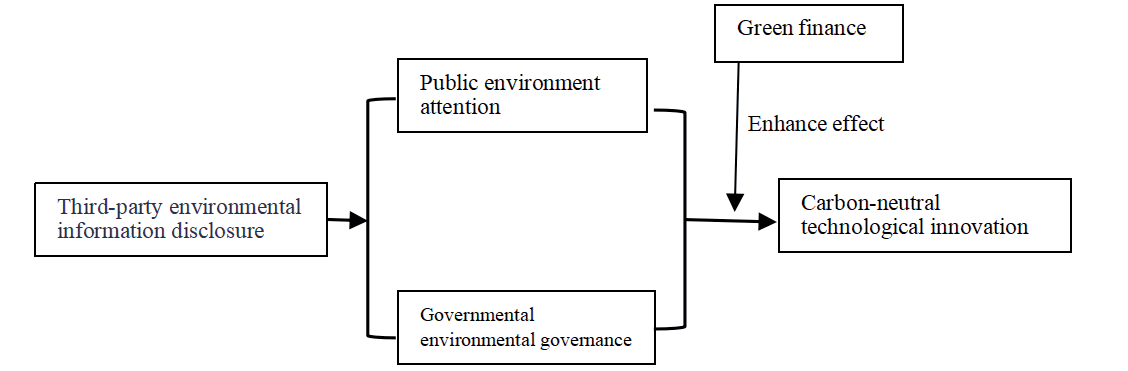
A robust financial system can enhance the efficiency of capital allocation and effectively direct capital towards green and low-carbon industries, thereby fostering green innovation [29]. Green finance is an innovative financial instrument designed to address environmental challenges [30], which surpasses traditional finance in channeling capital away from high-pollution sectors towards clean industries [31]. By promoting economic growth, optimizing industrial structure, and increasing R&D investment, green finance has the potential to elevate regional levels of green technology innovation [32-34]. The advancement of green finance stimulates energy innovation by facilitating zero-carbon and low-carbon technological innovations while improving environmental quality [35]. Moreover, the literature found compelling evidence supporting the significant role of green finance in driving investments and production within renewable energy sectors—zero-carbon technological innovations [36, 37]. Third-party environmental information disclosure forces enterprises to carry out carbon neutral innovation by enhancing public environmental attention and government environmental governance. However, because innovation is limited by financial support, the realization and transformation of carbon-neutral technology innovation are also affected by the development of green finance in the city where the enterprise is located.
Hypothesis 3: The development of green finance can enhance the promotion effect of third-party environmental information disclosure on carbon-neutral technological innovation.
Material and Methods
Method Specification
Benchmark Empirical Model
This paper considers the level of carbon-neutral technology innovation as the explained variable and the urban environmental information disclosure index as the core explanatory variable. To address the potential endogeneity between explanatory variables and residual errors, as well as to account for the previous values of explanatory variables in the model, this study employs the generalized method of moments (GMM) estimation technique to control for these factors while considering possible serial autocorrelation and endogenous correlation among variables. The dynamic panel data model is formulated as follows:
Where c is the city, t is the year, and CNTI is the dependent variable, namely, carbon-neutral technological innovation. PITI is the urban environmental information disclosure index. X represents a series of control variables. μ and φ represent city and year fixed effects, respectively, and ε is the random error term.
Given the potential bias in estimating dynamic panel model (1) using the ordinary least squares method, it has been suggested by Arellano and Bover [38] as well as Blundell and Bond [39] that system GMM could address the issue of weak instrumental variables arising from difference GMM. Therefore, in this study, we employ the two-stage system GMM to estimate model (1).
Mediating Effect Model
The findings of Hypothesis 2 indicate that third-party disclosure of environmental information influences the innovation of urban carbon-neutral technologies through two distinct channels: by enhancing public environmental attention and improving the level of government's environmental governance. Building upon the methodology employed by Zhang et al. [40], this study constructs a mediating effect model based on dynamic panel analysis to examine this hypothesis.
Where M is the mediating variable. If the coefficients of the mediating variable in equation (3) should be significant, a mediation effect exists.
Moderating Effect Model
To examine the moderating impact of green financial development, this study introduces the interaction term of green financial development and environmental information disclosure based on Model (1) to establish the moderating effect model.
In the formula (4), GFD is the green finance development level of the city.
Variables Description
Dependent Variable
Carbon-neutral technology innovation (CNTI) is proxied by the number of urban carbon-neutral patents granted [41] and calculated in the form of ln (number of patents granted +1). Y02 technologies, defined in the Cooperative Patent Classification jointly issued by the United States and the European Patent Office in 2013, encompass climate change mitigation/adaptation technologies. This category includes technologies aligned with the Kyoto Protocol and the Paris Agreement for reducing greenhouse gas emissions and those aimed at mitigating adverse effects of climate change (information sourced from Espacenet, https://ie.espacenet.com/. This classification method aligns with the attributes of carbon-neutral technologies. Carbon-neutral technology innovation can be further categorized into negative carbon technology innovation (NCTI), zero carbon technology innovation (ZCTI), and low carbon technology innovation (LCTI) [41], with specific classifications outlined in Table 1.
Independent Variable
The Pollution Source Regulatory Information Disclosure Index (PITI) of each city, with a maximum score of 100, reflects the effectiveness of local government in terms of timeliness, completeness, and user-friendliness in disclosing environmental information. A higher value indicates better performance. To ensure comparability before and after adjustments made to the evaluation method in 2013, this study employs dimensionless processing by comparing data from previous years with the maximum PITI value recorded in the preceding year.
Other Variables
The control variables considered in this study include (1) Economic Development Level - Gross Domestic Product (lnGDP): Regions with lower income tend to stimulate economic growth through increased production activities that result in higher carbon dioxide emissions, whereas regions with higher income demonstrate a stronger inclination towards green innovations like carbon-neutral technological innovations. This variable is quantified using the logarithm of urban GDP per capita. (2) Foreign Direct Investment (FDI): articulated as the ratio of actual foreign investment utilized in a region to its Gross Domestic Product. (3) Research and Development Expenditure (lnR&D): quantified by science and technology expenditure of each region, with a logarithmic transformation applied.(4) Fiscal Intervention (Fac): measured to the proportion of fiscal expenditure relative to GDP, serving as an indicator for government intervention measures implemented within these regions' economies. (5) Industrial Structure (Str): expressed as the ratio of the value added by the tertiary sector to that of the secondary sector. Mediating variables (PEA, GEG) and Moderating variables (GFD) are reported in the following sections. Table 2 presents the descriptive statistics of variables.
Table 1.
Classification of carbon-neutral technological innovations.
Data Sources
Due to data availability limitations, this study focuses on 120 Chinese cities included in the list of environmental information disclosures from 2008 to 2019. The patent data for carbon-neutral technology innovation is obtained from the IncoPat patent retrieval system using the search parameters CPC=Y02ANDPNC=CN, enabling access to patent information related to carbon-neutral technology in each city across China. The Pollution Source Regulatory Information Disclosure Index (PITI) is from the joint report released by the Institute of Public and Environmental Affairs (IPE) and the Natural Resources Defense Council (NIDC). Although only 10 periods of index data were published between 2008 and 2019, missing years are supplemented by averaging values from two adjacent years.
The city-level data are from authoritative publications such as the China Statistical Yearbook for Regional Economy, the China City Statistical Yearbook, statistical yearbooks of provinces and cities, and the comprehensive China Economic Network database. The instrumental variable is derived by meticulously analyzing the publishing locations of 486 local newspapers nationwide using the Full Text Database of China's Important Newspapers. Public environmental attention is measured through the Baidu index, while the government's environmental governance intensity is extracted from textual analysis of the government work report. Data on green finance are from the China Stock Market & Accounting Research Database (CSMAR) and the WIND database. The carbon emission data is sourced from CEARS, and the land-use data is from grid data provided by the Center for Resources and Environmental Science and Data of the Chinese Academy of Sciences.
Results and Discussions
Estimation Results of the Benchmark Model
Addressing the problems caused by over-identification and endogeneity in regression models, this study employs the system GMM method, Sargan test, and AR test. Table 3 presents the results of the benchmark model testing for urban carbon-neutral technology innovation based on third-party environmental information disclosure. From the findings reported in Column (1) of Table 3, it is evident that third-party environmental information disclosure (PITI) exhibits a significantly positive coefficient of 0.187 for carbon-neutral technology innovation. It indicates that third-party environmental information disclosure plays a significant role in promoting urban carbon-neutral technology innovation, thereby confirming our hypothesis H1. Further analysis presented in columns (2), (3), and (4) indicates that while the disclosure of third-party environmental information exerts a significantly positive influence on both low-carbon and zero-carbon technology innovations, it does not demonstrate statistical significance concerning negative-carbon technology innovation. It suggests that although third-party environmental information disclosure facilitates the stimulation of low-carbon and zero-carbon technology innovation, it does not significantly influence the advancement of negative-carbon technology innovation. The primary reason behind this could be attributed to the higher level of innovativeness required for negative-carbon technologies that necessitate greater investment in research funds and talent as well as collaboration among multiple research institutions; overall, third-party environmental information disclosure has not demonstrated a significant driving effect on negative-carbon technology innovation.
Table 2.
Descriptive statistics of variables.
Table 3.
Benchmark test results.
Endogeneity Test Based on Instrumental Variables
Endogeneity in model estimation is often a crucial factor that impacts the reliability of estimation results, with missing variables and reverse causality being the two most prevalent factors leading to biased outcomes. Drawing on the insights of Shi et al. [42] and Yan et al. [43], we employ the number of newspaper types in each city as an instrumental variable for testing purposes. This choice is motivated by two reasons: firstly, city newspapers serve as a vital channel through which local government officials and leaders at all levels acquire knowledge about local development; secondly, the number of newspaper types in a city remains unaffected by changes in carbon neutral technological innovation, thereby satisfying the exophytic assumption. The findings are presented in Table 4, revealing that after controlling for endogeneity using instrumental variables, the coefficients and significance levels of explanatory variables align closely with those obtained from the benchmark model.
Robustness Test
In this section, we will perform a range of robustness checks. Firstly, we employ the Tobit model for testing purposes. Given that the number of patents granted for urban carbon-neutral technological innovation is non-negative and limited, the Tobit model is suitable for this analysis [44, 45]. The corresponding results are presented in column (1) of Table 5.
Secondly, we replace the dependent variable with a more comprehensive measure. Since patents encompass inventions, utility models, and design patents, but inventions possess higher technical complexity, we employ the logarithm of the number of granted patents for carbon-neutral inventions (j+1) to gauge carbon-neutral technological innovation. We retest these results in column (2) of Table 5. In addition, in column (3), we assess the number of carbon-neutral patents granted per capita. The findings demonstrate that after substituting the measurement indicators for carbon-neutral technological innovation, apart from certain indicators, third-party information disclosure continues to exert a significant promoting effect on carbon-neutral technological innovation. This indicates that the model is robust.
Thirdly, the samples from high-level cities are excluded to account for the distinct policy environment of cities separately listed in the state plan and sub-provincial level cities compared to prefecture-level cities. This exclusion ensures that any potential influence of specific policies on the samples about high-level cities is mitigated, allowing for more accurate regression analysis.
Test of Influence Mechanism
Public Environmental Attention
Referring to the studies conducted by Liu et al. [46] and Yu et al. [47], the rationale for selecting the Baidu search index of environmental protection keywords as a measure of public environmental attention is twofold: Firstly, Baidu, being China's largest search engine, offers extensive coverage and abundant data availability. By leveraging Internet users' search records, it can promptly capture their attention toward specific events while ensuring scientific and representative statistics on search frequency and location. Secondly, keywords such as 'low-carbon,' 'green,' 'new energy,' and 'haze' effectively reflect the public's preferences and behavioral intentions concerning the environment and energy issues [48]. Therefore, this study adopts the Baidu index of these aforementioned keywords as a proxy variable for assessing public environmental concerns. The variable undergoes logarithmic transformation before being incorporated into mediating models (2) and (3) based on dynamic panel data analysis; the results are presented in columns (1) and (2) of Table 6.
Based on the findings presented in column (1), it is evident that the regression coefficient of the urban environmental information disclosure index (PITI) on public environmental attention (PEA) is 0.047, which passes the significance test at a level of 1%. It indicates that third-party environmental information disclosure positively influences public environmental concerns. The results in column (2) demonstrate that even after incorporating both the environmental information disclosure index and the variable for public environmental attention, the coefficient for public environmental attention remains statistically significant at a level of 5%, while the regression coefficient for the environmental information disclosure index, compared to the benchmark model, has decreased but still passes a significance test at a level of 5%. These findings confirm that third-party environmental information disclosure affects carbon-neutral technology innovation by influencing public environmental attention.
Table 5.
Robustness test.
Table 6.
Test of influence mechanism.
Government's Environmental Governance
To provide a systematic depiction of the extent of government environmental governance, Chen et al. [49] employed the ratio of the frequency of environmental protection terms in the government work report to the total number of words as a proxy variable for assessing environmental governance. By utilizing this approach, which considers that the government work report serves as a guiding programmatic document released at the beginning of each year and remains unaffected by economic developments throughout that year, it effectively mitigates potential endogeneity issues. However, relying solely on word frequency proportions overlooks semantic importance and sentence meaning; thus, employing ratios based on sentence frequencies enhances explanatory power [49]. The construction process is as follows: Firstly, the government work reports of cities were collected. Secondly, the text of the government work report was segmented into individual words. Finally, the data on the proportion of sentences containing environmental protection-related terms in the government work report were calculated. Statistical keywords related to environmental issues include Environmental protection, haze control, pollution control, emission reduction, ecological environment preservation, low carbon initiatives, air and water quality improvement measures such as sulfur dioxide and carbon dioxide reduction targets and inhalable/fine particulate matter (PM10/PM2.5) levels monitoring; chemical oxygen demand (COD), waste discharge management encompassing air emissions and wastewater treatment; addressing environmental violations through penalties and governance efforts for a better environmental quality including blue sky initiatives; coal burning regulation for cleaner energy sources; dust suppression measures; VOC (volatile organic compounds) control. Compared to Chen et al. (2018) which focused on only five words related to environmental governance intensity assessment, this paper has expanded its scope by considering forty relevant terms that provide a more comprehensive description of governmental efforts towards environmental governance. This variable is then incorporated into mediation models (2) and (3) based on dynamic panel data analysis techniques as a mediating factor. The results are reported in columns (3) and (4) of Table 6.
The results in column (3) reveal that the regression coefficient of the city environmental information disclosure index (PITI) on government environmental governance intensity (GEG) is 0.021, which demonstrates statistical significance at a 5% level, and it implies that third-party environmental information disclosure plays a crucial role in enhancing government environmental governance intensity. From column (4), it can be observed that even after incorporating both the environmental information disclosure index and government environmental governance intensity, the coefficient of government environmental governance intensity remains statistically significant at a 1% level. However, the regression coefficient of the environmental information disclosure index decreases compared to the benchmark model; nevertheless, it still passes a 10% statistical significance test. These results confirm hypothesis 2 and validate the pivotal mechanism through which third-party environmental information disclosure promotes government environmental governance intensity.
Table 7.
Heterogeneity test (1).
Heterogeneity Test
Heterogeneity of Economic Development
Urban areas with higher economic development exhibit a discerning preference for green technology, indicating a stronger inclination towards environmental protection and greater demand for innovative green products [24]. Based on the average per capita GDP of each city, two-thirds of the samples in the upper quantile belong to the high per capita GDP group, while the remaining one-third belongs to the low per capita GDP group. The findings presented in columns (1) and (2) of Table 7 demonstrate that third-party environmental information disclosure significantly promotes carbon-neutral technological innovation among cities with high per capita GDP but does not yield significant effects within cities characterized by low per capita GDP.
Heterogeneity of Urban Resource Endowments
Resource-based cities are specialized industrial centers that rely on natural resources for their development, predominantly characterized by a reliance on high-carbon industries. The National Sustainable Development Plan for Resource-Based Cities (2013- 2020), issued by the State Council of China, categorizes these cities into resource-dependent and non-resource-dependent categories for reassessment purposes. An analysis of the results presented in columns (3) and (4) of Table 7 reveals that the coefficient for the core explanatory variable PITI is 0.227 in Column (3), which is statistically significant at the 1% level. In contrast, Column (4) shows a PITI coefficient of 0.055, with significance only at the 10% level. These findings indicate that third-party environmental information disclosure exerts a substantial positive influence on carbon-neutral technological innovation in resource-dependent cities, while its impact appears to be comparatively weaker in non-resource-dependent cities.
Heterogeneity of Urban Carbon Emission Pressure
The pressure of urban carbon emissions will impact government behavior and adjustments in regional environmental policies, taxation, finance, core resource allocation, and other behaviors. This pressure will also be transmitted to enterprises, influencing their operational and developmental practices. Consequently, it may affect the influence of the third-party environmental disclosure system on urban carbon-neutral technology innovation. Consult the definitions established in the existing literature [50]. Carbon emission pressure refers to the extent to which carbon emissions exceed the carrying capacity. It is measured using the ratio of carbon emissions to carrying capacity. Carbon emissions represent the intensity of daily human economic activities' carbon dioxide emissions while carrying capacity is defined by urban forests', grasslands', and other ecosystems' ability to absorb carbon dioxide. The calculation method involves multiplying different land classes' areas by their corresponding absorption coefficients to obtain each class's total amount of absorbed carbon [51]. Based on the mean values of carbon emission pressure in each city, they are divided into high-pressure and low-pressure groups as shown in columns (1) and (2) of Table 8, respectively. Notably, it can be observed that the promotion effect of third-party environmental information disclosure on carbon-neutral technological innovation is significantly greater in cities with high levels of carbon emission pressure compared to those with low levels.
Table 8.
Heterogeneity test (2).
Moderating Effect Test
Employing the mediation model (4) delineated above, we empirically examine the influence of green finance development on the association between third-party environmental information disclosure and carbon-neutrality technology innovation to validate Hypothesis 3. The calculation of the green finance index is based on the entropy method, and the comprehensive evaluation system is referred to in Chen et al. [52], as presented in Table 9.
Focusing on the coefficient of the interaction term (PITI×GFD) between green financial development and the third-party environmental information disclosure index, it is evident from the results presented in each column of Table 10 that these coefficients exhibit a significantly positive relationship with carbon-neutral technological innovation and its components. This finding implies that green financial development amplifies the favorable impact of third-party environmental information disclosure on carbon-neutral technological innovation, thereby confirming Hypothesis 3. Cities with advanced green finance development can allocate more funds to support enterprises affected by third-party environmental information disclosure, consequently boosting their R&D expenditure and facilitating carbon-neutral technological innovation. Even for highly challenging negative-carbon technological innovations, under the influence of green finance, third-party environmental information disclosure still promotes such advancements.
Table 9.
Green finance index system.
Table 10.
Moderating effect of green finance development.
Discussion
The detrimental impact of carbon pollution on the global environment is becoming increasingly evident, leading governments to implement diverse measures and policies aimed at reducing carbon emissions [53, 54]. Alongside minimizing carbon emissions in our production and daily lives, embracing technological innovation plays a crucial role. Current research primarily focuses on green technology innovation [55, 56]. Still, there remains a dearth of comprehensive research addressing the development of carbon-neutral technologies with the fundamental purpose of reducing carbon emissions and implementing effective carbon offset strategies.
This study aims to examine the impact of third-party environmental information disclosure on carbon-neutral technology innovation in China, analyze its underlying mechanisms, investigate potential heterogeneity, and propose novel strategies to enhance the positive influence of third-party environmental information disclosure on carbon-neutral technology innovation. This study addresses a significant gap in the existing literature, which seldom investigates the effects of environmental information disclosure on carbon-neutral technological innovation. The findings contribute new insights into understanding the impact of third-party information disclosure on high-quality development in developing countries and have significant implications for expanding our knowledge of green finance development.
The findings of this paper indicate that environmental information disclosure positively influences carbon-neutral technology innovation, thereby corroborating the assertions made by Hassan and Ibrahim [57], Ren et al. [16], Feng and He [58], and Bu et al. [15] to a certain extent. Namely, such disclosure facilitates the green development of both enterprises and regions. However, this paper specifically focuses on evaluating the influence of third-party disclosure compared to the effects of disclosure by enterprises and government agencies. Furthermore, it aligns with numerous studies highlighting the positive significance of environmental regulations on green innovation [59, 60]. Nevertheless, most literature fails to thoroughly consider carbon-neutral technological innovation, which is closely intertwined with achieving carbon neutrality.
This paper finds that promoting public environmental concern is an important channel for third-party environmental information disclosure on carbon-neutra technology innovation. It argues that third-party environmental information disclosure serves as a good tool for environmental governance, and the supervision information on pollution sources can effectively enhance public attention to environmental pollution, thereby promoting carbon-neutral technology innovation. This finding aligns with the view of Hoffmann et al. [61] that public support is crucial in limiting global warming. However, this conclusion differs from that of Ficko and Bončina [62] in developed countries.
The findings of this study strongly support the research results of Li et al. [63] in MINT and other emerging economies, as well as Bakry et al. [64] in 76 developing countries, by highlighting the crucial regulatory role played by the development of green finance. Specifically, it demonstrates that green finance development can effectively enhance environmental performance by facilitating optimal resource allocation. These findings provide robust evidence for advocating green finance promotion and offer a reliable approach for governments to enhance the effectiveness of third-party environmental information disclosure policies.
Conclusions and Policy Implications
Conclusions
This paper focuses on carbon-neutral technological innovation and emphasizes the crucial role of third-party environmental information disclosure in facilitating this significant green innovation. By utilizing China's Pollution Source Regulatory Information Disclosure Index, which comprises a list of 120 cities, and employing a dynamic panel data model based on system GMM estimation, we investigate the impact of third-party environmental information disclosure on carbon-neutral technology innovation. A promotion effect is confirmed through instrumental variable methods and various robustness tests. Firstly, third-party environmental information disclosure primarily promotes low-carbon technology innovation and zero-carbon technology innovation but does not significantly influence negative-carbon technology innovation; this may be attributed to the higher requirements for innovative input and processes associated with negative-carbon technology.
Secondly, the mediating effect model test reveals that third-party environmental information disclosure facilitates carbon-neutral technology innovation by increasing public environmental attention and improving the government's environmental governance level. Heterogeneity analysis indicates that third-party environmental information disclosure promotes carbon-neutral technology innovation, particularly in cities with high economic development levels, resource dependence, and greater carbon emission pressure.
Thirdly, urban green finance development is crucial for enhancing the promotion effect of third-party environmental information disclosure policies on carbon-neutral technology innovation. Especially for negative carbon technology innovation, higher levels of urban green finance development can significantly boost the positive impact of third-party environmental information disclosure.
Policy Implications
The policy implications of this paper are as follows: firstly, to expedite the achievement of the dual carbon goal, it is imperative for both the government and enterprises to augment investments in carbon-neutral technological innovation, increase the research and development, and achieve transformation of carbon emission reduction technologies such as greenhouse gas treatment and energy power generation, and jointly promote the improvement of urban low-carbon, zero-carbon, and negative-carbon technology innovation. Secondly, governmental authorities must reinforce environmental information disclosure practices by improving existing systems and frameworks at all levels. On the one hand, this involves introducing a wider range of information disclosure subjects and evaluation indicators on established third-party platforms; on the other hand, leveraging advancements in next-generation information and communication technology will enable the development of accessible channels for environmental information dissemination that enhance comprehensiveness, timeliness, and integrity while facilitating public access and utilization. Particularly for economically developed cities, resource-dependent cities, and those facing significant carbon emission pressures, bolstering third-party environmental information disclosure platforms' construction becomes even more crucial to harness their positive impact on carbon-neutral technological innovation effectively.
Thirdly, governments at all levels should prioritize the crucial role of environmental information disclosure and implement it as a top-down approach. All relevant departments ought to enhance their understanding of government-led environmental information disclosure and proactively cater to the public's right to access such knowledge, thereby generating a potent effect on environmental supervision. Additionally, the government must intensify publicity efforts and guide public attention toward environmental information, fostering public engagement in environmental oversight while compelling polluting enterprises to curtail emissions through carbon-neutral technological innovation.
Finally, the government should further enhance the top-level design of green finance, augment financial support for green finance, foster innovation in green financial products, and bolster the framework of green financial products. We should persist in optimizing the top-level design of green finance, increasing financial support for green finance, promoting innovation in green financial products, and enriching the system of such products. Financial institutions ought to implement eco-friendly credit policies by leveraging governmental environmental information to assess enterprises' environmental performance effectively. Additionally, they should refine the mechanism for withdrawing funds from polluting projects and truly harness the positive role of green finance in optimizing resource allocation.

