

Introduction
China’s urban drainage pipeline systems have achieved significant progress with the continuous economic development and urbanization [1]. However, China’s sewers now have different degrees of defects due to the aging of drainage pipelines, poor maintenance and the erosion of sewage [2]. The damaged sewer systems have resulted in the repeated black and stink of urban rivers, groundwater pollution, frequent urban floods, the low influent COD concentration of wastewater treatment plants (WWTPs), and road collapse [2, 3], thus causing huge economic losses, safety hazards, and the abnormal operation of WWTPs. Since the construction and renovation of urban drainage pipe network was issued by the Action Plan for Yangtze River Protection and Restoration and the 14th Five-Year Plan, urban drainage pipe network has received increasing attention.
Currently, combined sewer systems (CSSs) and separate sewer systems (SSSs) coexist in China with three types of sewer lines including sewers, rainwater drainage pipelines and combined drainage pipelines [4]. Because of the incoordination between the existing rainwater drainage pipeline and the newly developed sewer pipelines, the phenomenon of illicit connection of sewer pipelines with rainwater drainage pipelines is ubiquitous in China [5]. The complicated urban drainage pipeline systems and illegal connection of sewers to rainwater drainage pipelines exacerbate the difficulty of pipeline maintenance. Moreover, the damaged drainage pipelines involve various defects such as rupture, corrosion, leakage, wrong mouth, dislocation, deposition, obstacle, etc. [2, 6, 7]. To extend the service life of pipelines, it is very important to comprehensively understand the current state of China’s urban drainage pipeline systems by using reliable pipe defect inspection and condition assessment methods.
The inspection and condition assessment of drainage pipelines is a challenging task due to the hidden conditions of pipelines. This motivated a large number of researchers to focus on the state, deficiency and management of urban drainage pipeline systems [6, 8-10]. At present, China’s urban drainage pipelines are developing extremely fast owing to the ongoing and substantial capital investment of the Chinese government, so it is necessary to update the latest status of China’s urban drainage pipelines, thereby presenting an overall picture of China’s urban drainage pipelines for future management and planning.
In addition, a large number of inspection technologies have been widely used for the inspection of China’s damaged pipelines such as closed circuit television detection technology (CCTV), pipe quick view inspection technology (QV), sonar detection technology, ground penetrating radar (GPR) and the traditional detection methods (manual detection method, observation method, reflector method, mud bucket method, etc) [2, 11, 12]. Previous related research mainly focused on the application of these techniques and characterized their applicable conditions in some specific engineering cases [12-15]. Due to the limitations of the common detection methods, many advanced detection techniques with superior performance have been emerging to deal with different types of pipelines such as high-water-level operation of pipelines, long distance pipelines, and river-crossing siphons. Currently, pipeline robot technologies have achieved great development for the inspection of pipelines those are difficult to detect with the common techniques [16]. Although pipeline inspection technologies in China are updated and iterated quickly, the development of pipe inspection technologies lacks systematic sorting. Therefore, a comprehensive description of popular pipeline detection technologies in China is needed urgently for efficient use of each technology.
In this study, the development process and current status of China’s urban drainage pipeline were summarized. Moreover, the deficiency of China’s urban drainage pipeline and its future development trend were discussed. In addition, the common and latest inspection techniques for China’s damaged pipelines were also comprehensively reviewed, and appropriate inspection techniques were separately proposed for special pipelines. The present study is helpful for the management and maintenance of China’s urban drainage pipeline systems, and it’s also a valuable experience and practices for other developing countries.
The Development Process of Urban Drainage Pipelines in China
The Status of Urban Drainage Pipelines in China
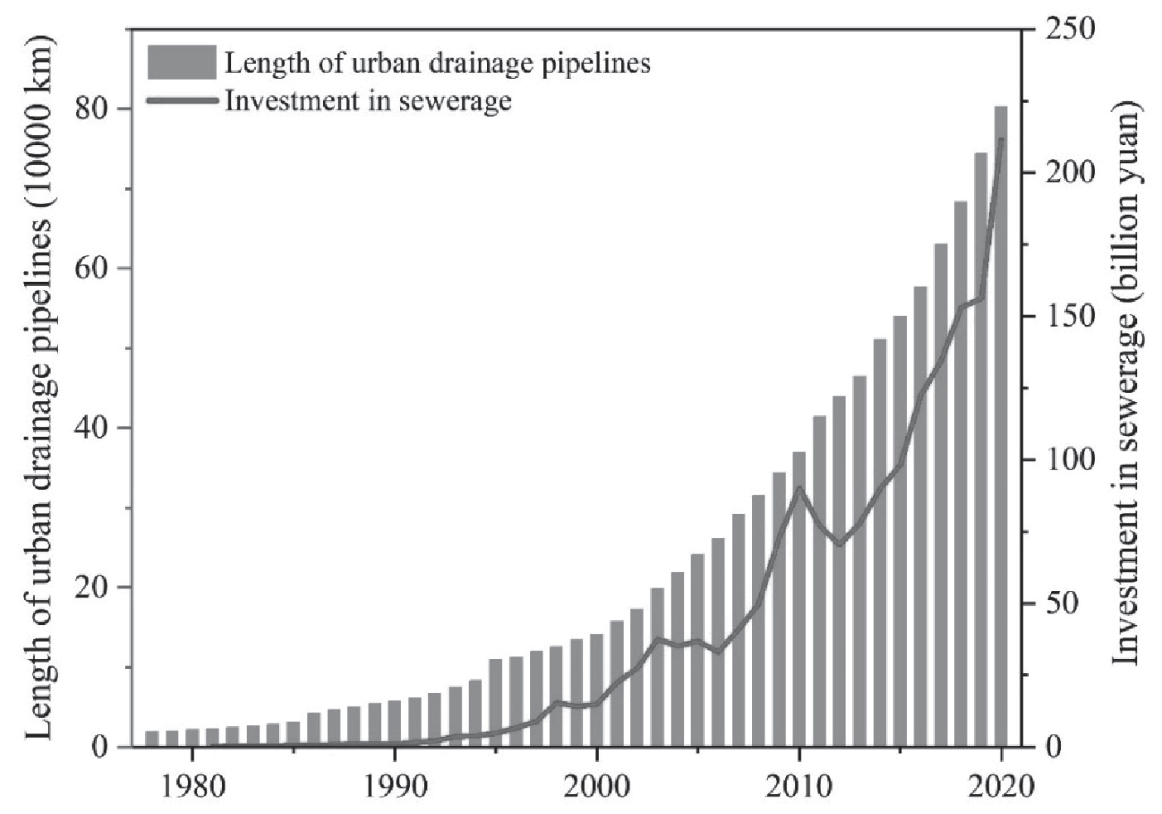
The fast construction of existing drainage pipeline systems in China could date back to China's reform and opening up. Since 1978, the length of urban drainage pipelines in China has been increasing with an average annual growth rate of 10%, reaching 802721 km in 2020, along with a soaring sewerage investment trend from 1981 to 2020 (Fig. 1). The investment was less than one billion yuan/year between 1981 and 1990. However, since 2016, the Chinese government has invested more than 100 billion yuan/year in the construction of drainage infrastructure. In addition, after “The Action Plan for Water Pollution Prevention and Control” (i.e., the "10-Point Water Plan") was issued by the Chinese government in 2015 [17, 18], the importance of urban drainage pipelines for urban water environment was recognized during the treatment of urban river pollution [19], thereby accelerating the construction of urban drainage pipelines. At present, the phenomenon of “attaching importance to construction, despising management and maintenance” in the early stage has changed to the integration of construction, maintenance and management [1]. Therefore, the construction, inspection, rehabilitation, upgrading and maintenance of urban drainage pipelines will always prevail in China, and should deserve more attention.
Fig. 1.
The length of urban drainage pipelines and investment for sewerage in China. The data source: China Urban Construction Statistical Yearbook [20].
At present, the length of urban drainage pipelines varied significantly in the geographical distribution and showed an interregional imbalance in municipalities, autonomous regions, and provinces of mainland China (Fig. 2). For a single region, Guangdong province had the longest pipelines with 122.5 thousand km, followed by Jiangsu province, Shandong province, and Zhejiang province, whereas Tibet, Ningxia, Qinghai, Hainan, Gansu, and Xinjiang had the shortest length. This is because economic differences drive the current distribution of the length of urban drainage pipelines.
In mainland China, all areas are often divided into seven geographical areas of East China, South China, Central China, Southwest China, North China, Northeast China and Northwest China to distinguish (Fig. 2). According to this geographical division, it is found that East China possessed the longest length of pipelines, accounting for 33% of the national total, followed by South China, Central China, Southwest China, North China, Northeast China, and Northwest China (Table 1). The higher gross domestic product and population density in East China have stimulated the construction of a large number of urban drainage pipelines.
Fig. 2.
The geographical distribution of the length of urban drainage pipelines in 2020 in mainland China (i.e., not including Hong Kong, Macao and Taiwan). The data source: China Urban Construction Statistical Yearbook [20].
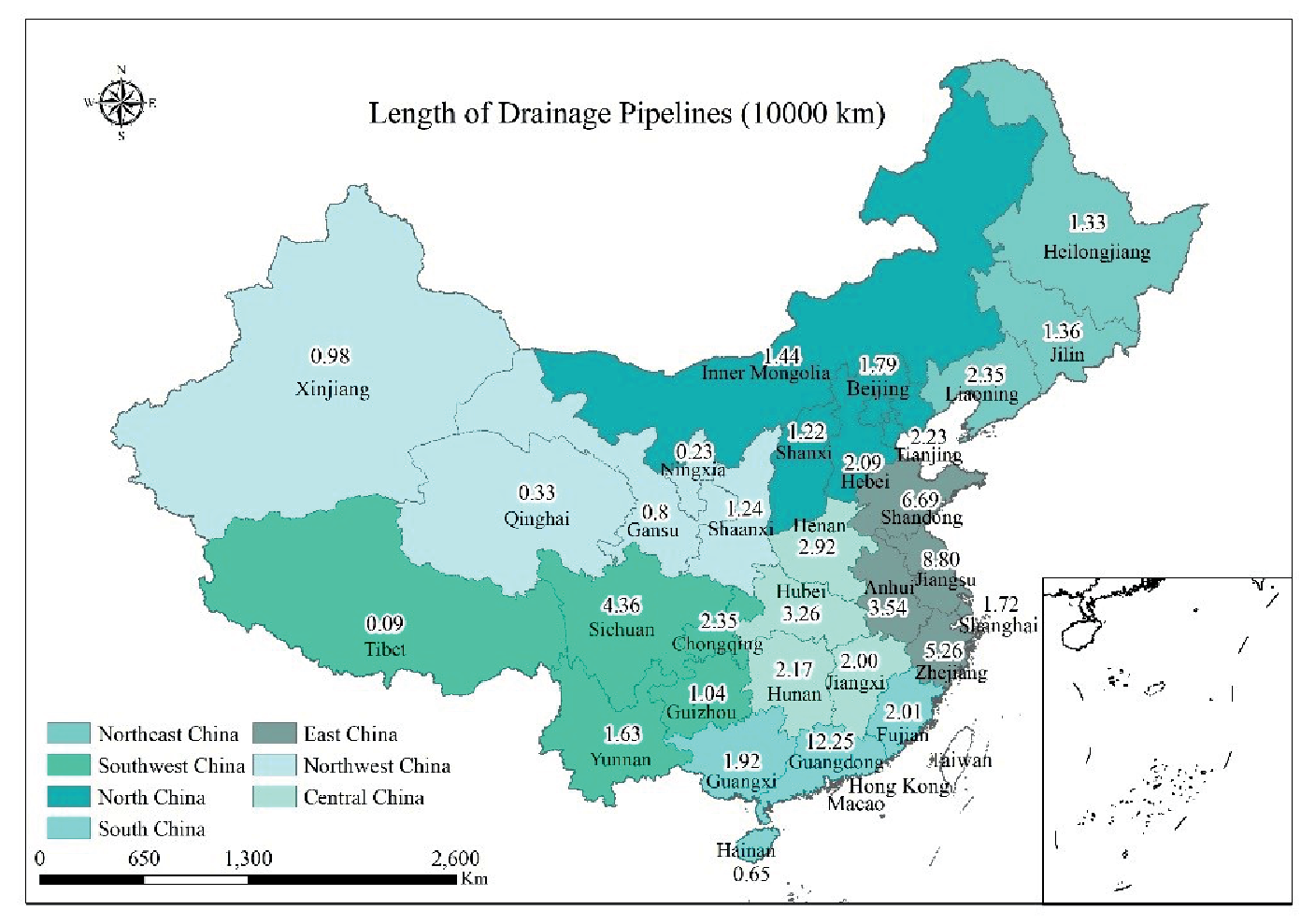
Table 1.
The length of urban drainage pipelines and the length of sewers, rainwater drainage pipelines, and combined drainage pipelines in mainland China.
Three types of sewer lines differed in distribution in the seven areas (Table 1). In general, the length of sewers and rainwater drainage pipelines was nearly seven times higher than combined drainage pipelines, indicating that SSSs are predominant in mainland China. In addition, the length of sewers and rainwater drainage pipeline were similar in each area, and the length of these two types of pipelines in East China and South China was higher than that in other five areas. In Northeast China, the length of three types of pipelines was similar, implying that CSS still plays an important role in collecting and transporting domestic sewage, industrial wastewater, and rainwater.
The Problems of Urban Drainage Pipelines in China
Currently, the common pipeline materials in China are composed of concrete pipes, reinforced concrete, metal pipes, plastic pipes and composite pipes, among which reinforced concrete pipes, unplasticized polyvinyl chloride (UPVC) pipes, high density polyethylene (HDPE) pipes and ductile iron pipes are widely used [1]. Moreover, new materials such as polyethylene mixed polyvinyl chloride (MPVE) double-wall corrugated pipes, PVC spiral wound pipes and streel reinforced polyethylene spirally corrugated pipes are also gradually being used in drainage pipeline construction.
However, the pipelines in service are facing damage, defects, and aging [16]. In China’s large cities, urban drainage pipelines have various structural and functional defects (Table 2), deteriorating the normal operation of pipelines. The health of drainage pipelines is influenced by multiple factors such as pipeline characteristics, construction methods, surrounding environmental factors, and the quality of maintenance and management (Table 3). Due to uneven construction levels, long service time and long-term neglect of maintenance and management, China’s sewers present different degrees of defects, and urban drainage pipeline systems are insufficient and need to be built continuously to meet rapid urbanization [1, 9]. In China, the fierce market for pipeline construction has led to low bidding prices for enterprises [8], so the construction quality can be dwarfed by the low quotations. Moreover, the main pipe material in China is reinforced concrete that is easily corroded [1]. The long-term corrosion can result in the rupture of pipelines. The long service time of drainage pipelines is another important factor. At present, many drainage pipelines in China have been in use for over 50 years leading to structural and functional damage [1]. Uncoordinated management is also an important reason. In China, the Ministry of Housing and Urban-Rural Development, local government departments and the related enterprises share the management right of drainage pipeline systems causing unclear responsibility and grim management and maintenance.
In addition, China’s urban drainage pipeline systems are incomplete. This is because the main pipelines that transport sewage into WWTPs were given top priority in construction, while the construction of collecting pipelines and interception pipelines were quite insufficient [9]. The role of collecting pipelines and interception pipelines is to move sewage into the main pipelines and prevent sewage discharging into rivers and lakes, respectively. Therefore, newly-built urban drainage pipeline systems should be designed completely and scientifically to meet actual drainage requirements in each city. Another problem is the illegal connection of sewers to rainwater drainage pipelines, due to the fact that the construction of sewer systems was much later than rainwater drainage pipelines [9].
The problems China’s urban drainage pipeline systems facing have led to environmental pollution, safety hazards and abnormal operation of WWTPs. For instance, the damaged pipelines and illegal connections of sewer pipelines with rainwater drainage pipelines caused exfiltration of sewage, thereby polluting urban rivers and impairing the effectiveness of the Action Plan for Water Pollution Prevention and Control in China. In some specific cities with rivers and groundwater at high level, a large amount of river water, groundwater and rainwater would enter sewer pipelines and dilute the influent COD concentration of WWTPs, impacting the normal operation of WWTPs [21]. In addition, the deficiency of urban drainage pipeline systems has caused frequent urban floods during wet weather, resulting in huge economic losses and human casualties. According to related surveys, 184 cities in 2012, 234 cities in 2013 and 127 cities in 2014 suffered from waterlogging [22].
Table 2.
The typical defects of urban drainage pipelines from China's large cities.
Table 3.
The factors influencing the health of urban drainage pipelines.
The Evolution of Pipeline Inspection Technologies in China
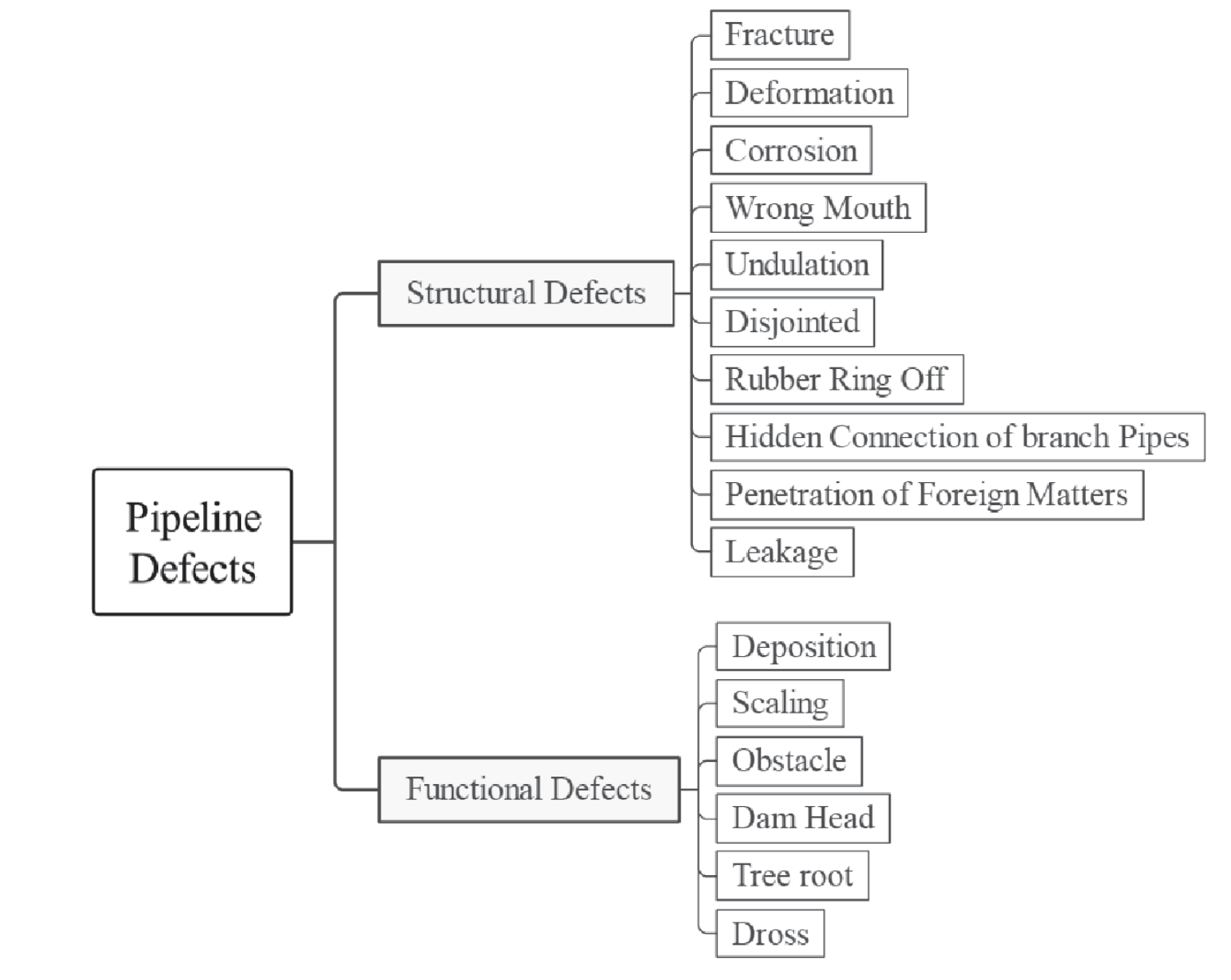
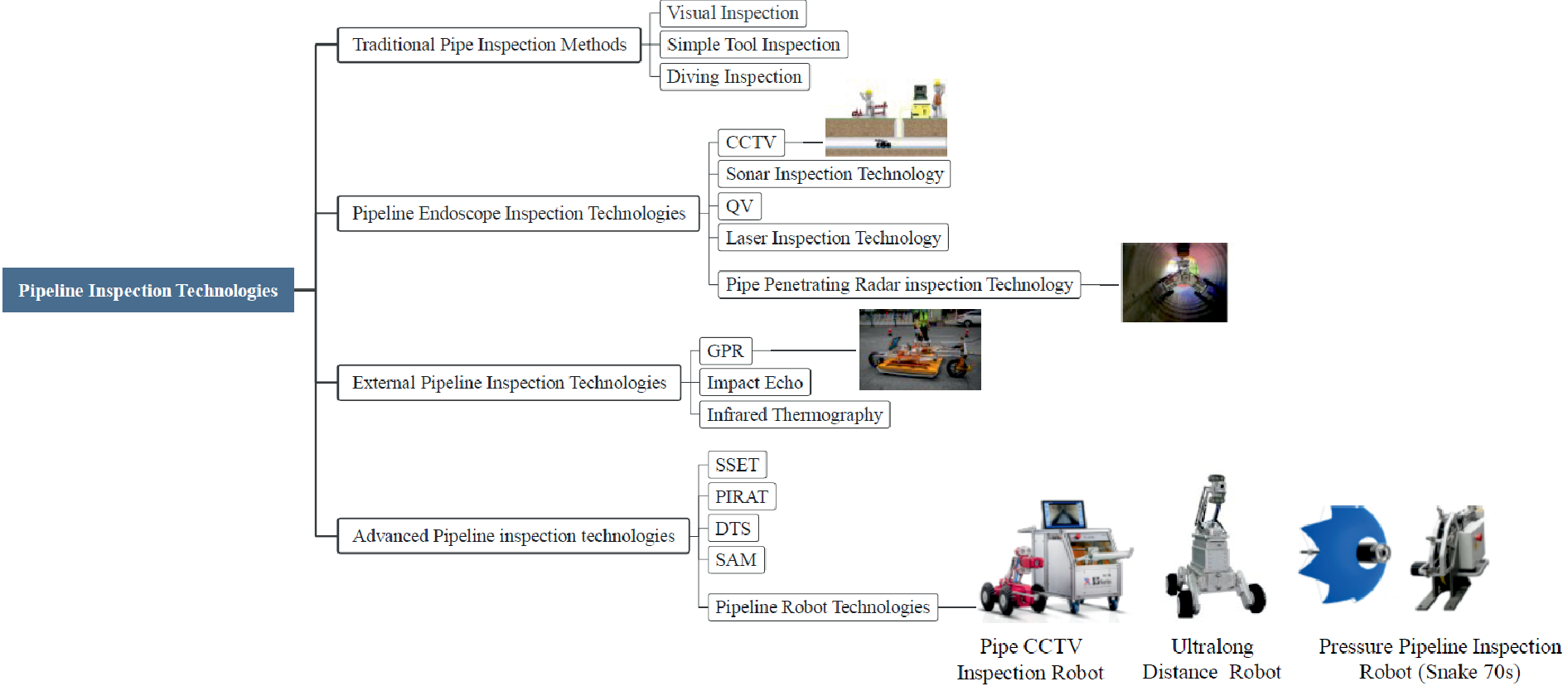
The normal operation of drainage pipes is closely related to regular inspection and maintenance [2]. At present, there are numerous damaged drainage pipelines in China waiting for defect inspection urgently. In China, pipeline defects are classified into structural and functional defects (Fig. 3) based on the “Technical Specification for Inspection and Evaluation of Urban Sewer” (CJJ/181-2012). The regular pipeline inspection by suitable methods can determine the type, location and quantity of structural and functional defects in drainage pipelines, thereby providing scientifical pipeline condition assessment for supporting subsequent rehabilitation. With the development and huge market demand of inspection technologies, the inspection technologies have developed from the traditional methods of manual detection to the collaborative detection model of computer control and human work (Fig. 4). Moreover, a variety of advanced detection equipment has emerged in China, and the inspection technologies are also constantly updated and iterative towards the development of mechanization, digitization and intelligence.
At present, the common inspection methods for pipeline defects mainly include traditional detection methods, CCTV inspection technology, sonar inspection technology, QV, laser inspection technology, ground penetrating radar inspection technology, ultrasonic detection technology, etc [2]. Each inspection method differs in application conditions, operation convenience and economic cost, so the inspection method should be selected based on the actual situation of damaged pipes. However, only an inspection method may not detect pipe defects correctly in the actual inspection, the collaborative application of multiple technologies can be considered.
The Traditional Pipe Inspection Methods
The traditional inspection methods played an important role in pipe inspection before the 1990s, because CCTV technology was not introduced into China at that time. The traditional inspection methods mainly involve visual inspection, simple tool inspection (e.g., retroreflector, mud bucket) and diving inspection. These methods are economical and convenient, but there are also some disadvantages such as safety risk, certain blindness, low-precision detection, and high requirements on the professional quality of test personnel. At present, in China, the traditional inspection methods are specified for routine inspection during pipeline maintenance.
Pipeline Endoscope Inspection Technologies
Pipeline endoscope inspection technologies mainly consists of CCTV inspection technology, sonar inspection technology, QV, laser inspection technology, and pipe penetrating radar inspection technology (Fig. 4). At the early stage of pipe inspection, these technologies were employed only in economically developed cities such as Shanghai and Beijing [1]. However, these technologies are now widely used in large, medium and small cities in China due to the promotion of the Chinese government.
Fig. 3.
Pipeline defects classification in China according to the “Technical Specification for Inspection and Evaluation of Urban Sewer” (CJJ/181-2012).
CCTV
At present, CCTV inspection technology is the most accepted and widely used [8, 29, 30]. In China, CCTV inspection technology is recommended for the daily survey, overhaul and maintenance of existing drainage pipes, and for acceptance check and construction inspection of new drainage pipelines according to “Technical specification for inspection and evaluation of drainage pipeline in Wuhan” (DB4201/ T647-2021).
In general, the operation process of CCTV inspection technology is that professional operators control a remote-controlled robot crawler equipped with a camera into the drainage pipeline to take pictures and videos for subsequent manual interpretation of pipe defects [31]. Although this method has high security, the manual interpretation work is inefficient and subject to the influence of operators’ subjectivity [32]. The fog in the pipelines and motion blur caused by the crawling robot also limits the accuracy of CCTV inspection. Moreover, the water level cannot be greater than 30% of the pipe diameter and silt in the pipelines should be less during CCTV inspection. To overcome these limitations, the traditional CCTV inspection technology has been improved in image processing and the development of advanced equipment. For image processing, image processing methods by computers and convolutional neural network has been applied to interpret images taken by CCTV. For example, Ye X. et al. [30] presented an image recognition algorithm to diagnose deformation, crack, infiltration, attached deposits, settled deposits, displaced joint and joint damage of sewer pipes in a southern Chinese city, and the overall accuracy can reach 84.1%. Huang Q.H. et al. [23] proposed an improved convolution neural network defect detection method to extract and classify six kinds of pipeline defects including residual wall, deposition, root invasion, foreign body penetration, obstacles and hidden connection of branch pipes, and the accuracy rate of the method can reach 90.2%. In addition, some hybrid inspection technologies have integrated CCTV to detect different kinds of pipeline defects such as the pipe penetrating radar inspection technology.
Sonar inspection technology
Sonar inspection technology uses acoustic detection technology to inspect the conditions below the water surface inside the pipeline. The technical principle of sonar is to scan the inner wall of the pipeline through sending high frequency sound waves, and then form a cross-sectional picture of the submerged part of the pipe [31, 33]. The technology can detect the depth of mud deposition in the pipes and judge the type, severity and location of pipe defects without shutting down the sewer system. In China, the technology is used in the preliminary judgment stage, and the obtained results should not be used as the basis for accurate judgment and rehabilitation of damaged pipes. Furthermore, the obtained data also needs to be explained by trained operators. In general, the technology is high efficiency and low cost, and is an important supplement to CCTV inspection technology.
Pipe Quick View Inspection Technology
QV uses a pipe periscope through the manhole to examine the manhole and drainage pipelines. QV can shoot the phenomena of deposition, damage, leakage phenomena in the pipeline by means of video recording, and send the video of the internal conditions of the pipeline to the control machine on the ground, so that professionals can observe and analyze the operation of the pipeline and specific defects. During the application of this technology, the water level in the pipe should be less than 1/2 of the pipe diameter, and the length of the detected pipe section should not be greater than 50 m. At present, QV is the most pipeline endoscope inspection technology [6], whereas it should be used for the preliminary judgment of the internal conditions of the pipeline.
Laser Inspection Technology
Laser inspection technology is an emerging non-destructive inspection technology for pipeline inspection in recent years, which can detect the internal contour of the drainage pipeline by laser, thereby determining the deformation rate and siltation of the pipeline. This technology integrates the laser technology and CCTV, and thus it has the characteristics of fast speed and high sensitivity, while the sludge inside the pipeline has a negative effect on the detection result [2, 34]. At present, laser inspection technology can complement the CCTV inspection [8].
Pipe Penetrating Radar Inspection Technology
Pipe penetrating radar inspection technology can inspect the pipe structure, pipe joints and surrounding soil conditions of drainage pipelines, which combines radar detection technology with CCTV detection technology. It is applicable to relatively flat conditions of inner pipes with pipe diameters of 300-1800 mm. Moreover, the water level in the pipe should not be greater than 20% of the pipe diameter and the water depth should not be greater than 300 mm during the inspection. This technology was driven by the following reasons. CCTV and QV inspection technologies mainly focus on detecting the internal surface of pipes, and sonar inspection technology and laser scanning are limited to the detection of sediment accumulation and deformation of pipelines. These technologies are unable to detect the internal structure disease of pipelines, surrounding soil disaster of drainage pipeline and to assess pipe structural situation.
External Pipeline Inspection Technologies
Due to various pipeline problems, unsafe pipeline environment, low visibility, a wide range of pipe size, and the difficulty of water in pipes to clean, external pipeline inspection technologies have been employed to detect pipelines including GPR, the impact-echo method/spectral analysis of surface waves (SASW) technique, and infrared thermography method.
Ground Penetrating Radar
As a non-destructive inspection technology, GPR is widely applied to detect subsurface materials using electromagnetic waves [33]. Due to its characteristics of fast data acquisition, low cost, unaffected by the environment and high efficiency, it has been applied to pipeline detection for investigating the structure of the surrounding soil, the interface between the soil and pipes, and the structure of the pipe [31, 35]. Moreover, GPR can also identify the location of the leakage of pipes based on received abnormal radar reflected waves caused by the pipe leakage [36]. However, GPR can hardly detect surrounding soil disaster of drainage pipeline, and the detection resolution is dwarfed by the detection depth. In addition, a large amount of GPR data and signals need to be interpreted by trained operators [31].
Impact Echo/Spectral Analysis of Surface Waves
This method is used to detect evacuated concrete pipes with large diameter and brick pipes. It is also a non-destructive method and involves a source of controlled impacts and several geophones mounted against the wall of the pipeline [37]. When the pipe wall is hit by falling weight or a hammer, low frequency surface waves are produced, propagated, and detected by geophones. Based on these waves of different frequencies, travelling speeds and penetrating depths, the conditions of the pipe and the soil surrounding the pipe can be obtained.
Infrared Thermography
Infrared thermography is a non-contact method and is based on the temperature difference between the leakage point of drainage pipelines and the surrounding soil. Since energy flows from warmer to cooler areas, infrared thermography can detect the leakage and the porosity in the pipe wall and surrounding soil based on the measured temperature and an automatic temperature image obtained by infrared thermometers. However, the pore size cannot be identified. Only when infrared thermometers combine GPR, can the depth and size of pores be estimated. In addition, interpreting infrared images requires experienced technicians.
Advanced Pipeline Inspection Technologies
In recent years, many new inspection technologies have been developed in China and other countries. New inspection technologies are based on the integration of two or more technologies to cope with various types of pipe defects [33]. In developed countries, several new methods have emerged such as Sewer Scanner and Evaluation Technology (SSET), Pipe Inspection Real-time Assessment Technique (PIRAT), the Distributed Temperature Sensing (DTS) technology, and Sewer Assessment with Multi-sensors (SAM). SSET employs a fish-eye CCTV with a gyroscope technology to detect the entire pipeline surface [38], which can provide specific digital images for further interpretation by trained operators. Due to its high cost and time-consuming, SSET has not been widely used in pipeline inspection. PIRAT is an automatic inspection system that integrates machine vision, artificial intelligence, and robotics. Therefore, PIRAT has the ability of automatically measuring the geometry inside the pipelines, and interpreting, classifying and assessing pipeline defects [39]. DTS can detect and locate temperature anomalies in a very high spatial and temporal resolution, thereby locating pipeline leakage and pipe misconnection and mixed connection [40]. SAM is also a multi-sensor inspection method including an optical triangulation sensor, microwave sensor, geoelectrical sensor, hydrochemical sensor, radioactive sensor, and acoustic systems. Therefore, SAM can provide much meaningful information such as optical 3D measurement of pipelines, surrounding soil state, the location of leakage, groundwater infiltration, the state of connections and pipe bedding [41].
In China, pipe inspection technologies have experienced tremendous development due to the huge investment by the Chinese government. Moreover, some technologies have achieved localization with independent intellectual property rights to meet China's complex pipe network problems. At present, advanced pipeline robot technologies and related equipment have emerged to deal with different pipes including the panoramic laser pipe robot, ultralong distance robot, electrical leak detection system, and pipe CCTV inspection robot, etc. Panoramic laser pipe robot is applied to pipeline acceptance check and the measurement of misconnection size. Ultralong distance robot can achieve the detection of ultralong distance with 2000 m, offsetting the limitation of conventional CCTV inspection technology. Home-made electrical leak detection system developed by Wuhan Easy-Sight Technology company can inspect pipe leakage. Pipe CCTV Inspection Robot developed by Shenzhen Bominwell Robotics Company is capable of entering the pipe for direct testing without pipeline pretreatment and also working in high-water-level operation of pipelines. At present, many advanced Chinese pipeline robot technologies have been widely used in China and even in foreign markets. For instance, pressure pipeline inspection robot (Snake 70 s, Fig. 4) invented by Shenzhen Bominwell Robotics Company was used for pipeline detection in Epinale, France and South China. Snake 70s is equipped with a high-sensitivity hydrophone, high-definition camera unit, high-precision positioning unit and miniature 6-axis inertial navigation attitude sensor, so it can effectively detect a variety of abnormal conditions in pipelines with pipe diameters of 200-3000 mm such as leakage, gasbag, debris and other pipeline damages. Moreover, Snake 70s can achieve long-distance detection of 2000 m, transmit the detection data back to the ground control platform through the tail cable in real time and accurately locate abnormal locations. In Epinale, France, Snake 70s was used for a comprehensive inspection of the pipeline with a pipe diameter of 400 mm, and the total length of the detection pipeline is 1408 m. Snake 70s detected slight scaling at 6.67 m of the pipeline, unmarked redundant branche pipe at 52 m, and detected three leakage points. In South China, Snake 70s detected three pipelines (pipe diameter 200, 300, 800 mm) with the total length of 249 m, and the defects were deposition, scaling and obstacle.
Pipeline inspection technologies comparison
Currently, there are a broad range of pipeline inspection technologies. However, technology selection depends on many factors such as pipeline material, pipeline size, water level inside the pipeline, type of assessment required, surface traffic around underground pipes, and available budget [33]. Since each inspection technology has its own characteristics and application condition, the advantages and drawbacks of each technology should be fully described. The traditional inspection methods are cost efficient and convenient, and can provide basic information of pipelines and surrounding road surface. However, the obtained information is error prone and the test personnel faces different levels of health risks.
CCTV and QV technology can offer evidence of most pipe defects, whereas they have deficiencies in defect inspection under the waterline, data accuracy, and the confirmation of the intensity of defects. Laser inspection technology can give the internal contour of pipelines and also determine the deformation rate and sediment accumulation, while the accuracy of detection result is affected by the sludge in pipelines. Pipe penetrating radar inspection technology can provide the information of the internal structure disease of pipelines and surrounding soil disaster of drainage pipeline. Sonar inspection technology and GPR can present a cross-sectional picture of pipes and inspect the condition of pipeline bedding. Impact echo/spectral analysis of surface waves mainly detects the condition of evacuated concrete pipes and surrounding soil. Infrared thermography can locate the leakage point. However, the disadvantage of these methods is the complexity of data interpretation.
Multi-technology fusion detection systems (SSET and PIRAT) can detect a wide range of defects and provide high quality and reliable data owing to the use of two or more complementary technologies, whereas the cost of these technologies is extremely high [33]. Advanced pipeline robot technologies can adapt to the inspection of different pipelines such as high-water-level operation of pipelines and long distance pipelines. Although advanced pipeline robot technologies can cover the limitations of particular working condition demands, they also need complex data interpretation.
Conclusions and future perspectives
In the past 40 years, China’s urban drainage pipeline systems have achieved great development with an average annual growth rate of 10% of pipeline length, while the pipeline length presented an interregional imbalance in mainland China due to different regional economic development level. With the continuous urbanization, there is a huge market in pipeline construction in China. Therefore, the selection of drainage pipeline system is extremely important before pipeline construction. Although SSSs are predominant in mainland China, the scientific selection of drainage pipeline system should seriously consider urban topography, economic development level, rainfall characteristics, urban population, urban planning and future development [1]. Moreover, the construction technology and high quality of pipe material are also important. In addition, pipeline construction should be coordinated with the construction of WWTPs to ensure the normal transportation and treatment of sewage [8].
At present, the existing drainage pipelines in China are facing various structural and functional defects, aging, incomplete sewer system, and illegal connection, causing many problems such as the pollution of urban water environment, frequent urban floods, road collapse, and the abnormal operation of WWTPs, etc. To cope with these serious consequences, the Chinese government has made great efforts in pipeline inspection and inspection technology promotion. Although there are many introduced and homemade inspection technologies in China, CCTV, sonar, QV, and traditional detection methods are the most used methods in pipe inspection for conforming to the current standard (CJJ/181-2012). Therefore, the relevant standards for other inspection technologies need to be proposed as soon as possible. In addition, automating pipe defect inspection and condition assessment will be an important direction of pipe inspection in China.
The phenomenon of “attaching importance to construction, despising management and maintenance” reduced the service life of pipelines [1], thus a comprehensive management and maintenance system should be established. The system should include pipe construction, automating pipe defect inspection and condition assessment, and excavation or trenchless rehabilitation. Furthermore, related policies and regulations should be formulated to ensure the implementation of the management and maintenance for pipelines.

