

Introduction
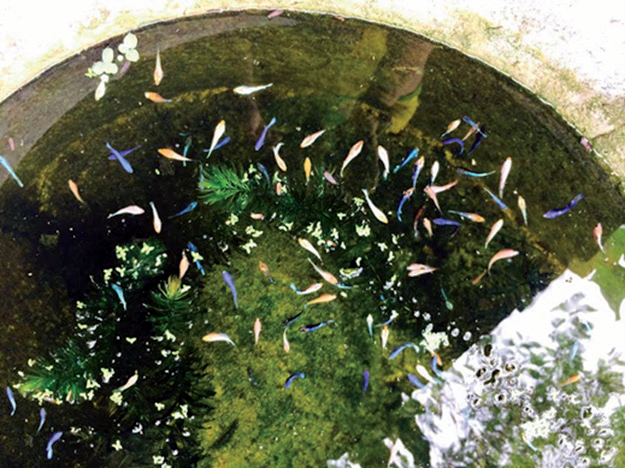
The Siamese fighting fish (Betta splendens) is an ornamental fish commonly cultured in Thailand; 1,651,217 fish were exported for the year ending June 2021, having a value of USD 477,352 [1]. Normally, in the cultivation of Siamese fighting fish aged 1-3 months, the fish are raised together in a single pond, without gender segregation, at a stocking density of 3,000 fish per t (Fig. 1). During this rearing phase, farms typically refrain from moving the fish from the pond to another container, opting to rear the fish until they reach a size at which gender differentiation is possible. Most Siamese fighting fish farms adopt the practice of partial water exchange, typically in the range of 20-30%. A complete change of water or relocating the fish to another pond or container can have significant repercussions on the water conditions and temperature, thereby affecting the survival rates of the juvenile fighting fish. This necessitates the prolonged use of ponds, which, unfortunately, can lead to the accumulation of waste materials and the degradation of water quality. Consequently, the water can become turbid and serve as a reservoir for pathogen accumulation. Various types of pathogens can be found within fish farming systems due to the common practice of using natural water sources. The potential for pathogen contamination arises from the fact that most farms source their water from natural bodies, such as rivers, which have an increased likelihood of containing contaminants, including pathogens originating from community wastewater. When raised together for a long time, the pond fish suffer from water quality problems due to the metabolic processes of the fish, which cause the accumulation of waste products such as ammonia, urea, amine, and amine-oxide derivatives. The waste products, which include creatine, creatinine, and uric acid, are excreted by the fish through the kidneys [2]. Excessive levels of these products can affect the health of fish, reducing their immunity and leading to greater susceptibility to infection by the pathogenic bacteria living in the water, resulting in decreased fish survival due to different types of infections in the fishpond or containers, as well as during transportation [3]. Siamese fighting fish and other ornamental fish can suffer from different bacterial diseases but still host species of bacteria that are pathogenic and prevalent in aquaria. The most frequent bacteria reported in diseased fish were Aeromonas veronii (30.8% of the total number of strains), A. hydrophila (18.7%), Shewanella putrefaciens (7.1%), Citrobacter freundii (7.1%), Pseudomonas spp. (7.1%), Shewanella baltica (4.9%), and Plesiomonas shigelloides (3.3%) [4]. Therefore, chemicals or antibiotics, including enrofloxacin, oxytetracycline, and amoxicillin, are used to prevent infection in fishponds or during fish transportation [1, 5]. Usually, Thai farmers use antibiotics and chemicals to inhibit the growth of microorganisms. However, the accumulation of chemicals or antibiotics leads to a negative impact on public health and the environment regarding drug toxicity, immunopathological diseases, carcinogenicity, allergic reactions, and water pollution [6].
Herbs are an alternative to the antibiotic or chemical agents used in the water in fishponds or containers. Herbs commonly used with Siamese fighting fish include Indian almond leaf (Terminalia catappa L.) extract in water and 70% ethyl alcohol [7-9]. The phytochemicals from the almond leaf extract include saponin, triterpenoid, quinon, phenolic, tannin, and flavonoid [8]. It was found that tannin has antimicrobial properties that prevent infection in ornamental fish [7]. Flavonoids are one of the phytochemical groups in plants that act as antioxidants and reduce inflammation, and they have also been shown to have antimicrobial properties against fish pathogens [10]. The properties of these phytochemicals are also found in other plants, such as cinnamon. The main phytochemicals in cinnamon contain a variety of compounds, such as cinnamaldehyde, alkaloids, tannins, flavonoids, eugenol, and polyphenols, which might be responsible for the bacteriostatic and bactericidal activity [11- 13]. Cinnamaldehyde is the main phytochemical of cinnamon, and it has at least three mechanisms of action against bacteria depending on its concentration. At low concentrations, it inhibits the enzymes involved in cytokine interactions and other less important cell functions while acting as an ATPase inhibitor at high concentrations. At the lethal concentration, cinnamaldehyde perturbs the cell membrane [14]. Indian almond leaf and cinnamon are effective at reducing microbial growth and as a water conditioner suitable for Siamese fighting fish; however, cinnamon is cheap and widely available in most supermarkets [15]. Therefore, this study aimed to evaluate the optimum concentration of cinnamon extract (known for its high accumulation of phytochemical compounds and its ability to reduce the growth of microorganisms) by testing water from a fishpond as the first step. The results from this study could be applied to Siamese fighting fish culture to help prevent and control microbial infection in ponds, containers, or during the transportation of the fish.
Materials and Methods
Bacterial Strains
E. coli ATCC25922, P. aeruginosa ATCC27853, and S. aureus ATCC25923 were used as bacterial control representatives of Gram-negative and Gram-positive bacteria to determine the minimal inhibitory inhibition (MIC) of the cinnamon extract by culturing on tryptic soy agar (TSA) and incubating at 37ºC for 18 h.
Extraction of Cinnamon
An amount (100 g) of cinnamon bark powder was dissolved in 500 mL of 70% ethyl alcohol [16] for 3 days at room temperature. Then, the water and cinnamon sediment were separated using filtering and the water with the cinnamon extract was kept. To accelerate the evaporation of alcohol from the cinnamon extract, a tray was used to increase the surface area of the extract exposed to air. A fan was used to circulate the air, which helped to remove the alcohol vapor from the container. The extract was left at room temperature for 2 days to allow the alcohol to evaporate completely. Then, the cinnamon extract was kept in a sealed brown bottle in a container away from sunlight [17].
Determination of Minimum Inhibitory Concentration
The MIC of the cinnamon extract was determined using a broth microdilution to evaluate susceptibility to E. coli ATCC25922, P. aeruginosa ATCC27853, and S. aureus ATCC25923 following the Clinical Laboratory Standards Institute (CLSI) procedure. Broth micro dilution was performed using two-fold dilutions (1, 2, 4, 8, 16, 32, and 64) of the cinnamon extract at a concentration of 0.2%. Amounts of 0.1 mL of each dilution were added to each well, with a growth control well and a sterility control (uninoculated well) included in the experiment. Inoculated panels with a standard density of 5x10⁵ CFU mL-1 were added, and incubation was carried out at 37ºC for 18-20 h. Turbidity was recorded based on visualization in each well (CLSI-Guideline (M07-A10)) [18]. To prove viability, 0.1 mL of each well was spread on Mueller-Hinton agar and the resultant colonies were counted. The lowest concentration of the extraction that inhibited growth was used as the MIC. In addition, the sterility control wells consisted of Mueller-Hinton broth only, without bacteria, while the growth control wells consisted of bacterial inoculum without the extract.
Microbial Growth Determination
The antimicrobial activity of the cinnamon extracts was evaluated using water samples from the fish culture pond. These water samples were stored in a refrigerator to maintain a constant condition before being used in the experiment. The water samples were tested without sterilization. Cinnamon extract was added at concentrations of 0, 1, 2, or 3 gL-1 (C, T1, T2, and T3), respectively, for all concentrations. All 7 samples were diluted with distilled water (101, 102, 103, 104, 105, 106, and 107, respectively,) and collected in vitro at specified periods of 0, 24, and 48 h. Then, 100 µL of each treated water sample from each dilution were spread on TSA medium and incubated at 37ºC for 24 h. Colonies of bacteria on the TSA medium were counted.
Results and Discussion
MIC
Before applying the cinnamon extract solutions to the fish culture water, we determined the MIC with the three reference bacterial strains described in the Materials and Methods section. All inoculated wells, with or without turbidity, were checked by spreading on Mueller-Hinton agar and then counting the number of colony-forming units. As shown in Table 1, the concentrations of cinnamon extract at 1:1 and 1:2 inhibited bacterial growth; no colonies were found of any of the 3 strains in each cell concentration. However, cinnamon extract at a concentration of 1:4 was able to reduce more S. aureus growth than either E. coli or P. aeruginosa, suggesting that the contents of the cinnamon extract may have had a greater effect on Gram-positive bacteria than Gram-negative bacteria. The concentrations of cinnamon extract at 1:8 to 1:64 did not inhibit any of the bacterial concentrations. Based on the MIC of the cinnamon extract for these bacteria, it was 0.2% (2 gL-1).
Microbial Growth Determination
We applied the cinnamon extract at concentrations of 0, 1, 2, and 3 gL-1 to the water used in raising Siamese fighting fish. As shown in Table 2, the cinnamon extract could reduce microbial growth after 24 h. The reduction was from 106 CFU at 0 h to 103 CFU at 48 h in T2 and T3, while the reduction was less for T1 (104 CFU) at 48 h. Statistical analysis revealed significant microbial growth reductions between 0 and 24 h and between 0 and 48 h (Tables 3 and 4). However, there was no significant reduction between 24 and 48 h (Table 4).
Discussion
The current study demonstrated the possibility of applying cinnamon extract to reduce microbes contaminating the water used to cultivate Siamese fighting fish, based on the MIC results that showed that the crude cinnamon extract was effective at controlling Gram-positive and Gram-negative bacteria. Cinnamon bark powder was used as the raw material to extract crude cinnamon. However, we did not determine the ingredients in the cinnamon extract, which should be done in further study. The bark of Cinnamomum spp. plants is known to contain condensed tannins, namely, dimeric, trimeric, and higher oligomeric polymeric proanthocyanidins (fla-van-3-ols) [19, 20], of which the compound cinnamaldehyde is the main active ingredient (approximately 49.9%) [12] and has antimicrobial properties. Nabavi and Di Lorenzo [21] used the disk-diffusion method to investigate the antibacterial activities of several C. zeylanicum bark extracts, obtained using different organic solvents (ethyl acetate, acetone, and methanol), that were tested in vitro against Klebsiella pneumoniae 13883, Bacillus megaterium NRS, P.aeruginosa ATCC 27859, S. aureus 6538 P, E. coli ATCC 8739, Enterobacter cloacae ATCC 13047, Corynebacterium xerosis UC 9165, and Streptococcus faecalis DC 74. The results showed that the antibacterial activity, expressed as an inhibition zone, ranged from 7 to 18 mm for the application of 30 µL, suggesting high antibacterial activity. The concentration of the active ingredient in the bark depends on the species of cinnamon, the environment, and the bark application pattern [22]. Cinnamaldehyde has been reported to inhibit Siamese fighting fish pathogens, including Vibrio cholerae, Vibrio parahaemolyticus [23], Aeromonas hydrophila [4, 8, 9, 24, 25], Pseudomonas sp. [4, 9, 23, 29], Edwardsiella sp. [9, 23], Plesiomonas shigelloides [9], Enterobacter sp. [9, 23], Streptococcus sp. [9, 10], and Staphylococcus sp. [9, 23, 29]. One study revealed cinnamaldehyde could act as an antibacterial by increasing cell surface hydrophobicity, reducing bacterial aggregation, and inhibiting acid production and acid tolerance [26]. Another feature of cinnamon is that it affects the pH of the water, decreasing its effect on bacterial habitat [26]. In addition, cinnamaldehyde stimulates the immune systems of zebra fish, tilapia, and European sea bass and has antimicrobial activity that increases the rate of growth and the fish survival rate [24, 25, 27, 28].
Table 1.
MIC results for various cinnamon extract concentrations on the growth of E. coli, S. aureus, and P. aeruginosa.
Table 2.
Comparison between control and treatment groups by time interval (CFU mL-1).
Table 3.
Analysis of variance among 3 groups.
| Source of variation | SS | df | MS | F | P-value | F crit |
|---|---|---|---|---|---|---|
| Between groups | 1.75396E+12 | 2 | 8.77E+11 | 15.0781 | 0.0013 | 4.2565 |
| Within groups | 5.23463E+11 | 9 | 5.82E+10 | |||
| Total | 2.27742E+12 | 11 |
Table 4.
Comparisons among 3 time periods based on post-hoc of q Tukey.
| Comparison (hours) | Absolute difference | Standard error | q Tukey | P-value |
|---|---|---|---|---|
| 0 vs 24 | 561,500 | 120584.6 | 4.656483 | 0.02295 |
| 0 vs 48 | 929,805 | 120584.6 | 7.710812 | 0.00105 |
| 24 vs 48 | 368,305 | 120584.6 | 3.054329 | 0.13237 |
The results of the microbial growth determination studies showed that the antibacterial activity of the cinnamon extract was not significantly different between 24 and 48 h. However, at 48 h, the concentration of crude cinnamon extract at 2 and 3 gL-1 was effective at reducing bacteria in the fish culture water from 105 to 103 CFU, indicating that higher concentrations of the extract may have a stronger antimicrobial effect. Based on these results, the recommended concentration in this study was 2 gL-1, as it was the lowest concentration that showed the greatest antimicrobial effect in the experimental group. The toxicity of cinnamon extract was not studied in this research or tested on fish. However, according to the study by Rattanachaikunsopon and Phumkhachorn [10] involving tilapia in an in vivo trial, no mortality was apparent in fish fed on fish diets supplemented with 0.4% (w/w) and 0.1% (w/w) of oxytetracycline 5 days prior to infection with S. iniae. These results indicated that cinnamon oil had a protective effect on the experimental S. iniae infection in tilapia. In the current study conducted on tilapia, cinnamon oil was incorporated into the feed given to the fish. No fish mortality was observed during the experiment. In addition, the cinnamon extract was added to the fish culture water at a concentration of 3 gL-1 or 0.3%, which resulted in a higher dilution than the direct addition to the fish’s diet. Therefore, it seems that it may not directly affect fish toxicity. However, further studies are needed to confirm that cinnamon extract added to fish culture water will not have any long-term effects on fish health. Other active ingredients in cinnamon are tannins (polyphenolic compounds commonly found in most herbs) that have antibacterial properties. Villanueva et al. [29] reported that tannic acid could inhibit the growth of bacteria in fish intestines by binding iron and forming a chelate that is toxic to the membranes of microorganisms. When tannins form a chelating complex with iron in the medium, this action ceases the availability of iron for microorganisms to grow under aerobic conditions. Eugenol can inhibit microbial growth [23, 30] and is found in cinnamon.
The conditions inside the fish packaging or ponds could lead to the accumulation of waste products, such as in exporting ornamental fish, as fish captured for the aquarium industry are transported for approximately 50–70 h from the site of capture to their final destination for purchase [31]. Therefore, the presence of disinfectants in the fish packing water or ponds could help to control the number of microbes during culture or transportation, so that they do not affect the health of the fish. Our study demonstrated that the cinnamon extract reduced microbes in fish culture water after 24 h. However, further study should be done to evaluate the effect of the extracted cinnamon on the fish, regarding survival rate and the external physical characteristics of the Siamese fighting fish.
Conclusions
The cinnamon extract reduced bacteria in the water used for the cultivation of Siamese fighting fish after 24 h in the experimental group. A future study could identify the main phytochemicals in cinnamon and assess its cytotoxicity. In addition, future research should examine the duration of action of cinnamon extract on bacterial growth for periods shorter than 24 h and longer than 48 h to more accurately determine its antibacterial capacity.

