

Introduction
With the increasing global population and rapid urbanization, sustainable agricultural development faces unprecedented challenges. The pressing difficulties of resource depletion, environmental pollution, and ecological degradation caused by conventional farming practices require immediate attention. Agroecological concerns have garnered significant interest from farmers, groups, and policymakers on a global scale. The advent of digitization has presented significant historical prospects for worldwide agricultural advancement. As a nascent form of agricultural production, agricultural digitalization is revolutionizing traditional agriculture and has been extensively implemented globally [1]. As a conscious agricultural powerhouse, China significantly emphasizes digitalization’s role in advancing agroecology. China is currently undergoing a crucial transition from traditional to modern agriculture. This involves shifting from a labor-intensive, resource-dependent approach to a more efficient, intelligent, and sustainable agricultural model. During this transition, Chinese agriculture has quickly embraced digital technology. The widespread use of intelligent agricultural equipment and the development of agricultural big data platforms have increased the efficiency of production factors and successfully addressed the issues of resource waste and environmental pollution prevalent in traditional agriculture [2]. The Chinese government has actively encouraged the digitalization of agriculture by implementing legislation and providing financial assistance, such as the “Internet + Agriculture” initiative. This has effectively aided the adoption of advanced agricultural production technologies. To attain superior agricultural progress in China, it is imperative to adopt a sustainable and environmentally friendly development plan that effectively tackles the obstacles posed by limited resources and the deteriorating environment. Hence, it is crucial to conduct a scientific assessment of China’s agroecological efficiency and analyze the mechanisms and impacts of agricultural digitalization on agroecological efficiency. This will facilitate the advancement of environmentally friendly agricultural practices and expedite the modernization of agriculture.
Agricultural eco-efficiency minimizes energy consumption, environmental pollution, and carbon emissions while achieving agricultural production goals. It focuses on improving resource use efficiency and maintaining the quality and stability of the ecological environment [3]. The ultimate goal is to achieve green and low-carbon development in agriculture. Agroecological efficiency is a fundamental measure of regional agroecological development. Scholars commonly use the data envelopment analysis model to study and measure agroecological efficiency [4]. They have also proposed other models, such as the super-efficiency SBM model, for this purpose. In contrast to the DEA model, the SBM model [5, 6] can consider the non-desired output of agriculture, resulting in a more precise measurement of agroecological efficiency. After analyzing the measured data, it was determined that several elements, such as agricultural planting structure, agrarian product prices [7], financial assistance for agriculture, and the rate of disasters [8], influence agroecological efficiency.
Agricultural digitalization refers to integrating digital technology into various aspects of agriculture, including production methods, social management, and organizational communication. It is a critical component of the global digital economy and aims to enhance the efficiency and quality of agricultural development [9]. China’s agriculture and rural areas are undergoing a crucial transformation and upgrading phase. In general, the level of digital development in China’s agricultural sector is low. Integrating digital technologies with the agricultural industry is inefficient, and the digital infrastructure, production inputs, and overall agricultural digital development are still relatively weak [10]. This study explicitly examines agrarian digitalization’s influence on the effectiveness of agroecological practices. Prior research has demonstrated that the digitization of agriculture can significantly decrease production costs and environmental pollution, enhance agricultural output [11], expedite the widespread adoption of advanced technologies in the agricultural sector [12], promote the sustainable development of agriculture, and enhance the efficiency of agricultural ecology.
Advocating for integrating rural industries is a novel concept and approach to address the three challenges faced in rural areas, achieve long-term agricultural development, and overcome the current obstacles hindering agricultural progress [13]. Nevertheless, integrating rural industries with the industrial sector has numerous challenges, including the homogeneity of traditional rural businesses, limited technological and financial resources, insufficient human capital, and outdated technical infrastructure [14]. As an emerging catalyst for societal progress, digital technology is crucial in transmitting information, enhancing agricultural production, facilitating rural e-commerce, and conducting extensive data analysis [15]. This technology can potentially address the challenges encountered in integrating rural industries and drive the transformation and advancement of the rural economy.
To summarize, previous research has yielded significant findings, but there is still potential for additional exploration of the effects of agricultural digitalization on agroecological efficiency. The primary novel contributions of this study include the incorporation of agrarian digitization, rural industrial integration, and agroecological efficiency within a unified analytical framework. This study establishes an index system for measuring the efficiency of agroecological systems and the integration of rural industries. It utilizes the super-efficient SBM model with non-expected outputs to assess agroecological efficiency. Additionally, it investigates the role of rural industrial integration in mediating the impact of agricultural digitization on agroecological efficiency. These findings serve as a valuable reference for future research in this field. Furthermore, digital financial inclusion is used as a threshold variable to explore further the mechanisms by which the digitization of agriculture affects agroecological efficiency. This is done by implementing quantile regression and heterogeneity testing to offer theoretical guidance for advancing agroecological development in various regions.
The organization of this document is as follows: The second component involves the theoretical examination and elaboration of hypotheses for this study. The third section delineates the research methodology and index system. The fourth section of the study examines and deliberates on the investigation findings. The fifth section comprises the primary conclusions and suggests relevant policy recommendations.
Theoretical Analyses and Hypotheses
Direct Impact of Agricultural Digitization on Agroecological Efficiency
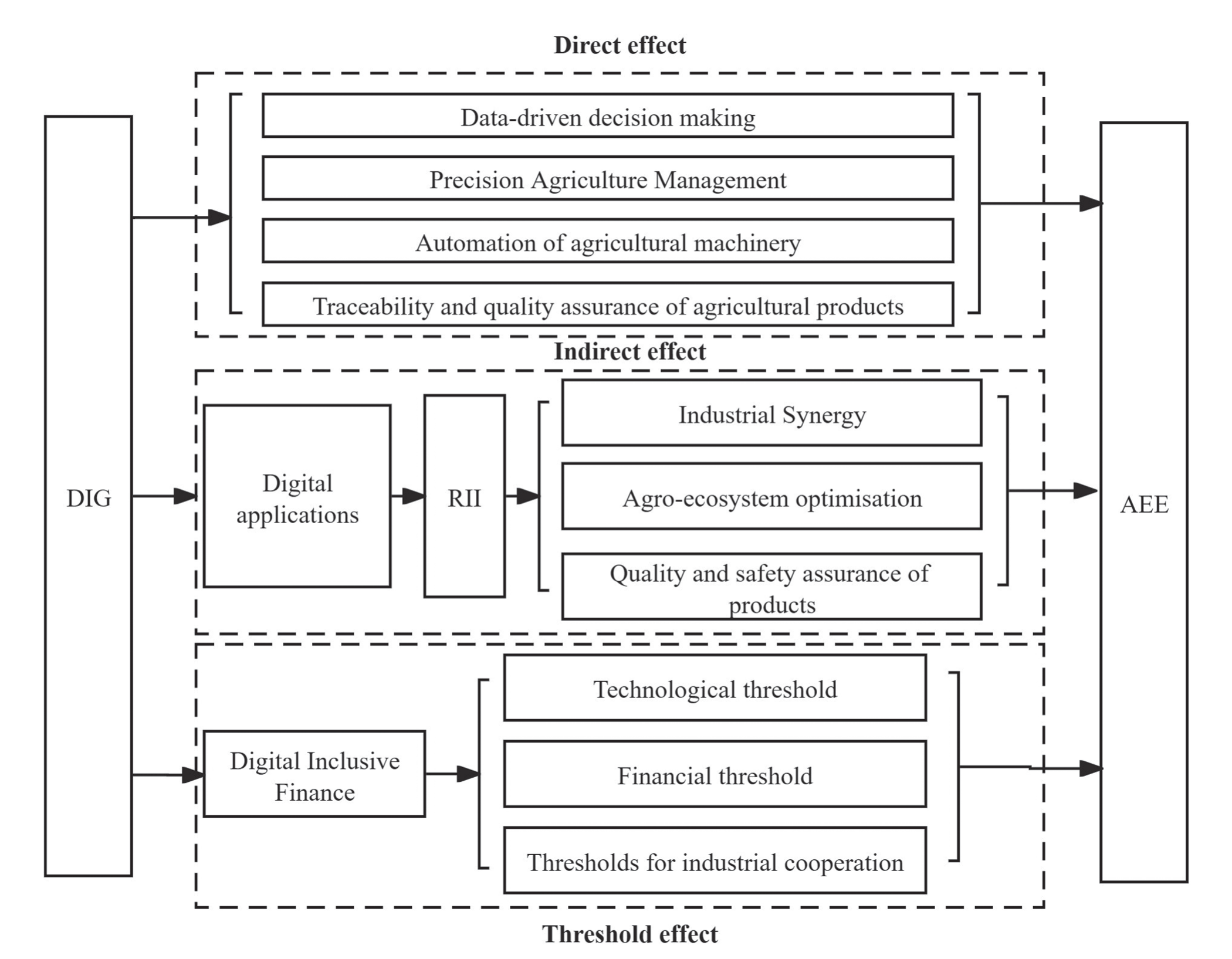
Agroecological efficiency is a comprehensive metric reflecting the harmonious interplay between agricultural productivity and environmental preservation. Agricultural digitization is a pivotal force shaping agroecological efficiency, exerting influence through several vital avenues. Initially, by furnishing precise agricultural data encompassing meteorological patterns, soil attributes, and crop dynamics, agricultural digitization empowers farmers with a nuanced comprehension of land conditions, enabling informed decision-making [4]. Consequently, this technological integration augments the efficacy of farm management practices, culminating in enhanced crop yields, superior produce quality, and diminished resource depletion and environmental degradation. Moreover, digital innovations facilitate meticulous agricultural oversight, leveraging tools like the Agricultural Internet of Things, remote sensing technologies, and satellite navigation to monitor parameters such as soil moisture levels, vegetative indices, and pest prevalence [16]. This precision-driven approach enables farmers to administer fertilizers, irrigation, and pest control measures judiciously, curbing resource wastage and minimizing chemical inputs while optimizing crop health and productivity.
Furthermore, integrating agricultural machinery with digital technology heralds a new era of automation, streamlining tasks such as seeding, watering, and harvesting. The deployment of automated equipment enhances operational efficiency and curtails energy consumption and chemical usage, thereby fostering cost reductions, mitigating environmental impact, and amplifying agroecological efficiency. Lastly, digital solutions provide a pathway to ensuring traceability and quality assurance of agricultural commodities. Through robust digital information systems, agricultural products’ entire lifecycle, from cultivation and production to processing and distribution, can be meticulously monitored and traced, safeguarding product integrity and consumer confidence [8]. This multifaceted integration of digital technologies into agriculture enhances productivity and profitability and underpins sustainability efforts, thus fortifying agroecological resilience and efficacy in the modern agricultural landscape. Accordingly, this paper proposes Hypothesis 1: Hypothesis 1: The digitization of agriculture directly contributes to agroecological efficiency.
Indirect Effects of Agricultural Digitization on Agroecological Efficiency Through Rural Industrial Integration
Agroecological protection has emerged as a global imperative, underscoring the vital role of sustainable agricultural practices in fostering rural development. Achieving sustainable agroecological development hinges upon a dual focus on quality and environmental stewardship. The convergence of rural industries, facilitated by intra-agricultural collaboration and synergies between agriculture and secondary and tertiary sectors, presents an innovative model for agricultural advancement. This integrated approach catalyzes agricultural innovation and propels the trajectory towards high-quality agricultural output and enduring rural sustainability [14].
Firstly, agricultural digitalization is a linchpin in fostering synergistic growth across diverse agricultural sectors, thereby optimizing resource allocation and streamlining industrial chains [7]. Leveraging digital technologies enables seamless data sharing and holistic management across multiple agricultural domains, spanning farmland, livestock, and aquaculture. This integrative approach enhances resource efficiency and augments ecological dividends, fostering a more efficient, sustainable, and environmentally conscious agricultural landscape.
Secondly, digital technologies are pivotal in advancing agroecosystem management by empowering farmers with enhanced monitoring capabilities over farmland ecological dynamics, encompassing soil quality, water conditions, and biodiversity indices. The integration of rural industries serves as a bulwark for agroecosystem stability and vitality, facilitating prudent resource planning and management across farmland, forested areas, and water bodies [12]. By establishing robust ecological cycles and enhancing resource utilization efficiency, this integrated approach fortifies agroecosystems’ environmental integrity and resilience, thus underpinning sustainable agricultural development.
Thirdly, the digitization of agriculture holds promise for elevating agricultural product quality and safety standards through the seamless integration of rural industries. Harnessing digital innovations, a robust system for tracking and monitoring the quality of agricultural goods can be implemented, ensuring transparency, accountability, and reliability throughout the production chain [17]. Concurrently, the convergence of rural industries facilitates the refinement and branding of agricultural products, fostering heightened value addition and bolstering market competitiveness. Enhancing agricultural commodities’ quality and safety benchmarks engenders consumer confidence and cultivates broader recognition, fostering efficiencies within agroecological frameworks. Accordingly, this paper proposes Hypothesis 2: Hypothesis 2: digitization of agriculture can indirectly affect agroecological efficiency through rural industrial integration.
Threshold Effects Present Under Different Digital Financial Inclusion Indices
In summary, the digitization of agriculture yields substantial benefits for agroecological efficiency and rural industrial integration. The Digital Financial Inclusion Index is a pivotal tool in evaluating the adoption and impact of digital technologies within the financial sphere and the accessibility and breadth of inclusive financial services. Digital financial inclusion enhances the efficiency and sustainability of agricultural practices and plays a crucial role in safeguarding the agroecological environment. This is achieved through the adept utilization of information and communication technologies (ICTs), which furnish accurate data, decision-making support, and comprehensive tracking and management capabilities throughout the agricultural production cycle. Moreover, digital inclusive finance provides essential tools and platforms that facilitate and bolster the integration of rural industries, fostering heightened synergy and connectivity among different sectors to form cohesive value chains within rural landscapes [18].
Firstly, the technological threshold. Digital financial inclusion relies on the application of information technology and the digitization of financial services. When IT infrastructure and network coverage in rural areas are poor, farmers have relatively low proficiency in digital technology and lack the ability and confidence to use digital technology for financial services, making the process of agroecology and rural industrial integration limited [19].
Secondly, financial thresholds. Digital financial inclusion requires diverse financial services to meet the needs of different rural industries. In rural areas, financial institutions may have limited capacity and service coverage, and farmers cannot fully participate in the financial market, facing inconvenient and high thresholds for financial services [19]. The potential of digital inclusive finance cannot be fully realized, and its impact on agroecological efficiency and rural industrial integration will be limited.
Thirdly, the threshold of industrial cooperation. Digital inclusive finance can promote collaboration and communication among farmers and between farmers and enterprises [20]. Due to the relatively weak social network and cooperation mechanism in rural areas, the lack of adequate information transmission and cooperation platforms among farmers and the high threshold of industrial cooperation hinder the process of rural industrial integration. Accordingly, this paper proposes hypothesis 3:
Hypothesis 3: The contribution of agricultural digitization to agroecological efficiency and rural industrial integration is influenced by the threshold effect of the development of digital financial inclusion, and the contribution of agricultural digitization to agroecological efficiency and rural industrial integration increases as the index of digital financial inclusion increases. Based on the findings above, the theoretical framework of this study has been established, as depicted in Fig. 1.
Variables, Modeling, and Data Handling
Variable Definition
Agroecological Efficiency
Taking into consideration the essence and progression of agricultural eco-efficiency (AEE) and drawing upon the pertinent research by Liu (2022) [21] and Yao (2024) [22], we have formulated an indicator system encompassing inputs, desired outputs, and non-desired outputs (Table 1). The selected input variables comprise land resources, irrigation, pesticides, fertilizers, agricultural films, machinery, and diesel fuel. Desired outputs are delineated by gross agricultural output value and total food production, while non-desired outputs encompass agricultural carbon emissions and ground source pollution emissions. The analysis of agricultural carbon emissions, as delineated in Wu (2024) [23], employs the IPCC carbon emission coefficient method. This method predominantly scrutinizes carbon emissions directly or indirectly attributed to six carbon sources integral to agricultural production: fertilizers, pesticides, agricultural films, diesel fuel, irrigation, and plowing. The assessment relies on carbon emission coefficients associated with these various sources to quantify agricultural carbon emissions. Surface source pollution emissions primarily examine the pollution levels from fertilizers, pesticides, and agricultural films. These emissions are calculated using diverse pollutants’ loss rates, as outlined in Ning (2023) [24].
Digitization of Agriculture
There is ongoing debate among scholars over developing the indicator system for digitalization in agriculture (DIG). This paper examines the implementation of digital technology in rural areas, specifically how farmers can utilize digital technology. The study by Luo (2024) [25] is referenced, and the level of agricultural digitalization is measured using four indicators. These indicators assess the application and investment in digital technology. The utilization of digital technology is essential for the modernization and advancement of conventional agriculture. Farmers can achieve precise positioning and efficient management of field operations by employing GPS and GIS. The integration of intelligent equipment enables automated agricultural processes [9].
Additionally, utilizing the Internet and mobile applications facilitates direct communication with consumers and the provision of a wide range of agricultural information services. Hence, the variables selected to measure the adoption of digital technology were the mean number of computers and mobile phones per 100 rural households and the number of individuals with Internet broadband access. Investing in digital technology can indicate the level and direction of digital technology adoption in the agricultural sector. The level of investment directly impacts the popularity and acceptance of digital technology. Therefore, fixed investment in the digital industry is selected as a measurement indicator for investment in digital technology.
Rural Industrial Integration
Integrating rural one, two, and three industries (RII) encompasses multifaceted dimensions, constituting a comprehensive and intricate endeavor. Thus, drawing upon pertinent scholarship [26], we have devised an indicator framework for rural industrial integration, focusing on integrating rural industries (Table 2). This framework delineates five primary indicators aimed at elucidating the expansion of the agricultural industry chain, harnessing agricultural multifunctionality, fostering the amalgamation of agriculture and the service sector, nurturing novel business models, and establishing mechanisms for benefit linkage.
Table 1.
Agroecological efficiency input-output indicators.
Table 2.
Rural Industrial Integration Indicator System
Digital Inclusive Finance Index
To further test the non-linear impact of agricultural digitization on agroecological efficiency and rural industrial integration, the Digital Inclusive Finance Index (DIF) [18, 20] is selected as the threshold variable in this paper.
Control Variable
In addition to agricultural digitization and rural industrial integration, other vital variables can also impact agroecological efficiency. In this paper, Knot refers to Liu (2020) [7], which selects the planting structure (APS), financial support level for agriculture (AFS), area affected by disasters (AAD), agricultural infrastructure (AID), air temperature (AT), and precipitation (AR) as the control variables.
Econometric Modeling
Super-Efficient SBM Models Considering Non-Desired Outputs
With its juxtaposition of effective decision-making units and inability to rank them entirely, the traditional DEA model does not accurately measure efficiency values that contain undesired outputs. At the same time, due to the truncated tail, the efficiency value calculated is not suitable for further analysis by econometric models. To improve the accuracy of the DEA model, Tone proposed the SBM model with non-expected outputs in 2001, based on which he improved and defined the super-efficient SBM model [5].
Among them, n denotes decision unit, m denotes decision unit inputs, r1 denotes desired outputs, and r2 denotes undesired outputs; x, yb, and yg denote the corresponding elements in the matrix consisting of inputs, desired outputs, and undesired outputs, respectively; λ is a vector of weights; and p* is an agroecological efficiency value.
Dynamic Panel Modeling
To examine the direct impact of agricultural digitization on agroecological efficiency [10], the following econometric model is constructed in this paper:
Furthermore, to overcome the endogeneity problem caused by mutual causality or omitted variables, this paper adds a lagged one-period term of agroecological efficiency to equation (3). It uses a dynamic panel model for estimation, as follows:
Among them,
Mediation Effects Model
To validate the mediating role of rural industrial integration between agricultural digitization and agroecological efficiency, this paper refers to the research of Kuang (2022) [27]. It adopts the mediation effect model for testing.
Among them,
Panel Threshold Modeling
To test the possible threshold effect in Hypothesis 3, the following threshold model was constructed to find the threshold value, referring to the estimation method proposed by Hansen (1999) [28].
Among them,
3.3 Data Sources
In this paper, balanced panel data for 30 provinces in China from 2011 to 2020 are selected. The original data are all from the China Statistical Yearbook, China Rural Statistical Yearbook, China Population and Employment Statistical Yearbook, China Rural Business Management Statistical Annual Report, the National Bureau of Statistics and local statistical yearbooks, etc., the digital financial inclusion index is derived from the release of the Centre for Digital Finance Research of Peking University, and the annual average temperature and rainfall data come from the National Meteorological Science Data Sharing Service Platform.
Descriptive Stats
The descriptive statistical analysis of the relevant variables is shown in Table 3. At the same time, to intuitively examine the linear relationship between agricultural digitization, rural industrial integration, and agroecological efficiency, this paper draws a scatter-fit plot for the initial portrayal of the relationship between the three groups of variables mentioned above. It can be seen that there is a significant positive correlation between the three variables in Fig. 2, and the theoretical mechanism proposed in the paper has been initially confirmed.
Empirical Tests and Discussion
Spatial and Temporal Evolution of Agroecological Efficiency
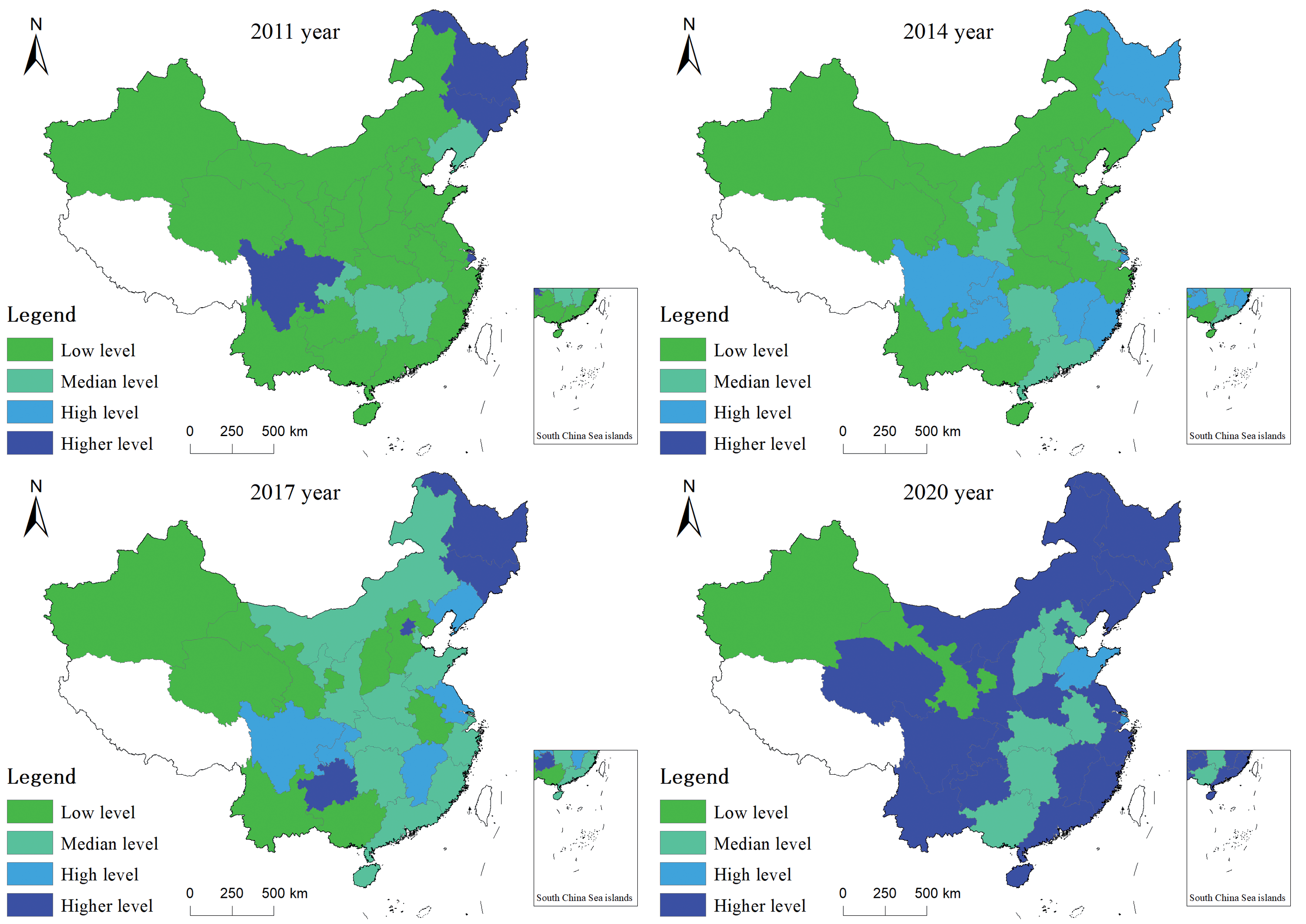
The super-efficient SBM model was employed to assess the agroecological efficiency across 30 provinces in China spanning the years 2011 to 2020. As depicted in Table 4, a temporal analysis reveals a consistent upward trajectory in China’s agroecological efficiency, with the national average surging from 0.510 in 2011 to 0.879 in 2020, marking a notable 72.57% increase. Notably, provinces such as Jilin, Heilongjiang, and Shanghai exhibit notably higher agroecological efficiency values, predominantly concentrated within the northeastern swath of China. Spatially, as illustrated in Fig. 3, significant disparities emerge across China’s various regions regarding agroecological efficiency, epitomizing a dichotomy of high performance flanking a central band of lower efficiency. The northeastern region consistently maintains higher and relatively stable agroecological efficiency levels, while the eastern region experiences the most rapid growth. By 2020, the hierarchy of agroecological efficiency values from highest to lowest follows the sequence: northeast, east, west, and center. The persistent low agroecological efficiency observed in the central region may stem from input utilization and management issues in agricultural practices, including excessive reliance on chemical fertilizers and pesticides, thus precipitating environmental degradation and ecological harm.
Table 3.
Descriptive statistics of variables.
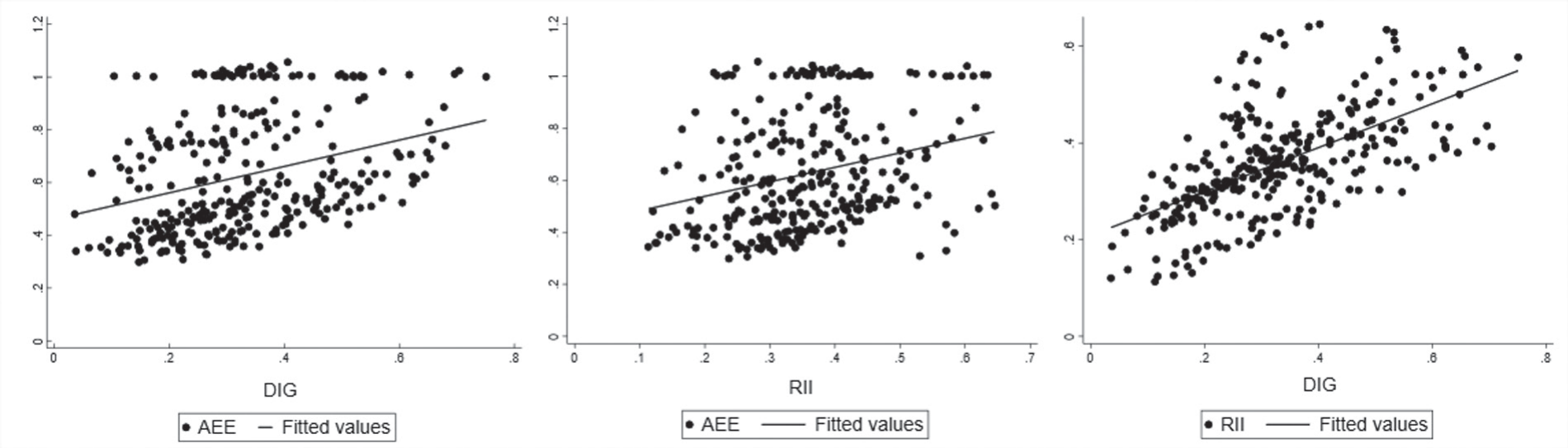
Table 4.
Results of agroecological efficiency measurements, 2011-2020.
Effects of Agricultural Digitization on Agroecological Efficiency
Before conducting econometric regression analysis, the stationarity of variables was assessed through unit root tests employing both the HT and IPS methodologies. The findings indicated first-order monotonicity for the variables. Subsequently, cointegration analysis using both Pedroni and Westerlund tests unveiled significant cointegration among the variables, implying a long-term stable equilibrium relationship. Hence, the original equation was deemed suitable for direct regression analysis.
The OLS model and the fixed effect model are used to estimate the parameters of equation (1) in this paper, and the estimation results are shown in Table 5 for Model I and Model II. The coefficients of agricultural digitization are all significantly positive at the 1% level, indicating that agricultural digitization has a significant role in promoting agroecological efficiency. The constructed dynamic panel model (2) is further parameter estimated using system GMM, and the results are shown in Model III in Table 5. AR (2) passes the significance test. In contrast, AR(2) does not pass the significance test, which indicates that the model cannot reject the original hypothesis of the non-existence of the second-order serial correlation. There is no autocorrelation, which better overcomes the problem of endogeneity. The result of the Hansen Test is more significant than 0.1, indicating no over-identification of instrumental variables. At the same time, there is still a significant positive correlation between agricultural digitalization and agroecological efficiency. It is significantly positive at the 1% level, indicating that whenever agricultural digitalization is increased by one unit on average, the agroecological efficiency is improved by 14.57%. The development of agricultural digitalization can significantly promote the improvement of agroecological efficiency. Hypothesis 1 has been verified, which implies that the vigorous growth of digital technology in rural areas is of great practical significance for promoting the sustainable development of agriculture. Sustainable development is of great practical importance.
Mediation Effect Test
The mediating effect of rural industrial integration was tested in this paper and is shown in Table 6. In the total effect model, the total impact of agricultural digitization on agroecological efficiency is significantly positive with a coefficient value of 0.5397 and is significant at the 1% level. From the mediation test model results, the coefficient value of agricultural digitization is 0.3125, which passes the 1% significance test and can also significantly promote rural industrial integration. In the direct effect model, the coefficient of agricultural digitization is 0.3346, which is considerably smaller than the total effect. In contrast, the coefficient of rural industrial integration is significantly positive, confirming that rural industrial integration plays a mediating role in the impact of agricultural digitization on agroecological efficiency, i.e., in addition to the direct effect, agricultural digitization can also affect agroecological efficiency by promoting rural industrial integration, and Hypothesis 2 is verified. In addition, the Sobel test indicates that the mediating effect is significant at the 5 percent level, suggesting that the findings are robust.
Table 5.
Estimates of the impact of agricultural digitization on agroecological efficiency.
Threshold Effect Test
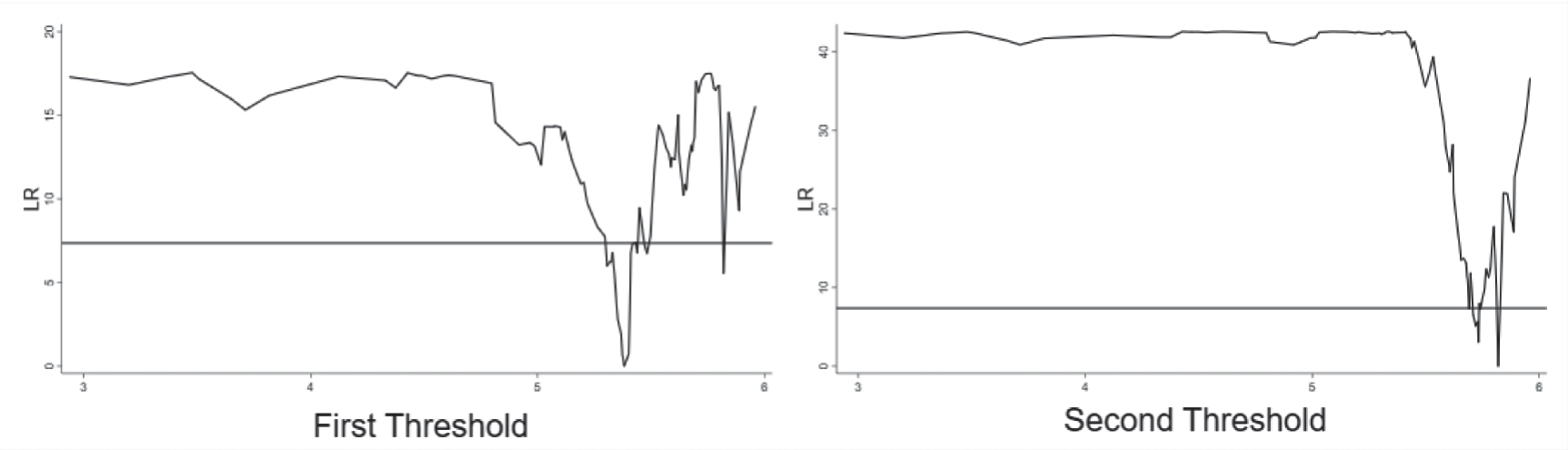
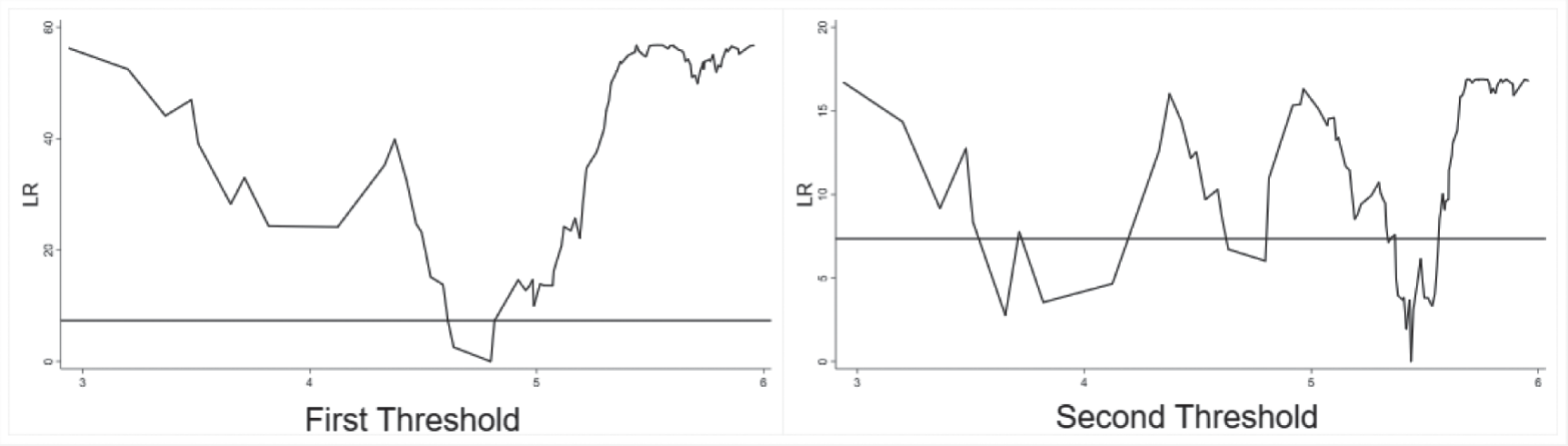
This paper verifies the non-linear impact of agricultural digitalization on agroecological efficiency and rural industrial integration with digital inclusive finance as the threshold variable, respectively. Using the Bootstrap self-sampling method, the sample is repeated 300 times, and single, double, and triple threshold tests are conducted step by step. The test results are shown in Table 7. The results show that the single and double threshold F-statistics corresponding to agroecological efficiency are 42.69 and 21.42, respectively, and simultaneously pass the 5% significance test. Still, the triple threshold fails to pass the significance test. The single-threshold F-statistic corresponding to rural industrial integration is 44.54 and passes the 1% significance test; the double-threshold F-statistic is 28.14 and passes the 5% significance test; and the triple-threshold also fails the significance test, which suggests that there is a double-threshold effect of digital inclusive finance in the effects of agricultural digitization on both agroecological efficiency and rural industrial integration.
From Table 8, Fig. 4, and Fig. 5, it can be seen that when digital financial inclusion is used as the threshold variable, the threshold values of agricultural digitalization on agroecological efficiency are 5.3815 and 5.8190, respectively. The threshold values of agricultural digitalization on rural industrial integration are 4.7976 and 5.4396, respectively, and the threshold values are more significantly identified.
Table 6.
Mediating effects of rural industrial integration.
Table 7.
Threshold effect tests.
Table 8.
Results of threshold estimation.
The estimation results of the panel double-threshold regression model are shown in Table 9. In Model IV, when the digital financial inclusion index is lower than the first threshold and between the two thresholds, the value of the coefficient of agroecological efficiency is minor. It does not pass the significance test, indicating that the effect of agricultural digitization on agroecological efficiency is not significant when the digital financial inclusion index is low. When the digital financial inclusion index is higher than the second threshold, the value of the agricultural eco-efficiency coefficient rises to 0.5083. It passes the 1% significance test, indicating that agricultural digitalization significantly promotes agricultural eco-efficiency when the digital financial inclusion index is higher. In Model V, when the digital financial inclusion index is lower than the first threshold, the positive promotion effect of agricultural digitalization on rural industrial integration is not significant. When the digital financial inclusion index is between the first and second thresholds, the coefficient of rural industrial integration rises and passes the 1% significance test. When the digital financial inclusion index is greater than the second threshold, the coefficient of rural industrial integration further rises, indicating that the effect of agricultural digitalization on rural industrial integration is more significant when the digital financial inclusion index is higher.
In conclusion, the impact of agricultural digitalization on agroecological efficiency and rural industrial integration is not a simple linear relationship. Still, there is a double threshold effect based on digital financial inclusion. The higher the digital financial inclusion index, the more significant the impact of agricultural digitalization on the promotion of agroecological efficiency and rural industrial integration, and Hypothesis 3 is verified.
Table 9.
Threshold model regression results.
Endogeneity and Robustness Tests
This research addresses the endogeneity problem caused by mutual causality or omitted factors by using the quantity of Internet domain names (IDN) and one-period lagged agricultural digitization (L1.DIG) as instrumental variables [10, 11]. The number of Internet domain names satisfies the exogenous criterion by reflecting the degree of agricultural digitization growth and, to a lesser extent, by reflecting the development of communications infrastructure. It also has a minor impact on agroecological efficiency. The current level of agricultural digitization and the level of agricultural digitization in the lagged period correlate, but the exogenous condition is satisfied because the current level of agroecological efficiency does not directly impact the level of agricultural digitization in the lagged period.
The estimation outcome of the two-stage least squares approach based on the instrumental variable method is shown in Table 10 as Model VI. During the initial phase, there was a positive correlation between the number of Internet domain names and the digitization of agriculture during the lagging era. In terms of the weak instrumental variable test, the Cragg-Donald Wald F-test statistic is 84.954, which is significantly larger than the Stock-Yogo weak instrumental variable identification test critical value of 19.93 at a 10% level of significance, indicating that there is no weak instrumental variable problem. The Hansen J statistic from the over-identification test has a p-value of 0.993, which accepts the original hypothesis that the instrumental variable is exogenous. The Kp-lm statistic of 75.353 rejects the original hypothesis that instrumental variables are not identifiable at the 1% level. The effect of agricultural digitization on agroecological efficiency is still positive and significant at the 1% confidence level after the endogeneity problem is mitigated using two-stage least squares. This is consistent with the coefficient and significance of agricultural digitization in the baseline regression. This suggests that even after addressing the endogeneity issue, the study findings presented in this work remain valid.
Table 10 shows that Model Ⅶ treats each of the primary variables in the regression model by one percent shrinkage. The estimation findings show that the fixed-effects regression results following the incremental inclusion of control variables are similar to the regression results following the shrinkage treatment, which is still noteworthy. This suggests a generally strong positive and considerable impact of agricultural digitalization on agroecological efficiency.
Further Discussion
Panel Quantile Regression
The systematic GMM model and panel threshold model were applied above to verify the significant impact of agricultural digitization on agroecological efficiency. However, the effect of agricultural digitization on the overall distribution of agroecological efficiency could not be observed. For this reason, panel quantile regression was used to set up four representative quartiles to examine the heterogeneous impacts of agricultural digitization on the different levels of agroecological efficiency development and better understand the structural characteristics of its implications. As can be seen from Table 11, the estimated coefficients of agricultural digitization are significantly positive at different quantile points, consistent with the test results above. Specifically, the estimated coefficients of agricultural digitization show a gradually increasing trend at all quartiles as the number of quartiles increases, indicating that agricultural digitization has a more significant facilitating effect on provinces with higher agroecological efficiency values.
Table 10.
Endogeneity and robustness tests.
Heterogeneity Test
To examine the potential differences in the impact of agricultural digitization on agroecological efficiency, the sample area was divided into four regions: eastern, central, western, and northeastern. This division was based on variations in cultivation structure, economic level, and natural resource endowment. A sub-sample regression analysis was conducted within each region to determine if there is any heterogeneity in the effects of agricultural digitization. The data presented in Table 12 demonstrates that the influence of agricultural digitization on agroecological efficiency is highly notable in the eastern region, somewhat significant in the northeast and central areas, and negligible in the western region. The East region’s superior information technology research and development capabilities, advanced rural infrastructure, and well-developed economy promote agricultural technological progress. Consequently, agricultural digitalization has the most significant impact on agroecological efficiency in the eastern region.
Conclusions and Policy Implications
This study investigates the influence of agricultural digitization on agroecological efficiency. It also explores the role of rural industrial integration as a mediator and the threshold effect of digital inclusive finance. The study empirically examines the impact of agricultural digitization on agroecological efficiency and its underlying mechanism using a combination of theoretical and empirical methods. The analysis is based on a panel of data from 30 provinces in China spanning the period 2011-2020. The study reveals:
Firstly, China’s agroecological efficiency is increasing, with significant regional variations. The Northeast region has the highest efficiency value, while the East region has the fastest growth rate. This pattern generally follows a trend of high efficiency on both sides and lower efficiency in the middle. Hence, it is imperative to prioritize the advancement of agroecology in the central region of China, capitalizing on its strategic geographical position that facilitates connectivity between the southern and northern regions. This will foster regional synergy and drive coordinated growth in the area.
Secondly, the empirical test demonstrates a noteworthy positive correlation between agricultural digitalization and agroecological efficiency. In other words, agricultural digitalization has a substantial capacity to advance the development of agroecological efficiency. Consequently, implementing modern information technology in the agricultural sector can effectively foster agroecological development progress, aligning with Robert’s research findings (2023) [29]. Rural industrial integration serves as a mediator between agricultural digitization and agroecological efficiency. In other words, agricultural digitization can indirectly impact agroecological efficiency by facilitating rural industrial integration. Therefore, expediting the progress of agricultural digitization is crucial in promoting the advancement of rural industrial integration, which subsequently enhances agroecological efficiency. Digital financial inclusion has a two-fold effect on the relationship between agricultural digitization, agroecological efficiency, and rural industrial integration. As the level of digital financial inclusion improves, the impact of agricultural digitization on agroecological efficiency and rural industrial integration increases gradually. Therefore, it is essential to continuously enhance the coverage, accessibility, and satisfaction of digital financial inclusion to promote the widespread availability and equal access to financial services.
Thirdly, there is variation in the effect, and the influence of agricultural digitalization on agroecological efficiency is particularly pronounced in areas with higher efficiency levels. Typically, these areas already possess superior infrastructure and a greater willingness to embrace technology, allowing them to absorb and implement new technologies more quickly. This results in increased production and improved eco-efficiency. The eastern region is the most prominent in encouraging the popularization and implementation of digitization technologies in the surrounding areas, significantly enhancing agroecological efficiency in agriculture. Therefore, the eastern region should take on a leading regional position in this endeavor.
The study’s conclusions lead to the formulation of matching policy suggestions. (1) Create a specific strategy for advancing agroecology in the central region, explicitly outlining the objectives, essential actions, and policy measures and ensuring that enhancing agroecological efficiency is aligned with the regional development strategy. Enhance agricultural infrastructure development in the central region to establish a tangible foundation for modernizing agriculture and enhancing eco-efficiency. Create an agricultural collaboration mechanism between the central area and the eastern and western regions to enhance the pooling of resources and the utilization of complementary strengths, resulting in a regional synergy.
(2) Promote the utilization of contemporary information technologies, such as the Internet of Things, extensive data analysis, and artificial intelligence, to enhance the efficiency and accuracy of agricultural output [10]. Facilitate the amalgamation of agriculture with secondary and tertiary industries by providing regulatory support and incentives. Additionally, it fosters the establishment of novel economic ventures such as agrotourism and rural e-commerce. Enhance the reach of digitally inclusive financial services, particularly for small-scale farmers and marginalized regions, while offering accessible and cost-effective financial services. (3) Utilize the extensive expertise of the eastern region in implementing digital technology to create demonstration areas that showcase the efficacy of digital technology in improving agroecological efficiency in other regions and creating a regional agricultural data platform to gather and evaluate agricultural production data to offer a scientific foundation for making agricultural decisions.

