

Introduction
The giant panda (Ailuropoda melanoleuca) is a distinctive, historic, and endangered “national treasure” of China, a flagship species for the conservation of biodiversity worldwide, and a peace messenger for interactions between China and other nations [1]. According to Zhou Jiemin’s research, the loss and degradation of giant pandas’ ideal habitat poses a threat to the species [2]. Therefore, it is essential to gradually improve the habitat’s quality to safeguard the giant panda. In order to achieve this, China has always placed a high priority on protecting giant pandas and their habitats. To this end, the state has carried out pilot projects in the Giant Panda National Park and developed corresponding development plans, which have improved the connectivity, coordination and integrity of giant panda habitats, promoted overall protection and system restoration, and ensured the stable reproduction of giant panda populations [3-5].
As an essential mineral resource developer, China’s long-term, and high-intensity mineral resource development activities have left behind a significant number of abandoned mines. More specifically, there are a significant number of abandoned mines in the habitat of rare wild animals like giant pandas, and ecological restoration is urgently needed [6]. According to the “Special Research Report on Ecological Restoration of Giant Panda Habitats in Ya’an City” and “Special Implementation Plan for Mine Ecological Restoration in Ya’an City”, the Mine Ecological Restoration Area of the Giant Panda National Habitat (belongs to the Giant Panda National Park’s Qionglai Mountains- large and small adjacent areas) has a total of 247.38 hectares of historical abandoned mines left over from history. The most common types of abandoned mines are non-metallic minerals such as marble, gypsum, and sand [7, 8]. The Giant Panda National Park (Ya’an Area, Sichuan) is located in the Mine Ecological Restoration Area of the Giant Panda National Habitat and serves as an important corridor connecting the giant panda habitats of the Qionglai Mountains-Daxiangling Mountains System and key areas of the Xiaoxiangling-Liangshan Mountains System. It is critical for connecting isolated giant panda habitats and ensuring gene flow between isolated giant panda populations [7].
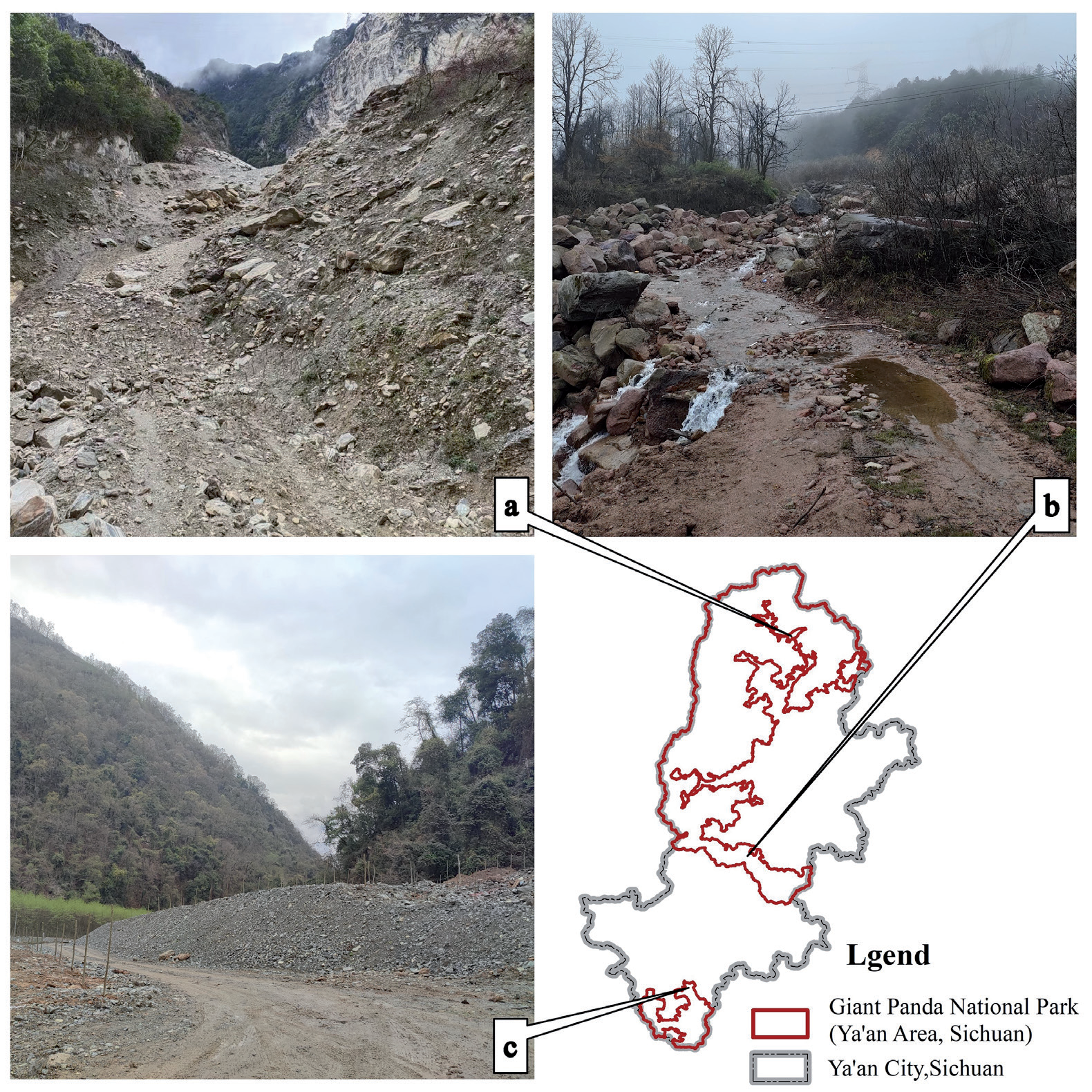
Irrational mining and utilization of mineral resources, as well as abandoned mines left over by “emphasis on development and neglect of protection,” have historically made the regional ecosystem of the Giant Panda National Park (Ya’an Area, Sichuan) fragile, with degraded forest land and grassland, land rocky desertification, and water conservation functions problems such as attenuation, biodiversity loss, and soil erosion have worsened, substantially undermining the region’s biological barrier and water conservation functions and posing a significant threat to the survival and reproduction of giant pandas [6] (Fig. 1). In the past, the restoration work only considered restoration methods based on regional location, humidity and temperature conditions, pollution types etc., [9-11] but few achieved ideal restoration effects in combination with the integrity of the giant panda ecosystem. To enhance the connectivity, coordination and integrity of the Giant Panda National Park affected by abandoned mines, realize the stable reproduction of the giant panda population, and strengthen the overall protection of biodiversity and typical ecological fragile areas, it is urgent to propose a set of restoration strategies for abandoned mines in giant panda habitats. The study area is the city (state) with the largest area, the most counties, and the largest proportion in the Giant Panda National Park. The Giant Panda National Park is the only location in the world where the entire process of discovering, protecting, breeding, rewilding, and reintroduction of giant pandas has been completed [8]. Based on data collection and field investigation, the study region has 150 historical abandoned mining sites that have caused significant damage to the local forest vegetation and ecology and exacerbated the fragmentation of giant panda habitat corridors [12-16], seriously threatening the survival of giant pandas, urgently need restoration and treatment, but unreasonable treatment measures will undoubtedly aggravate the impact, so there is an urgent need for an ecological restoration strategy suitable for giant panda national parks.
Data and Methodology
Construction of a Comprehensive Evaluation Index System for the Living Environment of Giant Pandas
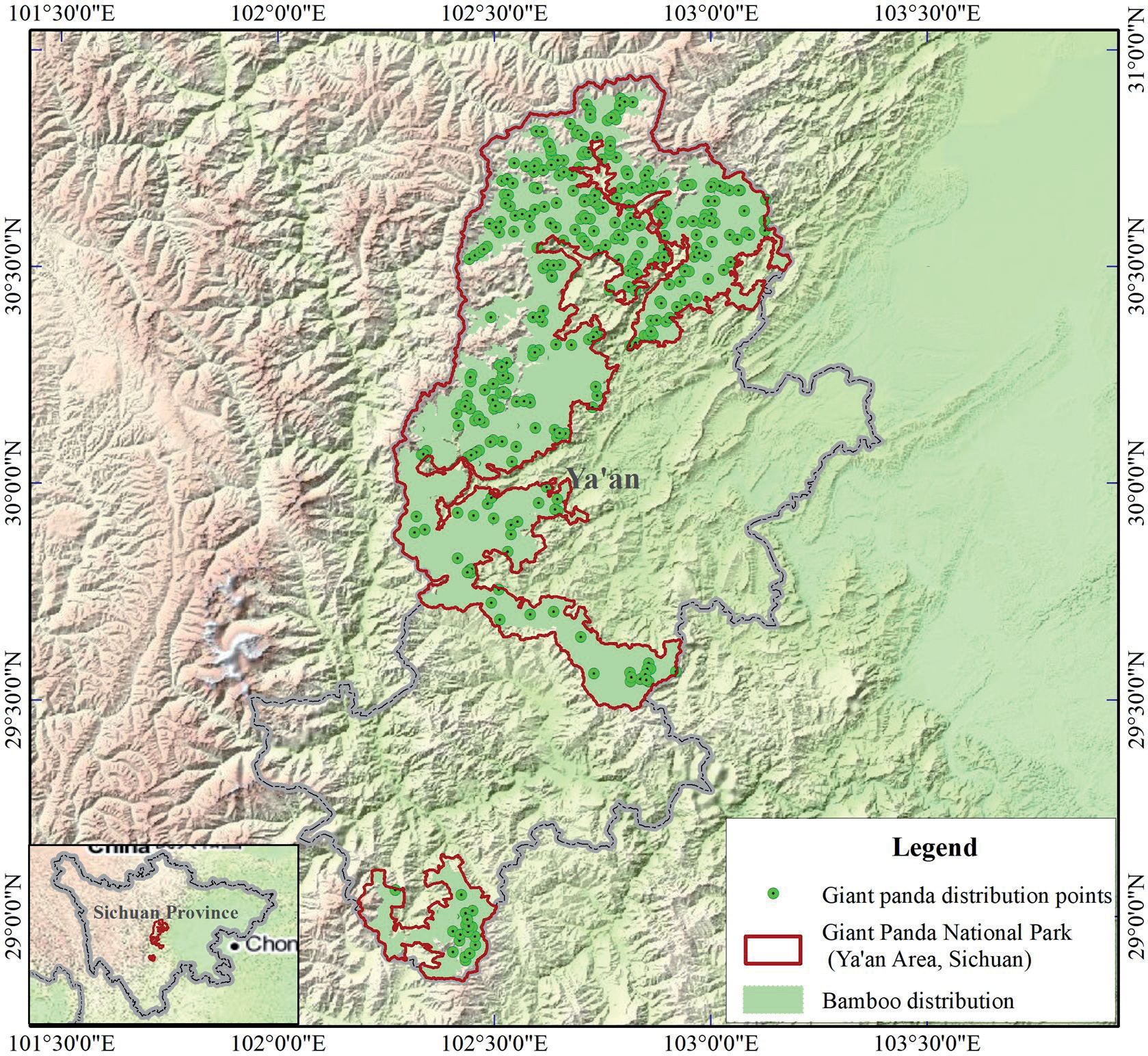
The Giant Panda National Park (Ya’an Area, Sichuan Province) (102°11’6.360”~103°11’5.525”E, 28°51’3.301”~30°56’28.594”N) has been taken as the study area, located in Ya’an City, Sichuan Province, China, with an area of 5936.40 km2, has a total of 340 wild giant pandas, accounting for 24.51% of the total wild giant pandas in Sichuan Province. Among them, there are 181 in Baoxing County, mainly concentrated in Fengtongzhai Township, Qiaoqi Township, and Yongfu Township; 28 in Lushan County, mainly concentrated in Dachuan Town; 24 in Shimian County, mainly concentrated in Liziping Yi Township; 78 in Tianquan County, mainly concentrated in Zishan Township; 26 in Yingjing County, mainly concentrated in Sanhe Township and Longcanggou Town as shown Fig. 2 [17].
According to the findings of giant panda biology and behavioral ecology research, forest resources, and the actual environment of the research location, as well as previous research [18-21], it can be seen that elevation, slope, and aspect should all be considered in the full evaluation index system of giant panda living environment. Shen Guozhen, Tian Cheng, Zhou Mingxing et al., and Liang Yuxi et al. studied vegetation restoration, the temporal and spatial distribution of wild animals, as well as the driving factors and environmental characteristics of giant panda habitats, and discovered that water sources and bamboo have a direct impact on the range of activities of giant pandas [17, 22-24]. Sun Liang and others selected indicators such as elevation, slope, aspect, river, vegetation coverage, bamboo and other indicators to establish a comprehensive evaluation system for giant panda habitat suitability [25].
Table 1.
Comprehensive evaluation index system for giant panda living environment in the Giant Panda National Park (Ya'an area, Sichuan).
Yang Yanan, Dong Xin, etc. known the importance of vegetation, NDVI, and Land use type to the habitat quality of the Giant Panda National Park using forest structure remote sensing inversion and geographical detectors to analyse the quality of the giant panda’s living environment [26, 27]. Yanke used multi-source data to investigate the ecological environment quality of the Giant Panda National Park (Pingwu County), and concluded that indicators such as temperature, precipitation, and NDVI have a greater impact on the ecological environment quality [28]. Li Dan’s impact on suitable habitats of giant pandas and associated congenerous mammals in light of climate change impacts such as average annual temperature and precipitation in the driest month indicated that climate change on giant panda habitats could bring about species suitable habitat migration [29]. Sun Xue’s research on the habitat and population connectivity assessment of giant pandas in the Qionglai Mountains under climate change reveals that, under different climate change scenarios in the future, not only will the area of suitable habitat for giant pandas’ staple food, bamboo, be reduced, but it will also be detrimental to the connectivity of corridors for giant pandas [30]. Sun Limei, Dong Xin et al. analyzed the habitat quality of giant pandas based on geographic detectors and proposed the importance of humidity to giant panda habitats [27, 31]. There were no natural disasters such as landslides and debris flows in the study area between 2010 and 2014, and the places where natural disasters occurred were a certain distance from the study area [32], it can be considered that there is basically no impact on the activities of giant pandas in the study area, so the impact of natural disasters on them is not considered.
As a result, the natural environmental factors in this study include terrain (elevation, slope, aspect), natural resources distance from water source, (land use type), climate (annual precipitation, precipitation in the driest month, precipitation in the wettest month, average annual temperature , the lowest temperature in the coldest month, the highest temperature in the hottest month), atmosphere (relative humidity), biological factors include vegetation (normalized vegetation index(NDVI)), bamboo (bamboo distribution).
Although the quality of the atmospheric environment in the Giant Panda National Park is relatively good, the restoration process of a large number of abandoned mines will inevitably have an impact on the atmospheric environment. China’s environmental protection standard “Technical guidelines for environmental impact assessment – Atmospheric environment” (HJ2.2-2018), “Technical Regulation on Ambient Air Quality Index on trial” (HJ633-2112) respectively pointed out that PM2.5, PM10, SO2, NO2, CO, O3 are the basic pollution in the atmosphere [33, 34]. Except for relative humidity, little research have been done that focus on the impact of atmospheric environments on the habitat of giant pandas. As a result, the aforementioned indicators are included in the comprehensive evaluation index system for giant pandas’ living environment in Table 1.
Data Source and Preprocessing
The DEM data of the study area comes from the EarthData database (http://search.asf.alaska.edu/), with a resolution of 12.5 m × 12.5 m. The data of slope and aspect are calculated from the DEM raster data through the spatial analysis of ArcGIS. The river system data comes from Open Street Map (https://www.openstreetmap.org/), and the land use data comes from the Earth Big Data Science and Engineering Data Sharing Service System (https:// data.casearth.cn/) [35]. The climate data comes from the WorldClim database (http://www.worldclim.org/). The atmospheric data comes from the 2013-2018 China high-resolution air pollution reanalysis dataset (monthly and annual averages) [36]; NDVI data comes from the National Science and Technology Basic Conditions Platform - National Ecological Science Data Center (http://www.nesdc.org.cn) [37]. The giant panda distribution and Bamboo distribution are based on the relevant drawings in “The Pandas of Sichuan: The 4th Survey Report on Giant Panda in Sichuan Province” [12], and are obtained by vectorization after scanning. By doing field research and data validation, it is possible to determine the spread of historical mines that have been abandoned.
Because the wild giant panda distribution data comes from the 4th Giant Panda Survey in Sichuan Province, which finished in 2014, in order to consider the reliability of the analysis, land use type uses the data of 2015. Because the climate does not vary significantly each year, data from 2020 is used. Data from 2013 and 2014 are used in the atmospheric indicators. NDVI uses data from 2013 to 2015, and all are the maximum NDVI values in a year where the distribution points of giant pandas are located.
Evaluation Method
According to a study into the environment of the Giant Panda National Park (Ya’an Area, Sichuan), in combination with the research techniques and accomplishments of the predecessors, focusing on the giant panda’s adaptive choices on habitat factors, a series of discussions and research will yield 20 evaluation indicators that will affect the giant panda’s suitable living environment, and they will be divided into two categories. Utilising the statistical analysis method, perform a quantitative analysis of the Single-factor indicators for the giant panda living environment evaluation to determine the scope of each indicator’s evaluation. Based on the results of the statistical analysis of the indicator, the suitability of the study area is assessed to produce the conditions necessary for the giant panda’s living environment. Then, try to determine the impact of historical mines that have been abandoned in the study region on massive pandas. To accomplish this, measure the distance between distribution points of giant pandas in the study area and the mines. Finally, considering the influence of abandoned mines on giant panda, an effective abandoned mine restoration strategy for the Giant Panda National Park (Ya’an Area, Sichuan) will be extensively proposed, which will also provide technical guidance for the ecological restoration of abandoned mines in rare wildlife habitats such as giant pandas in China.
Results and Discussion
Giant Panda Living Environment Evaluation
Natural Environmental Evaluation
(1) Terrain
Elevation, slope, and aspect are topographical elements in this study (Table 1), and statistical analysis was performed on elevation, slope, and aspect of all giant panda distribution points in the study area.
The results show that: (1) The elevation range of the study area is 1470-3699 m, the aspect range is 0-357°, and the slope range is 2-62°. (2) The distribution of giant pandas in different elevations and slopes is more obvious, of which 50% of the giant pandas live concentratedly in the elevation 2264-2941 m, and 70% of the giant pandas live in the slope 23-48° range.
Fig. 3.
Distribution map of elevation, slope, aspect and distance from water sources in all giant panda distribution points in the study area.
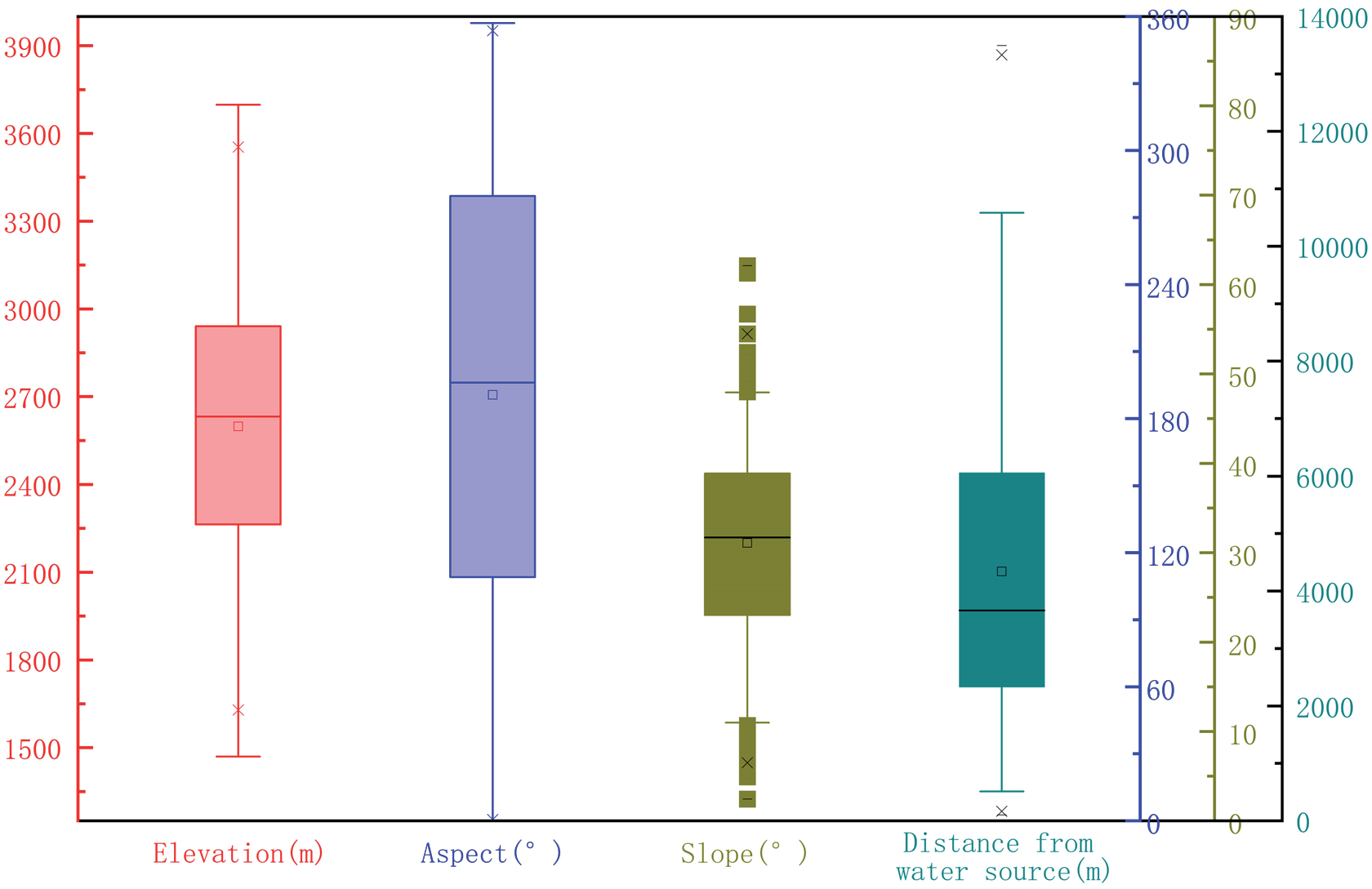
(3) The distribution of giant pandas in different aspects is not obvious, and the distribution is relatively uniform in the range of 0-360°, that is, the aspect has little influence on the activities of giant pandas. (4) Elevation <1470 m, >3699 m, or slope <11°, >48°, except for scattered distribution points of giant pandas, there are basically no traces of giant pandas in the study area (Fig. 3). To sum up, the suitable conditions for elevation, slope, and aspect of giant pandas are 2264-2941 m. 2-48°, and 0-360°, respectively.
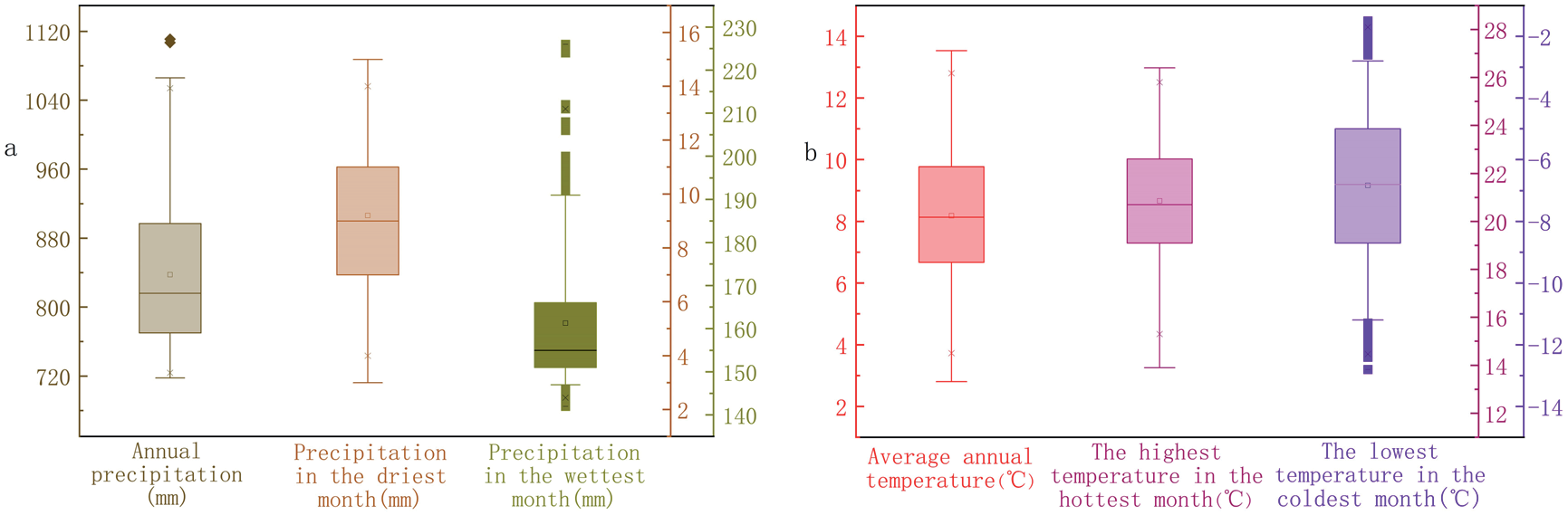
Fig. 5.
Climatic (precipitation, temperature) map of all giant pandas distribution points in the study area. Statistical map of climate (precipitation, temperature) of giant panda distribution points in the study area.
(2) Natural resources
Distance from water source and land use type are two natural resource characteristics included in this study (Table 1). All panda distribution points in the research area were statistically analysed based on their distance from a water source and land use type.
1) Distance from water source
The results elaborates that: (1) The distance from water source of all panda distribution points in the study area ranges from 100 to 13,495 m. (2) The farther the distance is, and affected by the uneven distribution of water sources, the distribution points of giant pandas increase rapidly within 50%, and then rapidly decrease within 75% of the range, and then gradually decrease until 11,576 m, where distance from water source >11,567 m, there are basically no traces of giant pandas in the study area. (3) If the reason for the unequal distribution of the water source is not considered, giant pandas prefer to reside near the water source, and 75% of giant panda distribution points are clustered within 6066 m of the water source (Fig. 3). To sum up, the suitable condition for Giant Pandas for Distance from water source is ≤6066 m.
2) Land use type
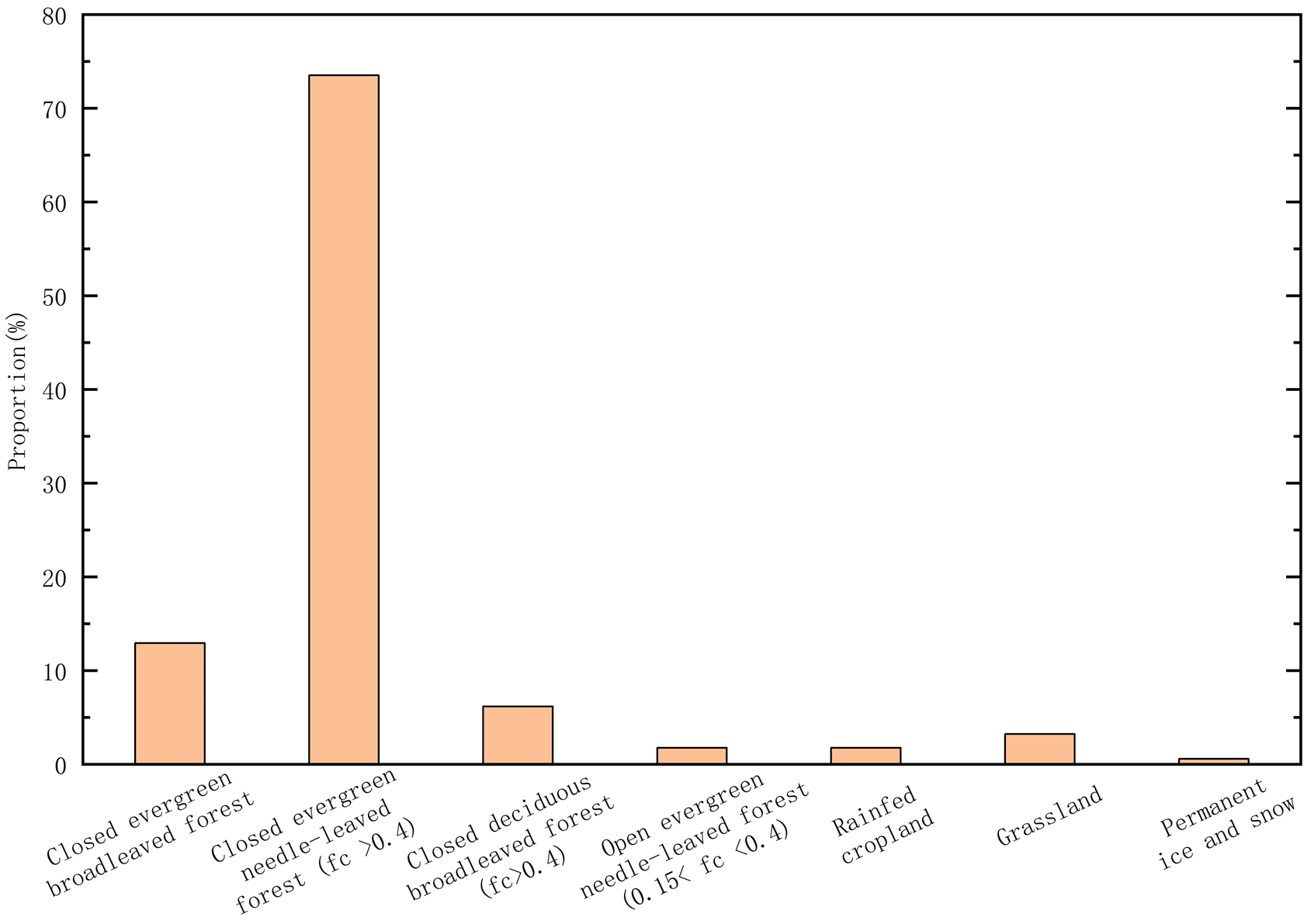
The results indicated that: (1) 73.53% of the giant pandas in the Giant Panda National Park (Ya’an Area, Sichuan) live in the closed evergreen needle-leaved forest (fc>0.4). (2) 19.12% of the giant pandas live in the closed evergreen broadleaved forest, closed deciduous broadleaved forest (fc>0.4). (3) Giant pandas rarely appear in open evergreen needle-leaved forest (0.15< fc<0.4), rainfed cropland, grassland, permanent ice and snow. (4) In addition to this, there are no traces of giant pandas in other places in the study area (Fig. 4). To sum up, giant pandas are suitable to live in the range of closed evergreen needle-leaved forest (fc >0.4), that is, the forest ecosystem [38].
(3) Climate
Precipitation and temperature are considered as climatic factors in this study, with precipitation statistically analyzed through annual precipitation, precipitation in the driest month, and precipitation in the wettest month; and temperature statistically analyzed through average annual temperature, the lowest temperature in the coldest month, and the highest temperature in the hottest month.
1) Precipitation
The results flourished that: (1) All giant panda distribution points in the study area are in the range of 718-1111 mm for annual precipitation. 3-15 mm for precipitation in the driest month. 142-226 mm for precipitation in the wettest month. (2) 75% of the distribution points of giant pandas are concentrated in the range of 718-897 mm in annual precipitation, they are concentrated in the range of 7-11 mm in the precipitation in the driest month, and 70% of the distribution points of giant pandas are concentrated in the range of 147-166 mm in the precipitation in the wettest month (Fig. 5a).
2) Temperature
The results argue that: (1) The average annual temperature range of all giant panda distribution points in the study area is 2.81-13.54ºC, the lowest temperature in the coldest month is –12.80 - –0.80ºC, and the highest temperature in the hottest month is 13.90-26.40ºC. (2) 50% of the distribution points of giant pandas are concentrated in the range of the annual average temperature of 6.68-9.77ºC and the highest temperature in the hottest month of 19.10-22.60ºC; for the lowest temperature in the coldest month. 90% of the distribution points of giant pandas are evenly distributed in the range of –11.20 - –2.80°C (Fig. 5b).
To summarize, precipitation and temperature have a significant impact on the living environment of giant pandas. Annual precipitation, precipitation in the driest month, precipitation in the wettest month, average annual temperature, lowest temperature in the coldest month, highest temperature in the hottest month is 718-897 mm. 7-11 mm. 147-166 mm. 6.68-9.77ºC, –11.20 - –2.80ºC, 19.10-22.60ºC, respectively.
(4) Atmosphere
1) PM2.5, PM10, O3
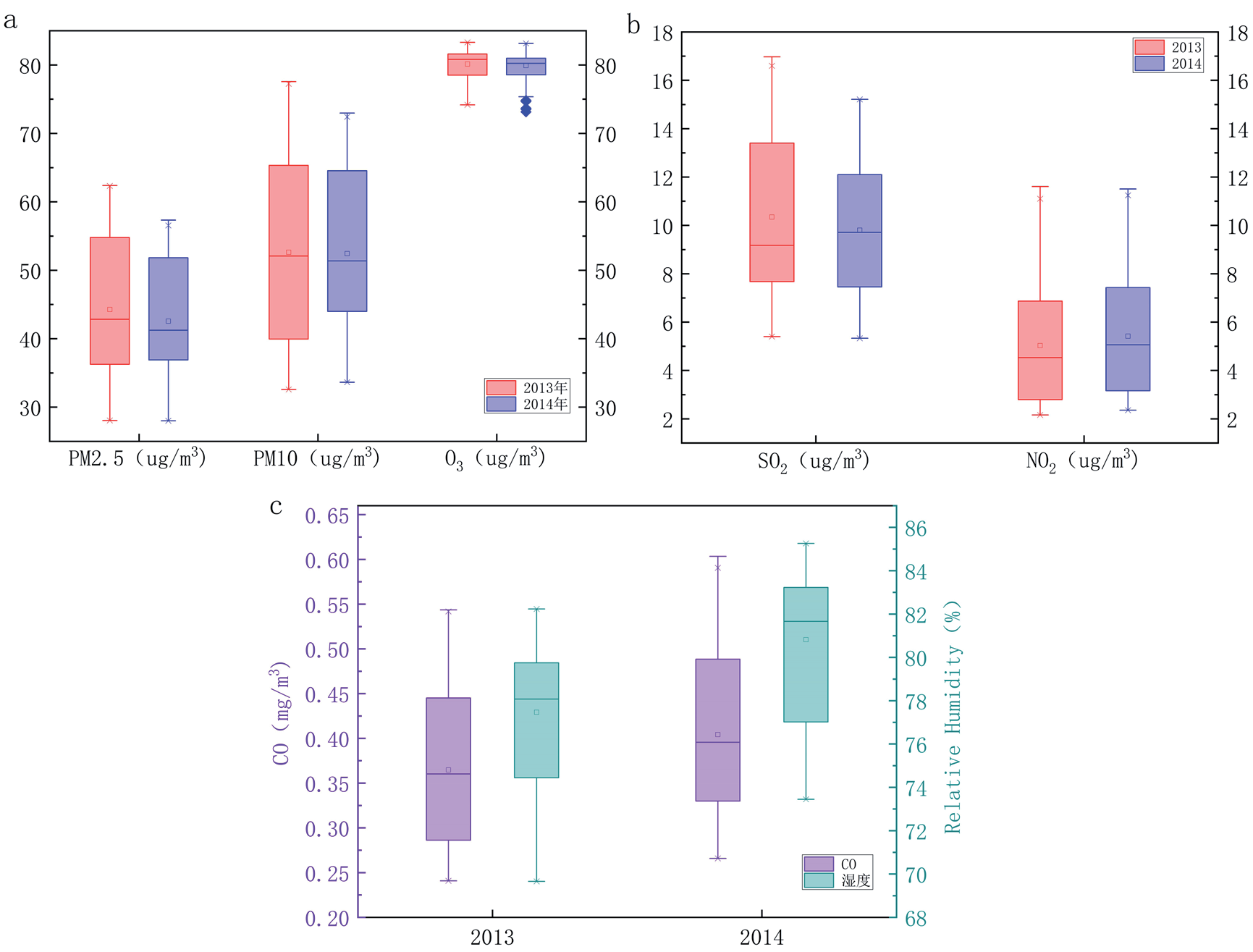
The results showed that: (1) The annual mean values of PM2.5 in all giant panda distribution points in the study area in 2013 and 2014 are 28-62 ug/m3 and 28-57 ug/m3, respectively. The annual averages of PM10 in 2013 and 2014 are 33-78 ug/m3 and 34-73 ug/m3 respectively, and the annual averages of O3 in 2013 and 2014 are 74-83 ug/m3 and 75-83 ug/m3 respectively, and the distribution is relatively uniform. (2) Giant pandas like to live in environments with lower concentrations of dust and O3, which shows that the living conditions of giant pandas have higher requirements on air quality, that is, when the annual average concentrations of PM2.5, PM10, and O3 exceed 62 ug/m3, 78 ug/m3, and 83 ug/m3, giant pandas basically do not live in such areas (Fig. 6a).
2) SO2, NO2
The results show that: (1) The annual average SO2 of all giant panda distribution points in the study area in 2013 and 2014 is 5-17 ug/m3, 5-15 ug/m3, and the annual average value of NO2 in 2013 and 2014 is 2-12 ug/m3. (2) For SO2 and NO2, more than 75% of the distribution points of giant pandas are concentrated in the concentration ranges of 5-13 ug/m3 and 2-7 ug/m3 respectively, which are all lower than the first-level concentration limits of 20 ug/m3 and 40 ug/m3 for the basic items of ambient air pollutants [33]. (3) The concentrations of SO2 and NO2 in the air have a particularly large impact on the survival of giant pandas, giant pandas are suitable for living in Class I areas with better environmental conditions, and the annual average concentrations are respectively lower than 17 ug/m3 and 12 ug/m3 (Fig. 6b).
3) CO, Relative Humidity
The results showed that: (1) The annual mean values of CO in the distribution points of giant pandas in the study area are 0.24-0.54 mg/m3 and 0.27-0.60 mg/m3 in 2013 and 2014, respectively, and the annual mean values of humidity in 2013 and 2014 are 70-82% and 73-85%, respectively. (2) The indicators of CO and humidity in more than 75% of the distribution points of giant pandas are concentrated in the concentration ranges of 0.24-0.50 mg/m3 and 74-85%, respectively.
(3) The concentration of CO in the air and the percentage of humidity have a particularly large impact on the survival of giant pandas. Giant pandas are suitable for living in areas with low CO concentrations and relatively humid areas. When the annual average concentration of CO exceeds 0.60 mg/m3, or the annual average humidity is lower than 70%, giant pandas basically do not live in such areas (Fig. 6c).
To sum up, the atmosphere has a greater impact on the living environment of giant pandas. The suitable conditions for giant pandas on atmospheric indicators such as PM2.5, PM10, O3, SO2, NO2, CO, and relative humidity are ≤62 ug/m3, ≤78 ug/m3, ≤83 ug/m3, ≤17 ug/m3, ≤12 ug/m3, ≤0.60 mg/m3, and ≥70%.
Biological Factor Evaluation
(1) Vegetation
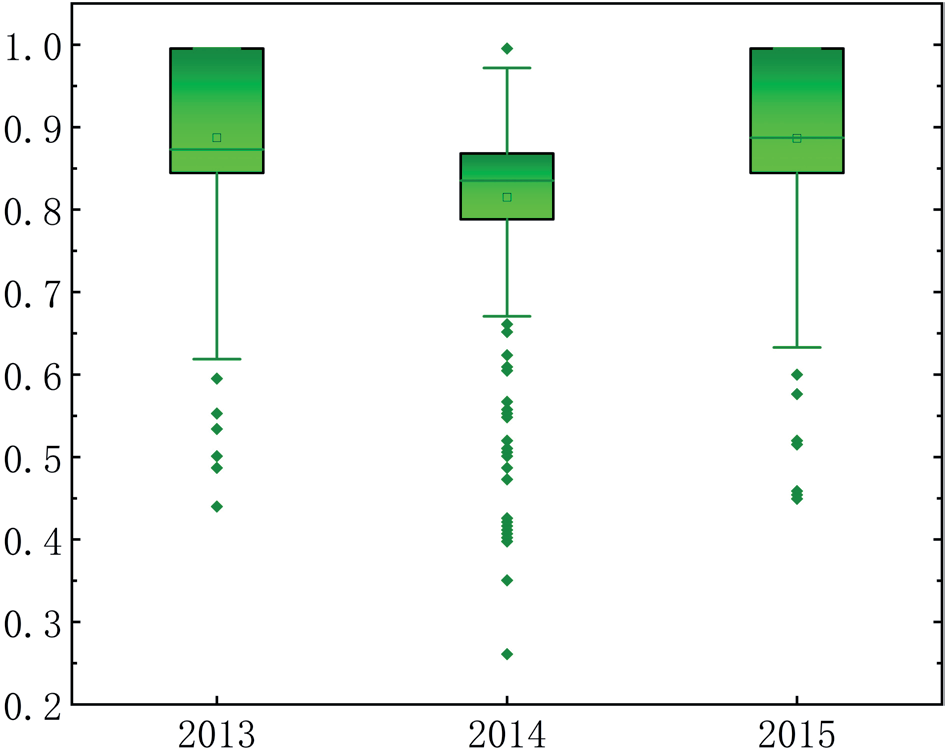
The results showed that: (1) The NDVImax ranges of giant panda distribution points in the study area from 2013 to 2015 are 0.440-0.995, 0.261-0.995, and 0. 449-0.995, respectively. (2) The NDVImax of more than 75% of the distribution points of giant pandas in 2013-2015 is higher than 0.7882, and concentrated in the range of 0.8-1.0. (3) It shows that giant pandas are suitable to live in areas with good vegetation growth, that is, areas with NDVImax in the range of 0.8 to 1.0 (Fig. 7).
This study uses bamboo distribution to analyze the food needs of giant pandas. The results show that: 340 giant panda distribution points are basically within the Bamboo distribution range. Although individual giant panda distribution points are not within the range, the farthest distance from the Bamboo distribution range is only about 500 m. It shows that giant pandas like to live in the distribution range of Bamboo (Fig. 2).
The more suitable habitat conditions for giant pandas in the study area are depicted in Table 2 based on the aforementioned evaluations.
Research on the Ecological Restoration Strategy of Abandoned Mine in the Giant Panda National Park (Ya’an Area, Sichuan)
The Impact of Historical Abandoned Mines in the Study Area on the Living Environment of Giant Pandas
A total of 150 abandoned mines are involved in the study area. The results show that: (1) The shortest distance between the distribution points of giant pandas in the study area and the mine is 197-43686 m; among them, within 5000 m from the mine, the distribution points of giant pandas account for only 12.82%.
(2) within the distance of 9427 m, the distribution points of giant pandas account for 25%. (3) within the distance of 16689 m, the distribution points of giant pandas account for 50%, the trend formula is “y = 0.00257x + 4.50132” (Fig. 8).
The field investigation found that there are a total of 44 giant panda distribution spots within 5000 m of the mine., involving a total of 15 mines. They are situated in the counties of Yingjing and Baoxing. Mines are mined granite and marble. Basically, they are little stone mines. Since there have not been any human operations for a very long time, the ecological environment has essentially recovered spontaneously, and the survival of giant pandas is not really under danger. There are a total of 41 giant panda distribution points located between 5000 and 9427 m from the mine, of which 40 giant panda distribution points involve abandoned mines for mining marble and granite, involving a total of 8 mines, located in Yingjing County and Baoxing County. There are a total of 255 giant panda distribution points located between 9427 and 43686 m from the mine, involving a large number of mines. In addition to marble and granite, copper-lead-zinc mines and asbestos mines are also mined. Among them. 28 giant panda distribution points involve abandoned mines that copper-lead-zinc mines and asbestos mines.
Fig. 8.
Statistical map of the distance between all giant panda distribution points in the study area and the abandoned mines.
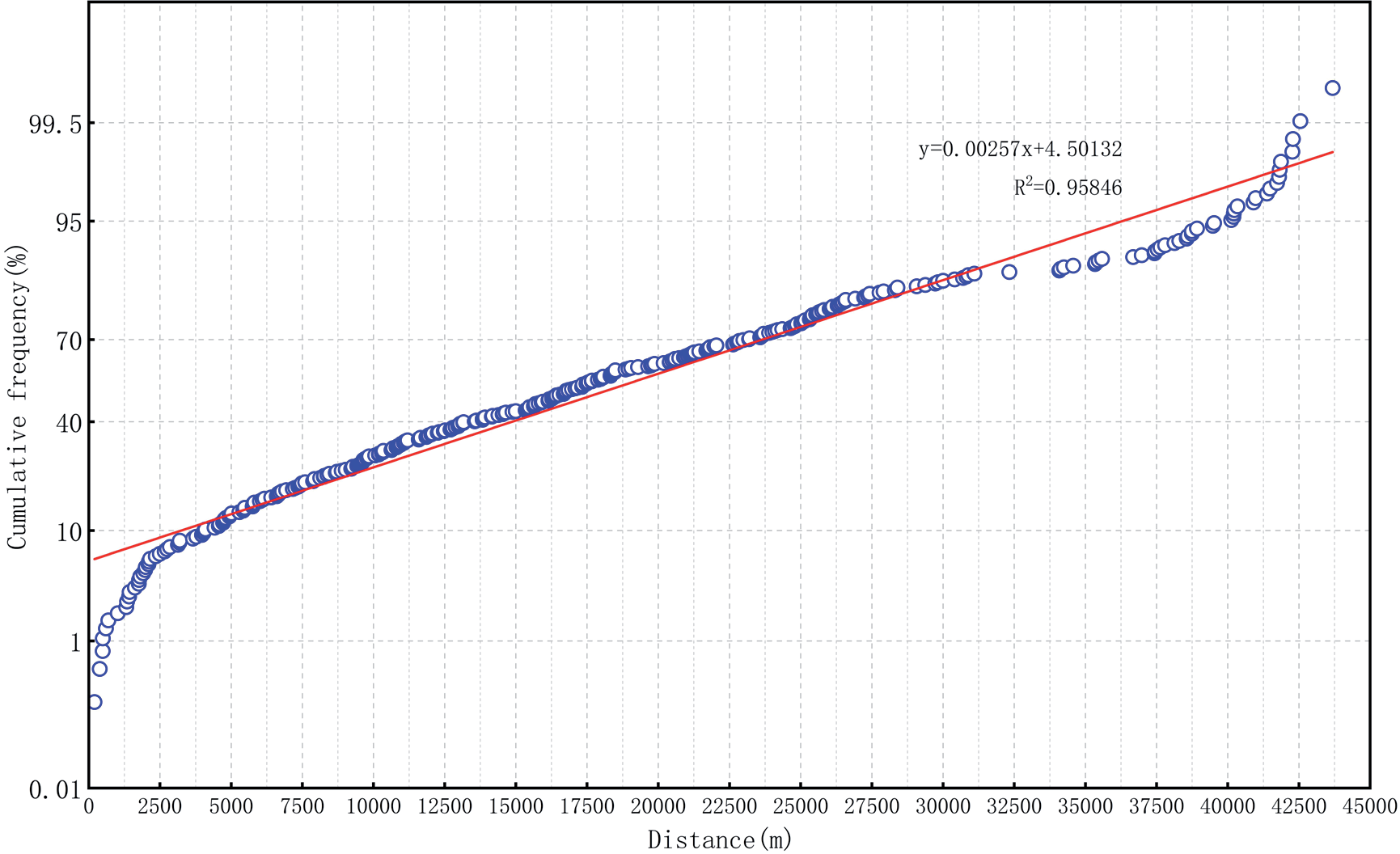
Table 2.
Suitable conditions for comprehensive evaluation indicators of giant panda living environment in the Giant Panda National Park (Ya'an Area, Sichuan)
In conclusion, the impact on the giant panda’s living environment is rather considerable within 5000 meters of abandoned mines, but it is relatively minimal beyond 9427 meters. It shows that the abandoned mines in the study area have a relatively obvious impact on the survival of giant pandas, destroying the ecological corridor and affecting the migration of giant pandas. In particular, copper-lead-zinc mines, asbestos mines, and abandoned mines with a wide range of mining are seriously damaged to the environment and difficult to recover naturally. Therefore, there is a critical need for restoration of the historical abandoned mines in present study area.
Research on Ecological Restoration Strategy of Historical Abandoned Mines
Elevation, annual precipitation, precipitation in the driest month, precipitation in the wettest month, average annual temperature, the lowest temperature in the coldest month, the highest temperature in the hottest month, and other indicators are indicators that are difficult to change even if the mine is restored; thus, such indicators are not considered for the restoration of abandoned mines left over from history; however, mines within the scope of such indicators suitable for the survival of giant pandas should be restored first. In the process of repairing the mines, indicators such as slope, distance from water source, land use type, PM2.5, PM10, O3, SO2, NO2, CO, relative humidity, NDVI, bamboo, etc., can be rationalized through design to make them more suitable for the survival of giant pandas.
(1) In Baoxing County of the study area, bashan wood bamboo (arundinaria fargesii), cold arrow bamboo (arundinaria faberi), august bamboo (chimonobambusa szechuanensis), thorny black bamboo (chimonobambusa purpurea), white oleander, moso golden bamboo (phyllostachys nigra var. henonis), Huaxi arrow bamboo (fargesia nitida), short juvenile jade mangosteen and asbestos jade mangosteen (yushania lineolate) can be planted. In Lushan County of the study area, bashan wood bamboo, cold arrow bamboo, august bamboo, thorny black bamboo, white oleandero, moso golden bamboo, guaigun bamboo (fargesia robusta), oil bamboo (Fargesia angustissima), short juvenile jade mangosteen and asbestos jade mangosteen can be planted. In Shimian County of the study area, ere bamboo (arundinaria spanostachya), cold arrow bamboo, fengshi arrow bamboo (Fargesia ferax), jiulong arrow Bamboo (Fargesia jiulongensis), Asbestos jade mangosteen, etc. can be planted. In the Tianquan County of the study area, cold arrow bamboo, august bamboo, prickly bamboo (chimonobambusa pachystachys), white oleander, golden bamboo (phyllostachys sulphurea), moso golden bamboo, fengshi arrow bamboo, march bamboo, short juvenile jade mangosteen, and asbestos jade mangosteen can be planted. In Yingjing County of the study area, cold arrow bamboo, august bamboo, white oleander, golden bamboo, march bamboo, white-backed jade bamboo, short juvenile jade mangosteen, asbestos jade mangosteen, etc. can be planted [12]. As the giant panda’s habitat has been fragmented, bamboo flowering may bring disaster to giant pandas in isolated small habitats [8]. Therefore, when restoring abandoned mines left over from history, it should be considered that different types of feeding bamboos have different flowering cycles. Therefore, in the same area, we should choose a variety of feeding bamboos with various flowering cycles as much as possible, and plant firs and local shrubs to form a fir forest mixed with feeding bamboos. Within a controllable period, a closed evergreen coniferous forest (fc>0.4) will be formed, and NDVImax will be within the range of 0.8 to 1.0. As the giant panda’s habitat has been fragmented in some places, and Bamboo blooming may bring disaster to the giant panda in an isolated small piece of habitat [8]. Therefore, when restoring abandoned mines left over from history, it should be considered that different types of bamboos have different flowering cycles. Therefore, in the same area, a variety of bamboos with different flowering cycles should be selected for mixed planting, and firs and local shrubs should be planted in the area to form a fir forest mixed with bamboo. Within a controllable period, a closed evergreen needle-leaved forest (fc>0.4) should be formed, and the NDVImax should be within the range of 0.8 to 1.0.
(2) When repairing abandoned mines left over from history, a large amount of dust will inevitably be produced, which will cause certain pollution to the atmosphere, especially PM2.5 and PM10. Spraying water into the air helps reduce dust in the air, and increasing air humidity can also provide a suitable atmospheric condition for giant pandas. The dust in the air can be reduced by spraying water in the air, and the air humidity can also be increased to provide a suitable atmospheric environment for giant pandas. It is forbidden to burn wood to make fire within the range, so as to avoid excessive emission of SO2, NO2, CO, increase the concentration of SO2, NO2, and CO in the atmosphere, and reduce the humidity of the atmosphere at the same time. Excavators, cargo vehicles, etc. emit a large amount of exhaust gas [39], and exhaust emissions include CO, PM2.5 and other pollution factors. During the restoration period, such problems should be considered as much as possible, so as not to affect the living environment of giant pandas due to mine restoration. When it comes to the restoration of abandoned asbestos mines, it is also necessary to prevent and control the pollution of the abandoned asbestos mines to the atmospheric environment.
(3) The majority of the abandoned mines in the research area have slopes caused by mining, which not only pose safety risks such as mountain collapse but are also unsuitable for the survival of giant pandas. When the mines are repaired, changes should be made based on the actual slope conditions, with the slope remaining as close to 23-48° as practicable. Water sources are also essential in the giant pandas’ living environment.
During mine governance if the distance from the water supply is greater than 6066 m, the water source should be increased through manual intervention to give the sufficient drinking water for the giant pandas to survive.
Conclusions
A comprehensive evaluation index system for the living habitat of giant pandas was built based on the real environment of the study area and prior studies, and statistical analysis methods were used to quantitatively analyze the evaluation indicators of the living environment of giant pandas. As shown in Table 2, the conditions for a suitable living environment for giant pandas are: elevation 2264-2941 m, slope 23-48°, aspect 0-360°, distance from water source ≤6066 m, land use type is closed evergreen needle-leaved forest (fc>0.4), annual precipitation 718-897 mm, precipitation ation in the driest month 7-11 mm, precipitation in the wettest month 147-166 mm, average annual temperature 6.68-9.77ºC, the lowest temperature in the coldest month –11.20- –2.80ºC, the highest temperature in the hottest month 19.10-22.60ºC, PM2.5≤62 ug/m3, PM10≤78 ug/m3, O3≤83 ug/m3, SO2≤17 ug/m3, NO2≤12 ug/m3, CO≤0.60 mg/m3, relative humidity ≥70%, NDVImax0.8-1.0, within the distribution range of bamboo. Abandoned mines in elevation, precipitation, temperature are suitable for giant panda living areas priority should be given to restoration. When performing restoration, a variety of bamboos with different flowering cycles should be selected in the same area as much as possible, and at the same time, plant fir and local shrubs in the area to form a fir forest mixed with bamboo. Within a controllable period, a closed evergreen needle-leaved forest (fc>0.4) should be formed, and the NDVImax should be within the range of 0.8 to 1.0. The slope of the slope should be within the range of 23 to 48° as far as possible. If the distance from the water source is greater than 6066 m, the water source should be increased through manual intervention. The restoration process can prevent and control the pollution of the atmospheric environment by construction dust and vehicle exhaust through artificial intervention such as spraying water and prohibiting burning wood for fire. It is also necessary to prevent and control the pollution of the atmosphere brought on by abandoned asbestos mines when rehabilitating abandoned mines that involved asbestos mining. This serves as an important basis for the restoration of abandoned mines in the study area and serves as a reference for the restoration of abandoned mines throughout the giant panda country and other areas.

