

Introduction
The potentially toxic metal(loid)s of the artisanal zinc smelting slag might pollute the surrounding environmental media and even harm animal or human health [1]. Although artisanal zinc smelting activity has been banned for more than a decade by the local government [2], the slag, when left untreated and randomly stacked, could cause severe environmental contamination and pose risks [3]. Some soils and plants, such as corn [4], potato [2], Juncus effusus [3], and Artemisia argyi [5], around the artisanal zinc smelter or slag pile, are affected by potentially toxic metal(loid) pollution. The number of soil microorganisms decreases with increasing soil potentially toxic metal(loid) contamination from artisanal zinc smelting [6].
Potentially toxic metal(loid) pollution exists in the surface soil and soil profiles around the smelter and the slag pile in the artisanal zinc smelting area [1]. The topsoil has arrived at a soil contamination level of one or more potentially toxic metal(loid)s around the artisanal zinc smelting slag sites in different regions [4]. At the same time, the soil potentially toxic metal(loid) s at different soil depths in the soil profile around the artisanal zinc smelting slag field were also polluted [1, 4].
The carbonate area is not only a typical karst area but also a high geological background area of potentially toxic metal(loid)s, whose ecosystem is fragile and vulnerable to human activities. The global carbonate rock distribution area is over one billion people [7]. Some studies [8-11] show that the weathered soil of carbonate rock is rich and high in Cadmium (Cd), which belongs to the typical karst high-Cd geological background area. At the same time, the ecosystem in the karst area is fragile, and the underground karst pipeline is well-developed [7], which is easily affected by human activities.
Therefore, it is vital to understand soil potentially toxic metal(loid) contamination in the karst area due to anthropogenic activity. However, there are few studies on the impact of potentially toxic metal(loid) pollution and weathering profiles in the karst area with artisanal zinc smelting. Given this, we investigated the contamination impact of the carbonate rock weathering profiles (artisanal zinc smelting slag pile, near lead-zinc ore mining site, and unaffected by the mining and smelting) in the karst area with artisanal zinc smelting in Northwestern Guizhou Province, China. In this study, we analyzed the distribution characteristics of soil potentially toxic metal(loid)s (i.e., As: Arsenic, Cd: Cadmium, Cr: Chromium, Cu: Copper, Hg: Mercury, Pb: Lead, and Zn: Zinc) at different depths in the soil profiles through investigation. We also evaluated the potentially toxic metal(loid) pollution and migration and discussed their primary sources. The research results can provide helpful information for investigating, preventing, and controlling the soil potentially toxic metal(loid) contamination of the metal ore mining site.
Experimental
Sample Collecting
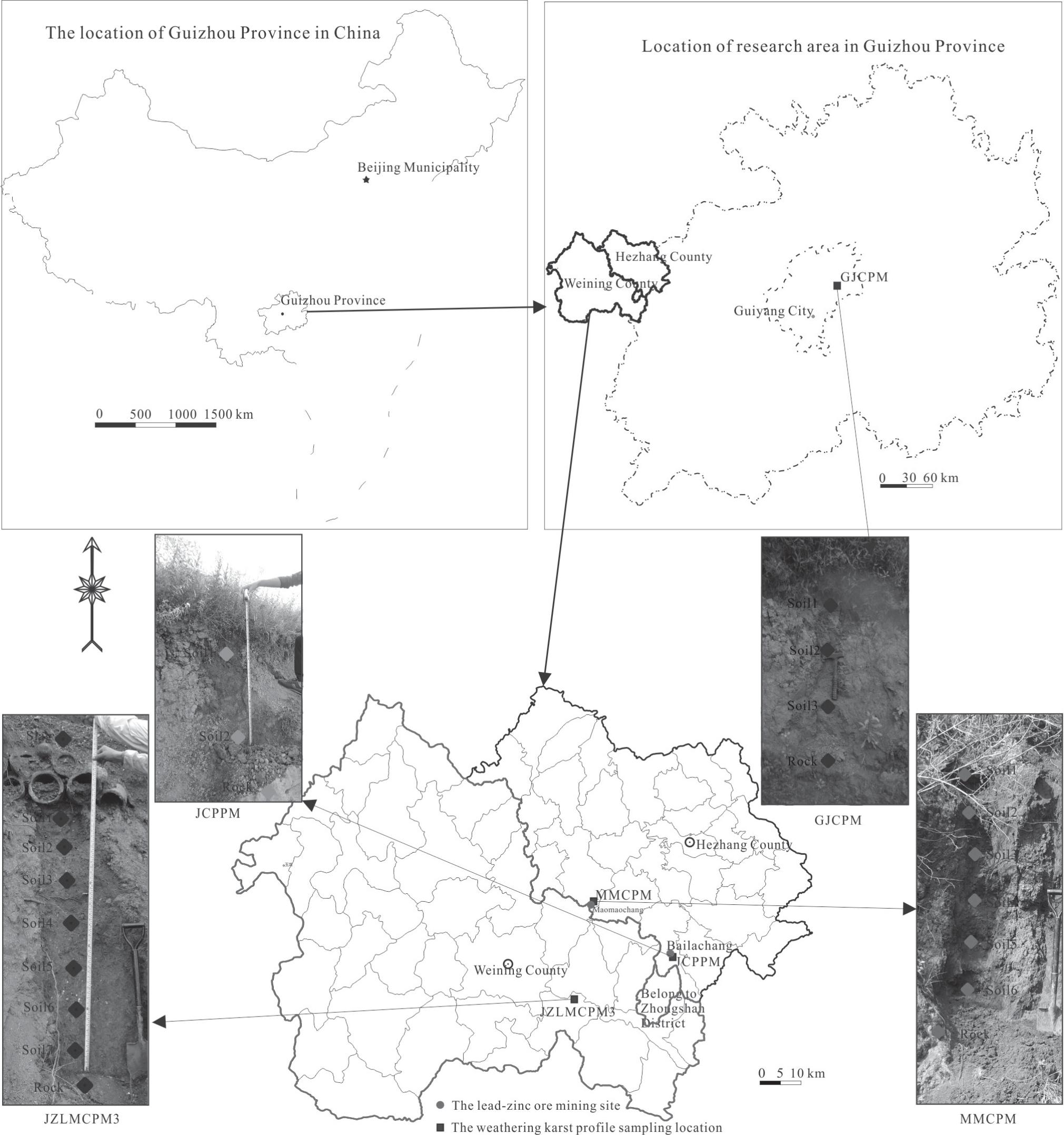
In August 2016, researchers collected four carbonate rock weathering profiles (JZLMCPM3, MMCPM, JCPPM, and GJCPM) and one lead-zinc ore sample (Fig. 1). The JZLMCPM3 weathering profile was sampled from an artisanal zinc smelting slag pile in the Northwest region of Guizhou Province, China. The MMCPM and JCPPM weathering profiles were selected, respectively, near the lead-zinc ore mining sites of the Maomaochang and the Bailachang in the Northwest region of Guizhou Province. The GJCPM weathering profile was collected from an area unaffected by lead-zinc mining and smelting in the Wudang district of Guiyang City, Guizhou Province, China. The JZLMCPM3 weathering profile with a soil depth of 130 cm is a carbonate rock weathering profile covered by artisanal zinc smelting slag, including one slag sample, one bedrock sample, and seven soil samples. The MMCPM weathering profile with a soil depth of 150 cm and the JCPPM weathering profile with a soil depth of 100 cm are the carbonate rock weathering profiles about 1 km near the Maomaochang lead-zinc ore mining site (including one bedrock sample and six soil samples) and 2 km near the Bailachang lead-zinc ore mining site (including one bedrock sample and two soil samples), respectively. The GJCPM weathering profile with a soil depth of 90 cm is the control weathering profile, which is collected with good natural vegetation cover and not affected by the artisanal zinc smelting and the lead-zinc ore mining activities, including one bedrock sample and three soil samples.
Sample Pretreatment and Testing
We placed the artisanal zinc smelting slag and soil samples in a constant-temperature blast drying box and dried them at 30ºC. After drying, we passed them through a 2 mm nylon sieve. We then determined their pH value by weighing 10.00 g of each sample (using a water-soil ratio of 1:2.5) and using a pH meter (Instrument Factory of Shanghai Sanxin, China, SX620) [2, 3, 12-14]. The pH values were measured three times, and their average value was taken.
The bedrock samples were brushed and washed once with high-pressure laboratory water and three times with deionized water to eliminate impurities from their surfaces. Afterward, they were dried in a constant temperature blast drying box at 105ºC.
In addition, samples of bedrock, artisanal zinc smelting slag, and soil - weighing about 100g - were sent to an accredited laboratory (ALS Minerals – ALS Chemex (Guangzhou) Co. Ltd.) to determine the concentrations of potentially toxic metal(loid)s (i.e., As, Cd, Cr, Cu, Hg, Pb, and Zn) and Al. Bedrock and artisanal zinc smelting slag samples were ground to about 200 mesh using vibration, and soil samples were ground to 200 mesh using wooden sticks. After HNO3-HClO4-HF-HCl digestion, inductively coupled plasma atomic emission spectroscopy (ICP-AES, USA, Agilent VISTA) and inductively coupled plasma mass spectrometry (ICP-MS, USA; Agilent 7700x) were applied to determine the potentially toxic metal(loid) contents. Blanks, duplicates, and certified reference materials (CRM: MRGeo08) were assayed using the above-mentioned consistent procedure. The recovery rates of the CRMs ranged from 87% to 110% for the soil samples.
Analytical Methods
Pollution Index
The pollution index (PI) can distinguish the degree of soil contamination with potentially toxic metal(loid)s. It refers to the ratio of an element-measured value to the element evaluation standard value of the soil [1]. When 1 < PI < 3, 3 < PI < 5, and PI > 5 mean slightly polluted, moderately polluted, and seriously polluted, respectively [15].
Enrichment Factor
The enrichment factor (EF) is a helpful tool for differentiating between natural sources and anthropogenic pollution of an element in the soil, as it indicates its relative abundance [1, 12-14]. This study shows the ratio of the potentially toxic metal(loid) s to Al in the average content of soil and crust [16], respectively [1]. EF<1, 1≤EF<3, 3≤EF<5, 5≤EF<10, 10≤EF<25, 25≤EF<50, and 50≤EF correspond to no enrichment, minor enrichment, moderate enrichment, moderately severe enrichment, severe enrichment, very severe enrichment, and extreme severe enrichment, respectively [17]. Additionally, the EF<1, 1≤EF≤3, and EF>3 indicate that the potentially toxic metal(loid) of the soil is, respectively, mainly from natural sources, natural and anthropogenic sources, and anthropogenic sources [1, 13].
Transfer Coefficient
The transfer coefficient (TC) represents the migration coefficient of an element in the weathering profile, which could help us understand the elemental change, migration, or enrichment degree of the weathering profile soil during natural weathering [1]. Al, which is highly stable during chemical weathering, is assumed to be an immobile element in this study.
Results and Discussion
Potentially Toxic Metal(loid) Distribution
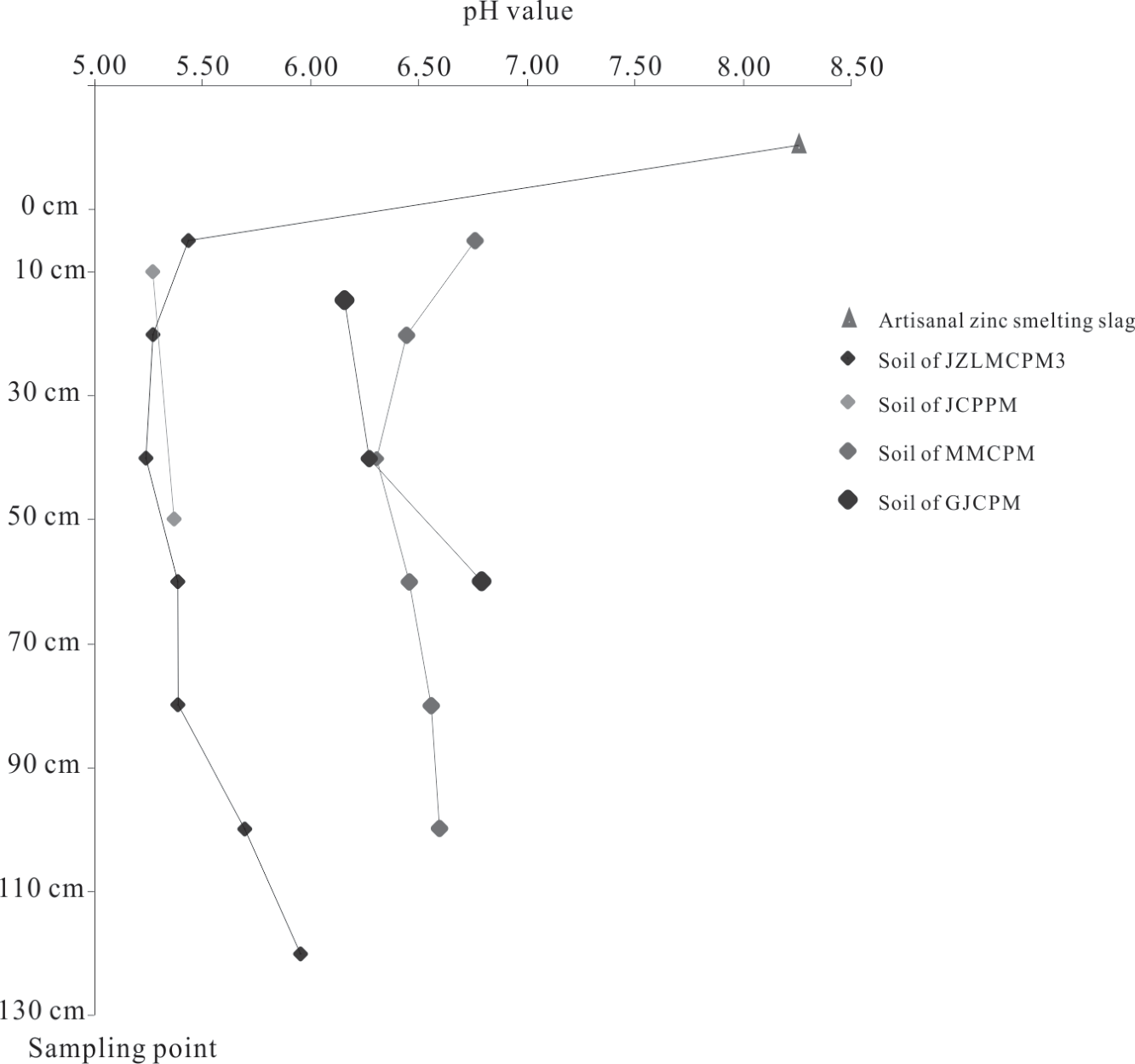
The soil of the carbonate rock weathering profile belongs to acidic soil and neutral soil, and its pH value increases gradually with the increase of soil depth in this research area. As shown in Fig. 2, the average soil pH value of the carbonate rock weathering profile in the study area is 5.95 (ranging from 5.23 to 6.78), which belongs to acidic neutral soil. In addition, the soil pH value of the carbonate rock weathering profile increases gradually with the increase of soil depth, which might be due to the leaching of acid rain in the south of China [18] and the secretion of organic acids by plant roots [19].
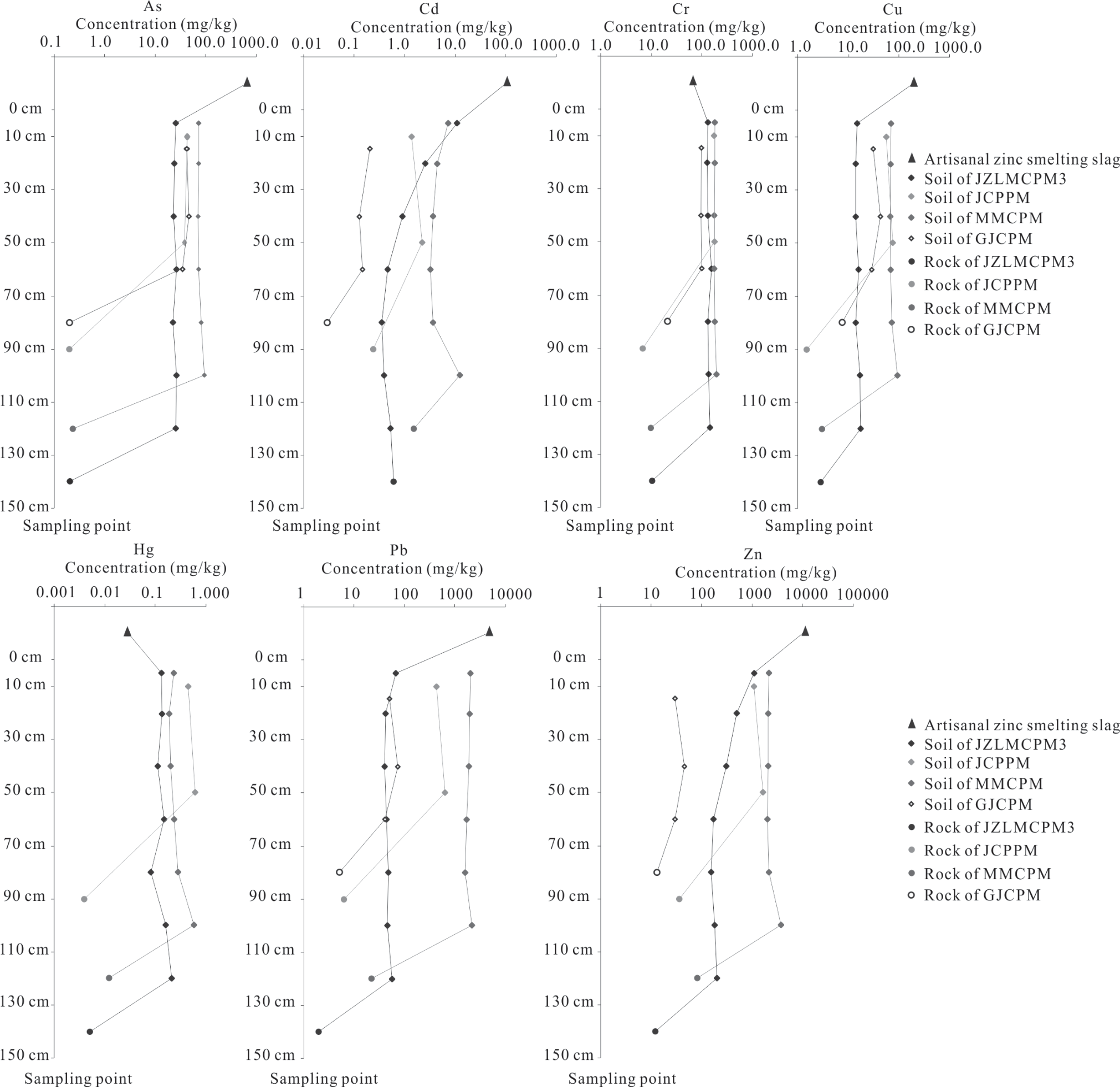
The contents of Cd, Cr, Cu, Pb, and Zn in the soil of the carbonate rock weathering profile near the lead-zinc ore mining site are significantly higher than those in the artisanal zinc smelting slag field and their control weathering profile. Soil As, Cr, and Cu contents in the carbonate rock weathering profile did not change significantly with the increase in soil depth (Fig. 3). Soil As, Cr, and Cu contents in the carbonate rock weathering profile near the lead-zinc ore mining area were prominently higher than those in the zinc smelting slag field and its control weathering profile. The As and Cu content order shows the artisanal zinc smelting slag > soil of carbonate rock weathering profile > carbonate rock, and the Cr content order shows carbonate rock weathering profile soil > carbonate rock and the slag. Furthermore, the soil As, Cr, and Cu concentrations in the carbonate weathering profile under the artisanal zinc smelting slag pile did not change obviously with the increase of soil depth. Their change trend is similar to the change trend of these elements in the soil of the carbonate rock weathering profile near the mining area and the control weathering profile. These findings indicate that soil As, Cr, and Cu in the carbonate rock weathering profile are not affected by the contamination from the artisanal zinc smelting slag. Additionally, the soil Cd, Pb, and Zn contents of the soil layer adjacent to the bedrock are slightly enriched in the carbonate rock weathering profile. Soil Cd, Pb, and Zn contents near the lead-zinc ore mining area were significantly higher, all above 1 mg/kg, 400 mg/kg, and 1000 mg/kg, respectively (Fig. 3). The Cd content order shows the trend of the artisanal zinc smelting slag > the soil and carbonate rock of the weathering profile. The Pb and Zn content order shows the soil of the slag > the weathering profile soil > carbonate rock. Additionally, soil Cd, Pb, and Zn contents gradually decreased and then increased with the increasing soil depth of the carbonate rock weathering profile in the artisanal zinc smelting slag field, which might be due to the downward migration of Cd, Pb, and Zn pollution in the artisanal zinc smelting slag.
Fig. 2.
Distribution characteristics of soil pH value in the carbonate rock weathering profile of the artisanal zinc smelting area.
The change trends of the soil As, Cr, Cu, and Hg content in the carbonate rock weathering profile are similar. The As, Cr, Cu, and Hg in the artisanal zinc smelting slag had no significant effect on these elements in the soil of the carbonate rock weathering profile at the bottom. Soil Cr, Cu, and Hg of the slag-covered weathering section are not or are little affected by the artisanal zinc smelting slag in the clastic rock area [1]. These indicate that Cr, Cu, and Hg in the artisanal zinc smelting slag have little or no impact on the surrounding environment. The soil Hg content in the weathering profile of the carbonate rock area is high, most of which ranges from 0.100 to 0.700 mg/kg, and there is significant enrichment in the adjacent bedrock layer (Fig. 3). The Hg concentration order shows that the trend of the soil is higher than that of the carbonate rock and the artisanal zinc smelting slag in the carbonate rock weathering profile. In addition, the change of soil Hg content in the carbonate rock weathering profile in the artisanal zinc smelting slag field is not apparent. It is significantly lower than the soil Hg content in carbonate rock weathering profiles near lead-zinc ore mining sites. These indicate that the effect of Hg in the artisanal zinc smelting slag on soil Hg of the carbonate rock weathering profile is not apparent.
Fig. 3.
Potentially toxic metal(loid) distribution of the carbonate rock weathering profile in the artisanal zinc smelting area.
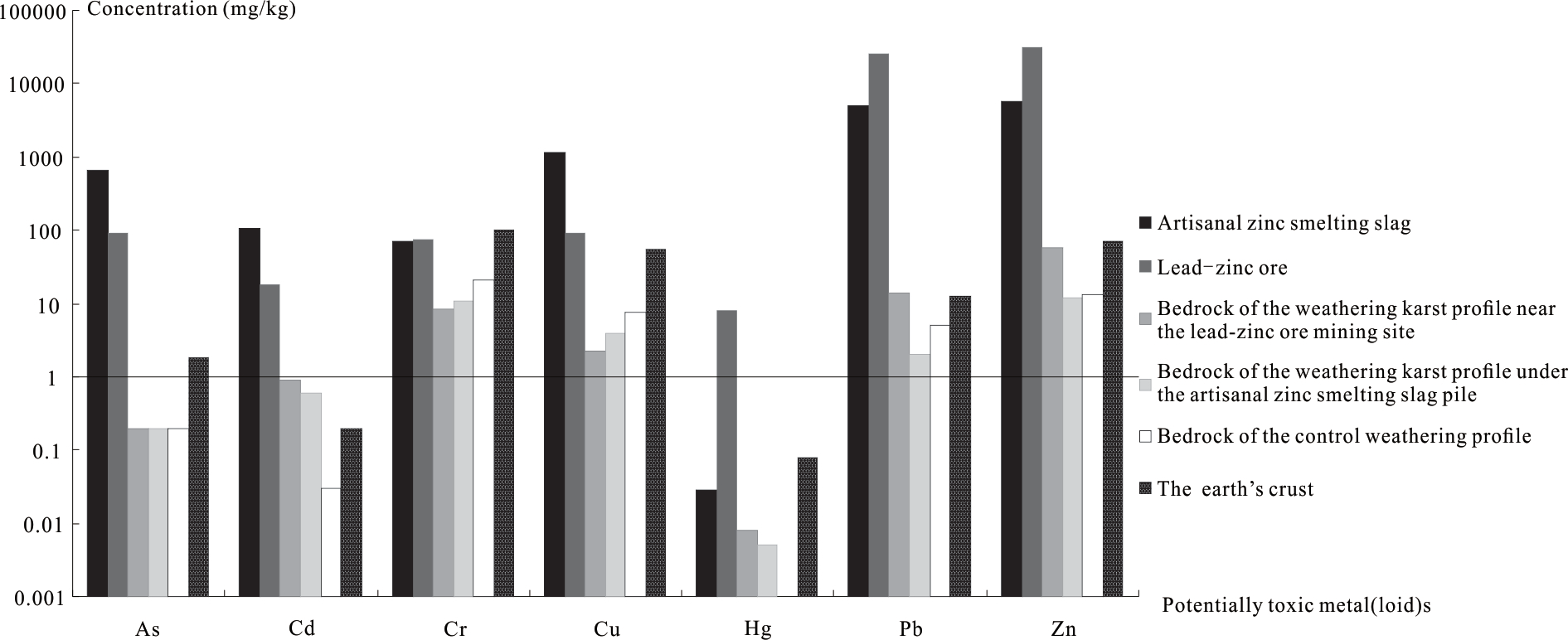
The contents of As, Cd, Cu, Pb, and Zn show the trend of the artisanal zinc smelting slag > the soil > the carbonate rock of the carbonate rock weathering profile as a whole. As presented in Fig. 4, the As, Cd, and Cu contents of the artisanal zinc smelting slag are significantly higher than those in the lead-zinc ore. Conversely, the contents of Hg, Pb, and Zn in the slag are hugely lower than those in the lead-zinc ore. These suggest that the artisanal zinc smelting process enriches As, Cd, and Cu while losing Hg, Pb, and Zn. The Hg loss may be due to evaporation caused by a low boiling point in the smelting process, and the Pb and Zn loss may be due to extraction from the smelting process. The Cd, Pb, and Zn contents of the carbonate rocks in the weathering section near the lead-zinc ore mining site are visibly higher than those under the artisanal zinc smelting slag pile and their control weathering profile. This indicates that the metallogenic belt near the lead-zinc ore mining site significantly affects the carbonate rock Cd, Pb, and Zn contents. In addition, except for the Cd content of carbonate rock near lead-zinc ore mining sites, the slag field weathering profile is higher than that of the crust [16]. The Pb and Zn content of the carbonate rock near the lead-zinc ore mining site is similar to that of the crust. Other potentially toxic metal(loid) contents in the carbonate rock are lower than in the crust [16]. These show that except for the Pb and Zn content of the carbonate rock near the lead-zinc metallogenic belt and the Cd content, other potentially toxic metal(loid) contents of the carbonate rock are generally low.
Potentially Toxic Metal(loid) Migration
In the process of chemical weathering, the absolute element content change could not accurately reflect the geochemical behavior of the element in the weathering and pedogenesis process [1]. This study introduces the transfer coefficient to assess the migration of potentially toxic metal(loid)s in the carbonate rock weathering profile. We chose the soil layer adjacent to the bedrock of each weathering profile as the reference parent material layer. When the TC ≈ 0, it indicates that the element’s distribution ratio to the reference element in the soil maintains the characteristics of the parent material, and there is no significant element migration during soil formation. If TC is significantly greater or less than 0, the element is enriched or leached in the soil, respectively [1].
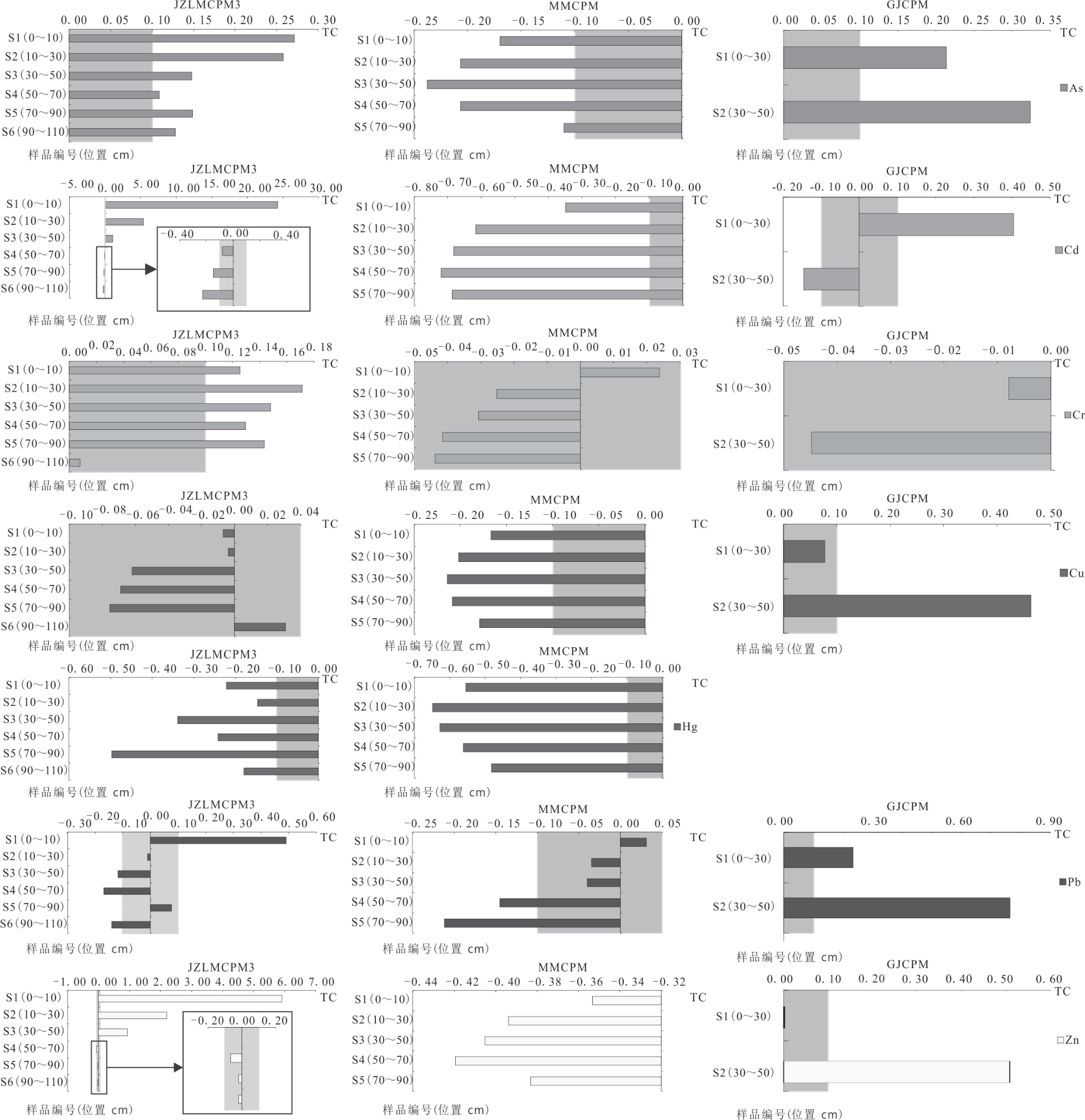
As described in Fig. 5, in the carbonate rock weathering profile under the artisanal zinc smelting slag pile, soil As and Hg are enriched and leached in the whole section, respectively. Soil Cd is enriched within the soil depth of 50 cm, and its enrichment degree gradually decreases with the increase of soil depth. Soil Cd did not significantly migrate in the 50-70 cm soil layer and was leaching from the soil layer below 70 cm. There was soil Cr enrichment, except for in the S6 soil layer. There was no significant migration of Cu within the soil depth of 30 cm (S1 and S2 soil layers), leaching within 30-90 cm (from S3 to S5 soil layers), enriching below 90 cm (S6 soil layer). Soil Pb is enriched in the S1 soil layer, does not significantly migrate to the S2 and S5 soil layers, and leaches into the S3, S4, and S6 soil layers. Zn was enriched within the soil depth of 50 cm (from S1 to S3 soil layers) and had no significant migration below the soil depth of 50 cm.
Fig. 4.
Potentially toxic metal(loid) contents of the carbonate rocks in the weathering profiles in the research area (The data of the earth’s crust is from the reference [16]).
In the carbonate rock weathering profile near the lead-zinc ore mining site, soil As, Cd, Cu, Hg, and Zn leaches in the whole section (Fig. 5). Soil Cr does not show significant migration. Soil Pb did not migrate obviously within the soil depth of 50 cm (from S1 to S3 soil layers) but is leaching the soil depth below 50 cm (S4 and S5 soil layers). In addition, in the control weathering profile, soil As, Pb, and Zn are leaching in the whole section (Fig. 5). Soil Cd is enriched within the soil depth of 30 cm and is leaching the soil depth of below 30 cm. Soil Cr has no significant migration. There is no apparent migration of Cu within the soil depth of 30 cm, but it enriches below 30 cm. Soil Zn was leaching in the range of 30 cm and enriching in the S2 soil layer (30 to 50 cm).
To sum up, most of the potentially toxic metal(loid) s (i.e., As, Cd, Pb, and Zn) in the carbonate rock weathering profile of the artisanal zinc smelting slag field are significantly enriched in soil. All the potentially toxic metal(loid)s in the carbonate rock weathering profile soil near the lead-zinc ore mining site are leaching except for Pb within the soil depth of 50 cm (from S1 to S3 soil layers). These results show that in the carbonate rock distribution area, most of the potentially toxic metal(loid)s (such as As, Cd, Pb, and Zn) in the artisanal zinc smelting slag migrate obviously in the soil profile below it. The influence degree and depth of potentially toxic metal(loid)s in the artisanal zinc smelting slag on the weathering profile of the carbonate rock distribution site are different, especially since the surface soil is the most seriously affected.
Pollution and Sources of Potentially Toxic Metal(loid)s
Potentially Toxic Metal(loid) Contamination
We introduced the PI to evaluate the soil contamination of the carbonate rock weathering profile in the artisanal zinc smelting area. The average soil pH value of the carbonate rock weathering profile in the research area is 5.95 (range from 5.23 to 6.78), which belongs to acidic neutral soil (Fig. 2). Therefore, we selected the risk screening values for soil contamination of agricultural land (As, 40 mg/kg; Cd, 0.3 mg/kg; Cr, 150 mg/kg; Cu, 50 mg/kg; Hg, 1.8 mg/kg; Pb, 90 mg/kg; Zn, 200 mg/kg) of the soil environmental quality in the range of soil pH from 5.5 to 6.5 [20] as the evaluation standard of the weathering profile contamination.
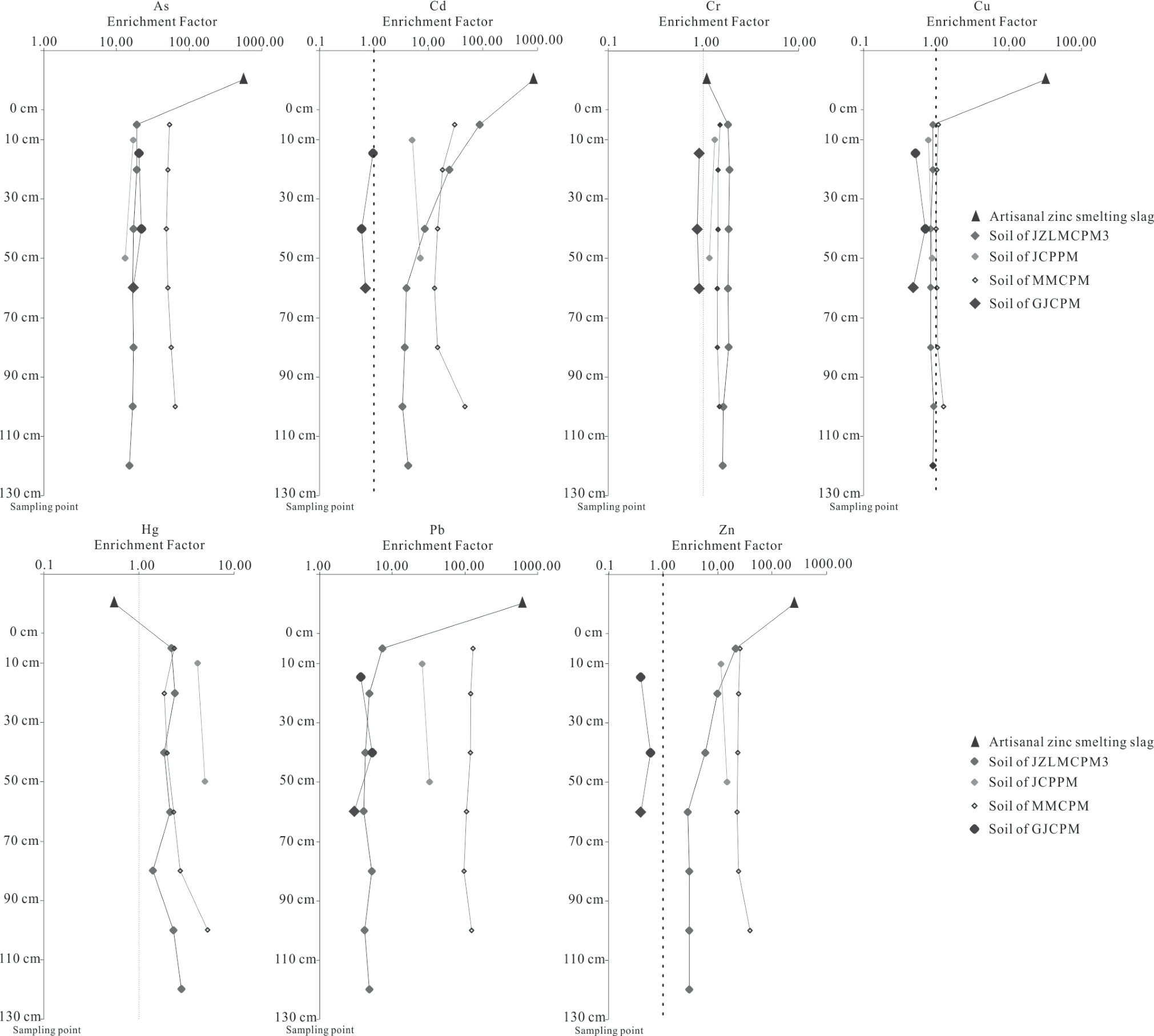
As shown in Fig. 6, the PI of As, Cu, Cr, Hg, and Pb in the carbonate rock weathering profile under the artisanal zinc smelting slag pile, as well as the PI of Cr and Zn in most soils, are less than 1. The PI of Cd within the surface 30 cm soil layer is greater than 5. And others are between 1 and 3. These results show that the Cd in the soil below 30 cm of the carbonate rock weathering profile in the artisanal zinc smelting slag field is seriously polluted, and the Cd below the 30 cm soil layer is at a slight pollution level.
Many kinds of potentially toxic metal(loid)s in the carbonate rock weathering profile near the lead-zinc ore mining site have reached different pollution levels. In the weathering profile (MMCPM) near the lead-zinc ore mining site, the PI of As, Cr, and Cu is mostly between 1 and 3, and the PI of Cd, Pb, and Zn is all greater than 5, while the Hg in the soil is less than 1 (Fig. 6). These show that the contents of As, Cr, and Cu in the MMCPM profile reach the light pollution level, the contents of Cd, Pb, and Zn are at the severe contamination level, and the content of Hg in most soils does not reach the pollution level. In the weathering profile (JCPPM) near the lead-zinc ore mining site, the PI of Cd is between 3 and 5 or greater than 5, the PI of Pb and Zn is greater than 5, the PI of Hg is less than 1, and the PI of other elements is basically between 1 and 3. These show that Cd in the JCPPM profile is at the moderate or severe pollution level, Pb and Zn are at the acute contamination level, and other elements are at the light pollution level. Moreover, in the control weathering profile (JCPPM), except that the PI of As in the soil within the soil depth of 50 cm is slightly greater than 1, others are less than 1 (Fig. 6). The results show that in the control weathering profile, except that the As in the soil within the soil depth of 50 cm reaches a slight pollution level, the others are not at the pollution level.
Combined with the PI of potentially toxic metal(loid) s in the artisanal zinc smelting slag and the control weathering profile (Fig. 6), it is significant that As, Cr, Cu, and Hg in the artisanal zinc smelting slag have no pollution effect on the carbonate rock weathering profile under the slag pile. However, Cd, Pb, and Zn caused different degrees or depths of contamination to the carbonate rock weathering profile under the slag pile. Soil Cd, Pb, and Zn, respectively, within soil depths of 50 cm, 10 cm, and 50 cm, are significantly affected by the pollution of the artisanal zinc smelting slag. The soil As and Pb are respectively within 30 and 50 cm depth, and all soil Cd and Zn in the artisanal zinc smelting slag-covered weathering profile are remarkably affected by the downward migration of these elements from the slag in the clastic region [1]. These indicated that Cd, Pb, and Zn of the slag are the main polluted elements in the surrounding area, and their contaminated levels and depths are different in the various rock-type weathering profiles. Overall, the PI of As, Cd, Pb, and Zn in the soil of the carbonate rock weathering profile near the lead-zinc ore mining site is higher than those of other weathering profiles and reaches different pollution levels. This might be due to the lead-zinc mineralization of the bedrock (i.e., carbonate rock), causing As, Cd, Pb, and Zn enrichment in the carbonate rock weathering profile near the lead-zinc ore mining site.
Potentially Toxic Metal(loid) Sources
The EF of As, Pb, and Zn in the carbonate rock weathering profile of the artisanal zinc smelting slag are all greater than 3; especially the EF of As is above 15, the EF of Cd in the soil within 50 cm is more than 3, especially in the surface soil layer, the EF of Cr and Hg in the weathering profile is between 1 and 3, and the EF of Cu in the weathering profile is less than 1 (Fig. 7). Primary pollutants (i.e., potentially toxic metal(loid)s) are generally directly emitted from the source and divided into natural and anthropogenic sources [21]. Therefore, As, Cd, Pb, and Zn have moderate enrichment or above (might be mainly affected by anthropogenic sources), Cr and Hg have minor enrichment (primarily sourced by both natural and anthropogenic sources), and Cu has non-enrichment (chiefly sourced from natural sources) in the soil of the carbonate rock weathering profile under the artisanal zinc smelting slag pile. Soil As, Cd, Pb, and Zn are mainly from slag contamination at different depths of the artisanal zinc smelting slag-covered weathering profile in the clastic rock area [1]. This might be due to the influence of these elements (especially Cd, Pb, and Zn) on the zinc smelting slag on the soil profile at the bottom.
Fig. 6.
Pollution index of potentially toxic metal(loid)s in the carbonate rock weathering profile of the artisanal zinc smelting area.
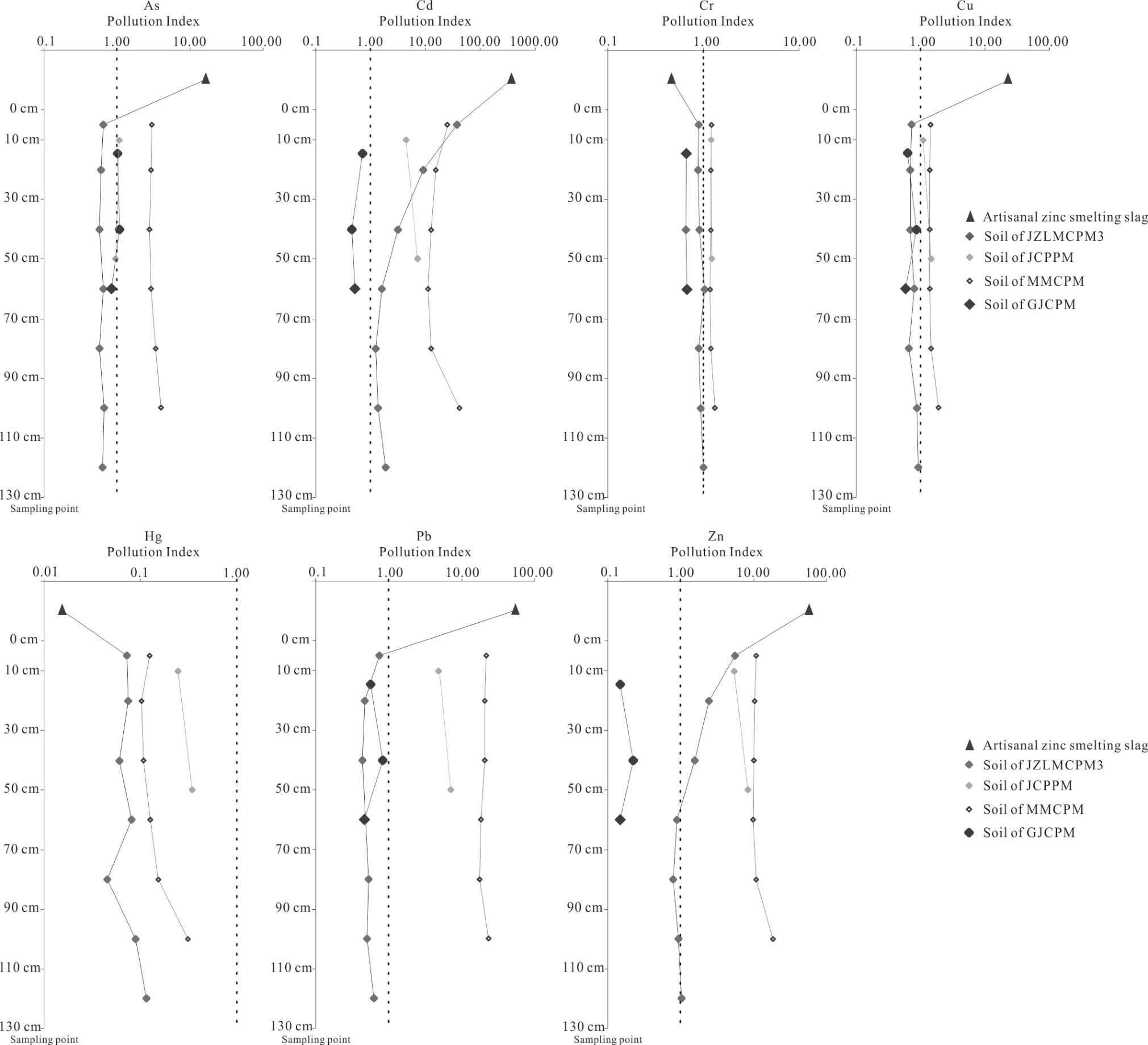
As shown in Fig. 7, in the carbonate rock weathering profile (MMCPM) near the lead-zinc ore mining site, the EF of Hg in the underlying soil layer, As, Cd, Pb, and Zn are all greater than 3, especially As and Pb, which are extreme severe enrichment, while the other EFs are between 1 and 3. In the carbonate rock weathering profile (JCPPM) near the lead-zinc ore mining site, the EF of As, Cd, Hg, Pb, and Zn are all greater than 3, especially Pb, which has reached a moderately severe enrichment degree. The EF of Cu in the profile is all less than 1, while the rest of the EF is between 1 and 3. The results show that As, Cd, Pb, and Zn in most soils of the carbonate rock weathering profiles near lead-zinc ore mining sites are from moderate-severe enrichment to extreme severe enrichment, which may be mainly affected by anthropogenic sources; Cu is not enriched, which might be primarily from natural sources; other potentially toxic metal(loid)s are of minor enrichment, which may be affected by both natural and anthropogenic sources. Additionally, in the control weathering section (GJCPM), except when the EF of As and Pb is greater than 3, the EF of other potentially toxic metal(loid)s is less than 1 (Fig. 7). The results showed that except for As and Pb, the others in the control weathering profile were at the non-enrichment level. The As, Pb, and Zn in most soils of the slag-absent soil core in the clastic region are minor enrichment [1]. Soil As, Pb, and Zn in the soil profile in the Yangai tea farm are, respectively, severe enrichment, moderate enrichment, and slight enrichment, and other soil potentially toxic metal(loid) s are non-enrichment [12]. This might be due to the enrichment of As, Pb, and Zn in most soils in Guizhou Province.
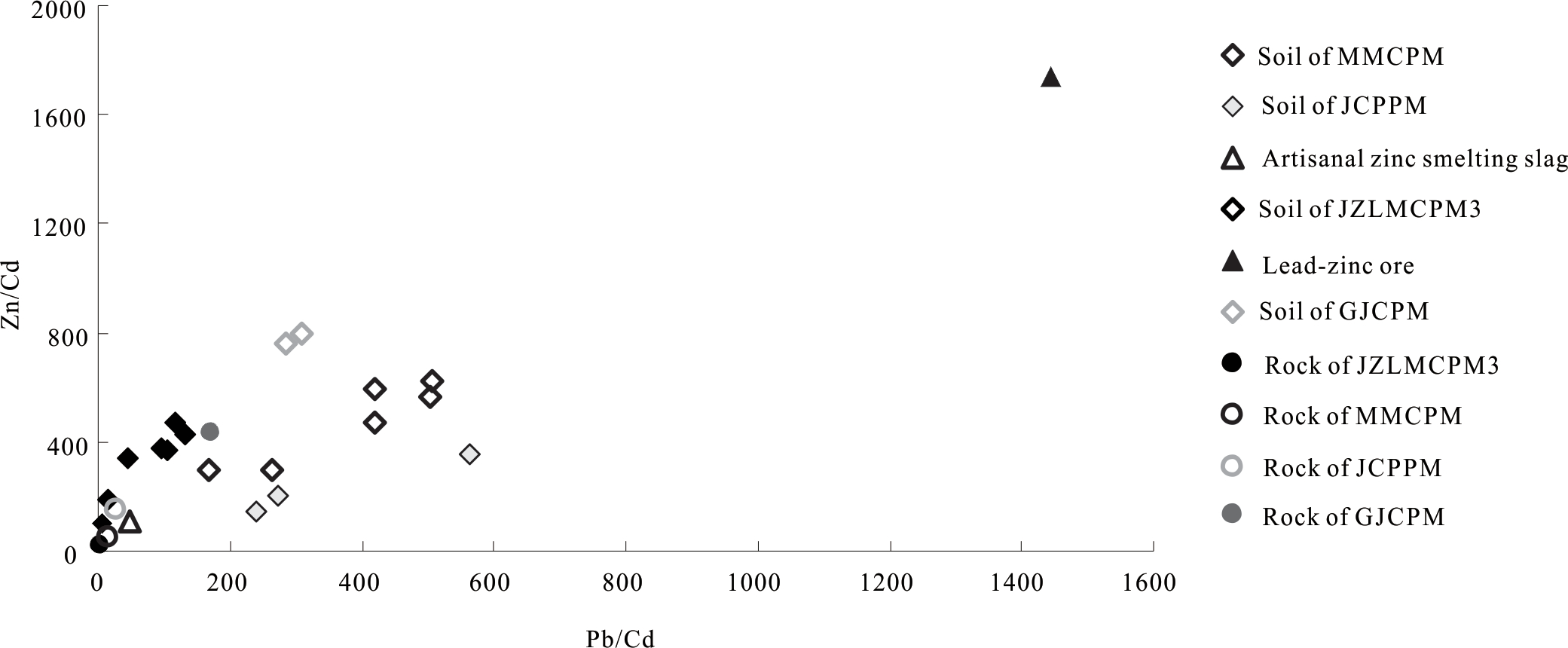
The ratio of Zn/Cd to Pb/Cd can effectively distinguish the sources of potentially toxic metal(loid) in the soil of the artisanal zinc smelting area [4, 22]. This is primarily because, in the high-temperature smelting process of artisanal zinc smelting, the lower boiling point of Cd is easy to evaporate and lose in gaseous form. The higher boiling point of Pb and Zn is easy to retain in the smelting waste slag [4]. As shown in Fig. 8, compared with the control weathering profile, the soil Zn/Cd and Pb/Cd ratios of the carbonate rock weathering profile near the lead-zinc ore mining site are closer to those of the lead-zinc ore. The Zn/Cd and Pb/ Cd ratios of the carbonate rock weathering profile of the artisanal zinc smelting slag field are closer to those of the slag. These show that the soil of the carbonate rock weathering profile near the lead-zinc ore mining site and the artisanal zinc smelting slag field is greatly affected by lead-zinc ore mineralization and the slag, respectively. In addition, it also indicates that the ratio of Zn/Cd to Pb/Cd is an effective tool in identifying the sources of potentially toxic metal(loid)s in the soil of the artisanal zinc smelting area.
In addition, the EF variation trend of As and Pb in the carbonate rock weathering profile under the artisanal zinc smelting slag pile is similar to that of Cu and Cr, which are not affected by human activities, and the EF of As and Pb in the control weathering section (GJCPM) (Fig. 7). These show that soil As and Pb in the carbonate rock weathering profile of the artisanal zinc smelting slag field is less or even unaffected by the slag. The contents of potentially toxic metal(loid)s and EF in the carbonate rock weathering profile near the lead-zinc mining site do not change obviously with the increase of soil depth. It is remarkably different from the decreasing trend of Cd and Zn with increasing soil depth in the carbonate rock weathering profile of the artisanal zinc smelting slag field (Fig. 3 and Fig. 7). Therefore, the potentially toxic metal(loid)s might be slightly affected by anthropogenic sources and mainly sourced from the natural background (bedrock lead-zinc mineralization) in the carbonate rock weathering profile near the lead-zinc ore mining site.
Factors Affecting the Distribution and Migration of Potentially Toxic Metal(loid)s
The contents of soil Cd, Pb, and Zn in the carbonate rock weathering profile of the artisanal zinc smelting slag field gradually decrease and then increase with the increase of soil depth. This may be due to the downward pollution and migration of these elements in the artisanal zinc smelting slag, the geochemical alkaline barrier, the enrichment of Iron (Fe) and Manganese (Mn), and the contribution of the bottom bedrock dissolution of the carbonate rock weathering profile. There is enriched Cd, Pb, and Zn in the surface or upper soil layers of the carbonate rock weathering profile of the artisanal zinc smelting slag, indicating that the soil in the carbonate rock weathering profile might be affected by the downward pollution migration of these elements in the artisanal zinc smelting slag. The Cd, Pb, and Zn in the slag caused varying degrees or depths of pollution to the carbonate rock weathering profile under the slag pile, and other soil elements did not contaminate (Fig. 6). Additionally, the soil pH of the bottom layer in the carbonate rock weathering profile is higher than that of the upper soil layers (Fig. 2), which might be the result of the downward migration of the upper soil fluid after leaching and the combination of alkaline cations in the lower layer, the gradual neutralization of acidity, and the gradual increase of soil pH value [23]. The solution pH values surrounding the Fe-Mn nodules range from 6.25 to 6.58 [24]. The cations of most trace elements and rare earth elements are easy to precipitate in an alkaline environment and are adsorbed and enriched by clay [23]. At the same time, the contents of Fe and Mn in the bottom soil layer of the carbonate rock weathering profile are generally higher than those in the upper soil layer, and there is significant enrichment. Fe-Mn nodules can combine and adsorb a large amount of arsenic, cadmium, lead, and other elements [25]. Mn in Fe-Mn nodules significantly influenced the geochemical behavior of Cd, Co, Cu, and Ni; the presence of Fe significantly influenced the geochemical behavior of As, Cr, and V [26-28]. This might be due to the Fe-Mn nodules having large specific surface areas and porous characteristics [29]. So, the enrichment of some potentially toxic metal(loid)s in the bottom soil layer in the carbonate rock weathering profile might be due to the formation of colloids of Fe-Mn in an alkaline environment, which precipitate at the bottom and adsorb on the surface of clay minerals, thus increasing the adsorption surface of clay minerals and making more cations precipitate and adsorb in this soil layer. In addition, the dissolution of Cd in the soluble mineral components of carbonate rocks at the bottom might also be one of the reasons for the relatively high Cd content of the soil layer at the bottom of the weathering profile. The mass percentage of Cd in the soluble mineral component of carbonate rock ranged from 28.37% to 98.94% [30]. Parent rocks (i.e., carbonate rocks) weathering continually provides geogenic cadmium to the soil, which maintains them with a high Cd concentration [31].
Causes of Abnormal Potentially Toxic Metal(loid) Contents
Many kinds of potentially toxic metal(loid) in the carbonate rock weathering profile near the lead-zinc mining site have reached different contamination levels. The PI of As, Cd, Pb, and Zn in the soil of the carbonate rock weathering profile near the lead-zinc ore mining site is higher than those in other weathering profiles (Fig. 6). In addition, the contents of As, Cd, Cr, Pb, and Zn in the carbonate rock weathering profile near the lead-zinc mining site are significantly higher than those in the carbonate rock and clastic rock [1] weathering profiles. 65.5-99% of Cu, Zn, As, Hg, Cd, and Pb in the soil were derived from parent material background and weathering in the soil of karst areas in southwestern China [32]. The trace elements in the soil are derived from the nature of the weathering of the parent material, and the parent material is mainly from weathered bedrock [13]. Terrestrial enhanced rock weathering can lead to the potential accumulation of potentially toxic metal(loid)s in soil (such as at the suggested annual application rate of 40 000 kg of ground basaltic rock per hectare, the first regulatory limits would be exceeded after 6 and 10 years for copper and nickel, respectively) [33]. Therefore, there is a significant difference in potentially toxic metal(loid) contents between the weathering profile of the clastic rock and the carbonate rock. This might be due to the varying mineral composition and element content in different bedrock types, which are influenced by the diverse composition of parent material formed by weathering. Ultimately, this leads to significant variance in the potentially toxic metal(loid)s present in the final soil.
In addition, the contents of some potentially toxic metal(loid)s (such as Cd, Pb, and Zn) in the carbonate rock weathering profile soil near the lead-zinc ore mining site are significantly higher than those in the control weathering profile, which might be affected by the lead-zinc mineralization of bedrock (carbonate rock). As shown in Fig. 4, the contents of Cd (1.54 and 0.24 mg/kg), Pb (21.6 and 6.2 mg/kg), and Zn (82 and 36 mg/kg) in the carbonate rock of the weathering section (MMCPM and JCPPM) near the lead-zinc ore mining site are significantly higher than those of Cd (0.03 mg/kg), Pb (5.1 mg/kg), and Zn (13 mg/kg) in the bedrock of the control weathering section (GJCPM). Although elements in the soil are primarily derived from naturally weathered bedrock [13], element anomalies are usually affected by extraordinary physical geographical backgrounds [34] and anthropogenic activities [13, 34]. Geological background anomalies (geological body anomalies before soil formation, mineralization anomalies, or sedimentary anomalies) are one of the crucial reasons for element content anomalies in soil [34]. As shown in Fig. 8, compared with the control weathering profile, the soil Zn/Cd and Pb/Cd ratios of the carbonate rock weathering profile near the lead-zinc ore mining site are closer to that ratio of the lead-zinc ore. It shows that the pollution of potentially toxic metal(loid)s in soil caused by abnormal geological backgrounds (i.e., mineralization of geological bodies, etc.) is more serious than that caused by human factors. The Cd contribution from natural sources should be considered in the ecological risk assessment of carbonate rock weathering soils and the study of the global geochemical cycle of Cd [30]. Therefore, the lead-zinc mineralization of the bedrock during weathering near the lead-zinc ore mining site might cause severe soil pollution with As, Cd, Pb, and Zn. When investigating the soil pollution level near the metal ore mining site, we should consider the contribution of different bedrock types of weathering and the influence of human activities, as well as whether there is the influence of geological body mineralization (especially in the mining sites of metal mineral resources).
Conclusions
Soil Cd, Pb, and Zn contents of the carbonate rock weathering profile under the artisanal zinc smelting slag field gradually decrease and then increase with the increase of soil depth. This might be due to the downward pollution and migration of these elements in the slag and the geochemical alkaline barrier, the enrichment of Fe-Mn, and the contribution of the bottom bedrock dissolution of the carbonate rock weathering profile. The Cd, Pb, and Zn in the slag caused varying degrees or depths of pollution to the carbonate rock weathering profile under the slag pile, and other soil elements were not contaminated. The Cd, Pb, and Zn of the slag are the main polluted elements in the surrounding area, and their contaminated levels and depths are different in the various rock-type weathering profiles. Soil Cd, Pb, and Zn, respectively, within the soil depths of 50 cm, 10 cm, and 50 cm of the carbonate rock weathering profile, are visibly affected by the artisanal zinc smelting slag.
Soil Cd, Cr, Cu, Pb, and Zn contents of the carbonate rock weathering profile near the lead-zinc ore mining site are significantly higher than those of the carbonate rock weathering profile of the artisanal zinc smelting slag field and their control weathering profile. The severe pollution of As, Cd, Pb, and Zn in the soil of the carbonate rock weathering profile near the lead-zinc ore mining site might be due to the lead-zinc mineralization of the bedrock during weathering. Therefore, in the future, evaluating the potentially toxic metal(loid)s in both the surface soil and the weathering profile soil would make the investigation results more accurate when investigating the soil pollution level near the metal ore mining area.
This paper still has the following shortcomings: It only studies the weathering profile in the karst area with artisanal zinc smelting. Further studies on the distribution and contamination of potentially toxic metal(loid) on different geological backgrounds in the metal ore mining area or using some new technology to trace the sources and pollution in the future are needed.

