

Introduction
Reducing environmental pollution and improving the ecological environment are the common goals of achieving a sustainable development world [1]. After China’s reform and opening up, its economy and industry have developed rapidly, but problems such as ecological pollution and resource waste have also become more serious [2, 3]. Currently facing tighter resource constraints and increasingly degraded ecosystems, finding relevant solutions and tools to balance economic growth and environmental pollution emissions is critical for China to achieve sustainable development [4]. Inclusive finance aims to promote financial services that affordably benefit every subject in society, thereby implementing the equality of financial services and business sustainability. With the rapid advancement of big data and financial technology, this progression has significantly propelled the revolution of traditional inclusive finance, thus leading to the emergence of Digital Inclusive Finance (DIF) [5, 6]. The implementation of DIF has the potential to not only enhance the sustainable activity of the capital market by effectively utilizing unused social capital [7], but it can also be utilized in the realm of green finance to improve the efficiency of environmental initiatives. It supports enterprises in adopting environmentally friendly and low-emission technical solutions, reduces the environmental risks of enterprises, and makes broader contributions to sustainable economic development and ecological environment protection [8]. The 2022 China Fintech and Digital Inclusive Finance Development” report outline that in 2020-2021, under the guidance of new technologies, financial institutions have expanded the application of DIF in the field of green finance and have strengthened the research and development of green inclusive financial products. Additionally, they also support the sustainable development of low-carbon enterprises by issuing green inclusive financial loans oriented towards carbon emission reduction. The “14th Five-Year Plan” explicitly proposes to accelerate the digital transformation of financial institutions, empowering the real economy with financial services and driving changes in production, lifestyle, and governance [9]. The strategic importance of digital inclusive finance is steadily increasing.
Based on ecological effects, digitalization, as a crucial component of the modern economy, has garnered significant attention from current scholars for its potential to promote sustainable development. The research of Hu J. [10] indicates that establishing big data innovation zones can effectively reduce environmental pollution and improve the efficiency of carbon emission reduction technologies. Infrastructure development plays a multidimensional supportive role in this process and exhibits positive spatial spillover effects, enhancing regional cooperation [11]. Tan L. et al. [12] further investigated the impact of digital economy development on sustainable carbon reduction. By incorporating empirical analysis of industrial structure upgrading into their research framework, they further validated the mechanism through which digital economy development influences sustainable carbon reduction. Research on the impact of DIF on the ecological environment primarily centers on consumption efficiency and carbon emissions; existing research generally believes that DIF is not only an important factor in mitigating regional carbon emissions but also improves green total factor productivity (GTFP) [13, 14]. However, the interaction mechanism between DIF and regional ecology is still not very clear, and most studies have ignored the relationship between DIF and pollution emissions [15]. From the perspective of economic sustainability, DIF as an evolving concept has yet to fully reveal its interactive impact mechanism with ecological pollution and economic development. Therefore, finding the relationship and balance between digital inclusive finance, ecological pollution, and economic growth is of reference value for regional entities to achieve environmentally friendly development. Additionally, as China leads in the development of DIF, accelerates network infrastructure construction, and proposes a low-energy consumption development strategy [16], its practical effects can effectively serve as a reference for developing countries worldwide, facilitating sustainable development. This paper integrates DIF, economic growth, and ecological pollution into a framework and constructs a model of their interactive effects through spatial econometrics. This approach can help policymakers prioritize the application of digital inclusive finance, thereby exploring sustainable solutions for restoring ecosystems and promoting economic development.
The contribution of the article can be categorized into the following aspects: Firstly, the article is committed to determining the role of the development of DIF in contributing to economic growth and pollution reduction. By evaluating the relationship between DIF, the economy, and the ecological environment, we aim to bridge research gaps and offer new solutions for promoting sustainable development. Secondly, the article delves into the interconnectedness of DIF, ecological pollution, and economic growth, exploring the influencing factors and emphasizing their interrelationships. Third, the article presents an innovative approach by incorporating spatial effects into the simultaneous equations of DIF, ecological pollution, and economic development in the panel. This allows for a more comprehensive exploration of the interactive relationships among the variables. Fourth, we use balanced panel data from 285 cities at the prefecture level in China from 2011 to 2021, avoiding provincial data with significant spatial variability. This approach provides a stronger basis for empirical conclusions.
The rest of this article is structured as follows: Section 2 introduces the relevant literature. Section 3 elaborates on the theoretical framework of the relationship between DIF, environmental pollution, and economic development and proposes relevant research hypotheses. Section 4 describes the data and model design of this article. Section 5 conducts empirical analysis, studies the relationship between the three, and performs robustness testing. Section 6 presents a comprehensive overview of the research findings detailed in this article, along with pertinent policy recommendations.
Literature Review
Research on the Relationship Between Digital Inclusive Finance and Economic Development
Although the development process of DIF is still relatively short, relevant research generally believes that DIF plays an indispensable role in promoting economic development and social progress [17-19].
Based on the micro-individuals’ perspective, the positive role of DIF in promoting household consumption and achieving equity in income distribution has received widespread attention and recognition from existing scholars [20-22]. Further studies on family entrepreneurial decision-making suggest that DIF can optimize it through two mechanisms: promoting innovative behaviors and easing financing constraints [23]. DIF also has the potential to address the inherent limitations of traditional finance, including constraints related to time, space, high transaction costs, and a lack of transparency. By mitigating the digital divide, DIF can facilitate greater accessibility to financial services for marginalized demographics and small-scale enterprises, thus contributing to the advancement of employment rates and the enhancement of residents’ income levels [19]. Furthermore, the relevant financial platform can streamline and invigorate residents’ consumption patterns by digitalizing consumption scenarios, fostering convenience and vitality [24]. The research conducted by Li M. et al. [25] at the corporate level explores the impact of digital finance on stock optimization and incremental innovation in enterprises. The research indicates that digital finance is effective in addressing development quality issues such as enterprise scope, attributes, and industry incompatibilities. Additionally, digital finance can alleviate financing constraints at the firm level, especially by having a specific mitigating effect on the financial mismatch between enterprises [26] and thereby promoting corporate innovation output [27].
At the macro-financial level, Ozili [6] believes that the fragility and limitations of traditional finance can be solved by DIF, and the popularity of DIF has a positive impact on the stable development and popularization of macro-finance. Yang [22] also illustrated that the richness of digital inclusive financial products can help achieve a highly complete financial market and high-quality economic development. Problems such as information mismatch and financing constraints in the capital market can also be solved by DIF [28, 29]; however, some scholars have different views. Han, Hu, & Zhang [30] argue that provinces with a higher digital financial inclusion index may absorb entrepreneurial capital from other provinces. DIF may have both positive and negative effects on economic growth.
Economic development also plays a favorable role in developing DIF. Rapid economic development can lead to substantial progress in regional digital infrastructure, technological innovation, and resource allocation [31], providing the conditions and support for the regional development of DIF. Moreover, heightened levels of economic development contribute to the maturation and prominence of the financial market system, bringing opportunities for the advancement of digital inclusive finance [32]. Furthermore, the digital dividends brought by DIF can reversely empower economic growth, mitigate corporate financial leverage [33], and achieve high-quality development for regional enterprises.
Research on the Relationship Between Digital Inclusive Finance and Environmental Pollution
The impact of inclusive finance on the ecological environment has been predominantly examined through the lens of energy consumption. This examination reveals that inclusive finance can play a dual role in promoting the consumption of renewable energy, bridging the gap between economic classes [34], and increasing the proportion of green energy utilization [35]. Furthermore, it has the potential to enhance energy efficiency, consequently leading to a reduction in environmental pollution [36, 37].
Moreover, the attributes of digitalization in improving environmental information disclosure and reducing environmental uncertainty have been the subject of study by Han Y. et al [38]. Their research explores the positive impact of digital transformation on green innovation within specific bounds and provides statistical evidence for its nonlinear effects. Additionally, strategies promoting the construction of digital network infrastructure have the potential to positively influence industrial structure upgrading, guide high-tech investments, and consequently reduce greenhouse gas emissions while improving energy efficiency [39]. These related studies enrich our understanding of the relationship between digitalization and sustainable development. With the further integration of digitalization and inclusive finance, the existing literature has conducted a more comprehensive study into the impact of DIF on the environment. On the one hand, as emerging financial markets serve development, DIF can stimulate green investment by improving the internal capital flow of enterprises and the health of internal control systems and further improving the green technology innovation capabilities of enterprises [40], thus having a meaningful impact on the ecological environment [41]. On the other hand, developing digital financial platforms can help reduce information asymmetry in the market, guide companies to focus on their sustainable development indicators, help firms achieve green production [42], and reduce pollution. In addition, there are also studies from multiple perspectives, such as smart city construction and communication technology development [43-45] and industrial structure upgrades [46]. These studies have analyzed the emission reduction effects of DIF and confirmed the positive effect of DIF on environmental protection.
Ecological pollution will also have a counterproductive effect on the development of DIF. Existing literature believes that environmental pollution will increase corporate debt financing costs by increasing credit risks and financial uncertainty [47], further causing the stock price to decrease and hurting the stability of the financial market [48]. Economic instability and a lack of resources will finally affect the development of DIF and limit the investment of market participants. In addition, some scholars believe that institutional quality positively and significantly impacts pollution emissions [49]. Hence, government agencies and financial institutions are poised to adopt a more vigilant and rigorous approach to evaluating and mitigating environmental pollution risks. This heightened scrutiny is anticipated to amplify the reputational and legal liabilities faced by businesses, consequently imposing further constraints on the advancement of digital inclusive financial products and services.
Research on the Relationship Between Economic Development and Environmental Pollution
The earliest theoretical research on ecological pollution and economic development can be traced to the Environmental Kuznets Hypothesis. Grossman & Krueger [50] used urban air pollution, the state of the oxygen regime in river basins, and other environmental indicators as research objects and found that when national income is relatively low, pollutant gases increase with rising per capita income. Only when national income reaches a certain level will the environmental degradation rate decrease with rising per capita income. This theory laid the foundation for subsequent research on the relationship between environmental pollution and economic growth. Panayotou [51] further studied and confirmed the inverted U-shaped relationship between deforestation and pollutants, which he called the Environmental Kuznets Curve (EKC). After that, many scholars used different methods to confirm EKC [52-57].
However, due to differences in samples, indicators, and amplitudes used in different studies, the turning points of U-shaped EKC obtained are quite different; some scholars also believe that EKC has different forms. Rashdan’s (2021) research shows that there is an N-shaped relationship between capture fishery production (CFP) and economic growth [58]. Huang et al. [59] believe an inverted N-shaped relationship exists between economic growth and ecological land area, etc. This study also attempts to obtain more conclusive evidence by studying economic development and environmental pollution indicators in China’s prefecture-level cities.
Research on the Relationship Among Digital Inclusive Finance, Economic Development, and Environmental Pollution
Existing literature widely concurs that financial development is an essential determinant of environmental performance. A more developed financial market is associated with a higher likelihood of allocating increased resources to environmental initiatives at reduced financing expenses [60, 61].
In recent years, some scholars have incorporated DIF, environmental pollution, and economic development with a unified research framework. Ozturk & Ullah [62] conducted a study on the Belt and Road Initiatives (BRI) region, revealing that while DIF stimulated economic growth, it concurrently led to a decline in environmental quality due to a surge in carbon dioxide emissions. Similarly, Jahanger & Usman [63] also delved into the BRI region and proposed that the advancement of Information and Communication Technology (ICT) not only facilitated economic growth but also contributed to an increase in carbon dioxide emissions. Their studies primarily encompassed developing countries along the BRI, thus aligning with the Environmental Kuznets Curve (EKC) theory.
According to Guo et al. [15], the implementation of DIF is deemed capable of eliminating outdated production capacity and diminishing pollution emissions, thereby expediting the city’s transition toward environmentally sustainable industrial practices. Additionally, Xi & Zhai [64] assert that the enhancement of industrial structures can mitigate the adverse effects of economic growth on environmental pollution. In summary, the continued advancement of DIF is anticipated to yield positive economic and ecological outcomes.
Literature Review Summary
The above articles provide valuable references for our study of DIF, environmental pollution, and economic development. The relationship between economic growth and environmental pollution is generally in line with the Environmental Kuznets Hypothesis. The correlation between DIF and economic growth is mutually reinforcing, with the ongoing development of DIF contributing to the enhancement of the ecological environment. However, a limited number of studies encompass DIF, environmental pollution, and economic development within the same comprehensive framework. The challenge of effectively balancing the interdependent relationship between these three elements to attain sustainable national-level development remains relatively unexplored within the Chinese context. Prior research has predominantly emphasized the economic impact of DIF, neglecting its direct correlation with ecological pollution emissions. Consequently, this study integrates DIF, economic growth, and environmental pollution within a unified research framework, drawing upon existing literature. By validating the endogeneity relationship between these factors, we establish spatial simultaneous equations to investigate the spatial effects and mutual interactions among them.
Theoretical Framework and Research Hypotheses
Digital Inclusive Finance and Economic Growth
From a micro-level perspective, DIF can narrow the digital gap between urban and rural areas, improve the convenience of daily transactions, reduce transaction costs, and further promote consumption. Moreover, within the traditional financial framework, the high threshold for accessing financial services may exacerbate the Matthew Effect [65] and lead to financial hardships for disadvantaged populations. DIF has the capacity to lower the financing threshold for low-income individuals and micro-enterprises, foster entrepreneurial endeavors at a small-scale level, such as family-run businesses, and infuse vitality into regional economic development.
Based on the perspective of human resources, the endogenous economic growth theory believes that economic growth is caused by internal factors. Capital accumulation, human capital investment, and innovation are essential factors guiding economic growth. As the traditional economy transforms into the digital economy, human capital gradually replaces physical capital and becomes the main driving force for economic growth [66]. For human capital, both education and the health of the labor force are critical factors that influence human capital quality. Regarding education, on the one hand, DIF can expand the scope of the benefits of education loans and provide families with financial services such as education savings. On the other hand, the expansion of DIF will lead to the construction of digital infrastructure. As a result, online courses and skills training will become more accessible, enriching relevant educational resources and providing convenience. This, in turn, will promote the overall quality of human resources and further promote technological innovation and economic development.
Regarding health status, the inclusiveness of DIF is favorable for the popularity of medical insurance; this attribute has the potential to stabilize the economic security of residents and improve the flexibility of medical services. With the development of medical innovation and the Internet of Things (IoT), digital consultation and other methods can significantly improve the accessibility and utilization of medical resources. Consequently, the health status of human capital can be greatly improved through this mechanism.
Additionally, stabilizing financial markets is also of significant importance for promoting real economic development [67]. Digital financial tools, such as artificial intelligence and big data analysis, can help stakeholders better monitor market risks. Transaction efficiency among market participants has also been improved through automated systems. Accordingly, DIF can reduce information asymmetry in the financial market, mitigate the risks of market participants, and contribute to the growth of the real economy by stabilizing the financial market.
With continuous economic development, investment in Research and Development (R&D) has been steadily increasing. Advancements in digital infrastructure can lead to the expansion of regional industrial scale and the transformation of industrial structure. This progression subsequently broadens the reach of digital finance and offers crucial technical support for the maturation of DIF. In summary, hypothesis 1 is proposed. (see Fig. 1, H1)
Hypothesis 1: Digital inclusive finance and economic development promote each other.
Digital Inclusive Finance and Ecological Pollution
The impact of DIF on ecological pollution is reflected in the following aspects: On the one hand, many enterprises in developing countries still face significant financing constraints, which greatly reduce their motivation for green innovation and hinder the transformation of traditional heavy industries. DIF provides more financing channels that can stimulate the green innovation capabilities of enterprises and promote their green investment. The alleviation of information asymmetry enables traditional enterprises to place greater emphasis on their environmental reputation, prompting them to seek improvements in sustainability metrics to gain investor trust. Consequently, this encourages enterprises to expedite their green transformation efforts and enhance the ecological environment. On the other hand, DIF, as a product of financial technology, can effectively promote the shared prosperity of the region [65], thereby supporting residents’ consumption of renewable energy.
Fig. 1.
The Mechanism of digital inclusive finance, economic development and environmental pollution.
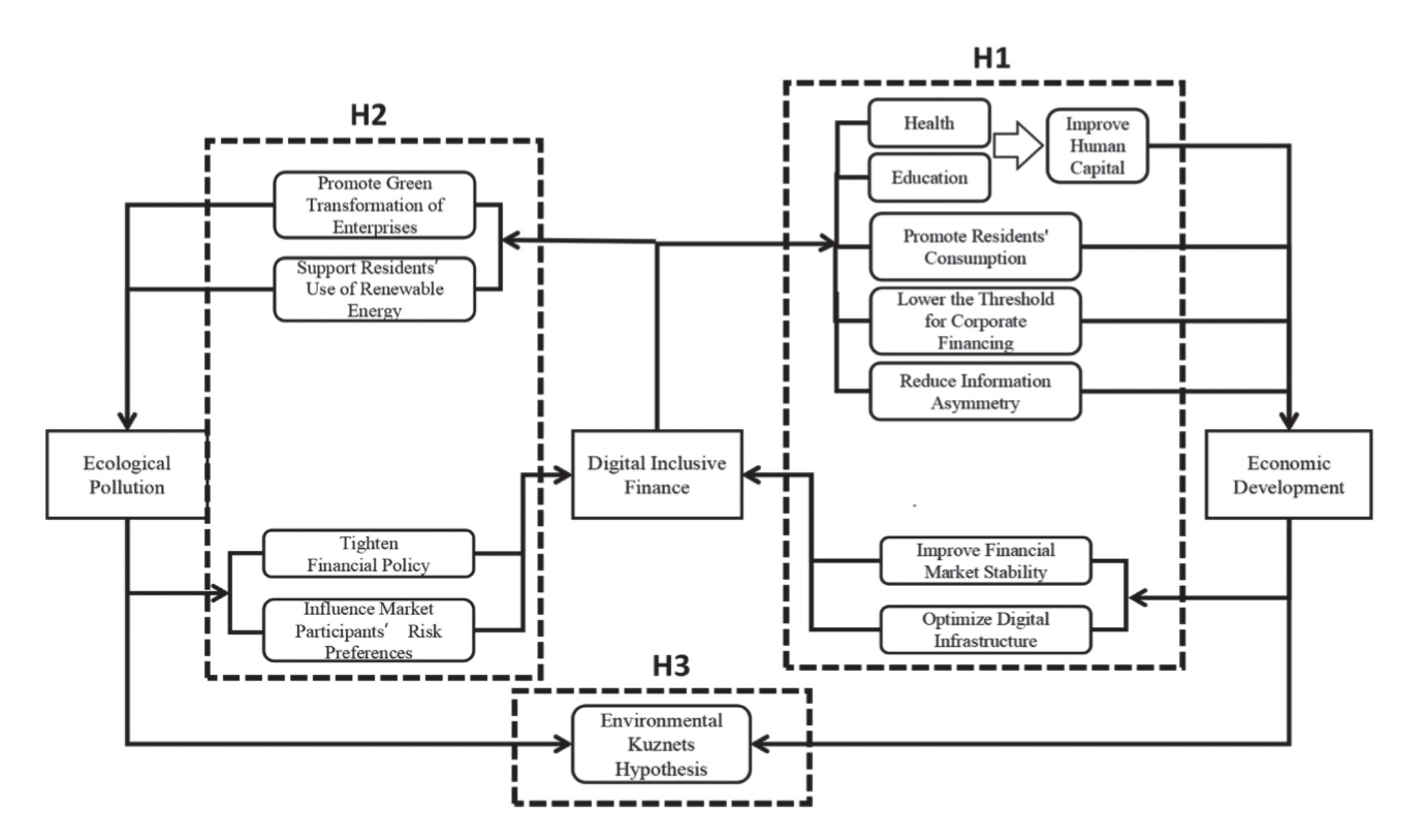
The increase in ecological and environmental pollution will destroy the stability of the financial market. The expansion of financing costs and the intensification of credit risks will cause market participants to tend toward conservative investment models, thus restricting the progression of DIF. The increase in transaction risks often leads financial institutions and monetary authorities to curtail policies, further inhibiting the innovation trend of DIF-related products and services. Therefore, we propose hypothesis 2. (See Fig. 1, H2).
Hypothesis 2: DIF can improve the ecological environment, but ecological pollution will hurt the development of DIF.
Economic Growth and Ecological Pollution
Consistent with the content of the Environmental Kuznets Hypothesis, ecological pollution first worsens and then improves as the economy continues to grow. When the regional economic level is lower than a certain turning point, DIF will make highly polluting enterprises face more serious financing constraints due to transparent market information. This forces high-energy-consuming industrial enterprises to slow down production and inhibit regional economic development. With the ongoing guidance of DIF, companies will increase investment in green innovation R&D, leading to breakthrough technologies with low resource consumption and efficient output. This will result in a green transformation while driving economic growth and reducing the rate of environmental degradation. Hypothesis 3 is proposed. (See Fig. 1, H3)
Hypothesis 3. Under the influence of DIF, the relationship between economic growth and environmental pollution follows the Environmental Kuznets Hypothesis.
Research Design
Variable Selection and Data Processing
Considering the availability and continuity of data, this study uses panel data from 285 prefecture-level cities in China from 2011 to 2021. The digital financial inclusion data used in the article comes from the Peking University Digital Financial Inclusion Index of China (PKU-DFIIC) (2011-2021). Data on provinces and cities come from the China Statistical Yearbook and the Urban Statistical Yearbook of China. Interpolation is used to fill in missing data from statistical sources.
Dependent Variables
This article uses the DIF index compiled by a joint research team composed of the Peking University Digital Finance Research Center and the Ant Technology Group Research Institute to measure the development degree of DIF [68]. The index compiles an aggregate index using three levels: breadth of coverage, depth of use, and digitalization, as well as multiple specific indicators such as payment, credit, and insurance, etc. We selected the digital inclusive financial aggregate index (Index_ aggregate) as an indicator to measure the advancement level of DIF. The GDP of each city can well reflect the overall economic development level of an urban area and the quality of infrastructure construction and development, so we use the natural logarithm of GDP as the proxy variable (Econ) to reflect the degree of economic development. Regarding environmental pollution, sulfur dioxide harms the environment by causing acidification and forming sulfate aerosols that lead to fine particle pollution. Much literature now regards sulfur dioxide as an essential factor leading to environmental degradation and studies its relationship with the social economy [69]. Therefore, this article uses the natural logarithm of tons of industrial sulfur dioxide emissions per city to measure the degree of environmental pollution (Pollut).
Independent Variables
Regarding environmental pollution, the tertiary industry is less dependent on energy and raw materials than the primary and secondary industries. Moreover, the tertiary industry generally produces less waste than the manufacturing industry, and the energy efficiency of the value created is higher than that of non-tertiary industries [70]. Therefore, the increase in the proportion of the tertiary industry has an inhibitory effect on environmental pollution.
Foreign direct investment also matters when analyzing the environment. However, scholars hold different views. According to the “pollution heaven theory”, foreign direct investment will promote the use of unclean energy and thus destroy the ecological quality of the local area [71, 72]. Conversely, according to the “environmental halo hypothesis”, foreign direct investment can promote the purification effect of the regional economy on the environment, expand the scale of green production and renewable energy use [73], and thus positively impact the environment.
In the equation of DIF, we use Insurance and Payment as exogenous variables that affect the development of DIF. The two variables represent the actual use of digital financial services in insurance and mobile payments, respectively. They are counted based on the actual total usage indicators (the number of people using these services per 10,000 Alipay users), usage activity indicators (per capita transaction volume, per capita transaction amount), and other indicators. In the economic development equation, the number of urban employees in the city represents the size of the labor force. It has a positive impact on economic growth, while the expansion of population density may cause resource scarcity and inhibit economic development. The selection of dependent variables and independent variables is shown in Table 1.
Table 1.
Selected Variables.
Measurement Method and Model Setting
Spatial Weight Matrix
First, we create a spatially weighted matrix. According to the “First Law of Geography, everything is related to everything else, but near things are more related than distant things. The degree of correlation between nearby cities is greater than the degree of correlation between cities that are far away from each other. The spatial weight matrix is used to measure the degree of correlation between different geographical spaces. It describes the spatially adjacent relationship or distance so that we can consider the impact of geographical proximity on indicators in spatial data analysis. This paper selects geographical distance as the criterion for constructing the matrix and uses the inverse distance matrix to perform spatial econometric regression. The matrix elements are expressed as:
dit represents the distance between city i and city j, calculated based on longitude and latitude. The closer the distance between cities, the greater the value of the weight and the higher the degree of similarity or mutual influence between cities on relevant indicators or characteristics.
Spatial Autocorrelation Test
Before performing spatial econometric regression estimation, we conduct a spatial autocorrelation test to determine whether a spatial autocorrelation relationship exists between core variables. When measuring the similarity or correlation between various city indicators in geographical space, we often use Moran’s I, which includes the global Moran Index (Global Moran’s I) and the local Moran Index (local Moran’s I). The closer the global Moran’s I value is to -1, the stronger the negative correlation between urban indicators; the closer the index is to 1, the stronger the positive correlation. A value equal to 0 indicates that there is no spatial autocorrelation. The global Moran’s I equation is as follows:
The range of I is [-1,1].
Endogenous Test
Before constructing simultaneous equations, we need to test the endogeneity of core variables. Following the method of Davidson & MacKinnon [74], we use instrumental variables for regression estimation. The core regressor variable is endogenous if the results significantly differ from the Ordinary Least Squares (OLS) method with fixed effects. This method consistently generates a computable test statistic that is more readily available compared to the Durbin-Wu-Hausman test statistics, which are typically not computable using standard matrix inversion methods. We use the following equation to test the endogeneity of DIF, economic development, and environmental pollution:
Equation (3) assumes that Econit and pollutit are endogenous variables. When performing endogenous testing, Z2it and Z3it are tested as instrumental variables; equation (4) assumes that DIFit and pollutit are endogenous variables, Z1it and Z3it are instrumental variables; equation (5) assumes that Econit and DIFit are endogenous variables, Z2it and Z3it are instrumental variables.
Identifiable Test
Before parameter estimation of simultaneous equations can be performed, the parameters of the model need to pass the identifiable test. The structural equation containing M endogenous explanatory variables can be consistently estimated if there are M or more effective exogenous variables. Because it is rare that the “order condition” is satisfied but the “rank condition” is not, this study only uses the “order condition” for testing. If the number of exogenous variables exceeds those of endogenous variables, it is overidentification. If the number of exogenous variables equals the number of endogenous variables, it is exactly identified. Both over-identification and exact identification can pass the Identifiable Test.
Spatial Simultaneous Econometric Model
Compared with simultaneous equations, a single equation cannot reflect the endogenous relationship between variables, nor can it capture the simultaneous causality between variables; therefore, when faced with variables that may have mutual relationships and potential endogeneity, establishing simultaneous equations can better help us explain complex economic theories. Considering that there may be endogeneity and spatial dependence between DIF, economic growth, and ecological pollution, based on the research of [75] and [76], we use the spatial autocorrelation equation to establish simultaneous equations, expressed as follows:
(6)
DIF aggregate index, environmental pollution, and economic development are represented by DIF, Pollut, and Econ, respectively. According to the environmental Kuznets theory, this study adds the Econit2 term to verify whether the relationship between environmental pollution and economic growth forms an inverted U shape; Z1it, Z2it, and Z3it represent the exogenous control variables of the three equations, respectively. W represents the spatial weights matrix:α ,1 α ,2 α are constant terms, β , ρ ,δ 3 are the corresponding regression coefficients, λ and u represent time fixed effects and individual fixed effects, respectively; and e is the error term of the equation.
Empirical Analysis
Descriptive Statistics of the Core Variables
Fig. 2 shows the changing trend of the overall average economic growth of the sample. According to the picture, we can see that the economy has been growing steadily from 2001 to 2021. Fig. 3 shows the changing trend of industrial sulfur dioxide emissions. Around 2013, sulfur dioxide emissions generally showed an upward trend. During 2014-2016, sulfur dioxide emissions were basically stable. After 2016, industrial sulfur dioxide emissions dropped sharply.
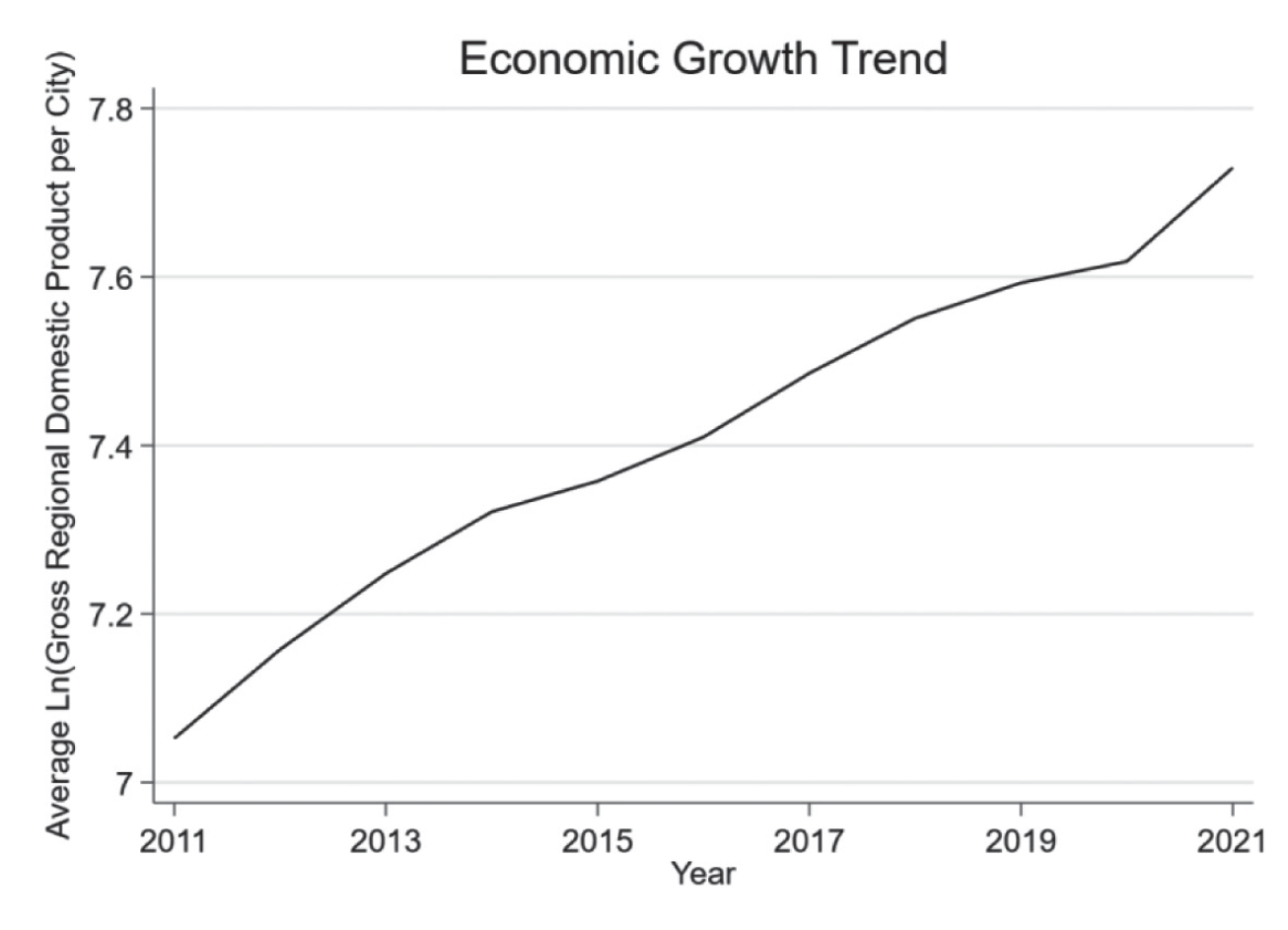
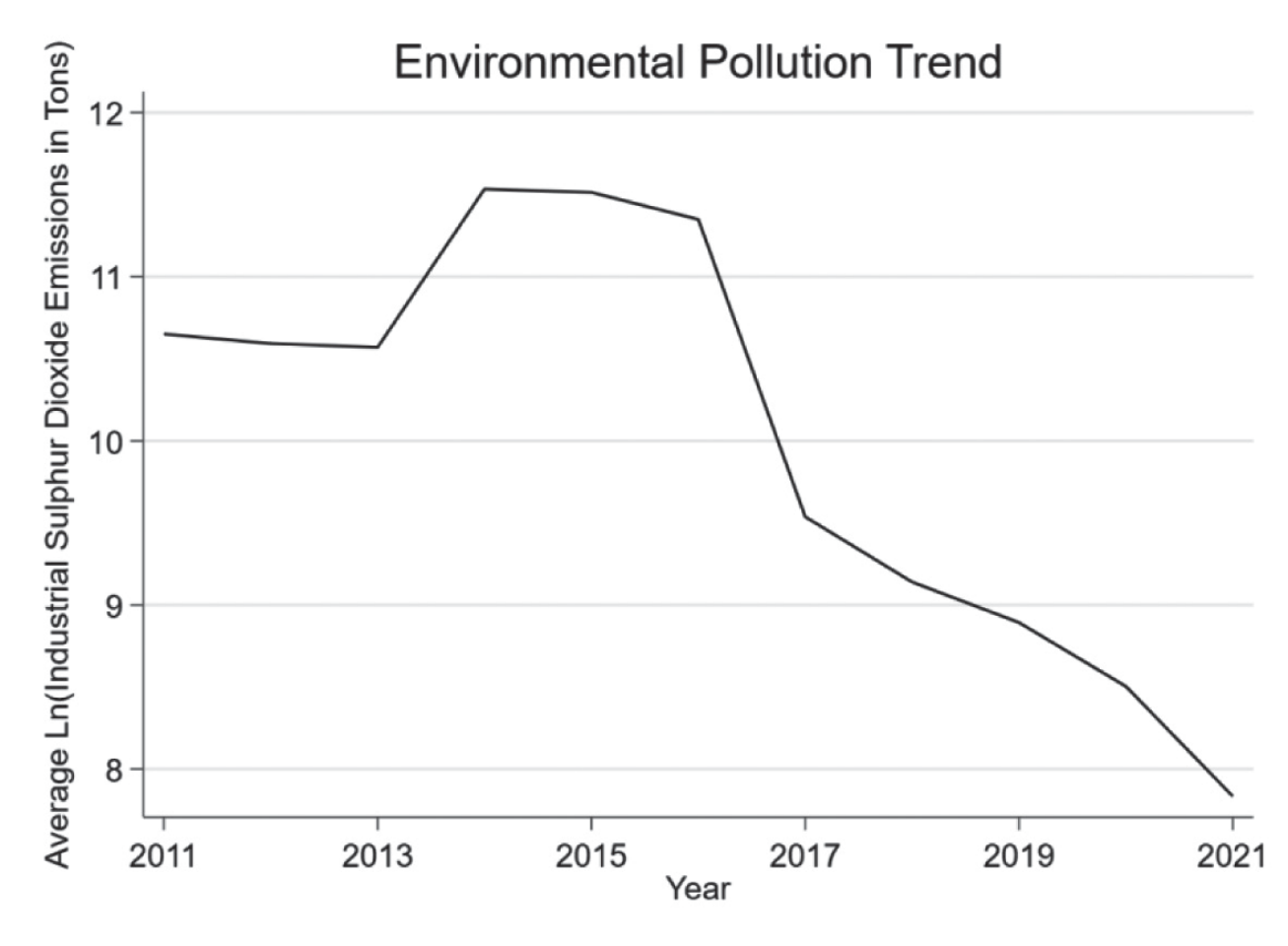
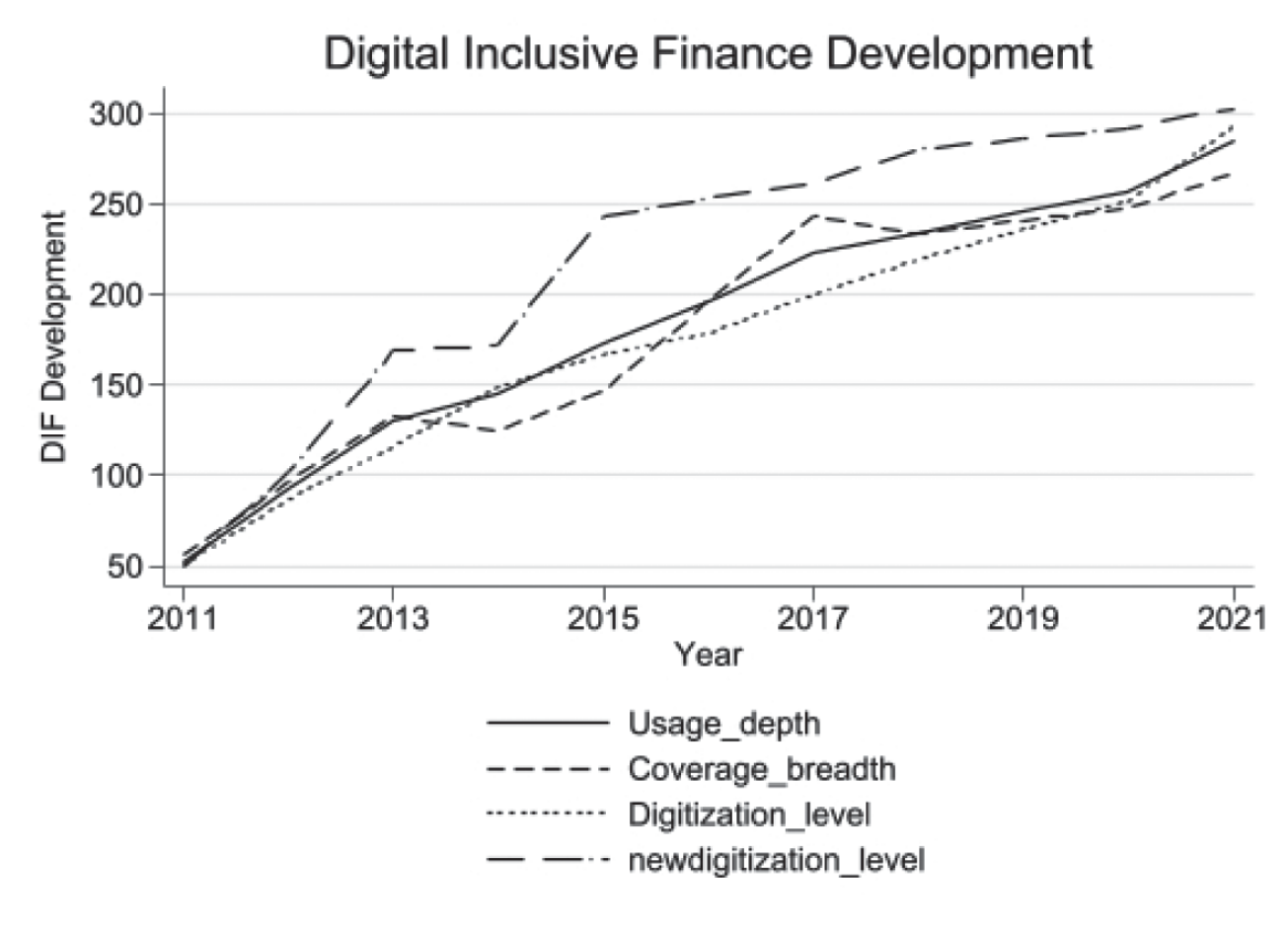
Fig. 4 shows the changing trend of digital inclusive financial system indicators. We can see that the total index of DIF, depth of usage, degree of digitalization, and breadth of coverage are all rising steadily. Fig. 5 reflects the regional development of DIF in 2021. We can see that, in general, the development of digital inclusive finance is relatively even, but cities in the eastern region have a higher degree of DIF development than western cities, showing a “high -high” aggregation trend. Analysis of spatial autocorrelation test results and identifiable inspection
According to the 2011-2021 data results illustrated in Table 2, Moran’s I of the three variables (DIF, Econ, and Pollut) are all significantly greater than 0. According to the Moran scatter plot of the three variables in Fig. 6 and Fig. 7, most of the samples are distributed in the first and third quadrants. DIF, economic development, and environmental pollution both show a spatial trend of “high-high” and “low-low” agglomeration, indicating that most cities’ observed values are positively correlated with those of surrounding cities, consistent with Moran’s I statistics.
Analysis of Endogenous Test Results
shows that the Davidson-MacKinnon test statistics all reject the null hypothesis at the 1% level; the results produced by ordinary least squares (OLS) and fixed-effect regression estimated via instrumental variables are consistent. This means that there is endogeneity between variables and a simultaneous causality relationship among economic development, industrial sulfur dioxide emissions, and digital financial inclusion. According to the spatial simultaneous equations, the number of exogenous variables is greater than the number of endogenous variables in every equation, so the three equations all satisfy the “order condition”, which is manifested as overidentified. Therefore, it can be inferred that the observation data generated by the population with different parameter values are statistically different, and we can further perform parameter estimations of the spatial simultaneous equations.
Fig. 5.
The degree of development of digital inclusive finance in each region in 2021 (Aggregate index, degree of digitalisation, breadth of coverage, depth of use).
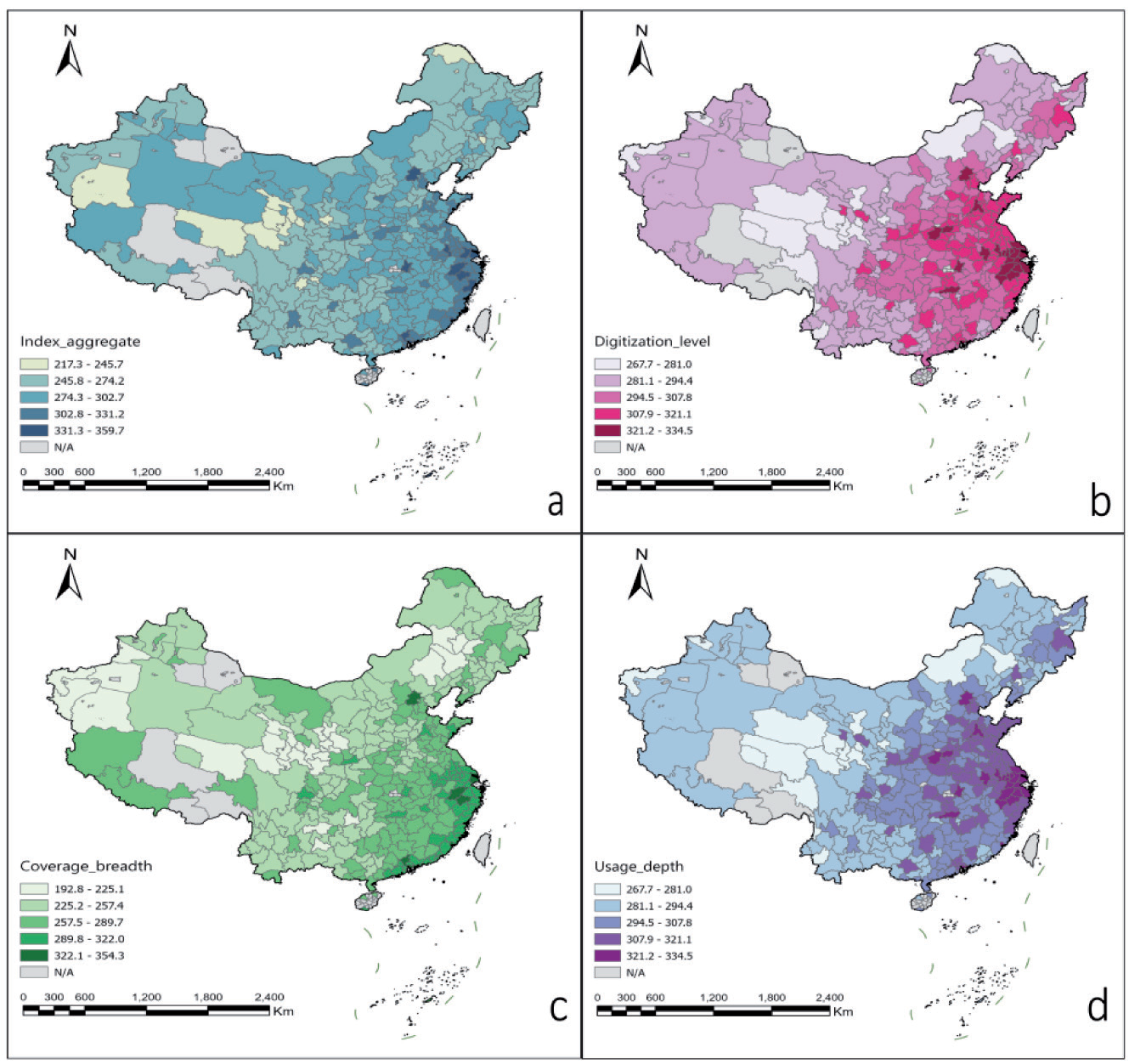
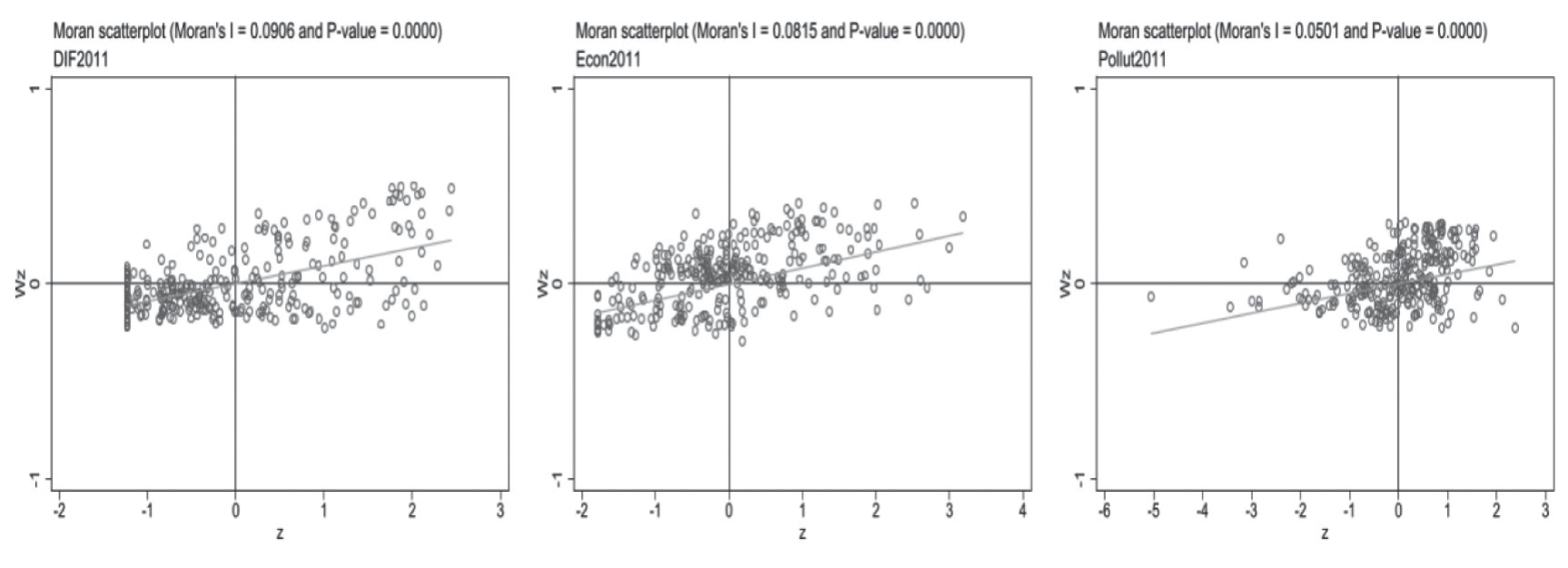
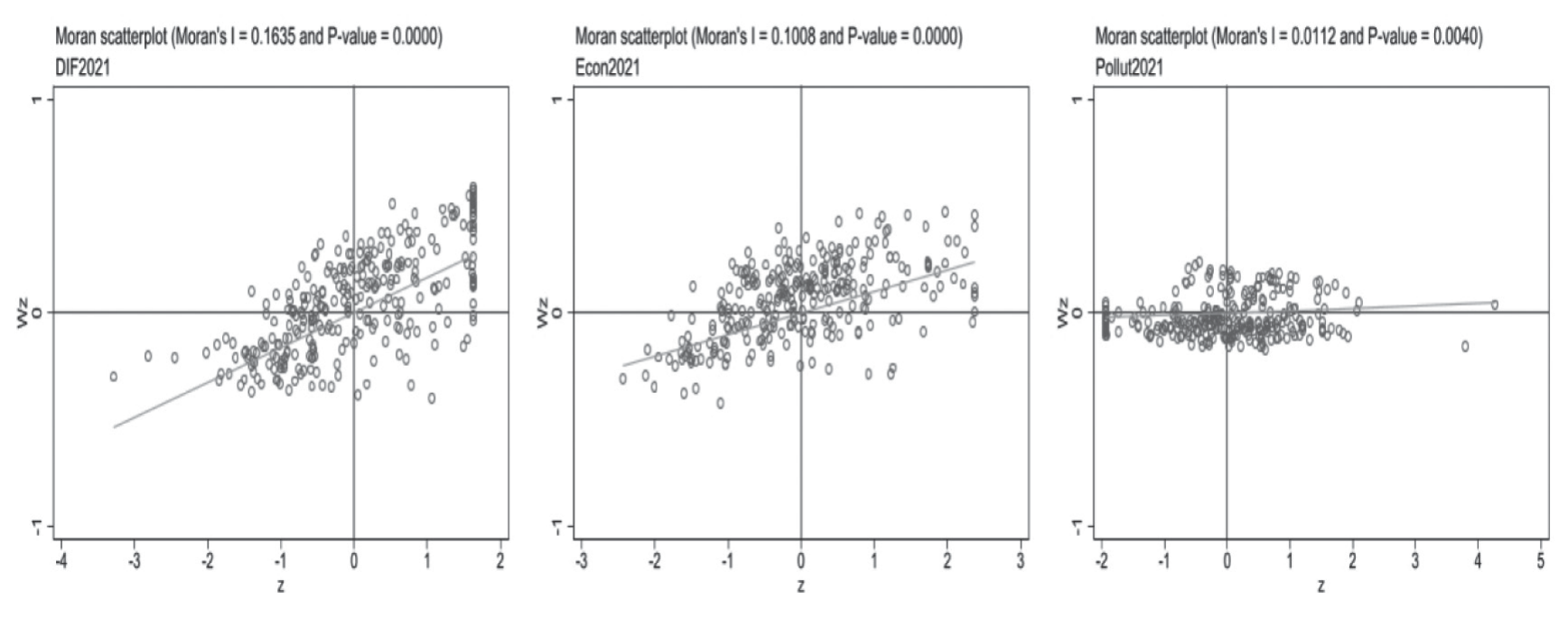
Table 2.
Global Moran Index of digital inclusive finance, pollutant Emissions (So2) and economic growth from 2011 to 2021.
Analysis of Spatial Simultaneous Equation Results
The regression results are shown in Table 4. From the perspective of the spatial effect of digital inclusive finance, the spatial lag coefficient of digital inclusive finance is 0.9279, which is significant at the 1% level, indicating that the development of urban digital inclusive finance will be positively related to the DIF development of other cities around the region. In the era of the digital economy, the accumulation of intangible assets such as digital technology can promote the development of economies of scale through network effects [77], and the simultaneous construction of urban infrastructure in adjacent areas promotes the mutual development of DIF.
Economic growth has also played a positive role in the development of DIF. With the growth of GDP, the stability of the financial environment, and the development of digital infrastructure construction a foundation has been laid for the development of the digitization of financial products while also improving the efficiency of capital flows and providing more opportunities for the spread of more convenient and flexible digital financial products. From the perspective of the effect of environmental pollution on DIF, the deterioration of the environment will inhibit the development of digital inclusive finance. Pollution of the ecological environment will make financial institutions and policymakers treat environmentally-related projects more strictly, shrinking relevant financial policies and increasing the environmental risks individuals and enterprises face. The “payment” and “insurance” indicators target payment and insurance businesses, respectively, and are compiled from the number of users participating in the business, the number of businesses participating per capita. The onlineization of payment and insurance services has further increased the depth of use of digital finance and strengthened the advancement of digital inclusive finance (see Regression 1 in Table 4).
Table 4.
Regression results of simultaneous equation.
The coefficient of the economic indicator's spatial lag term is positive, reflecting the spillover effect of economic development and confirming the positive externalities of the economy. Regional economic growth has the potential to propel extensive industrial development, leading to enhancements in regional industrial structure and upgrades in the industrial chain. This growth can also contribute to further improvements in resource synergy efficiency [7]. Therefore, urban economic growth will also affect the economic growth of other nearby regional cities. DIF plays a constructive role in fostering economic development, as digital finance has the potential to enhance urban economies by improving human capital and facilitating GDP growth through alleviating individual financing constraints and stimulating consumption. From the perspective of the influence of environmental pollution on economic development, industrial sulfur dioxide emissions exhibit a positive correlation with economic growth, indicating that the economic development level of the sample cities may still be below the turning point of the Environmental Kuznets Curve. Population density (PD) is negatively related to economic growth: this may be due to exacerbated resource scarcity and limited land supply, inhibiting economic development [78] and insufficient land supply, thereby inhibiting economic development. The increase in the urban employed population (EM) is conducive to improving the overall production efficiency of the city and further stimulating consumption. Therefore, employment positively affects economic growth [79]. (See Regression 2 in Table 4.)
Assessing the spatial effect of ecological pollution, industrial sulfur dioxide emissions between neighboring cities have a positive relationship, indicating that environmental pollution may have a radiation effect. Considering the influence of economic progress on environmental degradation, the coefficient of Econit2 is negative, and the relationship between economic development and environmental pollution presents an inverted U shape, which verifies the EKC hypothesis. Economic growth positively impacts environmental pollution, indicating that the economic level of the cities selected in the sample may be lower than the economic level represented by the EKC turning point. DIF demonstrates an inhibitory effect on environmental pollution, suggesting that it may facilitate the sustainable transformation of businesses and encourage the adoption of renewable energy sources among residents. The coefficient of the number of foreign investment projects is positive, but the significance is relatively low, indicating that the "pollution heaven theory" and "pollution halo hypothesis" may not be realized at the urban level. Environmental regulatory systems within different cities in the same country bear significant similarities. The proportion coefficient of the tertiary industry is positive, but its impact on industrial sulfur dioxide emissions is insignificant. This suggests that, at the urban level, the proportion of the tertiary sector does not significantly impact environmental pollution. (See Regression 3 in Table 4.).
Table 5.
Moran’s I in robustness test.
Robustness Test
This paper uses the spatial proximity matrix to conduct robustness testing to detect whether the settings of different weight matrices will affect the empirical results (see Table 5). When cities i and j are adjacent, the weight W is equal to 1; otherwise, it equals 0. The matrix element expression is as follows:
According to the results of Moran’s I test (Table 5), we can see that DIF, economic development, and environmental pollution all show a high-high, low-low agglomeration spatial trend, consistent with the previous conclusion. According to the empirical results of the robustness test (Table 6), although the significance of DIF in regression (3) differs from that of the spatial simultaneous equations, the coefficient signs of the core and exogenous variables are consistent with the simultaneous equations. The regression results can be considered robust.
Conclusions and Suggestions
Conclusions
This study uses spatial simultaneous equations to study the interaction and spatial lag effects of digital inclusive finance, economic development, and environmental pollution. We use panel data from 285 cities in China from 2011 to 2021 for analysis and reach the following conclusions:
There is an endogenous relationship between DIF, economic development, and environmental pollution. DIF has the potential to stimulate economic development, and conversely, economic development can exert a positive influence on DIF through various channels; the relationship between economic development and industrial sulfur dioxide emissions is in line with the environmental Kuznets hypothesis, showing an inverted U-shape. The implementation of DIF has led to a decrease in environmental pollution. However, it is important to note that the presence of environmental pollution will also act as a hindrance to the further development of DIF. The expansion of urban population employment is expected to drive economic growth, and the resulting increase in population density is likely to exacerbate resource scarcity, posing a threat to the economy. Online payment and insurance investment will increase the depth of use of digital finance and positively impact the development of digital inclusive finance. The coefficient of the number of foreign-invested projects is positive but of low significance. The reason may be because the “pollution heaven theory” and “pollution halo hypothesis” do not hold at the urban level. This may be due to environmental regulations targeting foreign investment exhibiting remarkable homogeneity across multiple cities within a nation. The reliance of urban non-tertiary and tertiary industries on production factors and value chains may be the reason why the proportion of the tertiary sector has a negligible impact on the environment.
Table 6.
Robustness test results.
Regarding spatial effects, the spatial autoregressive coefficients of the three are positive and significant, meaning that economic growth, environmental pollution, and digital inclusive finance are spatially interdependent. Overall, the progress of digital inclusive finance in a single region not only benefits the DIF in surrounding cities but also contributes positively to GDP growth and ecological environment construction in those areas.
Policy Recommendations
Based on the research conclusions of this article, the policy recommendations are as follows:
The government should prioritize the advancement of DIF, expedite the construction of digital infrastructure and communication technology, and strategically deploy regional digital technologies to harness mutual technological synergy between regions. Regarding policy formulation, relevant departments should also have a comprehensive understanding of the role of digital technology, design a reasonable development path for digital inclusive finance, regulate related digital financial products, and help digital inclusive finance further enhance its efficiency and flexibility. Referencing the study by Wu Y et al. [80], the central government’s financial incentive system, enterprises’ non-transformation behaviors, and local government regulation all impact the guiding effect of DIF on enterprises’ green transformation. Therefore, relevant regulations and standardization need to be further strengthened. Achieving regional sustainable development through DIF requires further consideration of multiple factors.
Financial institutions should make full use of the inclusiveness of digital finance, help enterprises alleviate financing constraints, and improve personal financial risk management capabilities by promoting digital financial derivatives and platform innovation. The supervision and evaluation system related to digital finance should also be improved further to promote the stability and efficiency of the capital market.
At the environmental and economic development levels, society should actively advocate for sustainable development by both enterprises and regions, guiding high-polluting companies to alleviate financing constraints through digital inclusive finance, thereby achieving green transformation. Regional entities should strengthen cooperation on environmental pollution control to curb the spread of pollution. Simultaneously, different sustainable development strategies should be formulated based on economic development disparities. Through digital financial tools, green capital implementation should be ensured to achieve sustainable regional economic development.
Limitations
(1) This study uses the Spatial Autoregressive (SAR) model to capture interactions and spillover effects among economic entities. However, spatial econometric models themselves may still have potential endogeneity issues. Future research can further validate the conclusions of this study based on improvements to the model. (2) This study analyzes the interactive effects and spatial lags of DIF, environmental pollution, and economic development, but it does not fully explore the mechanisms of these effects. Future research can delve into the specific mechanisms through further analysis to derive more comprehensive and detailed conclusions. (3) This study is conducted from a macro perspective, but it lacks micro-level data from individuals to further generalize the conclusions. Future research can expand related theories based on data from enterprises and households.

