

Introduction
Heavy metals are widely present in both natural and artificial environments. Some heavy metals have potential toxicity and harm to organisms. When heavy metals enter ecosystems, they may accumulate in soil, water bodies, and food chains. Long-term exposure to or excessive intake of heavy metals may pose risks to human health and the ecological environment. Different heavy metals may have different effects on different tissues and organs, such as the nervous system, liver, kidneys, etc. Therefore, effective control and management of heavy metal emissions and exposure are crucial. Countries and regions limit the emission of heavy metals through legislation, regulation, and environmental protection measures and take measures to reduce potential health and environmental risks related to heavy metals. In addition, the treatment and recovery of heavy metals are also important aspects of a circular economy and sustainable development. In recent years, soil heavy metal pollution has attracted extensive attention from scholars at home and abroad. Diami et al. [1] evaluated the ecological risk and human health risk of heavy metals in the topsoil of an iron ore area in Malaysia, and found that the ecological risks of Cd, As, Pb, and Cu were low, no obvious non-carcinogenic risk was found, and the potential carcinogenic risk of As was high. Obiora et al. [2] studied the pollution degree of heavy metals in cultivated soil around a zinc mining area in Southeast Nigeria and found that the over-standard rate of Pb and Zn in soil was 87% and 31%, respectively. Wang et al. [3] conducted heavy metal pollution characteristics and health risk evaluation of soil around a tungsten-molybdenum mine in Luoyang, China, and considered that the average content of heavy metals Zn, Cr, Cd, and As in soil exceeded the screening value of soil pollution risk. Among heavy metals, Cd poses the greatest threat to ecology, accounting for 91.32% of RI. Soil heavy metal pollution in the study area poses a serious threat to the surrounding ecological environment and residents’ health. Jing et al. [4] investigated heavy metals status, transport mechanisms, sources, and factors affecting their mobility in Chinese agricultural soils. They believe that due to the expansion of the mining industry, the use of pesticides, and other human activities, some soils in China are polluted by heavy metals, thus polluting the agricultural ecosystem. Alabi et al. [5] analyzed the effects of different land uses on soil physical and chemical properties in Odeda LGA, Ogun State, Nigeria, and considered that land use types have different effects on soil properties. Sun et al. [6] conducted an ecological health risk assessment of heavy metals in the soil of Changchun New Area, Jilin Province. It is considered that the average content of eight heavy metals in the soil in this area is higher than the soil background value of Changchun City, showing different degrees of accumulation. There are Hg and Cd pollution and ecological risks in the soil of Changchun New Area. Because soil is the most precious natural resource, agricultural production and human survival are inseparable from healthy soil, which highlights the importance of soil heavy metal research. Sun et al. [7] found in the soil heavy metal risk assessment of the Datong Basin in Shanxi Province that Pb has heavy to extremely heavy pollution points, Cu has extremely heavy pollution points, and the total potential ecological index (RI) distribution range of heavy metals and risk elements is 28.00~1851.01. There are slight, medium, strong, very strong, and extreme strong ecological risks, mainly mild and moderate. Although the above research has conducted in-depth research on farmland soil in different regions and aspects, there is no thematic study targeting the Rucun Township area of Wutai County, Xinzhou City, Shanxi Province. It is hoped that this study will have a positive impact on food security and human health in the Rucun Township area.
Materials and Methods
The research area is located in Rucun Township and the surrounding areas of Wutai County, Xinzhou City, and central and eastern Shanxi Province, with geographic coordinates of 113°15′00″-113°30′00″E and 38°40′00″-38°50′00″N. It belongs to a typical continental monsoon climate; the soil types mainly include brown soil, cinnamon soil, tidal soil, and paddy soil, and suitable crops for growth include corn, millet, oilseeds, naked oats, beans, potatoes, and so on. Belonging to the Zhongshan terrain with intermountain basins (Rucun, Wutai, and Doucun basins) and river valleys, the overall terrain is high in the north and low in the south. The exposed strata include metamorphic rocks of the Archean and Proterozoic, carbonate rocks of the Lower Paleozoic Cambrian and Ordovician, clastic rocks of the Upper Paleozoic Carboniferous and Permian, and loose rocks of the Upper Tertiary and Quaternary. The Quaternary loose layer is mainly composed of loess, with a precipitation infiltration coefficient of 0.01-0.1. The geotectonic part is located at the junction of the Zhoushan syncline of the Luliang Taihang fault block, the Mount Wutai block uplift, and the Fuping dome structure unit, and the Hutuo River new rift is located in the west.
Sample Collection and Testing
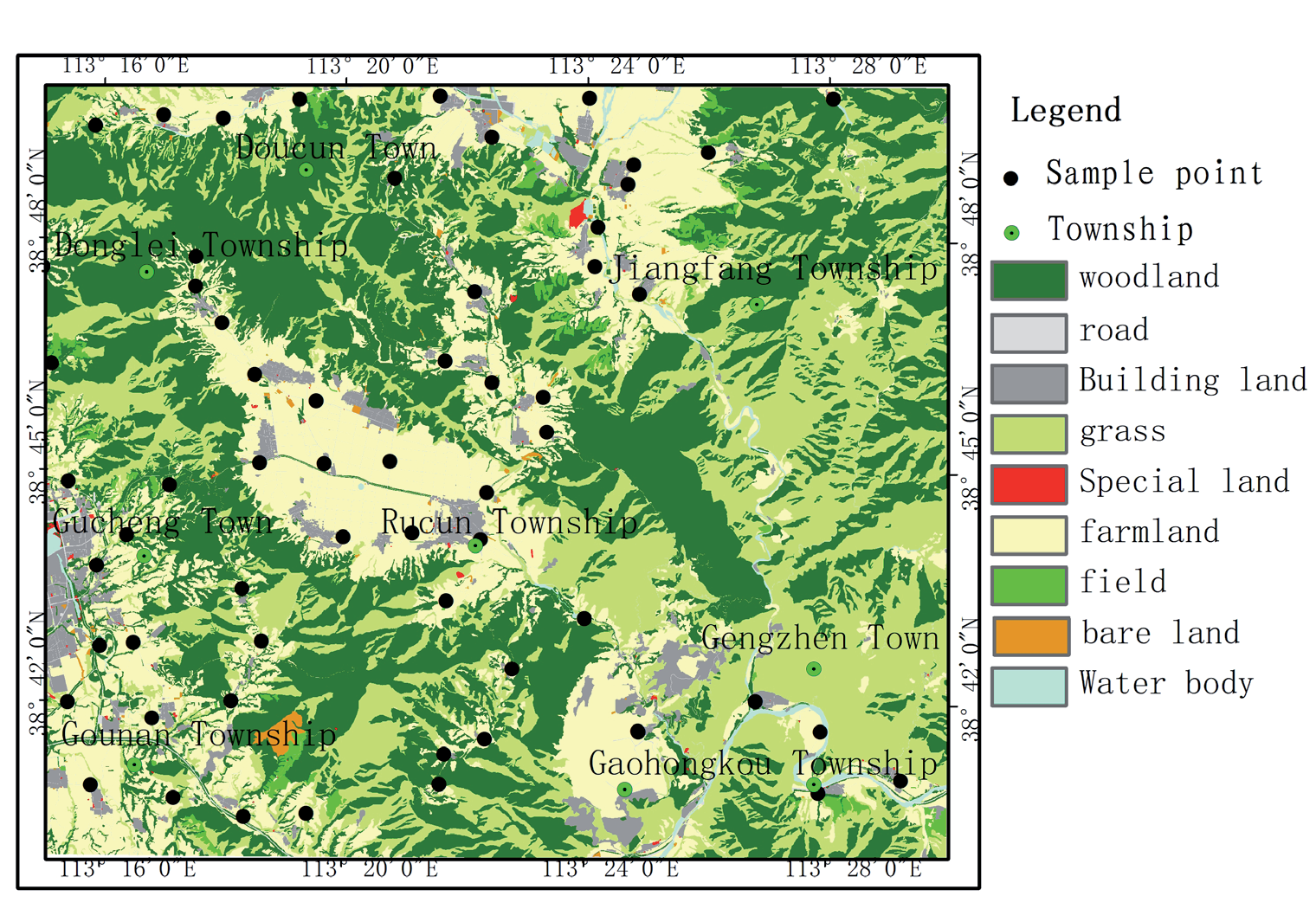
The surface soil samples were collected from the typical cultivated land or garden land in the study area. During the sampling process, full consideration was given to different types of arable land and different ecological units. The sampling density was 0.3 / km2, and GPS was used for positioning. When sampling, representative sections such as the ridge, forest belt, ditch, old house foundation, and roadside were avoided. The soil samples of 0~20 cm surface farmland were collected with a wooden shovel. The soil was broken and the sundries such as straw, the root system, and stone were picked out, and 1.0~1.5 kg was reserved and put into the sample bag for treatment after full mixing. After the soil samples were dried and crushed, they were passed through a 20 mesh nylon screen, bagged, and sent to the laboratory for testing. A total of 300 single-point samples of surface soil were collected in the entire area, which were combined into 60 analytical samples. Fig. 1 shows the distribution map of sampling points.
The sample test shall be carried out by the Laboratory of Harbin Natural Resources Comprehensive Survey Center in accordance with the technical requirements of analysis of samples for eco-geochemical evaluation (DD 2005-03) [8], and the analysis indexes, determination methods, and detection limits are shown in Table 1. The accuracy and precision are controlled by national first-class reference materials, and the qualification rate of element analysis accuracy and precision is higher than 98%; the reporting rate of elements is higher than 99.6%. The test results of parallel soil samples meet the accuracy requirements.
Evaluation Method
Evaluation of Heavy Metals Pollution in Soil
The land accumulation index method proposed by German scientist Muller [9] was adopted to evaluate the degree of soil heavy metals pollution. The calculation formula is as follows:
where Igeo represents the geo-accumulation index of heavy metal i; Ci represents the actual measured value of heavy metal i in soil; Si represents the reference value; k is the correction coefficient, generally 1.5. The background value of heavy metal elements in the soil of Shanxi Province (obtained from the statistics of 1:250000 land quality geochemical survey data of Shanxi Province [10]) was set as the reference value. The assessment grade of heavy metal pollution was divided according to the cumulative index of Igeo [11-13] (Table 2).
Table 1.
Analysis method and detection limit (mg·kg-1).
Table 2.
Igeo index and the criteria of pollution grade.
Ecological Risk Assessment of Heavy Metals in Soil
Hakanson’s potential ecological hazard index method was used to evaluate the ecological risk of heavy metals in the soil of the study area. This method not only refers to the material content of heavy metals, but also relates to the ecological, environmental, and toxicological effects of heavy metals. It is widely used in ecological risk assessment at present [14-16]. The calculation formula is as follows:
where Cfi is the pollution index of a metal; Ci is the measured value of a heavy metal in soil; Cni is the reference value of a certain heavy metal (background value of heavy metal in Shanxi Province soil); Eri is the potential ecological risk index of a single heavy metal; Tri is the toxicity response parameter of a heavy metal; RI is the total potential ecological risk index. The Toxicity Coefficient of each heavy metal is as follows: Zn = 1 < CR = Mn = 2 < Cu = Ni = Pb = 5 < As = 10 < Cd = 30 < Hg = 40 [17]. Single factor potential ecological hazards and total potential ecological hazards were classified according to Eri and RI (Table 3).
Human Health Risk Assessment of Heavy Metals in Soil
The health risk assessment model published by USEPA [18] was used to assess human health risks. The assessment steps included exposure calculation and risk characterization. Soil heavy metals are absorbed by humans through plants in three ways: oral direct intake, respiratory inhalation, and skin contact, which pose non-carcinogenic and carcinogenic risks to human health. These risks were characterized in this study.
Exposure Calculation
The daily average carcinogenic and non-carcinogenic heavy metal exposure pathways were calculated as follows:
where ADDiing, ADDiinh, and ADDiderm represent the daily average exposure of a heavy metal through oral intake, respiratory intake, and skin contact, respectively, and CI represents the concentration of a heavy metal pollutant in soil. The exposed skin area was calculated according to the exposed skin area of Chinese people in different seasons and the climate characteristics of Wutai County, according to Mielczarek et al. [19]. Other parameters were referred to from HJ 25.3-2014 [20] and human parameters issued by the US EPA [21-22] (Table 4).
The average daily exposure to carcinogenic heavy metals in children is different from that to adults. It is necessary to calculate the exposure of children and adults separately, then weight the average, and finally allocate the exposure to the entire life cycle. The calculation formula is as follows:
Risk Characterization
In the formula, HQ refers to the non-carcinogenic risk index of all heavy metals; HQi refers to the non-carcinogenic risk index of a single heavy metal I; RfDi refers to the non-carcinogenic daily average intake of heavy metal i. HQ or HQi<1 indicates that the non-carcinogenic risk can be ignored, otherwise, the non-carcinogenic risk cannot be ignored. CR refers to the carcinogenic health risk index of all heavy metals, CRi refers to the carcinogenic risk index of single heavy metal I, and SF refers to the carcinogenic slope factor. The RfD and SF values of different exposure routes are shown in Table 5. According to some studies, the acceptable range of the carcinogenic health risk index CR or CRi is 10-6–10-4 [23-25].
Table 3.
Indices used to assess the potential ecological risk status.
Table 4.
Health risk exposure parameters of heavy metals.
Table 5.
Heavy metal reference measurement and carcinogenic slope factor.
Results and Discussions
Distribution Characteristics of Heavy Metals in Soil
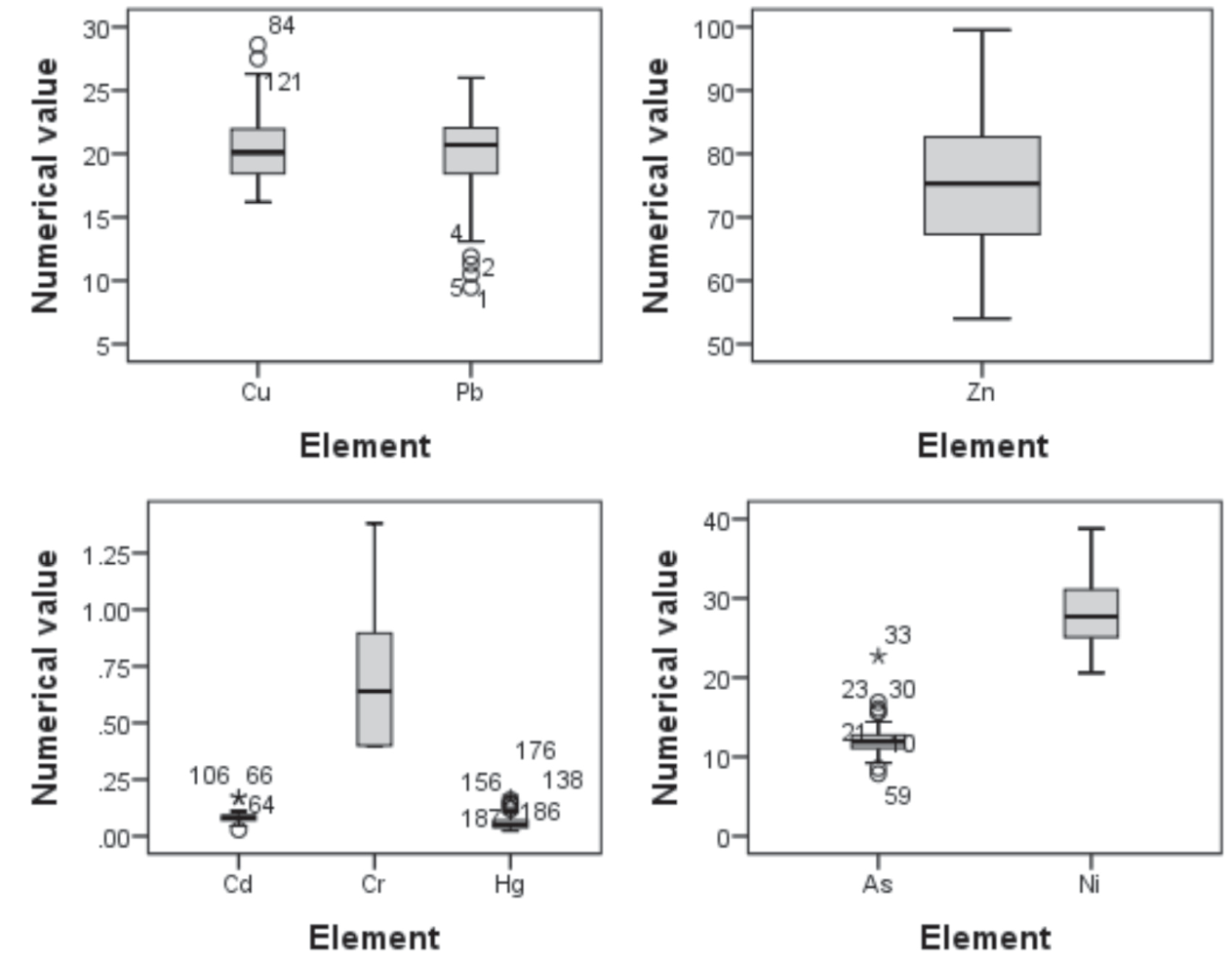
According to the statistics of soil heavy metal content (Table 6), multiple heavy metal contents in the soil are higher than that of the background values of Shanxi Province, indicating that some heavy metals have accumulated to a certain extent in the soil. According to the order of content, it is Zn>Ni>Cu >Pb>As>Cr>Cd>Hg. The range of Zn content is 54.00~99.50 mg/kg, with an average value of 75.71 mg/kg; The Ni content range is 20.60~38.8 mg/kg, with an average value of 28.24 mg/kg; The Cu content ranges is 16.20~28.60 mg/kg, with an average value of 20.53 mg/kg; The Pb content ranges is 9.46~26.00 mg/kg, with an average of 19.80 mg/kg; The As content ranges is 7.87~22.70 mg/kg, with an average of 12.14 mg/kg; The Cr content ranges is 0.40~1.38 mg/kg, with an average value of 0.70 mg/kg; The Cd content is 0.03~0.17 mg/kg, with an average value of 0.08 mg/kg; The Hg content ranges is 0.02~0.17 mg/kg, with an average value of 0.06 mg/kg (Fig. 2). From the coefficient of variation, the coefficient of variation of Hg is higher than other elements, at 0.57; Secondly, the coefficient of variation of Cr is 0.37, and the coefficient of variation of other elements is between 0.13 and 0.28. Except for Hg and Cr, the variability of other elements is relatively small. The larger the coefficient of variation, the more uneven the distribution of elements in the soil. The coefficient of variation of most heavy metals in the soil of the study area is generally small, indicating a more uniform distribution in the soil.
Table 6.
Concentrations distribution of heavy metals in the study area (mg·kg-1).
Correlation Analysis of Heavy Metals in Soil
The correlation of heavy metals in soil can be used to infer whether heavy metals are homologous. If the correlation is large, it indicates that the sources of heavy metals may be the same. If the correlation is small, it indicates that their sources may be different. Spss19 software was used to analyze 8 kinds of heavy metals in the soil of the study area by Pearson method. The results are shown in Table 7.
From the values in the correlation coefficient table (Table 7), it can be seen that there is a significant correlation (P<0.01) between Pb, Zn, Cd, and Ni in the heavy metals and risk elements in the soil of the study area. The correlation coefficient range is -0.401~0.478, with a negative correlation between Pb and Zn, Ni, and a positive correlation between Pb and Cd. This indicates that there is a very close relationship between Pb and Zn, Cd, and Ni, which decreases with the increase of Zn and Ni content, As the Cd content increases, it increases. There is a significant correlation between Zn and Cr, Ni, and Cu elements (P<0.01), with a correlation coefficient range of -0.397~0.644. Zn is negatively correlated with Cr, while Zn is positively correlated with Ni and Cu, indicating a very close relationship between Zn and Cr, Ni, and Cu. Zn decreases with increasing Cr content, while Zn increases with increasing Ni and Cu content. Ni shows a significant correlation with Cu, with a correlation coefficient of 0.563, indicating a positive correlation. Ni increases with the increase of Cu. From the above results, it can be seen that Pb and Cd; Zn and Ni, Cu; Ni and Cu elements are likely to have the same source.
Analysis of the Degree of Heavy Metal Pollution in Soil
Using the background value of soil in Shanxi Province as the evaluation standard, the soil heavy metal pollution level in the study area was evaluated using the land accumulation index (Table 8). The average value of the heavy metal pollution index from high to low is in the order of Cr>Pb>As>Ni = Cd>Zn>Cu>Hg. Soil As pollution is the most severe, with 5 mild pollution points, accounting for 7.94%; Pb takes second place, with 4 mild pollution points accounting for 6.35%. However, the average cumulative indices of Pb, Cr, Zn, Cd, Ni, As, Hg, and Cu are all less than 0, indicating an overall pollution-free state. However, As and Pb have light pollution points, further analysis of their ecological and health risk status is needed. The surface soil in the study area is mainly loess, and the As and Pb are mainly naturally generated. The numerical changes are related to the pollution status, alkaline environment of the soil, plant absorption, and the application of phosphorus fertilizer in the study area.
Potential Ecological Risk Assessment of Heavy Metals
Using the background value of soil in Shanxi Province as a reference, evaluate the potential ecological hazard risk level of soil in the study area (Table 9). From the perspective of potential ecological risks of individual heavy metals and risk elements, the Cd risk index ranges from 6.56 to 35.84, with a maximum value of 35.84, less than 40, indicating a slight ecological risk; The risk index ranges from 3.41 to 25.18 for Hg and 8.03 to 23.16 for As, with a maximum value of 25.18 and less than 30, indicating a slight ecological risk; The ecological hazard indices of Ni, Pb, Zn, and Cu are all less than 10, indicating a slight ecological risk; The Cr ecological hazard index is less than 0.1, which is the smallest element in the soil ecological hazard index of the study area. The ecological risk index of all samples is less than 40, indicating a slight ecological risk.
The total potential ecological index (RI) distribution range of heavy metals and risk elements in the study area is 40.99~75.58. As the ecological risk values of all elements are less than 150, there is only a slight ecological risk.
Table 8.
The classification of heavy metals in soil based on the Igeo.
Table 9.
Potential ecological risk coefficient for every heavy metal in soil.
Human Health Risk Assessment
Heavy Metal Exposure Assessment Analysis
Firstly, the daily exposure of soil heavy metals in the study area was evaluated (Table 10 and Table 11). In the average daily non-carcinogenic exposure, the order of average daily intake of adults and children from high to low is ADDing>ADDderm >ADDinh The amount of heavy metals ingested by mouth is much higher than that inhaled through skin contact and respiration; The order of average daily intake of different heavy metals from high to low is Pb>Zn>Ni>Cu>As>Cr>Cd>Hg. The daily intake and total daily intake of all heavy metals in children are higher than those in adults. Among the average daily carcinogenic exposure of As, Cd, Cr and Ni, oral intake is also much higher than skin and respiration. The order of average daily intake from high to low is Ni>As>Cr>Cd, and the intake of children is higher than that of adults. Therefore, in the assessment of carcinogenic and non-carcinogenic exposure to heavy metals in soil, oral intake is the main exposure route, and the average daily exposure of children is higher than that of adults.
Table 10.
Non-carcinogenic average daily exposure doses of heavy metals in soil (mg/(kg/d)).
Table 11.
Carcinogenic average daily exposure doses of As, Cd, Cr and Ni in soil (mg/(kg/d)).
Health Risk Assessment
According to the health risk assessment model, assessment parameters, and survey data, the non-carcinogenic health risk assessment indexes of 8 heavy metals and carcinogenic health risk assessment indexes of 4 heavy metals in the study area are calculated (Table 12 and Table 13).
Table 12.
Non-carcinogenic health risk index of heavy metals in soil.
Table 13.
Carcinogenic health risk index of heavy metals (Cr, Cd, Ni, As) in soil.
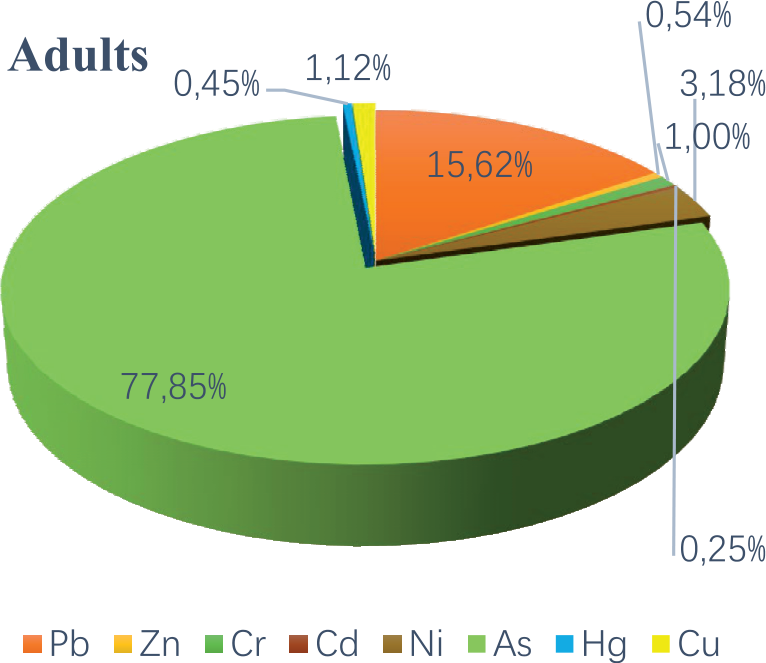
In the non-carcinogenic health risk assessment, the non-carcinogenic risks of the same element in different exposure routes of adults and children are HQing> HQderm> HQinh, which is consistent with the exposure assessment conclusion, indicating that the non-carcinogenic risk is related to the exposure route, and oral intake is the main way of non-carcinogenic risk of soil heavy metals. From high to low, the non-carcinogenic risk of different heavy metals is As>Pb>Ni>Cu>Cr>Zn>Hg>Cd in adults and As>Cr>Pb>Ni>Cu>Zn>Hg>Cd in children. The average value of single non-carcinogenic risk index of heavy metals is less than 1, indicating that there is no non-carcinogenic risk of single heavy metals to human health. The single risk index of heavy metals in children is higher than that in adults, and they are more likely to be harmed. The average value of the total adult non-carcinogenic health risk index is 0.0835 and the maximum value is 0.15, This indicates that the 8 heavy metal elements in the soil of the study area do not pose a non carcinogenic health risk to adults. The average value of the total health risk index for heavy metal elements in children is 0.825, with a maximum value of 1.05, indicating that heavy metals in the soil of this area have a non-carcinogenic health risk for children. From the average composition ratio of the total non-carcinogenic risk index (Fig. 3), As, Pb, and Cr are the main non carcinogenic factors in the soil of the study area. As and Pb have the greatest impact on adults, and As, Cr, and Pb pose a significant non carcinogenic health threat to children. Therefore, it is necessary to strengthen the risk prevention and control of this element.
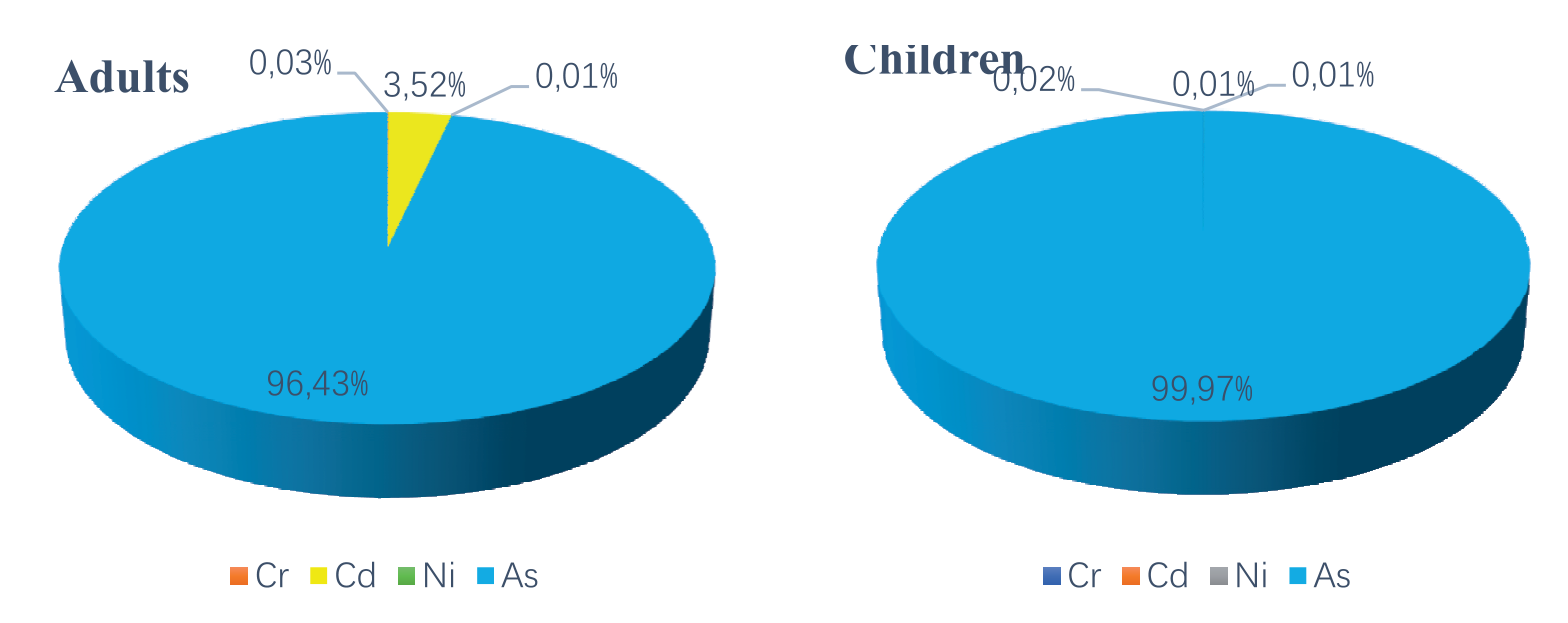
In the health risk assessment of carcinogenesis, the carcinogenic risk of adults and children exposed to the same element in different ways is also CRing>CRderm>CRinh, and the carcinogenic risk is also closely related to the exposure route; The carcinogenic risk of heavy metal elements ranges from high to low, as As>Cd>Cr>Ni, indicating that As has the highest carcinogenic risk and poses a carcinogenic risk for both adults and children; The second element is Cd, which does not pose a cancer risk to adults and only poses a cancer risk to children. The average overall cancer risk index for adults and children is 1.10 × 10⁻⁵ and 2.99 × 10⁻⁵, with maximum values of 2.07 × 10⁻⁵ and 5.60 × 10⁻⁵, all between 10-6 and 10-4, the CR contribution rates of adults and children to four heavy metals in soil are shown in Fig. 4. It is believed that the carcinogenic risk caused by heavy metals in the soil of Rucun Township, Wutai County, Xinzhou City, Shanxi Province is generally acceptable and will not cause significant harm to the physical health of local residents. However, all exceed the soil management benchmark value of 10-6 proposed by the US EPA, and prevention measures should be strengthened.
Discussion
Heavy metal elements are more prominent in soil inorganic pollutants. Research has found that the heavy metal elements Pb, Cr, Zn, Cd, Ni, As, Hg, and Cu in the farmland soil of Shanxi Province are all polluted to varying degrees, while As and Pb in the study area are slightly polluted, while the situation of other elements is still good. The average cumulative index of 8 heavy metal elements is less than 0, and the overall state is pollution-free. Sun et al. [26] found in the soil heavy metal risk assessment of the Datong Basin in Shanxi Province that there are heavy to extremely heavy pollution points for Pb and extremely heavy pollution points for Cu, which need to be given sufficient attention. Yao et al. [27] found in the assessment of heavy metal pollution characteristics and ecological risks in the soil of Shanxi Province, and Ge et al. [28] found in the potential ecological risk assessment of heavy metals in the soil of typical industrial development zones in Shanxi that the content of all eight heavy metals exceeded the background value of the soil surface layer in Shanxi Province. Firstly, it indicates that there is heavy metal pollution in the soil of Shanxi Province, and secondly, it indicates that the level of heavy metal pollution in the soil of Wutai County is relatively low.
Ecological risk is the possibility of system function loss caused by a change in ecosystem composition and structure caused by a natural change in the environment or human activities. The potential ecological risk assessment results of heavy metal elements in this study area indicate that the ecological risk index of heavy metal elements in the study area is less than 40, indicating a slight ecological risk. The total potential ecological index RI distribution range is 40.99~75.58, less than 150, indicating a slight ecological risk. Han et al. [29] in the assessment of soil heavy metal pollution and potential ecological risk in conventional agricultural villages – Shouyang County, Shanxi Province, as an example; from the perspective of the comprehensive potential ecological risk index, the average RI of 8 kinds of heavy metals in all sample points is 151.47, belonging to a medium ecological risk level, in which Hg and Cd are the main contributing factors, and the ecological risk of other heavy metals is very low. Ge et al. [28] in the potential ecological risk assessment of soil heavy metals in typical industrial development areas of Shanxi, they all believe that the local farmland soils Cr, Ni, Pb, As, Cu, and Zn have slight ecological risks, and Cd and Hg have large ecological risks. Yao et al. [27] in the soil heavy metal pollution characteristics and ecological risk assessment of Shanxi Province, they believe that the range of RI of 8 kinds of heavy metals is 147.85~19649.40, with an average value of 409.71, which has serious ecological risk. Among the eight potential ecological risk factors of heavy metals, Cd is at the severe risk level and Hg is at the moderate risk level. The above scholars are consistent with the research results of this paper. Everyone believes that there are ecological risks from soil heavy metals, and the main influencing factors are Cd and Hg. Sun et al. [26] found in the soil heavy metal risk assessment of the Datong Basin in Shanxi Province that the total potential ecological index (RI) distribution range of heavy metal elements is 28.00~1851.01, and there are slight, medium, strong, very strong, and extremely strong ecological risks, with slight and medium being the main ones. Compared with the research areas of the above scholars, soil heavy metals in Wutai County have only a slight ecological risk, which is lower than other regions. Other regions have ecological risks for soil heavy metals, with the main influencing factors being Cd and Hg.
Health risk refers to the potential development of diseases, disabilities, and health losses that may occur in human life due to various factors, such as natural, social, and human factors. As, Pb, and Cr are the main non carcinogenic factors in the soil of the study area. As and Pb have the greatest impact on adults, while As, Cr, and Pb pose a significant non carcinogenic health threat to children. As element has the highest risk of carcinogenesis, which exists in both adults and children; The second element is Cd, which does not pose a cancer risk to adults and only poses a cancer risk to children. Zhao et al. [30] in the assessment of heavy metal compound pollution and health risk of farmland soil crop system in sewage irrigation area of Shanxi Province, it is considered that eating rhizome vegetables has potential health risk for adults from the perspective of health risk index; for children, except cereals, the other four crops have potential health risks to children, and the health risk of heavy metals ingested through local crop products to adults is slightly higher than that to children. It shows that soil heavy metals have an impact on human health through crops, and soil heavy metals have health risks. In the health risk assessment of heavy metals in some farmland soils in the industrial and mining areas of Jincheng City, Shanxi Province, Yang et al. [31] believe that the health risk index of eight heavy metals is at the level of 10-3-1. Except for arsenic, the other seven elements will not harm the health of local residents and do not reach the chronic reference amount (USEPA). The results of total health risk assessment showed that the total health risk index of eight heavy metals exceeded 1, and the non-carcinogenic health risk coefficient of heavy metals was As>Ni>Cr>Cd>Pb>Hg>Cu>Zn. Yang’s research is consistent with this study in two aspects: one is that there are health risks in soil heavy metals, and the other is that As is the main element affecting health. Sun et al. [26] believed in the risk assessment of heavy metals in the soil of the Datong Basin in Shanxi Province that heavy metals in the soil have a non-carcinogenic health risk for children, and that Cr and As are the main non carcinogenic factors in the soil of the study area. The non carcinogenic factors in the Datong area are less Pb compared to the Wutai area, and the effects of Cr and As are consistent. The carcinogenic risk caused by heavy metals in soil is generally acceptable and will not pose significant harm to the physical health of local residents. However, it exceeds the soil management benchmark value of 10-6 proposed by the US EPA, and prevention measures should be strengthened, which is the same as in the Wutai region. Sun et al. [32] also believed in the study of soil heavy metal risks in Changchun New Area that toxic heavy metals As and Cr are more likely to cause human health risks, and their levels exceed the EPA recommended values. This is the same as in the Wutai region.
Conclusions
(1) The degree of heavy metal pollution in the soil of the research area is very low, and there are light pollution points for As and Pb elements.
(2) The ecological risk index of all 8 heavy metal elements in the soil of the study area is less than 40, indicating a slight ecological risk. The total potential ecological index RI distribution range is 40.99~75.58, less than 150, indicating a slight ecological risk.
(3) As, Pb, and Cr are the main non carcinogenic factors in the soil of the study area. As and Pb have the greatest impact on adults, while As, Cr, and Pb pose a significant non carcinogenic health threat to children.
(4) As element has the highest risk of carcinogenesis, which exists in both adults and children; the second element is Cd, which does not pose a cancer risk to adults and only poses a cancer risk to children.
(5) The ecological risk and health risk assessment of heavy metals in soil can quantitatively evaluate the risks of heavy metals in soil, and have a good guiding role in risk prevention.

