

Introduction
With the intensification of global climate change and the continuous deterioration of the ecological environment, the protection and management of vegetation resources have become focal issues in the field of ecological conservation [1, 2]. As a biodiversity hotspot in China, Sichuan Province boasts rich and unique vegetation resources, playing a critical role in maintaining regional ecological balance, enhancing carbon sink functions, and promoting sustainable development [3]. However, with the increasing complexity of climate and environmental changes, traditional vegetation resource monitoring and management methods, due to their low spatiotemporal resolution and outdated data, can no longer meet the growing demand for refined and dynamic management [4, 5]. Therefore, developing high spatiotemporal resolution prediction technology for Sichuan Province’s vegetation resources based on multi-source information fusion has become one of the key challenges that urgently needs to be addressed.
Multi-source information fusion technology integrates a variety of data sources, such as remote sensing data, Geographic Information System (GIS) data, meteorological data, and ground observation data, providing more comprehensive and accurate environmental information, thus overcoming the limitations of single data sources [6-8]. Particularly with the advancement of artificial intelligence and machine learning technologies, the potential of multisource information fusion in dynamic monitoring and prediction of vegetation resources has significantly increased [9]. This approach also holds potential for application in other ecologically vulnerable regions, fostering broader advancements in environmental conservation [10].
In recent years, vegetation resource prediction technology has made important progress in several aspects, including prediction methods based on statistical models for vegetation indices, ecosystem dynamic simulation based on physical models, and prediction of vegetation cover changes using machine learning algorithms [11]. These methods can simulate the dynamic changes of vegetation resources at various temporal and spatial scales, improving prediction accuracy and timeliness to some extent [12]. However, traditional statistical models, often based on linear regression or time series analysis of historical data, are simple to calculate but struggle to handle complex environmental changes, leading to relatively limited prediction accuracy [13]. While physical models based on ecosystem processes have a solid theoretical foundation and can simulate complex ecological processes, they rely on high-quality data, involve complex calculations, and are difficult to apply on a large scale with high resolution [14]. Machine learning algorithms, especially deep learning, have been widely applied in recent years for vegetation resource prediction, improving the accuracy and efficiency of vegetation type identification and change prediction by automatically extracting features from remote sensing images and environmental data [15, 16].
Despite these advancements, significant challenges remain in current research. First, the issue of data diversity and heterogeneity is particularly prominent: different data sources vary significantly in spatial resolution, temporal resolution, and data formats [17]. Effectively integrating these heterogeneous data to fully leverage their synergistic effects is one of the difficulties in achieving high spatiotemporal resolution prediction [18]. Second, prediction models’ accuracy and generalization ability need further improvement: while certain models perform well in specific regions and time periods, their accuracy often decreases when applied to larger areas or under different environmental conditions. Thus, building models with stronger robustness and generalization capabilities has become a critical research direction in this field.
The research on high spatiotemporal resolution prediction technology for vegetation resources in Sichuan Province based on multi-source information fusion holds significant theoretical innovation and practical application value. This research not only provides a scientific basis for dynamic monitoring and management of vegetation resources in Sichuan Province but also explores new pathways for ecological protection and sustainable development across the country, driving further advancements in ecological environment monitoring and management technologies.
The research on high spatiotemporal resolution prediction technology for vegetation resources in Sichuan Province based on multi-source information fusion holds significant theoretical innovation and practical application value. This research not only provides a scientific basis for dynamic monitoring and management of vegetation resources in Sichuan Province but also explores new pathways for ecological protection and sustainable development across the country, driving further advancements in ecological environment monitoring and management technologies.
Research Objectives: The primary objective of this study is to develop a high-precision, data-driven model that integrates various multi-source data to predict and analyze the spatiotemporal distribution of vegetation resources in Sichuan Province. By utilizing state-of-the-art machine learning algorithms, the study aims to generate accurate predictions that will inform ecological conservation efforts, guide natural resource management, and support sustainable urbanization policies.
Main Tasks: First, the study focuses on the acquisition and preprocessing of multi-source data, such as remote sensing, meteorological, and geographic information, to ensure the quality and reliability of the dataset used for vegetation prediction. Next, a machine learning-based XGBoost model is developed and optimized for handling high-resolution data and accurately predicting the spatiotemporal distribution of vegetation resources. The model is then rigorously validated through techniques to ensure its robustness and generalizability across diverse environmental and urban contexts. Additionally, the study conducts an in-depth analysis of the impact of urbanization on vegetation cover across different cities in Sichuan Province, shedding light on regional differences in natural resources. Ultimately, the results of this study are intended to support ecological management, resource planning, and policy formulation, offering data-driven insights that aid in sustainable urban development and contribute to achieving carbon neutrality goals.
Materials and Methods
Research Area
Sichuan Province is located in southwest China, covering an area of over 480,000 Km2 [19]. It lies in the transition zone between the northern and southern climates, with a mild and humid climate, an average annual temperature of approximately 15.7ºC, and an average annual precipitation of 1,075 mm. As an important water conservation area in China and an ecological barrier in the upper reaches of the Yangtze River, Sichuan plays a critical ecological role. The temperate monsoon climate and the unique mountainous and basin topography provide favorable natural conditions for abundant vegetation cover. The natural vegetation primarily comprises subtropical evergreen broadleaf forests and mixed evergreen-deciduous broadleaf forests. The province’s terrain is higher in the northwest and lower in the southeast, and it can be divided into three main regions: western Sichuan, central Sichuan, and southern Sichuan, with Chengdu and Luzhou as key nodes. Western Sichuan, characterized by mountainous terrain and deep valleys, features diverse vegetation types and serves as an important water conservation area. Central and southern Sichuan, dominated by the Chengdu Plain and basin areas, are major agricultural production zones in southwest China and are the regions experiencing significant urban expansion [20].
With the intensification of industrial and agricultural activities, rapid socio-economic development, and continuous population growth, Sichuan’s ecosystem faces numerous challenges, particularly in the weakening of ecological functions and the increasing depletion of natural resources, which have become pressing environmental issues.
To address these challenges, this study selected 21 cities in Sichuan Province for analysis (see Fig. 1). By using high-resolution data, the study aims to predict and analyze the vegetation resources in these cities, providing scientific data and support for regional ecological protection and sustainable development and offering reliable decision-making references for policymakers in environmental management and conservation.
High-Resolution Prediction Method for Sichuan Province’s Natural Resources Based on Multi-Source Information Fusion
In the high-resolution prediction process of this study, key steps included multi-source data acquisition and cleaning, feature engineering, model building and optimization, model training and validation, and the generation and application of the final prediction results. The focus was on the natural resources of Sichuan Province, fully accounting for the region’s diverse ecological environments, such as forests, grasslands, and wetlands as the main land use types. The study conducted a high-resolution prediction of Sichuan’s natural resources by integrating remote sensing data, meteorological data, and geographic information data from various sources.
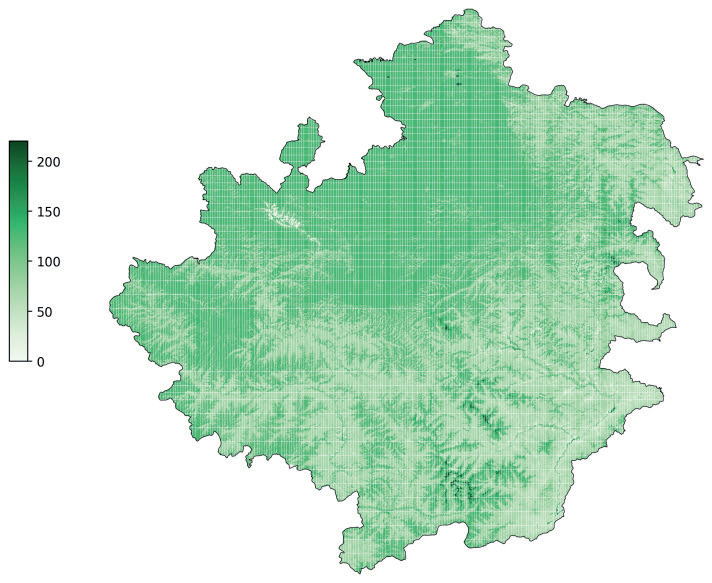
Fig. 1.
High-resolution distribution of vegetation resources (primarily forest) in Aba, Sichuan Province, 2020.
Additionally, the research included rigorous error analysis and accuracy assessments through cross-validation and comparison with actual observation data to ensure the reliability of the prediction results across different application scenarios. The model offers critical data for informed ecological management decisions in Sichuan Province, and its methodology can be adapted for use in other regions with varying environmental conditions, contributing to broader resource monitoring efforts. Through in-depth analysis of the prediction results, the study further reveals the spatial distribution characteristics of natural resources, thereby providing data support for policymakers in formulating precise environmental protection policies.
Data Acquisition and Cleaning
The data in this study is sourced from the global 30-meter resolution land cover classification product (GLC_FCS30-2015) generated for the years 2015-2020 by combining the time-series of Landsat imagery and high-quality training data from the GSPECLib (Global Spatial Temporal Spectra Library) on the Google Earth Engine computing platform. The GLC_FCS30-2015 product is considered the first global land cover dataset to provide a fine classification system (including 16 global LCCS land cover types and 14 detailed regional land cover types) with high classification accuracy at a 30-meter resolution [21].
Table 1.
Data information summary of the basic database.
In addition to this dataset, the study also used 45 data classes (as detailed in Table 1), including environmental covariates and socio-economic covariates. Prior to import, these data underwent rigorous preprocessing, including value range distribution checks, outlier removal, and confidence interval filtering, to minimize noise and errors and ensure data quality. The study utilized programming languages such as R and Python to develop efficient batch data import and processing programs, ensuring the smoothness and accuracy of the data analysis process.
Integrating and cleaning multi-source data provided solid foundational support for the high-resolution prediction of Sichuan Province’s natural resources. This data allowed the study to deeply explore the spatial and temporal characteristics of different data sources.
Multi-Source Data Fusion Modeling Based on Machine Learning
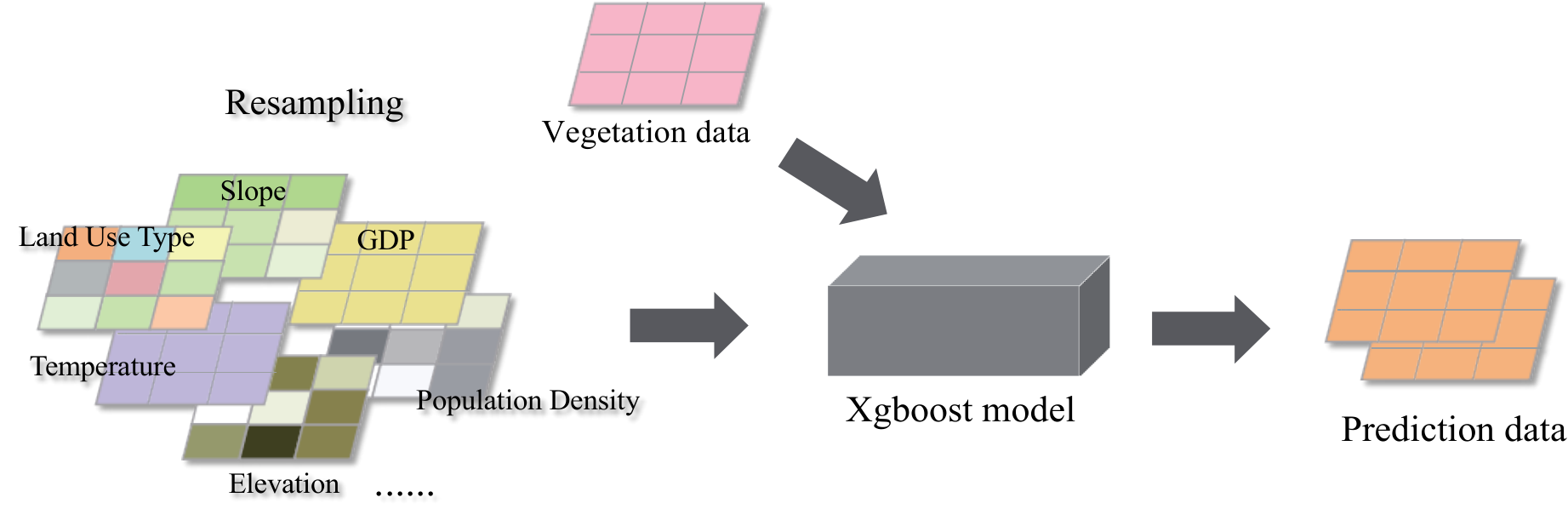
In the modeling process, a high-resolution spatial grid (1 km × 1 km) for Sichuan Province was first constructed as the foundational framework for analysis and prediction. Various multi-source data were resampled and embedded into the corresponding grid to ensure spatial accuracy. The study used the XGBoost (Extreme Gradient Boosting) algorithm for modeling, a powerful ensemble decision tree algorithm that is particularly effective at capturing nonlinear relationships between complex variables [26]. By employing regularization techniques, XGBoost effectively reduced the risk of model overfitting and ensured efficient predictive performance.
Mathematically, XGBoost optimizes the following objective function:
Where ŷi(t) represents the predicted value of the i-th sample, fk is the output of the k-th decision tree, Ω(fk) is the regularization term used to control model complexity and prevent overfitting, and L(φ) is the loss function used to measure the gap between the predicted values and the true values.
Using the XGBoost algorithm, the study successfully constructed a highly accurate prediction model capable of handling large-scale, high-resolution data and capturing complex spatial and temporal relationships among multi-source data (see Fig. 2).
To clarify the relationship between the dependent and independent variables, we can express the model as follows:
Where y represents the forest type in the GLC_ FCS30-2015 product, and x1, x2, ..., xn correspond to the independent variables in Table 1.
Model Accuracy Validation
To ensure the model’s generalization ability, the study employed the K-fold cross-validation method to comprehensively test the model and reduce the risk of overfitting. The training data was divided into K subsets, with each subset used for training and validation. The results from each iteration were combined to ensure robust model performance across different datasets.
The evaluation metrics included the coefficient of determination (R²) and root mean square error (RMSE) [27]:
Where yi represents the actual value, ŷi represents the predicted value, and y̅ i is the mean of the actual values. R² reflects the model’s ability to explain the data, with values closer to 1 indicating better model fit.
RMSE measures the deviation between predicted and actual values, with smaller values indicating lower prediction error.
Using these metrics, the study evaluated the prediction accuracy and stability of the model, ensuring its reliability for real-world applications. After multiple rounds of validation and optimization, the final model demonstrated excellent performance, providing accurate data support for ecological management and decision-making in Sichuan Province.
Results and Discussion
Model Validation and Evaluation
Fig. 3 shows the scatter plot of the predicted vegetation values against the observed values, with color coding used to reflect the density of different points. The color gradient transitions from blue (sparse points) to red (dense points), illustrating the distribution characteristics across different regions.
1) Root Mean Square Error (RMSE) = 8.5: This indicates that the average deviation between the predicted vegetation values and the actual values is 8.5. A low RMSE demonstrates that the model has minimal error.
2) Coefficient of Determination (R²) = 0.82: The R² value indicates that the model explains 82% of the variance in vegetation values, showing its superior performance in reconstructing vegetation distributions. With an R² value close to 1, the model shows a good fit and a high correlation between predicted and actual values.
3) Slope = 0.78: A slope of 0.78 indicates that the trend of the predicted values is consistent with the observed values, though it slightly underestimates higher vegetation values. An ideal slope should be 1, suggesting that the current model may slightly underestimate high vegetation values.
4) Scatter Distribution: The scatter points are mostly concentrated along the y = x diagonal, indicating a high degree of alignment between the predicted and observed values. However, there is a higher density of points near lower vegetation values, with the colors concentrated in the blue-green range, indicating that prediction errors increase as vegetation values rise.
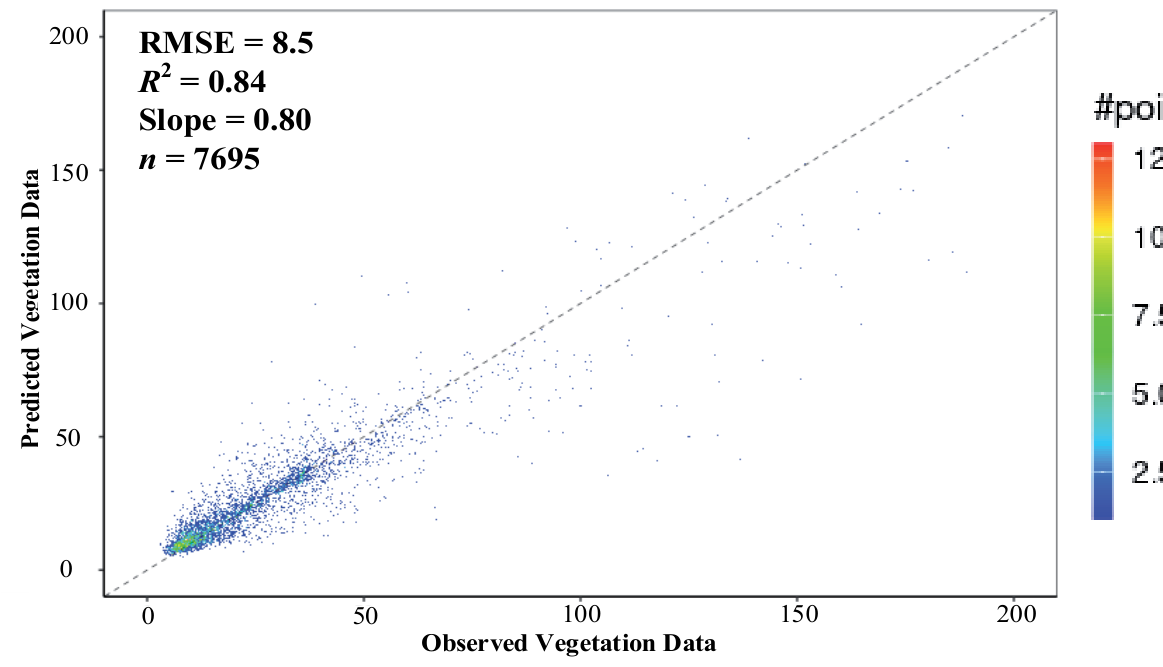
These results demonstrate that the model is highly efficient in handling large-scale data and shows superior performance in reconstructing the spatiotemporal distribution of vegetation values. The RMSE and R² metrics attest to the model’s high predictive accuracy, providing strong data support for ecological monitoring and management.
Analysis of High-Resolution Prediction Data for Sichuan’s Natural Resources under Multi-Source Information Fusion
Using multi-source information fusion technology, this study predicted the distribution of natural resources across various regions of Sichuan Province for 2022; see Table 2. The predicted data provide clearer insights into the characteristics of natural resources in different areas and highlight the key factors influencing vegetation health.
Overall, Ganzi Prefecture has the richest vegetation cover, with an average vegetation value of 68.03, the highest among all regions. The maximum vegetation value is 121.99, with a standard deviation of 12.23, indicating widespread and relatively uniform vegetation. The high-altitude natural environment and abundant forest and grassland resources contribute to Ganzi’s healthy ecosystem and lush vegetation. Similarly, Aba Prefecture also has good vegetation coverage, with an average vegetation value of 49.81 and a maximum value of 120.19. Although the vegetation value in Aba is slightly lower than in Ganzi, the vegetation is evenly distributed, and the ecological conditions remain stable.
In contrast, urbanized areas show significant differences in vegetation coverage. For example, Chengdu’s average vegetation value is 26.18, with a standard deviation of 21.77, indicating sparse vegetation in the urban area but higher density in the suburbs. Chengdu’s maximum vegetation value reaches 185.08, suggesting large expanses of farmland, forest, or protected areas in the suburbs, consistent with the rich vegetation found in Chengdu’s outskirts. Urbanization has significantly impacted the distribution of natural resources in Chengdu, with expanded urban land use leading to reduced vegetation, though the suburbs remain resource-rich.
Bazhong and Dazhou cities show relatively balanced vegetation coverage. Bazhong’s average vegetation value is 23.46, and Dazhou’s is 25.42. Although the vegetation is not as dense as in Ganzi or Aba, the distribution is relatively stable, especially in central areas with dense vegetation. This stable vegetation coverage may be closely related to the hilly terrain and favorable agricultural conditions in both cities.
In contrast, Deyang and Ziyang cities exhibit sparse vegetation coverage. Deyang’s average vegetation value is 16.02, the lowest among all regions, with a maximum value of 60.50, highlighting the high level of urbanization and the lack of greenery and natural resources in the city center. Ziyang’s average vegetation value is 19.54, with a standard deviation of 8.10. Although the vegetation is relatively evenly distributed, the overall density is low, indicating significant erosion of natural vegetation due to urban expansion, calling for stronger efforts in greening and ecological protection.
Additionally, Liangshan Prefecture and Panzhihua City show healthy vegetation coverage. Liangshan’s average vegetation value is 47.80, with a maximum value of 103.38, indicating stable vegetation distribution and abundant natural resources. Panzhihua’s average vegetation value is 44.25, with a standard deviation of 6.42, showing even vegetation coverage. Despite being known for mining, protecting ecological resources in Panzhihua has been relatively successful. Although Panzhihua does not have areas with extremely dense vegetation, the overall distribution is balanced, and the ecological environment remains stable.
In summary, this data set reveals significant differences in vegetation coverage across different regions of Sichuan Province. Plateau regions such as Ganzi and Aba boast the most abundant and evenly distributed vegetation resources, indicating good ecological conditions. In contrast, urbanized areas like Chengdu and its surrounding cities are more impacted by urbanization, with less vegetation in the city center but richer resources in the suburbs. Bazhong and Dazhou show moderate and stable vegetation coverage, while Deyang and Ziyang have experienced reduced vegetation coverage due to urban expansion, resulting in increased ecological pressure.
The high-resolution predictions generated by this study serve as a key resource for developing targeted natural resource management strategies and ecological protection measures across Sichuan Province. In regions with lower vegetation coverage or those heavily impacted by urbanization, efforts should be strengthened to restore vegetation and improve environmental management to promote sustainable development and ecological balance.
Regional Differences in Natural Resources and the Impact of Urbanization in Sichuan’s Cities
Fig. 4 presents the predicted vegetation results for various cities in Sichuan Province, with different colors representing the values for each city. This visually illustrates the distribution trends of vegetation coverage across the region. First, Ganzi Prefecture exhibits the broadest vegetation value distribution, with peak frequencies exceeding those of all other areas, surpassing 10,000. This indicates that Ganzi has the most abundant vegetation coverage, with the majority of vegetation values concentrated between 50 and 75. Ganzi’s favorable natural conditions support dense and widespread vegetation, contributing to a stable ecosystem and abundant resources, consistent with the previous data analysis.
Table 2.
Distribution of natural resources in various regions of Sichuan Province in 2022.
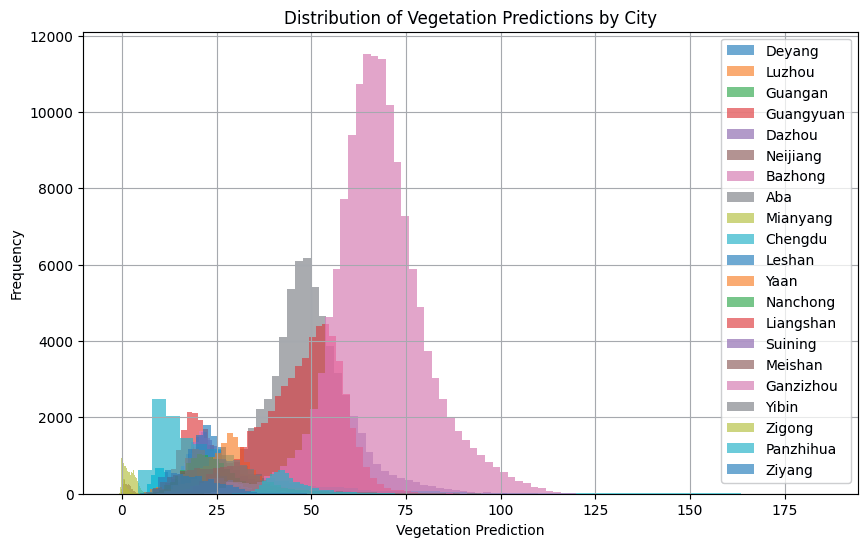
Aba Prefecture follows closely, with a similar vegetation value distribution, peaking around 8,000. This suggests that the region also enjoys excellent and unevenly distributed vegetation coverage, with characteristics similar to those of Ganzi.
In contrast to these high-vegetation areas, Chengdu’s vegetation distribution reveals a markedly different pattern. The vegetation values in Chengdu span a wide range, from a minimum of 4.40 to a maximum of 175, but are mainly concentrated in the lower range of 10 to 40. This reflects the significant impact of urbanization on natural resources, with sparse vegetation in the city center and higher vegetation values in the suburbs, especially near the maximum value of 175. This indicates that the suburban areas have better natural resources, which aligns with the stark contrast in vegetation coverage between urban and suburban Chengdu.
Deyang and Ziyang exhibit vegetation values concentrated in the low range of 10 to 25, indicating low vegetation coverage in these regions. The significant influence of urban expansion has resulted in scarce and unevenly distributed vegetation resources.
In comparison, Liangshan Prefecture and Panzhihua City show healthier vegetation coverage, with vegetation values mostly concentrated between 40 and 60. Despite some areas being affected by mining development, overall vegetation coverage remains uniform, suggesting a relatively stable natural ecosystem.
Other cities, such as Bazhong, Dazhou, Nanchong, and Yibin, have mostly concentrated vegetation values between 25 and 50, indicating moderate and relatively stable vegetation coverage. While these areas do not have as rich natural resources as Ganzi and Aba, their ecological conditions remain healthy.
Overall, Ganzi and Aba have the richest vegetation coverage, while Chengdu and other cities display significant variations in vegetation resources, particularly between urban centers and suburban areas. Deyang and Ziyang have sparse vegetation, highlighting the need for enhanced ecological restoration and greening efforts. Meanwhile, Liangshan and Panzhihua, despite being impacted by development, maintain relatively good vegetation coverage. These findings provide critical data support for each city’s regional planning and ecological protection.
Trends in Average Vegetation Values for Sichuan's Cities
The trend in average vegetation values from 2016 to 2022 for the four cities of Aba Prefecture (see Fig. 5), Chengdu, Ganzi Prefecture, and Panzhihua reveals clear differences in ecological environments across these regions. These differences reflect varying degrees of urbanization and natural environmental characteristics.
Aba Prefecture and Ganzi Prefecture show relatively high and stable average vegetation values, ranging between 50 and 70, indicating abundant and stable vegetation coverage. This can likely be attributed to limited urban development and rich natural resources. In particular, Ganzi Prefecture’s average vegetation value has consistently been close to 70, reflecting a strong and healthy ecological condition.
In contrast, Chengdu’s average vegetation value is significantly lower, consistently around 30, highlighting the notable impact of urbanization on vegetation cover. As the capital of Sichuan Province, Chengdu’s rapid development and expansion have reduced the area of natural vegetation.
Panzhihua’s average vegetation value is around 40, falling between Aba Prefecture and Ganzi Prefecture and slightly higher than Chengdu. This suggests that while Panzhihua is also a highly urbanized city, its vegetation coverage is somewhat better than that of Chengdu.
Fig. 5.
Trends in average vegetation values for Aba, Chengdu, Ganzi, and Panzhihua from 2016 to 2022.
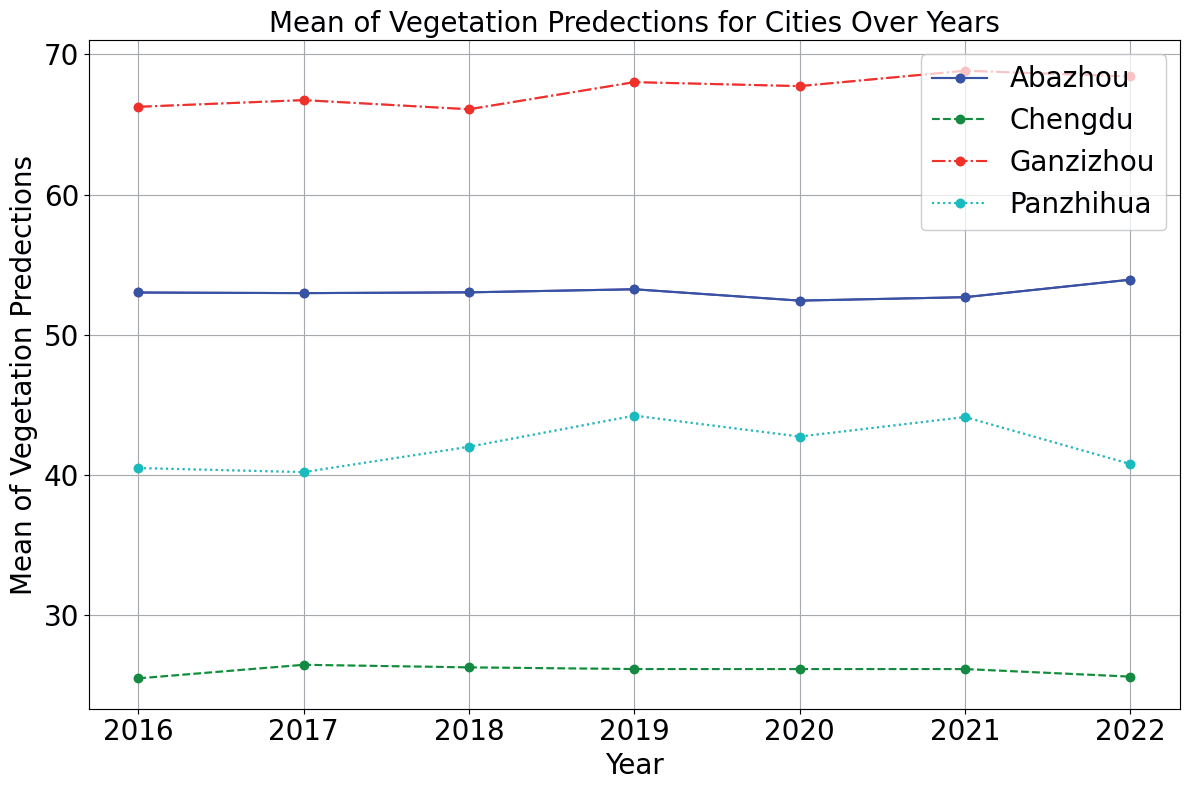
Overall, from 2016 to 2022, the vegetation value trends in Aba Prefecture, Ganzi Prefecture, Chengdu, and Panzhihua have remained relatively stable, with significant ecological differences between the cities. Aba Prefecture and Ganzi Prefecture benefit from abundant natural resources and stable ecosystems, while Chengdu and Panzhihua, as more urbanized areas, have comparatively limited vegetation coverage, especially in Chengdu, where the impact is particularly pronounced. This contrast between urbanization and natural ecosystems provides important insights into the long-term effects of urbanization on vegetation and the environment.
These analyses offer scientific data to support ecological conservation and urban planning in different cities. In future urban development, the key challenge will be balancing economic growth with environmental protection and enhancing vegetation coverage, which will be crucial for achieving sustainable development. These findings provide valuable references for cities’ efforts to address climate change and ecological protection.
Comparative Analysis of Vegetation Value Trends in Different Cities
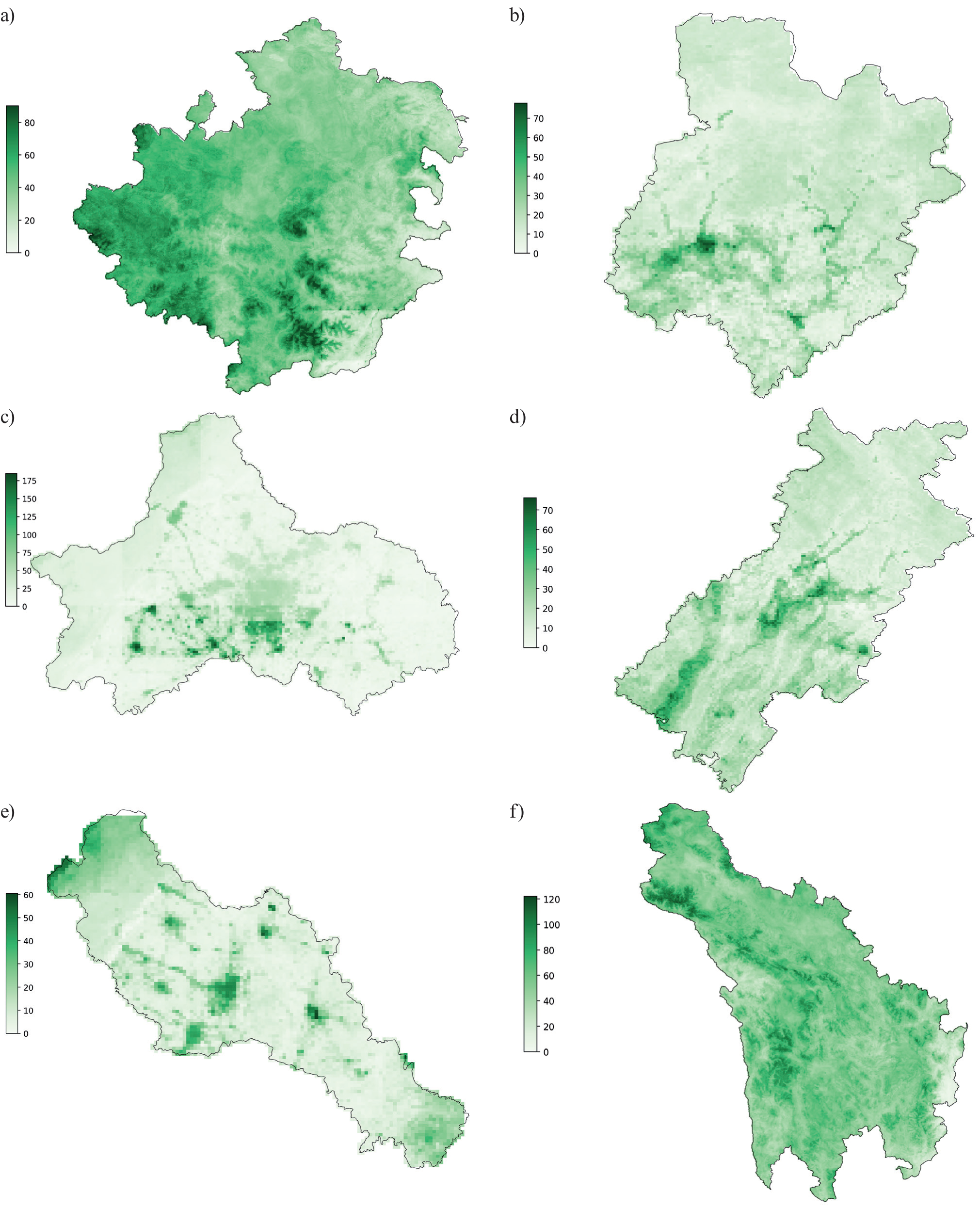
In this section, we utilize multi-source information fusion technology to conduct high-resolution predictions of natural resources in six typical cities in Sichuan Province for 2022, displaying the spatial distribution of the vegetation value for each city (see Fig. 6). These predictions not only reflect the current state of natural resources but also provide crucial reference data for future ecological management and planning.
Ganzi Prefecture’s vegetation values range from 0 to 120, showing significant regional variation. The northern region has vegetation values close to 120, indicating very dense vegetation, likely composed of high-altitude forests or natural grasslands. Due to Ganzi’s complex geographic conditions, especially in the northern plateau and mountainous areas, vegetation resources are abundant, and the ecosystem is healthy. The geographical diversity of Ganzi leads to substantial fluctuations in vegetation coverage between dense forests and sparse areas, reflecting the ecological diversity. The central and southern regions have relatively lower vegetation values, with reduced vegetation coverage likely influenced by climate or terrain conditions.
Aba Prefecture’s vegetation predictions show more uniform vegetation coverage, with values ranging from 0 to 80. Although there are no particularly dense vegetation areas, the overall vegetation distribution is stable. Aba’s mild climate and complex terrain help maintain a balanced ecosystem with evenly distributed vegetation resources, likely linked to stable forest conservation and agricultural activities.
Bazhong City’s vegetation values range from 0 to 70, with vegetation primarily concentrated in the central region, reflecting the area’s rich forest resources. Bazhong, located in hilly and mountainous terrain, benefits from favorable natural conditions, resulting in higher vegetation density in the central region. In contrast, lower vegetation values in surrounding areas may be related to agricultural land use or urbanization. This vegetation distribution pattern highlights the impact of mountainous terrain and human activity on natural resources, particularly the good ecological protection in the central region.
Chengdu’s vegetation values range from 0 to 175, underscoring the significant impact of urbanization on natural resources. The central urban area has low vegetation values, with sparse vegetation, especially in the city center, where urban expansion has reduced vegetation density. However, vegetation values increase sharply in the suburbs, reaching 175, indicating large green spaces or natural vegetation in the outskirts. Chengdu’s vegetation distribution reveals a stark contrast between the city center and the suburbs, where urbanization significantly affects the central ecosystem, while suburban natural resources remain abundant.
Dazhou’s vegetation values range from 0 to 70, with scattered vegetation distribution. The southwestern and central areas have relatively dense vegetation, likely due to the region’s rich mountainous and forest resources, while the northern and eastern areas have lower vegetation values, suggesting less vegetation cover, possibly due to flatter terrain and higher human activity.
Deyang’s vegetation values range from 0 to 60, with vegetation primarily concentrated in the central region, though overall coverage is low. Urbanization in Deyang has significantly impacted vegetation distribution, with sparse vegetation in the city center, while some dense vegetation areas in the central region may be mountainous or ecological protection zones. Overall, Deyang’s vegetation distribution suggests that urbanization and agricultural development have greatly affected natural resources, with limited vegetation coverage outside central dense areas.
In summary, Ganzi Prefecture and Aba Prefecture show extensive vegetation coverage, highlighting significant ecological diversity, while Chengdu also demonstrates notable suburban vegetation density and ecological richness in its outskirts. Ganzi’s northern mountainous areas and Chengdu’s suburbs have abundant vegetation resources. Aba Prefecture and Bazhong City have more uniform vegetation coverage, with stable ecosystems but without particularly dense areas. Dazhou and Deyang have more scattered vegetation coverage, with Deyang showing the lowest overall coverage, likely due to urbanization.
These high-resolution predictions generated through multi-source information fusion provide a clear picture of the distribution of natural resources in Sichuan Province. This data serves as an important reference for the formulation of ecological protection policies, land use planning, and climate change mitigation strategies, helping relevant authorities better manage and protect Sichuan’s natural resources. Given Sichuan’s large population, accelerated industrialization, and high carbon emissions, accurately understanding the long-term spatiotemporal trends in vegetation is crucial for achieving the province’s “carbon peak” and “carbon neutrality” goals.
Conclusions
This paper conducts a systematic study and in-depth analysis of the high-resolution spatiotemporal distribution of natural resources, particularly vegetation resources, in Sichuan Province, based on multi-source information fusion technology. By integrating remote sensing data, GIS data, meteorological data, and ground observation data, a vegetation resource prediction model with high precision and broad application prospects was developed. The aim is to provide a scientific basis for ecological management in Sichuan and offer references for future environmental protection and sustainable development.
The study reveals significant differences in vegetation coverage across various regions of Sichuan Province. High-altitude areas like Ganzi and Aba Prefectures have rich and evenly distributed vegetation due to their favorable natural conditions. In contrast, Chengdu and its surrounding cities have seen a marked decline in vegetation coverage in urban areas due to urbanization, though the suburbs still retain substantial natural vegetation. Deyang and Ziyang have experienced reduced vegetation coverage as a result of urban expansion, leading to increased ecological pressure. The machine learning-based XGBoost model demonstrated strong predictive capabilities, effectively capturing complex nonlinear relationships during the fusion of multi-source heterogeneous data, providing highly accurate spatiotemporal distribution predictions.
The model achieved an RMSE of 8.7 and an R² of 0.82, further validating its efficiency and stability. This research significantly improves the precision of vegetation resource management in Sichuan and provides a replicable framework for similar regions. Its findings contribute to broader discussions on ecological sustainability and resource conservation.
In conclusion, this study provides scientific data support for ecological management, natural resource conservation, and urban planning in Sichuan Province. In the future, with broader applications of multisource information fusion technology, the model’s generalization ability and accuracy can be further improved, especially in addressing challenges posed by complex environmental changes and urbanization. This will provide more scientific decision-making support for ecological protection and carbon neutrality goals in Sichuan and across the country.

