

Introduction
The need for building materials, in particular, for Portland cement, is constantly growing in the world every year. It is known that the production of this binder is an energy-consuming process and is accompanied by the release of large volumes of greenhouse gases, causing irretrievable harm to the environment. In this regard, it is necessary to find and adopt a new alternative binder material that could completely replace it, surpassing it in all key parameters. And here, the most promising option is the use of geopolymers, however, for a number of very decent reasons, this is not possible until today.
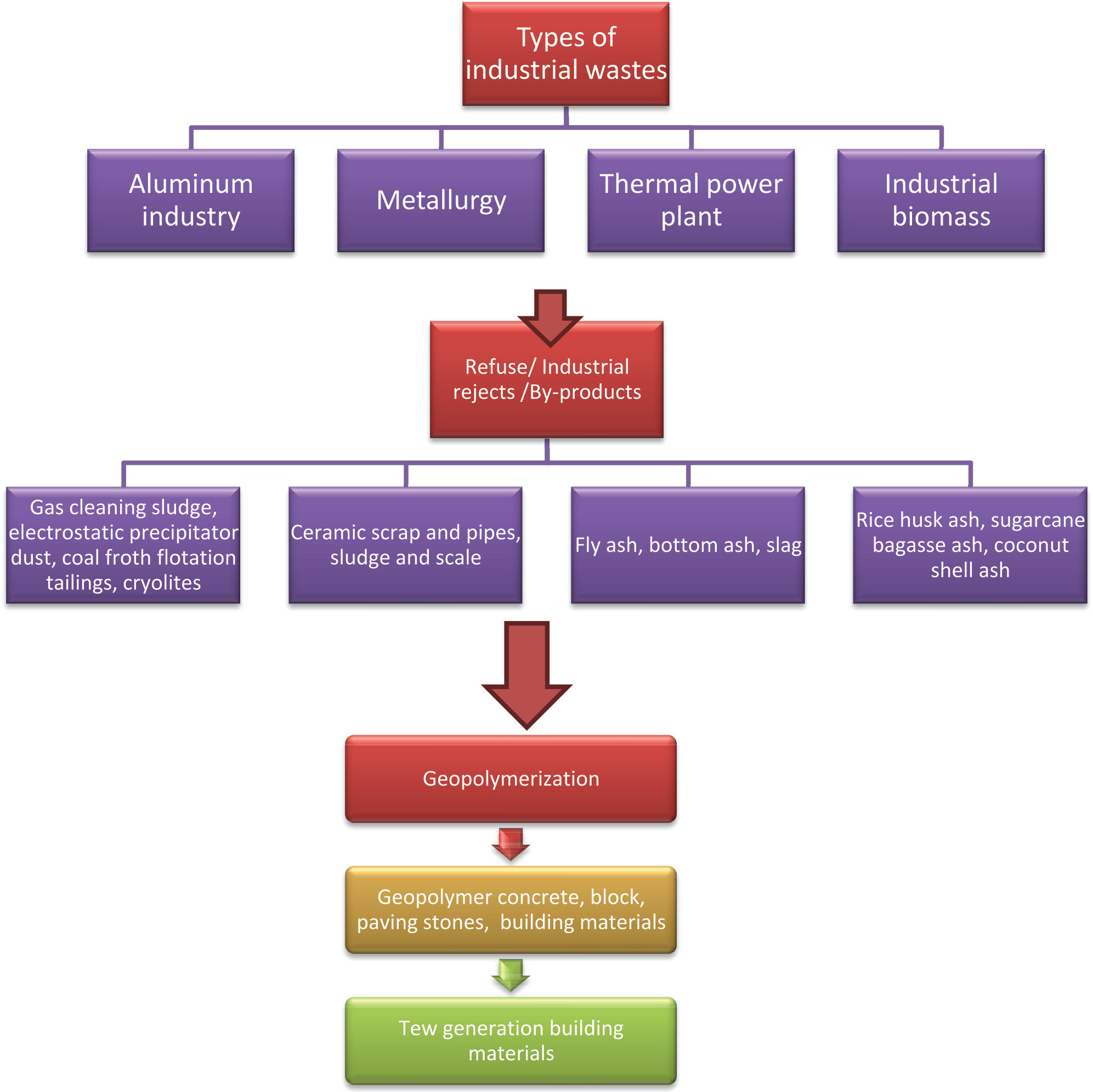
Geopolymers are a type of inorganic polymeric material resulting from a rapid reaction between alkaline or acidic solutions and various sources of aluminosilicates at a relatively low temperature (typically at room temperature or below 100ºC). The product of this reaction is a three-dimensional polymer structure consisting of a Si-O-Al bond and can be either amorphous or semi-crystalline [1, 2]. The process of geopolymerization can be represented in the form of a diagram, which is shown in Fig. 1. It includes the contribution of various industries in the form of waste and by-products that can serve as a source of raw materials for obtaining biologically sustainable building materials.
To date, the number of studies on the production of geopolymers in an acidic environment is very limited, and therefore it is not possible to compare the effectiveness of alkaline and acidic activators.
Methods for Obtaining Geopolymers
Geopolymer materials can be obtained by both dry and wet methods. The most common is the wet method. According to this method, the alkaline activator, which is in a liquid state, is preliminarily prepared in the required concentration and added to the initial product. All materials are mixed at the same time [3]. According to the dry method, the solid phase alkaline activator is grounded together with a pozzolanic substance in a certain ratio, resulting in a fine-grained powder that resembles ordinary cement. A distinctive quality of obtained geopolymers by using this method is that water is added to the mix right before usage [4].
The advantages and disadvantages of such methods are discussed in detail in the review article [5]. In [6] reported two different methods for the synthesis of geopolymers based on fly ash in dry and wet forms. By analogy with the composition of cement concrete mixtures, they perceived the geopolymer as cement, and the ratio of water and binder was determined in accordance with the molar concentration or dry density of alkaline activators, i.e. sodium hydroxide (NaOH) and sodium silicate (Na2SiO3). It has been found that a dry geopolymer may have advantages over wet geopolymer structures due to its ease of preparation and in situ application, that is, application in a natural environment. At the same time, another group of scientists [7] successfully demonstrated the production of a dry geopolymer with their new varieties developed to prevent their hydrophilicity. The formation of lumps in dry geopolymers has been prevented by water-absorbing formulations. Industrial steel slag has been used as an activated pozzolanic material to develop a new generation dry geopolymer cement.
In the second direction, liquid activators are used for the synthesis of geopolymers, namely sodium hydroxide and sodium silicate at ambient temperature. Thus, [8] tested the strength of fly ash-based geopolymers obtained by the wet method. The study describes the effect achieved with ratios of sodium hydroxide and sodium silicate of 6, 9 and 12 M, as well as with various percentage variations of 0:100, 25:75, 50:50, 75:25 and 100:0. The data obtained show that the combined use of two activators plays a significant role in improving the compressive strength. It was reported that the increasing molar ratio of 12 M sodium hydroxide with 50% sodium silicate solution was force limited to 47 MPa, while 9 M sodium hydroxide showed a result close to 47 MPa. Meanwhile, the percentage ratio of sodium hydroxide and sodium silicate 50:50 shows a maximum compressive strength of 47 MPa. It follows from this that the strength of the final geopolymer product can be increased by changing the molar ratio of activators.
After reviewing various studies, Azad et al. [5] concluded that dry synthesis of geopolymers is more preferable, because it has better manufacturability compared to wet synthesis of geopolymers: wet synthesis of geopolymers involves a long process, from raw material preparation to determination of the molar concentration of activator solutions.
The journal “Journal of Metals” contains an article by Mandal [9] in which he proposes a two-stage method for obtaining geopolymers using waste red mud and microsilica. According to the author, this method is more environmentally friendly and cheaper compared to others due to the use of waste by-products that are formed in the Bayer process, that is, in the process of enrichment of bauxite ore by extracting alumina. The red mud content of this ore ranges from 55% to 65%. This amount is not enough to obtain a high-strength geopolymer. Therefore, the author proposed quartz dust as an additional source of silica and aluminum oxide. The use of quartz sand/dust, fly ash is also mentioned in the literature on geopolymer synthesis [10-13].
According to the described method of Mandala A.K., to obtain a geopolymer, carefully dried samples of red mud with particle sizes from 10 to 1000 μm, ultrafine microsilica with a particle size of less than 5 μm, and an activator solution consisting of a mixture of NaOH and Na2SiO3 were used. The mixture was mixed with various wastes for 10-15 minutes, poured into cylindrical molds, air bubbles were removed, and then kept in the environment, followed by drying in an oven at a temperature of 80-85ºC.
The use of coal fly ash as a raw material for the synthesis of a cement-like product is not new. So, in another study, this aluminosilicate industrial waste was used for synthesis at a lower temperature compared to the usual temperature for the production of Portland cement [14].
In accordance with the experimental procedure, the geopolymerization process was carried out using KOH solutions in the concentration range of 3-8 M, with a mass ratio of Na2SiO3 and fly ash of 0.25-2.00 and varying the curing time 6-28 days at 40ºC in an oven.
As a result of scientific work, the authors obtained a geopolymer material and studied its compressive strength, which first increases and then decreases as the KOH concentration increases. The maximum compressive strength was 6.62 MPa and was obtained by treating the ash with a 7 M KOH solution. However, with a gradual change in the amount of sodium silicate, the compressive strength first increased, and decreased at a higher concentration. The maximum compressive strength of 28.1 MPa was achieved with a weight ratio of Na2SiO3 to coal fly ash of 1.75. The authors suggested that curing for a long period of time at low temperature promotes the release of a geopolymer with higher compressive strength.
The review article [5] assesses the research work of a group of scientists led by Dimitrios et al. [15], who obtained a geopolymer based on red mud and metakaolin. The paper states that at a constant ratio of raw materials and liquid activator in 3M, it is possible to obtain a geopolymer with a percentage composition of red mud 85% + metakaolin 15%. To be precise, this yield was observed at 3.1 g/ml, which in turn is 2.5 times greater than at a ratio of 2.0 g/ml. With a further change in the molar concentration to 3.5 M, the strength of the material increased significantly from 15 MPa to 20 MPa. The authors found that the pozzolanic activity during the synthesis of the geopolymer depends on the main pozzolanic minerals such as silicon oxide, aluminum oxide and calcium oxide. The average amount of pozzolanic content in the composition of raw materials was 87%, this result is considered acceptable to produce geopolymers. The strength values were encouraging at a SiO2/Al2O3 ratio >2.5. Scientists explain this by the fact that the aforementioned binder minerals are chemically reactive in the production of aluminosilicate geopolymers.
In the next research paper [16], geopolymers were formed by alkaline activation of blast-furnace steel slag with 6% (NaOH) or 3% NaOH + 3% Na2SiO3. The suitability of the obtained geopolymers was determined by evaluating the fire-retardant properties of coatings for some building structures. The author claims that the strength of the geopolymer is achieved when using 6% NH as an activator or a mixture of 3% NH + 3% NS, which is 890 kg / cm2 = 87,28 MPa in 90 days, which is twice the strength obtained for Portland cement mortar, even when using mortar in ratio of 1 cement:2 sand instead of the traditional ratio of 1 cement:3 sand.
In this review, modern research works on methods for obtaining geopolymers were presented. Various synthesizing approaches, features, and differences of the experimental part, as well as the results of the strength properties of the obtained binder materials are considered. Based on these, as well as a fairly large number of publications, it can be concluded that building materials based on geopolymers in the future can become an excellent replacement for the usual Portland cement, surpassing it in technological, environmental, and economic aspects. However, the concept of this material, having originated in the last century, has not yet been widely used on a global scale due to a number of reasons. Here, we can list some of them: –– it is necessary to find new sources of potentially
suitable, cheap, accessible industrial and biological
waste for the synthesis of geopolymers; –– explore the composition and properties of the raw
materials; –– select effective and affordable activators for
geopolymers; –– determine the optimal conditions for the
geopolymerization process, etc.
In this work, waste from the coke industry (ash) was used as initial materials in the synthesis of a geopolymer. Waste of the coke industry, which is called a silicon-containing additive (SCA), is a waste from the calcination of petroleum coke.
Experimental
The composition and main characteristics of SCA are presented in [17].
In order to compare the effectiveness of activators for obtaining geopolymers based on SCA, various variants of geopolymers based on a silicon-containing additive were prepared (Table 1).
Prescription protocol for obtaining geopolymers by the “wet” method: preparation of solutions of the required concentration and subsequent addition of SCA, weighed on precision balance; mixing with a mechanical stirrer for 15 min and, after filling the cylindrical plastic molds, shaking to remove air bubbles.
When using mixed activators, 6 M NaOH solution was slowly added to the SCA with mechanical stirring until the mixture became sufficiently solid. Then Na2SiO3 was added to the mixture and stirred until a homogeneous paste was obtained and poured into plastic cylinders.
When obtaining geopolymers by the “dry” method, a certain amount of KSD and Na2SiO3 was mixed, then filled with water, mixed and poured into plastic molds, which were carefully closed after removing the bubbles.
To evaluate the polycondensation products, the methods of IR-Fourier analysis, thermogravimetric analysis, differential scanning calorimeter, and scanning electron microscope were used.
Results and Discussion
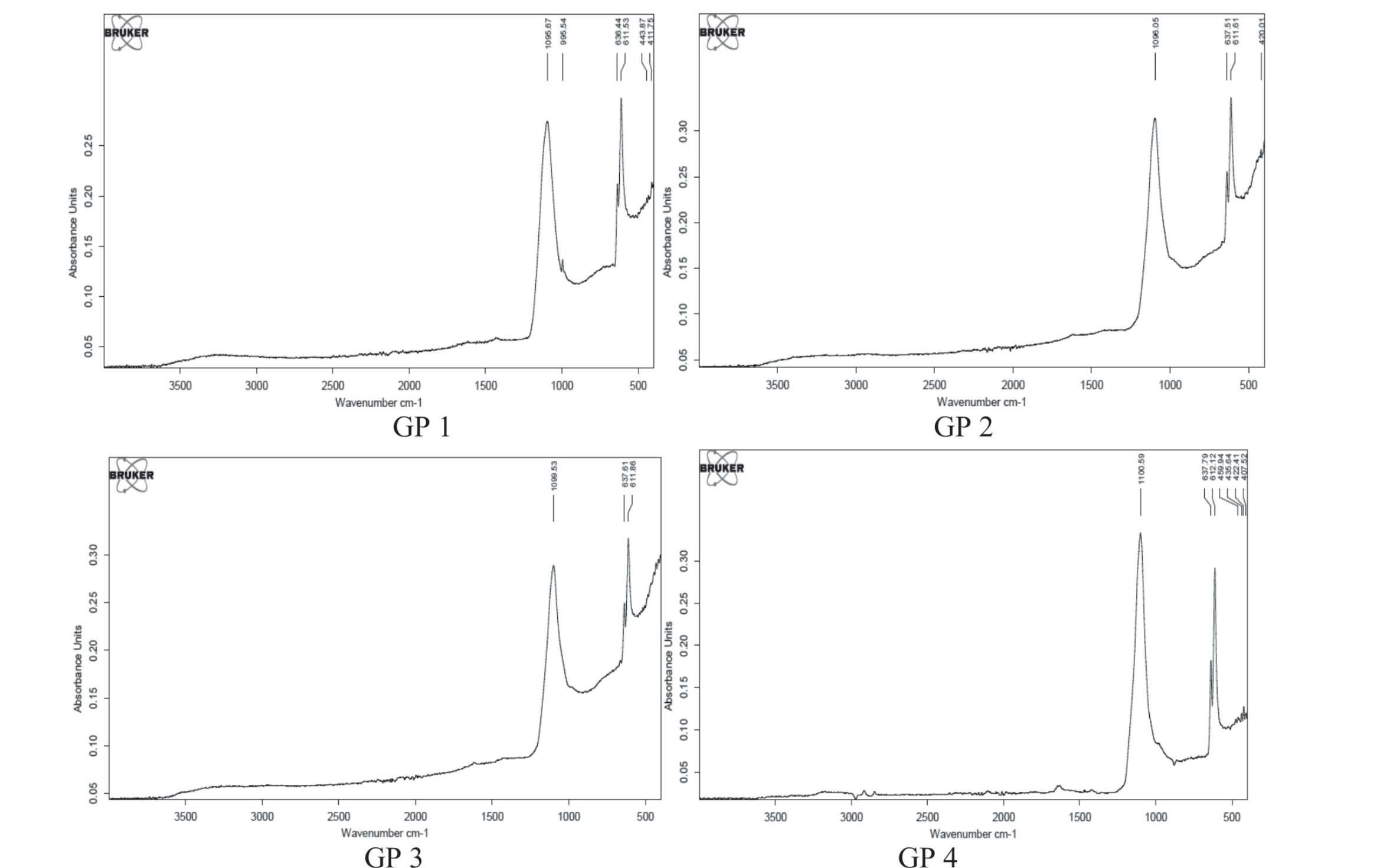
The formation of an aluminosilicate bond in geopolymers was studied by the FTIR method (Fig. 2).
The IR spectrum of the geopolymer samples shows an intense peak at ~1095 cm–1, which, according to the authors of [18, 19], is a characteristic sign of geopolymerization. The authors of the work attribute this absorption band for the silicate structure to the vibration of the Si-O/Al–O bond of the aluminosilicate framework, which reflects the formation of an amorphous aluminosilicate gel in binary systems [20]. Peaks in the region of 400-600 cm–1 confirm the presence of functional groups Si-O-T (T: tetrahedral Al or Si). The authors of [21] attribute this to the formation of bands due to internal vibrations of the SiO–Si and Si–O–Al bonds occurring in tetrahedra or aluminum- and silicon-oxygen molecular structures.
To assess the thermal stability of the obtained geopolymers, the method of differential scanning calorimetry (DSC) and thermogravimetric analysis (TGA) was used.
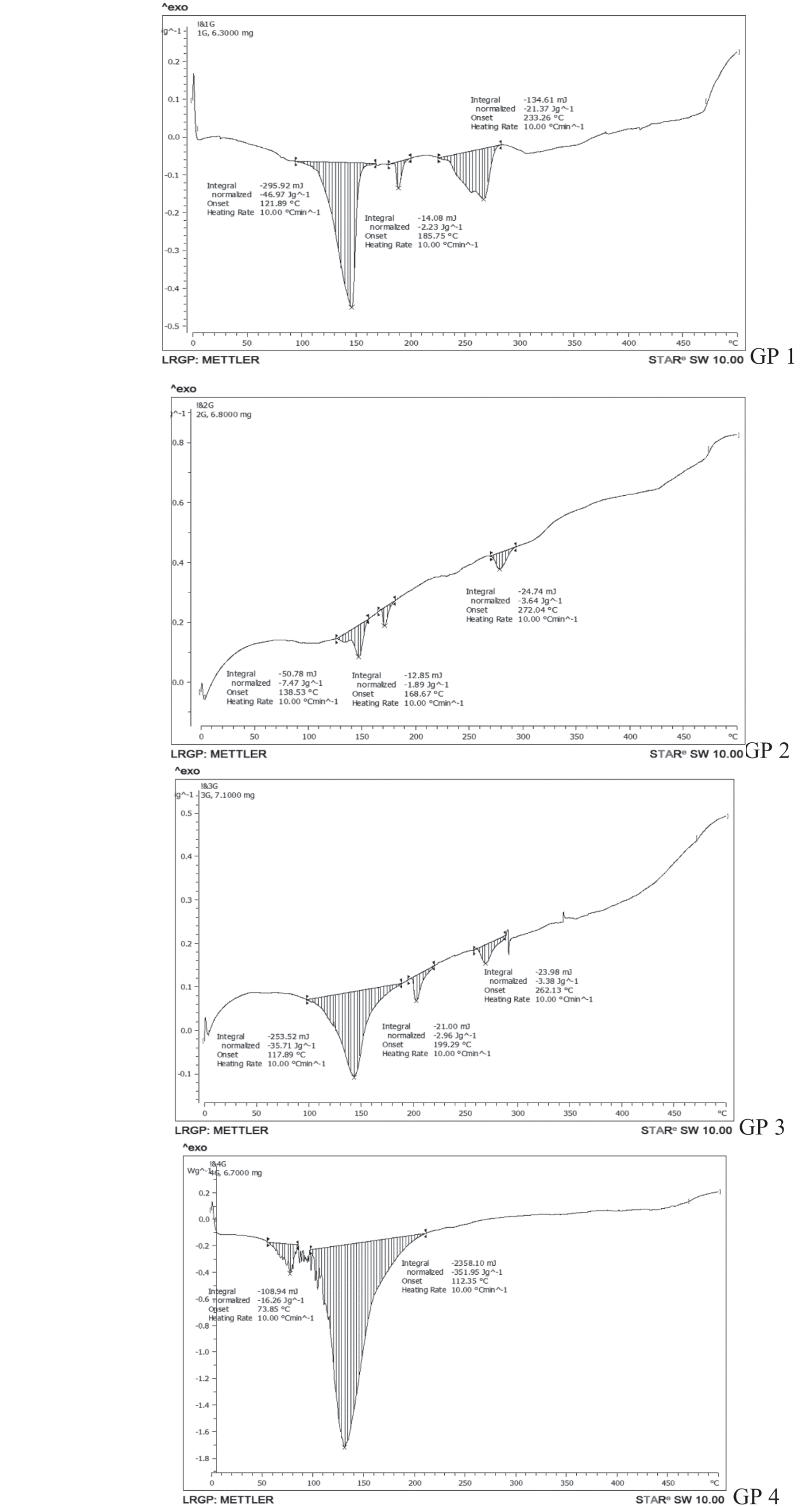
It is generally accepted [22] that the mass loss of geopolymers at high temperature is due to two effects - water evaporation and dihydroxylation. At 20-100ºC, physical water evaporates, and in the temperature range of 100-300ºC, chemical water evaporates. On all DSC curves of geopolymers (Fig. 3), a clear endothermic peak was observed from 130 to 150ºC. For samples of geopolymers obtained using NaOH, peaks are noted in the range of 230-270ºC. This is because of the loss of absorbed water [23].
In [24], DSC analysis was used to study the insulating ability of geopolymers. The authors of the papers explain this by the content of water in various forms, some of which during evaporation creates excess pressure in the pores of the GP. In this case, a liquid film is formed, which shifts towards the unexposed part and causes an evaporation plateau. The higher the evaporation plateau, the better the insulating ability of the geopolymer [25]. The area under the peak of the DSC curve up to 150ºC of the geopolymer with 8 M NaOH is lower than with 6 M, indicating a low water content and a short evaporation plateau. The water content in the samples increases after the introduction of Na2SiO3, which is evidenced by an increase in the peak area up to 150ºC and, accordingly, an improvement in the insulating ability of the geopolymer.
Table 1.
Activators for obtaining geopolymers.
| Geopolymer | Activator | Activator concentration |
|---|---|---|
| GP1 | NaOH | 6М |
| GP2 | 8М | |
| GP3 | NaOH + Na2SiO3 | 1:1, 6М |
| GP4 | Na2SiO3 | 6М (dry method) |
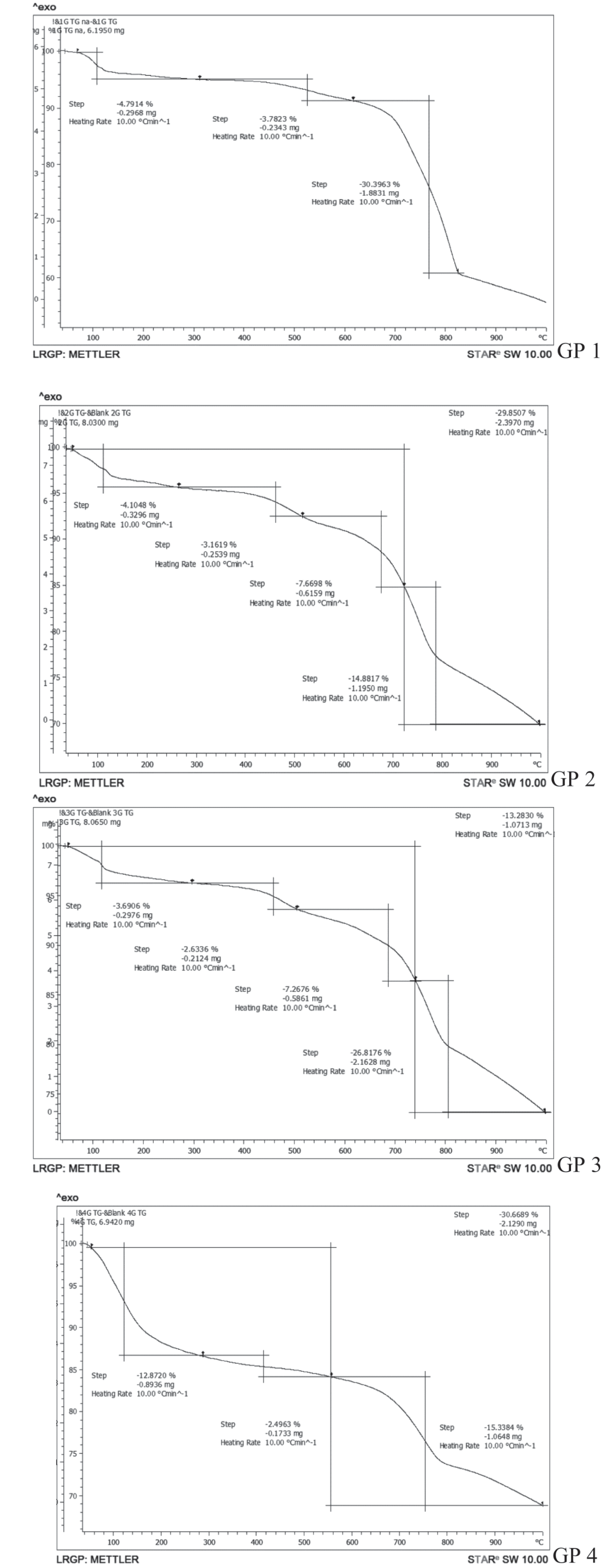
The TGA curves of geopolymers can be divided into four areas [26]: –– region I - mass loss below 100ºC is attributed to the
evaporation of hygroscopic water; –– region II - mass loss from 100 to 300ºC, where
structural water evaporates from the geopolymer gel
[27-29]; –– region III - weight loss from 300ºC to 800ºC is due
to the removal of structural water as a result of the
condensation of silanol and aluminol groups from
the geopolymer gel with the formation of Si–O–T
tetrahedral bonds (T = Si or Al) [27]; –– region IV - at temperatures above 800ºC, which
explains the thermal decomposition of the material,
above this temperature in [28] is considered the
beginning of the sintering reaction and the formation
of a ceramic body.
Fig. 4 shows the thermogravimetric curves of geopolymer composites based on SCA prepared using various activating agents.
It can be seen that SCA-based geopolymers have good thermal stability at high temperatures. Thus, the mass loss of the geopolymer with the NaOH activator (concentration 6 M) is about 8.5% at 500ºC, as shown in Fig. 3, GP 1. An increase in the NaOH concentration from 6M to 8M contributes to an increase in the thermal stability of the geopolymer (GP 2): mass loss up to 500ºC is about 7.3% and a reduction in weight loss by almost 5% when heated to 800ºC. The introduction of sodium metasilicate (GP 3) into the NaOH solution leads to a decrease in weight loss to 300ºC, however, an increase in weight loss is observed when the geopolymer is heated to 800ºC and amounts to 36%.
Geopolymers obtained by dry activation using sodium metasilicate (GP 4) demonstrate high mass loss upon heating to 300ºC, which is caused by the presence of structural water, as noted earlier on the basis of DSC curves.
When geopolymer samples were heated above 800ºC, no significant weight loss was observed, which indicates the absence of further thermal decomposition reactions. At 1000ºС, the mass retention of SCA-based geopolymers ranged from 60 to 70%, which indicates their relatively good thermal stability.
Fig. 5 shows the results of scanning electron microscopy (SEM) of geopolymers. Geopolymers in micrographs 1 and 2 can be attributed to cloud-like material. The authors of [30] believe that these materials are mainly C-S-H, which is obtained as a result of the cement hydration process. It is well known that in a field-produced cement hydration system, the cement particles are not completely hydrated and the recycled concrete aggregates will have a reasonable amount of non-hydrated cement particles. These particles can later be hydrated upon contact with water, and leads to an increase in the alkali content in water due to the solubility of calcium hydroxide already in crushed concrete fines and newly formed as a result of hydration of non-hydrated cement in crushed concrete fines [31].
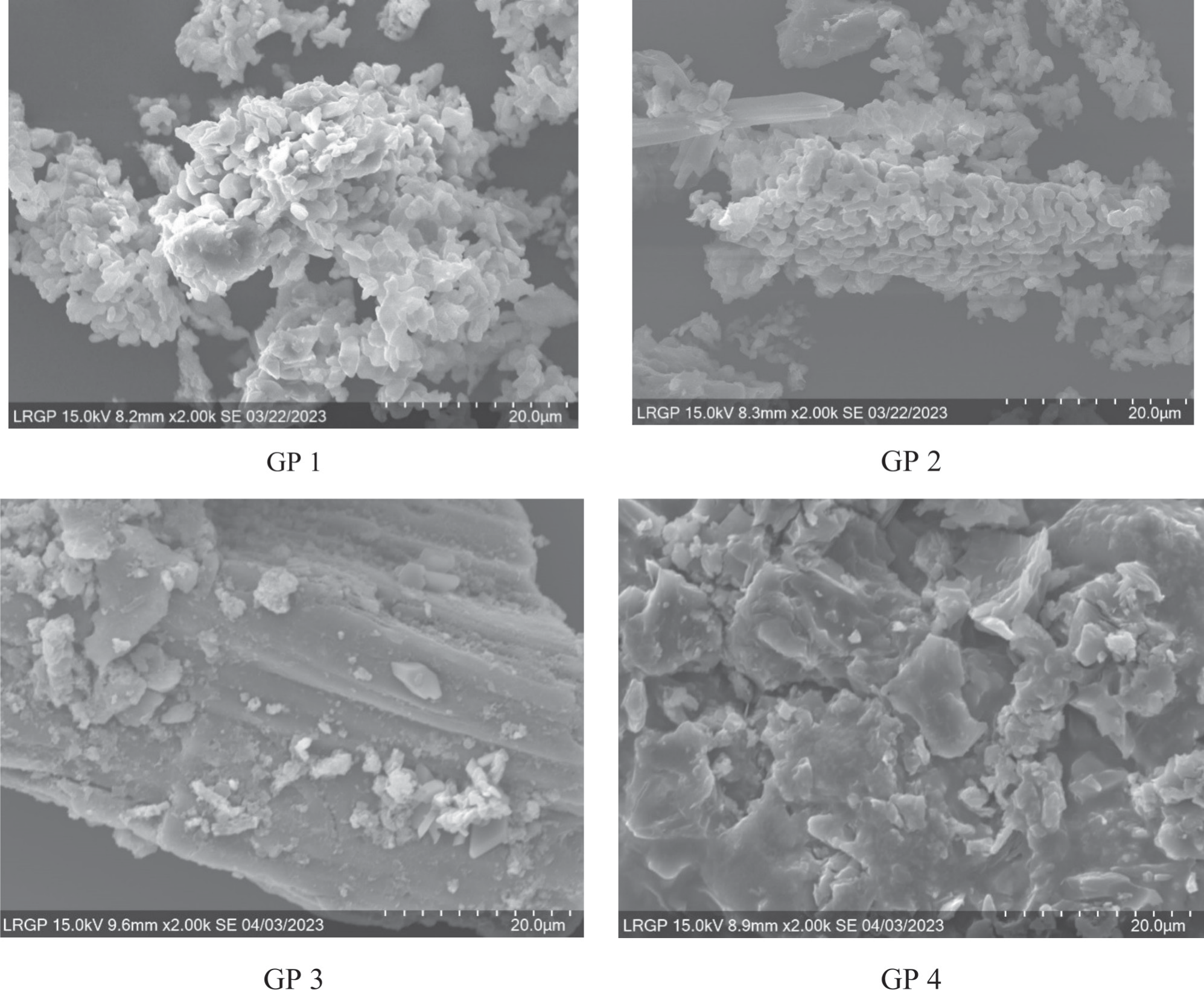
It is noted for GP 3 and GP 4, a more dense morphology, with a greater proportion of grouped particles. For sample GP 3, a more layered acicular structure is observed. According to the authors of [32], agglomerates of acicular particles are irregularly shaped particles originating from liquid glass, NaOH, and CaCO3.
The authors of [33, 34] conclude in their studies that denser and more uniform morphological aspects provide higher mechanical characteristics of geopolymers.
Conclusions
In this work, geopolymers were obtained on the basis of wastes from the coke industry, which is result of both industrial and environmental needs. It should be noted that the preparation of raw materials - silicon-containing additives does not require additional physical and mechanical influences, which will certainly have a positive effect on the cost of the obtained geopolymer composites.
The silicon-containing additive gives reaction products similar to metakaolin in geopolymers, which was revealed by the results of FT-IR and TGA. According to the obtained results, both NaOH, Na2SiO3, and their mixtures are suitable for activation of the SCA. However, the use of a dry process with Na2SiO3 is more preferable for SCA, as evidenced by the improvement in insulating capacity and the uniform dense morphology of the resulting geopolymer composite.

