

Introduction
Over the past half-century, the world has witnessed a significant increase in environmental challenges, marked by rising carbon emissions, resource inefficiency, pollution, water scarcity, and a worrying trend of elevated temperatures [1, 2]. This shift in climate patterns has reshaped consumer expectations, prompting them to prefer products and services from companies with minimal environmental impact [3]. Consequently, businesses now find it crucial to prioritize the quality of their offerings and ensure environmentally responsible operations [4].
Notably, a few decades ago, environmental concerns were not a top priority for industrial practitioners, policymakers, academics, and business leaders, as they believed their activities had limited environmental consequences [5]. However, global environmental decline has become a pressing issue. Nowadays, a consensus exists among industrial practitioners, policymakers, business professionals, and scholars that environmental degradation results from various factors, including climate change, air and water pollution, resource depletion, and hazardous material usage [6, 7]. This recognition underscores the importance of companies demonstrating their commitment to social and environmental responsibility [8].
Small and Medium Enterprises (SMEs) are instrumental in fostering employment opportunities and contributing to the growth of the global economy. However, it is essential to acknowledge that SMEs also significantly impact the environment, as they are responsible for generating approximately 60% to 70% of the world’s pollution [9]. The actions taken by SMEs to address environmental challenges are often overlooked and not given the recognition they deserve [10]. In particular, China’s contribution to the world’s carbon dioxide and greenhouse gas emissions is substantial, accounting for approximately 27% of global carbon dioxide emissions and one-third of global greenhouse gas emissions [11, 12]. China’s densely populated and economically significant coastal cities, which are home to roughly 20% of the country’s population and contribute one-third of its GDP, are threatened by climate change due to carbon emissions [11, 13, 14]. China is currently facing various challenges related to its coasts, including but not limited to flooding along the coastline, storm surges, erosion of coastal areas, and the intrusion of saltwater into coastal regions. If measures are not taken to address climate change, it could result in a projected GDP decline of 0.5% to 2.3% as soon as 2030 [11]. This highlights the urgency for all stakeholders to take immediate action towards mitigating the environmental impact of industrial activities. Despite growing awareness and emphasis on environmentally friendly practices, there remains a significant research gap in the field of green performance, highlighting the pressing need to expand the current body of literature on this topic [3].
From a comprehensive standpoint, a fundamental principle is incorporating economic advancement, environmental protection, and community harmony into a single research framework. In recent times, Corporate Social Responsibility (CSR) has gained greater significance, primarily driven by its increased focus on ethical practices that prioritize the promotion of environmental sustainability and making positive contributions to social welfare [15]. The Global Sustainable Investment Alliance reports that the amount of assets under management in sustainable investing has experienced a substantial increase on a global scale, rising from $30.7 trillion in 2018 to $35.3 trillion in 2020 [16]. This significant growth in sustainable investments aligns with the broader global interest in CSR practices, reflecting the increasing emphasis on responsible and ethical business conduct [17]. Considering this, CSR is frequently viewed as essential for ensuring long-term sustainability.
CSR encompasses a broad spectrum of corporate practices designed to fulfill an organization’s economic, legal, ethical, and philanthropic obligations and, notably, contribute to its financial success [18]. Despite the absence of a universally accepted definition, CSR encompasses four main categories: environmental responsibility, consumer relations, community engagement, and employee well-being. It involves sustainability, ethical marketing, community outreach, and fostering a supportive work environment – all of which have a financial impact on organizations [5]. The incorporation of CSR practices across these four categories plays a vital role in the success and financial performance (FP) of SMEs, as it enhances reputation, fosters customer loyalty, strengthens community ties, and cultivates a motivated and engaged workforce – all factors contributing to improved financial outcomes [19].
Scholars have studied the relationship between CSR and FP for several decades. While there has been some research into the relationship between CSR and environmental performance (EP), this topic has not received as much attention as it deserves in the literature. Nevertheless, several studies have indicated that CSR can significantly impact organizational performance [19]. However, it is worth noting that some studies have found the influence of CSR on organizational performance to be less pronounced. These mixed findings suggest that further research is needed to fully understand the relationship between CSR and organizational performance, particularly in environmental sustainability. Although numerous studies have examined the link between a firm’s performance and its CSR initiatives, researchers continue to focus on this relationship due to the inconclusive results [19]. Scholars suggest that rather than focusing on a direct relationship between CSR and organizational performance, it is essential to investigate the association of CSR with organizational performance through mediation or moderation mechanisms [20]. Incorporating intervening variables into the relationship has been shown to clarify the relationship between CSR and FP by reducing ambiguity and improving our understanding of the underlying mechanisms [20].
Effective leadership is crucial for an organization’s growth and performance by shaping its vision, communication, and motivation. Various leadership styles, including transformational, environmental, ethical, responsible, servant, and authentic leadership, have been discussed [21]. In the context of sustainability and innovation, green transformational leadership (GTL) stands out. It surpasses traditional transformational leadership by emphasizing sustainability and eco-friendly practices. Green transformational leaders inspire and motivate their teams not only to excel but also to implement environmentally responsible initiatives, fostering innovation in sustainable practices and an environmentally conscious culture [22]. This leadership style also plays a key role in managing human resources effectively, prioritizing team development and engagement, empowering employees to contribute to sustainability goals, and encouraging creative thinking for eco-friendly solutions [23].
The relationship between CSR, GTL, and EP is multifaceted and interconnected. CSR initiatives often involve commitments to environmental sustainability, such as reducing carbon emissions, minimizing waste, and adopting eco-friendly practices. Transformational leadership, particularly GTL, plays a pivotal role in driving and implementing these CSR efforts within organizations. GTL not only inspires employees to embrace sustainability goals but also empowers them to innovate and develop environmentally responsible solutions [22]. As a result, organizations led by GTL are more likely to integrate environmental considerations into their business strategies and operations, leading to enhanced EP [23]. Furthermore, GTL fosters a culture of environmental responsibility and consciousness among employees, reinforcing the organization’s commitment to sustainable practices and contributing to long-term environmental outcomes. Thus, the relationship between CSR, GTL, and EP is symbiotic, with each element reinforcing and amplifying the impact of the others.
The study introduces an innovative research approach aimed at elucidating the relationship between CSR and EP within the realm of Chinese Small and Medium-sized Enterprises (SMEs). It places particular emphasis on the mediating function of GTL within the context of the natural-resources-based view (RBV) theory. The central research question addressed by this study is: “How do CSR strategies influence the EP of Chinese SMEs, and to what extent is this relationship mediated by GTL?”
The primary objective of this research is to examine the interplay between CSR practices and EP in Chinese SMEs, while specifically delving into the mediating role played by GTL. By undertaking this investigation, the study seeks to offer a unique perspective on the CSR- EP nexus, emphasizing the pivotal role of GTL in promoting sustainable practices among SMEs. Furthermore, the study’s contextual focus on China is of paramount importance, given the nation’s rapid economic growth and the concomitant environmental challenges that have emerged as a result. The study’s findings have implications for both researchers and practitioners seeking to promote ecological sustainability in SMEs, particularly in developing countries.
The study at hand offers a multitude of meaningful contributions and implications. Developed countries predominantly dominate the study area; therefore, the current research is the only paper investigating the relationship between internal and external CSR practices and EP in a developing country context. This is an area of research that scholars have previously overlooked. This paper is the first to investigate if GTL acts as a mediator between CSR initiatives and EP while considering the natural resources-based view theory in a developing country. This study makes a valuable contribution to the environmental management literature in developing countries by emphasizing the vital role that CSR and GTL practices play in shaping the EP of SMEs. Specifically, the study sheds light on how these practices can be effectively leveraged to enhance environmental sustainability in the context of SMEs, which are often significant contributors to environmental degradation in many developing countries.
Theoretical Background
CSR and CSR Dimensions
CSR has emerged as a central concern for 21st-century organizations, reflecting businesses’ role in society [24]. Despite its growing importance, there is still no widely accepted definition of CSR. Carroll [25] defined it as “the social responsibility of business, which encompasses the economic, legal, ethical, and discretionary expectations that society has of organizations at a given point in time”. However, scholars have criticized Carroll’s interpretation of CSR, arguing that economic and legal responsibilities are basic expectations that all businesses must fulfill [26]. As such, they suggest that CSR should go beyond these basic expectations to encompass a more comprehensive and meaningful set of responsibilities.
Matten and Moon [27] proposed that “CSR is differentiated from business fulfillment of core profit-making responsibility and the social responsibilities of government”. Similarly, McWilliams and Siegel [28] defined CSR as “actions that appear to further some social good beyond the firm’s interests and that which is required by law.” Scholars exclude the economic and legal aspects of CSR and refer to it as actions taken by firms to advance or promote social good beyond their immediate interests and legal obligations. However, we employed the following four dimensions of CSR: CSR to the environment, CSR to consumers, CSR to the community, and CSR to employees.
Environmental Dimension
In the current global landscape, organizations face considerable pressure from stakeholders, such as customers, employees, investors, and regulators, to take a stance on social and environmental issues. As a result, many organizations have begun to actively advocate for causes related to sustainability, climate change, diversity and inclusion, human rights, and other social and environmental concerns [29]. According to Yohn [30], for an organization to succeed, it must meet the expectations of the public it serves. Failing to do so can have significant consequences for the business. Nowadays, consumers, employees, investors, and other stakeholders have become more socially and environmentally conscious, and they expect the organizations they engage with to reflect these values. As observed by Fernández-Gago et al. [31], there is a growing momentum towards CSR in the present business landscape. Earlier research has shown that the adoption of CSR practices can have a significant positive impact on the economic competitiveness of SMEs. By implementing CSR practices, SMEs can enhance their reputation and brand image, attract more customers, and improve their relationships with stakeholders, including investors, employees, and suppliers [20]. Research conducted by academics has demonstrated that a proactive approach to EP can improve firms’ economic and financial health. Companies can improve their operational efficiency and cut costs by adopting environmentally friendly practices, such as reducing energy consumption, waste reduction, and emissions control.
Additionally, companies with a positive environmental reputation are more likely to attract environmentally conscious customers and investors, leading to increased revenue and profitability. Furthermore, adopting sustainable practices can help firms mitigate risks associated with environmental regulations and legal liabilities, reducing potential financial losses [32]. Although the relationship between CSR and EP is considered crucial, there is still a lack of empirical evidence on this topic. Previous studies have suggested that CSR activities related to the environment in emerging markets can significantly positively impact EP [33]. On the other hand, some researchers have provided contradictory evidence to suggest that CSR may not directly affect EP [34]. Given the lack of conclusive evidence regarding the relationship between CSR and EP, further research is necessary to understand this complex relationship better.
Employees Dimension
According to stakeholder theory, businesses are responsible for considering and responding to the needs and expectations of both primary and secondary stakeholders. One crucial group of stakeholders is a company’s employees, who can directly impact the organization’s success. Therefore, businesses need to recognize the significance of employees and prioritize their well-being by addressing their concerns, offering competitive compensation and benefits, providing opportunities for growth and development, and ensuring a safe and healthy work environment [35]. By doing so, companies can foster a culture of trust, loyalty, and commitment among employees, leading to greater productivity, innovation, and overall success [36]. Researchers have shown that the social behavior of workers can negatively impact a company’s FP [37]. The literature shows that employees confronted with environmental challenges are more likely to engage in pro-environmental behaviors. Specifically, they tend to take the initiative to implement practices and policies that support environmental sustainability within their workplace. These findings suggest that exposure to environmental challenges can motivate individuals to adopt a more environmentally responsible approach, which can lead to positive outcomes for both the organization and the environment [38]. As a result, implementing such eco-friendly practices not only supports environmental sustainability but also contributes to FP [39] and enhances employee well-being [40]. Scholars have directed their attention toward the impact of employees’ social behavior on EP [41]. Studies have shown that when an organization communicates its environmental goals and strategies to its employees, it can create a sense of social accountability among the employees toward improving EP [42]. Research has shown that involving employees in CSR events that focus on environmental sustainability can positively impact their pro-environmental behavior. By participating in these events, employees can work together as a team, leading to the generation of new and innovative ideas for eco-friendly initiatives. Furthermore, such events can create a sense of shared responsibility and motivation among employees towards achieving the organization’s environmental sustainability goals [43].
Community Dimension
Companies must establish a positive relationship with the community, which is one of their most important stakeholders. This can be achieved by prioritizing CSR practices [44]. By doing so, companies can demonstrate their commitment to contributing to society’s well-being and minimizing their negative impact on the environment and local communities [45]. SMEs fulfill their CSR obligations to society by engaging in charitable activities to enhance the quality of life and promote socio-economic growth [45]. Through such initiatives, SMEs can demonstrate their commitment to contributing to society’s well-being and supporting local communities [36]. Existing research suggests that engaging in corporate philanthropy can lead to improved firm performance for companies. This philanthropy can take various forms, such as supporting education, protecting the environment, or promoting the arts. By engaging in such activities, companies can enhance their reputation, increase their visibility, and build goodwill with stakeholders, leading to better financial and non-financial outcomes [45, 46]. Studies conducted in developing countries have suggested that charitable activities can lead to sustainable performance and improve a company’s image [44]. This, in turn, can contribute to the company’s long-term sustainability as well as its continued success and growth. Despite the growing interest in CSR and its potential impact on companies, scholars have not given adequate attention to the relationship between CSR practices and their impact on the community and the environment. The CSR for the community, EP nexus is a crucial area of inquiry that requires more research attention. The present study posits that CSR in the community is an effective strategy that can lead to economic and ecological sustainability [45].
Consumer Dimension
Numerous studies worldwide have highlighted the pivotal role of consumers, as significant external stakeholders, in compelling modern businesses to adopt ethical practices by integrating CSR into their environmental efforts [47].
Furthermore, it’s well recognized that brand reputation reflects an organization’s past actions and management practices. Engaging in CSR activities serves as an effective strategy for enhancing reputation [48]. As noted by Bafera and Kleinert [49], in markets flooded with information, buyers seek signals that distinguish responsible sellers from irresponsible ones. CSR activities serve as such signals, contributing to an improved company image. Numerous studies have consistently shown the direct influence of CSR perceptions on brand reputation, highlighting the positive impact of practicing responsible CSR on effective brand reputation management. These studies have shown that consumers are becoming increasingly aware of the impact of business practices on the environment and demanding that companies take responsibility for their actions. Consumers’ expectations of businesses have changed significantly in recent years, with many believing that companies should take a more active role in addressing social and environmental issues [49].
While it’s important to acknowledge that consumer preferences for environmentally friendly products and sustainable practices can vary significantly across regions due to a complex interplay of factors, including economic development, quality of life, and cultural differences, research suggests a notable global trend. Several studies have indicated that a substantial portion of consumers in diverse regions around the world are increasingly willing to pay a premium for products that are environmentally friendly or produced by sustainable practices [50]. While the extent of this willingness may vary regionally, it underscores the growing importance of sustainability considerations in shaping consumer behavior on a global scale. Prior research has shown that CSR initiatives directed at consumers can significantly increase brand recognition, generate interest in purchasing products or services, and enhance overall company performance [47].
Nevertheless, there is still a lack of substantial proof regarding the effects of CSR targeted at consumers on EP. We propose that implementing CSR initiatives targeted towards consumers can serve as a mutually beneficial strategy for achieving sustainable growth.
Green Transformational Leadership
Transformational leadership is a leadership style in which leaders identify a desired change and inspire and motivate employees to work towards a shared vision [51]. GTL is defined as “behaviors of leaders who motivate followers to achieve environmental goals and inspire followers to perform beyond expected levels of EP” [52]. GTL is built on the principles of transformational leadership by encompassing its four key dimensions: intellectual stimulation, individualized consideration, charisma, and inspirational motivation [53]. Intellectual stimulation can enhance the creative problem-solving capabilities of followers related to environmental sustainability by developing their cognitive processes, such as problem construction, information search, solution generation, and problem-solving strategies [54]. Green transformational leaders recognize their team members’ unique needs and strengths, and by offering coaching and support, they encourage group creativity to achieve sustainability goals [54]. Leaders with charisma create a clear vision that motivates their team and fosters creativity in generating green solutions. Finally, green transformational leaders with high inspirational motivation inspire their followers to express their ideas and viewpoints, supporting them in developing creative and innovative solutions for environmental sustainability [53, 54].
GTL plays a pivotal role in fostering a positive work environment within businesses, as supported by various studies [54]. GTL’s influence extends across multiple dimensions, starting with its commitment to environmental sustainability. By encouraging innovative and sustainable solutions to environmental challenges, GTL not only aligns businesses with eco-conscious practices but also shapes a workplace atmosphere that values and integrates these principles. Additionally, GTL prioritizes employee well-being, recognizing their unique strengths and needs, which in turn fosters a strong sense of belonging and encourages employees to take ownership of environmental initiatives [53]. This empowerment translates into higher levels of engagement, job satisfaction, and commitment among employees, contributing significantly to a supportive and positive workplace atmosphere. Furthermore, GTL’s focus on responsibility and accountability toward the community inspires organizations to engage in sustainable development efforts and build lasting relationships with stakeholders, including suppliers, customers, and partners [53]. This community-oriented approach instills a sense of purpose and social responsibility that positively impacts the workplace atmosphere. Lastly, GTL’s commitment to transparency and accountability, particularly in environmental practices, builds trust and loyalty among consumers who prioritize sustainability in their purchasing decisions [54]. These long-term customer relationships further enhance the positive brand reputation, thereby contributing to an overall workplace environment characterized by engagement, satisfaction, and a shared commitment to ethical and sustainable values.
The previous conversation highlighted that the connection between CSR and EP is a topic of ongoing debate and research. The existing literature on the relationship between CSR and firm performance has produced mixed and inconclusive findings. Therefore, the relationship between CSR and firm performance is inconclusive and requires further investigation, which may involve the incorporation of a mediating variable in the research framework. According to the NRBV theory proposed by Hart [55], GTL should be considered an essential resource for managing the environment within an organization [54]. CSR is a strategic approach that aims to create a positive impact on society and the environment. At the same time, GTL is a leadership style that promotes environmental sustainability and responsible business practices. As a result, GTL can be considered a potential mediating variable between CSR and EP.
Theoretical Framework and Hypothesis Development
In adopting the Resource-Based View (RBV) theory, this study aligns with a foundational framework in strategic management renowned for its emphasis on the strategic significance of a firm’s internal resources and capabilities [56]. RBV theory emphasizes that sustainable competitive advantage arises from leveraging these unique and valuable resources, which are inherently difficult for competitors to replicate or substitute [4]. By prioritizing the identification and cultivation of such distinctive resources, firms can position themselves for long-term success in dynamic market environments.
Expanding upon RBV theory, the incorporation of the Natural Resource-Based View (NRBV) theory broadens our understanding of competitive advantage in the context of environmental sustainability [4, 56]. NRBV theory recognizes the critical role of natural resources – ranging from raw materials to ecosystem services – in shaping organizational competitiveness. It underscores that prudent management of these resources not only mitigates environmental risks but also unlocks opportunities for innovation and value creation [56]. Consequently, firms that proactively integrate environmental considerations into their strategic decision-making processes can achieve not only environmental sustainability but also enhanced competitiveness and resilience in the marketplace.
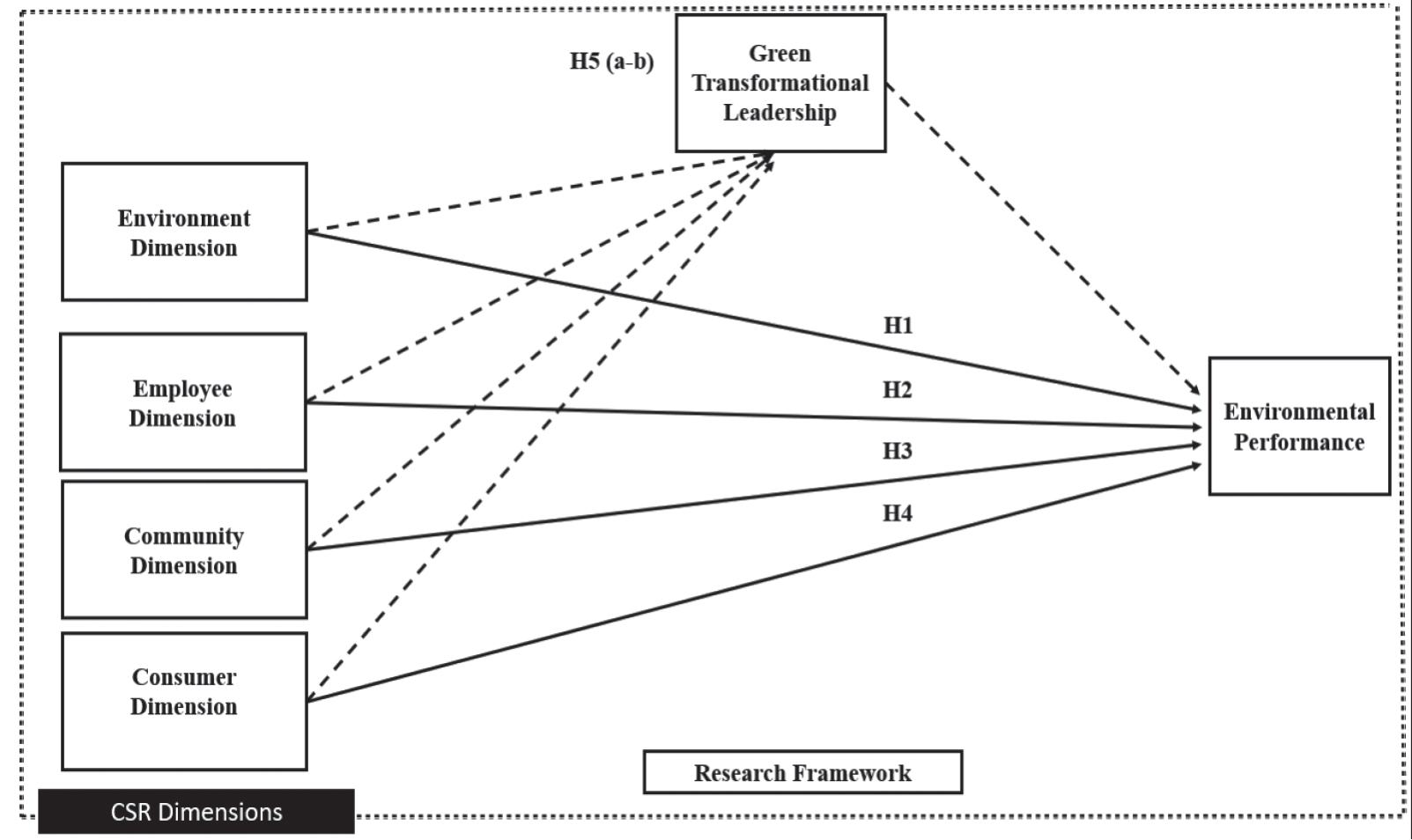
By embracing both RBV and NRBV theories, this study offers a comprehensive framework for analyzing the interplay between organizational resources, environmental stewardship, and competitive advantage. Our research framework integrates these theories and hypotheses to assess the environmental performance (EP) of organizations through the lenses of Corporate Social Responsibility (CSR) and Green Transformational Leadership (GTL) [34]. Inspired by these theories, our central research question is: “How do CSR strategies influence the EP of Chinese SMEs, and to what extent is this relationship mediated by GTL?” To address this question comprehensively, we have formulated five hypotheses:
H1: CSR practices targeted towards the environment are positively associated with EP.
H2: CSR practices targeted towards employees are positively associated with EP.
H3: CSR practices targeted towards the community are positively associated with EP.
H4: CSR practices targeted at consumers are positively associated with EP.
H5(a-d): GTL significantly mediates the relationships between CSR (environment, employee, community, consumer) and EP.
H5(a): GTL significantly mediates between CSR, environment, and EP.
H5(b): GTL significantly mediates between CSR, employees, and EP.
H5(c): GTL significantly mediates between CSR, community, and EP.
H5(d): GTL significantly mediates between CSR, consumer, and EP.
Based on the above discussion, a theoretical framework is developed, as shown in Fig. 1.
Materials and Methods
Measures
The study aims to examine the influence of CSR strategies on EP through a quantitative approach, which necessitated the use of a survey for data collection. To achieve this, we designed a comprehensive questionnaire consisting of two distinct parts. The first part involves the definition of the constructs, data confidentiality, and ethical considerations of the research. Demographic information was also included in this part. In this study, we incorporated a set of control variables, drawing from previous research practices. The inclusion of these control variables was done with specific purposes in mind. Firstly, we utilized the number of employees as a control variable to account for differences in corporate size. Secondly, we considered demographic information control variables, including gender, age, job title, and experience. These variables were selected for several reasons. Firstly, they are deemed crucial factors influencing the impact of CSR initiatives on employees, a perspective supported by research such as Hur et al. [57] and Simmou et al. [5]. Furthermore, these demographic variables have consistently been employed as control variables in previous research within the CSR literature. Including these demographic variables is essential to account for potential variations associated with these factors in our analyses. This practice aligns with established research norms and ensures a more comprehensive examination of the relationships and outcomes within our study. The second part of the questionnaire encompasses the specific items associated with the constructs used in the study. These items are crucial for gauging the various dimensions of CSR strategies and their potential impact on EP. To capture respondents’ perceptions accurately, we utilized a 7-point Likert scale, ranging from 1 (strongly agree) to 7 (strongly disagree).
A previously developed scale was used for data collection to measure the constructs. However, few modifications were made as per the context of the study. All four dimensions of CSR strategies are adopted from Farooq, Farooq, Jasimuddin [58], and Turker [59]. At the same time, five items of EP were adopted by Melnyk et al. [60]. Moreover, five items of only the mediating variable GTL were adopted from [53].
As part of our rigorous research methodology, the study was preceded by a pilot study to ensure the reliability and suitability of our research instruments. While the measurements were initially developed in English, we recognized the importance of presenting them in the local language, Chinese, for the benefit of our respondents. Following a well-established translation method, the questionnaire was translated into Chinese, and a back translation into English was conducted [61]. Content validity was ensured by comparing both versions with feedback from experts. Subsequently, a pilot study involving 50 respondents was carried out, and the results demonstrated the questionnaire’s clarity, comprehensibility, and suitability for our research objectives. With the positive outcomes from the pilot study, we proceeded to finalize the questionnaire for data collection.
Data Collection and Procedures
We collected cross-sectional data from October 20th, 2022, to December 27th, 2022, using an online survey method. Our sample comprised 850 employees from Chinese SMEs, including CEOs/MDs, senior managers, and first-line managers. To ensure unbiased responses, we focused on individual perspectives and verified email addresses from SMEs’ online profiles. The data exclusively originated from wholly Chinese companies, aligning with our research objectives. Our sample was drawn from the China Business Directory for contextual relevance. Out of the 547 responses received, 23 were excluded due to invalid or incomplete information. We ultimately analyzed 524 completed and valid questionnaires, representing a response rate of 61.65%. The demographic profile of the respondents can be seen in Table 1.
Table 1.
Demographic profile of the respondents.
Results and Discussion
Structural Equation Modeling (SEM) for Analysis
SEM offers several advantages in statistical analysis, including efficiency, accuracy, and convenience, when compared to traditional multivariate statistical techniques [62]. SEM is a robust and influential second-generation multivariate statistical analysis method used for parameter assessment and hypothesis testing [63]. It incorporates first-generation statistical procedures like factor analysis and regression or path analysis. In the field of business research, the use of SEM is becoming increasingly popular. SEM includes two well-known techniques: covariance-based SEM (CB-SEM) and Variance-Based SEM (VB-SEM). Choosing the appropriate statistical technique is crucial for social science researchers, as incorrect selection can lead to inaccurate conclusions and imprecise results. Social science data often deviate from normality, making Partial Least Square (PLS), also known as VB-SEM, a preferred choice over CB-SEM. In this study, PLS-SEM was employed to analyze the theoretical model using Smart PLS 3.0. The PLS-SEM approach involves two phases: the measurement model and the structural model [64]. This study followed recommended two-stage analytical procedures to test both the measurement model (assessing the validity and reliability of measures) and the structural model (testing hypothesized relationships). Additionally, the significance of path coefficients and loadings was assessed using bootstrap resampling with 5000 iterations.
Table 2.
Measurement model analysis.
Measurement Model Analysis
The measurement model consists of four types of reflective tests, i.e., internal consistency reliability, individual item reliability, convergent validity, and discriminant validity. Composite reliability measures internal consistency and reliability [62]. Table 2 shows that the lowest value of CR is 0.790 (employee dimension), and the highest value is 0.896 (EP), which is higher than the threshold value of 0.7 [64]. Individual item reliability is measured through factor loadings. All the values are higher than the suggested value of 0.5, which shows no issue with individual item reliability (see Fig. 2). Convergent validity is measured through the Average Variance Extracted (AVE). The results showed that the lowest value of AVE is 0.530 (GTL), and the highest value is 0.634 (EP), which is greater than the suggested value of 0.50 [64].
The current study used the Heterotrait-Monotrait ratio (HTMT) compared to Fornell and Larcker [65] due to the recommendation of many researchers in recent times [66]. It is suggested that all the values of HTMT should be less than 0.85, and Table 3 indicates all values are less than 0.90.
Structural Model Analysis
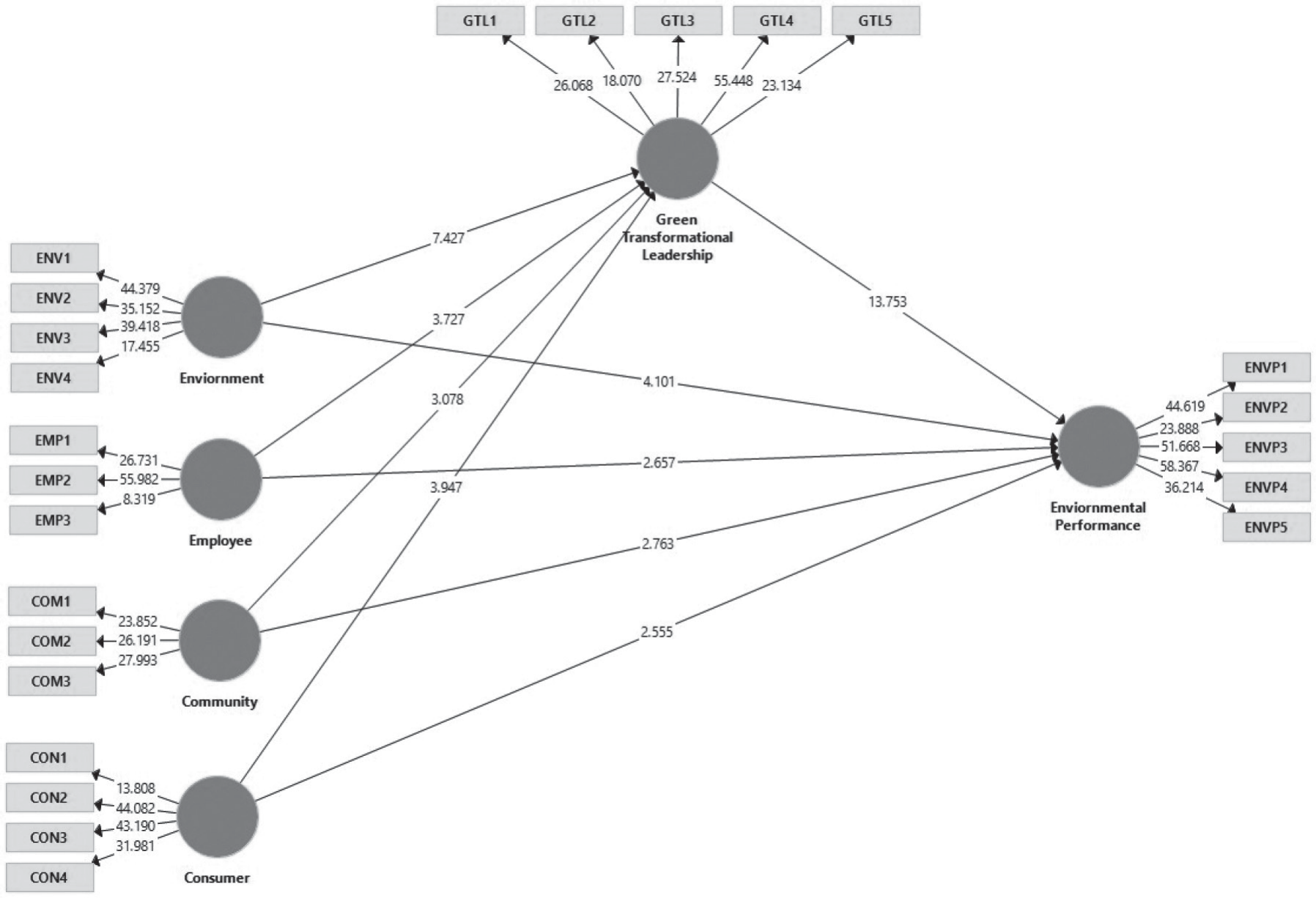
After conducting measurement model analysis, structural model analysis was conducted to test the hypotheses. The obtained models were rigorously tested using the Bootstrap technique with 5000 iterations. Path coefficients (β values) and t-values were employed to assess the significance of the hypotheses. If the t- t-value exceeds 1.64, the proposed hypotheses are accepted, and vice versa. Table 4 and Fig. 3 show that all hypotheses are accepted. It means that CSR dimensions, i.e., environment (β = 0.163, t = 4.101 > 1.64), employee (β = 0.090, t = 2.657 > 1.64), community (β = 0.098, t = 2.763 > 1.64), and consumer (β = 0.086, t = 2.555 > 1.64), have a positive influence on EP. Moreover, GLT mediates the relationships of all CSR strategies, i.e., environment (β = 0.170, t = 6.735 > 1.64), employee (β = 0.089, t = 3.516 > 1.64), community (β = 0.062, t = 3.048 > 1.64), consumers (β = 0.080, t = 3.822 > 1.64), and EP. The R2 of EP is 0.569, indicating 56.9% of variations in employee performance are due to the tested model. The R2 value is substantial because Cohen [67] suggested that values higher than 0.40 are substantial.
Table 3.
Discriminant validity (HTMT Criteria).
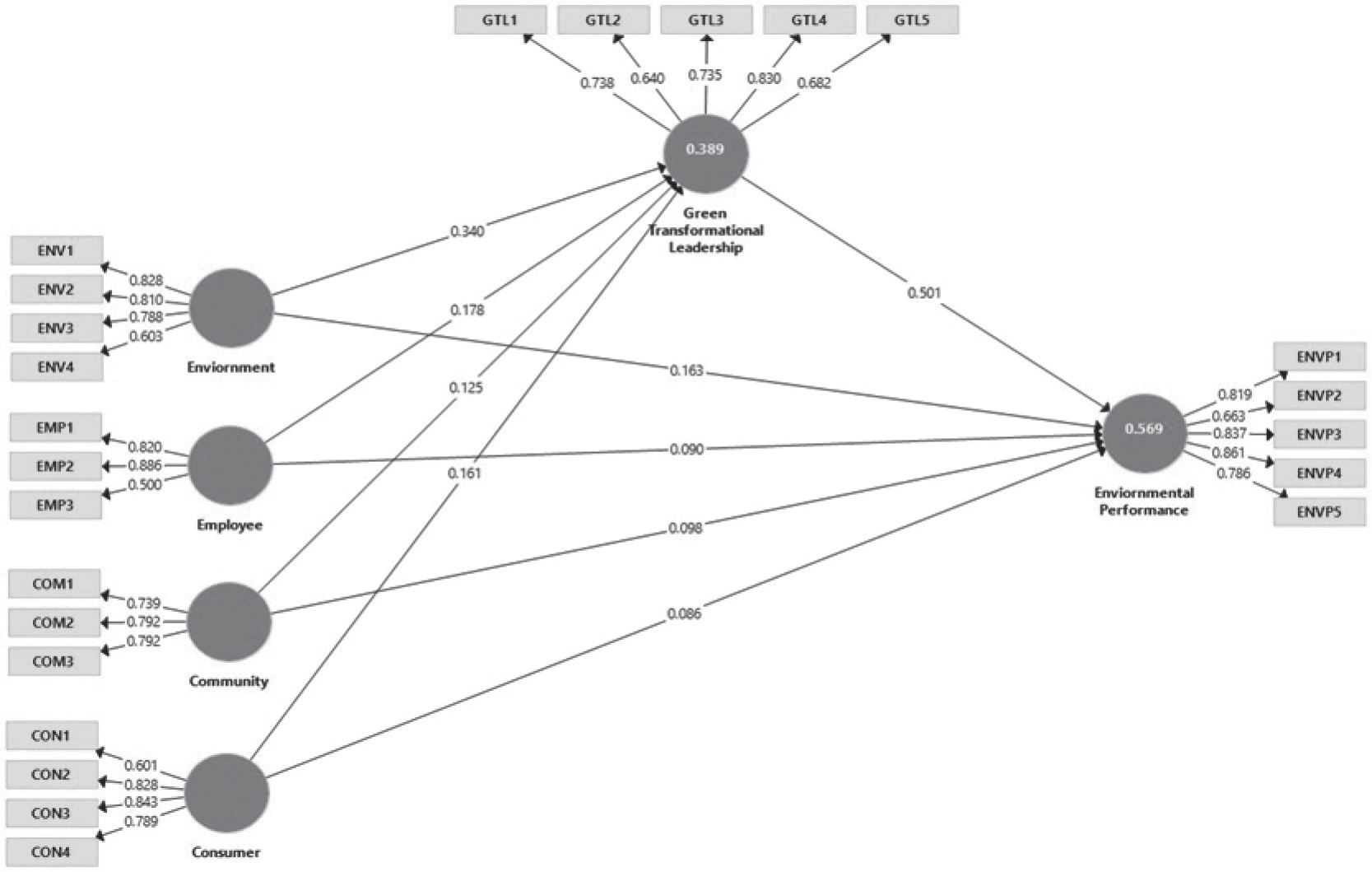
Table 4.
Structural model results.
Discussion
The study delves into a critical area of contemporary business research: the relationship between CSR, GTL, and EP, particularly in the context of Small and Medium-sized Enterprises (SMEs) in China. The research reveals compelling insights into the intertwined dynamics of CSR, GTL, and EP.
Firstly, the study’s findings underscore the significance of CSR practices across various dimensions – environment, employee, community, and consumer – in positively influencing EP. This aligns with previous research emphasizing the positive impacts of CSR on organizational outcomes [68]. The study’s findings emphasize the positive influence of CSR practices across different dimensions on EP. Encompassing areas such as environmental, employee, community, and consumer-focused CSR initiatives, this research underscores the significance of each dimension. For instance, environmentally focused CSR practices contribute to resource efficiency and reduce environmental impact, aligning with previous studies highlighting economic and environmental benefits. Employee-centric CSR practices foster engaged and motivated employees who actively participate in sustainability efforts, ultimately supporting environmentally friendly practices. Community-oriented CSR practices enhance a company’s reputation and build strong community relationships, positively affecting economic performance. Lastly, consumer-centric CSR practices result in improved brand recognition and loyalty among eco-conscious consumers, driving sales and revenue growth. Together, these dimensions of CSR play a pivotal role in enhancing an organization’s EP and overall sustainability.
Moreover, the study highlights the crucial role of GTL in mediating the relationship between CSR strategies and EP. GTL fosters an environment where employees are not only motivated to align their actions with environmental goals but also become actively engaged in driving sustainable initiatives. This echoes previous studies demonstrating that leadership plays a pivotal role in shaping organizational sustainability efforts [32, 34].
The research outcomes align with prior studies while also acknowledging the existing debate surrounding the CSR-EP relationship, where some studies have produced contradictory results [8, 34]. The findings emphasize that SMEs’ commitment to CSR dimensions can indeed positively impact their EP. This alignment with some previous studies [68] reaffirms the relevance of CSR practices across various organizational settings, including SMEs. Furthermore, the research substantiates that employees are more likely to embrace pro-environmental behaviors when they perceive their employer’s dedication to environmentalism and sustainability [69].
The study’s unique contribution lies in recognizing the mediating role of leadership in this relationship. GTL’s visionary and inspirational approach motivates employees to actively engage in environmental initiatives, leading to higher levels of engagement, job satisfaction, and commitment [32, 34]. This mediation between CSR and EP reinforces the idea that leadership is a critical factor in translating CSR commitments into tangible environmental outcomes.
In conclusion, this study adds valuable insights to the existing literature by shedding light on the intricate relationship between CSR, GTL, and EP in the specific context of Chinese SMEs. The findings not only affirm the positive influence of CSR practices across various dimensions but also emphasize the pivotal role of GTL in mediating this relationship. By doing so, the research contributes to our understanding of how organizations, particularly SMEs, can harness CSR strategies and leadership approaches to enhance their EP, aligning with the evolving expectations of stakeholders in today’s socially and environmentally conscious business landscape.
Conclusion and Implication
This study delved into the intricate relationship between corporate social responsibility (CSR) dimensions and environmental performance within the context of Chinese SMEs, employing a resource-based view. The findings underscore the substantial impact of CSR practices, specifically those concerning the environment, employees, customers, and community, on a firm’s environmental performance. The empirical evidence lends support to the notion that environmentally focused CSR initiatives not only enhance resource efficiency within organizations but also contribute significantly to curbing detrimental effects on the ecosystem. Furthermore, the study illuminates the pivotal mediating role of green transformational leadership, revealing that leaders who champion environmental stewardship foster a workplace environment where employees are more inclined to adopt pro-environmental behaviors. This synthesis of CSR and green transformational leadership highlights the integral role of organizational leadership in shaping and reinforcing sustainable practices, emphasizing the interplay between corporate initiatives, leadership strategies, and environmental outcomes within the dynamic landscape of Chinese SMEs.
Theoretical Contribution
The researchers’ papers tend to have theoretical contributions if their findings provide novel insights into a research topic, phenomena, and literature that are crucial for researchers, organizations, and practitioners. The current study contributes to the existing literature in the following ways: First, the present study identifies the internal and external CSR strategies that influence EP through GLT. This study of its kind has taken GLT as the mediator, which opens new insights in the literature. Second, previously all studies have accounted for the EP in developed countries, and the case of a developing country like China has been left unexplored. In this regard, the current study has focused on this unexplored area in the literature, indicating the importance of environmental strategies in developing countries. Third, the Chinese SMEs represent 97% of the enterprises, highlighting the SMEs’ significance in the economy. The current study has focused on the SMEs to study the EP of the enterprises, which was relatively scarce in the literature.
Practical Implications
The research results carry significant implications for SME practitioners, especially those dedicated to improving their EP. The study suggests that implementing all CSR strategies can be an effective way for these professionals to enhance their company’s EP, especially in developing nations. In terms of the environment, companies can use CSR strategies to promote sustainable practices and reduce their environmental impact. This can improve their EP, reduce their carbon footprint, and enhance their reputation as environmentally responsible entities. For employees, implementing CSR practices can help create a positive workplace culture and improve employee morale. Companies can offer programs to support employee development, wellness, and work-life balance, leading to increased job satisfaction and retention. Companies can use CSR strategies for the community to give back and support local initiatives. This can include sponsoring community events, contributing to charitable causes, and implementing environmentally sustainable practices that benefit the local community. For consumers, CSR can help companies build trust and loyalty by demonstrating a commitment to ethical business practices. Consumers are increasingly interested in purchasing products and services from socially responsible companies, and CSR initiatives can help companies meet these expectations. Overall, implementing CSR practices can significantly benefit companies in terms of improved financial performance, customer loyalty, and reputation while contributing to a more sustainable and equitable world.
Furthermore, the results showed that GTL plays a significant role in mediating the relationship between CSR strategies and EP. GTL can enhance CSR for EP by creating a culture of environmental responsibility within the organization. Green leaders can improve the company’s overall EP by promoting environmentally sustainable practices and reducing the company’s environmental impact. Firstly, results suggest that green transformational leaders can set an example for others by actively promoting and demonstrating their commitment to environmentally sustainable practices. Green leaders must inspire employees to adopt similar behaviors, leading to a more environmentally conscious and responsible workplace. Secondly, green transformational leaders need to create opportunities for employee engagement in CSR initiatives related to the environment. By involving employees in developing and implementing environmentally responsible practices, leaders can increase employee engagement and commitment to the company’s overall CSR efforts, which can improve the company’s EP.
Thirdly, green transformational leaders must provide resources and support for environmentally responsible initiatives. This can include training programs, tools, and technologies to help employees reduce their environmental impact and increase environmental efficiency. By providing the necessary resources, leaders can empower employees to take action and improve the company’s EP. Fourthly, green transformational leaders can create an organizational culture that values environmental sustainability and social responsibility. This can increase the company’s reputation as a socially responsible entity, leading to increased customer loyalty and improved financial performance. This can also help the company attract and retain environmentally conscious employees who are committed to the company’s EP goals. Overall, GTL can enhance CSR for EP by promoting environmentally sustainable practices, increasing employee engagement, providing resources and support for environmentally responsible initiatives, and creating an organizational culture that values environmental sustainability and social responsibility. By doing so, the company can improve its EP and meet the growing demand for environmentally sustainable business practices.
Limitations and Future Directions
While our current study makes notable theoretical and practical contributions, it is imperative to acknowledge its inherent limitations and outline potential directions for future research. Firstly, the research is confined to Small and Medium Enterprises (SMEs) in China, potentially limiting the generalizability of our findings. Future researchers can focus on cross-cultural comparisons by comparing China and developed countries for generalizability. Secondly, the predominant focus on SMEs in our study might omit crucial insights from larger firms within the country. Future research endeavors could benefit from shifting emphasis towards larger enterprises to obtain a more comprehensive understanding of the examined phenomena. Thirdly, our reliance on cross-sectional data for analysis restricts our ability to explore temporal dynamics and causal relationships fully. Future researchers are advised to undertake longitudinal studies, enabling a more nuanced exploration of the trends and patterns over time. Finally, this study was conducted in China. To overcome this limitation and enhance the study’s cross-cultural relevance, future investigations should consider comparative analyses between developed and developing countries.

