

Introduction
The COVID-19 outbreak has triggered a global economic crisis, including depleting global oil reserves, price instability, and the ecological consequences of relying on fossil fuels for exploration, extraction, and utilization. Different globally admissible organizations have earlier initiated various strategies to promote this circumstance to switch the global energy into renewable energy sources, ensuring sustainability, economic viability, and applicability across diverse sectors [1]. The fortune of any biotechnological task is principally estimated by the application of a significant biocatalyst that can utilize various economical as well as renewable substrates at the desirable process conditions. Accordingly, the cost-effectiveness of any bio process is constitutionally associated with the utilization of economical raw materials. Biofuels are recognized as a feasible alternative to fossil-based fuels to cut down the reliance on fossil fuels, limit climate change, reinforce fuel security, and regulate hazardous emissions [2]. In this manner, impressive actions are eminently needed to expand the biofuel production and steadily promote them to substitute the petroleum fuel.
Biodiesel is characterized by its composition of long-chain alkyl esters, derived from the transesterification reaction between triglycerides and alcohol, facilitated by an optimal catalyst, with glycerol formed as a byproduct [3]. According to market projections, global biodiesel demand is anticipated to reach 215.7 billion kg by 2026, representing a 42% annual growth rate. This rapid expansion is expected to result in the indirect production of approximately 15.14 billion kg of crude glycerol. Furthermore, empirical data indicate that the biodiesel production process results in a crude glycerol byproduct ratio of approximately 1:10 (10 kg crude glycerol per 100 kg biodiesel) [4]. The economic viability of the biodiesel industry is significantly influenced by the glycerol selling price. Specifically, a $0.22 per litre reduction in glycerol price would lead to a $0.021 per litre increase in the cost of producing biodiesel [5]. The utilization of crude glycerol, a biodiesel by-product, yields multiple benefits, encompassing enhanced process economy, minimized waste generation, and elevated resource efficiency. Also, crude glycerol is a valuable resource with various uses, including renewable energy, chemical production, pharmaceuticals, food, and cosmetics. Purification of biodiesel by-product is incommodious and, therefore, harnessing the crude glycerol as a complete energy solution for various modern products presents a value-added approach, enhancing resource efficiency and sustainability. As the biotechnology landscape continues to evolve, crude glycerol is emerging as a critical feedstock to produce malic acid through fermentation processes, thereby creating a novel value chain that integrates biodiesel production and malic acid manufacturing.
L-malic acid, an essential dicarboxylic acid that is typically present in every living being, has been afforded GRAS (Generally Regarded as Safe) status by the FDA (Food and Drug Administration). Notably, the US Department of Energy has identified malic acid as the key option among the 12 most promising renewable bio-derived chemical intermediates, underscoring its significance in sustainable chemistry [6]. Malic acid is characterized by its white, crystalline, or crystalline powder form and exhibits pronounced hygroscopicity in its solid state that freely dissolves in either water or ethanol. Its thermal stability is up to a temperature of 150°C, and temperatures above this lead to the loss of a water molecule, causing it to decompose into fumaric acid [7]. Its exclusive pleasant flavor permits its application as an acidifying agent in beverages and food industries [8]. The chemical industry utilizes malic acid in the formulation of unsaturated polyester resins and diverse coating materials [9]. Beyond its established uses, malic acid is employed as a precursor in the production of fluorescent whitening agents and detergents. Furthermore, malic acid and its associated chemicals find extensive applications in the healthcare and pharmaceutical sectors [10, 11]. The global malic acid market exhibits a notable disparity between supply and demand. Production levels are estimated at 80,000-100,000 tons annually, whereas market demand surpasses 200,000 tons, underscoring substantial growth prospects [11].
The presence of a chiral carbon atom in malic acid’s molecular structure enables the formation of enantiomers: D-malic acid and L-malic acid, as well as a racemic isomer comprising equal parts of both [12]. Anyhow, living cells could metabolize only L-malic acid, and so it has been used in the food and pharma industries to a greater extent [13]. The conventional method of obtaining L-malic acid involves extracting it from the juice of unripe fruits, which are rich in this organic acid. This includes apples, hawthorns, and grapes. Although this process achieves a significant pure product, the downside is that L-malic acid present in fruits is very minimal. The synthetic pathway to malic acid often involves the utilization of strategic intermediates, specifically malic acid and maleic anhydride, which enable efficient conversion to the target compound as raw materials that are predominantly derived from fossil resources [14]. On the other hand, this methodology only generates racemic malic acid isomer rather than pure L-malic acid with the supplementation of water under high pressures and temperatures [12]. The enzymatic synthesis of L-malic acid proceeds via the hydration of fumaric acid, facilitated by the biocatalyst fumarate hydratase, which enables the synthesis of L-malic acid through the stereospecific conversion of fumaric acid in the presence of water [15]. Notably, the reliance on petroleum-based substrates in both chemical and enzymatic malic acid synthesis raises concerns regarding the potential introduction of harmful impurities, underscoring the need for stringent quality control measures to ensure the safety and integrity of the final product [16]. The increasing pressure on crude oil reserves, coupled with environmental sustainability initiatives, has accelerated advancements in biorefinery technologies for the bio-based synthesis of key building block chemicals, including L-malic acid [17]. Therefore, microbial fermentation for the production of L-malic acid offers distinct benefits, including pollution control and minimal energy consumption, which certainly lower process costs and cumulatively improve process sustainability.
Malic acid production has been carried out using multiple feedstocks, such as hydrolyzed corn straw extract, glucose, corn starch, corn steep liquor, thin stillage, and glycerol [16, 18, 19]. Few researchers have examined biological malic acid production using low-cost, unrefined glycerol obtained from biodiesel industries. Aspergillus niger, Aspergillus oryzae, Ustilago trichophora TZ1, and Penicillium sclerotiorum [18-22] were noted to be the major key players in malic acid production. Research indicates malic acid production capacities span 10-196 g/L. Specifically, Schizophyllum commune IFO-4928 converted 50 g/L glucose into 18 g/L malic acid at 27ºC [23]. Knuf et al. preferred A. oryzae NRRL 3488 as a malic acid producer, with the highest glucose supplementation under nitrogen-depleted conditions, and achieved 30.27 g/L of malic acid in approximately 47 h at room temperature [24]. A study on marine algae P. viticola 152 revealed significant malic acid production (103 g/L) when corn steep liquor served as the nitrogen substrate. Subsequent scale-up using Penicillium spp. in a 10 L fermenter resulted in an impressive 131 g/L malic acid yield, highlighting the species’ potential for industrial applications [25].
Valorization of low-cost crude glycerol has been hindered by the complexity of crude glycerol composition and the limited availability of microbial strains for malic acid production. This study addresses this research gap by investigating the potential of Zygosaccharomyces rouxii to convert crude glycerol into malic acid. Among the various microorganisms, Z. rouxii is renowned for its efficiency in malic acid biosynthesis. Leveraging unrefined glycerol valorisation by Z. rouxii presents an innovative strategy for industrial-scale malic acid production, enhancing sustainability.
The primary objective of this research was to assess the economic feasibility of malic acid production utilizing crude glycerol as a feedstock. To assess the economic feasibility and estimate the cost of production of malic acid synthesis from biodiesel byproduct, researchers employ techno-economic analysis (TEA), a rigorous methodology. This examines the long-term direct investment in the production scale, production cost, as well as production technology. The overall investment of the malic acid production plant expenditure is subject to definite factors, including feedstock cost, production machinery expenses, and operation costs. TEA also evaluates the overall costs of establishing and operating a malic acid production plant [26]. A comprehensive assessment of total capital investment requires the summation of five key components: validation costs, direct fixed costs (including infrastructure and equipment expenditures), operational costs, royalties, and research and development expenses. Alternatively, operational costs involve a multitude of expenditures, including raw material procurement, transportation logistics, labor, waste treatment, process operation costs such as power supply for heating and cooling, and marketing costs. This study will facilitate data-driven decision-making, allowing investors to evaluate the project’s economic potential and make informed investment choices. Malic acid production is characterized by high purification costs, which dominate the overall operating expenses. Furthermore, feedstock selection plays a vital role in organic acid production, impacting process efficiency and product quality. The novelty of our study is that it analyses the malic acid production and its economic feasibility from low-value crude glycerol using Z. rouxii and investigates the vital parameters that enhance the profitability and the MSP of malic acid.
Materials and Methods
Process Flow
Malic acid fermentation using low-value crude glycerol was performed based on previous experiments published by Selvakumari et al. 2021 [29]. All the reagents employed in the process were of analytical grade. The collected biodiesel by-product (crude glycerol) was initially pre-treated by mild heating for the removal of residual methanol, followed by microbial fermentation, and the maximum malic acid yield was achieved with the assistance of a suitable precursor. The solid biomass, as well as the solid free supernatant, were separated using centrifugation and characterized by HPLC. Malic acid was produced by Zygosaccharomyces rouxii with a predicted optimum value of variables of crude glycerol concentration 30% (w/w), glutamic acid precursor concentration of 0.75% (w/w), at the temperature of 20ºC for 20 days. Further centrifugation removes the cellular biomass; the other larger molecules were separated using a microfilter. The obtained filtrate was again subjected to the reactive extraction process, and the concentrated malic acid was then finally obtained.
Computation Simulation Approach
The simulation process was outlined using SuperPro software V10. This simulation was refined based on the operating unit operations, such as the fermenter, centrifuge, filter, HPLC unit, and extraction unit. The production volume of the plant was 100 MT/day. The resulting efficiency of TEA is based on input data like raw material cost, machinery cost, electricity and labor charges, etc. TEA quantifies the plant cost, capital investment cost, operating cost, purification cost, waste generation, and revenue. A crude glycerol-based malic acid production plant was designed, with inputs, consumables, equipment scaling, costs, and utilities carefully calibrated to accommodate the feedstock’s composition. The facility’s construction and initialization periods totaled 30 and 4 months, respectively. This study assumes a 20-year project lifespan, with annual plant operations spanning 320 days (7,680 hours) at maximum capacity. Corporate income tax rates are 30% for domestic (Indian) companies and 50% for international companies [28].
Techno-Economic Analysis of Malic Acid Synthesis
Financial Analysis and Evaluation
The scope and inflow capacity of the respective input elements for each unit operation followed our previously published data [29]. The bioproduction of malic acid from unrefined glycerol utilizing Z. rouxii was carried out in a bioreactor with a working volume of 3 L. The described experimental model was examined further with prespecified optimal conditions and employed in the simulation of TEA for the commercial large-scale malic acid biosynthesis plant.
TEA framework facilitates a thorough evaluation of the total costs associated with malic acid biosynthesis from crude glycerol, as well as an assessment of its economic feasibility before implementation. It centralizes the calculation of overall capital investment, plant and process cost, operational expenditures, payback period analysis, revenue projections, return on investment (ROI), tax implications, internal rate of return (IRR), and net present value (NPV). TEA was estimated depending on several input data such as raw material or feedstock expense, logistic and transportation cost, utility and energy cost, capital equipment and machinery expenditures, consumable and labor expense, electricity and power cost, and product revenue and selling price. The simulation predicts a cost of $0.10/kg for crude glycerol and $3.60/kg for malic acid. The ethanol produced from fermentation was assumed to generate revenue at a cost of $1.79/kg. The total capital investment for the process plant encompasses working capital, direct fixed capital (DFC), and validation costs, with DFC comprising direct costs (equipment, estimated via SuperPro’s built-in cost model), indirect costs, and other costs. The direct cost (DC) estimation involves a detailed calculation, encompassing the process equipment cost, furnishing and installation expenses, and various auxiliary costs. Specifically, these additional costs include piping (0.35×Process Cost (PC)), insulation (0.03×PC), instrumentation (0.40×PC), buildings (0.45×PC), electrical facilities (0.10×PC), yard improvement (0.15×PC), and auxiliary facilities expenses. By applying these percentages to the process cost (PC), a thorough estimate of the total direct cost can be determined. The indirect cost (IC) relied on the summation of construction as well as engineering costs, based on DC. Other costs (OC) include contractor fee and contingency fee [30]. The facility-dependent cost (FDC) includes the other expenses such as labor cost, utilities cost, quality control cost, factory expenses, R&D, process validation cost, maintenance cost, local taxes, insurance, and depreciation. The profitability of the process plant was evaluated using four key financial metrics: Payback Period (PBP), Rate of Return (ROR), Internal Rate of Return (IRR), and Net Present Value (NPV). These metrics collectively assess the plant’s financial performance, determining the time to recover initial investment (PBP), percentage return on investment (ROR), maximum return potential (IRR), and overall profitability (NPV).
Technical Description
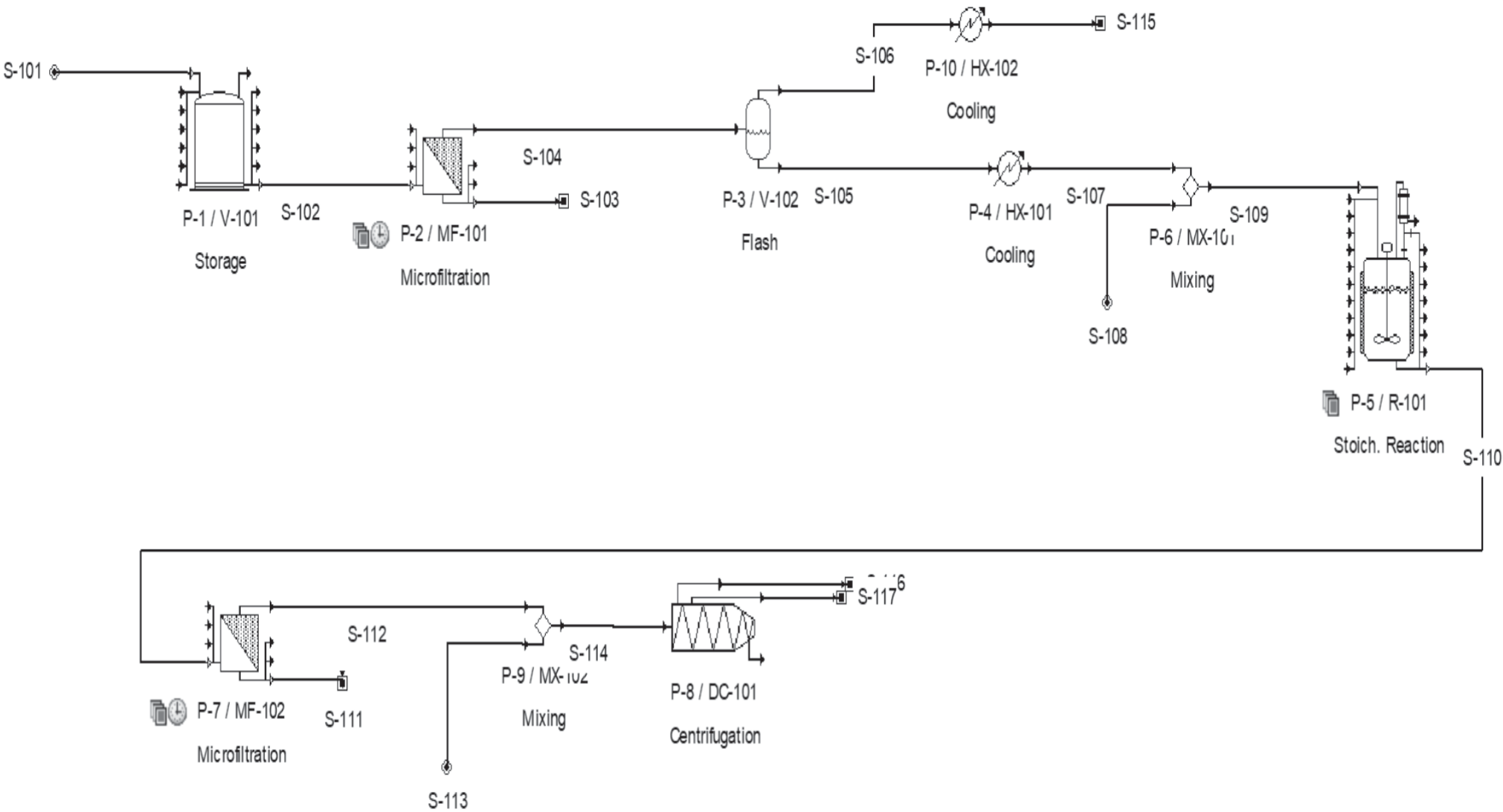
The simulation results for the process flow design are visualized in Fig. 1. Initially, the obtained crude glycerol was pretreated by mild heating. This enhances the chances of the removal of residual methanol content. The malic acid biosynthesis via batch fermentation was investigated using a stirred tank bioreactor, with recovery of the product taking place 20 days post-inoculation. Crude glycerol, yeast extract, K2HPO4, ZnSO4⋅7H2O, MgSO4⋅7H2O, and CaCO3 were the significant input raw materials. The simulation study involved a series of interconnected unit operations, including a seed fermenter for inoculum development, a production fermenter for large-scale cultivation, a filtration unit for biomass separation, and an extraction unit for product recovery [22]. To satisfy the oxygen demands of yeast growth, this study employed an axial flow compressor to deliver a precisely controlled aeration rate of 8 m3/s [31]. All input materials were subjected aseptically to the production fermenter. After carrying out the batch fermentation, the filtration of the fermentation broth and the extraction of the malic acid were done.
Material and Energy Balance Analysis
Based on Kumar et al.’s (2020) study, we estimated the mass and energy balance requirements for a daily malic acid production capacity of 100,000 kg [32]. The process evaluation initiates with the input feedstocks and extends up to the final malic acid recovery. Electricity and heating energy were considered direct energy, whereas the utilization of chemicals and additional consumables was regarded as indirect energy. The energy balance analysis predicted key parameters, including net energy input, gained energy (GJ), and output energy, with a positive net energy balance being essential for favorable process conditions.
Minimum Selling Price Determination and Sensitivity Analysis of Malic Acid Production
Investigating the Minimum Selling Price (MSP) of malic acid is imperative for analyzing the industrial and economic viability of its production, influencing market competitiveness and process optimization. In our research, this study examined the MSP of malic acid by considering specific input variables and their impact on production economics, including methanol pretreatment cost, Trioctylamine in 1-Octanol usage in malic acid recovery, crude glycerol price, malic acid price, and bioethanol price. The sensitivity analysis facilitates the identification of relevant process components to establish an efficient and cost-effective process. In this regard, the economic determinants – namely return on investment (ROI), payback period, internal rate of return (IRR), and NPV – were determined in relation to input feedstocks, product pricing, taxation, and project duration.
Results and Discussion
Technological Performance Analysis
Biodiesel-derived crude glycerol exhibits heterogeneous composition and catalyst residue. Therefore, the initial filtration removes the suspended residual particles, and further autoclaving removes the MeOH components. During fermentation, 8.75 MT of crude glycerol were added to the 17.5 MT of defined fermentation media along with Z. rouxii inoculum (2%). Following the fermentation process, the microbial biomass was separated using centrifugation, and the other larger molecules were separated using a microfilter. The obtained filtrate was again subjected to a reactive extraction process using Trioctylamine in 1-Octanol, and the concentrated malic acid was then finally obtained. In this process, 4.1 MT of malic acid and 0.45 MT of bioethanol were synthesized per day. The process converted 3,000 metric tons of crude glycerol per annum into 1,510 metric tons of malic acid and 196.75 metric tons of bioethanol, as illustrated in the process flow simulation (Fig. 1).
Cost-Benefit Analysis
Total Capital Requirements
The total capital expenditure required for the high-value malic acid production plant was calculated to be $20.46 M, which includes DFC (94.38%), working capital (1.13%), and startup cost (4.49%). All specifications of the capital investment correspond to the equipment investment amount, which influences the long-term capital investment as well as every other economic parameter. The estimated equipment cost was approximately $3.28 M. The stirred reactor (89.5%) and microfilter membrane (6.58%) account for the major portion of the equipment cost due to the development of a high-value product through the fermentation process.
Operation and Production Expenditure
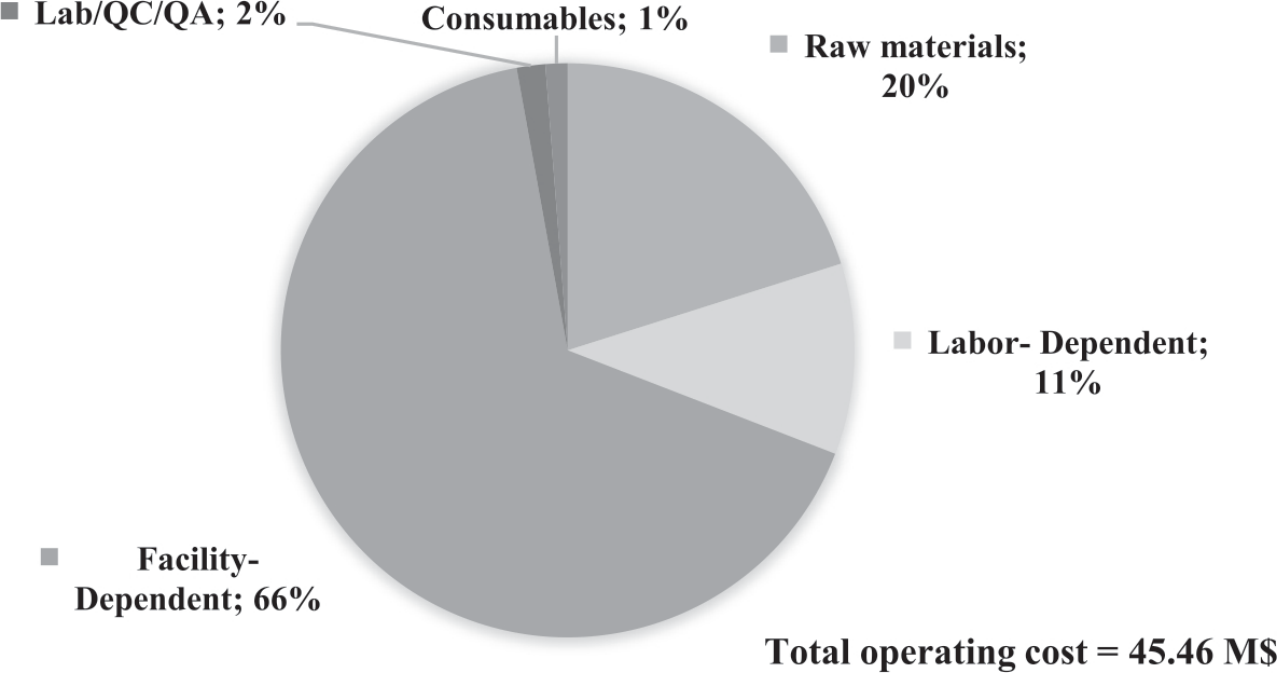
This study estimated the annual operating costs to be $45.46 M, as depicted in Fig. 2. The Facility Dependent Cost (FDC) accounts for a significant share of the annual operating costs (61.28%). This includes local taxes, equipment repairs, insurance, depreciation, and other industrial expenses, which are directly related to the DFC. In this process, the annual operating cost comprises labor and processing time (15%) and raw material costs (20.5%), totaling $45.46 M. The fermentation medium (16.39%) and Trioctylamine in 1-Octanol (80.95%) account for the major portion of the raw material cost. Solvent recovery was carried out using a substantial quantity of steam, which further increases utility costs. Utilities account for 11.55% (electricity – 49.56%, chilled water – 42.48%, and steam – 7.96%) of the total operating expenses.
Profitability Assessment
This study estimates the annual revenue of
the crude glycerol-to-malic acid valorization process to be $61.60 M, which includes the main revenue from malic acid ($59.02 M) and additional revenues from bioethanol and recovered Trioctylamine in 1-Octanol ($2.58 M). Other significant factors, such as internal rate of return, payback period, return on investment, and NPV of the process, were approximated to be 10.93%, 6.71 years, 14.90%, and $11.90 M, respectively. The return on investment and the period required to recover the total capital investment were analyzed using the Net Present Value (NPV) method. By comparing NPV values, the ideal operating parameters for the commercialization of the developed product can be determined, and the process is considered cost-effective when NPV exceeds zero (NPV>0). Okolie et al. [33] reported biomethane and bioethanol production from crude glycerol under three different scenarios, which showed negative NPV values due to low yield. López-Suárez et al. [34] studied the economic assessment of raw glycerol reforming through etherification under different scenarios, and their results indicated that NPV became negative in the later 10 years due to noncompetitive production demand and the lack of a significant difference between production output and selling returns. The comprehensive economic report is presented in Table 1, and the economic evaluation summary of the simulated process is shown in Table 2.
Mass and Energy Balance Outcomes
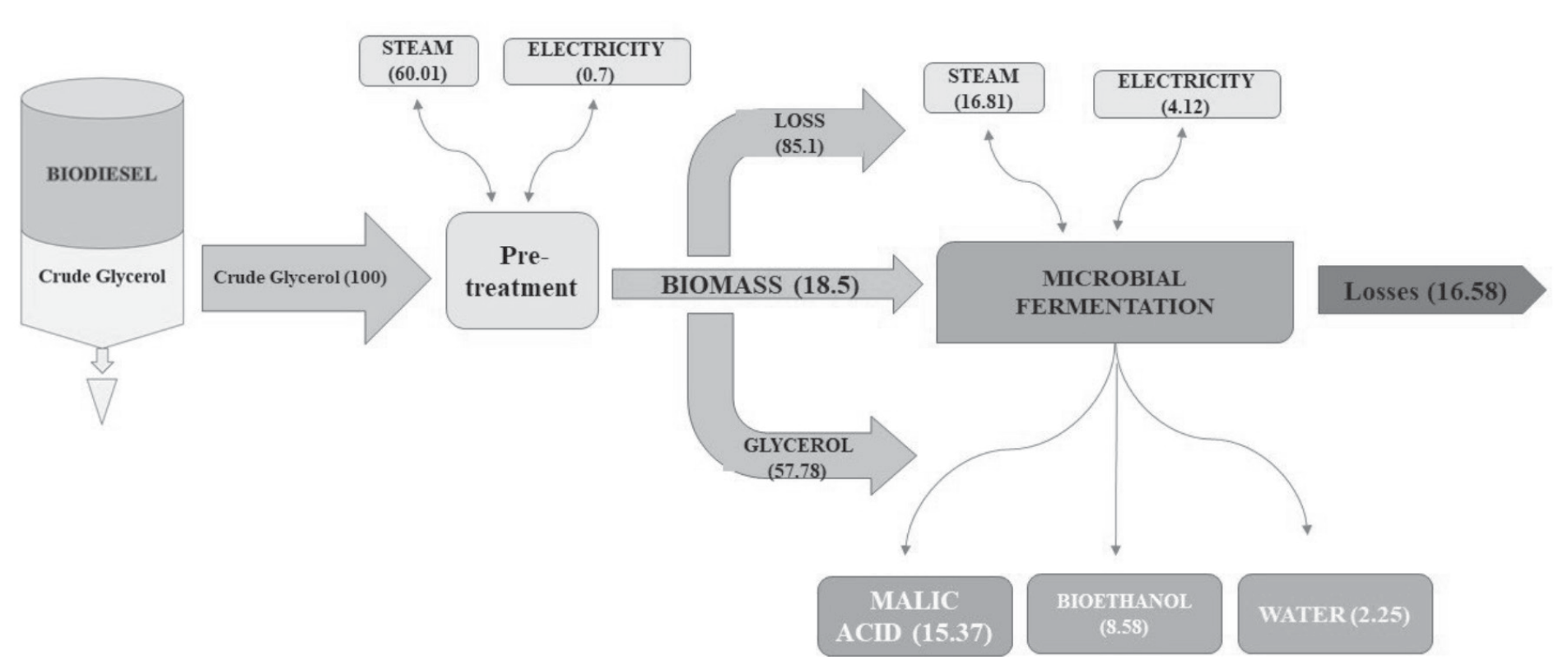
This study determined the mass and energy balance for the biosynthesis of 100 MT of malic acid from crude glycerol, employing a 3 L bioreactor working volume (Table 2). All input energy at each stage of component addition was attributed to the energy consumed for generating the required quantity (Fig. 3). This study drew upon previous research to estimate the energy demands of supplementary unit operations, specifically aeration, agitation, filtration, and extraction [29]. Energy analysis showed that seed fermentation accounted for 10% of the total 166.5 GJ energy input required for malic acid production. The energy ratio was estimated to be 1.02 under favorable process conditions.
Sensitivity Analysis and MSP
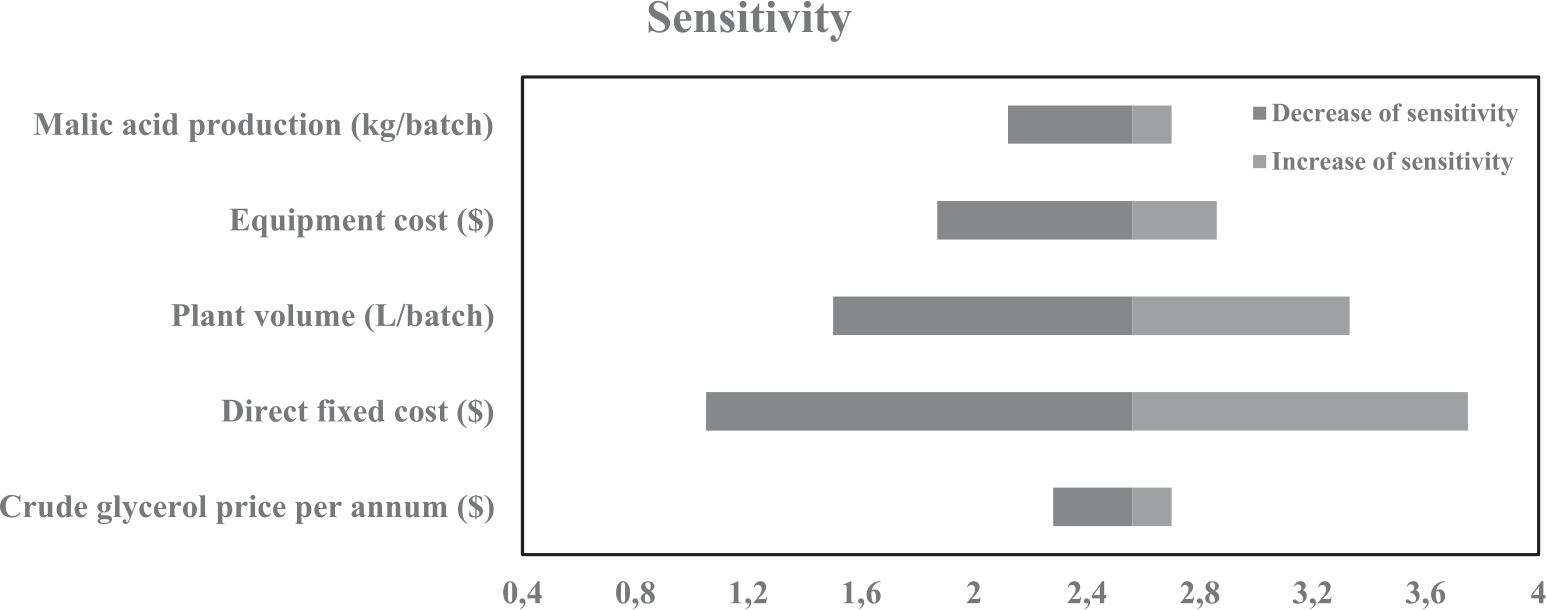
Sensitivity analysis revealed the critical economic drivers influencing the economic viability of malic acid production, as shown in Fig. 4. The blue bar indicates the lower bound of the sensitivity range, while the green bar indicates the upper bound. The analysis underscores the significant role of equipment cost, which emerges as a substantial contributor to production expenses, emphasizing the need for cost-effective equipment solutions to maintain competitiveness. Furthermore, direct fixed costs, encompassing Total Plant Direct Cost (TPDC) and Total Plant Indirect Cost (TPIC), play a vital role in ensuring economic feasibility. Interestingly, plant volume exhibits minimal sensitivity, suggesting that scalability may not be a major concern. Additionally, the analysis reveals that substituting crude glycerol for traditional carbon sources has a negligible financial impact, making it a viable, sustainable option that can contribute to a reduced environmental footprint without compromising economic viability. The impact of price fluctuations on the economic viability of malic acid is minimal.
Table 1.
Cost assumptions and economic evaluation parameters of the simulated process.
In our study, the lowest minimum selling price (MSP) of malic acid ranged from $2.9 to $3.6/kg, which is, however, quite expensive compared to petroleum-derived malic acid. Since a large number of unit operations as well as solvent usage were involved in the process, this influenced the MSP of the produced malic acid. Technological advancements and reductions in solvent usage would decrease the production cost of malic acid. The existing market price of malic acid ranges from $2.2 to $2.8/kg, depending on the seller and purity [27, 30]. Variations in electricity and crude glycerol prices trigger substantial fluctuations in the MSP of malic acid. Notably, a 30% surge in electricity expenses elevates the MSP from $2.9/kg to $3.6/kg. Correspondingly, an increase in the MSP from $3.0/kg to $3.5/kg was observed with a 30% rise in crude glycerol cost. Therefore, a decrease in electricity expenses as well as crude glycerol costs would positively impact the MSP of malic acid. The influence of other independent factors, such as tax rates and labor costs, affects the MSP of malic acid only to a minimal extent. To mitigate costs, researchers are investigating strategies to optimize heat and energy flows, thereby reducing electricity consumption and solvent usage. The cost of crude glycerol depends on several parameters, including the region or location of the biodiesel plant and transportation costs; therefore, these factors must be explored during process scale-up and optimization. According to Bharathiraja et al. [27], malic acid production costs were $0.43/kg using a biodiesel by-product. In comparison, our study achieved a shorter payback period (6.71 vs. 7.78 years), a higher ROI (14.90% vs. 12.85%), and a substantially higher NPV ($11.9 M vs. $2.25 M).
Table 3.
Mass and energy balance of malic acid production using crude glycerol.
Table 2.
Economic evaluation summary of the simulated process.
Critical Findings and Future Aspects
The valorization of unrefined glycerol helps reduce both feedstock and operating costs. This study has several limitations, including the complexity of the crude glycerol valorization process, which involves multiple unit operations, thereby increasing capital investment and operating costs. Simultaneous by-product generation in our process increases overall revenue and reduces the MSP of the primary product, malic acid. In accordance with the present study, the high market value of both the main product and by-product, along with zero waste disposal, are key highlights that contribute to developing a highly sustainable and economically feasible process. The technology readiness level (TRL) of the crude glycerol valorization process for high-value malic acid production is currently 3-4 at the laboratory scale. Advancement to the pilot scale (TRL 5-6) and environmental impact assessments are crucial for commercialization. Integrating new technologies and assessing the process life cycle will also be important for creating a sustainable and cost-effective method for producing malic acid.
Conclusions
This study highlights the potential of crude glycerol as a viable substrate for producing malic acid, offering dual benefits of economic feasibility and environmental sustainability. The results show that the process can convert 3,000 metric tons of crude glycerol per annum into 1,510 metric tons of malic acid and 196.75 metric tons of bioethanol, with daily production rates of 4.1 MT of malic acid and 0.45 MT of bioethanol. The results of our investigation indicate an MSP of $3.6/kg for malic acid, with the lowest feasible MSP of $2.9/kg achievable at a 30% solid loading rate. This investigation aims to establish a process that integrates sustainability and economic efficiency, achieving additional revenue through simultaneous by-product production, which plays an integral role in developing low-cost malic acid. The crude glycerol-to-malic acid valorization process is economically viable, with an annual revenue of $61.60 M and a positive Net Present Value (NPV) of $11.90 M. The positive NPV demonstrates that the process is both economically and practically feasible. The annual operating cost for this process is $45.46 M, consisting of facility-dependent costs, labor, raw materials, and utilities. Minimizing solvent usage in the purification step would further improve the economic feasibility of the process and reduce the MSP of malic acid.
Credit Authorship Contribution Statement
I. Aberna Ebenezer Selvakumari: Conceptualization, Formal analysis, Investigation, Methodology, Resources, Software, Validation, Visualization, and Writing - original draft. Jayamuthunagai J: Project administration, Resources, Supervision, and Writing - review & editing. Bharathiraja B: Conceptualization, Methodology, Project administration, Resources, Supervision, and Writing - review & editing.