

Introduction
The rising global demand for protein, driven by economic growth and improved living standards, has positioned China as a leading producer and consumer of livestock products. Projections from the Ministry of Agriculture of China indicate sustained growth in meat production and consumption over the coming decade [1]. While livestock farming enhances agricultural productivity, its over-intensification risks environmental degradation, including land and ecosystem destabilization [2]. To address these challenges, China has restructured its livestock and poultry sectors by relocating production to regions with abundant environmental resources and high grain yields, such as the Northeast, while promoting green agricultural practices to harmonize productivity with ecological sustainability [3, 4].
However, a critical barrier to evaluating livestock systems lies in cross-species comparisons due to physiological disparities (e.g., body size, growth rates) and product heterogeneity (meat, milk). The pig equivalent method resolves this by standardizing outputs using pigs as a biological benchmark, leveraging their intermediate metabolic rates and dominance in East Asian agriculture [5]. This approach converts heterogeneous metrics (e.g., weight vs. count) into standardized units, enabling robust economic and environmental assessments across species. Though conceptually aligned with the Livestock Unit (LU) framework, the pig equivalent method offers superior adaptability to practical production data.
The western Liaoning Province, a historically significant agro-pastoral zone, exemplifies these dynamics. According to the Liaoning Statistical Yearbook of 2022, its five western cities (Jinzhou, Fuxin, Panjin, Chaoyang, Huludao) collectively accounted for 48% (28.05 million heads) of Liaoning’s livestock population and contributed 38.8%, 44.7%, and 34.3% of the province’s meat, milk, and egg production, respectively [6]. However, the region’s fragile ecosystem, characterized by aridity, thin topsoil (<16.5 cm), and nutrient-poor soils [7, 8], faces compounding pressures from livestock expansion. Improper fecal management exacerbates ecological and food security risks, including soil contamination, eutrophication, water pollution, as well as adverse effects on crops, livestock, and human health [9-11].
The fecal load on cropland is defined as the maximum quantity of livestock and poultry feces and urine that a farmland ecosystem can assimilate without ecological disruption [12]. Exceeding this threshold may risk agricultural productivity decline, biodiversity loss, and heavy metal pollution [13]. Western Liaoning’s dual identity as an extensive livestock and poultry farming industry and an ecologically vulnerable zone makes it an ideal model for assessing fecal loads and farming scales. Such evaluations are essential for optimizing resource utilization, mitigating negative impacts, and promoting sustainable waste management. This study aims to quantify the current production of livestock and poultry feces and urine, as well as cropland fecal loads across the townships of Fuxin County, assuming that these resources are recycled back to the corresponding croplands. We hypothesized that spatial disparities in livestock and poultry farming intensity would correlate with distinct fecal loads and pollution risks, threatening regional ecological security. By mapping these variations, our findings aim to provide tailored strategies for livestock and poultry waste utilization aligned with western Liaoning’s agroecological context. Ultimately, this work seeks to advance circular agricultural practices that balance productivity with environmental resilience.
Materials and Methods
Study Area Overview
Fuxin Mongolian Autonomous County (121°01’~122°25’ E, 41°44’~42°34’ N; hereafter Fuxin County) is located in northwestern Liaoning Province, China, occupying the central-northern sector of Fuxin City. The county spans 6,246.2 km2 and comprises 35 townships and one urban area (see Table 1 for tested townships and their abbreviations), with a total cropland area of 318,700 hectares.
Climatically, the region experiences a northern temperate continental monsoon climate, characterized by an average annual temperature ranging from 3ºC to 17ºC during the period from January to July, alongside an average annual precipitation of 481 mm. As a key hub for diversified agriculture and livestock production in northeastern China, Fuxin County supports a wide variety of livestock species, underscoring its significance as a regional center for animal husbandry.
Data Sources
The breeding data were obtained from the Agriculture and Rural Affairs Bureau of Fuxin County, which includes the details of the production and stock levels of various livestock/poultry species, such as pigs, beef cattle, dairy cattle, horses, donkeys, mules, sheep, laying hens, and broilers in 2022. Moreover, the data is also gathered from various scales of breeding entities.
Methods for Data Processing and Calculation
Livestock and Poultry Production
This study employed the pig equivalent method to standardize assessment metrics and facilitate comparative analysis [14]. In the case of livestock with small populations, such as horses, donkeys, and mules, where pig equivalent conversion factors were unavailable, meat production conversion factors were applied as an alternative standardization approach. Pig equivalent conversion factors for all livestock and poultry categories (pig: others) were adopted from established protocols (Table 2) [15].
Table 1.
Tested townships and their abbreviations.
Here, N represents the total livestock and poultry production (heads, in pig equivalent units), θi denotes the pig equivalent conversion coefficient for the i-th species of livestock and poultry, and Ni denotes the amount of breeding for the i-th species of livestock and poultry.
Livestock and Poultry Fecal Production
(1) The cumulative excretion coefficient method
In livestock industry data statistics, year-end stock serves as the standardized metric for quantifying annual feeding quantities of livestock and poultry with rearing cycles exceeding one year. Conversely, for species with rearing cycles under one year, the amount of their annual production outputs is generally regarded as the feeding quantity [16]. Pigs (180-day fattening period) and broiler chickens (45-day fattening period) belong to short-cycle species, where annual production outputs serve as the basis for calculating feeding quantities. Sows, dairy cattle, beef cattle, sheep, and laying hens (365-day cycles) are long-cycle species, where year-end stock data are used to determine feeding quantities. For common livestock/poultry species, fecal production was estimated using the cumulative excretion coefficient method, which aggregates daily fecal output per animal over their respective rearing periods.
The annual fecal production (Qs) of livestock and poultry was calculated as:
Total annual fecal production of all livestock and poultry species in specific administrative unit (e.g., county or township) is denoted as Qs, (t·a-1, where “a” represents annum), Ni represents feeding quantity of the i-th species of livestock and poultry (head), Ti is rearing cycle duration for the i-th species (days), and Pi is daily fecal excretion coefficient of the i-th species of livestock or poultry (kg·d-1, where “d” represents day).
(2) Pig-equivalent standardization method
For minor livestock species (e.g., horses, donkeys, and mules) involved in the formula 2 lacking species-specific daily excretion coefficients, breeding quantities were standardized to pig equivalent units. This enabled fecal production estimation via the aforementioned cumulative excretion coefficient method, ensuring methodological consistency across all animal species.
Here, Er represents the annual fecal production of the r-th livestock species (using the pig equivalent method), measured in t·a-1. Nr stands for the pig equivalent quantity of the r-th species, expressed in 104 head. Tp denotes the rearing cycle duration of pigs, which is 180 days. Lastly, Pp signifies the daily fecal excretion coefficient of pigs, measured in kg·d-1.
Cropland Fecal Load
The average cropland fecal load per unit area (L) was calculated as:
Where, L represents the average cropland fecal load per unit area in the region, expressed in t·ha-1; α denotes nutrient recycling efficiency ratio (proportion of nutrients in livestock/poultry feces and urine returned to cropland); Q denotes total livestock and poultry fecal production, measured in t; S indicates the area of specific regional cropland, measured in ha.
In this study, we assumed 100% nutrient recycling efficiency (α = 1), implying no losses during collection, transportation, or composting processes. All the nutrients from fecal production were presumed to be wholly applied to croplands within corresponding Fuxin County townships.
The Pre-Warning Value of Cropland Livestock and Poultry Fecal Load
The environmental risk of fecal load was quantified using the waning value (A):
Where A represents fecal load pre-warning value (dimensionless), L denotes average cropland fecal load (t·ha-1), and R stands for theoretical maximum organic fertilizer application threshold on arable land (t·ha-1).
For northern China, the maximum recommended cropland fecal carrying capacity (R) is 30 t·ha-1 [17]. Due to insufficient local data on crop types and cultivated areas in Fuxin County, this regional threshold was adopted as the benchmark. Pre-warning levels for fecal load (A) were classified according to established criteria Table 3 [18].
Results
Annual Fecal Production of Livestock and Poultry
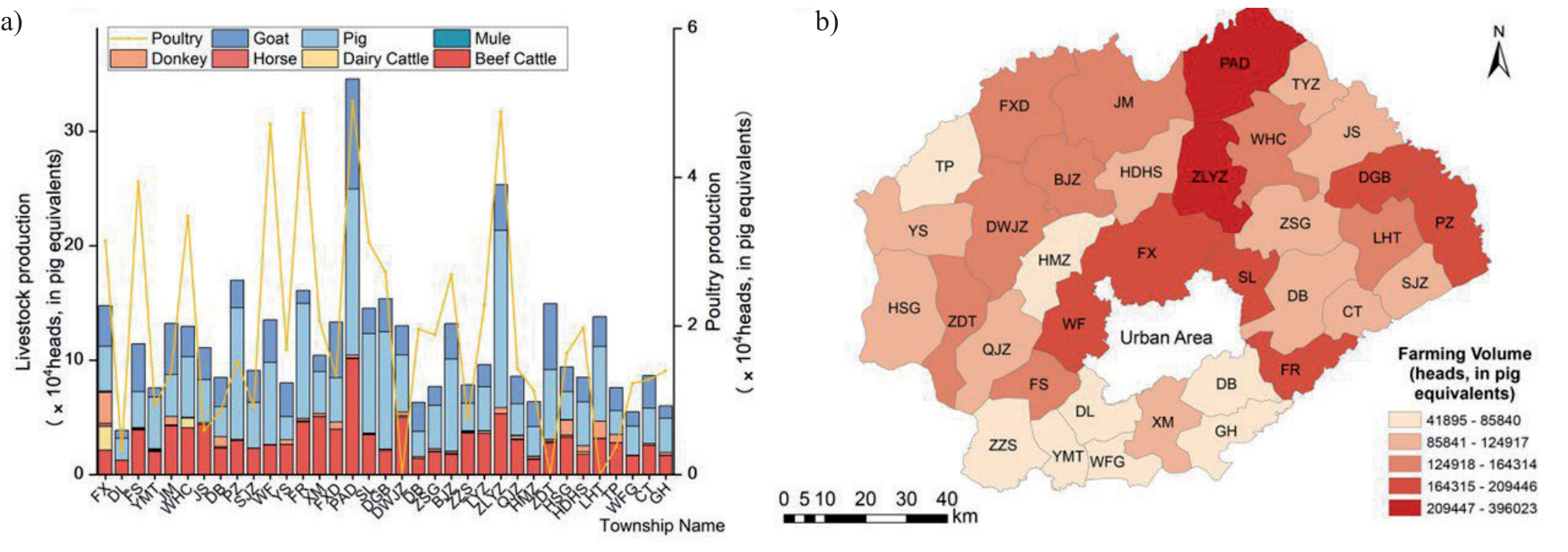
The quantity and distribution characteristics of livestock and poultry production across various townships in Fuxin County are shown in Fig. 1. The distribution of livestock and poultry production in Fuxin County is relatively dispersed. In Zhalanyingzi Township and Ping’andi Township, the production numbers of livestock are extremely high, accounting for 6.36% and 8.33% of the total county production, respectively. Livestock and poultry farming in Fuxin County predominantly consists of cattle, pigs, sheep, and chickens. Moreover, the total stock of livestock and poultry in Fuxin County amounted to 4.75 million heads in pig equivalents in 2022, when the stock of livestock and poultry was converted to pig equivalents. The distribution of livestock in farming is approximately 23.41% for beef cattle, 0.77% for dairy cattle, 37.95% for pigs, 20.49% for sheep, and 14.19% for chickens.
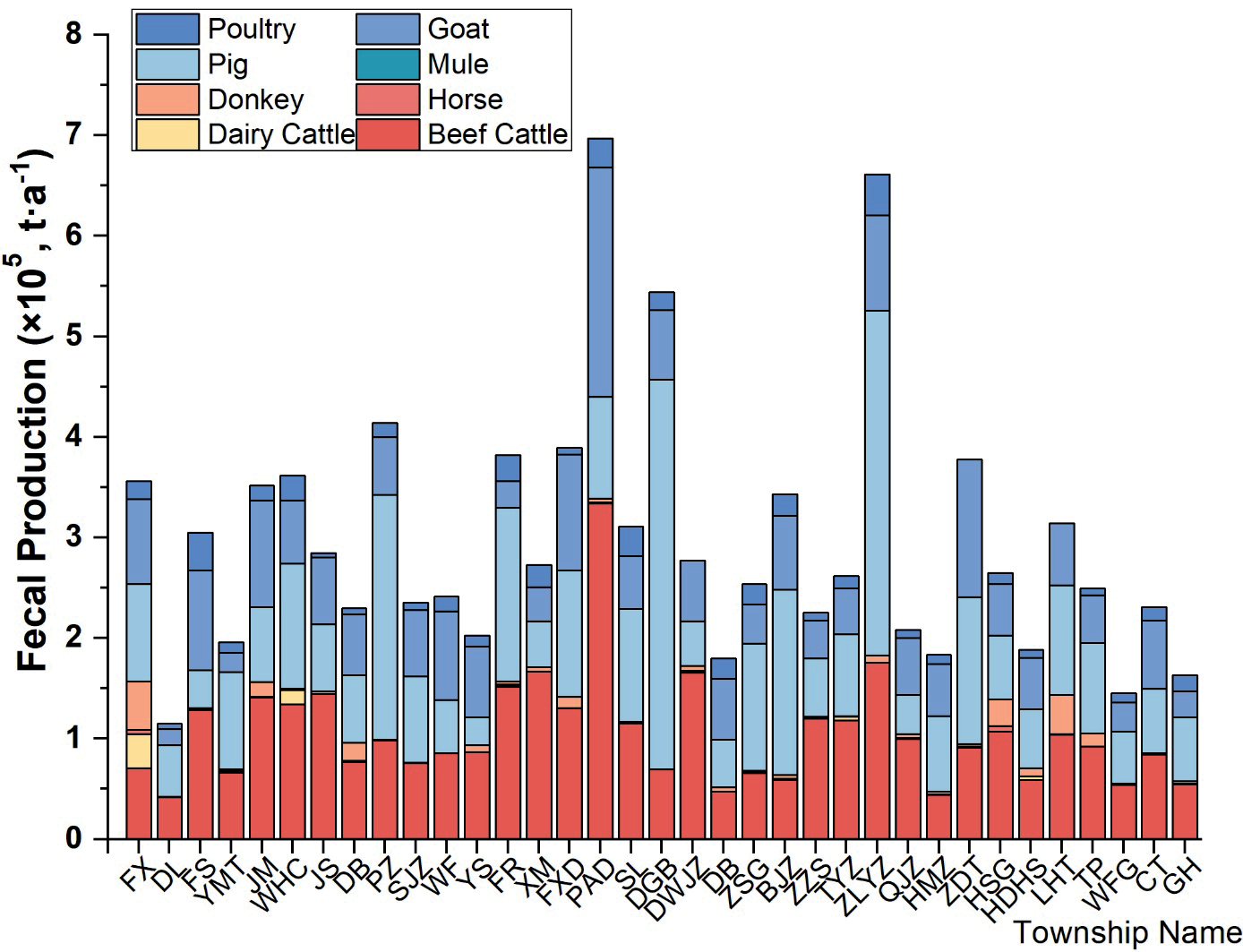
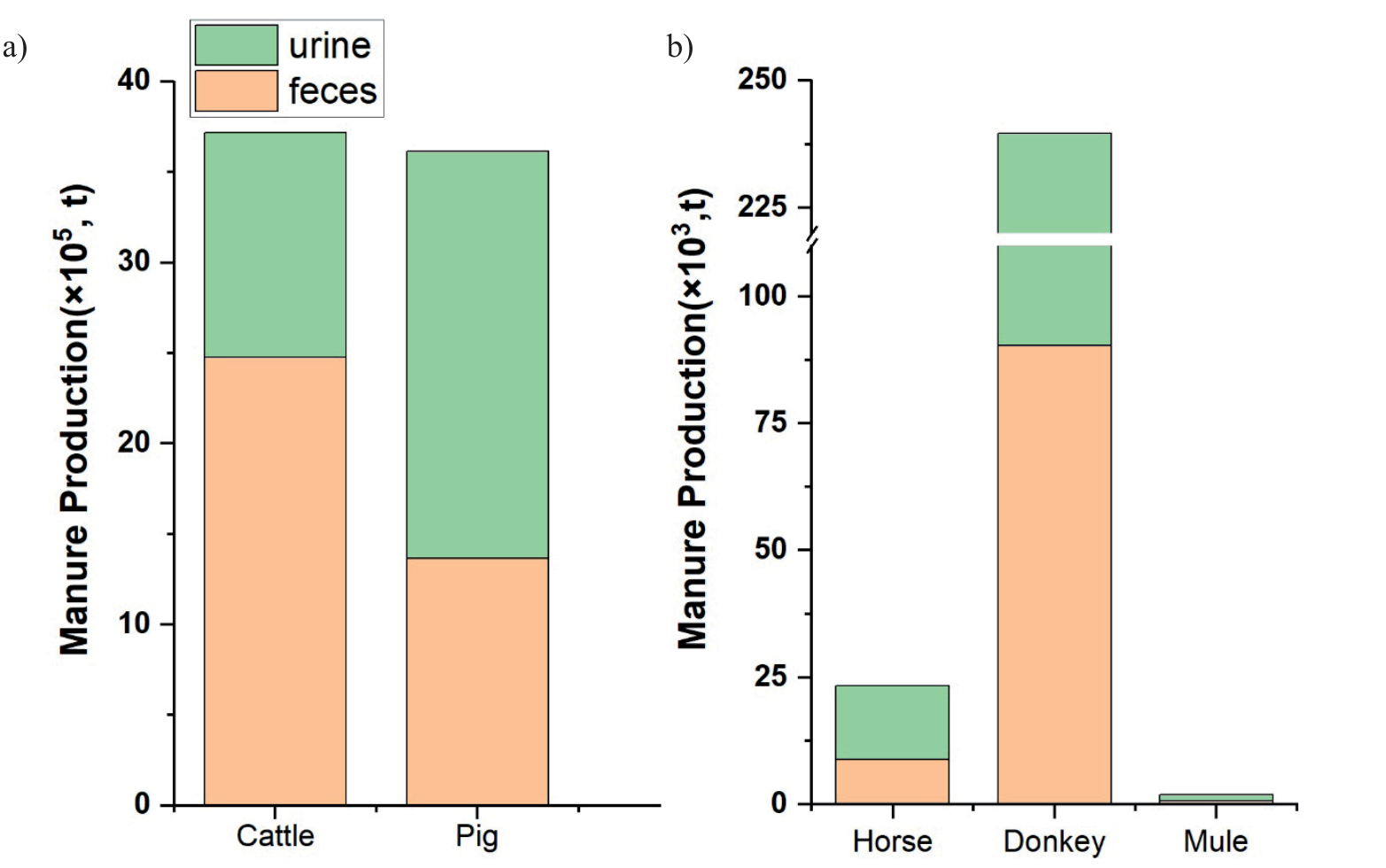
The annual fecal production of major livestock and poultry in Fuxin County and its townships was illustrated in Fig. 2 and Fig. 3. Fuxin County recorded an annual livestock and poultry waste output of 10.42 million tons (Mt), with species-specific contributions as follows: cattle waste (3.72 Mt, 35.68%), swine waste (3.62 Mt, 34.72%), sheep waste (2.31 Mt, 22.19%), and poultry waste (1.03 Mt, 4.86%). The annual fecal production of livestock and poultry in Ping’andi Township, Daguben Township, and Zalanyingzi Township exceeds 5.0% of the total production in the county. This elevated proportion may be attributed to the specific types and sizes of livestock and poultry farming in these regions. More feces than urine is produced in cattle; more urine than feces is produced in pigs. Considering the small-scale livestock, donkeys produce more feces than horses and mules.
Cropland Fecal Load
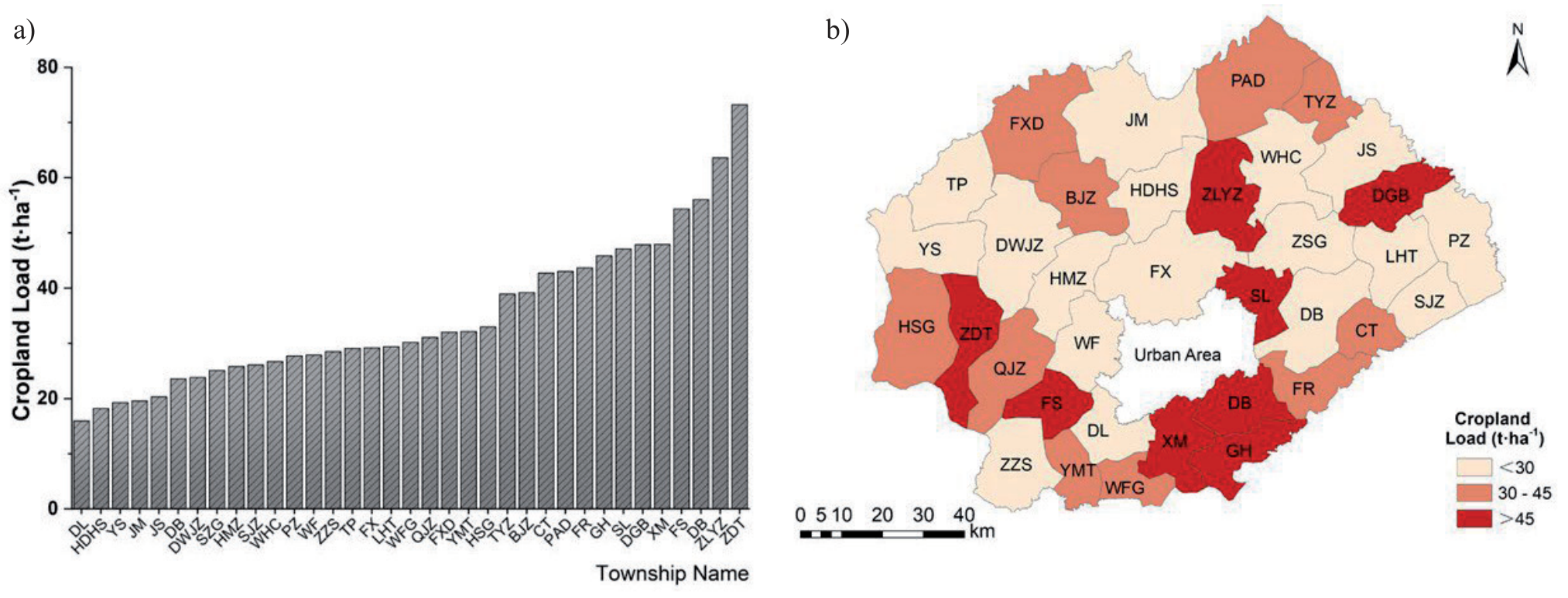
The cropland fecal load in Fuxin County and its townships is shown in Fig. 4. The cropland fecal load in Fuxin County was 32.63 t·ha-1, which represents an average value, i.e., the total amount of feces and urine divided by the total area of cropland. Moreover, there exists a significant variation in cropland fecal load across townships. For example, Zidutai Township stands out with the highest cropland fecal load recorded at 73.24 t·ha-1, exceeding the average value by 40.61 t·ha-1; whereas Dongliang Township exhibits the lowest load at 15.95 t·ha-1, which is 16.67 t·ha-1 lower than the average value. The difference between the maximum and minimum cropland fecal load in Fuxin County is 4.59 times, indicating that Zidutai Township has the highest livestock and poultry production density.
In 2002, the “National Survey on Pollution Status and Prevention Measures of Large-scale Livestock and Poultry Farming” conducted by the National Environmental Protection Agency revealed that the average carrying capacity of livestock/poultry feces and urine on farmland is 30 t·ha-1 in northern China [18]. The authors highlighted that the threshold, once exceeded, triggers soil eutrophication and potential environmental risks. The cropland fecal load in Fuxin County and 18 townships has surpassed the threshold (Fig. 4), accounting for 93.92% of the county’s area.
The Pre-warning Status of Fecal Material of Livestock and Poultry
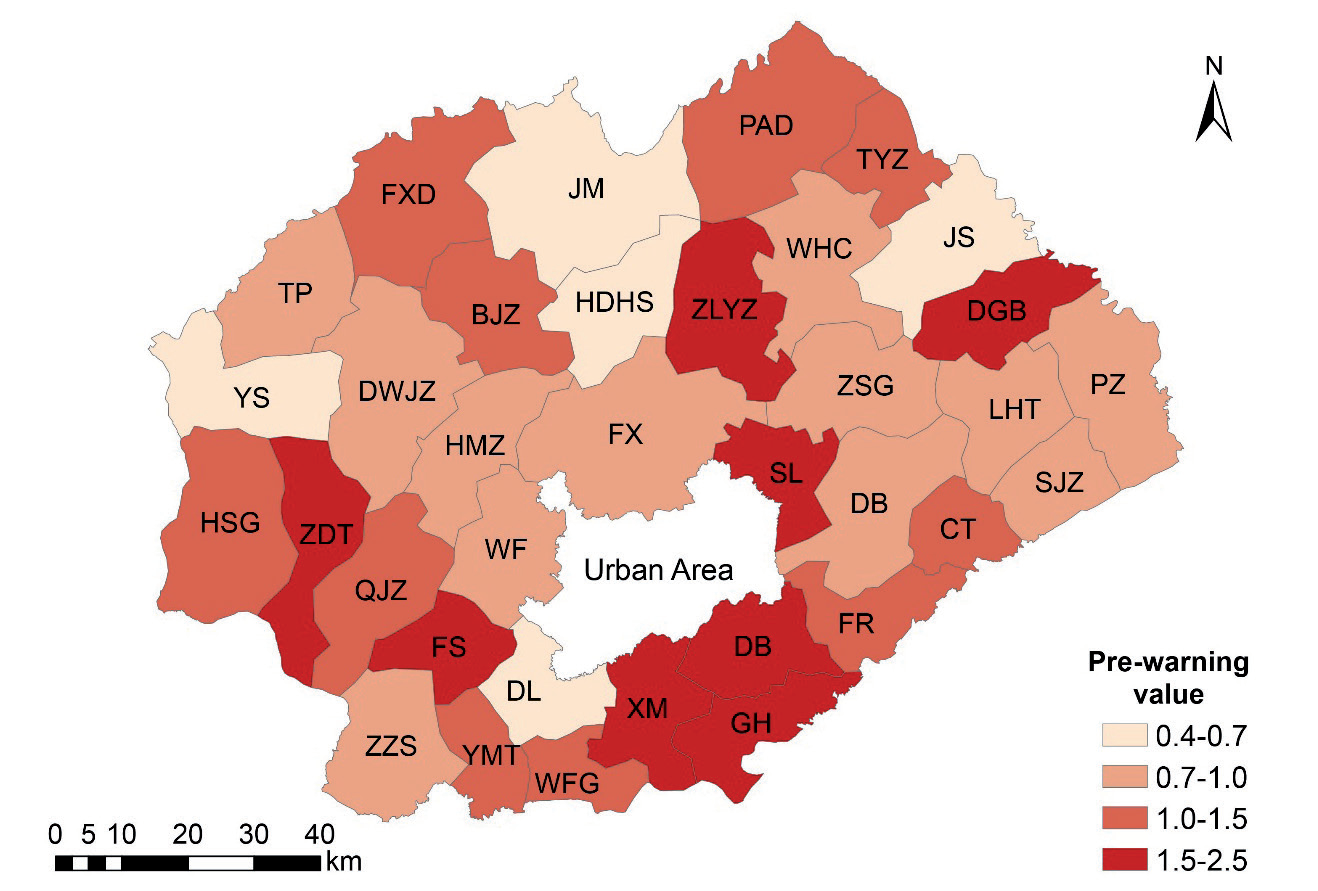
The distribution of pre-warning values for the livestock and poultry fecal load in Fuxin County and its townships was illustrated in Fig. 5. The pre-warning value of livestock and poultry fecal load in Fuxin County is 1.09, which is classified as pre-warning level IV, indicating the existence of serious environmental risks. Fuxin County exhibits significant spatial heterogeneity in environmental risk warnings across townships (Fig. 5). Based on a five-tier warning system (Level I-V), Zidutai Township demonstrates the highest livestock/poultry waste load on cropland (2.44 t/ha), classified as Pre-warning Level V (severe risk), whereas Dongliang Township shows the lowest load (0.53 t/ha), corresponding to Level II (low risk). The risk distribution of 35 townships was categorized as: Level V (Severe, 8 townships), Level IV (High, 10 townships), Level III (Moderate, 12 townships), and Level II (Low, 5 townships).
Discussion
The Cropland Fecal Load and Environmental Risk Assessment in Fuxin County
Annual livestock and poultry manure production is determined by intrinsic husbandry parameters (species composition, herd scale, and production cycle length) and extrinsic variables (climatic conditions, forage nutritional quality, and operational protocols) [19, 20]. The parameters used in our study to estimate the fecal production comprise a collection of dynamic data derived from the average excretion coefficient throughout the animals’ growth cycle. These parameters play a role in mitigating certain data challenges, providing a more practical approach, and potentially representing the actual discharge scenario of livestock/ poultry feces and urine within a specific region. Hence, they can serve as indicators for assessing and quantifying livestock and poultry pollution [13]. Our results showed that the livestock and poultry rearing capacity in Fuxin County is 4.75 million, and the annual fecal waste production is 10.42 million tons (Mt). Pigs exhibit the highest production volume of annual feces and urine due to the longer feeding cycle and higher excretion coefficient. Cattle, compared to pigs, have a lower production quantity but a longer breeding cycle and a higher excretion coefficient, leading to a significant amount of fecal production. Sheep have larger quantities and higher excretion data, which consequently induces the relatively larger fecal production. However, chickens are also kept in larger quantities but with lower excreta coefficients, thereby leading to a lower level of fecal production. This result resembles the livestock manure production levels documented in a regional study focusing on the rural economic development zone of Jize County, Hebei Province [21]. Jizhe County has relatively more fecal production owing to the larger farming volume and excretion coefficient of pigs and sheep. Although poultry is raised in large quantities, fecal production is relatively less owing to the lower excretion coefficients [21].
Also, a significant issue of livestock and poultry overburdening is prevalent in northeastern China. The risk coefficient for livestock and poultry burden is relatively high and tends to increase in the agricultural areas of Liaoning Province. Concerns are raised regarding the inadequate capacity for managing and treating livestock/poultry material [12]. Analysis and estimation indicate that the pig fecal material equivalent load per unit area of cultivated land in Liaoning Province has reached Level II. Chaoyang City and Benxi City have the highest level of livestock and poultry fecal environment risks in cropland, while Panjin City has the lowest environmental risk from husbandry. Fuxin City’s livestock and poultry fecal material poses a minimal threat to the environment [22]. In this study, the cropland fecal load in Fuxin County is 32.63 t·ha-1, with an average warning value of 1.09 and an environmental risk degree of IV. It exceeds the average cropland fecal load of Liaoning Province (9.29 t·ha-1) and the nation (24 t·ha-1) [23, 24]. Among the townships evaluated, 8 townships have been designated with a pre-warning level V based on the fecal load per unit of cultivated land area. Although Dongliang Township in Fuxin County has the lowest cropland fecal load at 15.95 t·ha-1, which is lower than the national average carrying capacity of livestock and poultry feces and urine, its pre-warning level remains at level II, which is over the average level in Liaoning Province. This result indicates that various levels of environmental risk exist for livestock and poultry feces and urine across different regions within Fuxin County. Moreover, this result is also explained by the imbalance of livestock and poultry production among different townships in Fuxin County and the constrained availability of cropland for the disposal of fecal material. Fuxin County is located in the western region of Liaoning Province. The Kelinqin sandy land in the northwest covers 391.67 million ha, accounting for 87.3% of the total area of sandy land in the province. Soils in the area have a high proportion of sand, which results in poor water retention and fertility characteristics, ultimately leading to nutrient loss [25]. Enhancing the soil water and fertility retention capabilities, and improving soil structure can be achieved by increasing soil organic matter content under the application of composted fecal material. Considering the variations in cropland fecal load, prevalent environmental risk derived from livestock and poultry fecal material, and soil characteristics across different regions in Fuxin County, it is essential to implement more adaptable measures and policies to enhance soil fertility and mitigate the environmental risk of livestock and poultry fecal material [26]. Fuxin County can formulate and execute strategic planning and management initiatives according to pre-warning environmental risk assessments. On-site disposal of livestock/poultry feces and urine is not feasible in regions with high environmental risk levels, so it is crucial to design for the creation of environmentally sustainable, scalable, and eco-friendly livestock farming sectors [27]. Moreover, it is recommended that livestock and poultry fecal material be converted into composted manure to enable its transportation over long distances. A production chain should follow the model of “decentralized collection, centralized processing, and transportation back to fields” for off-site disposal [28, 29]. For instance, the excess resources in townships such as Zidutai, Fosi, Daban, and Guohua, where the arable land is excessively burdened with livestock/poultry feces and urine, and neighboring regions lack the capacity to assimilate the fecal waste, can be transferred to regions such as Panjin and Jinzhou based on their demands. Simultaneously, it is imperative for the entire county to contemplate the spatial arrangement of livestock and poultry farming concerning the adjacent farmland. Optimizing the structure of plantations and the distribution of livestock and poultry farming sites based on livestock and poultry fecal production, crop nutrient absorption, and cropland fecal load is essential to guide the development of a regional integrated pattern of planting and breeding [30].
In China, solid-liquid separation technology is widely used for livestock manure to effectively reduce environmental pollution, nutrient loss, and improve fertilizer utilization [31, 32]. Through the process of solid-liquid separation, the solid fraction can be transformed into organic manure via composting, anaerobic fermentation, and other technological methods, which can then be applied to the soil through spreading. Meanwhile, the liquid fraction can be processed into an organic fertilizer utilizing fermentation technology, which can then be distributed to the soil via spreading or sprinkler irrigation methods [33, 34]. Currently, the predominant technologies employed for the management of livestock and poultry manure in our nation encompass composting and anaerobic fermentation [35]. The efficacy of organic fertilizer products significantly influences the capacity of the soil to assimilate nutrients. Hence, it is essential to develop and improve technologies for treating livestock and poultry manure to increase treatment effectiveness, eliminate heavy metals and harmful pathogens, and mitigate potential long-term soil ecosystem harm resulting from manure application. The optimal mixing ratio of manure and chemical fertilizers should be determined according to the type, characteristics, and nutrient content of the manure sources. To avoid the negative impact of excessive manure application on soil carrying capacity, it is essential to manage this practice effectively while ensuring the productivity of farmland and proper treatment of livestock and poultry manure [36]. The assessment and consideration of the soil’s environmental carrying capacity are essential to improving the quality and health of the ecological environment in the western Liaoning region. Also, it is necessary to examine alterations in the requirements and availability of soil nutrients, adapt the levels of livestock and poultry manure input accordingly, and mitigate the potential for nutrient overload in regions with high pollution loads [37. 38].
In summary, Fuxin County ought to adhere to zoning governance principles and facilitate coordinated management across regions to guarantee the unified administration of “livestock land” [13]. At the same time, Fuxin County should strengthen the green and intelligent development of the livestock and poultry farming industry, in order to improve the farming environment. This not only improves the efficiency and economic benefits of effective farming, but also helps to reduce environmental pollution and resource wastage. Then this will effectively ensure the steady progress of ecological cycle sustainable development.
Comprehensive Governance Opinions and Suggestions
The rapid expansion of livestock production in Fuxin County has intensified environmental pressures, necessitating a coordinated governance framework to convert fecal resources into organic fertilizers through public-private partnerships. To align animal husbandry with regional land capacity and ecological resilience, policymakers should prioritize 1) targeted subsidies and tax incentives for fecal material recycling infrastructure and organic fertilizer adoption, coupled with oversight mechanisms to reward sustainable practices; 2) data-driven spatial planning to optimize livestock density, forecast fecal outputs, and deploy localized manure treatment facilities, minimizing overinvestment and leakage risks; 3) technology innovation platforms fostering research and development in cost-effective manure processing and farmer training programs; 4) public awareness campaigns leveraging digital media to promote circular agriculture and enforce penalties for environmental violations; and 5) soil restoration initiatives to mitigate erosion and enhance farmland nutrient retention. This integrated approach balances productivity with ecological sustainability, serving as a model for livestock-intensive regions in Northeast China.
Conclusions
The case study, conducted in a county with a robust livestock industry, evaluated the 2022 status of animal husbandry and cropland fecal loads. The findings support the hypothesis that excessive fecal accumulation is widespread, posing significant environmental risks to regional ecosystems. This challenge simultaneously reveals substantial untapped potential for fecal resource utilization to mitigate risks and leverage opportunities. Fuxin County must align with national integrated farming policies by establishing a “decentralized collection-centralized processing-field return” fecal management chain, reinforcing its pivotal role in sustainable livestock. Concurrently, implementing cross-regional manure redistribution strategies as a long-term solution can generate synergistic economic and ecological benefits for stakeholders – farmers, enterprises, and governments – while advancing green agricultural practices.

