

Introduction
In innovation research, eco-innovation has recently gained popularity []. Since the Industrial Revolution, economic growth has increased global issues like resource scarcity and environmental deterioration. As a result, the importance of sustainable development has begun to be recognized on a global scale. Enterprises’ use of eco-innovation has emerged as a significant breakthrough in the fight against this issue [, ]. The willingness and ability of enterprises to eco-innovate, which is influenced by the enterprise’s size, is a vital part of implementing an eco-innovation strategy. Compared to large enterprises, even though small and medium-sized enterprises (SMEs) account for more than 60% of all pollution, they are more likely to innovate sustainably and contribute more to eco-innovation [, ]. Due to SMEs contributing to 90% of all employment, their contributions to eco-innovation significantly impact the nation’s or region’s economic growth. Additionally, it is essential for stakeholders, including shareholders, creditors, and environmentalists, as well as for the enterprises’ competitiveness [].
More emphasis has been placed on the research on eco-innovation in SMEs, particularly in light of the first session of the United Nations Environment Assembly (UNEA-1) appeal. The UNEA-1 took place on June 23, 2014, to debate post-2015 environmental conservation and development and green financing. It was an important call with cross-generational significance. Following this, the world’s major economies reached a new climate protection agreement in Paris; new energy vehicles are rapidly developing; and the concept of Environmental, Social, and Governance (ESG) investment is rapidly rising. Meanwhile, environmental protection agreements and climate change place higher practical and academic requirements on eco-innovation in SMEs. Historical experience has also demonstrated that significant international conferences and the implementation of critical policies would foster and expedite global transformation. Therefore, it is necessary to construct a comprehensive overview of the changes in research on eco-innovation in SMEs before and after 2014. This would help scholars capture the differences between the two periods and identify the research gaps, as well as help practitioners better develop eco-innovation in SMEs.
In the past few decades, scholars have conducted a series of studies on the literature review of eco-innovation in SMEs. On the one hand, most scholars manually conduct research from a single static perspective. They only focus on one dimension of the literature, such as connotations [], drivers [, ], etc., and do not analyze all articles related to eco-innovation. However, eco-innovation in SMEs is a complex behavior involving resource allocation, business model, development effectiveness, and so on. Therefore, the one-dimensional literature review makes it difficult to understand the comprehensive research status of eco-innovation in SMEs. Meanwhile, it is challenging to thoroughly and entirely sort out the dynamics of related research by manual analysis alone. On the other hand, other scholars have reviewed the literature around eco-innovation in SMEs using bibliometric software. But they have not strictly distinguished the changes in research characteristics before and after 2014, and the keywords for searching relevant literature are not abundant [, ]. As can be seen, few review articles have examined the evolution of eco-innovation in SMEs in the context of the 2014 UNEA-1. And there is insufficient awareness of the current knowledge structure and research framework. This can blur the research frontiers and future directions and hinder knowledge integration and theory development in SMEs’ eco-innovation.
In order to fill this research gap, this paper provides a systematic review of the current literature on eco-innovation in SMEs in two periods, taking 2014 as the node. On the one hand, it compares the knowledge structure and research framework to better understand this field’s development and points out important areas for future research. On the other hand, to achieve objectification and visualization of the literature review, this paper adopts bibliometric analysis technology, statistics, philology, and other methods for quantitative analysis of literature.
The possible contributions of this paper are as follows: First, this paper systematically classifies the research changes in eco-innovation in SMEs before and after the UNEA-1 in 2014 from a dynamic perspective based on the bibliometric theory. We use advanced computer software and more comprehensive search terms to extract the information units (such as references, keywords, authors, organizations, etc.) from the original literature from 1987 to 2023. We then reconstruct the links between the information units to form various network structures and summarize the implicit patterns and laws of the knowledge structure in two phases. All of this will offer theoretical and practical guidance to people in this field’s social sectors. The official discussion of the significance of “eco-innovation” dates back to the Brundtland Report of 1987, which is why 1987 was selected as the start of the search. Secondly, based on the research trends of eco-innovation in SMEs and the reality of green development, this paper utilizes burst detection technology to clarify hot research topics and frontiers. We establish a systematic research framework for eco-innovation in SMEs to provide a reference for future research. In addition, this paper also summarizes the evolution in the field of SMEs’ eco-innovation, providing valuable implications for researchers, innovation practitioners, and policymakers to promote the integrated management of SMEs’ eco-innovation, which is becoming increasingly important at present.
Theoretical Background
Before systematically combining the literature, we must clarify the connotations of “eco-innovation” and “small and medium-sized enterprises” in order to determine which literature must be included in our analysis.
Eco-innovation differs from innovation, and the need to consider the impact on the environment has become a consensus within and outside the industry [7]. In the early stages, Fussler and James proposed the specific connotation of eco-innovation. It is defined as new products or processes that can bring value to customers and enterprises and significantly reduce the negative environmental impact []. This implies that eco-innovation can be achieved through technology [10, ]. An essential basis for the emergence of this concept is the 1987 Brundtland Report. The report introduced the idea of reducing waste and increasing resource utilization to meet current needs without sacrificing those of future generations. The Johannesburg Declaration and Johannesburg Plan of Action further solidify the concept, which was adopted at the 2002 World Summit on Sustainable Development. These two agreements expand the concept of sustainable development beyond ecology to include economic growth, social development, and environmental protection. Since then, on this basis, scholars have continued to expand the connotation of eco-innovation from the system, procedure, organization, management, service, etc.
Specifically, Kemp and Pearson put forward a more core and widely recognized view []. They argued that eco-innovation is “the production, assimilation, or exploitation of a product, production process, service, management, or business method that is novel to the organization (developing or adopting it) and which results, throughout its life cycle, in a reduction of environmental risk, pollution, and other negative impacts of resource use (including energy use) compared to relevant alternatives”. Reid and Miedzinski provided a similar explanation. Eco-innovation refers to new innovative goods, systems, and practices that can better meet human wants and reduce the use of natural resources and the emission of harmful substances []. Meanwhile, the Organization for Economic Cooperation and Development (OECD) added that innovations in any segment (e.g., products, processes, marketing methods, organizational structures, and institutional arrangements) belong to the category of eco-innovation, whether intentional or not, as long as they can improve the environment []. In general, eco-innovation is a comprehensive behavior involving multi-agents and multi-elements, and its core objectives cannot be separated from the two dimensions of environment and economy [].
Many scholars use eco-innovation interchangeably with environmental innovation, green innovation, sustainable innovation, and other words. The reason is that the words have a similar purpose []. For example, the term “sustainable development” was first proposed in the 1980 World Conservation Strategy report. It aims to ensure that the earth’s transformation ensures all people’s survival and well-being. “Environmental innovation” is defined by Oltra and Jean as an innovation that is environmentally sustainable in terms of processes, practices, systems, and products []. “Green innovation” refers to hardware or software innovation related to green products or processes such as pollution prevention and control and enterprise environmental management []. Consistent with the OECD, Driessen and Hillebrand believe that eco-innovation can be considered as long as it positively impacts the environment, whether consciously or unconsciously []. In addition, with the development of clean energy, “clean innovation” has also been used by some scholars to describe innovative behaviors aimed at environmental friendliness.
The second focus of this paper is “small and medium-sized enterprises”. Due to the different economic development levels and business environments of different countries or regions, SMEs have not yet formed a unified global connotation []. Generally speaking, SMEs are classified according to the number of employees. For example, in the United States, SMEs refer to enterprises with fewer than 500 employees. The European Commission further divides enterprises into small enterprises and medium-sized enterprises, with the latter having fewer than 250 employees [10]. Whether roughly divided into SMEs or further refined into small enterprises and medium enterprises, they all have a leaner organizational structure and are primarily directed by their managers. These enterprises may have more substantial incentives to drive radical innovation to succeed in a niche market []. Therefore, from a practical point of view, SMEs and small enterprises are, to some extent, substitutable for each other. At the same time, the specific connotation of the word “enterprise” has various forms of expression. In the relevant research on SMEs’ eco-innovation, most scholars use enterprise, business, company, and firm interchangeably. For example, Saunila used the above words when reviewing the literature on innovation in SMEs, all of which are regarded as keywords for the search []. Given the above situation, we have included SMEs, small enterprises, and their related variants in the research scope of this paper.
Methodologies
This paper’s main objective is to systematically discuss the hot topics, progress, and future research trends in SMEs’ eco-innovation before and after the UNEA-1 in 2014. This requires a powerful document library and advanced computer technology to draw the relevant knowledge structure and evolution map. According to the studies of Lim et al. and Wang et al., we conducted Web of Science using the base database. [, ]. Meanwhile, we drew the knowledge map of eco-innovation in SMEs using CiteSpace and VOSviewer to arrive at general conclusions and provide insights for subsequent research directions. This study can be divided into three stages. The first stage is to collect relevant literature data. The second stage is to use bibliometric analysis software to analyze the collected data’s research status, hot topics, and trends. The third stage is to discuss the implications of the research results for stakeholders. Fig. 1 shows the framework of the study.
Phase I. Collect relevant data. After clarifying the terminology concept, firstly, referring to Ding et al., select the "Web of Science Core Collection" on the tab of the Web of Science []. Second, enter “TS = (eco-innovation, or environmental innovation, or green innovation, or sustainable innovation, or ecology innovation, or clean innovation) AND TS = (SMEs, or SME, or small and medium enterpris* or small and medium busines* or small and medium compan* or small and medium fir* or small busines* or small enterpris* or small compan* or small fir*)” in advanced search to maximize the capture of SMEs’ eco-innovation-related articles. Then, considering that the relevant exposition of eco-innovation can be traced back to the Brundtland Report of 1987, the publication year is selected as “1987-2023”. Meanwhile, to ensure the quality of the article, select “Article” for “Document Type” and “English” for “Language” []. Finally, 3048 records were collected and retrieved on January 1, 2024.
After the initial screening, the retained articles may only partially fit the research topic, and further exclusion of irrelevant literature is required. According to the research needs, we set up four selection principles as follows: (A) Exclude articles where eco-innovation is not related to enterprises at all. (B) Exclude articles on “sustainable development”, “clean”, “environment”, “green”, etc. that are not related to “innovation” at all. (C) Based on ensuring that the articles dealt with small and medium-sized enterprises, exclude articles in which innovation was not related to greenness, ecology, etc. (D) Based on ensuring that the articles are eco-innovation related content, exclude articles where the enterprise subject is not a small or medium-sized type. To ensure selection quality, we used a scoring system based on Dean et al. [], in which researchers independently read the titles, abstracts, and keywords of the articles and gave them scores from 0 (not relevant) to 3 (highly relevant). Only articles with a score of 2 or 3 identified by all researchers were included in the study to ensure their strong relevance to the topic. This process also included eliminating articles with unclear methodological descriptions or insufficient analytical detail, thus improving the accuracy and comprehensiveness of the study. The selection yielded articles with similar proportions to those observed in other similar articles [, ], with a total of 1996 study records retained.
Phase II. Carry out the descriptive statistics and visual analysis. Given the research problem, we take 2014 as the node and use bibliometric analysis software to analyze the research dynamics of SMEs' eco-innovation in two periods in three dimensions. First, the basic distribution characteristics of the research are analyzed in terms of time and space. Microsoft Excel and CiteSpace are used to analyze the trends in the number of publications and the networks of cooperation between various countries and institutions, respectively. The slice and threshold parameters used in CiteSpace are set to “1 YEAR” and “TOP 25%”, respectively. Meanwhile, combined with Chen et al., the importance of nodes from the two aspects of frequency and centrality will be analyzed to identify potential key points in the two periods []. Second, the paper identifies the hot research topics and clarifies the knowledge base and structure of eco-innovation in SMEs. On the one hand, according to the research content in the original literature data, bibliometric analysis software is used to quantify the similarity between different textual information. The “keyword” and “reference” of the literature before and after 2014 were clustered to identify the topics with high discussion and recognition. On the other hand, VOSviewer is used to conduct keyword co-occurrence analysis, plot co-citation networks, and focus on authors and journals with high citations. Third, this paper employs CiteSpace’s burst function, just like Hou et al., to identify the characteristics of keyword and reference bursts []. Based on this, we analyze the evolution law of SMEs’ eco-innovation research and use logical reasoning to predict the frontier development in this field. Here, the software’s default settings correspond to each parameter.
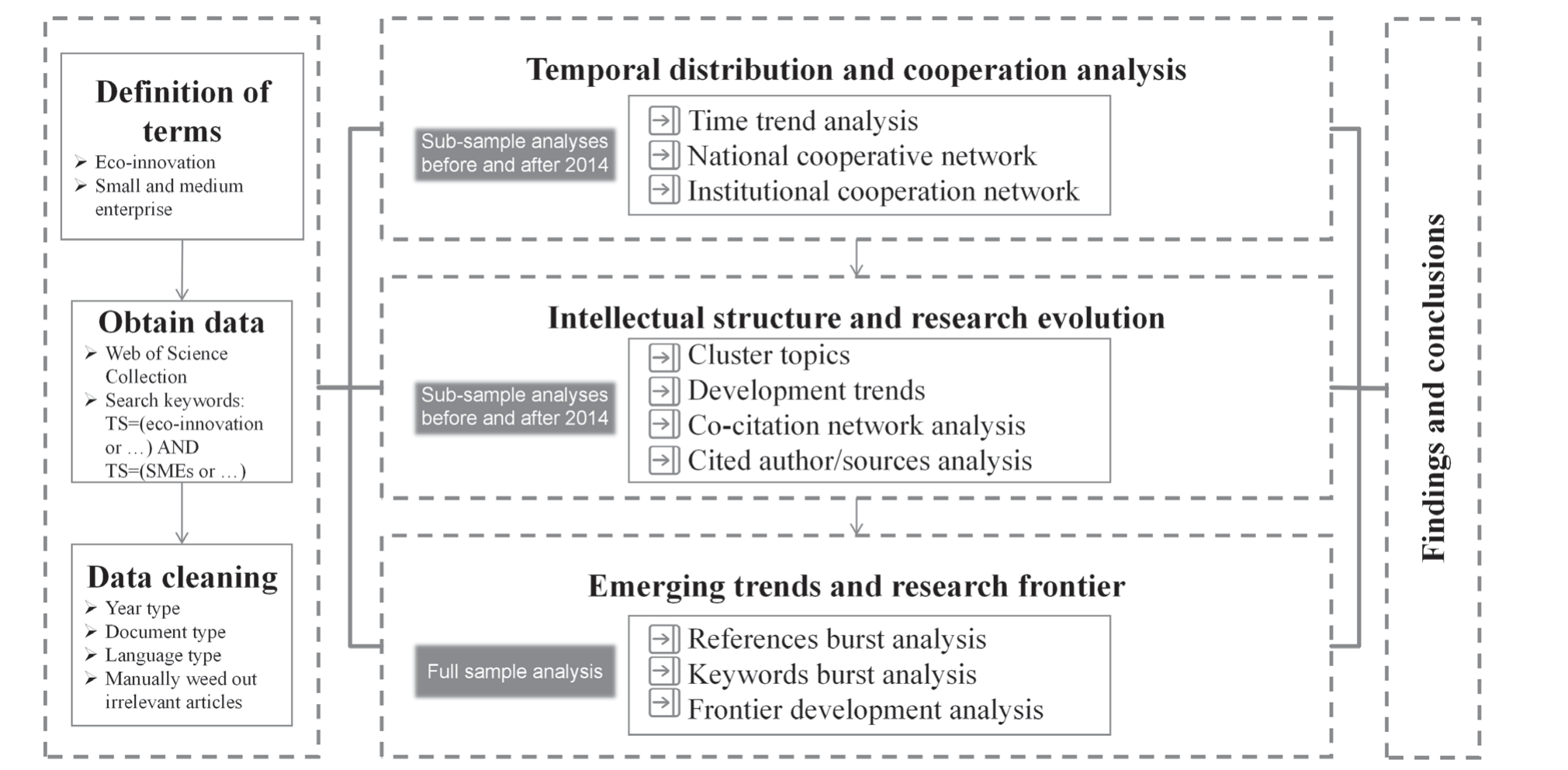
Phase III. Summary analysis, looking forward to the future. According to the extracted data sources and visual analysis results, the current research trends are summarized and refined, and the limitations and expansion space of the research are clarified. Finally, from the perspective of stakeholders, suggestions are provided for relevant scholars, policymakers, and other participants in eco-innovation in SMEs.
Distribution and Cooperation Analysis
The characteristics of temporal and spatial distribution in the research of SMEs’ eco-innovation are identified in this part. Firstly, combined with the past three decades from a time perspective, the trend chart of the number of articles on eco-innovation in SMEs is analyzed in Section 4.1. Then, Sections 4.2 and 4.3 analyze the distribution of countries and institutions in SMEs’ eco-innovation research from a spatial perspective and clarify the national and institutional cooperation networks.
Research the Temporal Distribution of Eco-Innovation in SMEs
The changing trend of the number of published articles reflects the knowledge progress and market attention of SMEs’ eco-innovation research. Fig. 2 is a graph of the annual trend of publication volume from 1987 to 2023, drawn by Microsoft Excel in this paper.
It can be seen from the figure that, in 2014 and before, the number of studies on eco-innovation in SMEs was deficient, increasing by ten or fewer new publications per year. After 2015, the annual number of new articles exceeded double digits. This could be attributed to the materializing of the sustainable development goals and a rise in environmental consciousness worldwide. The UNEA-1 held in 2014 discussed topics such as environmental protection and development and the green economy after 2015 to further refine and implement the grand vision of sustainable development. Concurrently, “Transforming Our World: The 2030 Agenda for Sustainable Development” was adopted at the United Nations Summit on Sustainable Development in 2015. It included 17 sustainable development goals, which put forward new requirements for energy utilization, environmental preservation, and multifaceted sustainable growth. During the same year, the 2015 United Nations Climate Change Conference adopted the Paris Agreement. These international accords have boosted the green economy and eco-innovation. After 2018, the growth momentum accelerated even further. This can be attributed to the 2018 United Nations Climate Change Conference, in which the requirements of the Paris Agreement were fully implemented, and the 2019 United Nations Climate Action Summit, which discussed strategies to address the global climate emergency. These events further reinforce the surge of eco-innovation in all kinds of businesses throughout society. By 2023, the number of relevant literature publications would have reached 408.
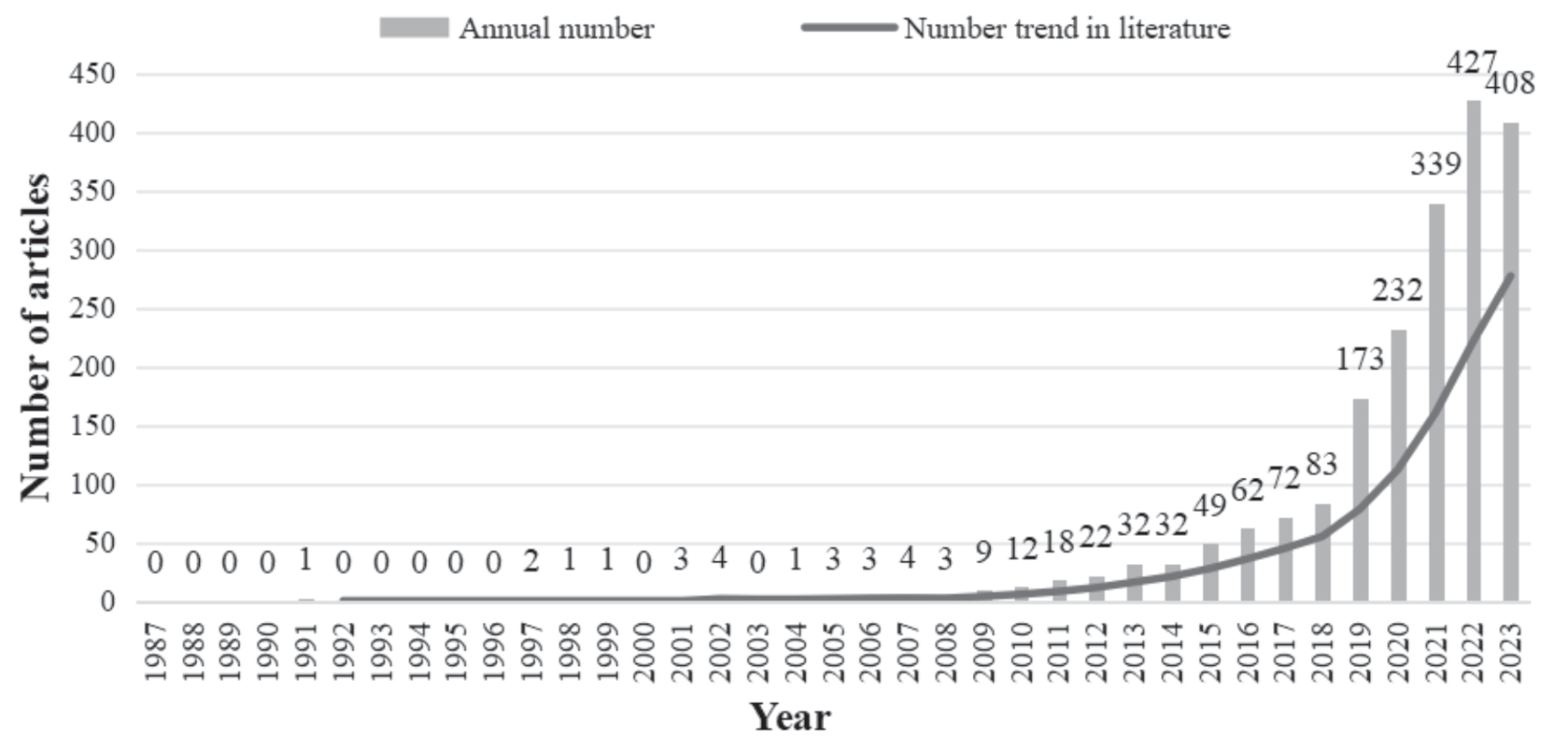
Overall, there was a clear dividing line in 2014. From then on, research on eco-innovation in SMEs has skyrocketed. This shows that after the UNEA-1 held in 2014, environmental issues have received widespread attention, and SMEs’ critical role has attracted scholars’ attention. At the same time, it also proves, to a certain extent, the necessity and scientificity of this paper to divide the two periods, with 2014 as the boundary point.
National Distribution and Cooperation Network
The cooperation networks between different countries can reflect the major players in the research on eco-innovation in SMEs. The “pioneers” and “rising stars” in the field can be identified through a comparative study of the two periods of national cooperation networks. Fig. 3a) and 3b) show the distribution of production countries or territories. In 2014 and before, it consisted of 44 nodes and 80 chains; after 2014, the nodes were 105 and the chains were 735. Here, the size of nodes represents the number of published articles, the colors of the inner and outer layers of nodes represent different years, and the lines between nodes represent different cooperation intensities. On the whole, since 2014, cooperation between different countries has become closer, indicating that the UNEA- 1 has promoted international cooperation and exchanges in eco-innovation for SMEs. However, in detail, there are apparent changes in the two periods, as shown in the frequency and centrality given in Tables 1a) and 1b).
In terms of the number of published articles, in 2014 and before, the “USA” had the most significant number of published articles, reaching 30, followed by “PEOPLES R CHINA” and “ENGLAND”, with 26 and 24 published papers, respectively. Among the top ten countries with the most publications, most of them are developed countries with high levels of economic development and outstanding talents. It shows that a realistic environment provides specific help for research in the academic field. After 2014, the country with the most significant number of articles is “PEOPLES R CHINA”, with the number rising to 433, followed by “ENGLAND” and “ITALY”. At the same time, emerging economies such as “MALAYSIA” and “INDIA” are paying increasing attention to eco-innovation in SMEs. However, the growth momentum of the number of articles published in the United States is not placid, falling from first place in the previous period to fifth place. In particular, the probability of a sharp increase in China’s publication is related to the country’s positive response to the Paris Agreement and the formulation of dual-carbon strategic goals. On the contrary, the United States vacillates its attitude towards the environment and announces its withdrawal from the Paris Agreement, which also impacts academic research. This situation further confirms that practice and academic research are mutually reinforcing.
In terms of centrality, “USA” (0.41) and “ENGLAND” (0.41) were the top two countries in 2014 and earlier, followed by “ITALY” (0.23) and “SPAIN” (0.19). “USA” and “ENGLAND” both rank first in the center of publication, which shows that their articles are of good quality. Although the number of published articles in “PEOPLES R CHINA” is relatively high, the degree of centrality only ranks fifth. It indicates that scholars focus on the number of published papers and do not dig deeply into the research problems. Although “CANADA” has published only six articles, its centrality is only one place behind that of China. Since 2014, the top three most centralized places have changed to “ENGLAND”, “ITALY”, and “PEOPLES R CHINA”, overtaking the “USA” as the center of the global network. Compared with the previous period, the rank of centrality has improved. In particular, “ENGLAND” is in the top three regarding volume and centrality in both periods. It shows that the research on eco-innovation in SMEs in the UK has a particular scale and quality, and the research sustainability is relatively good. In addition, “GERMANY” also appears in the top ten for the first time regarding the quality and quantity of published articles. This might result from the nation taking UNEA-1 into account and actively responding to the UN’s emphasis on environmental protection.
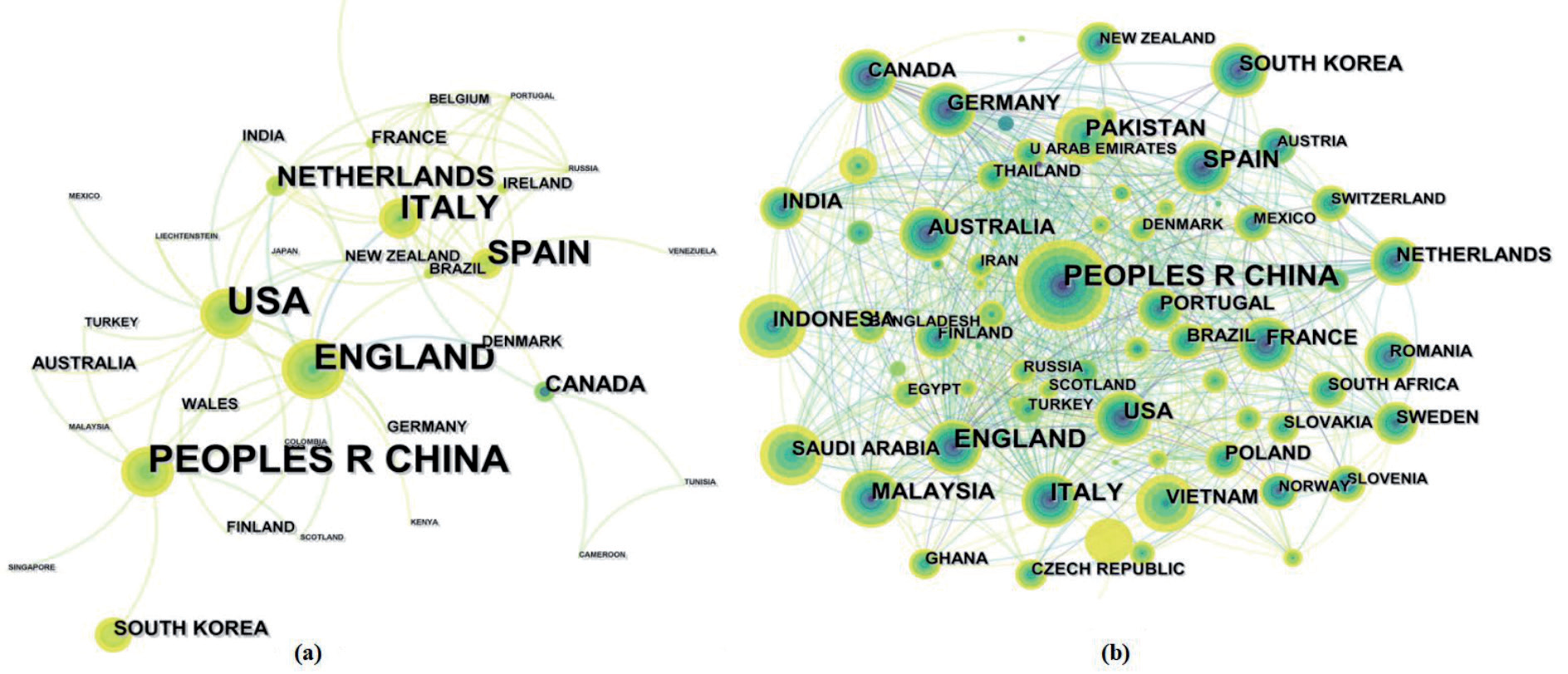
Table 1.
Top 10 productive and centrality countries.
[i] Notes: Freq. indicates the total number of publications in a particular country, and Year indicates the average year of publications. Cent. indicates the country’s centrality in the network. The same below. Except that the word “country” is replaced by the word “institute” and the word “cited-journal”, respectively.
Institutional Distribution and Cooperation Network
The institutional cooperation network is a refinement of the national cooperation network at the macro level. It can reveal the communication and collaboration between different institutions in more detail and clarify the cluster characteristics of related research. Taking 2014 as the node, this paper analyzes the distribution of publishing institutions and cooperation networks in the two periods before and after. Fig. 4a) and 4b) show the institutional cooperation network for 1987-2014 and 2015-2023, respectively, with nodes and links rising from 169 and 97 in the previous phase to 365 and 286, respectively. This further confirms that after 2014, scientific research institutions worldwide actively responded to the call of the UNEA-1 and strengthened cooperation.
Tables 2a) and 2b) show the detailed information at the publishing institution level. Before and after 2014, 152 and 318 institutions participated in and published relevant research on eco-innovation in SMEs, respectively. Among them, the top three institutions in the first period are “City Univ Hong Kong”, “Rochester Inst Technol”, and “Univ Castilla La Mancha”. The number of papers published by many institutions is only in the single digits, which shows that the research is not systematic. At the same time, their centrality is small. CiteSpace calculates that their centrality is about 0, indicating that institutions pay little attention to related research directions and that the research quality needs to be improved. “Jiangsu Univ”, “Univ Sains Malaysia”, and “Dalian Maritime Univ” issued the most papers in the second period. The top three institutions by centrality are “Jiangsu Univ” (0.11), “Univ Econ Ho Chi Minh City” (0.08), and “Dalian Univ Technol” (0.06). “Jiangsu Univ” ranks first in publication quantity and quality, while “Beijing Univ Technol” ranks ninth in publication quantity, but it did not enter the top ten in terms of publication quality. In terms of the number of publications and the degree of center, three of the top ten institutions are Chinese institutions, consistent with China’s total number of publications ranking first in the world. Overall, with the deepening of the emphasis on the ecological environment and economic resilience, the number and intensity of cooperation between institutions have been continuously enhanced, and the scope of radiation has been continuously expanded. However, there are still more potential opportunities for eco-innovation in SMEs with specific characteristics.
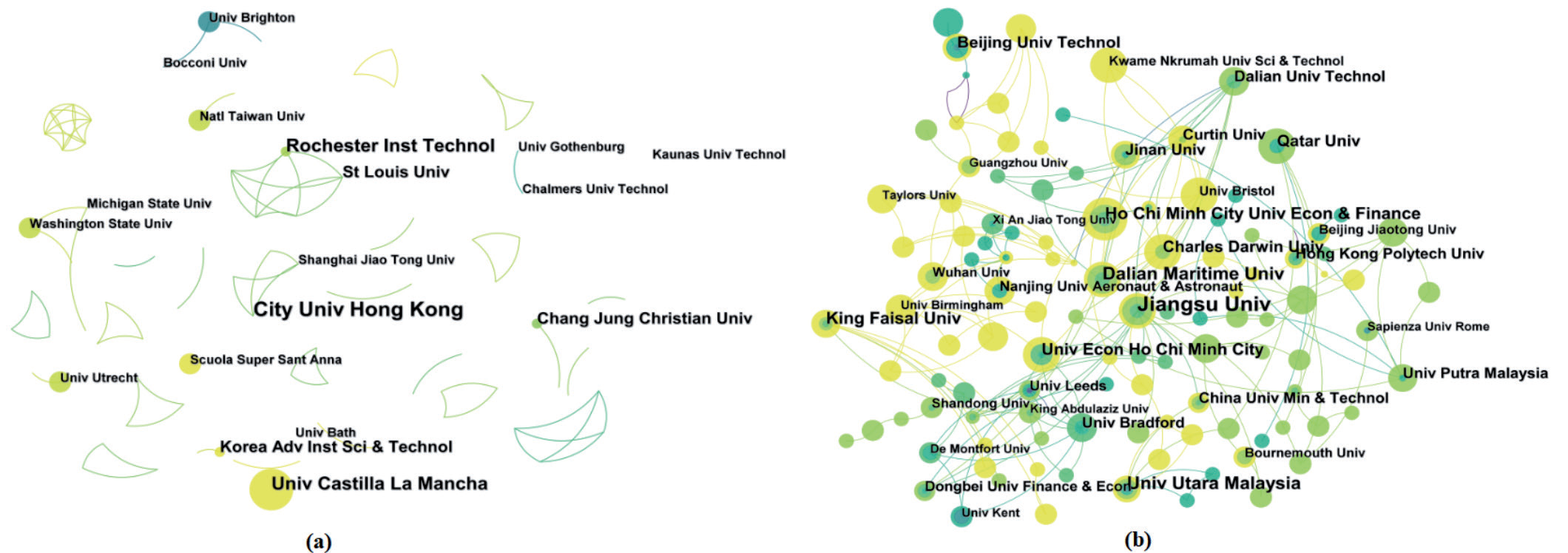
Table 2.
Top 10 productive and centrality institutes.
Intellectual Structure and Research Evolution
To properly understand the research on eco-innovation in SMEs, it is imperative to have a clear understanding of the relevant elements, research trends, and precise knowledge structure. This paper treats 2014 as a node and uses bibliometric tools like CiteSpace and VOSviewer to study this content in two periods, which can better understand the research changes and summarize the overall knowledge framework. First, Section 5.1 analyzes current research and significant issues using clustering networks. After that, Section 5.2 discusses co-occurring networks to highlight the hot subjects that academics are interested in. Lastly, analyzing the most frequently referenced authors and publications in the eco-innovation of SMEs demonstrates the exchange of ideas and multidisciplinary integration.
Knowledge Base and Research Topics
Cluster analysis can capture a certain field’s core research content and help build a basic knowledge framework. Among these, the cluster with the literature research keywords as the node can reflect the hot topics with high discussion. The cluster with the literature cited as the node can represent the important topics acknowledged by the academic community. Thus, this paper builds a knowledge framework for studying eco-innovation in SMEs by using keywords and cited publications as nodes for cluster analysis. In terms of specific techniques, CiteSpace’s clustering function was used, and the option of “Show the Largest K Clusters” was chosen to discover clusters based on the works of Wang et al. and Ding et al. [26, 27].
Cluster Analysis of Keywords
Taking the keywords of literature research as nodes, the cluster network generated in 2014 and before is composed of 268 nodes and 1186 links, and after 2014 is composed of 503 nodes and 4281 links. Fig. 5a) and 5b) show the cluster network diagram. The prior period’s clustering receives ten research communities under “Show the Largest K Clusters”, while the subsequent period receives eight. This shows that the current research is more concentrated than the previous research, which was scattered and average. This suggests that UNEA-1 has specific guidelines for eco-innovation in SMEs. Tables 3a) and 3b), which display the specific contents of the clustering for 1987-2014 and 2015-2023, provide a more in-depth examination.
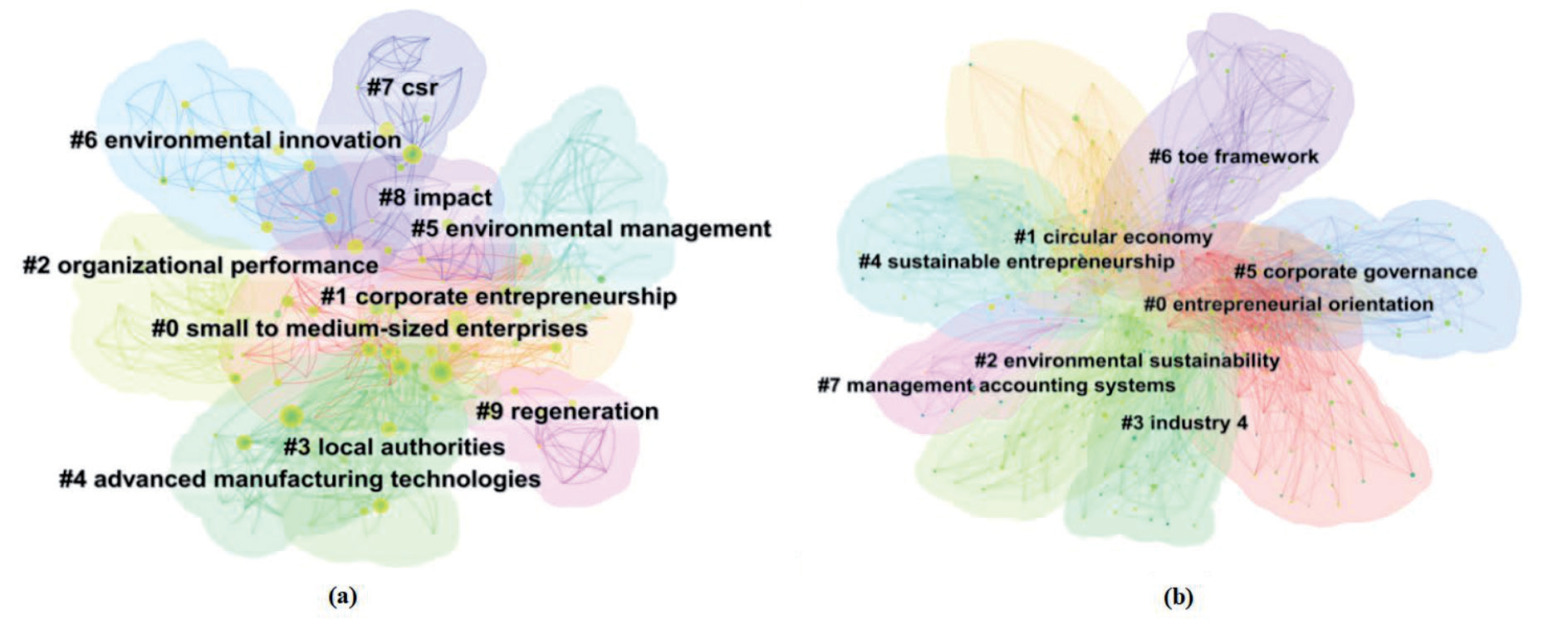
According to the size of the most discussed cluster in 2014 and before, the following five categories comprise the largest clusters: “small and medium-sized enterprises” (#0), “corporate entrepreneurship” (#1), “organizational performance” (#2), “local authorities” (#3), and “advanced manufacturing technologies” (#4). The research topics under the maximum cluster label (#0) also include “performance”, “organizational innovation”, “strategic change”, etc. It indicates that corporate strategy and corporate performance are typically discussed alongside the research on eco-innovation in SMEs. Among them, Zhang and Tao, and Fernández-Mesa et al. are representative of the literature in this cluster [34, 35]. In addition, clusters #1, #2, and #3 also show that eco-innovation in SMEs is related to the interests of firms and externally connected entities. Specifically, from the internal perspective of enterprises, cluster #1 demonstrates that SMEs with corporate entrepreneurship can better perceive the external environment, which is conducive to sustainable growth [36]. The literature in cluster #2 also shows that management behavior and the organizational performance of eco-innovation in SMEs are closely associated. For instance, green management and green innovation could enhance the performance of SMEs [37]. Cluster #3 indicates that external forces drive eco-innovation in SMEs. Local governments could assist SMEs in implementing progressive innovation [38]. However, enterprises may not innovate as much in the green space if they receive insufficient support or regulations regarding environmental matters [39, 40]. Furthermore, cluster #4 primarily emphasizes the green and sustainable development of SMEs through technological innovation, and the technology of eco-innovation in SMEs is gradually changing [41, 42].
Table 3.
Details of the keywords cluster.
Since 2014, “entrepreneurial orientation” (#0), “circular economy” (#1), “environmental sustainability” (#2), “industry 4” (#3), and “sustainable entrepreneurship” (#4) are the five leading cluster labels. First, a total of 106 publications are classified as “entrepreneurial orientation” (#0), indicating that this topic is receiving much academic attention. For instance, many scholars employed Partial Least Squares Structural Equation Modeling (PLS-SEM) to discuss the impact of green entrepreneurship orientation on corporate environmental performance [43, 44], in which eco-innovation behavior plays a mediating role [45, 46]. Clusters #4 and #0 are closely related as well. Sustainable entrepreneurship (#4) is a crucial driver for transforming ecologically and socially sustainable economic systems [47, 48]. The literature under this cluster suggests eco-environmentalism focusing on sustainability might enhance performance [49]. However, a lack of business education [50], perceived barriers, and perceived dangers can have the opposite effect [51]. Then, the circular economy (#1) and environmental sustainability (#2) comprise the second and third clusters, respectively. Except for the former’s broader scope, they both attempt to balance sustainable growth and pollutant throughput. Specifically, in terms of the circular economy, it has also been discovered that waste energy utilization [52, 53] and green human resource management can encourage enterprises to participate in circular economy activities [54]. These actions can open the door to achieving green growth [55]. In terms of environmental sustainability, some examples of internal factors that can motivate SMEs to respond to sustainability are eco-intellectual capital [56], enterprise environmental awareness [57], and intelligent technology [58]. Meanwhile, external factors include industry norms and environmental incentives [59, 60]. Finally, the fifth cluster label is Industry 4, which also contains terms like “digital transformation”, “emerging market”, “artificial intelligence”, etc. According to some academics, SMEs can enhance their performance in eco-innovation by adopting digital technologies for open management of eco-innovation in the context of Industry 4.0 [61, 62].
From the year of the most discussed cluster, the two cluster labels for the most recent “year” in the 1987- 2014 period are small to medium-sized enterprises (#0) and advanced manufacturing technologies (#4), with the former cluster having an average publication date of 2011 and the latter of 2009. On the one hand, this suggests that, prior to the UNEA-1, technology was the primary element of eco-innovation in SMEs. However, it also demonstrates that prior research on SMEs’ eco-innovation was primarily conducted in conjunction with other research themes, with fewer articles examining the behavior of SMEs alone. It was not until after 2010 that SMEs as a group were the subject of focused, independent research. Industry 4 (#4) and TOE framework (#6), which were published on average in 2020, are the clustering labels for the most recent “year” in the 2015-2023 phase of the literature base. The heightened discussion surrounding the technology-organization-environment framework (TOE framework) suggests that related research is gradually shifting from its original technology dimension to the organizational, knowledge, and process dimensions. Despite being relatively early, this framework has only recently been widely applied to eco-innovation in SMEs. Cluster #6 also includes “green supply chain management”, “digital technology”, and “big data analytics”, which is consistent with the actual development situation. With the deepening of Industry 4.0, digital technology provides a more comprehensive and operational space for eco-innovation in SMEs.
Cluster Analysis of References
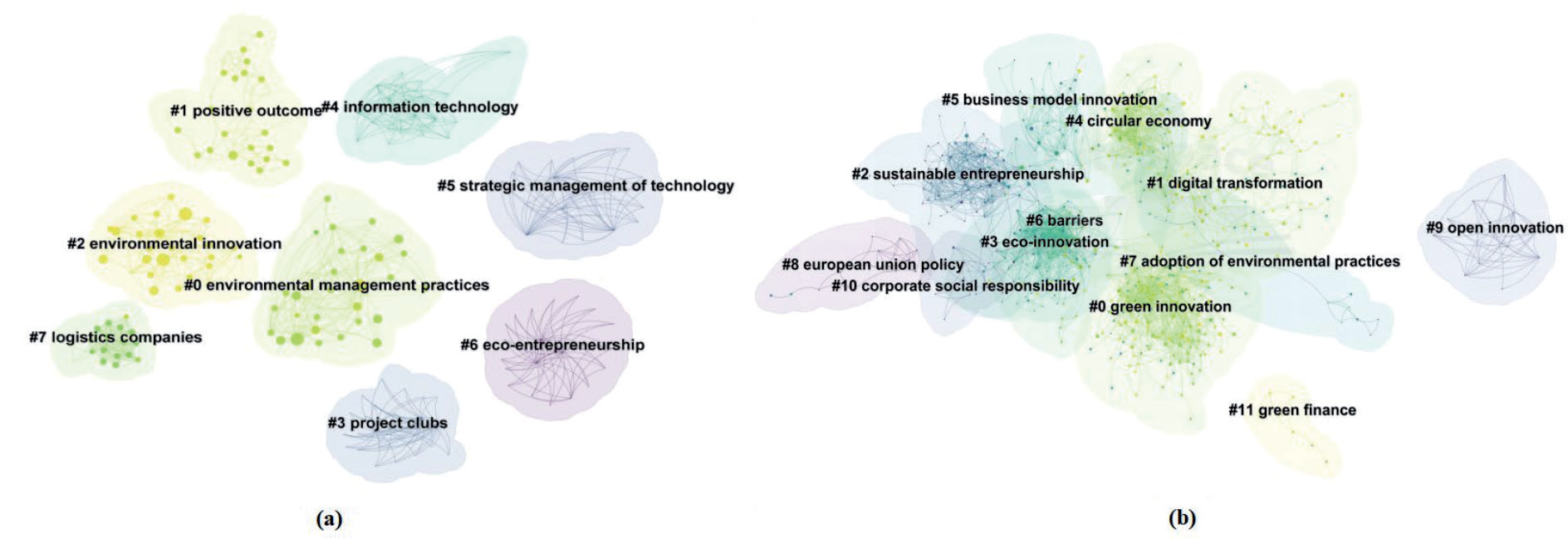
This section uses CiteSpace to re-conduct the cluster analysis with references as the key index. Fig. 6a) and 6b) show the clustering graphs of references from 1987-2014 and 2015-2023, respectively. Through the clustering function of “K”, the former forms three main clusters consisting of 473 nodes and 1369 links, while the latter has 10 clusters consisting of 696 nodes and 3292 links. Compared with the heat of discussion, the degree of recognition can clarify the underlying support of SMEs’ eco-innovation research in a more detailed manner. References serve as the theoretical foundation of recently published articles. Therefore, the number of cited articles can reveal the degree of scholars’ recognition of related literature. Tables 4a) and 4b) show the specifics of the clustering for 1987-2014 and 2015-2023
From the size of the most recognized clusters, the three most recognized clusters in 2014 and before were “environmental management practices” (#0), “positive outcome” (#1), and “environmental innovation” (#2). The three clusters’ overall recognition is somewhat close to each other, and there is even some link between their themes. These links indicate the firms’ environmental concern has a solid theoretical basis and reference value. First, cluster #0 shows that environmental management practices are widely acknowledged by academics as a breakthrough in eco-innovation for SMEs. It provides a crucial starting point for early research in this area. Regarding this issue, most researchers have actively explored, from the perspective of the enterprise’s capacities, the factors influencing SMEs’ participation in environmental management practices [63, 64]. Secondly, following SMEs’ adoption of environmental management methods, there was a notable increase in the acknowledgment of the “good outcome” cluster designation. The research themes under the cluster label “positive outcome (#1)” also include “negative outcome”, “age/size/sector effects”, etc. This implies that the effectiveness and financial impact of SMEs’ involvement in environmental management were given considerable consideration at this time. For instance, Hofmann et al. discovered that while environmental management increases a company’s expenses, it also increases its market recognition and competitiveness [63]. Van Hoof et al. conducted a similar test [65]. Finally, to meet environmental regulation requirements, SMEs continuously implement innovations to control costs and increase profits [66]. Consequently, “environmental innovation” has gained increased recognition in relevant research. This shows that scholars at the time acknowledged that eco-innovation in SMEs was focused on environmental protection and the development of the environment. It also shows that the first stage of the community’s more recognized technology is the core of eco-innovation [67].
Since 2014, all sectors of society have shown a new level of concern for the environment. The three clusters of “green innovation”, “digital transformation”, and “circular economy” have emerged to meet the requirements of the new stage of economic development and have received high recognition. Firstly, “green innovation” is the most well-known cluster descriptor. Other terms that fall under this category include “green transformational leadership”, “green product innovation”, and “green human resource management”. It is evident that since UNEA-1, the term “green” has gained prominence among academics and is crucial to eco-innovation in SMEs. For instance, research by Singh et al. and Al-Ghazali et al. has shown that green transformational leadership and green human resource management are significant contributors to green performance and eco-innovation in SMEs [68, 69]. At the same time, keeping up with the times is also necessary for an enterprise to survive, as clusters #1 and #4 show. “Digital transformation” and “circular economy” are significant themes identified in SMEs’ eco-innovation research, in keeping with the hot research topics covered in Cluster Analysis of Keywords. In the era of the intelligent age and global advocacy for sustainable development, academics have reinterpreted the development approach and future of eco-innovation for SMEs regarding both practical paths and goals. In addition, since 2014, there has been an increase in the acknowledgment of the clusters of “sustainable entrepreneurship” (#2), “adoption of environmental practice” (#7), and “economic union policy” (#8). Although generated in an earlier period, these themes have continued to be emphasized in the boom of eco-innovation research, indicating their importance in eco-innovation in SMEs.
From the year of the most recognized cluster, from 1987 to 2014, the essential ideas or perspectives widely cited by scholars are mainly concentrated around 2008. In the top ten cluster labels from 2015 to 2023, pre- 2014 literature makes up half of the widely cited works. This shows that the earlier era, widely acknowledged by academics, established a significant theoretical framework for studying eco-innovation in SMEs following UNEA-1. Scholars also acknowledge newly developed theoretical stances that emerged after 2014, including the circular economy, digital technology, development barriers, green management, green finance, etc.
Research Agenda
This chapter organizes the relevant literature on eco-innovation in SMEs before and after 2014 based on two factors, namely, popularity and recognition. To further clarify the knowledge structure and evolutionary characteristics of eco-innovation in SMEs, we reorganize and integrate the theoretical knowledge base framework based on the timeline of cluster occurrence, as shown in Fig. 7. Although earlier we divided the whole into two periods for cluster analysis, in order to analyze the knowledge structure in detail, this paper is further divided into three phases: early (before 2014), middle (2015-2018), and late (after 2018), based on the content of the resulting clusters.
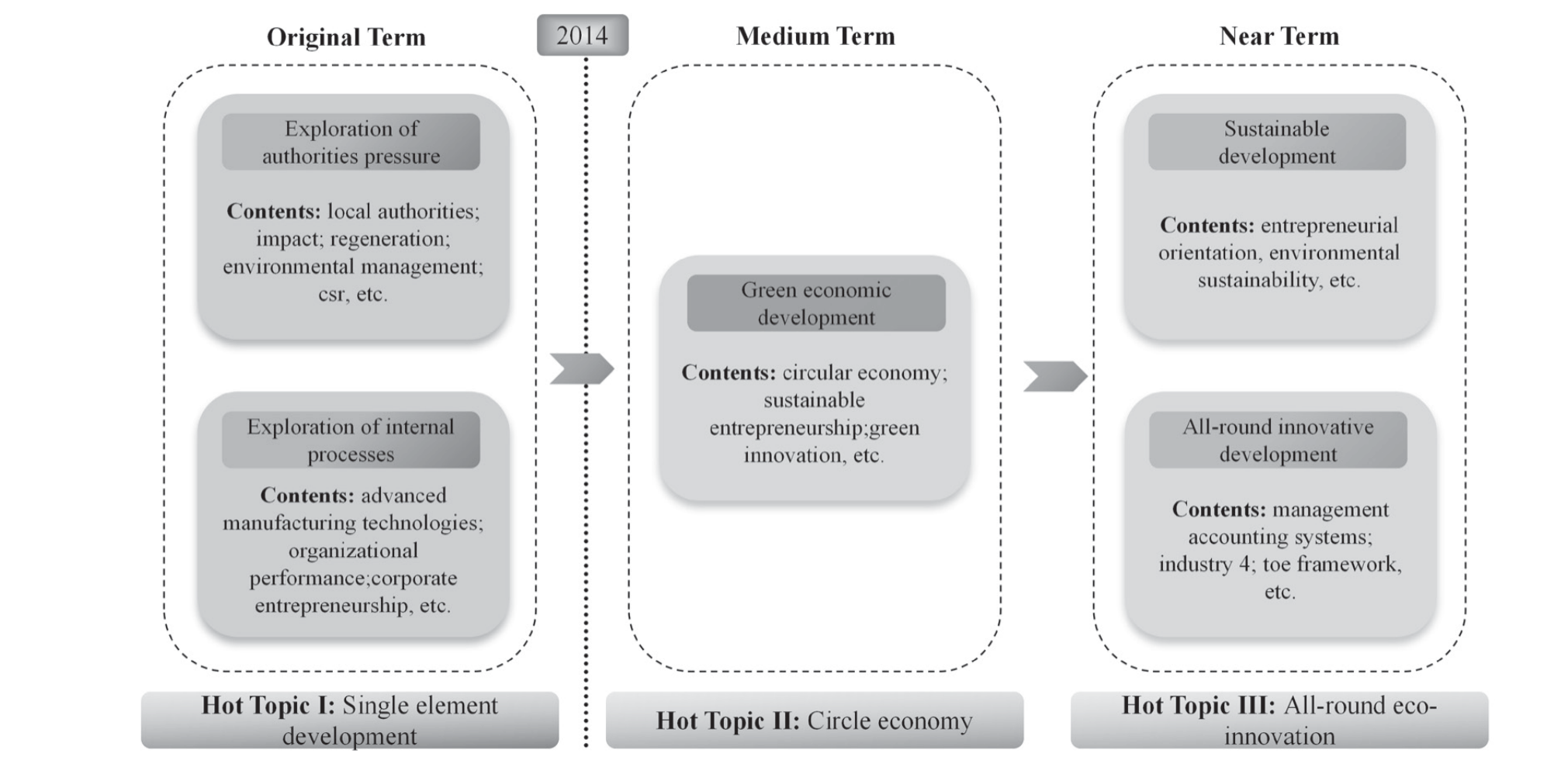
Early research focused primarily on external factors and internal innovation processes of eco-innovation in SMEs. This is the gestation period for developing international sustainable development objectives. Since 1987, the United Nations has discussed sustainable development at numerous international conferences (e.g., the United Nations World Commission on Environment and Development in 1987, the Millennium Summit in 2000, and the World Summit on Sustainable Development in 2002), leading to the evolution and enhancement of the concept of eco-innovation. These conferences send a signal to advance both technological innovation and eco-innovation growth through the government and other sectors. Consequently, academics have also carried out relevant studies. On the one hand, the government and other stakeholders will put requirements on the environmental behavior of enterprises, which obliges SMEs to carry out eco-innovation. Because of this, many scholars focus on the pros and cons that firms face in a given environment and explore the strategic behavior of managers in response to changes in the external environment. On the other hand, to obtain insights into the practical paths of eco-innovation in SMEs, scholars focus on analyzing advanced technological innovation and environmental management. However, most literature on the environment and green has attached itself to other research topics (e.g., business strategy, performance). Regarding attention, research on eco-innovation in SMEs before 2014 has received significant attention and has important lessons to learn in subsequent years. In particular, research on corporate social responsibility (CSR) and environmental management strategies has gained more attention. It suggests that earlier research has a solid theoretical foundation.
By the mid-term stage, environmental concerns have gained traction in all spheres of society, and relevant experts have intensified their studies on innovation in SMEs. During this stage, the world started to pay more attention to climate change and its challenges. For instance, the UNEA-1 was held, and the 17 Sustainable Development Goals (SDGs) were established, outlining the course of global development efforts for the following 15 years. The global SDGs are improved in the new phase, and they are given more development objectives, including affordable and clean energy, sustainable cities and communities, responsible consumption and production, etc. These objectives stress the idea that the environment, economy, and survival are all equally important and demand more aspects of eco-innovation research in academia. Therefore, on the one hand, relevant scholars pay more attention to eco-innovation in SMEs oriented to the development of the circular economy and explore the specific path to realize this goal. In this process, enterprises actively practice the principles of the circular economy and promote green and circular economy growth through green energy and supply chain management. On the other hand, some academics carry out extensive studies on the essence of sustainable entrepreneurship, which is the lasting driving force behind eco-innovation in SMEs. Therefore, unlike the external pressure-driven eco-innovation in the first stage, scholars in the middle stage mainly focus on the enterprise’s internal initiative perspective. In addition, judging from the cited references in the later stage, scholars also study SMEs’ business model innovation and innovation barriers oriented to eco-innovation. It lays the foundation for the next stage of scientific research.
Recently, the discussion of eco-innovation has heated up due to countries’ confirmation of their obligations to implement the Paris Agreement’s provisions in 2018 and the 2019 United Nations Climate Action Summit, which discussed strategies to address the world’s climate emergency. These proposals send strong signals to the global market and political arena, bolstering the idea that eco-innovation must consider various factors. Scholars are now delving deeper into green and sustainable innovation for SMEs. Following nearly 30 years of development, all societal sectors argue that eco-innovation needs to be actively practiced in many areas, including organization, services, processes, technology, sales, etc. Apart from discussing environmental development and intelligent technology, relevant scholars have also looked at better ways to implement eco-innovation in SMEs from broader perspectives like management accounting systems and sustainable development orientation. This is all in addition to the backdrop of the Industry 4.0 era and the growing complexity of economic business.
Table 4.
Details of the references cluster.
Co-Citation Analysis
Keywords: Co-Citation Network Analysis
Further co-citation network analysis is carried out using VOSviewer, using keywords as node types, concerning the study of Wang et al. [26]. Nodes with varying colors denote distinct subjects, while the size of the node signifies the number of citations. Consistent with the above, co-citation network analysis is performed for two periods, before and after 2014. The cluster density view of keywords between 1987 and 2014 is shown in Fig. 8a). Due to the small number of articles in this period, the overall network is more streamlined, and its research can be roughly divided into three categories. The first category includes the green cluster with “innovation” as the core content. The category mainly discusses the concept of green innovation and development methods under the resource perspective, covering keywords such as “resource-based view” and “entrepreneurial orientation”. The second category focuses on the characteristics of eco-innovation in SMEs, which calls for corporate decision-makers to incorporate eco-innovation into the framework of sustainable corporate growth. These traits include the red cluster focusing on “management” and “strategic” and the blue cluster focusing on “performance”. Finally, the yellow cluster, with “sustainability” as its core component, is the third category. This cluster explores the eco-innovation model in SMEs from a more macro perspective, such as “policy” and “technology”.
The cluster density view of keywords between 2015 and 2023 is shown in Fig. 8b), which can be roughly divided into four categories. The first category consists of the green cluster and the yellow cluster, centered on the internal characteristics of firms. For instance, “competitive advantages”, “orientation”, and “capability” are all related to eco-innovation. The second category is the cyan cluster. It examines eco-innovation models from a larger macro viewpoint – such as the “circular economy” – and examines the challenges and obstacles faced by SMEs in eco-innovation. The third category, comprising blue and red clusters, explores the relationship between the external environment or external relationships of enterprises and eco-innovation. The fourth category mainly consists of the purple cluster, which highlights particular behaviors that are strongly associated with eco-innovation, such as “social responsibility”, “financial performance”, and “sustainable performance”.
Most Cited Authors\Sources in SMEs’ Eco-Innovation Research
The analysis of cited authors is an effective tool for identifying essential contributors. Fig. 9a) shows a heat map of the most cited authors in the relevant research areas from 1987 to 2014, with each point on the map corresponding to a cited author. The most cited authors mainly include “Porter M E”, “Miller D”, and “Podsakoff P M”. Among these is the well-known “Porter’s hypothesis” proposed by Porter and Linde, which provides a solid basis for the study of eco-innovation in SMEs [70]. According to the hypothesis, appropriate environmental regulation can induce firms to engage in more innovative activities and increase their productivity, thereby offsetting environmental protection costs and enhancing their profitability in the marketplace. Miller and Friesen were the first to propose the concept of entrepreneurial orientation, and they also offer principles for eco-innovation in SMEs [71]. The three features of entrepreneurial orientation were described as innovativeness, risk-taking, and ahead-of-the-curve action. Lastly, Podsakoff and Organ proposed Harman’s single-factor test, widely used to test whether there is a standard severe method bias problem [72]. It also indicates that the research focuses more on the factors that influence eco-innovation in SMEs.
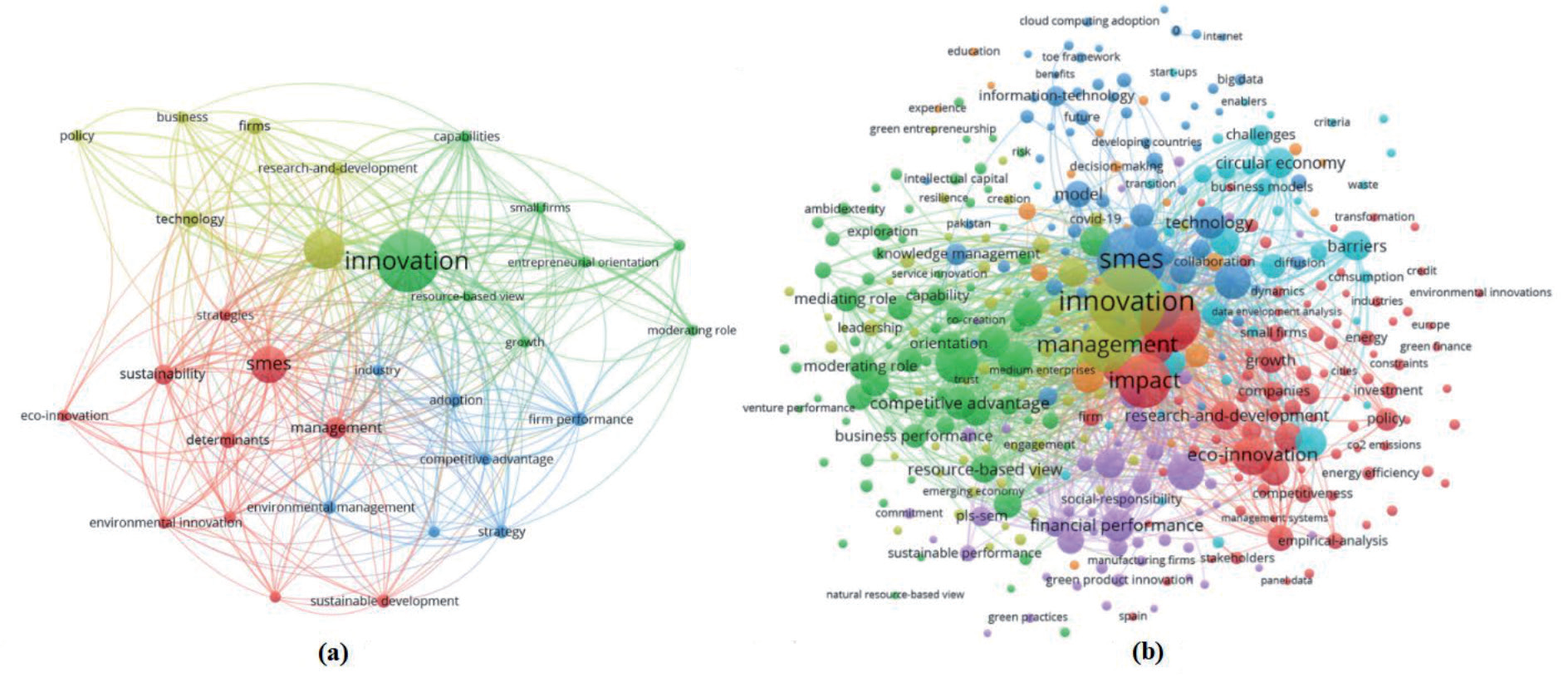
Fig. 9b) shows the authors of the most cited studies for 2015-2023. The most cited authors are mainly “Porter M E”, “Fornell C”, “Hair J F”, and “European Commission”. Porter’s hypothesis remains integral to the research on eco-innovation in SMEs. Fornell and Larcker’s paper on SEM has been widely cited, indicating that SEM has been frequently used as a research tool in the field [73]. At the same time, PLS-SEM modeling has been widely applied by scholars to SMEs’ eco-innovation research. Hair et al. methodically sort out the reasons, data, and model characteristics of using PLS-SEM in various studies and expand and improve the model [74, 75]. The European Commission gives a series of definitions for SMEs and eco-innovation 76, 77]. In addition, the commission has introduced a series of laws and standards that have received extensive attention from academics.
The analysis of cited journals identifies the core journals in the field of eco-innovation in SMEs and helps to understand the main disciplinary categories involved in related research. To determine their impact on the field, Tables 5a) and 5b) present the top ten journals according to citation count and centrality over 1987- 2014 and 2015-2023, respectively. The top three cited journals in 1987-2014 are “STRATEGIC MANAGE J”, “ACAD MANAGE J”, and “ACAD MANAGE REV”. The top three journals in terms of centrality are “ACAD MANAGE REV”, “BUSINESS STRATEGY AND THE ENVIRONMENT”, and “ADMIN SCI QUART”. Regarding centrality and citations, “ACAD MANAGE REV” is ranked in the top three, suggesting that it is the most significant journal. In the meantime, the journal categories indicate that natural scientific journals are also active in research on eco-innovation in SMEs, which is mainly done from a management perspective. Between 2015 and 2023, the top three cited journals are “J CLEAN PROD”, “SUSTAINABILITY-BASEL”, and “J BUS RES”. According to centrality, “J MARKETING RES”, “J CLEAN PROD”, and “SUSTAINABILITY-BASEL” are the top three journals. Among them, “SUSTAINABILITY-BASEL” and “J CLEAN PROD” rank in the top three in terms of citations and centrality. It indicates that these two journals are important in this phase and are the core journals in the field of eco-innovation in SMEs. In addition, the distribution of journals is more varied now than in 2014.
Emerging Trends and Research Frontiers
Using citation burst detection, we can identify the topics and trends that have received the most and least attention in recent years. Citation bursts are used to characterize articles with a sharp increase in citations. The stronger the burst, the more cutting-edge the research, and the more comprehensively it reflects the dynamics of a particular field of research. Since the citation burst detection automatically unfolds the analysis along the timeline, manually distinguishing between the time nodes before and after is unnecessary. Therefore, the content of this chapter will no longer differentiate between periods before and after 2014; instead, the entire sample spanning from 1987 to 2023 will be analyzed together. Section 6.1 applies burst detection for mutation identification concerning references and keywords, respectively. Section 6.2 subsequently outlines the research frontiers and future research directions for eco-innovation in SMEs based on the burst content.
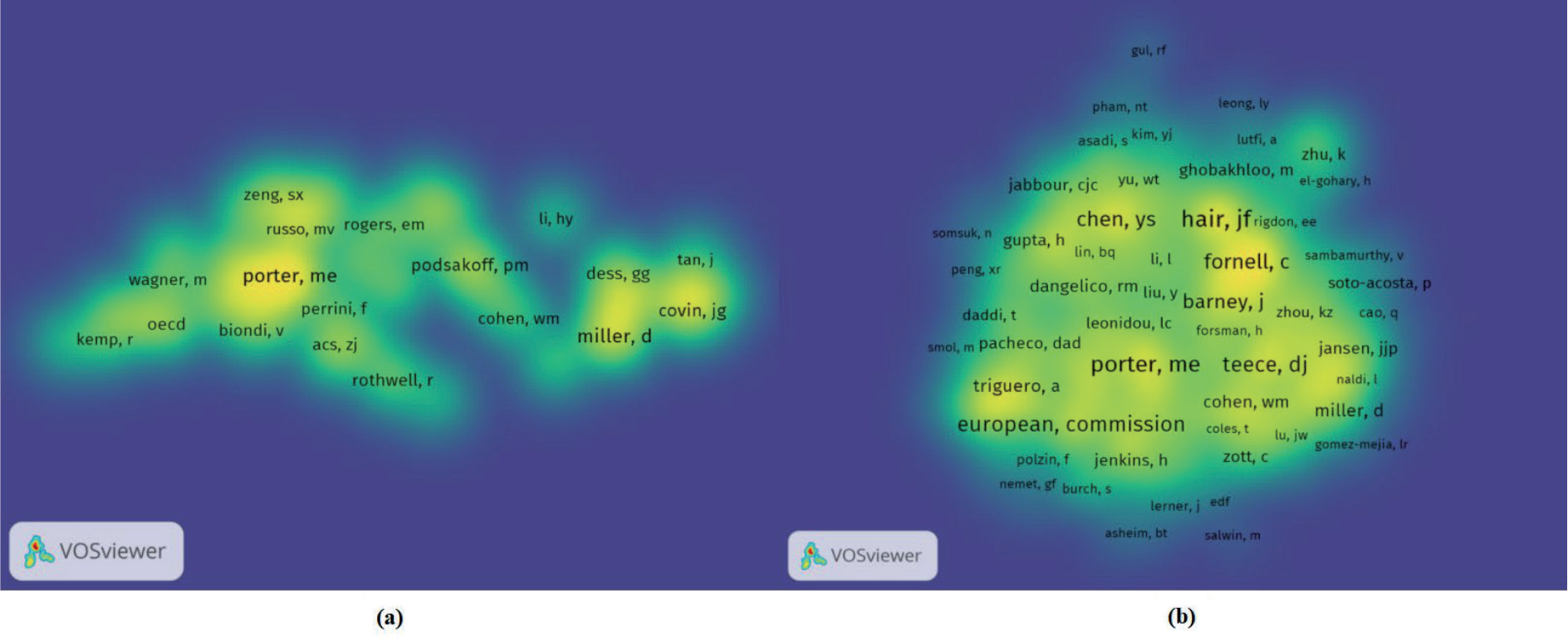
Table 5.
Top 10 highly cited-journals.
Emerging Trends Based on Burst Detection
This paper employs CiteSpace to analyze the most burst articles on eco-innovation in SMEs since 1987, as presented in Table 6. The prominent horizontal line signifies the greatest burst period. Overall, whether it pertains to the reference burst or the keyword burst, the temporal pattern of the overall burst aligns with the earlier analysis. Both the preceding and subsequent studies validate the accuracy of the analysis results. Further in-depth analysis will delve into burst intensity to delineate the research frontier.
The burst analysis of the references reveals that the majority of articles with high burst intensity are concentrated after 2014, which may be related to the UNEA-1. These articles aim to innovate the green development model of SMEs or establish a new framework for environmental protection from the perspective of sustainable development, thus making a significant contribution to green development. Table 6 illustrates that articles with higher burst intensity can be categorized into three main categories. The first category focuses on ecological innovation, placing environmental friendliness at its core during the initial stages, and its burst intensity index is above 12. For example, Triguero et al. explored the factors that promote eco-innovation in SMEs, including supply, demand, and regulation [78]. Similarly, Horbach et al. also conducted a similar test [79]. The second category revolves around eco-innovation in SMEs, centered on the sustainable business model. Its representative literature exhibits the highest burst intensity of 27.22. Klewitz and Hansen summarized the strategies and practices of sustainable development innovation in SMEs, categorizing the former as resistive, responsive, anticipatory, and innovative, and the latter as product, process, and organization [10]. Additionally, other scholars have identified management’s innovation awareness and practice [80], as well as resources, to support sustainable innovation in SMEs [81]. The third category pertains to the eco-innovation development mode of SMEs oriented toward the circular economy, which has shown high burst intensity in recent years. For example, Rizos et al. found that the lack of financial resources and technical skills hinders SMEs’ transition to a circular economy [82].
Table 6.
References with the strongest bursts until 2023.
Keyword burst analysis is depicted in Table 7. In the examination of SMEs’ eco-innovation, keyword bursts evolve relatively swiftly, yet the keywords persist in scholarly discourse even after their initial appearance. This indicates the robust continuity and profound research foundation underlying the investigation of SMEs’ eco-innovation. Based on the burst intensity, the highest ranking keyword is “environmental management”, underscoring the nexus between eco-innovation in SMEs and environmental innovation and management. Similar keywords, such as “environmental innovation”, and “green” corroborate this emphasis. Following closely are “small firm” and “firm size”, exhibiting high burst intensity, signifying the meticulous nature of eco-innovation in SMEs. Despite the existing literature’s focus on SMEs, scholars are encouraged to delve deeper into more nuanced classifications within this category. Similarly, “small business” and “manufacturing SME” exemplify such detailed categories. The third category focuses on “determinants”, indicating that many studies explore the factors promoting eco-innovation in SMEs, including “strategy”, “management”, and “sustainable performance”. The fourth category, “system,” underscores the increasing importance of multidimensional, three-dimensional, and systematic analyses of SMEs’ eco-innovation. It holds significant value to explore SMEs’ eco-innovation from a comprehensive and systematic perspective, with “cluster” serving as a tangible manifestation of such systematization.
Table 7.
Keywords with the strongest bursts until 2023.
The burst analysis of references and keywords highlights that experts’ research on hot issues of eco-innovation aligns with the establishment of international goals and agreements for sustainable development. In the initial stages of sustainable development, concepts and objectives were quite broad, with United Nations reports from various conferences categorizing stated “ecology”- linked issues as a broad category without detailed goal-setting. Documents such as Our Common Future, the Declaration on Sustainable Development, the Rio Declaration on Environment and Development, and the Johannesburg Declaration were comparatively concise descriptions. During this period, the SDGs emphasized ecology and technological innovations, focusing on technological advancements to facilitate the attainment of related objectives. As a result, the academic study was pretty broad and fell short of realizing more in-depth research. However, the previous SDGs have become outdated as economic growth continues while environmental degradation accelerates, with some goals remaining unaccomplished within their designated timeframes. Consequently, since 2014, UN conferences have improved the “ecology”-linked issues and divided them into several first-level fundamental themes in the new development phase. Scholars are conducting more detailed and systematic research, aligning goals more closely with economic development objectives.
Research Frontiers and Future Directions
Based on the above analysis, we have sorted out a framework diagram of the future direction of eco-innovation in SMEs, as shown in Fig. 10.
From the perspective of characteristics, eco-innovation in SMEs is a complex and diversified concept, demanding a system perspective for comprehensive understanding. Initially, eco-innovation’s core objective lies in pollution research, anchoring technological innovation with environmental preservation at its core. However, amidst environmental degradation and the inherent risks of research and development, new imperatives have arisen for eco-innovation in SMEs, emphasizing multidimensional, high-efficiency, and sustainable development. On the one hand, SMEs need to promote eco-innovation in technology, organization, process, service, etc. On the other hand, to ensure the basic survival of SMEs, they need to improve innovation efficiency and consider innovation and green performance. Overall, a crucial topic worth investigating in the ever-changing social environment is how to better grasp the features of eco-innovation for SMEs. This brings up another critical point, which is the need for further empirical data to determine whether eco-innovation aimed at sustainable development can actually meet its objectives. After all, the value of SMEs’ eco-innovation endeavors is contingent upon their ability to deliver tangible outcomes. Hence, leveraging the dynamic aspects of eco-innovation, continued research is imperative to evaluate its real-world impacts on stakeholders such as policymakers and enterprises.
From the perspective of external factors, systematic research on the composition of enterprises and other relevant entities is increasingly important. With the expansion of the definition of stakeholders, the discussion on the external factors of SMEs’ eco-innovation must also be further demonstrated. Simultaneously, different stakeholders will pay attention to different dimensions of eco-innovation. Hence, future research should delve into the nuanced demands of various stakeholders to explore disparities between current and future eco-innovation requirements in SMEs. Furthermore, leveraging the theory of economies of scale and exploring the influence of market orientation and cluster advantage on eco-innovation in SMEs holds promise. For instance, this could be focused on external forces such as information sharing, resource interchange, and industry clusters.
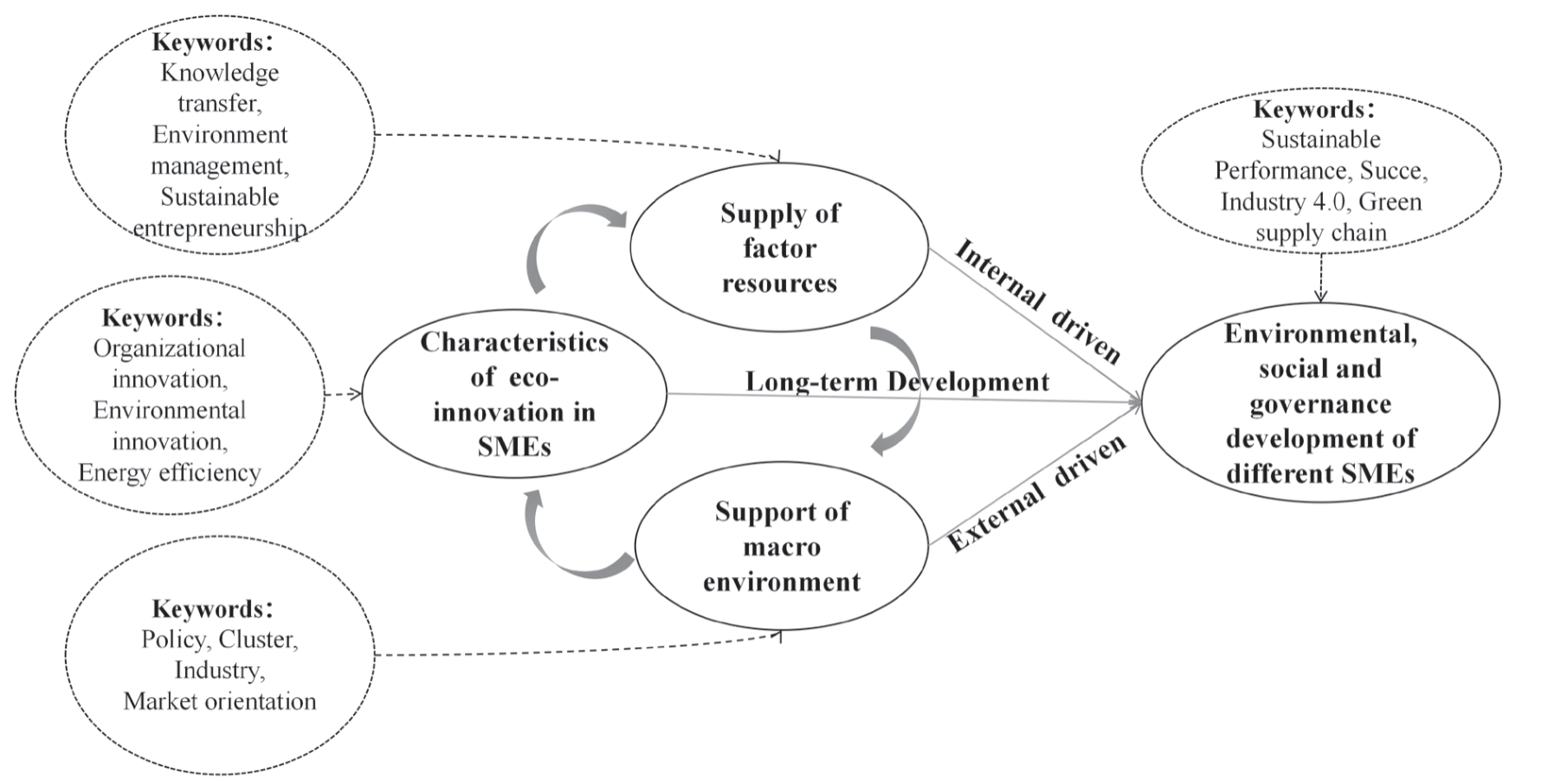
From the perspective of internal driving factors, future research needs to raise the degree of eco-innovation in SMEs to a higher level of strategic importance. The analysis of internal drivers must evolve to reflect contemporary trends and delve into the mechanisms propelling eco-innovation across organizational structures, processes, and services from a strategic standpoint. Concurrently, amid intense competition, SMEs need to give full play to the advantages of internal stakeholders and stimulate the potential of management and employees. In this realm, examining the eco-innovation behavior of SMEs at a strategic level and from the perspective of internal heterogeneous stakeholders has become a necessary part of future research. It is crucial to emphasize that future research must prioritize the practical applicability of theoretical findings and elucidate how research outcomes can effectively inform and guide the production and operation of enterprises. This practical orientation represents another vital goal of scientific inquiry. This is true regardless of internal or external drivers. In order to improve the practicability of the driving mechanism, research can be done, for instance, to build an effective indicator system to evaluate the issues and performance faced by enterprises in the process of promoting innovation. Additionally, studies could be conducted to examine the differentiated performance of SMEs’ eco-innovation across various fields and characteristics, utilizing different criteria for analysis.
From a more long-term perspective, the future of eco-innovation in SMEs needs to follow comprehensive governance from within the organization outward. Its research framework needs to consider internal and external stakeholders while pursuing the sustainability of its operations. In recent years, the ESG has provided guidance for the eco-innovation behavior of SMEs. ESG strengthens corporate governance’s ability by promoting eco-innovation efficiency and directly imposing requirements on corporate eco-innovation. Additionally, burst detection analysis indicates that while SMEs constitute a subgroup, further exploration into more detailed dimensions, such as more subdivisions of enterprise scale and industry affiliation.
Moving forward, future research on eco-innovation in SMEs should aim to achieve ESG development across different types of SMEs. This can be accomplished through several key research areas: – Prioritize the integration of ESG and eco-innovation
in SMEs and analyze their behavior, motivations,
and impacts. – Explore how heterogeneous SMEs can implement
effective eco-innovation and ESG development. – Pay attention to the context of Industry 4.0,
emphasizing the performance and impact of
eco-innovation in digital transformation, green
technology transfer, etc.
Discussion
Research Conclusion and Discussion
After filtering out irrelevant articles, a total of 1996 articles related to eco-innovation in SMEs have been identified over the past three decades. Analyzing the publication time distribution reveals an exponential increase in the number of published articles throughout the sample period. Particularly noteworthy is the scarcity of relevant articles, especially prior to the turn of the 21st century. However, following 2014 – marked by the UNEA-1 conference and the adoption of the Paris Agreement – the number of relevant articles has seen a dramatic surge. From a spatial distribution perspective, the cooperation network among countries has strengthened, especially after 2014, witnessing more frequent international collaborations. It is worth noting that, before 2014, “USA” ranked first globally in terms of published articles, followed by “PEOPLES R CHINA” and “ENGLAND”. However, after 2014, “PEOPLES R CHINA” took the lead with a significant rise in published articles, followed by “ENGLAND” in second place and “USA” dropping to fifth. At the institutional level, prior to 2014, the universities with the most significant research contributions were “City Univ Hong Kong”, “Rochester Inst Technol”, and “Univ Castilla La Mancha”. However, collaboration across institutions is lacking, and there is zero centrality. Post-2014, “Jiangsu University” emerged as the top university in terms of published articles, closely followed by “Univ Sains Malaysia” and “Dalian Maritime Univ”. Notably, their centrality has also increased, indicating a growing trend towards collaboration. This demonstrates the encouraging academic research trend around the eco-innovation of SMEs, while also highlighting potential cooperation opportunities and room for development.
This paper further employs cluster and co-citation analyses to delineate the knowledge structure of eco-innovation in SMEs. The findings reveal a significant evolution in the research field during two distinct periods. In the early years (1987-2014), the research focused on “local authorities”, “corporate entrepreneurship”, “advanced manufacturing technologies”, and “environmental”. These studies laid a robust foundation for subsequent eco-innovation theory development.
Since the UNEA-1 conference, held in 2014, the global recognition of the importance of eco-innovation has escalated, as evidenced by studies conducted from 2015 to 2023. Research topics in this period are more diversified, covering emerging fields such as “circular economy”, “digital transformation”, and “sustainable entrepreneurship”. These changes reflect the deepening of SMEs’ eco-innovation practices and demonstrate the global pursuit of sustainable development goals and the exploration of the path to achieve them. “Popular” authors in this field are “Porter M E”, “Miller D”, and “Podsakoff P M” before 2014, and “Porter M E”, “Fornell C”, and “Hair J F” after 2014. The top three representative journals are “STRATEGIC MANAGE J”, “ACAD MANAGE J”, and “ACAD MANAGE REV”, followed by “J CLEAN PROD”, and “SUSTAINABILITY-BASEL” after 2014.
Finally, this paper employs the citation burst detection technique to reveal the emerging trends and research frontiers in this field. In the literature burst analysis, articles published post-2014, primarily focusing on circular economies, sustainable development, and green development models, exhibit significant burst forces. Keyword burst analysis highlights “environmental management”, “firm size”, and “system” as keywords with high burst, indicating the continuity and depth of eco-innovation research in SMEs. These keywords underscore the significance of systematic analysis, influencing factors, SME features, and environmental innovation. Given the ever-evolving social landscape, future research must continuously broaden and deepen the understanding of eco-innovation while also addressing the internal and external dynamics that drive it in SMEs from the perspective of stakeholders. Achieving multi-dimensional eco-innovation and collaborative development necessitates considering the ESG growth of diverse SMEs, evaluating enterprise performance, and integrating Industry 4.0 and green supply chains. Through these endeavors, studies will assist SMEs in achieving the twin objectives of sustainable development and economic efficiency.
Implications for Different Subjects
Implications for Scholars
In subsequent research, scholars should further expand their comprehension of eco-innovation in SMEs, particularly from a systemic and diverse standpoint. On the one hand, scholars ought to focus on the heterogeneity of SMEs across various nations and socioeconomic contexts and how these variations influence the application and impact of eco-innovation. Simultaneously, scholars should look into how SMEs pursue eco-innovation in the context of Industry 4.0 and how to motivate them through regulatory frameworks and market mechanisms. On the other hand, to completely comprehend the complexity of eco-innovation in SMEs, researchers should consider undertaking interdisciplinary research that blends perspectives from several disciplines, such as management, environmental science, and sociology. It’s crucial for scholars to pay attention to how SMEs can practically implement eco-innovation and how to narrow the gap between practice and theory in a given field when conducting relevant research. This makes it easier to see how various topic areas work together to support eco-innovation growth.
Implications for Policymakers
Policymakers must recognize the pivotal role of SMEs in driving the advancement of the green economy. To support and empower SMEs, it is necessary to implement tax incentives, financial subsidies, support for technological innovation, and market access facilities. These measures should be designed to achieve precision in policy-making with SMEs’ requirements and peculiarities in mind. Simultaneously, authorities ought to contemplate methods of enhancing SME managers’ environmental consciousness and eco-innovation proficiency through education and training. Meanwhile, it would devise a robust regulatory structure that guarantees the quality and efficacy of eco-innovation. In particular, they should pay attention to the transformation of green achievements, promote the transfer of SMEs’ eco-innovation from theory to practice, and jointly promote the commercialization of eco-innovation achievements. Furthermore, policymakers should leverage consumer demand for eco-friendly goods and services, thereby creating a market-driven incentive for eco-innovation adoption among SMEs. By aligning policies with consumer preferences, policymakers can effectively stimulate eco-innovation in SMEs through the pull of market demand.
Implications for Businesses and Stakeholders
Enterprises should view eco-innovation as an essential component of their strategic planning and use technology innovation, process optimization, and management enhancement to increase environmental performance and resource efficiency. In particular, the management of SMEs should take market demand and their own capabilities into account and aggressively pursue partnerships with many stakeholders to establish eco-innovation networks and foster the growth of green supply chains and marketplaces. At the same time, enterprises should also assume social responsibility, such as enhancing their corporate image through eco-innovation and establishing green brands. This will help companies gain a competitive advantage in the market and contribute to sustainable development goals. Through collaborative efforts, stakeholders can promote eco-innovation, drive sustainable growth, and create a win-win scenario for all involved parties.
Limitations and Further Improvements
It is necessary to recognize that this study still has some limitations. First, the study primarily relied on material from the Web of Science database until 2023, potentially overlooking relevant literature from other databases and recent research findings. Secondly, a more comprehensive understanding of research frontiers and future directions could be achieved by accessing resources from top journals with the highest impact factors. Ultimately, despite providing recommendations for future research, it’s essential to recognize that market dynamics and environmental regulations worldwide may influence the priorities of such research areas over time. In conclusion, while this study offers valuable insights and essential information on the eco-innovation of SMEs, these limitations should be considered for a more thorough study in the future.

