Introduction
Influences of Wind Erosion on Environment
Soil as a vital resource provides numerous goods and services to humanity [1]. Globally, nearly 549 million hm2 of land, primarily in arid regions, exhibit accelerated wind erosion [2], accounting for the approximate 30% of the land surface on the earth [3]. Wind erosion represents a common form of soil degradation [4], and is one of the most pressing environmental challenges in arid and semi-arid areas [5, 6]. Wind erosion has resulted in the reduction of land productivity, which poses a considerable challenge to the sustainable development of agriculture. Additionally, wind erosion can impair carbon transport, resulting in a transformation of the global biogeochemical cycle [7]. The consequences of global wind erosion further extends beyond soil degradation and jeopardizes ecosystem services [8], infrastructure, air quality, communication and transportation systems [9, 10], as well as human health and food security [11-13].
Development of Wind Erosion Research
The study of wind erosion can be traced back to the 19th century, when scholars began investigating the long-range transmission of atmospheric dust in 1847 [14]. However, systematic wind erosion research did not start until the 1920s, when frequent small-scale wind erosion events occurred in the western United States. Wind erosion damage did not receive significant attention back then, so the scope of research was limited and primarily focused on qualitative descriptions of the “Black Storm” event in the 1930s. The official publication of “The Sand and Desert Sand Dunes” marked the beginning of quantitative soil wind erosion study and established a theoretical system of “wind sand and desert dune physics”, which elevated wind erosion research to a new level of dynamics research [15, 16]. Chepil and Milne (1939) established the fundamental laws of wind erosion through wind tunnel and field experiments. They studied the movement of wind erosion particles [17], including their starting speed [18] and the correlation between wind erosion rate, wind resistance speed, and turbulence [19]. Afterward, they further explored soil texture and developed the general wind erosion equation [20]. By the 1980s, the breadth and depth of soil wind erosion research had expanded, which led to the development of advanced wind erosion prediction systems (WEPS) and revised wind erosion equation (RWEQ) models [6, 21-23]. The use of radioisotope tracer 137Cs measurement of wind erosion rate [24] and the “3S” technology injected more energy into wind erosion research and boosted the development of wind erosion evaluation models with the help of GIS [25, 26].
Moreover, various measures were implemented to prevent wind erosion, including engineering techniques, biological approaches, and agricultural measures. For example, engineering techniques such as establishing straw checkerboards [27-29] and using gravel covers [30, 31] have been employed to block sand dune movement. Biological approaches involve stabilizing the flow of sand dunes by planting vegetation [32, 33] or utilizing soil surface inoculation for crust formation. This includes the use of heterotrophic bacteria [34, 35], cyanobacterium [36-38] or moss [39]. The use of polyacrylamide (PAM) to form shells on soil surfaces has also been developed [40, 41]. Agricultural measures like no tillage [42, 43], ridge [44, 45], and vertical tillage [43] have been implemented to improve soil structure and enhance soil roughness as a means of preventing wind erosion.
Significance of Bibliometrics and Aims of This Study
Extensive research has been conducted on wind erosion, yet comprehensive summary or review is limited to date. The only synthesis so far, to the best of our knowledge, is our previous work that systematically evaluate the wind erosion reduction rate after adopting conservation measures based on field experiments in China [46]. Nevertheless, a large amount of literature on wind erosion has been published, which dwarfs the references adopted in the previous work. Through a fresh and insightful approach, the study of literature metrology can propel the advancement of this field, establishing a solid groundwork for future research. This methodology is useful for researchers to tap into a vast array of information pertinent to their area of study, generating novel research concepts and identifying their prospective contributions to the field of wind erosion.
In 1969, the word “bibliometrics” was coined to describe the use of mathematical and statistical techniques to the evaluation of books and other means of information transmission [47]. Bibliometric techniques are primarily practiced with identifying the structural characteristics of scientific research and examining its evolutionary trajectory by analyzing the intellectual, social, and conceptual structures that have contributed to the formation of different disciplines [48]. The employment of contemporary technologies in computer science, database management, and statistics to measure and evaluate academic research is progressively popularized through bibliometric analyses [49, 50]. The science of science is, therefore, a bibliometric analysis aiming to assess the advancements in a specific scientific research area [51, 52]. Bibliometric analysis is recognized as a valid tool for a comprehensive study of literature [53]. It has been employed to delineate the intellectual framework of scientific fields, and bibliometric methods are effective in uncovering the underlying knowledge structures present in academic literature. It can be used to integrate visualized results for further analysis of the field. Quantitative analysis, visualization, and content analysis of large amounts of literature data can be performed using bibliometric software. The use of visualization methods facilitates a scientifically sound comprehension of the developmental pathways and trends within scientific research, as well as a more distinct interrelationship among diverse research domains [54, 55]. Moreover, bibliometrics can assist in identifying significant literature within a given research field, providing relevant keywords, authorship, institutional and national linkages, and distribution characteristics by knowledge graphs. It also has the ability to quantify prospective patterns in research subject matters [56, 57].
In order to identify progress in wind erosion research and obtain a deeper understanding of future trends, we conducted a bibliometric analysis of published works on wind erosion indexed in Web of Science (WOS) from 1941 to 2022. We directed our attention towards three primary questions: 1) How has the research of wind erosion research evolved over the past 80 years?
2) Who represents the major research forces (authors, institutions, countries) associated with wind erosion?
3) What are current hot spots and future research trends? The findings of this study will aid in understanding the history, evolution and development of wind erosion research and provide new perspectives for future studies in this field.
Materials and Methods
Sources of Data and Search Methods
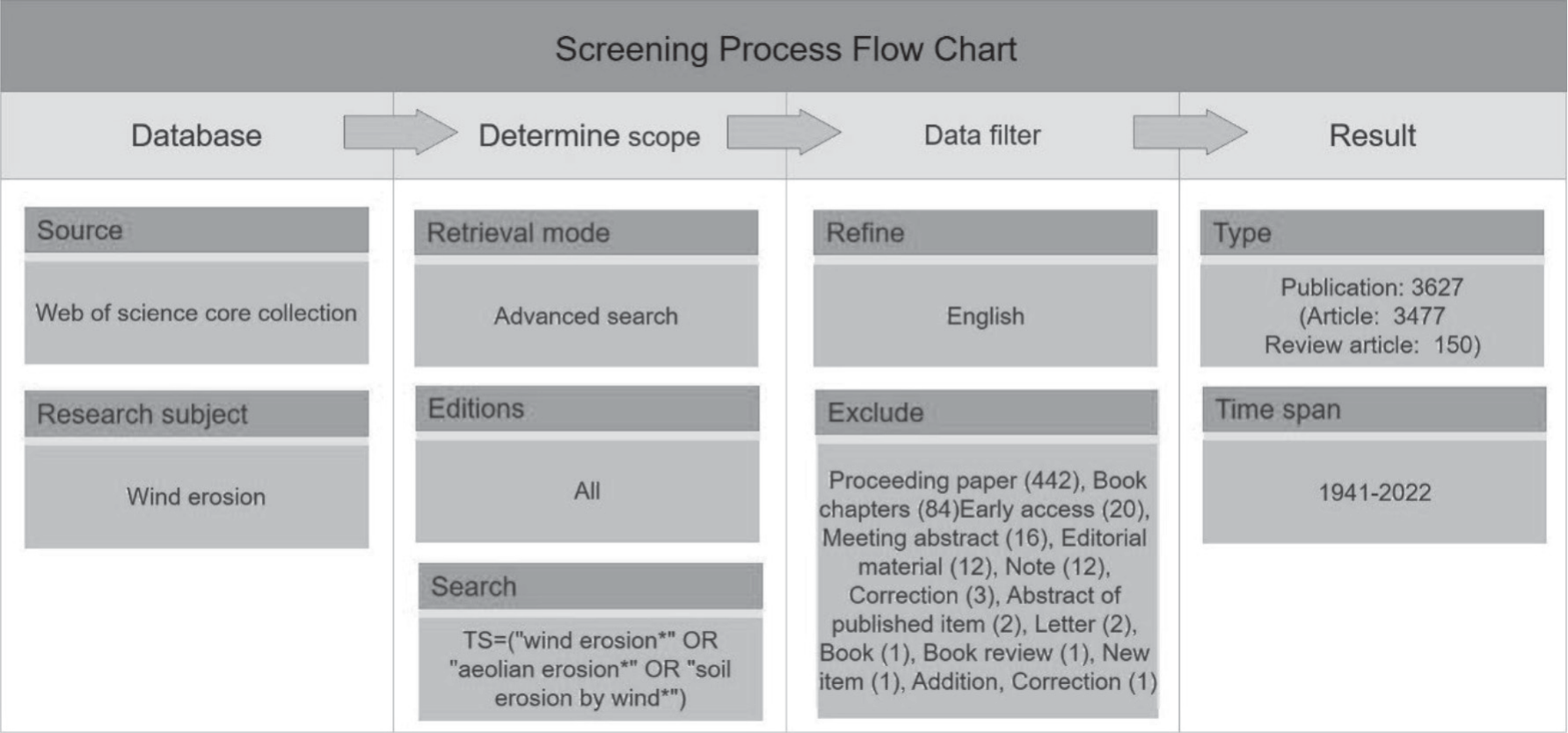
The data source was the WOS core collection, a structured database that indexes top publications and covers significant scientific findings [58]. Across a variety of fields, such as natural sciences, engineering, biomedical sciences, social sciences, arts, and humanities, WOS is the preeminent and all-encompassing source for scholarly information [59]. Researchers widely accept it as a high-quality digital literature resource database, and it is regarded as the most appropriate database for bibliometric analysis [60-62]. The earliest study on wind erosion in the database dates back to 1908, with only four studies available prior to 1941. As such, we opted to focus on the study period spanning 1941 to 2022, and the search was conducted on 12 February 2023 using the search term TS = (“wind erosion” OR “aeolian erosion” OR “soil erosion by wind”).
Out of the various types of relevant publications (e.g., research articles, review articles, book chapters, early access, meeting abstracts, editorial material, notes, corrections, abstracts of published items, letters, books, book reviews, additions, correction, and new item), results in WOS could be filtered based on the publication year, language, and types of the article. Literature types “article” and “review article” were selected, and the linguistic medium was restricted solely to English. After conducting a search and applying filters, a total of 3,637 articles have been identified as of December 31st, 2022. Out of these articles, 3,487 are research articles and 150 are review articles (Fig. 1). All records were saved in plain text format, including complete records and references cited. Finally, a total of 3627 documents related to the subject of wind erosion were collected.
Bibliometric Analysis
The study utilized bibliometric information from all publications and performed bibliometric statistical analysis. To complete the analysis tasks, two research tools, namely R Studio and VOSviewer, were used. The bibliometric software package, which is designed for quantitative research in scientometrics and bibliometrics, was developed in 2017 by Massimo Aria and Corrado Cuccurullo. It has become a popular R-language software package for conducting bibliometric analysis and visualizing scientific data [63]. Several routines have been provided for importing bibliographic data from popular databases such as WOS (Ebrahimet al., 2020). VOSviewer is designed to comprehend the collaboration between research institutions [65], whereby co-occurrence analysis could be employed to develop keyword networks. This tool utilizes a unique method for grouping data into clusters and assigning each cluster a specific color [66]. VOSviewer is also capable of building network maps using clustering algorithms that are based on the strength of links between items [67].
We performed a thorough bibliometric analysis using R Studio, which entailed constructing a matrix that encompassed all documents. We then utilized the biblioshiny web program to analyze all datasets. Our final sample comprised 3477 articles and 150 review articles that published between 1941 and 2022. Annual and cumulative Figures were computed to formulate growth patterns of the publication yield. Mean total citations per year and mean total citations per article were adopted to comprehensively analyze the citation status of research on wind erosion. We subsequently conducted an analysis of prominent documents, journals, countries, institutions, authors, and keywords (author’s keywords and keywords plus). To comprehend the collaboration of research institutions, countries and current research hotspots, we also employed co-occurrence analysis to develop a keyword network and the co-author to develop collaboration of institutions and countries using the VOSviewer. This tool possesses a unique technology that effectively segregates data into multiple item clusters, comprising institutions and keywords, and assigns a distinct color to each cluster based on its degree of similarity and dissimilarity with other items within the cluster [66]. The resultant graph portrays the popularity of each item, as depicted by the size of the dots [68, 69]. Employing full counting method, while adopting the association strength normalization method during the analysis process. Titles and abstracts are commonly regarded as suitable for conceptual commentary as they typically encapsulate noteworthy content within an article [70]. The titles were extracted through the utilization of bigrams, and the duration of 82 years was classified into four distinct temporal intervals: 1941-1980, 1981-2000, 2001-2014, 2015-2022. Utilizing a comprehensive approach in three different forms, we aimed to identify the research hotspots and trends in the field of wind erosion.
Results
Descriptive Bibliometric
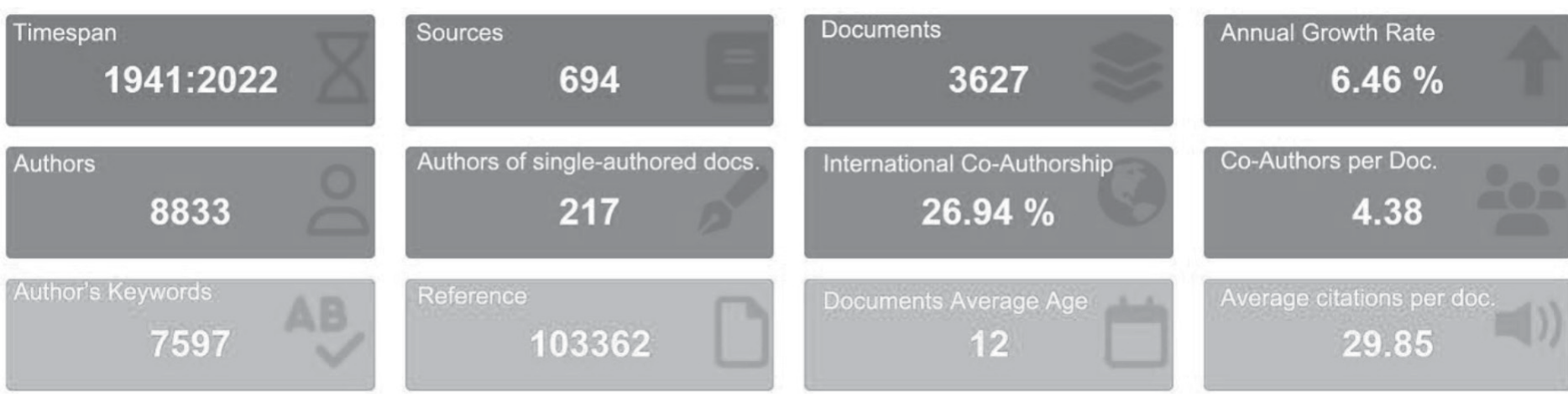
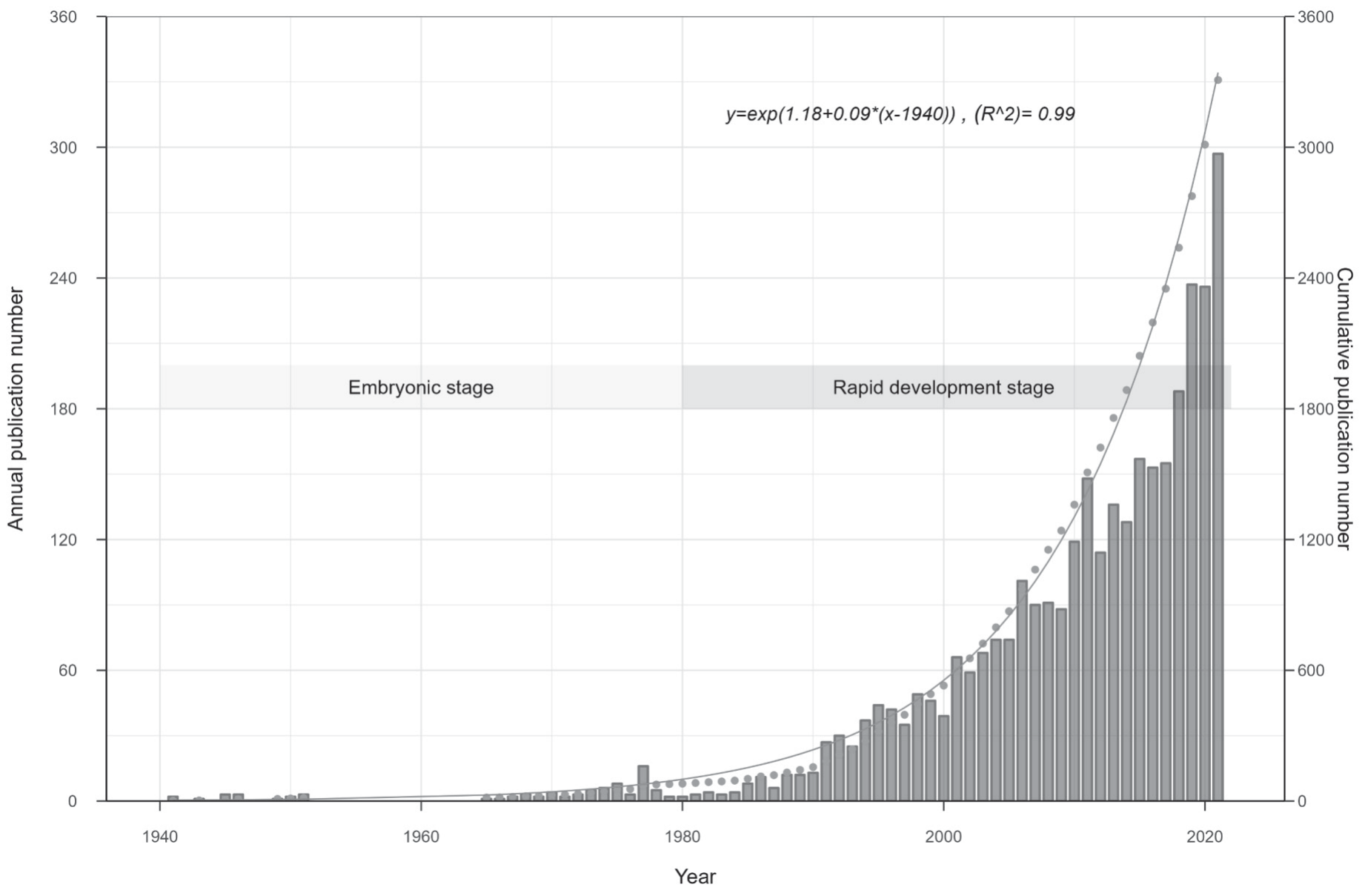
A total of 3627 scholarly articles were published between 1941 and 2022 (Fig. 2). The annual growth rate of these publications stood at an impressive 6.46%, with an average article age of 12 years. Over the past 80 years, an average of 44 research papers on wind erosion were published annually, each of which had an average of 29.85 citations. These papers were authored by a total of 8833 individuals, and each article was co-authored by two individuals (2.43) on average. Furthermore, 694 journals were involved in the publication of these papers, which generated a total of 7597 author’s keywords. Additionally, these papers had been cited a total of 103362 times.
The annual publication of papers serves as an indicator of the research caliber and popularity within a specific domain of knowledge [71]. Fig. 3 showed the annual count of publications related to wind erosion research from 1941 to 2022. The number of articles increased with a wavelike pattern during 1941-1977, a peak with 16 articles published in 1977, totaling 71 publications accounted for 1.96% of the total articles before 1977. This period could be aptly described as the “Embryonic” phase, characterized by a fluctuating annual increase in the number of literature. After 1978, there was a significant increase in wind erosion research outputs, with almost 98.04% of the articles published during 1978-2022. This period, marked by an exponential increase from 5 articles in 1978 to 318 articles in 2022, could be referred to as the “Rapid development period”. Cumulative publication number could better illustrate the growth of articles, revealing a rapid exponential increase in publications (y = exp(1.18 + 0.09*(x - 1940)), R2 = 0.99) (Fig. 3).
Citations in the Field of Wind Erosion
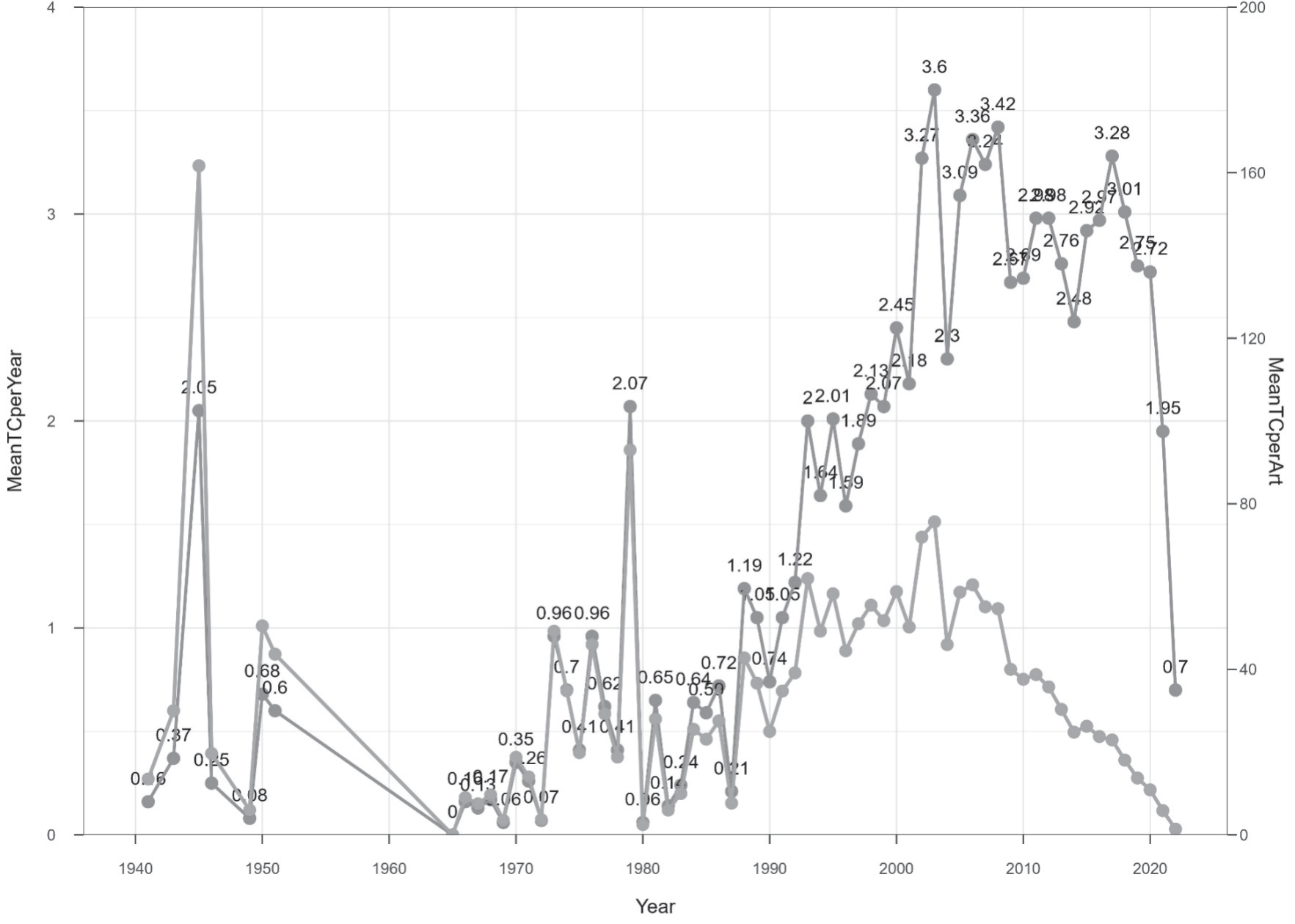
The annual citation related to wind erosion research during 1941-2022 was shown in Fig. 4. The mean total citations per year frequency of publications exhibited a fluctuating pattern from 1941 to 1990, with no discernible upward trajectory. From 1990 onwards, there was a fluctuating increase in citation frequency. The citation frequency during the period of 1941-1990 was relatively low, with the highest citation frequency occurring in 1979 at 2.07, indicating that wind erosion research was still in its nascent stage and received relatively little attention. From 1990 to 2003, the citation frequency started to increase each year, and the field begun to receive widespread attention. The mean total citations per year for the two periods of 1990-2003 and 2003-2022 was 2.04, 2.78, respectively, with a peak in 2003 at 3.65. However, after 2020, the mean total citations per year declined sharply. Nevertheless, this did not affect the citation of higher quality papers, such as those published in 1945 and 1979. Furthermore, we have observed that during the period from 1941 to 1990, the trends in mean total citations per article and mean total citations per year were largely consistent. However, after 1990, a growing disparity in these trends became apparent, with a sustained decrease. It is evident that the more recent the publication date, the greater the impact of the publication year on citation counts.
Main Journals in the Field of Wind Erosion
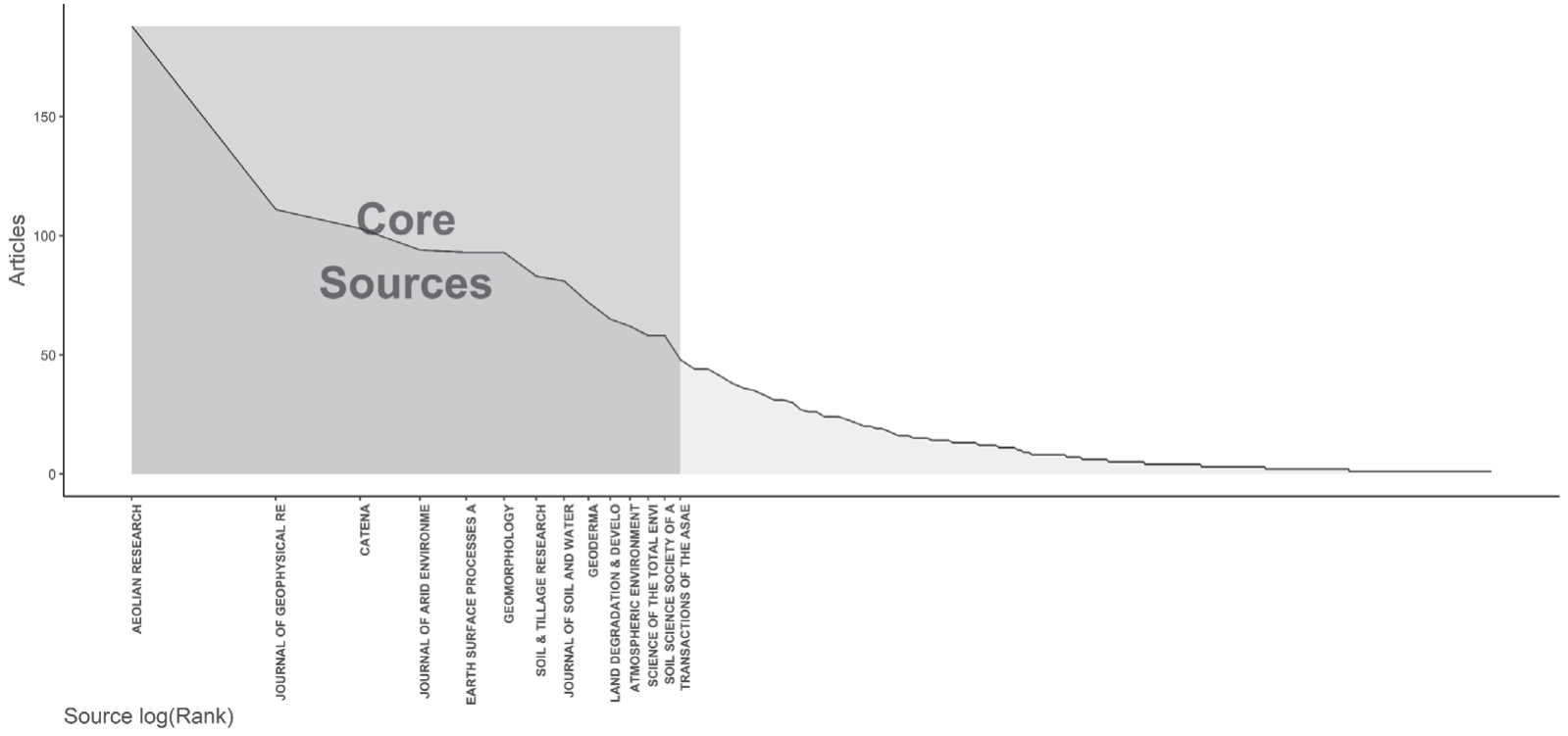
Research on wind erosion were documented in 694 academic journals, with the yearly number of sources increasing from 1 in 1941 to 694 in 2022 (Fig. 2 and Fig. 5). Furthermore, an analysis was conducted on the distribution of research papers regarding wind erosion across primary sources. The top 10 journals published a total of 984 papers (27.1%), while 345 journals (9.8%) published only one paper (Fig. 3). The primary journals in the study of wind erosion had a disproportionately high number of papers following Bradford’s law (Fig. S2) [72].
As shown in Table 3 and Fig. 5, the top five most published journals in the field of wind erosion research were Aeolian Research (188 publications, IF: 3.3, JCR: Q2), Journal of Geophysical Research-Atmospheres (111 publications, IF: 4.4, JCR: Q2), Catena (103 publications, IF: 6.2, JCR: Q1), Journal of Arid Environments (94 publications, IF: 2.7, JCR: Q3) and Geomorphology (93 publications, IF: 3.9, JCR: Q2). The Journal of Geophysical Research-Atmospheres (H-index = 47, IF: 4.4, JCR: Q2) tops the list of influential journals, with 6838 local citation scores (LCS) (Table 4), followed by Journal of Arid Environments (H-index = 33, IF: 2.7, JCR: Q3), Geomorphology (H-index = 36, IF: 3.9, JCR: Q2) and Aeolian Research (H-index = 35, IF: 3.3, JCR: Q2).
Fig. 5.
An analysis of the publication trend in a journal spanning from 1941 to 2022. (In each time period, the celadon parts represent journals that have published no articles, while the filled parts represent varying levels of article publications, with brighter colors indicating higher publication volumes.)
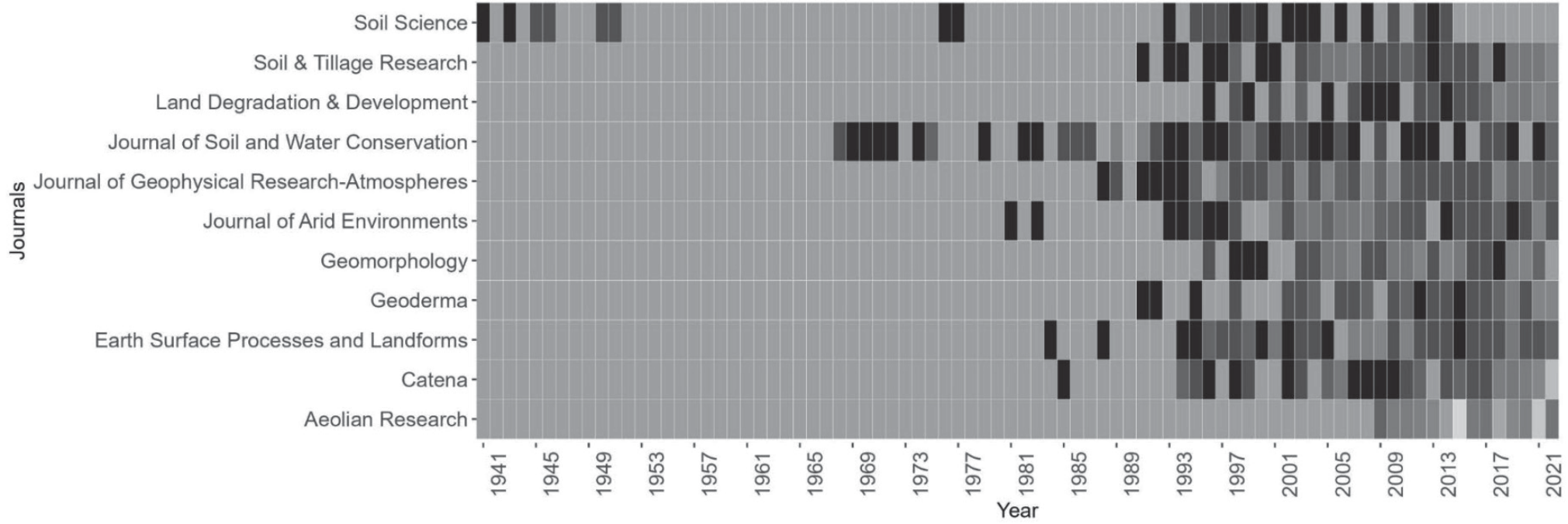
Table 1.
Top 10 influential documents by the global citation scores.
Main Countries in the Field of Wind Erosion
While wind erosion research was conducted in many countries worldwide, the countries with the most published papers were China, the United States, Australia, Germany, Iran, Canada, France, and the United Kingdom (Table 5). The United States and China published over 900 studies each, accounting for 53.27% of the total number of publications, indicating that these 2 countries were dominant in wind erosion research. The remaining six countries published just over one hundred articles each, accounting for 3.92%, 3.75%, 3.75%, 3.23%, 2.89%, and 2.81% of the total number of publications. Although the number of publications of China was higher than that of the United States, the global citation scores (GCS) of the United States was the highest, 2.36 times higher than that of China. The average number of GCS of the United States was also 2.52 times greater in comparison to China.
Furthermore, the scientific strength of a country could be further analyzed by examining the number of single country publications (SCP) and multiple country publications (MCP) [73]. Throughout the study period, both China and the United States had high SCP, accounting for 83.01% and 79.44% of the total articles, respectively. Australia, Germany, Iran, Canada, France, and the United Kingdom, with the SCP percentage remaining at around 50% (Fig. 6 and Table 5). This suggests that Chinese and American researchers are more independent in their research on wind erosion. Although China had a larger volume of documents compared to the United States, it tended to prefer international collaboration. Fig. 6 further illustrated that the nations with the greatest quantity of publications simultaneously exhibited an increased propensity towards international collaborations.
In order to further identify potential collaboration partners among specific countries, as illustrated in Fig. 7, it is evident that China, The United States, Japan, South Korea, Australia, India, Canada, Russia, and England share common research directions in the field of wind erosion. China and The United States take a leading position, with a notably close academic collaboration between these two nations. Additionally, collaborations with neighboring countries are prominent. On the other hand, Turkey, Belgium, Netherlands, Israel, Argentina, Germany, Iran, Switzerland, Spain, Italy, South Africa, France, and Niger have relatively consistent research focus. Germany, in particular, contributes significantly to the publication volume, and its collaborative efforts are primarily with neighboring countries. This suggests that international collaboration tends to exhibit a regional pattern, with domestic partnerships being prevalent and international collaborations primarily involving neighboring countries.
Main Institutions in the Field of Wind Erosion
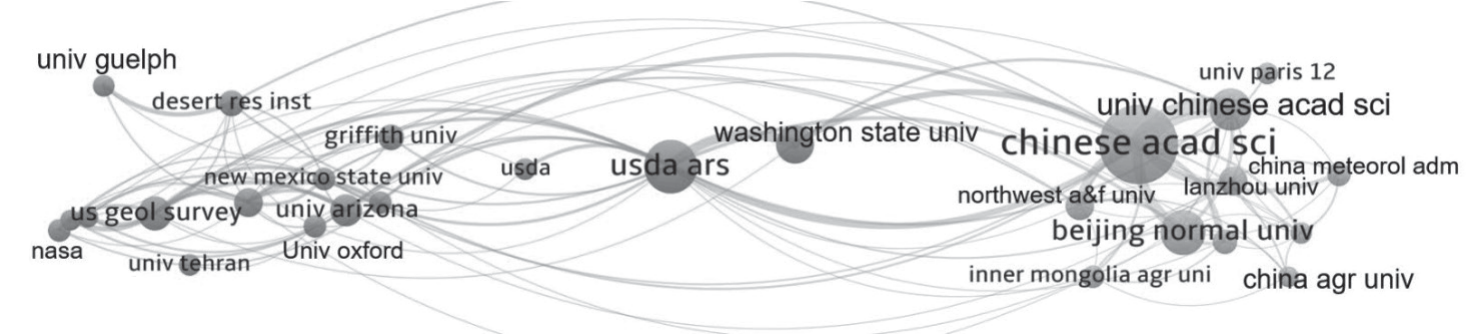
In the subsequent phase of co-authorship network analysis, the unit of examination was the institution. Among the 2651 institutions demarcated by VOSviewer in the dataset, only 27 institutions satisfied the minimum threshold of publishing 30 scholarly papers within the past 80 years (Fig. 8). The research strength of each institution was evaluated based on their publication volume, and we identified the top 10 research institutions (Table 6). The top 3 included the Chinese Academy of Sciences with 516 publications, the Agricultural Research Service of United States Department of Agriculture with 220 publications, and Beijing Normal University with 158 publications. The Chinese Academy of Sciences, with a research emphasis on climate change and ecological environment, was at the forefront of wind erosion research, producing the largest number of publications in this field. It was observed that the leading ten research institutions were situated in both the United States and China, which aligned with the previously mentioned fact about a higher number of publications originating from these two countries.
Table 2.
Top 10 influential documents ranked by the local citation score.
Table 3.
Top 10 most productive journals ranked by the number of productions.
Table 4.
Top 10 most cited journals ranked by local citation scores.
Significant correlations existed among 27 institutions that jointly published scholarly articles, with a total link strength varying from 1 to 315, implying robust collaborative bonds among them. Remarkably, the Chinese Academy of Sciences was distinguished as the institution with the most extensive networking, collaborating extensively with numerous institutions in the United States (California Institute of Technology, National Aeronautics and Space Administration, University of Arizona, University of California, Los Angeles, University of Colorado, University of Virginia, United States Geological Survey, Desert Research Institute, New Mexico State University, United States Department of Agriculture, United States Department of Agriculture Agricultural Research, Washington State University) and China (e.g., Beijing forestry University, Beijing normal University, China Agricultural University, China Meteorological Administration, Chinese Academy of Sciences, Inner Mongolia Agricultural University, Lanzhou University, Northwest A&F University, Peking University), as well as some in Australia (e.g., Griffith University), the United Kingdom (e.g., University of Oxford), Canada (e.g., University of Guelph), French (e.g., University Paris12, merged into University Paris-Est Créteil Val-de-Marne (UPEC)), and Iran (e.g., University of Tehran). According to the cooperation relationship between institutions, as shown in Fig. 8, two clusters can be identified: the green cluster, represented by the Chinese Academy of Sciences, and the red cluster, represented by the United States Department of Agriculture Agricultural Research. Notably, the green cluster is predominantly comprised of Chinese institutions, except for University Paris12. Although there are some collaborations with University Paris12, the research directions are generally aligned. The Chinese Academy of Sciences has established numerous collaborations with the United States Department of Agriculture Agricultural Research and Washington State University, albeit with some differences in research directions. In contrast, the red cluster is primarily composed of the United States institutions, with additional participation from countries such as Canada, Australia, and Iran. The collaborative relationships between institutions and the regional focus on wind erosion research were evident clearly.
Table 5.
Top 8 marked countries ranked by the number of productions.
Fig. 6.
Top 15 countries in terms of literature volume in the field of wind erosion. (MCP: Multiple-country publications; SCP: Singlecountry publications.)
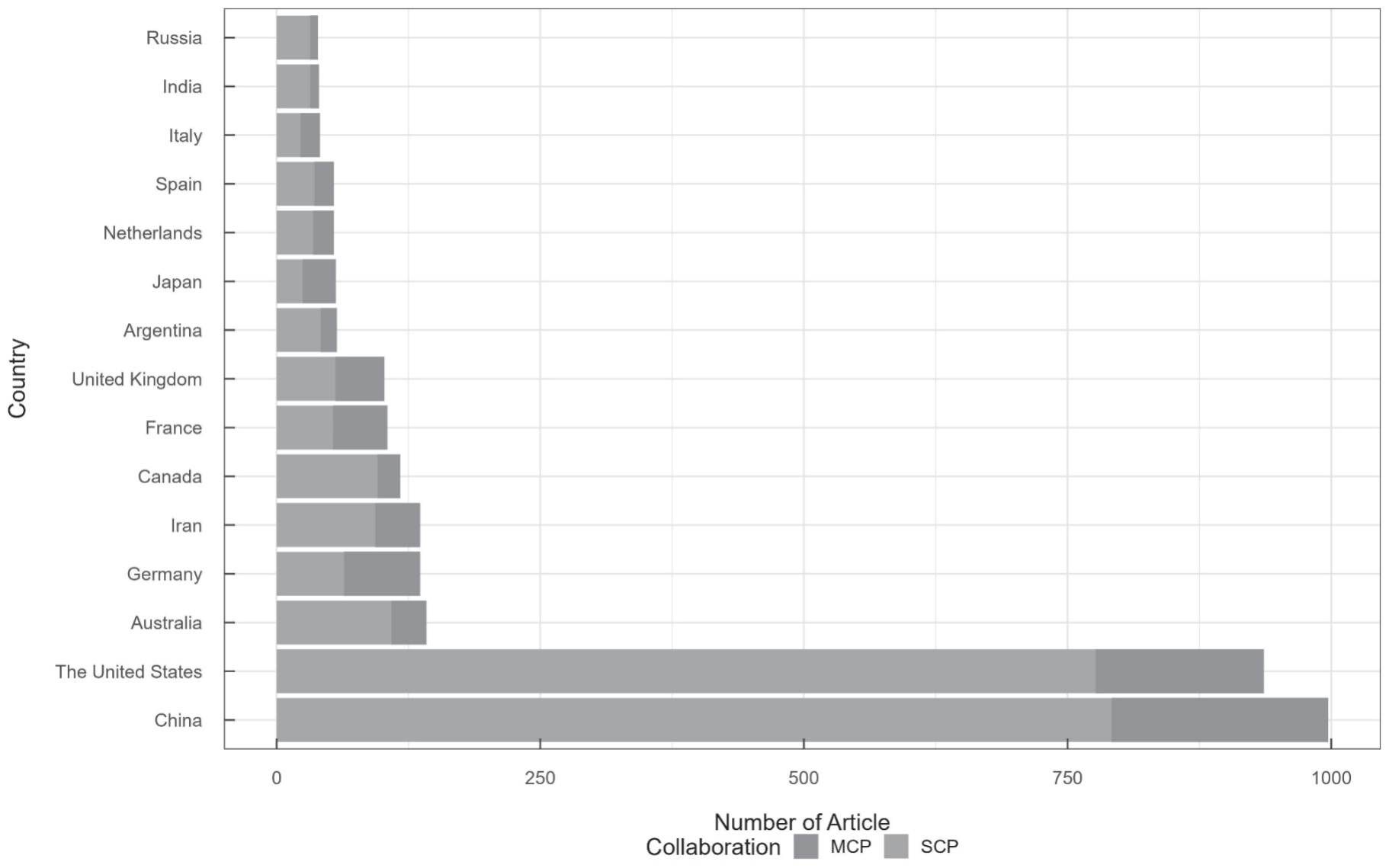
Fig. 7.
Collaboration network of countries publishing articles. (The minimum number of papers per country is n = 30, and 22 countries meet this threshold. The color of the nodes signifies the similarity in research areas and higher chances of collaboration. The size of the nodes indicates the number of documents. The line connects two countries whose scholars have cooperated).
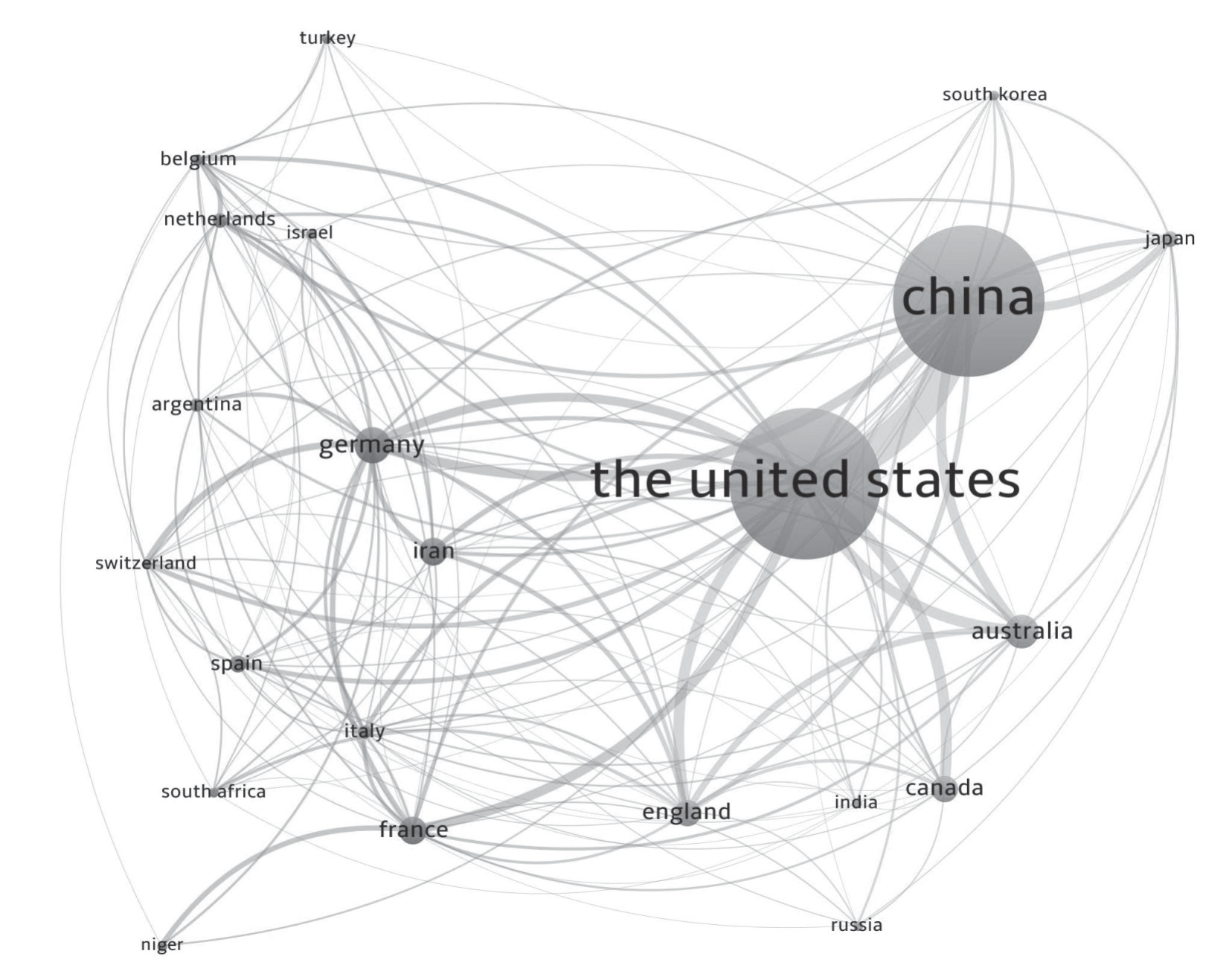
Fig. 8.
Collaboration network of institutions publishing articles. (The minimum number of papers per institution is n = 30, and 27 institutions meet this threshold. The color of the nodes signifies the similarity in research areas and higher chances of collaboration. The size of the nodes indicates the number of documents. The line connects two institutions whose scholars have cooperated).
Main Authors in the Field of Wind Erosion
The publication records that were analyzed comprised 8833 authors, with an average of 4.38 authors per article. Of these authors, only 217 (2.4%) had published single-authored documents. The majority, amounting to 6593 (74.6%) authors, published only one paper, while 1097 (12.4%) authors wrote two papers. Table 7 presented the H-index ranking of the most highly cited authors, which revealed Zobeck T. M. (28), Okin G. S. (28), Shao Y. P. (23), Marticorena B. (22), Chappell A. (21), Leys J. F. (21), Rajot J. L. (20), and Webb N. P. (19) as the top ten authors. Zobeck T. M. was the most influential author and had a high number of publications.
A comparison of GCS and LCS showed that Webb N. P. had 2372 GCS and 590 LCS, indicating that this author’s research is of interest to multiple research fields. Bergametti G. had 991 GCS and 984 LCS, indicating that his work was of more interest in wind erosion field. According to Table 8, the authors with the highest number of publications, in descending order, were as follows: Sharratt B. (49), Zou X. Y. (49), Zobeck T. M. (48), Okin G. S. (44), Marticorena B. (43), Webb N. P. (41), Buschiazzo D. E. (39), Dong Z B. (38), Tatarko J. (38), and Bergametti G. (37).
Table 6.
Top 10 dominant institutions ranked by the number of productions.
Table 7.
Top 10 most influential authors ranked by the H-index.
Co-Occurrence on Keywords in the Field of Wind Erosion
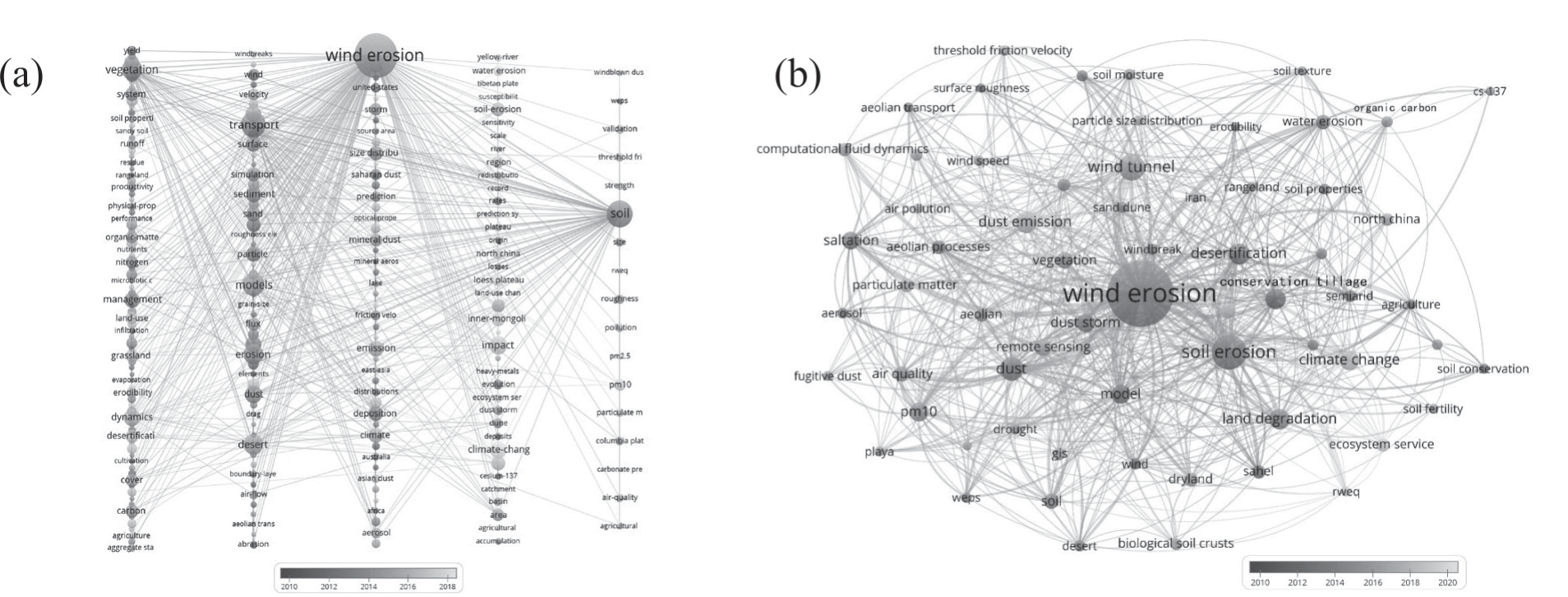
From the complete dataset of 5579 keywords, only 232 words co-occurred at least 17 times in the list of count analysis, keywords plus that co-occurred 17 times or more were categorized into 5 clusters (Fig. 9a). The frequency of occurrence of keywords varied significantly. Table 9 displayed the keywords with a frequency higher than 140 times, with “wind erosion” 1086 times, “soil” 394 times, “transport” 356 times, “soil erosion” 337 times, “models” 294 times. The prevailing research areas were indicated by the keyword colors that represent the average year of publication (Fig. 9a). “Climate change”, “PM10” and “Ecosystem services” were the most recent topic, “Inner Mongolia”, “Yellow River” and “Loess Plateau” were the most recent terms related to research area. Fig. 9b) showed that the items with the longest sustained duration were “soil erosion”, “land degradation”, “dust storm”, all of which were key research themes. Ecosystem services emerged as a novel topic, and research on soil erosion was gradually shifting towards the integration of ecological services. The use of the RWEQ method also gained prominence in contemporary soil erosion studies.
Table 8.
Top 10 most productive author ranked by the number of productions.
Table 9.
High-frequency keywords in wind erosion.
Thematic Evolution in the Field of Wind Erosion
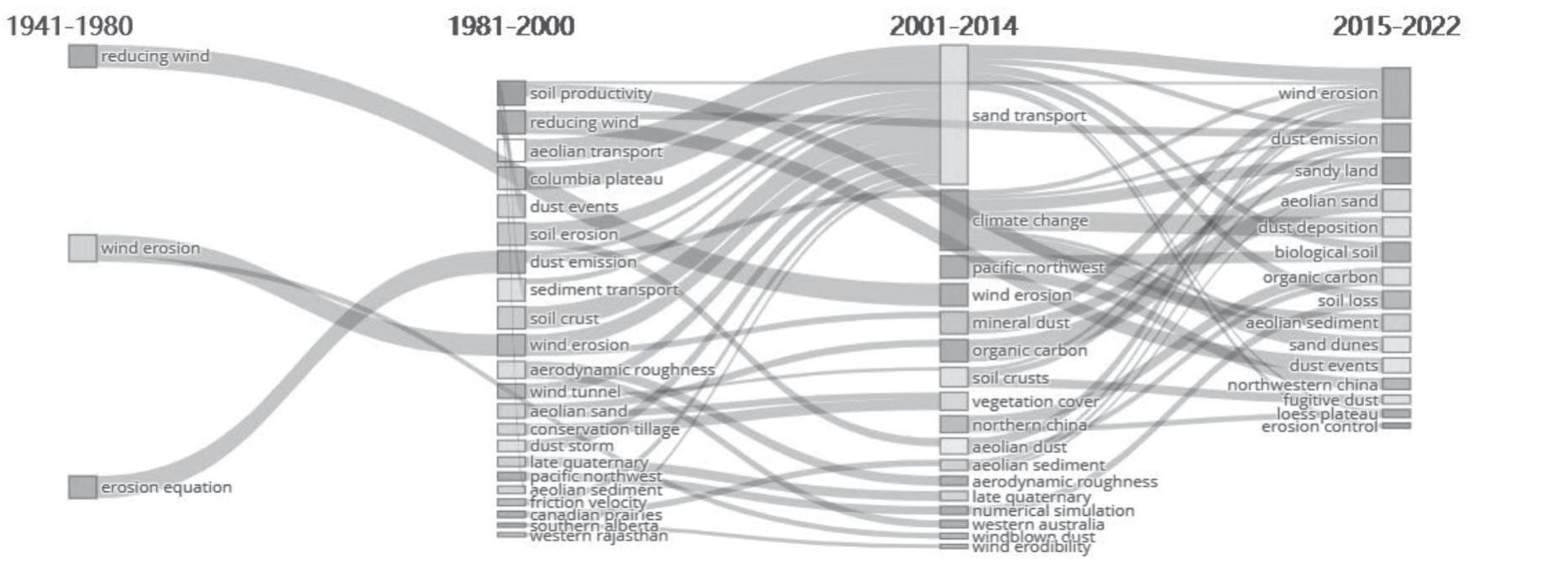
The analysis of thematic evolution based on the titles of relevant literature revealed a significant change over an 82-year period. This was illustrated by the rectangles and squares that depict the development of themes (Fig. 10). Before 1941, wind erosion research was still perceptual and there was a lack of systematic understanding, but it began to move from the perceptual to the rational afterwards. It could be divided into the following four stages:1) From 1941 to 1980, wind erosion research was gradually enriched with studies of “wind erosion”, “wind erosion equations” and “reduce wind erosion”. 2) From 1981 to 2000, “dust events” including “aerodynamic roughness”, “dust emission”, “sediment transport” and “aeolian sediment” from classical dust storm were the main topics. Dust emission became popular after 1981 in environment science.
3) From 2001 to 2014, wind erosion research mainly focused on “sand transport”. Along with the progress, “climate change” was regarded as a novel topic.
4) Between 2015 and 2022, the research focused on “wind erosion”, “dust emission”, “dust deposition”, “aeolian sediment”, “dust events” and “fugitive dust”.
During the theme development process, the terms “dust storm”, “aeolian sediment” and “wind erosion” were incorporated into the concept of “sand transport”. It was evident that prior to 2001, the primary sources of dust were concentrated in sand and soil processes. Climate change predominantly affected “sandy lands”, “dust deposition” and “aeolian sediment”. Wind erosion research transitioned from solely aeolian processes to underlying mechanisms (Fig. 10).
Moreover, it was evident that the geographical terms associated with wind erosion underwent changes over time. For instance, “Canadian Prairies”, “Columbia Plateau”, “Pacific Northwest” and “Western Rajasthan” were commonly used between 1980-2000, while “Pacific Northwest”, “Northern China” and “Western Australia” dominated from 2001 to 2014. In recent years (2015-2022), occurrences of terms such as “Northwestern China” and “Loess Plateau” were observed (Fig. 10). This indicates China has conducted extensive research on this topic since 2000 and remains the most active country in publishing related articles (Table 5).
Fig. 9.
Analysis of keywords. (a) Visualization of the keywords plus co-occurrence network according to the average years of publication. (b) Visualization in author’s keywords. Note: Keywords in yellow appear later than those in blue. Each node represents a keyword sized according to its number of occurrences. Minimum number of keywords’ occurrence is 17. Nodes are connected through links that mark the co-occurrence of their attendant keywords, while the thickness of links signals the frequency of co-occurrences between keywords (i.e., the more frequently they appear together in articles, the thicker the link between two keywords.).
Discussion
Progresses of Annual Publications and Citations
In recent years, the development of research on wind erosion is rapid. One possible explanation for the exponential increase in published literature is that it coincides with a growing global interest in wind erosion. Since the 1980s, international attention has been focused on desertification prevention and control [74]. For instance, the United Nations Convention to Combat Desertification (UNCCD) was adopted on 17 June 1994 [75]. The State of World Soil Resources (SWSR) report released by Intergovernmental Technical Panel on Soils (ITPS) and the Food and Agriculture Organization (FAO) in 2015 also emphasized investments in research and development as well as dissemination of sustainable soil management technologies or practices [76]. These factors have significantly contributed to an upsurge of studies on soil degradation. The second factor contributing to the surge in published literature is closely linked with the development of advanced equipment and models. For example, from mechanical sand collectors in the past, we now have cutting-edge sensors based on acoustic and electronic principles such as Safire [77], continuously weighing sand collectors [78, 79] and three-dimensional ultrasonic anemometers [80]. Furthermore, high-frequency measurement instruments like dust meters [81, 82] are increasingly adopted in wind erosion research to enhance its efficiency. This technological progress has promoted our ability to study wind erosion.
Although the scientific research output increased sharply in terms of wind erosion, the citation rate did not show the same pattern (Fig. 3 and Fig. 4). The mean total citations per article decreased somewhat after 2003 (Fig. 4), whereas the publications increased during the same period. One possible explanation for the fluctuating citation frequency is the increase in annual production, which provides scientists with a larger pool of journals to choose from. It is also possible that variations in citation timing contribute to this phenomenon, given that publications with later citation dates often exhibit decreased citation counts, even if their level of influence is analogous [83]. Additionally, the number of papers published in the present year could also affect citation frequency, with a higher number of current year publications leading to a lower frequency of citations for articles from previous years. It should be emphasized that the frequency of citations is not a dependable indicator of the quality and standing of recent articles due to a substantial time delay, so it may not necessarily reflect their excellence and reputation [84]. Therefore, due to the time difference in citations, this method may only reflect the current citation count for recently published outputs, which may not fully demonstrate the peak value of citations for new articles. Recently published literatures may be overlooked due to insufficient citation accumulation. As research articles progress through their life cycle, citations tend to accumulate over time [85]. Mean total citations per year overcomes the accumulation of citations over time but still exhibits a declining trend. Certain studies propose that a minimum of 10 years of citation accumulation is required to evaluate the paper’s impact [86].
Contributions of Main Journals and Authors
The distribution of journals was relatively concentrated. Almost all top 10 most productive journals had their first influential publications in the 1980s (Table 3 and Table 4), when soil erosion entered a phase of extensive and in-depth research. The investigation of wind erosion can be observed to have a strong correlation with the atmosphere and aridity, as evidenced by its inclusion in publications indexed by marked journals. The journal of Aeolian Research focuses on basic wind formation processes, modelling of wind formation processes, field research aimed at practical applications, specifically addressing environmental impact and erosion management, and dust-atmospheric interactions. It exhibited the most substantial increase in the quantity of publications in recent years. The high impact of Journal of Geophysical Research-Atmospheres can be attributed to the fact that the journal disseminates novel scientific findings regarding the characteristics and dynamics of the atmosphere, encompassing the interplay between the atmosphere and various elements of the earth system. The second ranked journal, Journal of Arid Environments (H-index = 33, IF: 2.7, JCR: Q3), is an international journal that examines major scientific, environmental, ecological, and human-nature issues in the world’s drylands, focusing on interdisciplinary and multidisciplinary approaches to the complex scientific and social problems facing the world’s drylands. It is noteworthy that Soil Science (38 publications, H-index = 20, IF :1.9, JCR: Q4) was the first to publish literature on wind erosion (Table 4 and Fig. 5). Despite the milestone role in the past, the low impact and number of publications indicates its declined influence. As the level of influence decreases, there is a reduced probability of receiving significant contributions for Soil Science, because scholars generally have a preference in publishing their articles in journals with high impact factors.
During the author’s analysis, we found that the more influential authors arose after the 1970s (Table 7), before which the number of researchers on wind erosion was still small, but the contributions to wind erosion were indeed enormous. In 1939, The fundamental principles of wind erosion was established through field experiments by Chepil W. S. who also investigated the correlation between dry clod structure and soil erosion resistance [87, 88]. He further proposed the concept of “threshold velocity” in 1945 [18], which states that wind-eroded soils primarily move due to the velocity distribution of soil particles jumping to a certain height [17]. Additionally, he derived a correlation between wind erosion rate and the velocity of friction [19]. In 1950, a series of experiments was carried out the impact of soil characteristics on wind erosion [89-91]. There was a gradual shift from theoretical to applied research on soil wind erosion.
Through a rigorous analysis of GCS, this study identified the most impactful papers spanning from 1941 to 2022. It helped shed light on the crucial contribution of these papers and highlight their significant influence in their respective fields. It can be observed that 50% of these publications were in fact reviews. The literature with the highest GCS was authored by Prospero J. M. [92], entitled “Environmental characterization of global sources of atmospheric soil dust identified with the Nimbus 7 Total Ozone Mapping Spectrometer (TOMS) absorbing aerosol product”. This is a review published in Reviews of Geophysics. The central theme pertained to the utilization of TOMS, an instrument onboard the Nimbus 7 satellite, to cartographically represent the worldwide dispersion of prominent atmospheric particulate sources, with the objective of discerning shared environmental attributes. The investigation revealed that the most substantial and enduring pollution founts were situated in the Northern Hemisphere, chiefly within the extensive ‘dust belt’ extending from the western coast of North Africa, the Middle East, Central and South Asia to China. Within the ‘dust belt’, the most favorable landscapes for dust emissions are those with a relatively recent history of drought and strong topographic relief, and dust could be used as an indicator of recent or current transitions to drought. The paper ranked second, published by Lal, R. in Environment International, titled “Soil erosion and the global carbon budget” [93]. It proposed that soil erosion should be considered when evaluating the global carbon budget and that effective conservation measures could mitigate the risk of carbon emissions. The third highest ranked paper, authored by Marticorena, B. in the Journal of Geophysical Research-Atmospheres in 1995, titled “Modelling the atmospheric dust cycle. 1. design of a soil-derived dust emission scheme”, had a global citation frequency of 909. This article presented a dust production model that was simple enough to be integrated with atmospheric transport models [94] (Table 7). The high GCS of articles, which included five reviews, demonstrate that reviews are more prevalent, with multiple areas of interest and a wide range of research.
The LCS can be used to objectively demonstrate the level of interest in the field of wind erosion (Table 4). As the analysis of citations also requires consideration of the skewed distribution of citations, we ranked all literature included in this analysis by LCS to exclude the confounding effect of publication time on the results. Table 2 provided a detailed list of the top 10 publications ranked by LCS, which gives an indication of the influences of literature in certain field. The top three rankings for LCS and GCS were identical. (Table 1 and Table 2). The only difference was the one published by Raupach M.R. in 1993 in the Journal of Geophysical Research-Atmospheres, entitled “The effect of roughness elements on wind erosion threshold”. It developed a theory that elucidates the correlation between roughness density and threshold friction velocity ratio, greatly influencing the domain of wind erosion [95]. The average LCS/GCS Ratio of the top ten global and local highly cited literature was 12.32% and 43.55% respectively (Table 1 and Table 2), which illustrates that: 1) the literature with higher LCS is more popular in the field of wind erosion, 2) the field prefers innovative articles, and 3) the global highly cited literature has multiple directions of interest.
Major Players in the Field of Wind Erosion
In the major countries of wind erosion research, China and the United States had significantly higher publication rates than other countries (Table 5 and Fig. 6). The high volume of publications may be due to several reasons. Firstly, the phenomenon of wind erosion is influenced by the geographical location and natural environment of a region. The world’s arid and semi-arid zones, mainly in the southwestern United States, the Horn of Africa, Patagonia, North Africa, the Sahel, South Africa, Southwest Asia, Central Asia, and Australia, are the most vulnerable regions in the world to wind erosion [96]. As of 2010, China’s soil degradation caused by wind erosion reached 375,935.5 km2 in total area, accounting for approximately 44.1% of the total land degradation areas nationwide [97]. Wind erosion affects 56.2% of drylands in China [32]. According to statistics, the direct economic losses incurred by desertification of China’s arid areas are estimated to range from ¥ 33.1-94.9 × 10⁹ annually [98]. Similarly, 6 × 10⁷ hm2 land have been identified as most vulnerable to wind erosion in the United States [99]. The annual cost of wind erosion in the United States is estimated to be about $3.76 × 10¹⁰ [100]. This phenomenon has hindered social and economic progress and sustainable development and thus boosted wind erosion research.
By analyzing wind erosion research at the national level, it is evident that wind erosion research in the United States was more intensive and received more attention (Table 5). The explanation may be as follows:
1) The United States has a significant strength and influence in the fields of geology and environmental science, with its related research findings being widely recognized and applied. 2) With advanced scientific equipment, cutting-edge data analysis technology, and a rich history of research, the United States is capable of conducting more profound and meticulous studies, whereas the overall level of Chinese science is not yet comparable in many ways [101]. Furthermore, wind erosion research in China gradually transitioned from qualitative inquiry to quantitative and semi-quantitative wind tunnel experiments after the 1980s, which was much later than that of United States [14, 102]. 3) English plays a crucial role in the academic research field, with most scientific journals, conference papers, and other academic publications being published in English [103]. Due to linguistic limitations, some valuable research results obtained from China may be only reported in Chinese [103]. 4) Despite China’s increased efforts to contribute to international journals in recent years, there is still a gap in authority and popularity compared to the United States [104, 105]. The United States is an international leader in wind erosion research [104], with more articles published by its scientists and research institutes appearing regularly in high-level, well-known journals, providing better conditions for their articles to be cited.
Nevertheless, China’s efforts in studying wind erosion are notable (Table 5 and Fig. 6). In order to protect land from degradation, China has implemented 13 national initiatives aimed at restoring and protecting drylands, including the Grain-to-Green Program (GGP) and the Three North Shelterbelt Project (TNSP), and the Natural Forest Protection Program (NFPP) which made China a leader in large-scale land protection and restoration programs [32, 106]. Research has shown that in the Inner Mongolia region of China [107] and the Yangtze River Basin [108], after years of control measures, wind erosion has been mitigated. Considering the continuous efforts to combat soil degradation, it could be expected that China will be a major force in wind erosion research. This will not only augment China’s research and influence but also foster global academic exchange and collaboration, as well as bolster publication numbers and citation rates.
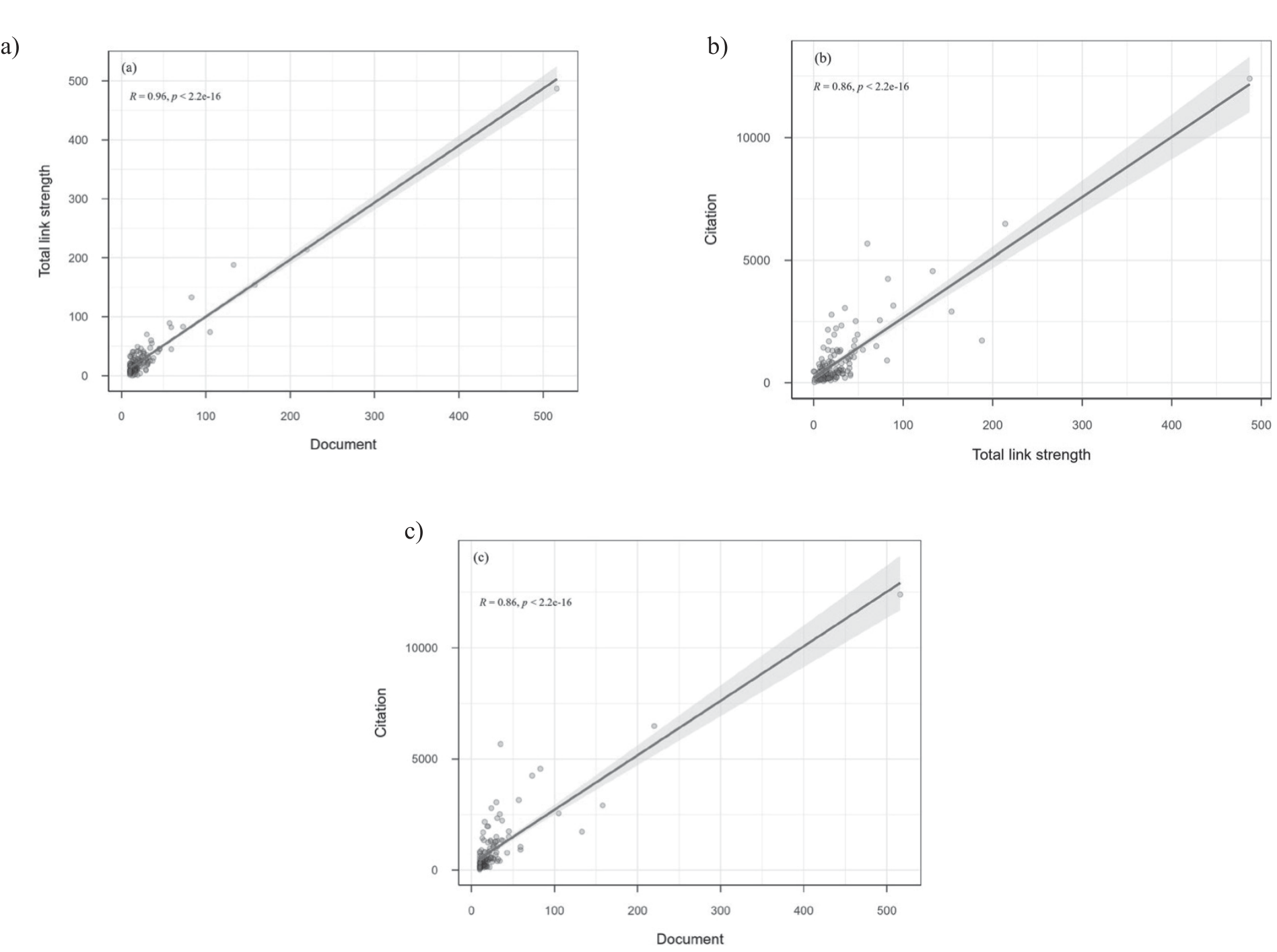
At the institutional level, there existed a highly significant correlation (R = 0.86, p<0.001) between the total link strength of the institution and the number of citations received, indicating a strong association between co-authorship and citation impact (Fig. S1b). A significant correlation (R = 0.96, p<0.001) was also observed between the total link strength of the institution and the number of articles present in the dataset (Fig. S1a). Moreover, we further found a significant correlation (R = 0.86, p<0.001) between the number of citations and the number of documents (Fig. S1c). These results indicate that institutional-level collaboration in co-authorship leads to increased citation rates. A greater volume of publications based on inter-institutional collaboration thus may increase the likelihood of citation counts for those papers (Fig. 7). A previous research also indicates that papers with higher levels of international collaboration tend to have greater impact [109]. Currently, collaborative research on wind erosion is predominantly regional in nature, with a strong correlation between research directions and the respective regions (Fig. 7). As wind erosion research grows in importance, a trend towards globalized cooperation in this field is poised to emerge. Overall, as wind erosion research is region-specific, collaboration networks are vital for individual researchers to seek out opportunities for cooperation. Publications that involve international collaborations are of utmost significance in advancing innovation, sharing knowledge, and consequently contributing to citation rate [110].
Implications for Wind Erosion Research
Thematic mapping was utilized for quantifying and visually illustrating the progression of topics in wind erosion research [111]. The high-frequency keywords could generally reflect the major focuses of wind erosion in the past decades. The process of wind erosion could be described by “wind erosion” or “ soil erosion”, “soil”, “transport”, “sediment”, and “particle” [112]. The high frequency of “dust” and “emission” reflects the fact that dust represent a major research target in terms of sediment. “desert” and “sand” describe the regions in which wind erosion is the focus of intensive studies, whereas “vegetation” and “management” denote fundamental control measures taken to mitigate wind erosion. As for the methodology, it is basically related to “model”, “field”, and “tunnel”. Terms such as “impact”, and “dynamics” are related to the underlying mechanisms of wind erosion, whereas the critical role of “climate change” clearly highlights the profound impact of climate on wind erosion (Table 9 and Fig. 8).
In this study, we found wind erosion was closely related to climate change (Fig. 8 and Fig. 9), and indeed, wind erosion process poses a serious threat to the ecosystems in arid and semi-arid areas due to the global climate change [113, 114]. Changes in precipitation and temperature directly affect the soil conservation f unction of the ecosystem [115, 116]. Many studies have demonstrated the stimulating effect of temperature and wind speed on wind erosion [42, 107, 117], while precipitation has a mitigating effect on wind erosion [118, 119]. In recent years, global warming has exacerbated soil dryness and led to an increase in soil temperature [120]. The contrast between dry and wet seasons has become more intense [121], and semiarid regions are particularly sensitive to climate change [122]. These changes are consistent with the climatic conditions under which wind erosion occurs [107, 123]. Climate change will be the main driving factor of wind erosion currently and in the future and thus deserve more attention [124].
Moreover, after 2001, “organic carbon” appeared in wind erosion research and has continued to be studied up to the present day (Fig. 8b and Fig. 9). It is thus important to note the impact of organic carbon in soil on wind erosion and climate. Even slight changes in organic carbon in soil can have sustained impacts on climate and ecosystem stability [125]. Climate variations can also induce fluctuations in soil carbon content [114]. In arid and semi-arid wind erosion-prone areas, soil erosion caused by improper land use and soil management is the main factor leading to soil organic carbon loss [126, 127], and a portion of soil carbon is released into the atmosphere in the form of CO2 or CH4 [127, 128]. Therefore, effects of wind erosion on global climate change by influencing loss of soil organic carbon appears to be a major focus and deserve further attention.
In addition to “climate change”, “dust” “emission”, and “sediment” reflect the traditional impact of wind erosion (Table 9 and Fig. 8a). Dust was also found closely related to wind erosion, while dust is a product of wind erosion [129, 130]. Dust seriously affects air quality and endangers human health [131–133]. The dust released from soil erosion plays a significant role in atmospheric physics and chemistry as well as global ecosystems, and is one of the core topics in international research of dust storms and sand [134]. In 2006, approximately 50% of the articles published on wind erosion were related to the issue of dust release [135, 136], indicating that research on wind erosion cannot be separated from research on dust, which will remain the major topic in this field.
During the analysis, “model”, “field”, and “tunnel” reflect the basic methods in the study of wind erosion (Table 9 and Fig. 8). Wind tunnel is one of the important methods in the study of wind erosion, and is considered as one of the pioneering methods [91, 137]. Wind tunnel can fully simulate the natural process of wind [138]. We detected that the RWEQ model frequently appears in research on wind erosion, thus becoming the most widely utilized tool in this field (Fig. 8b and Table 9). In the field of environmental research, soil erosion models have been proven to be among the most effective analytical instruments [124, 139]. Among the numerous soil wind erosion models, RWEQ model is currently one of the most commonly used equations for assessing soil wind erosion [23, 118]. The RWEQ model has a strong performance at regional scales [118, 128, 140], which has been used for soil wind erosion risk assessment across Europe [128], and the Argentine Pampas [141]. Therefore, RWEQ with a high computational efficiency still represent the most favorable tool for large-scale environmental research in the future [118]. Particularly, the utilization of models for prognostication can lead to effective and precise projection of forthcoming wind erosion in an unpredictable climate, thereby enabling the adoption of well-suited preventive measures.
The main cause of desertification and sandstorms in deserts is wind erosion, and vegetation coverage is one of the most effective ways to prevent wind erosion [39, 108, 142, 143]. Many keywords are related to vegetation or management that can protect the surface soil, reduce wind speed, and prevent dust transport during wind erosion. Vegetation coverage can effectively reduce the rate of soil fertility loss [144]. In desert areas with serious wind erosion, appropriate soil management measures are crucial for maintaining agriculture and the environment [145] and will certainly draw a great attention from scientists.
This study is based on search term of wind erosion, but it was found that words such as water erosion and runoff are also included in the scope of some wind erosion research (Fig. 8). This indicates that there exists a certain relationship between wind erosion and water erosion [146, 147]. The ecological environment in areas affected by complex multi-type erosion is the most sensitive and fragile. They are subject to the most severe erosion [148] and thus receive increasing attention. It involves the combination of multiple erosive forces, as well as the influence of underlying surface factors such as soil, land use, topography, and vegetation [149, 150]. Although people have recognized the problem of complex erosion, the research of complex erosion still has a long way to go.
Limitations
While this paper contributes to the research field, some limitations exist and deserved further attention in the future. For instance, our study was based on one database, the WOS, ignoring many articles from other databases, such as Scopus, China National Knowledge Infrastructure (CNKI), etc. The WOS database may be insufficient in capturing the complete volume of publications relevant to the topic at hand. Furthermore, our analysis was restricted to articles written in English or those that contained a title, keywords, and/or abstract in English. Certain scholars may choose to publish their findings in their native languages, particularly when studying local, regional, or national case studies. In addition, other publication types such as books, conference papers and working papers should also be included in the future to reflect more discoveries in the field. Nevertheless, to the best of our knowledge, this study represents the first investigation regarding bibliometric analysis of wind erosion and could provide useful information as a reference for scientists from various linguistic backgrounds in this filed.
Conclusions
Based on bibliometric analysis, we provided a clear and comprehensive demonstration of the development of wind erosion research over the past 80 years. Over time, wind erosion research experienced exponential growth, with a continuous increase in publication numbers, consistent with the overall trend observed in the scientific community. As time passed, wind erosion-related research areas and topics continued to develop, with China becoming an important country in this field, particularly in research on the Loess Plateau and Inner Mongolia. We found papers with higher levels of international collaboration tended to have greater impact and a trend towards global cooperation in this field seems promising. Our research results further revealed wind erosion was closely related to dust and climate change and various forms of erosion were gradually included into the subject of wind erosion. While wind tunnel plays a key role in field studies, modelling represents the most favorable tool for large-scale environmental research currently and will still play a major role in the future. In addition, the scope of research fields expanded exponentially, to cover dozens of fields, including ecology, remote sensing, soil, agriculture, atmospheric environment, chemistry, biology, etc. Cross-disciplinary integration would become the focus of wind erosion research, inseparable from ecosystem sustainability and climate change. Overall, this study provided a new perspective for understanding the trends of research and areas of focus of global wind erosion and thus could serve as a useful reference for literature review and further research in this field.