

Introduction
Climate change has garnered recognition not only on the international stage but also regionally. Climate change is a pressing global issue with significant implications for families and communities worldwide [1]. The Earth’s climate is experiencing ongoing warming as a result of anthropogenic activity, including the combustion of fossil fuels and the clearance of forests, which triggers a chain of environmental changes [2]. The alterations involve the escalation of temperatures, modifications in precipitation patterns, as well as an increase in the frequency and intensity of extreme weather phenomena like hurricanes, droughts, and floods, as well as rising sea levels [3].
China possesses a wide range of climatic zones across its expansive geographical territory, encompassing continental, plateau, and mountainous regions, as well as monsoon-influenced areas and even rainforest climates [4]. The diverse topography of the nation leads to regular occurrences of natural disasters [5]. China has encountered several natural disasters during the last few decades. Among these occurrences, there were more instances of severe temperature events, which exhibited a discernible upward trajectory over the course of the aforementioned timeframe [6].
The consequences of climate change can have significant and extensive effects, impacting multiple facets of human existence. Families and communities are susceptible to many risks due to their strong reliance on the natural environment for essential resources such as livelihoods, sustenance, access to water, and shelter [7]. Climate change is a serious threat since it has the ability to alter agricultural practices, leading to crop failures and food shortages. These unfavorable outcomes can play a role in the development of malnutrition and food insecurity [8]. In the aftermath of a natural disaster, many people may be forced to relocate because of the destruction of their homes, businesses, and other essential infrastructure [9]. In addition to the obvious physical harm, it is important to note that these events can also cause psychological and emotional suffering as people deal with loss, trauma, and uncertainty about the future [10].
In addition, it is essential to recognize that the effects of climate change have the potential to aggravate pre-existing disparities in societal and economic conditions. The aforementioned phenomena exhibit a disproportionate effect on populations that are already in a vulnerable state, such as low-income households, indigenous communities, and disadvantaged groups [11]. The consequences of this phenomenon include the exacerbation of poverty, heightened social tensions, and the emergence of conflicts arising from competition over limited resources [12]. The discernible consequences of climate change are progressively evident, encompassing not only its extensive influence on the natural environment but also its immediate ramifications for human existence, hence presenting risks to economies, civilizations, and societal establishments. According to Drolet and Sampson [1], the United Nations Intergovernmental Panel on Climate Change (IPCC) stated in 2007 that there exists indisputable proof of global warming resulting from human activities, specifically the emission of greenhouse gases. This occurrence poses a significant threat to ecosystems, economies, societies, and cultures on a global scale.
The impacts of climate change on cultures globally are varied and influenced by their distinct social, economic, and environmental circumstances. The phenomenon under consideration has the potential to cause significant disruptions to various aspects of local communities, including cultural practices, customs, and livelihoods that are closely intertwined with the surrounding environment. These disruptions can manifest in various ways, such as impacting agricultural practices, traditional rites, and economic activities like fishing or herding. Climate change has the potential to impact dietary habits, leading to potential changes in food availability and cultural relevance. The phenomenon has the potential to induce alterations in societal roles and gender dynamics, hence impacting the distribution of duties within communities. Furthermore, the phenomenon of climate change presents a range of potential hazards to cultural heritage locations and artifacts, hence jeopardizing the preservation of cultural identity and historical significance [13]. The influence of climate change poses a potential threat to the preservation of traditional knowledge held by indigenous cultures in the context of sustainable resource management. Cultural characteristics, such as the presence of strong social cohesiveness and robust community networks, are integral to fostering social resilience towards the impacts of climate change [14]. These various aspects have the potential to augment adaptive capacities and collective responses in addressing difficulties associated with climate change. In addition, climate change has significant implications for the health and welfare of communities, influencing the cultural norms and beliefs related to healthcare practices and the prevention of diseases.
Climate change has intricate interactions with family resilience, adaptation strategies, and cultural context, exerting influence on diverse aspects of individuals’ lives, traditions, and identities, and socioeconomic status strongly influences this complex relationship [15]. Families that are impacted by climate change face more challenges due to severe weather events, changing ecological conditions, and rising sea levels [16, 17]. Cultural practices and beliefs influence how families perceive and react to climate change [18], and cultural context also has a significant impact on how families are able to adapt to these challenges and maintain resilience [19, 20]. Moreover, it is worth noting that socioeconomic status plays a crucial role in determining the level of access to resources, infrastructure, and information, thereby affecting the family’s capacity to adapt effectively. The multidimensional problem lies in addressing the implications of climate change on families and communities across diverse cultural contexts. The implementation of adaptation and resilience-building methods is of utmost importance in order to mitigate the negative impacts and enhance the capacity of communities to deal with evolving environmental circumstances [21].
China possesses a wide range of climatic zones across its expansive geographical territory, encompassing continental, plateau, and mountainous regions, as well as monsoon-influenced areas and even rainforest climates [22]. The diverse topography of the nation leads to regular occurrences of natural disasters. Based on data provided by the Université Catholique de Louvain (UCL) pertaining to global natural disasters, China encountered a cumulative count of 1,098 natural disasters spanning the period from 1990 to 2020. Among these occurrences, there were 15 instances of severe temperature events, which exhibited a discernible upward trajectory over the course of the aforementioned timeframe.
Hence, it is imperative to comprehend the coping mechanisms employed by families of diverse cultural backgrounds in response to the impacts of climate change, considering the extensive geographical expanse of China and its varied climate zones, each of which poses distinct environmental hurdles. Through an analysis of the diverse degrees of family resilience observed among several cultural groups, this study elucidates the importance of cultural context in influencing individuals’ interpretations of their family’s capacity to effectively navigate and recover from challenging circumstances. Additionally, insufficient emphasis has been placed on the comprehensive array of cultural and social factors that influence the process of adapting to climate change [23].
The research gap that this study has the potential to address is the investigation of the complex relationship between cultural adaptation, socio-economic status, and family resilience within varied cultural contexts. Over the past several decades, many studies have been conducted to examine the effects of climate change on different dimensions of societies [24-26]. In a more specific context, Heyd and Brooks [27], Nielsen and Reenberg [28], and Rühlemann and Jordan [29] have directed their attention towards the examination of the relationship between climate change and culture. Conversely, Keshavarz and Moqadas [30] have concentrated their efforts on exploring the interconnectedness between climate change and the resilience of families. Nevertheless, there is a scarcity of cross-cultural studies investigating how cultural adaptation and cultural background affect adaptation to climate change and family resilience, as well as the impact of socio-economic gaps within these cultures on their ability to adapt and exhibit resilience. This study has the potential to address this disparity by offering valuable insights into the complex relationship among culture, socio-economic factors, and climate adaptation. Consequently, it can contribute to the development of more efficient policies and interventions in many communities that are confronted with climate-related challenges.
Therefore, the primary purpose of the current study is to analyze and comprehend the responses and adaptations of the families to the challenges posed by climate change across the different cultures within China. Thus, the current study is planned to explore the relationship between family resilience, adaptations, and the cultural background of families belonging to different cultural groups across the different regions of the countries. Moreover, we have focused on the mediating role of cultural adaptation in the relationship between cultural background and a family’s resilience and adaptation to climate change. The current study further examined the moderating effect of socioeconomic status on the relationship between family resilience and their adaptation to climate change. Therefore, the following research questions have been developed: To what extent does the cultural background of families influence their adaptation to climate change and resilience? What is the mediating role of cultural adaptation in the relationship between adaptation to climate change and family resilience? Does socio-economic status moderate the relationship between family resilience and adaptation to climate change?
The findings of the study are expected to contribute extensively to the existing literature by creating a deep understanding of family resilience levels based on different cultural backgrounds in the face of climate change. Further, the current study describes the importance of three different aspects’ impact on family resilience, including social support, coping ability, and supportive networks. These findings may assist policymakers and stakeholders in developing a targeted and culturally sensitive adaptation to climate change. Moreover, based on the moderating effect of socioeconomic status and the mediating effect of cultural adaptation on family resilience and adaptation, the current study provides significant intuition into the complex relationship between family resilience and adaptation with respect to different cultural backgrounds. The outcomes of the study can play an important role in the development of effective and comprehensive policies to promote the adaptation of climate change based on the unique strengths and needs of different cultural communities. Overall, the research assists in developing effective policies, building resilience among different cultural communities, and encouraging cross-cultural learning to better respond to the impacts of climate change.
Review of Literature and Hypothesis Development
The anticipated effects of future climate change are expected to result in heightened pressure on ecological systems and natural resources. The capacity of society to address the ramifications of climate change will be contingent upon the accessibility of resources and instruments, the acquisition of information, and the implementation of joint endeavors. Social capital plays a crucial role as a collective resource in providing assistance to entire communities during times of environmental challenges such as climate change [31]. Social capital affects people’s climate change responses and resilience since it helps them maintain their livelihoods. Social capital may improve livelihoods and spread knowledge and information throughout communities [32]. Communities depend on social capital to develop collaboration and establish cooperatives to overcome external shocks like climate change [33]. It is important to recognize that social capital is one of many resources society provides. Consequently, the efficacy of social capital in facilitating the process of adapting to climate change and family resilience is widely recognized by the majority of members of the community [34]. Numerous scholarly investigations have revealed a significant correlation between social capital and the management of natural resources, which boosts family resilience in vulnerable communities. According to Adhikari and Goldey [35], the impact of social capital on group actions can be either positive or detrimental. Understanding the role of social capital holds significant importance, as it exerts effects on several dimensions of community functioning, such as family resilience [36]. Hence, this study implies that
H1: Social capital significantly affects family resilience.
One of the prevailing notions of resilience was traced back to the Intergovernmental Panel on Climate Change (IPCC) in 2012. According to the IPCC, resilience refers to the capacity of a system and its constituent elements to effectively anticipate, absorb, adapt, or rebound from the impacts of a hazardous event within a suitable timeframe and with optimal efficiency. This includes measures taken to safeguard, reinstate, or enhance the fundamental structures and functions of the system. Considering the imminent threat of global climate change and the need for current systems to adapt to predicted changes over the course of this century [37], it is crucial to recognize that resilience should encompass both transformability and innovation as essential elements. The reason transformative resilience is not used more often in the existing literature on resilience is that idea of “bouncing back” is at odds with the creation of new functional and structural norms [38–40]. However, the impact of climate change compels the resilient community to embrace transformation. Therefore, a more advanced understanding of resilience encompasses the capacity of a landscape and its constituent elements to adapt to, assimilate, or mitigate disruptions in a manner that maintains the fundamental function of the initial system or enables flexible change. Therefore, this study proposes the following:
H2: Coping ability positively influences family resilience.
There has been increasing acknowledgment of the utilization of social networks as a means of including communities in governmental initiatives and increasing family resilience. A successful response to climate change necessitates a social dimension wherein individuals engage with other members of their network to exchange resources, acquire knowledge, establish novel institutions, and foster collective norms. These efforts aim to enhance the capacity to withstand and recover from the impact of climate change. According to Kogut [41], a network that includes individuals can be conceptualized as a conduit for the transmission of knowledge and information. The significance of strong social networks lies in their ability to enhance collaborative processes and facilitate the dissemination of diverse knowledge and information [42]. This issue holds special significance in underdeveloped countries because there are limitations on individuals’ access to institutions [43]. The widespread recognition of adaptation as a prominent method for promoting family resilience in the face of climate change has resulted in the development of a wide range of adaptation policies and management techniques worldwide. Social networks, which include people like friends and family members, might have an impact on farmers’ attitudes toward climate change adaptation [44]. These networks have the potential to boost individuals’ understanding of adaptation practices [45], influence their willingness to allocate resources toward adaptation measures, and improve their capacity to evaluate the potential threats and damages linked to climate change [46]. In resource-dependent cultures, social networks serve as important platforms for the distribution of climate change knowledge and facilitating collective creativity among community members [47]. Social networks play a crucial role in influencing sustainable natural resource management within families and communities, thereby contributing to the enhancement of family resilience [48]. The extent to which an individual can effectively adjust to fluctuations and shifts in the environment is contingent on the availability of social networking. The significance of family resilience has been recognized through the identification of social cohesion and collective action as crucial factors [49]. Therefore, we propose the following hypotheses:
H3: Social network support positively affects family resilience.
Culture serves as a valuable asset for climate adaptation because of its ability to bolster the resilience of communities in addressing the consequences of climate change, such as extreme weather events, natural calamities, and conflicts [50]. The concept of culture is frequently perceived as unchanging and obstructive in the adaptation process. Few et al. [51], who discovered that culture can act as a predictor of people’s motivation to adapt, demonstrated that it can also facilitate adaptation. Significantly, culture produces potential adaptations, which are concepts that have not yet effectively mitigated climate risk, but have the potential to do so when subjected to empirical evaluation [52]. Illustrative instances encompass agricultural methodologies, human mobility, policies, and financial support pertaining to climate. Humans play a significant role in climate change mitigation and adaptation because of the close relationship between their livelihoods and the climate. They actively engage in the development of innovative practices aimed at reducing greenhouse gas emissions. Additionally, they selectively incorporate recommendations from various stakeholders, such as organizations, policymakers, and researchers, based on their local cultural context [53]. Based on our theoretical framework and prior knowledge, we propose the following hypothesis:
H4: Cultural background significantly affects family resilience.
H4a: Cultural background significantly affects adaptation to climate change.
H4b: Cultural background positively affects cultural adaptation.
This study extends beyond the realm of cultural evolution. Investigations into the influence of cultural adaptation on climate change adaptation encompass several academic fields, industries, and research approaches. The impact of subjective internal feelings, influenced by cultural background and other variables, on behavior pertaining to climate change adaptation, has been a focus of an investigation by psychologists and sociologists [54]. Moreover, the trajectories of adaptation are intricately intertwined with social and environmental contexts that span several dimensions, including cultural adaptation. It is important to recognize that activities occurring at different scales or in different geographical areas can significantly influence the potential routes of these cultures. Nevertheless, it is important to note that cultural backgrounds and their susceptibility to the impacts of climate change are not uniform [55]. In contrast, the potential pathways of these groups exhibit a relational nature, wherein certain groups display a greater capacity for adaptation, whereas others do not [56]. Therefore, the interconnection of several cultural trajectories frequently results in negative consequences for social mobility or the perpetuation of inequality. The inclusion of a cultural adaptation perspective in the analysis of adaptation pathways emphasizes the interconnectedness of many social categories, which might have implications for the ability of people and families to adapt and demonstrate resilience [57]. Therefore, we expect that
H5: Cultural adaptation significantly affects family resilience.
H5a: Cultural adaptation significantly affects adaptation to climate change.
H5b: Cultural adaptation mediates cultural background and family resilience.
H5c: Cultural adaptation mediates cultural background and climate change adaptation.
According to Holling [58], the concept of resilience is rooted in the study of ecology. Additionally, early sociologists, such as Duncan [59], have indirectly addressed the interconnectedness of social structure and environmental output. Early social researchers initially focused on comprehending the influence of modified environmental circumstances on the restructuring of communities and cultures. However, our current focus is mostly on examining family-level reactions to environmental changes. In the context of this study, the term “resilience” pertains specifically to the capacity of families to effectively manage and adjust to alterations in their surrounding environmental circumstances. Resilient families possess the qualities of adaptability and readiness to confront change and uncertainty, making them indispensable for the advancement of societies amid unfamiliar conditions [60, 61]. Resilience theory, a constituent of the broader multidimensional systems theory structure, posits that resilience can be characterized by three key factors. First, it pertains to the capacity of a system to endure and absorb disturbances while maintaining its structure and function. Second, it relates to the system’s ability to self-organize. Finally, it encompasses the system’s potential to cultivate and enhance its capacity for learning and adaptation. Based on the theoretical framework underpinning the concept of family resilience, we propose the following:
H6: Family resilience significantly affects adaptation to climate change.
People’s socioeconomic status and other motivational factors may affect their willingness or tendency to pay to adapt to initiatives [62]. Falco et al. [63] examined the factors influencing households’ decision-making processes with regard to adapting to climate change. The researchers identified socioeconomic status and knowledge as the primary determinants of climate change adaptation. According to Jianjun et al. [64], several factors, such as household income and perceptions of climate change consequences, play a significant role in shaping people’s decision-making processes regarding adaptation strategies. The relationship between climate change and socioeconomic status is intricately interconnected. The primary catalyst for climate change is social and economic activity. Climate change will have significant consequences for these operations, such as the escalation of sea levels and increased vulnerability to extreme weather events [65]. The adaptation capacity of communities within regions across spatial and temporal scales plays a significant role in determining the success of climate change responses. The capacity to adapt to climate change was influenced by several socioeconomic elements, as identified by the Intergovernmental Panel on Climate Change (IPCC) in 2014. Research conducted by Lee et al. [66] indicates that there is evidence supporting the notion that socioeconomic status, including income class and occupation, has an impact on both risk perception and engagement in climate change adaptation. There is a notable association between the socioeconomic conditions of individuals and families and their capacity for family resilience and climate change adaptation [67]. In recent scholarly investigations, researchers have examined socioeconomic factors that have distinct impacts on many aspects of environmental sustainability and the ability to adapt to climate change [68]. It is anticipated that:
H7: Socio-economic status moderates the relationship between family resilience and climate change adaptation.
Materials and Methods
Cultural Background Information and Selection
As the most populated nation in the world, China offers a unique opportunity for academics to investigate climate change adaptation within a varied cultural context. A wide range of cultural, social, and environmental factors, which vary in scope, duration, and geographical location, have an impact on climate change adaptation. Hence, China was chosen as the geographical focus of this research, with a particular emphasis on individuals from six prominent cultural groups inside the country: Han Chinese, Tibetan, Hakka, Uighur, Miao, and other cultural groups that mostly reside in China. This group is the largest ethnic community worldwide, comprising approximately 18% of the total global population. The Han Chinese population consists of many subgroups who speak unique Chinese languages [69, 70]. The global population of Han Chinese believed to be over 1.4 billion, is mostly confined within the borders of China.
Tibetans are an ethnic group indigenous to East Asia and reside primarily in Tibet. The current population is approximately 6.7 million individuals. There is a substantial Tibetan community dispersed throughout the Chinese provinces of Gansu, Qinghai, Sichuan, and Yunnan, in addition to the population residing in the Tibetan region of China. Tibetans constitute approximately 0.47 percent of the nation’s population. According to the China Statistical Yearbook of 2022, Tibetans make up 90.48 percent of Tibet’s total population. In addition, they constituted 24.44 percent of the population in Qinghai and 1.86 percent of the population in Sichuan.
The Hakkas and Hakka are separate subsets of the Han Chinese population. They mostly live in the Chinese provinces of Guangdong, Fujian, Jiangxi, Guangxi, Sichuan, Hunan, Zhejiang, Hainan, and Guizhou, where Hakka is widely spoken. Unlike other subgroups of Han Chinese people, the Hakkas do not take their name from a particular geographical location inside China, such as a province, county, or city. The name Hakka,” or “guest families,” has Cantonese origins and refers to Northern Chinese migrants who fled from places such as Gansu and Henan during the Qing era owing to social turmoil, upheaval, and invasions. Seeking safety in the Cantonese provinces of Guangdong and Guangxi, these migrants were regarded as guests dwelling in these areas according to the term’s original sense. There has been a long process of integration between them and the Cantonese people for many generations.
The Uighur population in China ranges from 11 to 15 million individuals. The bulk of the population in China resides in Xinjiang, a large province encompassing approximately one-sixth of the country’s total land area. However, an increasing number of individuals are relocating to other regions of China or abroad for employment and education. The Uighur community in Xinjiang constitutes approximately 45 percent of its total population [71].
The Miao ethnic group comprises linguistically similar people from southern China and Southeast Asia. The Chinese government has officially accepted them as one of the country’s 56 ethnic groups. The Miao ethnic group, which comprises approximately nine million people, is mostly found in southern China’s hilly areas. They lived in the provinces of Guizhou, Yunnan, Sichuan, Hubei, Hunan, Guangxi, Guangdong, and Hainan. A substantial portion of the Miao area is distinguished by its undulating geography, which is dominated by hills and mountains. Furthermore, this area is covered by numerous significant river systems that act as drainage networks. The climatic characteristics of the region are characterized by moderate temperatures and ample precipitation. Furthermore, this region is well-known for its enormous natural resources [72].
Survey Questionnaire
In the subject of climate change adaptation research, questionnaire surveys have been widely used as a systematic way to collect primary data [73]. In addition to expert advice from academic and research domains, a thorough examination of pertinent scholarly literature was used to influence the creation of the survey instrument for this study. A two-step process was used to assess the questionnaire’s suitability and validity before administering the survey. A panel of four experts, including professors, associate professors, and researchers from the academic community, thoroughly examined the questionnaire. These individuals demonstrated a high degree of proficiency in the areas of family resilience and climate change adaptation. The evaluation’s objectives were to determine the questionnaire’s comprehensiveness by confirming that pertinent information was included and evaluating the comprehensibility of the technical terminology used. Additionally, a preliminary evaluation was conducted with a sample size of 20 people. Consequently, while completing the questionnaire, changes were made in response to the comments received. The research objectives were first provided in the final questionnaire, followed by the respondents’ background information.
Thus, a well-designed, structured questionnaire consisting of different sections was prepared to collect data. The first section inquired about the resilience of respondents’ families through seven queries. The second section contained five questions regarding social capital. The third part measured the coping ability of respondents through three items, while the next part inquired about their support networks through four statements. The cultural adaptation and cultural background of the participants were measured in the sixth and seventh sections using 18 and 15 questions, respectively. Another section includes queries related to the adoption of climate change practices at the household level. The last section of the questionnaire focused on the respondents’ socio-demographic backgrounds. All questions included in the survey instrument, except for the first socio-demographic section, were measured on a five-point Likert scale.
Data Collection
Owing to COVID-19 restrictions in China, a questionnaire survey was conducted with respondents from various cultures from June to July 2022 via an internet survey. Another reason for using an online survey for data collection is that face-to-face interview surveys are expensive and time-consuming and may result in a non-representative sample [74]. Frankfort-Nachmias and Nachmias [75] argue that questionnaire surveys require highly specialized interviewers to ask questions and obtain unbiased information; thus, training is required to excel in team expertise, which is time-and money-intensive. Consequently, online data collection was chosen to broaden the survey’s reach and include more respondents from other cultures.
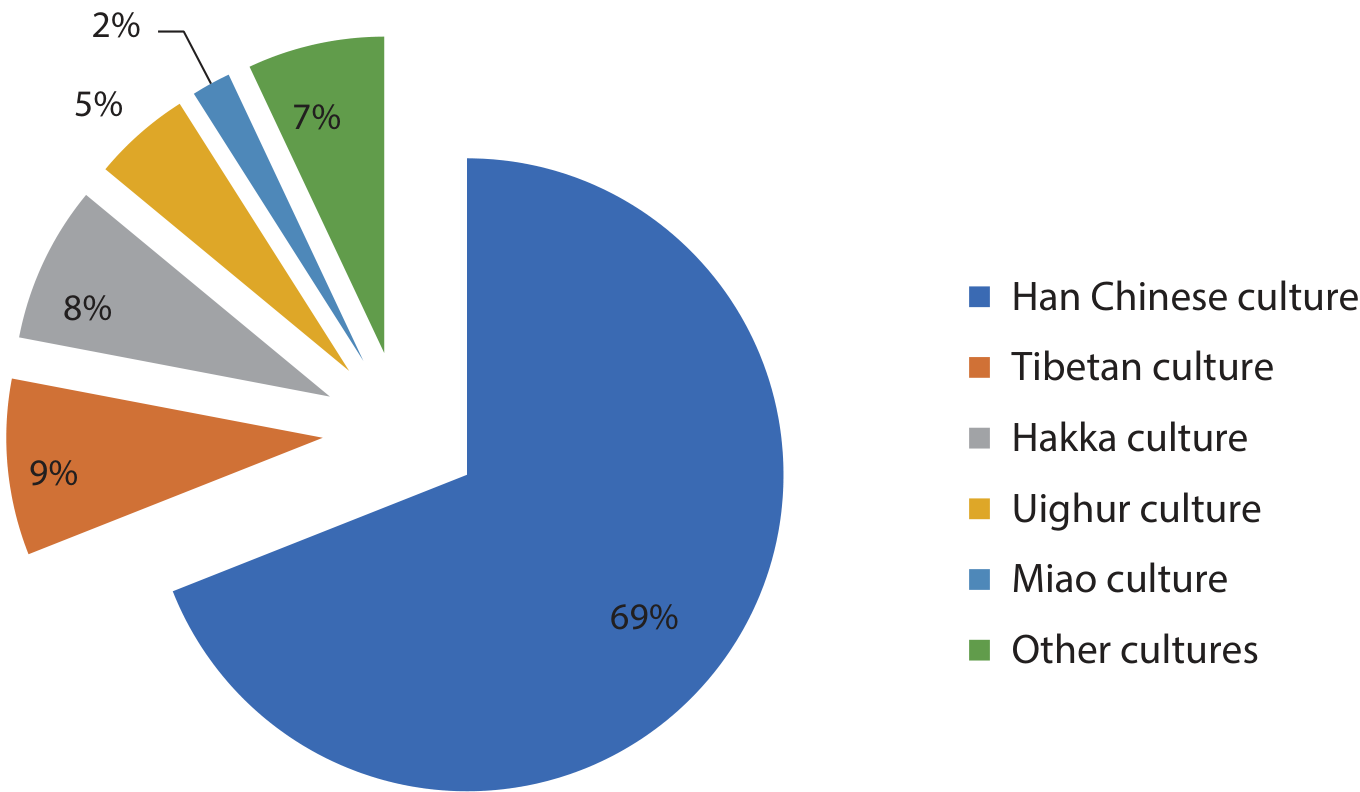
The link to the online survey was shared through popular social networking and communication applications. The respondents were informed of the purpose of the study and informed verbal consent was obtained before beginning the survey. Respondents were given the choice to leave the survey at any time. A total of 558 respondents participated in this survey, of which 43 were incomplete or invalid. Therefore, data from 515 respondents was used for further analysis. Fig. 1 shows the participation rates of respondents from different cultures.
Statistical Analysis
The use of the structural equation model (SEM) amalgamates the advantageous features of factor and path analysis, thereby resulting in a potent multivariate statistical instrument. The application of Structural Equation Modeling (SEM) is an approach to statistics that facilitates the analysis of the interrelationships among various effects, various influences, and latent variables. It integrates various analytical methods such as analysis of variance, factor analysis, regression analysis, and path analysis [76]. The PLS-SEM methodology is a type of multivariate structural equation modeling that is classified as a second-generation approach. The use of non-parametric methods in studies with limited sample sizes can eliminate distribution assumptions and yield greater statistical power compared to other methods [77]. The process of reducing and validating constructs prior to constructing the ultimate structural equation for each obvious variable enables the simple verification of item validity through the use of PLS. Previous literature has established that a minimum of 100 respondents is required to achieve impartial results when utilizing this particular model. Moreover, the adequacy of the respondents for this model was established through Hair et al.’s [78] ten time rule and G*power. The present study heavily relied on the analytical approach put forth by Hair et al. [78]. Therefore, the PLS-SEM methodology consists of a measurement model and a structural model.
Results
Respondent Characteristics
The participants in the study were distributed across different age groups. The majority (51%) fell within the age range of 31-60, indicating a relatively balanced representation of adults. Around 23% of the participants were below the age of 30, and 26% were above the age of 60. The mean age of the participants was 41.87 years, with a standard deviation of 10.21, indicating that the sample’s age was moderately dispersed around the mean. The educational background of the participants varied. A small percentage (3.78%) had no formal education, while a significant portion had completed primary school (17.82%) and lower secondary education (23.56%) (Table 1). A substantial number had achieved upper secondary education (29.31%), and a notable proportion had attended college (16.98%) or university (8.55%). The mean education level was 8.67, indicating a relatively moderate level of education on average among the participants. On average, the family size among the participants was 3.89 members, with a standard deviation of 1.06. The average monthly income among the participants was 27,435.95 yuan, with a very low standard deviation of 287.16. This indicates that the income levels in the sample were relatively homogenous, and most participants had similar monthly earnings.
Table 1.
Respondent characteristics.
Family Resilience among Diverse Cultural Groups in China: Coping with Climate Change Impacts in Different Regions.
Table 2 shows the perceptions of different cultural groups in China regarding their family resilience to cope with climate change. Their perception was measured based on a five-point Likert scale: “Strongly Agree,” “Agree,” “Neutral,” “Disagree,” and “Strongly Disagree.” Han Chinese Culture Group shows relatively high levels of family resilience. A significant proportion of respondents “Strongly Agree” or “Agree” that they possess a propensity to rapidly recover from adversities (83.56%) and typically tackle challenging circumstances with relative ease under fluctuating climatic conditions (52.21%). The Tibetan culture also exhibits strong perceptions regarding family resilience, with a considerable number of respondents “Strongly Agreeing” or “Agreeing” to possess a propensity to rapidly recover from adversities (66.72%) and typically tackle challenging circumstances with relative ease under fluctuating climatic conditions (51.04%). The families belonging to Uighur culture perceived moderate-level family resilience, with a notable percentage of respondents “agreeing” to possess a propensity to rapidly recover from adversities (68%) and typically tackle challenging circumstances with relative ease under fluctuating climatic conditions (60.25%).
Table 2.
Family resilience among diverse cultural groups in China.
A significant proportion (69.99%) of families belonging to Hakka culture also perceived a moderate level of family resilience by agreeing to have the ability to rapidly recover from adversities. Similarly, most of the respondents (58.2%) who belong to Hakka culture were also able to tackle the challenging circumstances with relative ease under fluctuating climatic conditions.
The families who belong to Miao culture also perceived a relatively high level of resilience, because a significant number of them strongly agreed or agreed with the ability to rapidly recover from adversities (72.43%) and typically tackle challenging circumstances with relative ease under fluctuating climatic conditions (49.52%).
The families that belong to the Yunnan minority culture show a moderate perception regarding family resilience. Only 67.86% of them agreed that they had the ability to rapidly recover from adversity, and only 55.68% were able to typically tackle challenging circumstances with relative ease under fluctuating climatic conditions.
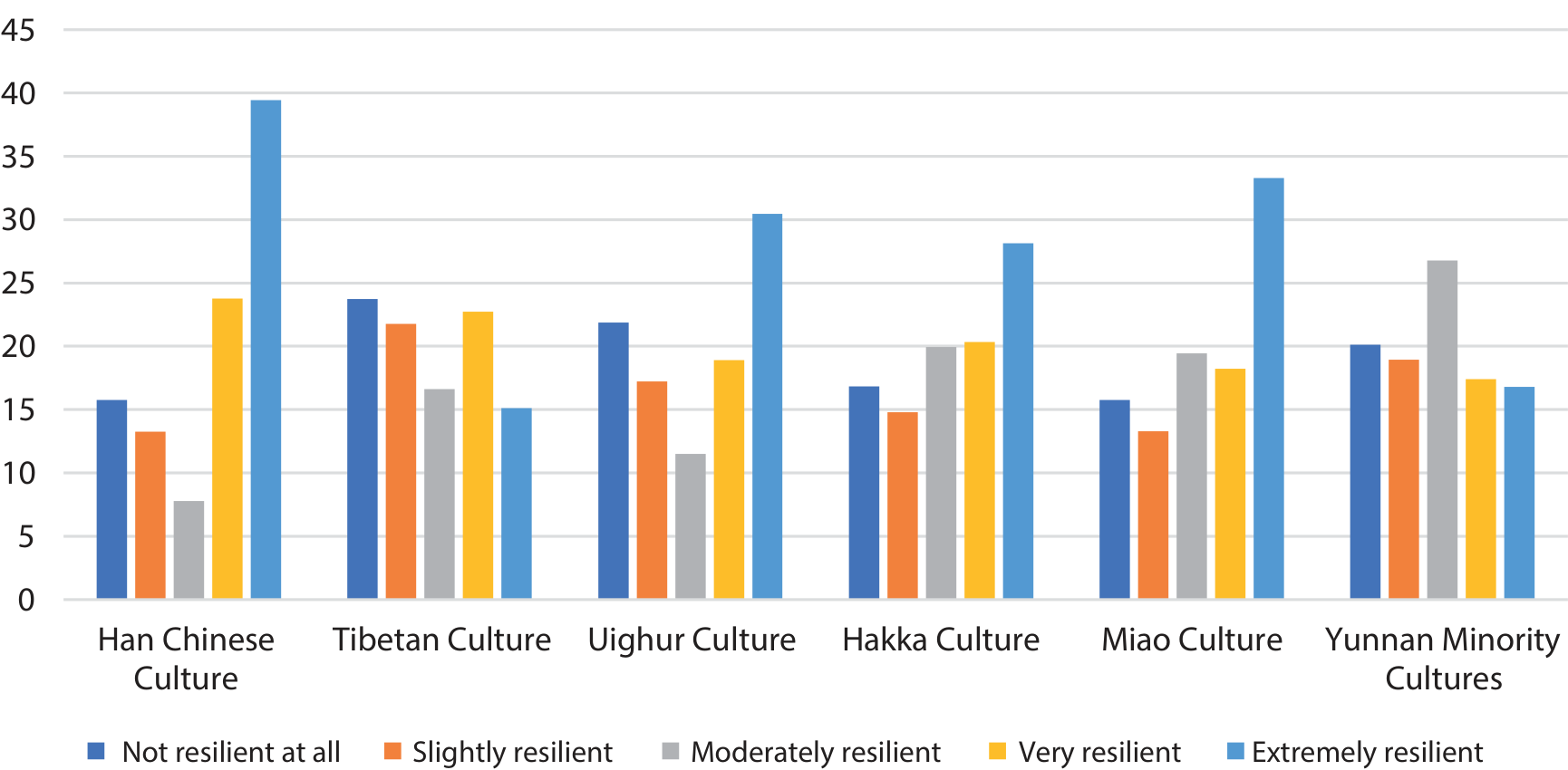
Fig. 2 shows the responses from different cultural groups in China regarding their family’s ability to adapt and bounce back from challenging situations or climate-related events. The rows represent different cultural groups, while the columns indicate the levels of family resilience, ranging from “Not resilient at all” to “Extremely resilient.” The Han Chinese group exhibits a relatively high percentage of respondents who perceive their families as “Extremely resilient” (39.43%). A significant proportion also consider their families to be “Very resilient” (23.78%). The percentages for “Not resilient at all” and “Slightly resilient” are relatively lower. The responses for the Tibetan group show a more balanced distribution, with no single resilience level dominating. The highest percentage is for “Not resilient at all” (23.74%), and the lowest is for “Extremely resilient” (15.11%). The Uighur group has a significant portion of respondents perceiving their families as “Extremely resilient” (30.47%) and “Not resilient at all” (21.89%). The percentages for “Moderately resilient” and “Slightly resilient” are relatively lower. The Hakka group’s responses are distributed relatively evenly across the resilience levels, with the highest percentage for “Extremely resilient” (28.12%). The Miao group shows a significant percentage of respondents considering their families as “Extremely resilient” (33.28%), while “Moderately resilient” also has a notable representation. The Yunnan Minority Cultures group exhibits a relatively balanced distribution across the resilience levels, with “Moderately resilient” having the highest percentage (26.77%).
Measurement Model Results
The model’s appropriateness was evaluated through discriminant validity and convergent tests. Convergent validity (CV) was assessed using different measures: average variance extracted (AVE), composite reliability (CR), and factor loading (FL). The assessment of CV is a commonly employed technique in the analysis of determinant measurement models within the context of PLS-SEM. CV evaluates the level of agreement between a specific measurement and other measurements related to a similar condition. In this study, CV was evaluated by examining the FL of each item and comparing it to the cutoff value. Previous research suggests that a construct can be considered convergent only if its FL exceeds 0.70 [79]. The findings of this study demonstrated CV, as all the individual items had FL above 0.70. The average variance explained reflects the extent to which the construct captures variance compared to variance due to measurement error. A score of 0.80 or higher is generally considered evidence of meeting the necessary requirements for formative measures, assuming there is a CV with strong loadings [80]. The FL displayed in Table 3 indicates that the items should be considered part of the intended construct. The study’s CV was confirmed as no individual items exhibited FL lower than 0.70.
This statistic measures the internal consistency of the items within each construct. It indicates the extent to which the items in a construct are correlated with each other. Cronbach’s Alpha, a widely used statistical measure, is frequently employed in scholarly discussions to assess instrument reliability, particularly in the development of scales for measuring affective constructs [81, 82]. Generally, a Cronbach’s Alpha value of 0.70 or higher is considered acceptable for a reliable scale [83]. A Cronbach’s alpha value of 0.70 or higher is considered essential for the latent variable [84, 85]. In this study, all constructs have Cronbach’s Alpha values above 0.70, indicating good internal consistency and reliability. These results offer strong support for the scale’s significance and suitability for further exploration in the study.
CR is a superior measure for assessing the internal consistency and reliability of measures compared to Cronbach’s alpha [79, 86]. CR considers factor loadings, making it more accurate [87]. A minimum CR coefficient of 0.60 is needed to establish construct validity [88]. If the CR coefficient exceeds 0.70 [89], the model is considered satisfactory. A CR value of 0.80 or higher is required as a confirmation threshold [80]. The latent variables must attain a CR value of at least 0.84, indicating the need for further research. Similarly, AVE assesses the amount of variance captured by the construct relative to the variance due to measurement error. It also provides a measure of CV. AVE values should ideally be 0.50 or higher for a good CV [86]. In this study, all constructs have AVE values above 0.50, indicating that they explain a substantial proportion of the variance in the observed variables, thus demonstrating a good CV. Therefore, the results indicate that all constructs in the study show good internal consistency, reliability, and convergent validity, as their alpha scores, CR, and AVE values meet or exceed the commonly accepted thresholds.
Table 3.
Analyzing the convergent validity of measurement model.
The discriminant validity of the constructs before proceeding toward the path analysis is one of the most important steps in PLS-SEM. This validity confirms the ability of the measurement model to differentiate different latent variables or constructs. The purpose of assessing the discriminant validity of the constructs is to ensure that the indicators of each construct are highly related to their particular construct as compared to the other constructs [86]. Therefore, the discriminant validity confirms the distinction between the indicator of a construct and the indicators of the other constructs of the model. This procedure of validity assessment explains that each construct possesses distinct and conceptual properties, thereby avoiding any potential overlapping and ambiguity among multiple constructs. We used the Fornell-Larcker criterion and the cross-loadings to assess the discriminant validity. For this purpose, we have compared the square root of the AVE of each construct with the correlation scores between constructs.
In order to establish discriminant validity, it is necessary for the square root of the average variance extracted (AVE) for each construct to exceed its correlations with other constructs within the model [90]. The results in Table 4 confirm the discriminant’s validity. The diagonal values of the latent variables show greater variability than the correlation coefficients with other measures, indicating their distinctiveness. In addition to other analyses, the study performed an evaluation of the discriminant validity by considering the heterotrait-monotrait ratio (HMR) values. The HMR value, when found to be less than 0.90, as suggested in previous research [91], serves as strong evidence supporting the presence of discriminant validity in the model.
The goodness of fit measure assesses how well the structural model fits the observed data. In this study, several fit indices were calculated, and their values were compared to the commonly used cut-off values to determine the model’s goodness of fit. The cut-off value is typically set at 3.0. In this study, the obtained value was 2.85, which indicates a good fit as it is below the cutoff value. GFI (Goodness of Fit Index) measures the proportion of variance in the observed data that is explained by the structural model. The cutoff value is set at 0.90. The obtained value of 0.904 indicates a good fit, as it meets the cutoff criterion. CFI (Comparative Fit Index) compares the fit of the proposed model with that of a baseline model. The cutoff value is set at 0.90. The obtained value of 0.916 shows a good fit, exceeding the cutoff criterion. AGFI (Adjusted Goodness of Fit Index) is similar to GFI, but adjusted for the model’s degrees of freedom. The cutoff value is set at 0.90. The obtained value of 0.912 indicates a good fit, meeting the cutoff criterion. NFI (Normed Fit Index) measures the relative improvement of the proposed model over a null model. The cutoff value is set at 0.90. The obtained value of 0.931 indicates a good fit, surpassing the cutoff criterion. RMSEA (Root Mean Square Error of Approximation) assesses the discrepancy between the hypothesized model and the population covariance matrix. The cutoff value is set at 0.08. The obtained value of 0.058 indicates a good fit, as it is below the cutoff criterion. Thus, the goodness of fit measures suggests that the structural model in this study fits the observed data well, as all the fit indices meet or exceed the commonly accepted cutoff values.
Table 4.
Testing discriminant validity.
Structural Model
The structural model’s predictive accuracy was assessed using the “explained variance” (R2) metric. Table 5 displays R2 values above 0.50 for all hypotheses, indicating strong predictive power. To confirm the proposed relationships among latent variables, the study employed nonparametric bootstrapping, following the approach of Wetzels et al. [87], which confirmed all hypotheses.
The results revealed that SSSC (β = 0.439, p < 0.01), COA (β = 0.023, p < 0.01), and SNW (β = 0.128, p < 0.05) have a statistically significant positive effect on family resilience (FR), supported by t-values exceeding the threshold of 2.32 and 1.64. Similarly, FR demonstrated a notable impact on ADO (β = 0.572, p < 0.01). Similarly, the cultural background (CAB) also demonstrates the significant positive impact on FR and ADO. The impact of cultural adaptation (CAD) on ADO and FR is also positive and significant. Effect size (f2) values were utilized to quantify the variables’ impact on respondents’ FR and ADO. Based on Cohen’s [88] classification, SSSC and COA exhibited bigger effect magnitudes with f2 values of 0.875 and 0.0.393 on FR, respectively, while SNW had a moderate effect on FR with an f2 value of 0.324. The FR exhibits a bigger effect on ADO, and the CBG has a moderate effect on ADO. The CBG has a small effect on FR, with a f2 value less than 0.015. The effect size of CAD on FR and ADO is medium (f2 = 0.308) and bigger (f2 = 0.582), respectively. The computation of Q2 was conducted to assess the predictive validity of each hypothesis, following Fornell et al.’s approach [92]. All structures achieved Q2 values greater than zero, indicating their predictive significance.
Table 6 presents the findings concerning the mediating role of cultural adaptation (CAD) toward FR and ADO. The results indicate that the CAD acts as a mediator between CBG and FR (β=0.126, p<0.01). Similarly, it also mediates the relationship between CBG and ADO (β=0.198, p<0.01).
The study computed the Variation Accounted For (VAF), which measures the proportion of the indirect effect relative to the total effect. In this research, VAF represents the ratio of the mediation effect to the total effect. For instance, the VAF of CAD for the relationship between CBG and FR is 0.3103 (=0.126/0.406), indicating that approximately 31.03% of the effect of CBG on FR can be attributed to the mediation effect of CAD. Moreover, the VAF of CAD for the relationship between CBG and ADO is 0.4876 (=0.198/0.406), indicating that approximately 48.76% of the effect of CBG on ADO can be attributed to the mediation effect of CAD (Table 7). Additionally, VAF values greater than 20% but less than 80% signify partial mediation effects of the variables [32]. Based on the findings, the relationship between CBG, FR, and ADO is partially mediated by CBG.
Table 5.
Path coefficient of structural model.
The Moderating Role of SES in the Relationship between FR and ADO
Prior to examining the moderating influence of socioeconomic status (SES) on the relationship between FR and ADO, all variables underwent normalization procedures to ensure comparability. The methodology utilized in this study followed the approach suggested by Preacher and Hayes [89]. Table 8 presents the significant and direct impact of SES on ADO. Moreover, the impact of respondents’ FR (β = 0.342, p < 0.01) and SES (β = 0.287, p < 0.01) on their ADO was found to be statistically significant. The study revealed that the interaction effect of respondents’ FR and SES on ADO was both significant and positive (β = 0.311, p < 0.01). This finding is important as it indicates a higher likelihood of predicting ADO. The current research provides empirical support for the notion that respondents’ FR with a higher SES level acts as a moderator for the effect of FR on ADO.
Discussion
The study sample appears to be relatively diverse in terms of age, education, and family size. However, the participants generally had a moderate level of education and a relatively consistent income level. The study reveals significant variations in family resilience among different cultural groups in China in response to climate change impacts. The Han Chinese and Miao cultures demonstrate higher resilience, while the Tibetan, Uighur, Hakka, and Yunnan Minority cultures exhibit moderate resilience. Therefore, cultural differences play a significant role in shaping the level of family resilience in response to various challenges [93], including climate change impacts [94]. These different cultural groups may have distinct values, beliefs, social norms, and coping mechanisms that influence their ability to adapt [95, 96] and bounce back from difficult situations.
Table 8.
Moderating effect of SES in relationship of FR and ADO.
| Variables | Coefficient | SE | R | R2 | F-value |
|---|---|---|---|---|---|
| FR | 0.342 | 0.045 | 0.87 | 0.76 | 68.54 |
| SES | 0.287 | 0.067 | |||
| FR* SES | 0.311 | 0.085 |
The results of the structural model analysis demonstrate strong predictive accuracy, as indicated by the “explained variance” (R2) values exceeding 0.50 for all hypotheses, which suggests that the model effectively explains the relationships between the latent variables, providing reliable predictions. The study revealed that SSSC, COA, and SNW have a positive and significant impact on family resilience (FR). Strong social networks, social capital, and coping abilities provide valuable resources and emotional assistance during climatic adversities.
Strong social support and social capital provide valuable resources and emotional assistance during challenges, enhancing coping abilities. The presence of a strong network comprised of family and community members serves as a protective mechanism against various stressors while also promoting the development of resilience. The capacity to cope at a higher level empowers individuals to effectively navigate and surmount challenges, facilitated by the presence of supporting social networks and the availability of social capital to acquire additional skills and knowledge. The aforementioned findings are consistent with the claims put forth by Amigo and Echavez [97]. The research findings indicate that factors such as social support, social capital, coping skills, and supporting networks have a significant impact on the enhancement of family resilience (FR). Social network theory places great importance on the role of social connections and relationships in facilitating the provision of resources, knowledge, and emotional support in times of adversity. The presence of robust social support networks and social capital within communities has been found to have a favorable impact on individuals’ capacity to effectively navigate and manage challenging circumstances, such as the impacts of climate change. The beneficial influence of coping ability (COA) and supportive network (SNW) on family resilience is indicative of the fundamental principles of resilience theory, which underscore the significance of proficient problem-solving abilities and adaptive coping mechanisms as important determinants of resilience. The support for social network theory is reinforced by emphasizing the relevance of strong social links, coping skills, and availability of resources in the development of resilience when confronted with adversities.
The interpretation of the results reveals that families from different cultural groups in China have varying perceptions regarding their family resilience. Some groups of families that belong to a culture tend to perceive themselves as more resilient families while others show a more even distribution across their resilience level. The different families’ perceptions regarding their resilience may be due to unique cultural beliefs, values, and norms. Therefore, various cultural factors, such as traditional practices, social support systems, collective beliefs, and historical experience [98, 99], affect how families across different cultures perceive their ability to cope with adversities. Certain cultural contexts prioritize the promotion of familial cohesion and interdependence, hence cultivating a communal perception of resilience. This perspective regards the family’s capacity to face challenges as a shared responsibility and a source of resilience. On the other hand, cultures that prioritize individuality tend to view family resilience as an inherent characteristic of individuals, placing emphasis on their capacity to cope and rely on themselves. Perceptions of resilience are influenced by cultural ideas regarding adversity and corresponding coping techniques. Certain cultural groups perceive adversity as an inherent aspect of life for everyone, and as such, they place significant emphasis on collaborative approaches to problem-solving and communal assistance. Consequently, these cultural perspectives contribute to a constructive understanding of family resilience. On the other hand, societies that attach a negative cultural stigma to asking for assistance or displaying vulnerability may possess distinct interpretations of resilience, exhibiting reluctance to acknowledge difficulties or seek aid.
The current study has found a strong and positive link between family resilience and adaptive strategies in the face of climate change impacts. Families with strong resilience were more likely to engage in effective coping behaviors to counter climate related adversities. Our results are in line with those of Ogunbode et al. [100]. They described that family resilience (FR) was found to have a considerable positive effect on adaptation (ADO). Behera [101] described that social organization is one of the most important human actions that can either impede or support response and recovery efforts. This suggests that families with resilience possess advantageous abilities, resources, and support networks, enabling them to effectively adjust and rebound from climate-related challenges [102]. The function of family resilience is of utmost importance in enabling individuals and families to effectively and proactively address the challenges posed by climate change and its associated impacts. The study conducted by Gifford and Gifford [103] revealed that the vulnerability of individuals and communities to the psychological effects of climate change is contingent upon their levels of resilience and empowerment.
Moreover, the current study also found a significant positive impact of cultural background (CAB) on the FR and ADO. The possible reason may be that individuals from different cultural backgrounds demonstrated a varying level of resilience and adaptative strategies in the face of challenges such as climate change adversities. The beliefs, norms, and values of each cultural group are important factors in building families’ responses and their abilities to cope with climate change effectively. The framework of family resilience proposed by Herdiana et al. [93] is supported by systems theory and considers both developmental and ecological perspectives. This extensively focuses on various aspects of family life within the wider sociocultural framework, which assists them in the development of resilience across time. It also considers the external aspects and internal coping strategies, which provides a holistic understanding. The coherence of family individuals and their interdependence has great importance in certain cultural groups, which plays a crucial role in fostering resilience and developing adaptive mechanisms. Nguyen et al. [104] described that the various socioeconomic and cultural aspects strongly influence the adaptation activities of the farm families. Moreover, they found that the FR and ADO of farmers depend greatly on knowledge, technology, access to information, institutions, and social capital.
The findings of the current study also revealed a positive and significant effect of CAD on the FR and ADO. CAD contributes to strong social connections and builds wider social support networks within the family and community. These networks act as a safety net to counter the challenging times and support the families in developing collective efforts. All these contribute to the enhanced FR. Therefore, the study confirms the significant mediating role of CAD in the relationship between CAB, FR, and ADO. Families that adapt and integrate cultural practices, beliefs, and values into their daily activities may develop stronger support networks and coping mechanisms, leading to resilience in the face of challenges. Moreover, adapting and incorporating cultural knowledge, tradition, and resources may assist in the development of more inclusive and effective adaptive strategies in the context of climate change. One approach involves considering climate change as a challenge that can be effectively tackled through active social participation and the adoption of pro-environmental behaviors, thereby potentially mitigating its adverse consequences [105]. The results of the study provide empirical evidence that aligns with Harris’ [106] cultural ecology hypothesis, which investigates the complex relationship between human cultures and their surrounding environment. This statement underscores the influence of natural factors on the development of culture and behavior. Cultural traits and practices emerge as a result of efforts to enhance survival and overall welfare within the ecological framework of a community, hence impacting the utilization of resources, organization of society, and decision-making processes. Societies have the capacity to modify their practices, technology, and beliefs in order to accommodate evolving ecological circumstances.
The current study also revealed the significant positive interaction effect of FR and SES on ADO. These outcomes shed light on the importance of the moderating role of SES in the relationship between FR and ADO. Pudjiati et al. [107] also found that family strain, community support, and socio-economic status play a vital role in building the FR. Okunola et al. [108] also described the importance of socio-economic variables’ influence on the level of adaptation to climate change. The findings can assist policymakers build the capacity of individuals and families to increase their resilience against climate change impacts. Our current results are in line with those of Feng et al. [109], indicating that high-income families are more likely to adopt technical and financially demanding strategies. The findings of Okunola et al. [108] provide evidence for a significant relationship between socioeconomic characteristics and adaptation. This study confirms that individuals’ behavior and attitudes towards climate change adaptation are highly influenced by their socioeconomic level. Hence, enhancements in specific socioeconomic indicators, such as income, have the potential to enhance the capacity of individuals and households to adapt to the impacts of climate change. Furthermore, our findings are consistent with the study conducted by Ihemezie et al. [110], which provided evidence that socioeconomic status (SES) significantly contributes to enhancing the resilience of families in the face of climate change. The support for resilient theory is reinforced by emphasizing the importance of these elements, including strong socioeconomic status (SES) and access to resources, in fostering resilience when confronted with the challenges of adapting to climate change.
Although this study makes a significant contribution to the literature, it has some limitations that may affect the generalizability of the study findings. First, it is limited in its applicability beyond the scope of China because it largely examines cultural subsets within the country. The extent to which cultural background affects family resilience and adaptability may be better understood if research is expanded to include cross-cultural studies from diverse countries and locations. The second limitation is that the information was derived from surveys, which might be biased and may not accurately portray the complexities of family resilience and adaptability. Future studies could use a mixed-approach approach to overcome this shortcoming by combining quantitative surveys with qualitative interviews or observational methods. Third, the use of cross-sectional data makes it difficult to draw conclusions regarding causation. Research that follows a longitudinal study may shed light on the dynamics of resilience and adaptation in families. While the study recognizes the significance of cultural adaptation, it does not extensively explore the complexities of this process. The nuanced ways in which cultural adaptation affects family resilience in different settings should be explored in future studies. Finally, socioeconomic status (SES) is thought to be a moderating variable, although its constituent parts have not been properly investigated. In the future, researchers may examine how certain socioeconomic factors, such as household income and level of education, affect a family’s capacity for resilience and adaptation.
Conclusions
Climate change is widely acknowledged as a significant worldwide issue, with significant implications for several aspects of society, including families, communities, economies, ecosystems, and cultures. Its discernible implications for the natural environment and human existence pose potential risks to societies and institutions worldwide. Climate change has various and context-dependent implications for cultures, influencing their practices, customs, and livelihoods. However, there’s a scarcity of cross-cultural research investigating the influence of cultural adaptation, cultural background, and socio-economic status in promoting adaptation and family resilience. Family Resilience and Adaptation Strategies in the Face of Climate Change: A Cross-Cultural Study” aims to investigate and understand the relationship between family resilience, adaptation strategies, and cultural background in the context of climate change impacts. For this purpose, a well-designed questionnaire was used to collect the data from 558, and 43 incomplete questions were excluded. The remaining 515 questions were included in the final analysis. The convergent and discriminant validity were assessed before proceeding with the final SEM model. The threshold level of the different parameters, including factor loadings, composite reliability, and average variance extracted, has ensured convergent validity and supports further exploration in the current study. The PLS-SEM was employed to fulfill the research objectives of the study. The findings highlight the varying levels of family resilience among different cultural groups in China. Additionally, the variation in the perception of families regarding their resilience across the different cultures highlights the significance of the cultural background in shaping individuals understanding of their families’ ability to counteract and bounce back from adversity.
The findings of the study support the acceptance of most of the proposed hypotheses. The majority of the relationship was significant and in the expected direction. The outcomes of the study contribute to a deeper understanding of the determinants of family resilience and adaptation to climate change. The findings explain the importance of cultural background, coping ability, supportive networks, and social support in building family resilience. Cultural adaptation also has a significant positive influence on adaptation. This sheds light on the complexity of the link between cultural factors and family-level outcomes.
Overall, the comprehensive analysis of the study provided valuable insights into the dynamics between the latent variables. These findings have strong practical implications for policymakers and practitioners in formulating targeted and inclusive strategies to enhance family resilience and adaptive capacity to counter climate change adversities. Moreover, the study also contributes to the existing body of knowledge on the role of cultural backgrounds in developing families’ resilience and response to climate change.
Cultural adaptation also plays an important role in describing the effect of cultural background on family resilience and adaptation. The impact of the cultural background on the FR and ADO is partially explained by the family’s level of cultural adaptation. This mediation effect highlights the importance of families’ adaptive behavior and cultural adjustments in determining their family’s resilience and their ability to counter climate change and adversity. The significance of the mediation effect of cultural adaptation sheds light on the complex interplay between cultural factors and a family’s adaptive response. Therefore, cultural adaptation acts as a mechanism through which cultural practices, beliefs, and values are translated into adaptive behavior and strategies that affect family outcomes.
The significant moderating effect of SES reveals that the relationship between FR and ADO is strongly influenced by the family’s socio-economic status. This implies that the level of SES can enhance or weaken the impact of FR on ADO. Families with higher SES may have more resources and opportunities, which can amplify the positive effect of FR on their adaptation level. On the other hand, families with lower SES levels may face additional limitations and challenges, which may hinder the beneficial effect of FR on ADO. Thus, the study’s findings shed light on the importance of considering the role of SES in the promotion of families’ adaptation in the face of climate change and adversity.
Based on the outcomes of the current study, we can suggest the following policy implications: It is very important to recognize and respect the diverse cultural backgrounds of families when designing and implementing the adaptation program to tackle climate change across the regions of the country. The intervention must align with the cultural beliefs, values, and practices of different cultural groups, and develop a sense of ownership and engagement in the adaptation process. It is very important to strengthen social capital and supportive networks within communities, as they play a significant role in enhancing family resilience. To create a robust support system, community bonding, and mutual assistance should be encouraged. Cultural education and awareness programs should be executed to enhance understanding and appreciation of different cultural backgrounds. By enhancing cross-cultural understanding, the communities can develop empathy and cooperation, fostering a shared responsibility for adaptation to climate change. Community organizations, local leaders, and institutions should be engaged to facilitate collaboration and cooperation among different cultural groups in the effort of climate change adaptation. Families across different cultural backgrounds should be empowered by providing access to information, resources, and skills necessary for adaptation to climate change. Concerned authorities should ensure that the policies regarding adaptation to climate change are considerate and inclusive of cultural diversity. The promotion of knowledge exchange and learning among cultural groups concerning effective practices for adaptation should be prioritized. It is essential to establish local platforms that facilitate the sharing of experiences, best practices, and traditional knowledge. These platforms will foster cross-cultural learning and the development of adaptation strategies.

