

Introduction
Since China’s reform and opening up, the Chinese economy has achieved remarkable development that has attracted worldwide attention. However, the resource and energy constraints faced in the process of economic development are also increasing, and the ecological environment is constantly deteriorating. The country attaches great importance to ecological and environmental protection, and the 14th Five Year Plan proposes to deepen the fight against pollution prevention and control. Ecological efficiency is the provision of higher-quality products and services with less environmental pollution and resource consumption. Its core is to invest less, emit less, and produce more, which has become one of the important factors for measuring the sustainable development of society and the economy. For a long time, China’s coal-based energy consumption structure has led to the emission of a large amount of polluting gases such as sulfur dioxide and nitrogen oxides. In response to the issue of climate change, the Chinese government proposed in 2020 to achieve the goal of “Carbon Neutrality” by 2060. This policy aims to demonstrate China’s commitment to freeing economic growth from its heavy dependence on energy consumption and is also one of the most effective ways to improve ecological efficiency and mitigate climate change. Therefore, how to achieve the improvement of ecological efficiency under environmental regulations has become the focus of current research.
As the main measure taken by the government to protect the environment, the promotion of environmental regulations has, to some extent, curbed the further deterioration of the environment. However, scholars’ views on whether environmental regulations have improved ecological efficiency are still inconsistent, mainly including the following two aspects: First, starting with the “green paradox”, when environmental policies issued by the government increase the cost of pollution emissions, corporate profits will be squeezed. In the expectation of future profit decline, it will to some extent reduce the final productivity of enterprises, which will actually have a negative impact on the overall economic output [1]. Secondly, according to the “Porter Hypothesis”, environmental regulations can motivate enterprises to engage in technological innovation [2]. The innovation compensation it generates compensates for or even exceeds environmental costs, reducing environmental pollution while increasing economic output and enhancing the international competitiveness of the industry. That is to say, appropriate environmental regulations can promote the improvement of ecological efficiency. Zhong et al. (2021) found that environmental protection tax significantly increase the level of green innovation in enterprises, thereby helping to improve ecological efficiency [3].
From the above viewpoints, it can be seen that scholars still have not reached a consensus on whether environmental regulations can improve ecological efficiency, which also provides inspiration for our writing. In recent years, China’s environmental protection tax system has been continuously updated and improved. In order to achieve efficient energy utilization, promote ecological civilization construction, and promote sustainable economic development, on December 25, 2016, the National People’s Congress passed the Environmental Protection Tax Law of the People’s Republic of China, which was officially implemented on January 1, 2018. What is the relationship between environmental regulation and ecological efficiency? Therefore, this article further studies the relationship between environmental protection tax and ecological efficiency, which is of great significance for the improvement and effective implementation of policies.
In this study, we compiled data on the implementation of environmental protection tax in various cities in China from 2010 to 2021 and matched them with the ecological efficiency data measured by each city. The implementation of environmental protection tax in various cities, as an exogenous policy impact, has brought about exogenous changes in the ecological efficiency of cities that implement environmental protection tax. It can be approximated as a natural experiment, which helps us identify the changes in local ecological efficiency after implementing environmental protection tax in cities using the difference-in-difference (DID). Our research has found that when a city implements environmental protection tax, the ecological efficiency of the city will improve. In addition, we further found that implementing environmental protection tax can promote the upgrading of urban industrial structures.
Our study contributes to three strands of literature. Firstly, this article examines the impact of environmental regulation on ecological efficiency from the perspective of environmental protection tax, supplementing relevant literature on environmental regulation. Most of the existing literature is based on policies such as emission charging systems, dual control zones, and carbon emission trading rights before 2018, observing their impact on ecological efficiency. This article takes the latest implementation of environmental protection tax law in 2018 as the research object, explores the relationship between environmental protection tax and ecological efficiency, and supplements relevant literature on environmental regulation. Secondly, this article uses the DID for causal identification, which more accurately estimates the impact of an environmental protection tax on ecological efficiency. As an exogenous policy shock, the implementation of the environmental protection tax has effectively alleviated endogeneity issues, and the estimated results are more accurate. Although the treatment of these indicators is gradually being optimized, there is still a reverse causal problem that affects environmental protection tax revenue due to the improvement of ecological efficiency. Thirdly, this article examines the mechanism of environmental protection tax promoting ecological efficiency from the perspectives of industrial structure upgrading and industrial structure rationalization and clarifies the mechanism of environmental protection tax promoting ecological efficiency.
The rest of the paper is structured as follows: Section 2 provides background information and theoretical analysis. Section 3 describes the data, variables, and empirical specifications. Section 4 presents the baseline results, robustness results, and mechanism analysis, and Section 5 concludes.
Background and Theoretical Analysis
Background
China’s environmental regulations can be traced back to 1956, when the central government proposed the slogan “turning waste into treasure”. However, these policies are relatively scattered and lack specific environmental management procedures and laws, making them far from meeting the comprehensive requirements of environmental protection. After the reform and opening up, environmental issues have become increasingly serious. China has begun to incorporate environmental protection into the constitution, which has been established as a basic national policy and gradually became China’s environmental regulation policy. However, China is a highly centralized and unitary country where the central government holds the power to appoint local government officials. Against the backdrop of economic development as the center, local governments have a primary goal of economic growth. The central government can only delegate more of the power of local environmental governance to local governments for management, which has led to many early environmental regulation policies being bottom-up environmental regulations. With China’s extensive economic growth and excessive consumption of resources, the environmental pollution problem in China is becoming increasingly serious.
Since entering the new century, with the improvement of economic development levels, environmental protection has gradually become a highly valued issue for the central government. After the convening of the 16th National Congress of the CPC, China’s development strategy has also changed, shifting from the previous “extensive” growth model to “comprehensive, coordinated, and sustainable development”. In this document, the standards for collecting discharge fees for waste gas and wastewater have been clearly stipulated, and the original discharge fee standards have been adjusted. The exceeding discharge fees have been adjusted to the total amount collected, and violators have been fined from one to three times and ordered to suspend production and business.
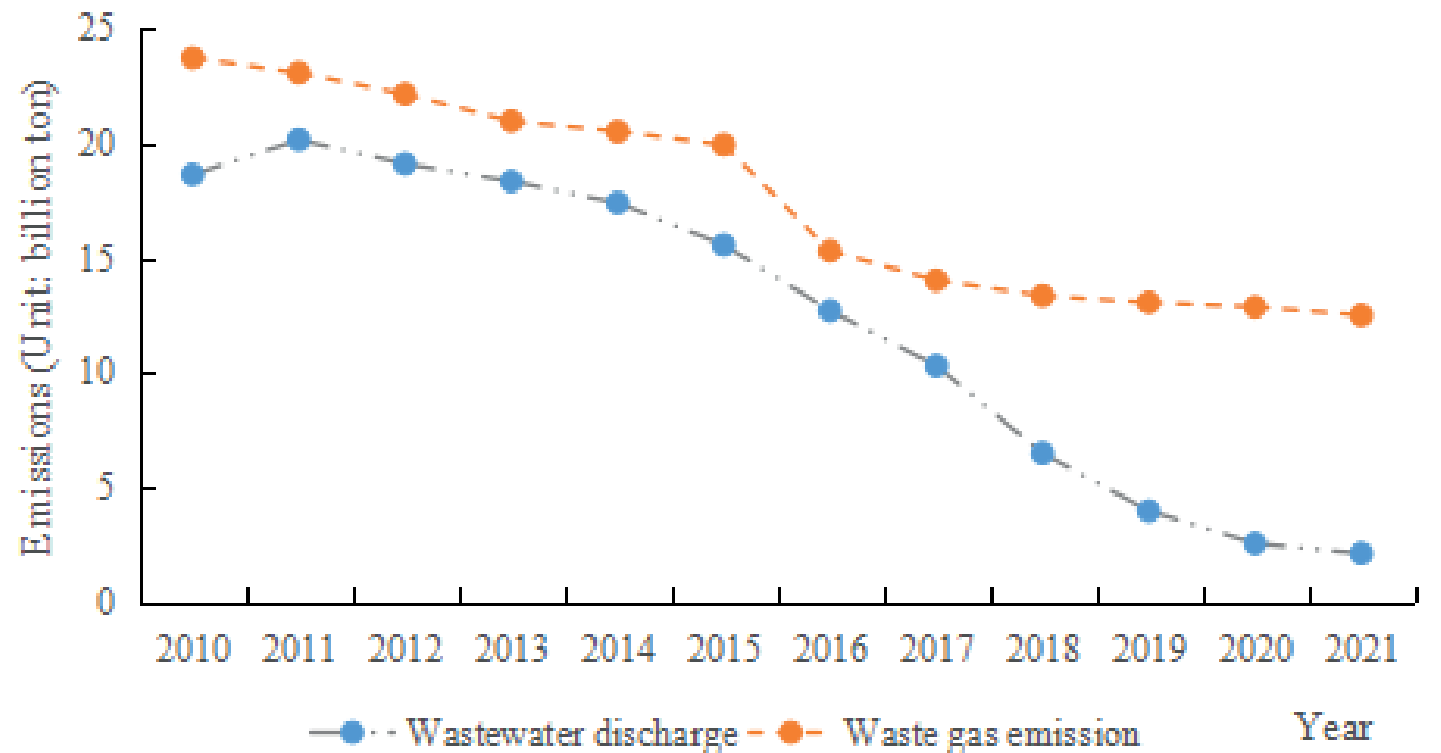
However, due to the lack of legal protection, the narrow scope and lack of mandatory collection of environmental protection fees have seriously damaged the ecological environment and social welfare, which is conducive to effective environmental governance and green development. In order to effectively promote the construction of ecological civilization and build a green economy development system, the environmental protection tax was officially implemented on January 1, 2018. The change of the pollution discharge fee system to the environmental protection tax law is an important measure taken by the Chinese government in the field of environmental protection and governance, and is an inevitable requirement for promoting national ecological governance. One of the principles followed in the process of formulating environmental protection tax laws is the principle of “shifting tax burden”. Therefore, the environmental protection tax is mainly committed to promoting environmental protection for enterprises, “forcing” enterprises to carry out technological innovation, improve production efficiency, and promote high-quality output. Enterprises need a large amount of funding to carry out green research and innovation. Therefore, the environmental protection tax has established different emission reduction incentives to encourage enterprises to actively engage in innovative activities. Reducing pollutant emissions can obtain more tax incentives, thereby promoting enterprises to invest funds in research and development and continuously promoting the innovative development of enterprises. The implementation of the environmental protection tax in 2018 replaced the pollution discharge fee system. Relatively speaking, the collection standard for environmental protection tax on wastewater and waste gas has been generally improved. For example, the collection standard for sulfur dioxide in Beijing has been increased from 10 yuan/kg to 12 yuan/kg, and the collection standard for sulfur dioxide in Shanghai has increased from 4 yuan/kg to 6.9825 yuan/kg. It can be seen that there are significant differences in the collection standards of environmental protection tax among different provinces in China. The consequence of the implementation of environmental protection tax is a significant reduction in the emissions of wastewater and exhaust gas (Fig. 1). Therefore, this article takes the implementation of the environmental protection tax as an opportunity to explore the impact of environmental protection tax on ecological efficiency.
Theoretical Analysis
The purpose of implementing environmental protection tax is to achieve environmental and economic benefits, effectively reduce energy consumption, and reduce pollutant emissions. The academic community believes that the implementation of environmental protection tax can effectively curb energy consumption and improve ecological efficiency [4]. Krautkraemer (1985) incorporated environmental regulation and fossil energy consumption into the theoretical framework of economic growth and found that the introduction of environmental constraints can significantly reduce fossil energy consumption [5]. Guo and Yuan (2020) found that environmental regulation can reduce pollutant emissions and improve ecological efficiency based on relaxation measurement methods [6]. Curtis and Lee (2019) found that environmental protection tax have a significant negative impact on industrial energy consumption and can promote the use of clean energy by redistributing environmental protection tax, thereby improving ecological efficiency [7]. Wu et al. (2020) found that the carbon emission trading rights system can significantly reduce energy consumption per unit of regional gross domestic product and improve green total factor productivity by improving the level of green innovation technology [8]. From a cost perspective, environmental protection tax may increase the financial costs of enterprises, which can guide them to change production strategies and even reduce production costs by reducing production. However, in the long run, reducing production by enterprises will reduce industry market share, thereby weakening market competitiveness. The theory of the “innovation compensation effect” represented by Porter believes that a certain degree of environmental regulation will promote enterprise technological innovation. Reasonable environmental regulation will promote enterprise technological innovation, compensate for the cost increase caused by the “following cost effect”, improve environmental problems while expanding enterprise output, and thus enhance regional ecological efficiency. Based on this, the article proposes the following research hypotheses:
Hypothesis 1: Environmental protection tax can effectively improve urban ecological efficiency.
Due to the fact that high-tech products are often pollution intensive, compared to clean industries, the implementation of environmental protection tax laws can make pollution intensive enterprises face stricter environmental regulations. If heavily polluting enterprises cannot adjust their production and operation methods in a timely manner, their production and operation activities will be restricted, correspondingly, the expansion of enterprise activities and scale will also be suppressed, and small enterprises may even face the risk of bankruptcy. Therefore, the implementation of the Environmental Protection Tax Law helps to increase the proportion of the service and cleaning industries, which may promote the development of traditional industries towards low-energy-consuming and emerging industries and thus may drive changes in industrial structure. Because changes in industrial structure can lead to changes in the concentration of carbon dioxide in the atmosphere, the secondary industry is the most important sector for energy consumption and carbon emissions [9]. Increasing the proportion of the tertiary industry in GDP can help reduce carbon emissions and significantly improve ecological efficiency. It can be seen that environmental regulations can carry out mandatory “positive cleaning” within the industrial cluster, improve industrial quality and competitiveness through the mechanism of survival of the fittest, and ultimately drive the upgrading of industrial structures. The industrial structure determines the disposition tendency of production factors and the conversion efficiency of input-output factors. At the same time, changes in factor use and production methods can also stimulate changes in the demand for energy in economic activities [10]. Therefore, the rationalization of industrial structures can improve ecological efficiency through the rationalization of factor allocation between and within industries. The advancement of industrial structures can also effectively improve ecological efficiency and reduce carbon emissions [11]. Feng et al. (2020) found that the development of the service industry helps to reduce overall energy intensity [12]. In summary, the optimization and upgrading of industrial structures have a positive impact on ecological efficiency, and industrial structure upgrading is a decisive factor affecting urban ecological efficiency, and this impact will increase over time [13]. Based on the above theoretical analysis, this article proposes hypothesis 2.
Hypotheses 2: Environmental protection tax can improve urban ecological efficiency through industrial structure optimization and advancement.
Data and Research Design
Data Source
According to the previous text, we mainly investigated the impact of the implementation of China’s environmental protection tax on ecological efficiency. Environmental protection tax is the most important environmental protection policy in China, which is implemented by various provinces according to prescribed pollution emission standards. However, considering that before the implementation of the environmental protection tax, China had always adopted the environmental fee collection regulations as a policy to protect the environment [14]. The collection standards of environmental protection tax laws vary among different provinces and cities, resulting in differences in the impact of the implementation of environmental protection tax on the environmental regulations of each province and city. Therefore, we will treat provinces with unchanged collection standards for environmental protection tax as the control group, and provinces with increased environmental protection tax collection standards will be treated as the treatment group.
Ecological efficiency refers to the ratio of output to ecological input of regional economic activities. Currently, the literature mostly uses data envelopment analysis (DEA) methods to measure it in order to solve the problem of inconsistent input and output units. Fare et al. (1989) first proposed a DEA model with “non consensual factors” and regarded environmental pollution as a non consensual factor to estimate ecological efficiency [15]. Tone (2002) further proposed the SBM model, which is based on non-radial and non-angular efficiency calculations, to solve the problem of traditional CCR and BCC models not fully considering input and output relaxation [16]. However, when using the SBM model, the efficiency values of some DMUs are all displayed as 1, and multiple DMUs are optimal at the forefront. To avoid this situation, this article uses the super-efficient SBM model proposed by Tone. Under this model, the efficiency values of efficient DMUs are allowed to exceed 1, and then based on the effective order of decision-making units in large cells with efficiency values. Specifically, we set input indicators, including the number of employees, fixed capital stock, built-up area, energy consumption, and water consumption. The expected output is the regional GDP, while the non-expected output includes industrial wastewater emissions, industrial exhaust emissions, and industrial solid waste generation. The SBM model is used for calculation.
Industrial structure upgrading: Currently, the measurement of this indicator can be generally divided into two types: one is to consider the advancement and rationalization of the industrial structure separately, or to describe the upgrading of the industrial structure solely based on one aspect of the upgrading and rationalization of the industrial structure [17, 18]. The second is to measure the level of industrial structure upgrading by selecting a series of variables and using reasonable methods to construct comprehensive indicators [19]. This article uses the ratio of the output value of the tertiary industry to the output value of the secondary industry to represent the advancement of industrial structure. The Theil index is used to measure the rationalization of industrial structure, and a comprehensive indicator for industrial structure upgrading is constructed using the entropy method. Among them, the Theil formula is:
In Equation (1), m represents the three major industries, with values of 1, 2, and 3; Yi, m, t represent the proportion of m industry in the regional GDP during the period t of i city; li, m, t are the proportion of employees in the m industry of city i in the total employment during the t period. The value of this indicator ranges from 0 to 1, and the closer the value is to 0, the closer the industrial structure is to the equilibrium level. Finally, the entropy method is used to evaluate the upgrading level of industrial institutions.
Other city-level data mainly include regional economic development level, number of college students per 10 000 people, road density, labor force, urbanization rate, and so on. These data mainly come from the website of the National Bureau of Statistics and the “China Urban Statistical Yearbook”.
Table 1 reports the descriptive statistical results of the explained variables, core explanatory variables, control variables, and mechanism analysis variables mentioned above.
Empirical Strategy
The main purpose of this article is to investigate whether the environmental protection tax policy has improved ecological efficiency. In order to accurately identify the relationship between environmental protection tax policies and ecological efficiency, an ideal scenario is to use relatively exogenous shocks to identify causal relationships. The implementation of environmental protection tax, as an exogenous policy impact, has brought exogenous changes to cities implementing environmental protection tax, which can be approximated as a natural experiment. Therefore, this article utilizes the policy of “environmental protection tax” to identify the causal relationship between environmental protection tax policy and ecological efficiency through a DID model, based on the policy impacts caused at different times and cities. The specific regression equation is set as follows:
Table 1.
Summary statistics.
In Eq. (2), Yit is the outcome variable used to describe the ecological efficiency of different cities at different times; taxit denotes the independent variable, which is a dummy variable used to describe environmental pollution tax. It will be coded 1 in the current and subsequent years if city i is implemented, the environmental pollution tax in year t and 0 otherwise. Xit denotes a series of control variables that may affect ecological efficiency, including city economic development level, education, road density, employment, and urbanization rate. yeart and cityt are year fixed effects and city fixed effects, respectively, and εit is the error term. The coefficient β on the post-tax dummy captures the treatment effect of the environmental pollution tax on ecological efficiency. It is noteworthy that to overcome the possible temporal correlation of random disturbance terms and reduce the risk of underestimating the standard error, all regressions in this paper adopt a robust standard error clustered at the city level [20].
Results and Discussion
Baseline Results
In order to accurately identify the impact of environmental protection tax on ecological efficiency, we used the double difference method to estimate equation (2). We use the method of adding control variables and not adding control variables, and the results are displayed in the (1) and (2) columns of Table 2, respectively. From the results, regardless of whether control variables are added or not, the coefficients we are interested in remain significantly positive, indicating that the implementation of environmental protection tax policies have improved ecological efficiency on the basis of controlling for the fixed effects of cities and years.
Specifically, in the results in column (2), the estimated coefficient is 0.088, which means that after controlling for relevant control variables and regional and annual fixed effects, the implementation of environmental protection tax can significantly improve urban ecological efficiency by 0.088 units. This indicates that the environmental protection tax policy significantly improves ecological efficiency and has a good policy effect on achieving sustainable development.
Dynamic Effect and Parallel Trend Test
The accuracy of the DID estimation results depends on whether the control group and the treatment group satisfy parallel trend conditions; that is, the dependent variable of the treatment group and the control group had the same trend before the implementation of environmental protection tax. This article refers to the event study proposed by Jacobson et al. (1993) to test the dynamic effects of the implementation of environmental protection tax [21]. The test equation is set up as follows:
In Eq. (3), taxti0+k denotes the implementation of environmental protection tax, which is a dummy variable. Specifically, ti0 denotes the time spent by environmental protection tax in different cities, and k represents the years before and after the city implemented the environmental protection tax. If t–ti0≤–5, then taxti0–5 = 1, otherwise, it is 0. If t–ti0 = k (k = -5, -4, -3, -2, 0, 1, 2, 3), taxti0+k = 1; otherwise, it is 0. If t–ti0≥3, then taxti0+3 = 1, otherwise it is 0. This study sets k = –1 as the base period, and the coefficient βk reflects the influence of the implementation of environmental protection tax on the ecological efficiency in the k-th year.
Fig. 2.
Dynamic effect and parallel trend test of the implementation of environmental protection tax on ecological efficiency.
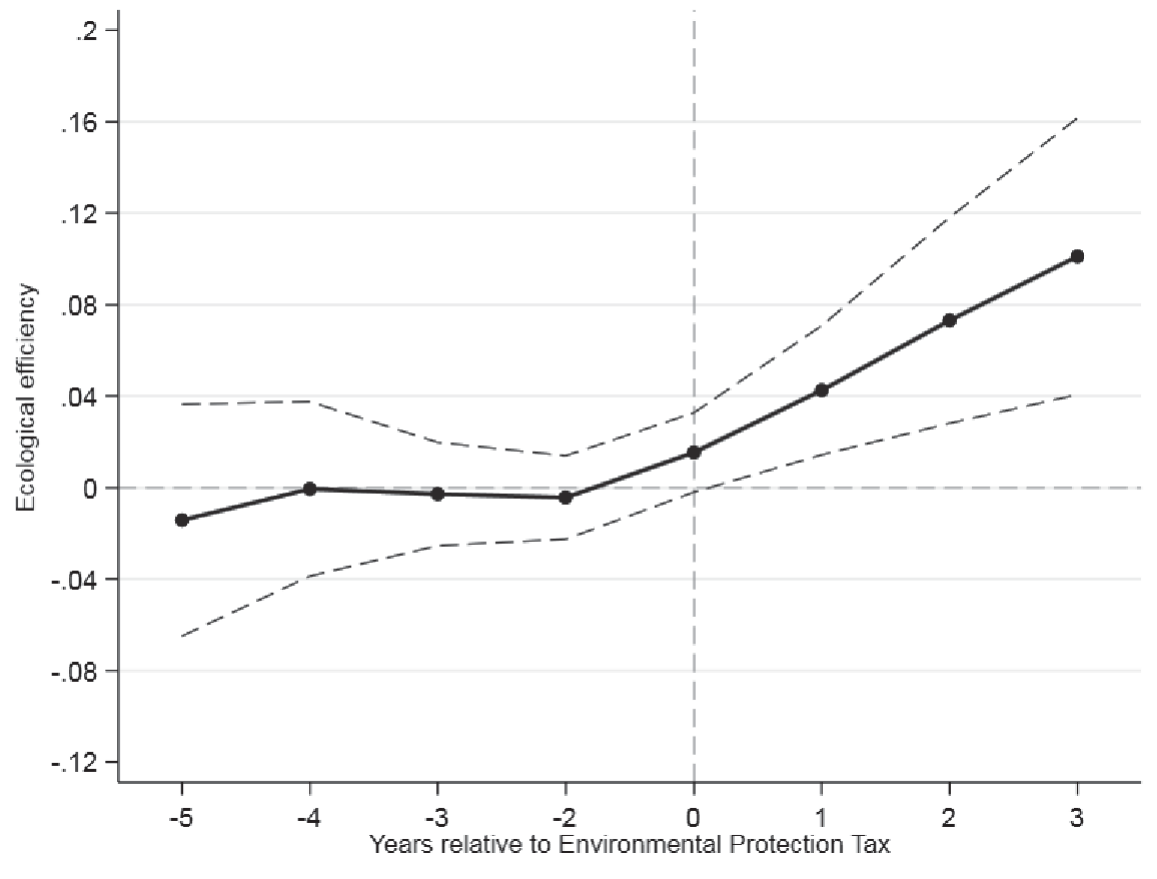
Fig. 2 displays the point estimate of Eq. (3) and the results at the 95% confidence interval. The figure lends strong support to the parallel-trend assumption, which inspires confidence that the controlgroup cities provide a good counterfactual for the treatment group. Meanwhile, there is a gradual and significant improvement in ecological efficiency after the implementation of environmental protection tax, which suggests that the implementation of environmental protection tax has a long-term role in improving ecological efficiency.
Placebo Test
There is another challenge to the validity of the DID estimation here. Although we have excluded the influence of some time-invariant factors on economic growth by including fixed effects in the baseline results, it is difficult to control the time-varying factors. A placebo test is conducted by randomly assigning environmental pollution tax to cities (Li et al., 2016) [22]. If the distribution of estimates from random assignments is clearly centered around zero and the benchmark estimate is located outside the entire distribution, it suggests that the negative effect of the implementation of environmental protection tax on ecological efficiency is not driven by unobserved factors.
Specifically, we counted the number of cities implementing environmental protection tax from 2010 to 2021. Among them, there were 121 cities implemented. Therefore, in order to construct a counterfactual estimation, we randomly select years from the sample period and label them as t. Then, 121 cities were randomly selected in year t as the cities implementing environmental protection tax. Thus, randomly assigned environmental protection tax data are used for the placebo test. To increase the identification power of this placebo test, it is repeated 500 times.
Fig. 3 shows the distribution of the estimates from the 500 runs along with the baseline estimate. We find that the distribution of estimates from random assignments is clearly centered around zero, suggesting that there is no effect on the randomly constructed environmental protection tax. Meanwhile, the baseline estimate is located outside the entire distribution. Combined, these observations suggest that the positive and significant effect of the implementation of environmental protection tax on ecological efficiency is not driven by unobserved factors.
Robustness Test
To address concerns about the data assumptions and corroborate the findings, a battery of robustness checks is conducted.
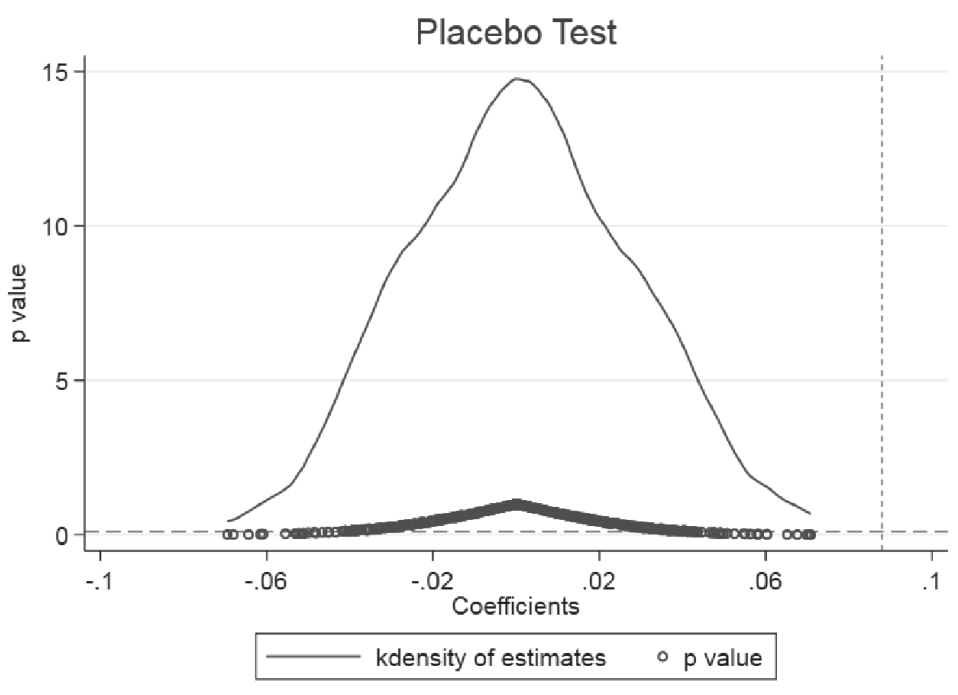
Table 3.
Robustness test.
Firstly, we excluded municipalities directly under the central government, provincial capital cities, and deputy ministerial level cities. Due to the fact that the research sample includes municipalities directly under the central government, provincial capital cities, and deputy ministerial level cities, which have higher administrative levels, richer market resources, and more complete social systems, there are differences in their impact on ecological efficiency. Therefore, we deleted data from municipalities directly under the central government, provincial capital cities, and deputy ministerial level cities, and re-estimated equation (2). The regression results are shown in column (1) of Table 3, and we found that the results are very robust.
Secondly, we cluster the regression results at the provincial level. Due to the impact of provincial policies on prefecture level cities within the same province, but because the impact between provinces is relatively small, we defined the clustering level at the provincial level, which is beneficial for improving the effectiveness of model estimation. The regression results are shown in column (2) of Table 3, and we found that the results are very robust.
Thirdly, in order to exclude the impact of other policies, we separately controlled the relevant policies for the period from 2010 to 2021. Specifically, we mainly controlled for green finance policies and innovative city policies, and the regression results are shown in columns (3) and (4) of Table 3, respectively. We found that the results were very robust.
Finally, considering the lag in the implementation of environmental protection tax, we lagged the policy variables of environmental protection tax by one period and re-estimated equation (2). The regression results are shown in column (5) of Table 3, and we found that the results are very robust.
Table 3 reports the results of robustness testing. As expected, all results are positively significant, demonstrating the robustness of our results. At this point, we have reason to believe that the implementation of environmental protection tax has indeed improved urban ecological efficiency: hypothesis 1 has been proven.
Analysis of Heterogeneity
To explore the regional differences in the impact of environmental protection tax on ecological efficiency in China, this article examines the eastern, central, and western regions, respectively. Columns (1)-(3) of Table 4 respectively indicate the impact of the implementation of environmental protection tax on ecological efficiency in the eastern, central, and western regions. The empirical results show that environmental protection tax significantly improve the ecological efficiency of the central and western regions, but the policy effect on improving the ecological efficiency of the eastern region is not significant. The main reason may be that the eastern region is an economically developed region that places great emphasis on environmental protection and energy utilization, with generally high ecological efficiency. Therefore, even if environmental protection tax are implemented, they will not significantly improve the ecology of the eastern region. The economic development level of the central and western regions is lower than that of the eastern regions, so many regions still implement extensive economic growth methods. The implementation of environmental protection tax effectively improves the ecological efficiency of the central and western regions.
Mechanism Analysis
We provide sufficient evidence for the implementation of environmental protection tax to improve urban ecological efficiency. But this evidence cannot explain why the implementation of environmental protection tax can improve urban ecological efficiency. Therefore, we will strive to provide a mechanistic explanation in this section.
In our theoretical analysis, we believe that industrial structure upgrading is an important reason for environmental protection tax to improve ecological efficiency, and industrial structure upgrading also includes the advancement and rationalization of industrial structure. Therefore, to prove this viewpoint, we estimated equation (2) using the level of industrial structure upgrading as the dependent variable, and the regression results are shown in column (1) of Table 5. Secondly, in order to reflect the impact of environmental regulations on the advancement and rationalization of industrial structure, we use the ratio of the output value of the tertiary industry to the output value of the secondary industry to represent the level of advanced industrial structure. The Theil index measures the level of rationalized industrial structure, and the regression results are displayed in columns (2) and (3), respectively. From the results in Table 5, it can be seen that the coefficient of environmental protection tax has always been significantly positive at the 1% confidence interval, indicating that environmental regulations have significantly promoted the upgrading of industrial structures. From the regression results of the last two columns, it can be seen that the coefficient of environmental regulation is always positive and significantly positive at the 1% confidence interval. This indicates that environmental regulation also promotes the advancement and rationalization of industrial structures, thereby promoting the improvement of ecological efficiency, hypothesis 2 has been proven.
Table 4.
The results of heterogeneity analysis .
Conclusions
How to achieve green and sustainable economic development and improve ecological efficiency is a key issue that scholars are concerned about. This article uses panel data from Chinese cities from 2010 to 2021 to explore whether environmental protection tax can improve urban ecological efficiency. The empirical results show that the implementation of environmental protection tax significantly improves urban ecological efficiency. The environmental protection tax shows significant regional heterogeneity, significantly improving the ecological efficiency of the central and western regions, while the impact on the ecological efficiency of the eastern region is not significant. Moreover, the reason for the improvement of ecological efficiency by environmental protection tax can be attributed to the upgrading of industrial structures.
Through research, this article obtains the following policy implications: firstly, we should continue to promote the implementation of environmental protection tax laws, improve reasonable environmental protection tax rates, and design relevant environmental protection tax systems. Fully leverage the pollution control role of environmental protection tax laws to improve ecological efficiency. Secondly, strengthen top-level design, optimize the national industrial layout, and promote the optimization and upgrading of industrial structures. Vigorously develop clean energy, continuously increase the proportion of clean energy such as solar energy, wind energy, and nuclear energy, strictly control the proportion of “three high” industries, optimize resource allocation, assist the development of the clean industry, and continuously “force” the green transformation of heavy polluting industries. Thirdly, the collection and management of environmental protection tax require collaborative cooperation between tax departments and environmental protection departments. A mechanism for sharing information between the two departments should be established to improve the efficiency of tax collection and management. Effectively reduce production costs for enterprises, enhance production management efficiency, and promote efficient development of enterprises through government and public supervision. Fully leverage the main role of environmental protection tax, effectively improve ecological efficiency, and promote green development.

